
In Pehnawa, Aurangabad, Portico Design Concepts explore colours, textures and diverse materiality to create a fashion retail experience that is a cut above.
Curated by: Rupali Sebastian
Photographs: Photographix India, courtesy Portico Design Concepts
The project
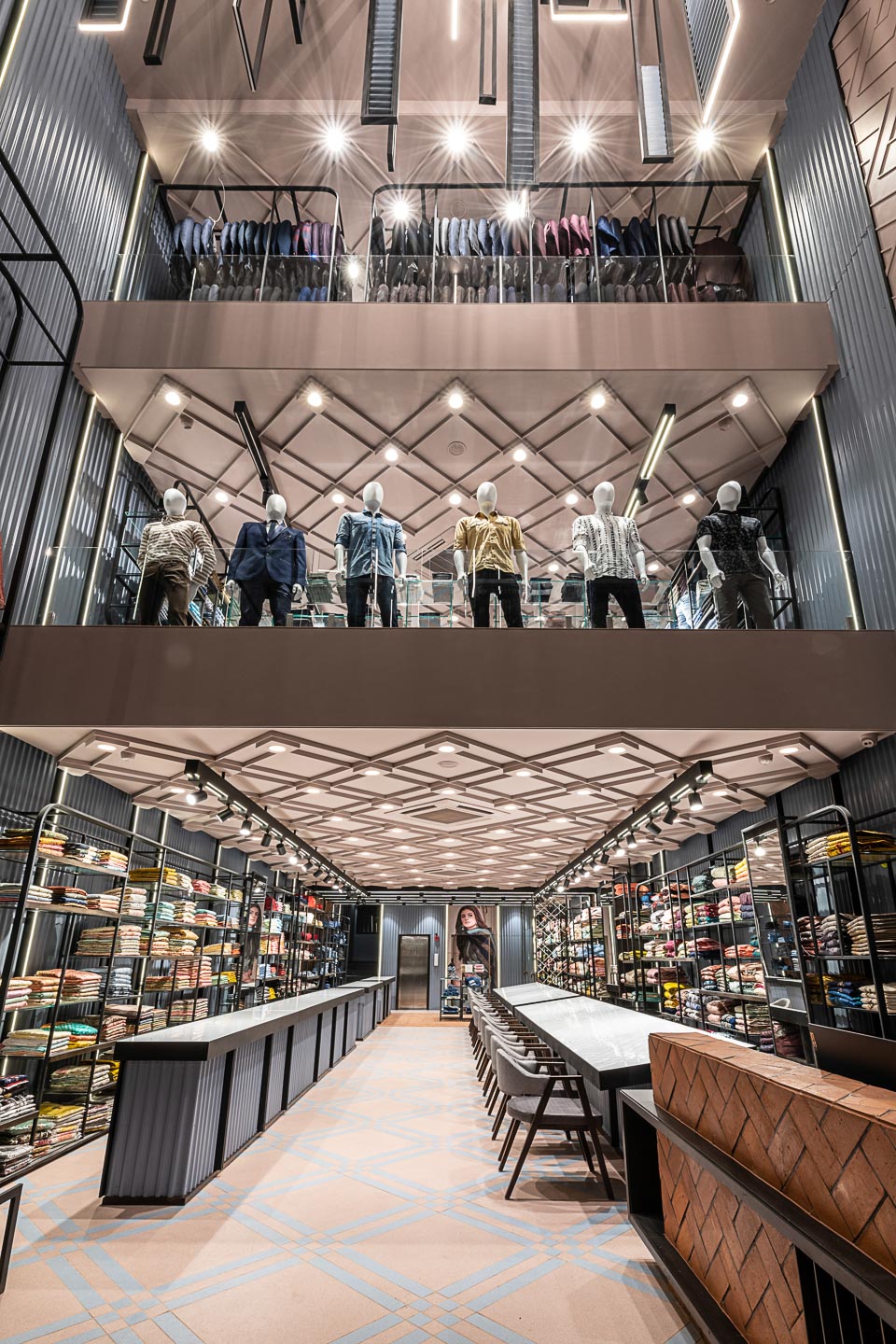
Pehnava was completed in Aurangabad just as the strictures posed by the pandemic began to relax. Its three (G+2) storeys, a reasonably spacious 5,400-square-foot area and a triple-height entry gave the architects enough room to explore a striking, eye-catching retail design. The products being retailed included women’s wear, contemporary clothing for men and ethnic menswear.
The brief
When the architects were handed over the site, the civil work was already over. In effect, they received the site as a bare shell. Other than specifying how the different types of fashion wear would be segregated floor-wise and the fact that the tables that would seat customers to mull over intended purchases be white (to best set off the colours of the garments), the clients gave a carte blanche to the architects where material usage and the overall look & feel were concerned.
The layout
The triple-height volume at the front with the rest of the floor plates being singular entities without any further demarcations. The lofty volume functions as a waiting lounge and billing area. The levels were used to segregate the merchandise as follows: the ground floor was devoted to women’s wear (girls and ladies); the first floor to men’s wear; and the last floor to men’s ethnic wear.
The visual aesthetic
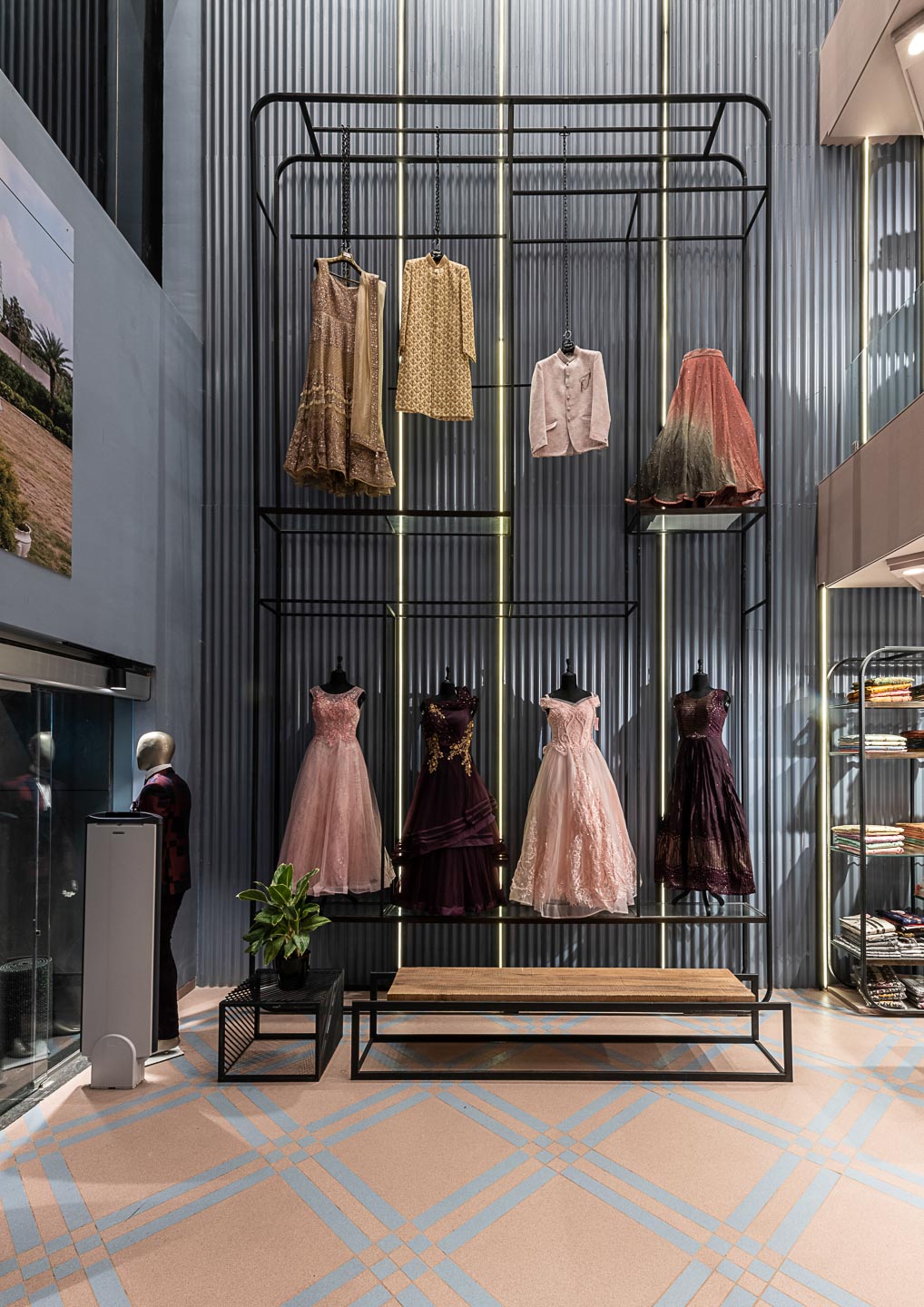
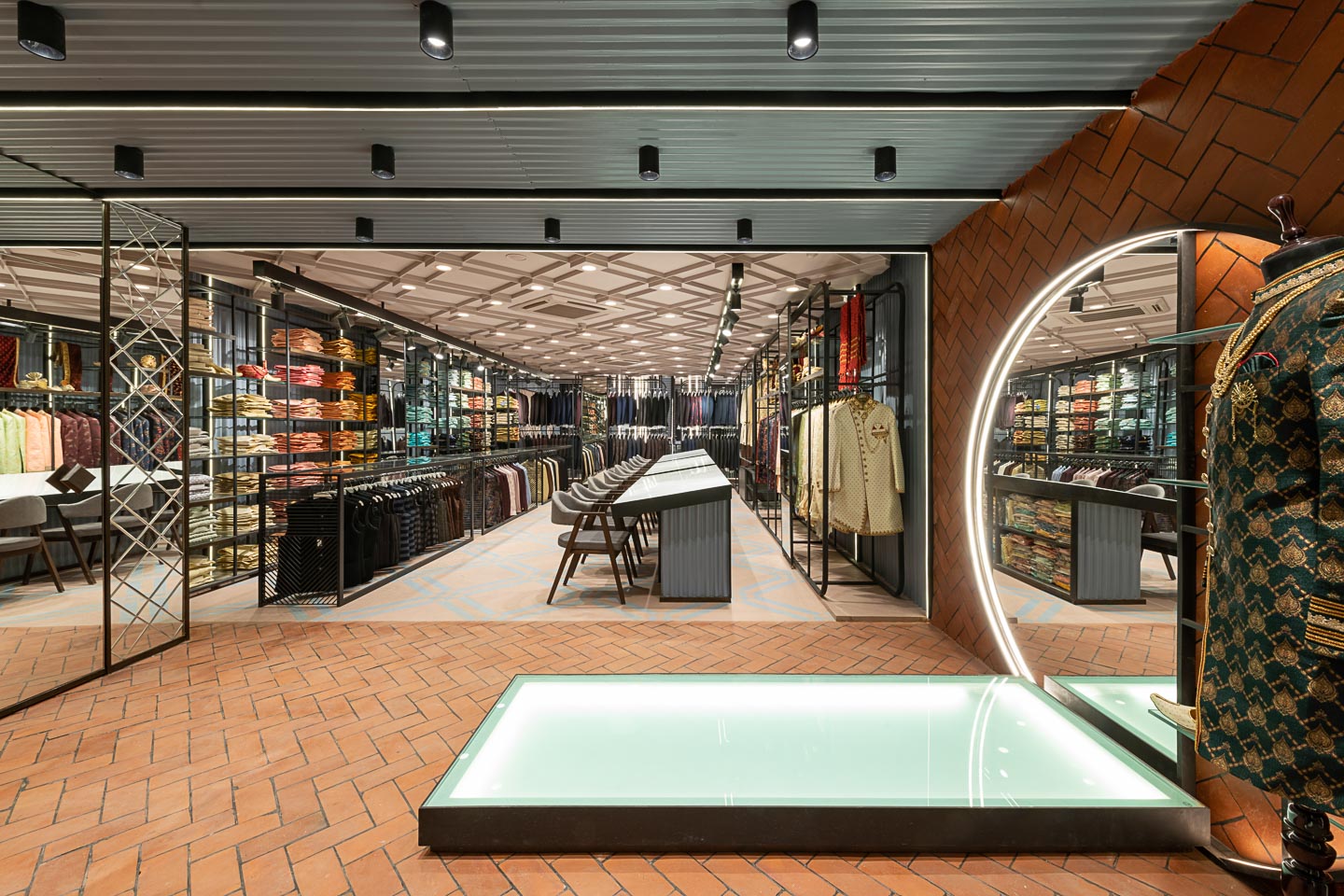
Corrugated GI sheets, vitrified tiles, back-painted and clear glass, mirrors, exposed clay-bricks and mild steel form the leading materials. While the chromatic direction was decided as pastels accented with black lines, the surface finishes included textures and patterns, both visual and tactile. Essentially, the architects sought a cool, contemporary scheme that was offset with swathes of warmth woven via exposed brick expanses on select sections of walls and the floor. A bespoke floor design, crafted out of regular vitrified tiles, signals thrift and the desire to achieve cohesive detailing. The overall impression is a space filled geometric patterns — the lines of exposed bricks, the corrugations of the GI sheets, the rhomboids of the bespoke mosaic floors, the grid-like POP patterns on the ceiling, the cut-glass-like bevelling on the mirrors…
The display
The merchandise is displayed on open metal shelves whose gently-rounded corners provide a subtle, yet perceptible contrast to the straight-lined geometry that dominates the visual flavour. The display tables are of two types: closed ones with white back-painted glass tops and open ones with under-counter hangers and clear-glass tops. Here and there, smaller display units, almost like occasional tables, dot the floors. Mirrored expanses, delicately bevelled with geometric patterns, amplify the contemporary ambience as well as serve as looking glasses (in addition to the mandatory trial rooms of course, which are tucked discreetly to a side). A definite highlight is in the men’s ethnic section, where a circular, mirrored, outlined-with-light wall element with an abridged catwalk in front creates a striking spatial pause, besides providing the right environment to contemplate a purchase.
The challenge
Strangely enough, given the rich and more complicated details that abound, it was getting these contours right that proved to be the challenge of the assignment — one that saw two fabricators throw in the towel and took the best part of two months to complete!
Fact file
Project: Pehnawa
Location: Aurangabad
Area: 5,400 sq ft
Principal architects: Shruti Tanwani and Gopal Tanwani
Add a Comment