
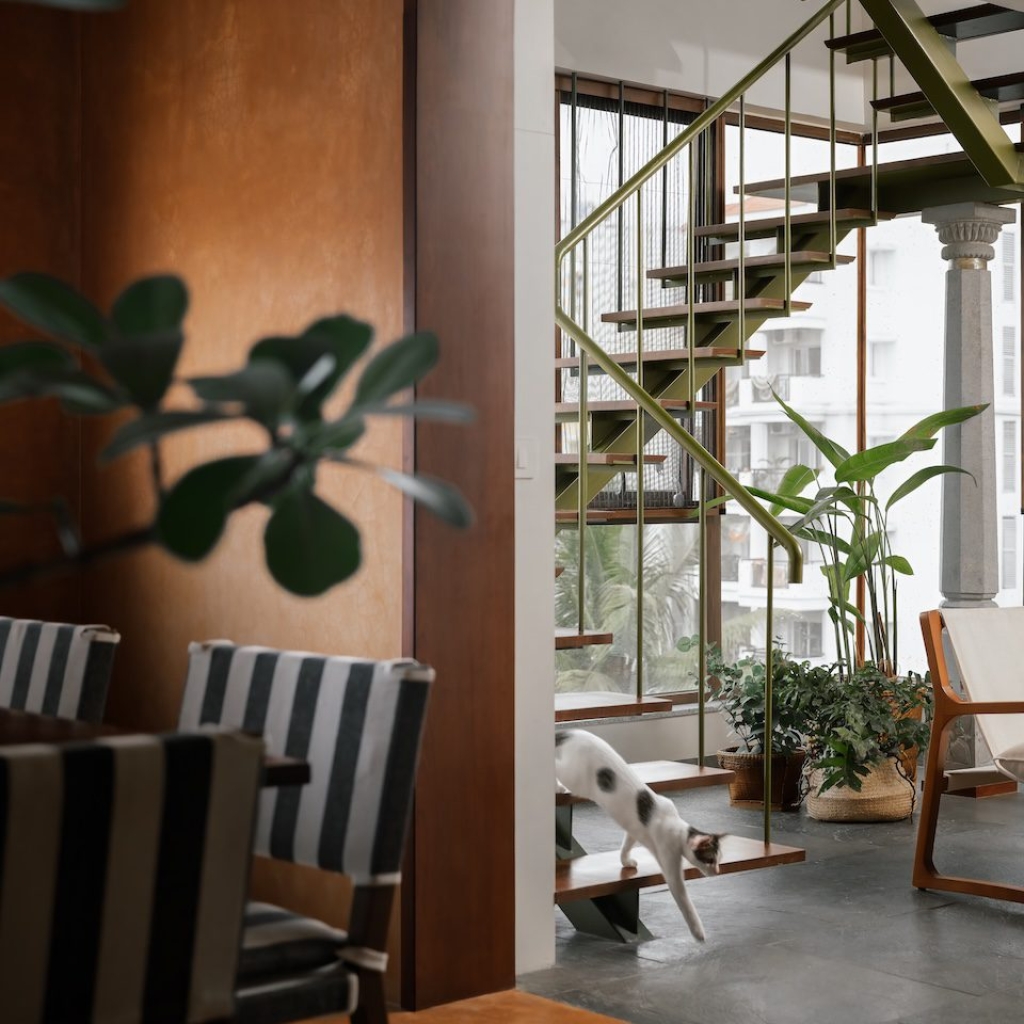
In Bengaluru, this duplex residence by ma+rs brings together two separate apartments into a single home, where intimate, colour-defined spaces replace the idea of one large, open plan.
Curated by: Rupali Sebastian
Photographs: Arjun Krishna Photography; courtesy ma+rs
The project
This project began as two independent 3BHK apartments, stacked one above the other. The design transforms them into a single, cohesive home that prioritises intimacy over scale.
Rather than creating one expansive, open environment, ma+rs organised the house as a series of smaller, distinct zones—spaces for reading, music, work and family time. The result is a home that feels layered and personal, shaped around everyday life rather than entertaining.
The site
Located on Cambridge Road in Bengaluru, the residence sits within a larger apartment building. The existing condition presented two complete homes with separate services and layouts. The challenge was not just physical connection, but also removing the sense of duplication that comes with two independent units.
The brief
The clients wanted a home that felt calm, safe and comfortable, with a modern language that subtly acknowledges Indian traditions. Functionally, the focus was on creating spaces for shared family activities—reading, board games, music—rather than a large social or entertaining space. The design needed to support a more inward, family-oriented way of living.
The design intent
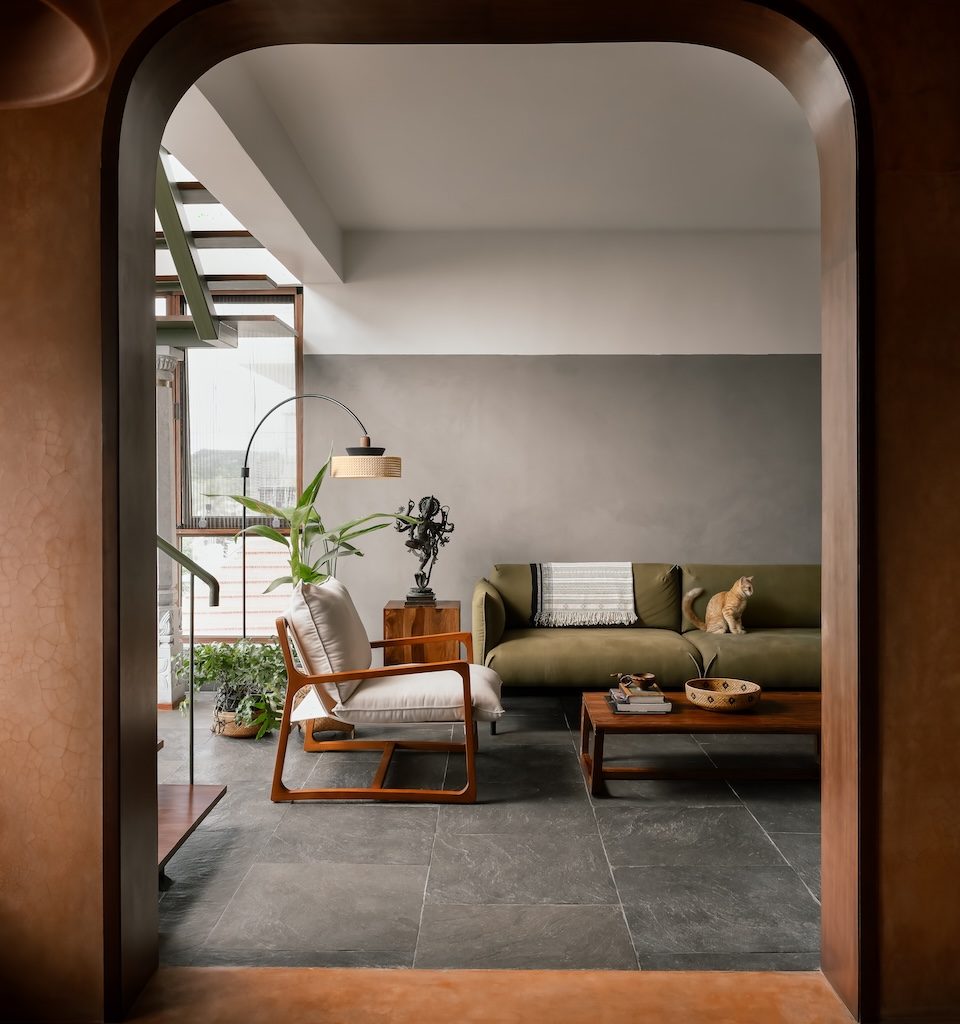
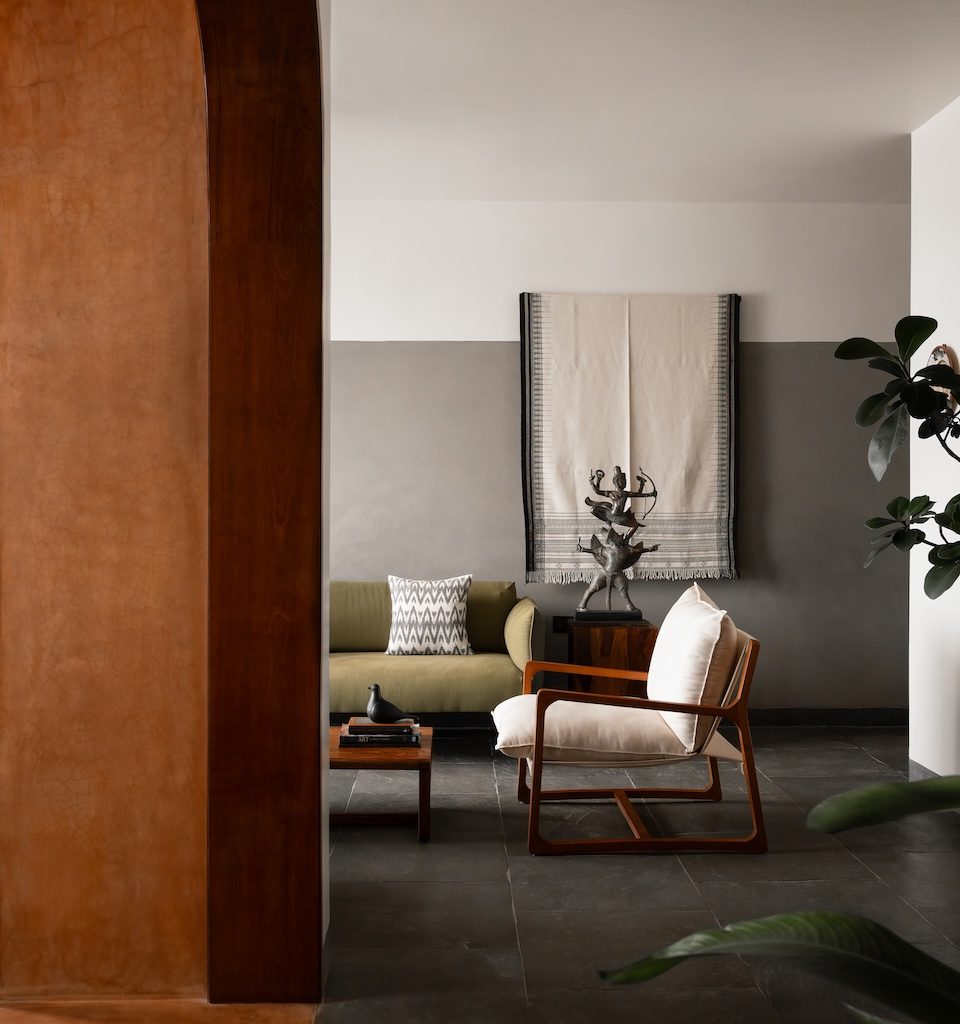
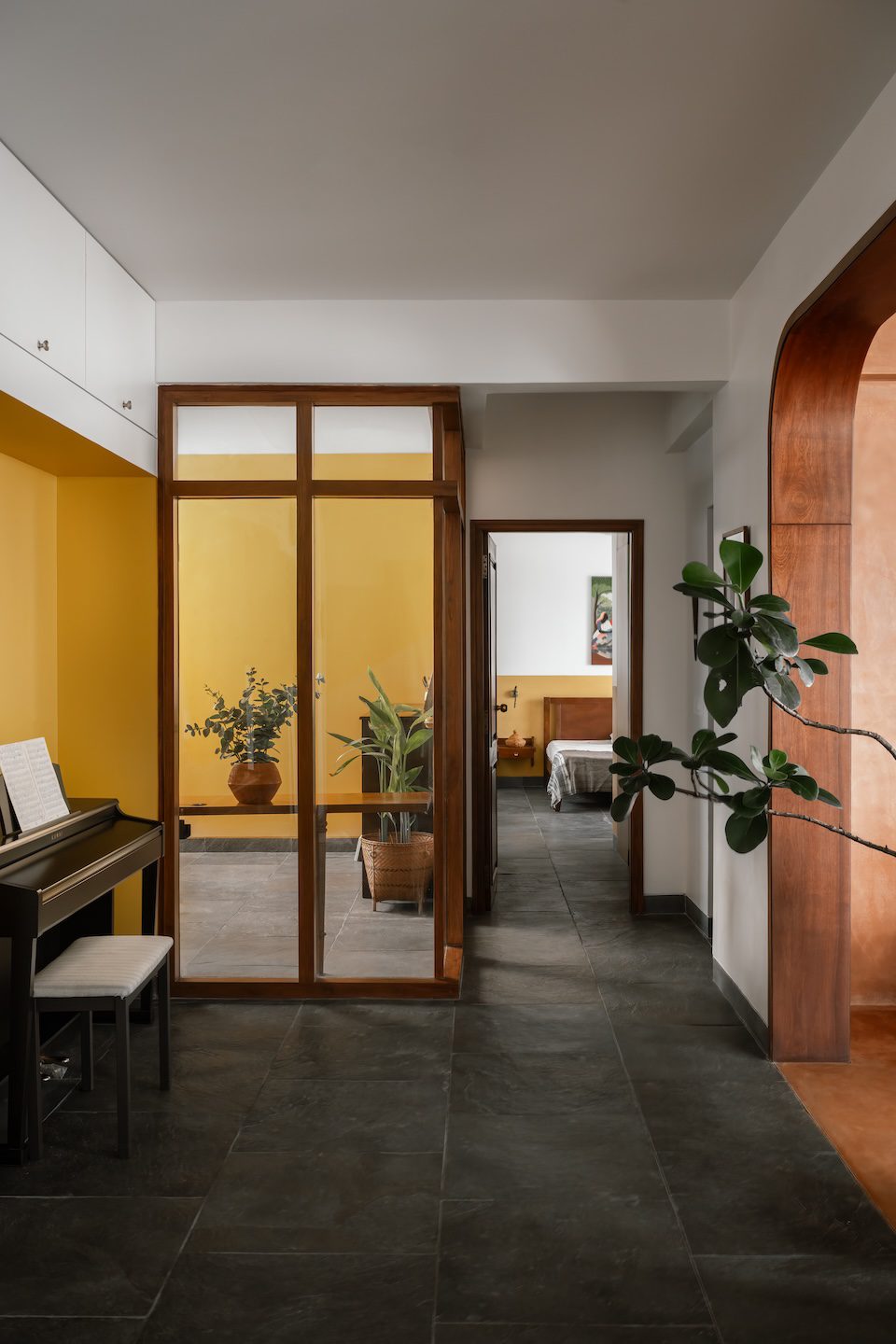
The design intent was to create a unified home that balances modern minimalism with familiar material cues. A neutral palette of white walls and grey limestone flooring forms the base, allowing colour and texture to be introduced selectively. Instead of being evenly distributed, these elements are concentrated within specific zones, giving each space a distinct identity. As architects Anisha Menon and Sabyasachi Routray note, the goal was to create “a home that feels calm, cohesive and liveable, where modern design is layered with subtle references to Indian materials and craft.”
The civil intervention
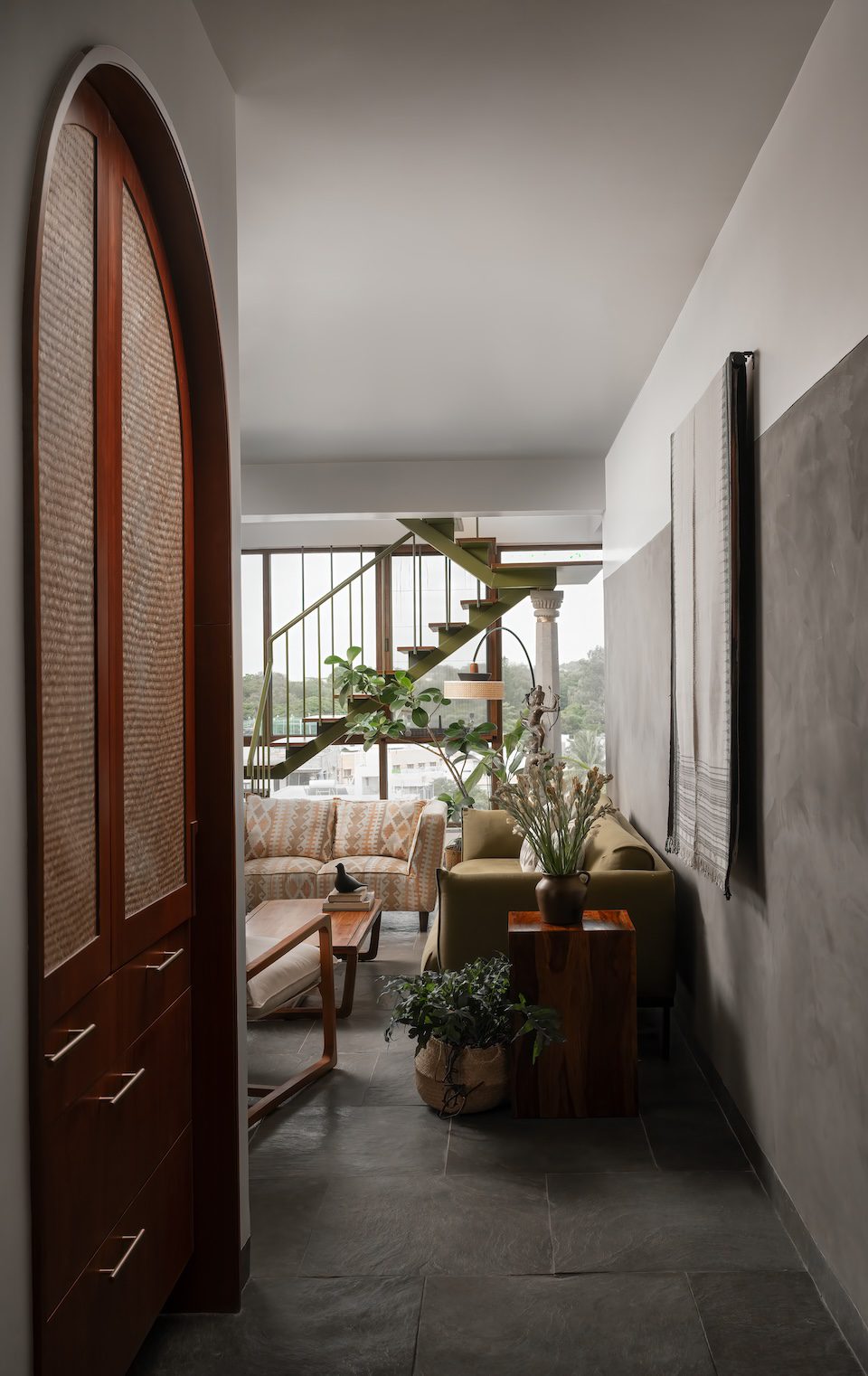
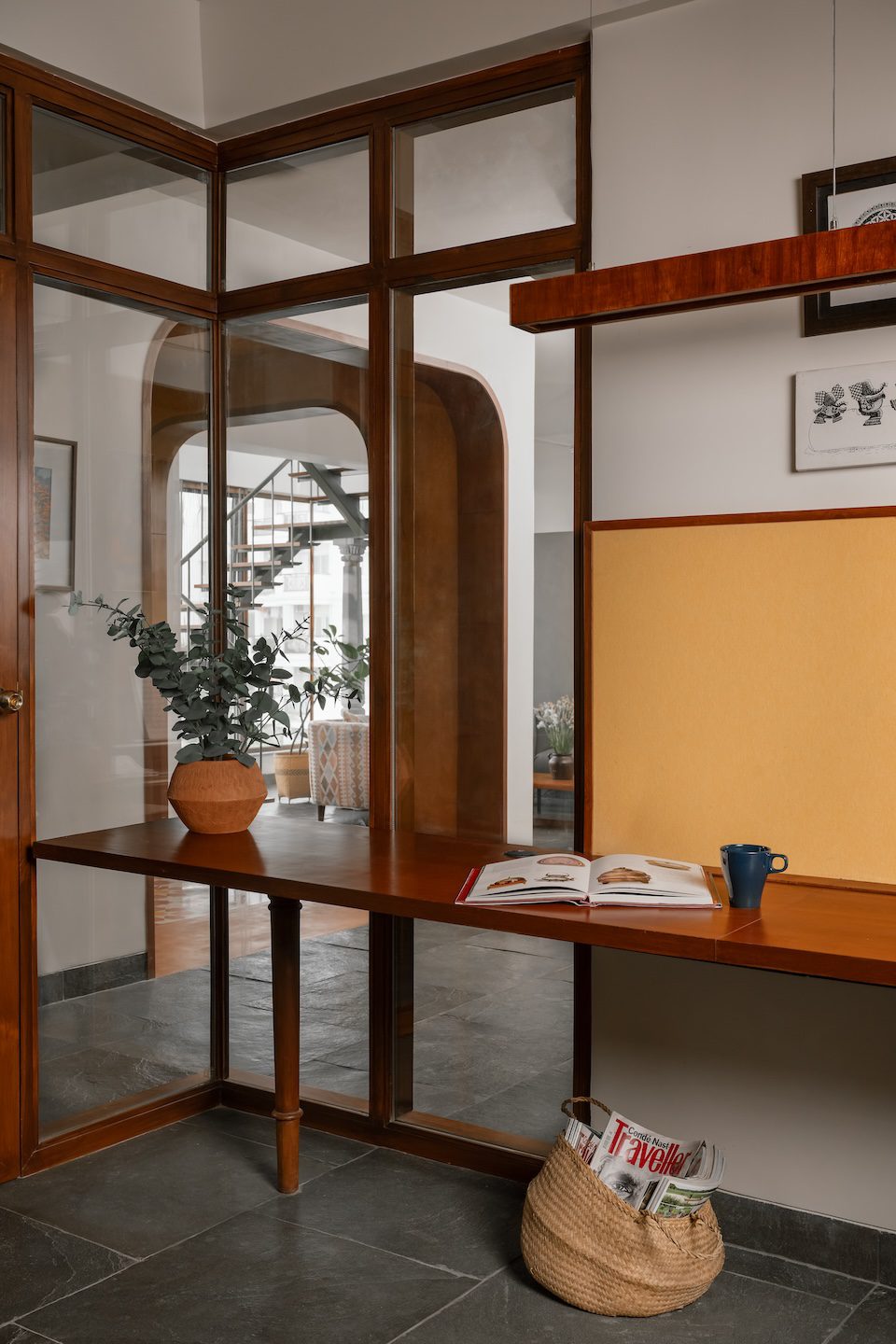
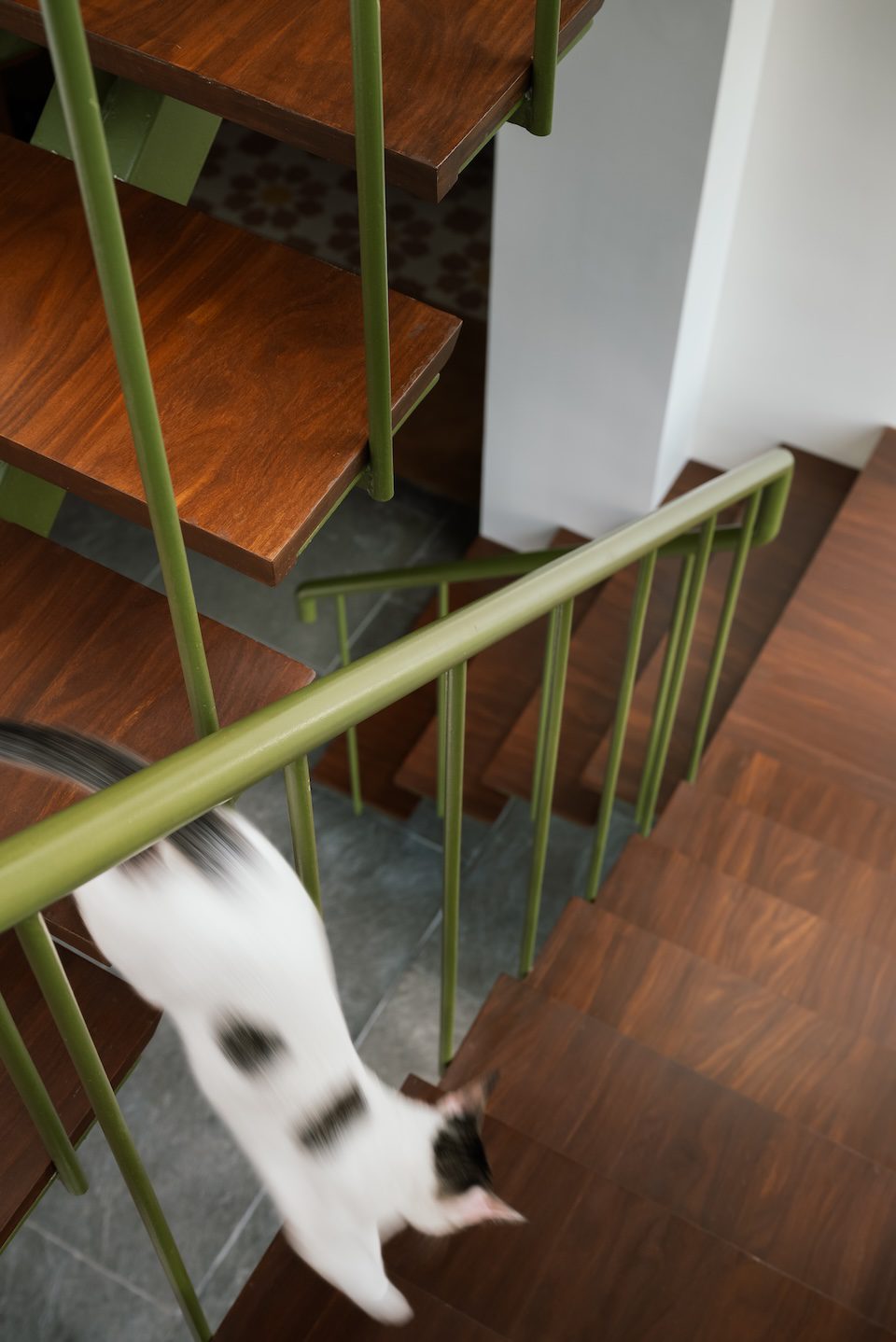
The most critical move was the introduction of a custom staircase that physically connects the two floors. Designed as a central feature, the staircase combines a sleek metal structure with wooden treads and a carved stone column. It acts as both a functional link and a visual anchor, establishing continuity between the two levels.
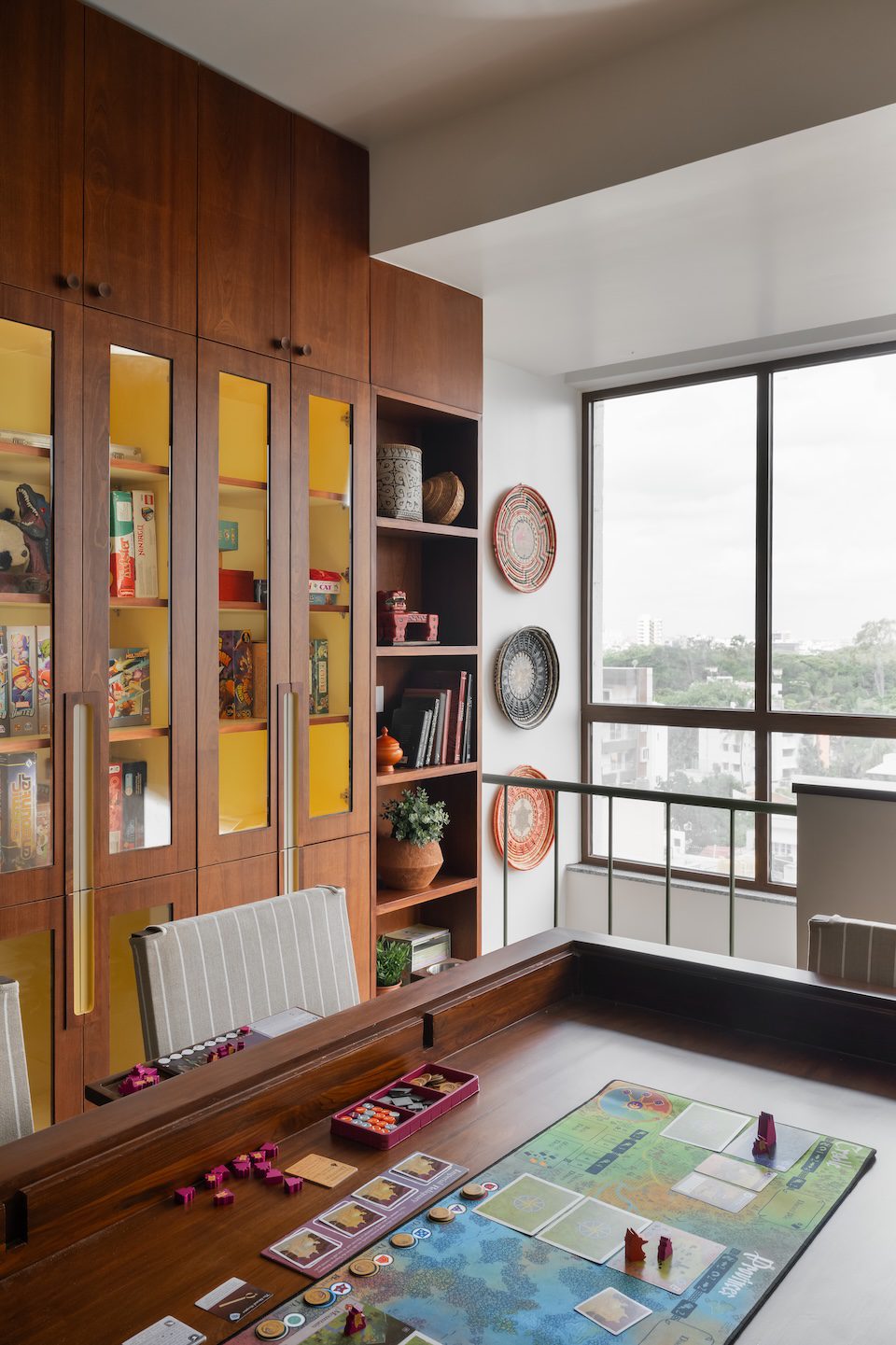
On the upper floor, redundant services were removed to eliminate the identity of a second apartment. The old kitchen was replaced with a caretaker’s room, while former living spaces were converted into a family lounge and board game area. The lower floor was reorganised to house the primary shared functions, creating a clear hierarchy across the house.
The spatial flow
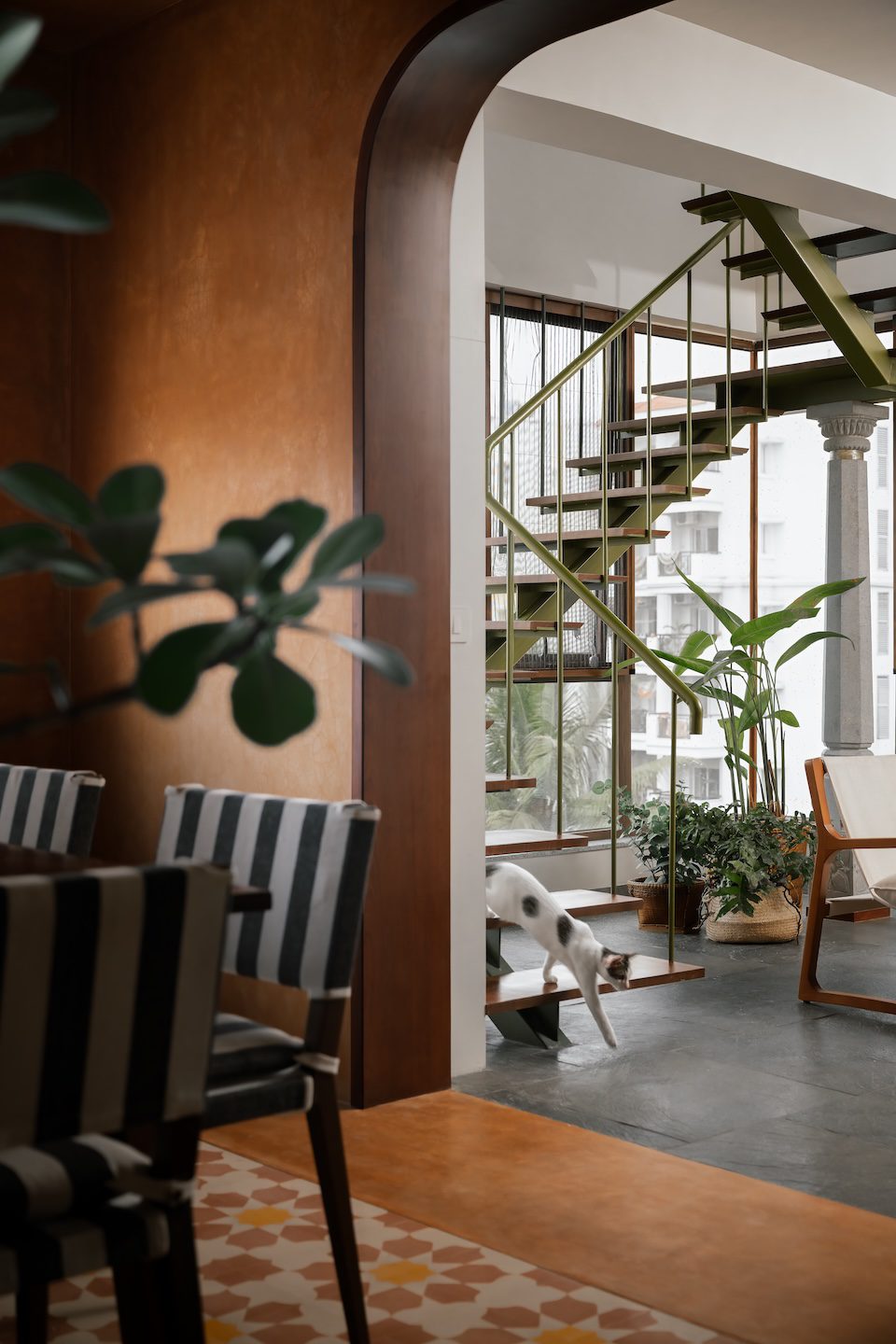
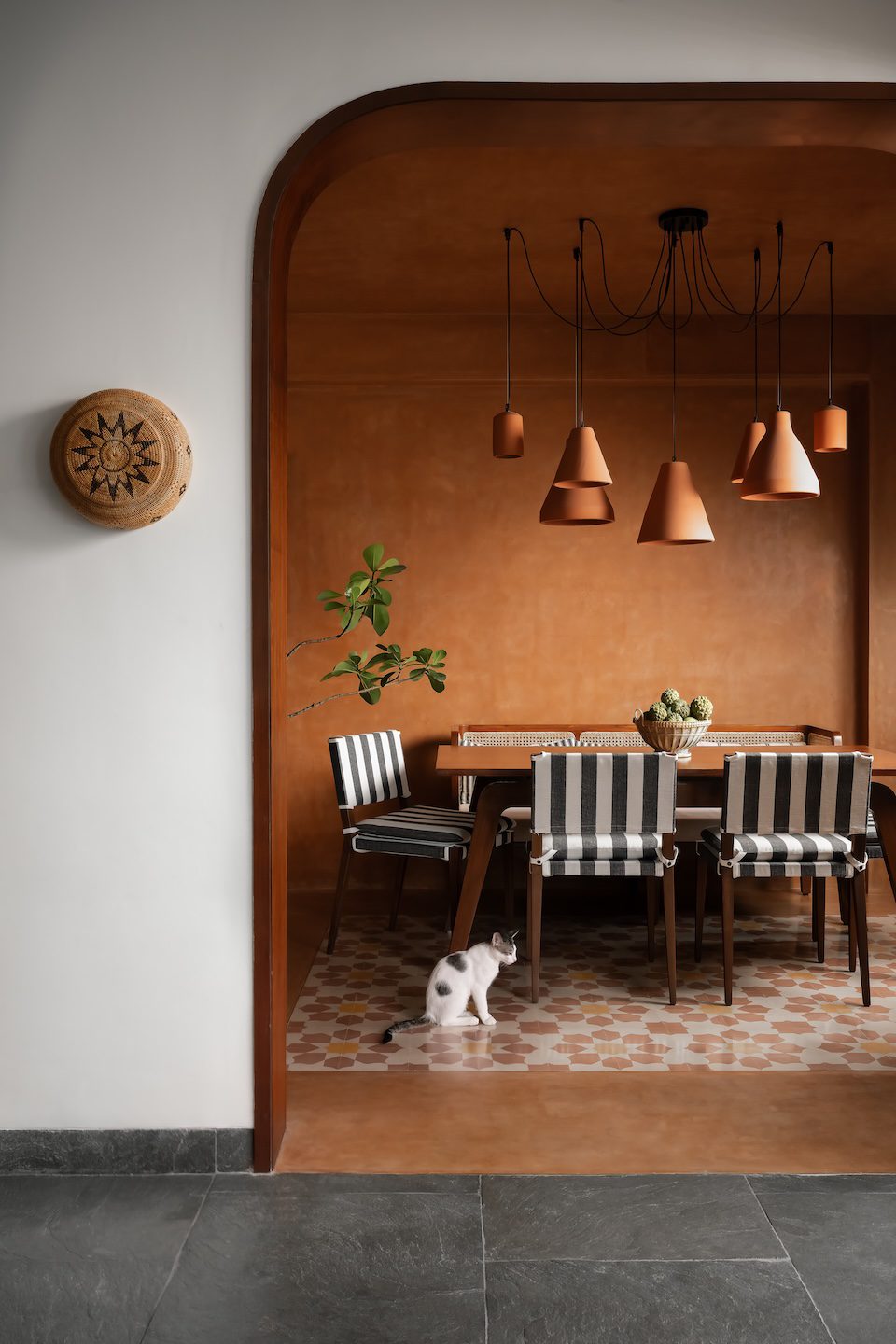
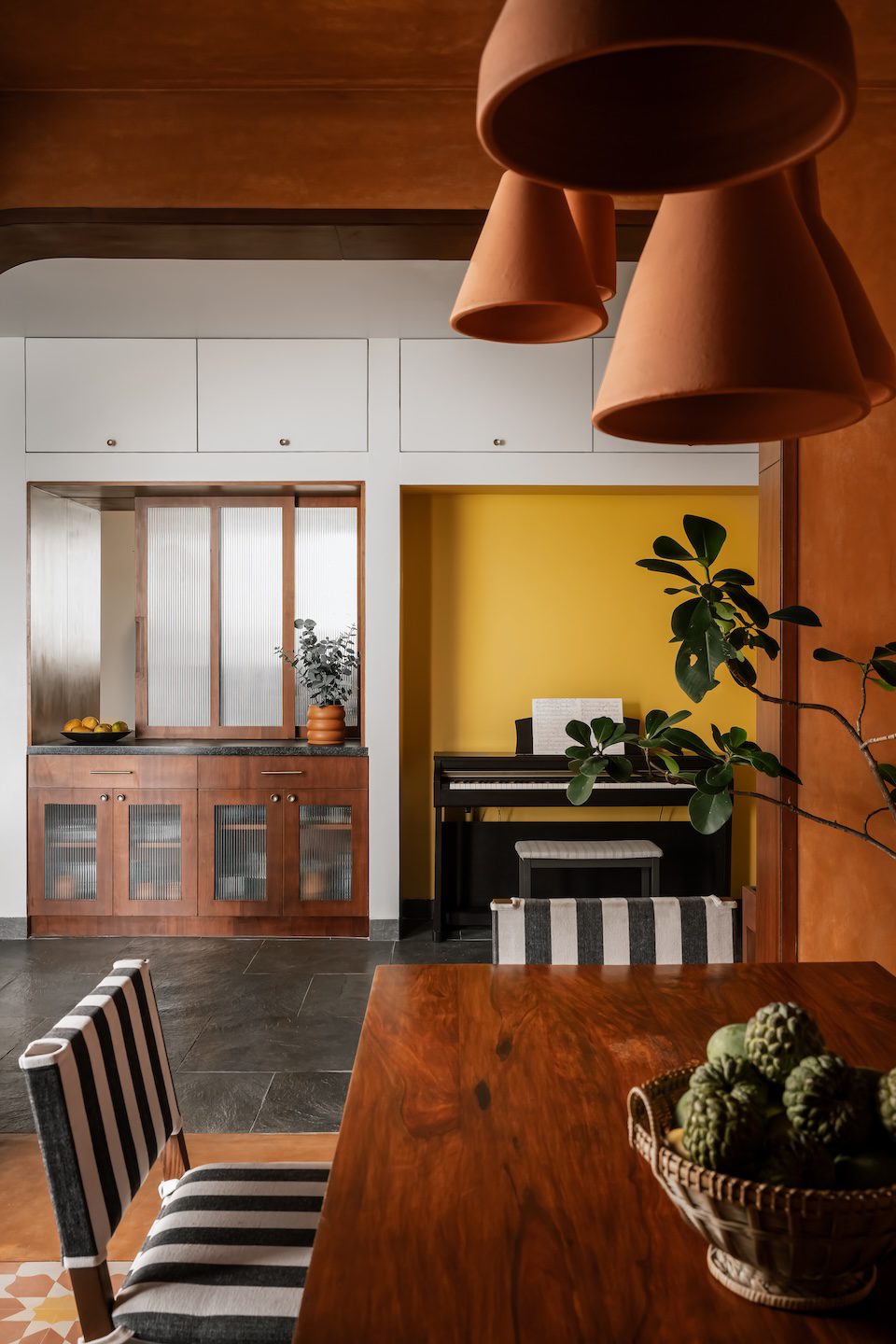
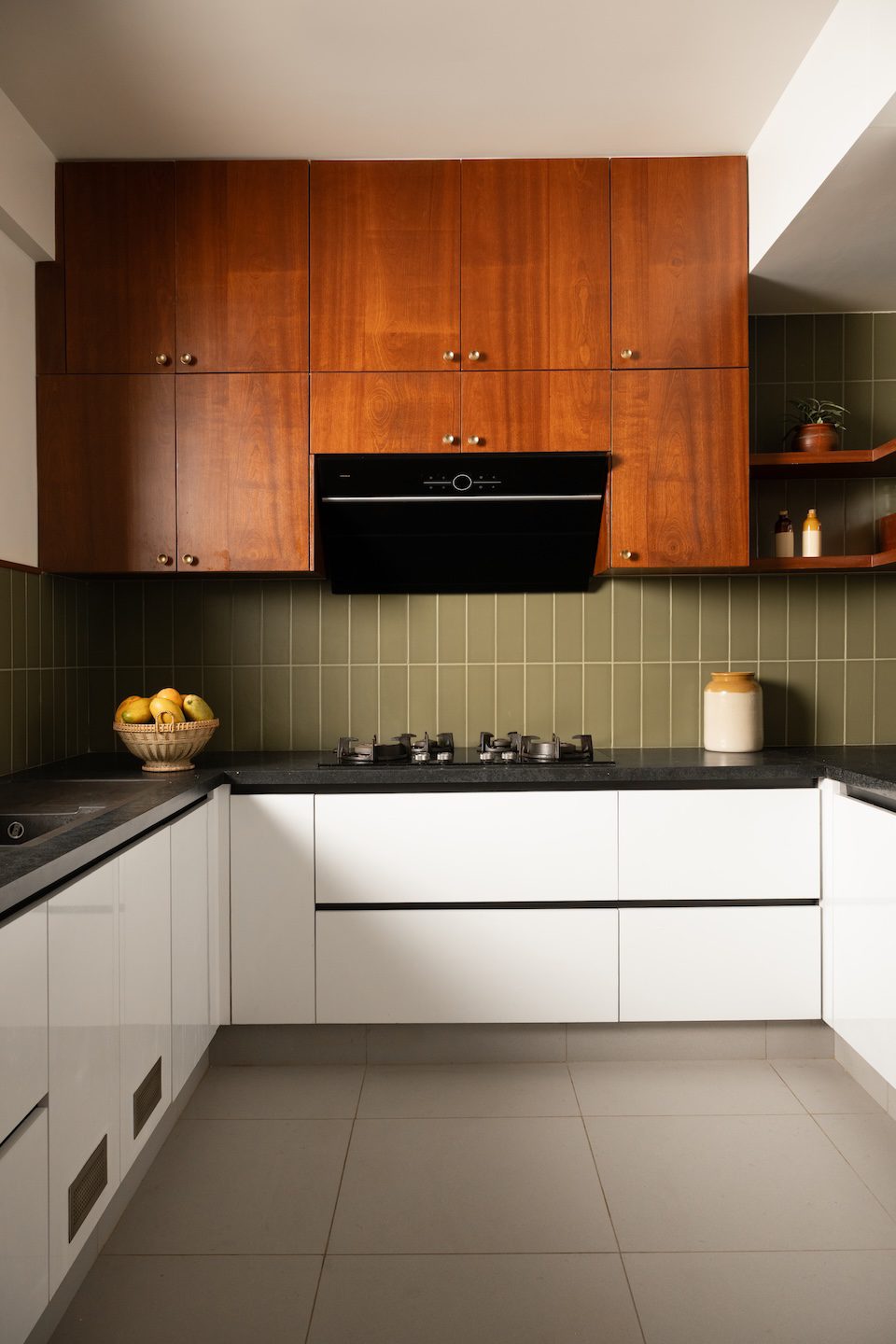
The lower level acts as the main family hub. The entry opens into a foyer that leads into the living space, which then transitions into the dining area and kitchen. The dining space is conceived as a distinct, immersive zone—a “colour block cave”—defined by terracotta-toned walls and ceiling. A deep arch marks the transition from the more neutral living room into this warmer, more intimate space. A dedicated home office, guest bedroom and service areas complete the lower floor. The upper level shifts in character, becoming a more private retreat. A family lounge and board game area occupy the central zone, with bedrooms and a music studio arranged around it.
The design and material details
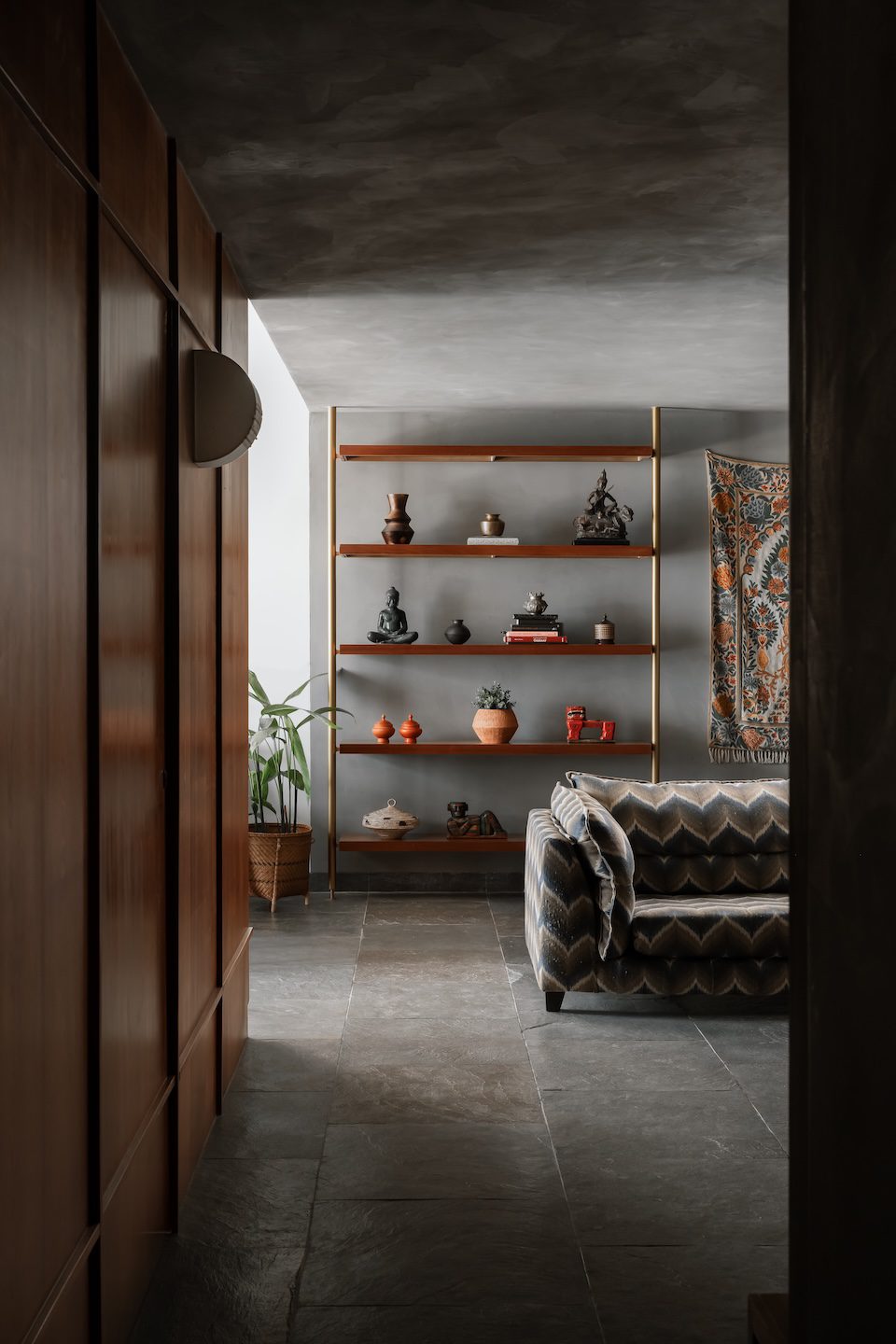
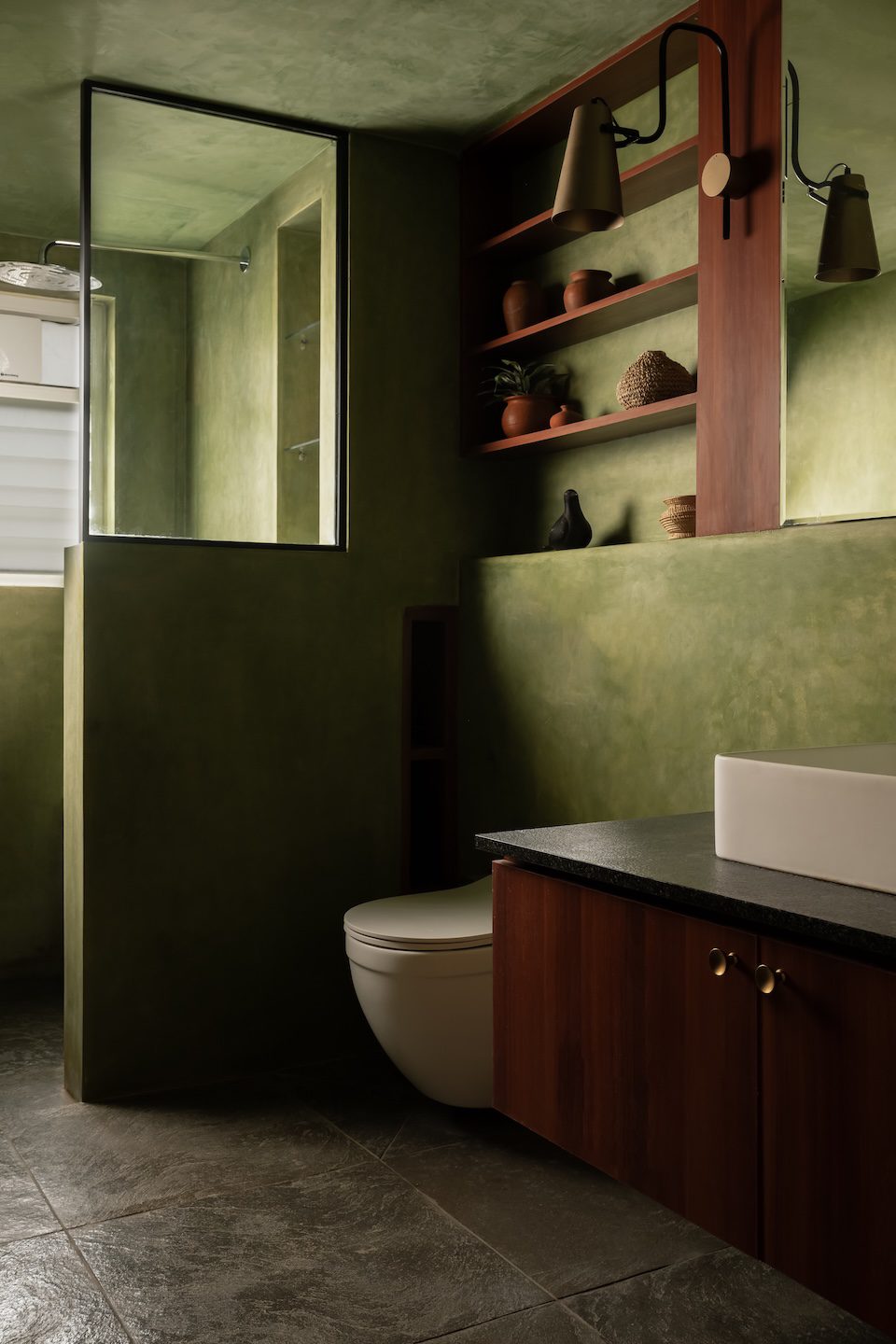
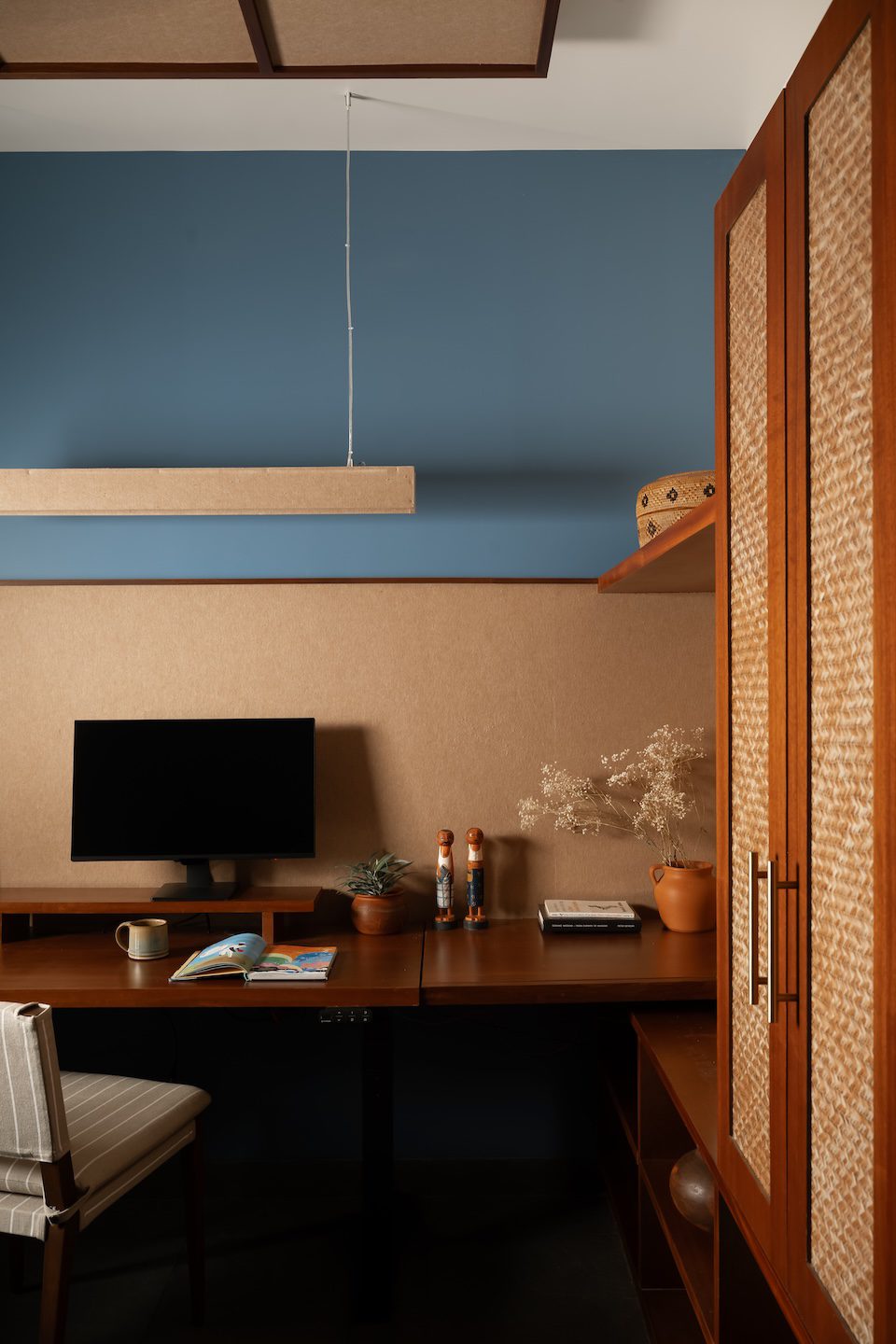
The house is anchored by a consistent base palette—white walls and grey, leather-finish limestone flooring—that runs across both floors. Against this neutral backdrop, material and colour are introduced selectively. The dining room stands out through its terracotta IPS walls and ceiling, paired with cement flooring and custom terracotta lights. Wood plays an important role throughout the home, appearing in stair treads, furniture and detailing. Rattan shutters, fluted glass and lime-textured walls add further layers of texture.
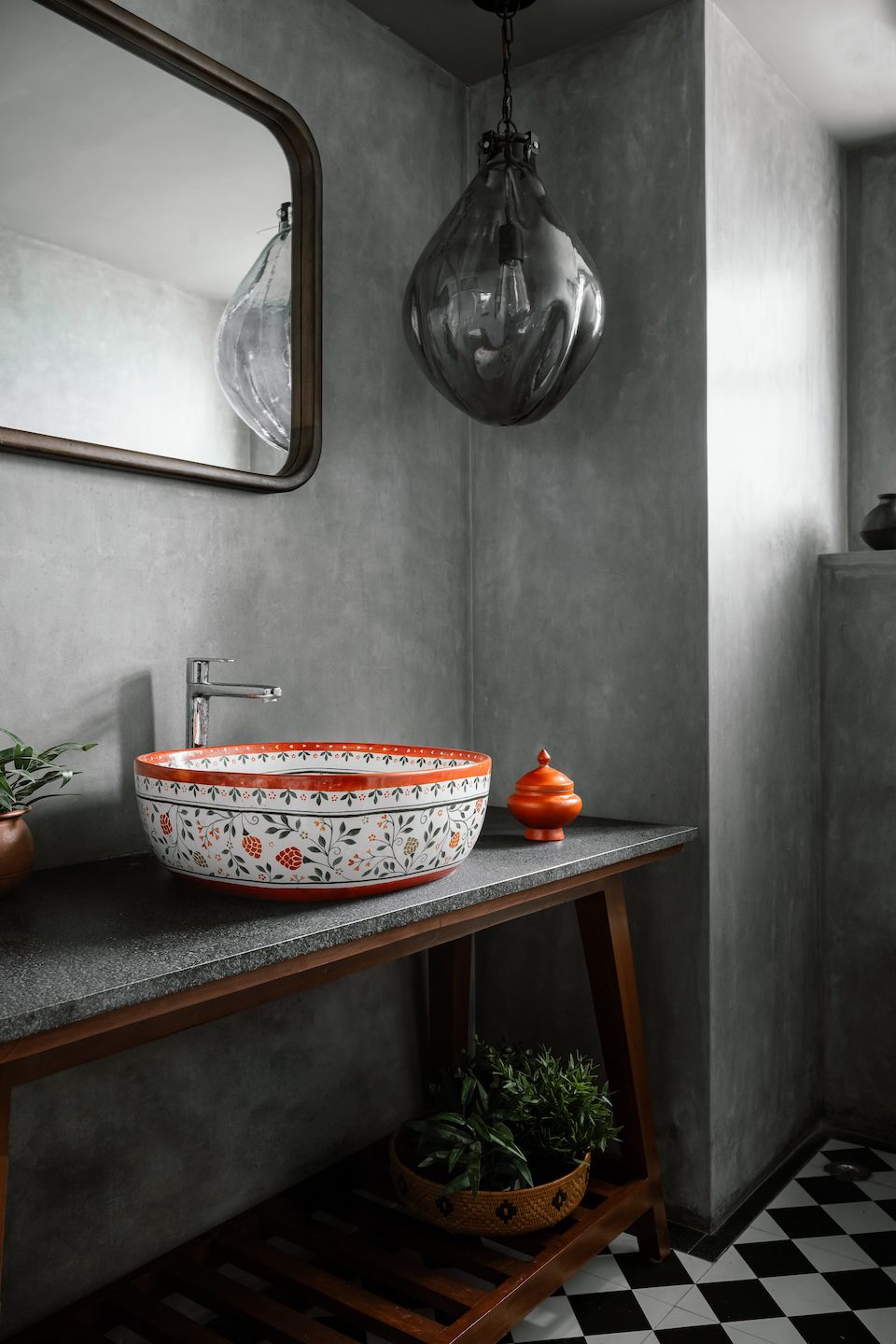
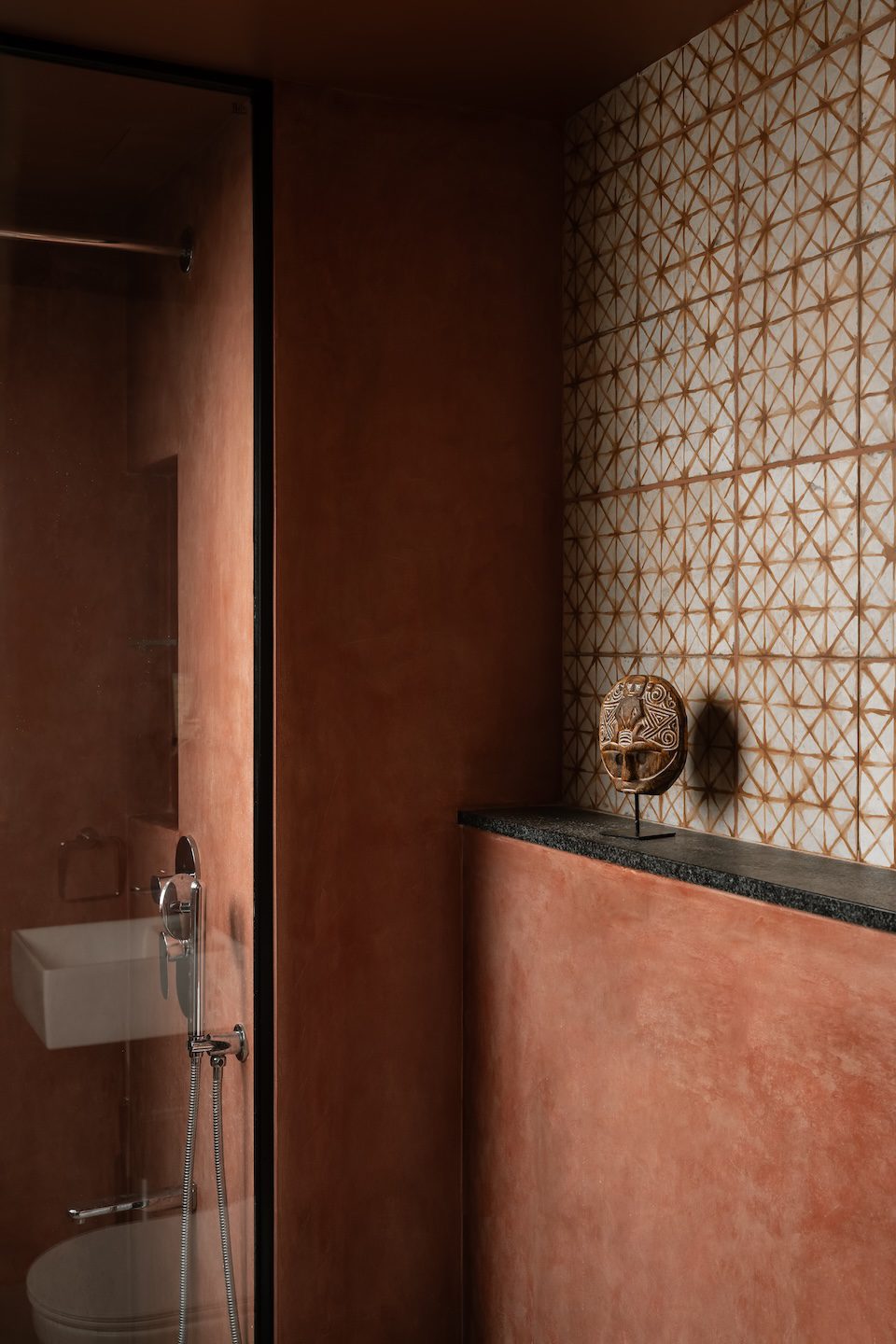
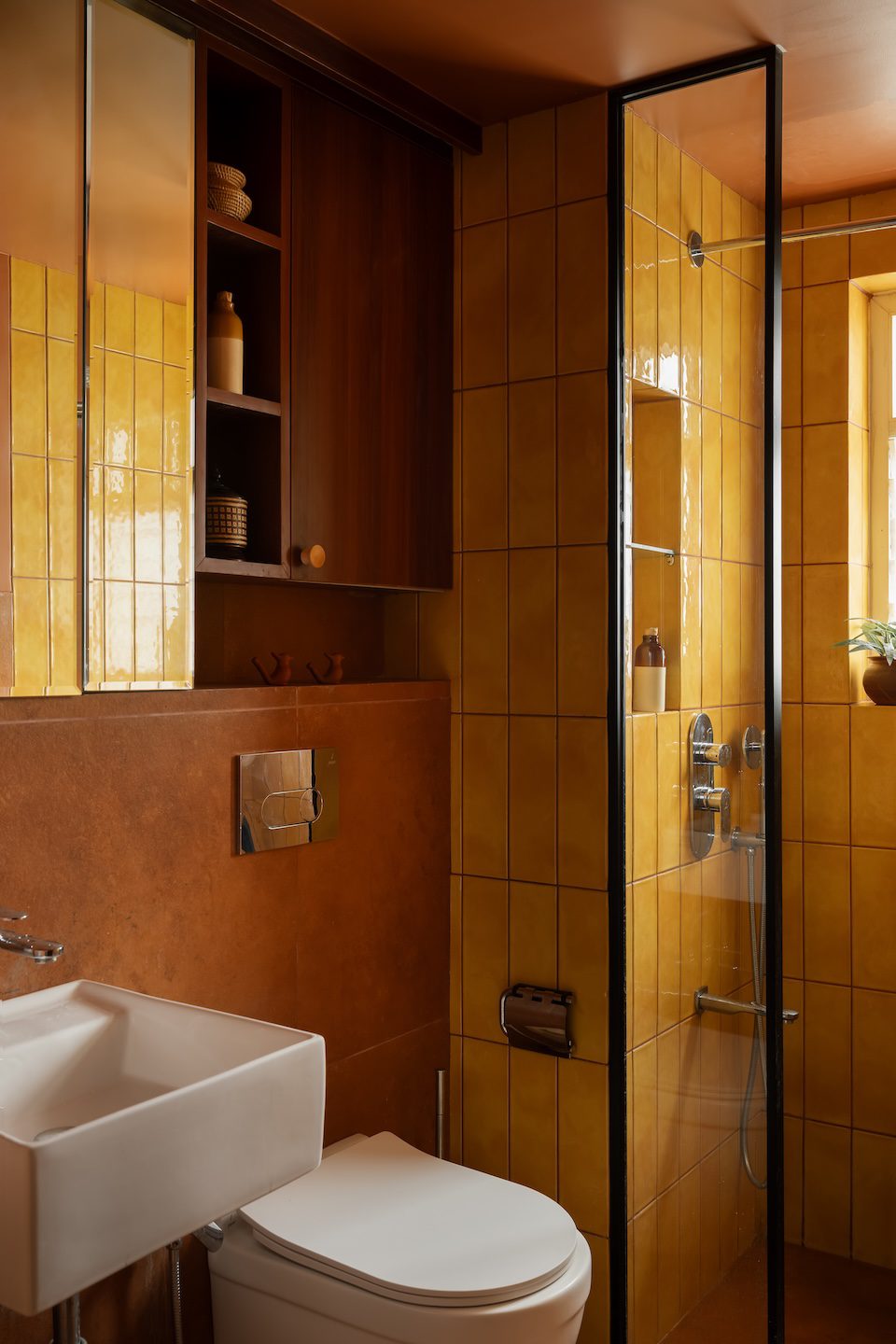
In the living room, the palette remains restrained, allowing furniture and smaller details to define the space. The guest bedroom introduces warmth through wood and fabric, with a window nook designed as a reading and yoga space. The powder room offers a sharper contrast, combining muted plaster walls with a handcrafted ceramic basin that introduces colour and pattern in a controlled way.
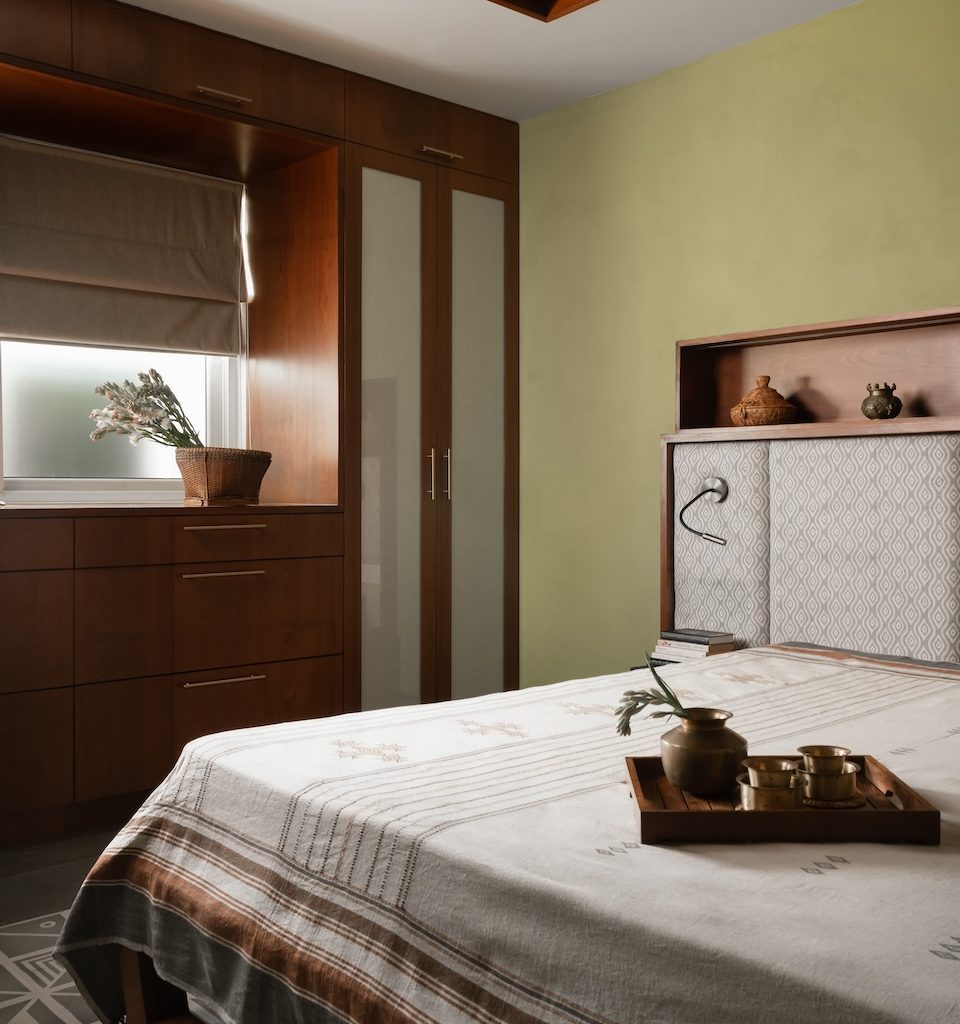
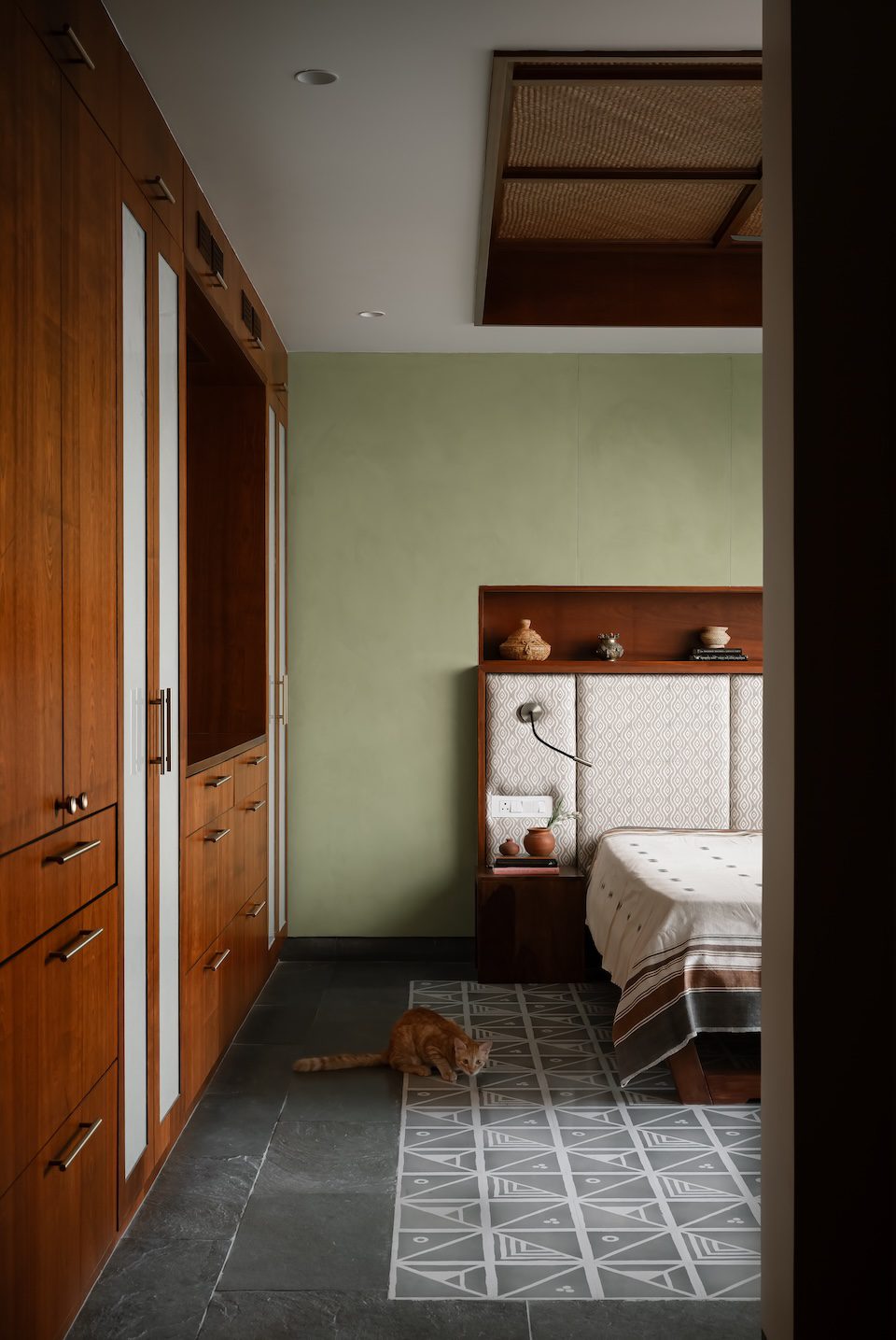
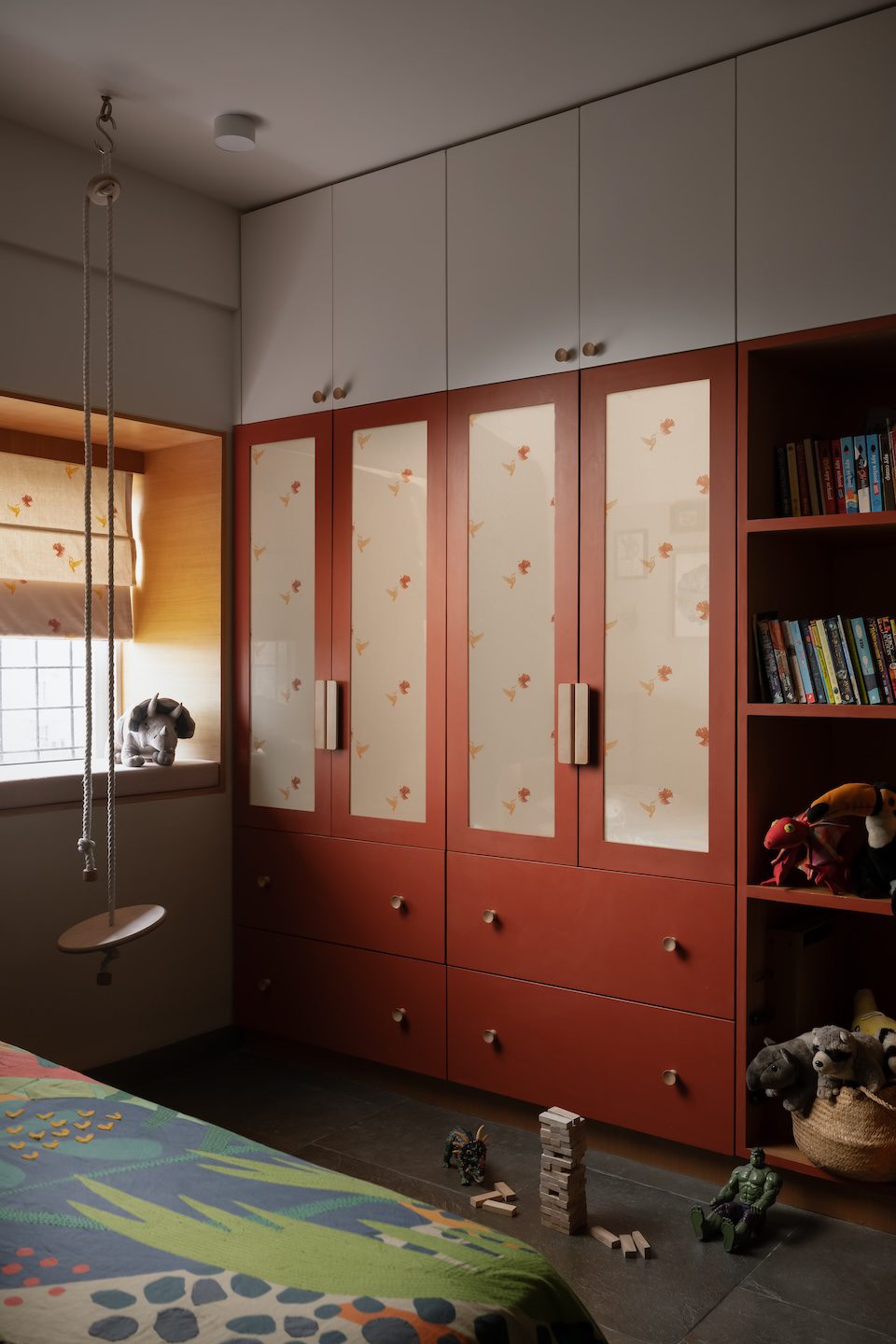
Upstairs, the material language continues but shifts in intensity. The media room adopts a darker palette, while the master bedroom uses lime textures and soft drapery to create a quieter, more enclosed atmosphere.
The highlights
The dining “colour block cave” stands out as one of the most distinctive moments in the house. Its immersive palette and defined enclosure create a strong contrast to the otherwise neutral interiors. The custom staircase is another key feature, acting as both connector and focal point. Equally significant is the custom-designed furniture, particularly the board game table. Designed for extended use, it allows games to remain set up over multiple days, reflecting the clients’ lifestyle and shaping how the space is used.
The challenges
The primary challenge lay in transforming two complete apartments into a single, cohesive home. Once connected, the combined layout risked feeling fragmented, with multiple redundant spaces. The design addressed this by redefining the function of each room and establishing a clear hierarchy across the two levels. Consistency in material palette and detailing helped unify the spaces, ensuring that the home reads as a single entity rather than two merged units.
Fact file
Project: Home on Cambridge Road
Location: Bengaluru
Area: 2,700 sq ft
Design firm: ma+rs
Principal architects: Anisha Menon and Sabyasachi Routray
Design team: Mereen Sarah Koshy
Styling: Shambhavi Kothari
Add a Comment