
Studio Satviki crafts a residential interior for a retired couple that brings together the restraint of Japanese minimalism and the depth of Indian craftsmanship. Defined by a muted palette, thoughtful planning, and curated detail, this Ahmedabad home is designed as a calm and purposeful retreat.
Curated by: Deepa Nair
Photographs: Ishita Sitwala; courtesy Studio Satviki
The brief
Marking a new chapter for a couple entering their retirement years, this Ahmedabad home by Studio Satviki is designed around the idea of slowing down and living with intention. Architect Satviki Trivedi engaged in extensive conversations with the clients, allowing their routines, preferences, and aspirations to quietly inform every decision within the home. “From our very first meeting, the clients’ openness and honest conversations gave us a deep understanding of their lifestyle and the journey they had shared over four decades. Their story marked by resilience, sacrifices, and a strong family bond shaped the emotional foundation of the project. They envisioned their home as a calm retreat where they could finally slow down and enjoy this new phase of life,” shares Satviki.
They envisioned a space that felt composed and uncluttered, where every element had purpose and presence. Aesthetic preferences leaned strongly towards minimalism, but not one that felt stark or impersonal. Instead, they were drawn to a refined environment that expressed restraint with depth. At the same time, the woman of the house and her son brought with them a strong inclination towards Indian handicrafts and traditional motifs. Their personal collection and appreciation for craft introduced a contrasting layer to the brief, one that required sensitivity and balance. The challenge for Studio Satviki was to bring these two worlds together—merging the discipline of minimalism with the richness of handcrafted detail.
“The clients placed immense trust in our process, giving us the freedom to experiment with materials, spatial harmony, and handcrafted detailing across the home, resulting in a space that feels serene, personal, and deeply reflective of their journey,” says Satviki.
The design intent
The design intent was to create a home that reflects both the clients’ journey and the way they wish to live going forward. Drawing from Japanese design philosophies, the approach leans towards restraint, balance, and clarity, allowing the spaces to feel open and visually pleasing. At the same time, the design carries a strong undercurrent of Indian craftsmanship. The woman of the house and her son, both avid collectors of handicrafts and traditional motifs, brought with them a distinct appreciation for artisanal detail. This introduced a parallel layer to the design—one that required careful calibration. The challenge was not just to include these elements, but to integrate them in a way that felt natural within a minimal framework, without disrupting its sense of calm.
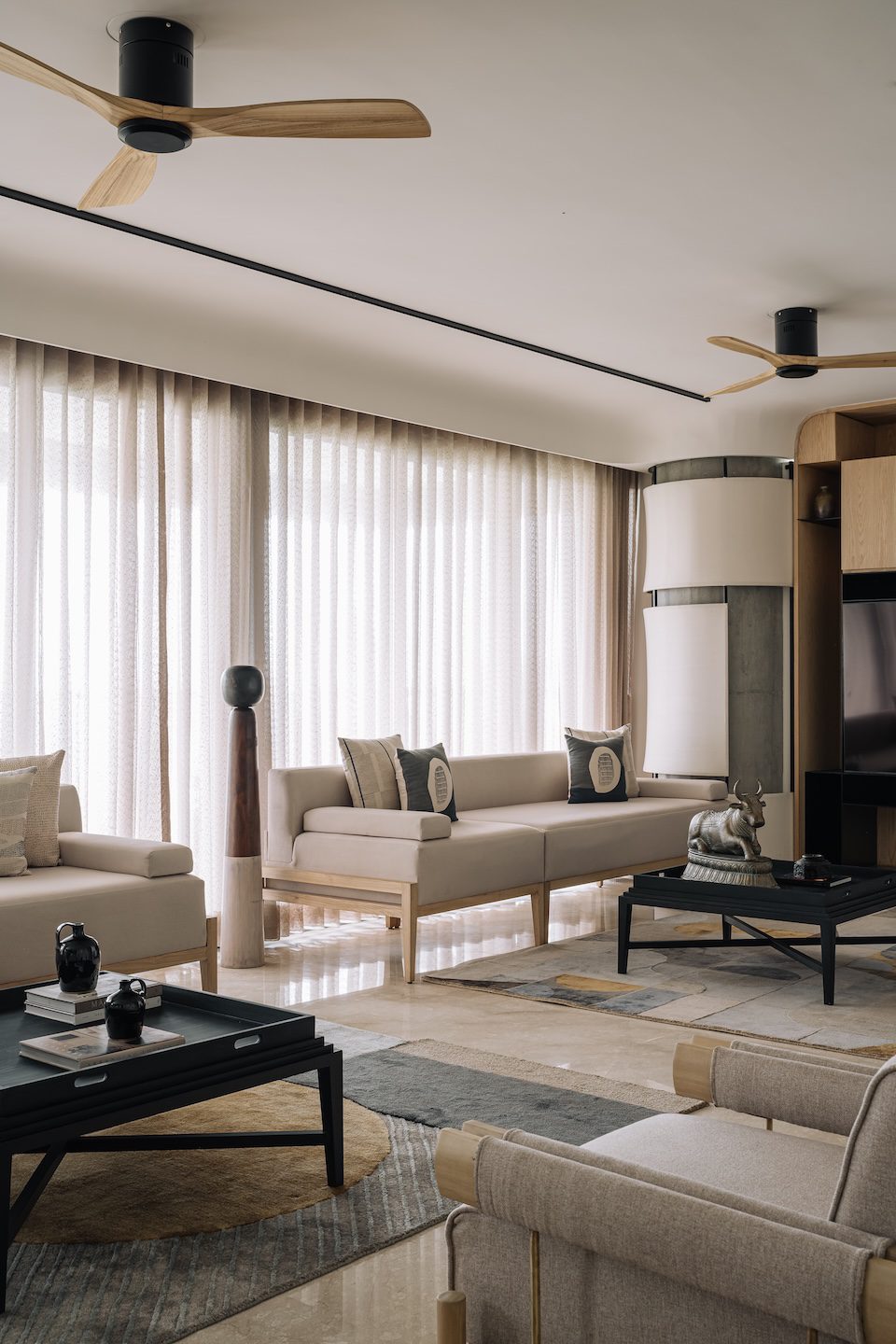
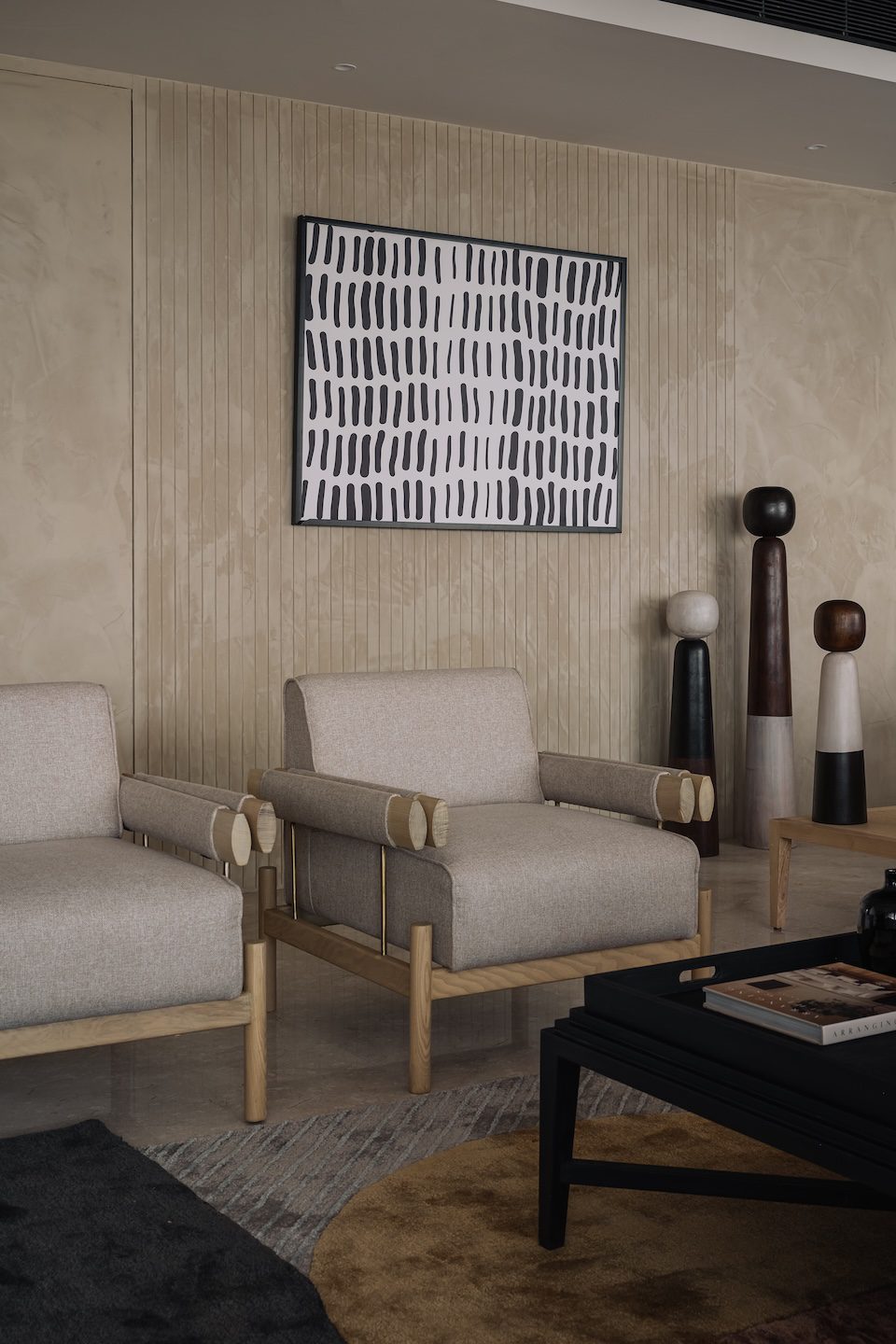
The resulting language brings together clean forms and a restrained palette with inserts of craft and cultural reference. Handcrafted objects, bespoke ceramics, and custom-made details are placed with intent against a monochromatic backdrop that works quietly, giving these elements space to breathe. What emerges is a home where minimalism does not feel stark, and craftsmanship does not feel excessive… a serene environment that celebrates both simplicity and craft while reflecting the life and personality of its inhabitants.
The site
Located in one of Ahmedabad’s prime residential neighbourhoods, the project is a 3,402 sq ft apartment that came with predefined rooms, and developer-given flooring and wall finishes. Positioned on the seventh floor, the apartment opens out to expansive views of Ahmedabad’s skyline. Running along the living and dining areas, a 40-foot-long cantilevered deck extends outward by 15 feet, creating a generous outdoor extension of the home. This elongated balcony not creates a strong visual connection between the interiors and this outdoor but also plays a defining role in shaping the spatial experience of the home.
The civil intervention
The existing plan was carefully reconfigured to improve spatial planning, optimise circulation, and enhance the internal square footage of certain key areas within the home. All the bathrooms, the kitchen, foyer and power toilet were completely dismantled and rebuilt to allow for customised layouts and improved functionality. Several walls and architectural surfaces were reconsidered to better integrate bespoke joinery, lighting, and spatial elements. Through these interventions, the apartment evolved from a standard residential shell into a more fluid and tailored environment, where every surface from flooring and walls to built-in elements was thoughtfully redesigned to support the overall spatial experience and day to day functionality of the home and the users.
The spatial configuration
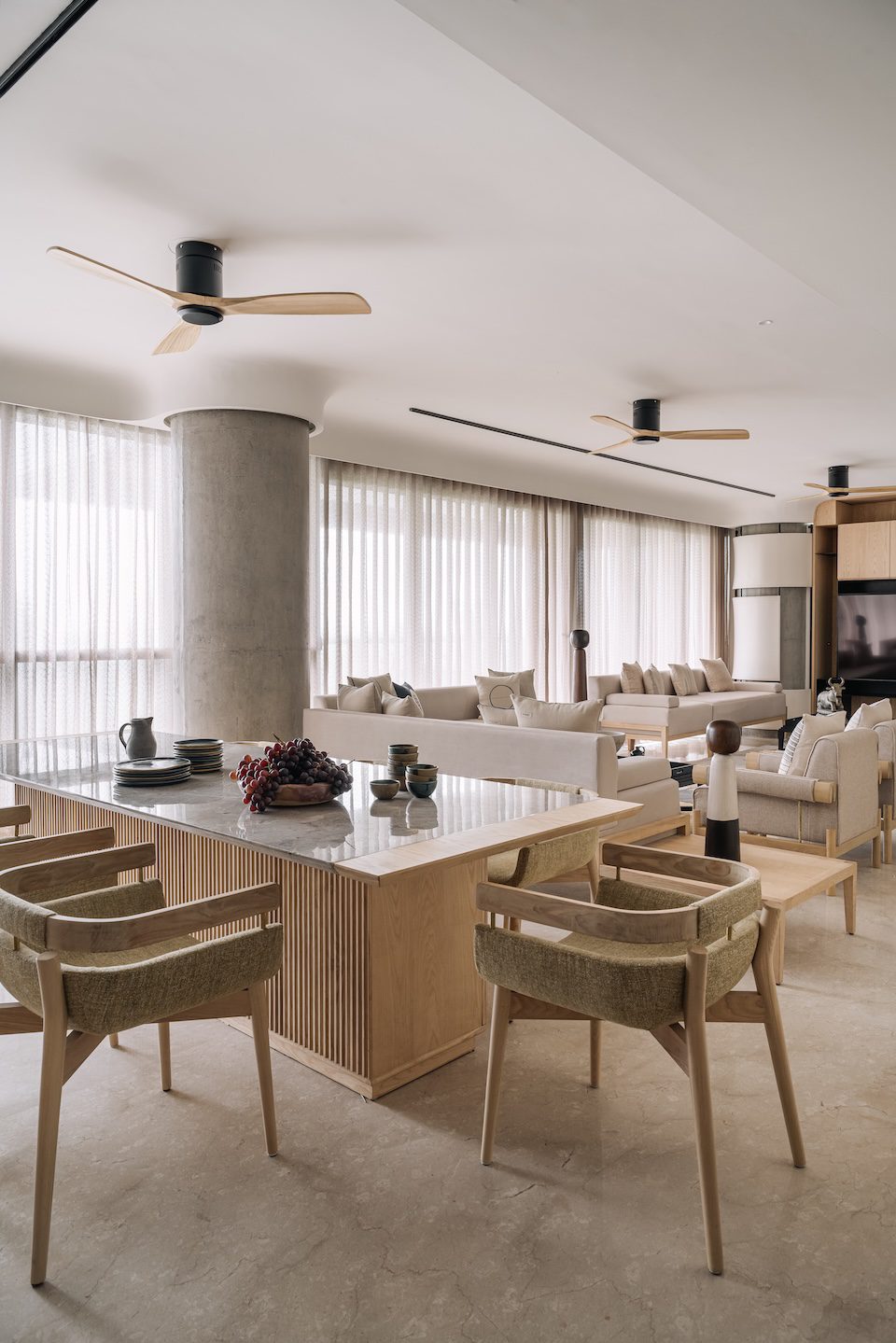
A private elevator opens into an entrance foyer. Here, a powder toilet is also accommodated. From here, the home unfolds gradually, leading into the main living area that extends seamlessly towards a generous outdoor deck. The open living and dining spaces encourages interaction and ease of movement while maintaining a sense of visual clarity. The kitchen is integrated within the dining zone, allowing it to remain connected to the larger social space without feeling intrusive. Beyond this shared core, the layout transitions into more private zones, including the bedrooms, walk-in wardrobes, and ensuite bathrooms. Each of these spaces carry a subtle individual identity, while still adhering to the home’s overall monochromatic language.
Circulation across the apartment is deliberately composed and unobtrusive, allowing materials, light, and curated elements to guide the experience. Central to this movement is the main passage, which acts as the spine of the home, connecting the public and private zones. Reworked to be highly functional, it incorporates concealed storage along its length, transforming it into a utilitarian element that operates almost like a room in itself.
The design and material details
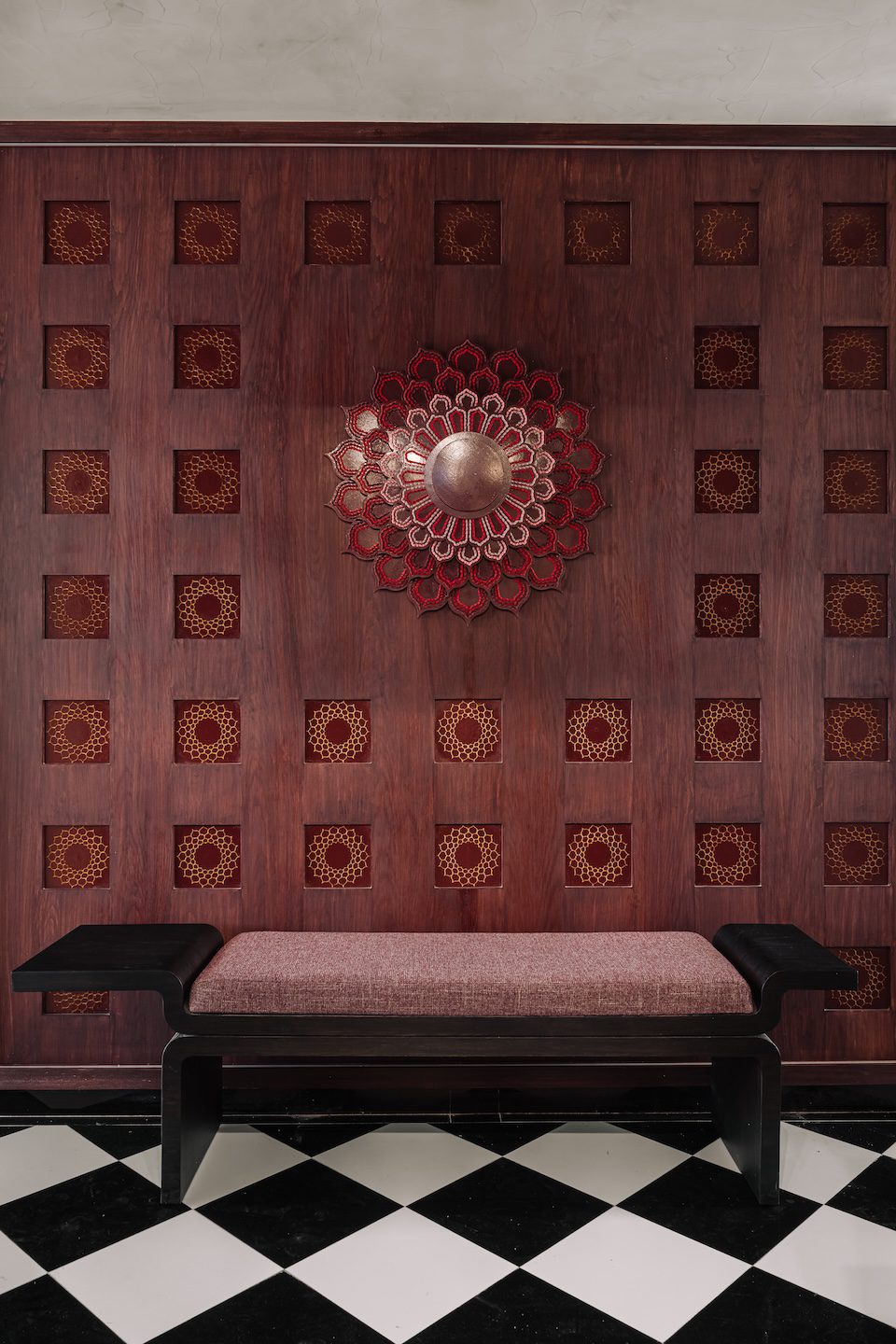
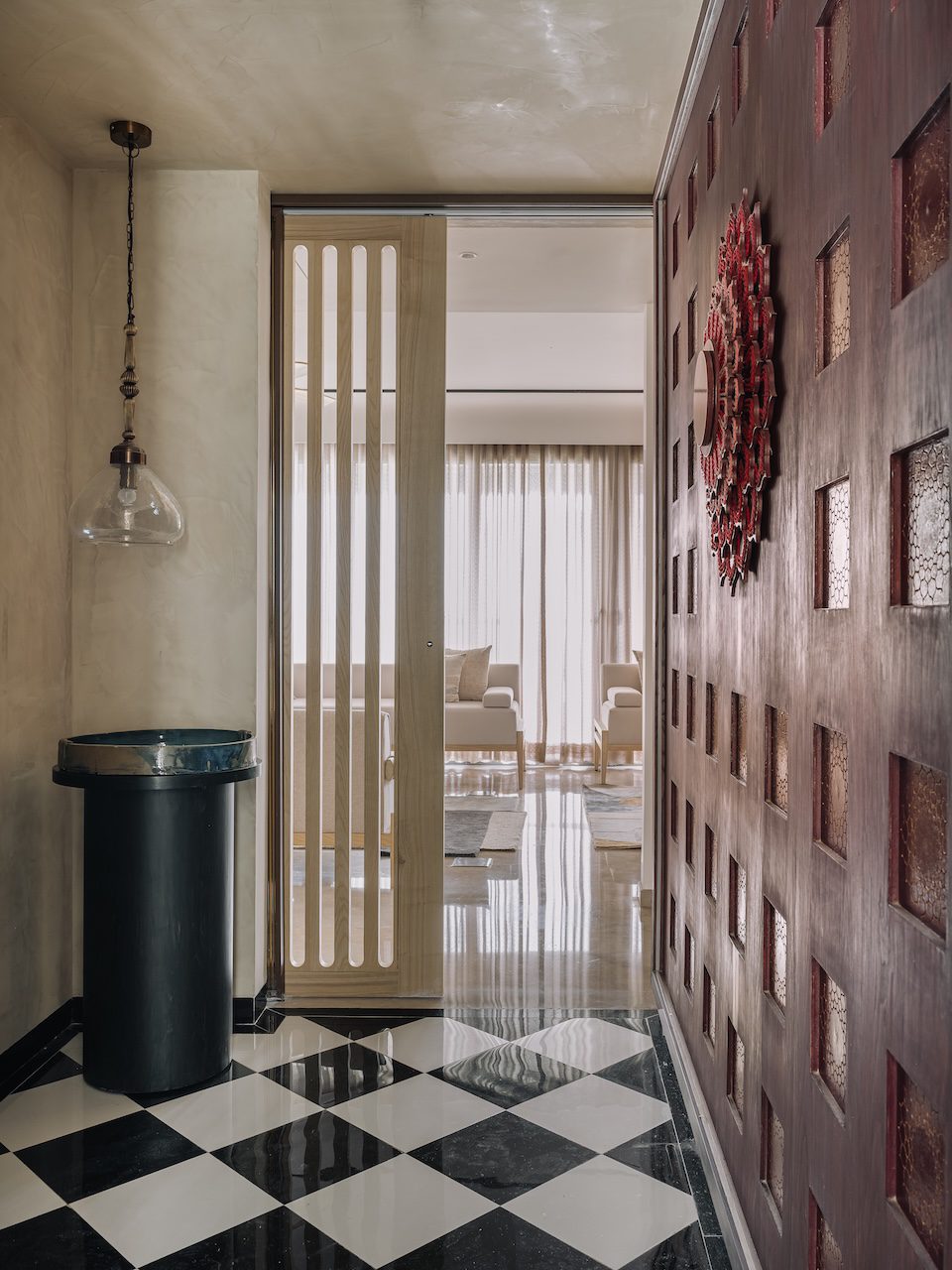
The foyer establishes a strong first impression through material and craft. A bespoke wooden wall cladding defines the space, composed of recessed square panels detailed with intricate Indian floral motifs. Custom-designed for the project, the panelling is finished in a rich Marsala-toned polish that brings warmth and depth to the otherwise restrained palette. At its centre, a sculptural floral installation becomes the focal point, offering a contemporary interpretation of traditional craftsmanship. In contrast, the black-and-white chequered flooring introduces a sharp geometric layer, grounding the space with clarity and visual flow.
A custom-designed bench in dark wood, paired with upholstered seating from Drape Shoppe, Ahmedabad, adds both function and balance. The lighting remains understated yet considered, with a suspended fixture from Fabindia placed near the sliding door. Completing the composition, a handmade urli by ceramist Shachi Shah rests on a round high table, adding a subtle artisanal presence to the space.
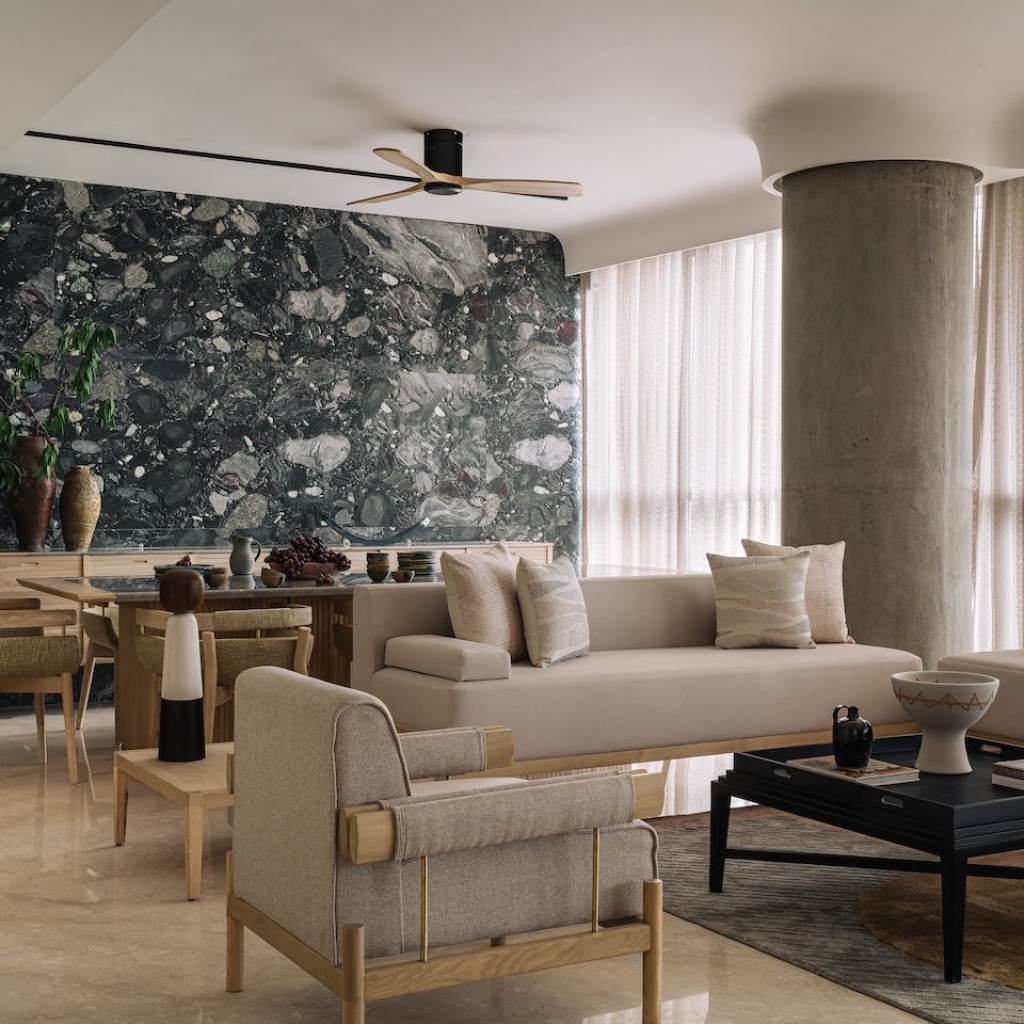
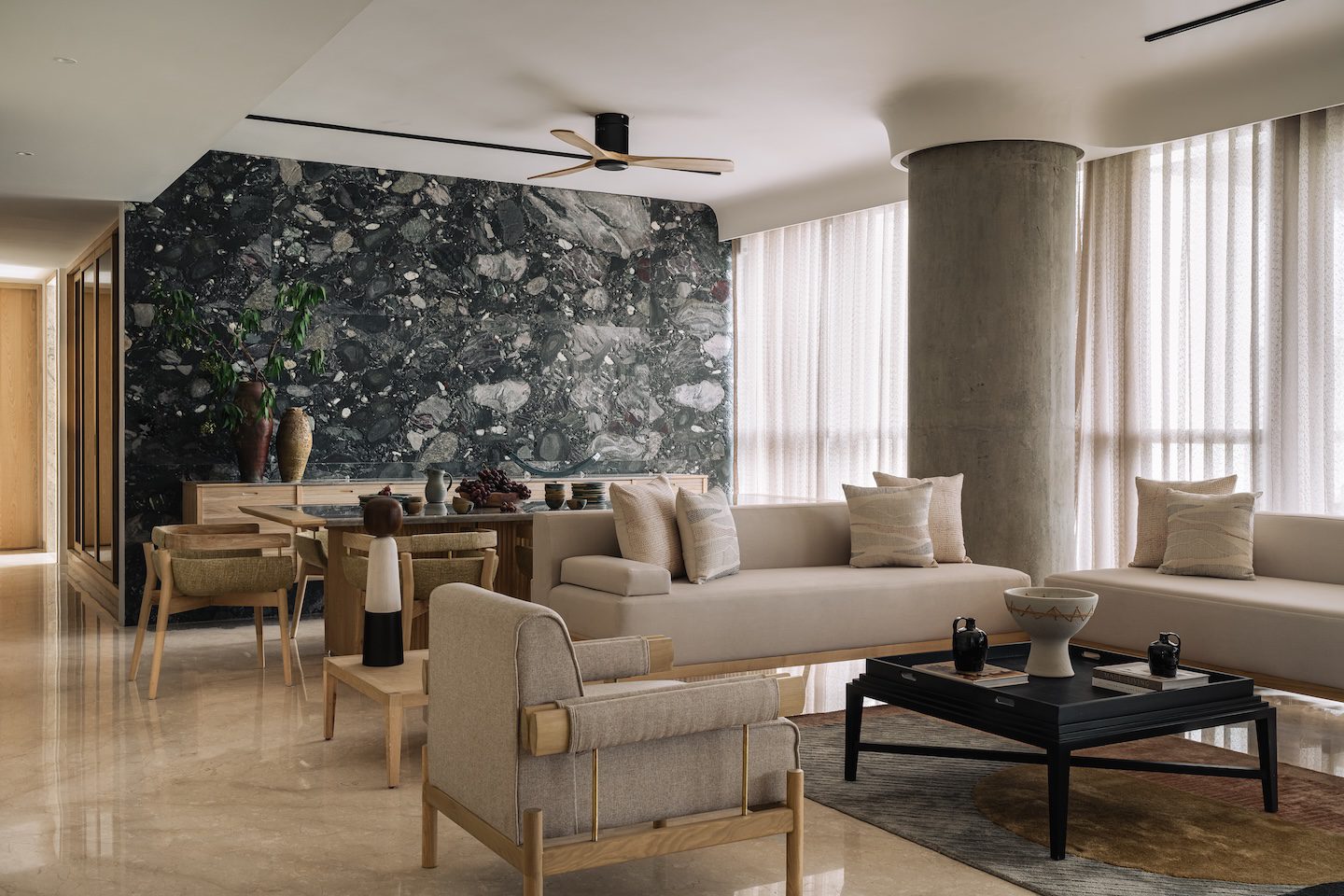
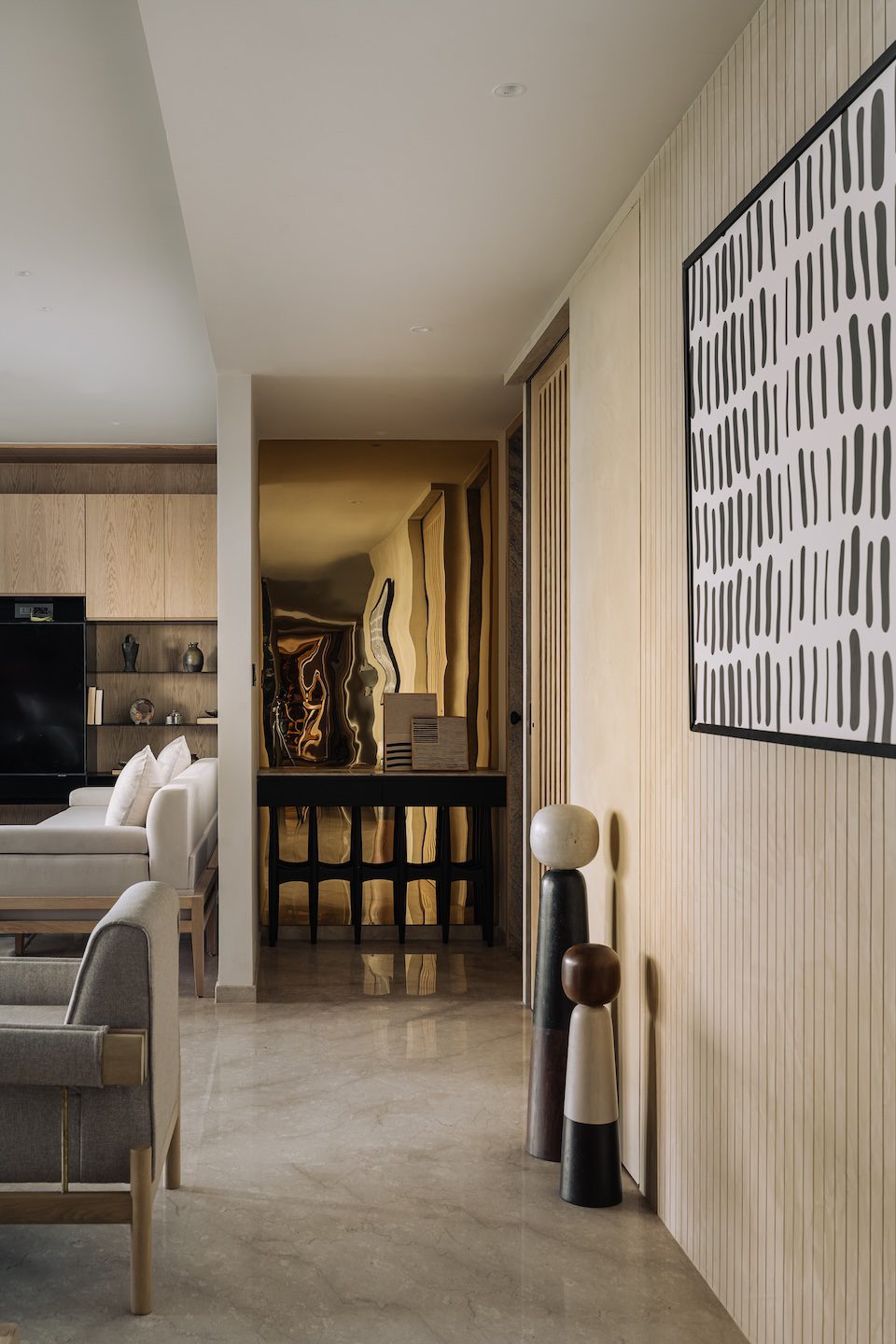
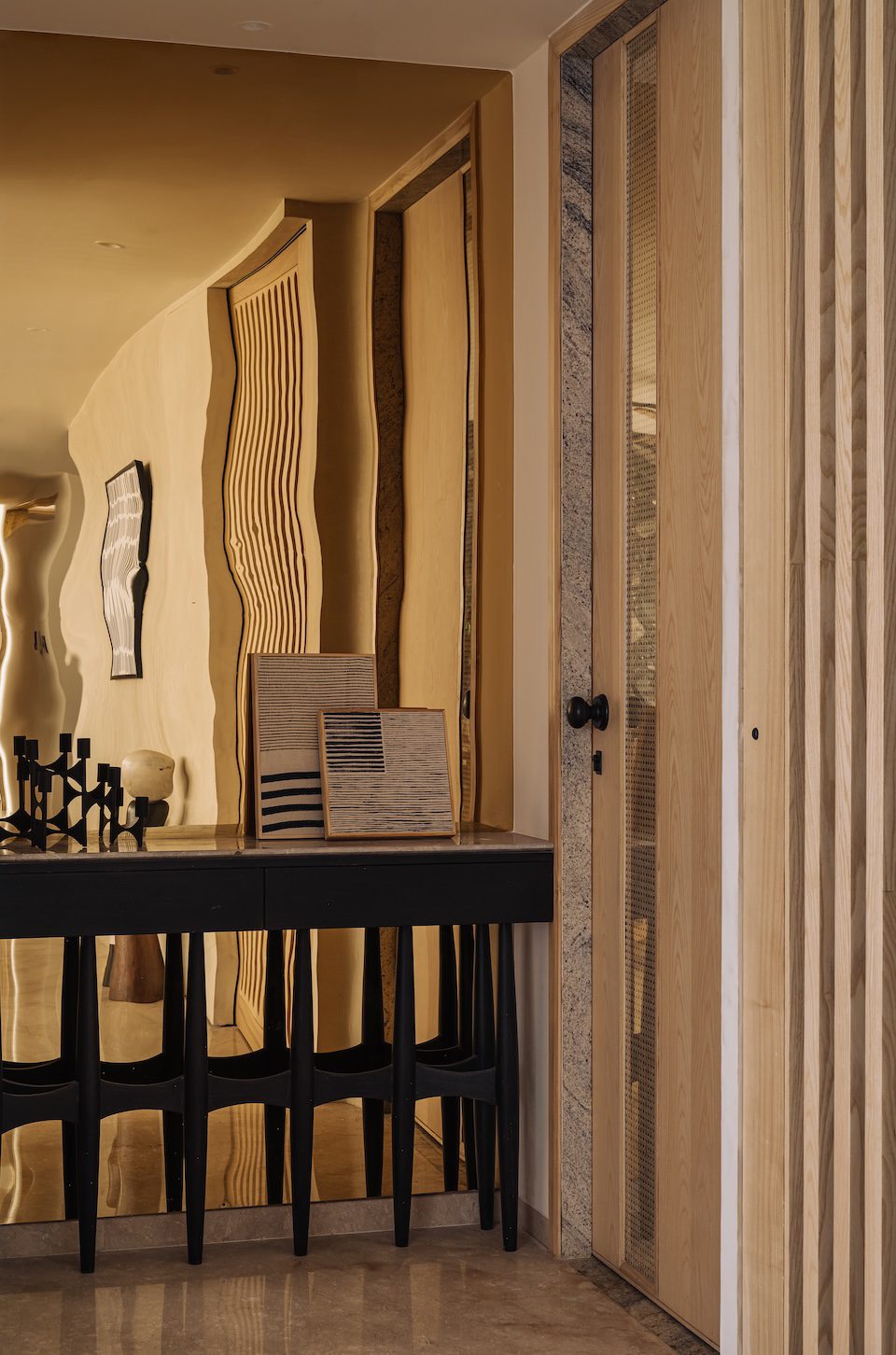
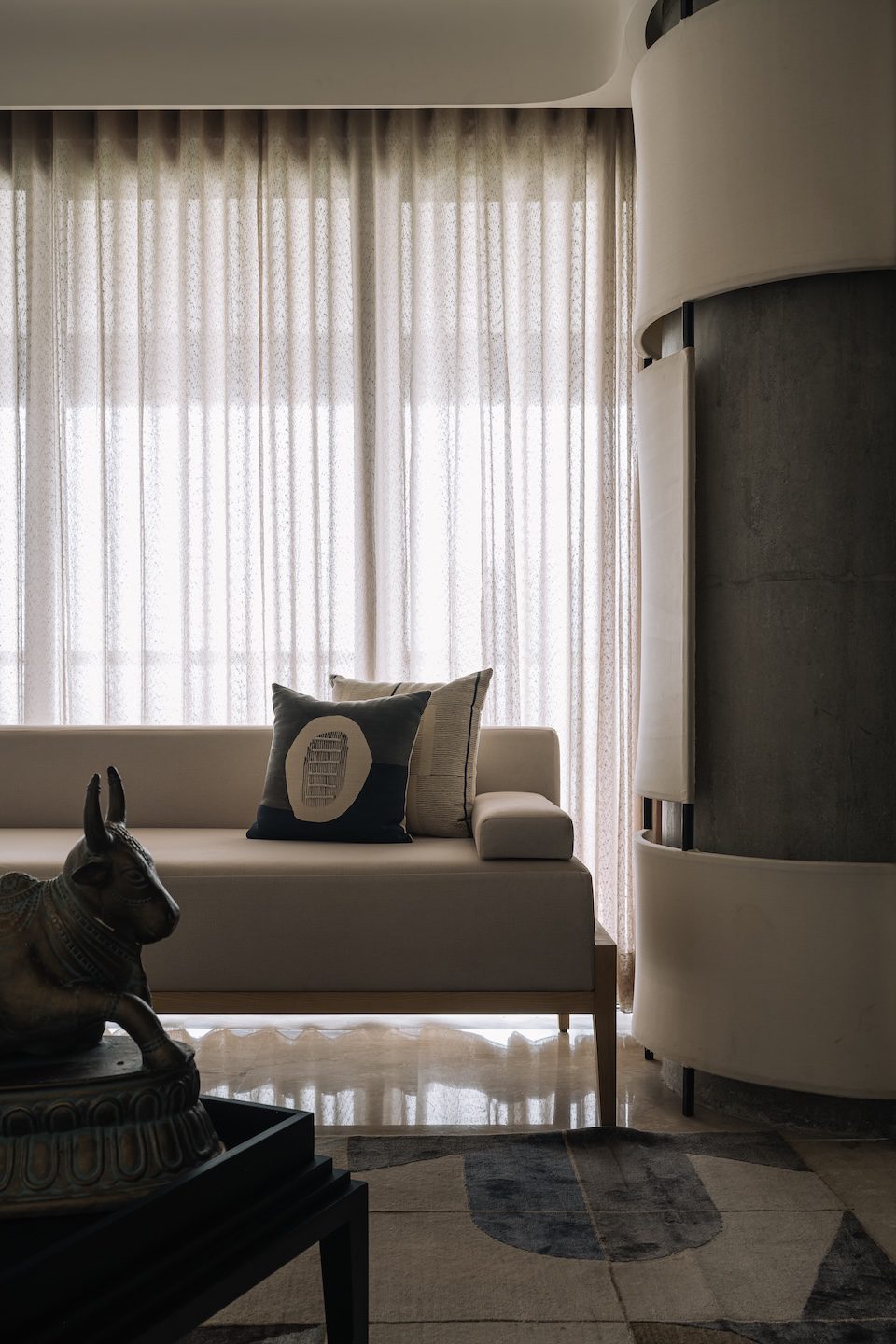
The living room is designed as a calm and refined gathering space, defined by a soft neutral palette and natural materials. Large windows are dressed with sheer curtains that diffuse natural light, creating a warm and tranquil atmosphere throughout the space. Along one wall, a PVD-coated gold sheet is applied as a thin surface layer, its reflective quality introducing a subtle play of light—a gentle undulations in the material create a soft, wavering reflection of the surroundings
The furniture is entirely custom-designed, with light wood frames paired with neutral upholstery to maintain warmth and simplicity. A black burnt wood centre table introduces contrast, its design incorporating a portable tray that blends seamlessly into the form when not in use. Layered rugs from Jaipur Rugs help anchor the seating arrangement. The TV wall is articulated through oak veneer cabinetry and open shelving, detailed with black framing to create a balanced visual contrast. Decorative objects and handcrafted artefacts are placed with intent, allowing the space to feel personal without appearing overdone.
Overhead, the ceiling and columns are brought into a continuous dialogue of curves. The teardrop-shaped ceiling profile mirrors the rounded concrete columns, establishing a cohesive architectural language. Concealed lighting within the ceiling casts a soft ambient glow, while custom vertical lighting elements, wrapped in fabric and designed around the columns, highlight the raw texture of the concrete. As the ceiling extends towards the windows, it transitions seamlessly into a curtain pelmet, discreetly integrating functionality while maintaining visual continuity.
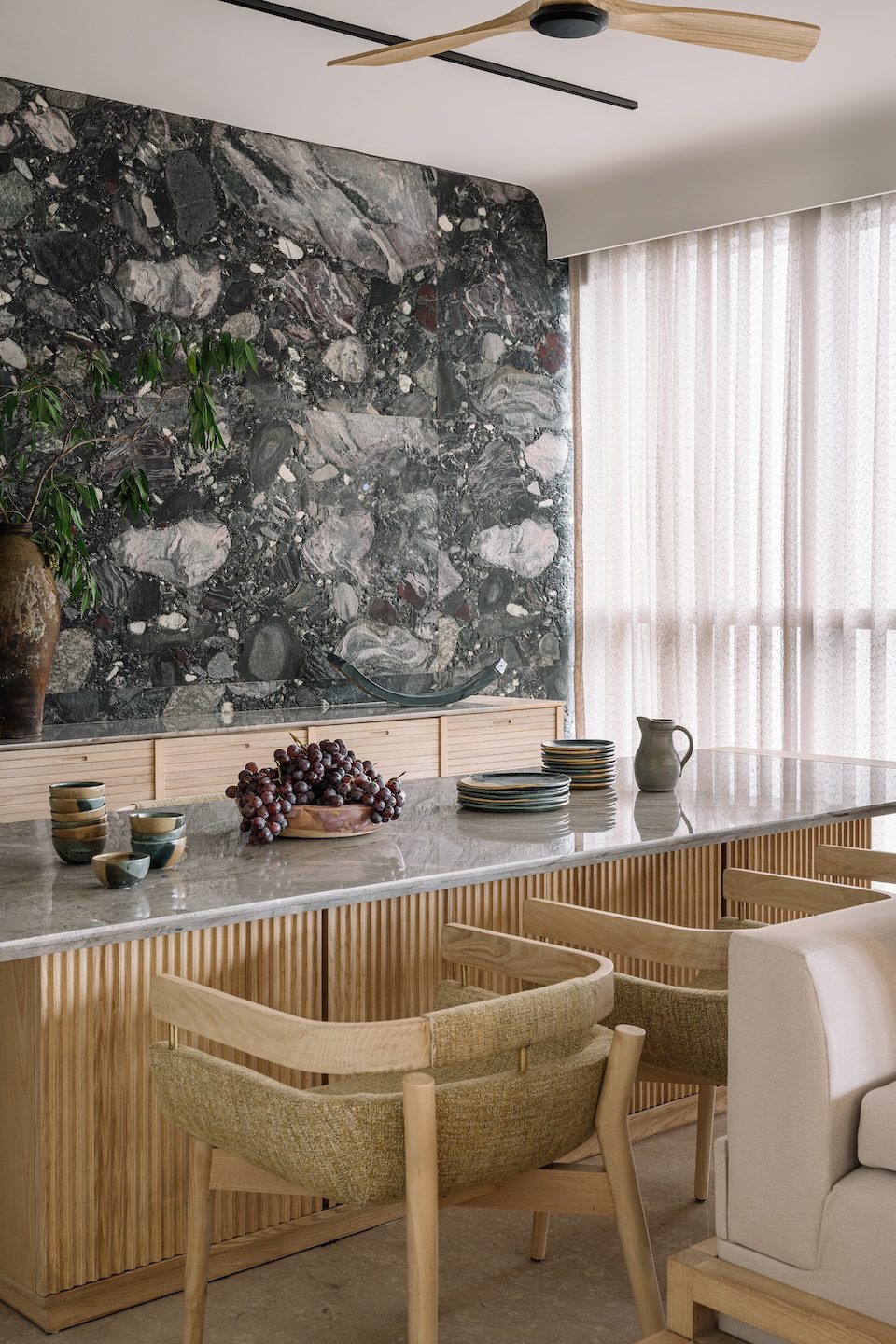
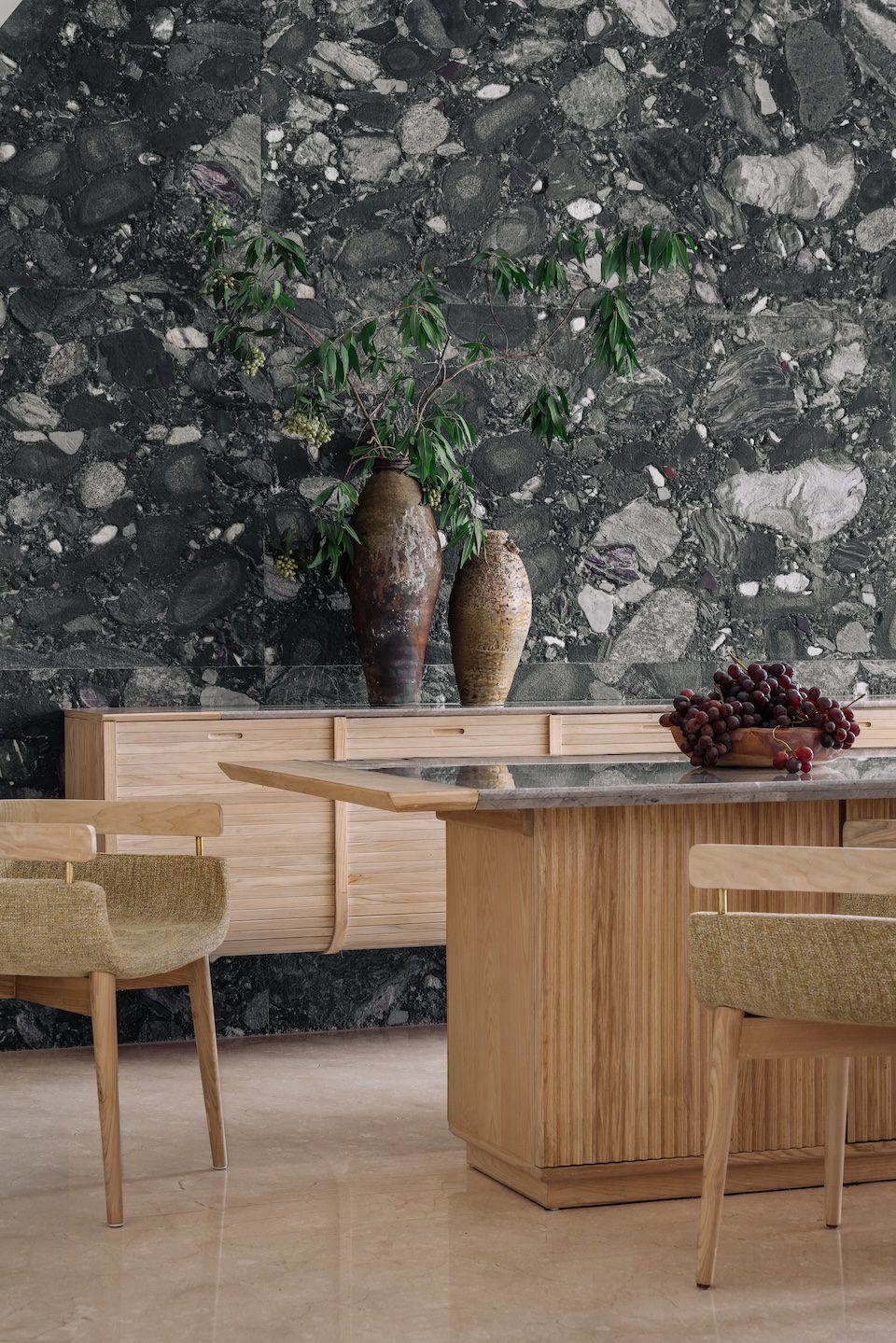
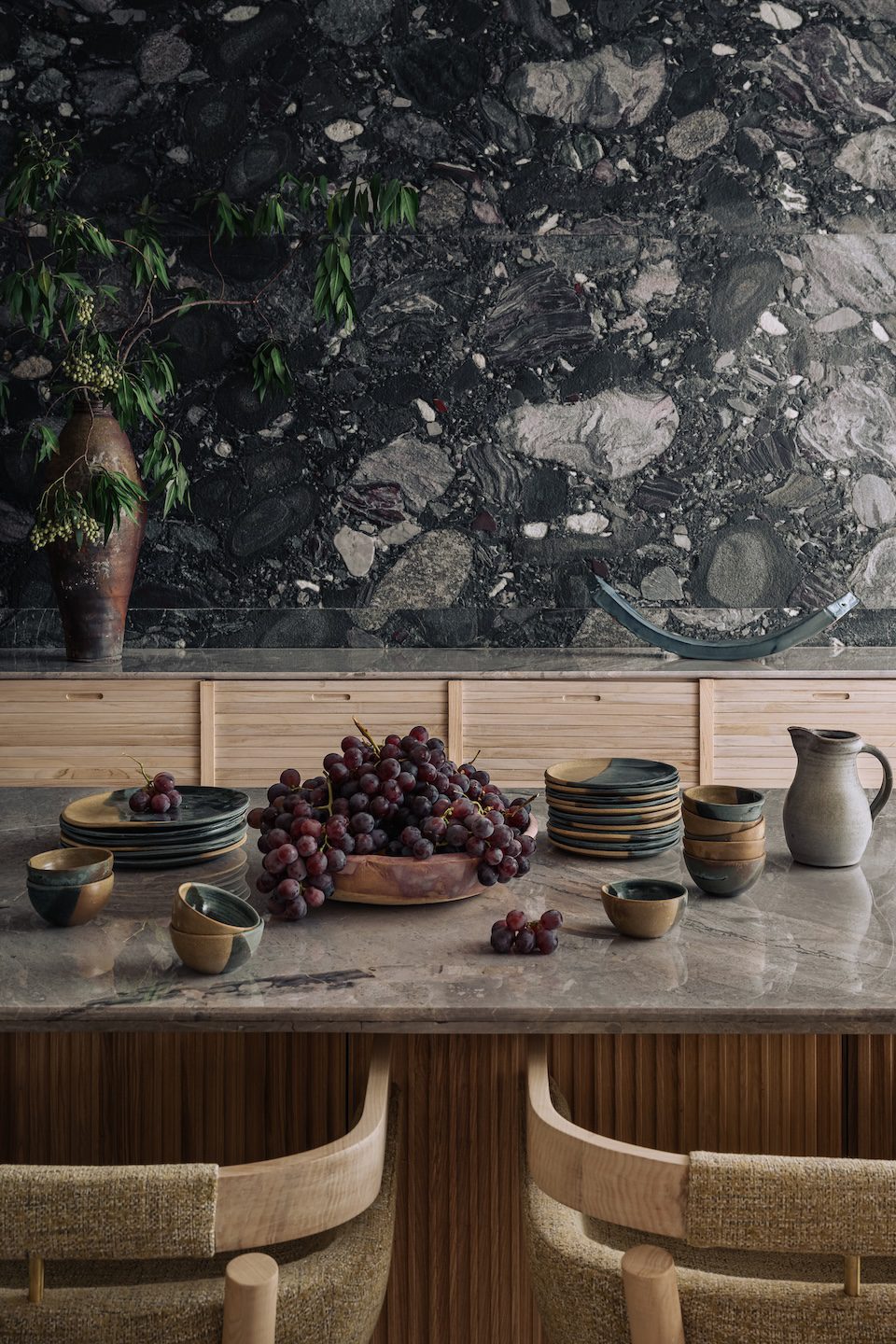
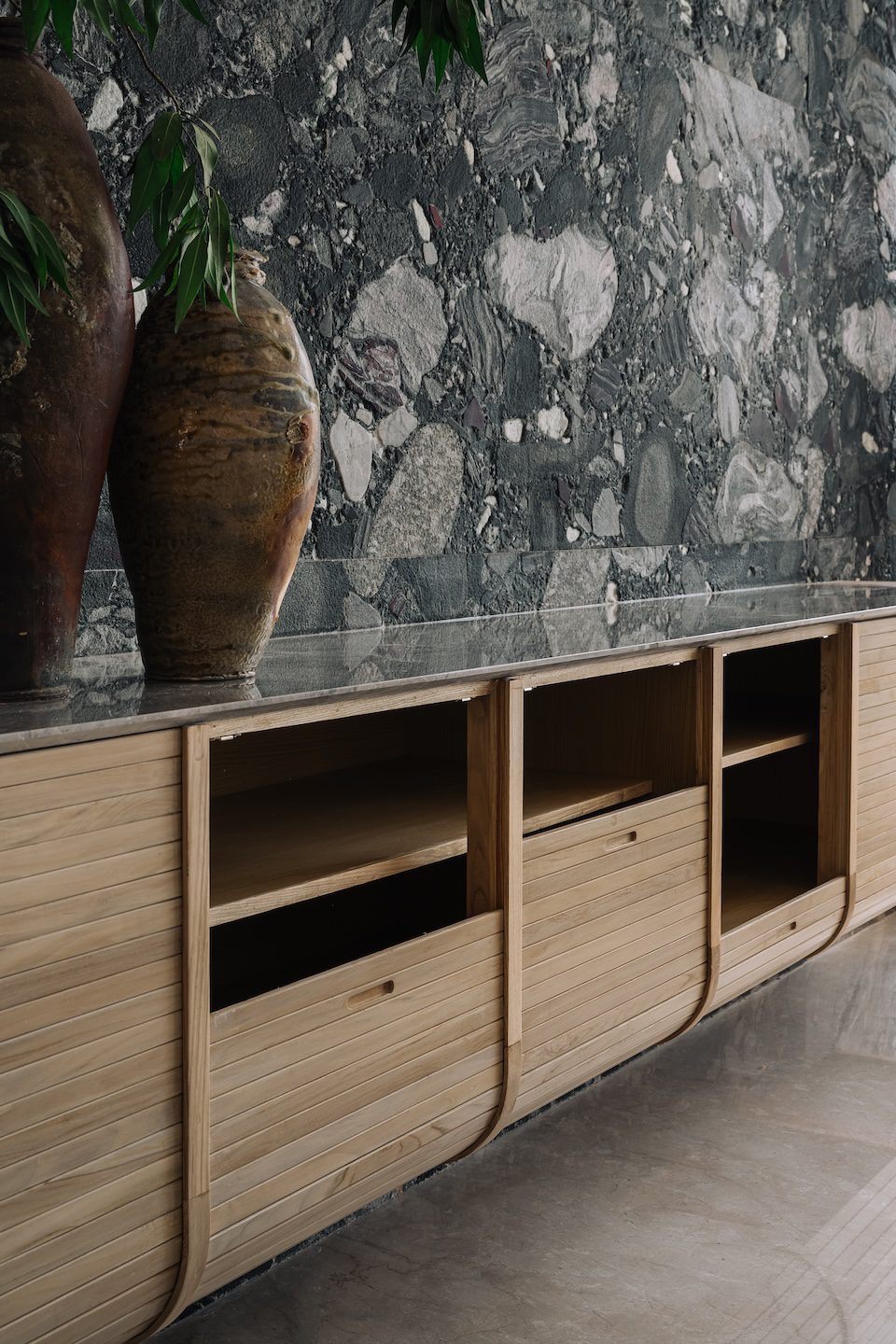
The dining room is marked by a custom stone feature wall composed of locally sourced stones assembled to create a richly textured surface. Positioned alongside large windows, the wall is washed with natural light through the day, allowing its tones and textures to shift gently, making it a striking visual feature. Set against this surface is a cantilevered hanging console, designed to hold crockery, cutlery, and dining essentials. Fixed directly to the wall and lifted off the floor, it maintains a sense of visual lightness. The storage is detailed with vertical rolling shutters that slide into concealed cavities, eliminating the need for outward-opening doors and ensuring smooth movement within the passage.
At the centre, the dining table features an Italian marble top, softened with wooden edges to avoid sharpness. Its rectangular base integrates concealed storage, finished with fluted shutters that subtly echo the detailing of the console. Surrounding it are nest-like dining chairs, designed for both comfort and ease. A slight gap between the armrest and seat allows for a natural grip, making the chairs easy to move without disrupting the flow of the space.
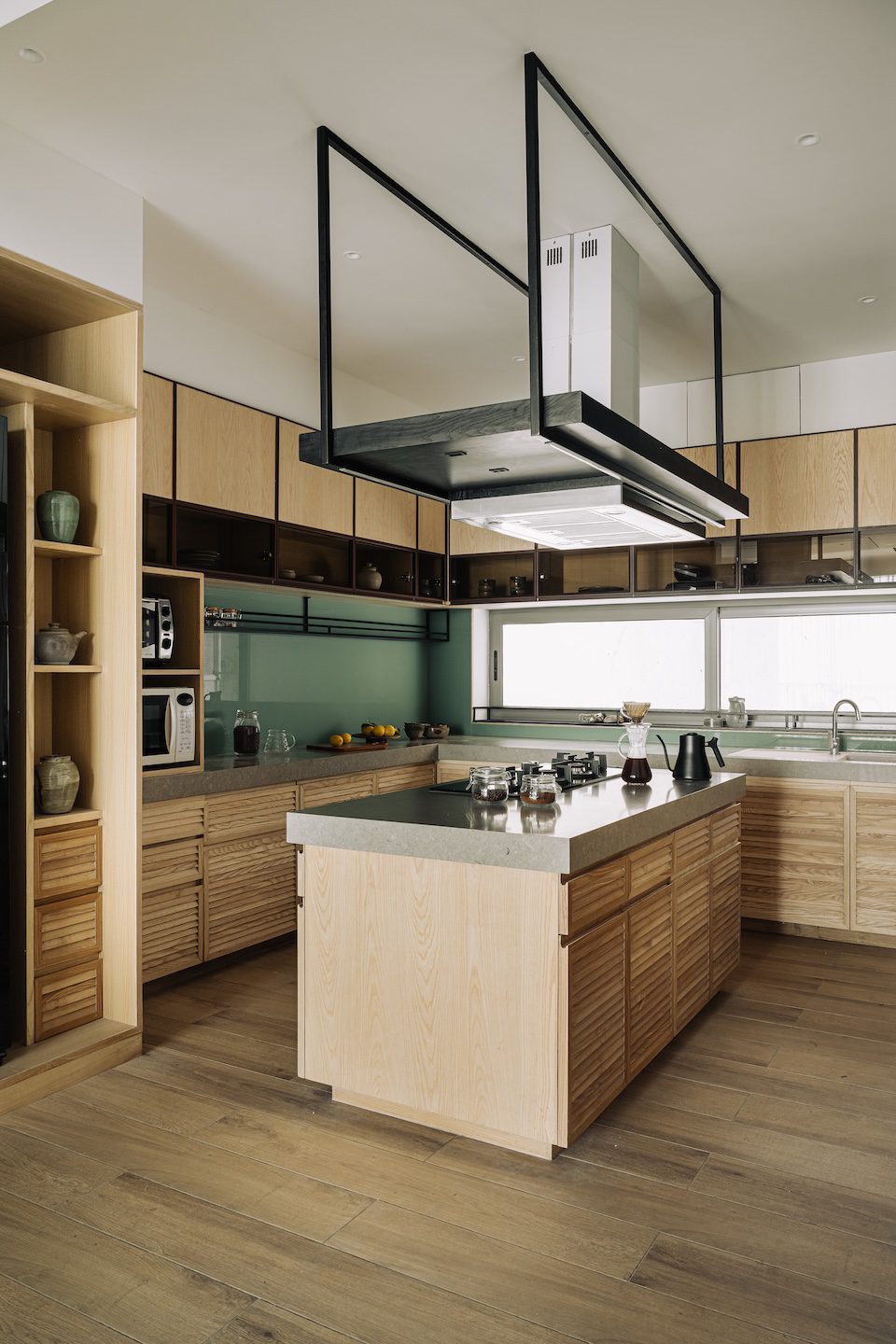
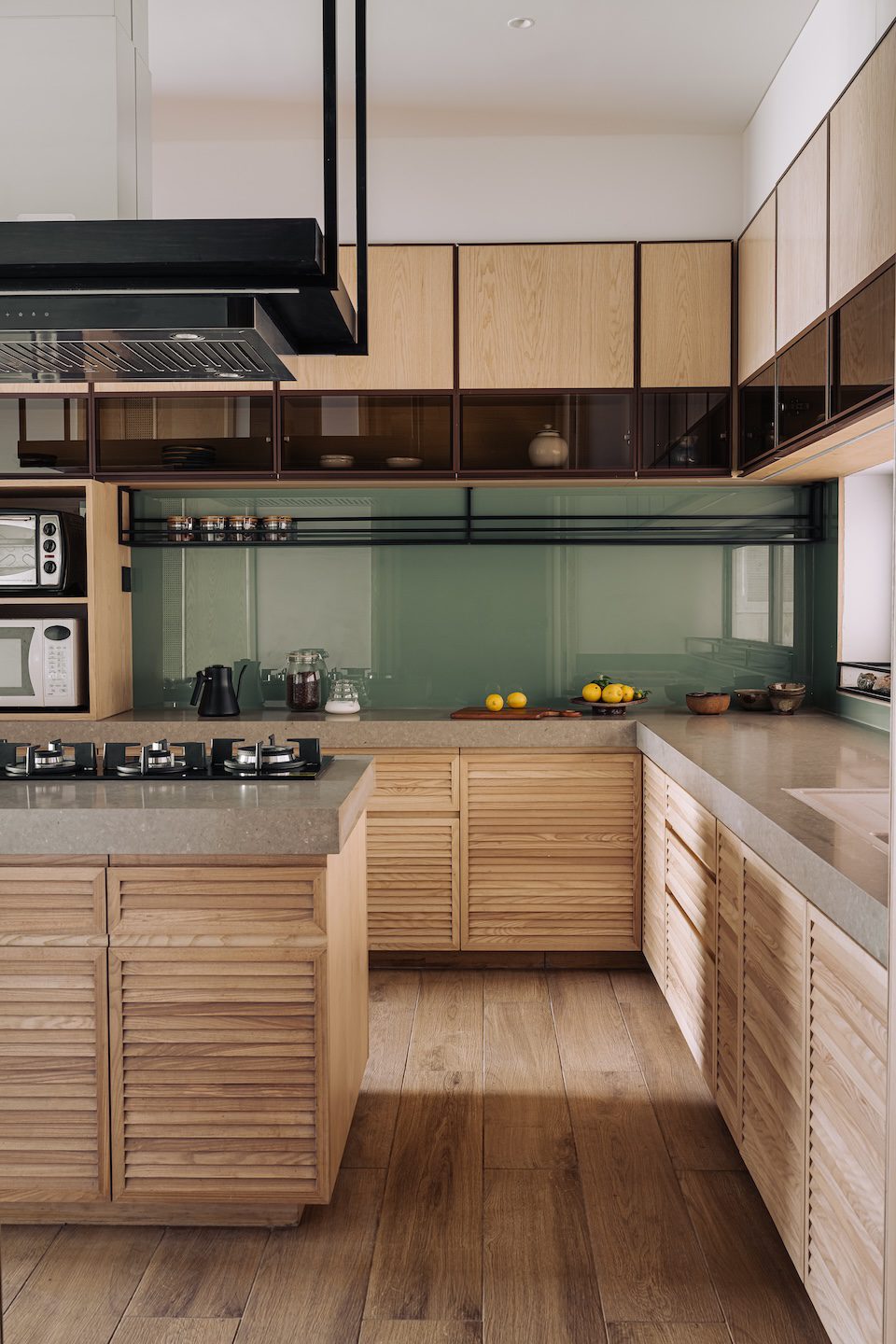
The kitchen is designed around the idea of togetherness, allowing multiple users to cook comfortably at the same time. To support this, the existing layout was reworked to introduce a central island that becomes both a functional core and a point of interaction within the space. A soft sage green back-painted glass backsplash lends the kitchen its character, complemented by a balanced mix of open and closed storage that keeps the space feeling light and organised. The design treats functional elements as integral features—the suspended chimney with hanging wine glass detailing, built-in refrigerator cabinetry, and under-counter shutters with louvered patterns and concealed handles all contribute to a balanced visual language. Lighting is carefully integrated, with indirect illumination placed to support everyday tasks such as chopping and washing.
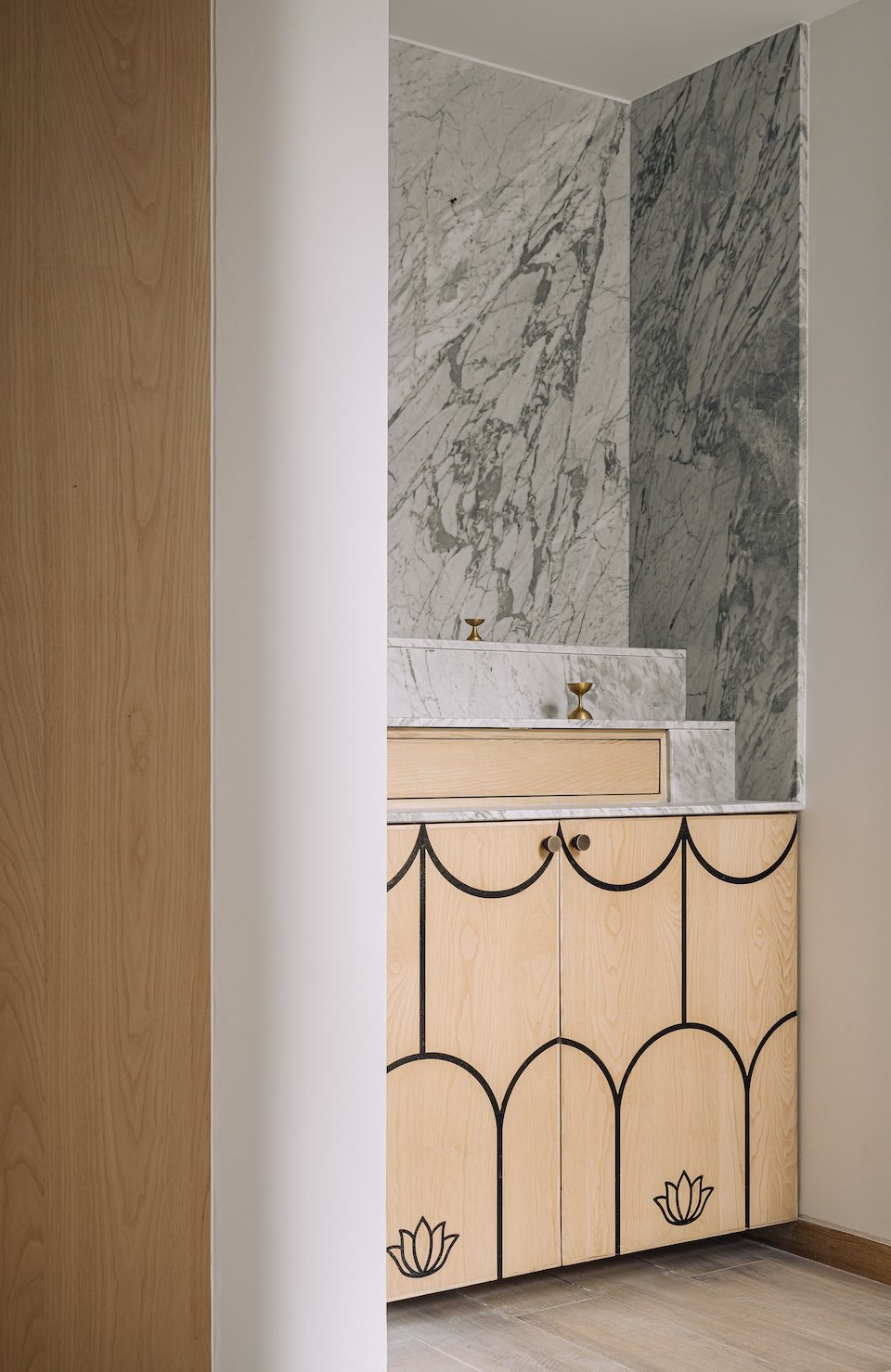
Moving away from the conventional expression of an Indian shrine, the temple is envisioned as a calm and uncluttered sanctuary within the home. A restrained palette of stone, wood, and copper defines the setting, each material chosen for its ability to bring warmth without excess. The levels are carefully calibrated in accordance with vaastu and feng shui principles, ensuring that no deity is placed above another. These stepped stone platforms also make the space practical and easy to maintain. Wooden shutters below incorporate copper inlay motifs with matching handles, introducing detail in a measured way.
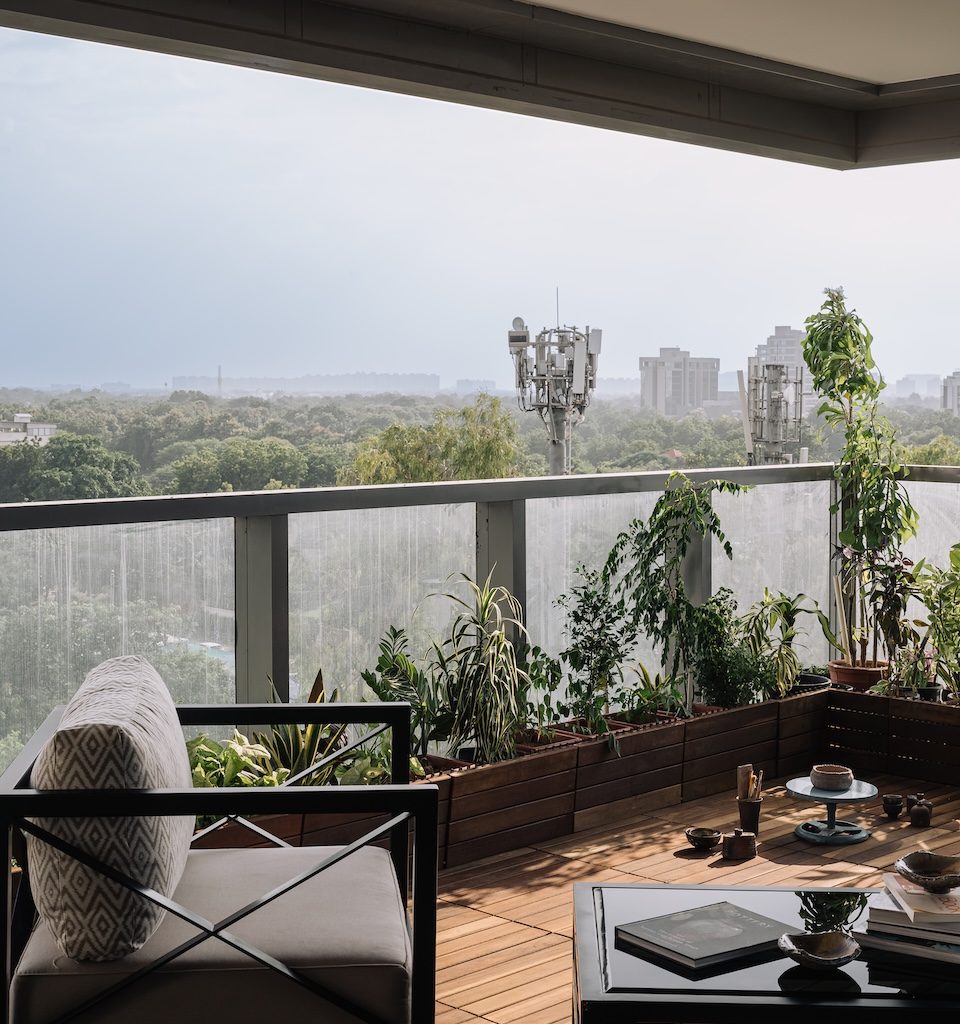
Overlooking the city’s expansive skyline, the outdoor deck is designed to recede into its surroundings, allowing the view to take precedence. Walnut wooden decking forms a continuous surface, extending into integrated cavities that house planting. These recessed planters allow greenery to grow while concealing the underlying structure, so what remains visible is a layer of foliage. By keeping the design low and uninterrupted, the deck creates a visual extension of the interiors, where the greenery within the home appears to merge with the tree cover beyond.
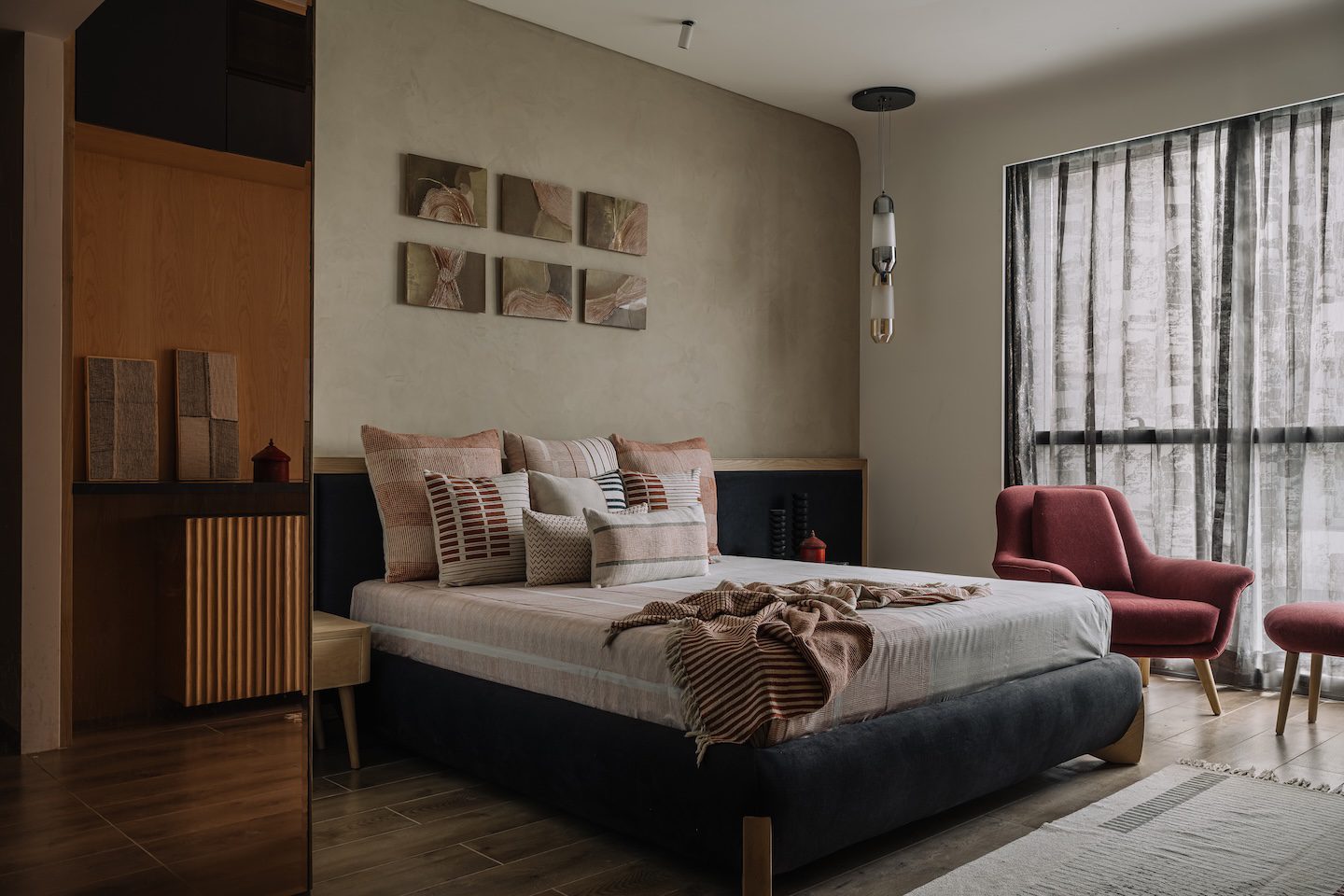
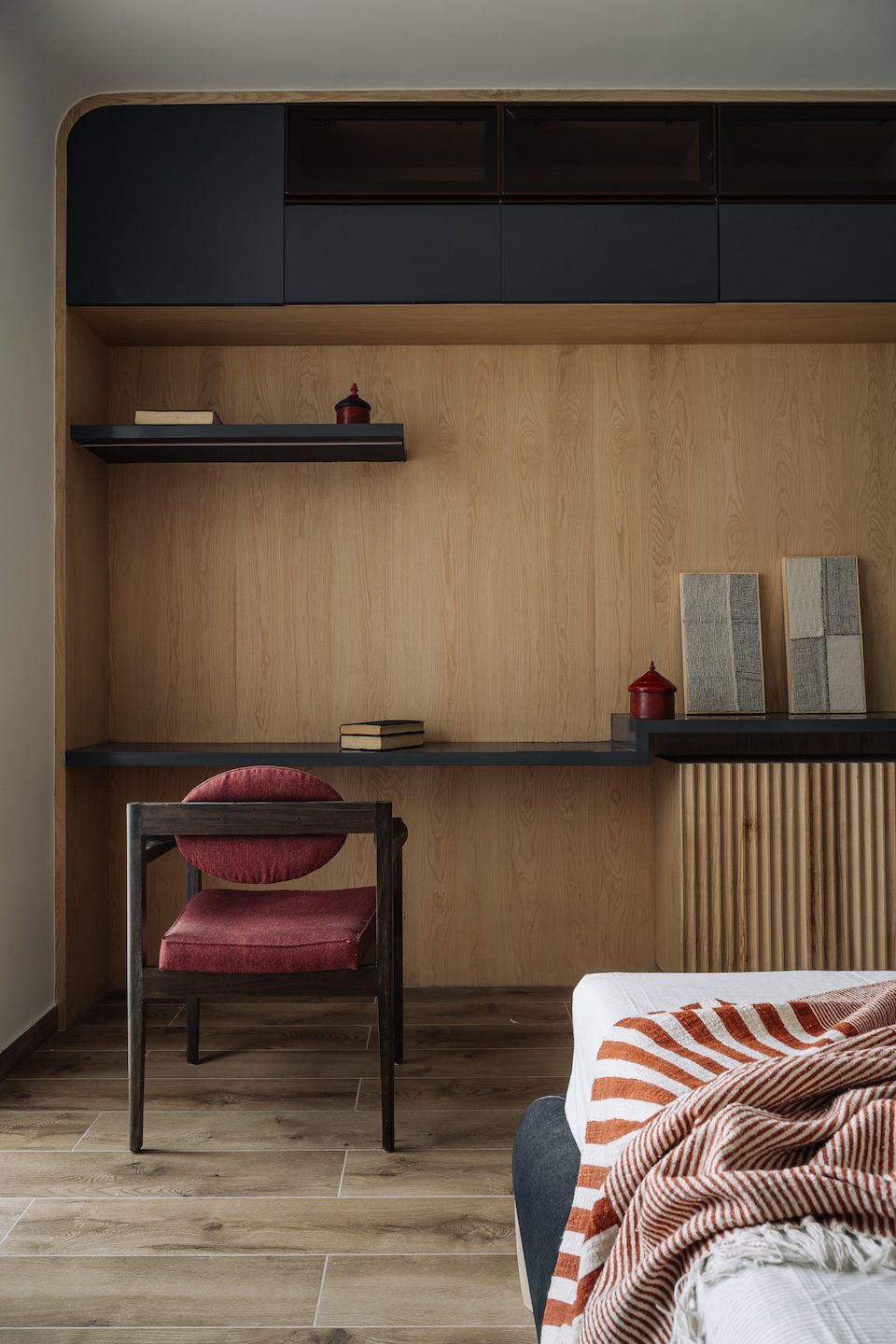
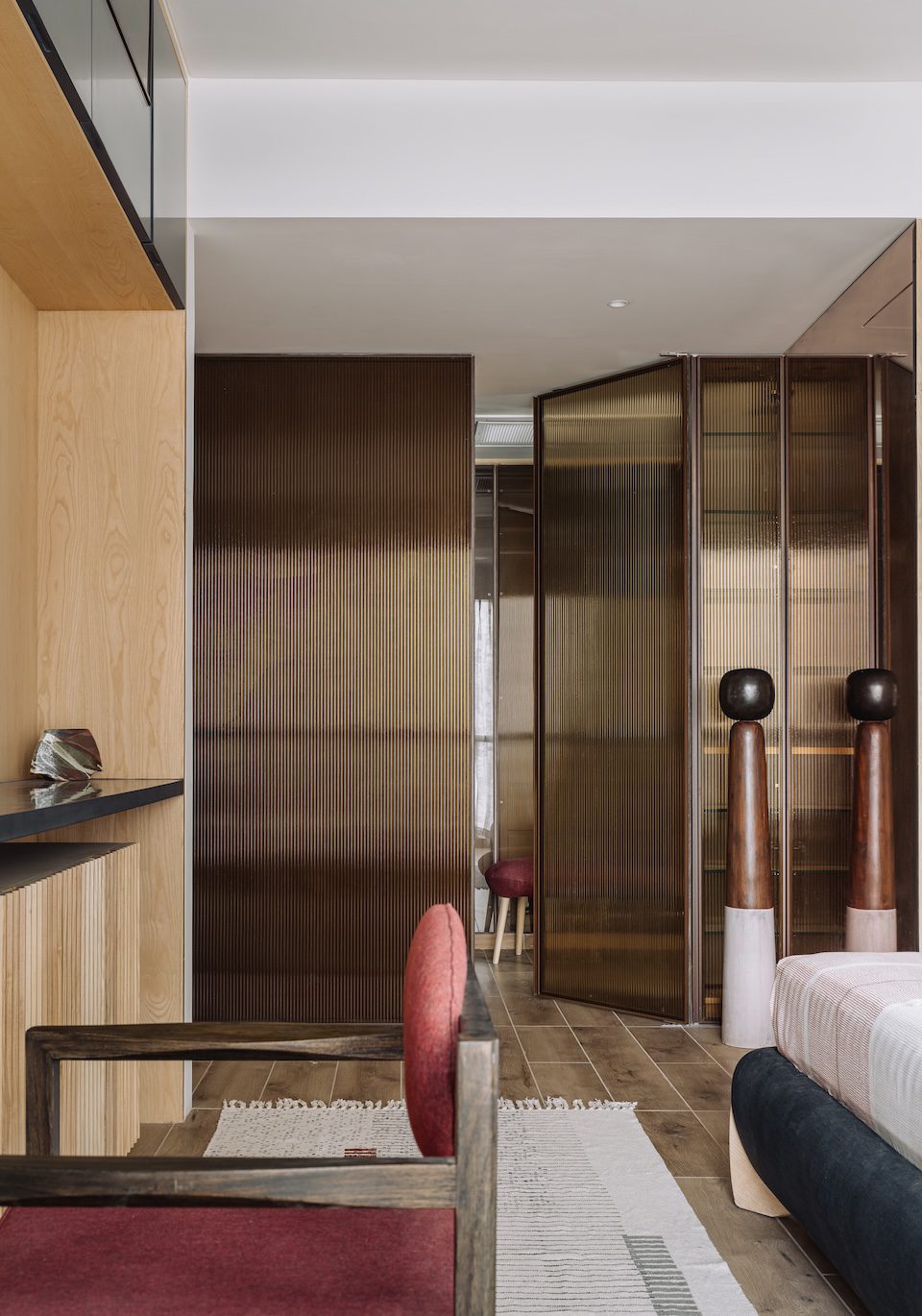
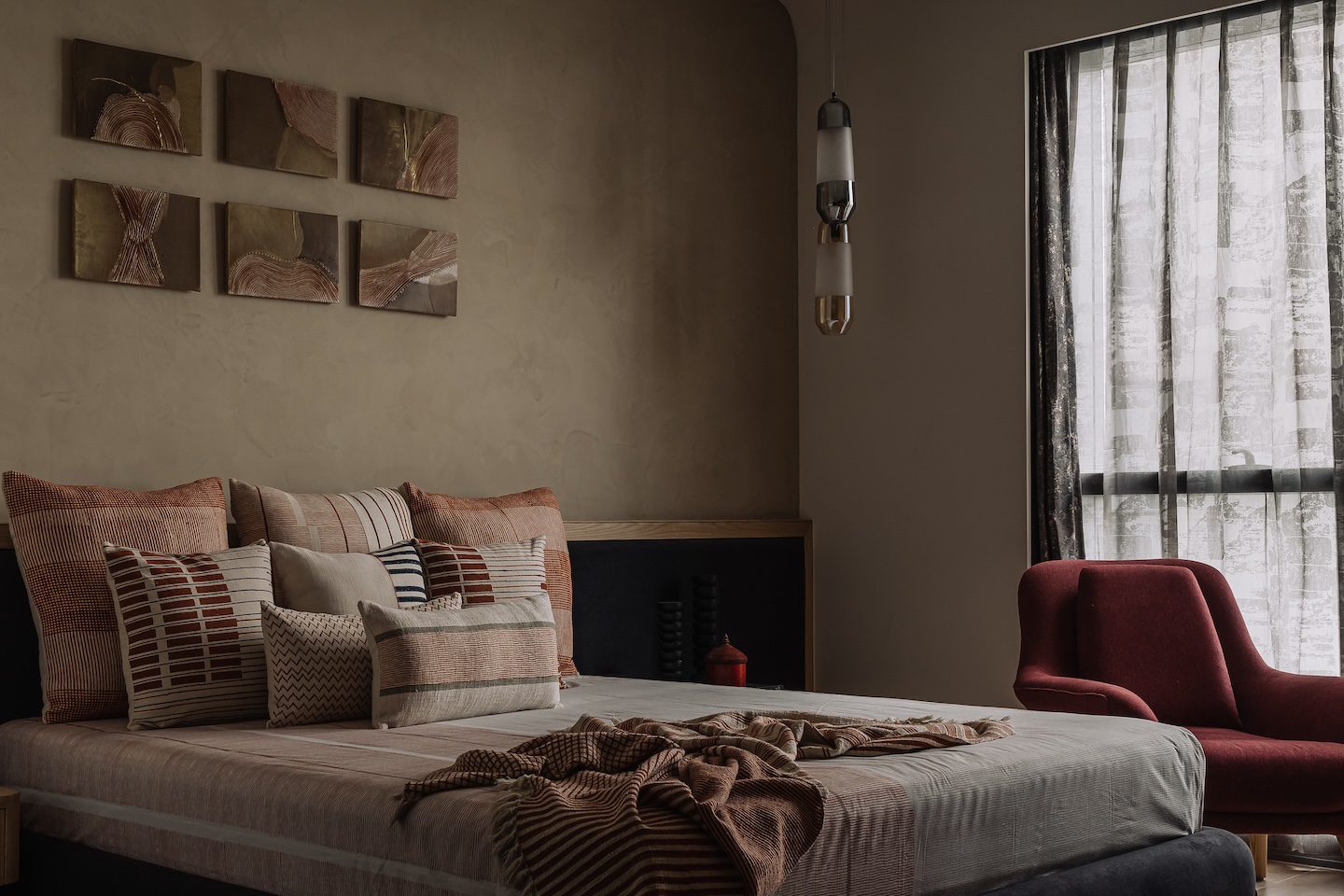
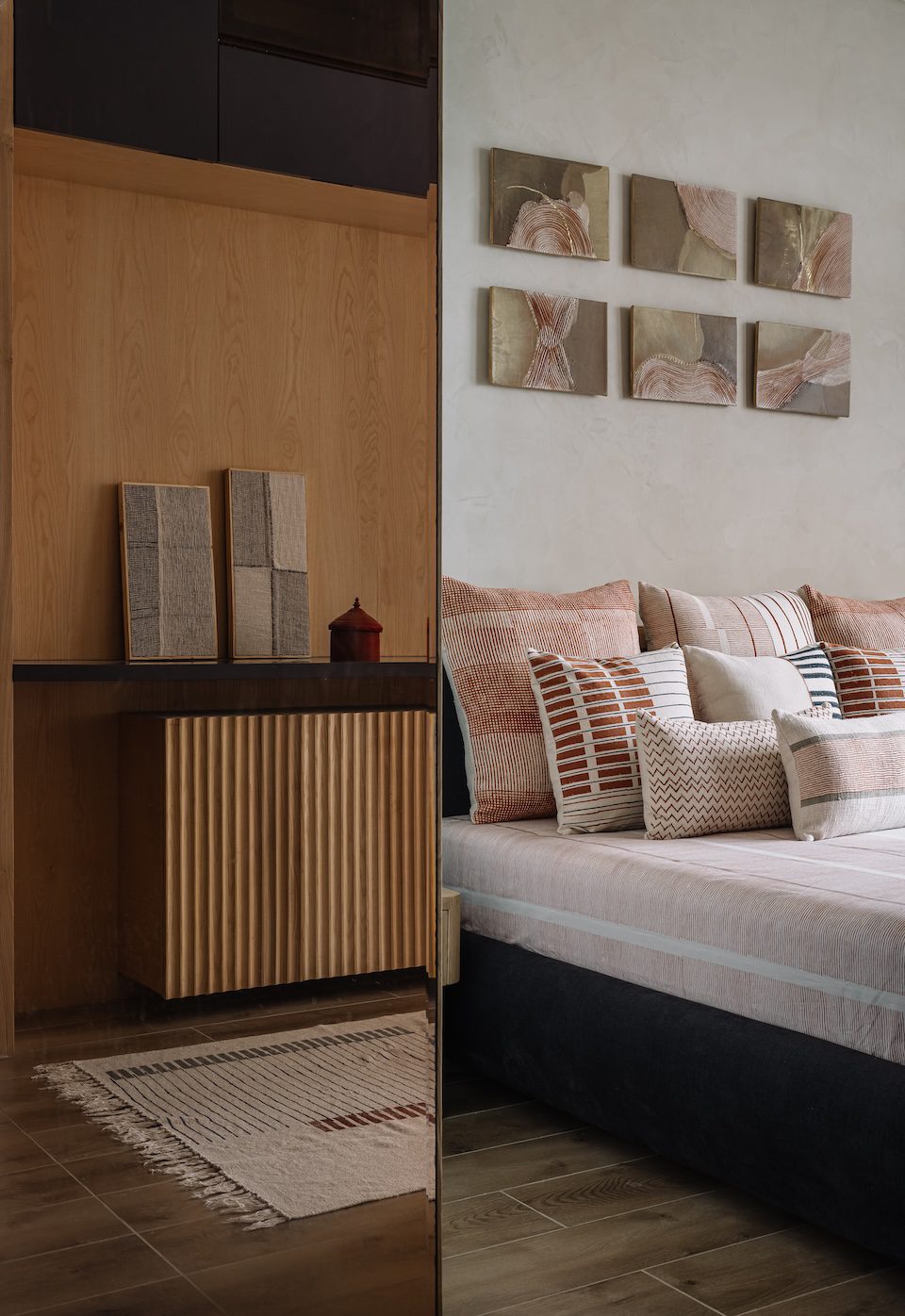
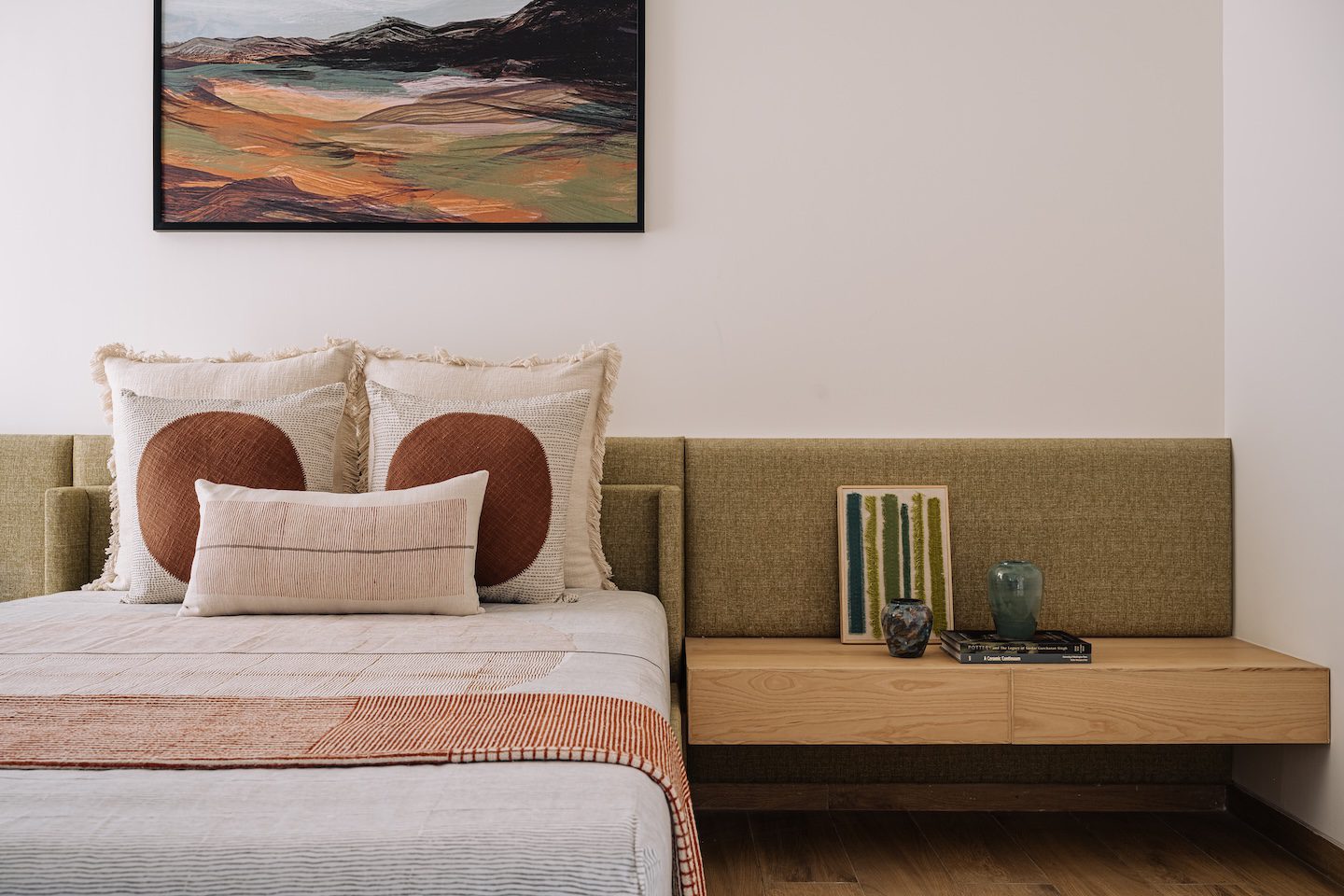
Each bedroom in the home is designed with a distinct identity, responding to the personality and lifestyle of its user. Variations in colour, headboard design, and furniture detailing allow every room to feel individual, while still aligning with the home’s larger palette and sensibility. The son’s bedroom, which also accommodates a study, is the most spacious. Designed to support a work-from-home routine, it features a large custom desk that offers both comfort and functionality. Near the entrance, a full-height mirror with a subtle bronze tint serves a dual purpose—practical in use, and reflective enough to visually extend the space.
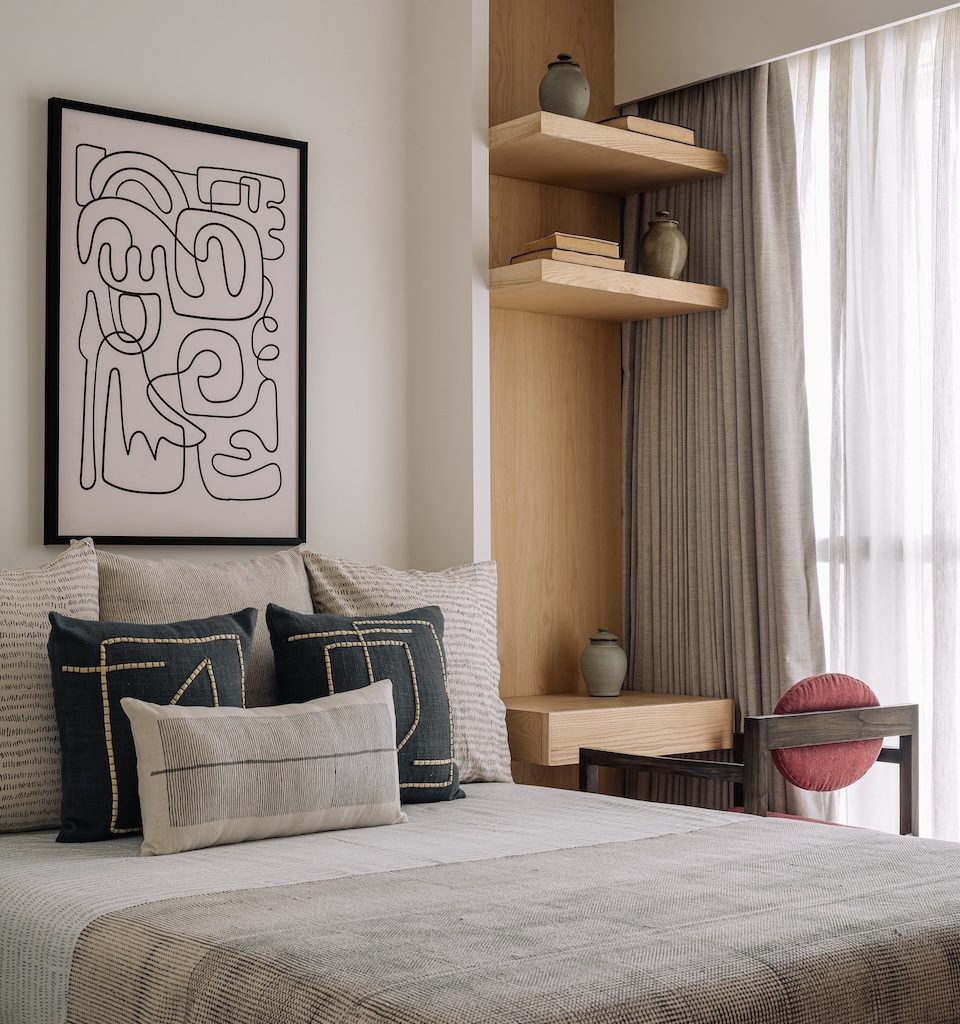
The guest bedroom is planned with ease and comfort in mind. A dedicated luggage area and a study placed by the window make the room both functional and well-lit. The headboard takes the form of a suspended curved wooden panel with concealed lighting, introducing a soft, inviting glow. Integrated side tables continue the design seamlessly. An additional guest bedroom, intended for close friends and relatives, carries the same level of attention to detail. A floating bed extends into the side table and transitions into a compact seating bench, creating a multifunctional element that enhances both comfort and spatial continuity.
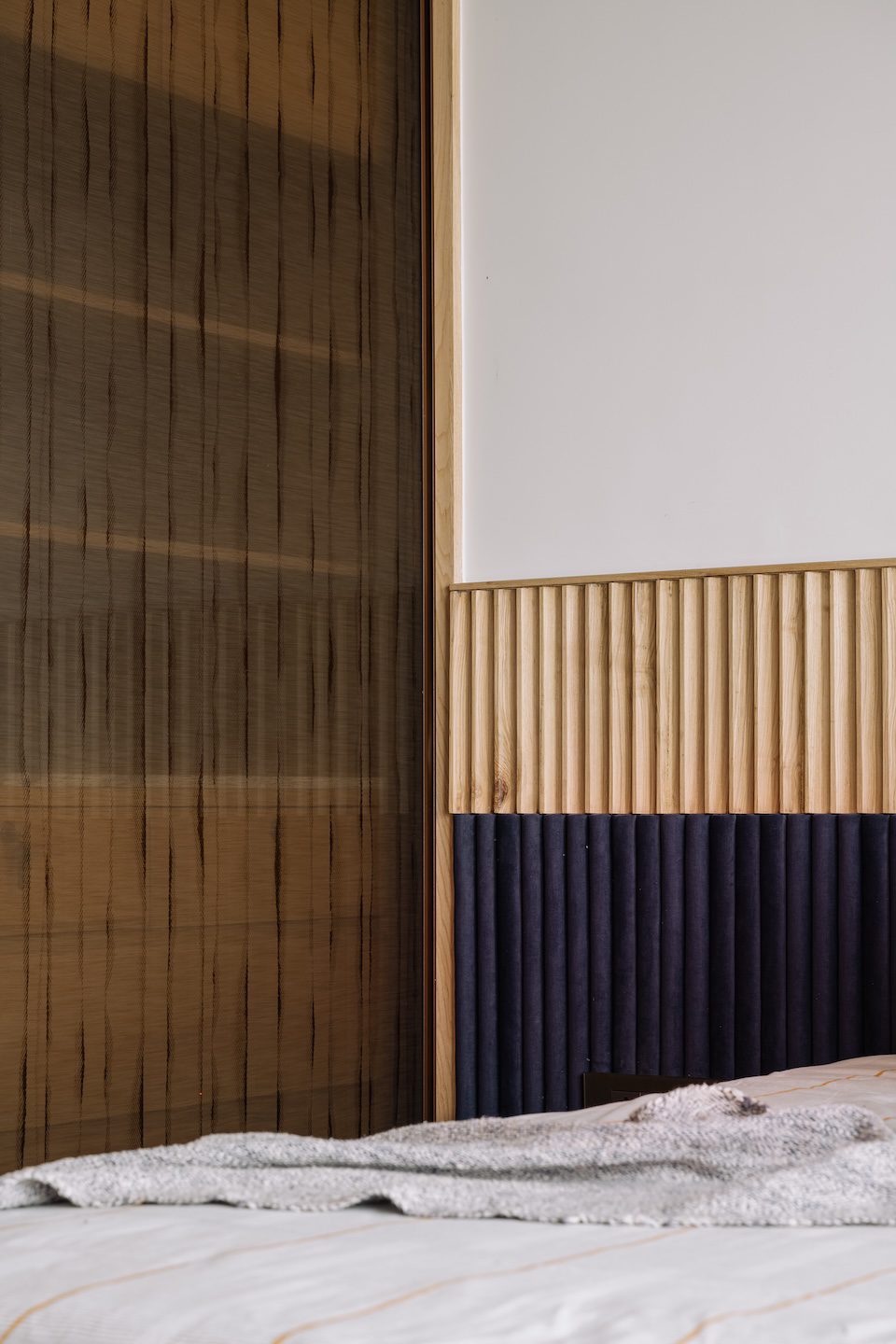
In the master bedroom, a backlit Ambaji marble partition connects the bedroom to the bathroom, becoming a defining feature within the space. The wardrobe incorporates a concealed bar unit, adding a layer of indulgence without drawing overt attention. The headboard combines wood and fabric with fluted detailing, creating depth, while the bed includes built-in storage with a finger-grip mechanism for ease of use. Side tables are designed to offer generous everyday storage.
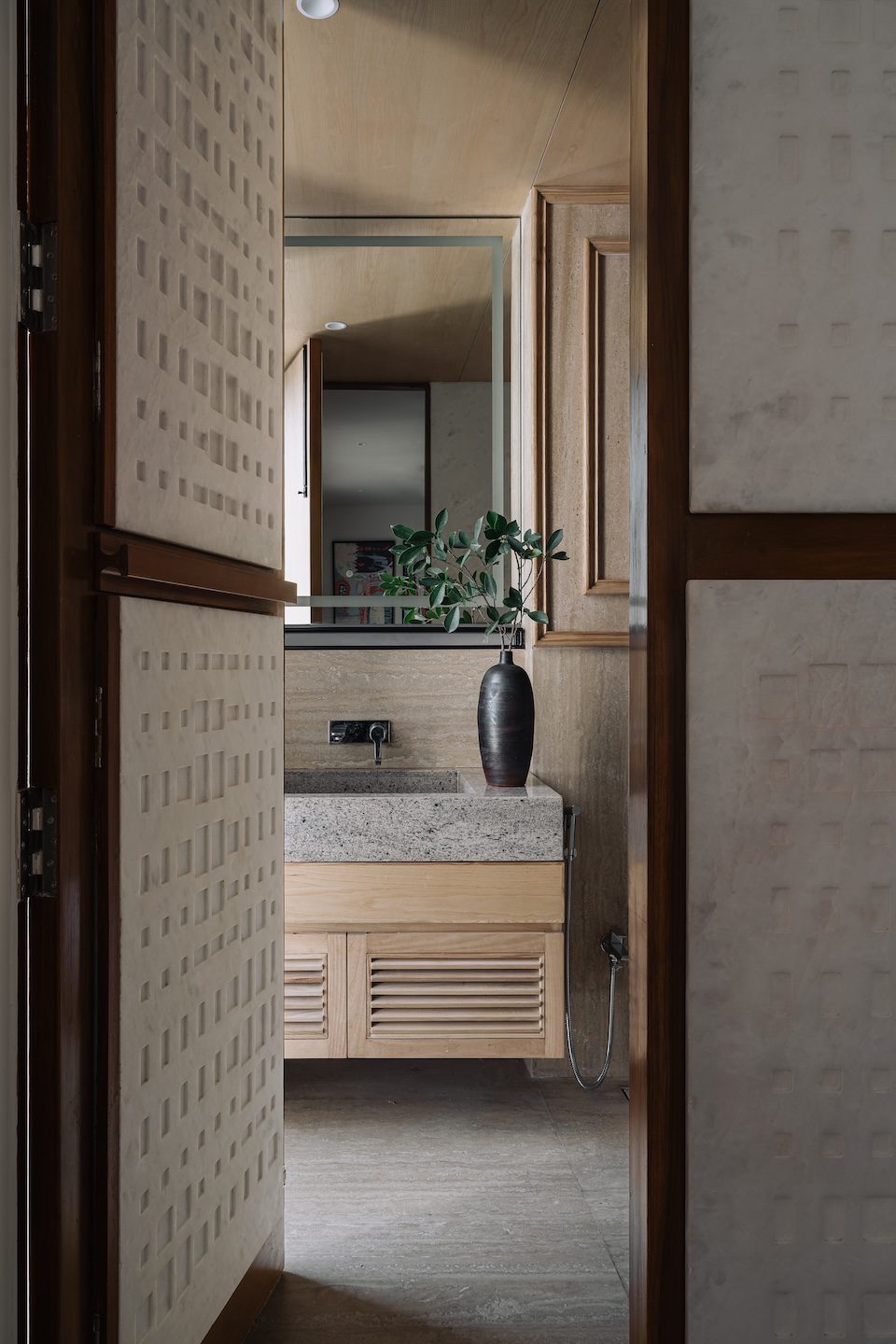
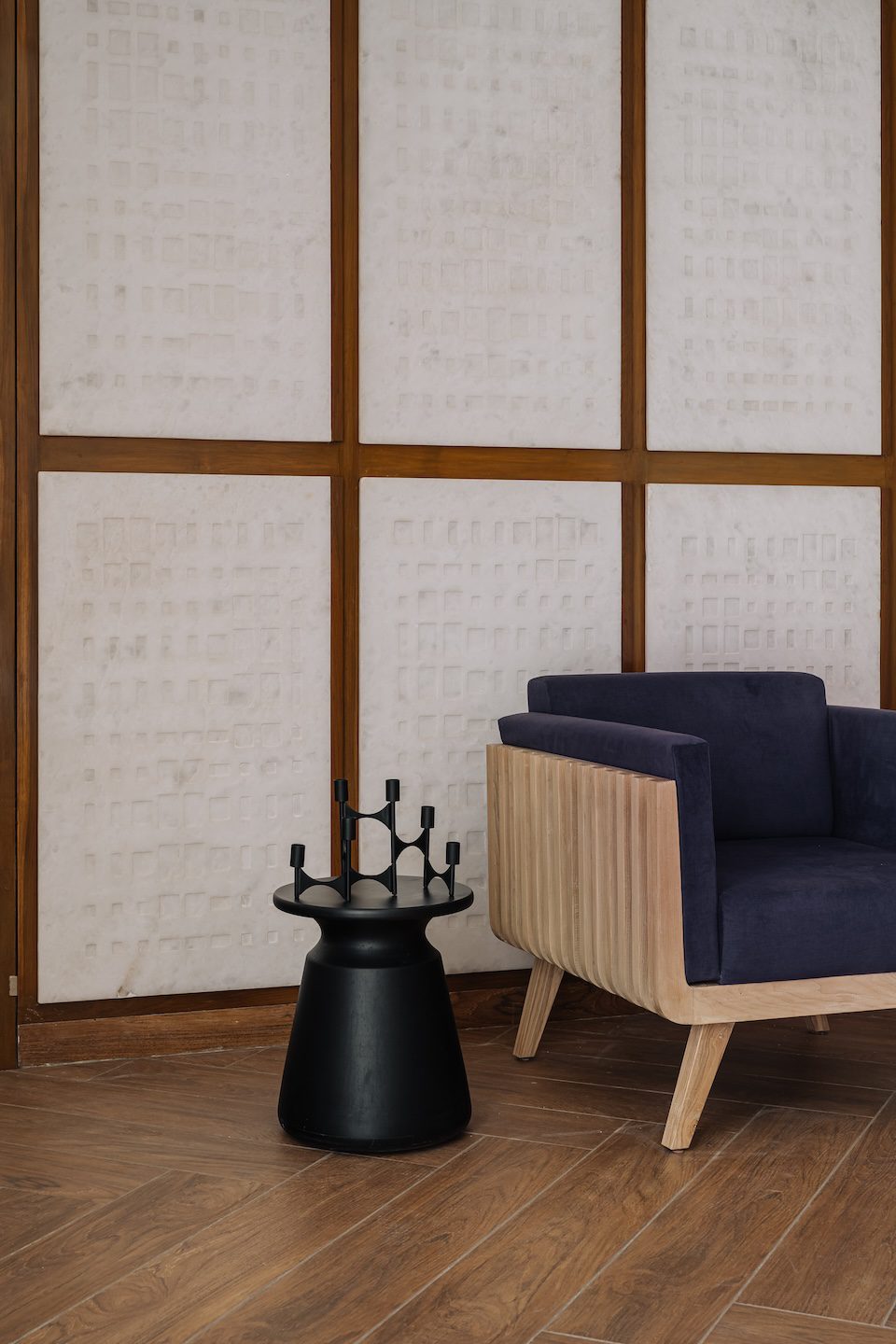
The master bathroom a custom partition in marble crafted from thin stone sheets is punctuated with a series of small rectangular perforations, forming a delicate geometric pattern across the plane. Selected for both its accessibility and its ability to transmit light, the Ambaji marble allows a soft glow to pass through when illuminated. The partition transforms into a luminous surface, casting a warm, diffused light between the bedroom and the bathroom.
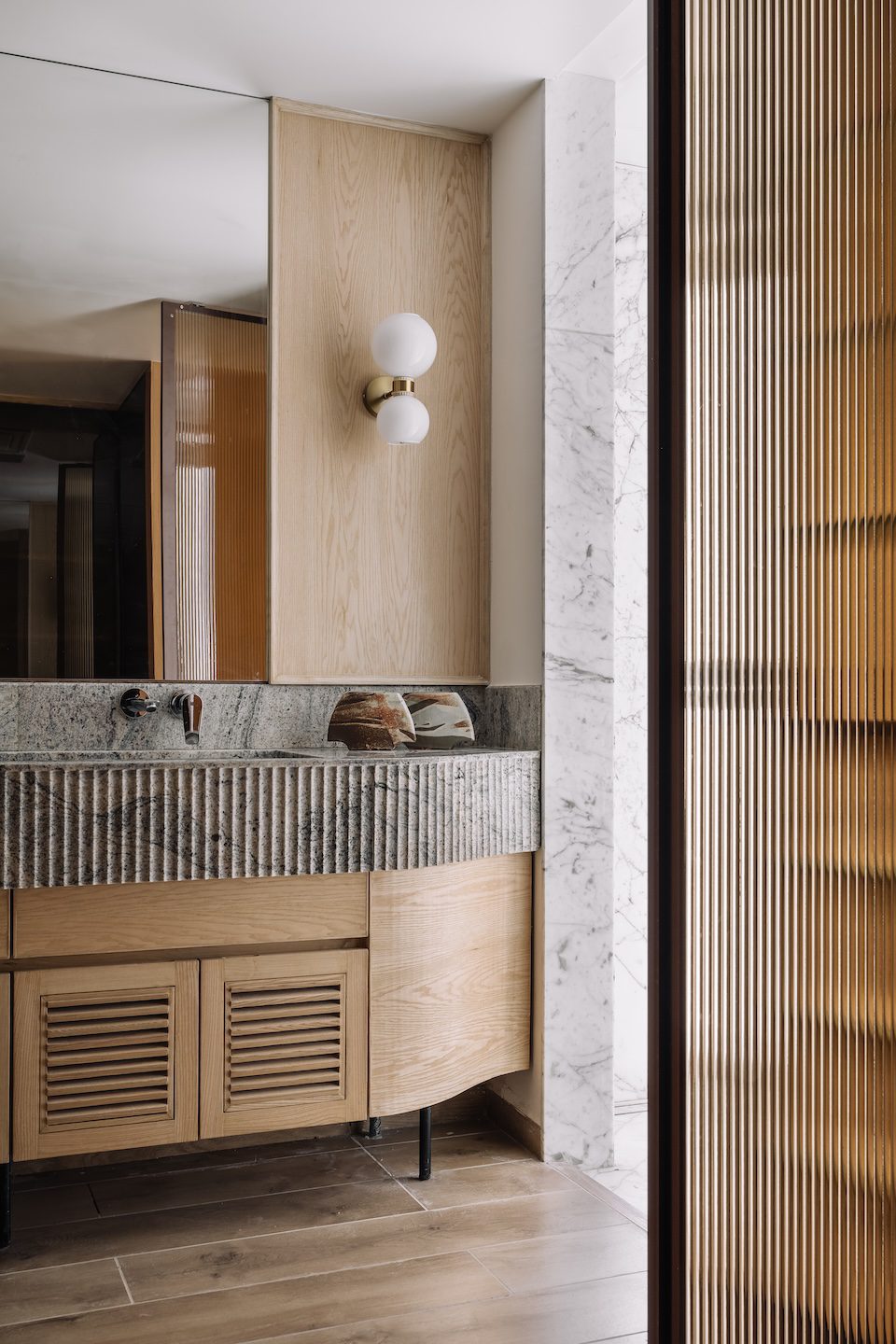
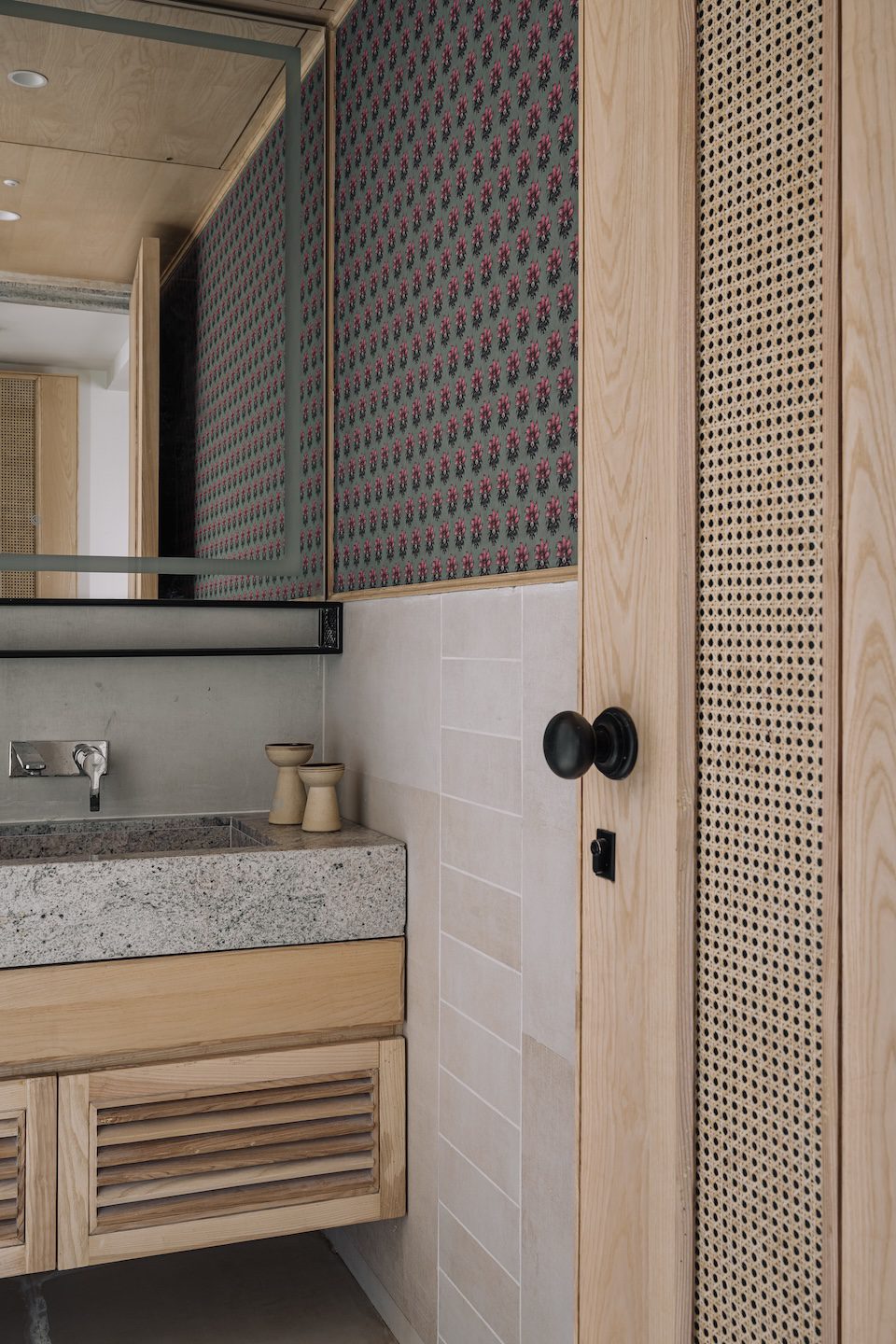
The other bathrooms across the apartment are designed with a careful balance of material and function. Each bathroom is anchored by a handcrafted statement basin, paired with subtle wall lighting that enhances the overall experience of the space. Walls in the dry areas are finished with handcrafted wallpapers from the Sabyasachi Nilaya range, bringing depth and character, while the wet zones are clad in natural stone and tiles to ensure durability and ease of maintenance. The ceilings are detailed with wooden false ceilings that integrate soft indirect lighting, creating a warm and composed atmosphere.
Fact File
Project: A Harmonious Haven
Location: Ahmedabad, Gujarat
Area: 3,402 sq ft
Principal architect: Satviki Trivedi
Design team: Isha Shah and Nishtha Doshi
Stylist: Saniya Tada
Add a Comment