
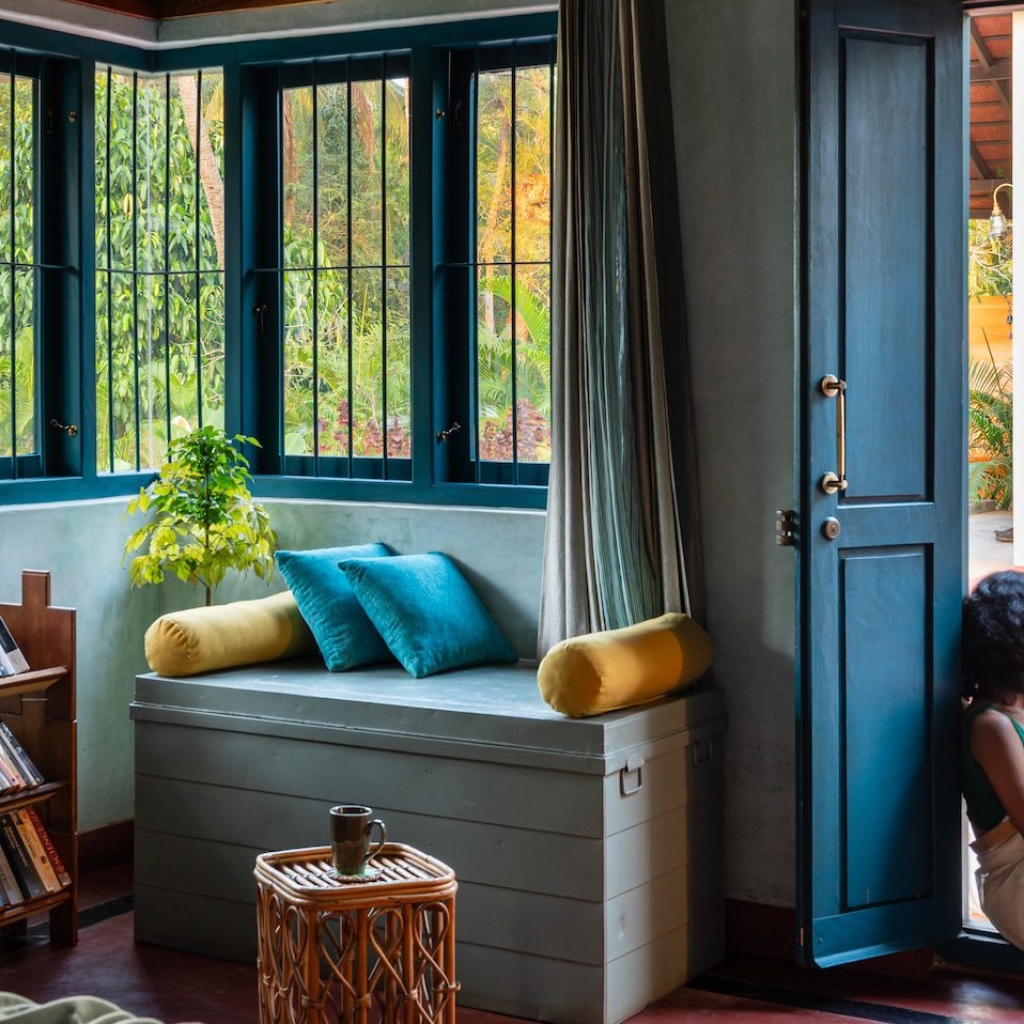
From Around Here crafts a home in Udupi that responds to the region’s climate through local building practices; with interiors enriched by the vibrancy of its owners’ Rajasthani identity.
Curated by: Deepa Nair
Photographs: Niby Thomas; courtesy From Around Here
The brief
The story of this home begins with a brief visit. The clients, a Rajasthani couple with two children from the city, had come to Udupi for a party… but what was meant to be a short getaway turned into something far more lasting. Drawn to its slower pace and peaceful setting, they found themselves wanting a life anchored here.
When they approached the young and gifted Udupi-based studio, From Around Here, led by architects Shreya Daffney and Saran Babu, to design their house in Kaup (a coastal town in Udupi) their ask was simple yet complex. The couple wanted to build a home rooted in region’s context—practical, functional, and reflective of the local way of building and style. Then came the twist. They wanted their vibrant Rajasthani identity to be woven seamlessly into the design. The intent was not to choose one over the other, but to bring two worlds together, allowing the home to belong to its setting while carrying the richness of where they come from.
The design intent
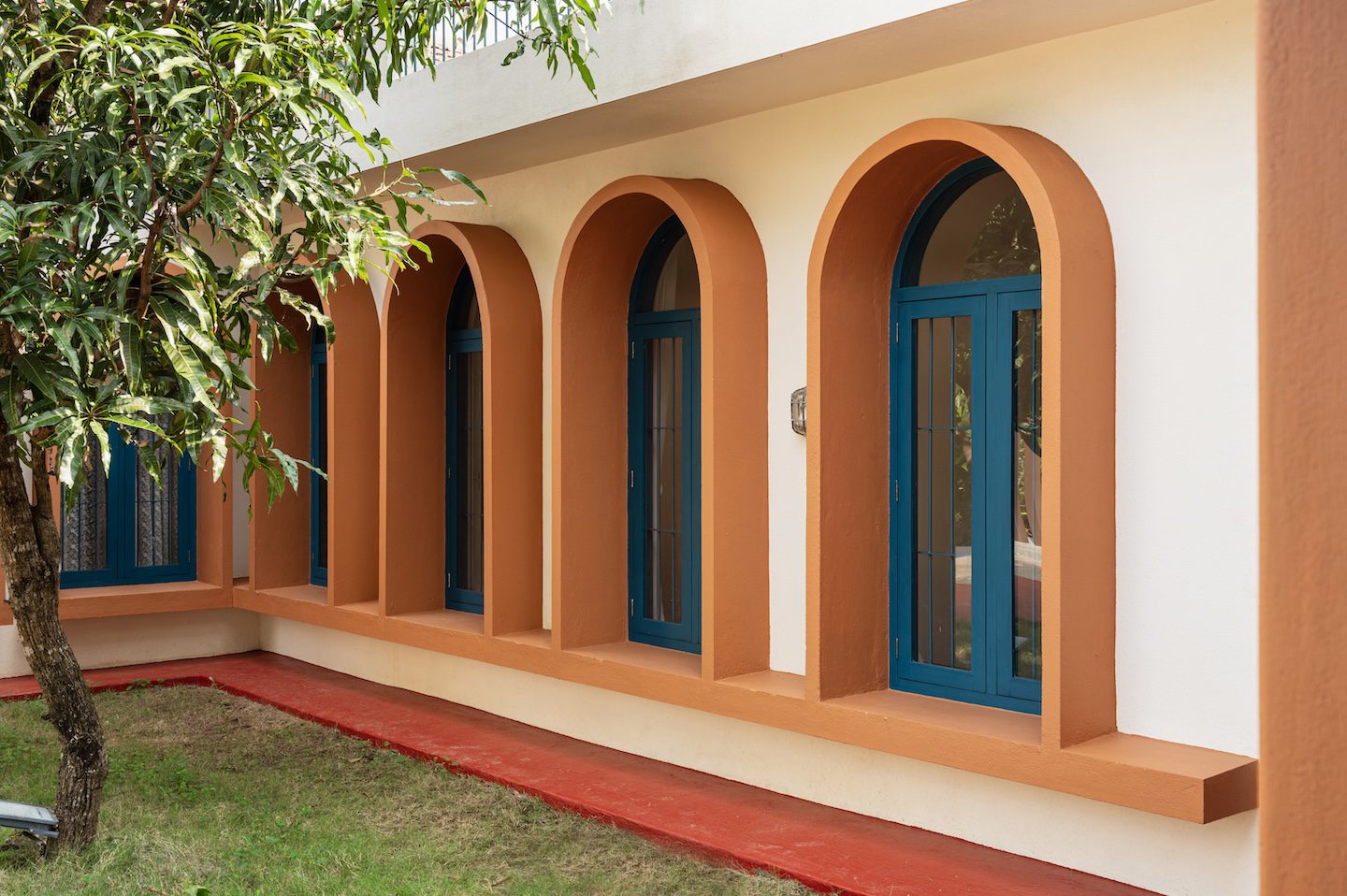
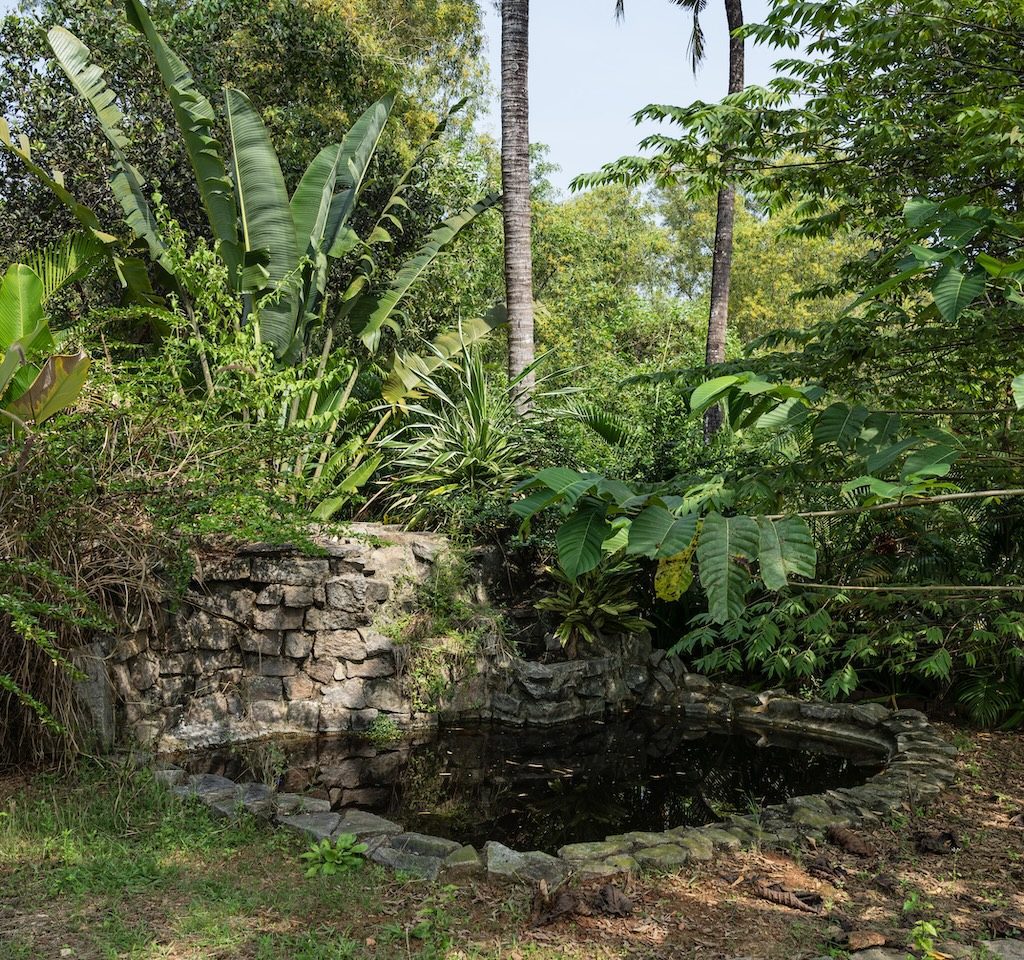
Drawing inspiration from the traditional haveli typology, the house serves as an architectural bridge between two distinct regions by blending the inward-focused traditions of Rajasthan with the airy vernacular style of coastal Karnataka. “This fusion is further articulated through elements like the jharokha, reinterpreted within the coastal context. The project is a quiet convergence of geographies, identity, and memory within a timeless landscape,” explains Shreya. “Beyond aesthetics, the site integrates ecological strategies such as a rainwater harvesting pond, reinforcing a deep connection between architecture, climate, and landscape,” shares Saran.
The structure
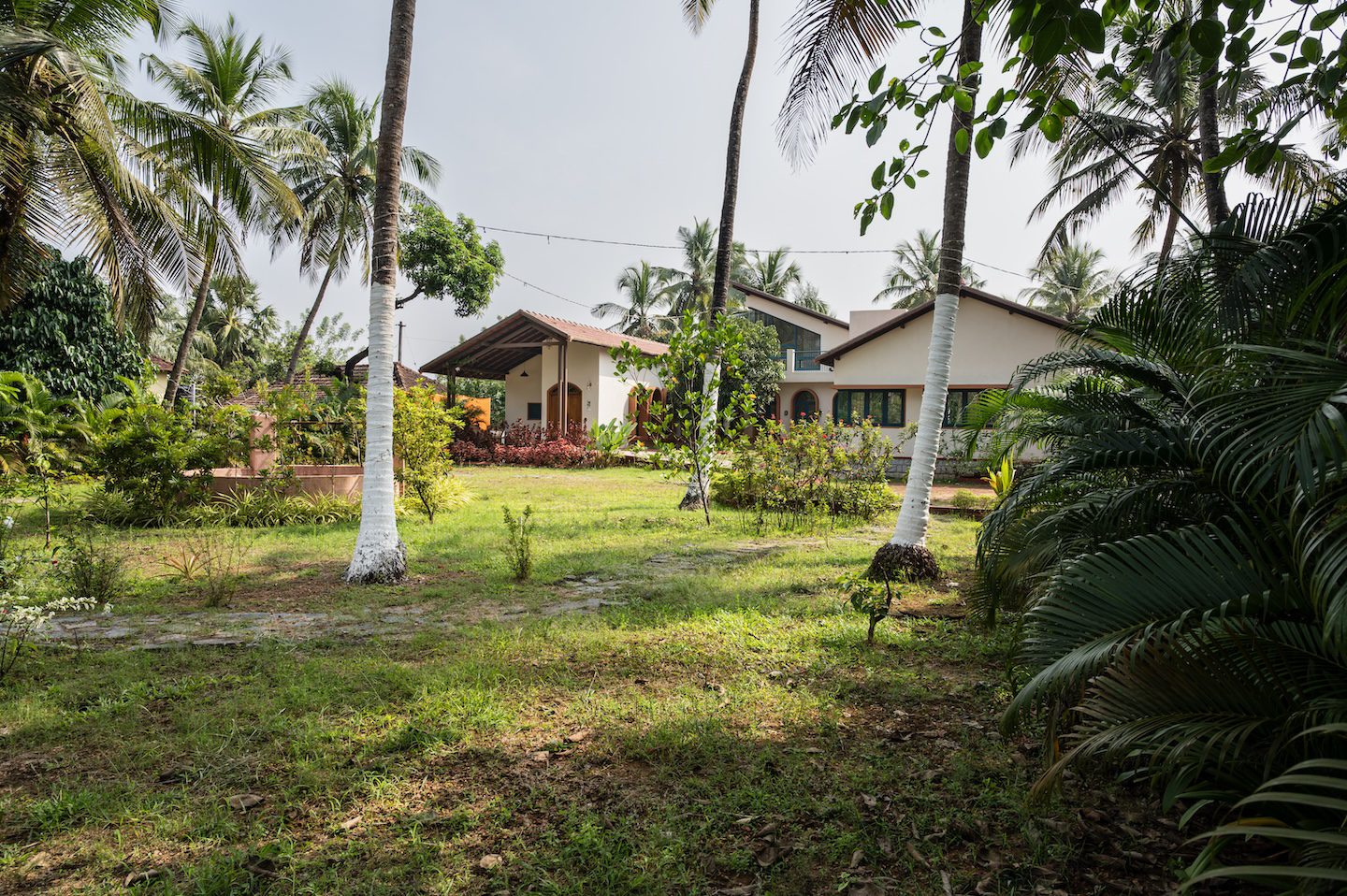
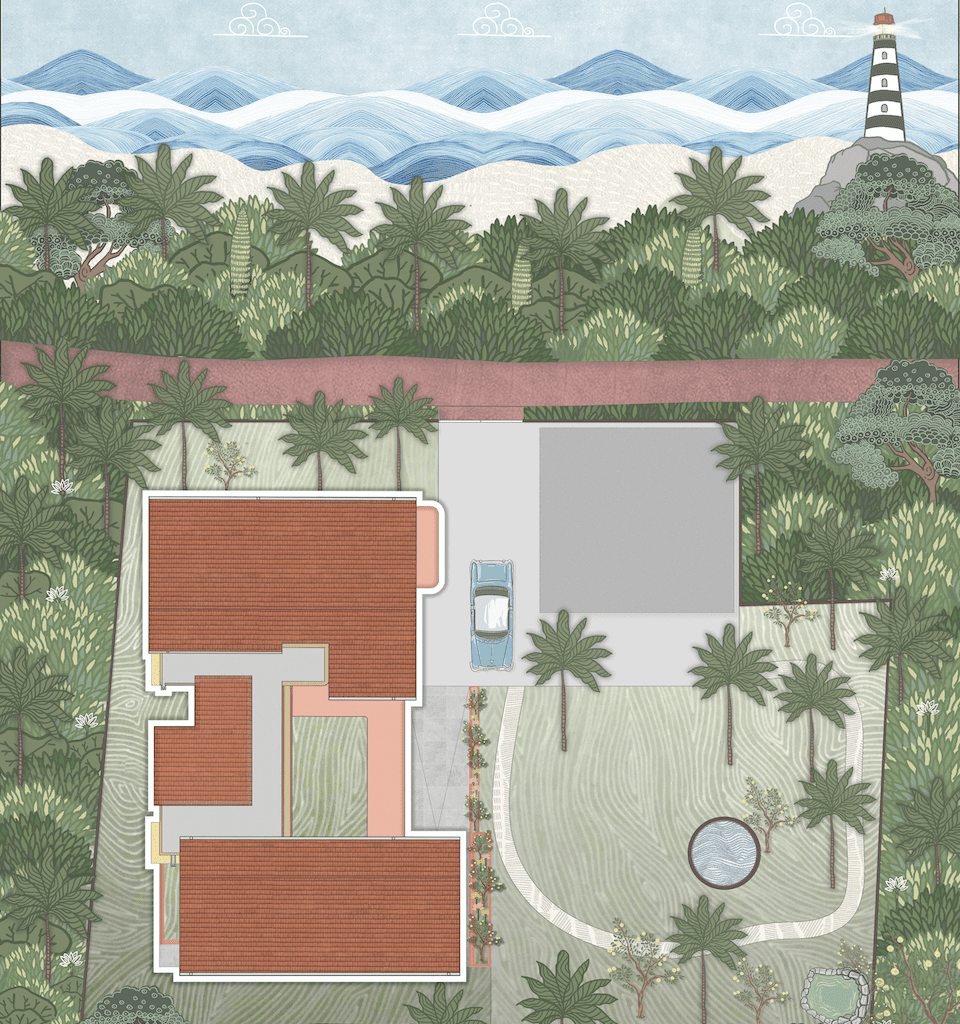
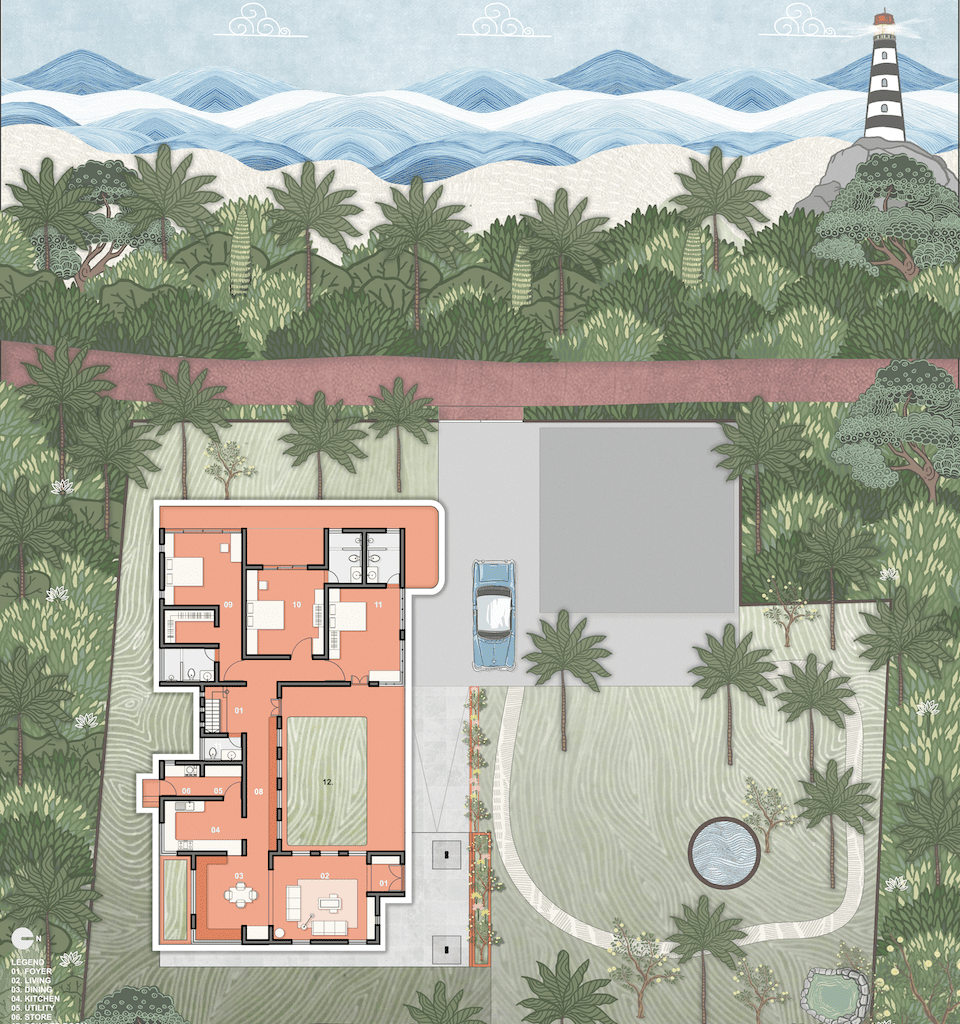
Positioned parallel to Kaup Beach and just a few minutes away from the shoreline, the site offers a serene coastal setting enriched by existing coconut trees, which were carefully preserved and integrated into the design. The structure, conceived as a single storey dwelling, responds sensitively to the site’s sandy soil conditions. This led to the adoption of a wide masonry foundation to ensure stability. Meanwhile, galvanized iron columns, particularly vulnerable due to the proximity to the sea, were anchored deep into the ground to provide structural resilience against coastal conditions.
The spatial configuration
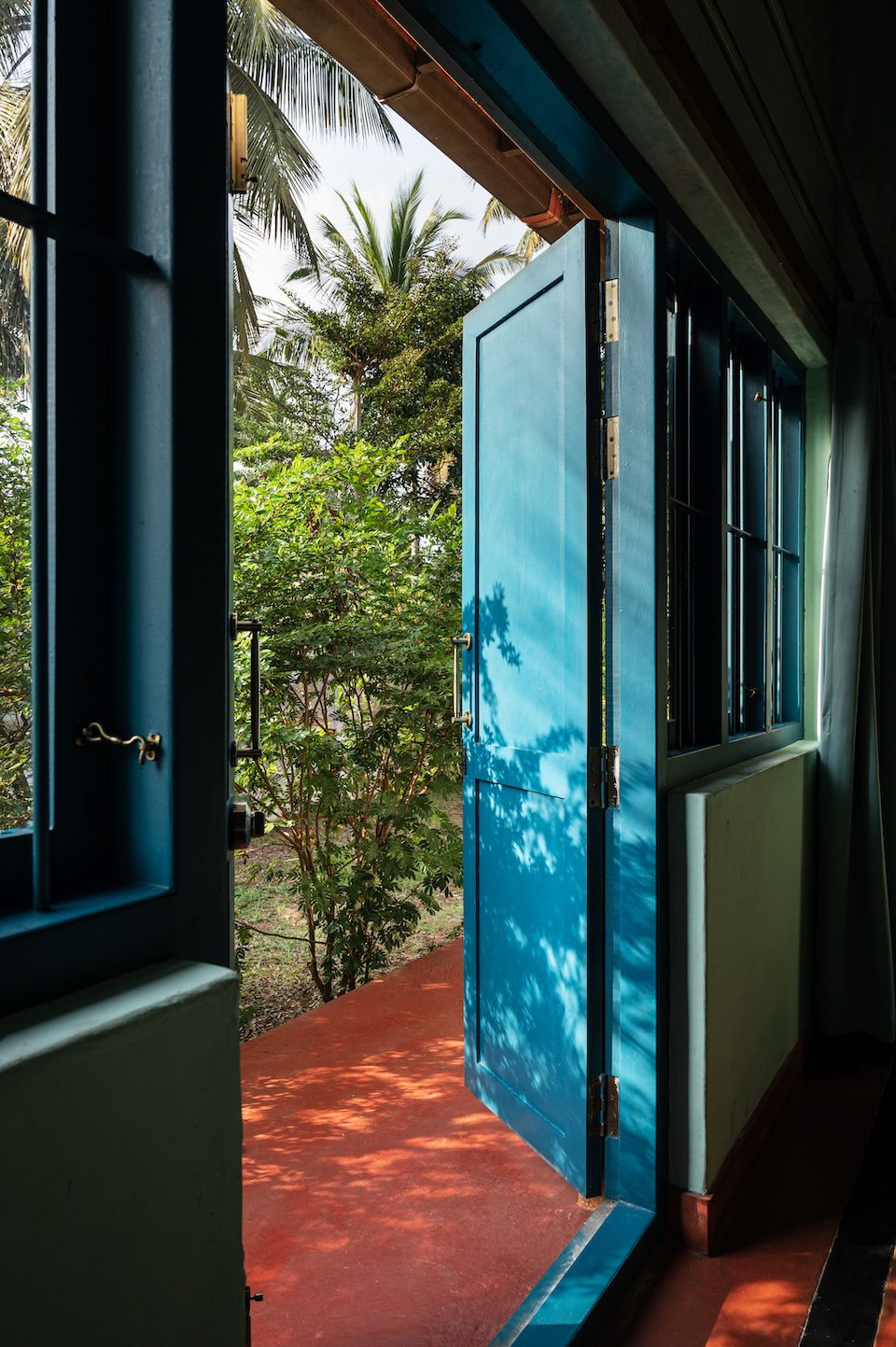
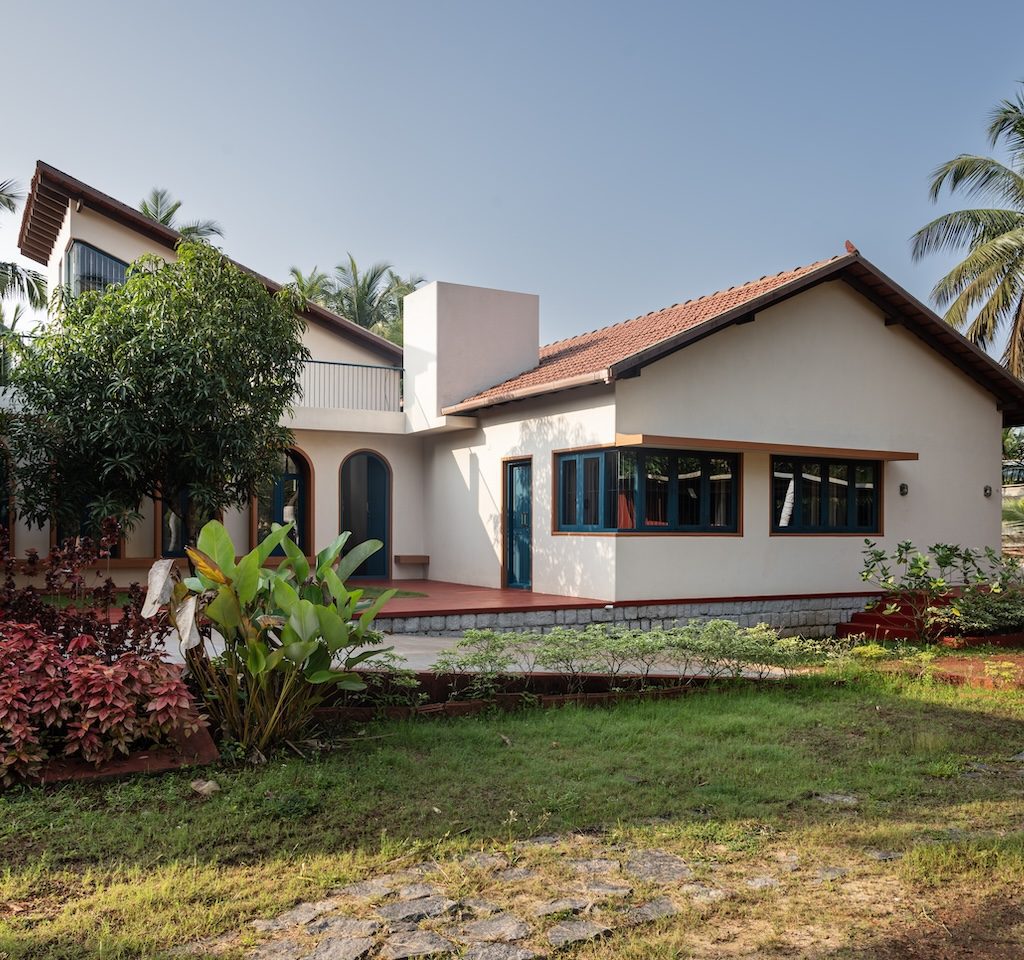
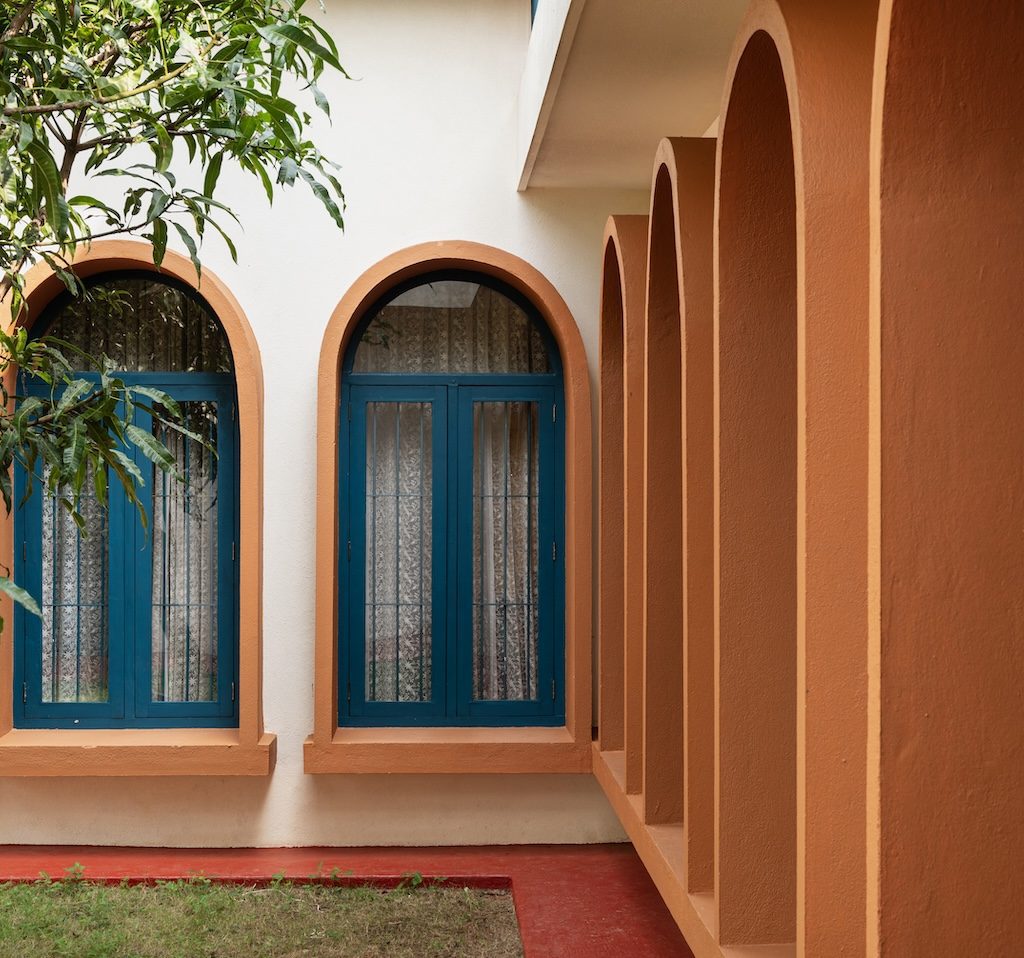
The home is organised around a central courtyard, where a mango tree anchors the plan, bringing together the public and private zones that gently wrap around it. From this core, a verandah extends outward, forming a threshold between the built form and the surrounding landscape. The deep jagli katte (sit-out verandah) becomes both a climatic buffer and a lived-in edge, where conversations and chai are daily rituals. A continuous verandah wraps around the home, extending the interiors outward and maintaining a constant connection to the landscape.
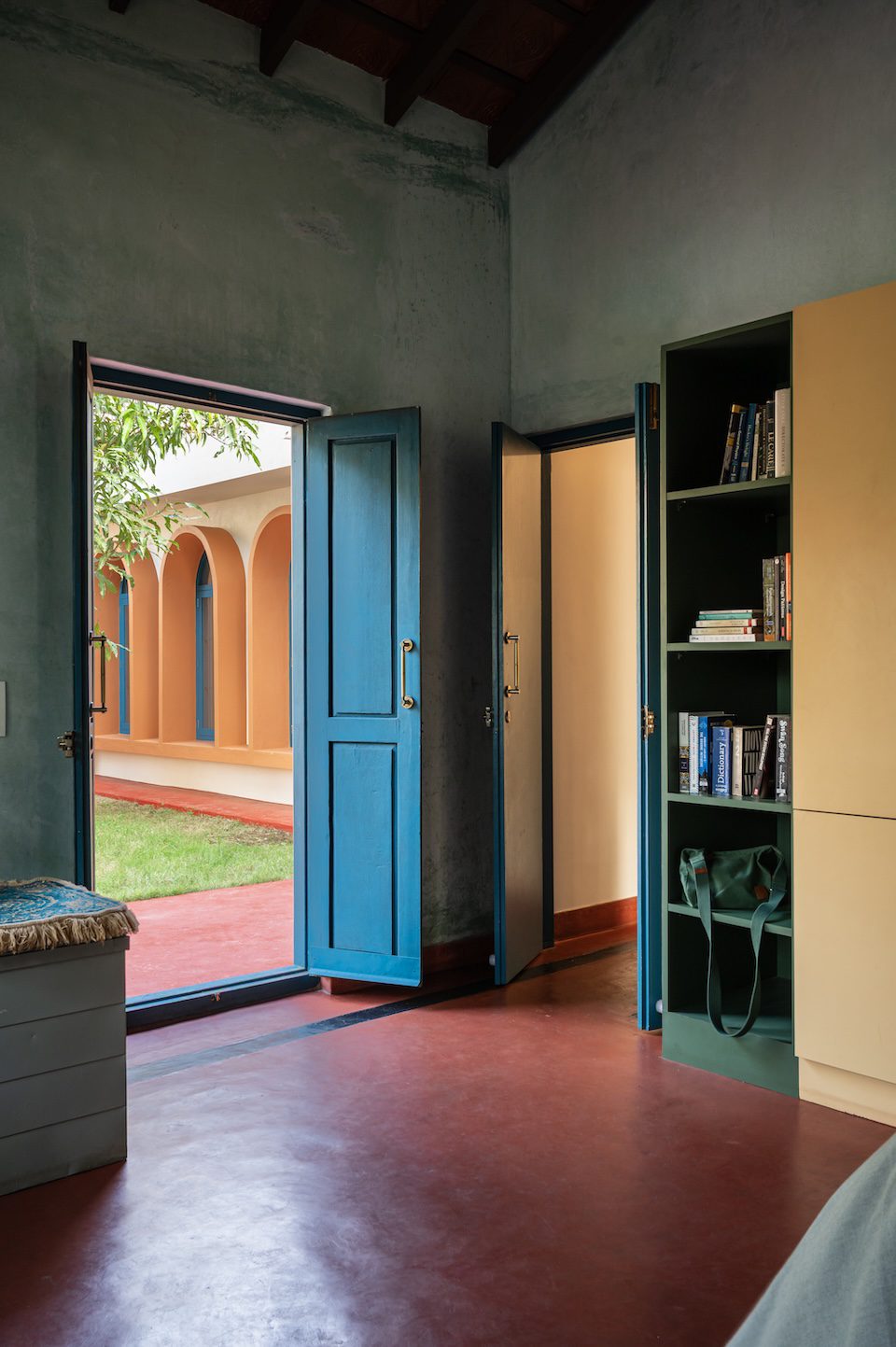
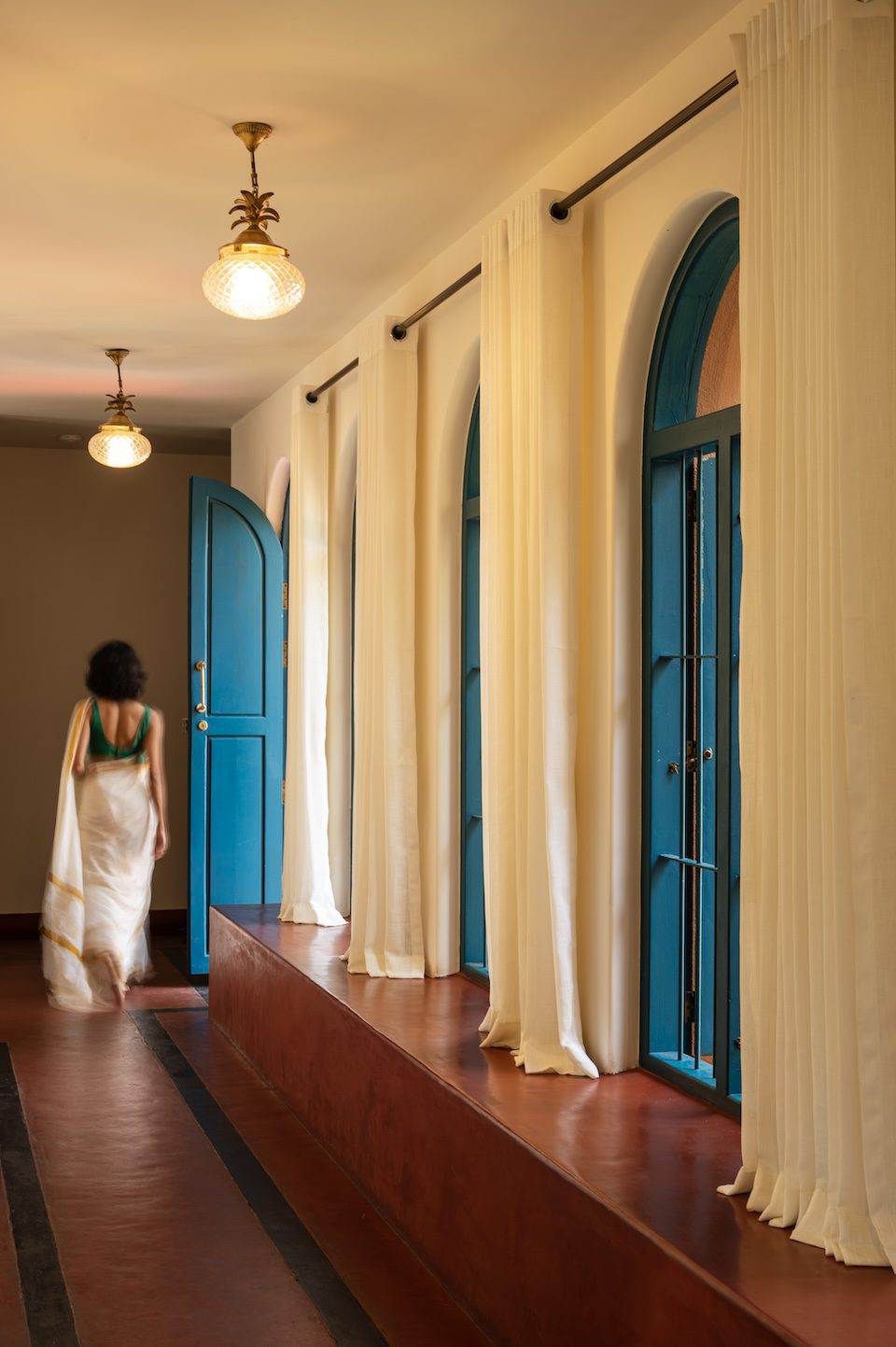
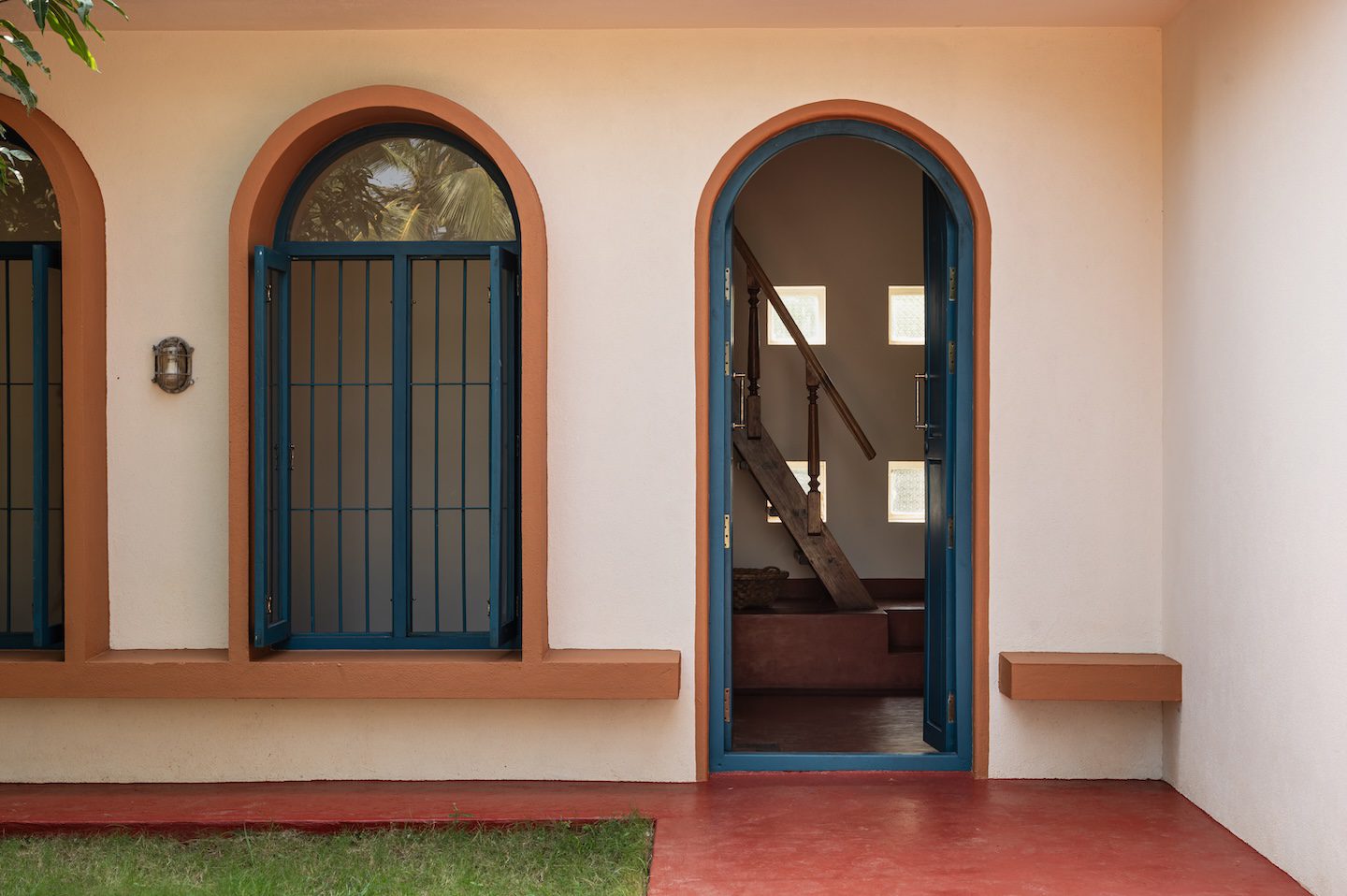
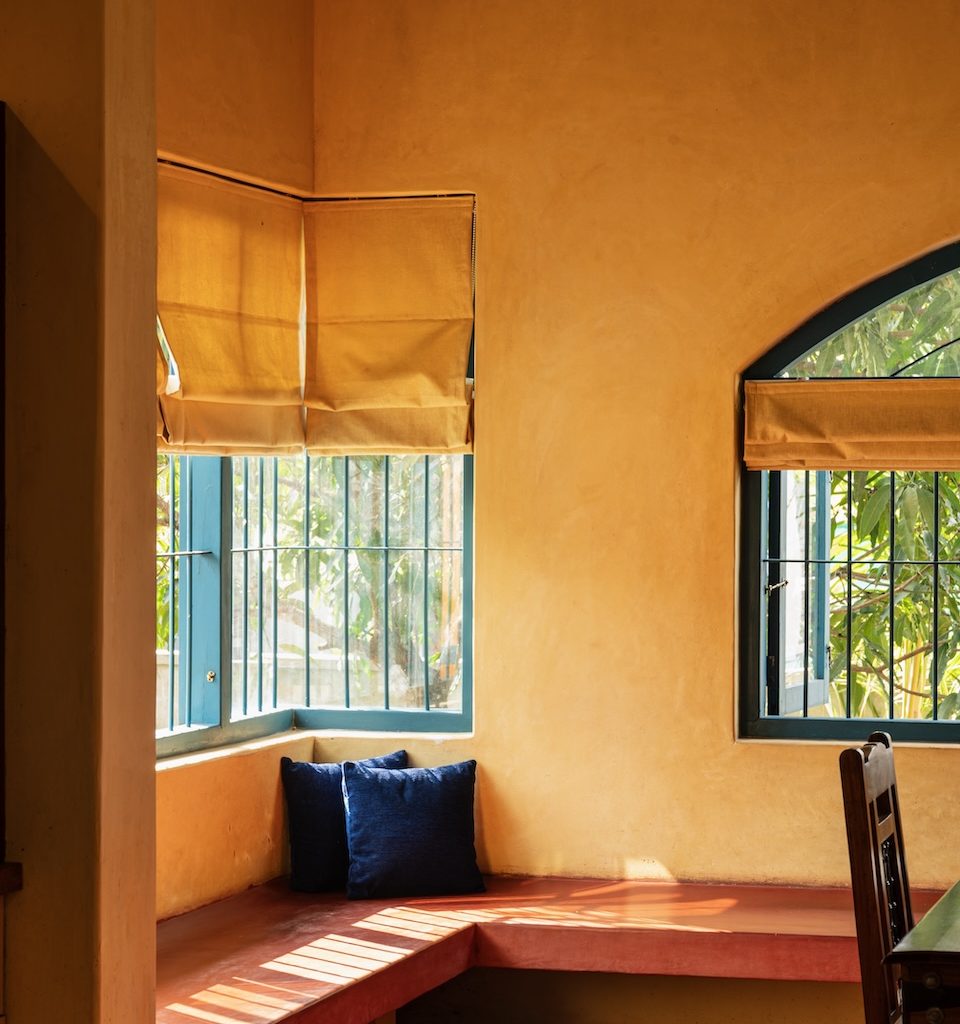
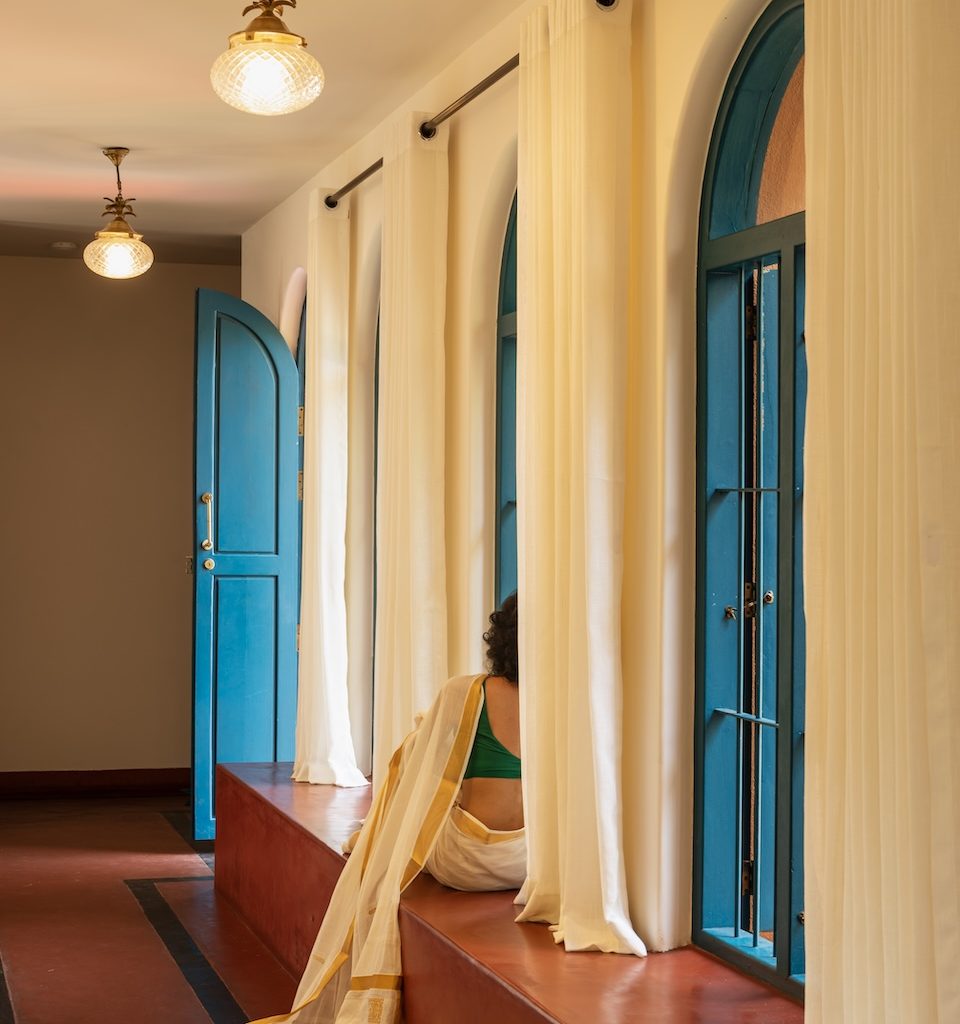
The entry transitions into a compact living and dining space, setting up a seamless spatial flow. Beyond this, a passage leads towards the kitchen, with arched openings framing glimpses of the courtyard. Along the way, built-in seating niches are positioned to capture views of the seasonal pond and the fields beyond, turning circulation into moments of pause.
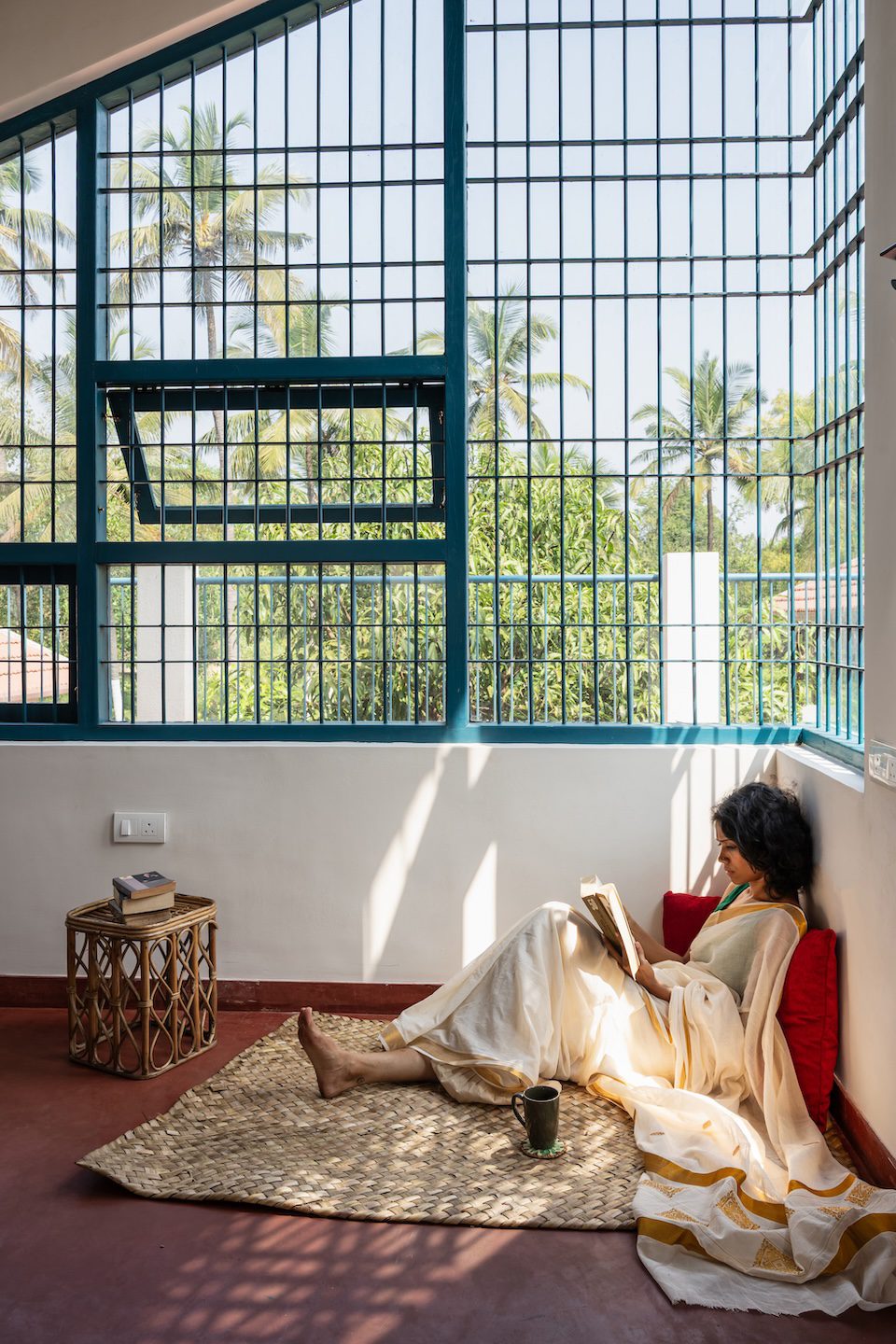
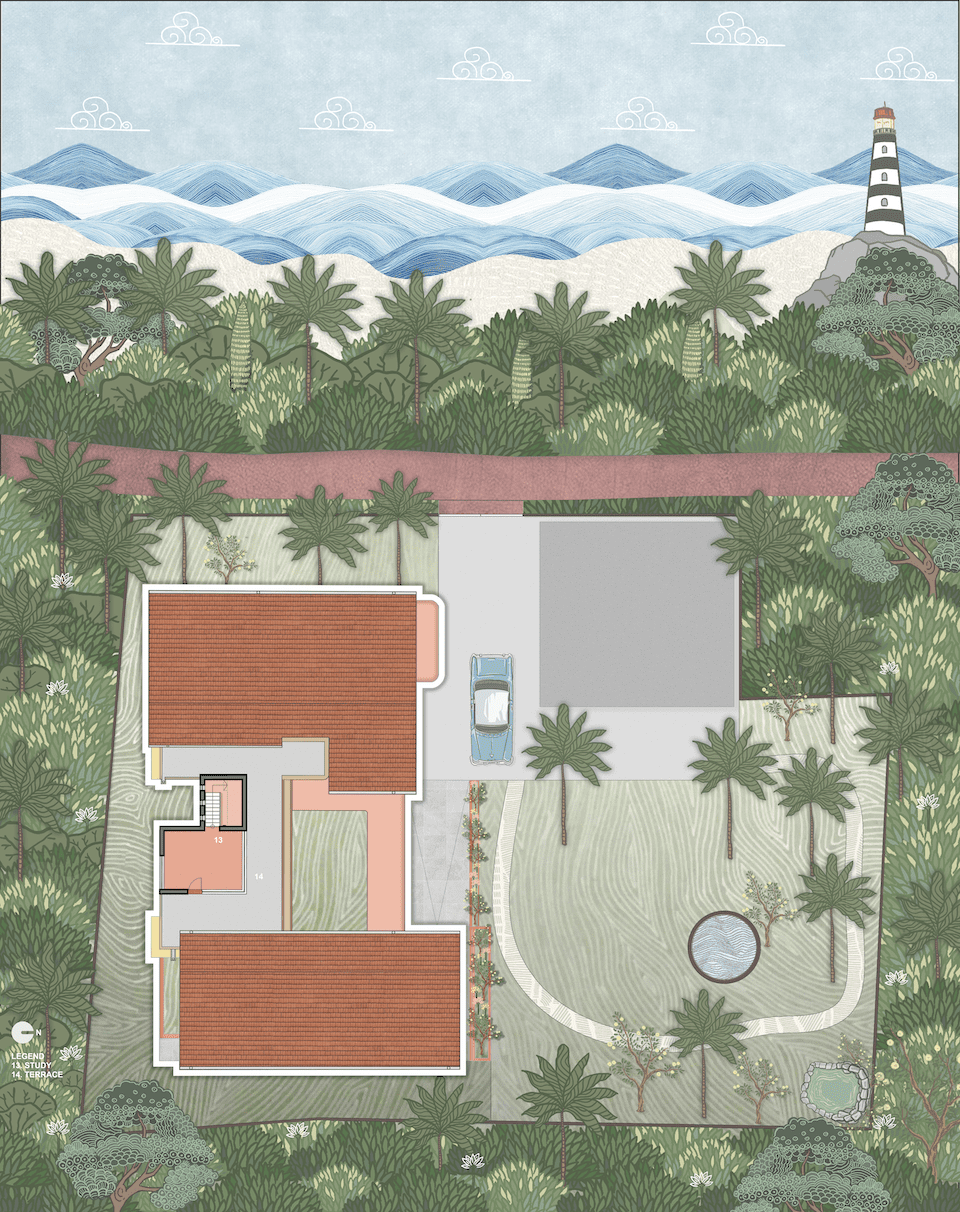
As the plan deepens, the atmosphere shifts. The more social zones give way to quieter, more private spaces, with bedrooms tucked towards the rear for a sense of retreat. Upstairs, the experience culminates in a study that opens onto a terrace. Washed in soft north and east light, this upper-level space offers a more introspective moment—set apart, yet still connected to the energy of the house.
The design and material details
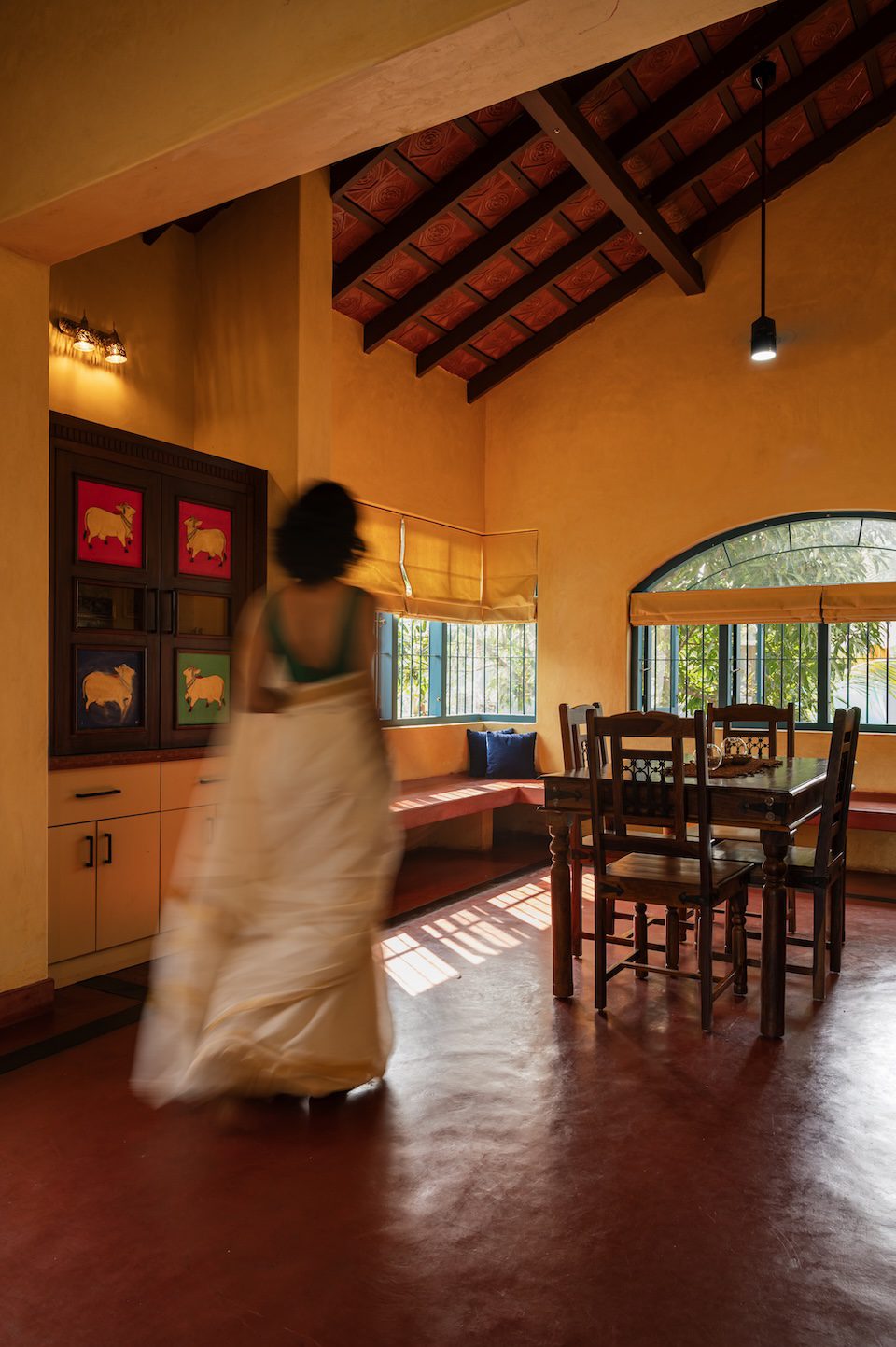
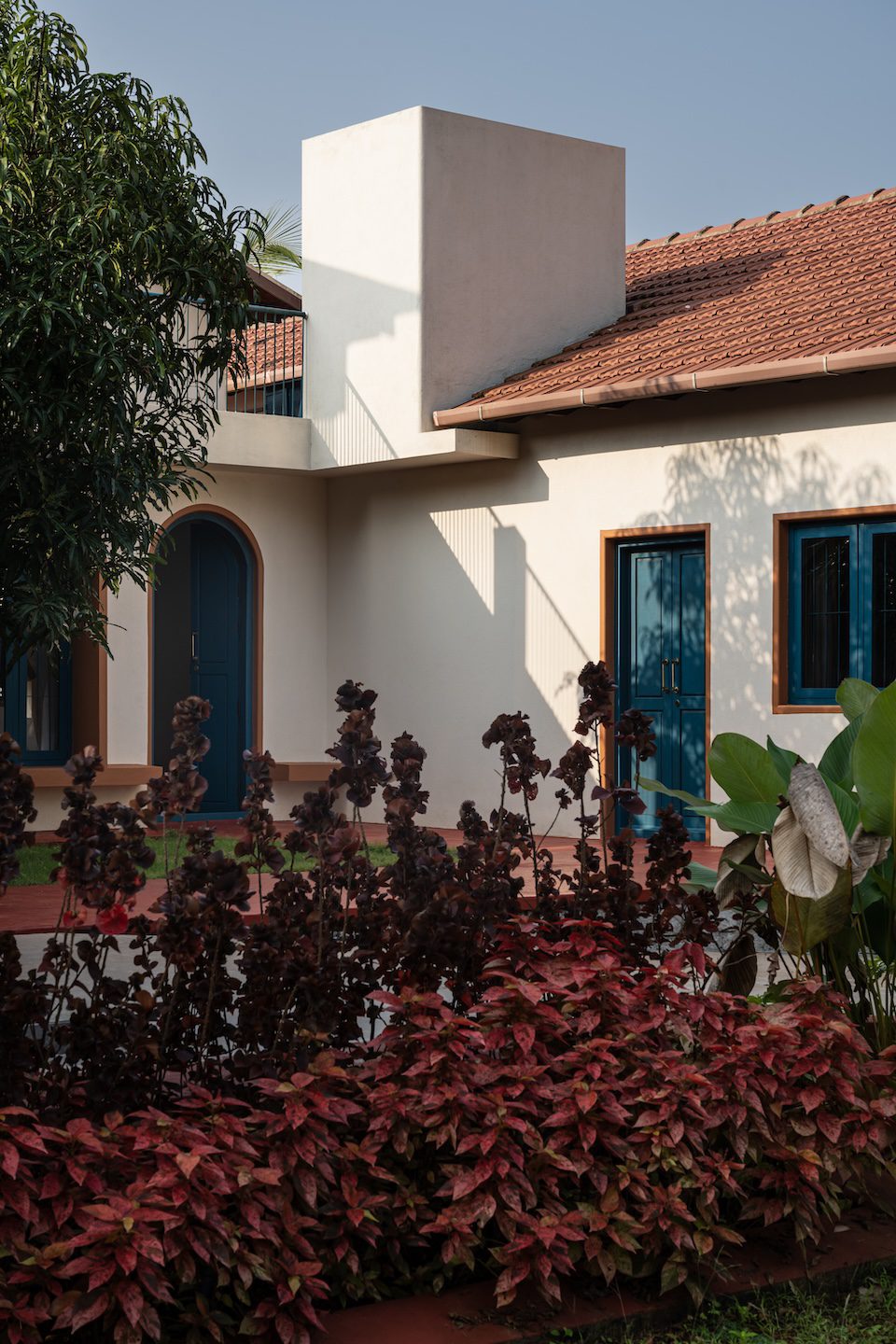
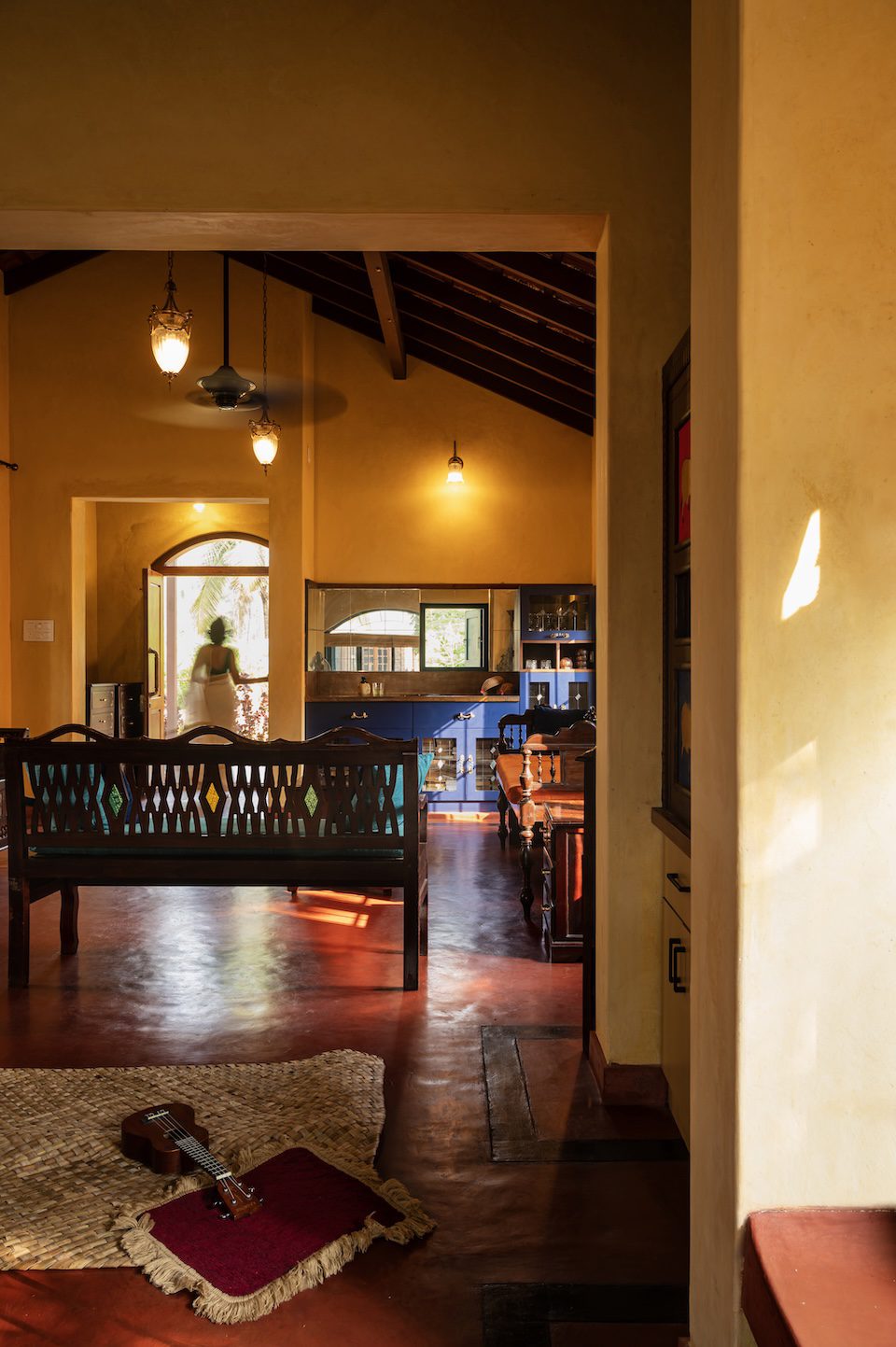
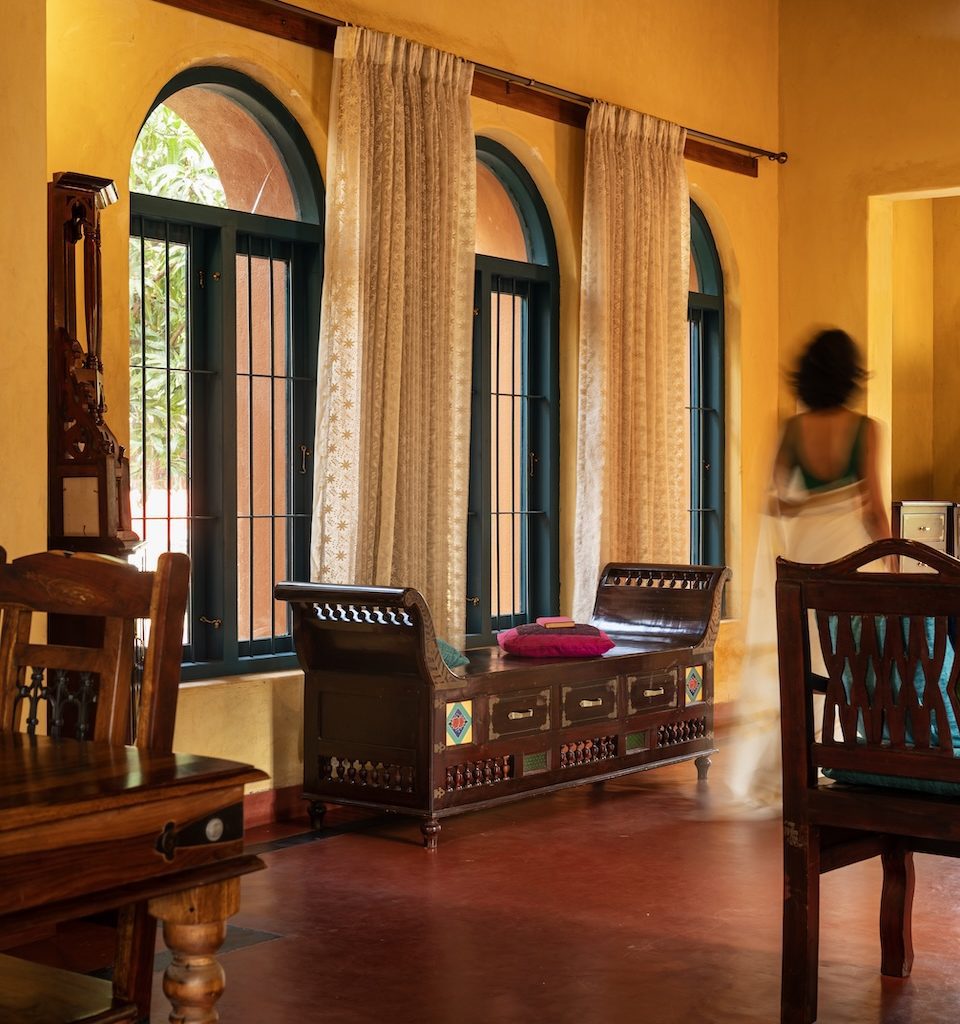
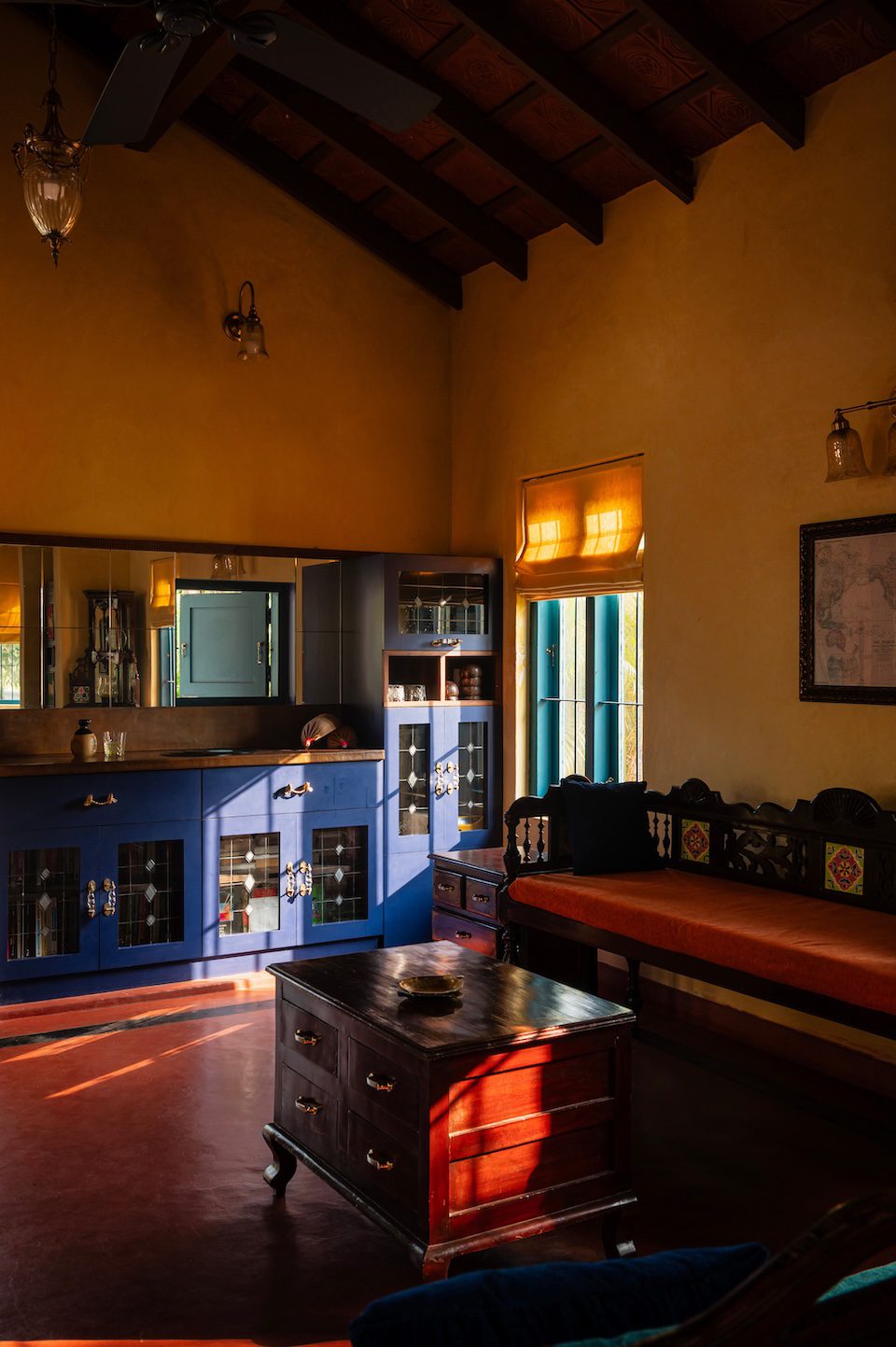
The spatial experience is defined by intentional simplicity and striking juxtapositions. “Visually, the project embraces a rigorous, contemporary restraint that frames daily rituals beautifully. We strictly avoided curved walls and heavy embellishments, allowing the crisp, white, linear geometry of the exterior to stand distinctly against the coastal landscape,” the architects explain. Inside, the narrative shifts—spaces open up into a more tactile and expressive language, shaped by colour, texture, and the movement of natural light. The absence of wall lights and heavy ceiling elements enhances this sense of openness, allowing daylight to wash over surfaces and bring the interiors to life.
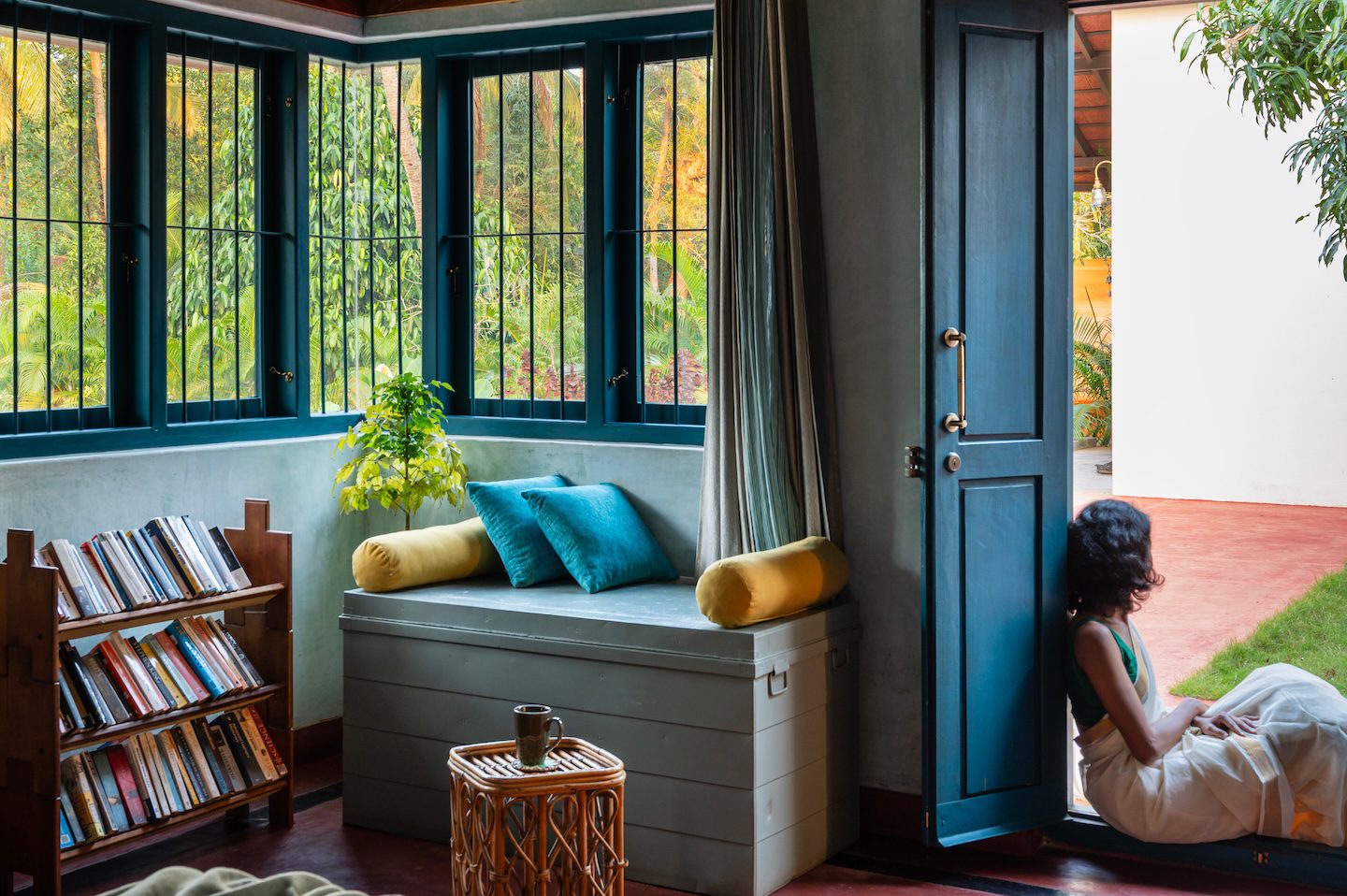
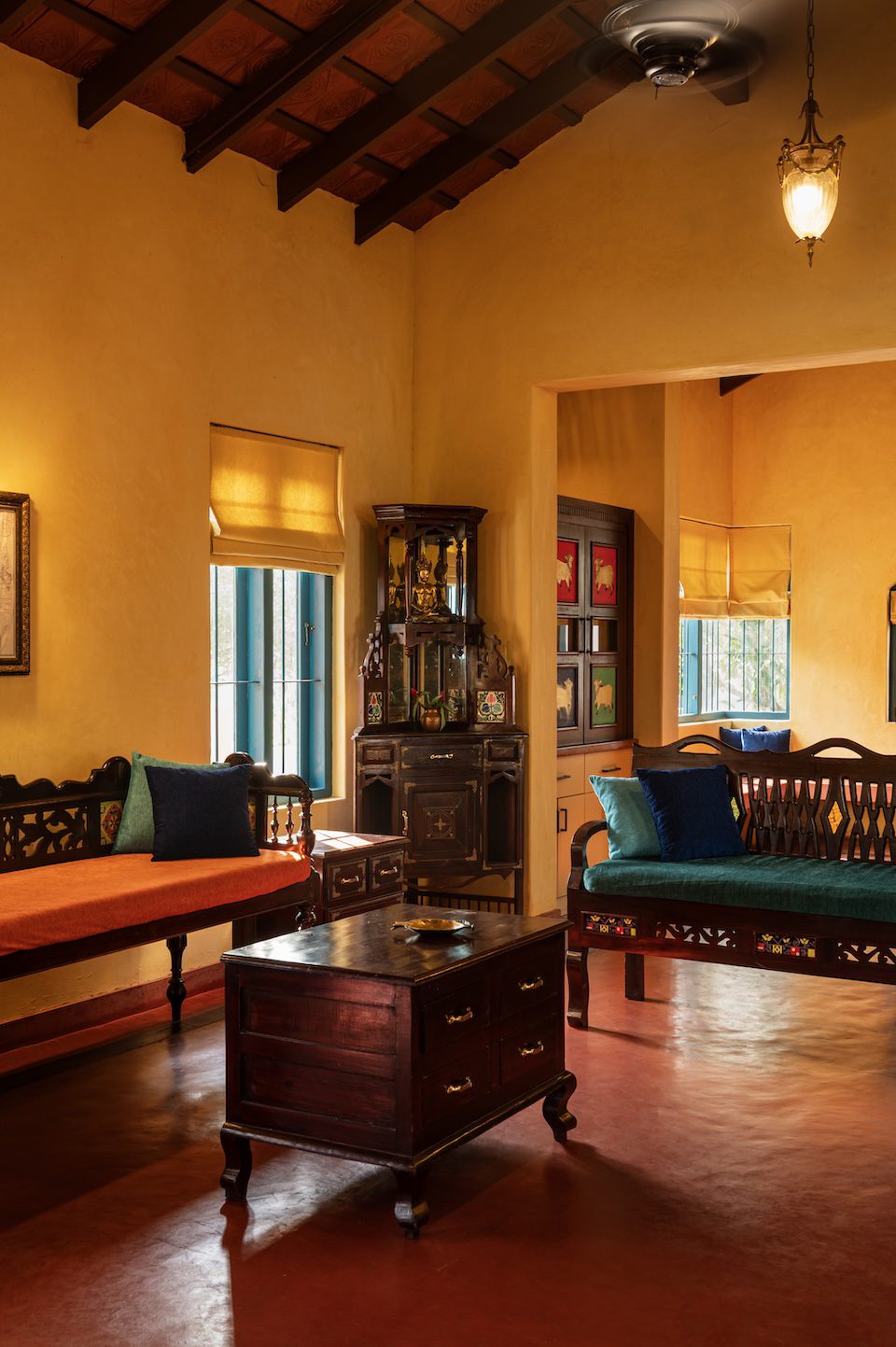
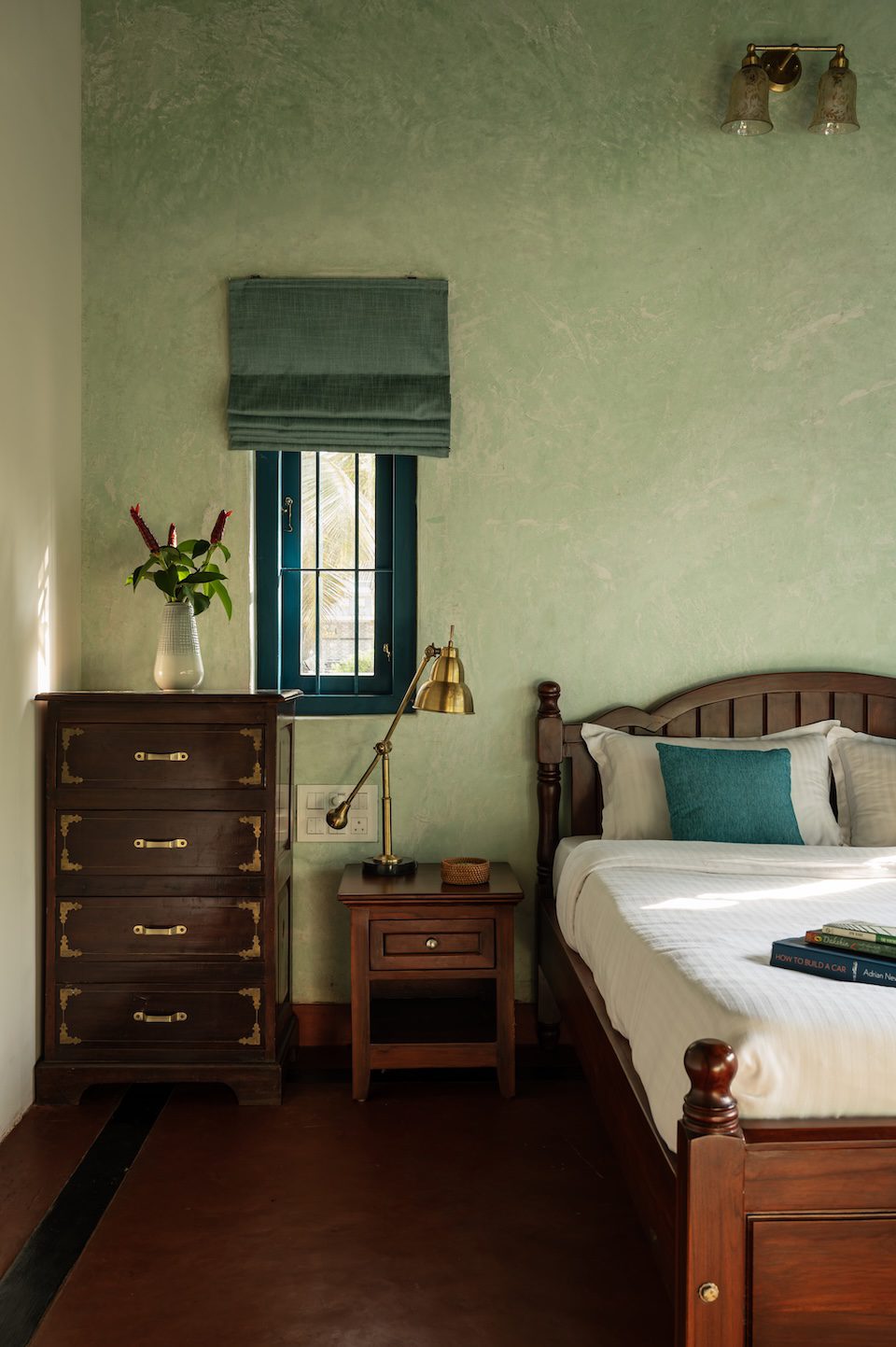
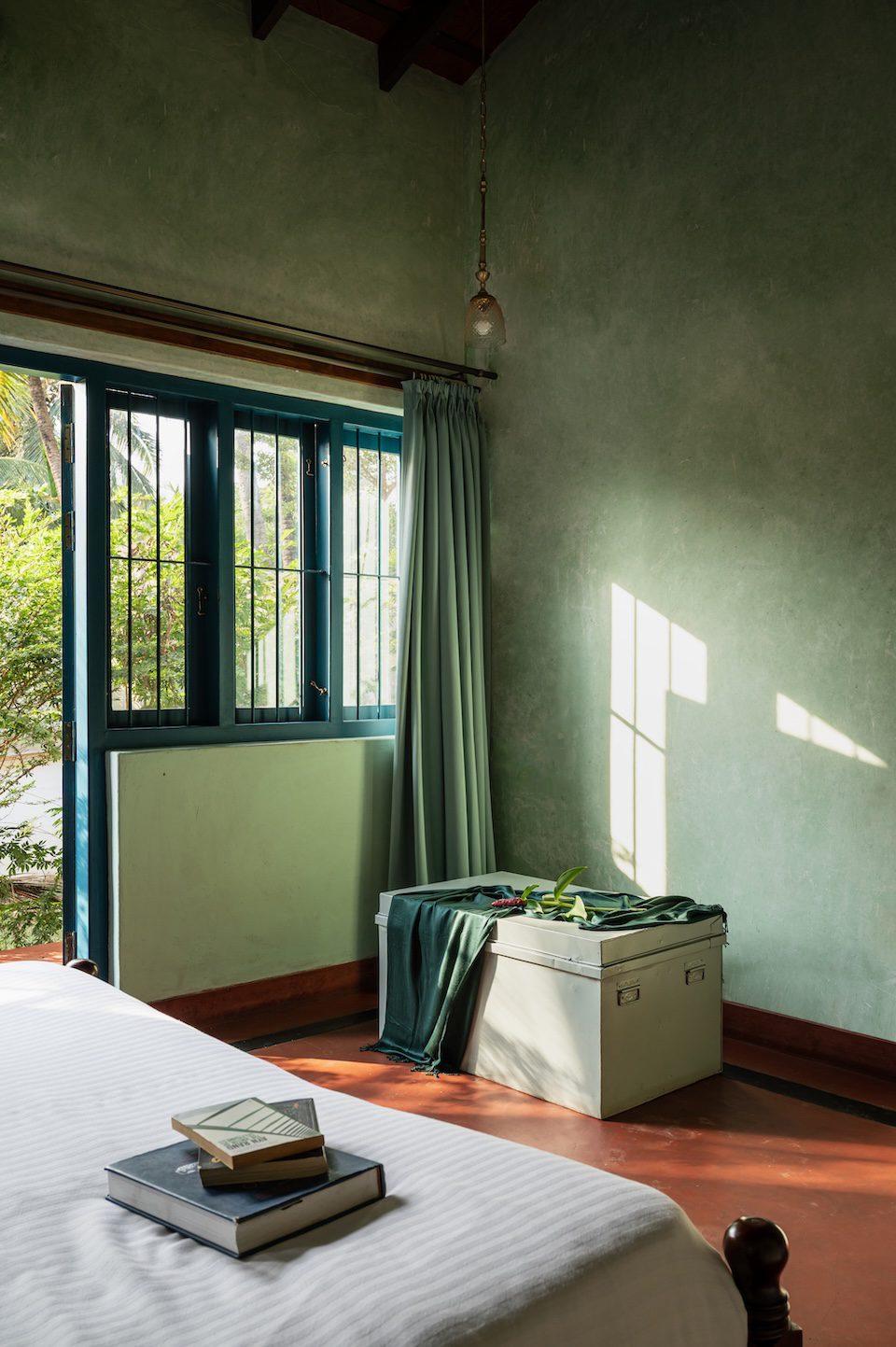
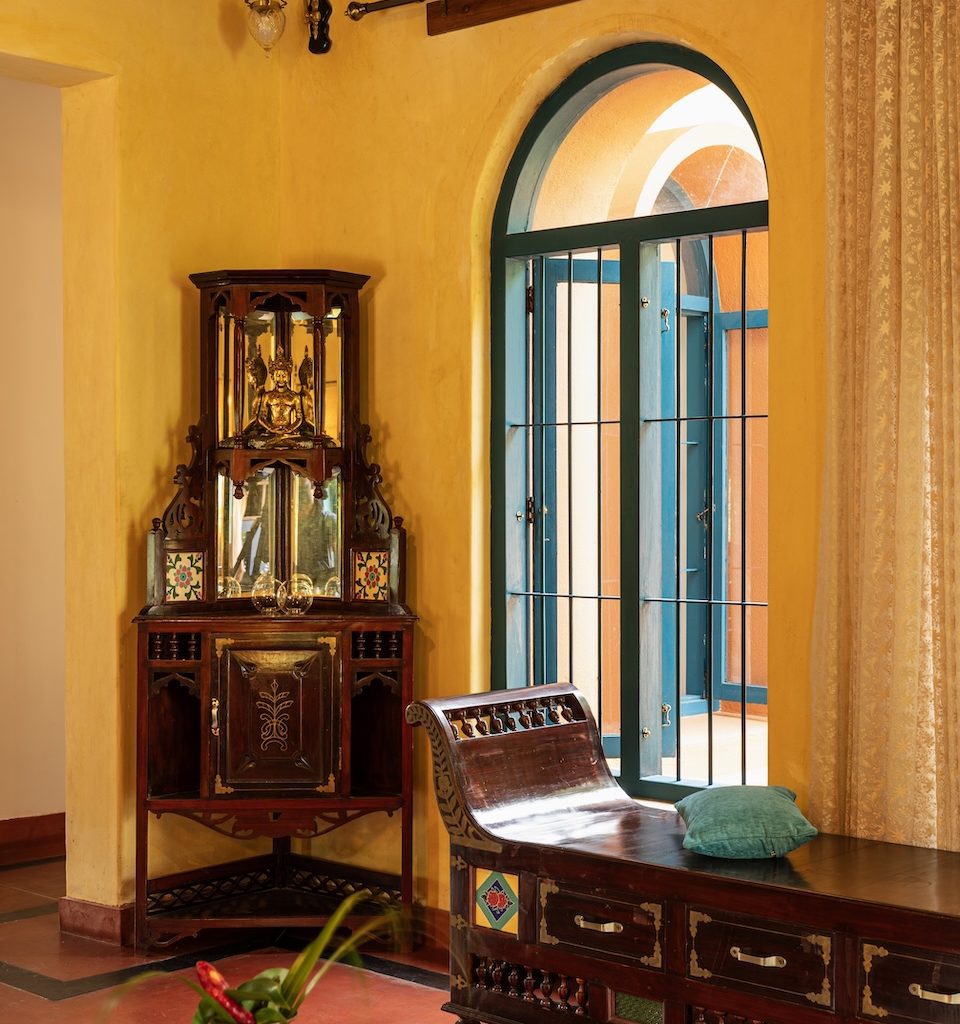
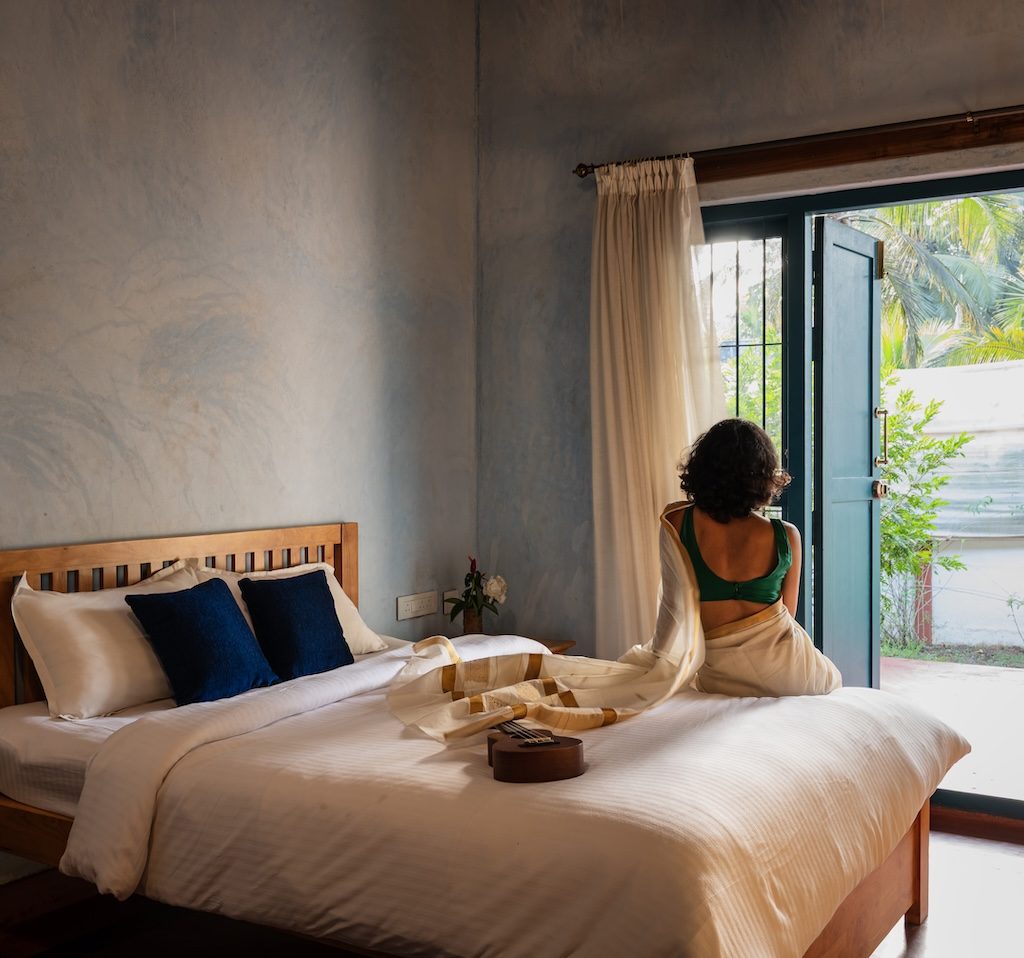
Red oxide flooring, crafted by local artisans, anchors the interiors with a sense of warmth and permanence, while fine black oxide inlay lines subtly trace movement and define transitions across spaces. Lime-plastered walls in soft yellow set the base palette, punctuated by blue windows that bring in both contrast and character. In the bedrooms, this shifts gently into cooler tones of blue and green, creating a more restful atmosphere. Overhead, traditional Mangaluru tiles ensure thermal comfort while reinforcing the home’s regional grounding.
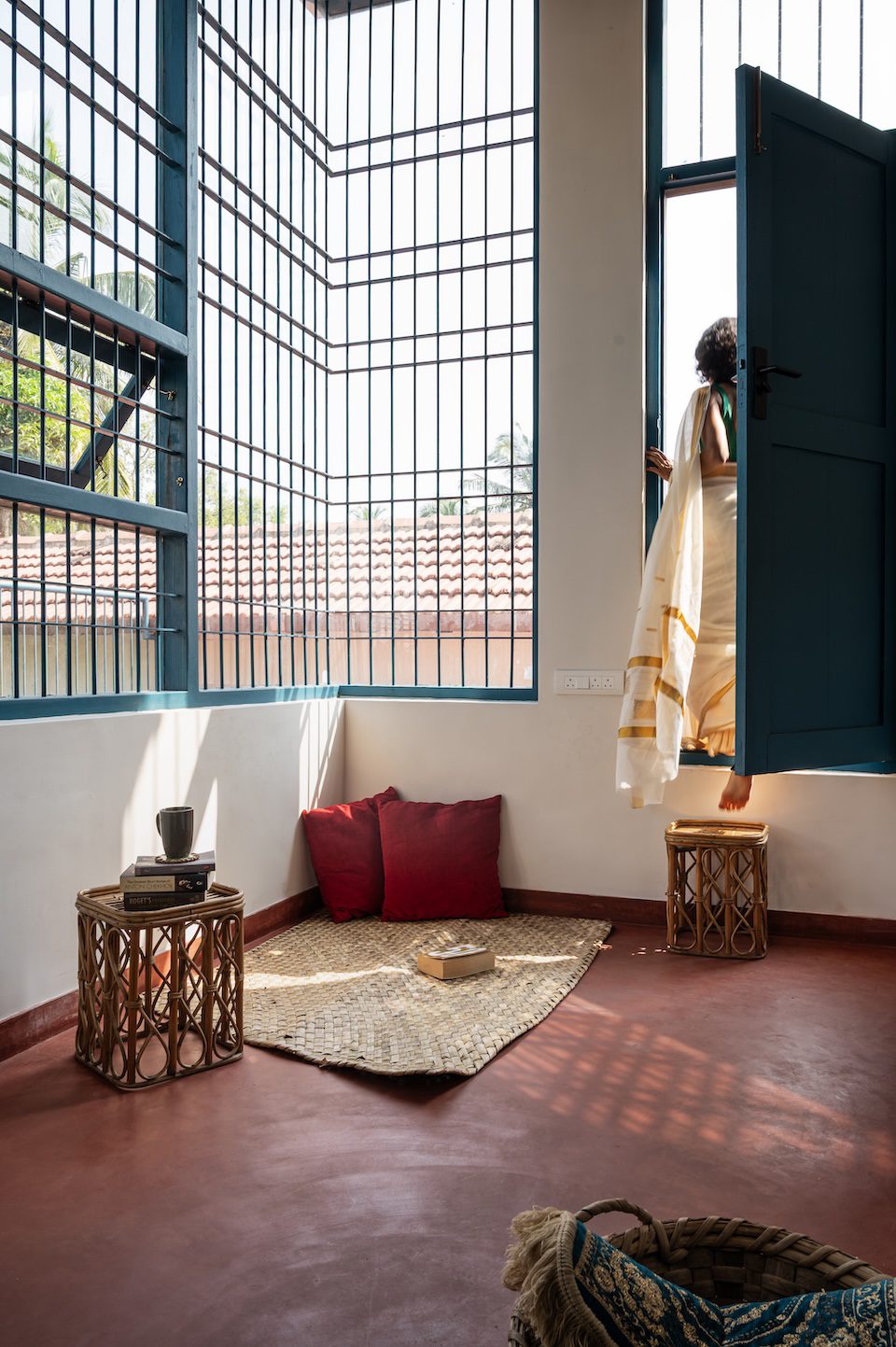
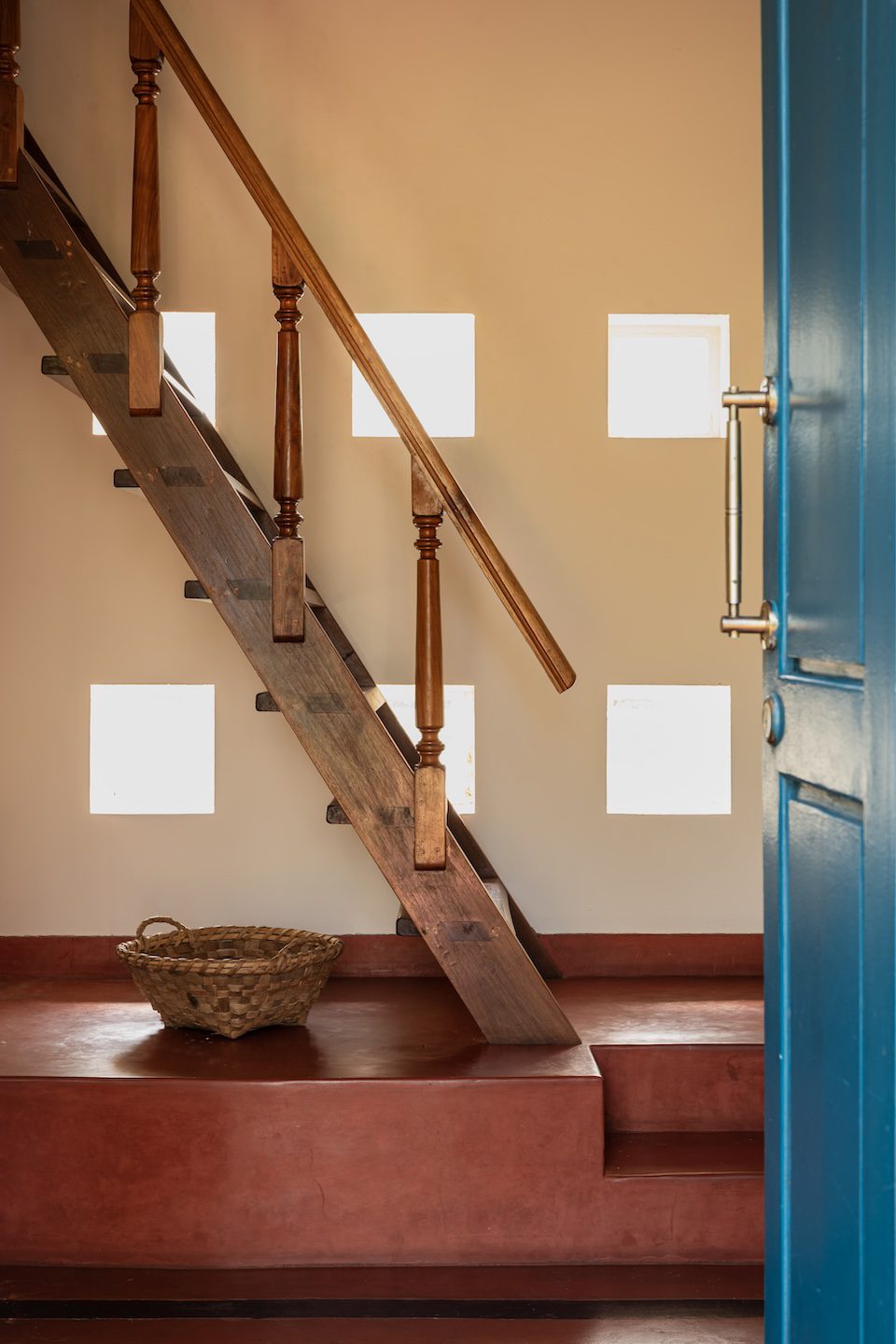
Craft finds expression in quiet yet deliberate details. Brass lights sourced from Rajasthan introduce a warm glow, while the jack wood staircase (a staple in coastal vernacular architecture) with its intricately detailed handcrafted balusters, stands as a testament to local skill.
Fact File
Project: Thresholds of Belonging
Location: Kaup, Karnataka
Area: 4,280 sq ft (built-up)
Principal architects: Shreya Daffney and Saran Babu
Design team: Hita Bhat and Anudipti Arul
Build team: Sherwin James
Add a Comment