
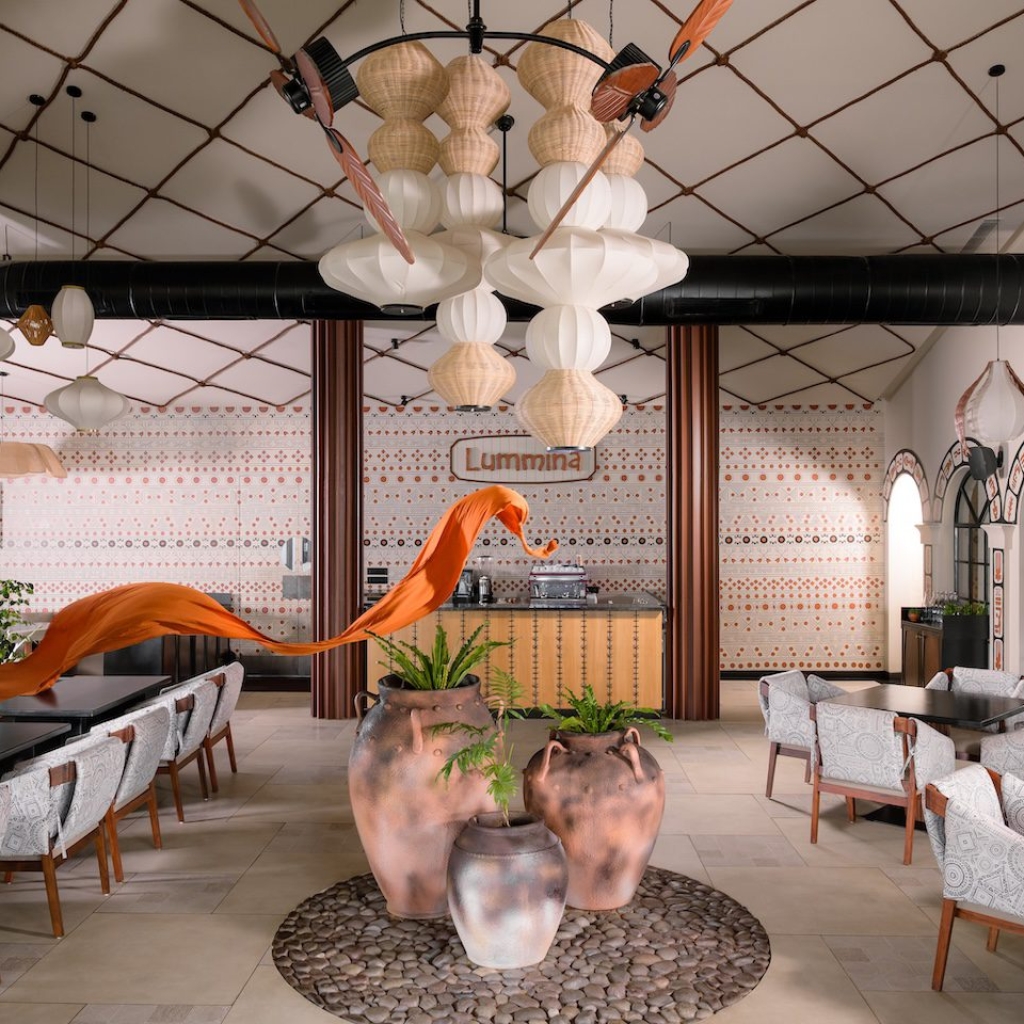
At Lummina in Raipur, Studio Skywell reinterprets Mediterranean architectural principles through earthy materials, Gond tribal art and a spatial language that celebrates light, craft and fluid movement.
Curated by: Rupali Sebastian
Photographs: Ashutosh Agrawal; courtesy Studio Skywell
The project
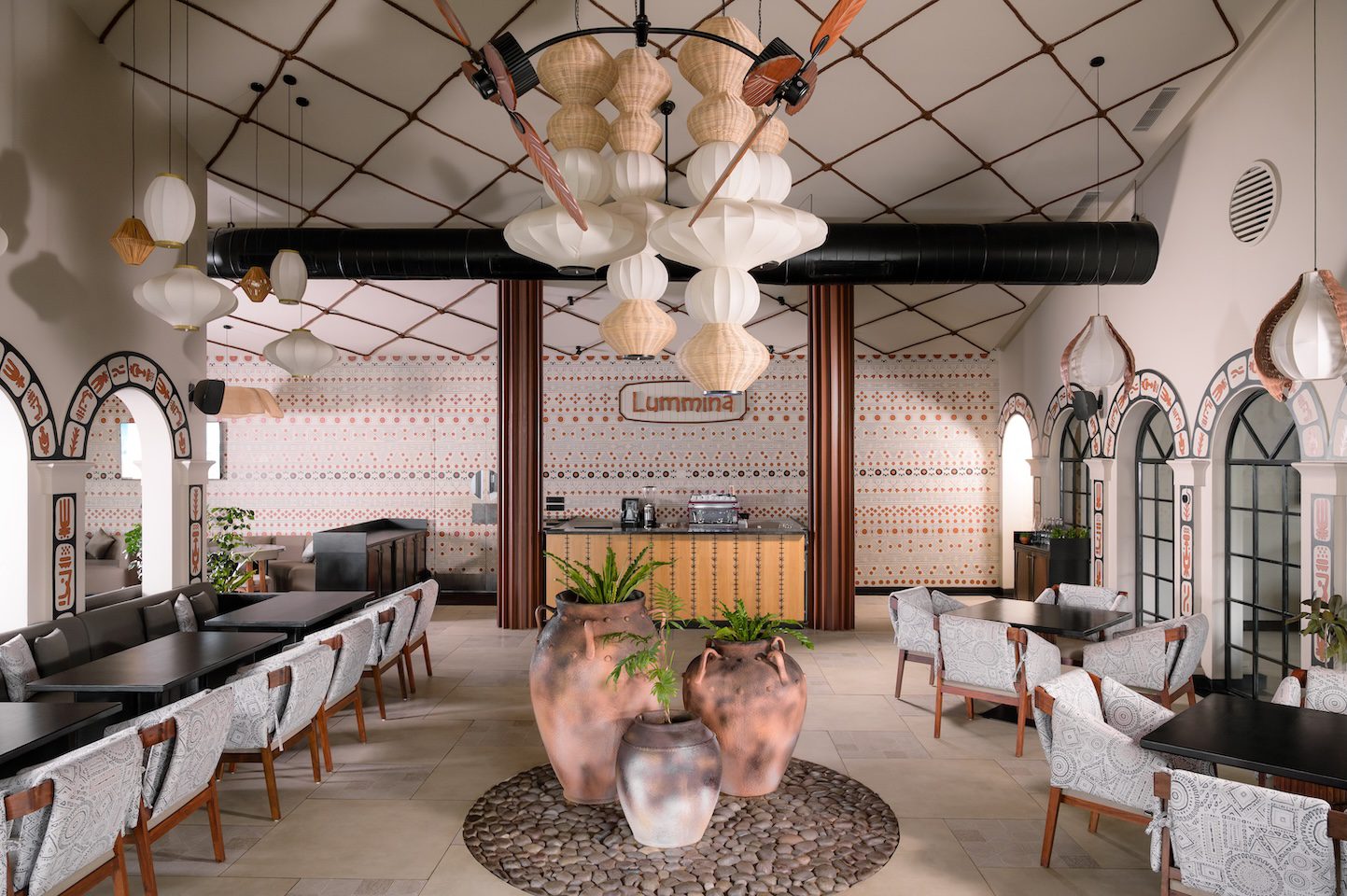
Lummina is conceived as more than an all-day dining restaurant—it is an architectural environment where atmosphere plays as important a role as food. Designed by Studio Skywell, the project explores how light, material and craft can shape a warm and memorable hospitality space.
Instead of leaning on decorative spectacle, the design builds character through tactile surfaces, earthy colours and a layered spatial experience. The restaurant unfolds gradually, allowing guests to move through spaces where textures, light and handcrafted details create a sense of calm and familiarity. At its core, Lummina reflects an attempt to bring together global inspiration and regional craft traditions within a contemporary commercial setting.
The site
The restaurant is located along Airport Road in Raipur, one of the city’s busiest urban corridors. The site is surrounded by constant movement—traffic, commercial activity and the energy of a growing city. Against this backdrop, the design team sought to create a moment of pause. The architecture filters the experience of arrival, allowing guests to transition from the intensity of the street into a space that feels relaxed and welcoming.
The brief
The clients, first-time restaurateurs, envisioned an all-day Mediterranean dining space that would feel inclusive and approachable. Unlike nightlife-oriented restaurants or café formats, Lummina was intended to attract families, groups of friends and young diners alike. The brief therefore called for a balanced combination of indoor and outdoor seating, a welcoming entrance sequence and a children’s play area. Equally important was the need for a layout that allowed guests to move naturally through the restaurant without feeling confined or crowded.
The design intent
While Mediterranean architecture is often visually associated with blue and white surfaces, the design team approached the style through its deeper architectural qualities—light, porosity, natural materials and a seamless relationship between indoor and outdoor spaces. Instead of replicating familiar Mediterranean colour palettes, the project interprets these ideas through textures and tones rooted in Raipur’s own cultural landscape. Gond tribal art becomes an integral design layer, woven into surfaces and spatial moments throughout the restaurant.
As Twinkle Nathani, principal architect, Studio Skywell, explains, “People often associate Mediterranean architecture with blue and white, but its real character lies in its relationship with light, climate and materials. For Lummina, we focused on those deeper principles rather than replicating a colour palette.” The result is a space that feels globally inspired yet deeply contextual.
The civil intervention
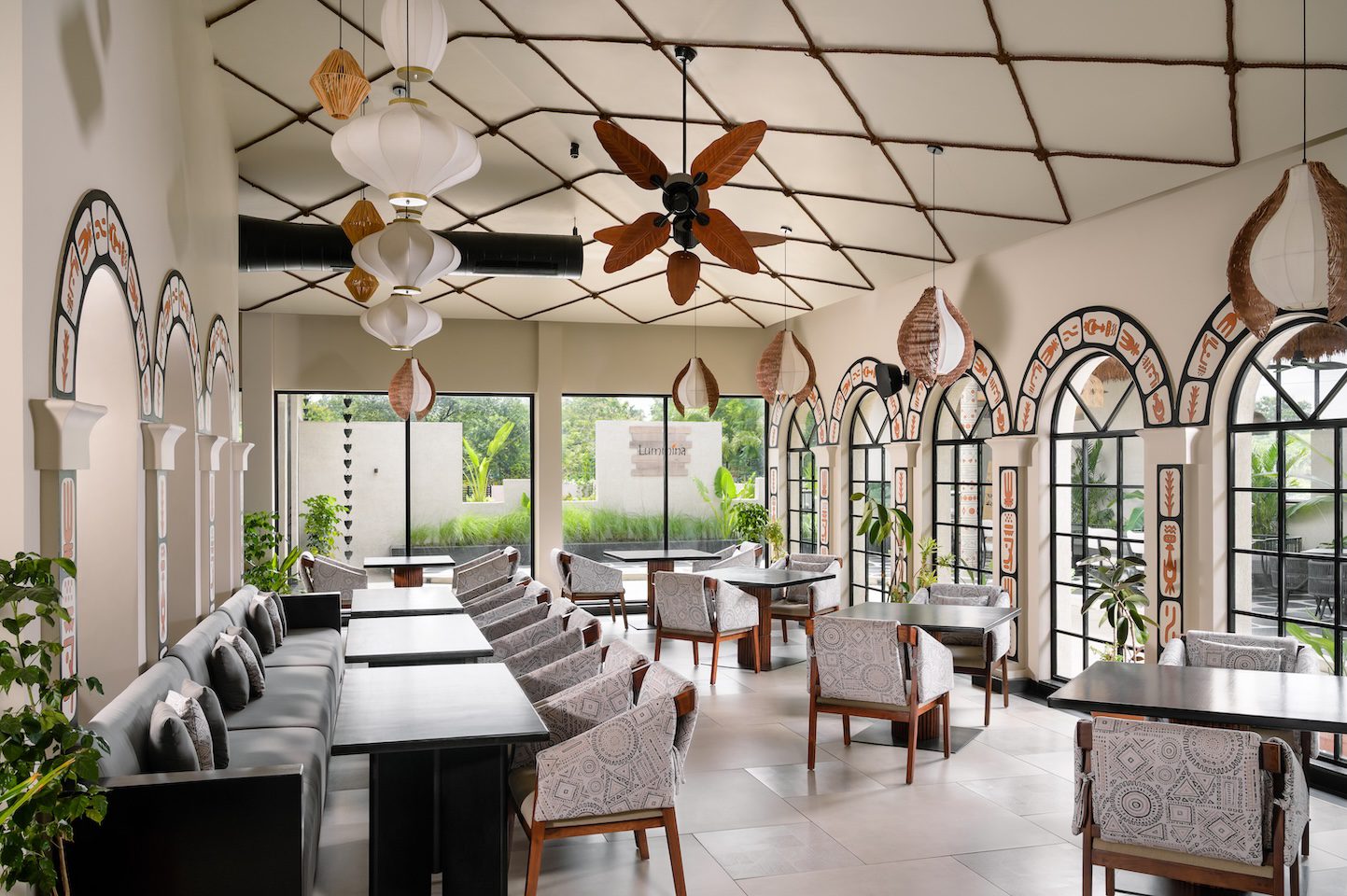
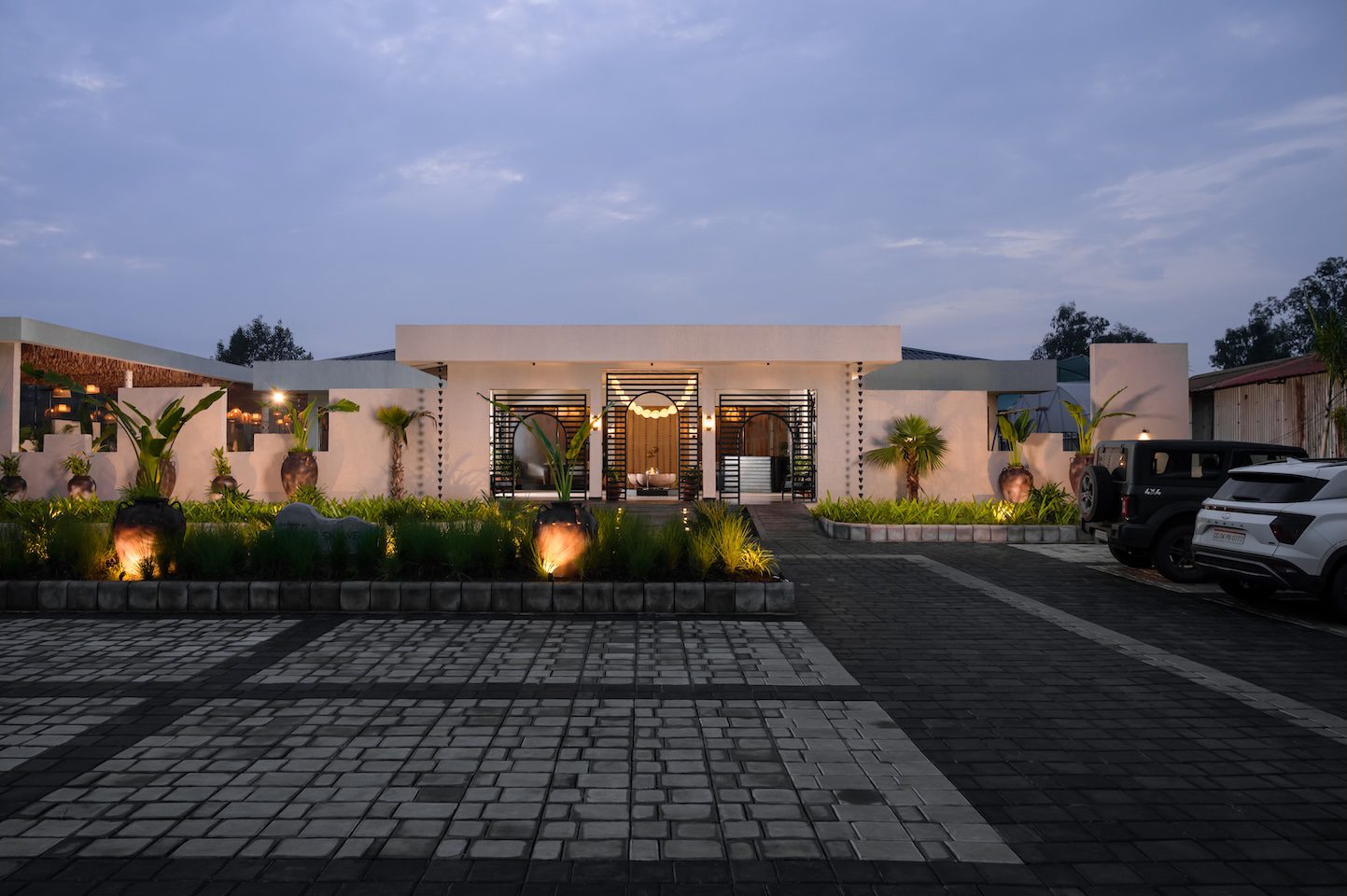
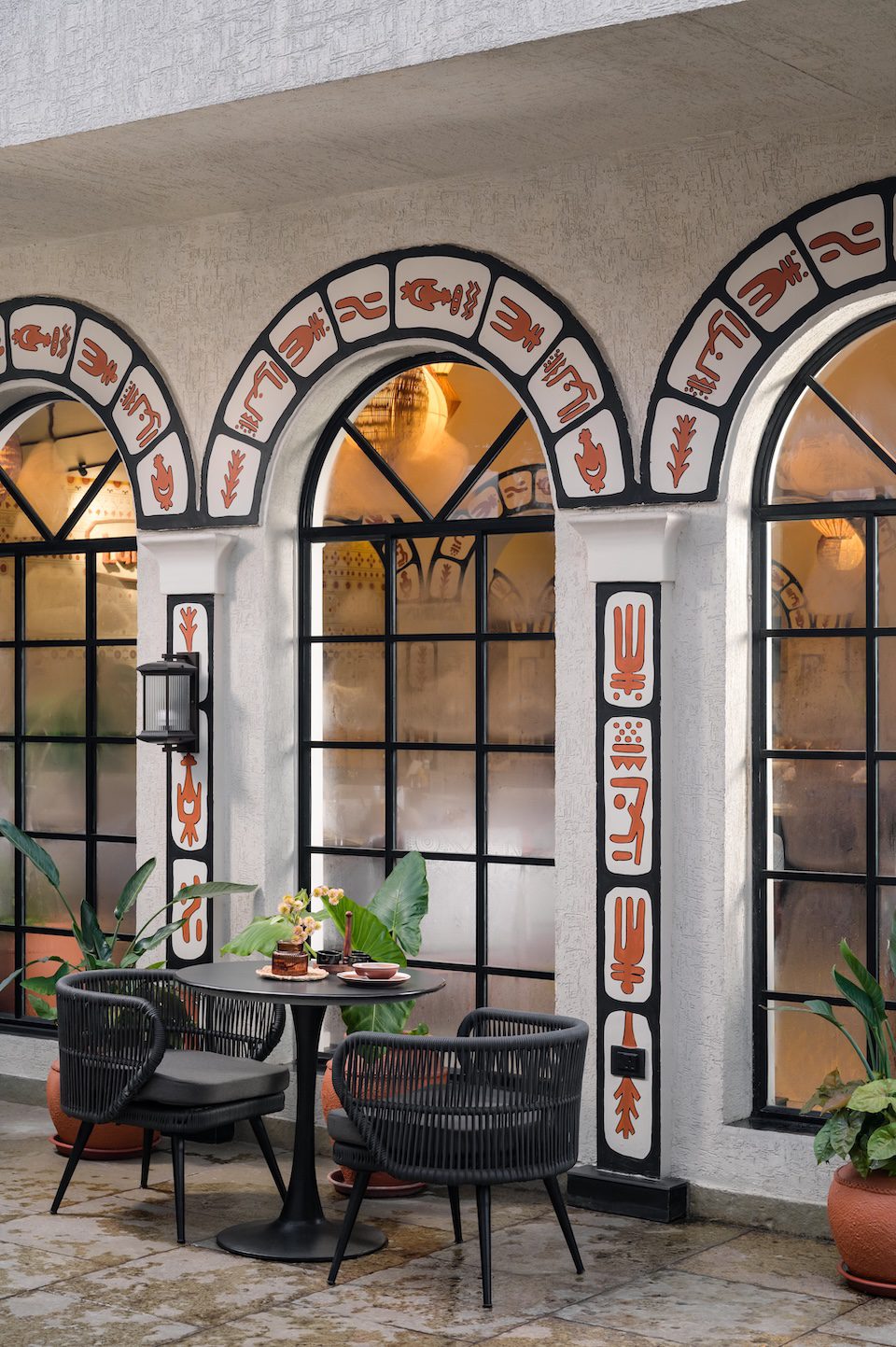
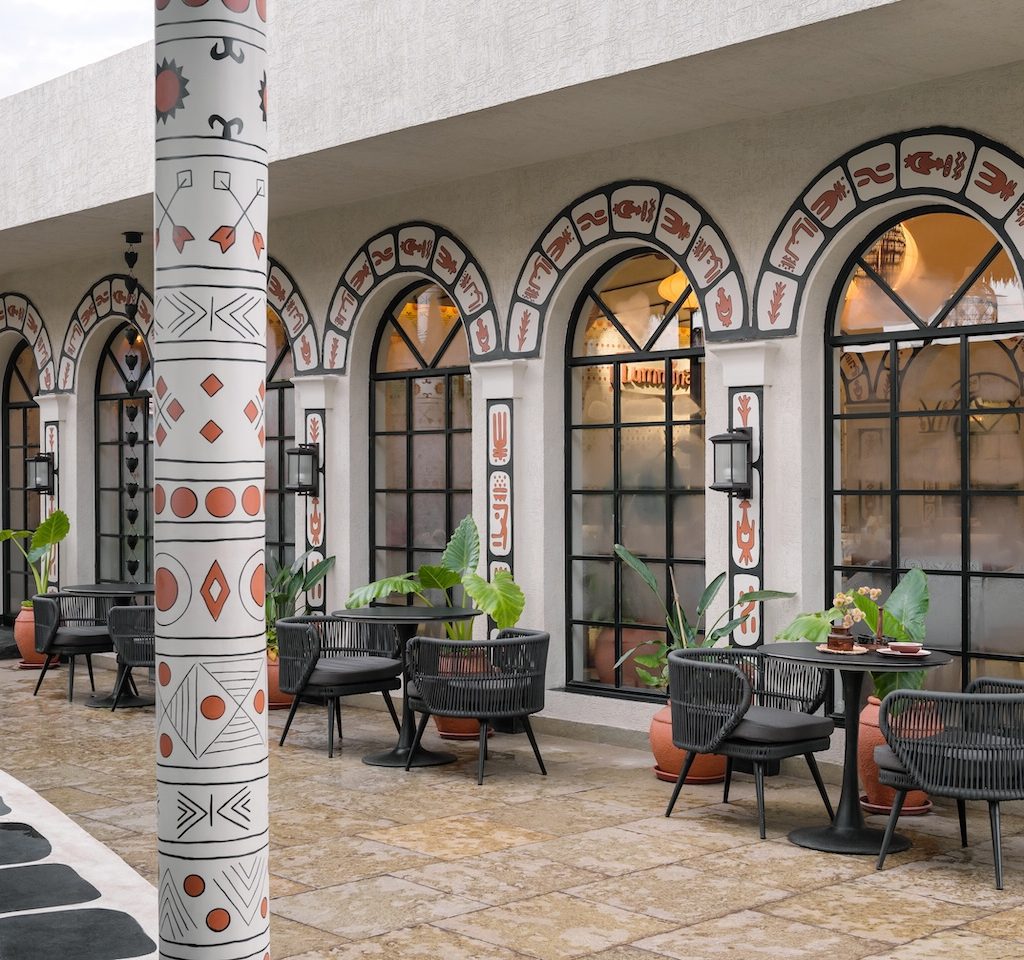
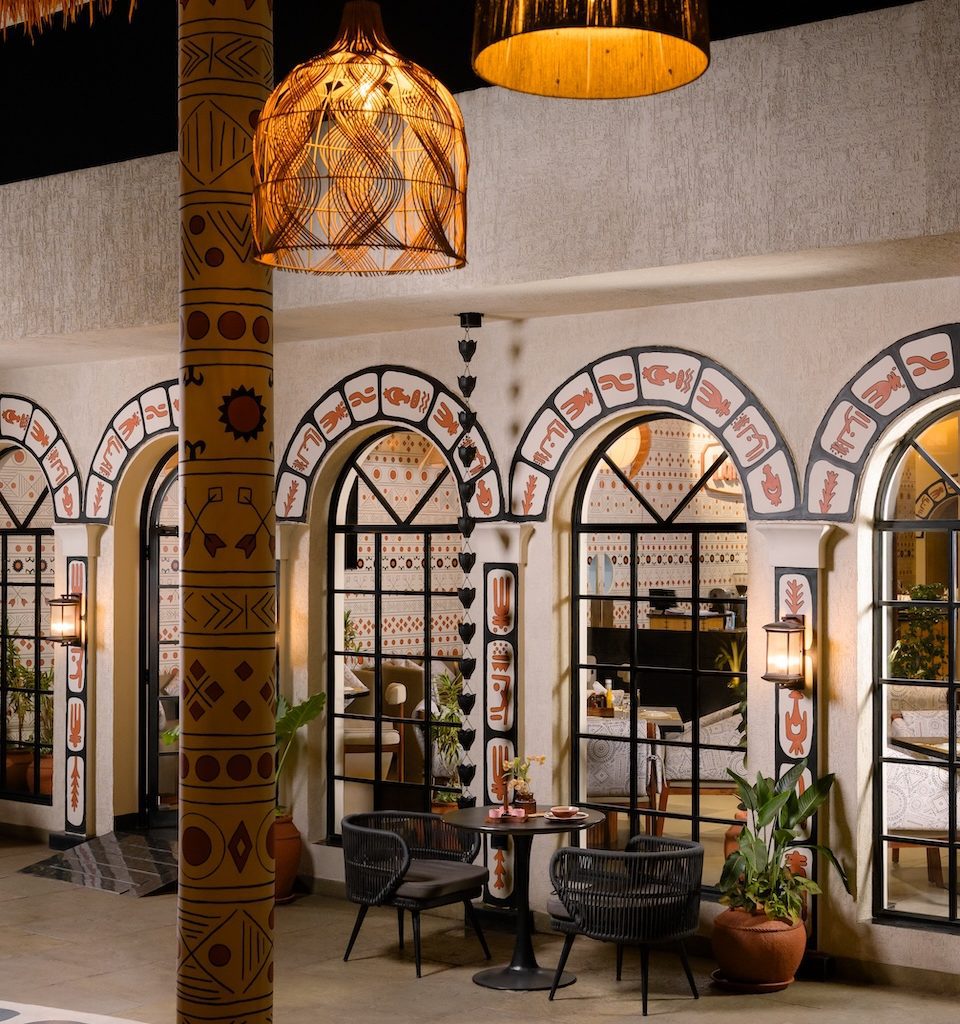
When the designers first encountered the site, it existed largely as a basic shed structure supported by metal columns and a metal roof. Transforming this utilitarian shell into a vibrant hospitality environment became the project’s primary architectural challenge. The intervention introduced sculpted walls, framed openings and lime-textured surfaces that soften the building’s original industrial character. Windows and apertures were carefully positioned to invite natural light and airflow.
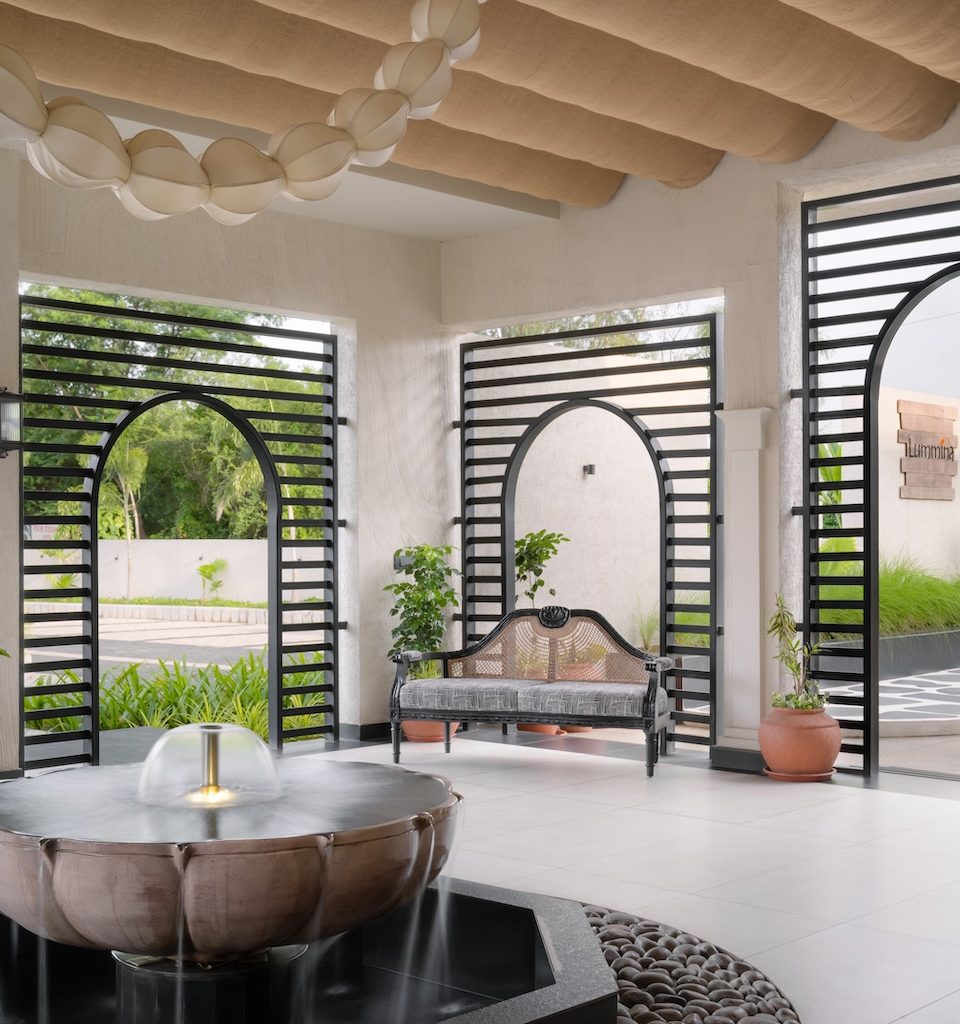
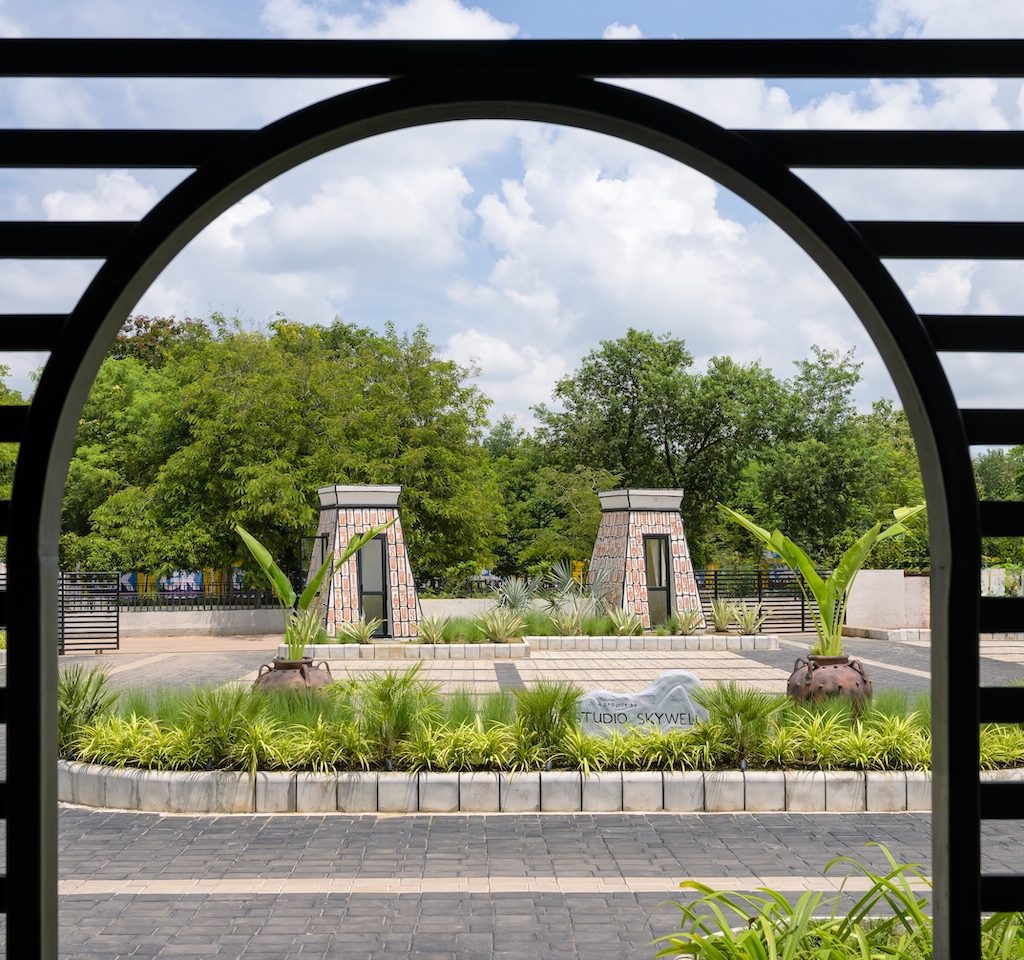
The entrance gateway, facade and boundary walls were also redesigned using the same principles—simple forms, tactile surfaces and controlled depth—allowing the building to express a Mediterranean sensibility while remaining rooted in its local context.
The spatial flow
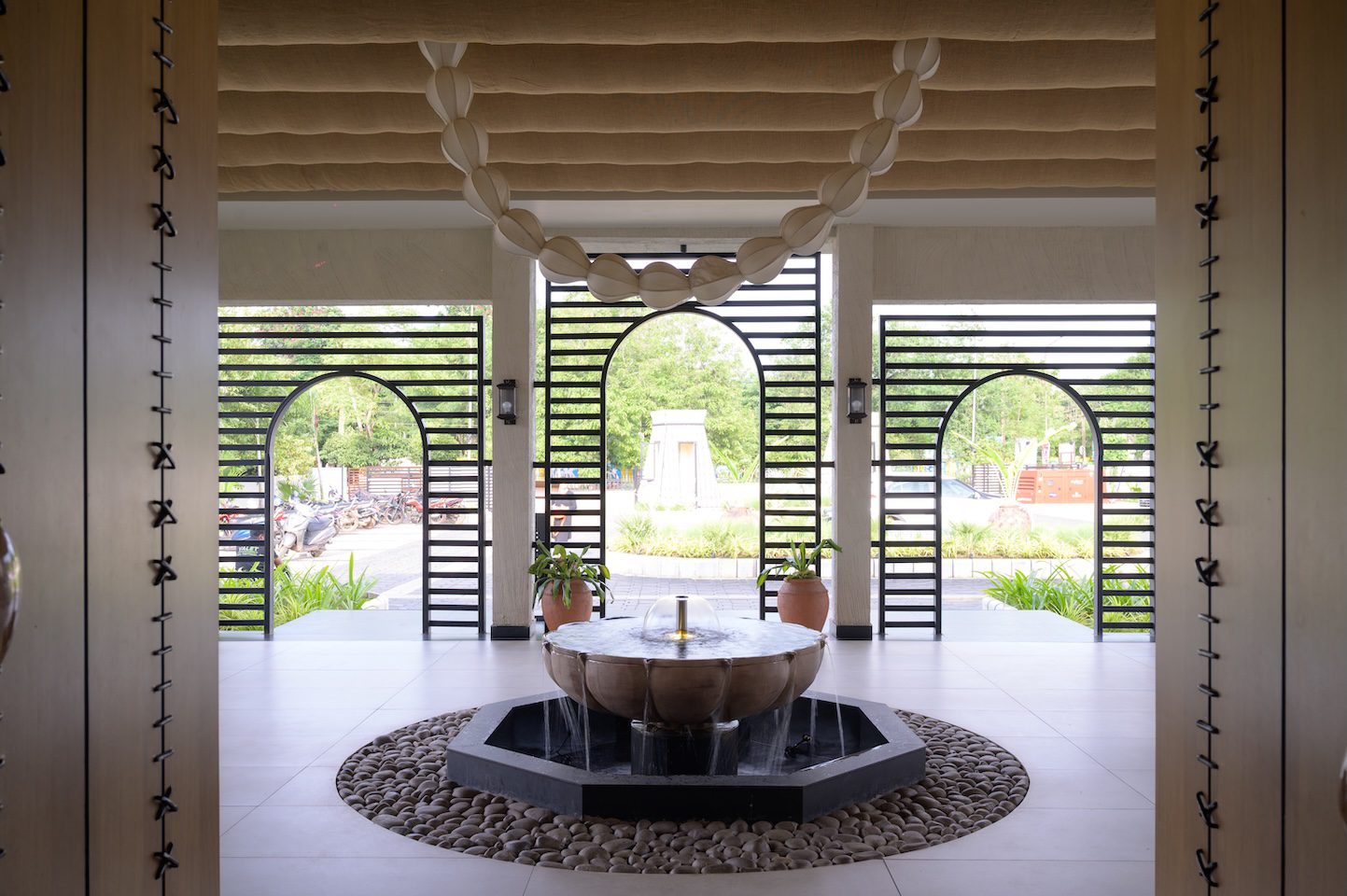
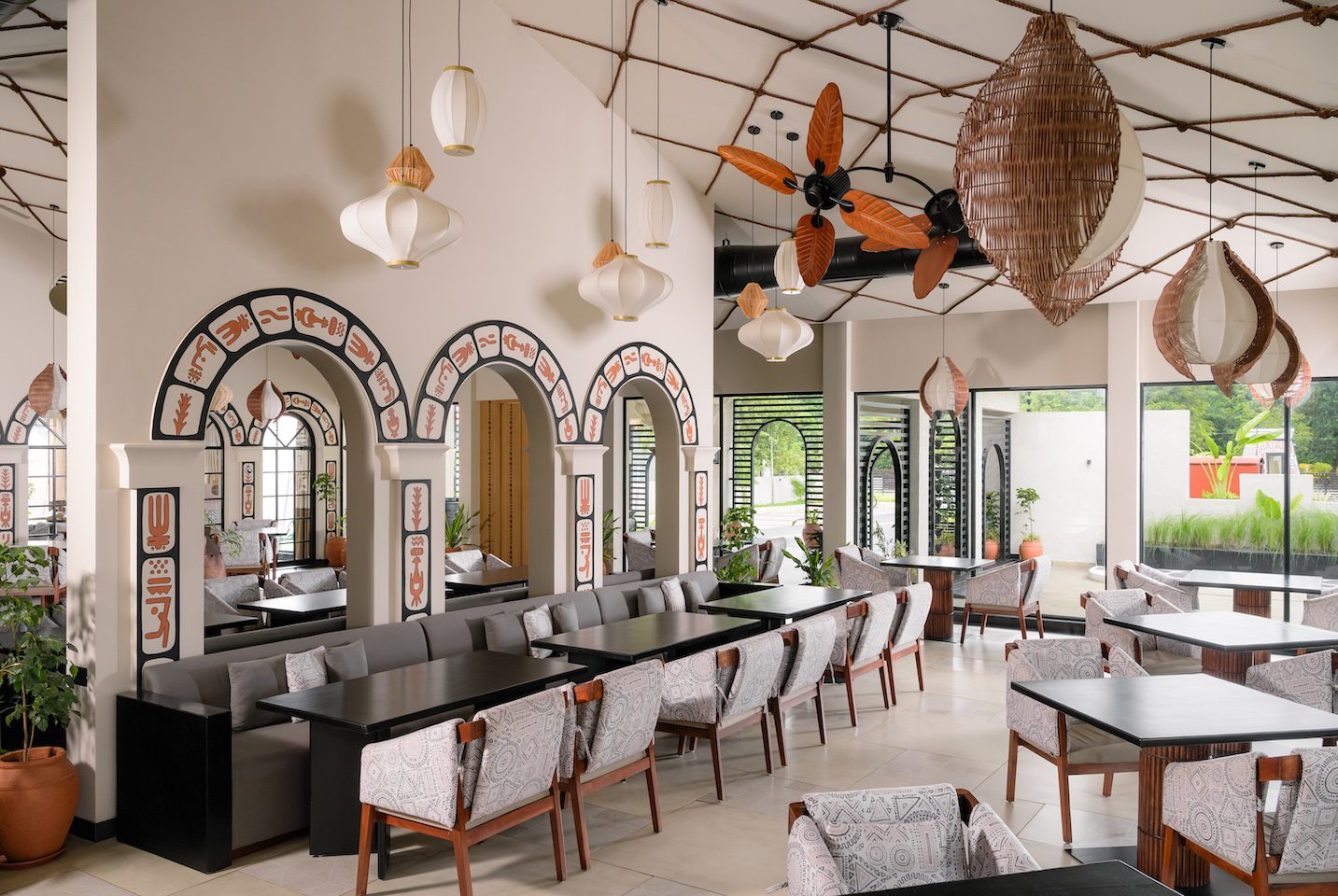
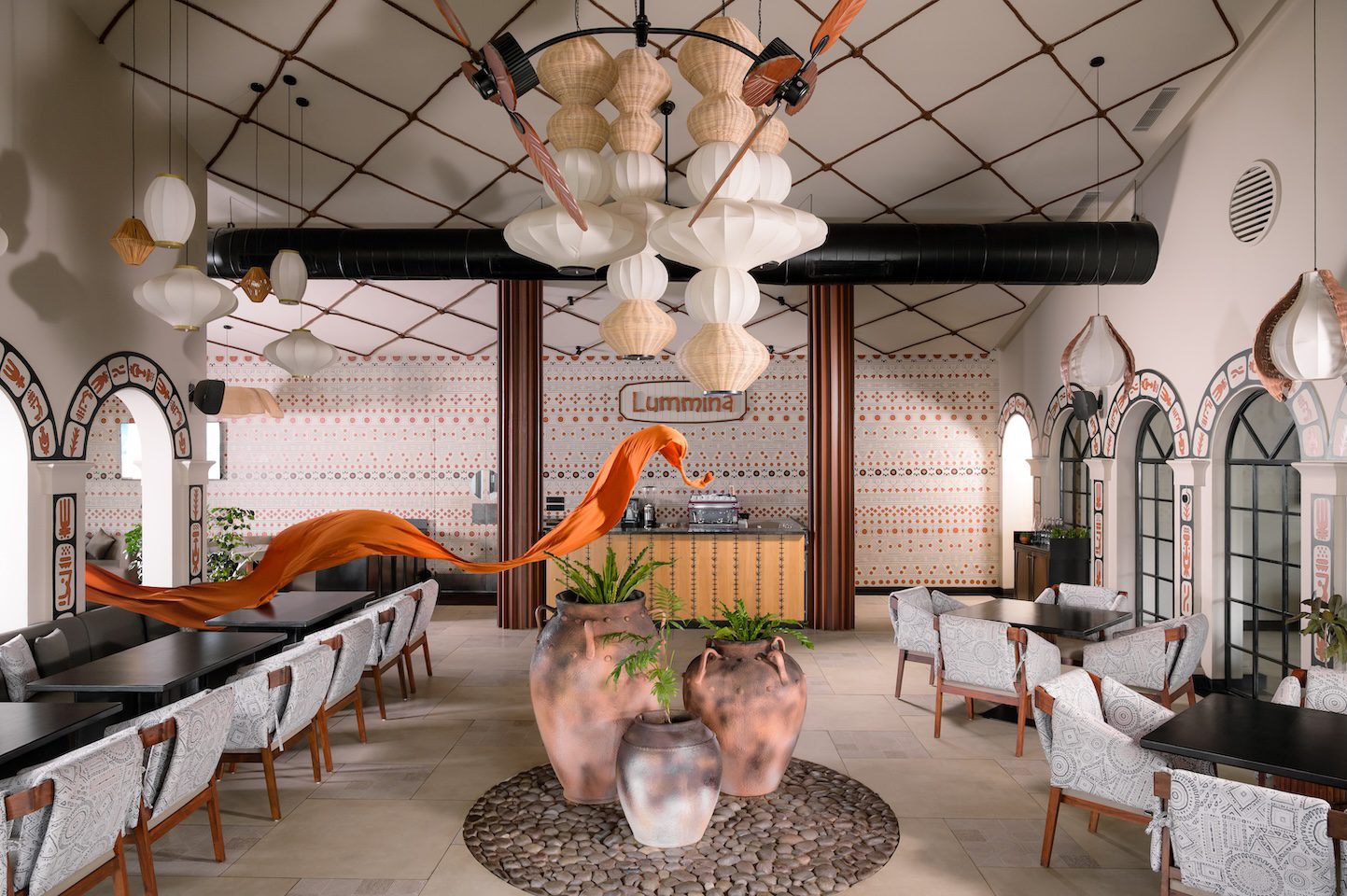
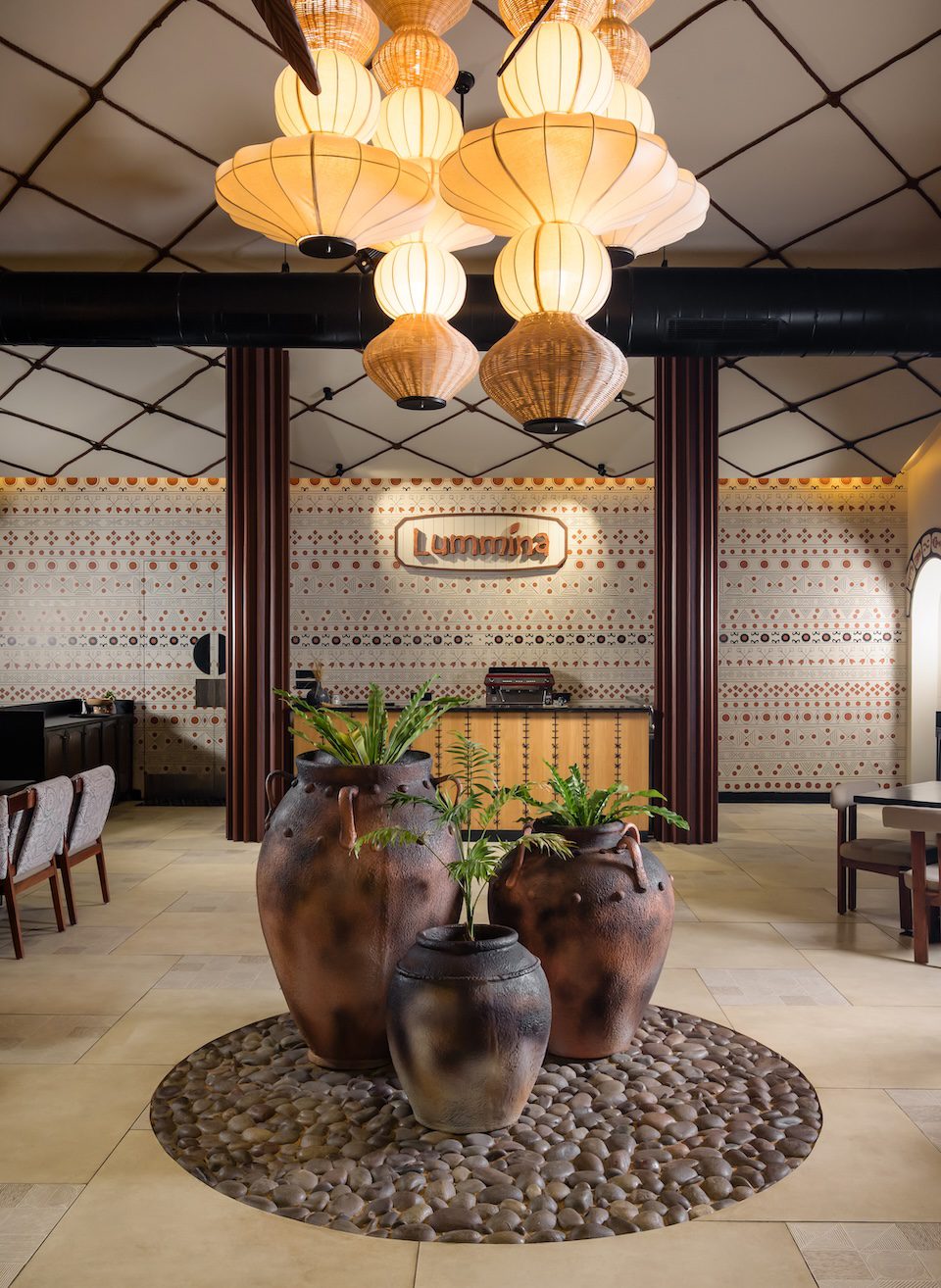
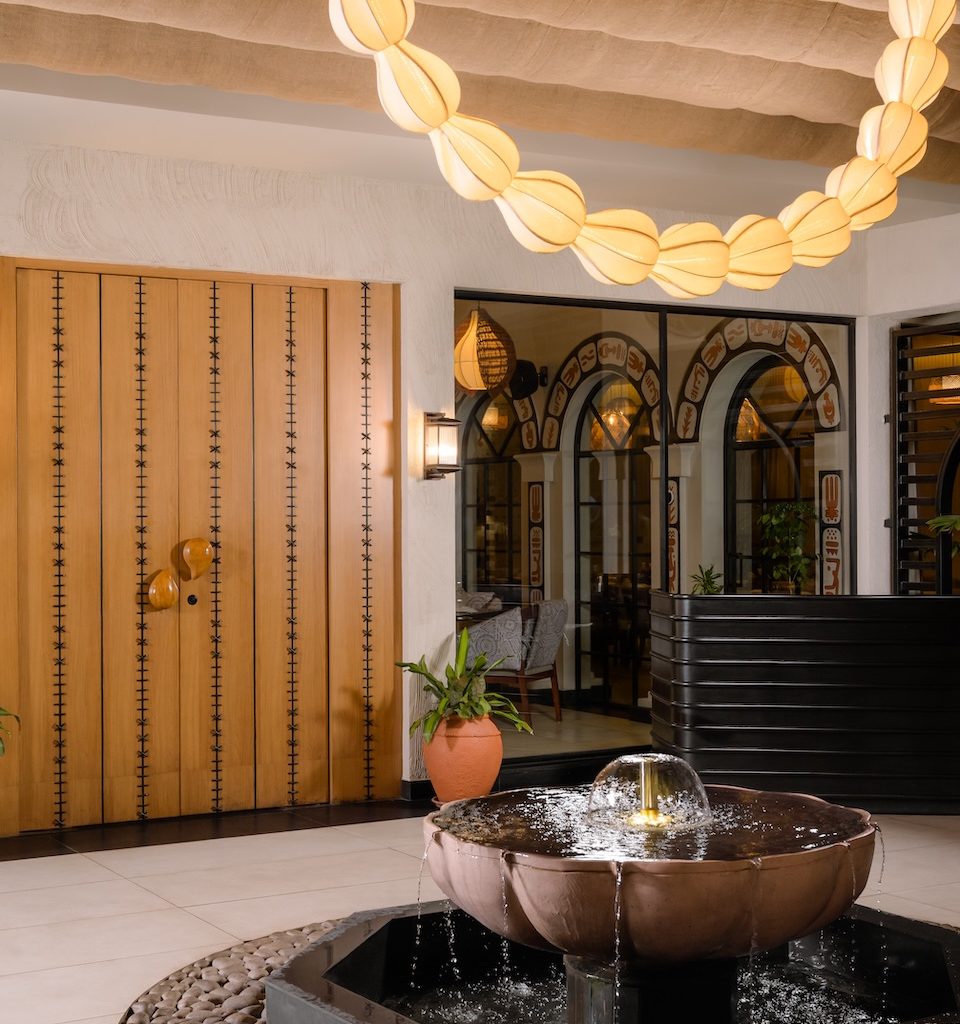
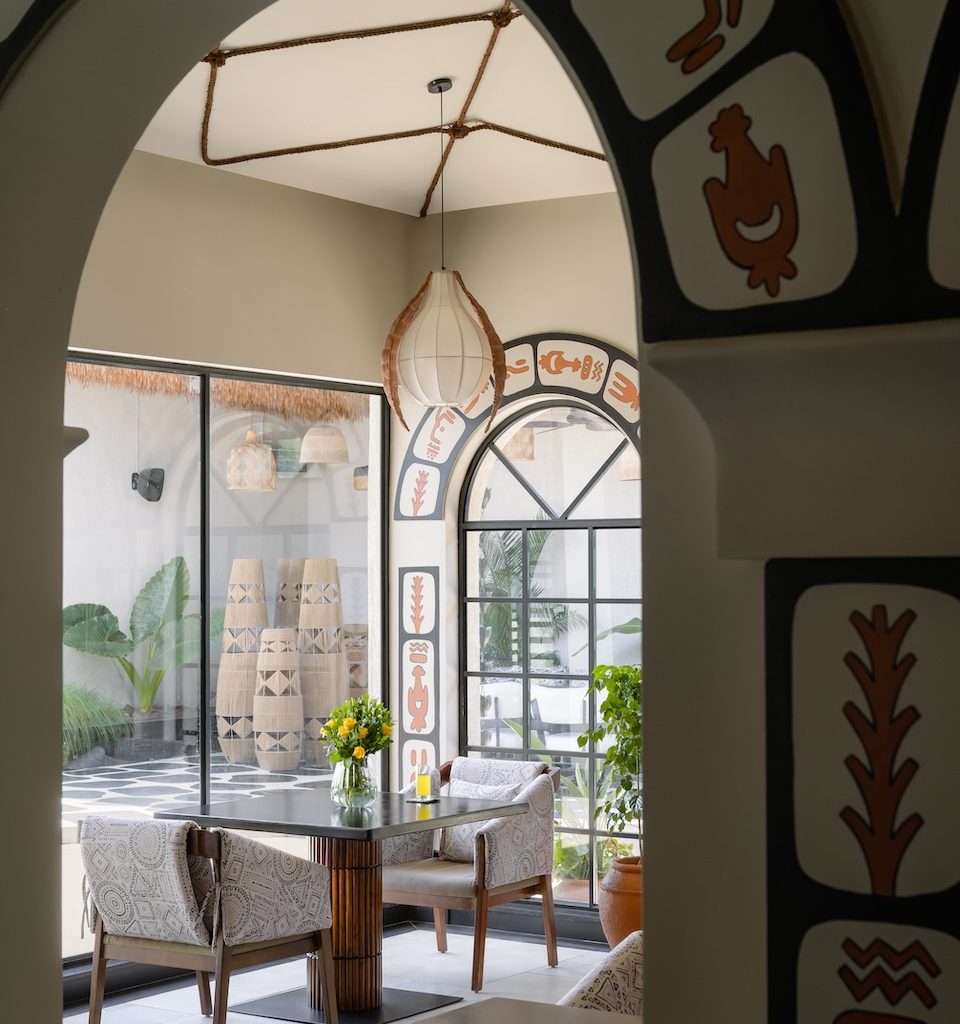
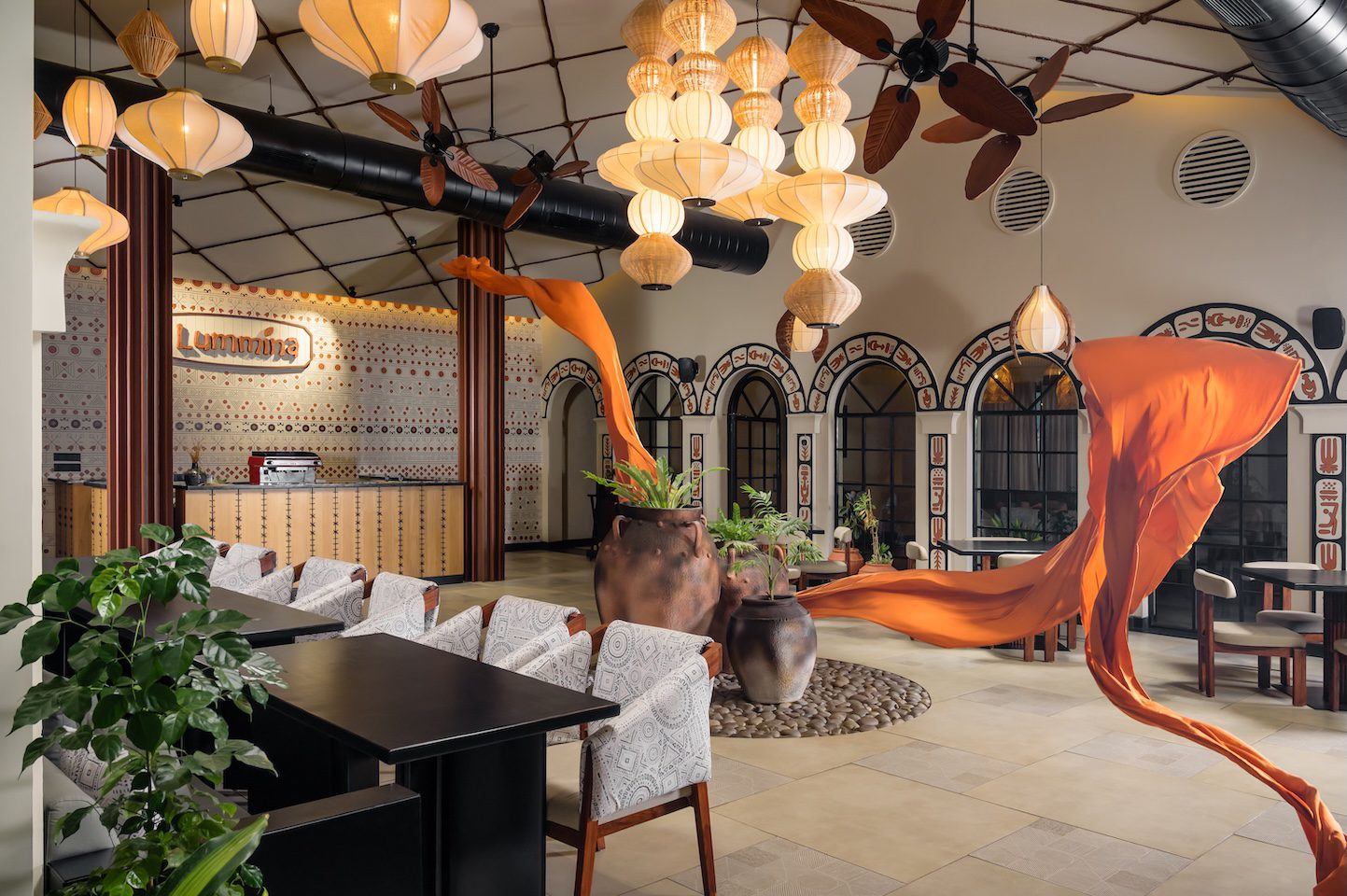
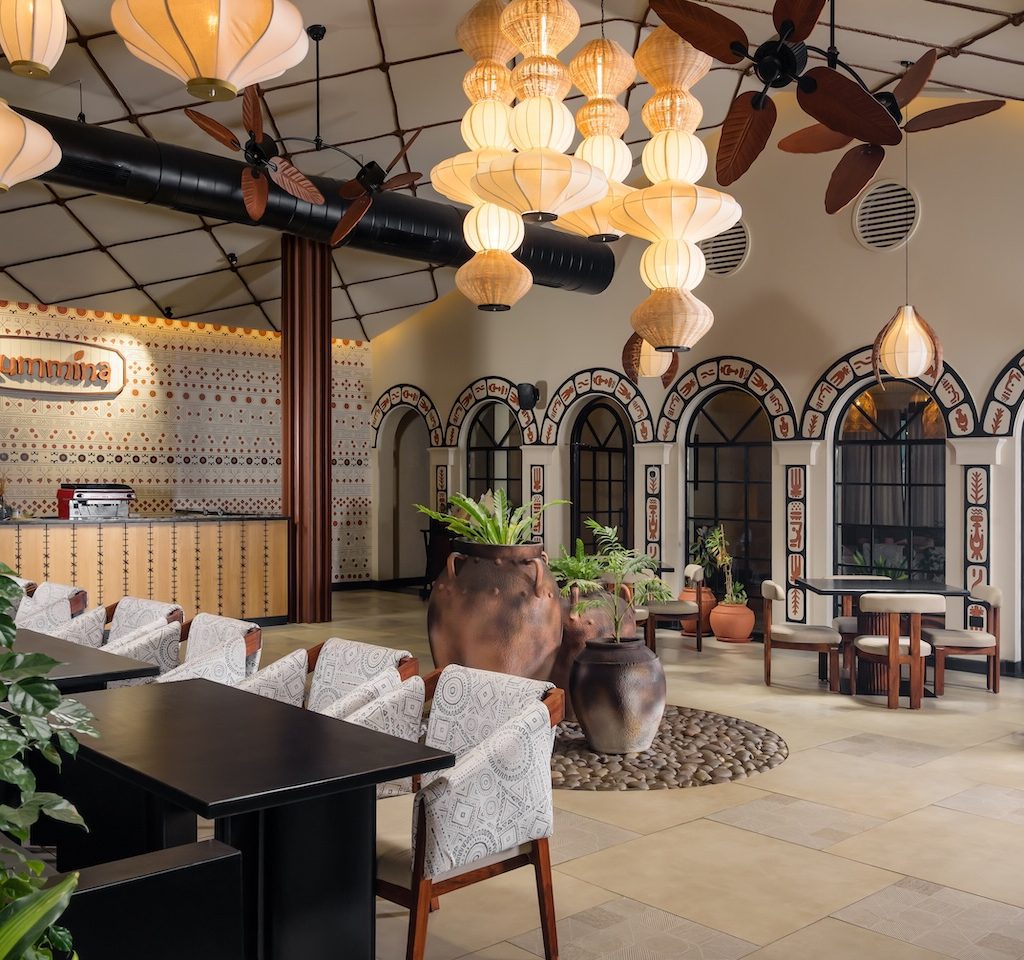
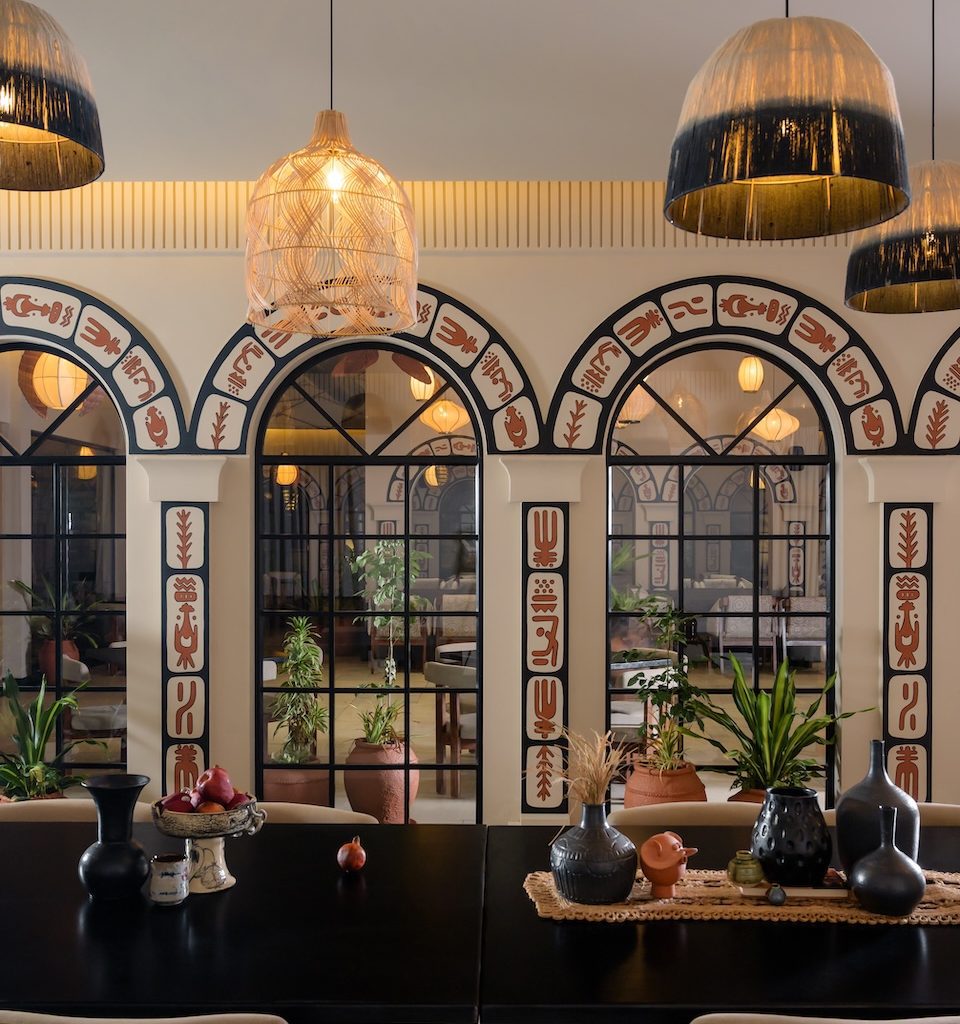
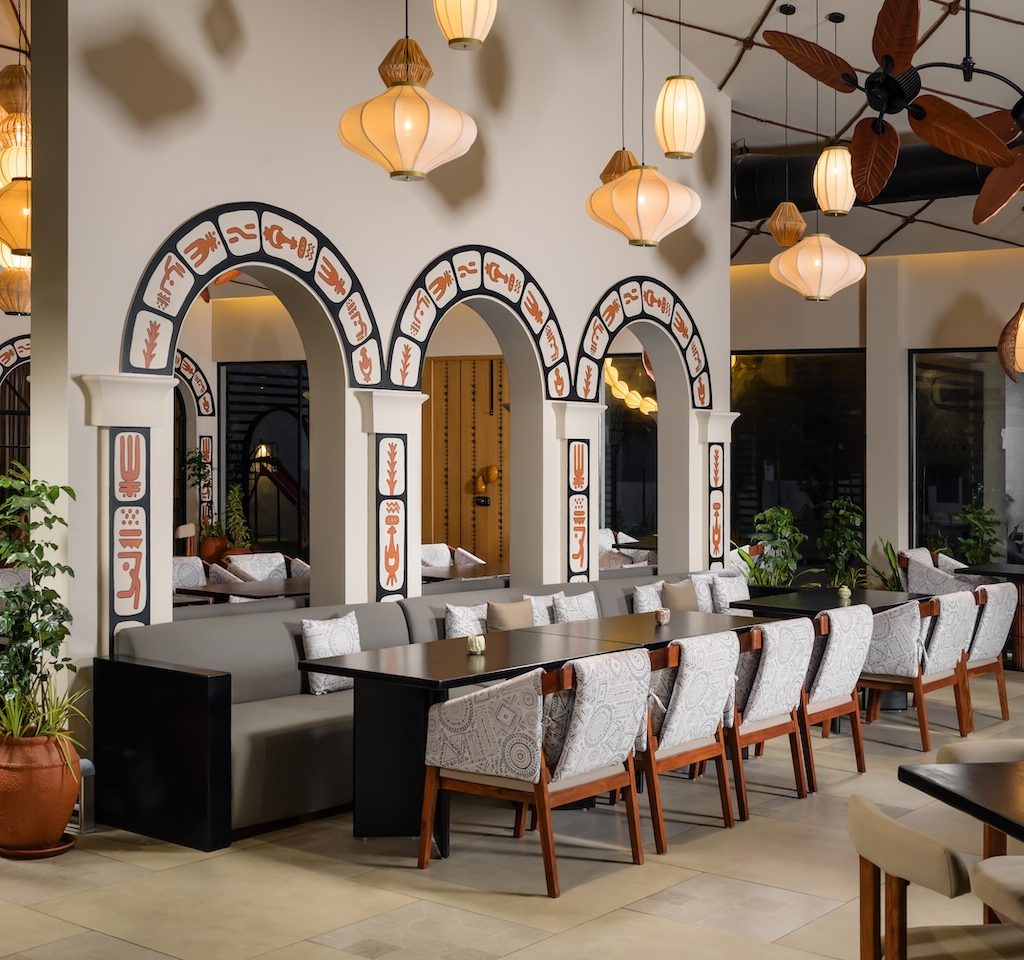
The spatial journey begins with a foyer anchored by a central water fountain. Pebble flooring grounds the entry experience, while a jute-fabric ceiling with integrated lighting creates a warm, diffused glow. From this transitional space, movement naturally branches toward three key zones: the indoor dining hall, the outdoor seating area and a dedicated children’s play zone. Within the indoor dining area, large terracotta pots introduce sculptural presence. A series of arches structures the seating layout, creating rhythm and visual continuity. To one side, a private dining room accommodates larger gatherings without interrupting the main dining experience.
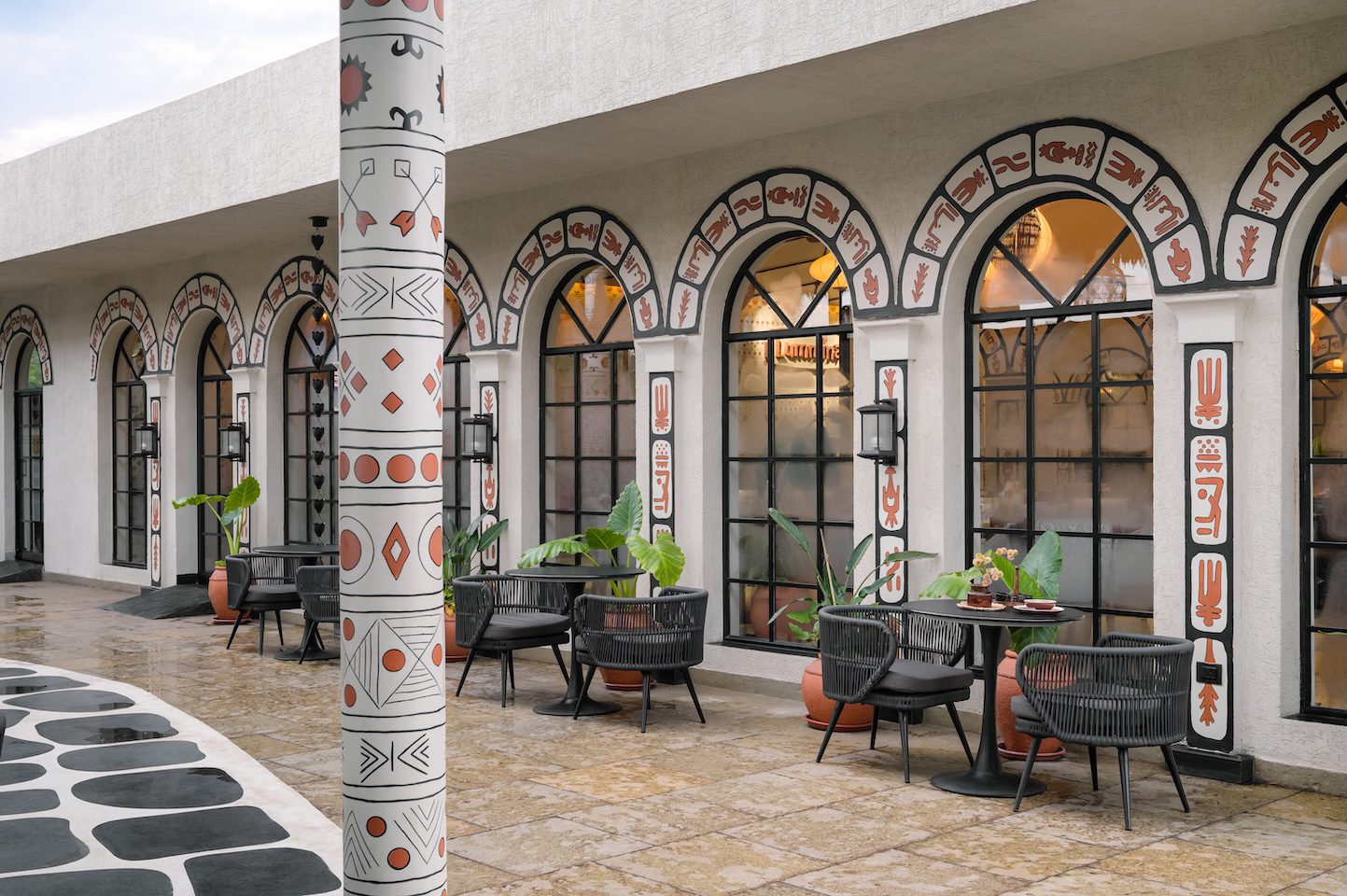
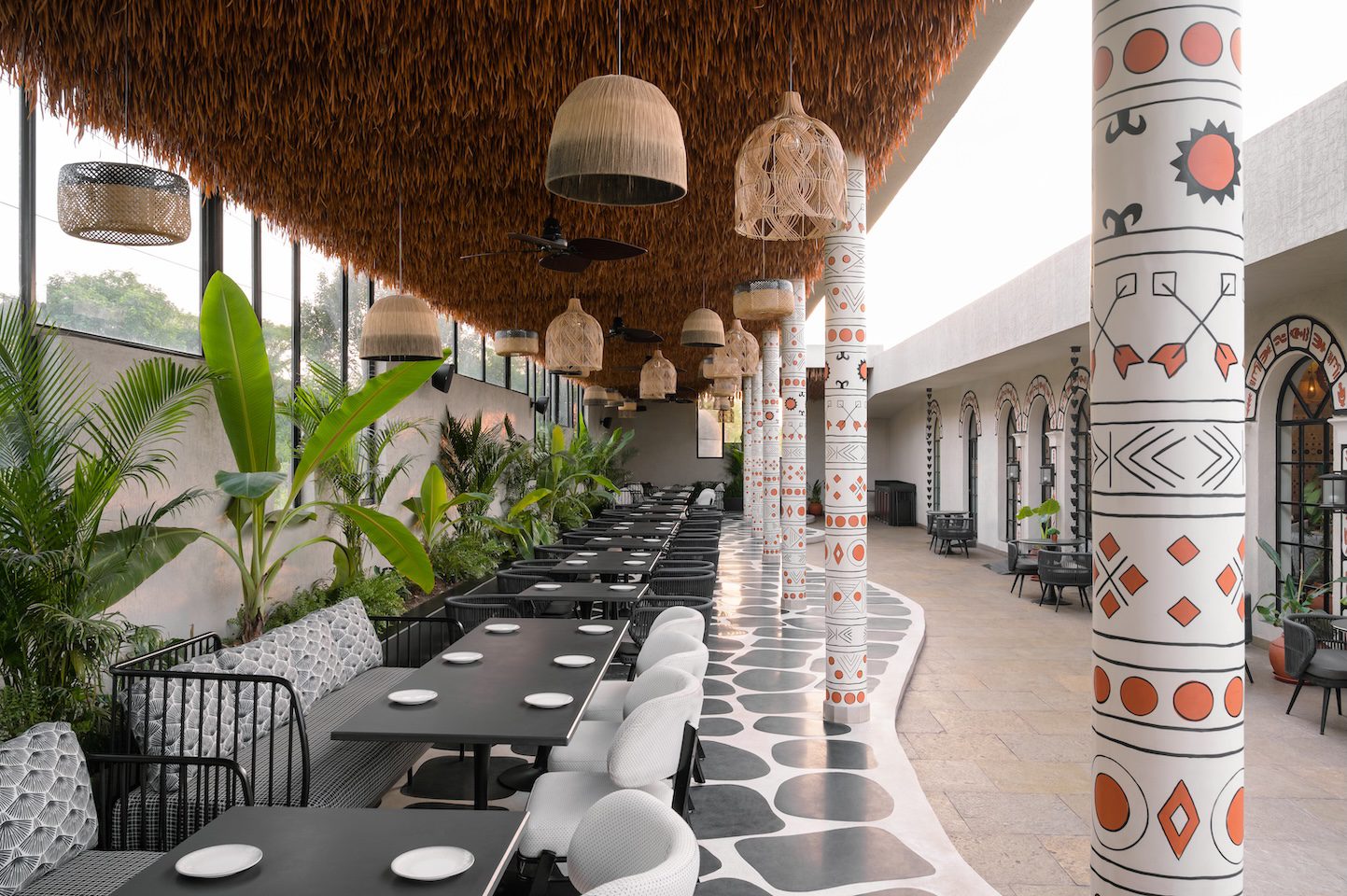
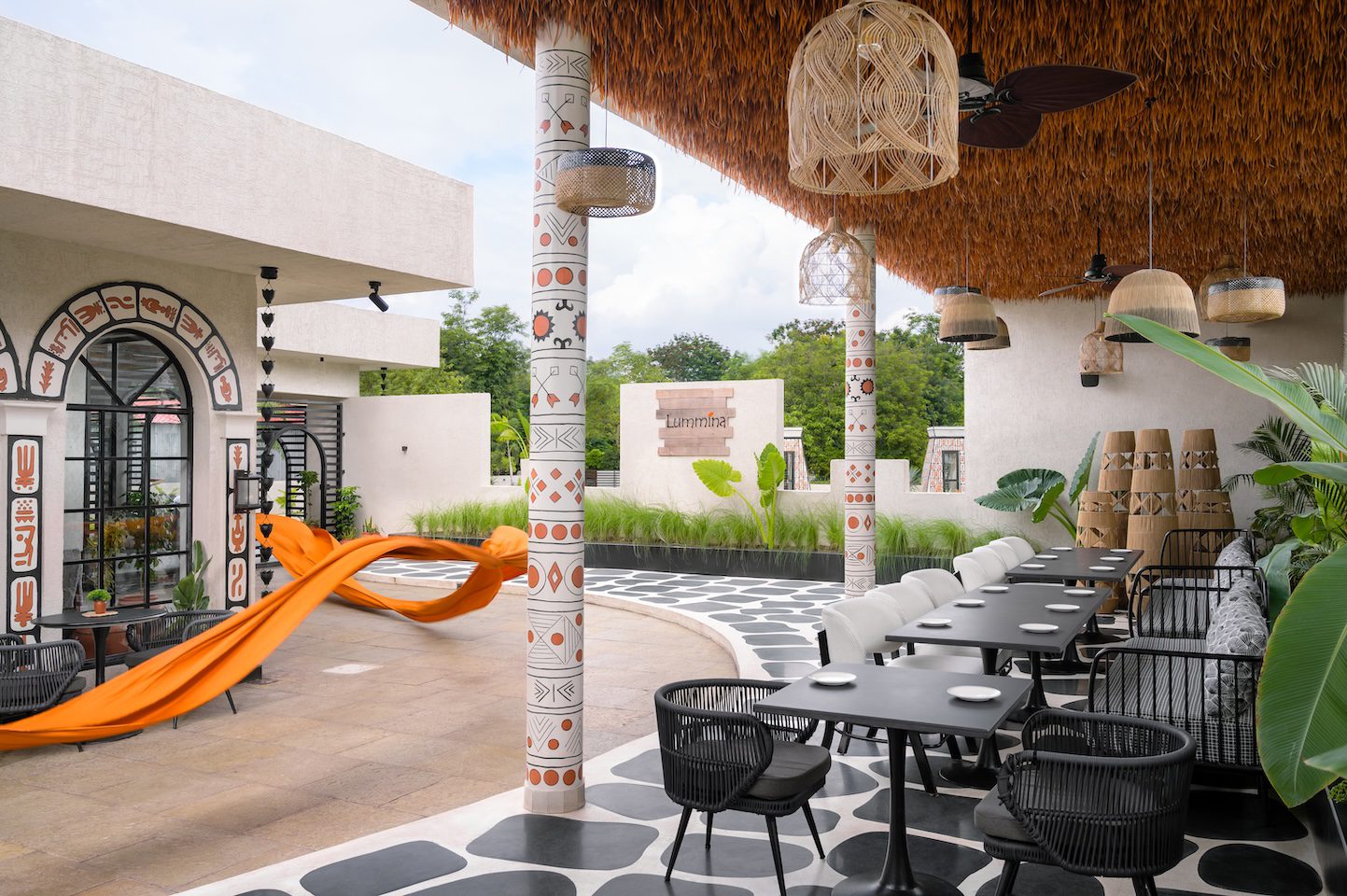
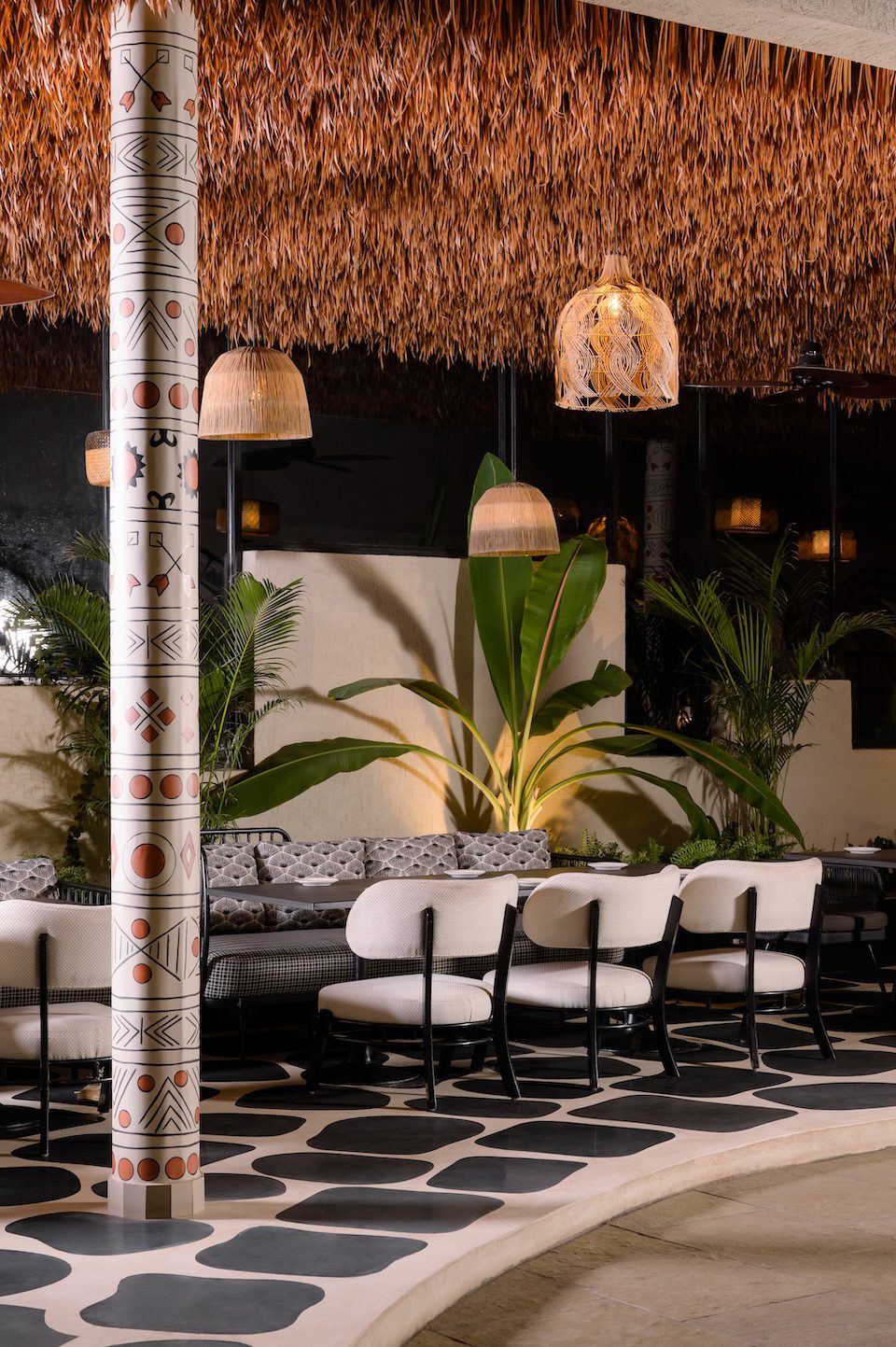
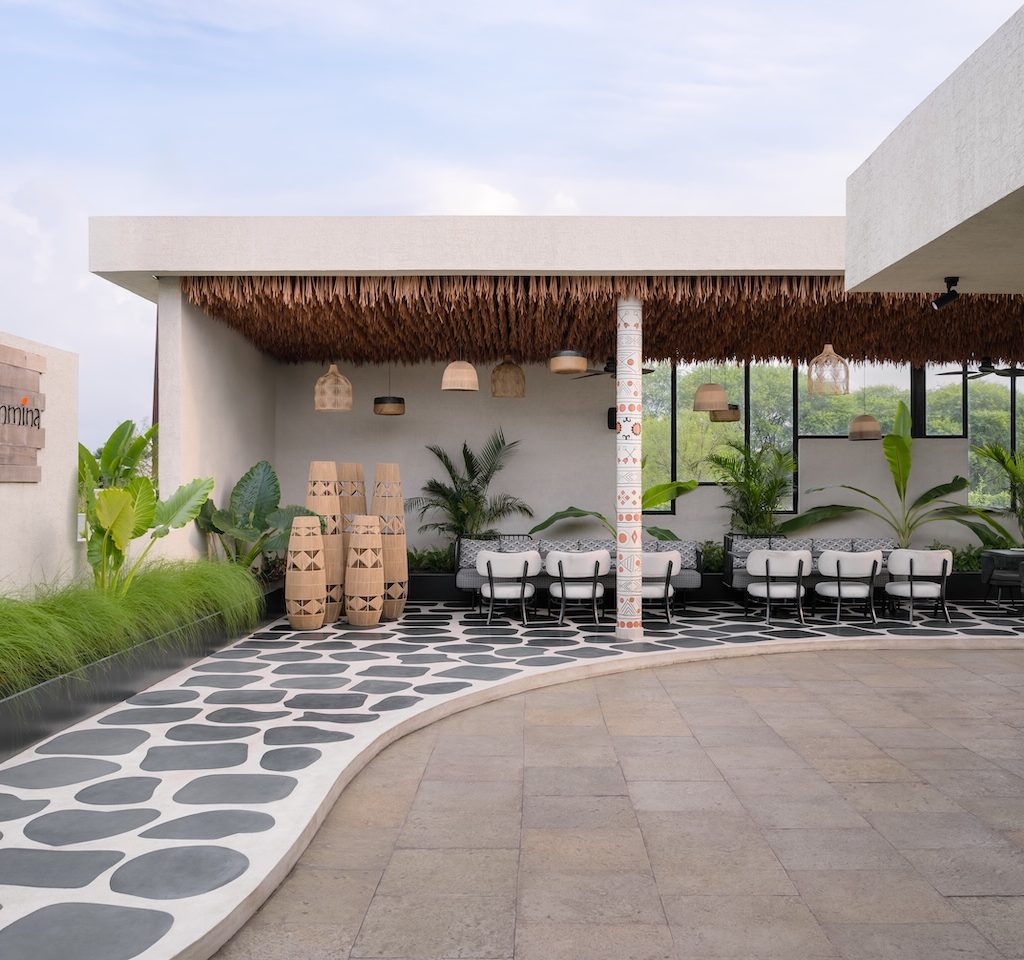
The outdoor seating extends the spatial narrative. One portion remains open to the sky, allowing light and ventilation to shape the dining atmosphere. Another is sheltered by a thatch roof and grounded with local black stone flooring, reinforcing the connection between architecture and landscape.
The design and material details
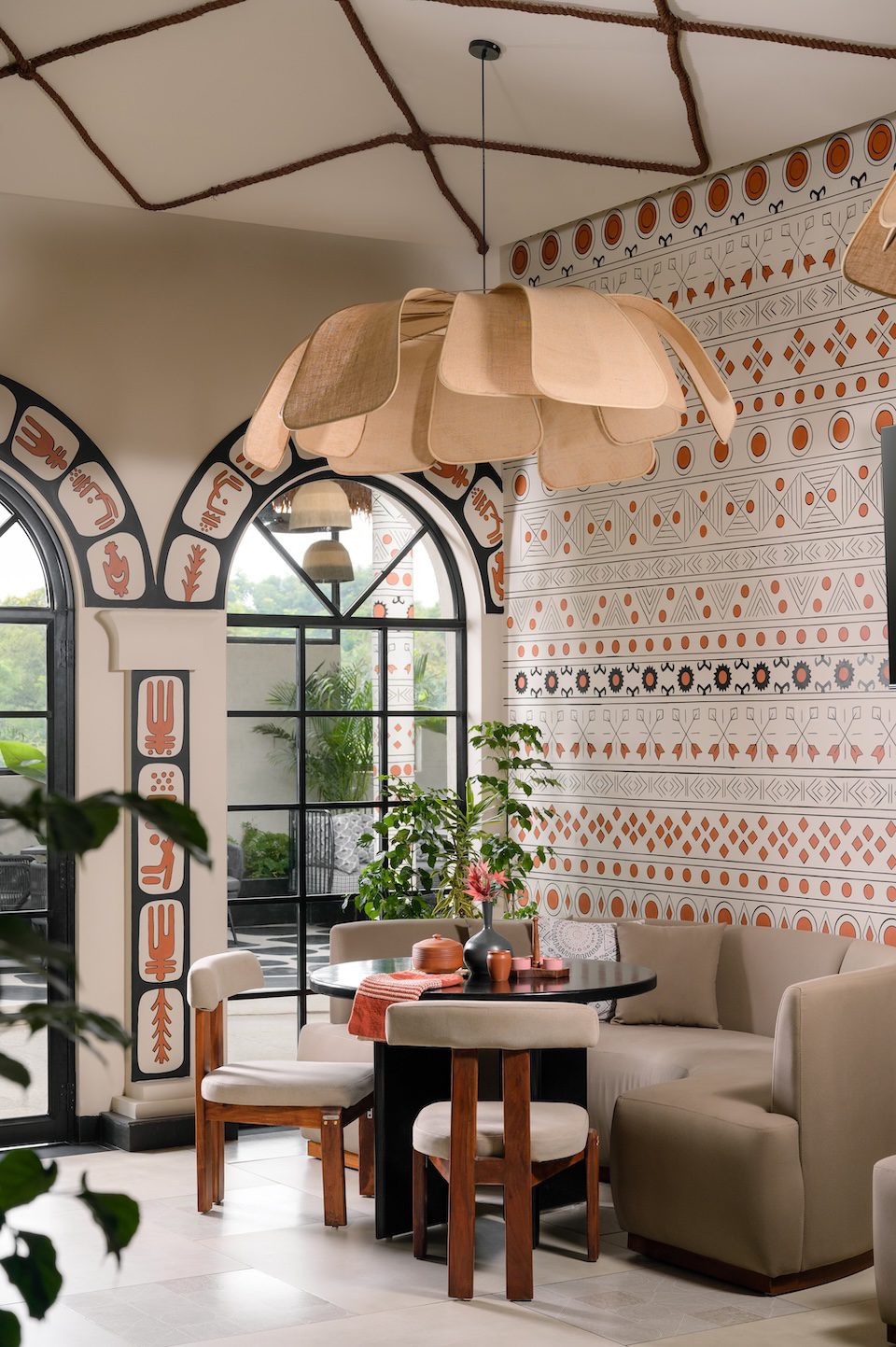
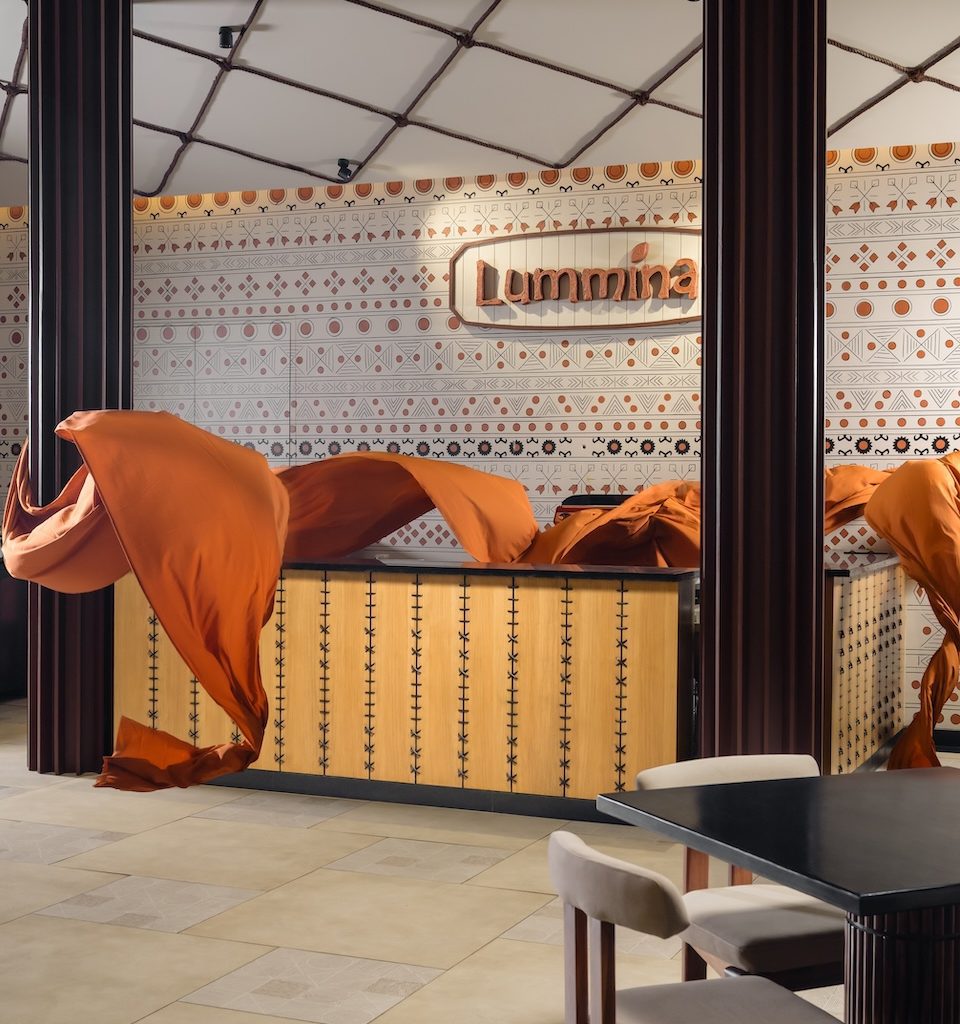
Materiality forms the backbone of Lummina’s spatial identity. Hand-painted walls draw inspiration from tribal saree prints and Gond tattoo motifs, translating traditional graphics into a contemporary hospitality setting.
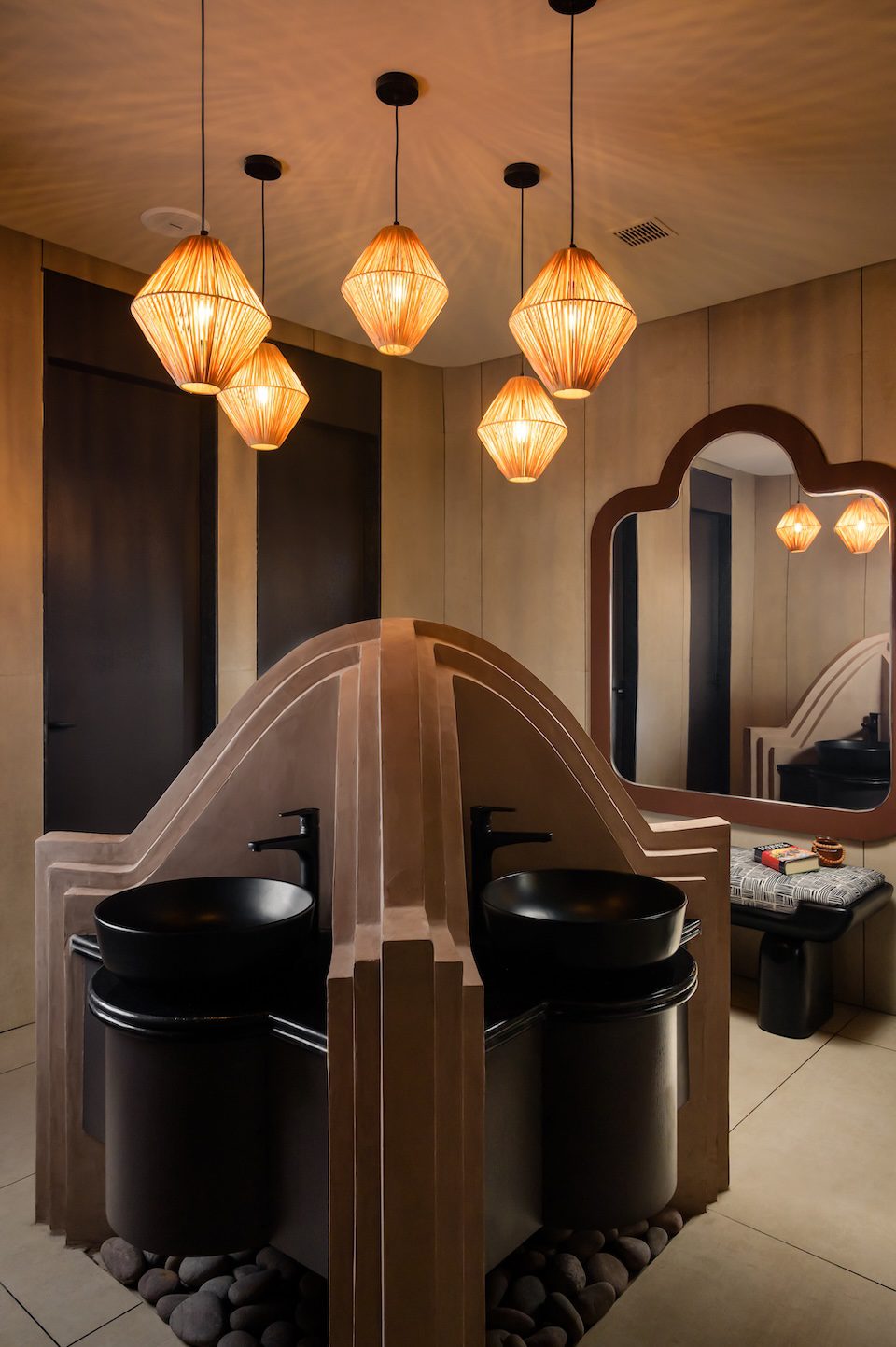
Ceiling treatments shift across the restaurant to create distinct spatial atmospheres. The foyer ceiling is wrapped in jute fabric, producing a soft, filtered light. Inside the restaurant, jute ropes arranged in a criss-cross pattern introduce texture and rhythm overhead. In the outdoor seating area, a thatch roof reinforces the use of natural materials. Flooring further grounds the experience. Pebble flooring defines the entrance, stone tiles anchor the indoor dining spaces, and local black stone combined with cement gives the outdoor areas a raw and tactile quality.
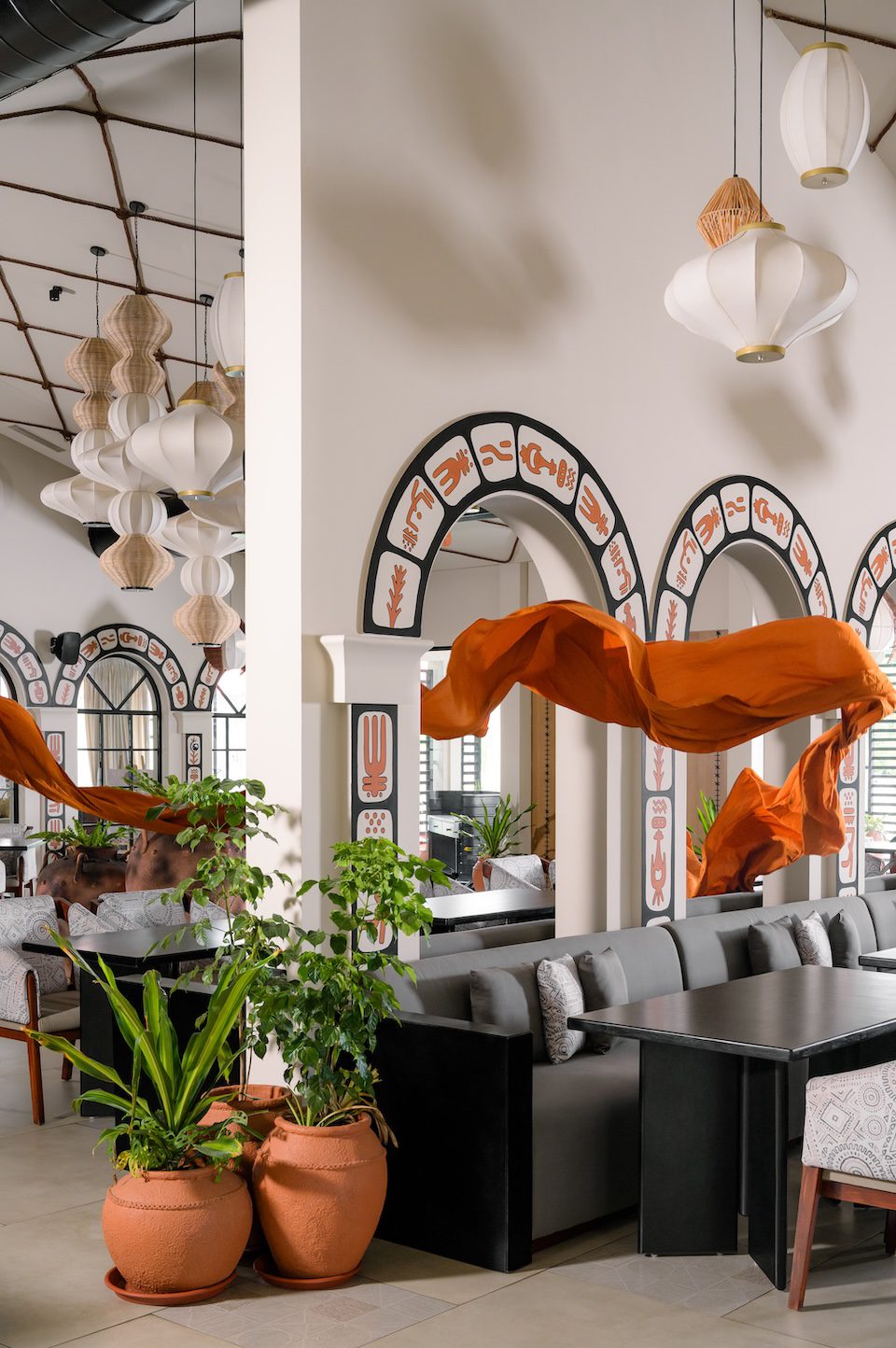
“At Lummina, craft is not treated as decoration,” says Mayank Wadhwa, principal architect, Studio Skywell. “The hand-painted surfaces, natural textures and materials form part of the architecture itself, shaping how the space is experienced,” he adds. Throughout the interiors, accents of orange—deeply embedded in the region’s visual culture—introduce warmth and vibrancy.
The highlights
One of Lummina’s defining features is the way craft has been embedded into the architecture rather than applied as ornament. Hand-painted walls, tribal-inspired graphics and natural materials together establish a distinctive visual language. The reinterpretation of Mediterranean architecture is another key highlight. By focusing on light, earthy tones and indoor–outdoor flow rather than colour clichés, the restaurant achieves a balance between global inspiration and regional identity.
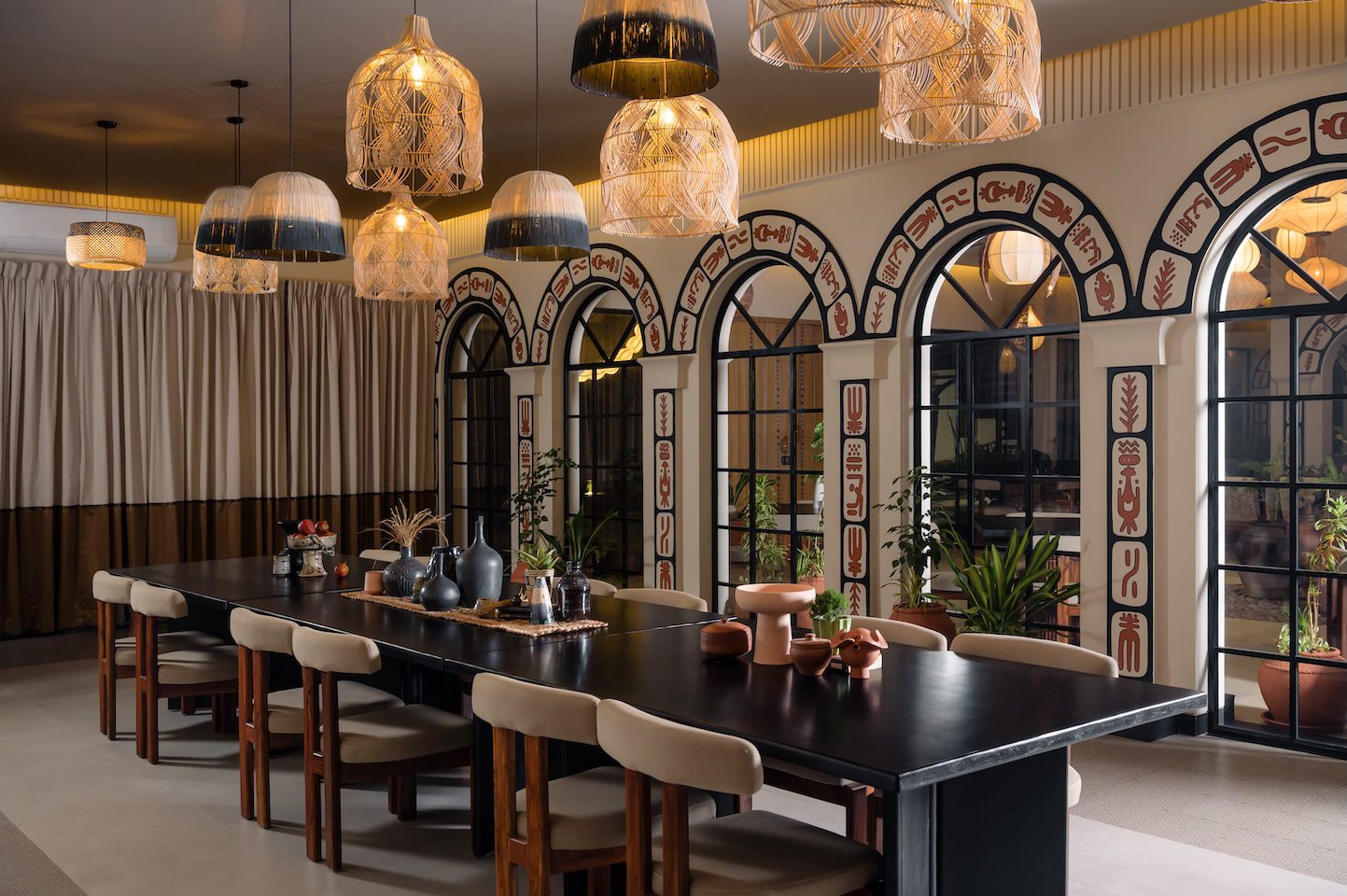
Layered ceiling treatments—including jute fabric, rope installations and thatch—add spatial richness, while focal elements such as the foyer fountain, terracotta centrepieces and sculptural bar columns anchor the different zones of the restaurant.
The challenges
Executing the extensive hand-painted surfaces across both interior and exterior walls proved to be the project’s most demanding aspect. While celebrating craft was central to the concept, translating hand-drawn artwork across large surfaces required careful coordination. Every artist brings a distinct rhythm and interpretation to their work. Maintaining visual consistency across expansive walls therefore required continuous calibration to ensure that the patterns felt cohesive and intentional.
“Working with hand-painted surfaces at this scale demanded patience. Each artist brings their own hand to the work, so ensuring consistency across the entire space became the real challenge,” notes Dhairya Wadhwa, principal architect, Studio Skywell. Balancing craftsmanship with the tight timelines typical of hospitality projects made the process complex—but ultimately rewarding.
Fact File
Project: Lummina
Location: Raipur, Chhattisgarh
Area: 16,000 sq ft
Design firm: Studio Skywell
Principal architects: Twinkle Nathani, Mayank Wadhwa and Dhairya Wadhwa
Design team: Neha Rathod
Add a Comment