
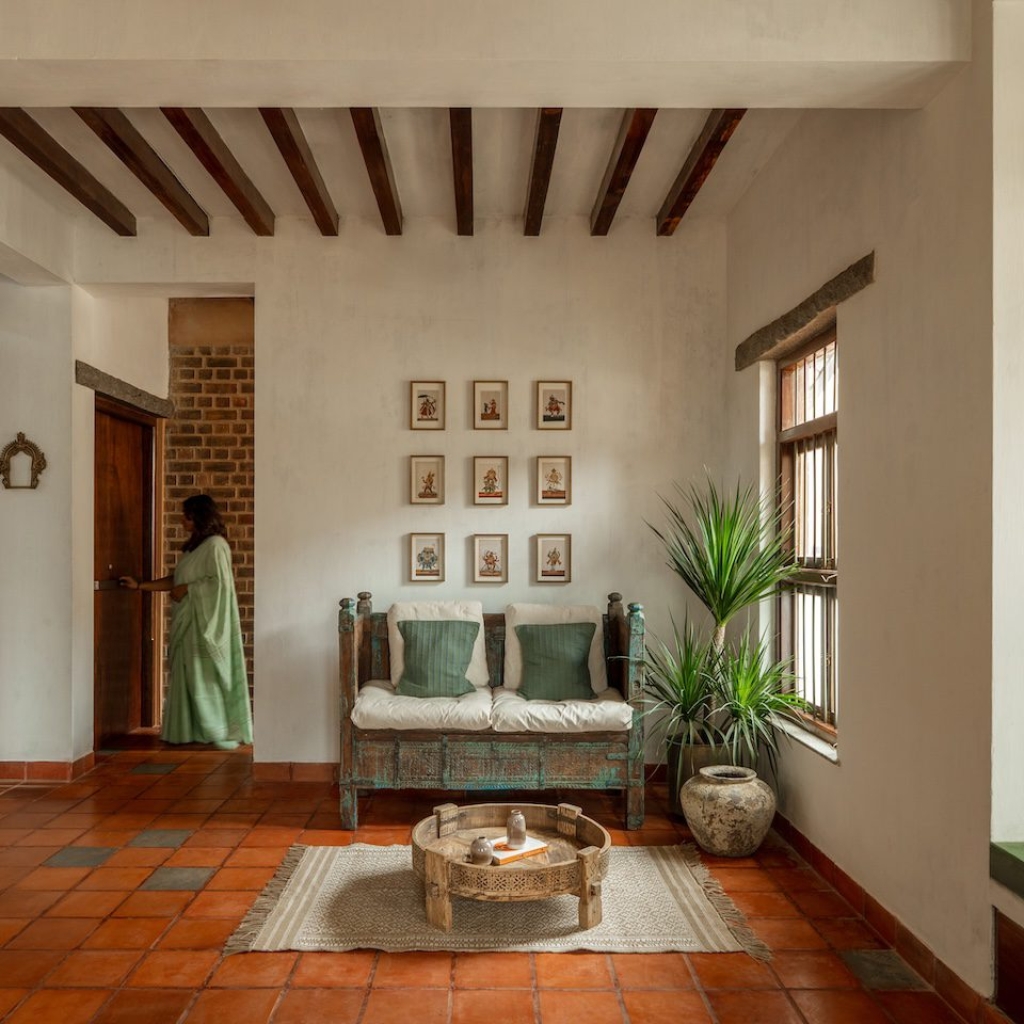
This home in Coimbatore by Bhutha Earthen Architecture Studio reinterprets traditional construction techniques through a contemporary lens, creating a space that supports a natural way of living while celebrating material honesty and a sense of rootedness.
Curated by: Deepa Nair
Photographs: Studio f/8; courtesy Bhutha Earthen Architecture Studio
The brief
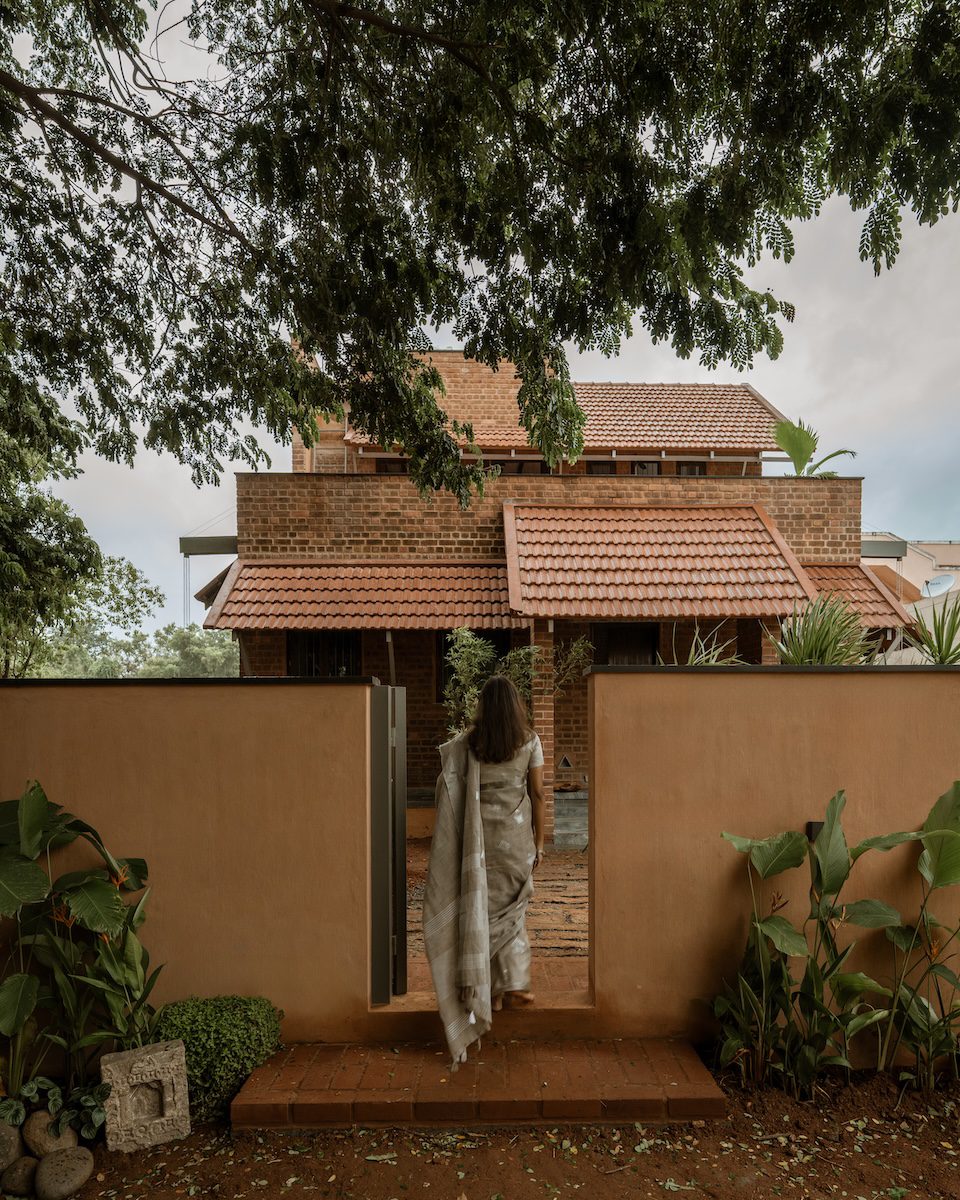
Project Adorn is a residence in Coimbatore designed by Bhutha Earthen Architecture Studio for Vijayanadh (an IT professional), and his wife Mahalakshmi (a homemaker) who wanted a home that would support a naturally healthy way of living. The home must embrace time-tested construction practices such as Madras terrace roofing, lime mortar, and lime plaster; with a stylistic direction that reflected tradition and culture.
“Mahalakshmi herself grew up living in simple ancestral homes, and after experiencing apartment life, developed an appreciation for traditional spaces. When they decided to build their own house, both she and Vijayanadh wanted their children to grow up surrounded by an eco-friendly environment that appreciates tradition, culture, and meaningful values,” shares S Vinoth Kumar, principal architect, Bhutha Earthen Architecture Studio.
The site
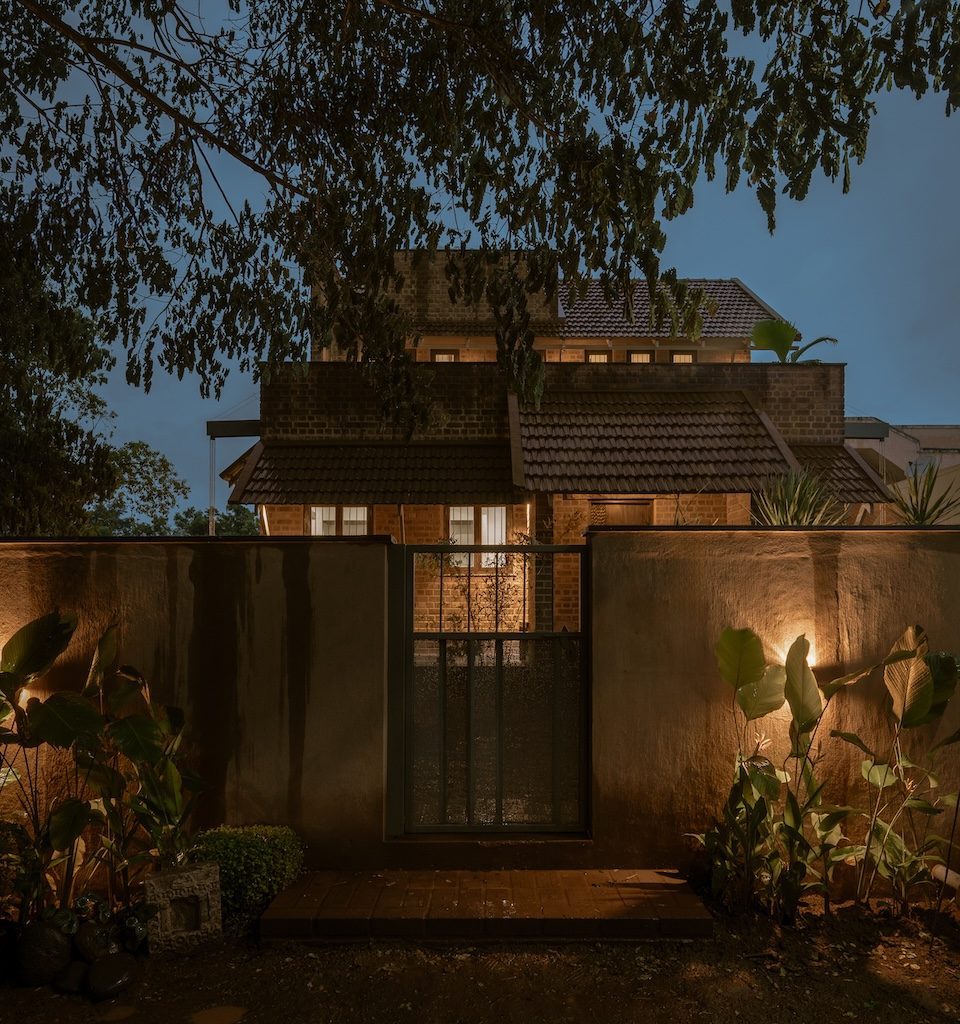
Located in the residential neighbourhood of Selvapuram in Coimbatore, the site sits between two contrasting conditions. On one side, it is bordered by familiar family homes, while on the other, it opens out to expansive green fields dotted with tall trees, lending the setting a sense of openness and ease.
This duality informed the planning of the residence. The rectilinear plot offered clarity in organisation, allowing the design to respond with precision to both the built context and the landscape beyond. The layout takes advantage of this condition, balancing indoor and outdoor functions while remaining attentive to the family’s everyday needs and the character of the site itself.
The design intent
The design is shaped by a simple vision that reflects the family’s values while supporting a naturally healthy way of living. Rather than relying on excess, the approach leans into clarity, allowing each element to feel considered and purposeful. “Simplicity and tradition form the foundation of the design, guiding choices in material, construction, and spatial experience. At the same time, warmth is carefully introduced through these decisions, ensuring that the home feels inviting and lived-in rather than formal or restrained. The intention is to create a space that goes beyond function, where everyday life unfolds with ease and familiarity,” explains V Srinath Gowtham, principal architect, Bhutha Earthen Architecture Studio.
The spatial configuration
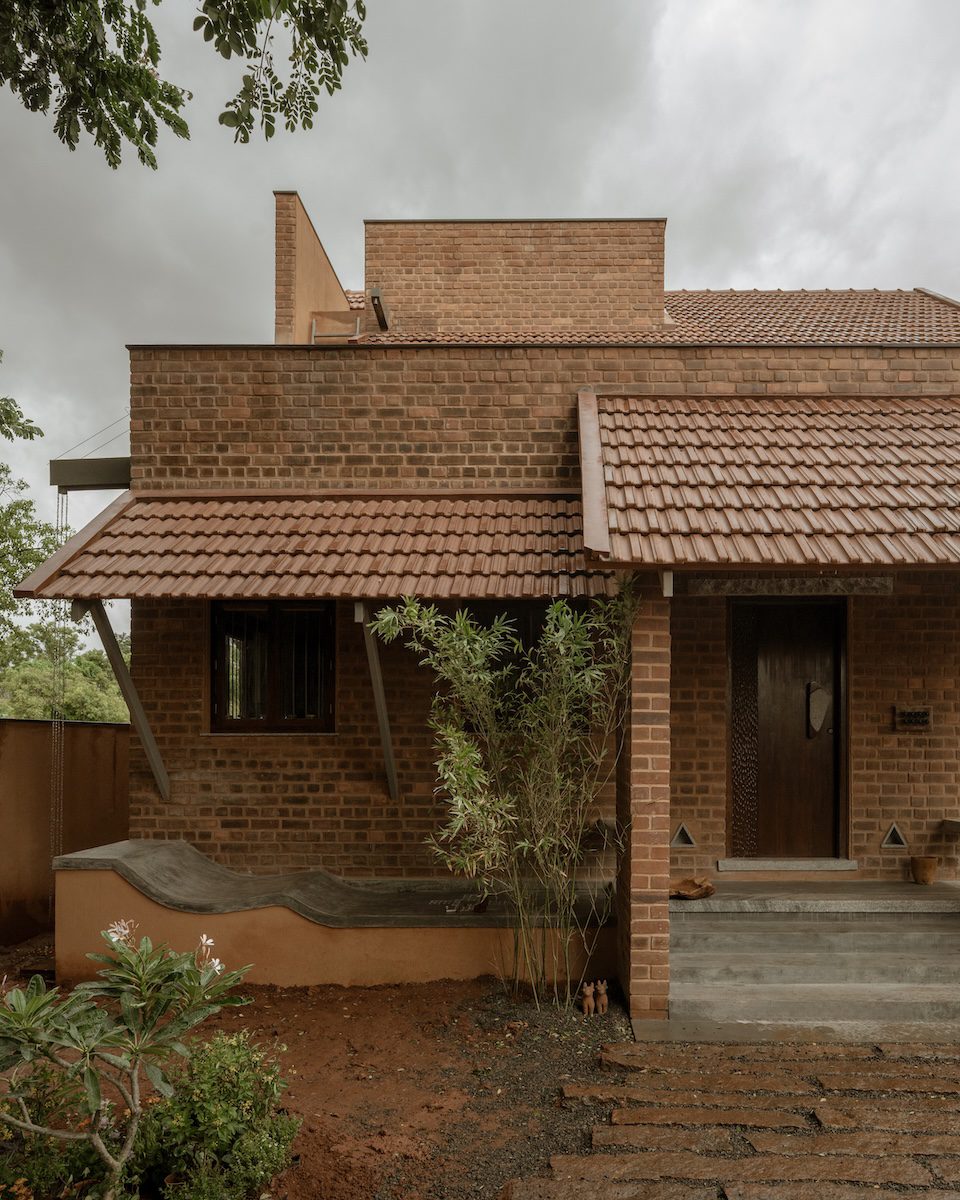
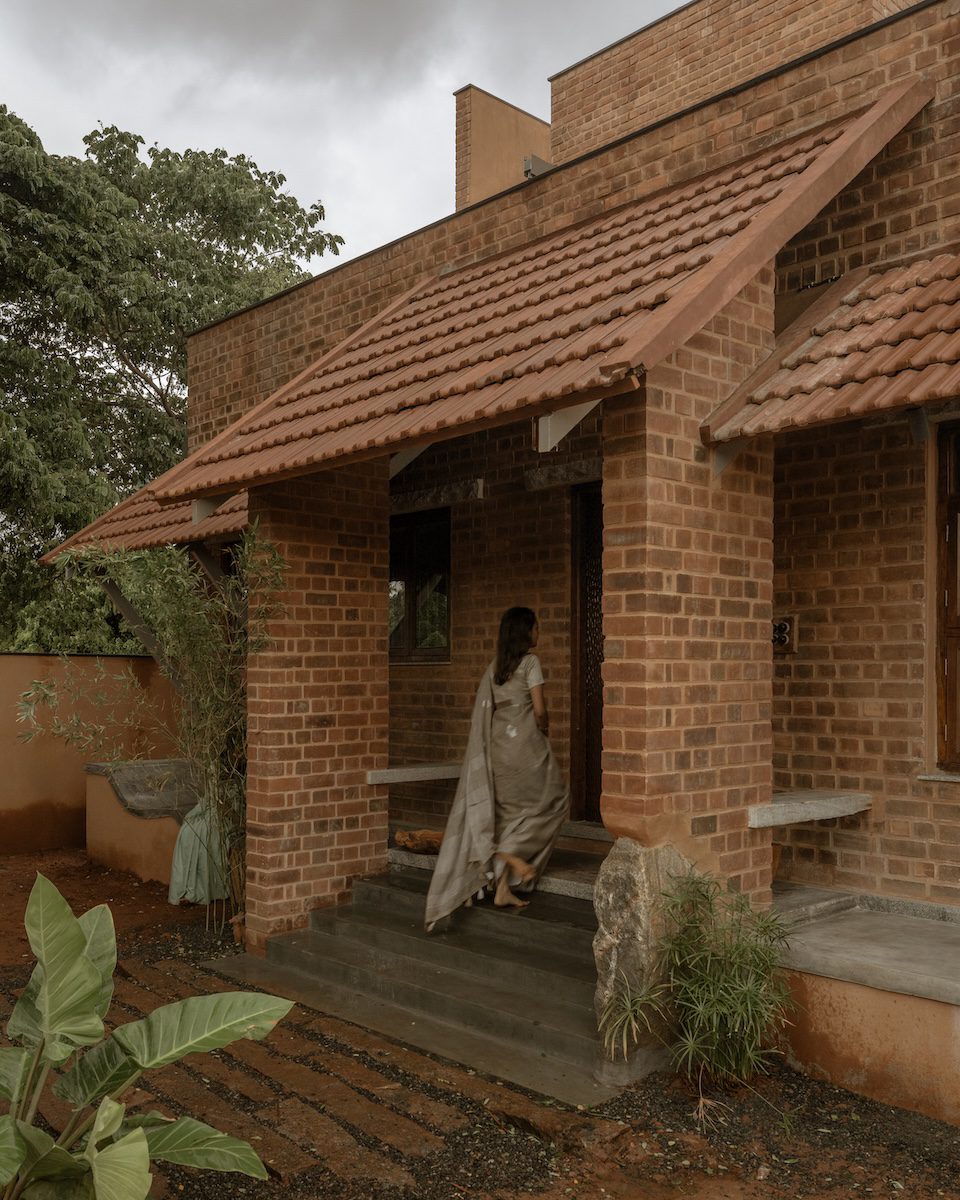
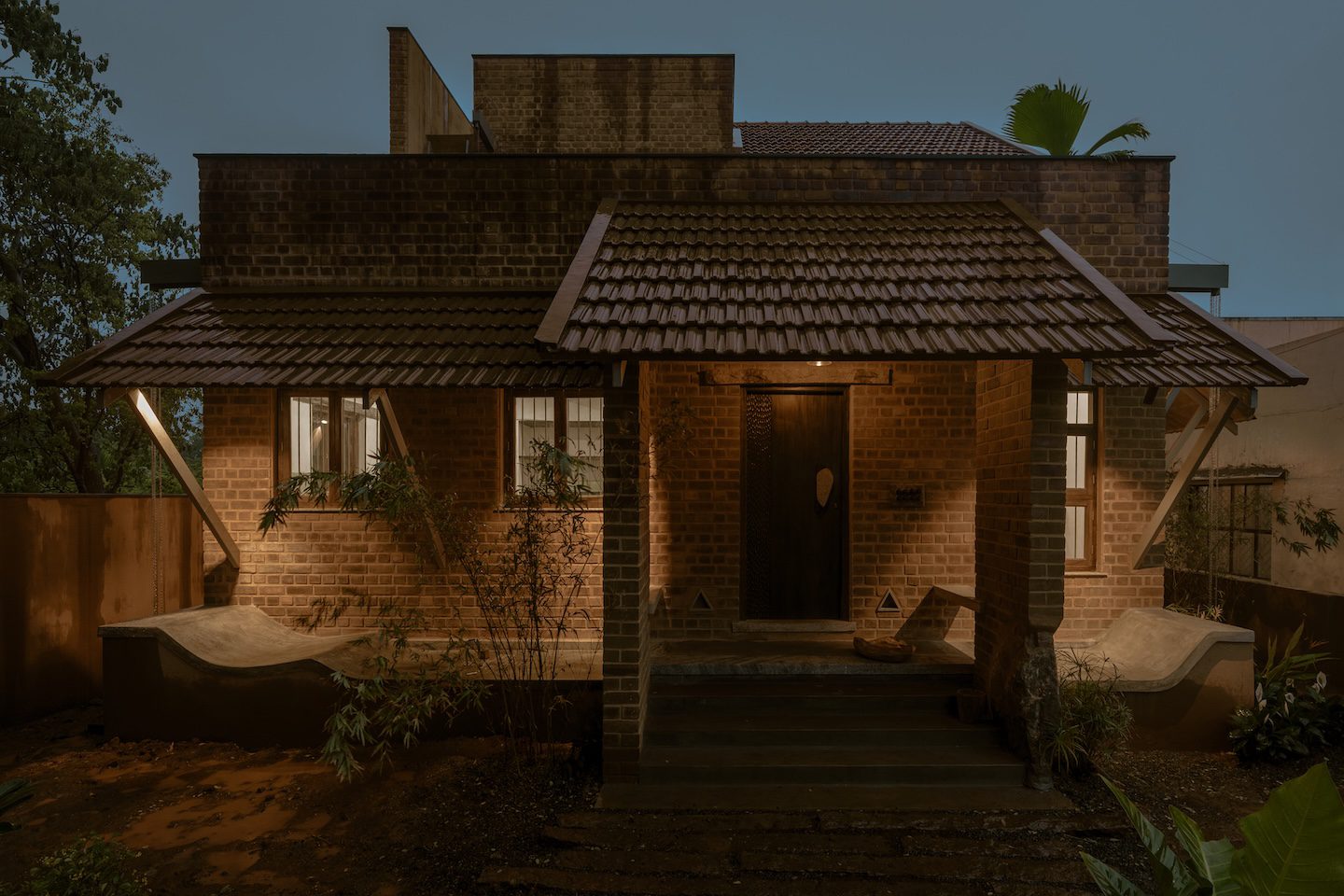
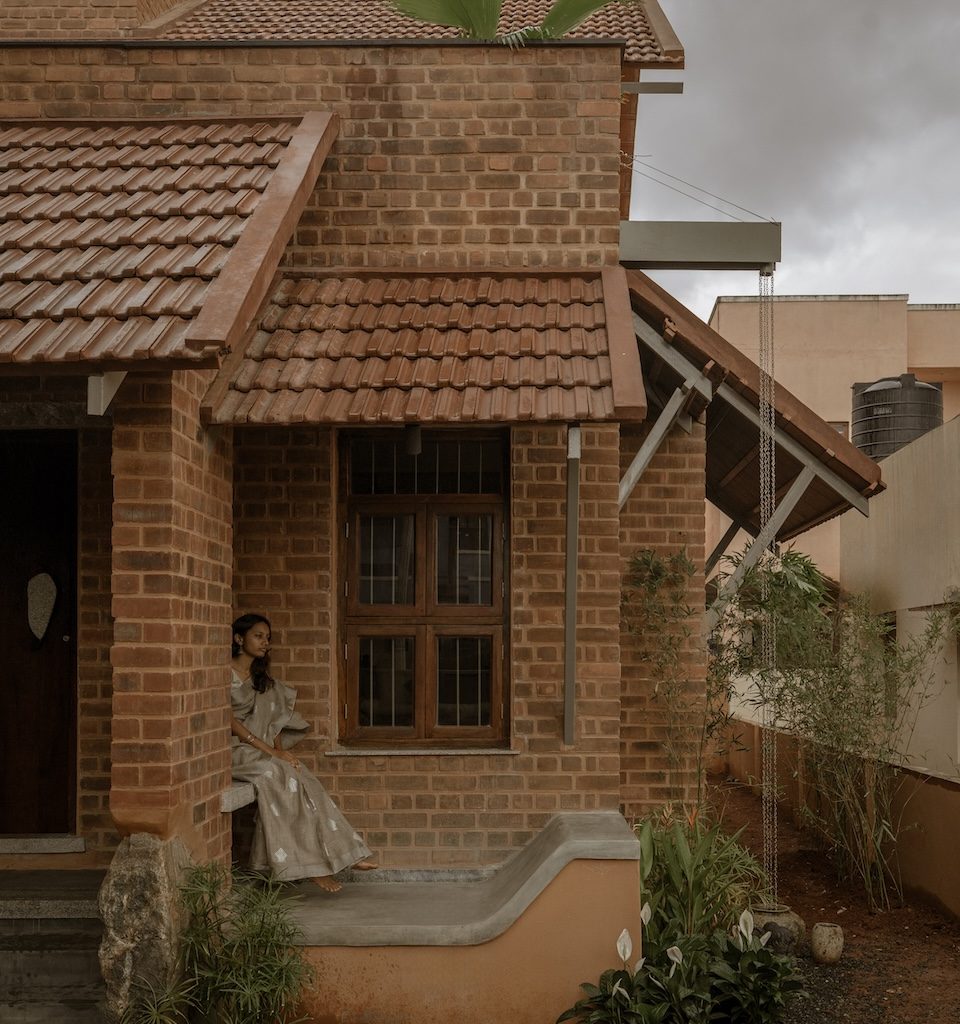
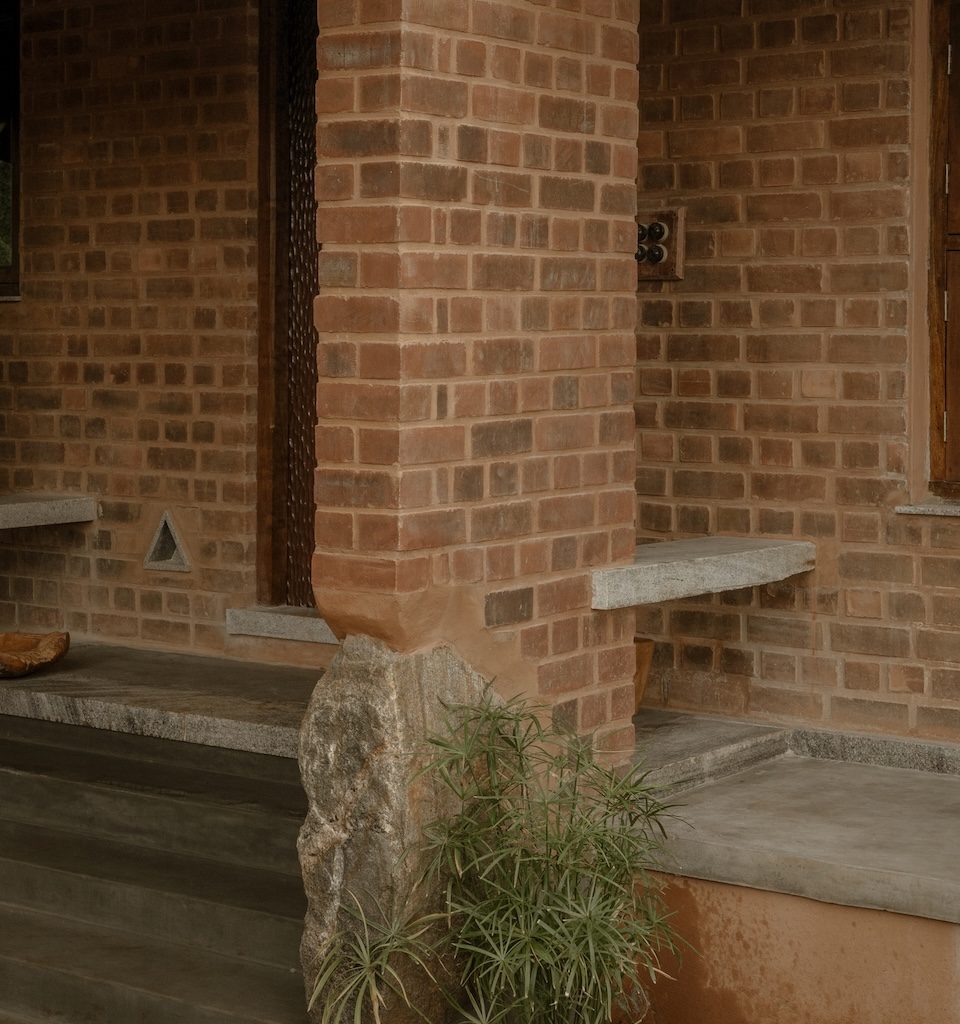
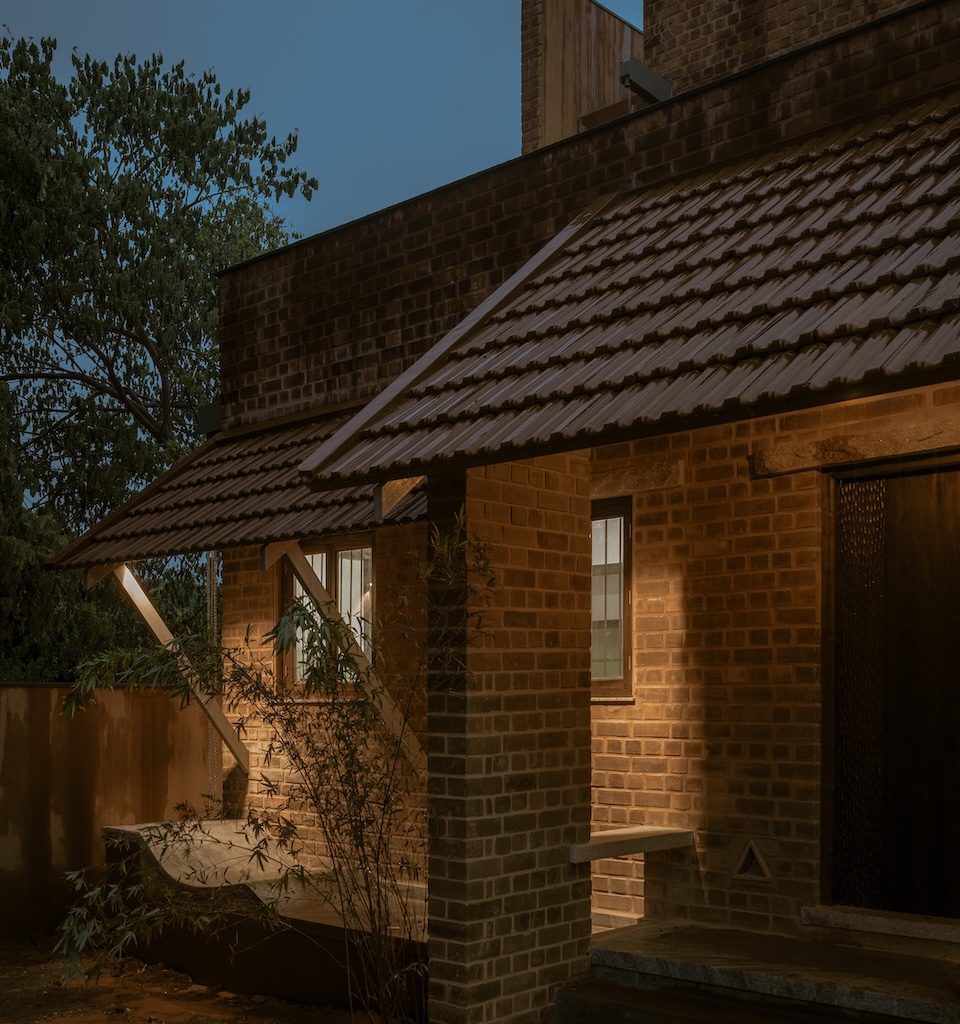
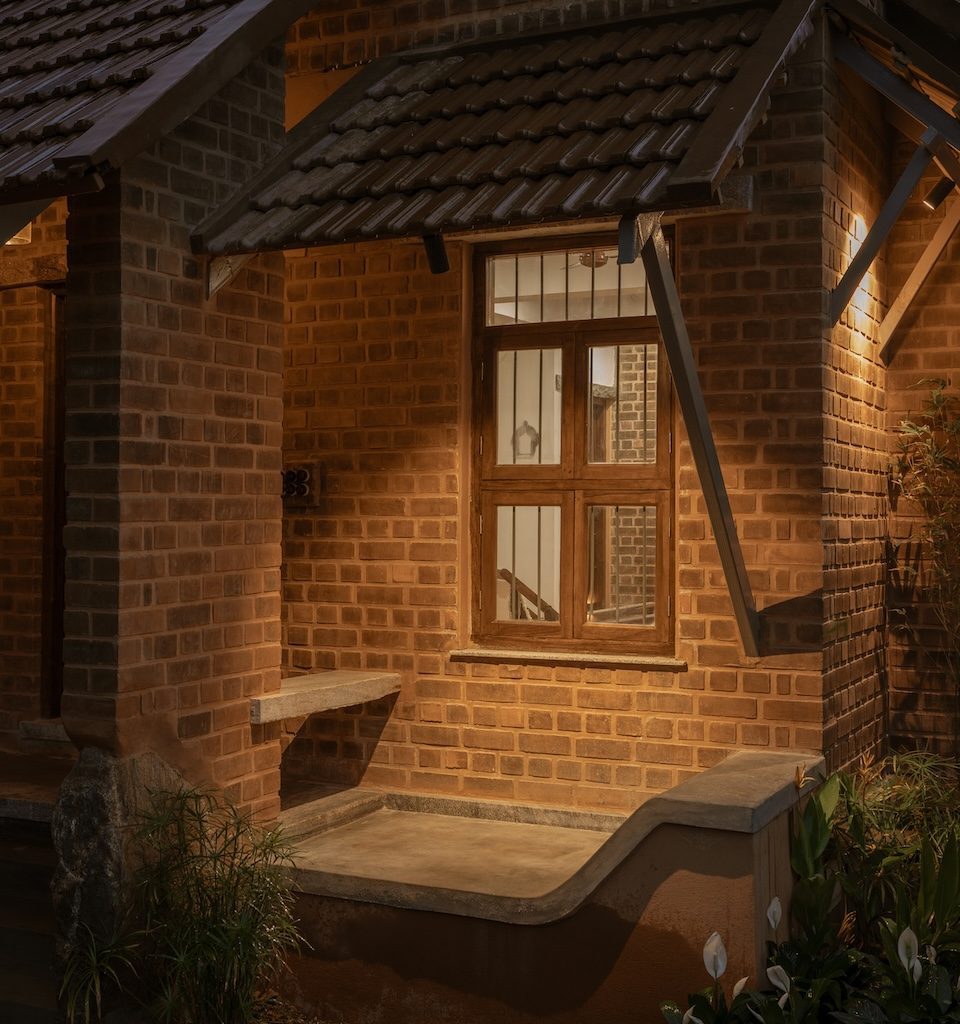
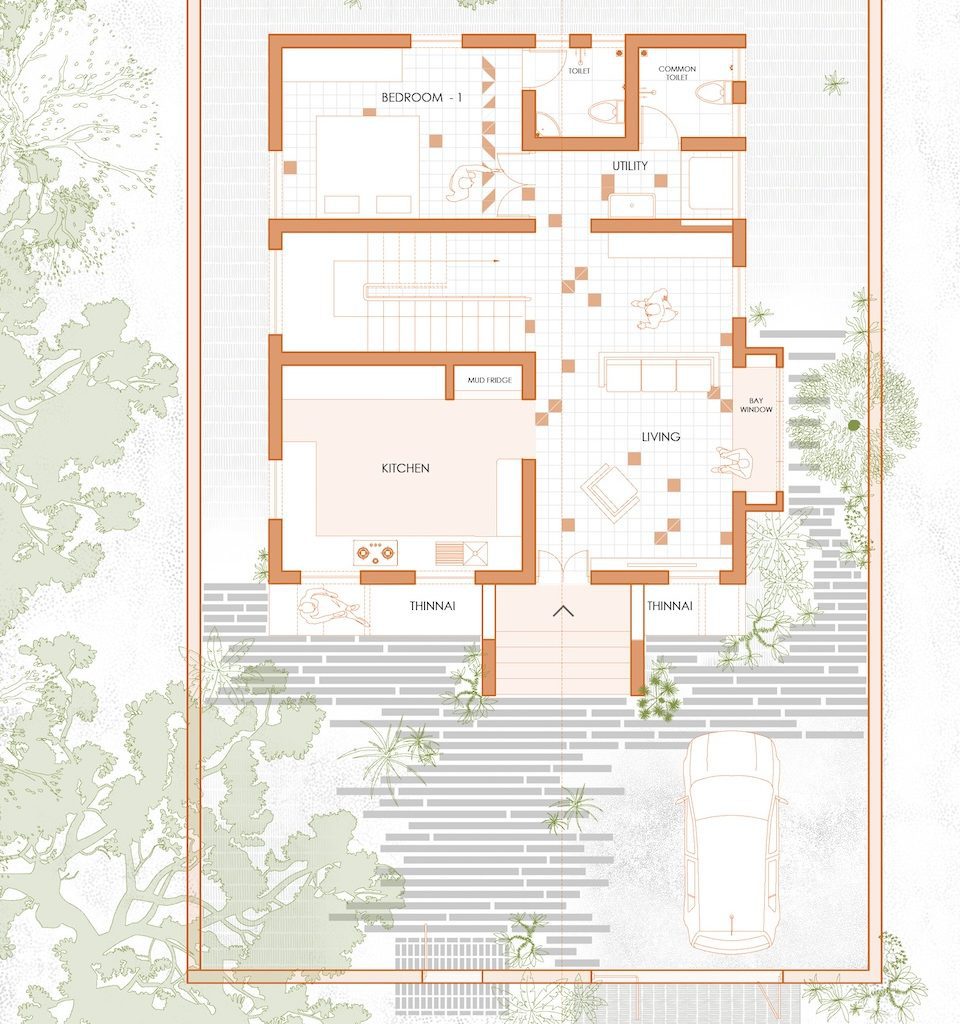
The home opens with a traditional entrance porch anchored by a thinnai (a traditional sit-out), where exposed brick pillars and natural boulders come together to create a setting that feels both familiar and grounded. A “zero-gravity” style seater introduces a contemporary layer, making the space equally suited for pause and everyday use—an inviting threshold that eases one into the home.
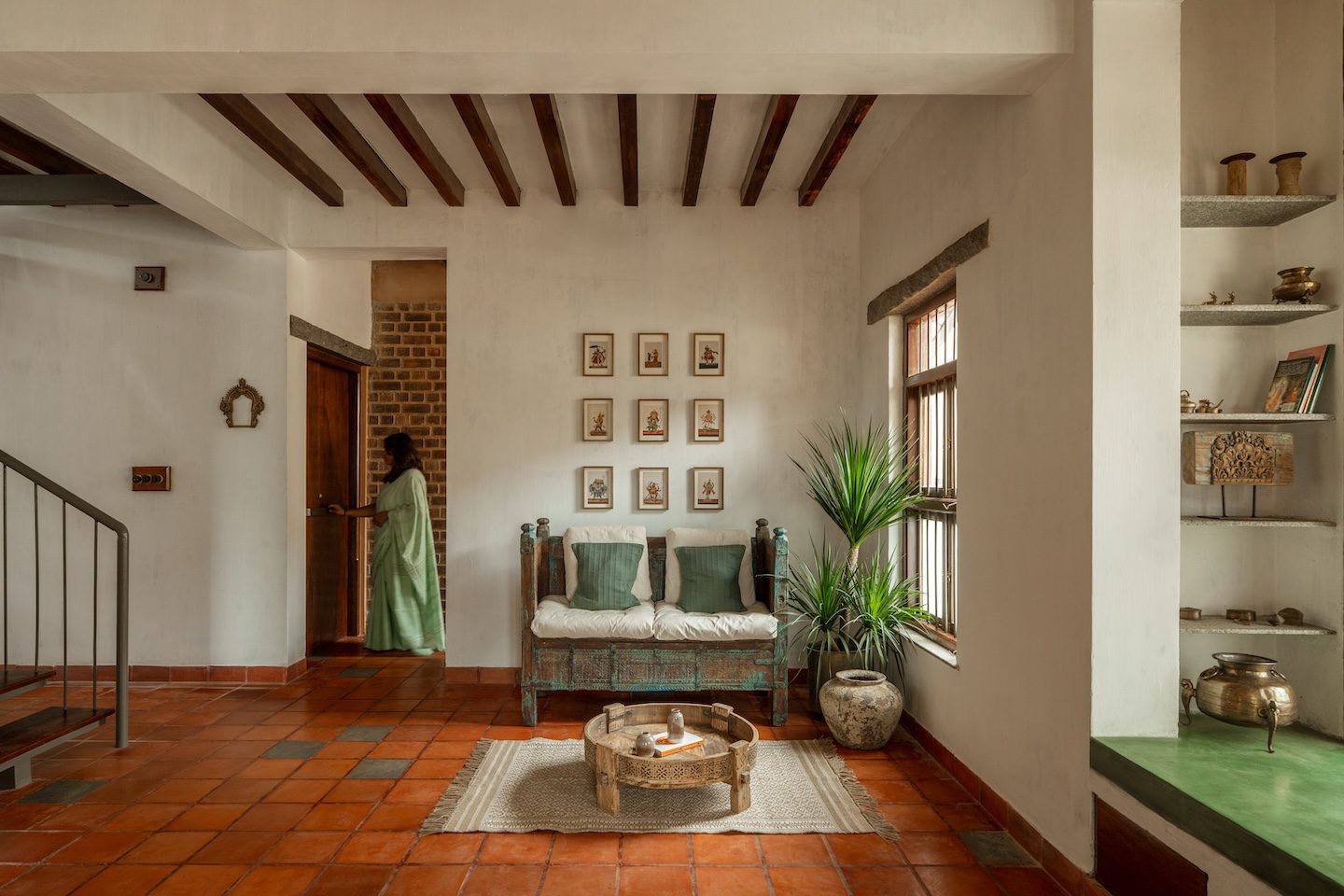
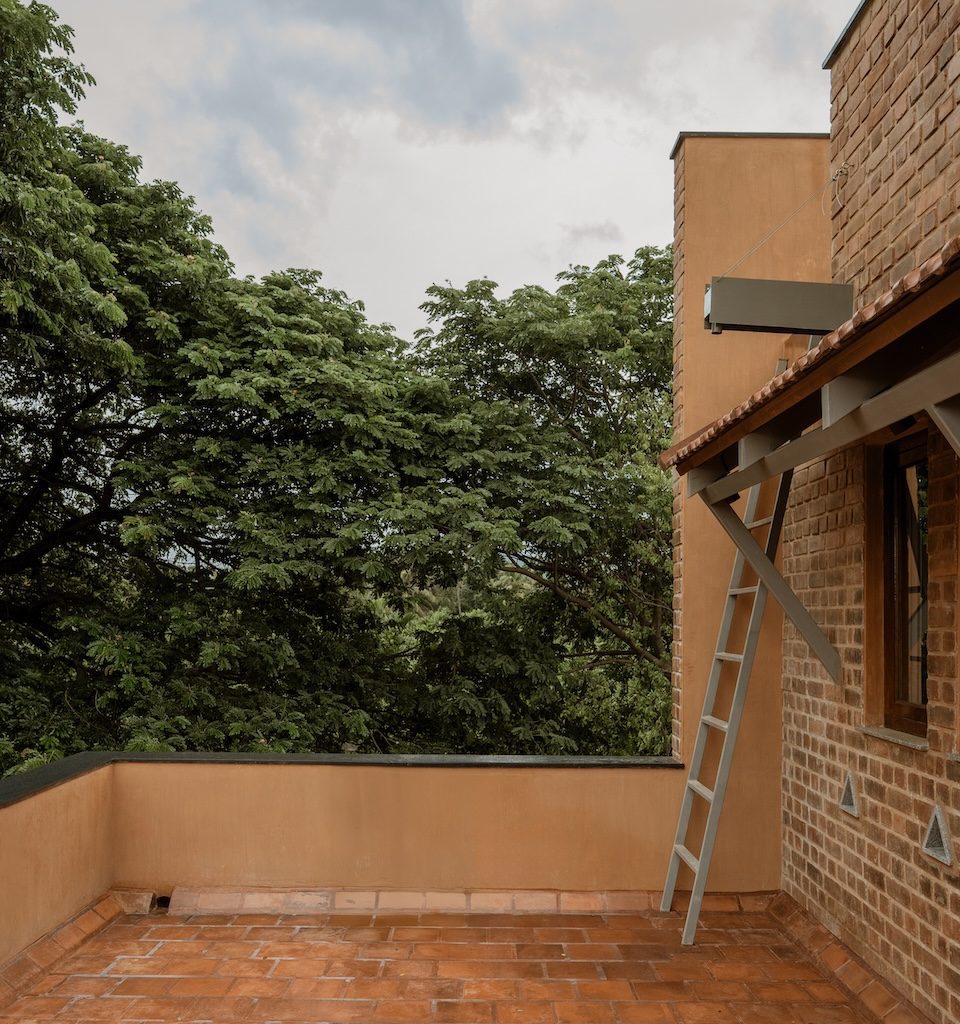
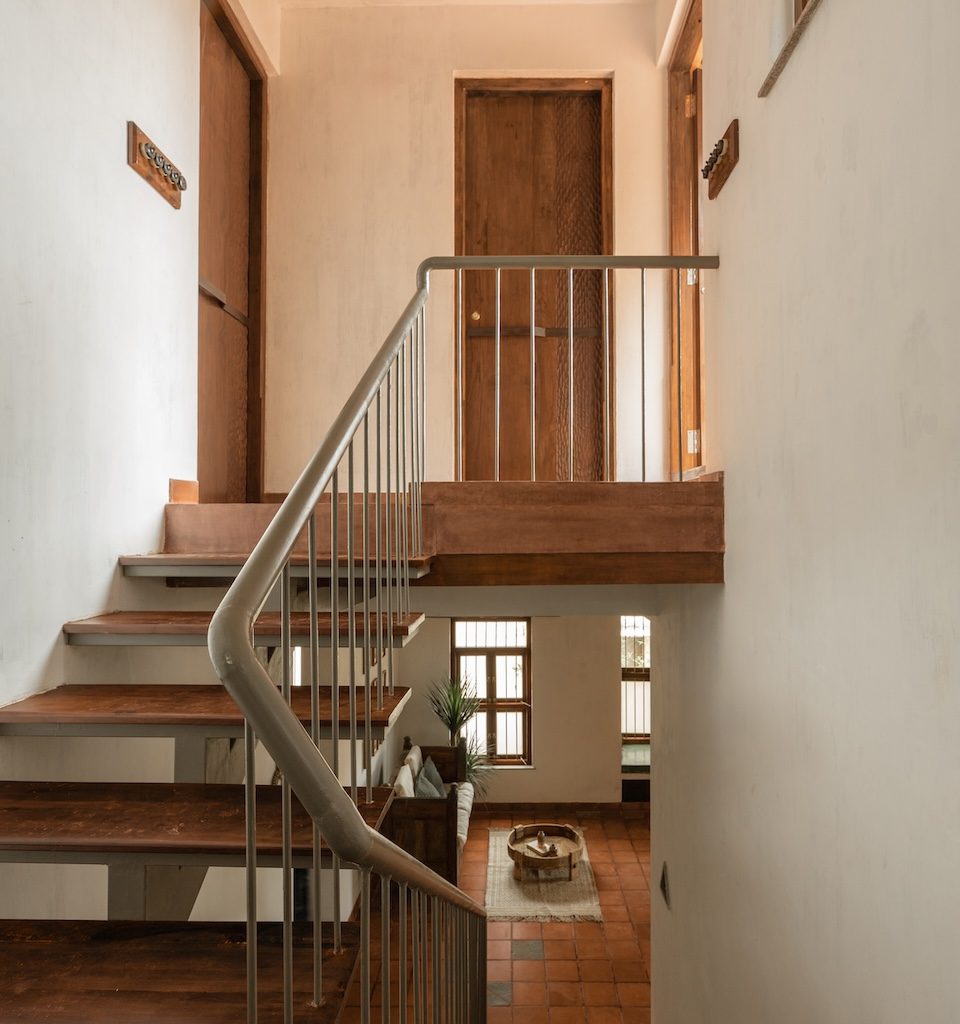
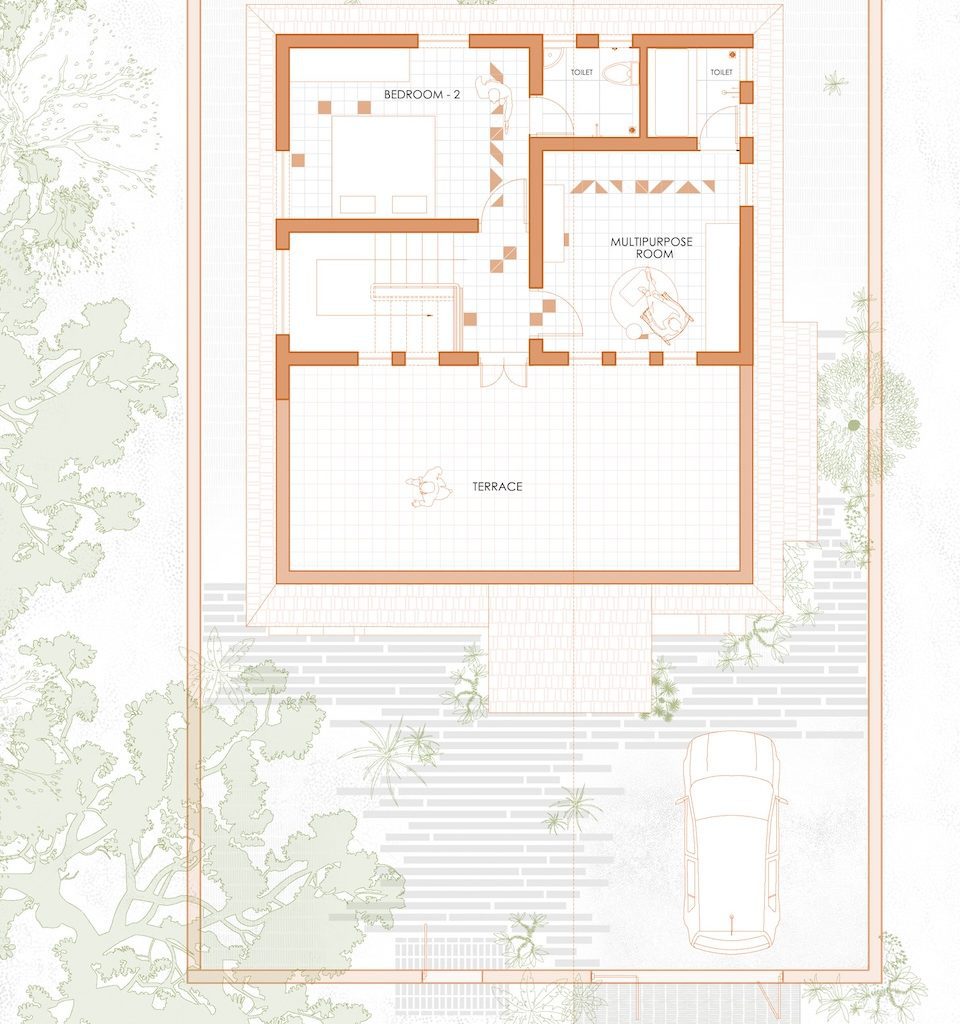
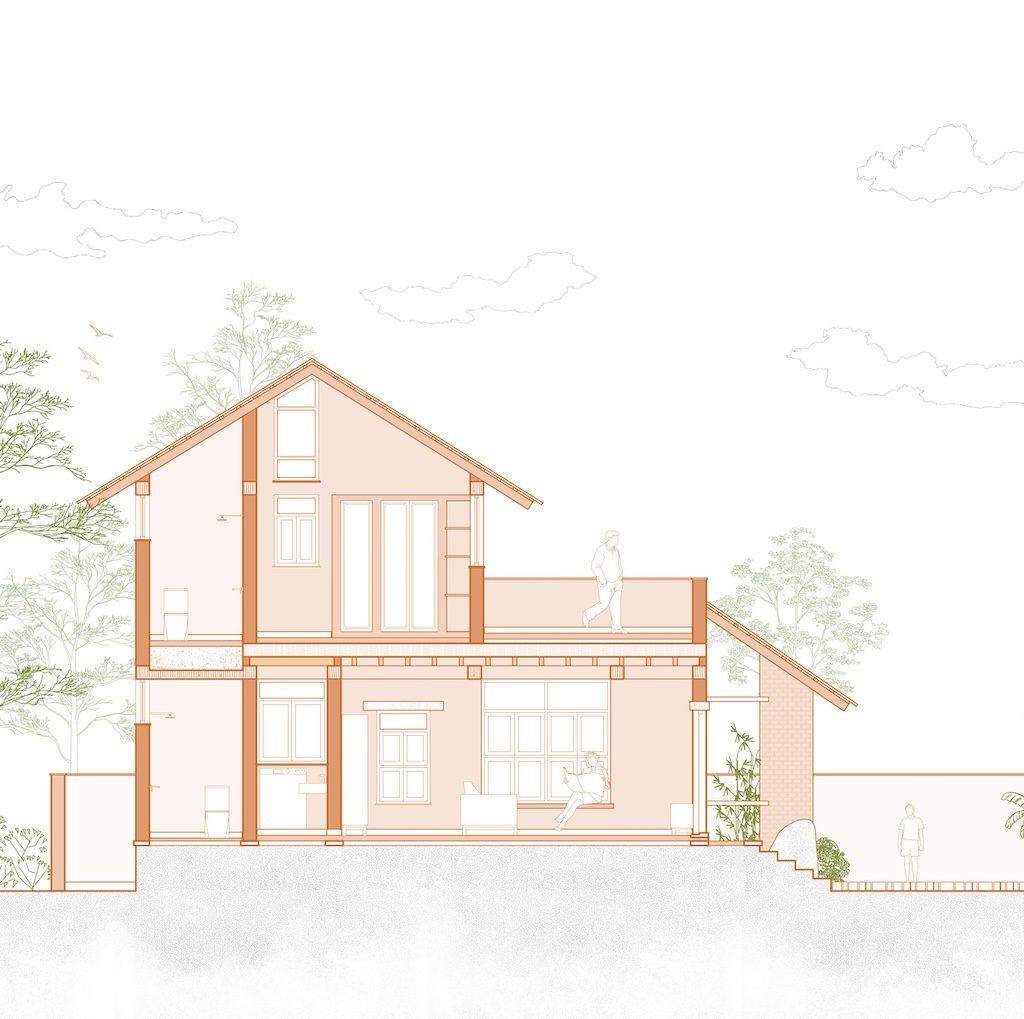
The ground floor includes a living room, minimal kitchen, utility, powder room, and master bedroom. The arrangement prioritises comfort and practicality, ensuring that each function is accommodated without excess. Upstairs, the children’s bedroom and a multipurpose room are accompanied by an open terrace that extends the home outward. This space becomes a natural point of connection—to fresh air, changing light, and the landscape beyond—offering moments that are as much about experience as they are about use.
The design details
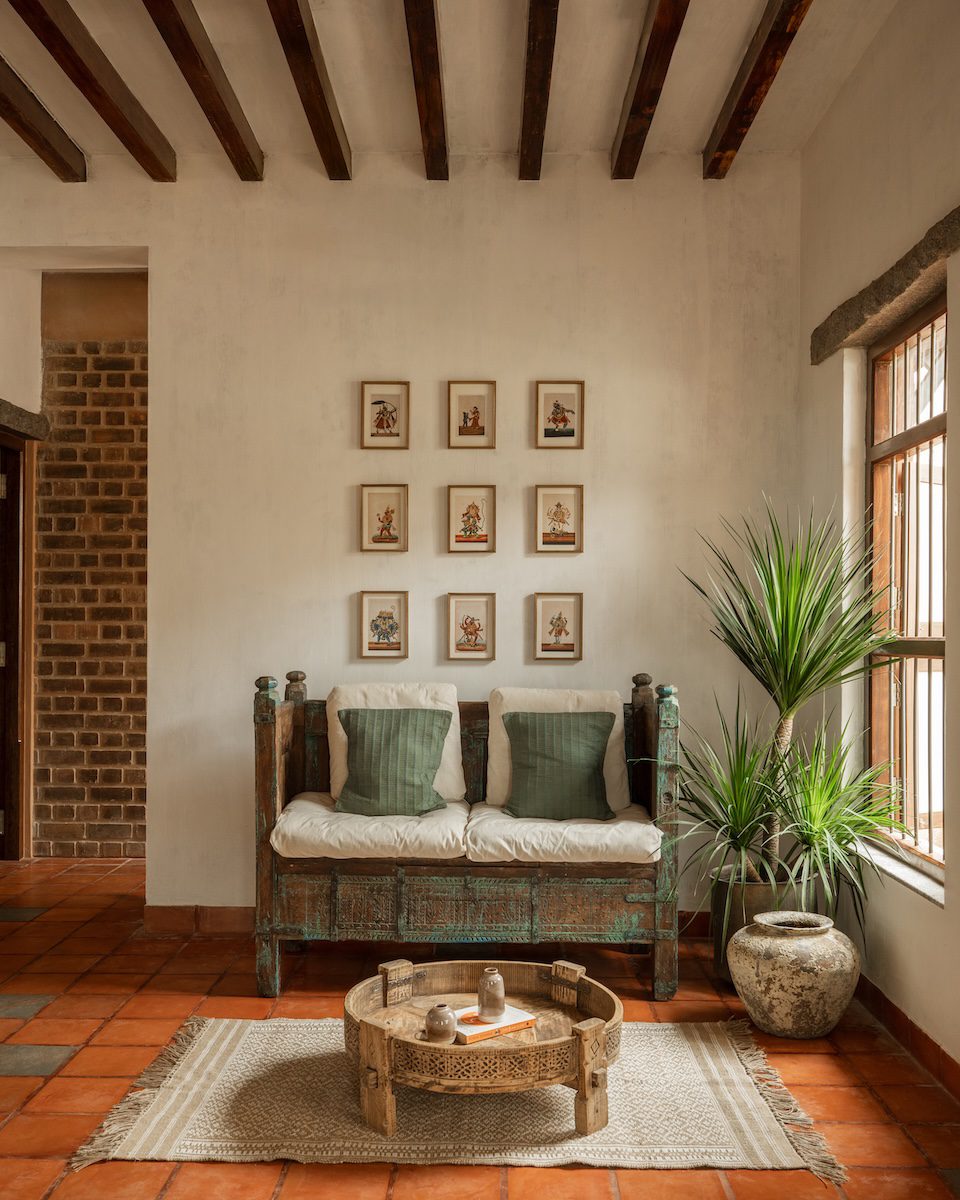
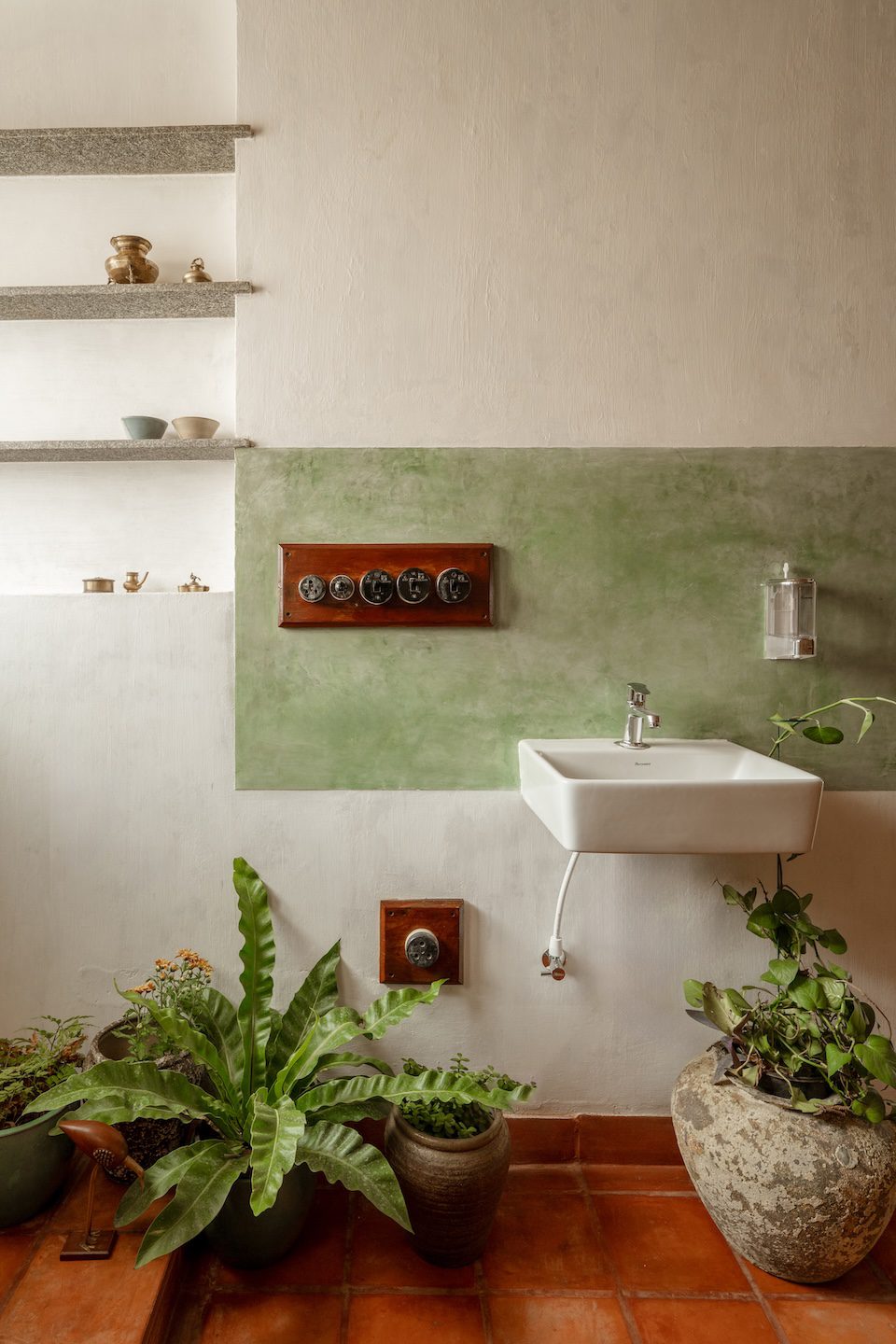
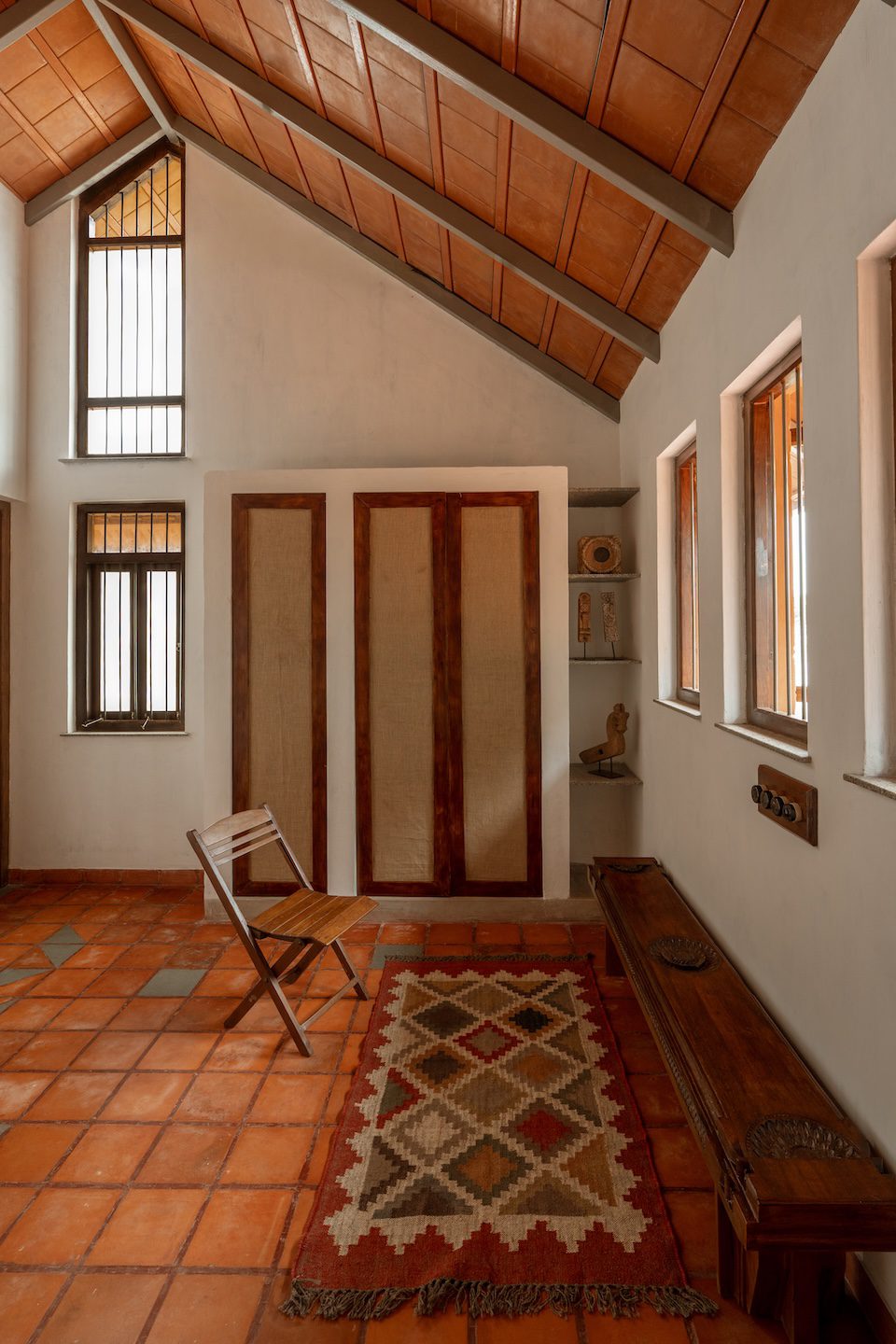
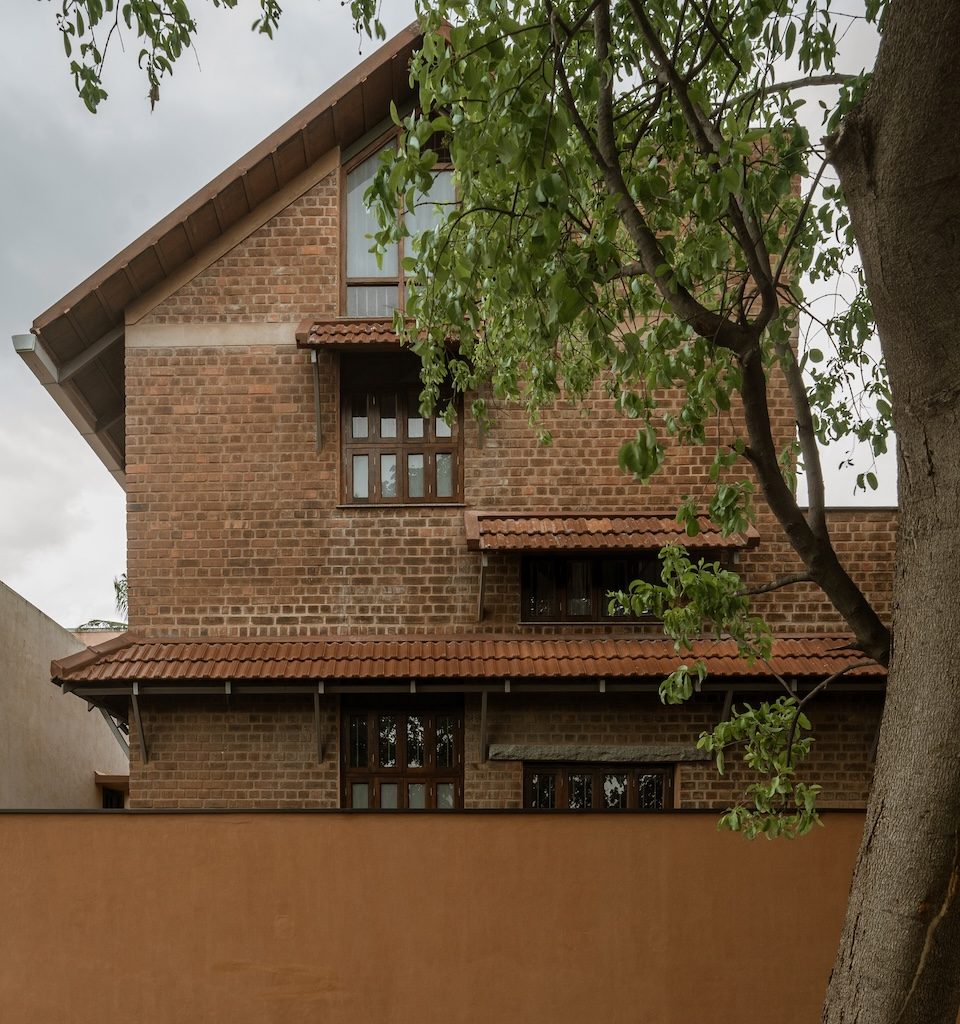
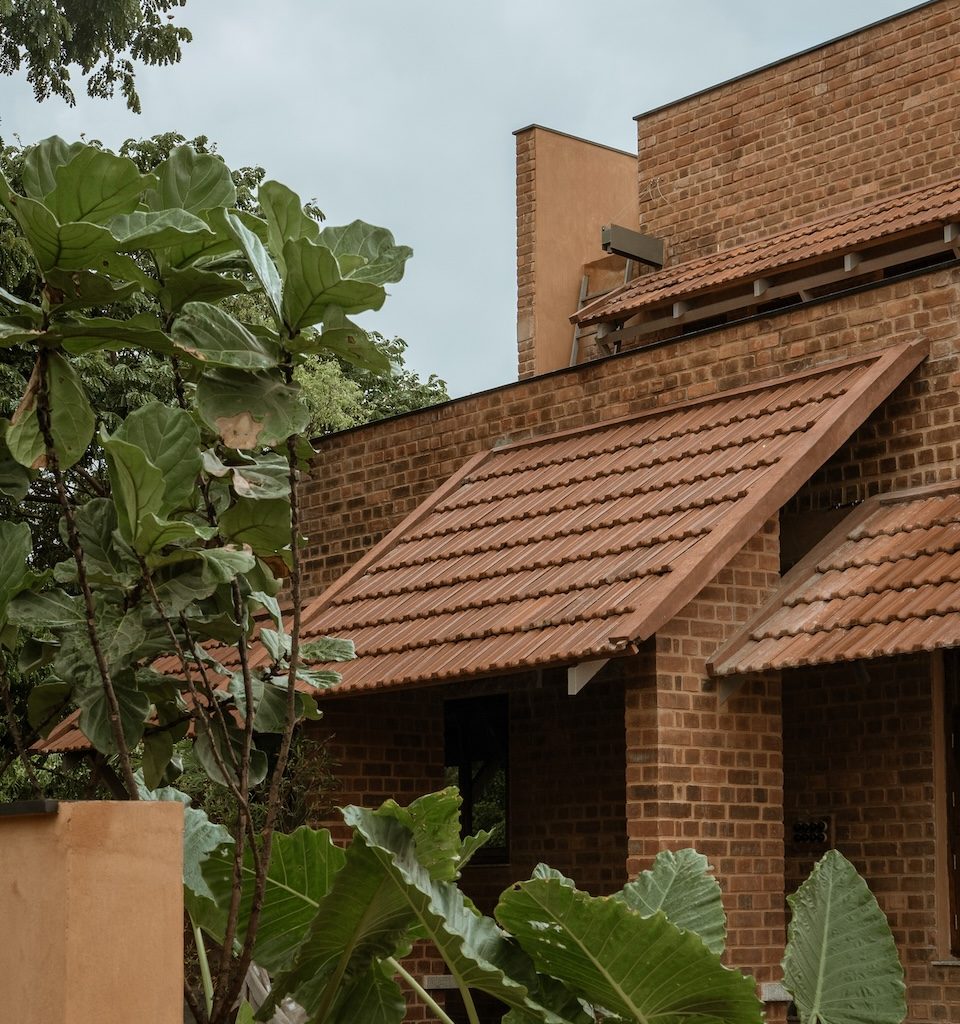
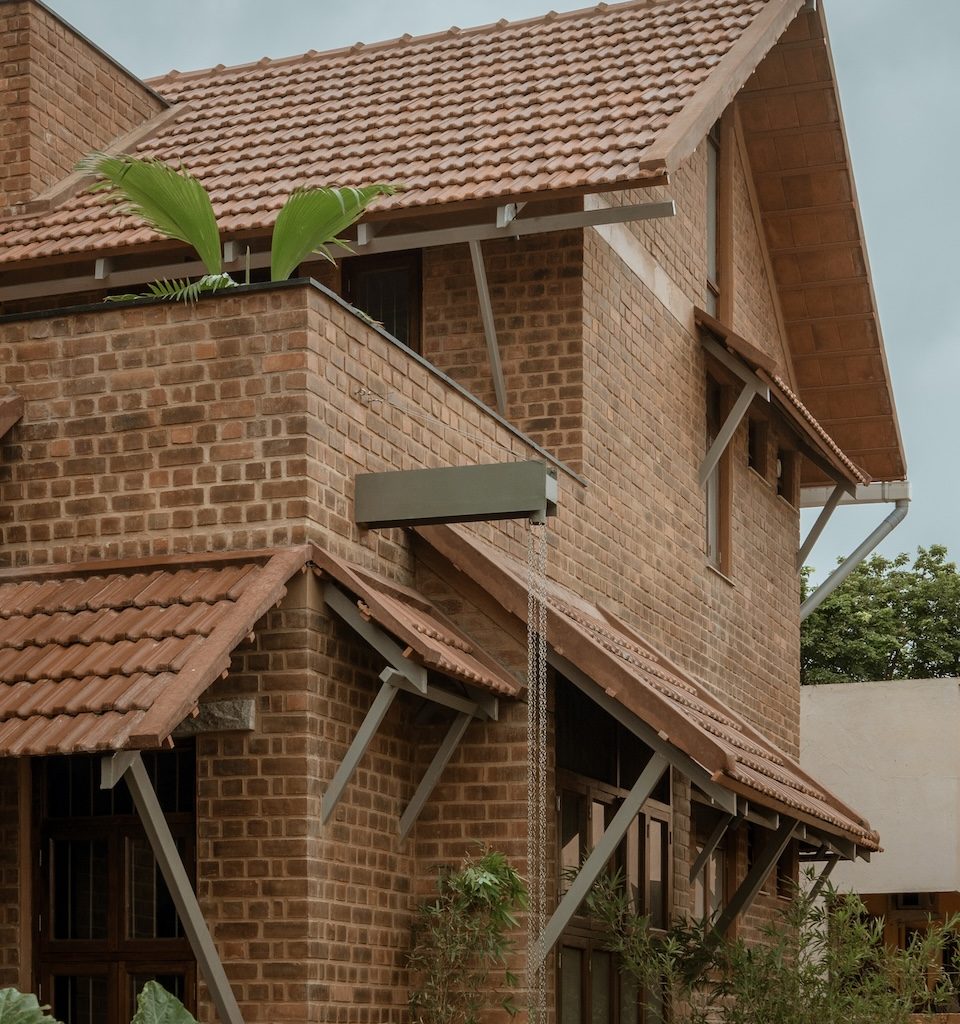
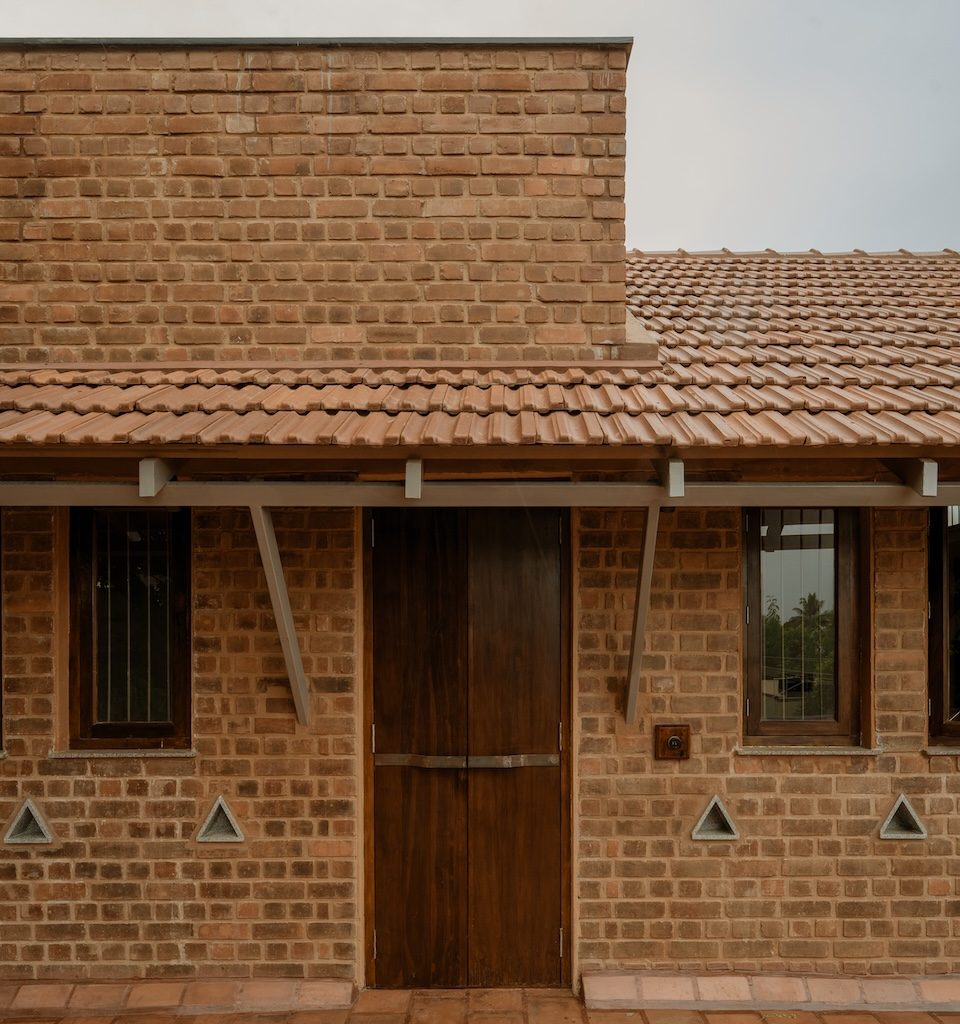
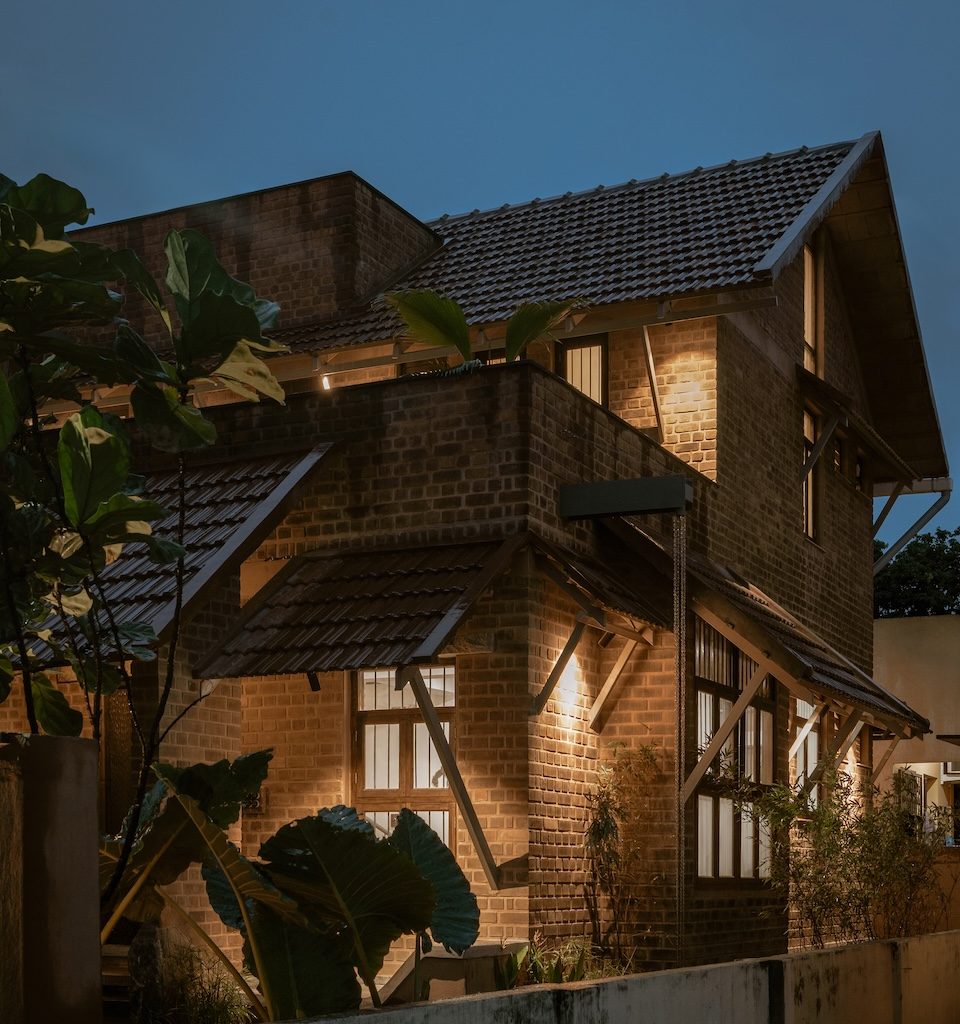
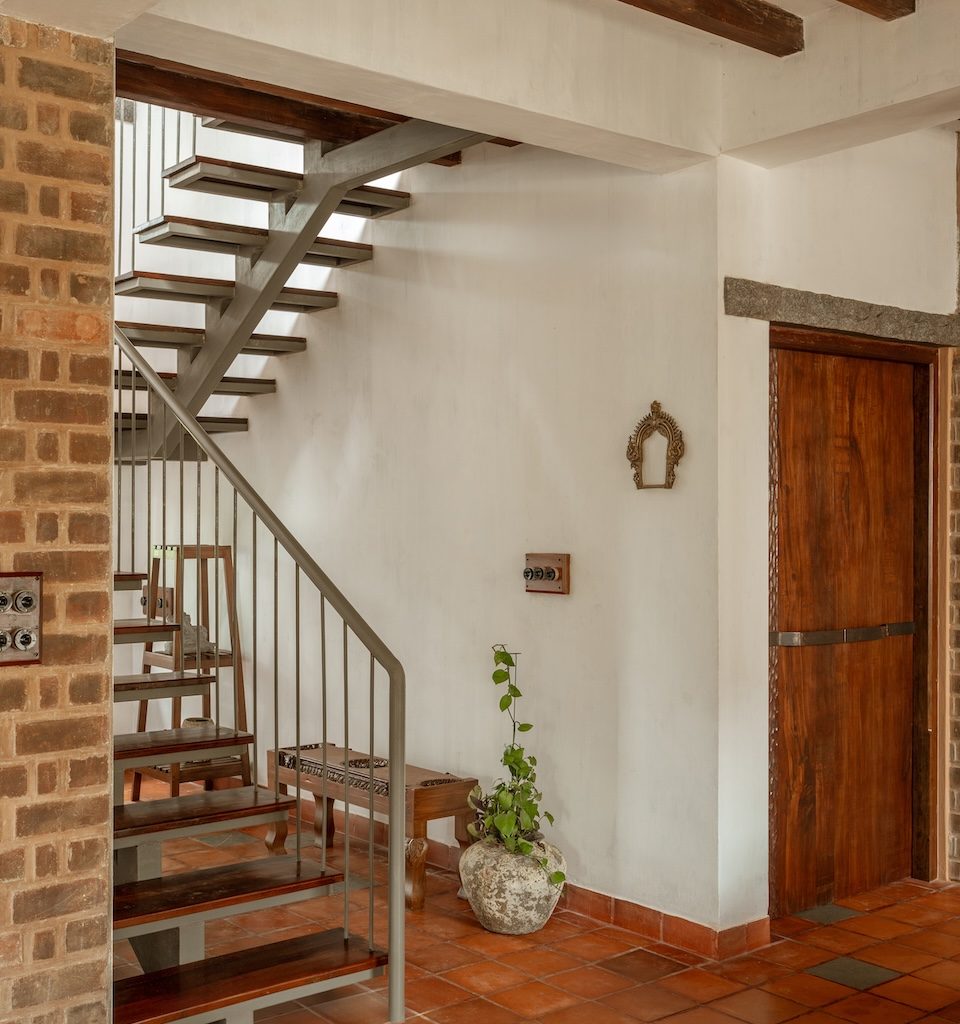
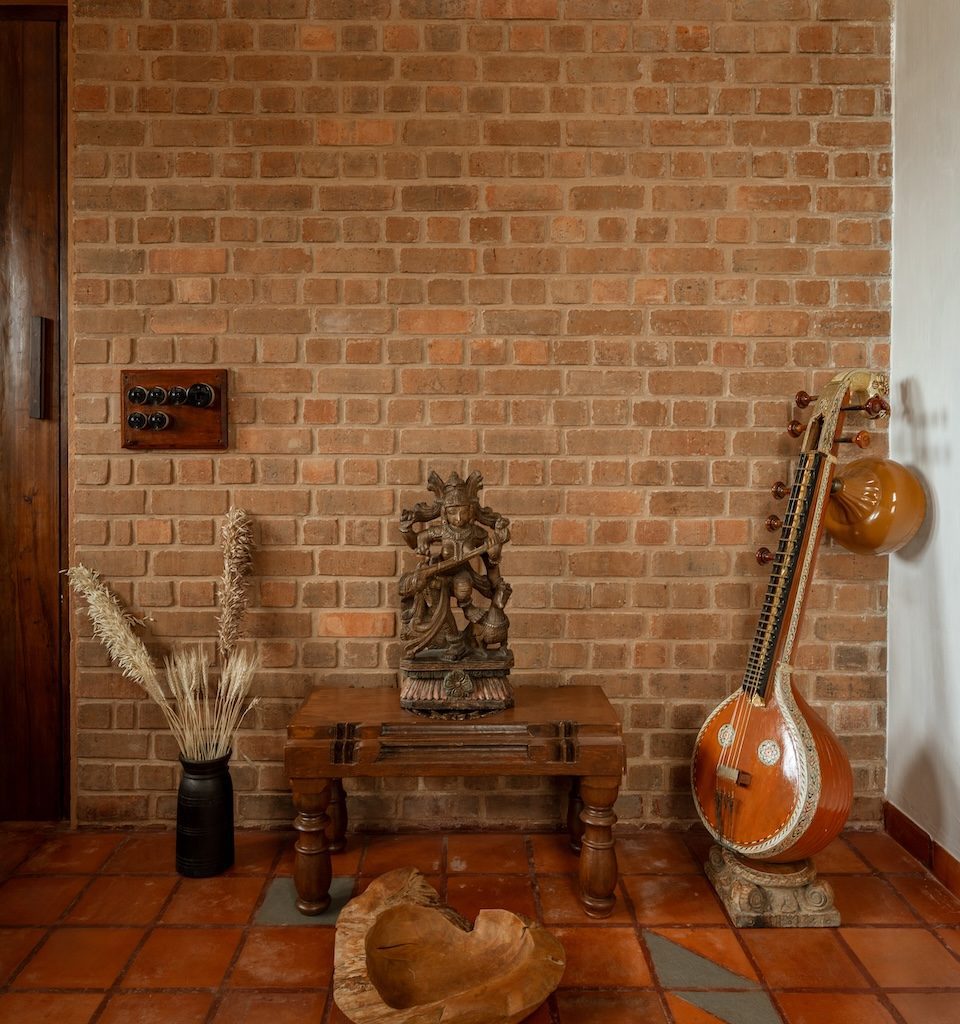
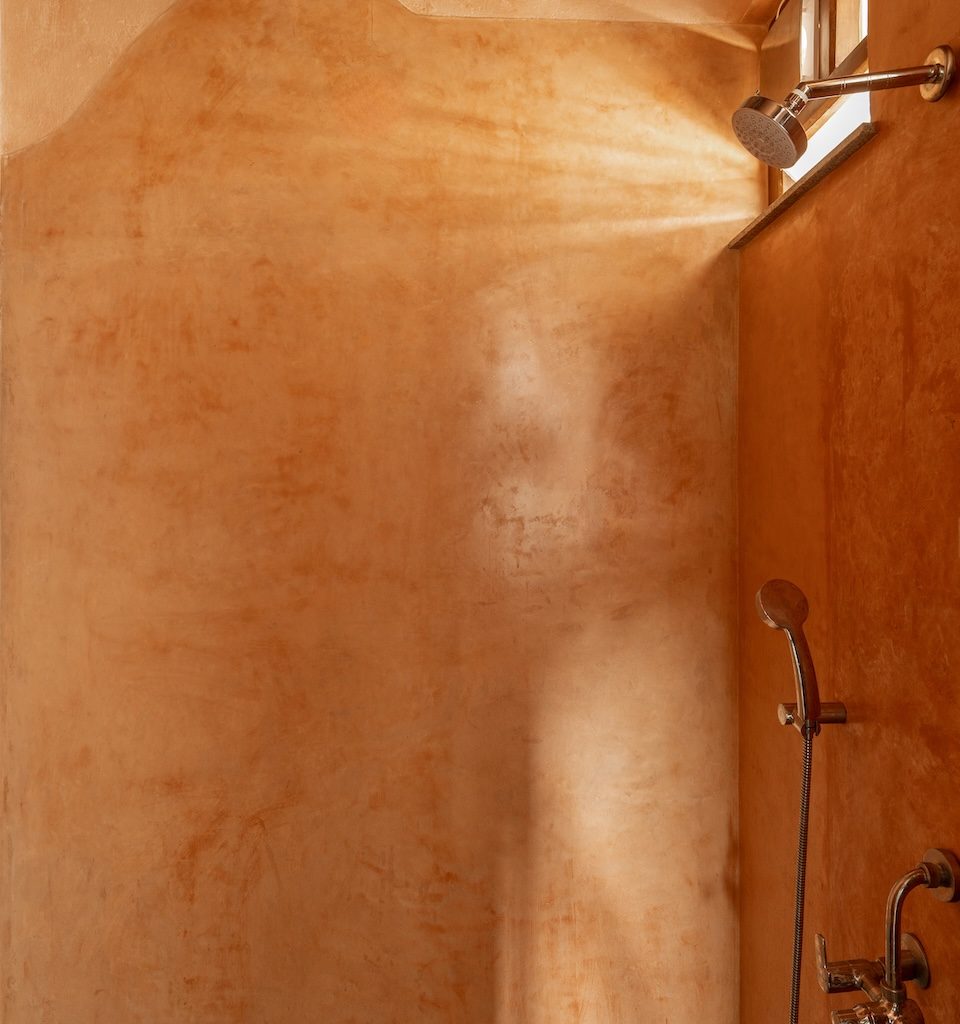
Guided by the site’s rectilinear form, the home is planned to make the most of both indoor and outdoor living, while remaining sensitive to the family’s needs and the surrounding conditions. The exterior brings together exposed brick, stone lintels, wooden detailing, and metal brackets, all anchored by stone plinths that protect against moisture and termites. Pitched terracotta roofs complete the composition, reinforcing the home’s connection to traditional building methods. Underfoot, terracotta tiles run through the spaces, while glossy lime finishes in wet areas and accents of green oxide and Kota stone introduce freshness and tactile variation.
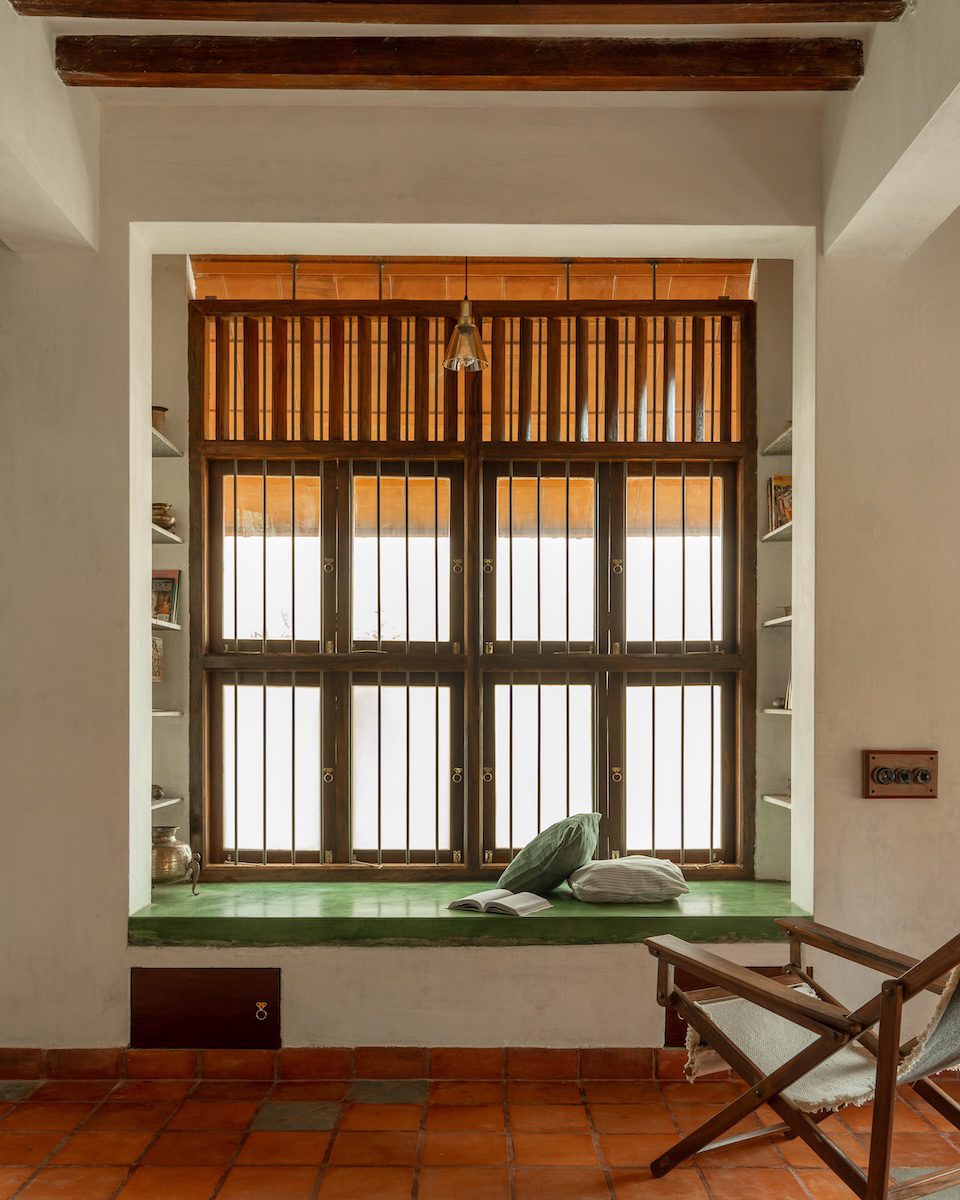
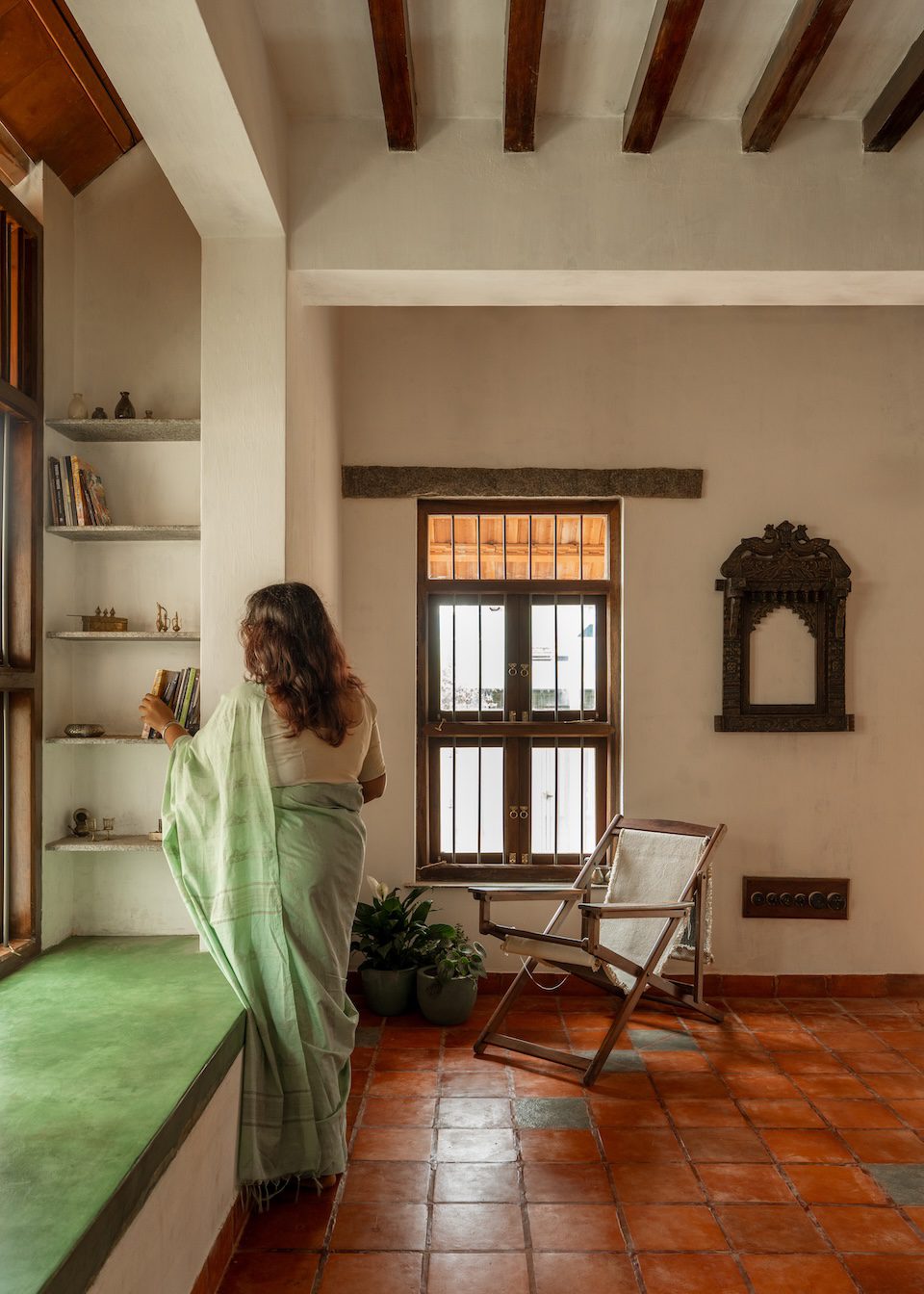
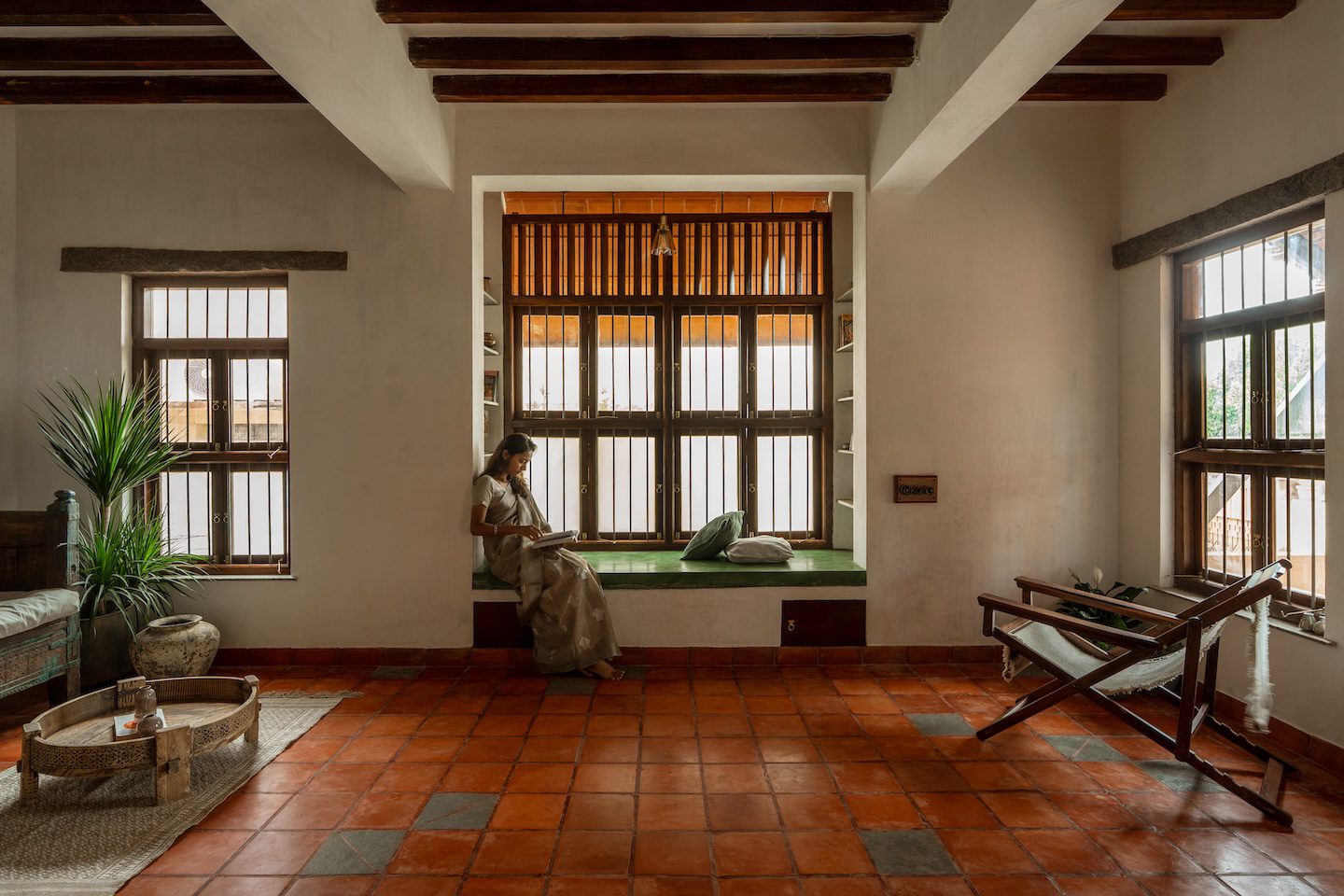
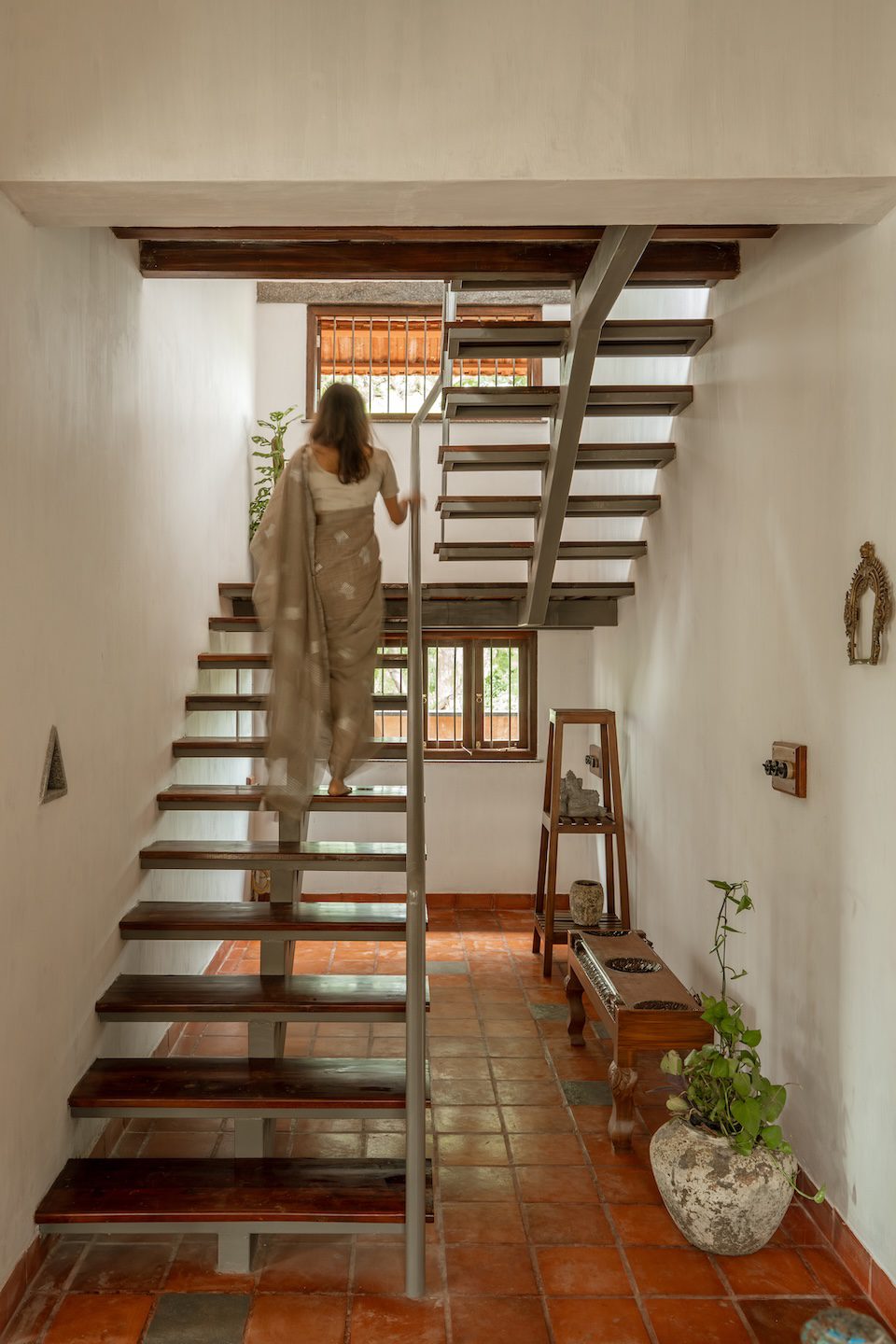
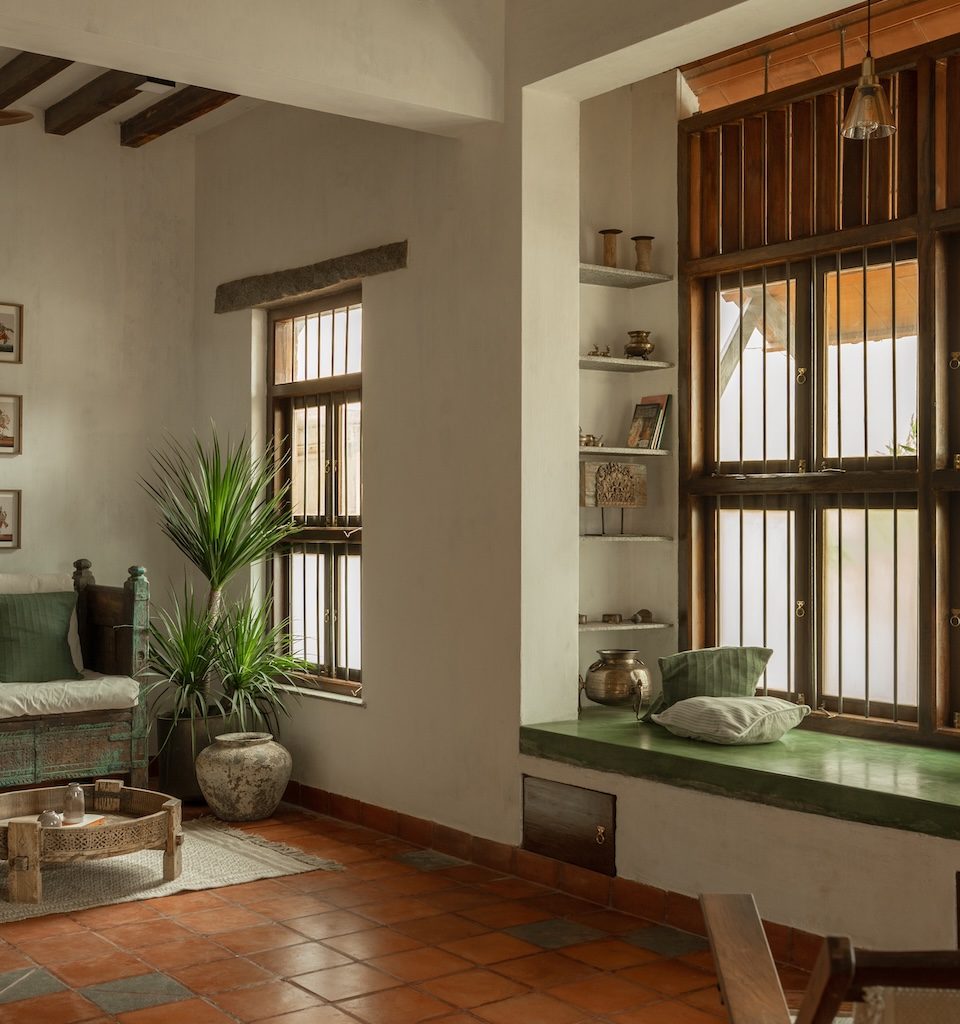
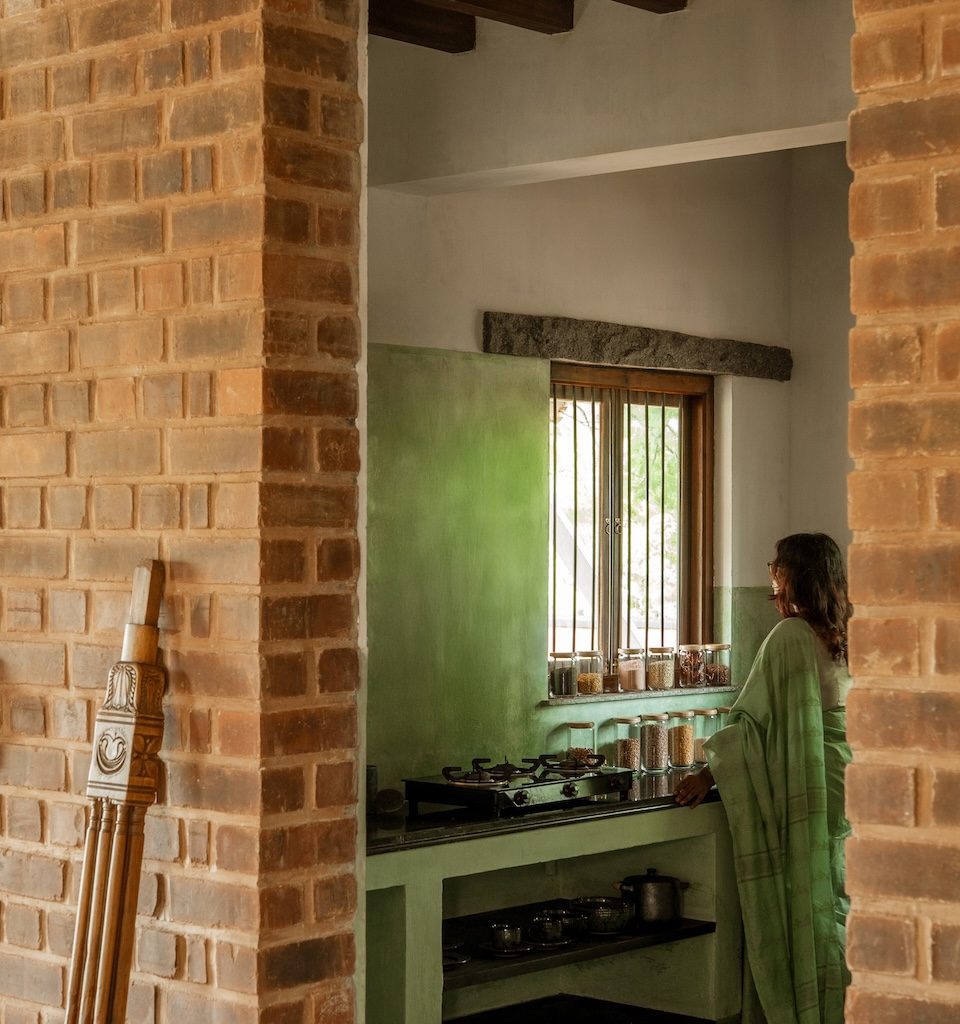
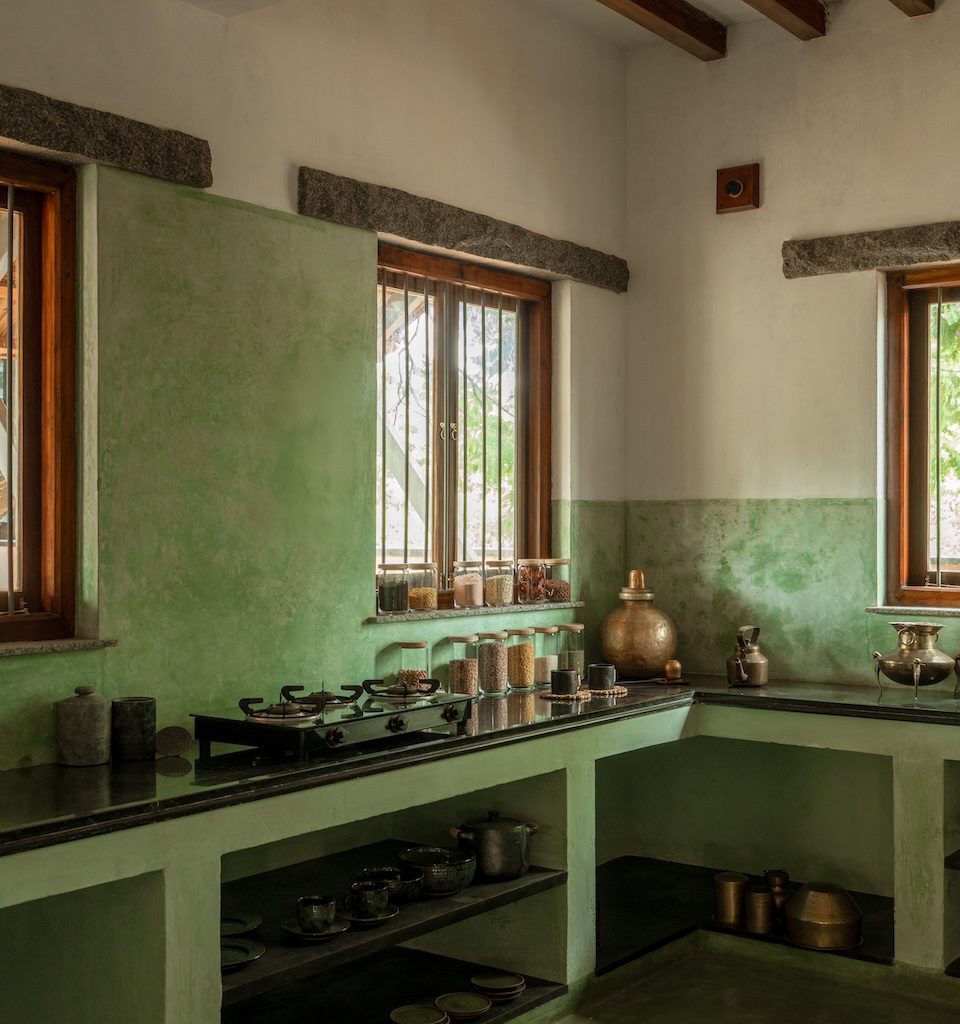
Inside, the living room opens up to both the kitchen and the stairway, allowing spaces to remain visually connected. A bay window becomes the focal point here, with a green oxide seater, wooden storage below, and granite shelves framing views of the outdoors. The kitchen is shaped around the clients’ daily practices, accommodating traditional utensils, a natural fridge, and open shelving, with glazed lime finishes lending the space a clean, refreshed feel.
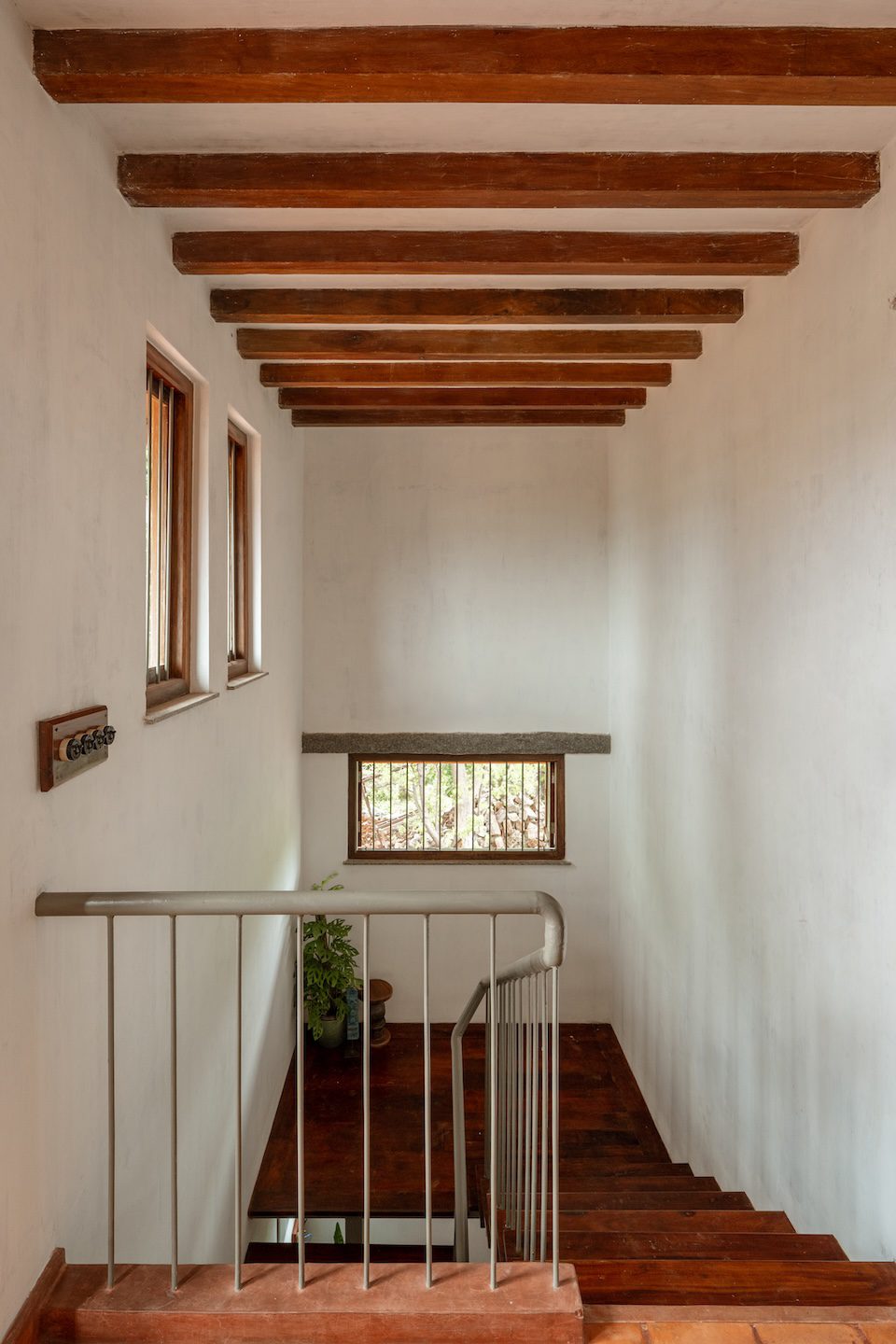
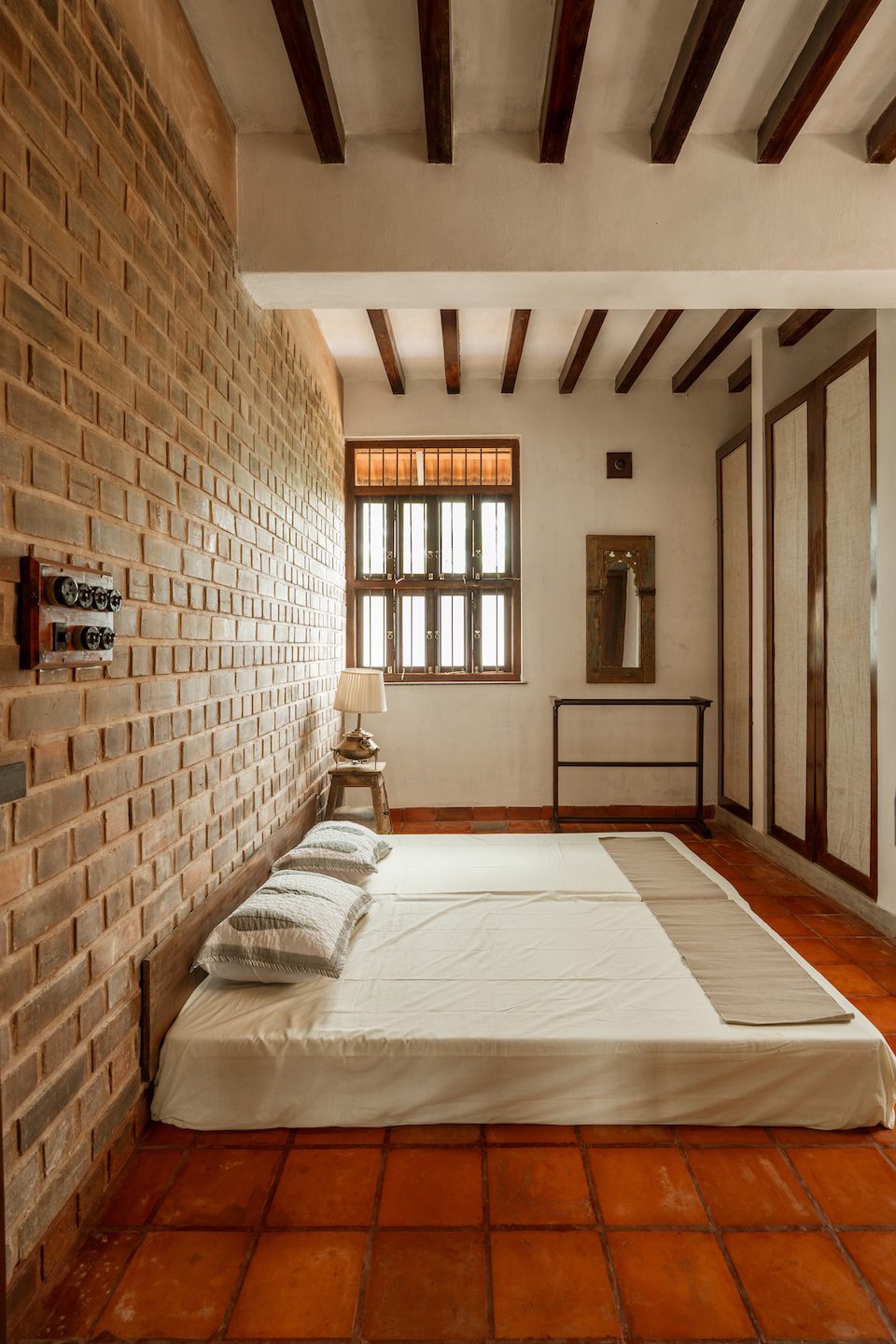
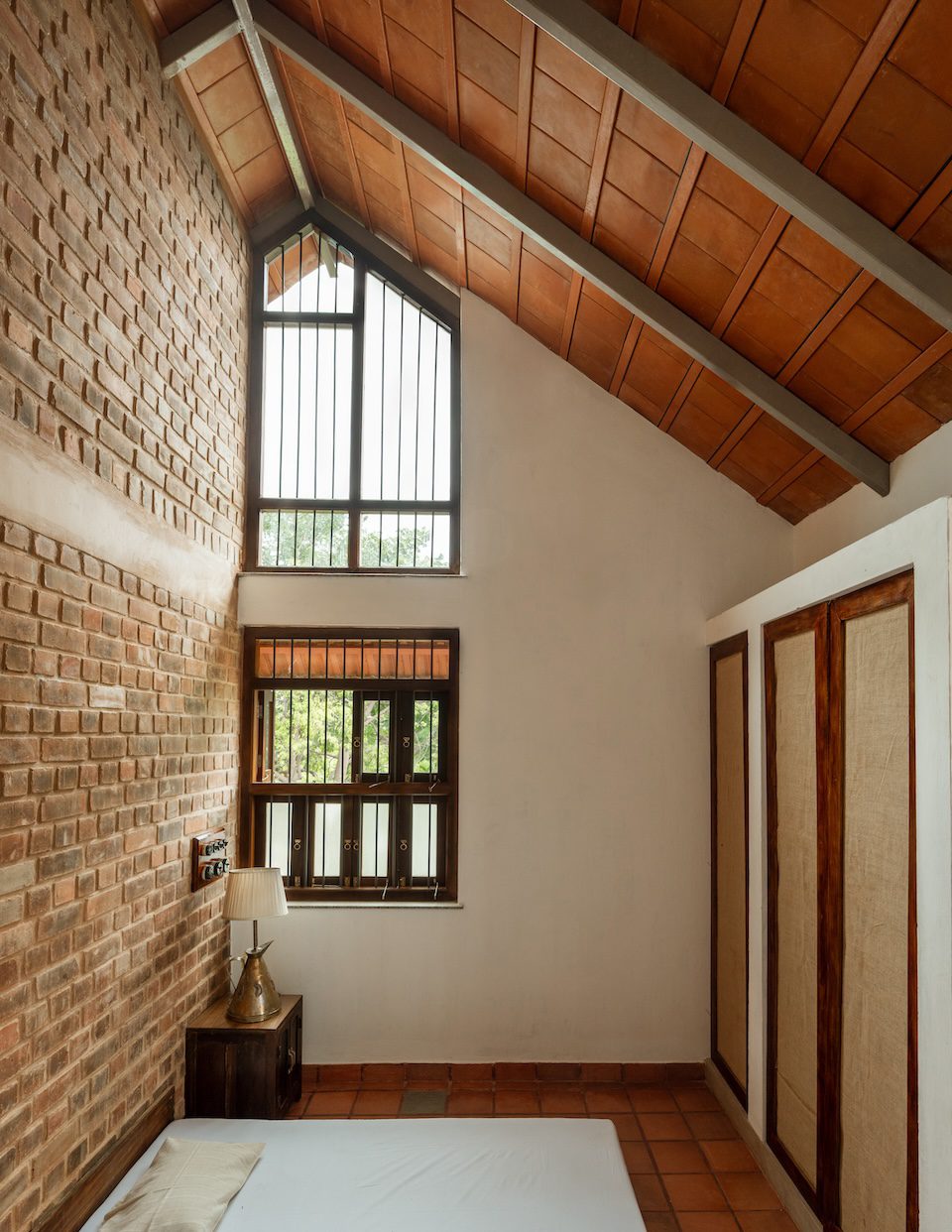
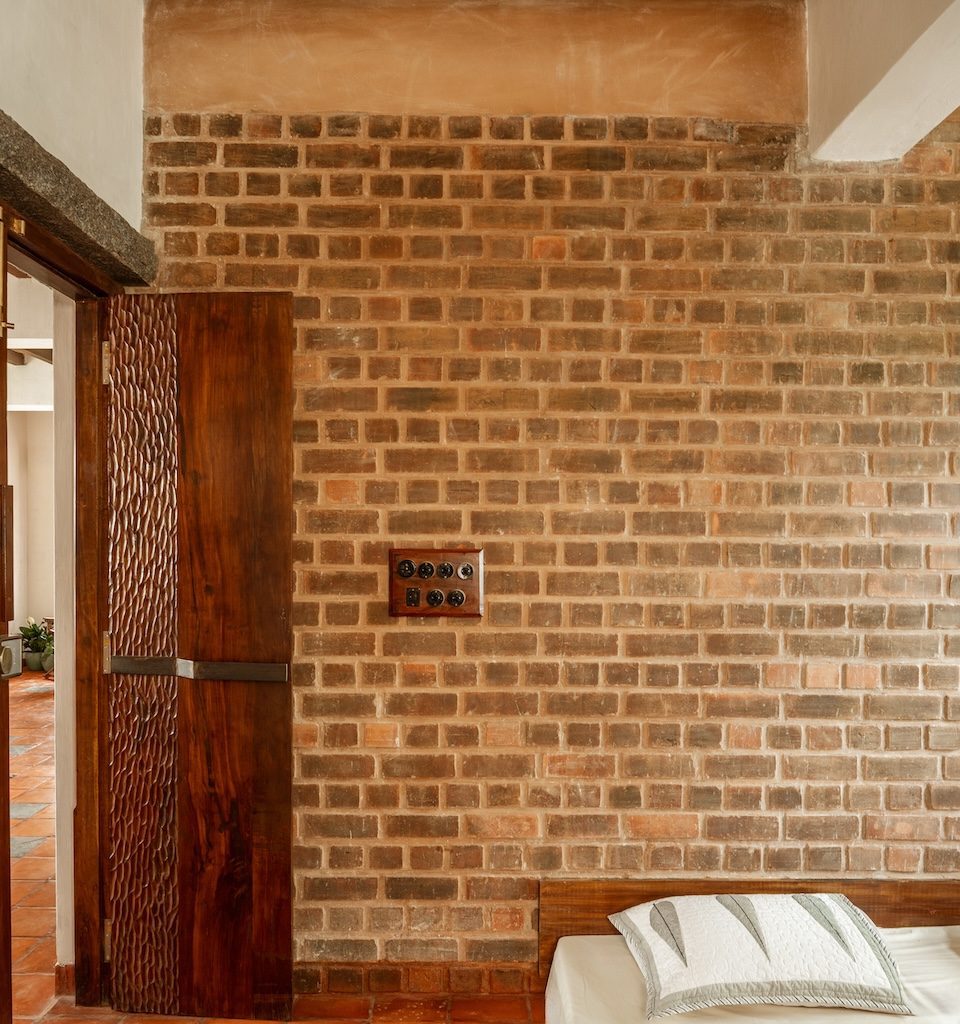
The bedrooms are designed to feel bright and comfortable, with exposed brick feature walls adding character. Upstairs, a multipurpose room adapts easily to music, work, or study, supported by tall windows that draw in light from the adjoining terrace. This outdoor space, in turn, becomes an extension of the home—suited for yoga, exercise, or informal family gatherings.
The material and colour palette
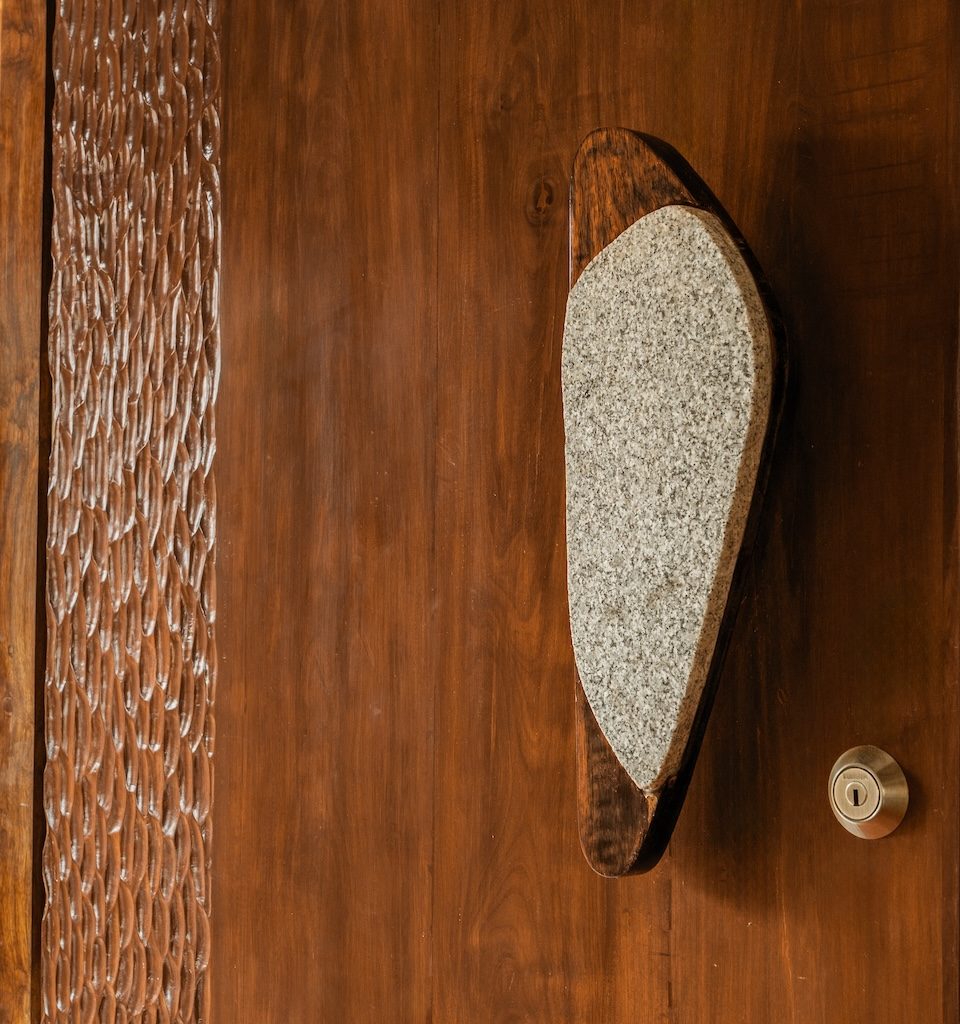
The material and colour palette of the home draws from the earth itself, grounding the spaces in a language that feels both familiar and enduring. Shades of muddy brown, chuna white, lime green, woody brown, and smoke grey move gently across the interiors, creating a palette that is restrained yet deeply evocative. This is paired with a thoughtful selection of materials—country bricks, Achukkal bricks, lime, mud, herbs, reclaimed Indian Sal wood, and MS metal—each chosen for its tactile quality and connection to traditional building practices.
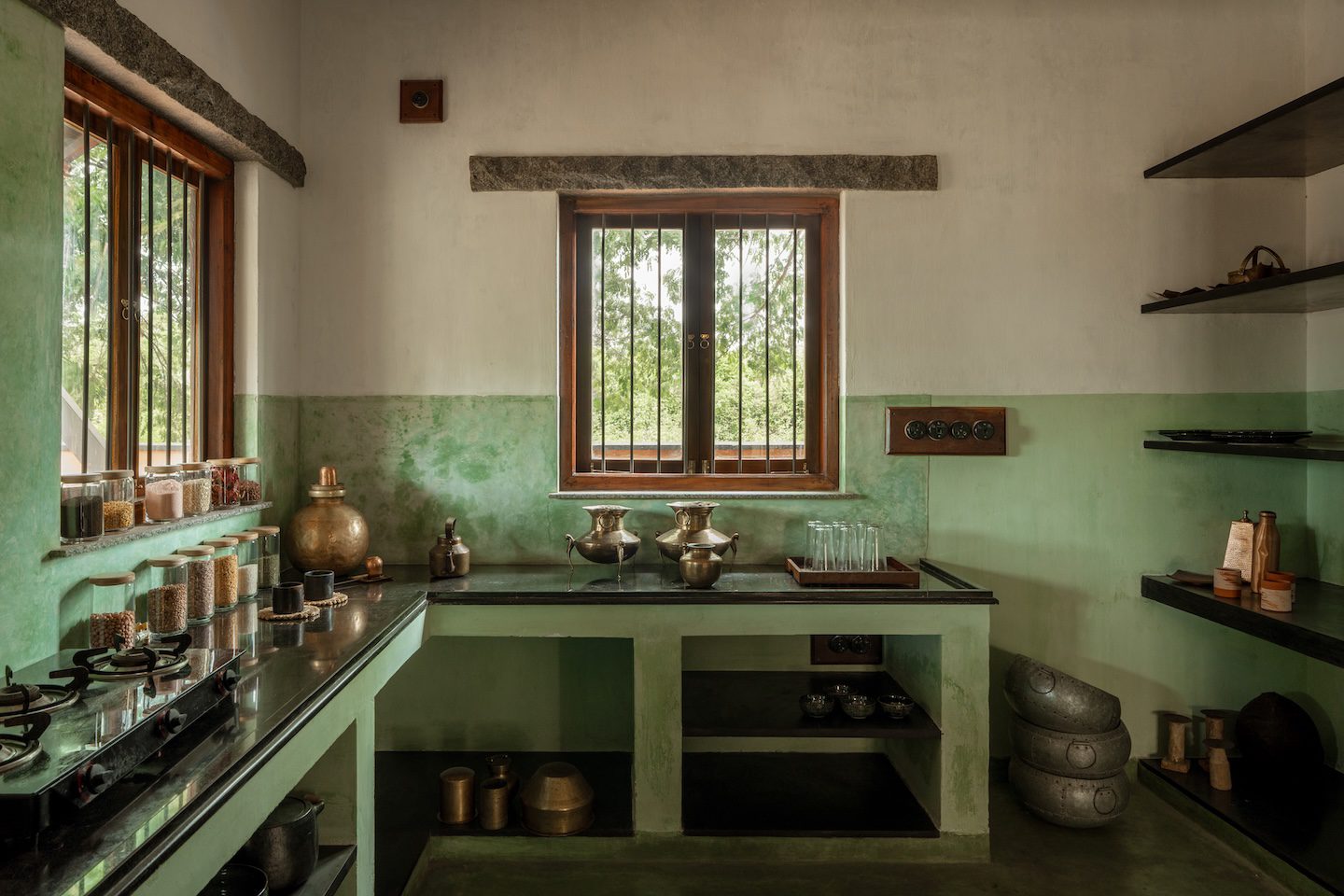
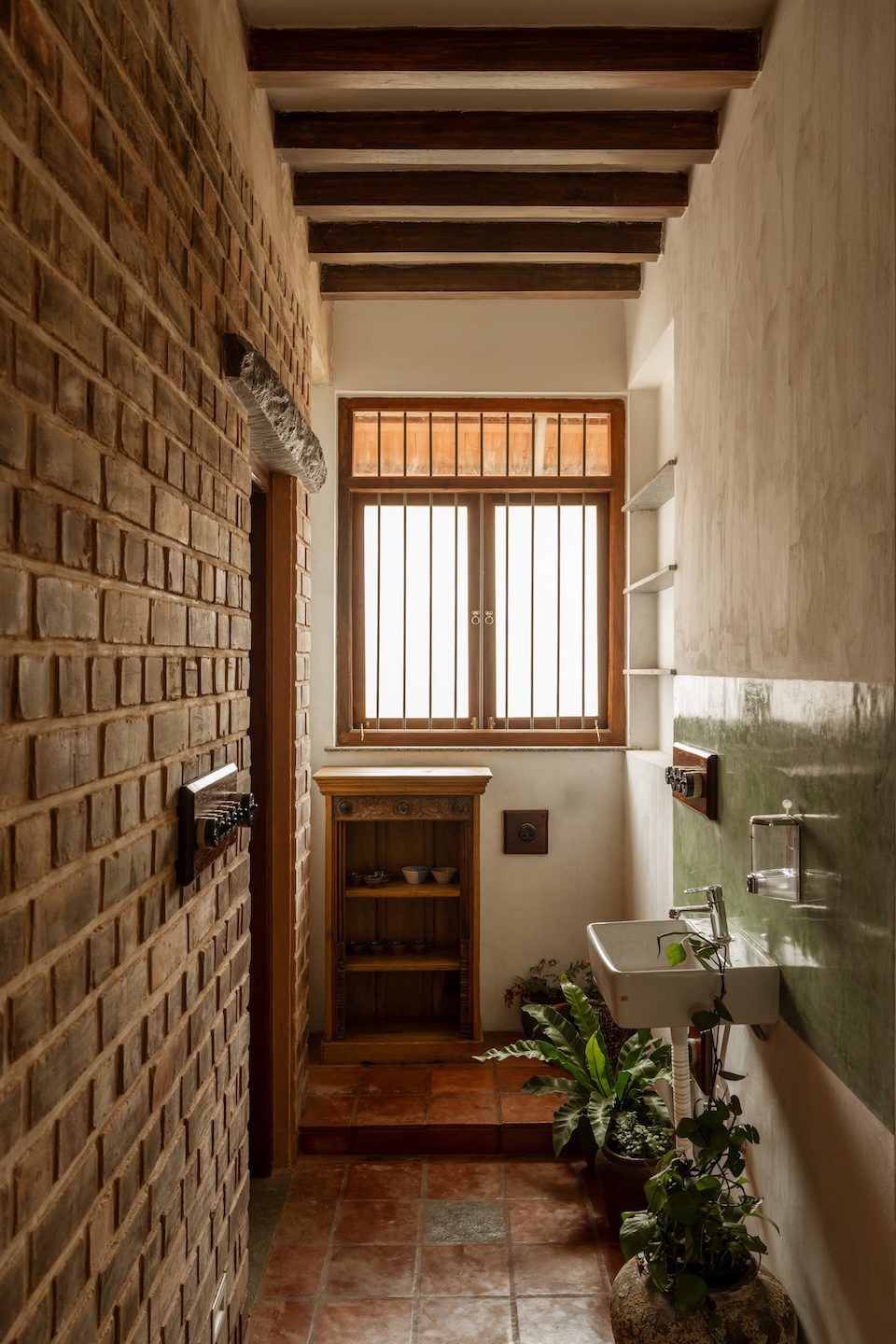
Walls are constructed in brick with lime mortar, finished either in exposed brickwork or soft matte lime plasters, while glossy lime plasters define the kitchen and toilet dados, adding a subtle contrast in texture. The roofing combines Madras terrace, Mangalore tiles, and RCC, reflecting a blend of time-tested techniques and structural needs. Ceilings alternate between lime-plastered surfaces and exposed concrete, while granite stone lintels introduce structural honesty. Underfoot, terracotta tiles, leather-finished Kota stone, and IPS flooring continue this material narrative, allowing the home to feel closely tied to its context.
The highlights
Some areas in the project stand out, for instance, the entrance porch sets the tone with its inviting character, where exposed brick masonry, granite boulders, and IPS-finished steps come together under a Mangalore tile roof to create a space that feels both grounded and welcoming. Anchoring this is the thinnai, reinterpreted through a zero-gravity seater that introduces a sense of ease while retaining its traditional role as a place for gathering and pause.
This blend of familiarity and innovation continues into the living space, where a thoughtfully designed bay window becomes a focal point. Conceived to serve multiple needs, it offers a comfortable nook for rest, integrates shelving for books and objects, and includes storage beneath the seater. Its generous opening allows light and air to flow freely into the room, strengthening the connection between the interiors and the outdoors while enhancing the everyday experience of the space.
The challenges
“Our primary challenge was integrating vastu compliance into our planning and design concepts. Additionally, placing openings proved to be difficult due to neighbouring structures on two sides of the house. To address the need for air, light, and privacy, we carefully positioned the windows using a combination of transparent and opaque glass, as well as selecting appropriate sizes for the window shutters,” say the architects.
Fact File
Project: Adorn
Location: Selvapuram, Coimbatore
Area: 1,554 sq ft (built-up)
Principal architects: S Vinoth Kumar and V Srinath Gowtham
Design team: Ajith Kumar, Mohan Prasad, Naresh, Thileep Raj and Manuvanth
Add a Comment