
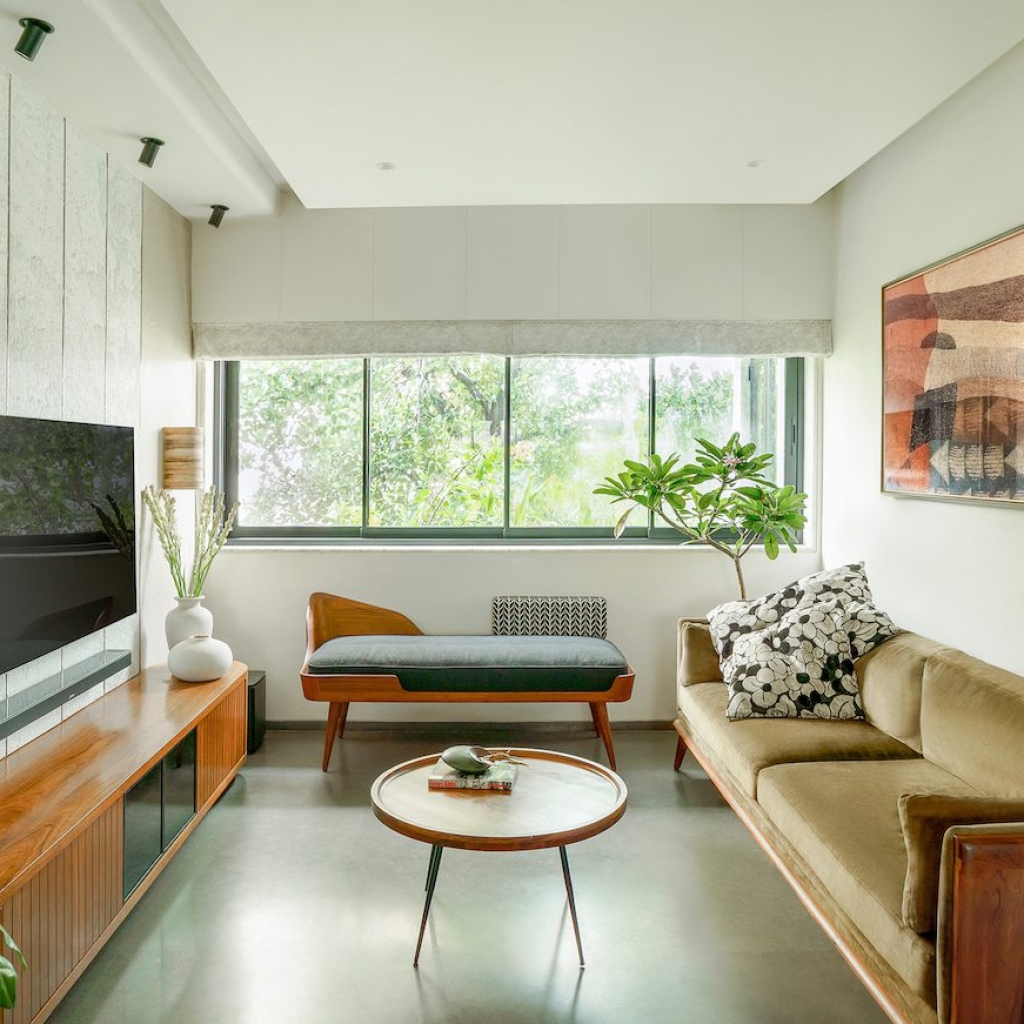
Maitri Uka of Studio In Elements likens her debut project with its organic flavour to a seed — nature in its purest form.
Curated by: Rupali Sebastian
Photographs: Vikram Bawa; courtesy Studio In Elements
The site
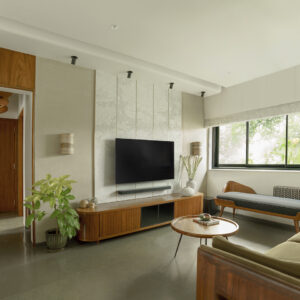
“There is a different charm to working with local materials and techniques. This house showcases how a culturally rich, yet contemporary design outcome can be achieved without having to deviate from our roots,” says architect Maitri Uka of Studio In Elements who helmed the transformation of this apartment, an old family home, into a contemporary living environment. The site is located in the quaint heritage neighbourhood of South Mumbai. The windows of the beautifully cross-ventilated apartment overlook the dense canopy of jackfruit and mango trees. “My aim was to reflect as much of this greenery into the home,” she says.
The brief and the design intent
The architect’s brief was to achieve a home with an old-world charm. The family wanted a space that would be identified as timeless yet contemporary. The idea was to adapt to the nature around using as much local materials making the most of the available space as possible, while providing for all the modern amenities and future ready technologies.
“As the family is a modern Kutchhi Gujarati family, the concept was to embrace as much of those cultural nuances, especially those of traditional Kutchhi structures, the bhungas,” Maitri elucidates, who took cues from the beautifully lime-plastered interiors of these vernacular structures, especially the.distinct and varying hand-shaped niches and the rounded edge detailing. “They also have a lot of intricately done inlay work. With a fresh take, I sought to incorporate all these little details into the overall design of the home,” she tells us, adding that her friend and fellow architect Rishi Jain helped her resolve a lot of technical details in this, her first independent, project.
The civil intervention
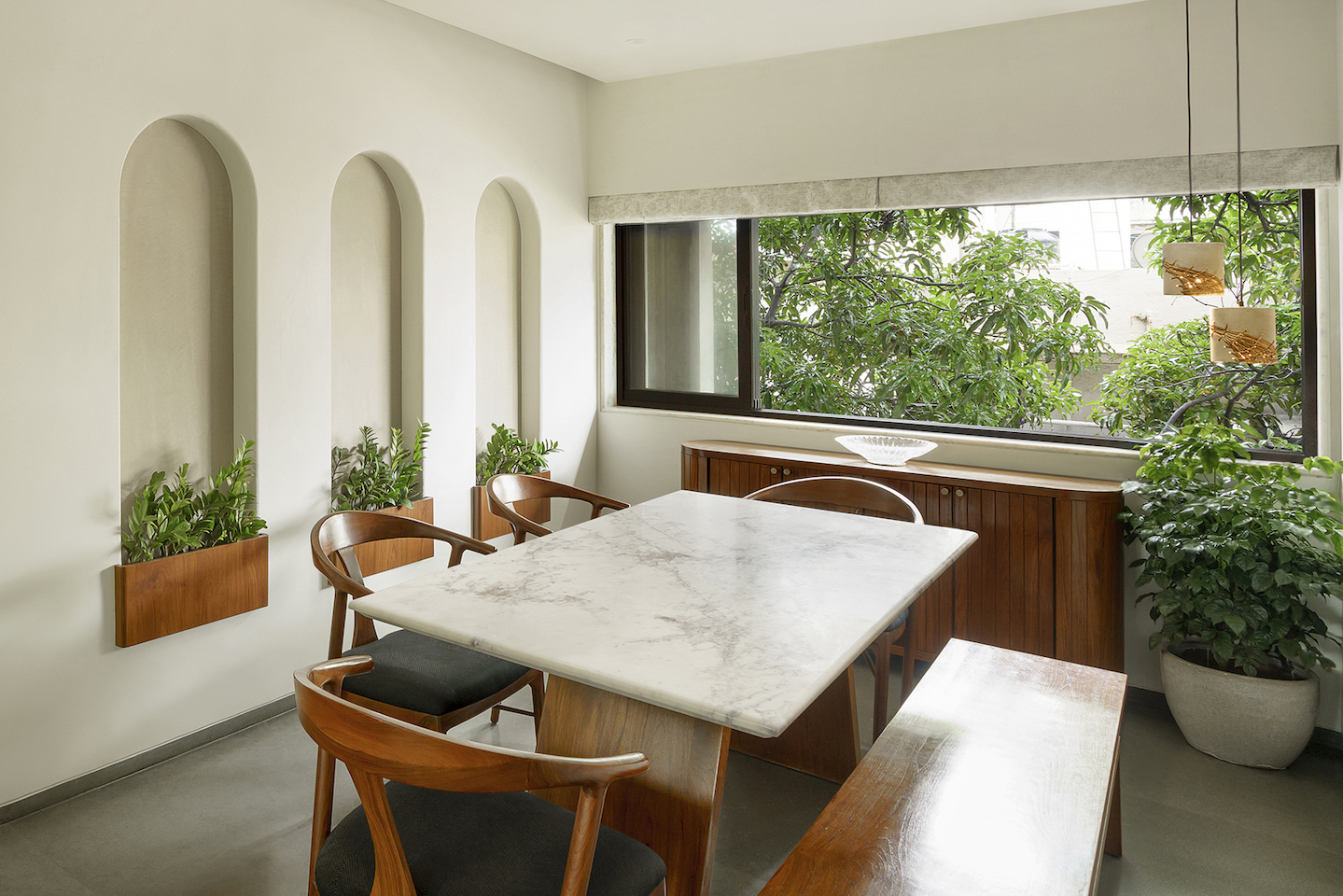
The apartment is part of an old structure — which is why the family was reluctant to make any significant updates to the civil structure. “I used the wall area to incorporate the design niches while also creating hidden storage spaces,” reveals Maitri. “The entrance passage was used to create an arched sitting space within the wall area. Similarly, the dining area incorporated design niches to provide for fresh plants. I have also created niches within the walls of the three bedrooms, which allow space for appliances like the washing machine, television and storage units. Some niches have been incorporated just to add to the aesthetic of the house as well.”
The spatial configuration
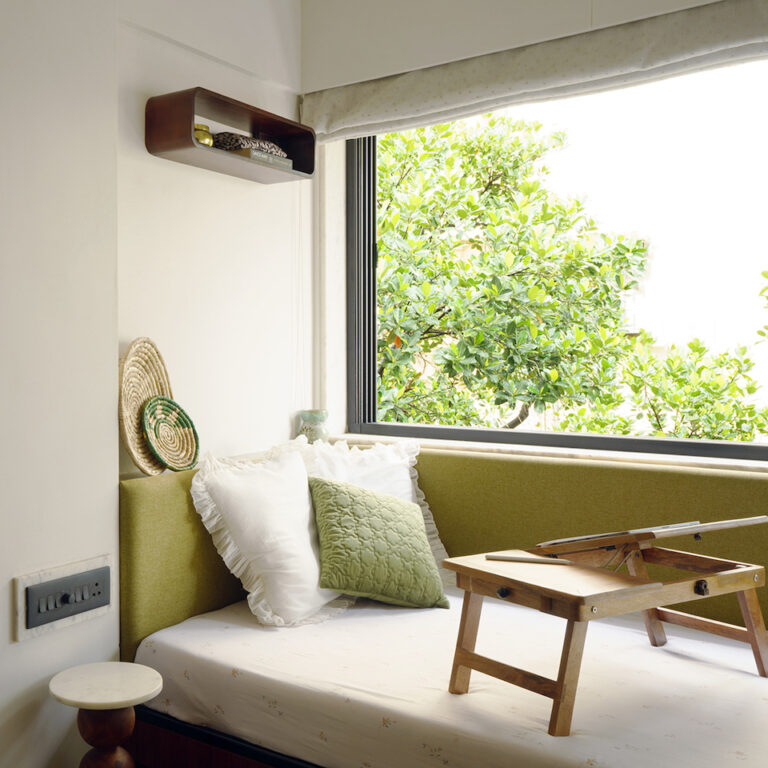
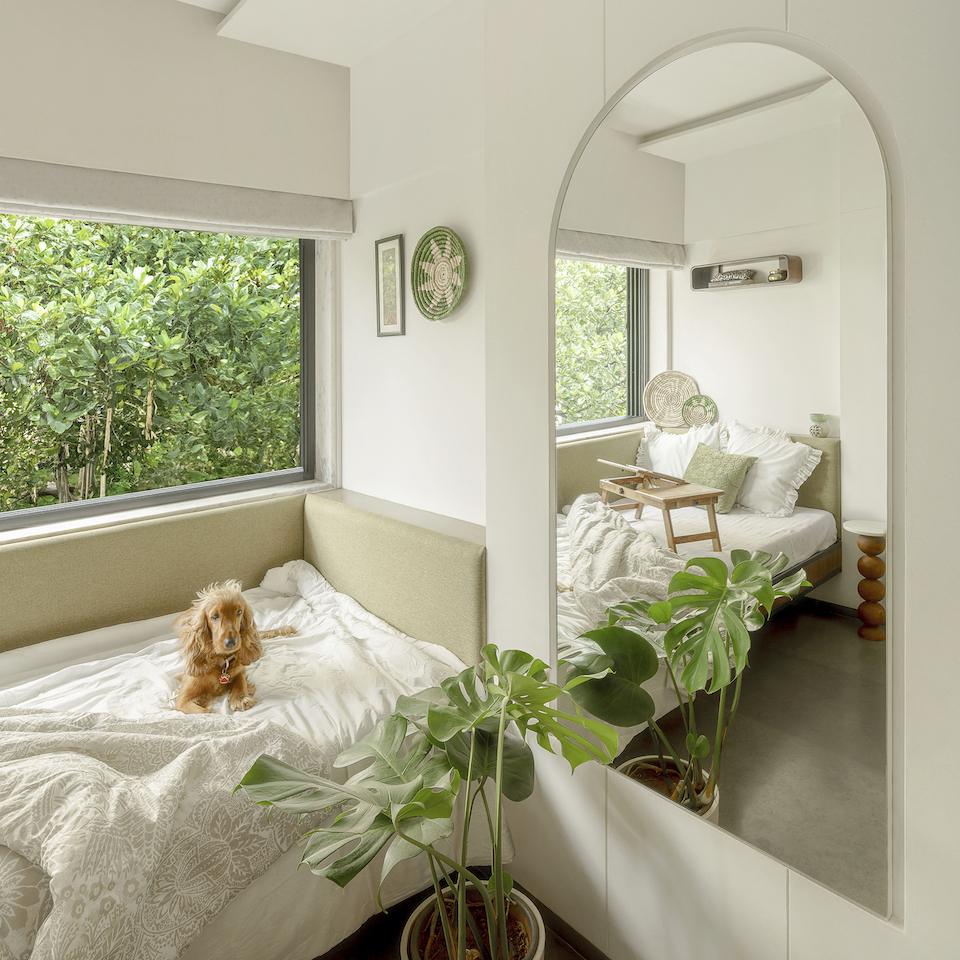
The home opens into a narrow passage, which frames the Shrinathji painting at the far end of the hall – installed on a textural Indian stone. Solid wood and brass details highlight it further. The kitchen lies on one side of the entrance, and a compact bedroom on the other. “A long mirror makes the small bedroom seem bigger,” the architect states. The main hall cum dining area overlooks the surrounding verdure. From here, a small ancillary space opens up to the two large bedrooms on either side. As the family dogs love the sun, the architect custom-designed a dog-bed and fit it in a niche next to the small window.
The material palette
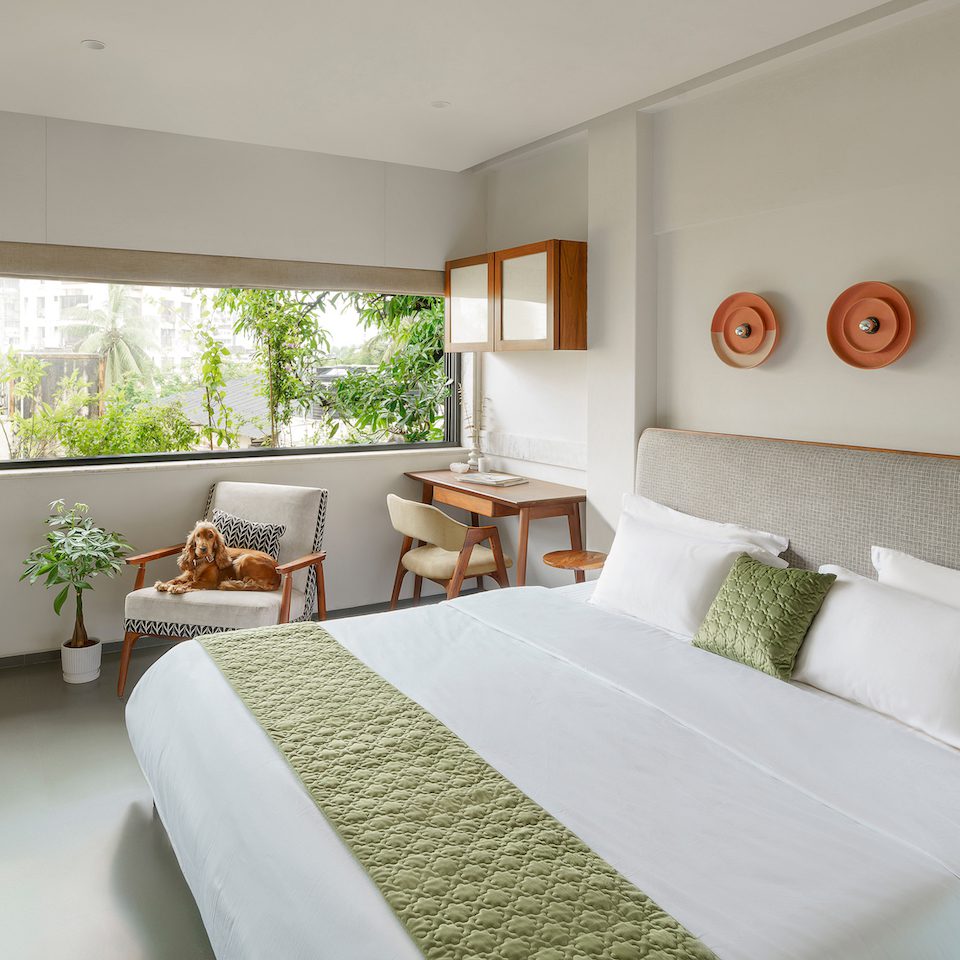
Materiality celebrates natural and local materials as much as possible. The flooring across the apartment was accentuated with different unconventional, yet very earthy limestones: Bhura grey limestone for the living spaces and chocolate limestone (aka Andhra stone) and olive limestone (Shahabad stone) for the bathrooms. “Since limestone has natural colour variations, I tried to further highlight these by using the stones to create different mosaics across the house,” points out Maitri. White Indian marbles in varying finishes were used for panelling, window sills and bathroom walls. Instead of paint, hand-applied lime plaster features across the entire home. The solid wood elements, like the frames and shutters, are crafted from old repurposed Burma Teak and hand-polished with linseed oil. While the hand-crafted solid wood wardrobe shutters are further enriched with inlays of hand-woven rattan and linen, solid brass inlays sprinkled throughout the home add their own beauty to the narrative.
 Client/Agency: Maitri Uka
#888888;””>Location: Laburnum Road
The home not only celebrates local materials but also local and handmade crafts, beginning from the bespoke hand-embroidered Kutchhi morii art pieces to the hand-woven rattan shutters and handmade decorative lights. “I have strived to support local craftsmanship,” says Maitri, “and hope to continue to do the same in future projects.”
Fact file
Project: The Seed
Location: Babulnath, Mumbai
Area: 1,050 sq ft
Principal architect: Maitri Uka
Add a Comment