

The beauty in imperfections and incompleteness, in smoothness and roughness, and in simple humble materials is honoured in this Mumbai home designed by Kavan Shah Design Studio.
Curated by: Deepa Nair
Photographs: Tanuj Bhatia, courtesy Kavan Shah Design Studio

The brief
A bare shell measuring 1,200 sq ft and a simple brief awaited architect Kavan Shah before he embarked on The Cement House project in suburban Mumbai. The only requirement from the clients was a Zen-like home.
The design intent
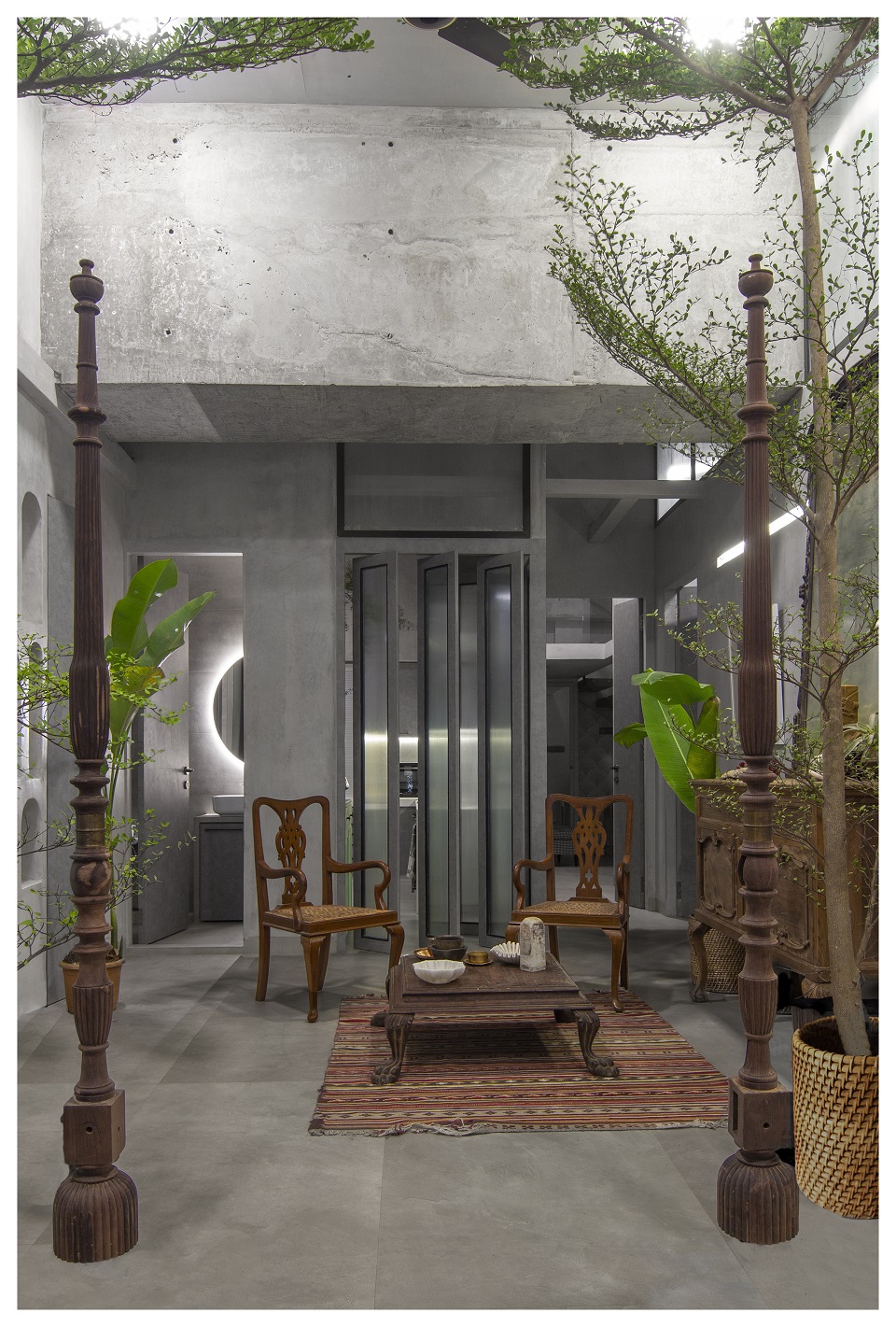
This project has an unconventional approach based on simplicity, silence and aesthetics. Simple in arrangement, this residence features a sequence of rooms that run off a central corridor. Concrete walls are left exposed throughout, including the marks and tiny splashes of paint left behind from the construction process. These surface blemishes are meant to offer a subtle nod to the Japanese aesthetic of Wabi Sabi — that focuses on the acceptance of imperfection and the notion that beauty is transient.
“I would say a lot of our spaces are born from a contextual need. When designing interiors we always look at that specific site and the existing architecture. In that sense, we are less concept-driven as much as material-driven. I think it is most important to create environments that are layered, but also quite straightforward and approachable. The aim was to give a strong impression of unity in the whole space,” explains Kavan.
 The spatial configuration
“This house is designed with much thought to how we define the conditions of a space. In a long, narrow space, we constructed walls, and by laying out a space in which we experience many rooms, we turn “narrowness” into “openness,” says Kavan. Once inside the house one understands that the spatial sequence is defined by its structure. Each geometrical gesture defines a ‘sharp cut’ over the given frame. The overlapping of the cuts provide formal diversity within the concrete shells and a feeling of contemporaneity. “It was very important for us to detach the inner space from its context, to invent a spatial condition independent of the program,” adds Kavan.
 The material palette
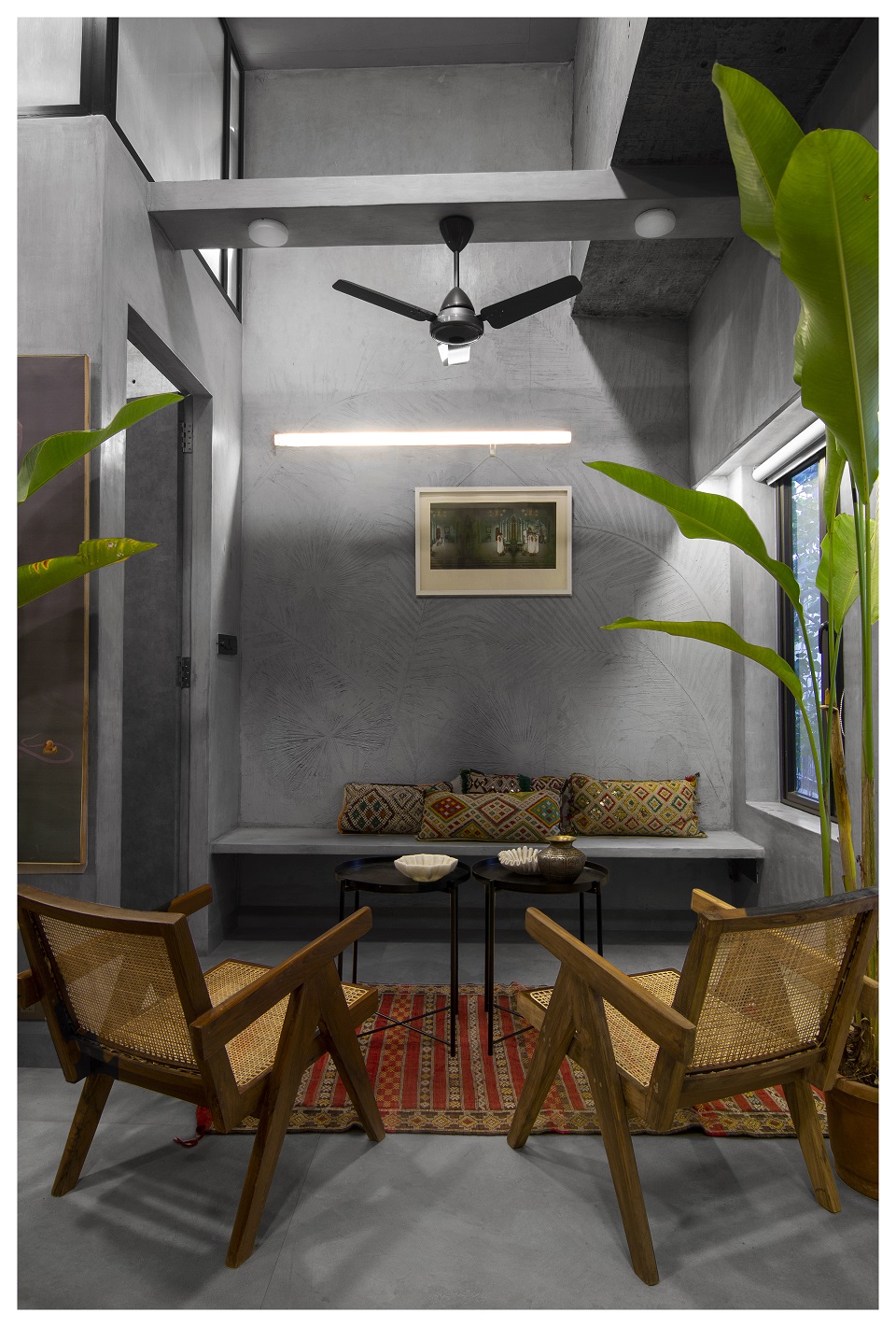
The walls, floors and ceilings throughout the apartment feature exposed concrete surfaces. In some places these are polished to create a smooth finish, but many are left in their original condition with smeared plaster and chipped edges. “The concrete was been given a pastel hue, which gives it a slightly warm appearance, and then left untreated after casting. The floors were also made in concrete to generate a neutral and clean aesthetic that underlines the beauty of the landscape,” asserts Kavan.
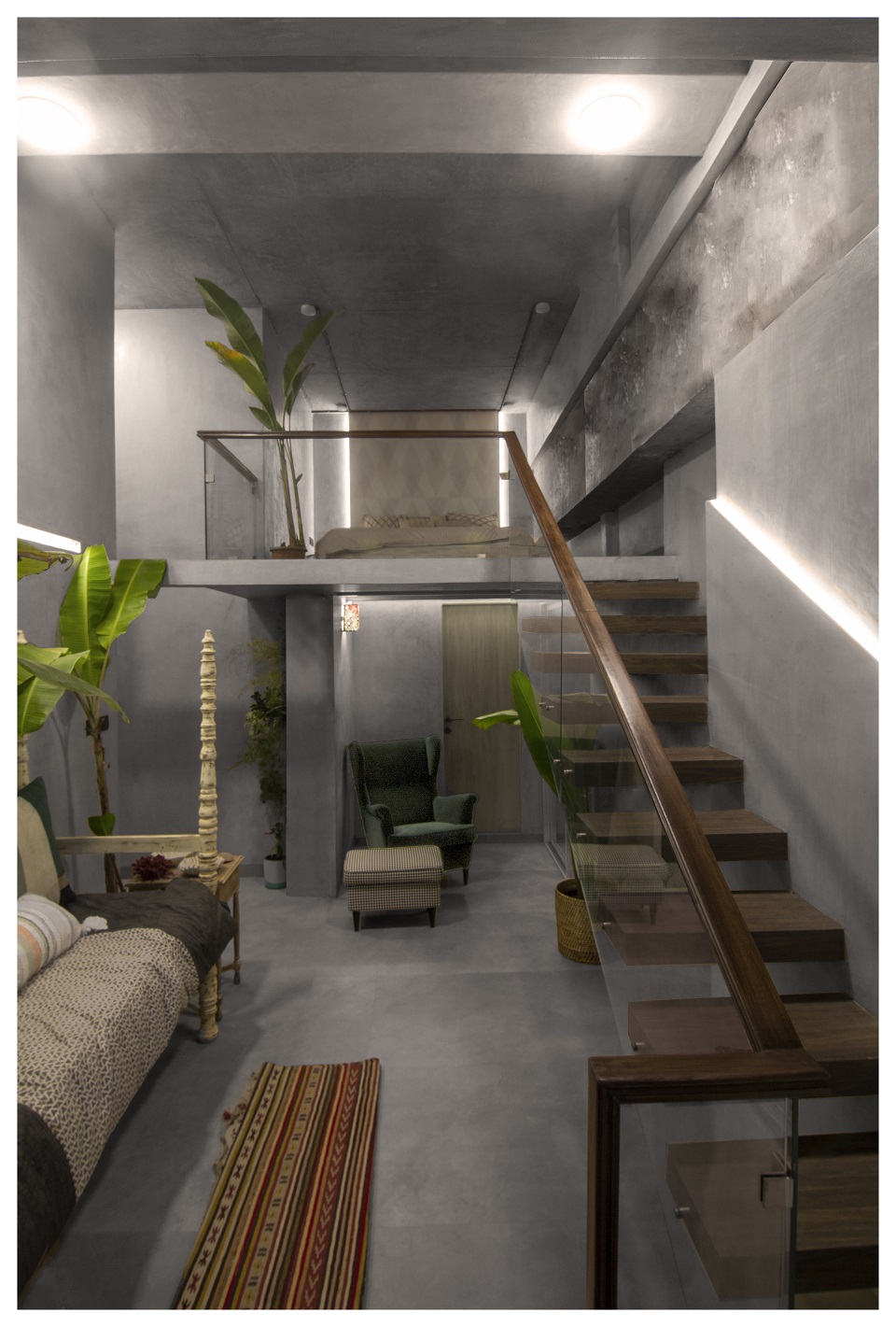 The cast-concrete interiors act as a form of topography that defines the spaces and incorporates functional elements such as the benches and wardrobes. Natural sunlight creates a living artwork on the concrete wall as a kind of living canvas. In contrast, all the furniture seen around the house is crafted from old reclaimed materials sourced from different parts of the country. This use of natural and durable materials provides a beautiful contrast to the objects and designs that fill the space.
Fact file
Project: The Cement House
Location: Juhu, Mumbai
Area: 1,200 sq ft
Principal architect: Kavan Shah
Add a Comment