
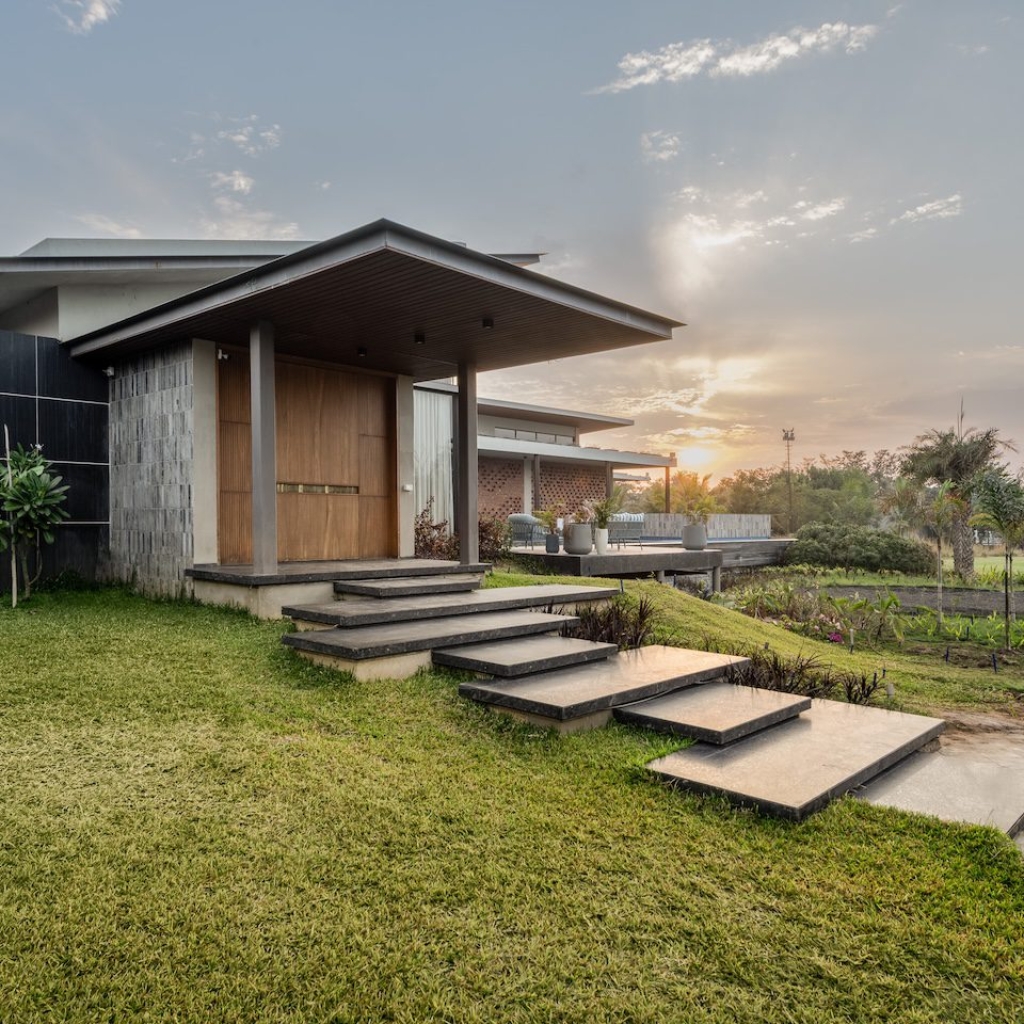
On the outskirts of Ahmedabad, this weekend residence by Squelette Design unfolds as a landscape-led home where built form recedes, allowing light, water and vegetation to shape the experience of space.
Curated by: Rupali Sebastian
Photographs: PHX India | Ira Gosalia; courtesy Squelette Design
The project
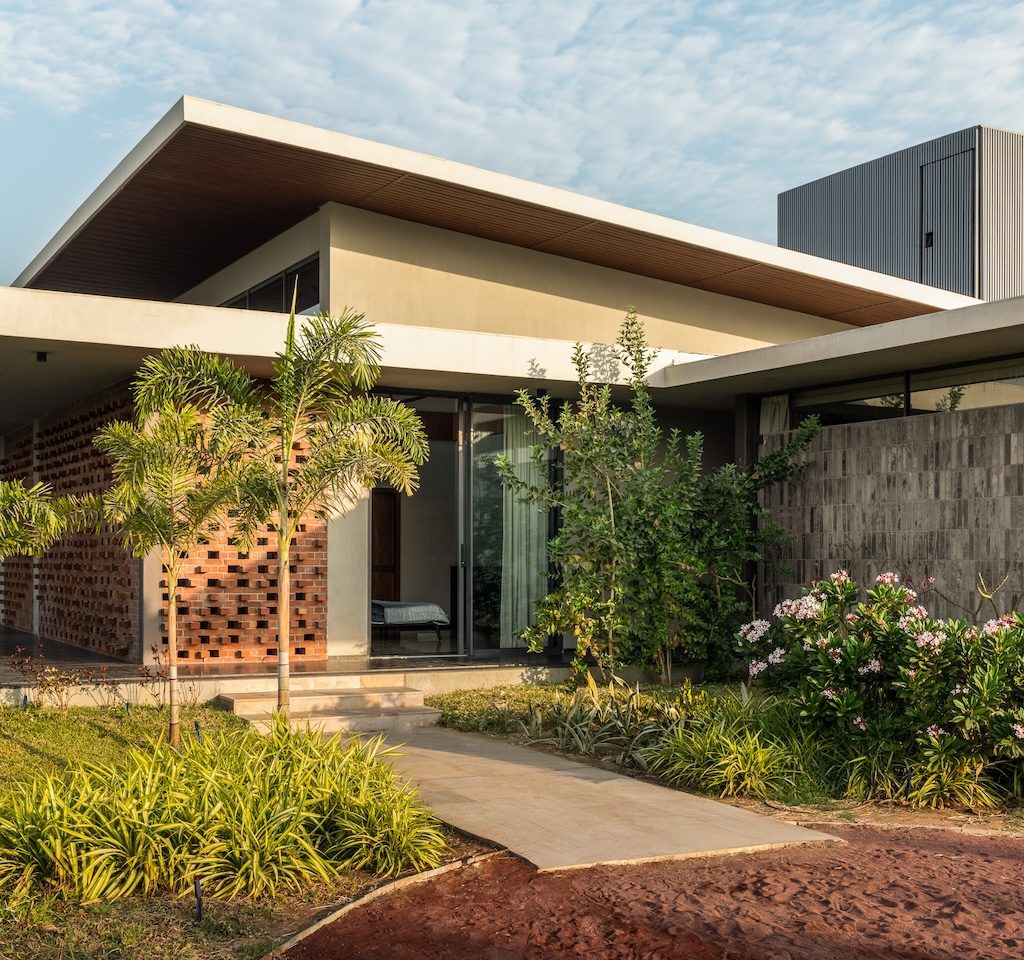
Conceived as a weekend home, this residence is designed less as a conventional house and more as a place of pause. Led by architects Saumil Patel and Prashant Trivedi of Squelette Design, the project brings together architecture and landscape in a way that softens boundaries, allowing the experience of living to unfold gradually across built and open spaces. Rather than prioritising enclosure, the design focuses on immersion—spaces that respond to light, material and movement while remaining grounded in a sense of calm.
The site
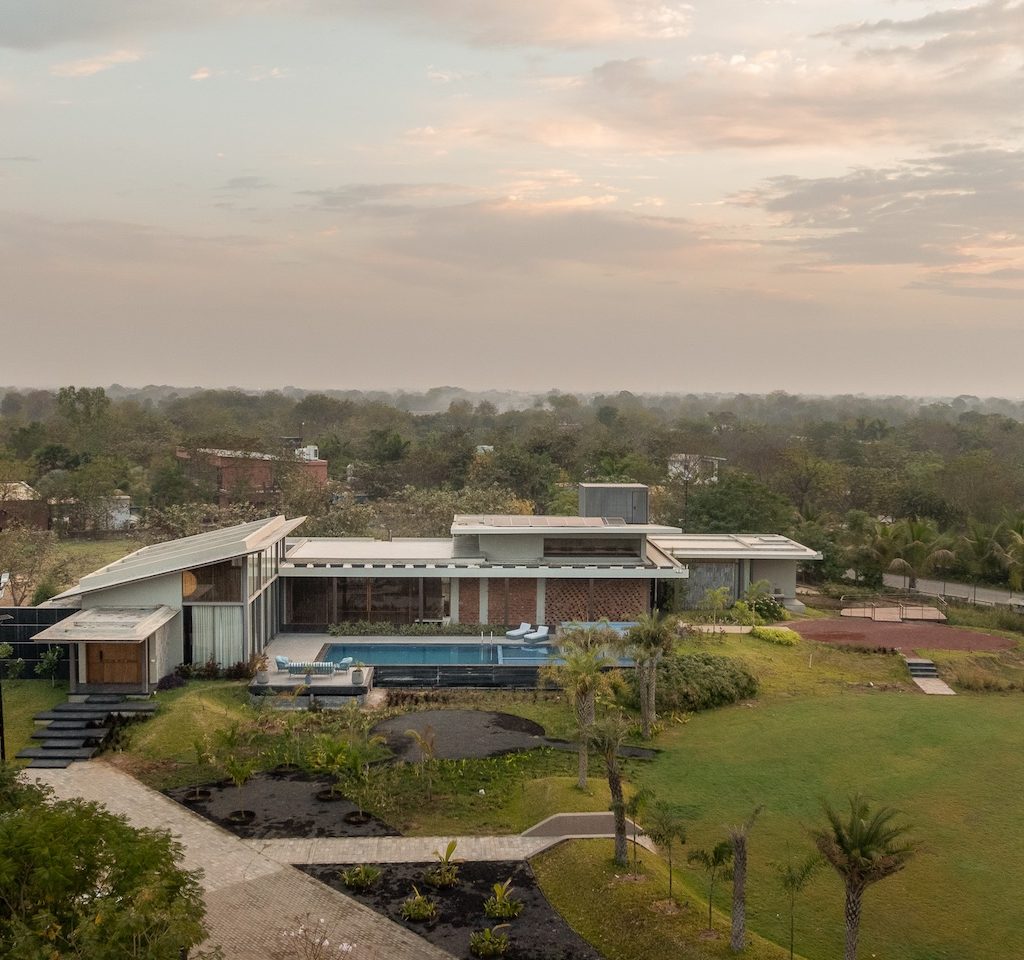
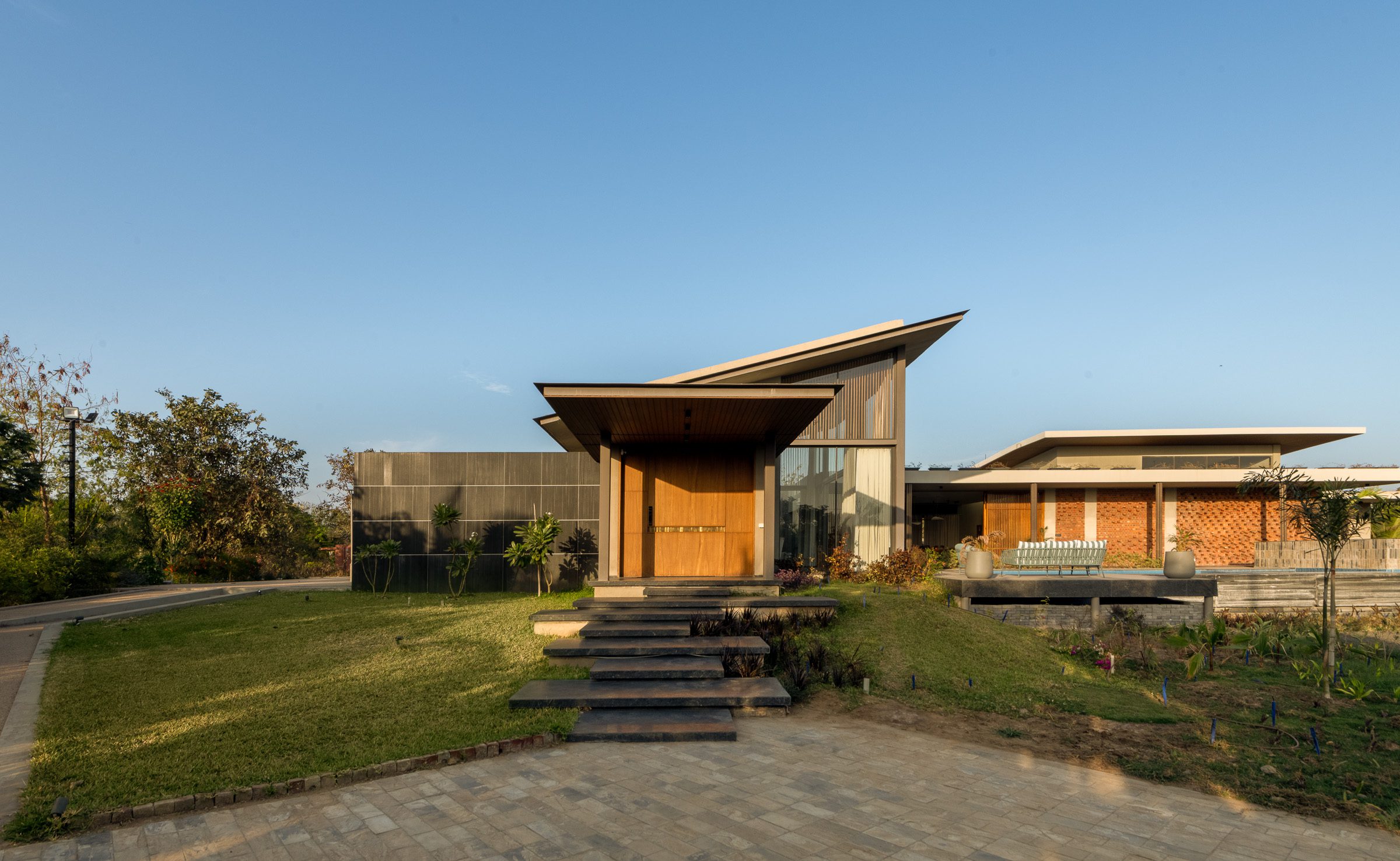
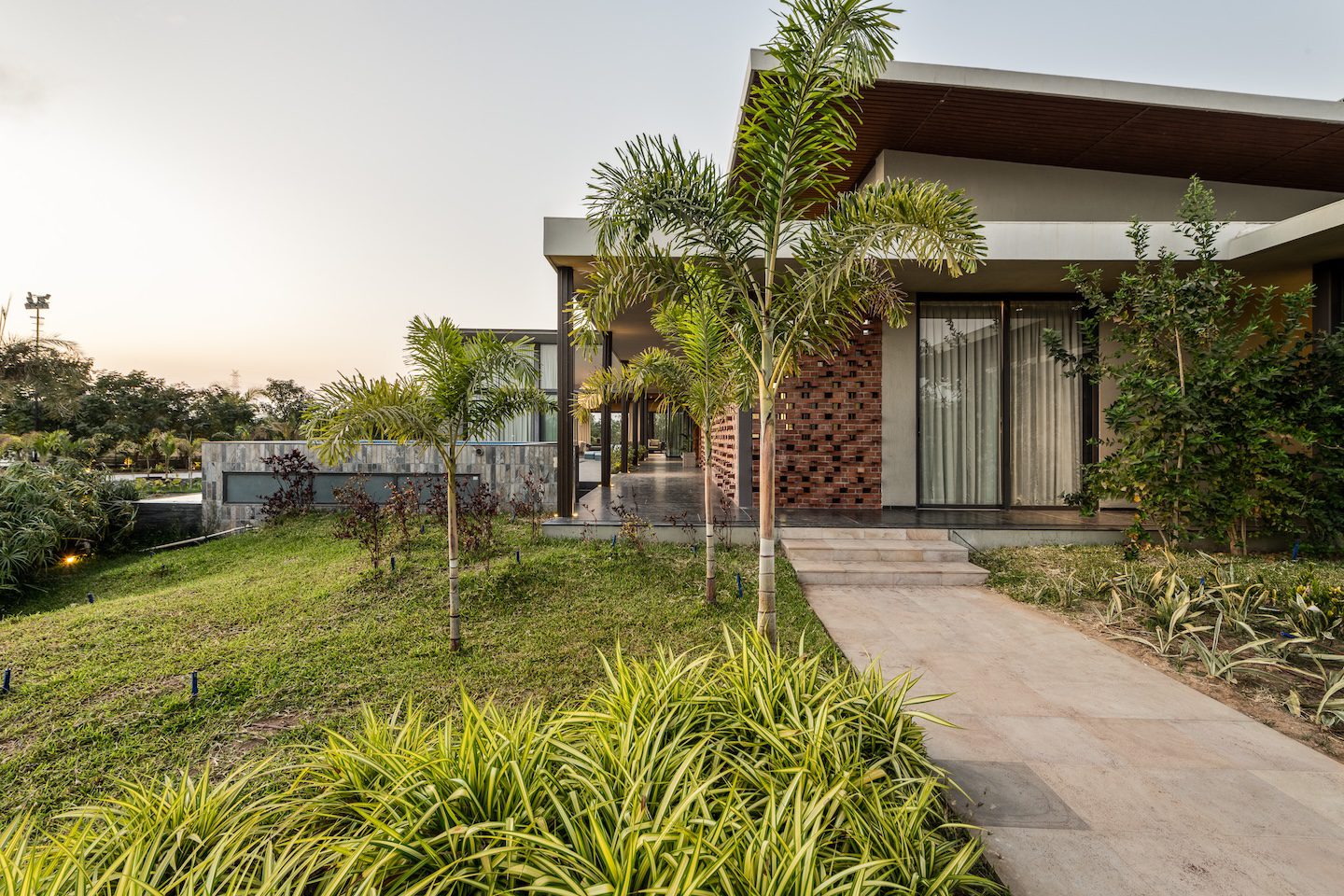
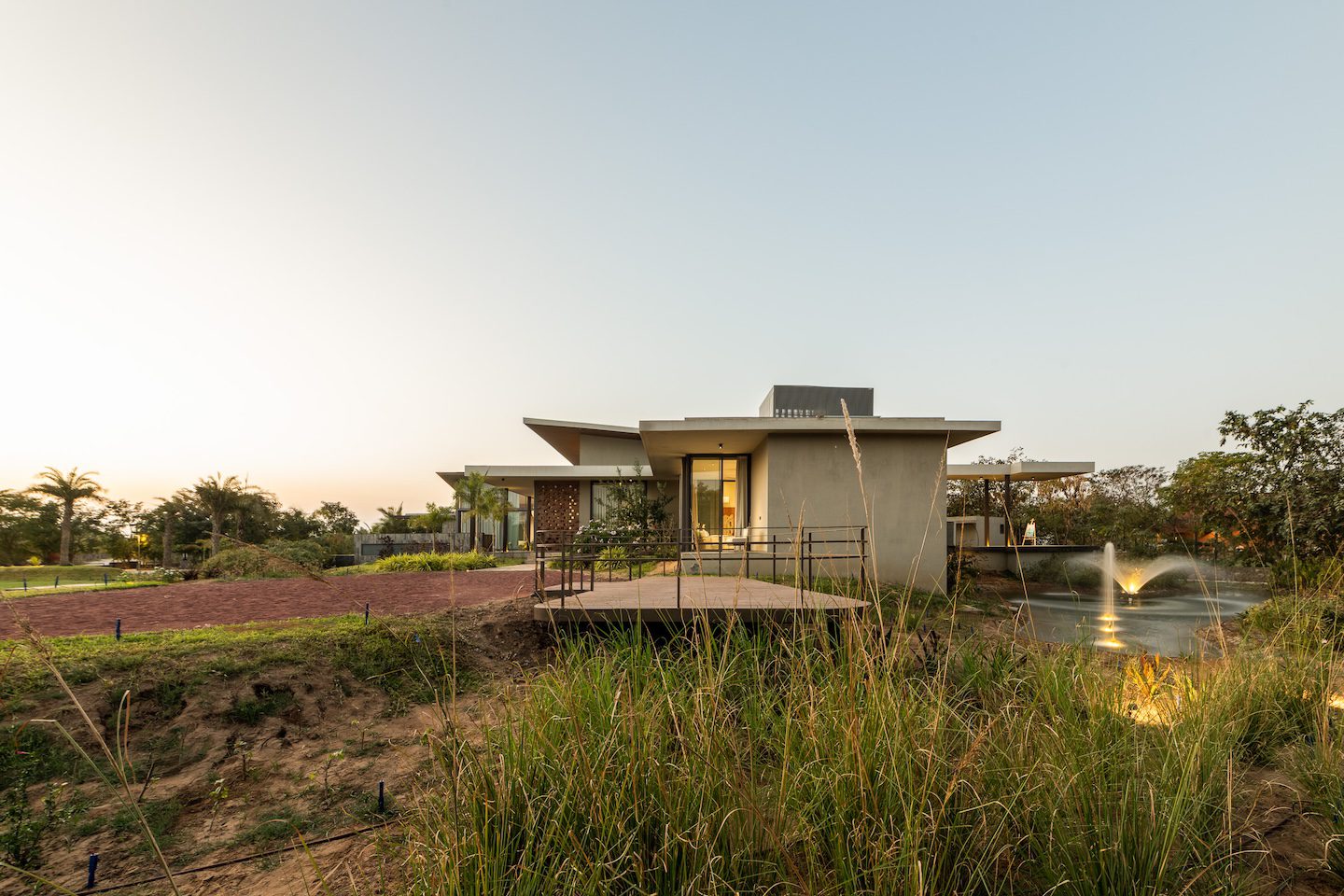
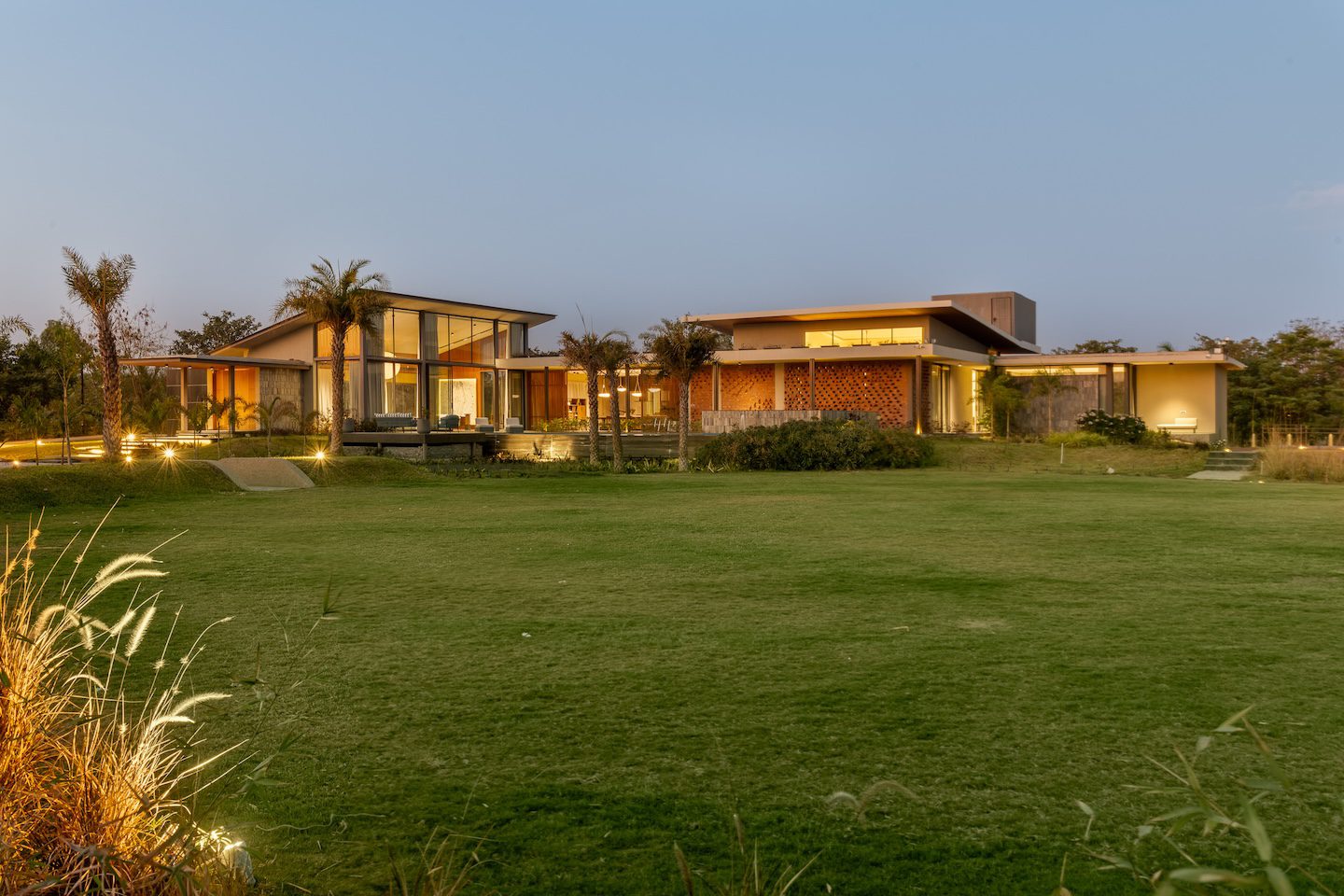
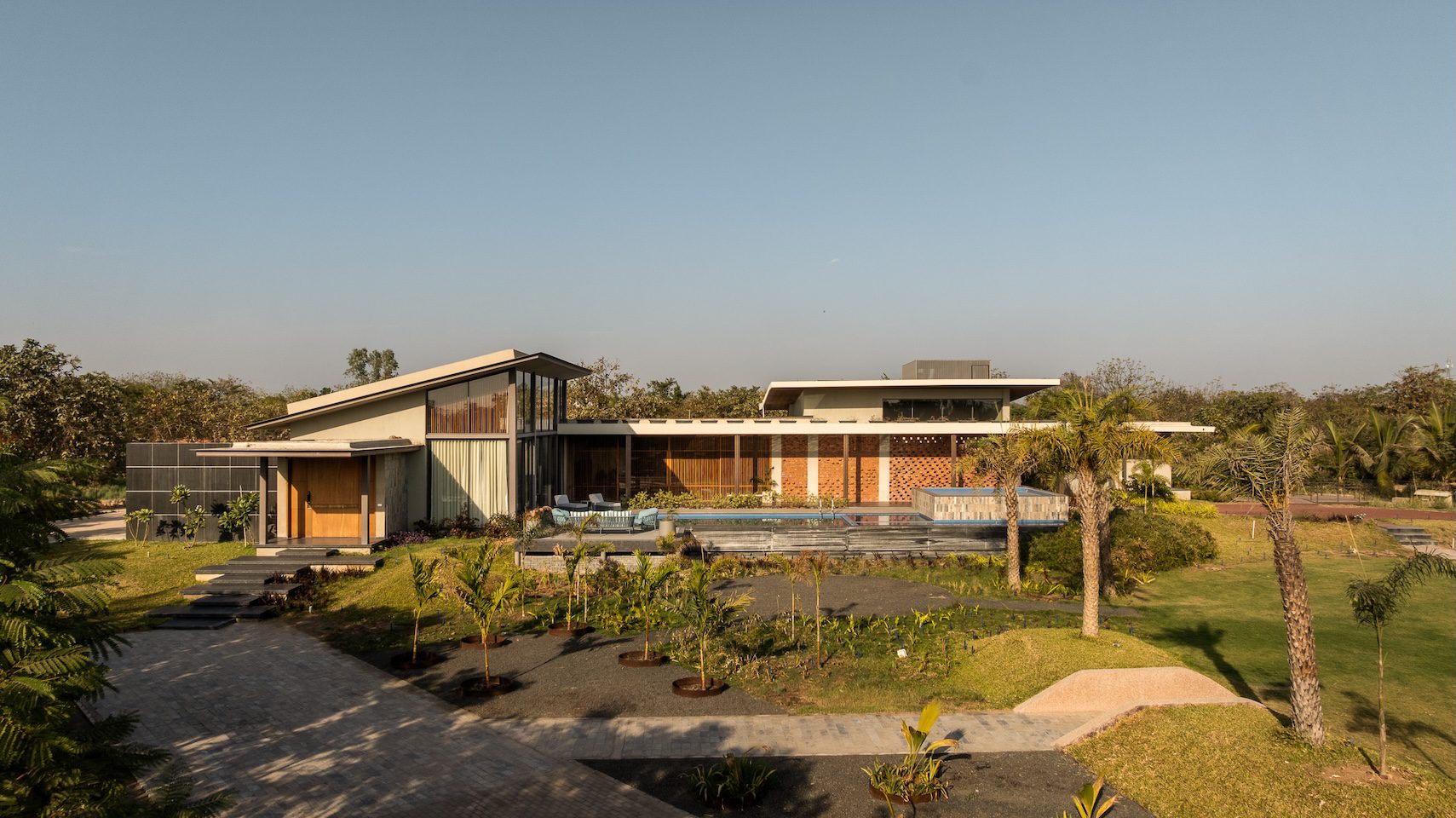
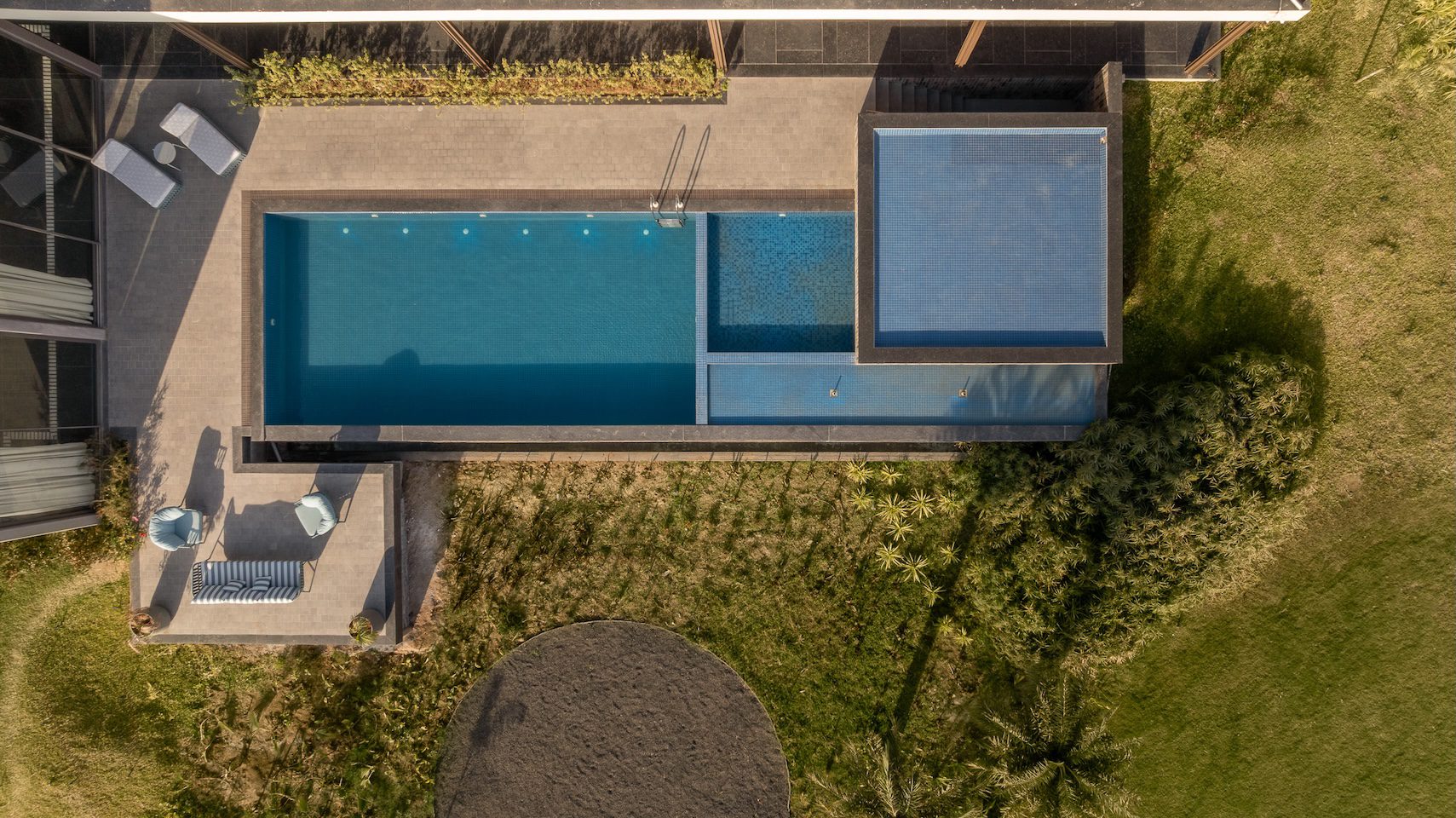
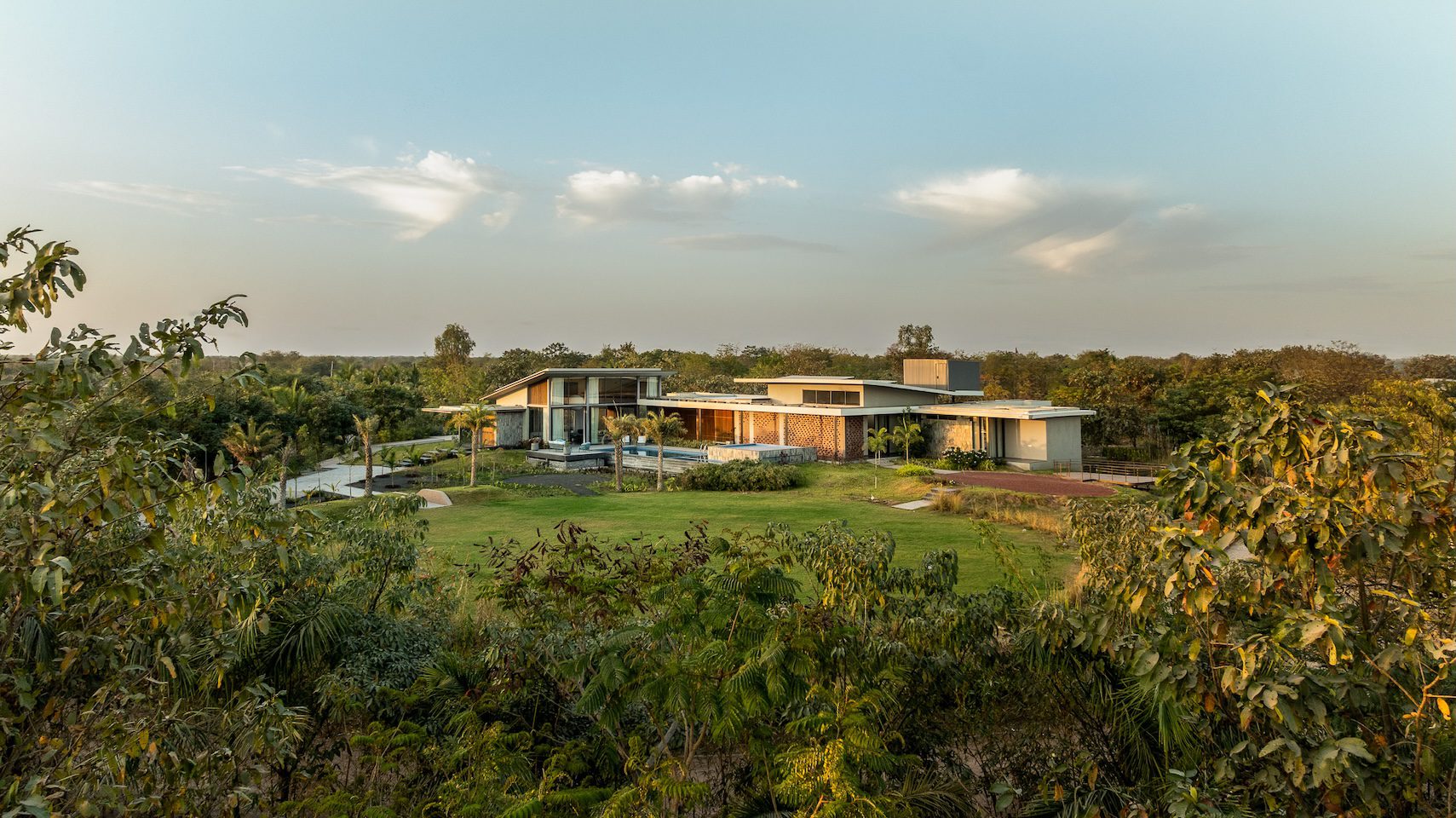
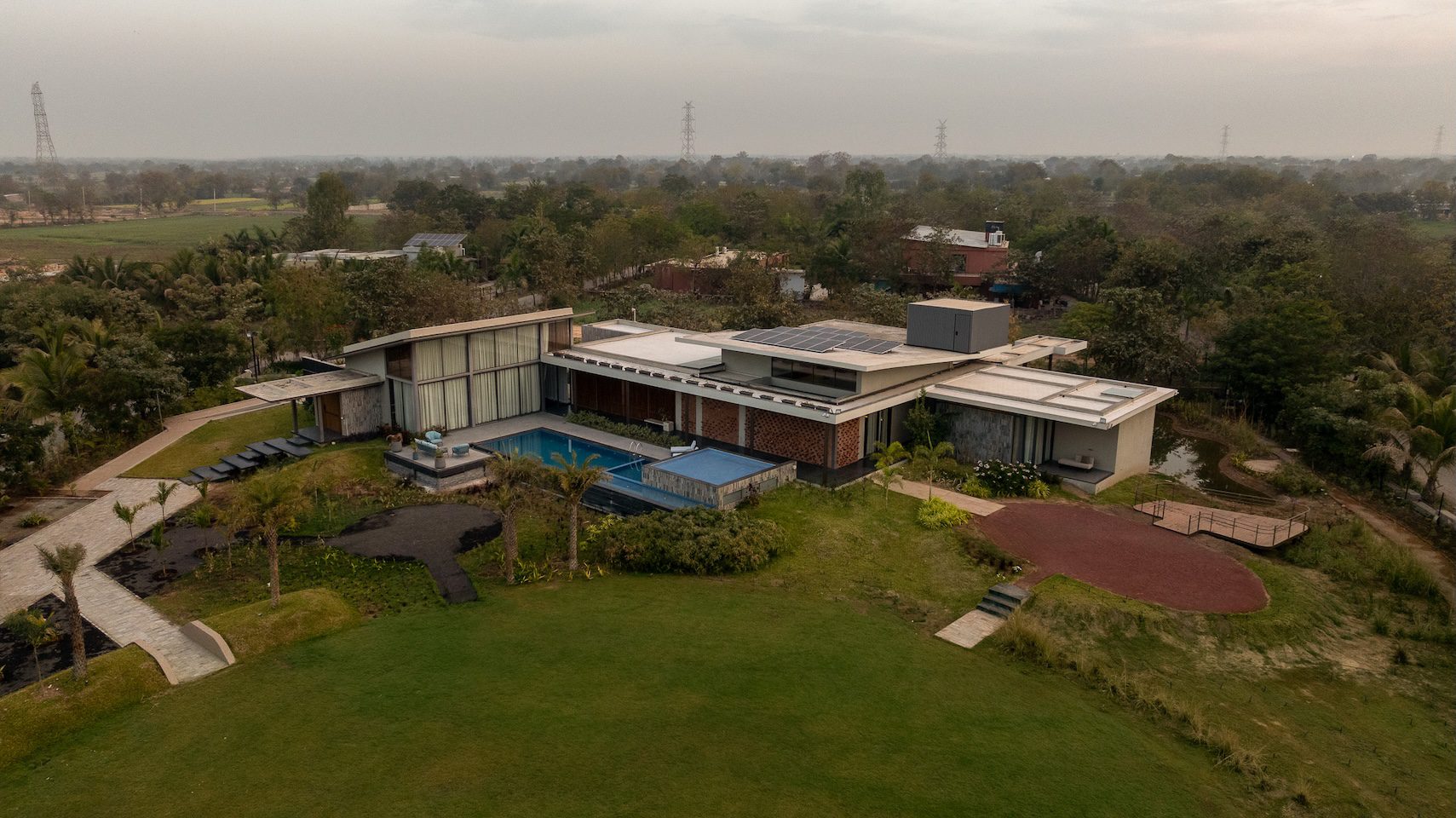
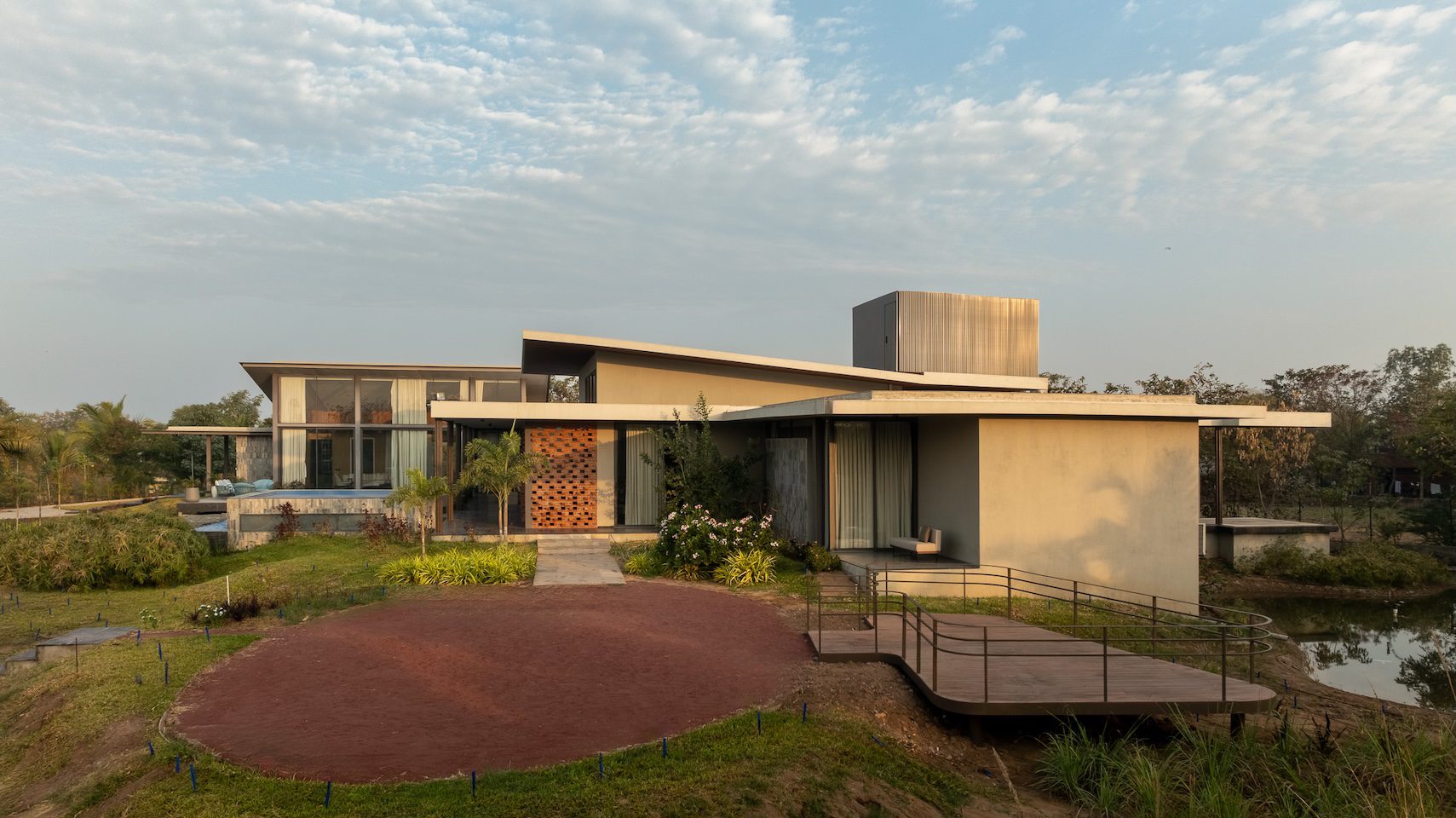
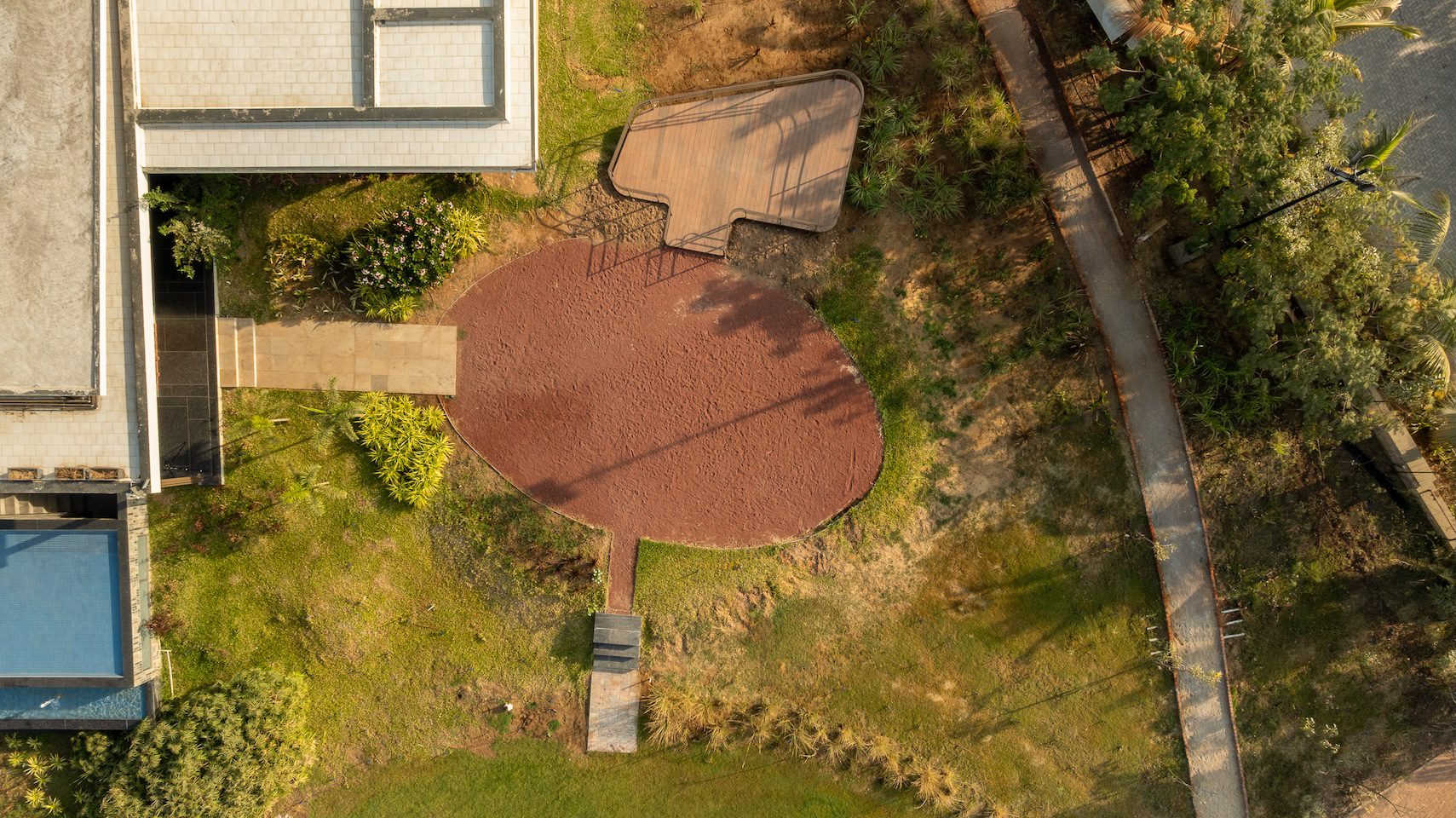
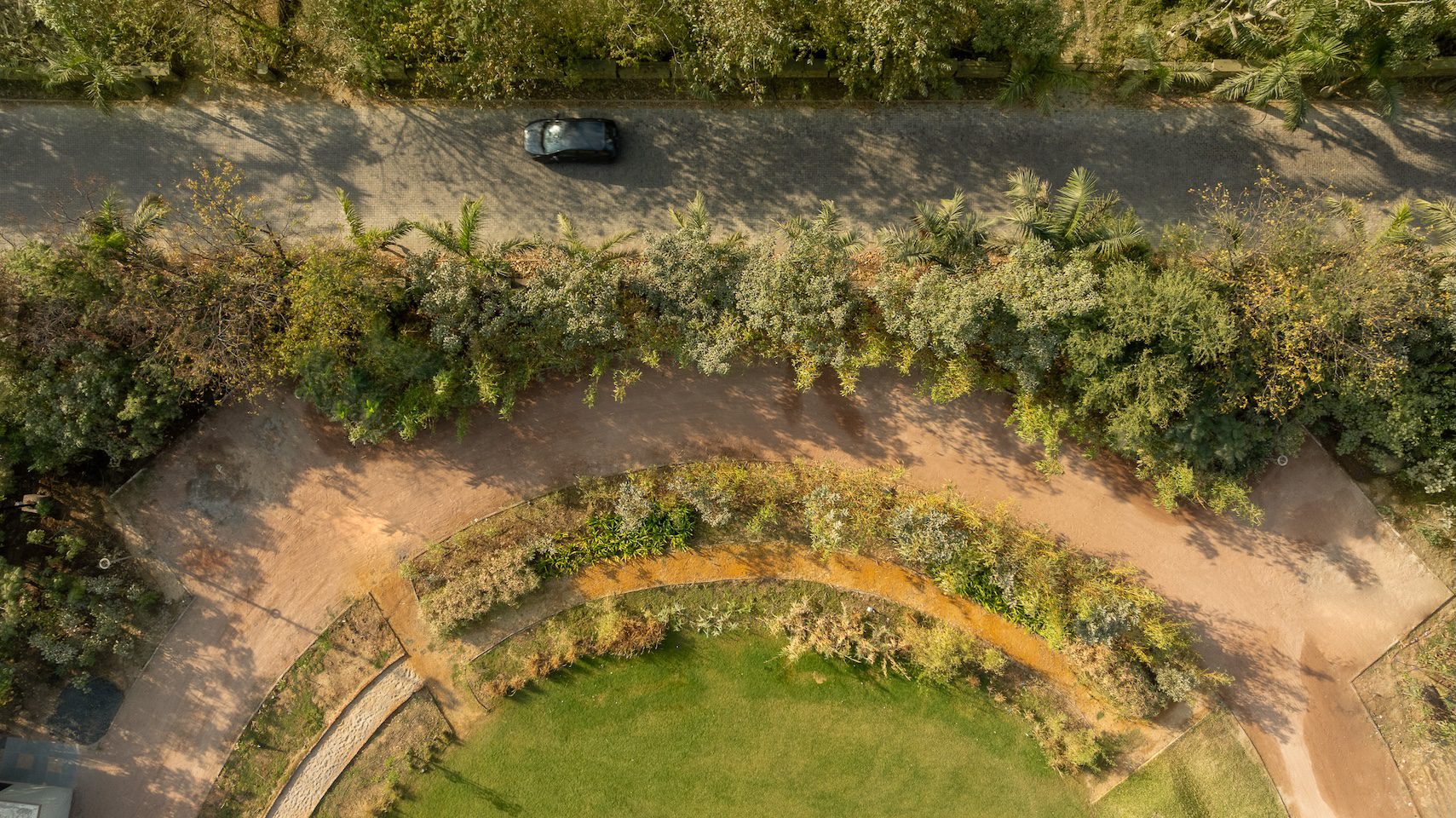
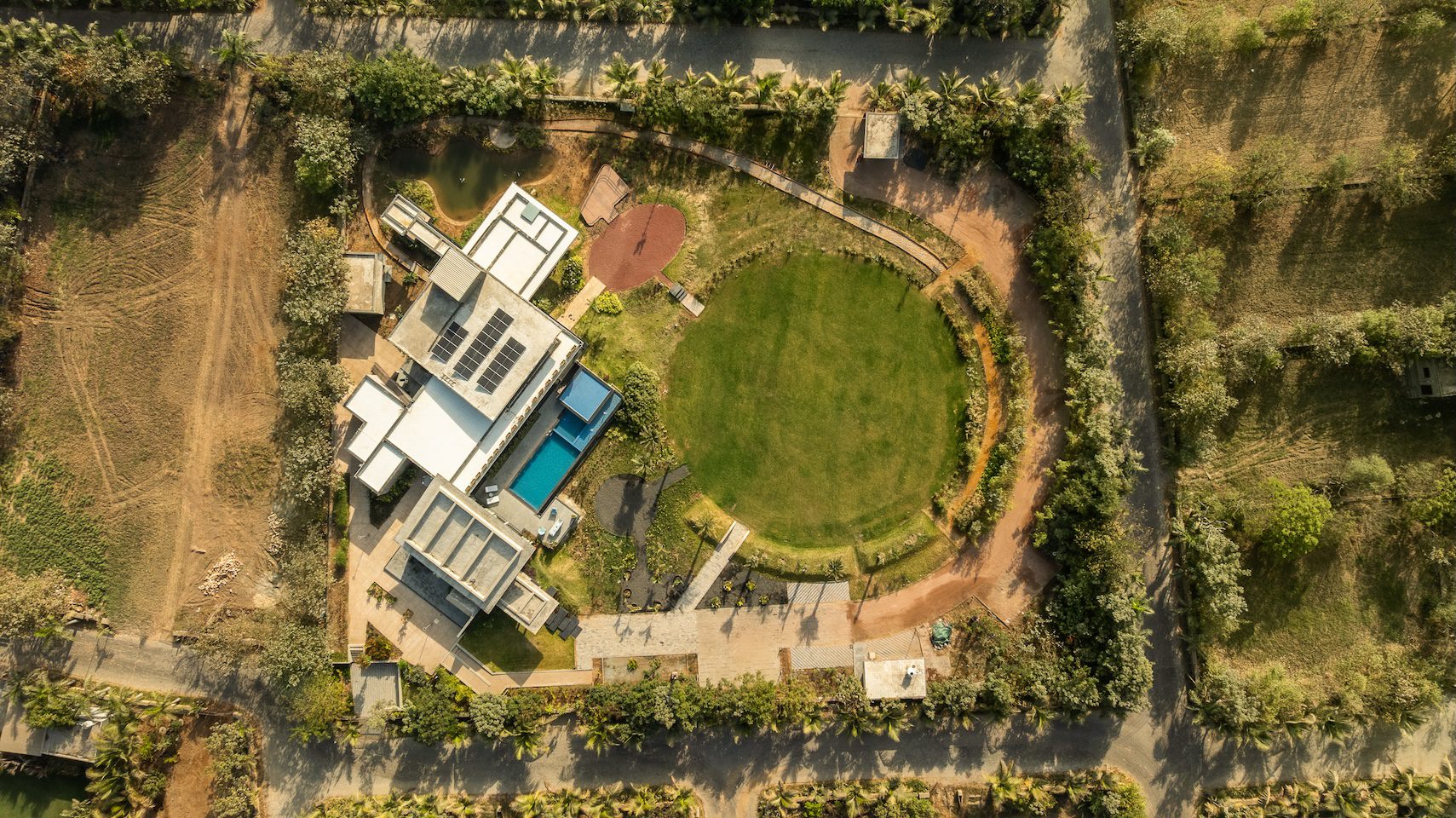
The house is located on a 9,000 sq yard plot on the outskirts of Ahmedabad, envisioned as a secluded green enclave. The approach is deliberately layered. A dense Miyawaki forest lines the entry, creating a slow transition from the city into a quieter, more contained environment. At the centre of the site, a circular lawn acts as an organising device, around which the built volumes and landscape elements are arranged.
The brief
The brief called for a tranquil weekend retreat that could accommodate both solitude and social interaction. The clients envisioned open, flowing spaces for gathering alongside quieter, more introspective zones. The aesthetic direction leaned toward a tropical, minimal environment that remains closely tied to nature.
The design intent
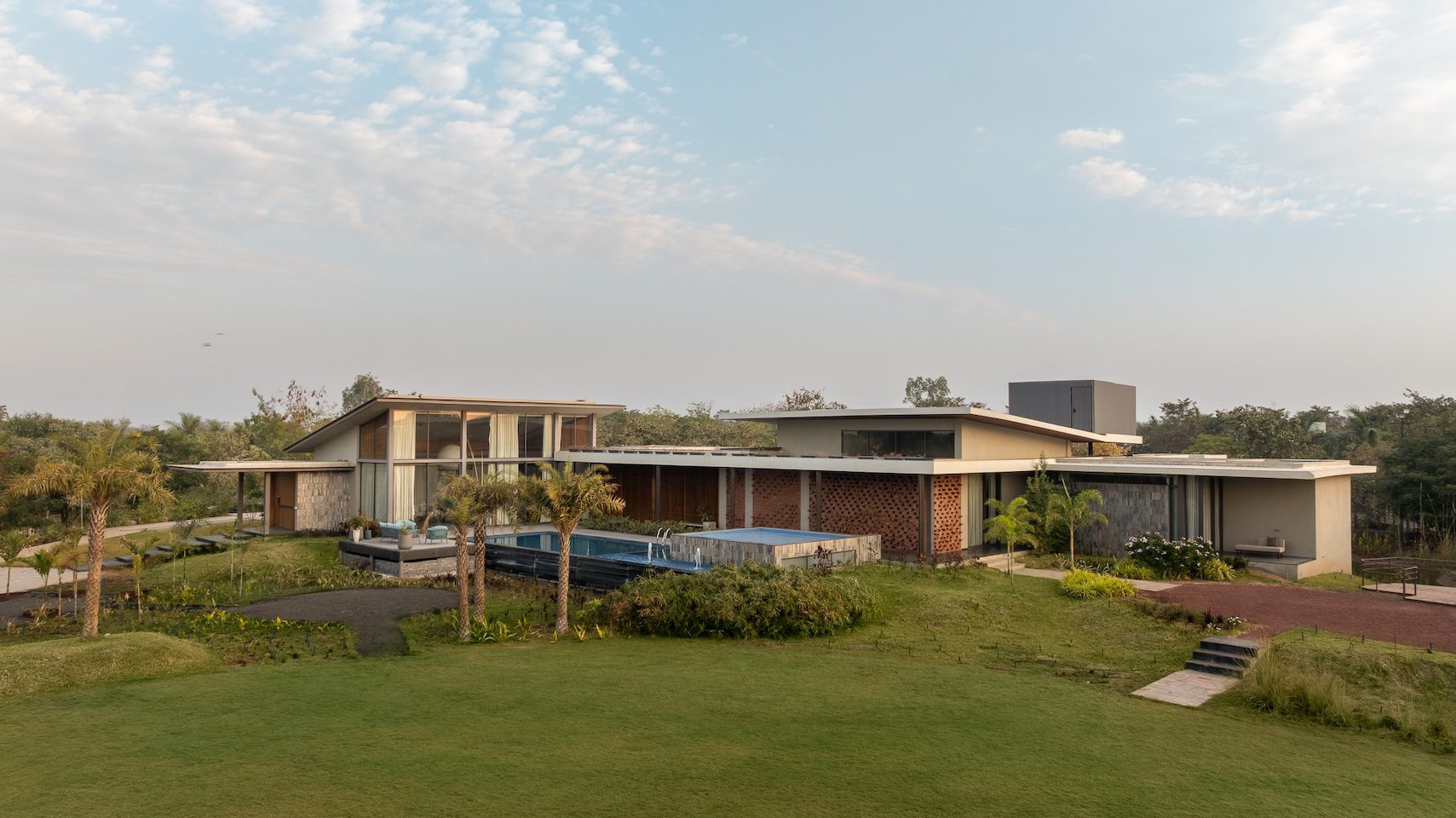
The design explores tropical modernism through climate responsiveness and material restraint. Instead of treating architecture and landscape as separate, the project brings them into continuous dialogue. Openings, courtyards and transitional spaces are used to frame views, modulate light and create a shifting relationship between interior and exterior. As the architects note, the aim was to create “a seamless dialogue between built and unbuilt, where light, shadow and nature shape the experience of space.”
The civil intervention
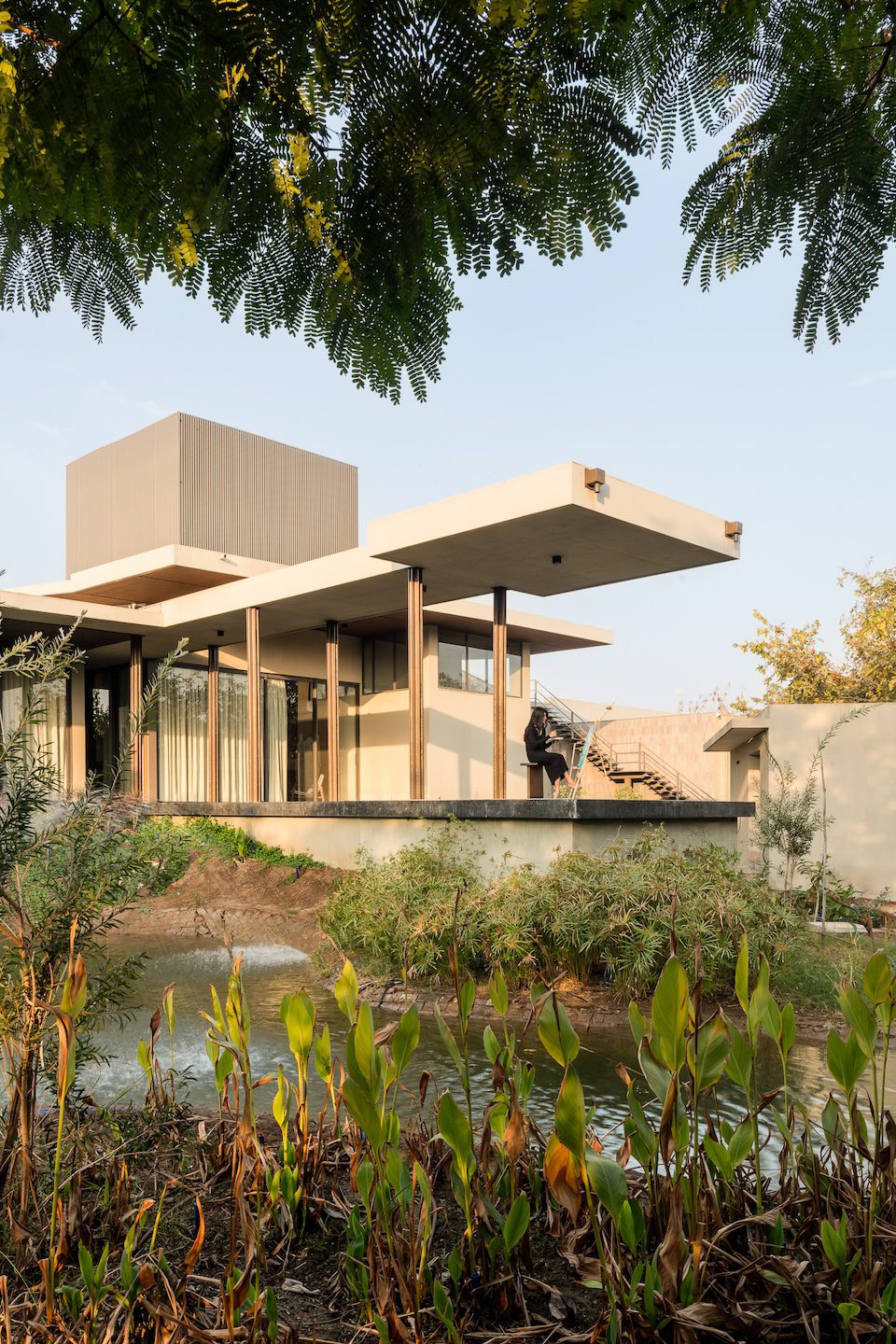
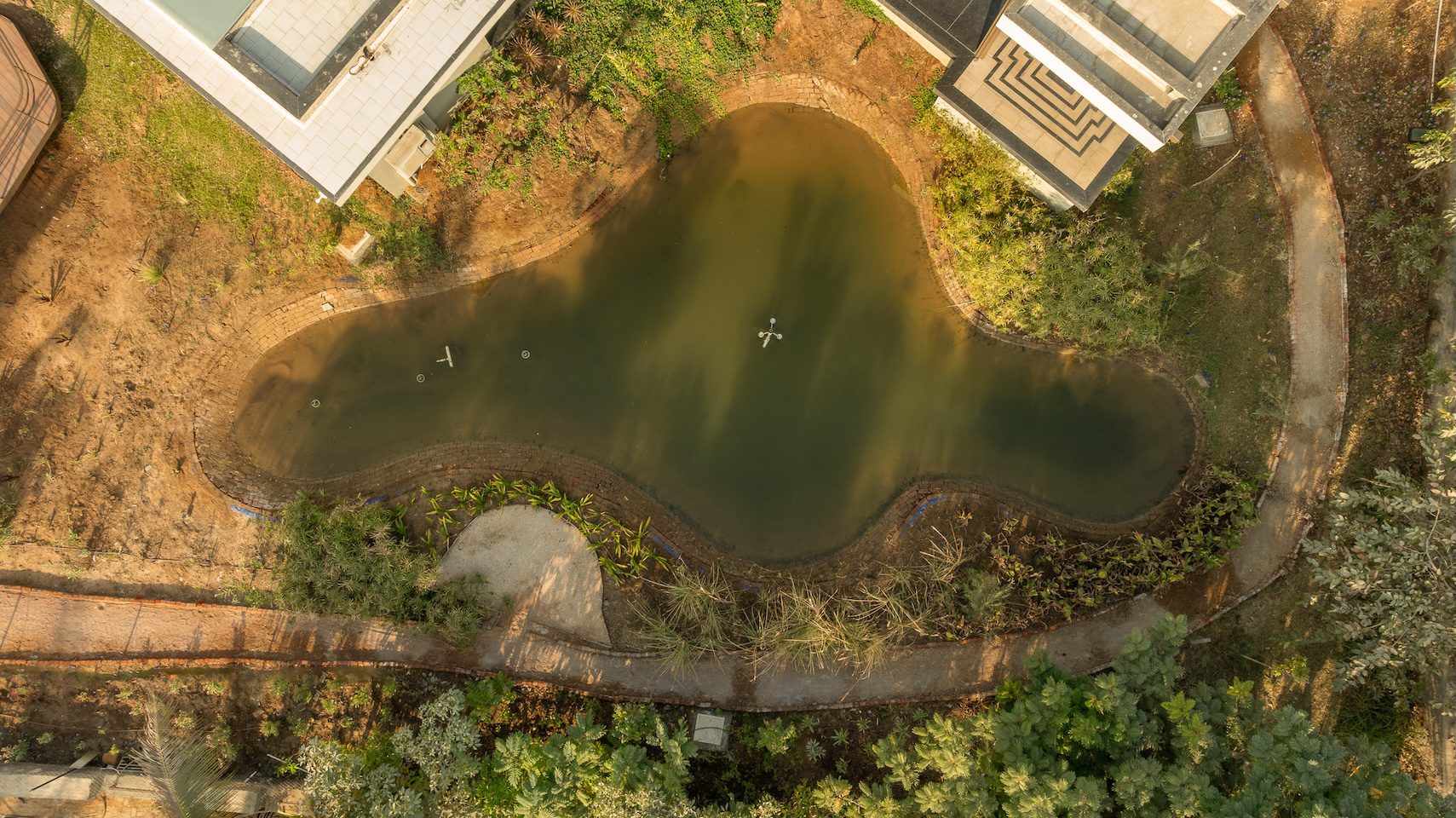
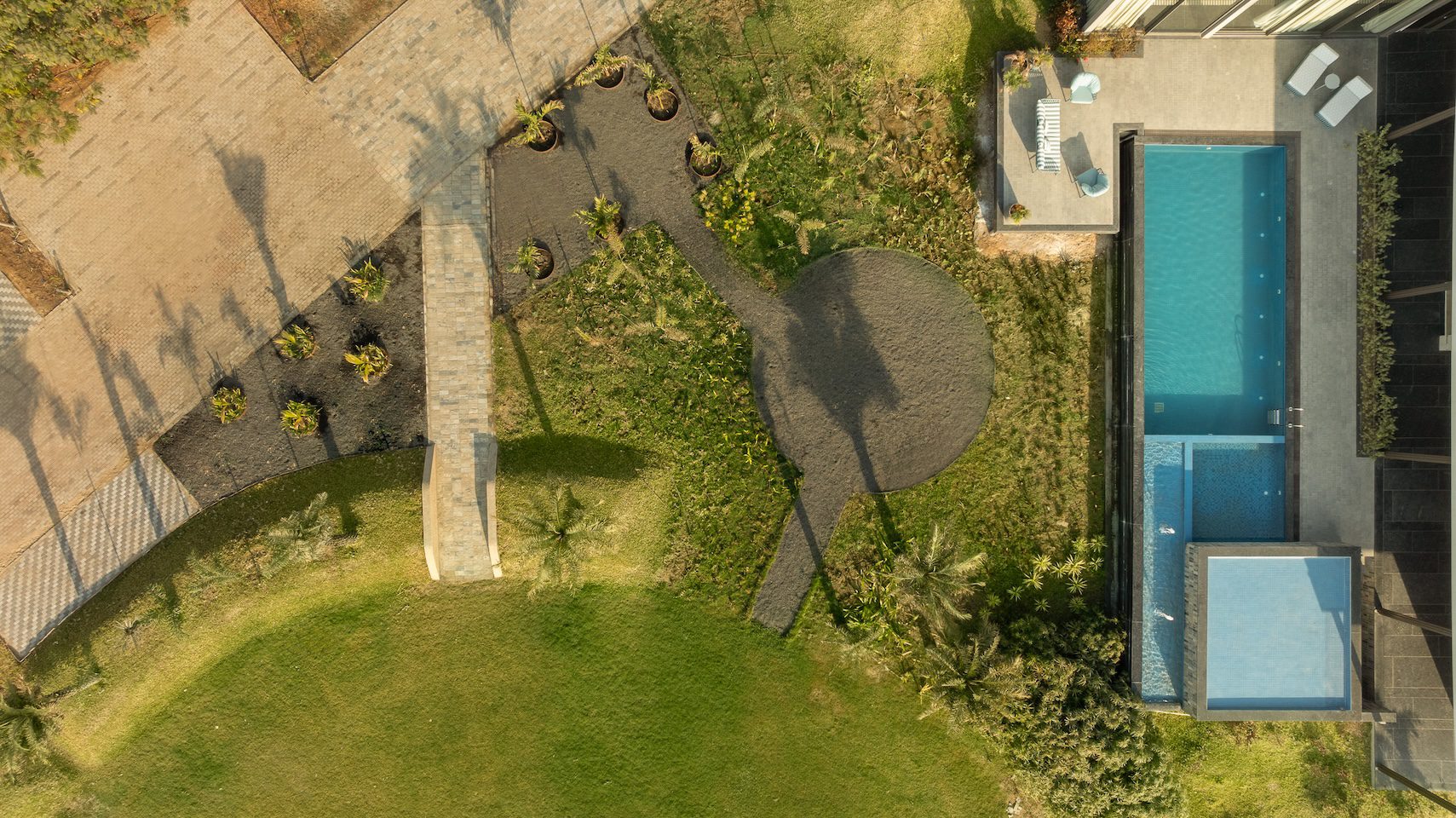
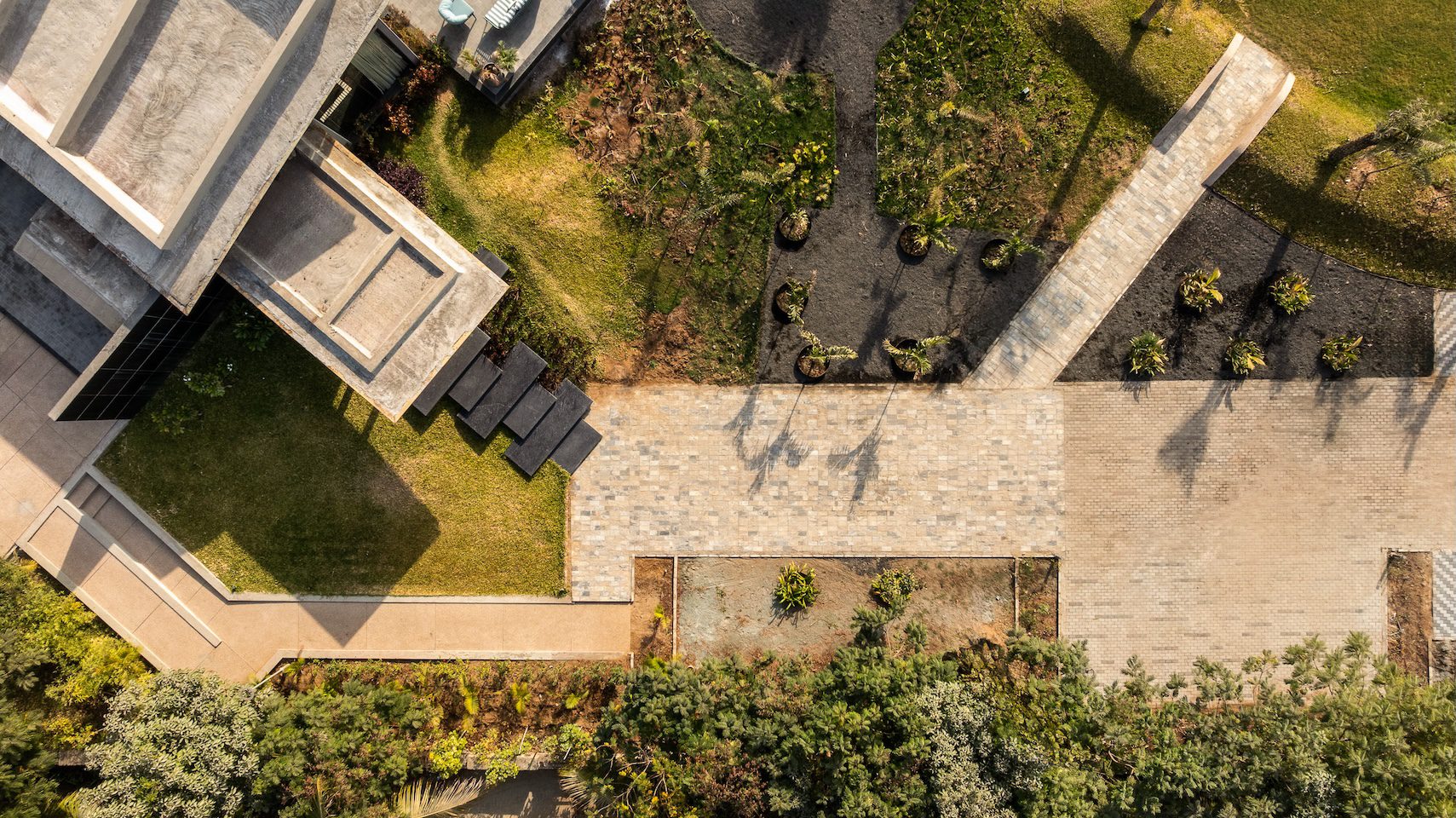
The project involved developing the site from the ground up, including both built structures and landscape systems. Water bodies, stepped terrain and planted zones were introduced as integral components of the spatial strategy, ensuring that the architecture responds directly to its setting rather than sitting apart from it.
The spatial flow
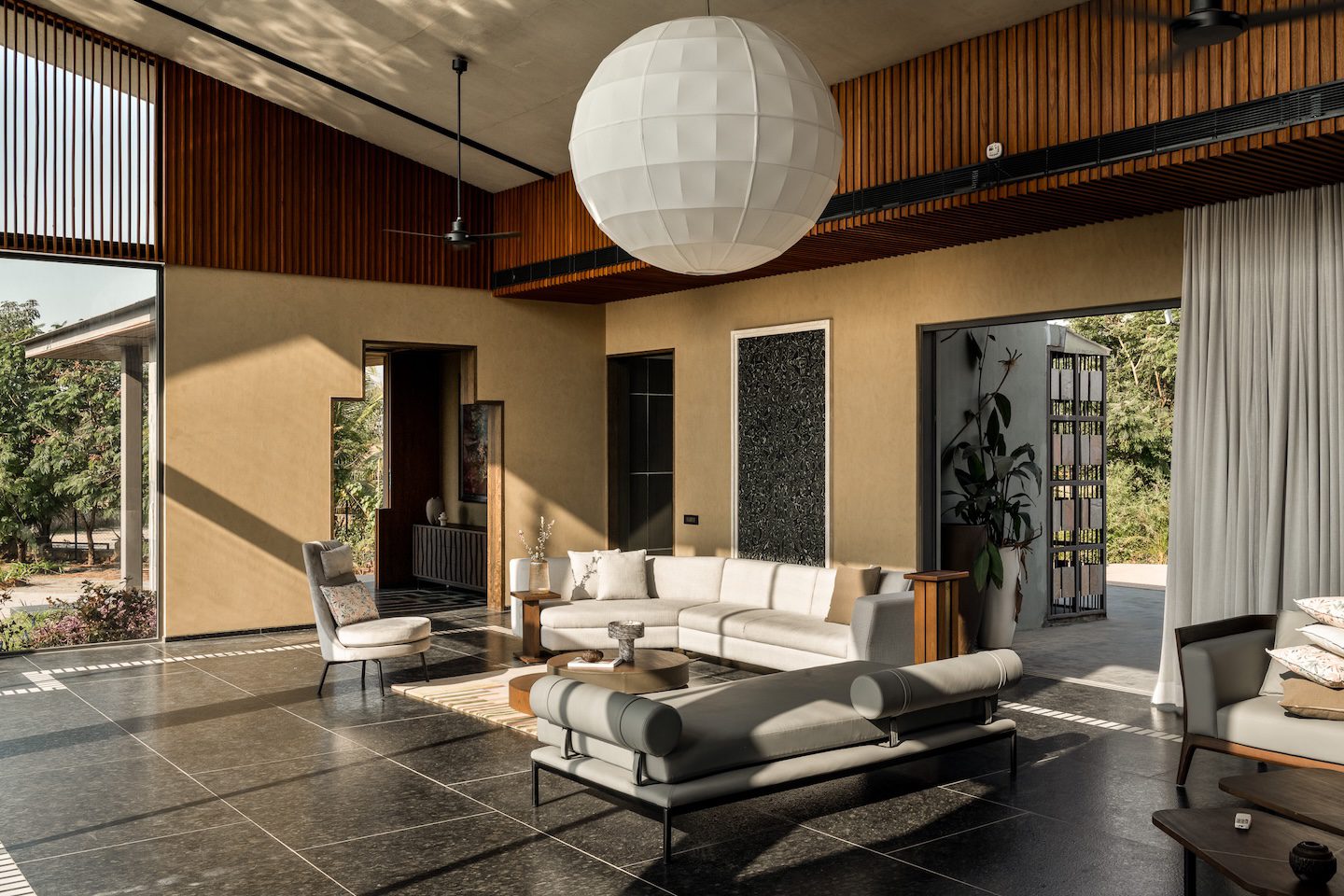
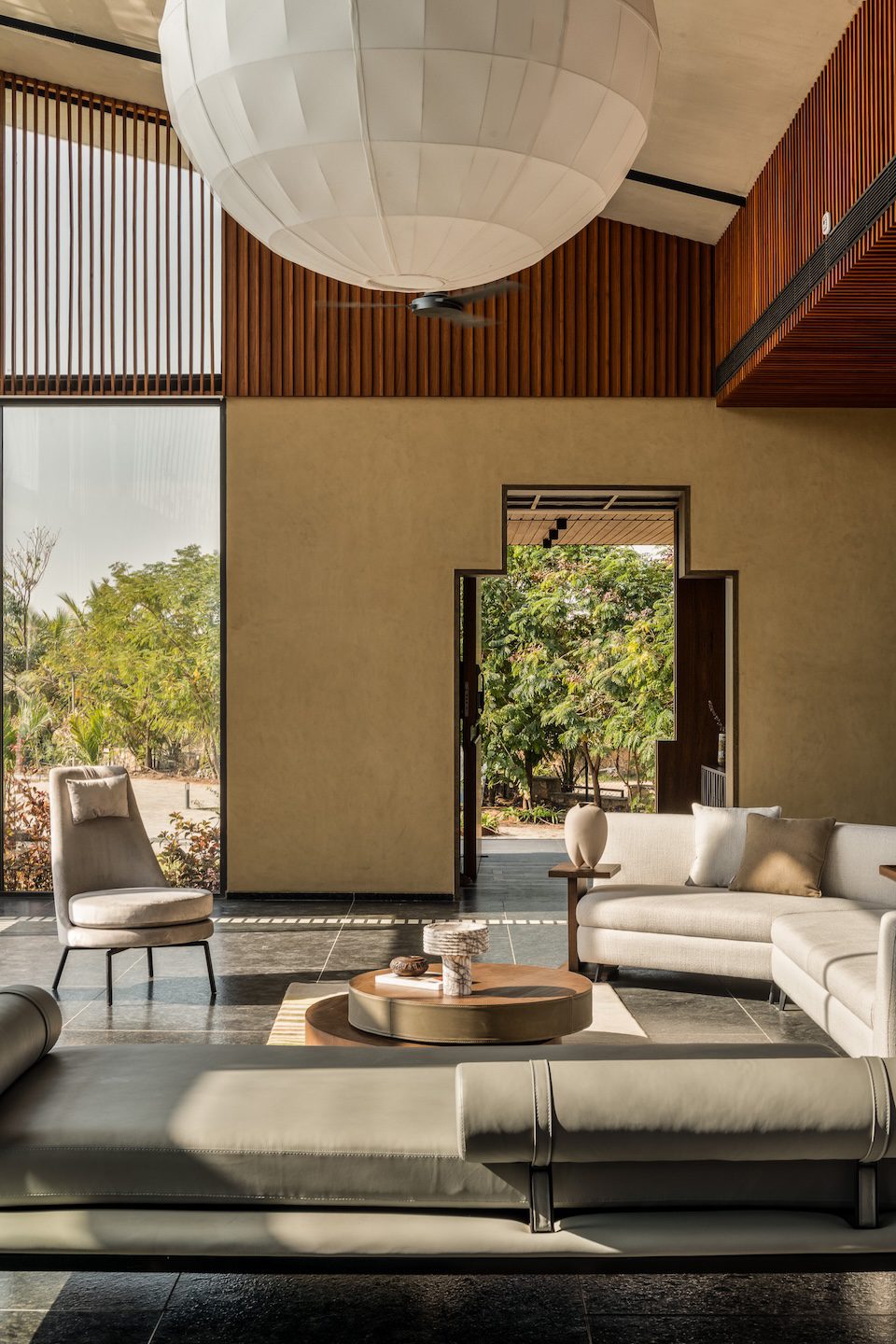
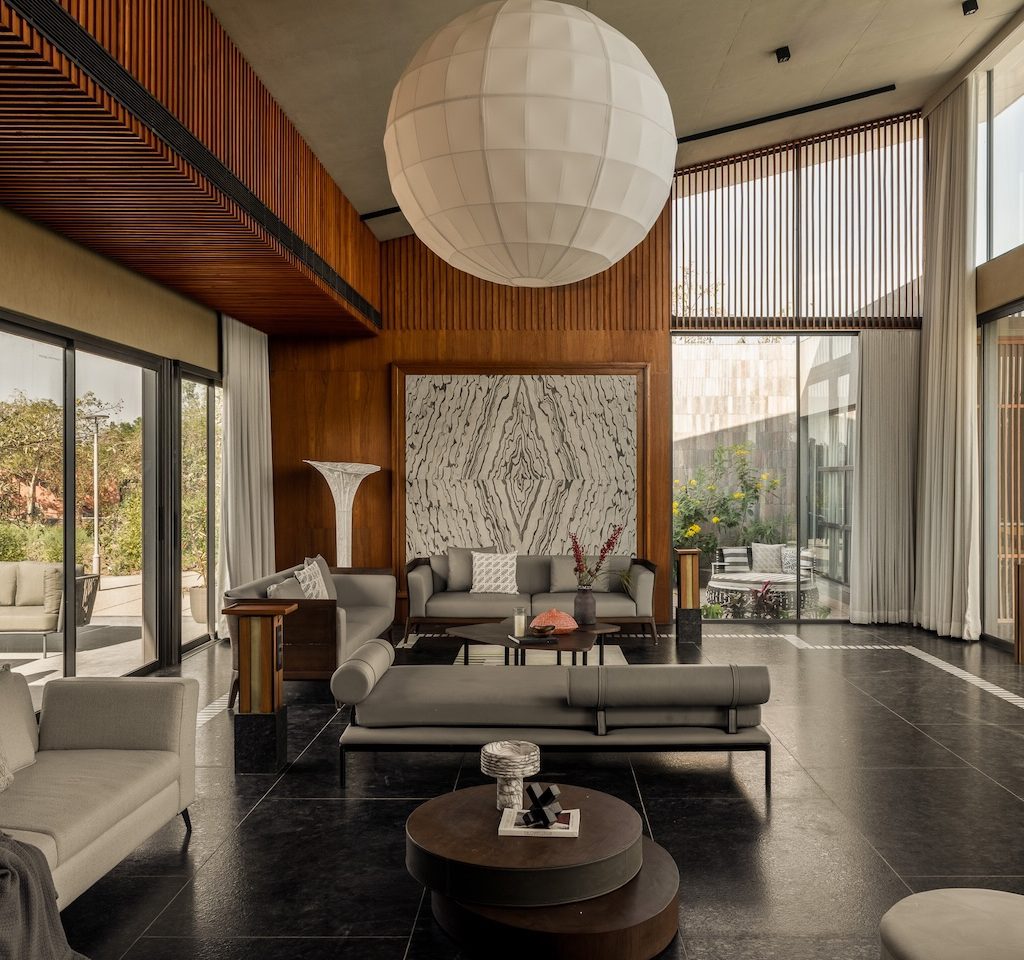
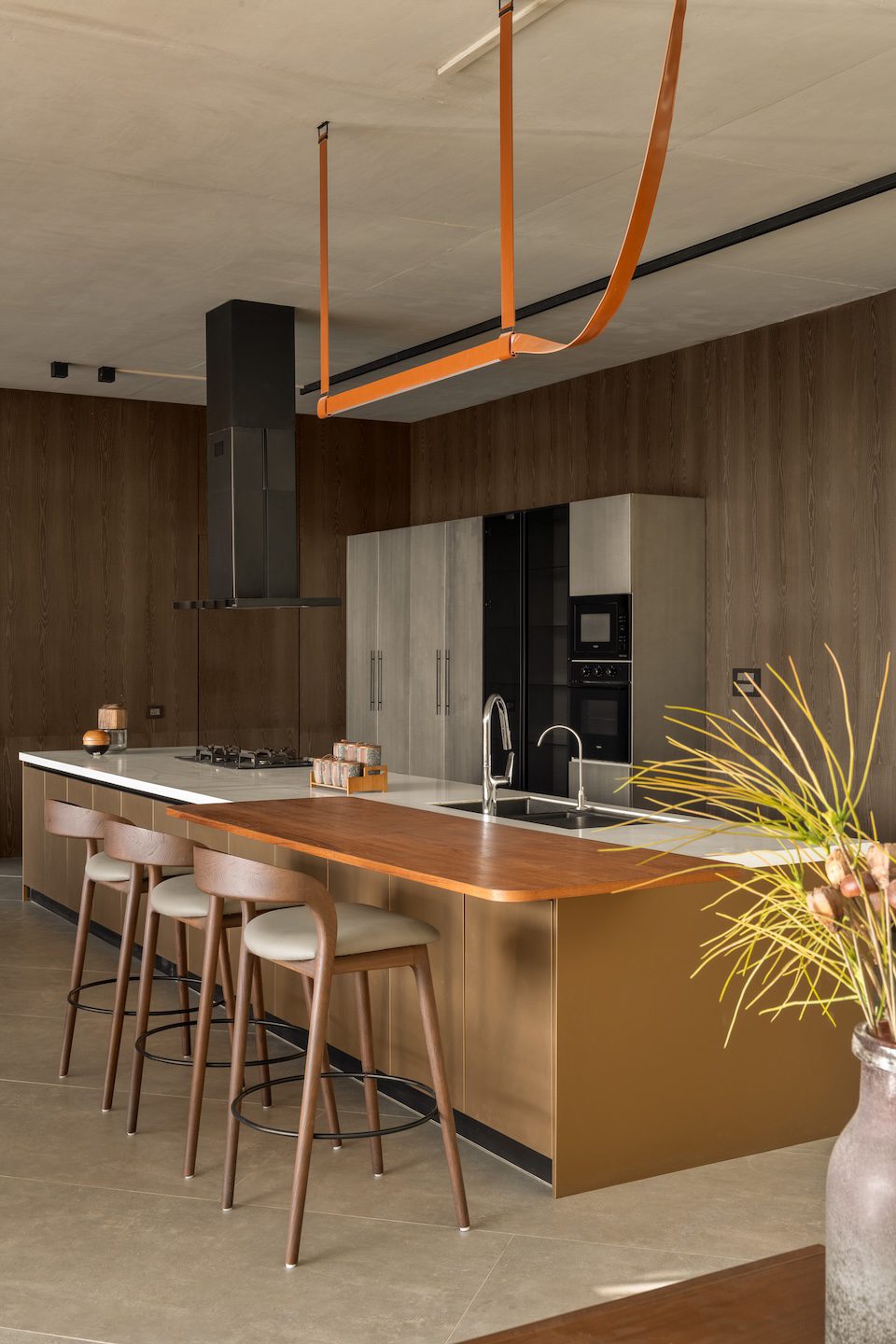
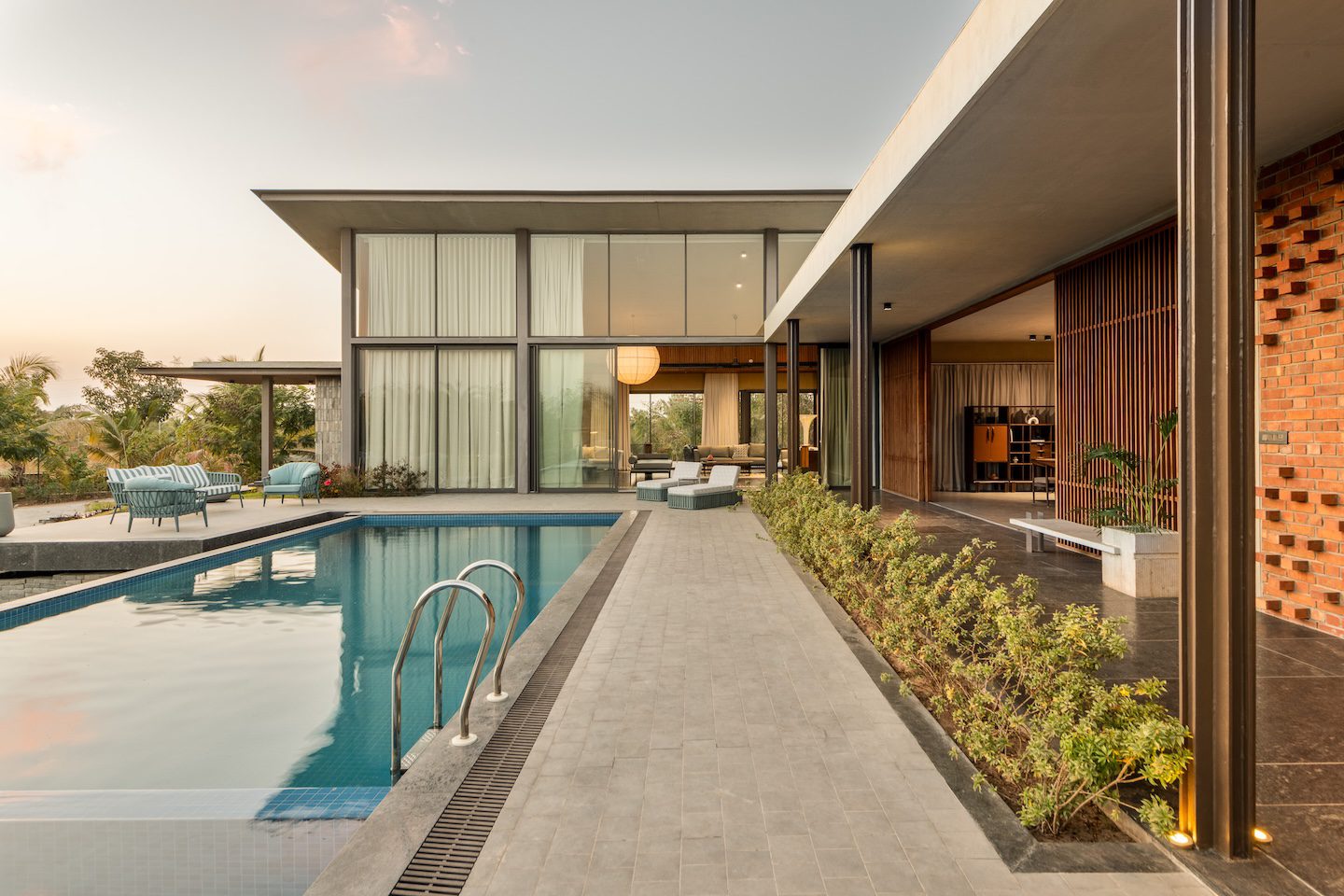
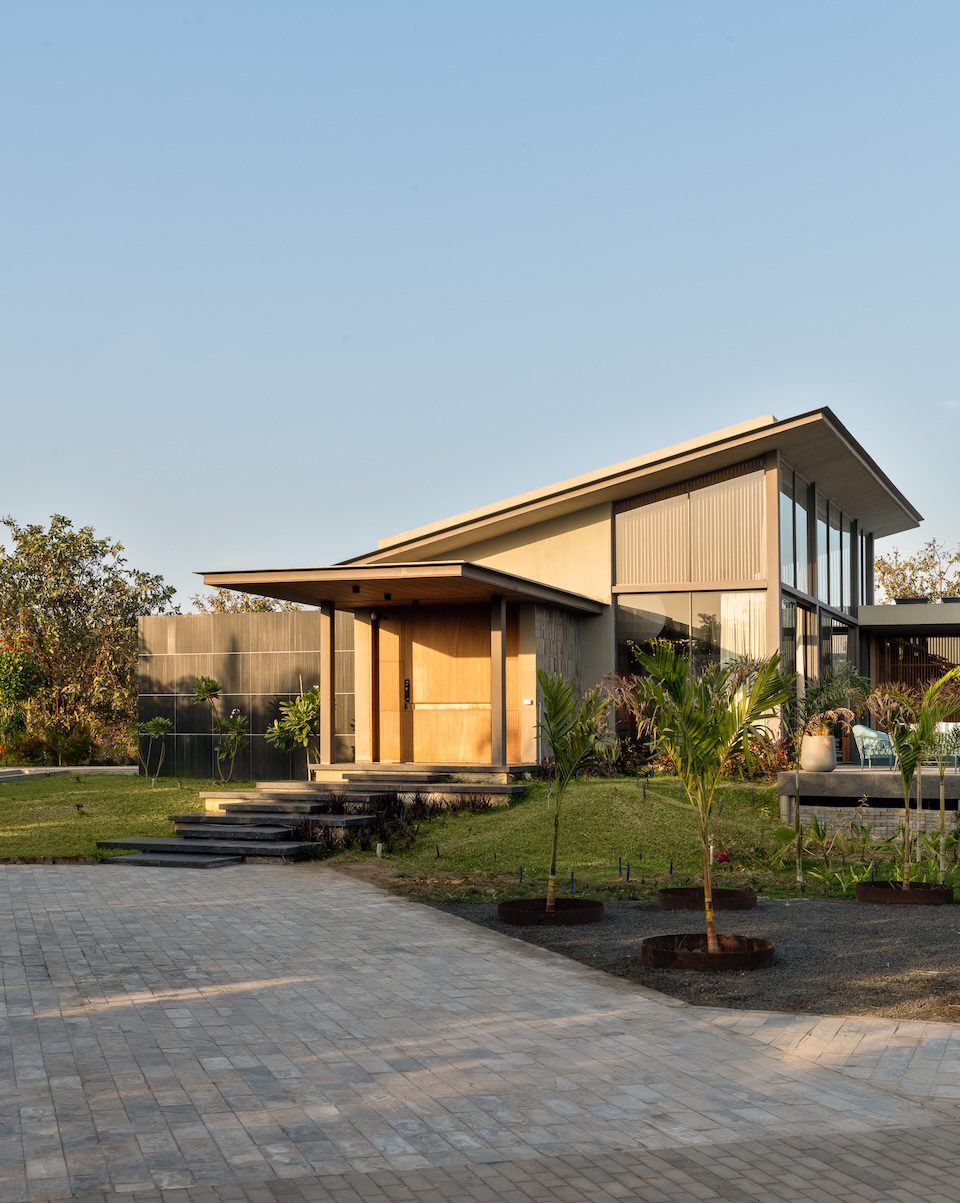
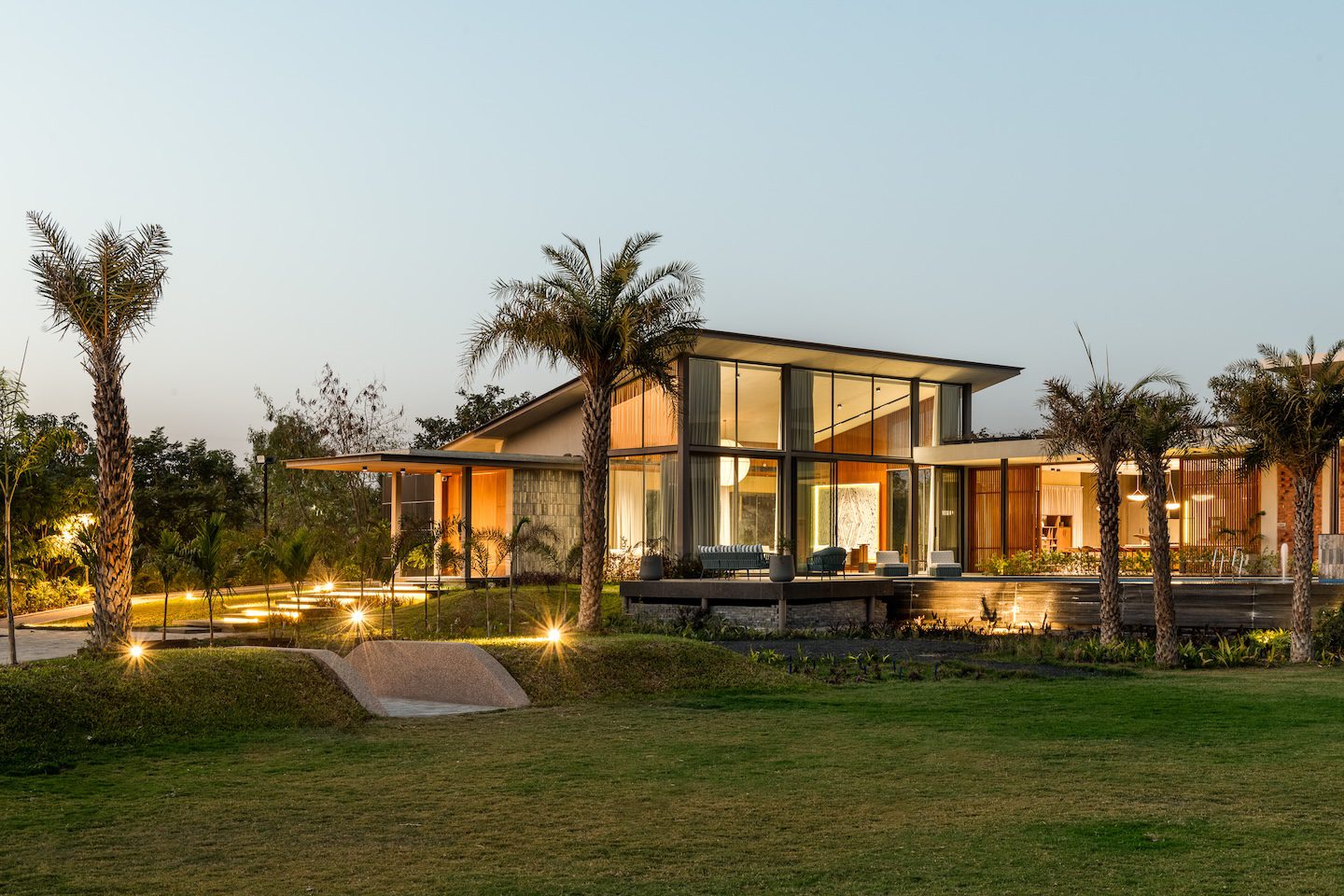
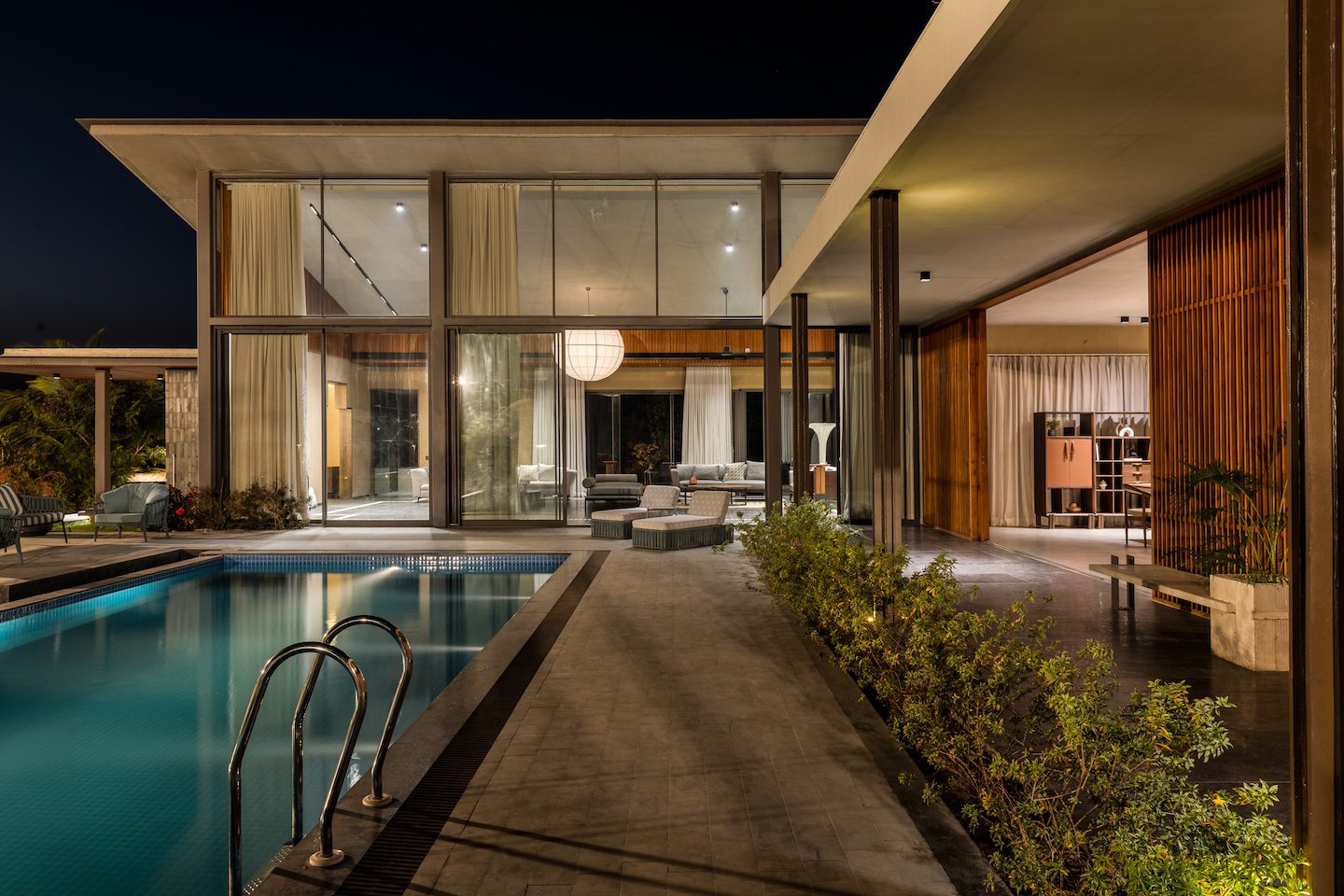
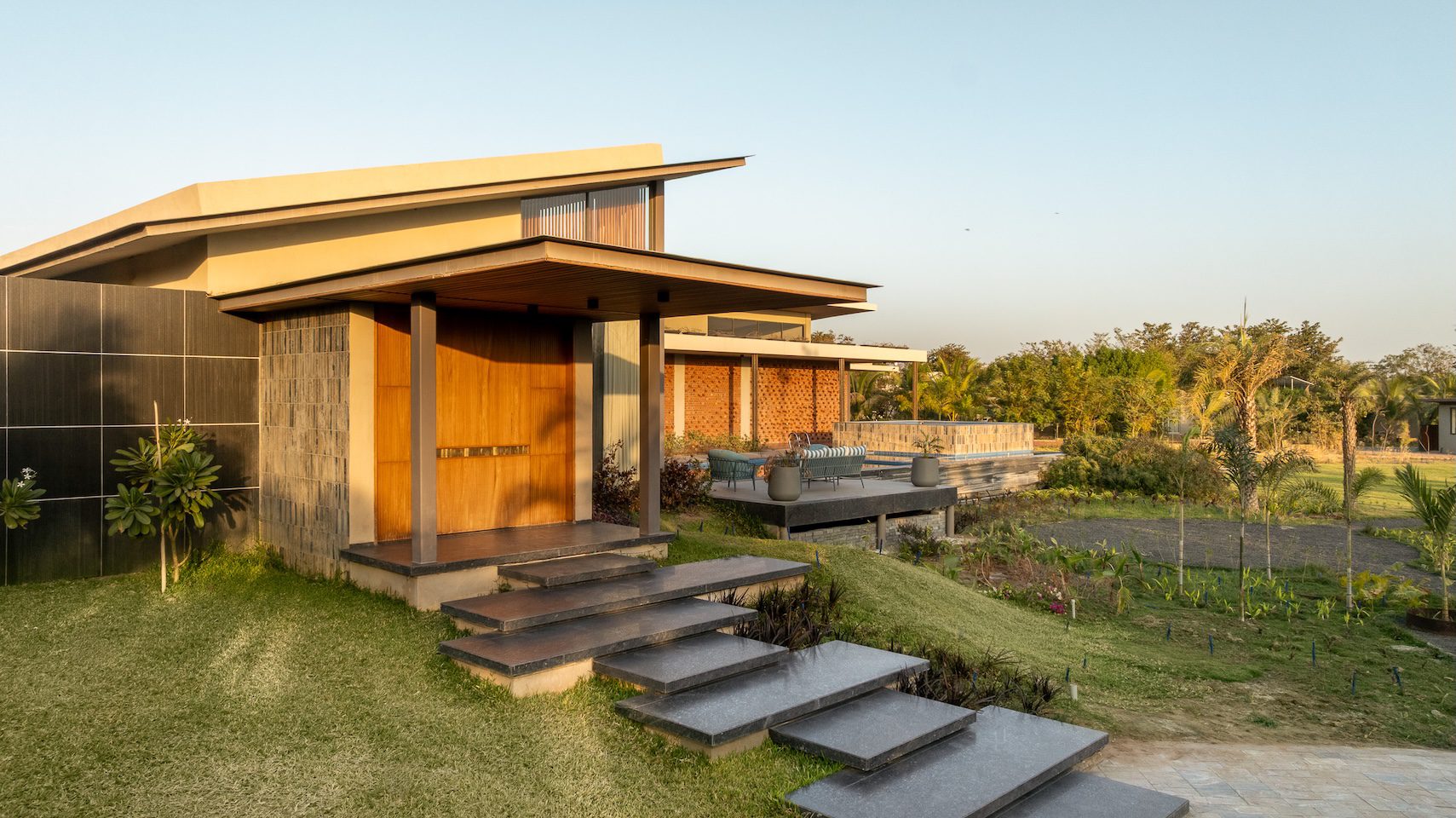
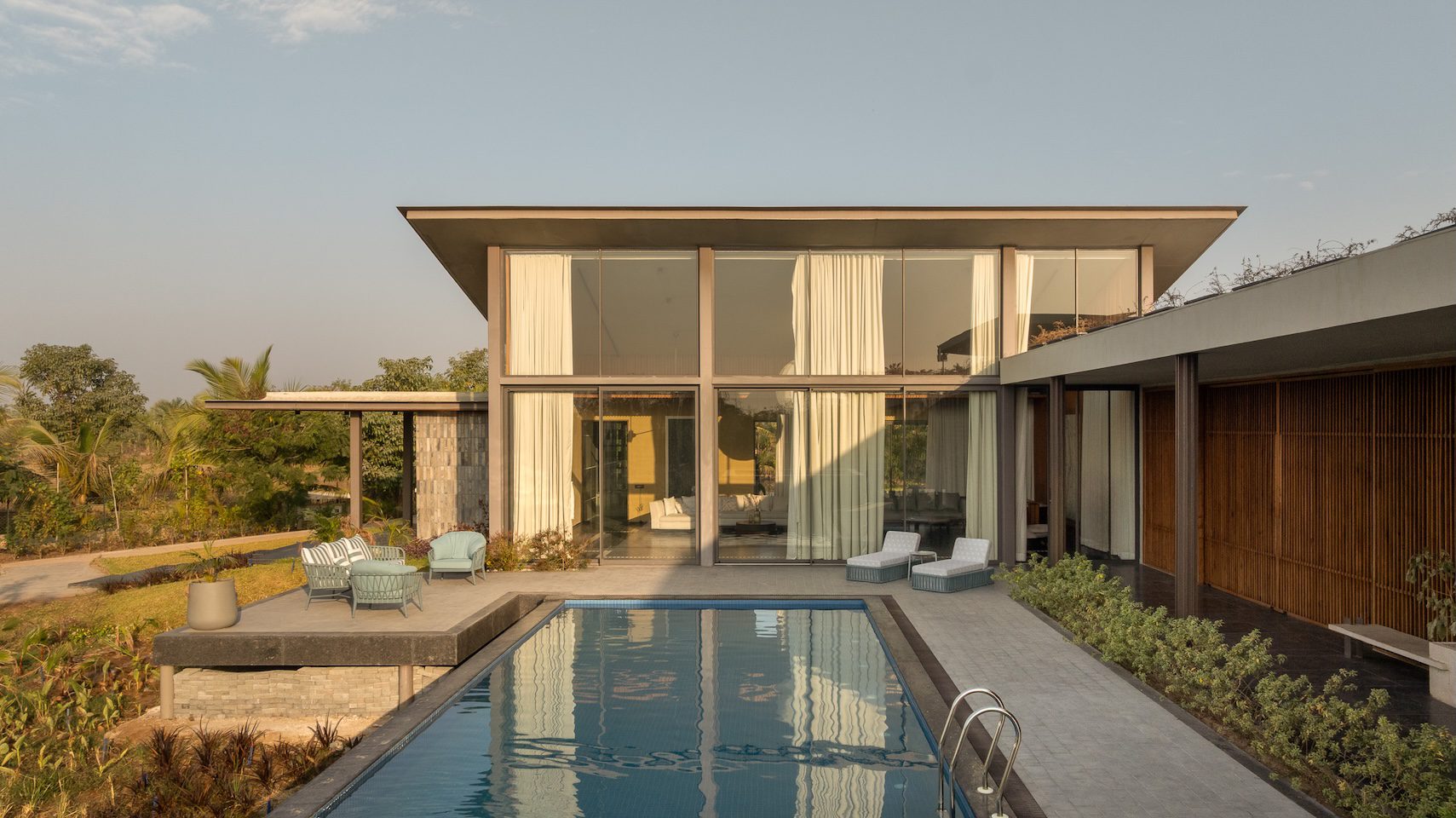
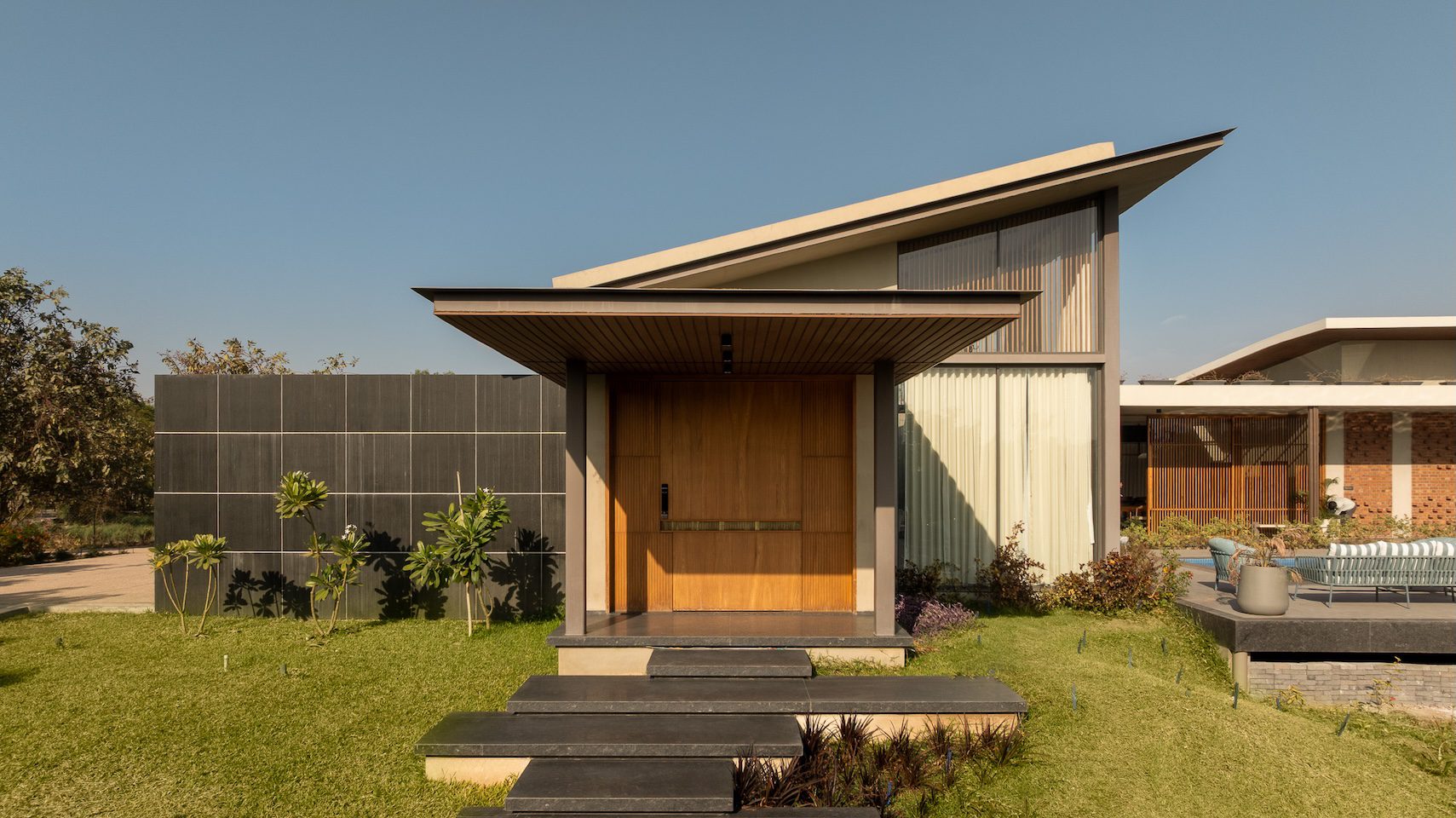
The spatial journey begins with the forest-lined approach, leading into the circular lawn that anchors the site. From here, entry is through a compressed passage that opens into a double-height living space. This moment of release establishes the central volume of the house. The living area connects outward to the pool deck, courtyards, dining and kitchen spaces, while private rooms extend away from this core, maintaining a balance between openness and seclusion.
The design and material details
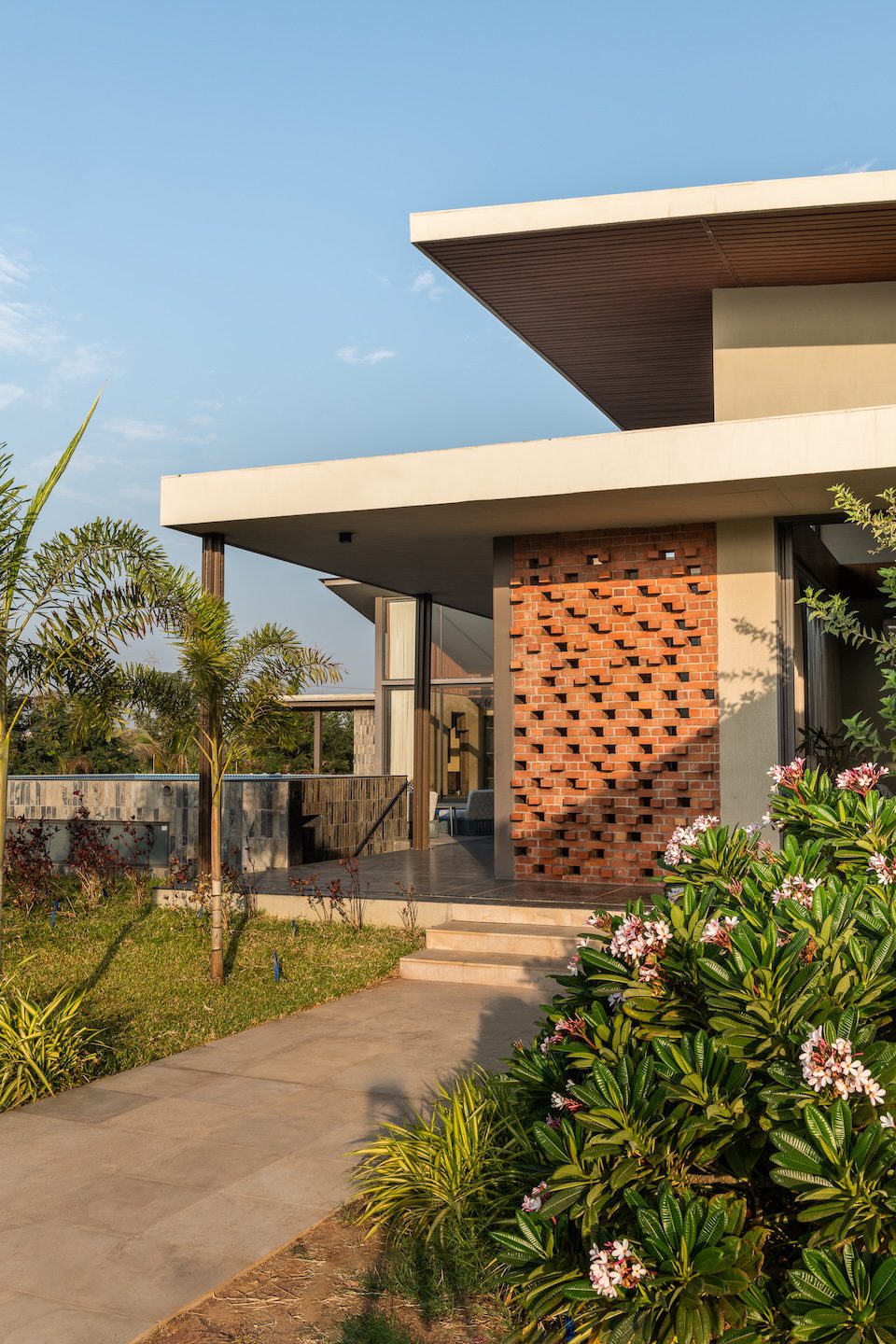
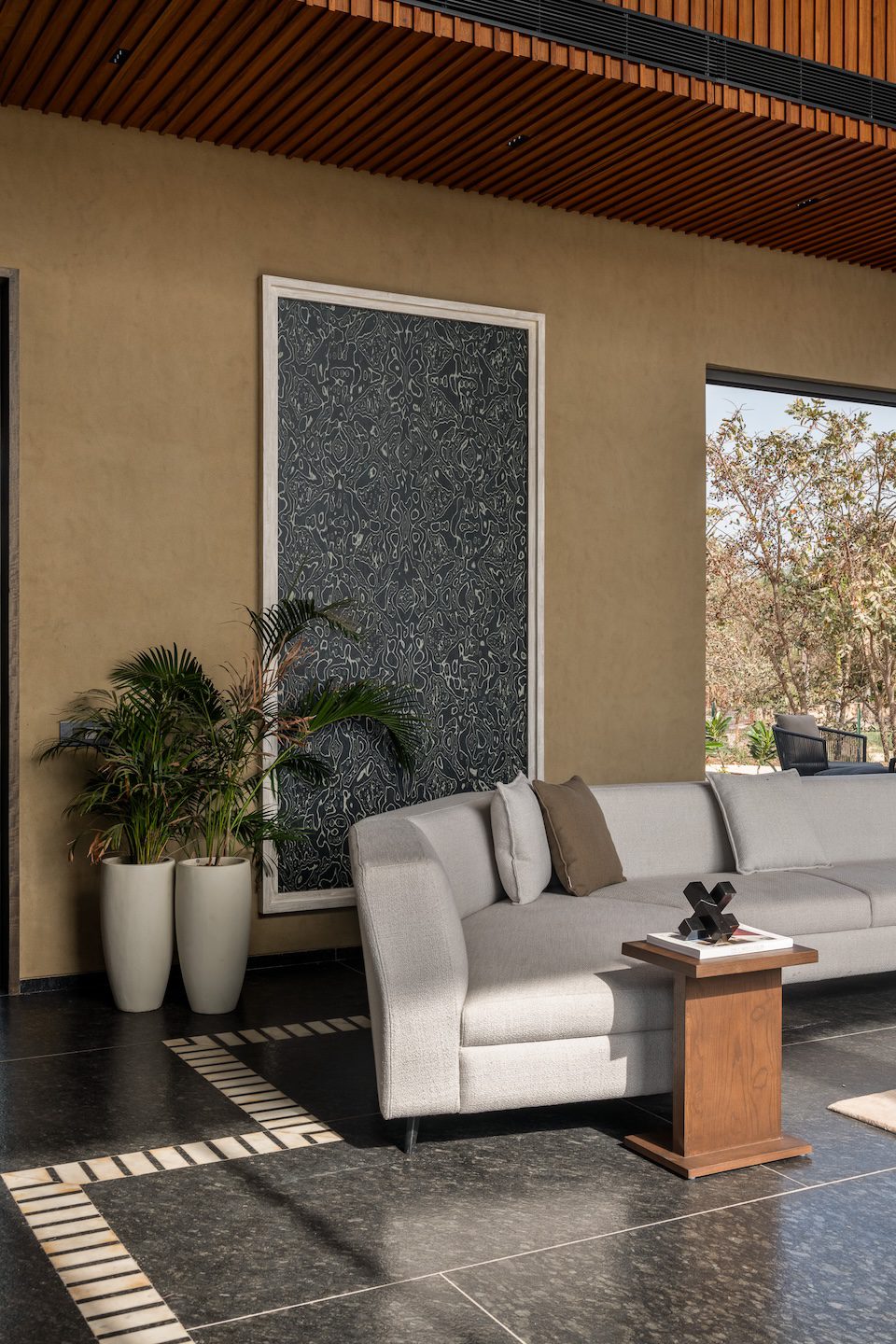
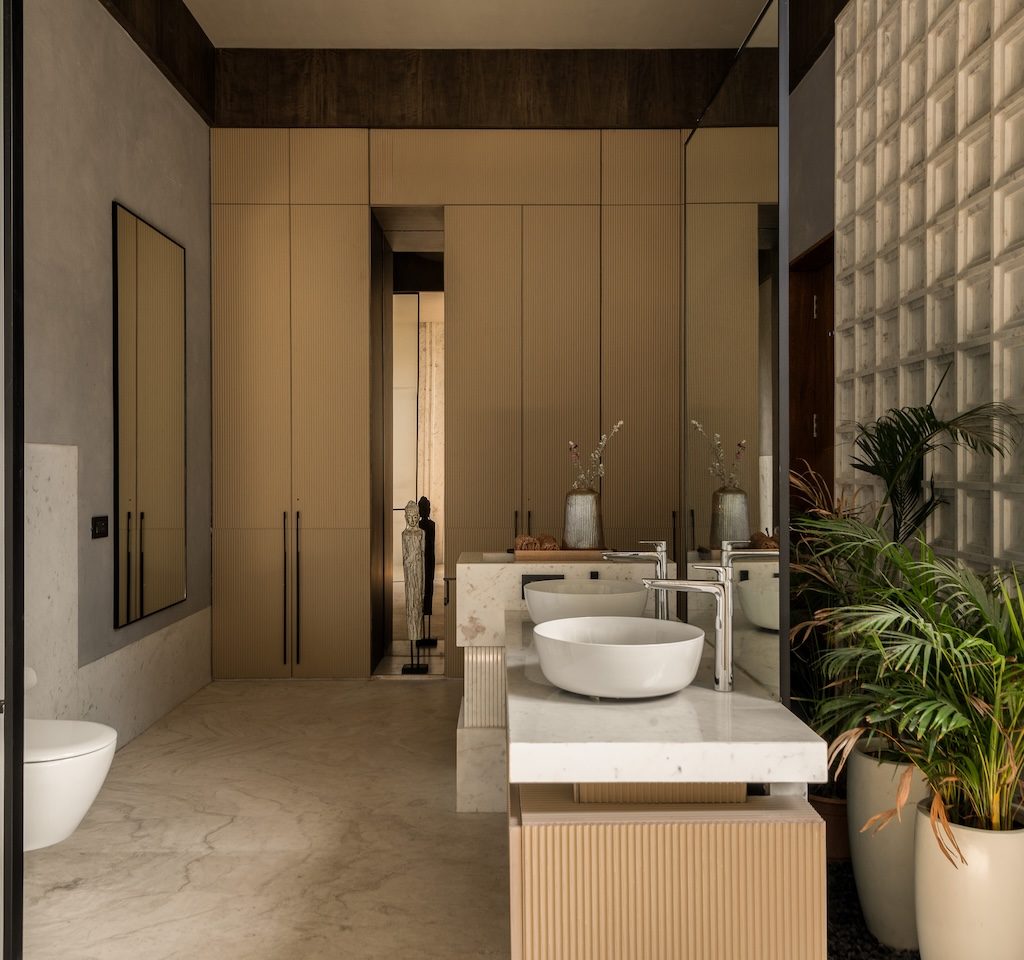
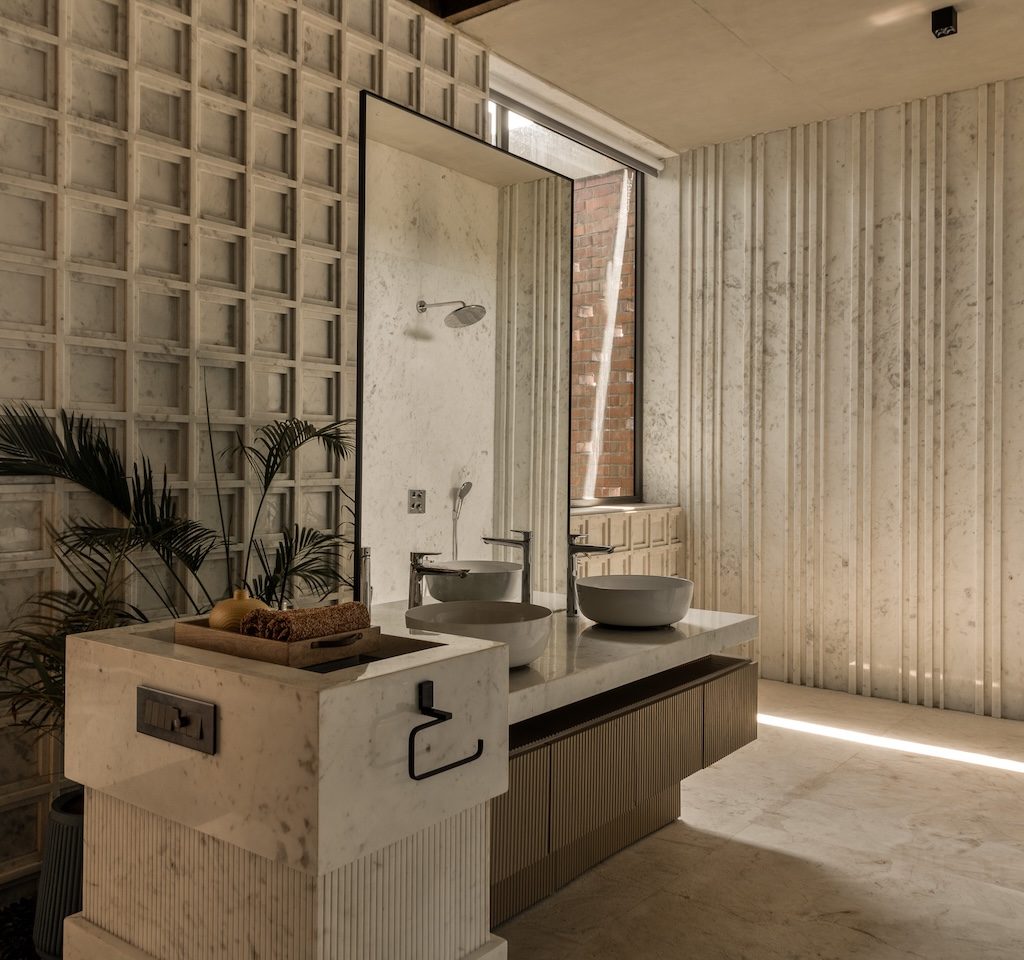
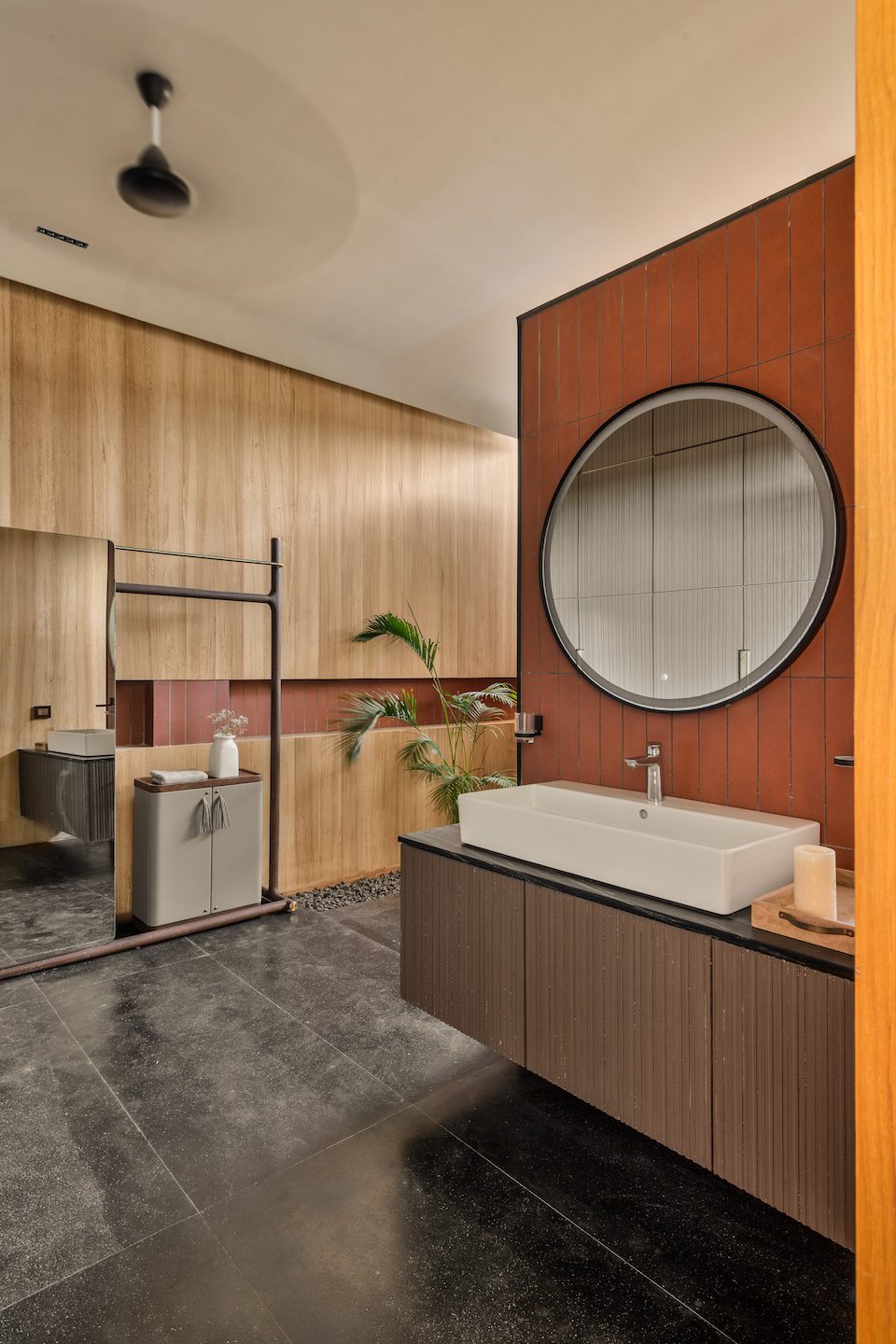
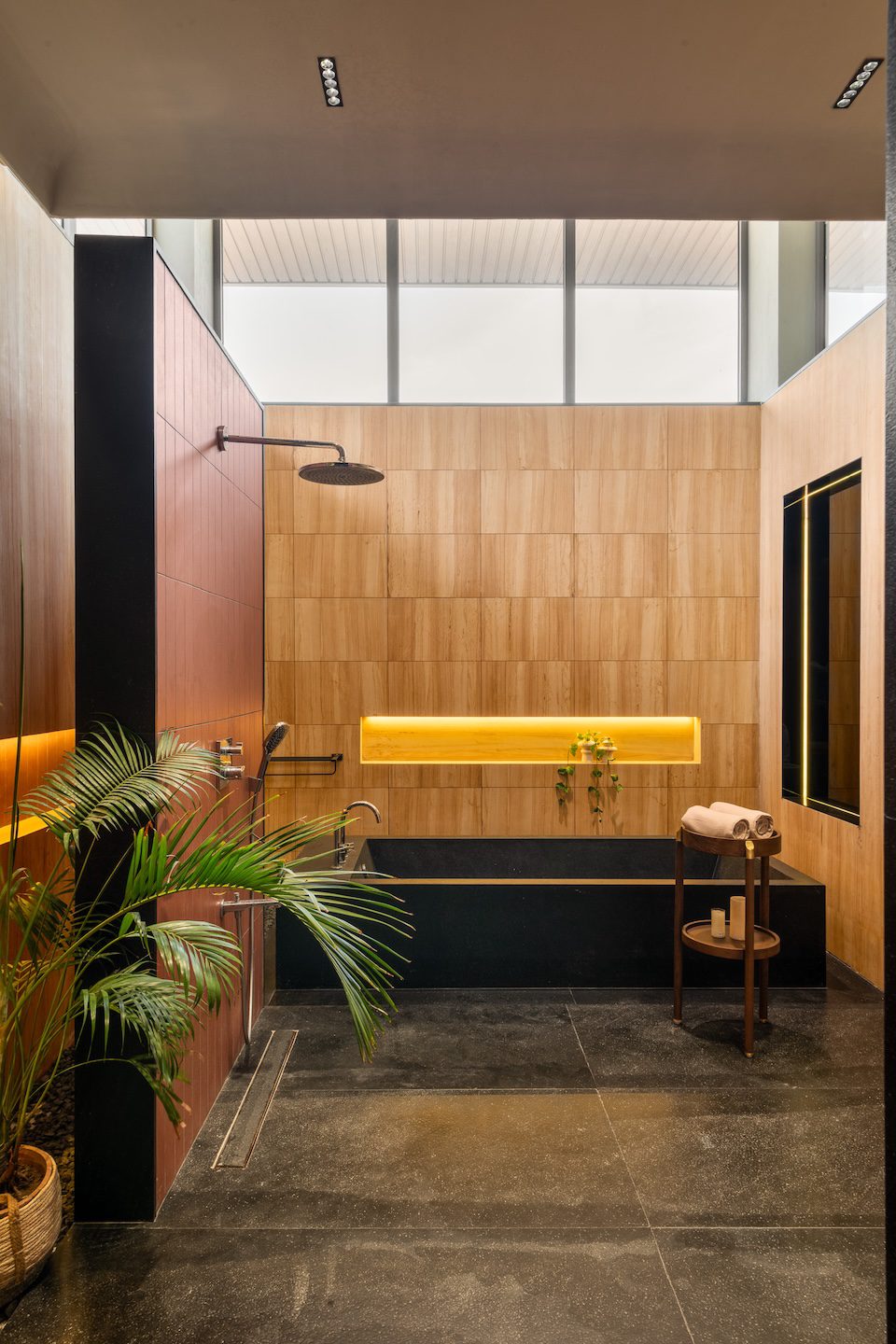
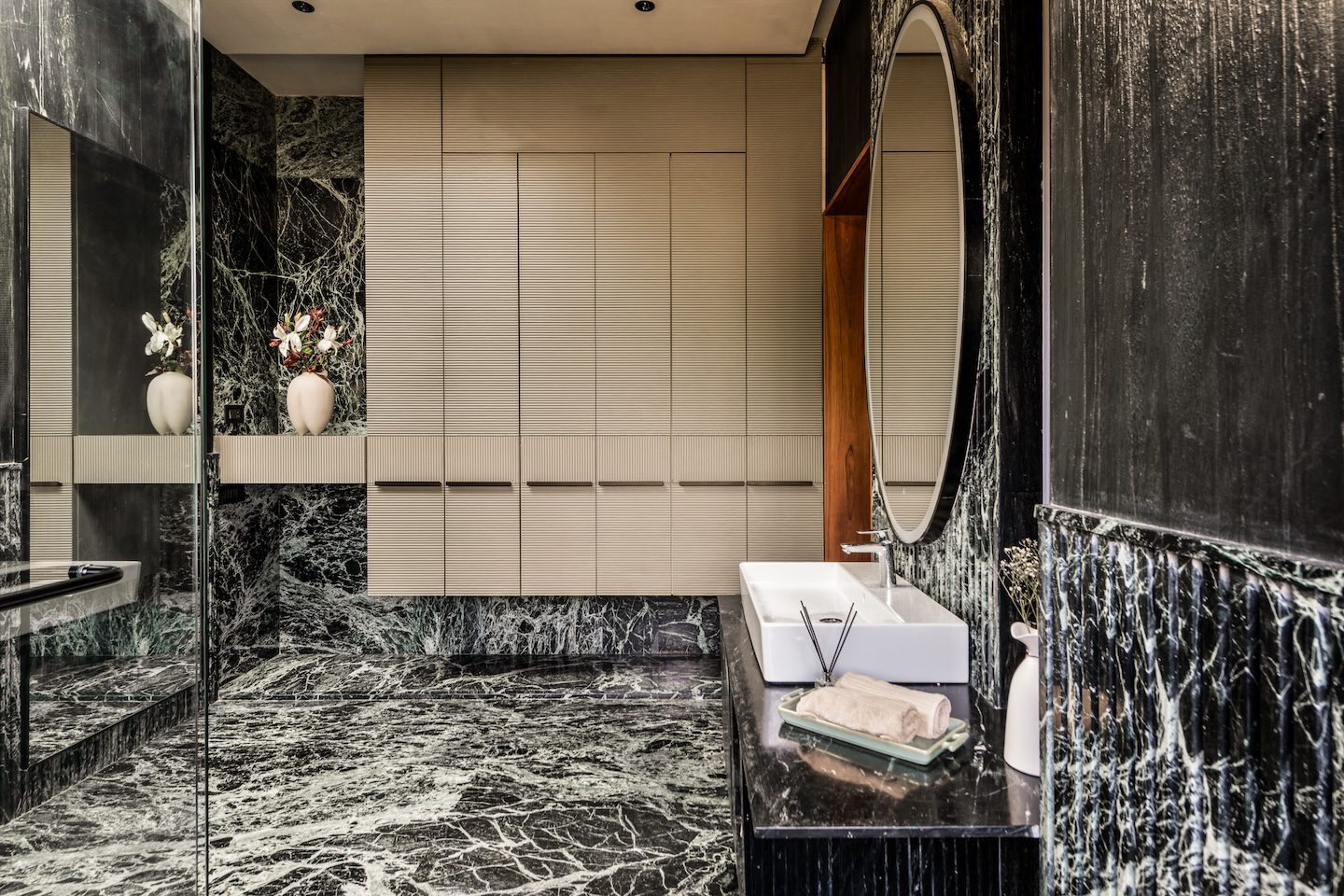
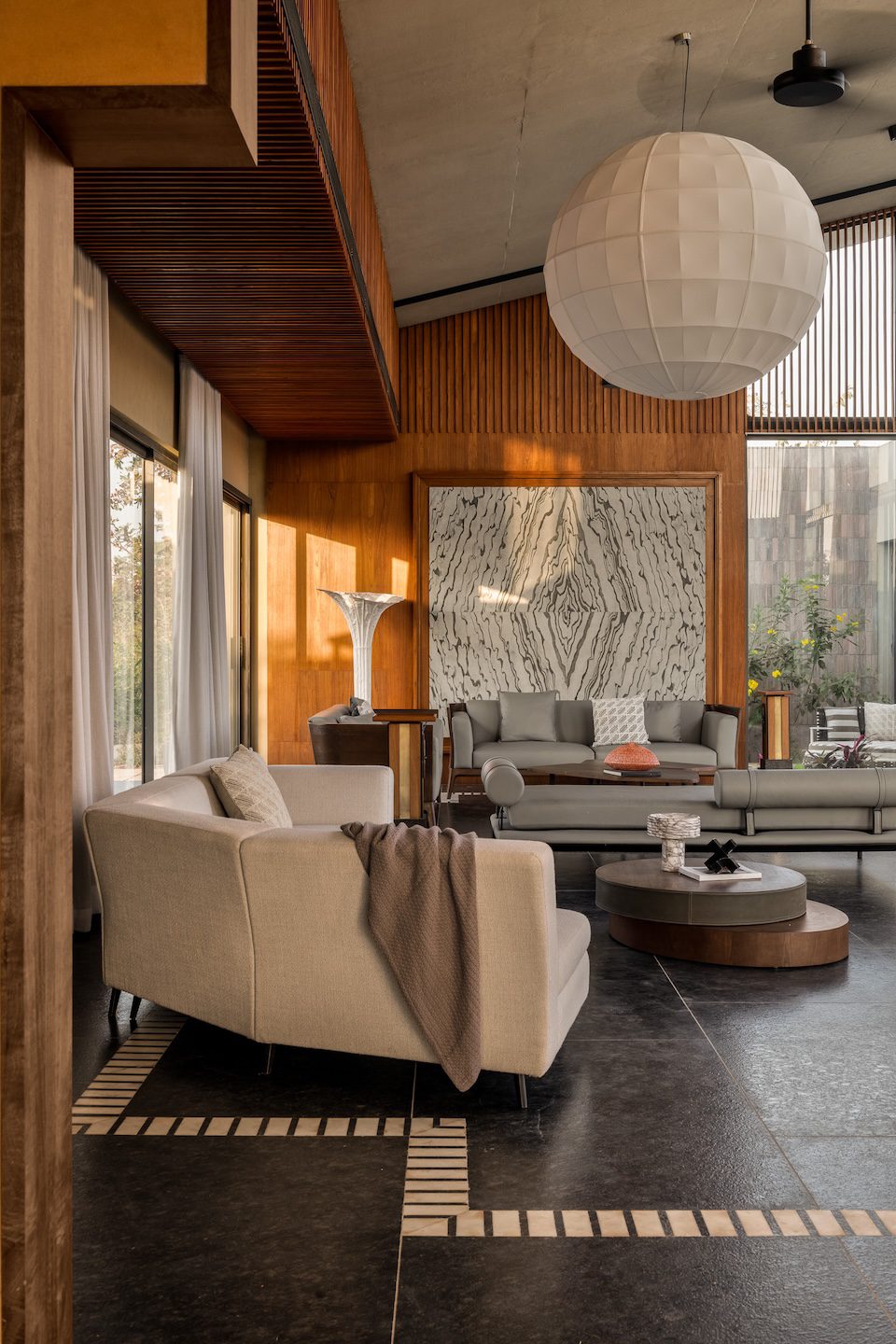
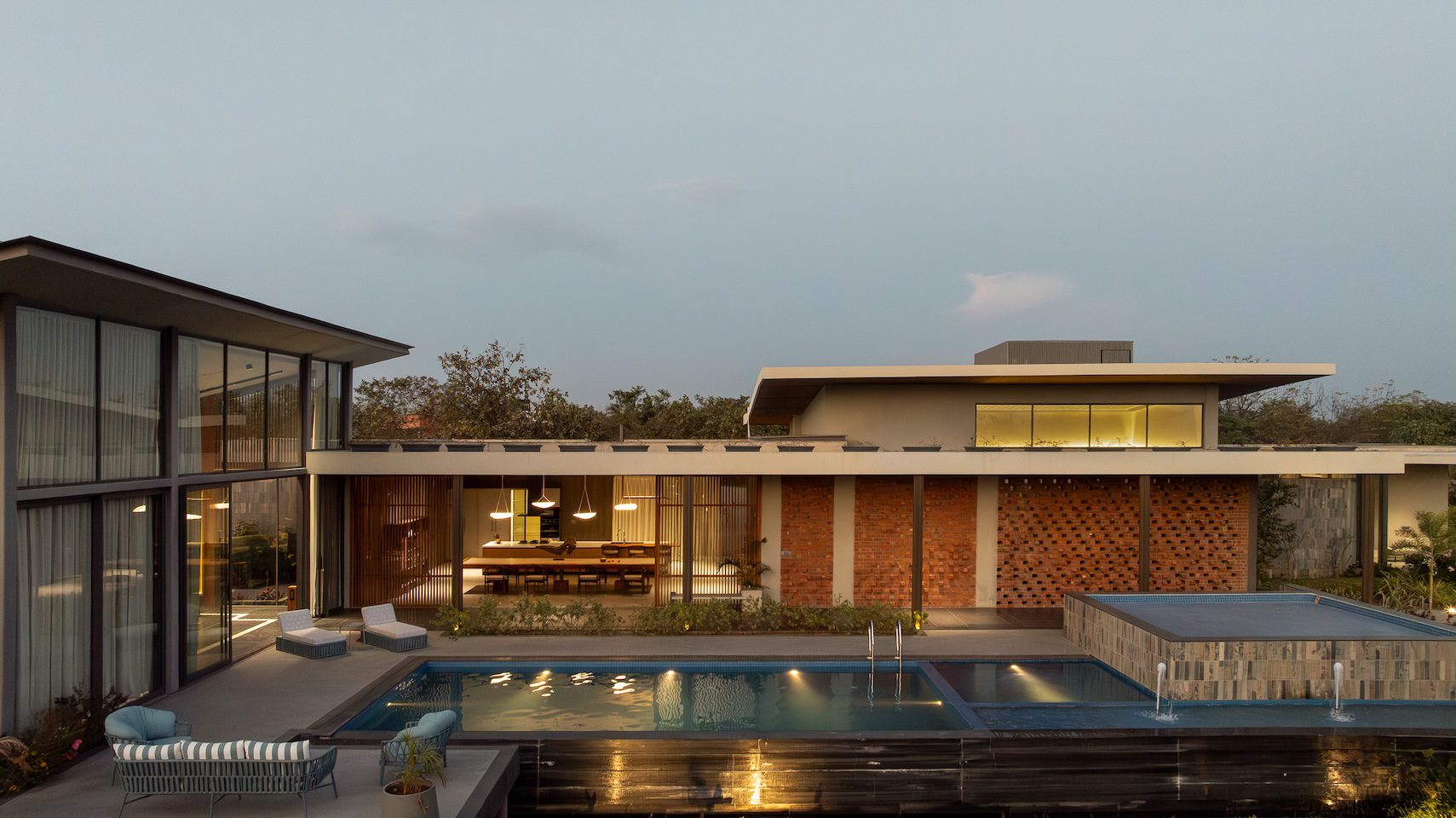
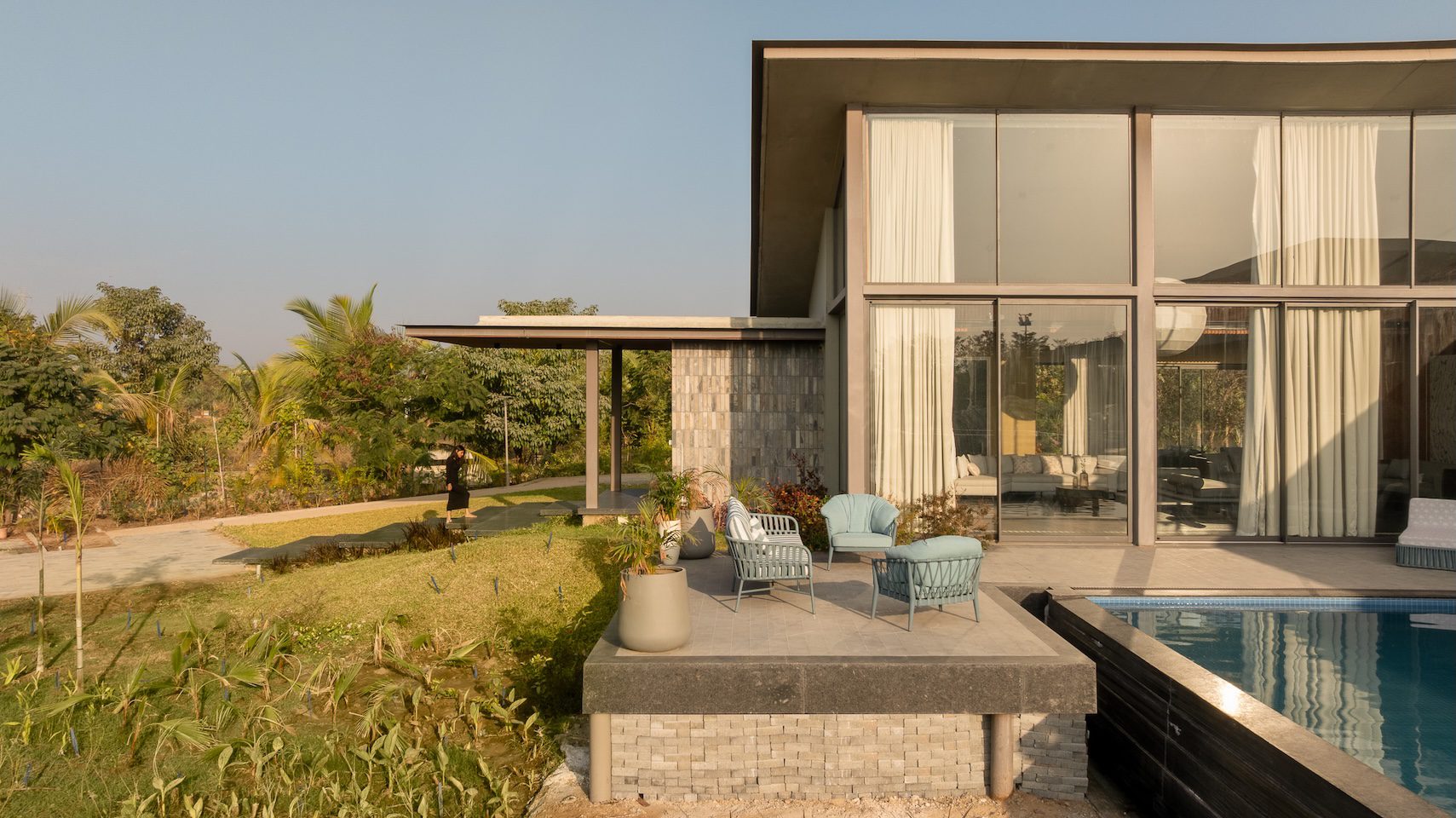
The material palette is deliberately restrained, allowing texture and natural variation to define the interiors. In the living area, exposed concrete and locally sourced stone establish a raw, grounded base, softened by fluted wood elements that introduce warmth. Large openings dissolve the edge between inside and outside, while a suspended light fixture anchors the double-height volume.
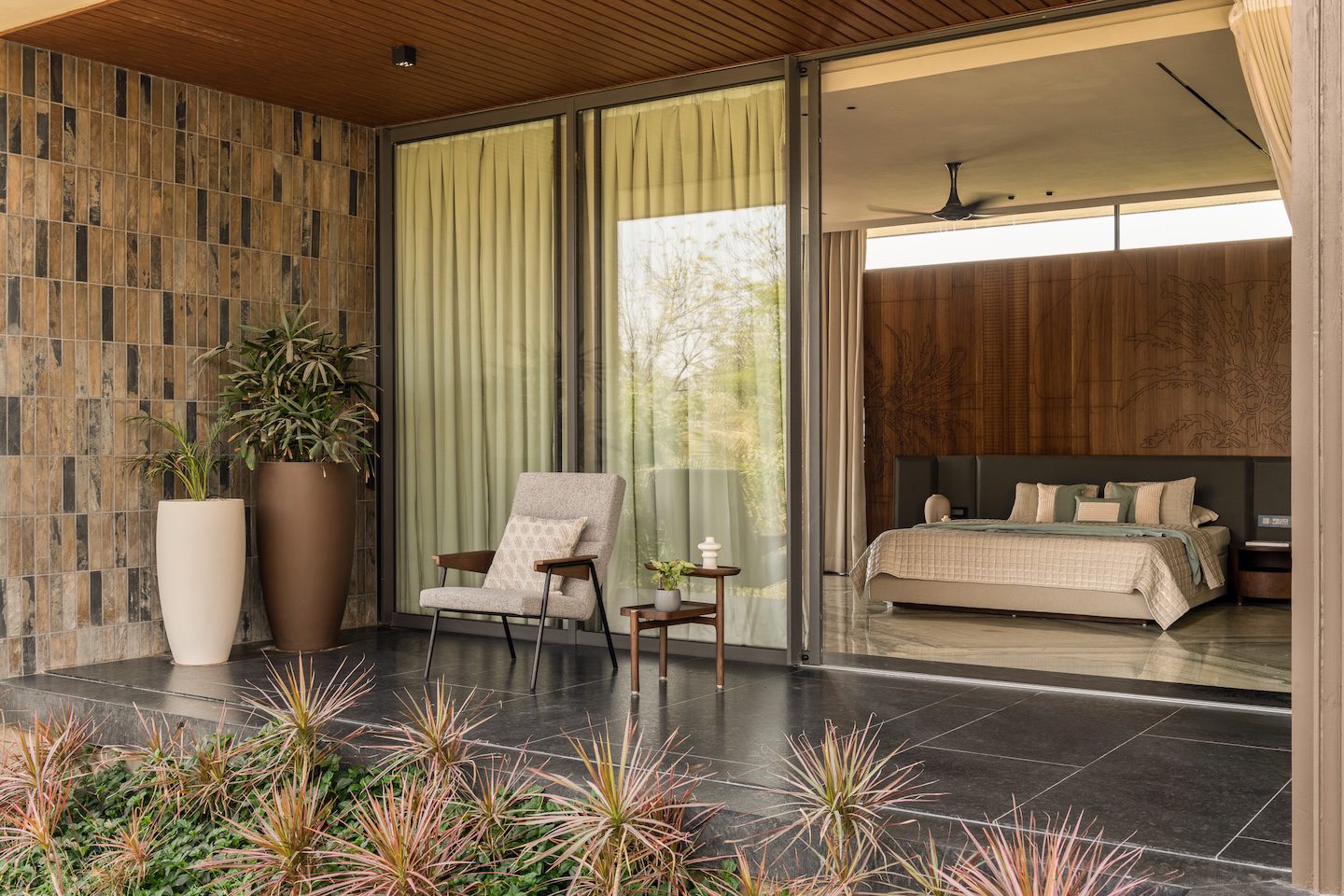
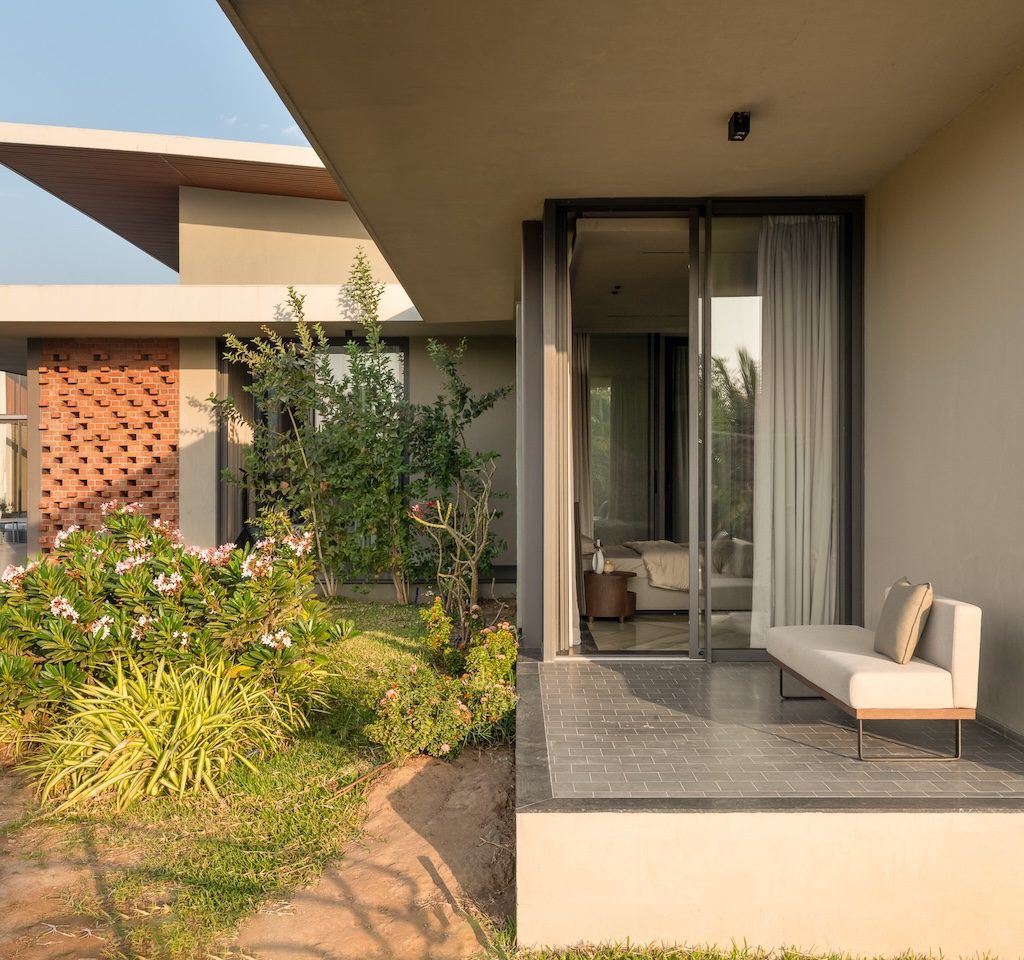
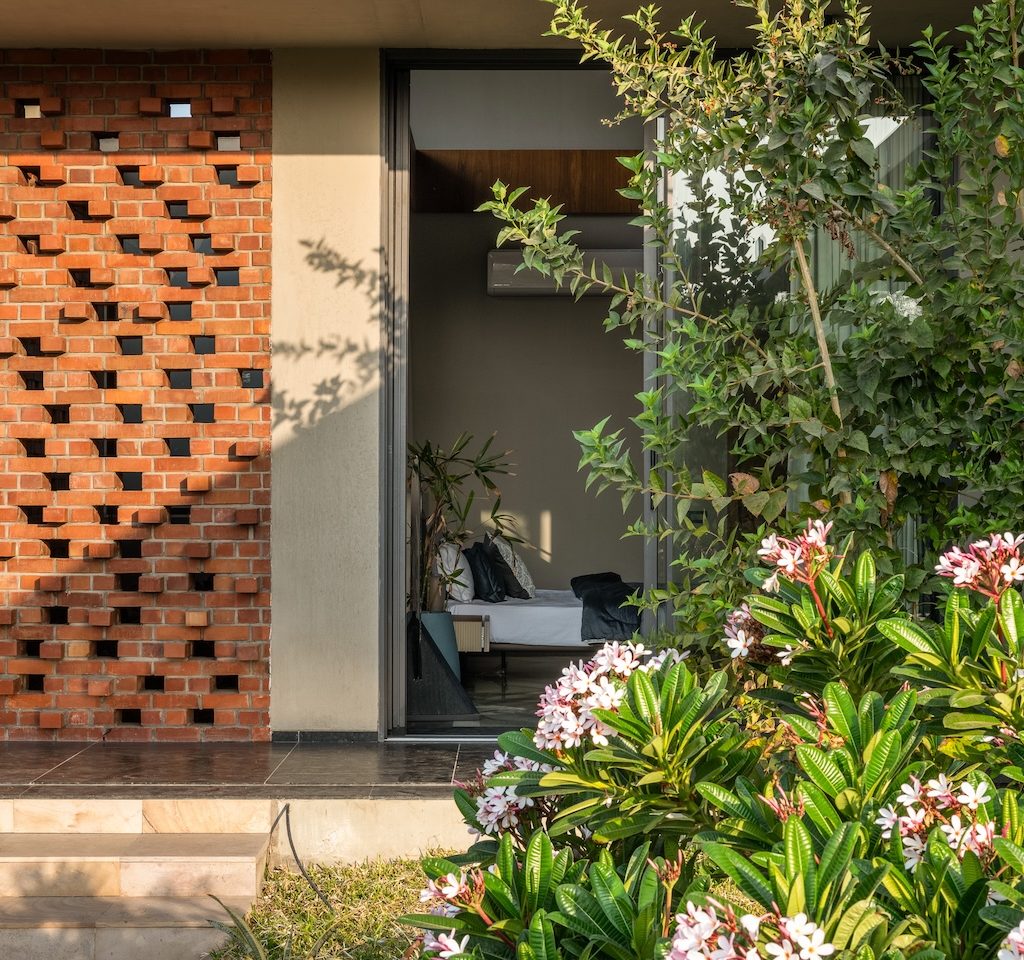
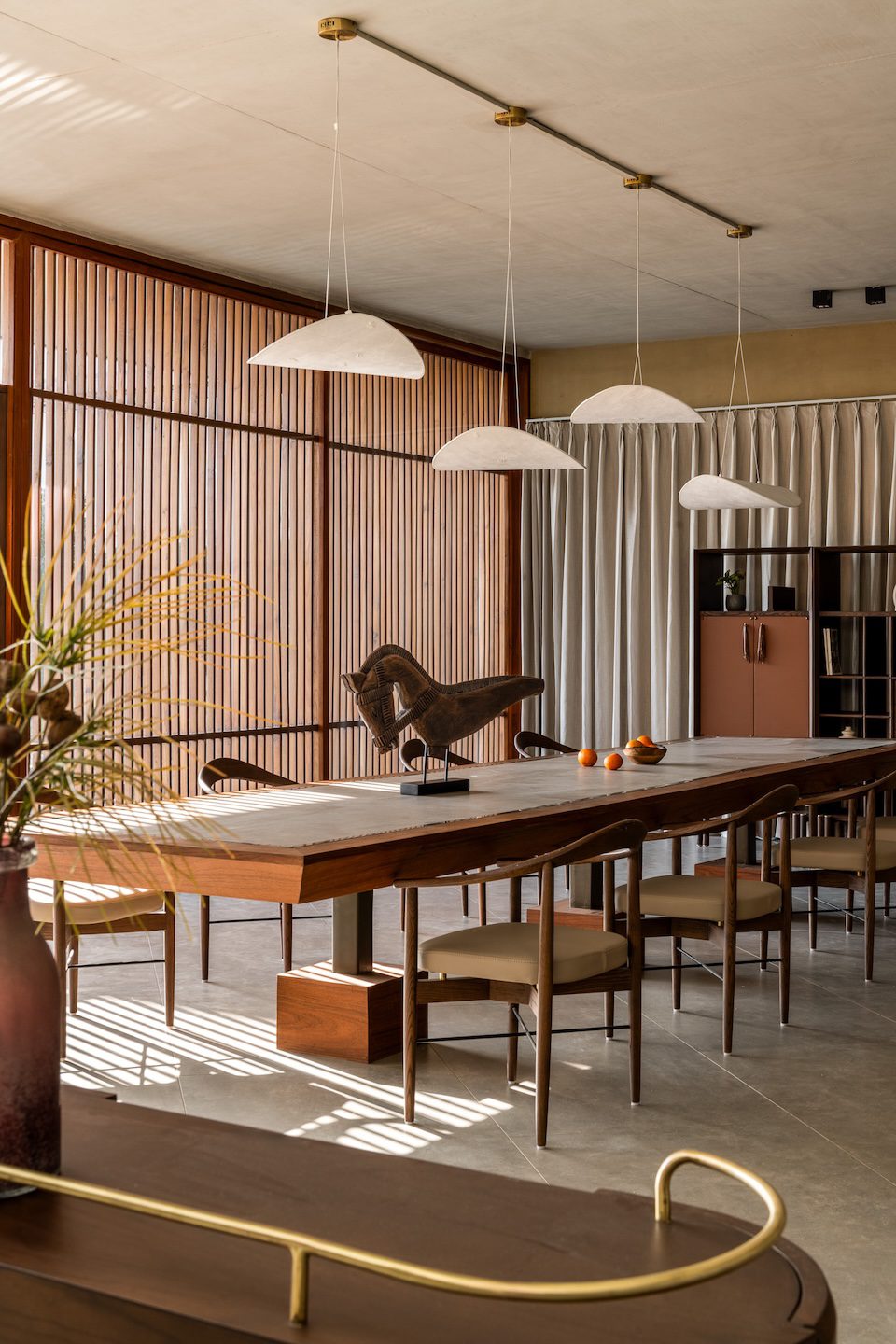
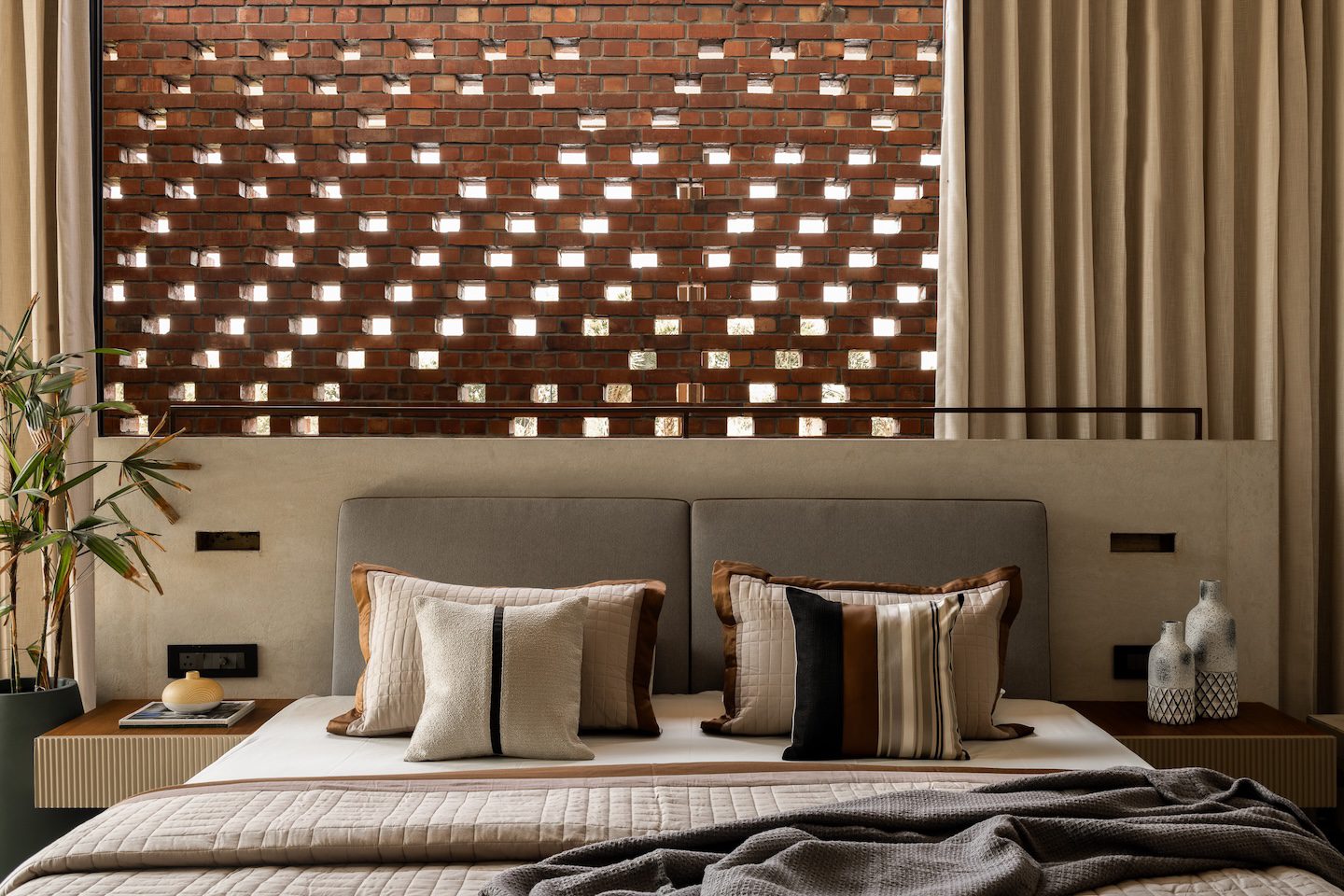
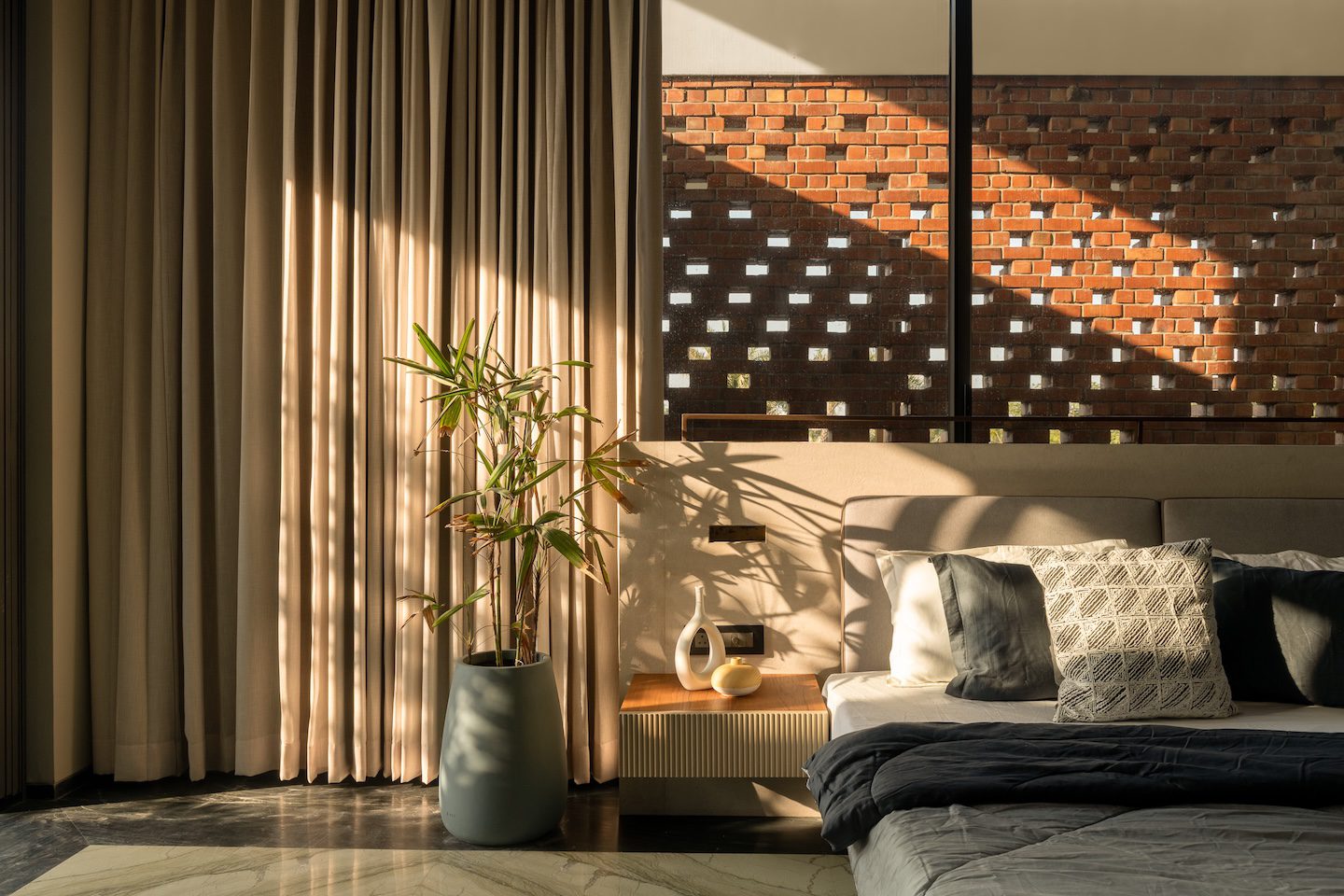
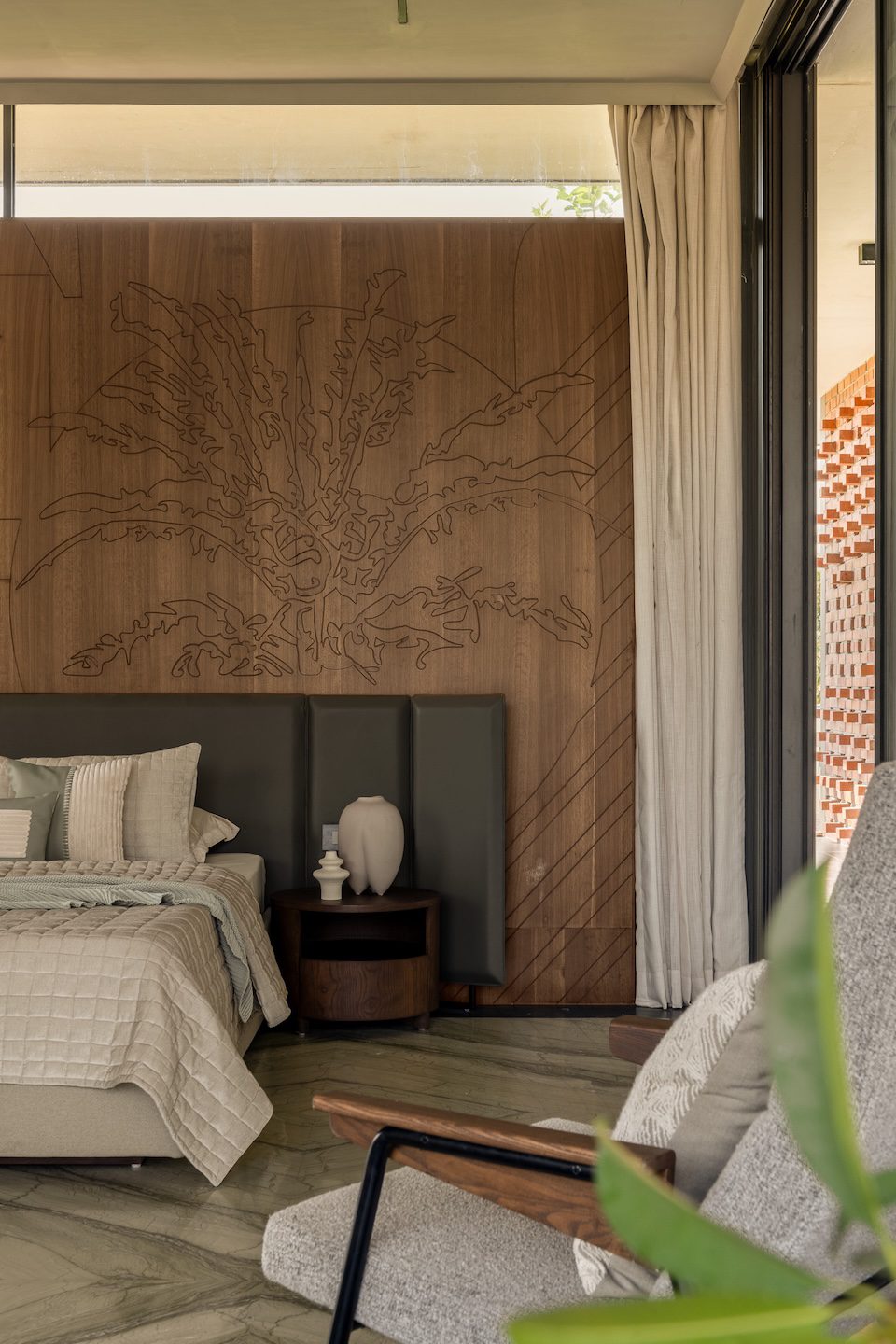
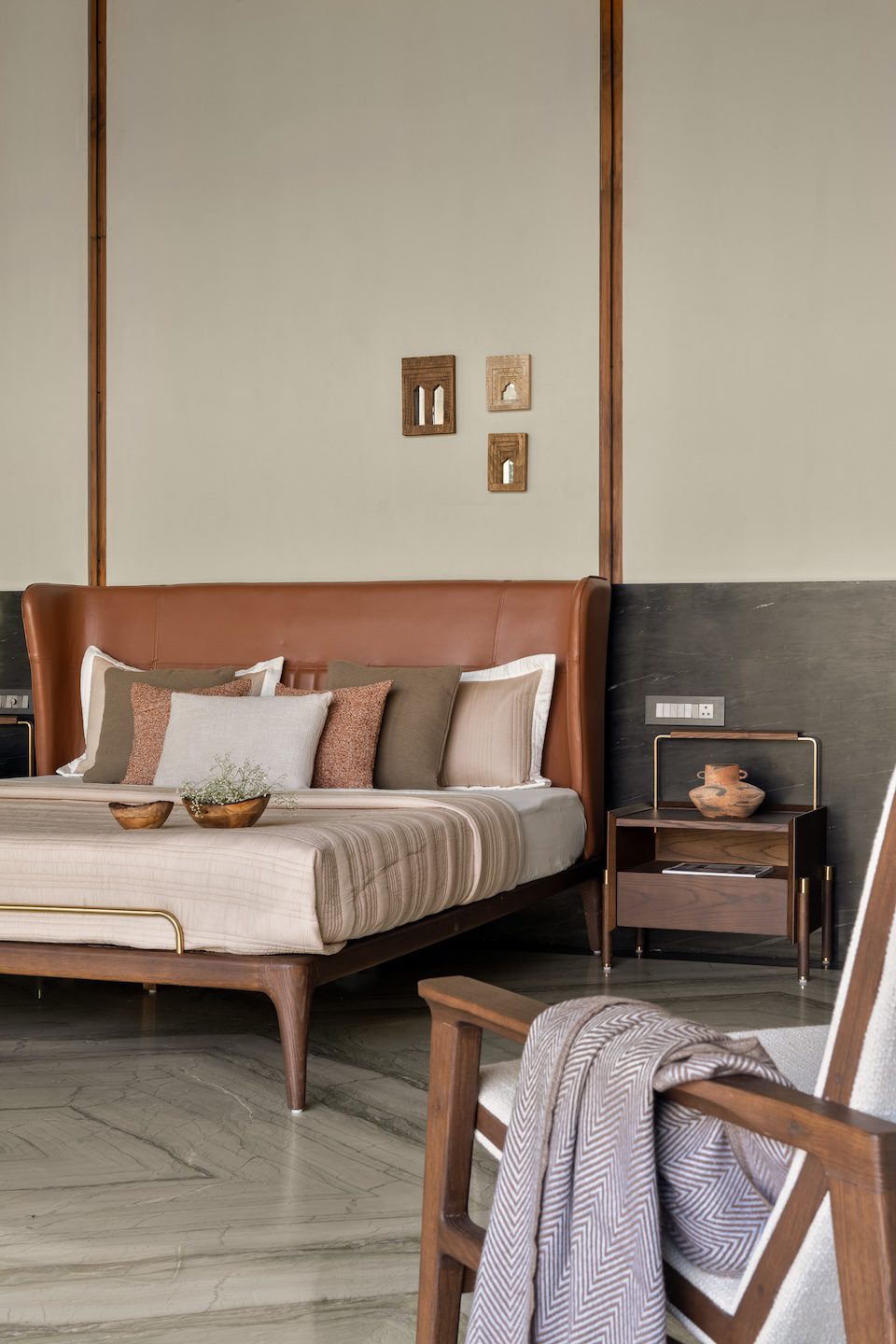
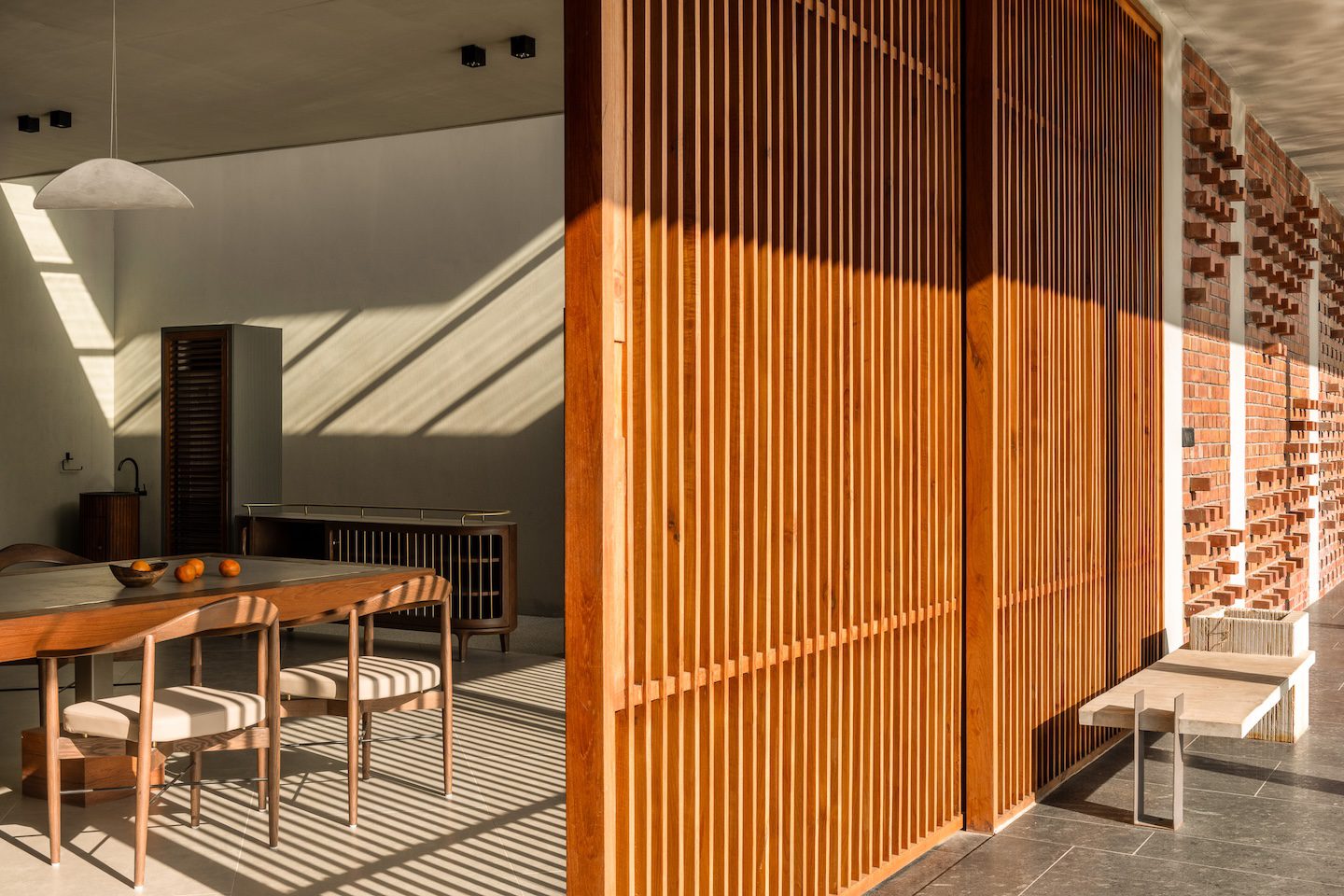
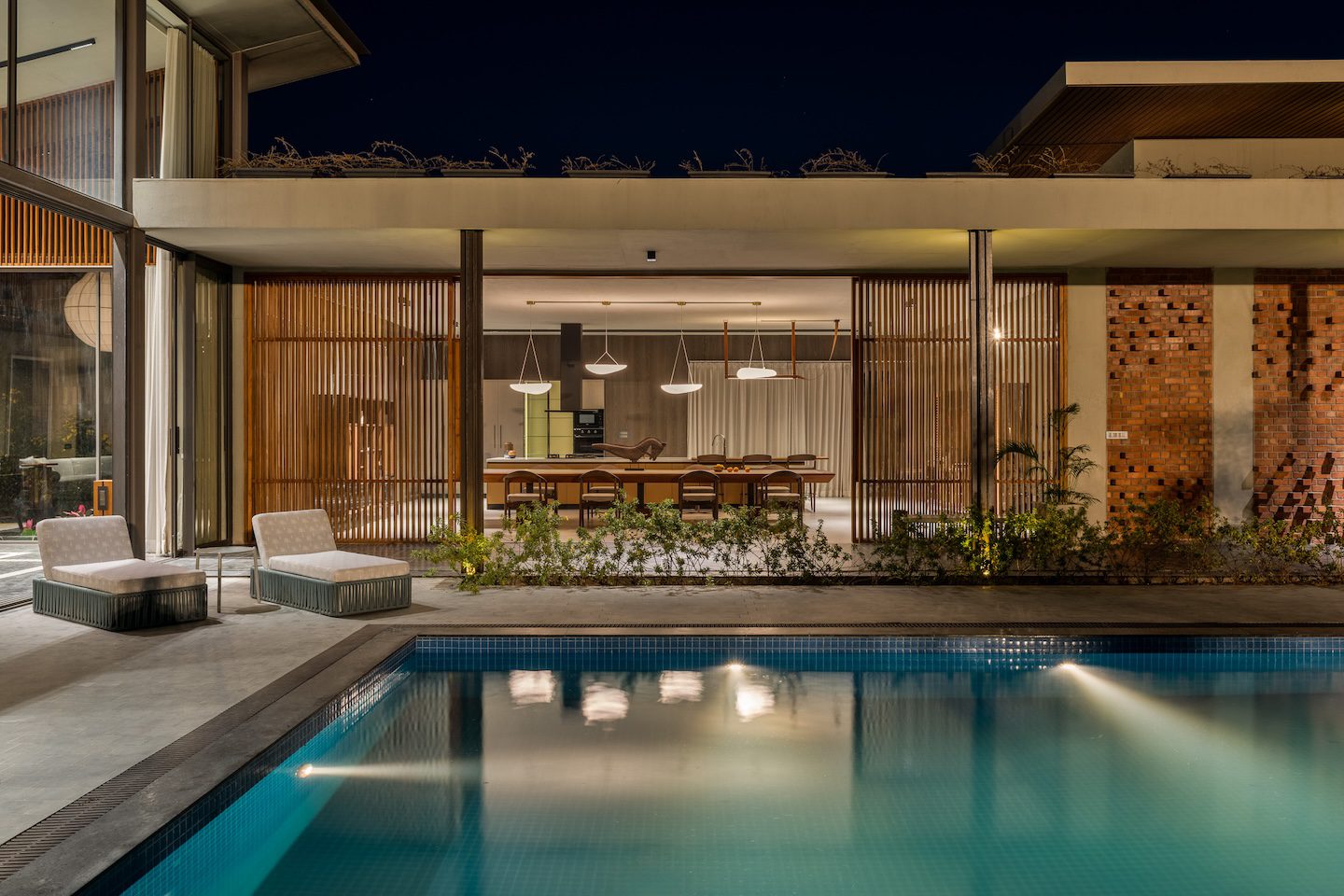
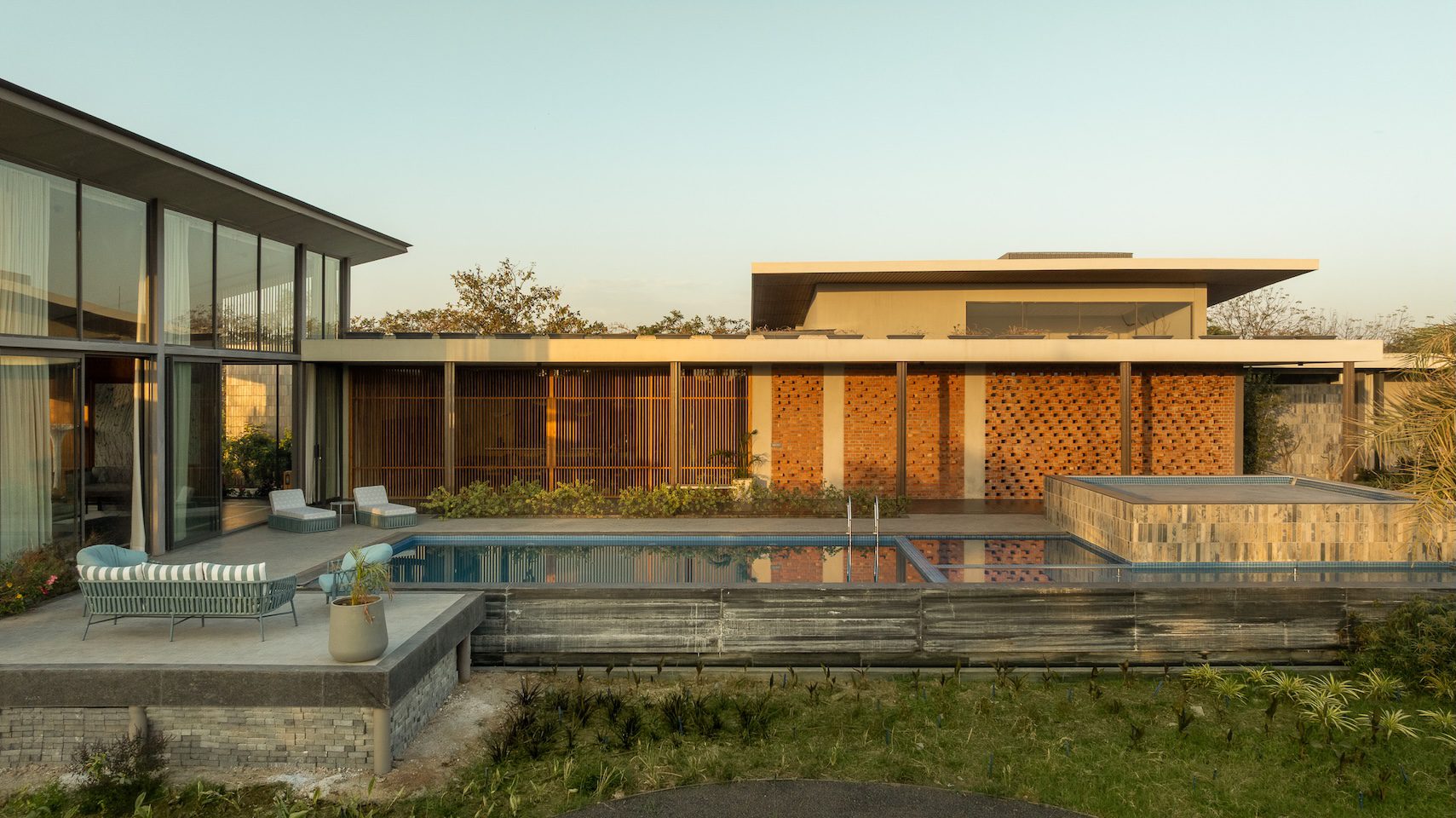
The kitchen and dining spaces are positioned to engage both inward courtyards and outward views toward the pool, creating a dynamic relationship between different parts of the site. Materials remain consistent—stone, wood and muted finishes—ensuring continuity. Bedrooms are intentionally minimal, designed as quiet retreats with soft natural light and tactile surfaces. Openings are carefully framed to create controlled views of the landscape, reinforcing a sense of retreat.
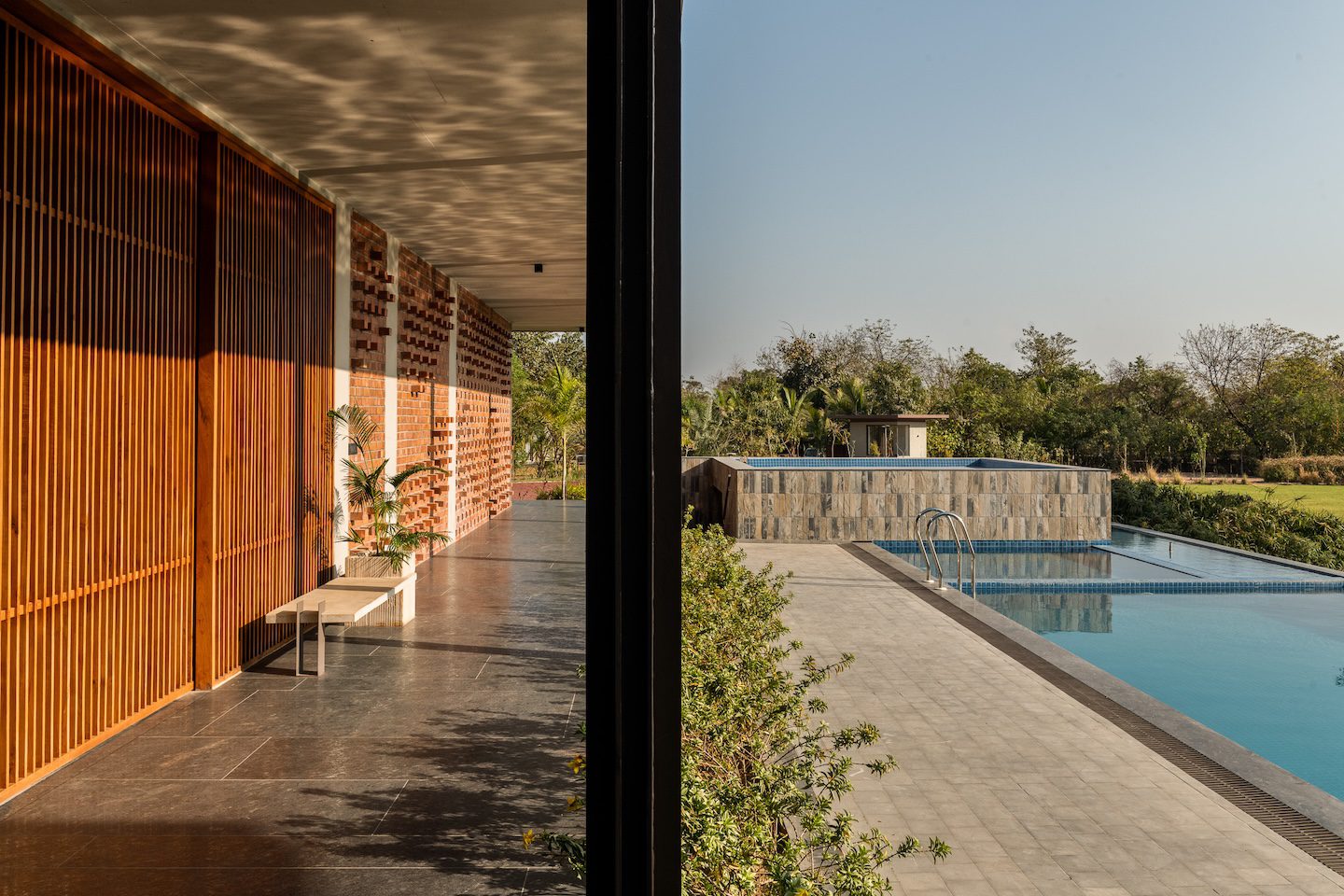
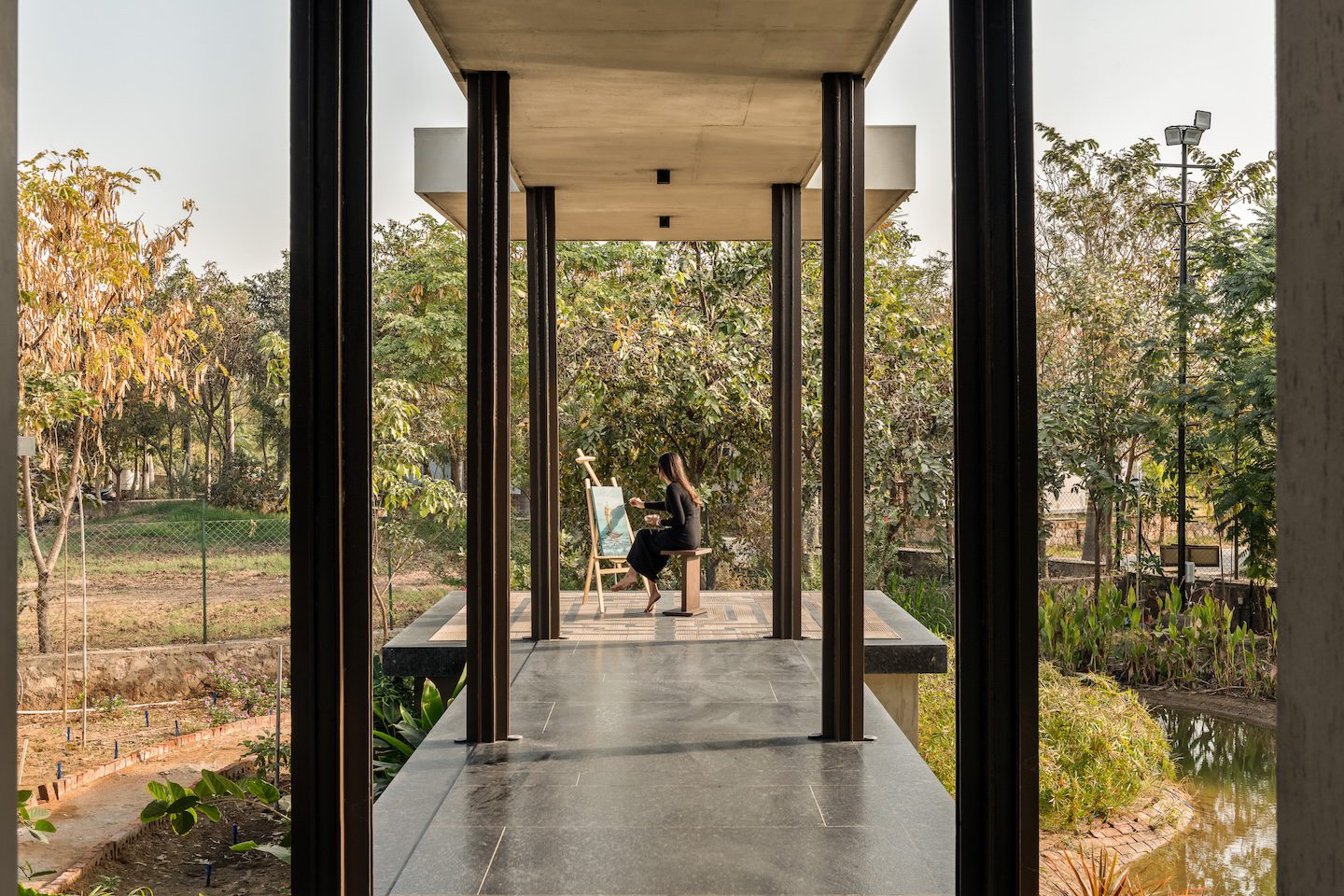
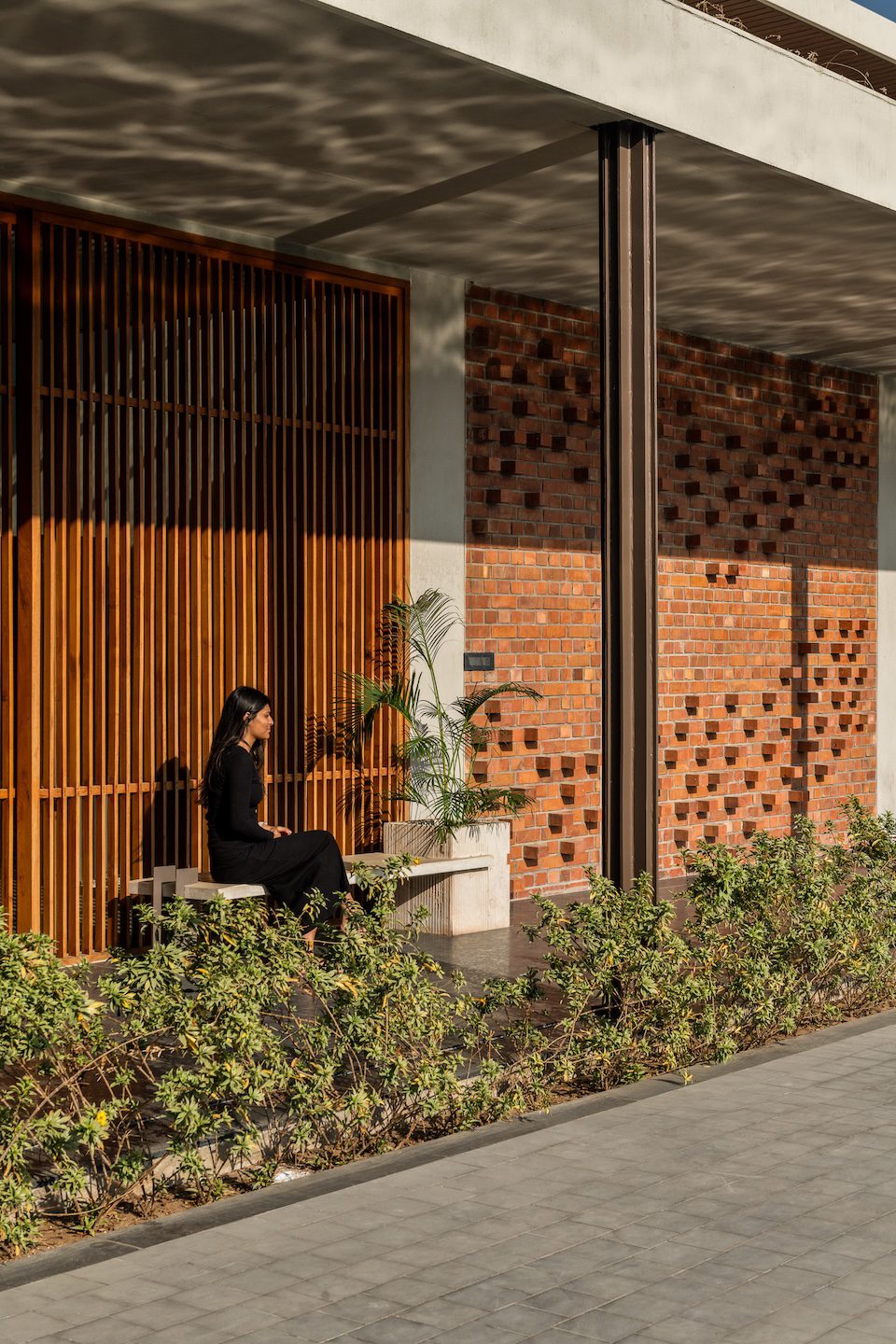
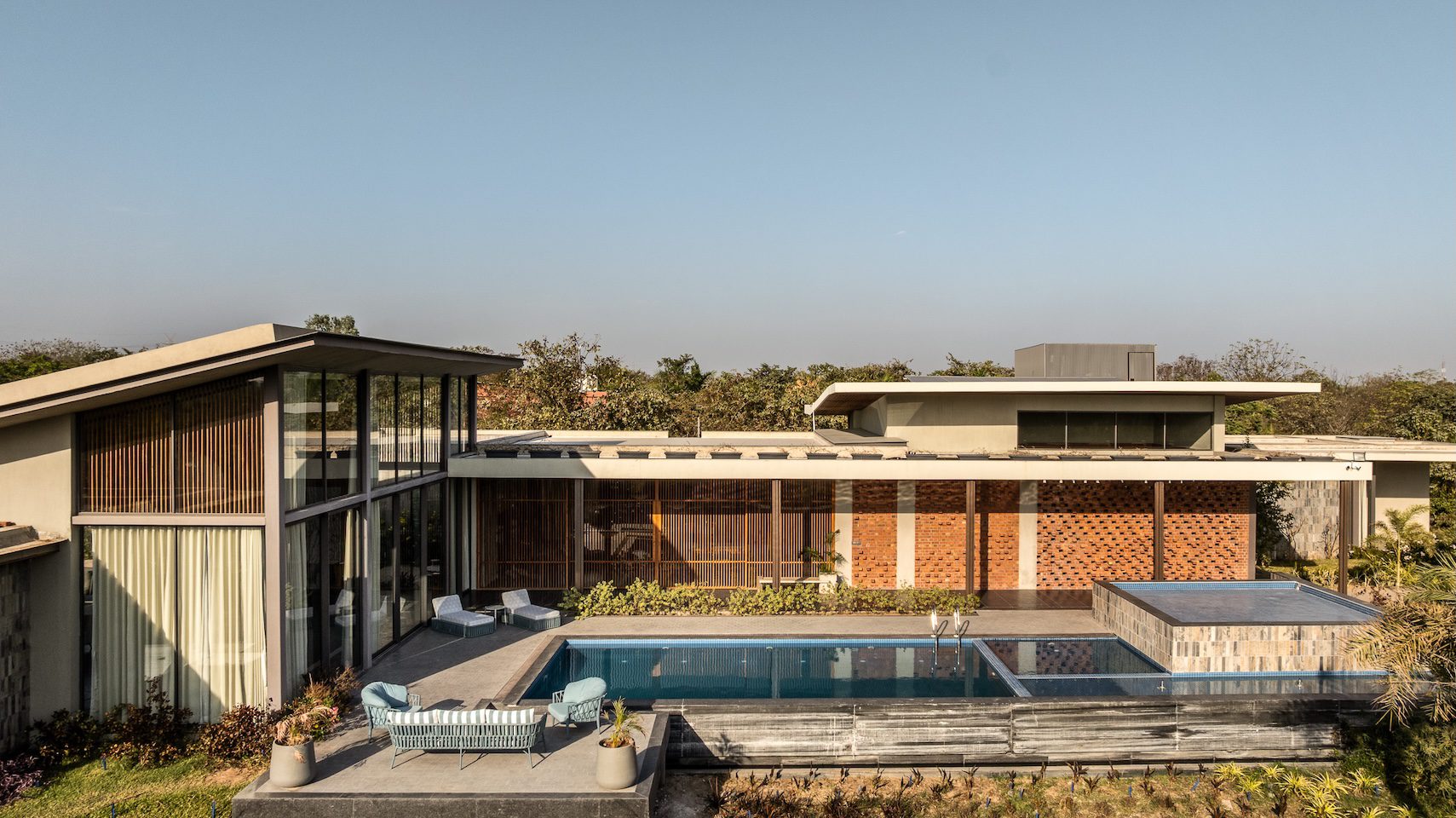
Outdoor areas extend the same language into the site. The pool deck, yoga platform and meditation pavilion are treated as spatial extensions rather than add-ons, using stone, exposed brick and planting to maintain continuity.
The highlights
The project’s defining quality lies in its choreographed spatial experience. The transition from forest to lawn to built space creates a sequence that gradually shifts the pace of movement. The double-height living area acts as the central anchor, while the surrounding outdoor spaces—pool, decks and pavilions—extend the experience outward. Equally significant is the integration of introspective zones such as the yoga deck and meditation pavilion, which move the house beyond a typical weekend retreat into a more immersive environment.
The challenges
One of the key challenges was balancing openness with climatic responsiveness in Ahmedabad’s hot environment. Shading, orientation and passive cooling strategies had to be carefully integrated to ensure comfort without compromising spatial fluidity. Another challenge lay in merging architecture and landscape into a unified whole while maintaining a minimal aesthetic. This required precise coordination across design and execution, particularly in working with natural materials at scale.
Fact file
Project: House of Stillness
Location: Ahmedabad, India
Area: 9,000 sq yards
Design firm: Squelette Design
Principal architects: Saumil Patel and Prashant Trivedi
Landscape: ALA Landscape
Styling: Shelf by Tanushree Dwivedi
Add a Comment