
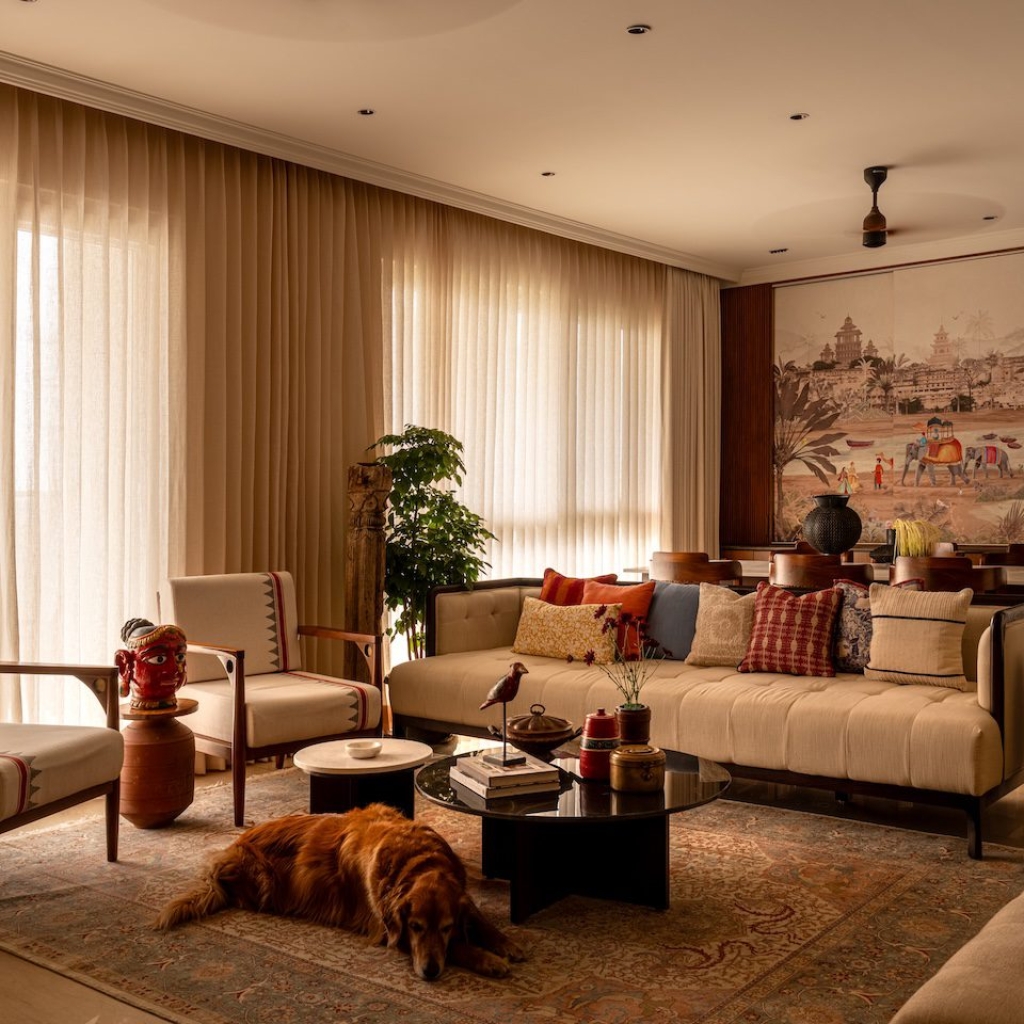
House of Katha’s latest project, Sukoon, balances contemporary restraint with Chettinad-inspired details in this Bengaluru residence.
Curated by: Deepa Nair
Photographs: Jubin Johnson; courtesy House of Katha
The brief
In Bengaluru, House of Katha, led by interior designer Pratyusha Kethinedi, shapes a 2,700 sq ft residence that emerges from a meeting of two distinct sensibilities. The homeowners came with differing inclinations—the husband drawn to contemporary spaces, and the wife rooted in traditional aesthetics, particularly the richness of Chettinad design. What began as a contrast soon evolved into a shared direction.
Named Sukoon, an Urdu word meaning peace and solace, the home is envisioned as a place where these preferences find balance. When the designer took on the project, the existing layout was reworked through a series of considered interventions to improve spatial flow and functionality. Select walls were adjusted and spaces redefined to allow for better movement, increased daylight, and enhanced ventilation. New insertions, such as a pooja space carved out from an adjoining room, were introduced to align the home more closely with the family’s lifestyle. These changes not only reorganise the plan but also shape a home that feels open and connected.
The design intent
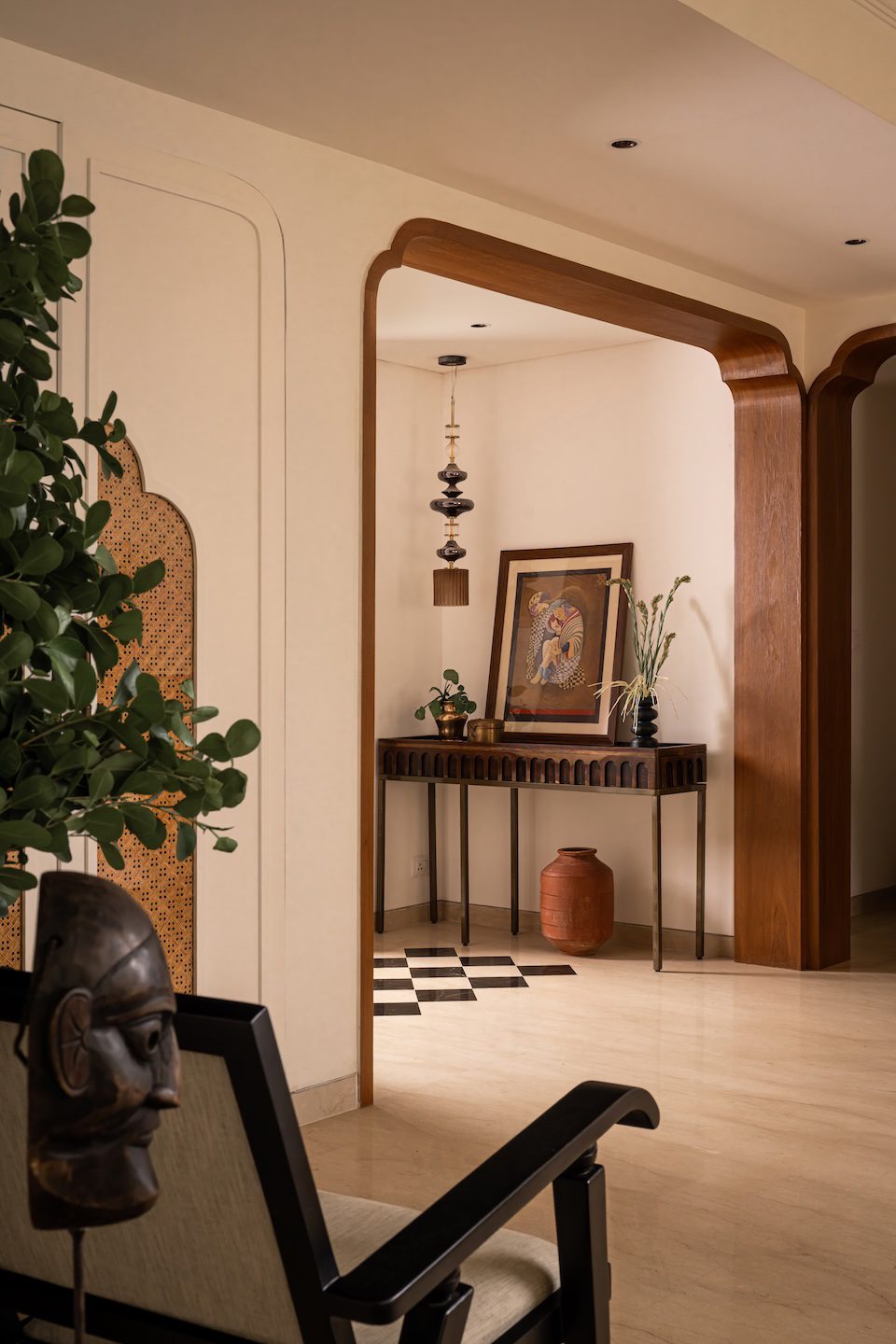
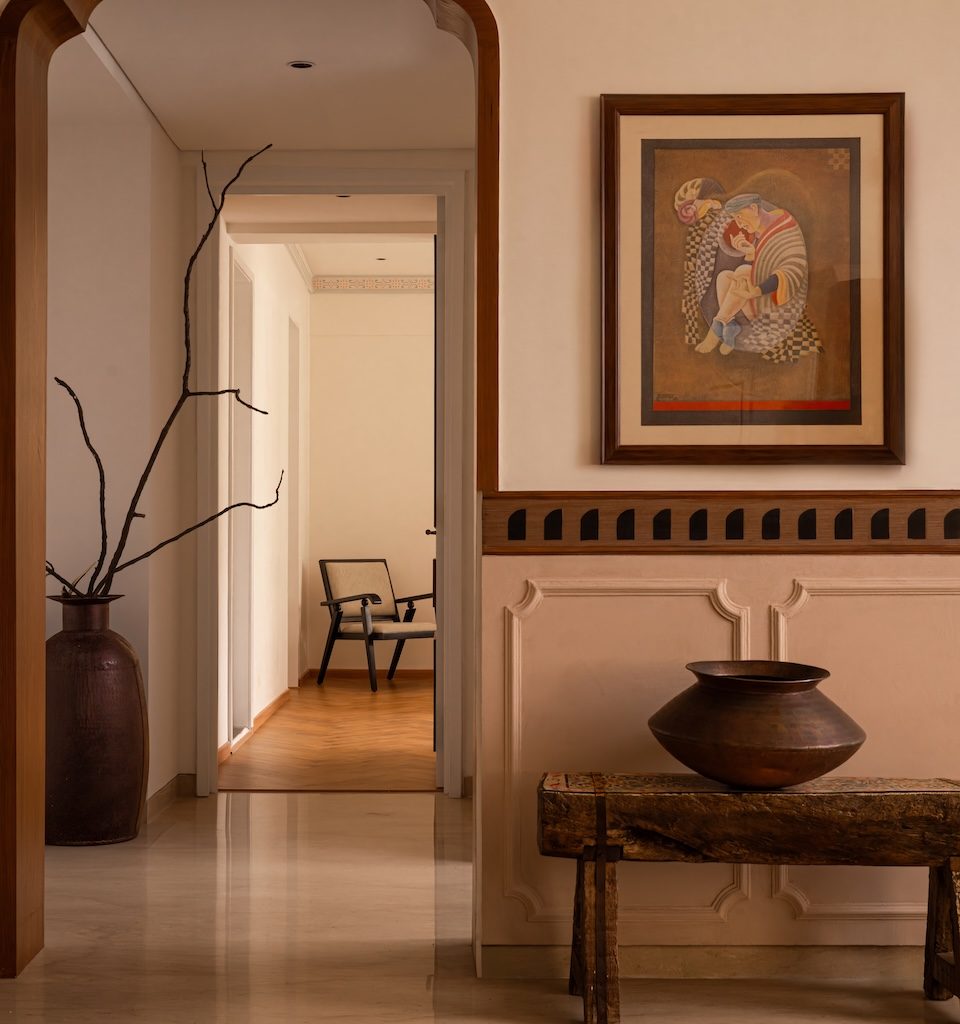
“In our cities today, streets and buildings are growing eerily similar. Amidst this uniformity, our homes remain the rare spaces where identity is alive, woven through the stories and traditions of those who dwell within,” observes Pratyusha It is from this thought that Sukoon, takes shape. The design draws from the family’s Chettinad roots, reinterpreting them through a contemporary lens. Arched doorways introduce softness and continuity, while handcrafted details, Athangudi tiles, and Indian art bring depth and cultural familiarity into the interiors. These elements are not treated as nostalgic references but as living components of the home, adapted to suit present-day needs.
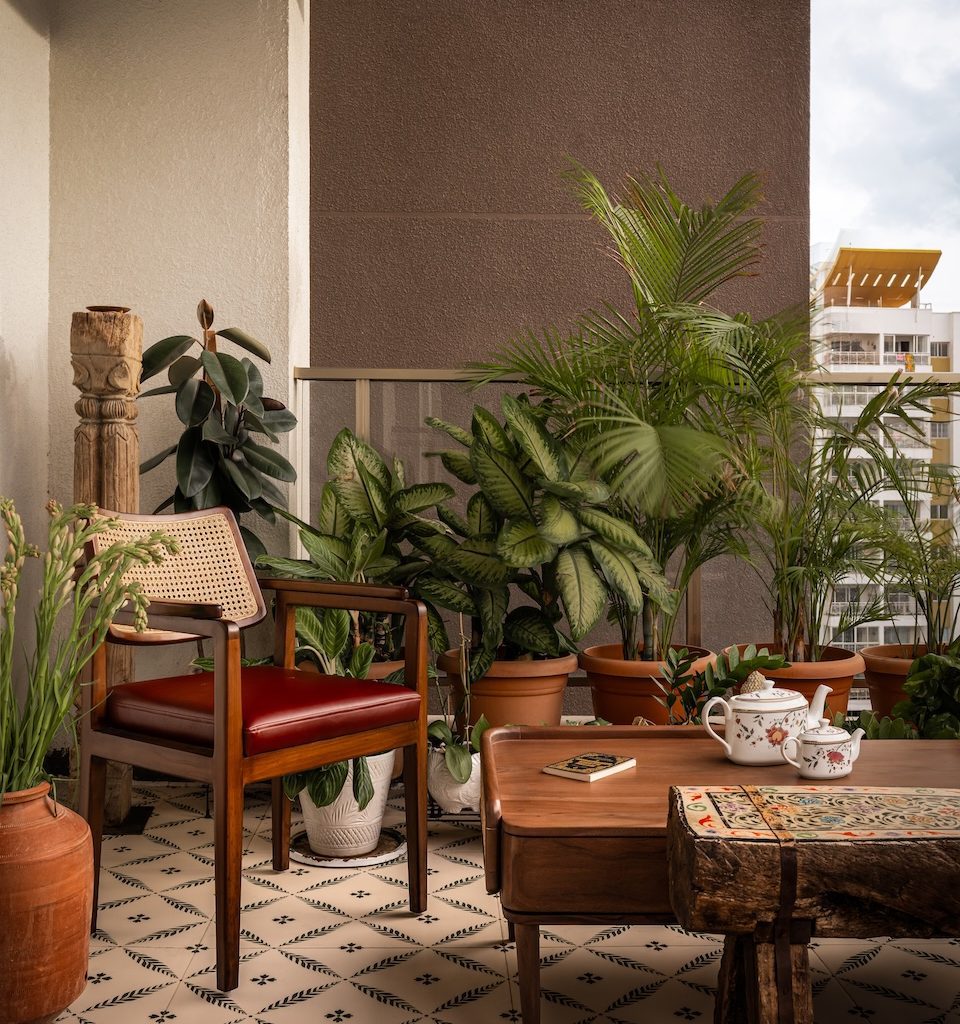
Across the residence, each space reflects this careful balance. The living areas feel open and inviting, while the bedrooms carry a more intimate expression through material and detail. Handwoven textiles, layered surfaces, and artisanal insertions contribute to a home that feels personal and rooted without appearing overtly thematic. At its core, Sukoon is envisioned as a sanctuary shaped by identity and craft. It draws from India’s enduring traditions while aligning with contemporary ways of living, allowing the handmade and the inherited to coexist with ease.
The design and material details
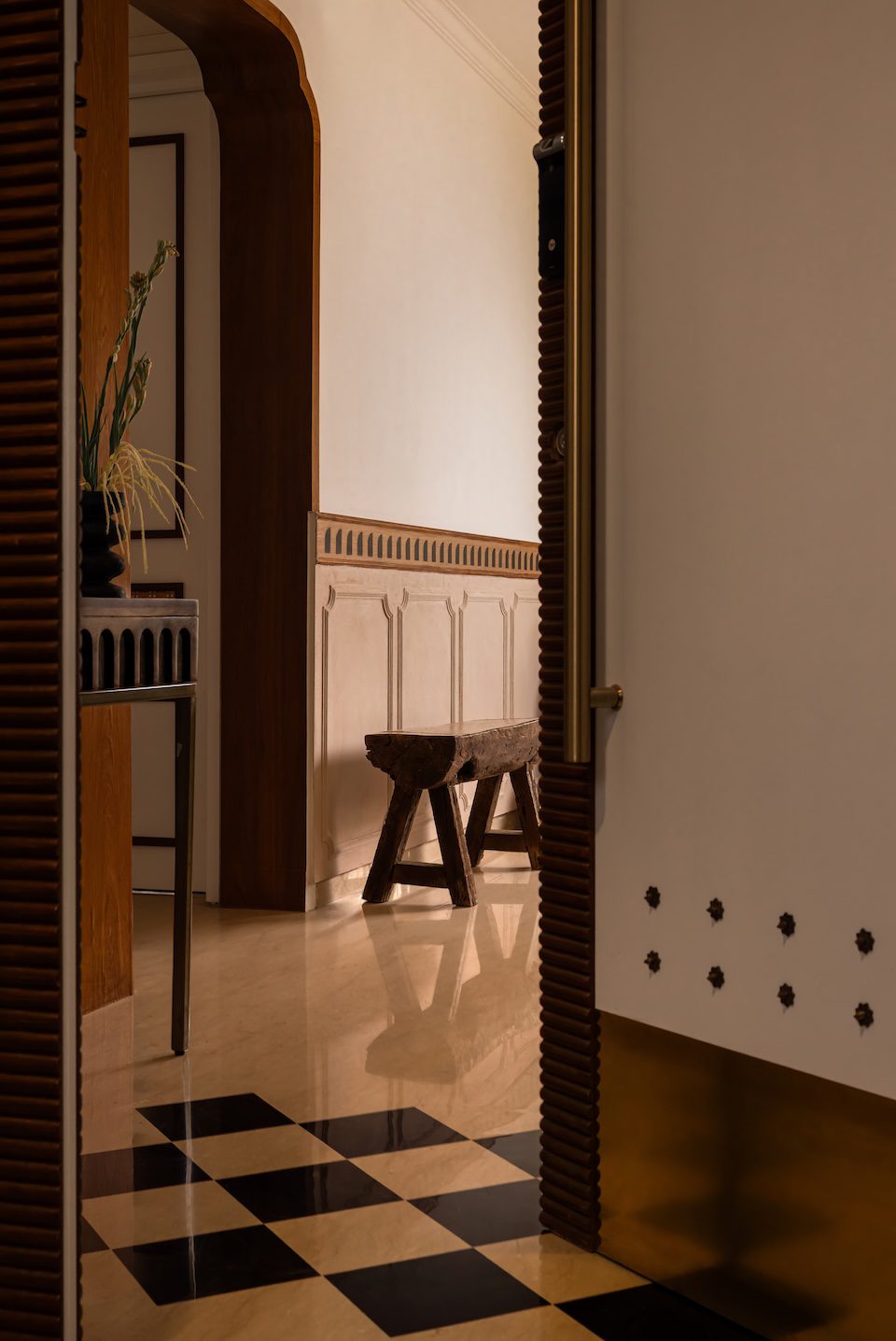
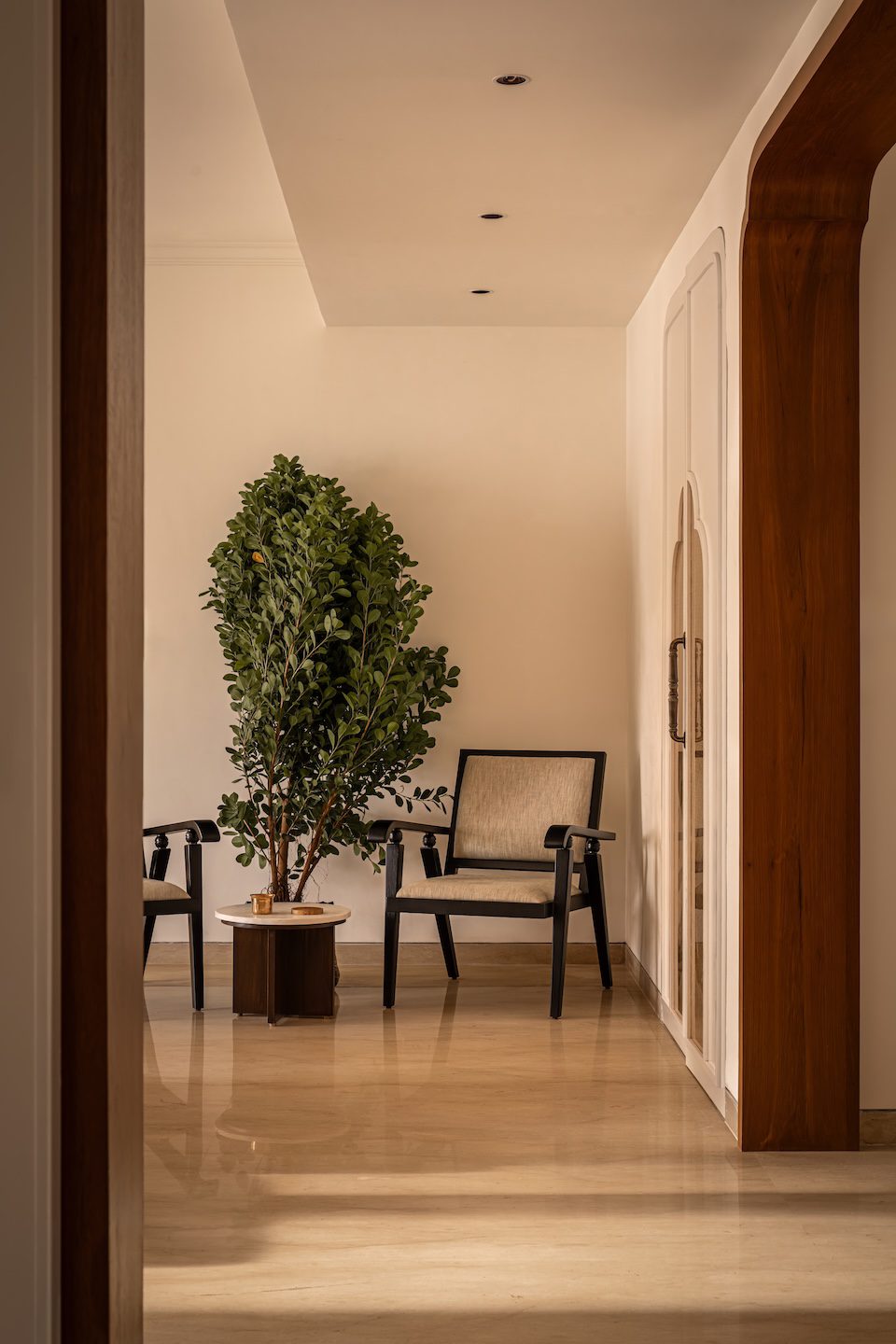
The entrance introduces a ribbed wooden panel framed in brushed brass skirting, accented with ornamental pins—a subtle nod to traditional Chettinad craftsmanship. Stepping inside, the foyer unfolds with a beige marble floor, its black stone inlay forming a classic chequered pattern that draws the eye inward.
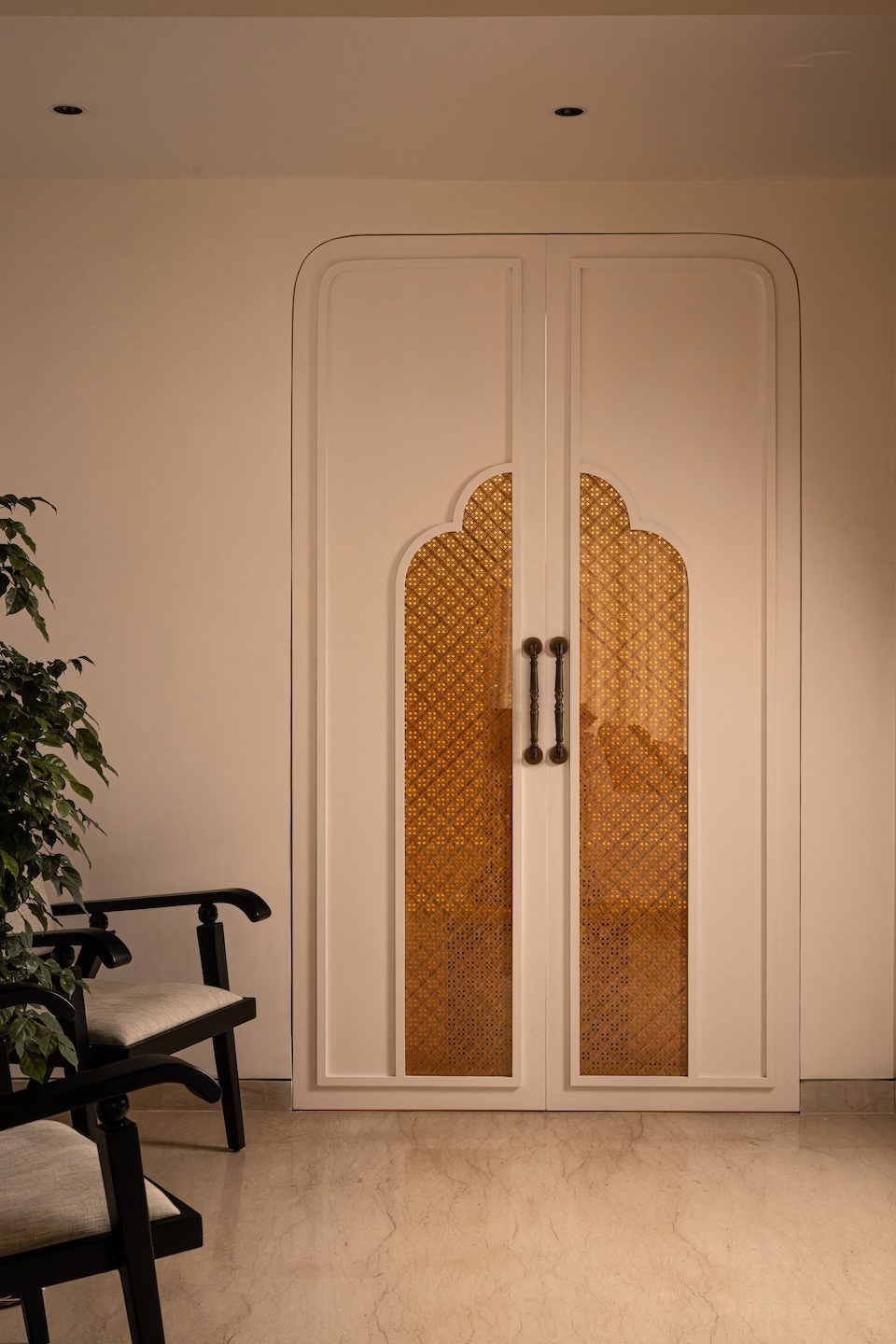
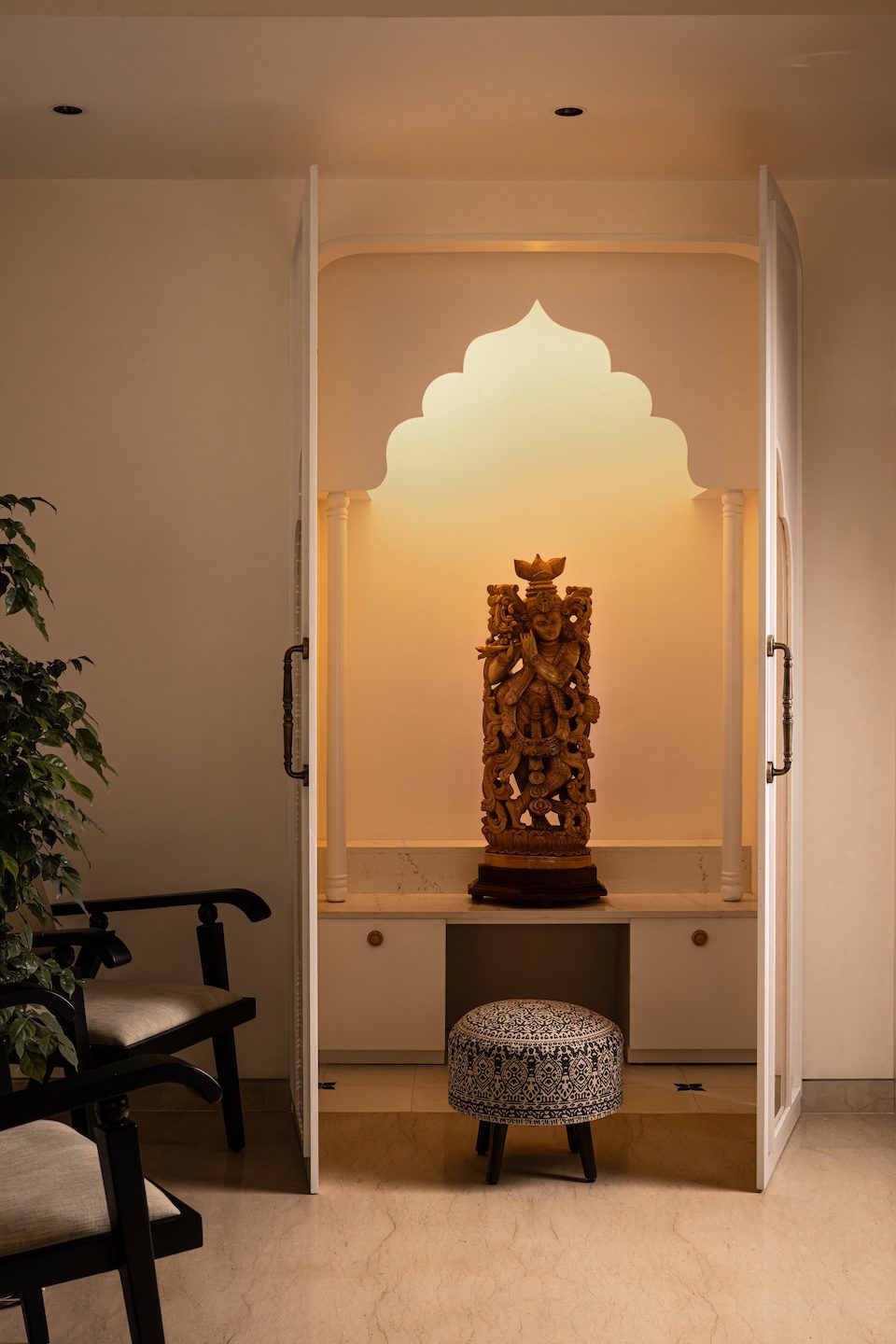
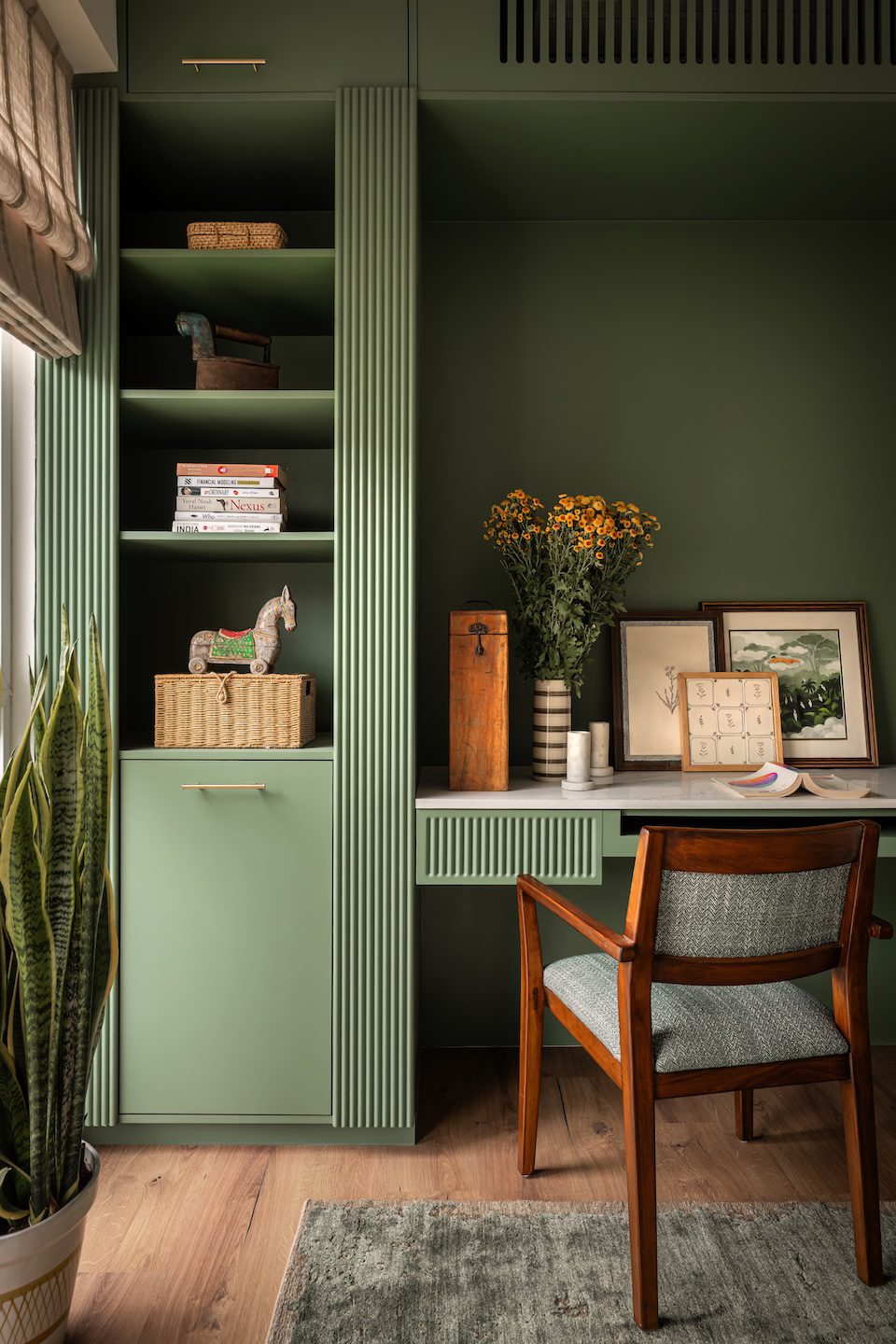
This threshold opens into a bright living and dining space, where a temple niche with white doors and cane detailing sits close to the entrance. From here every zone is connected with clarity, allowing the home to unfold gradually while maintaining a sense of cohesion across spaces. A corridor to the left leads toward the guest and master bedrooms, while the right wing accommodates the kitchen and utility areas positioned across the dining space. Beyond this, the layout extends into an olive-green study, before arriving at the parents’ bedroom further along.
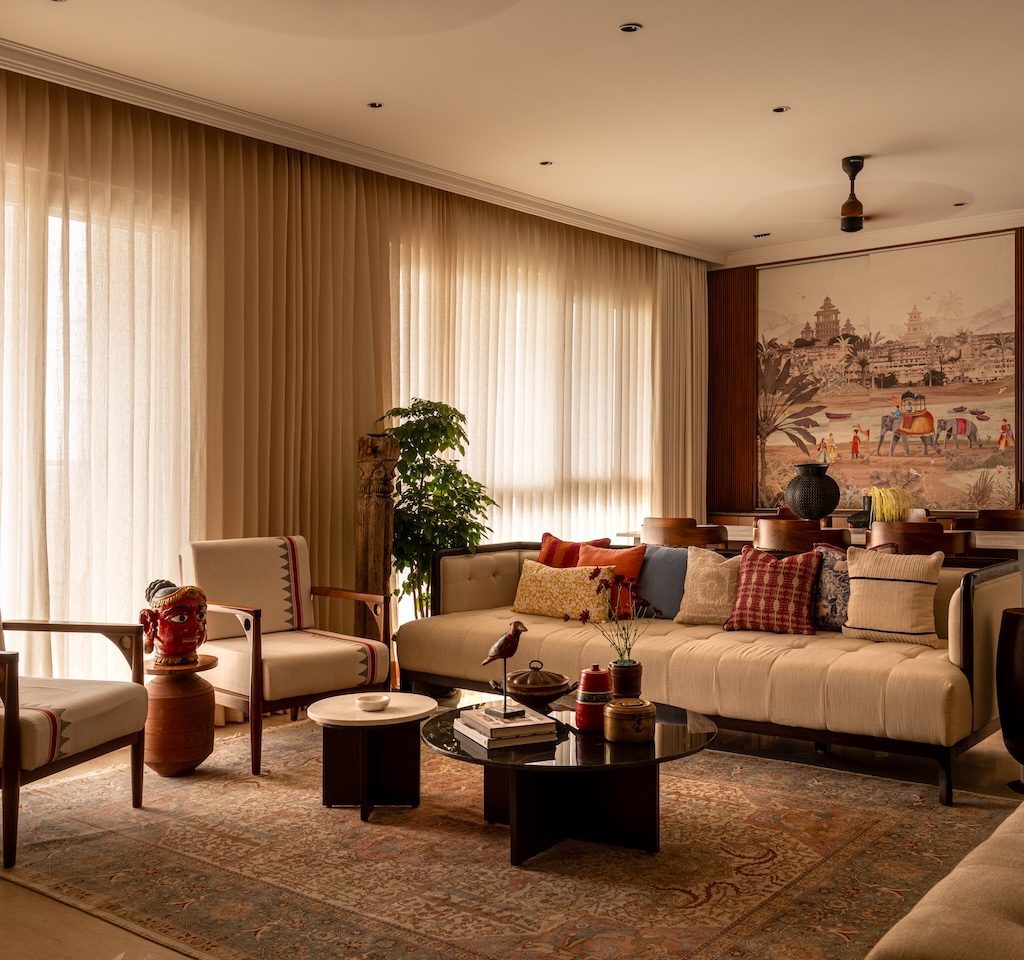
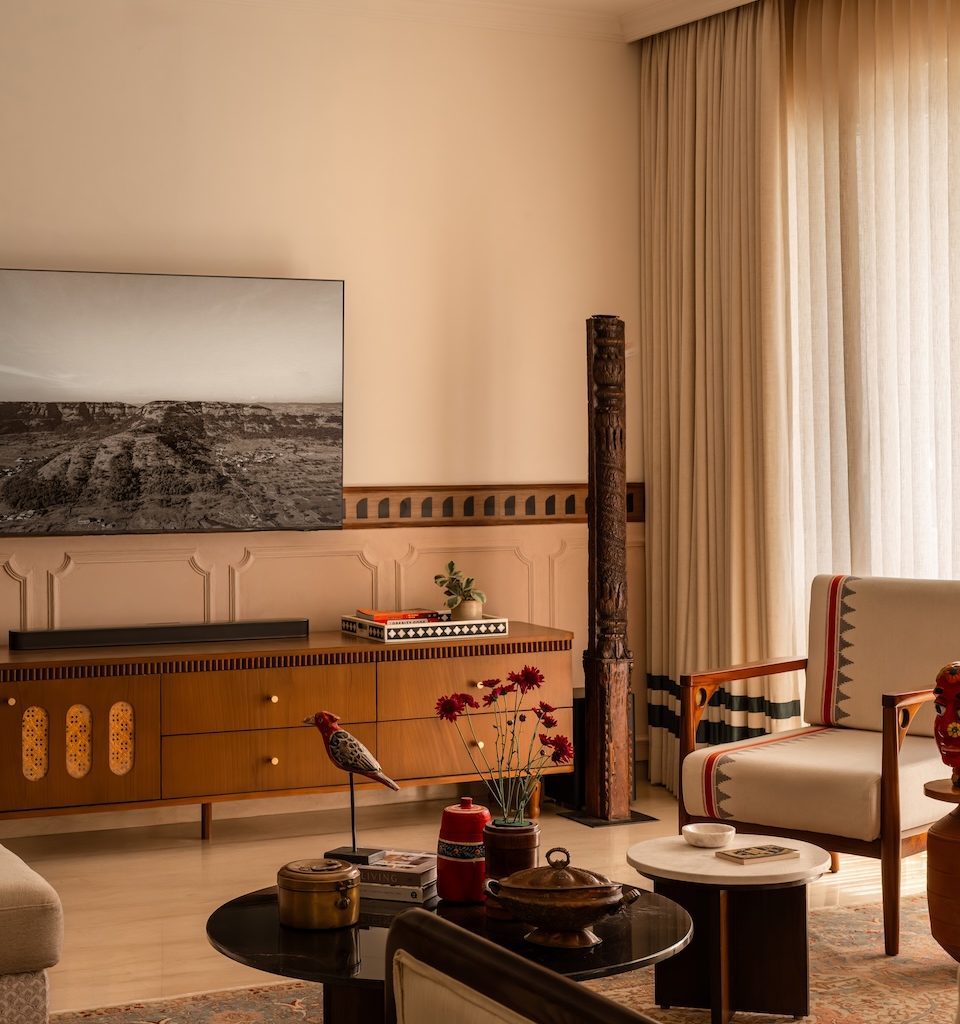
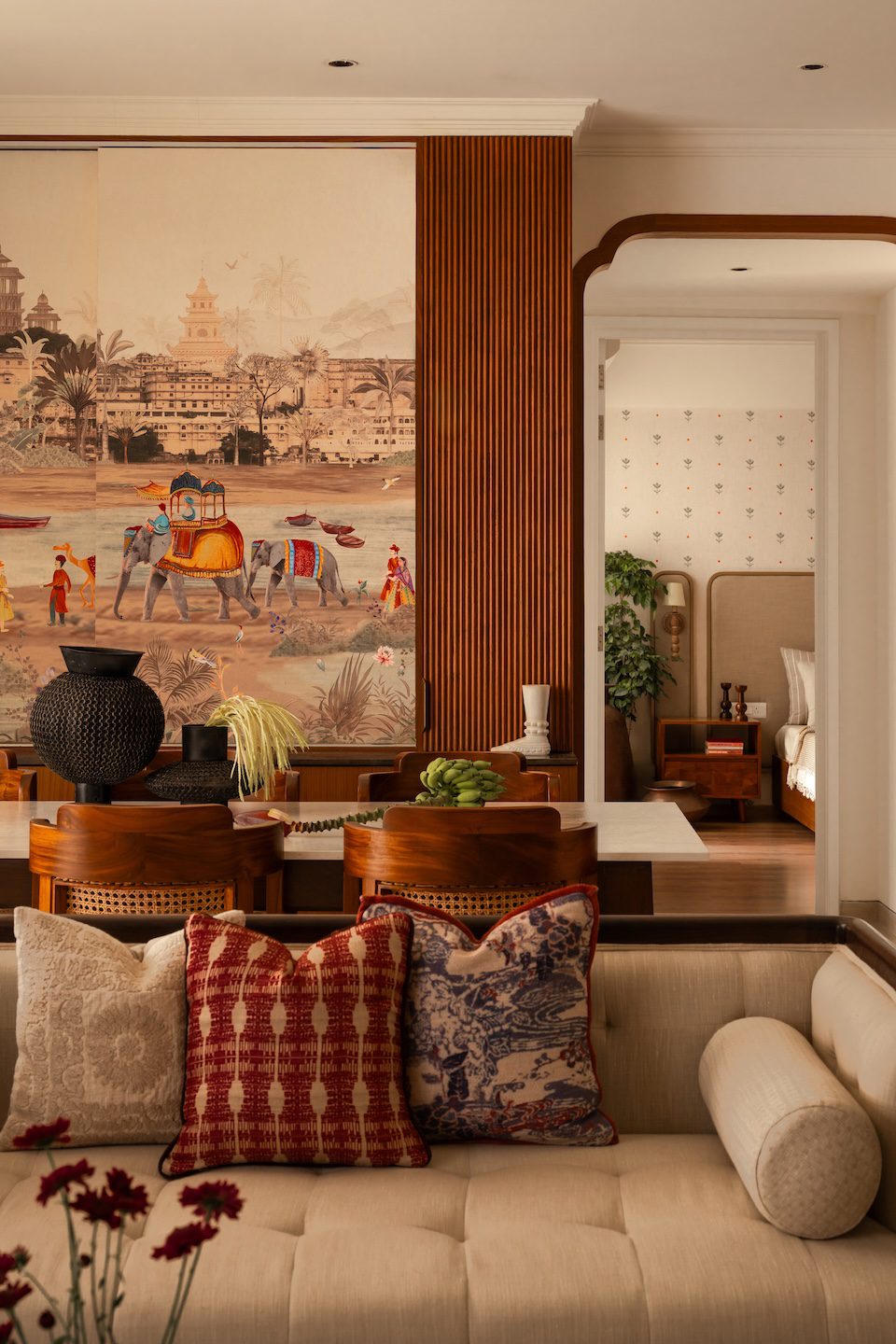
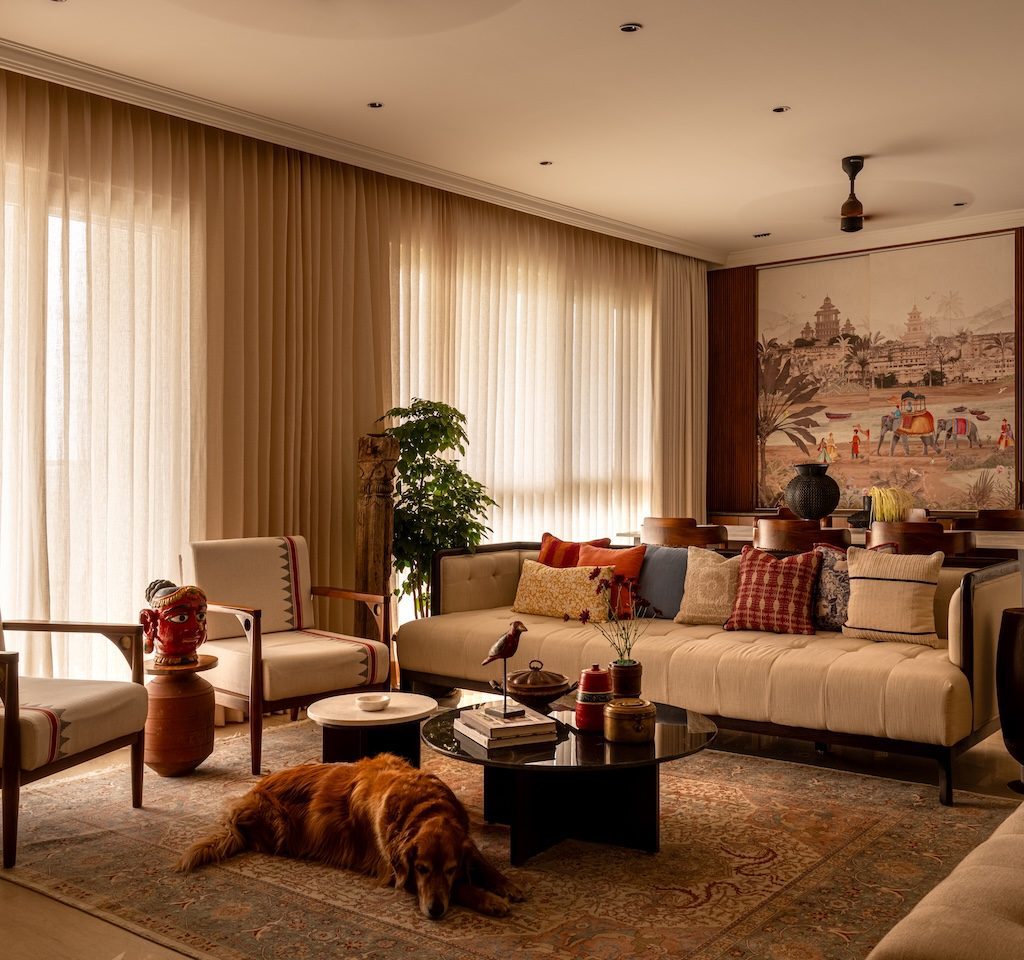
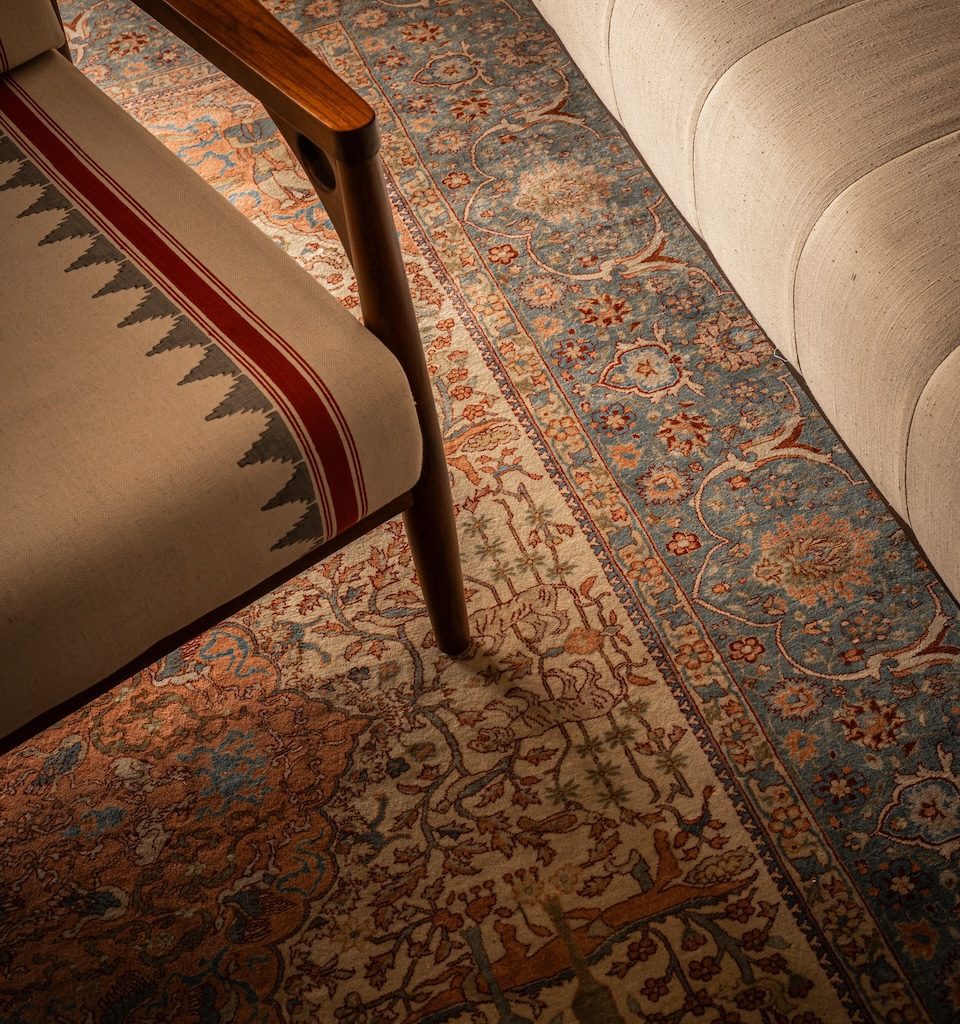
The living room draws you into a composition defined by texture and detail. Pared-back seating allows Obeetee’s handwoven rugs and cushions to take focus, their intricate weaves and earthy tones of maroon, beige, green, and blue adding depth without excess. A wooden TV console rests against wainscoting, its panelled surface finished with a veneered band inlaid with darker wood motifs. The console’s rounded legs introduce a softer geometry, echoing a language of curves that carries through the home—seen in arched doorways, mandir pillars, and select furniture pieces. As Pratyusha notes, “In the room, nothing calls for attention, yet everything holds it.”
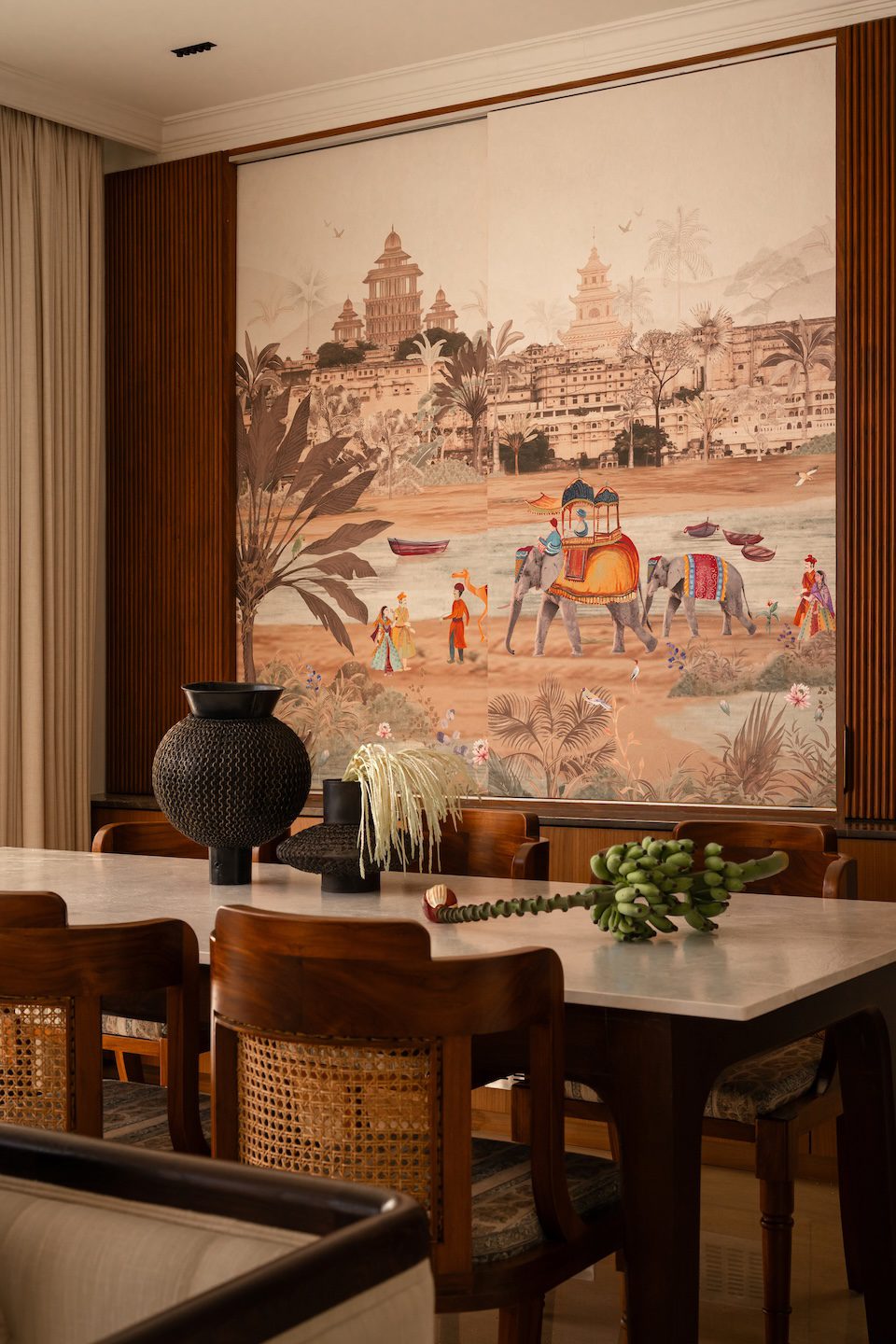
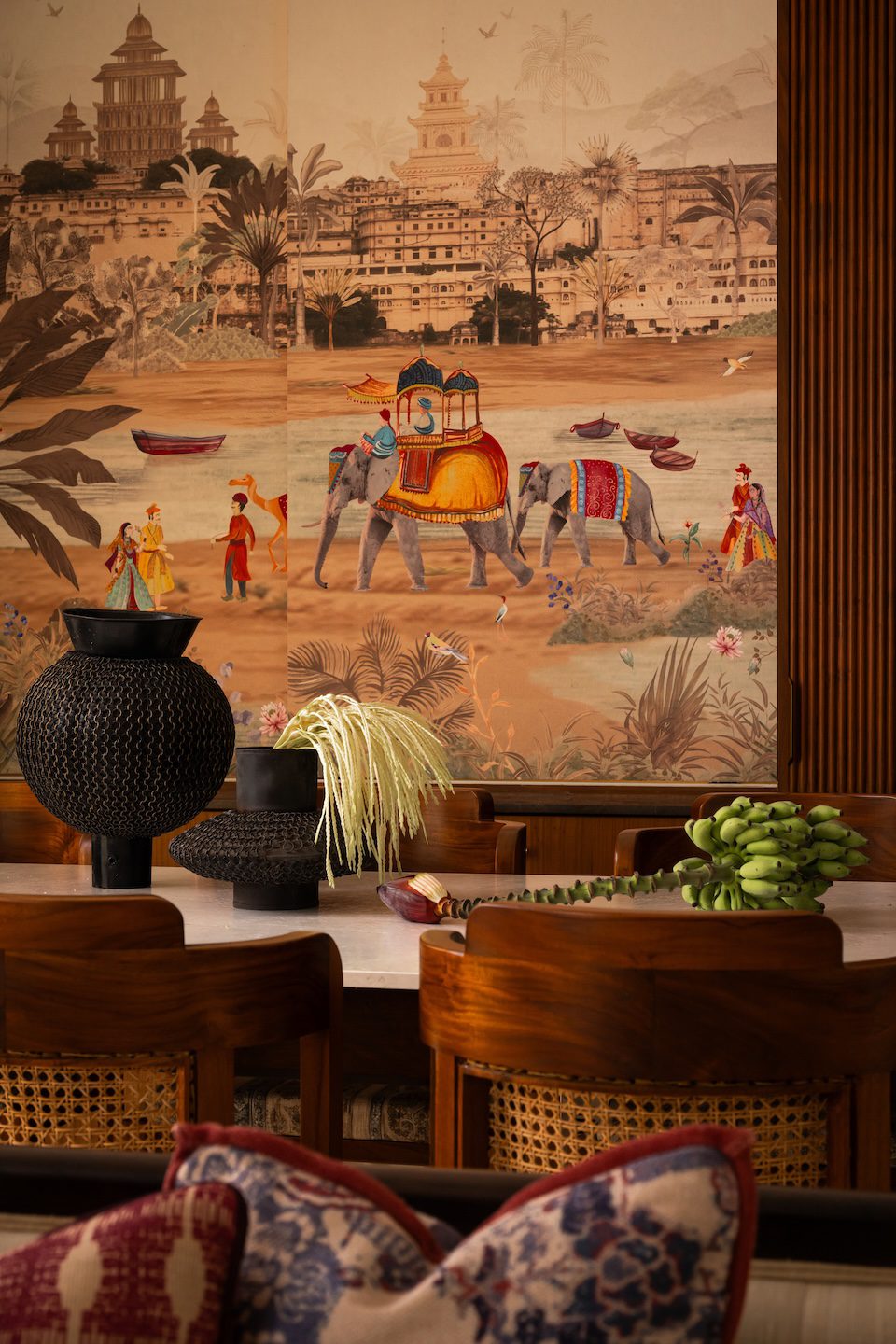
The dining area is anchored by a stone table paired with colonial-style chairs from Aanai, while a mural behind it engages the eye. Crafted by Kalakaari Haath, it evokes the richness of ancient India through a sweep of colour and imagery that feels both timeless and expressive. Beyond its visual presence, the mural also conceals a compact bar, seamlessly integrating function within the design.
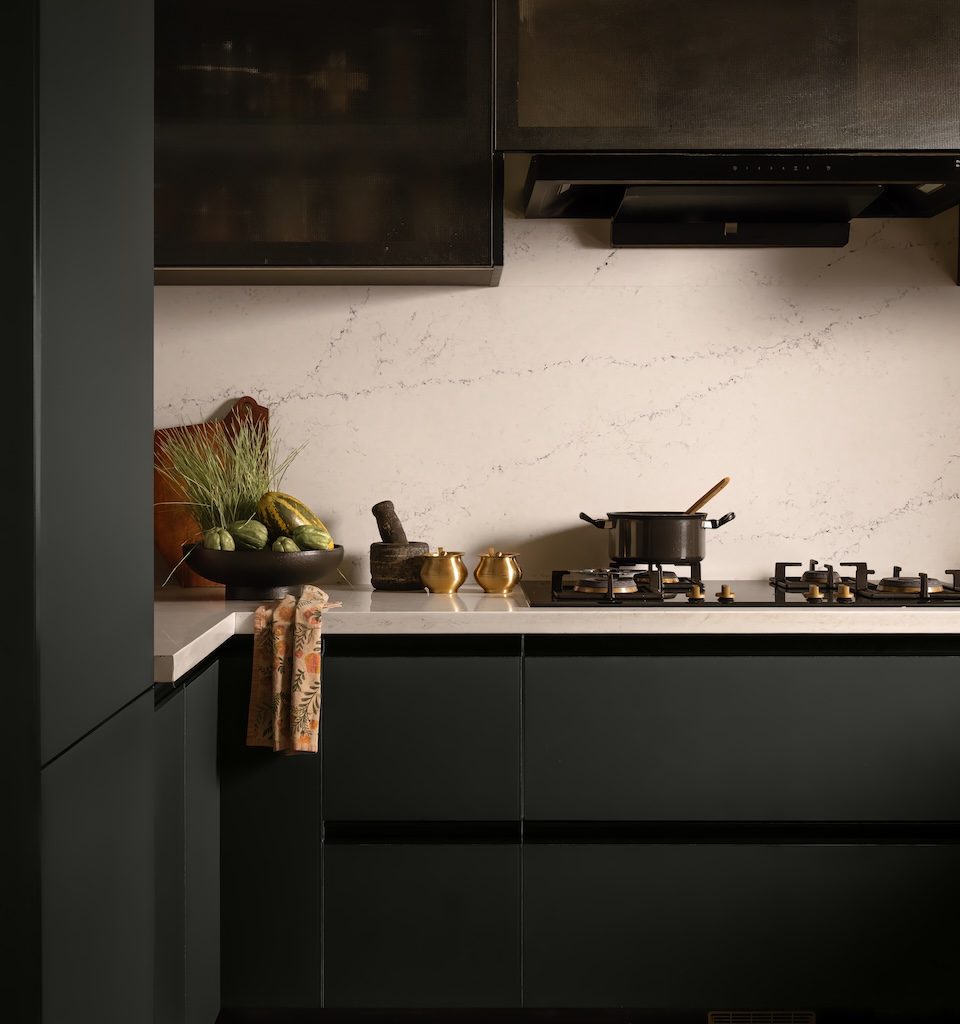
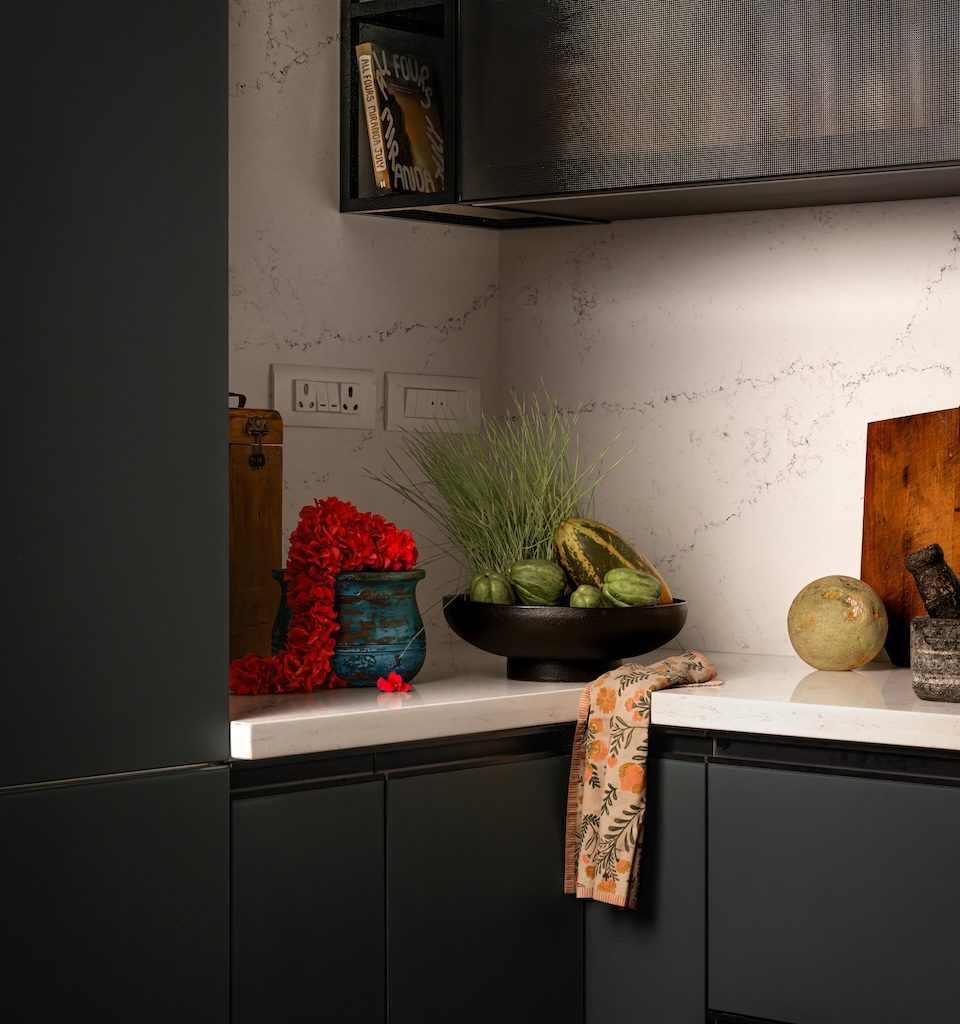
Adjacent to this, the kitchen introduces a deeper tonal shift with blue cabinetry and white stone countertops. Muted Athangudi tiles ground the space, offering a softer take on a traditionally vibrant material. “These handmade tiles are usually bold and expressive, but we opted for a subtler design, as proof that tradition and modernity can co-exist in gentler ways,” says Pratyusha.
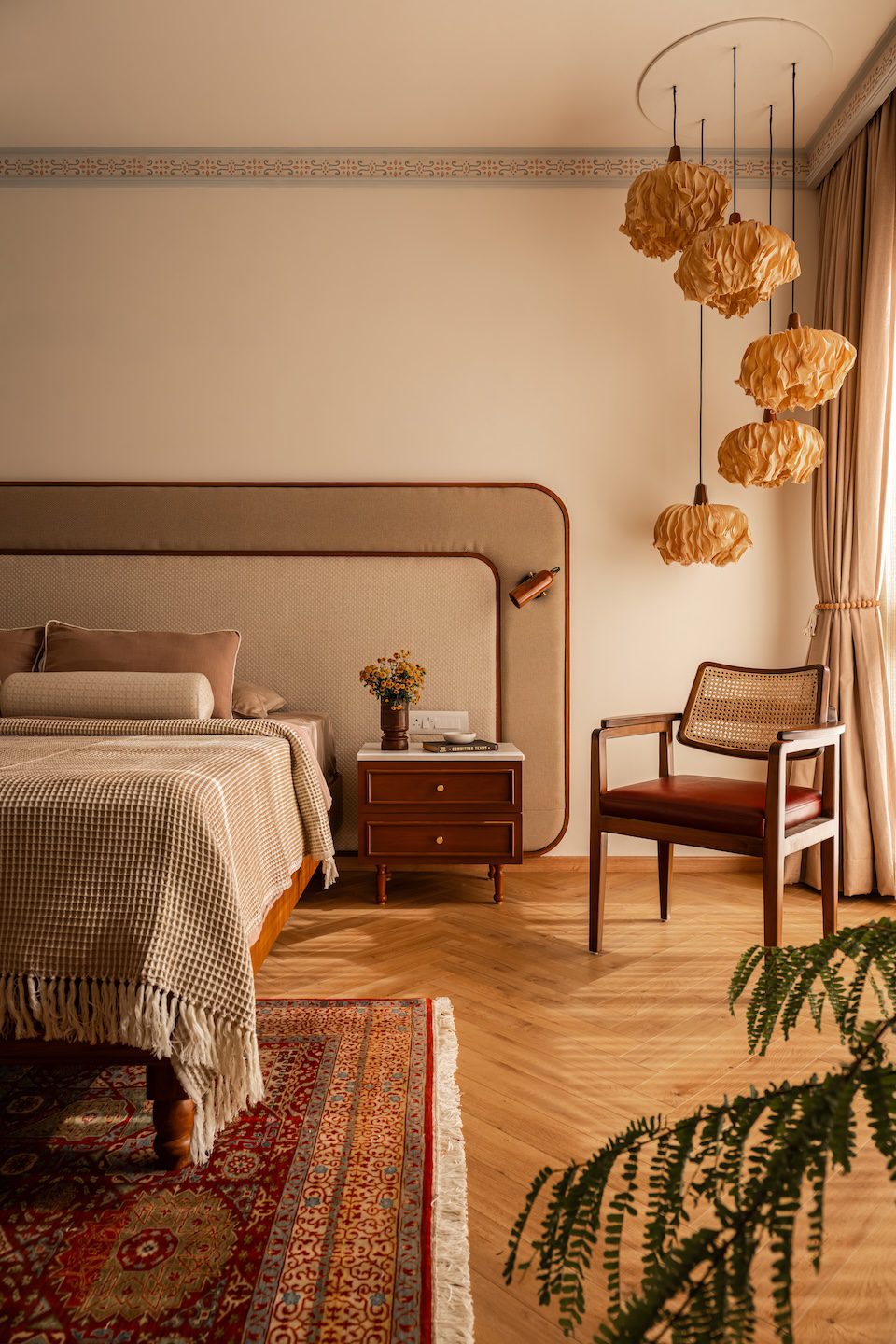
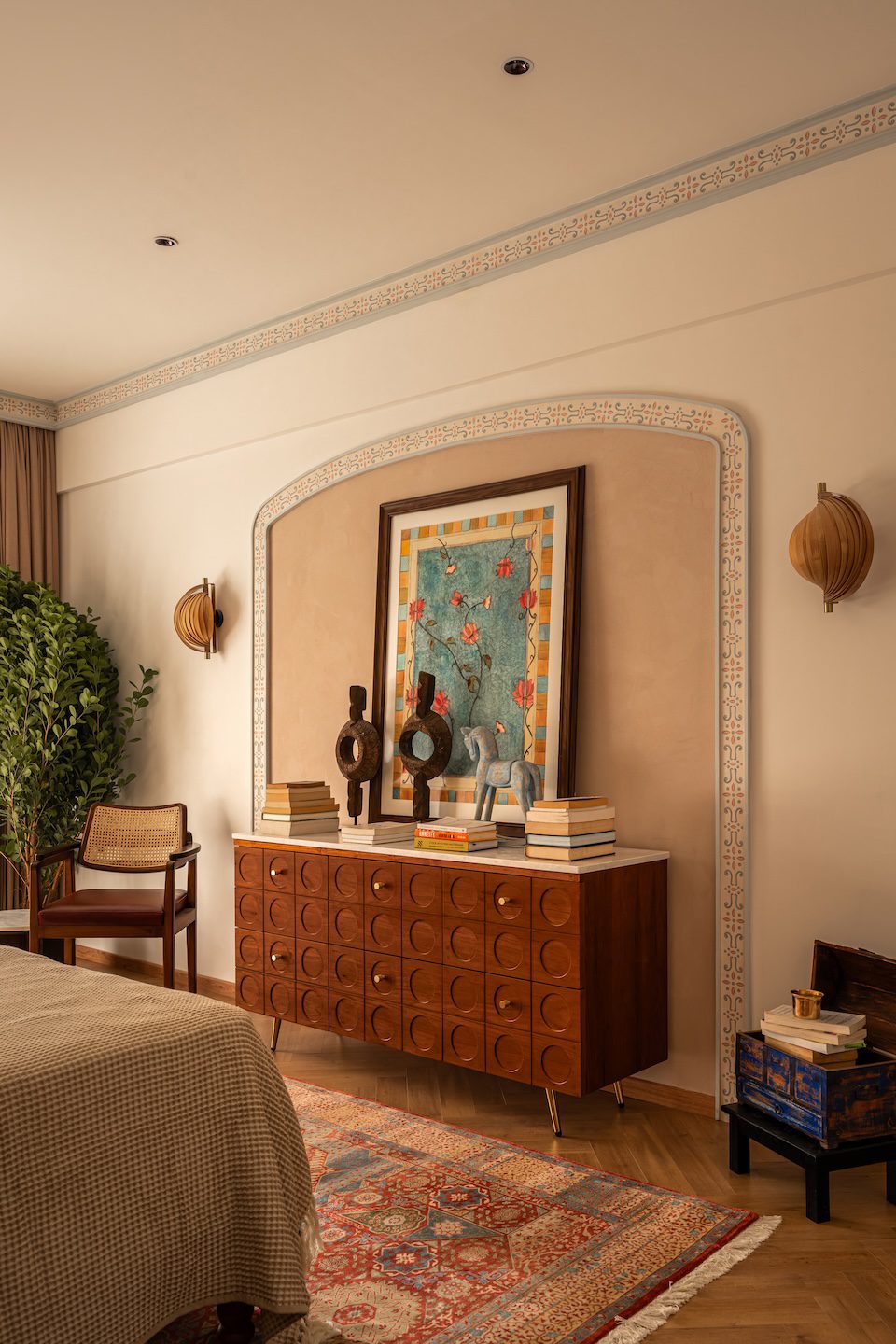
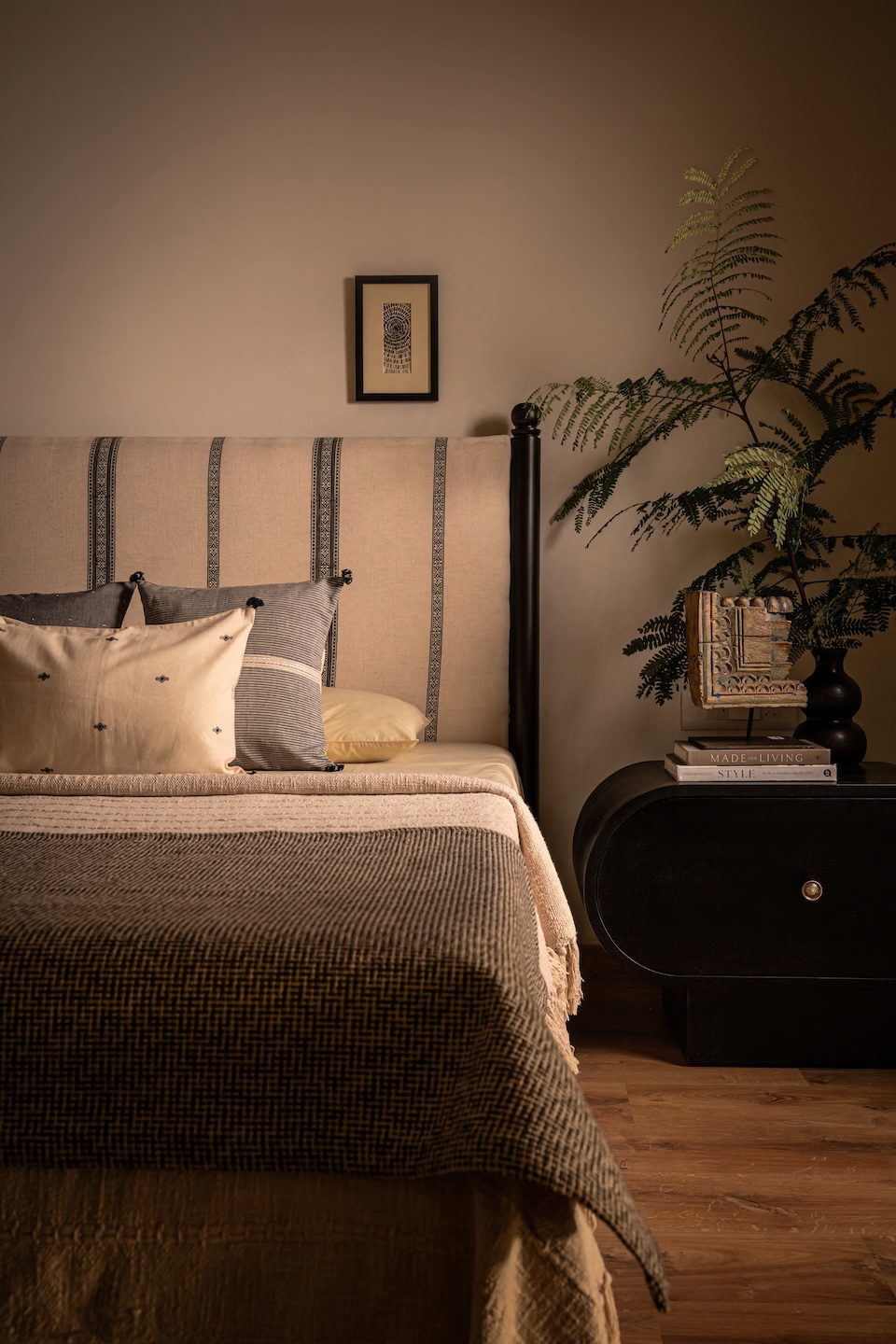
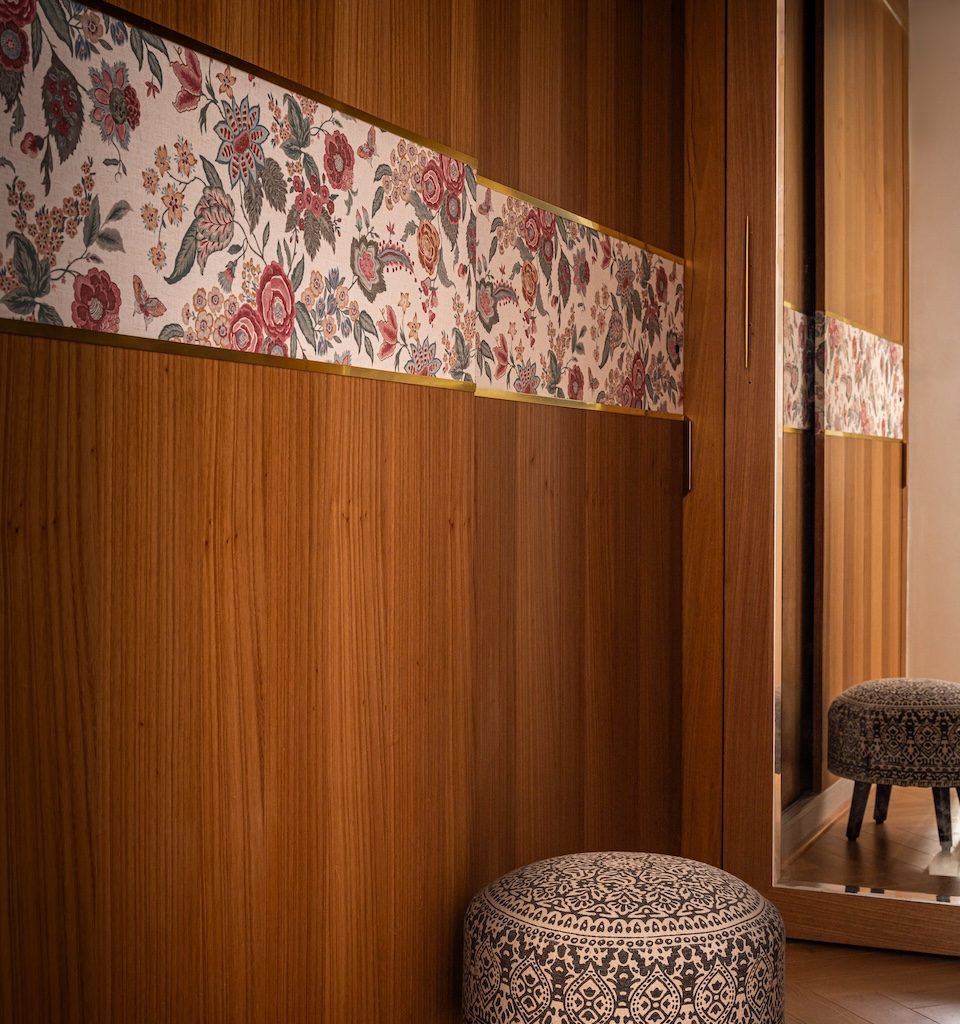
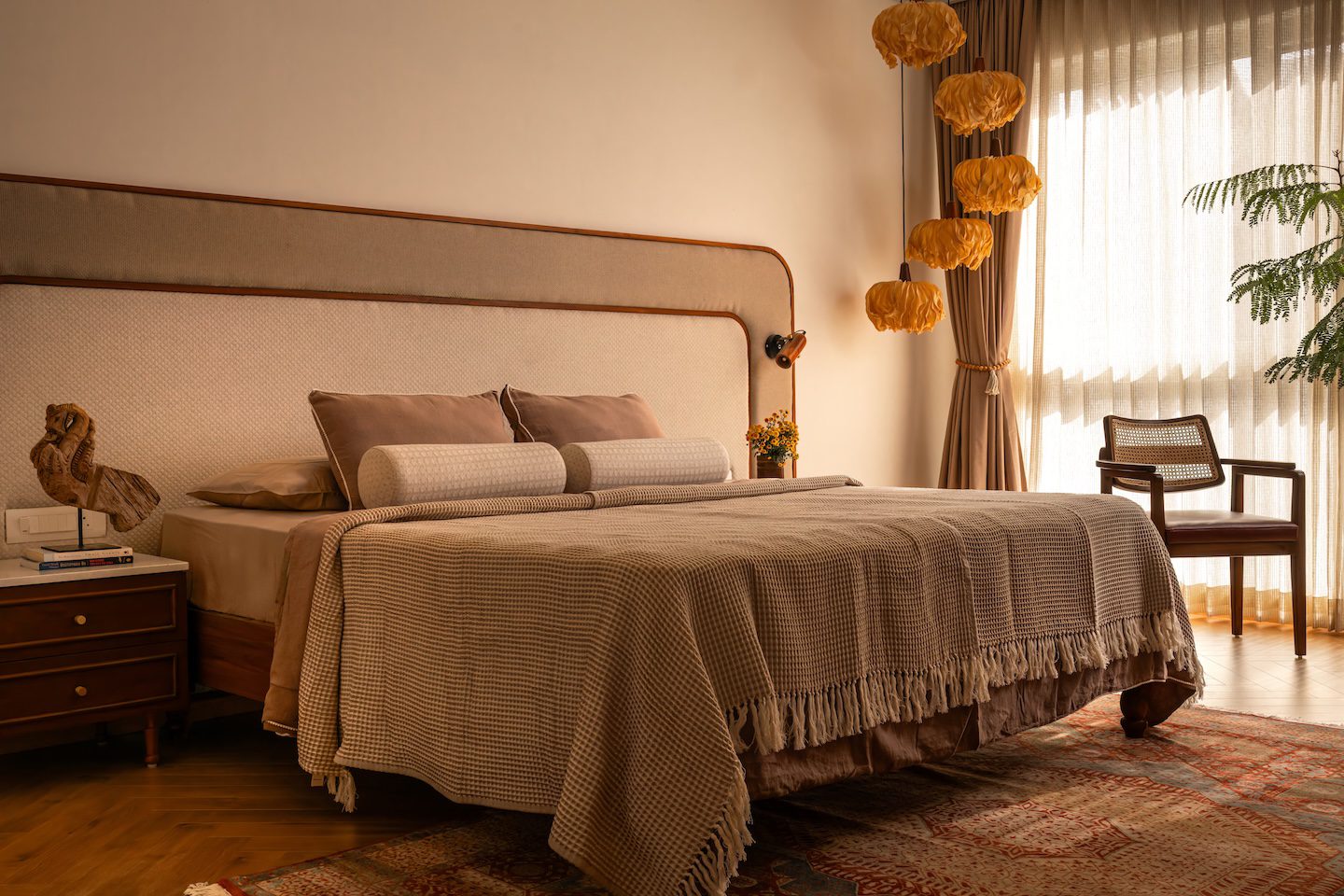
The master bedroom is conceived as a calm, cocooned retreat, defined by a wallpaper cornice from Design by Metamorph. A delicate floral border in pastel pinks, blues, and beiges runs along the edge before gently extending onto the opposite wall, where it transitions into a refined moulding that frames a mid-century wooden console. A Madhubani painting placed above echoes this palette, while bamboo wall sconces introduce a subtle organic presence. The oversized headboard and bedding align with these softened tones, creating a space that feels composed and restful.
In contrast, the guest bedroom takes on a more restrained palette of black and white. Dark-stained furniture anchors the room, while a block-printed headboard and bedding add texture and familiarity. A pastel blue wardrobe offsets the contrast, introducing a lighter note that balances the overall composition.
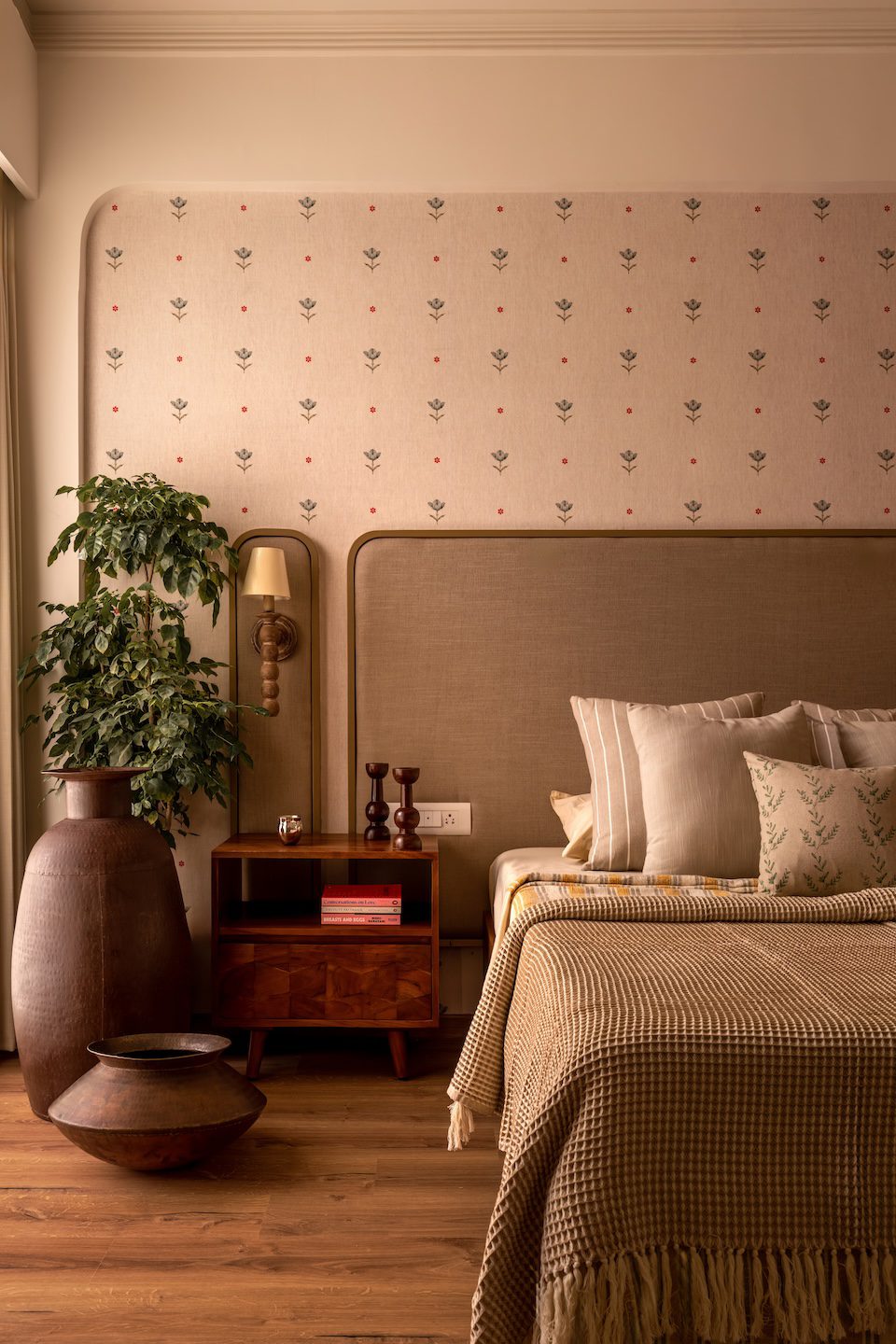
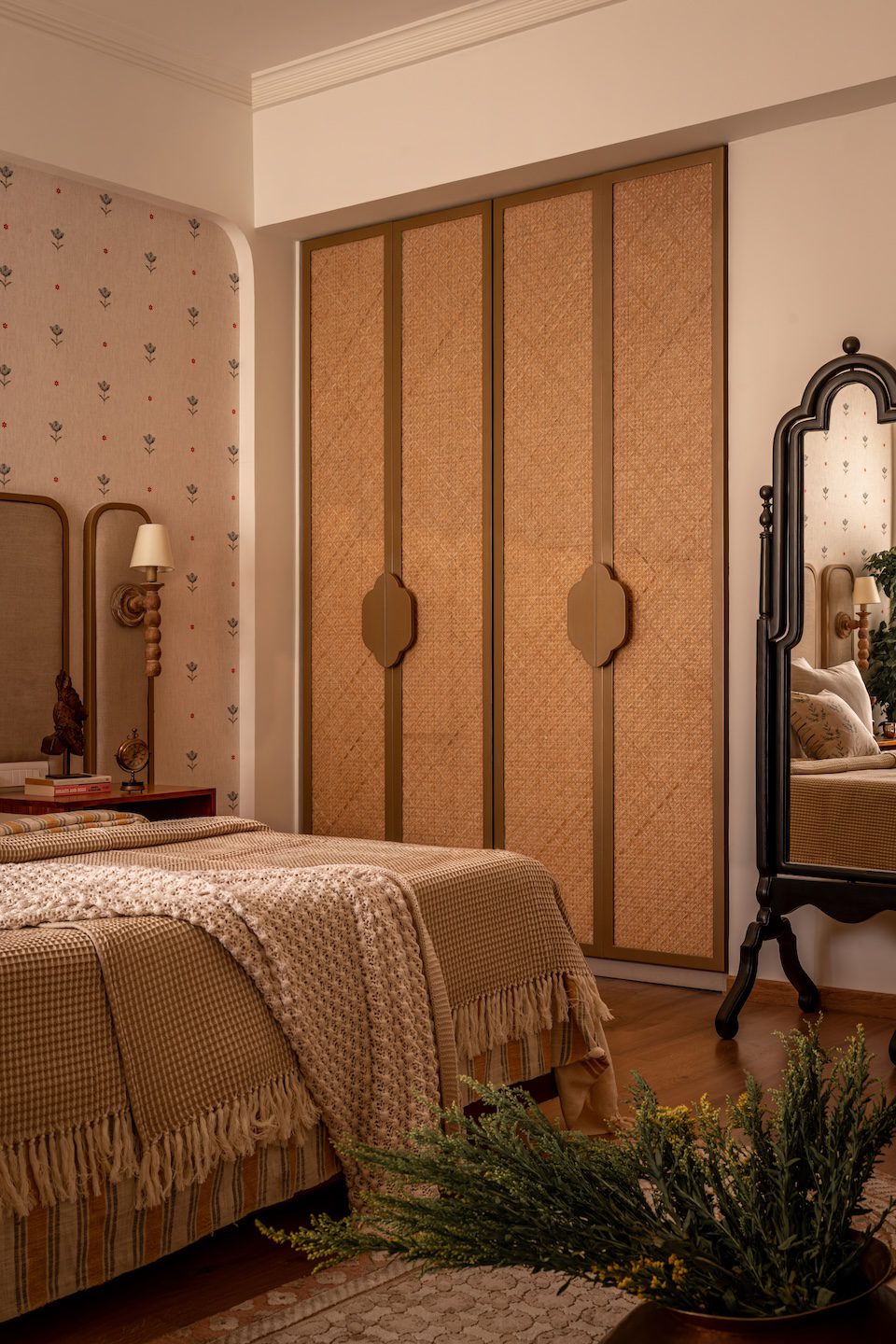
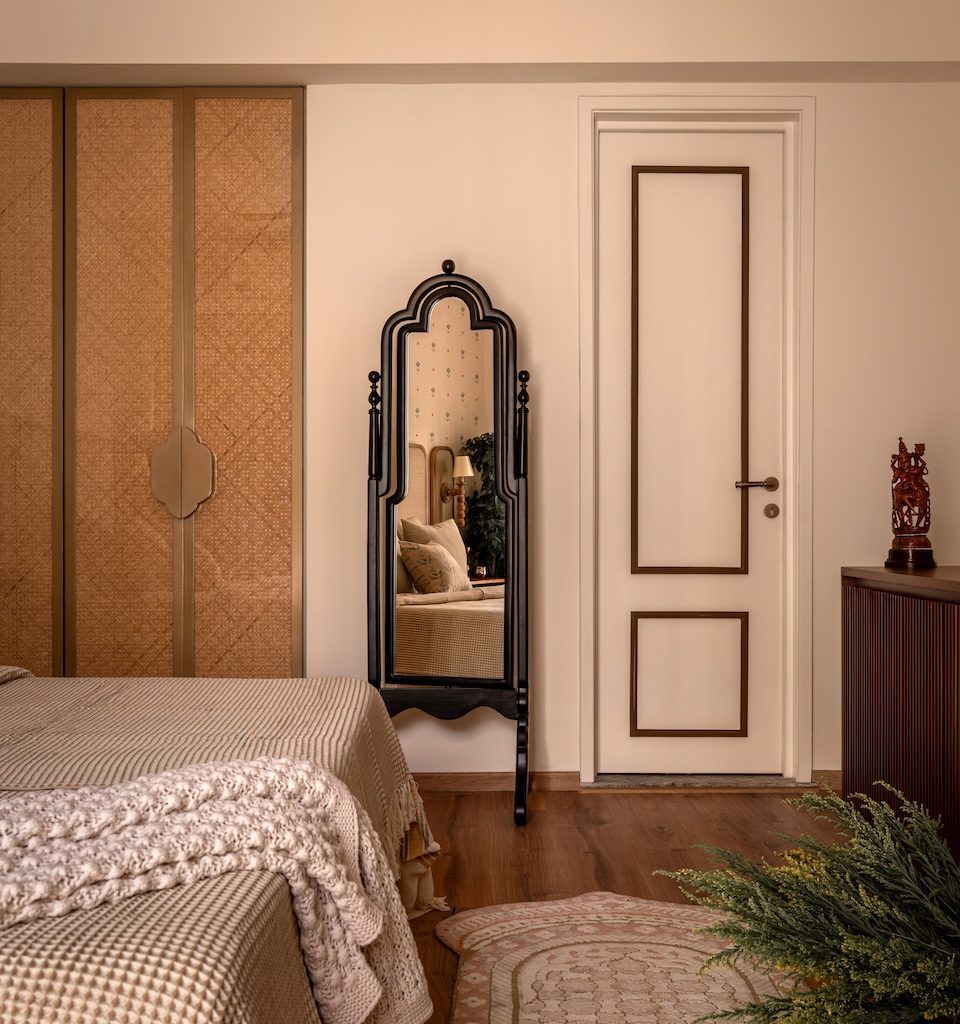
The parents’ bedroom is defined by floral wallpaper framed within rounded arches, forming a composed vignette that is visible from the living area. A wooden bed layered with plush textiles is paired with pared-back side tables and lamps, lending the space a gentle, restful character.
A wood and wicker wardrobe continues the material narrative, its bespoke handles subtly referencing the arches seen in the living room. A Jaipur Rugs piece introduces warm rust tones, adding depth and a sense of warmth to the setting.
Fact File
Project: Sukoon
Location: Bengaluru
Area: 2,700 sq ft
Principal designer: Pratyusha Kethinedi
Stylist: Drisha Jain
Add a Comment