
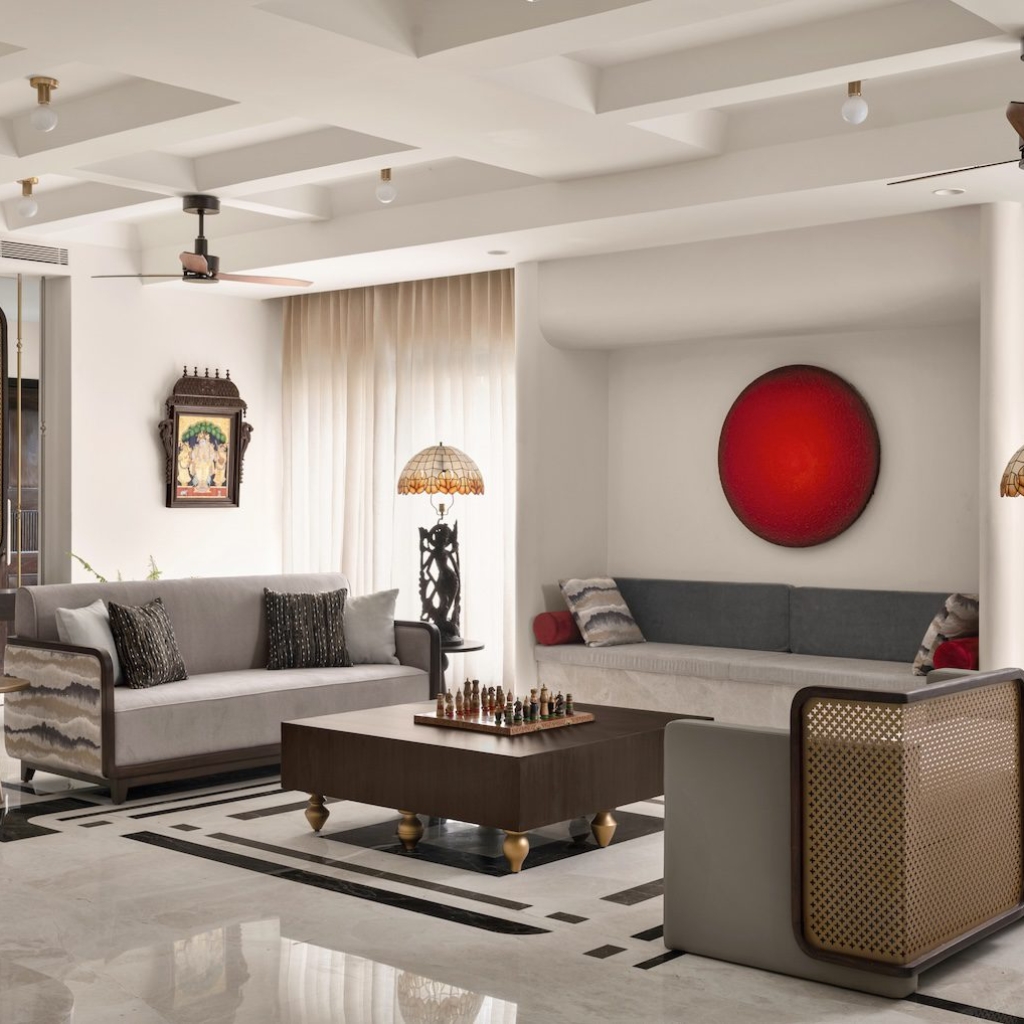
Raaga, a 4,400 sq ft home in Chennai’s Adyar neighbourhood designed by YellowSub Studio, is conceived around memory, continuity, and the careful integration of a family’s long-collected belongings.
Curated by: Deepa Nair
Photographs: Nayan Soni; courtesy YellowSub Studio
The brief
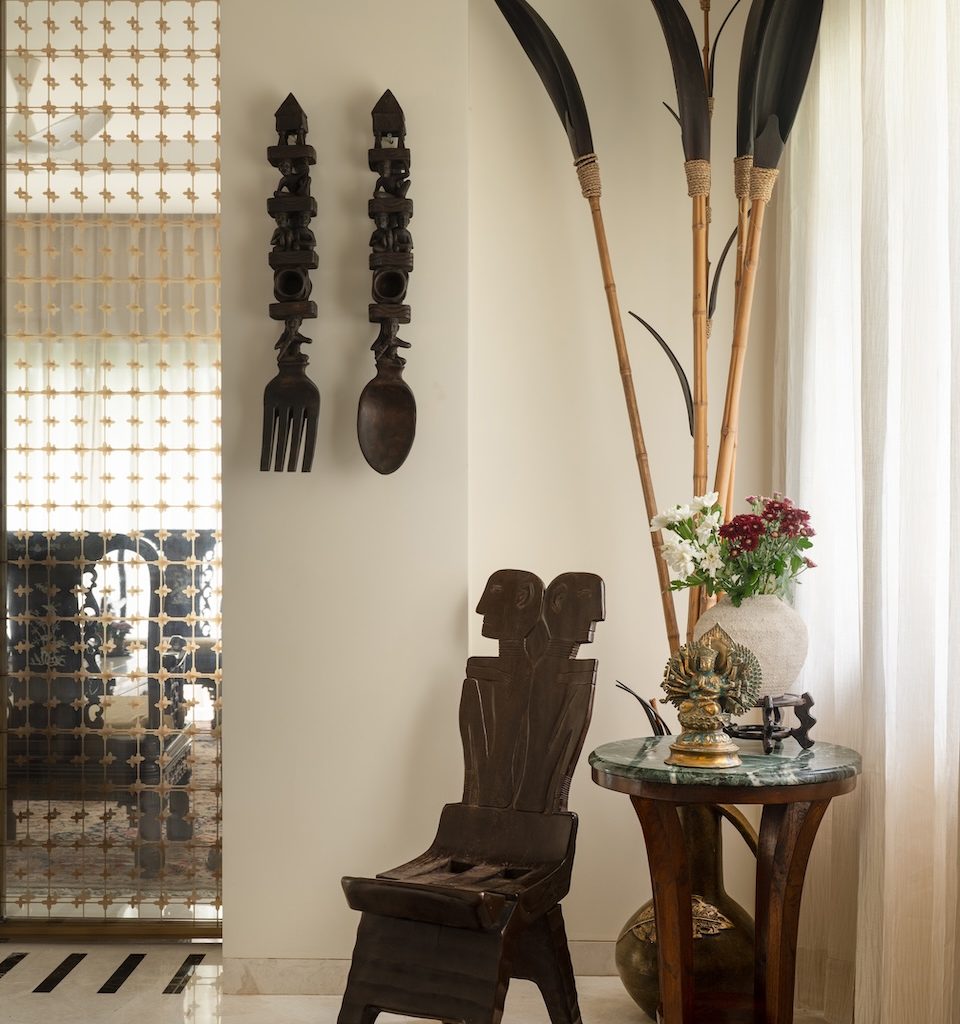
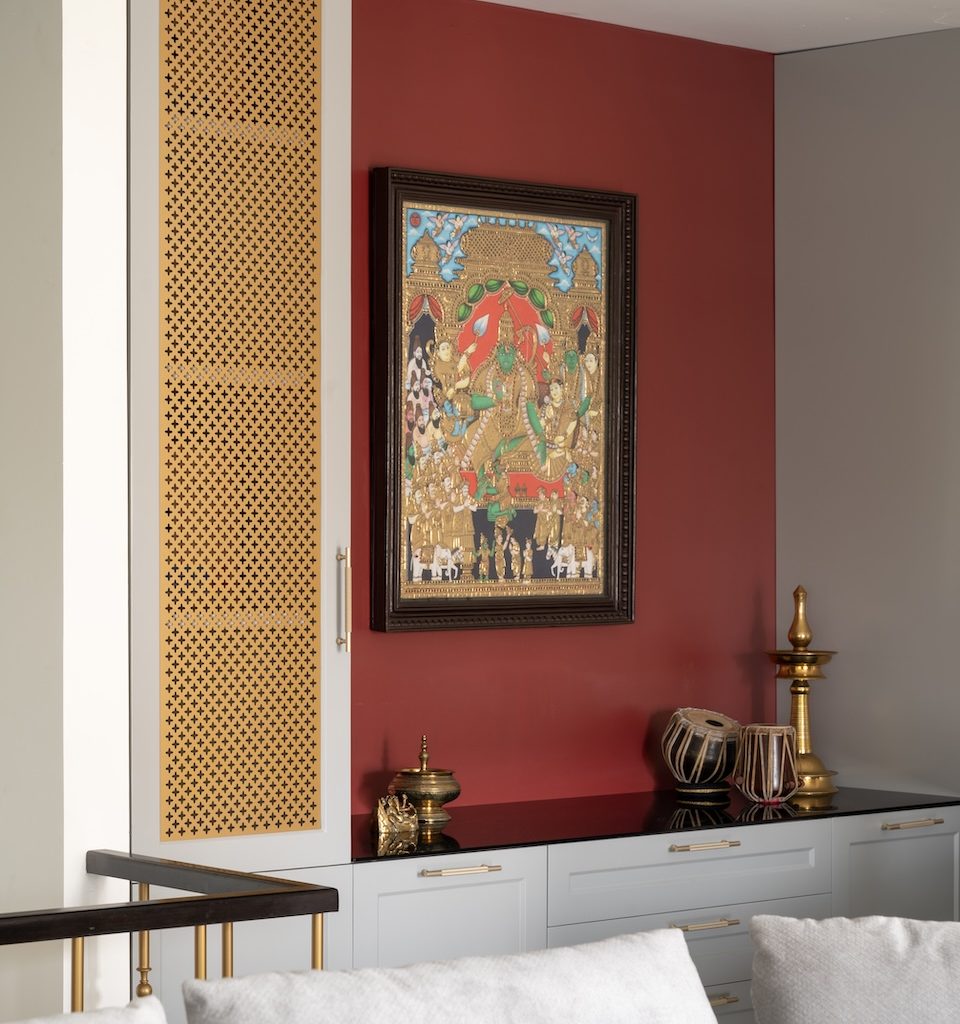
When a family returns home after more than two decades abroad, they do not return empty-handed. They return with objects that have travelled with them, lived with them, and quietly absorbed the passing of time. For this family, moving back to Chennai after years in Manila meant bringing home crates of furniture, artefacts, and personal belongings—each piece carrying stories, associations, and a deep sense of familiarity. The clients shared a detailed document cataloguing every item they were bringing back—measurements carefully noted, photographs annotated, histories understood. The brief was clear: the architecture and interiors were to be shaped around objects the family had grown up with and lived alongside for years.
This sensibility became the foundation of Raaga, a 4,400 sq ft residence in Chennai’s Adyar neighbourhood, designed by YellowSub Studio. “The design process didn’t follow the conventions of beginning with spatial layouts and material palettes, followed by the furniture and furnishing choices. The project began, instead, with an inventory,” shares Gayatri Gunjal, founder and principal designer of Yellowsub Studio.

The design intent
Rooted in memory and shaped by lived experience, Raaga is envisioned as a home that celebrates the family’s journeys, treasured possessions, and evolving way of life. Fluid spatial planning allows the home to unfold with ease, while generous natural light lends warmth and continuity across rooms. A nuanced interplay of global influences and traditional references informs the interiors, creating a setting that feels both worldly and deeply personal. At its core, the intent was to craft a home that holds memory without feeling weighed down by it—one that acknowledges where the family has been, while offering a calm, considered framework for how they live today.
The civil intervention
When the family first acquired the apartment, the lower level felt constrained and starved of natural light. The brief at this stage was direct: open up the home, introduce daylight, and allow the spaces to breathe. Addressing this called for decisive civil changes.
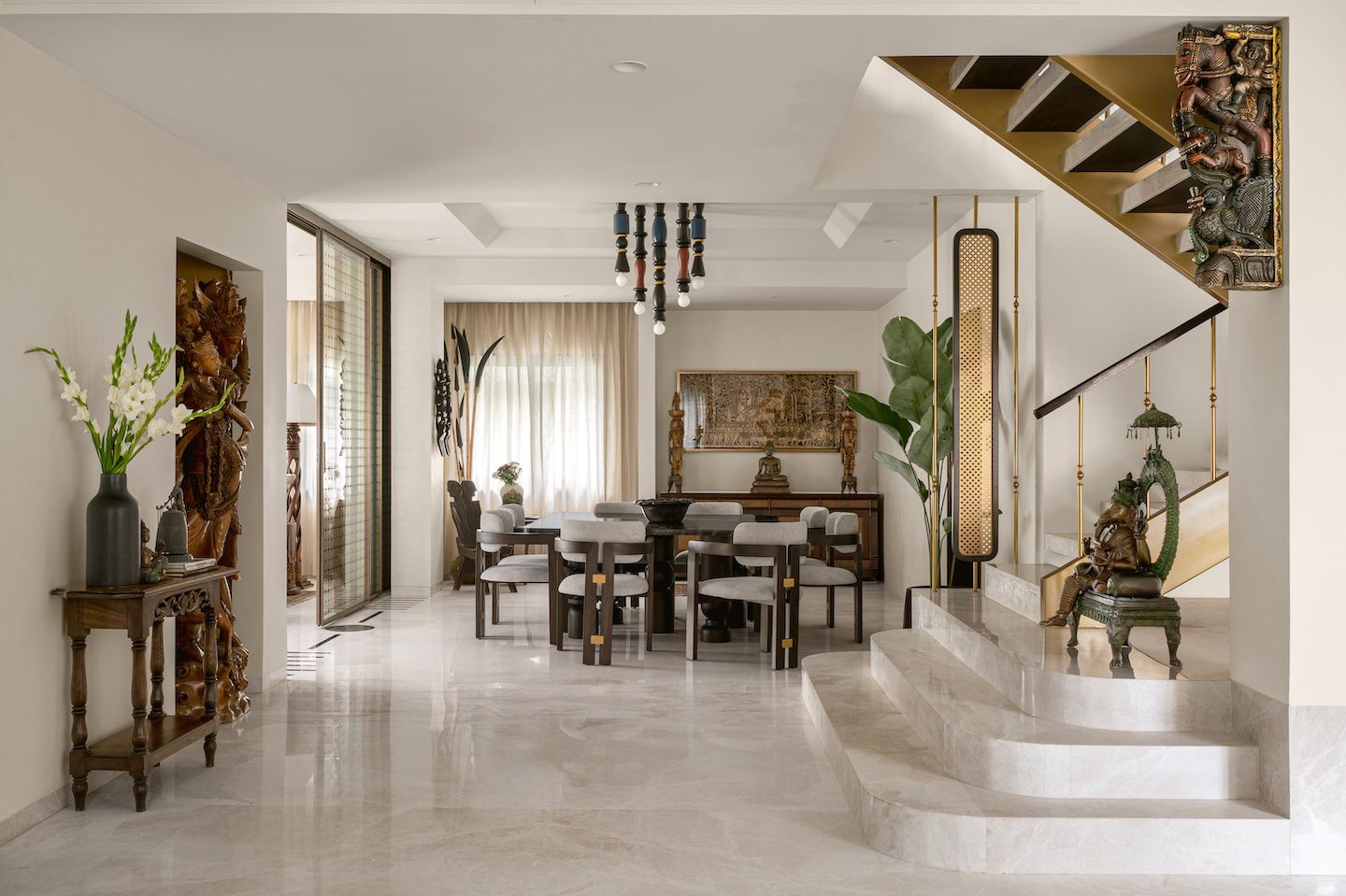
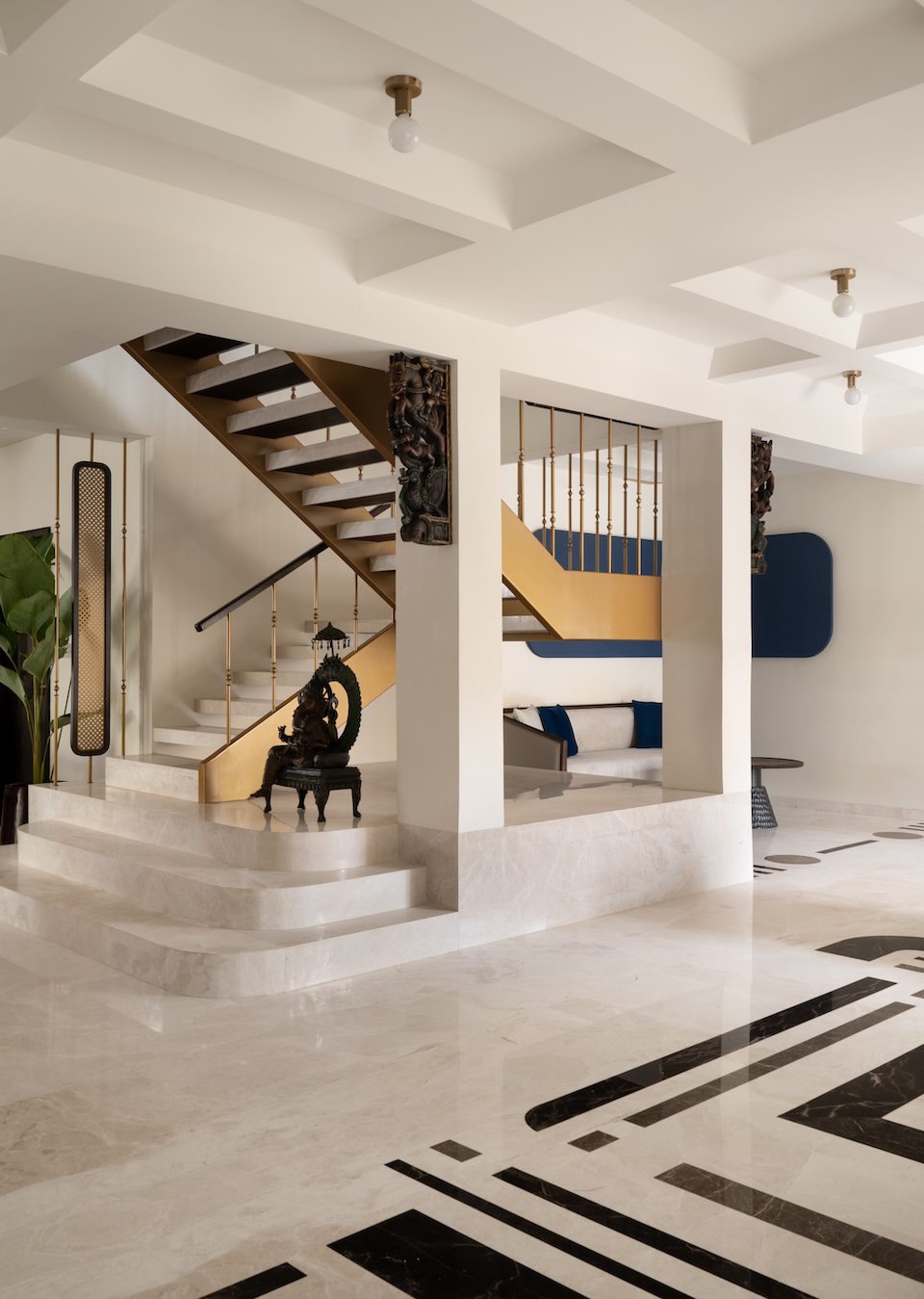
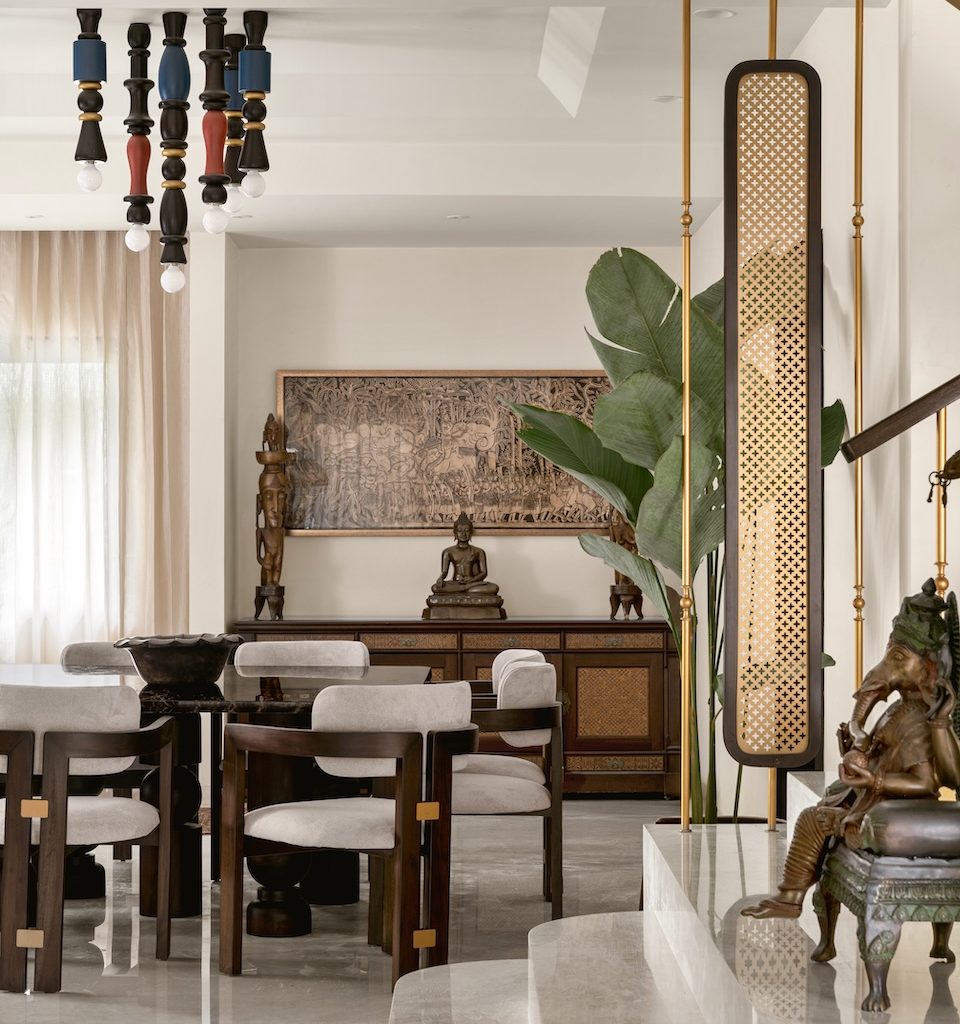
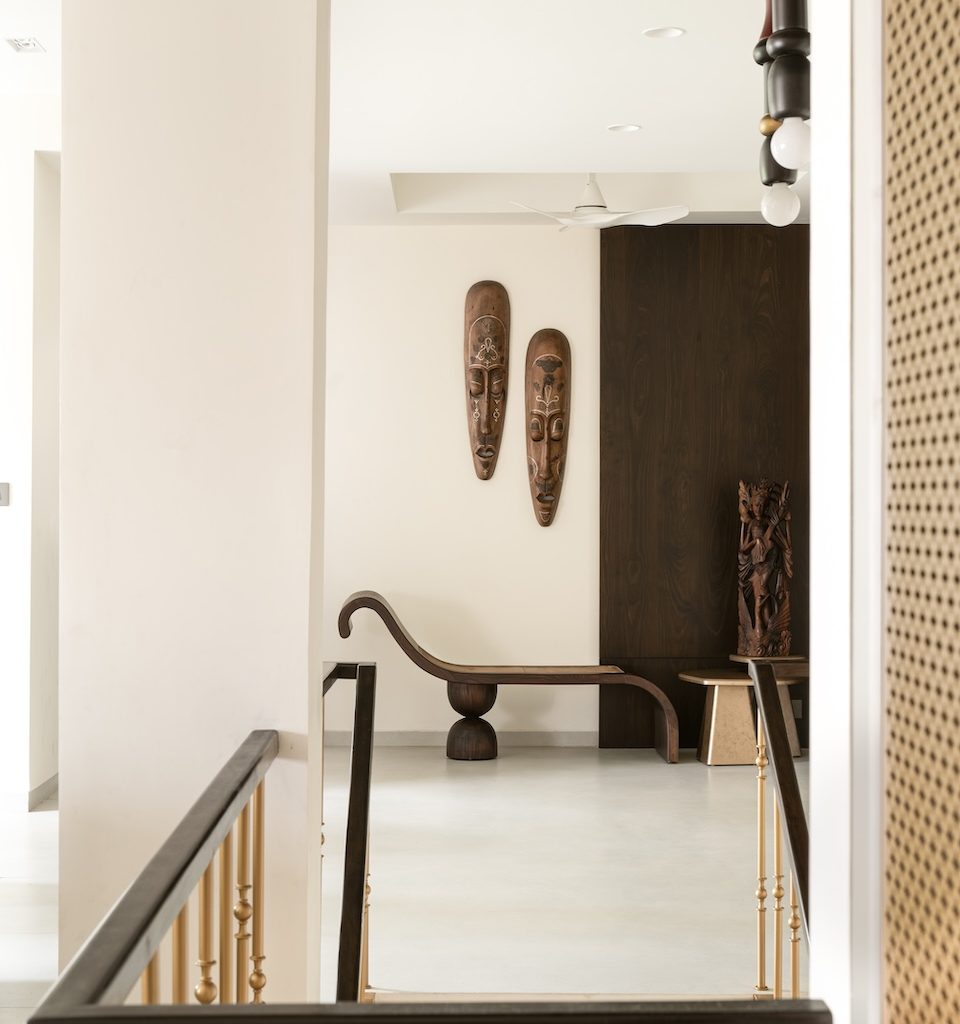
Select internal walls were removed, and the staircase was repositioned to unlock light and improve connectivity. In its new location, the stair becomes a spatial anchor—drawing daylight deeper into the interiors while establishing a stronger visual and functional relationship between the living and dining areas. This intervention also reshaped movement across both levels.
The design and material details
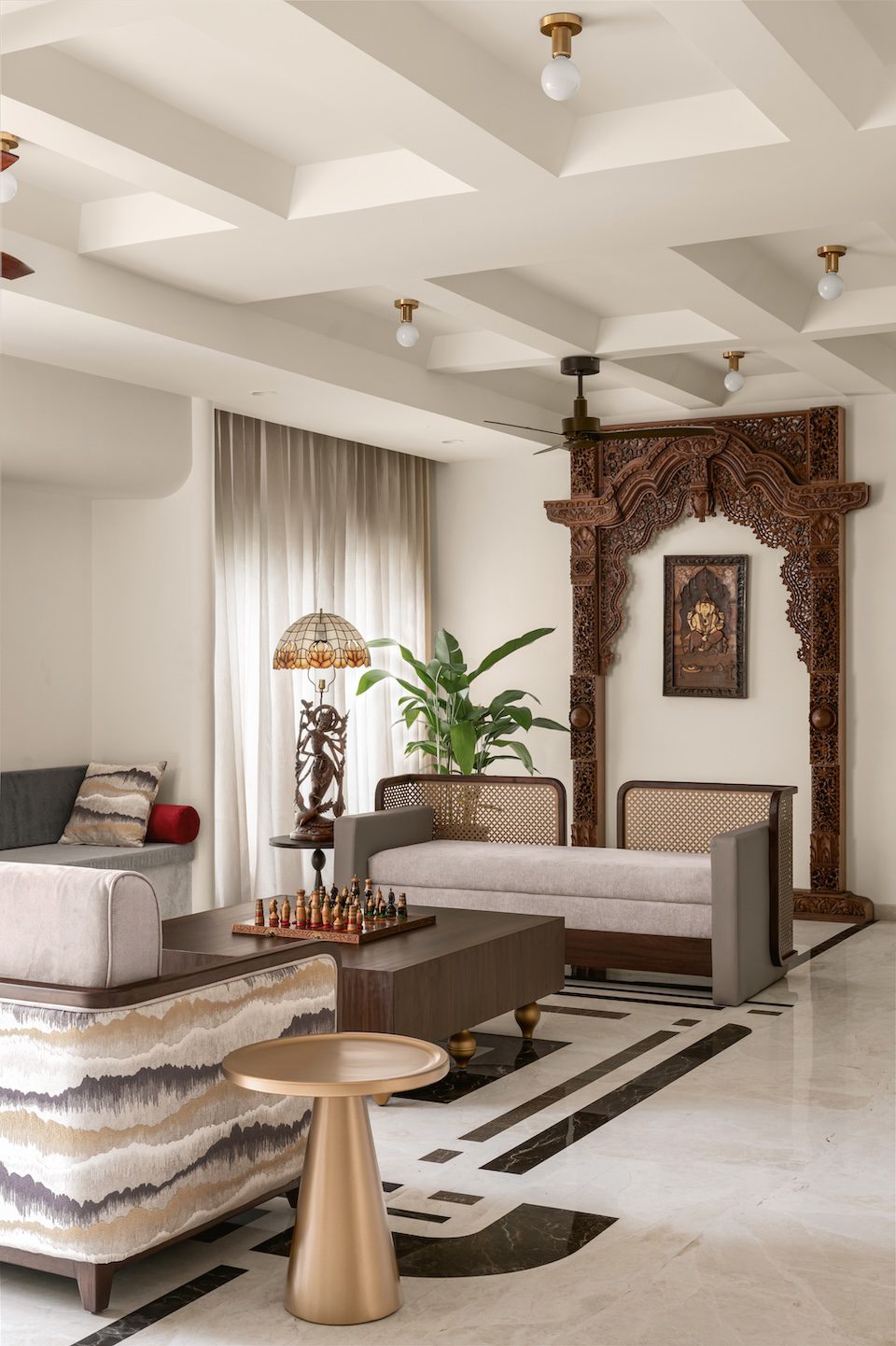
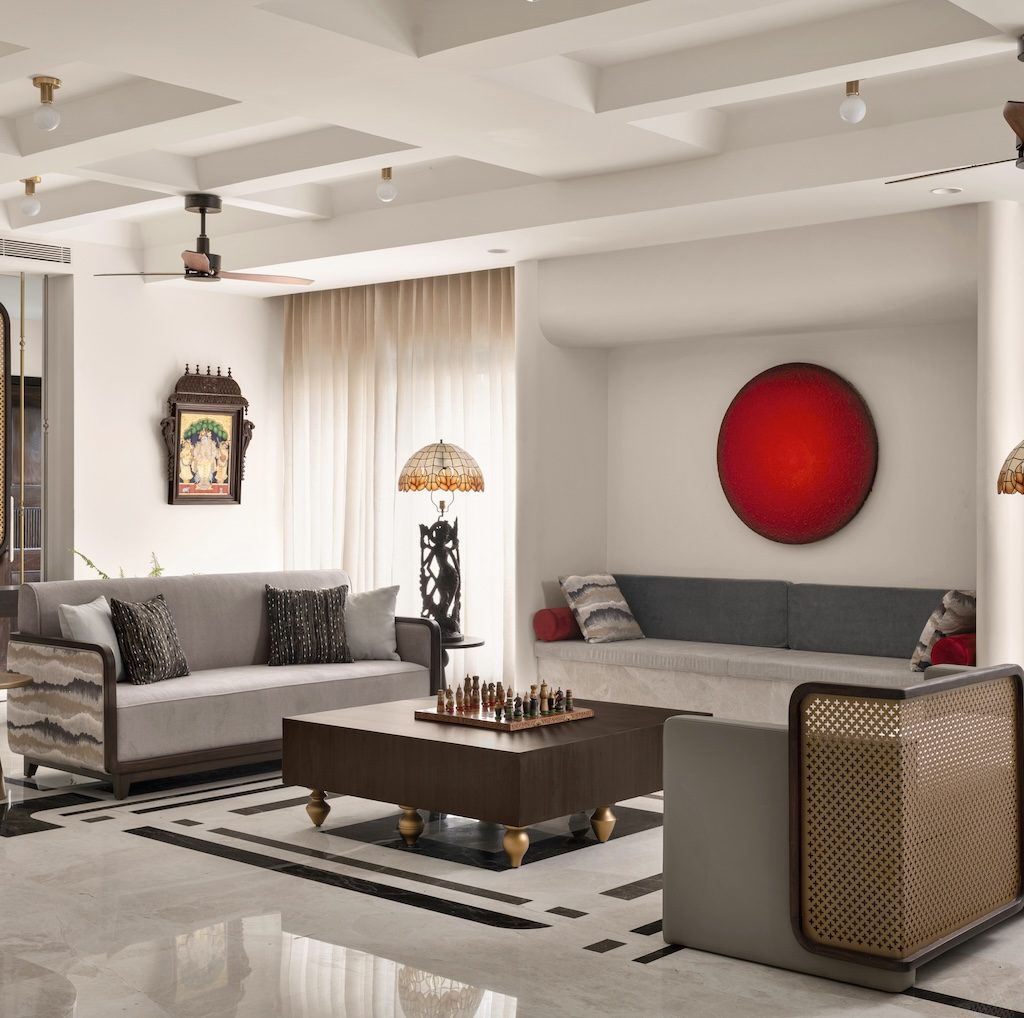
The main living room is conceived as a space of warmth and openness. The space is designed as an informal lounge—easy, layered, and welcoming—intended for everyday conversations as much as for relaxed gatherings. A carefully articulated false ceiling lends definition without visual heaviness, subtly referencing the depth and order of traditional coffered forms. Upon entry, the eye is immediately drawn to a bold red, bindi-inspired artwork—an expressive gesture that nods to traditional symbolism while being interpreted through a contemporary lens.
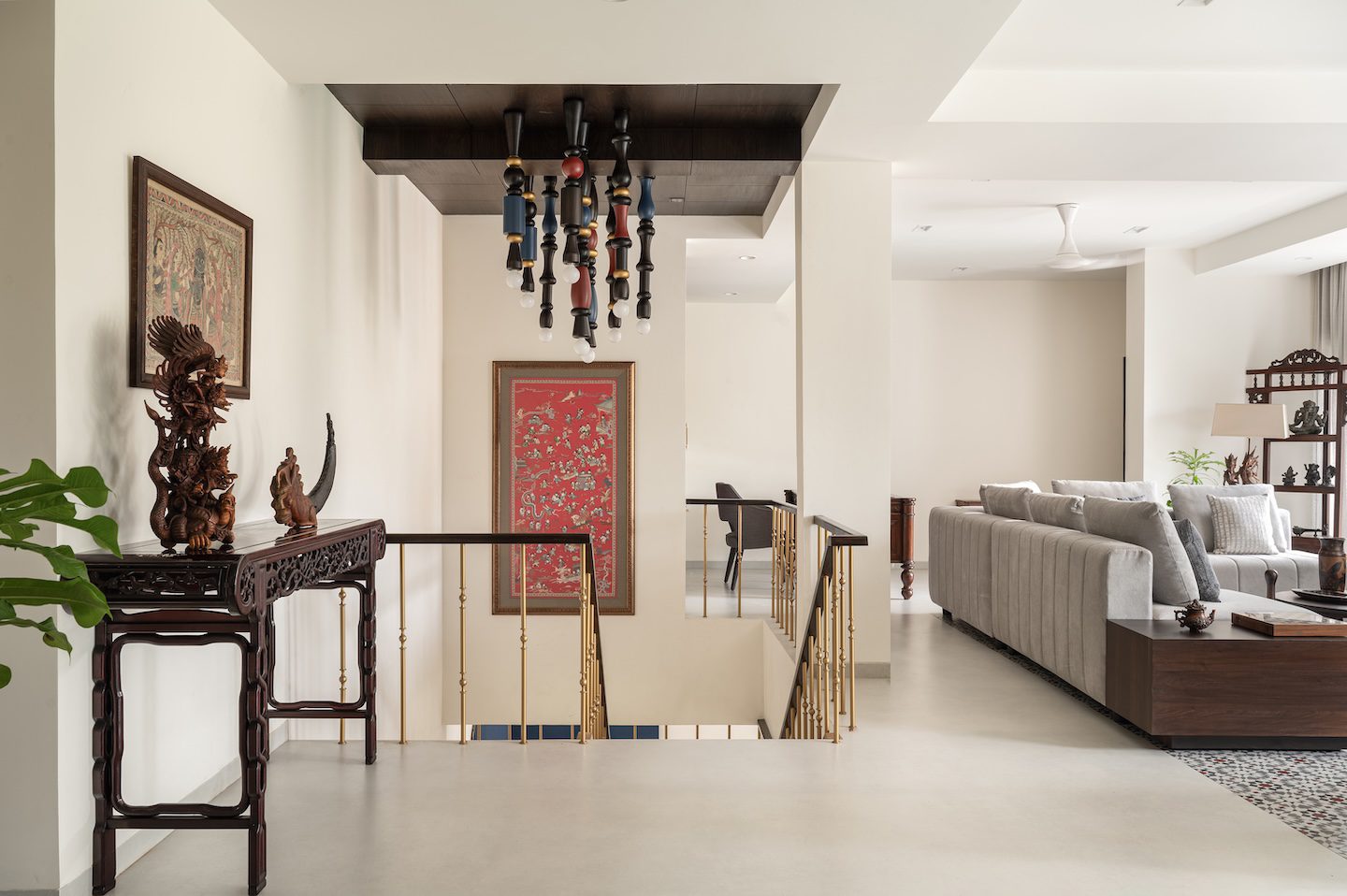
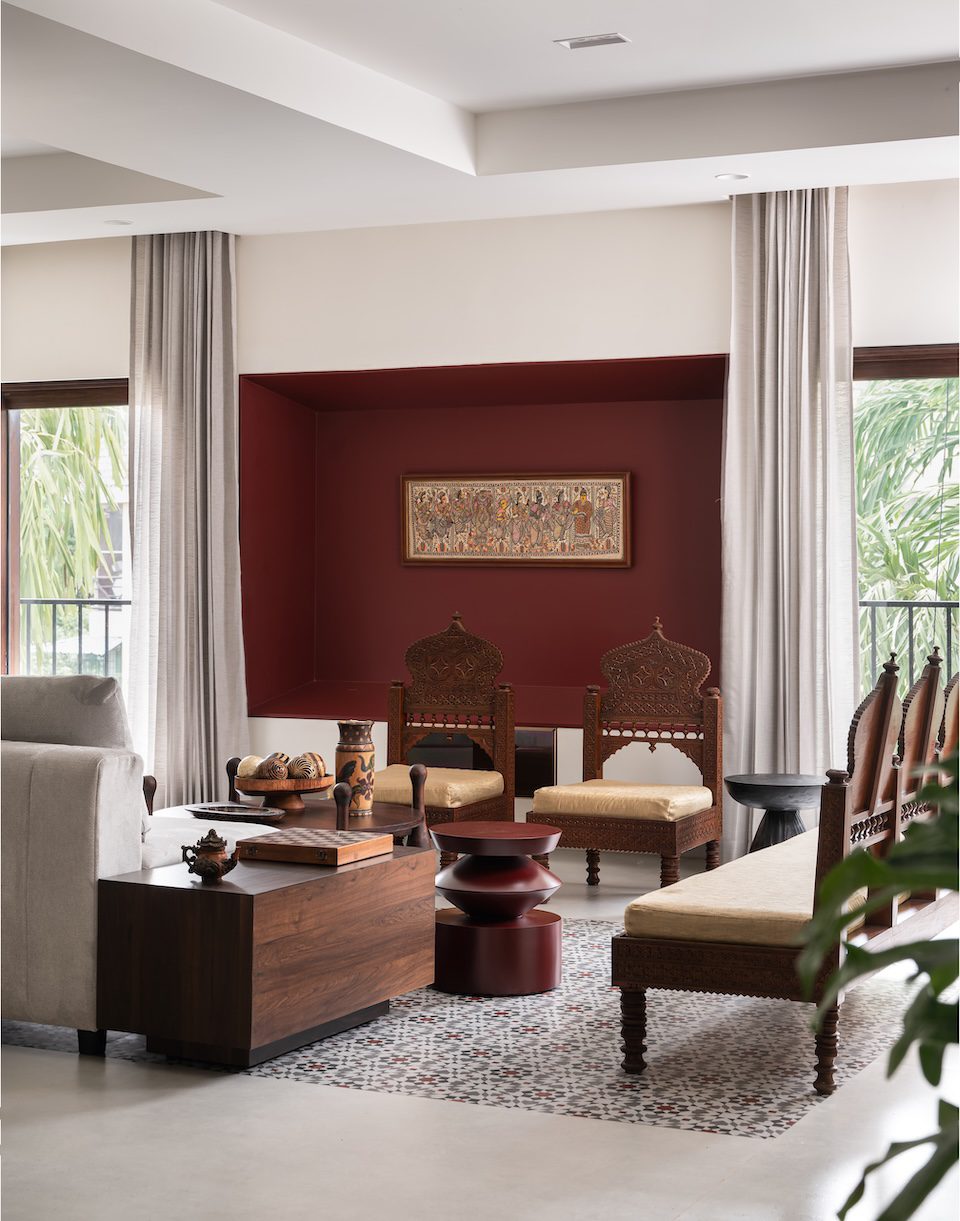
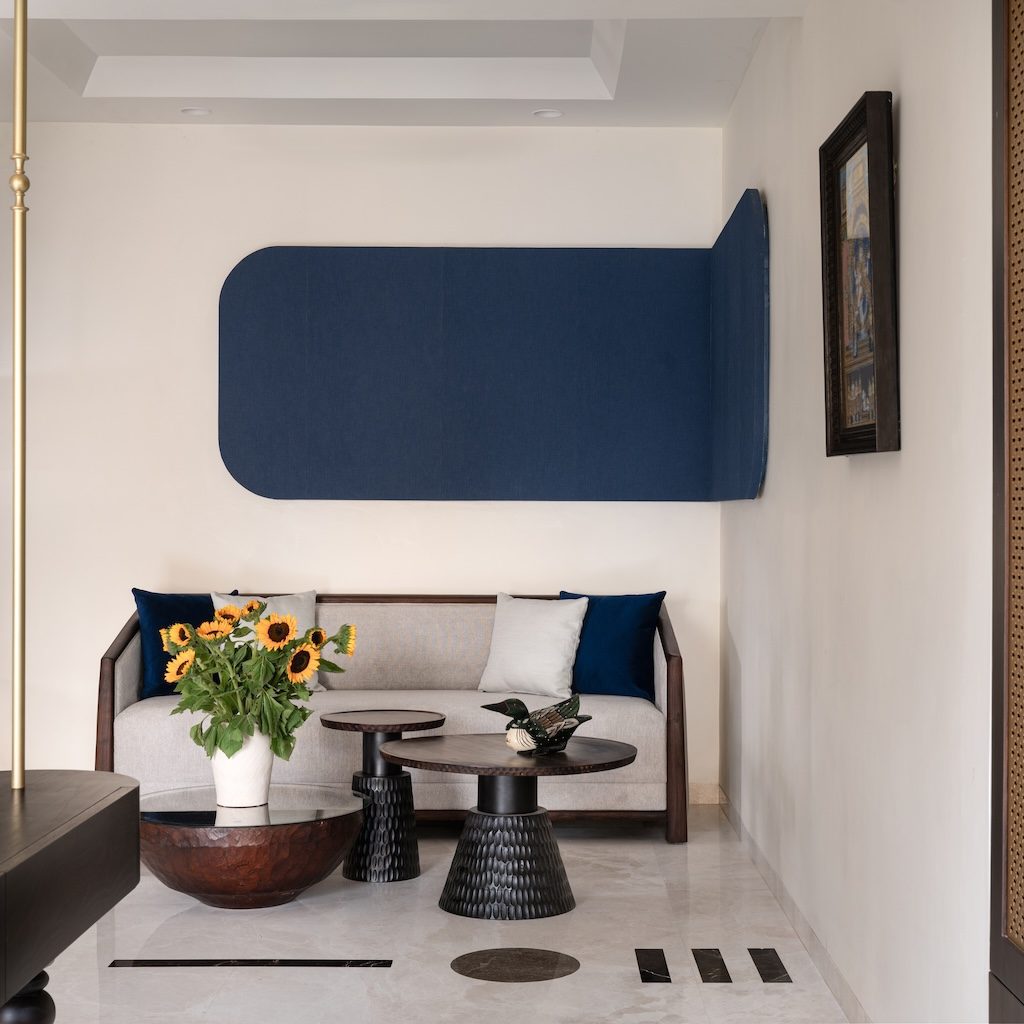
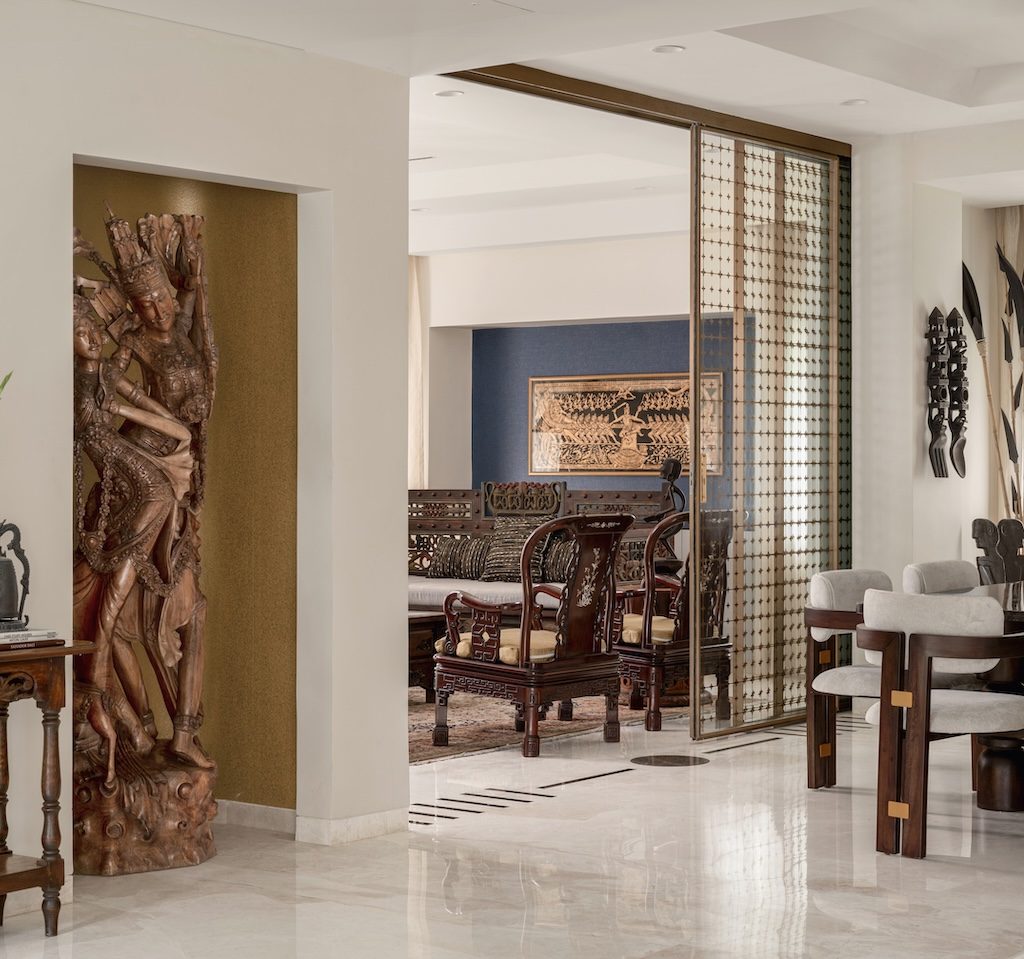
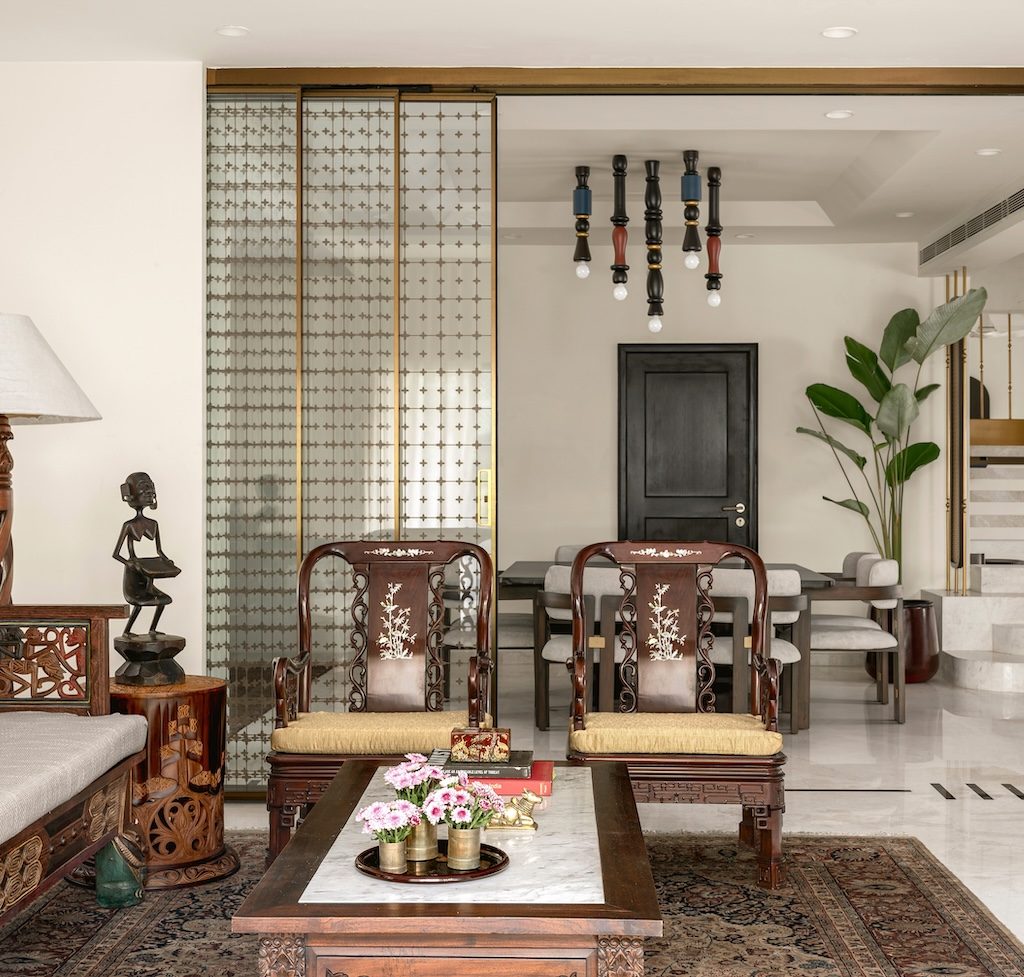
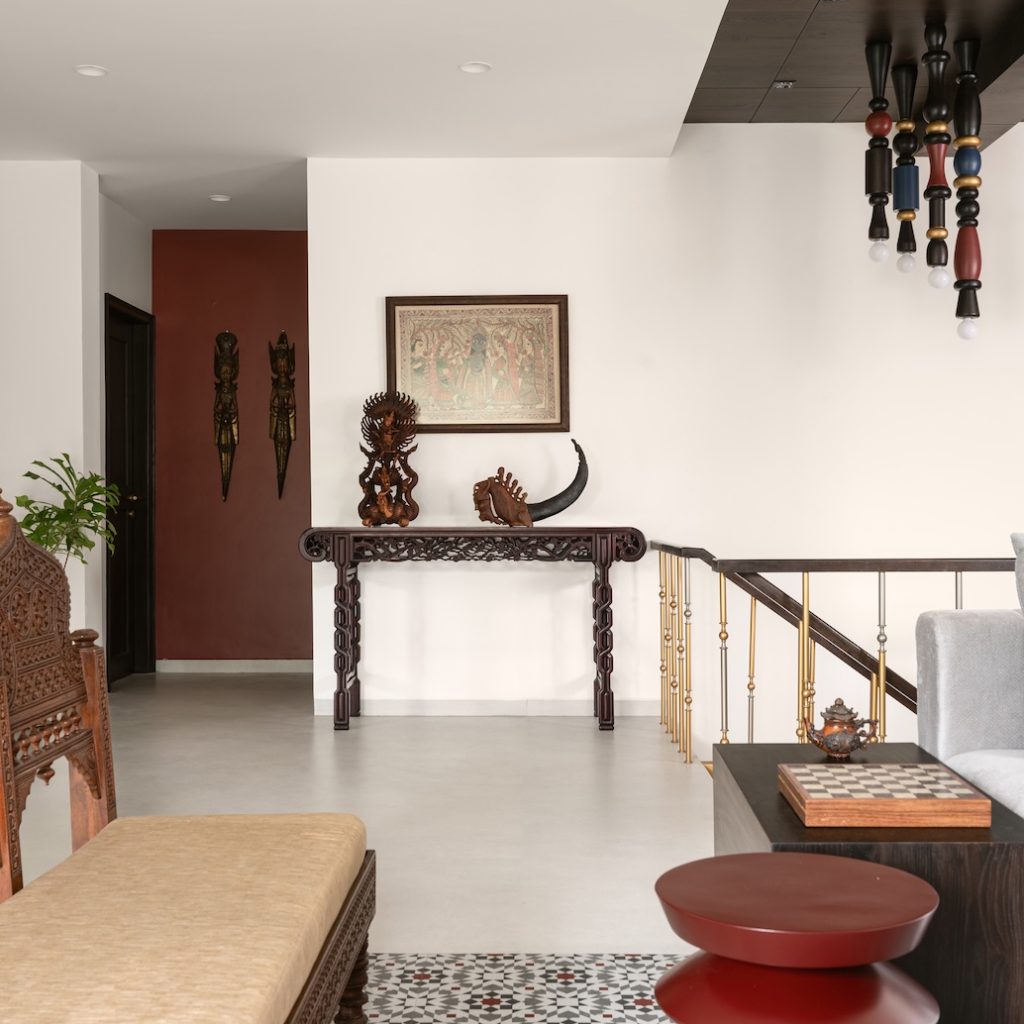
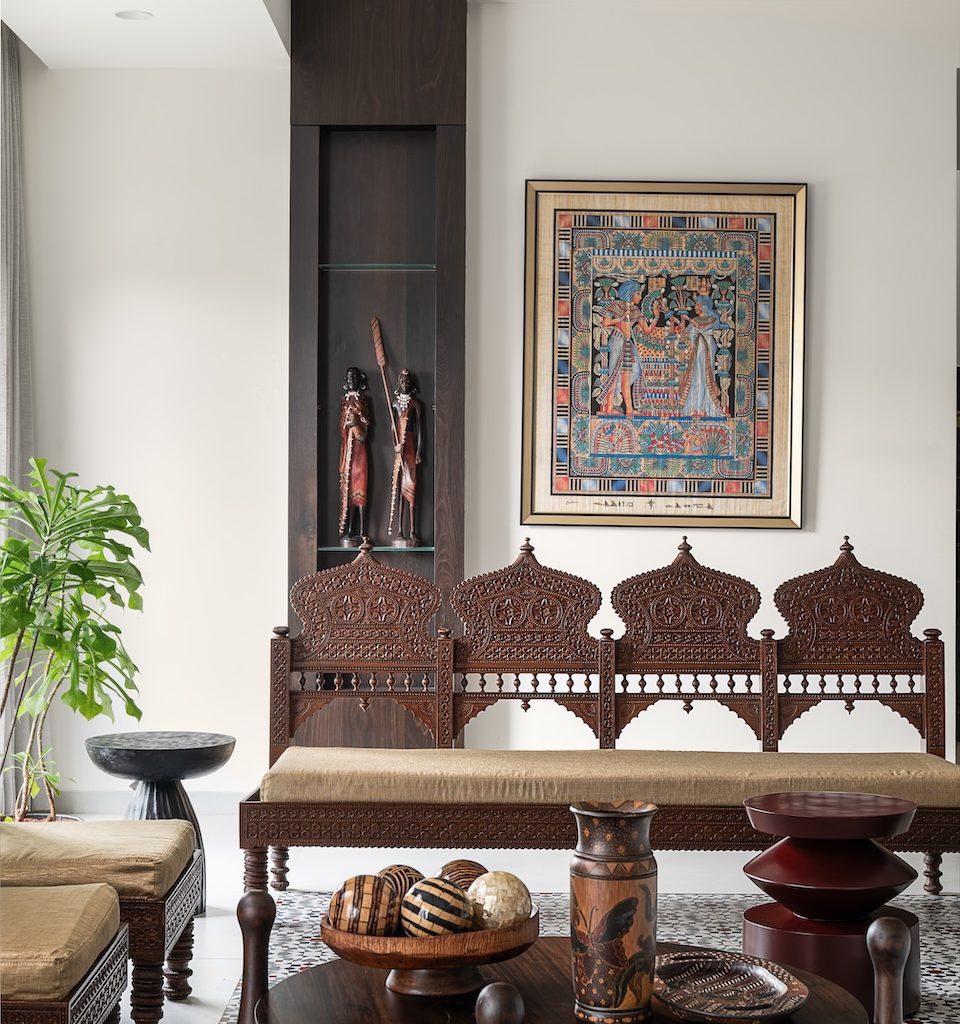
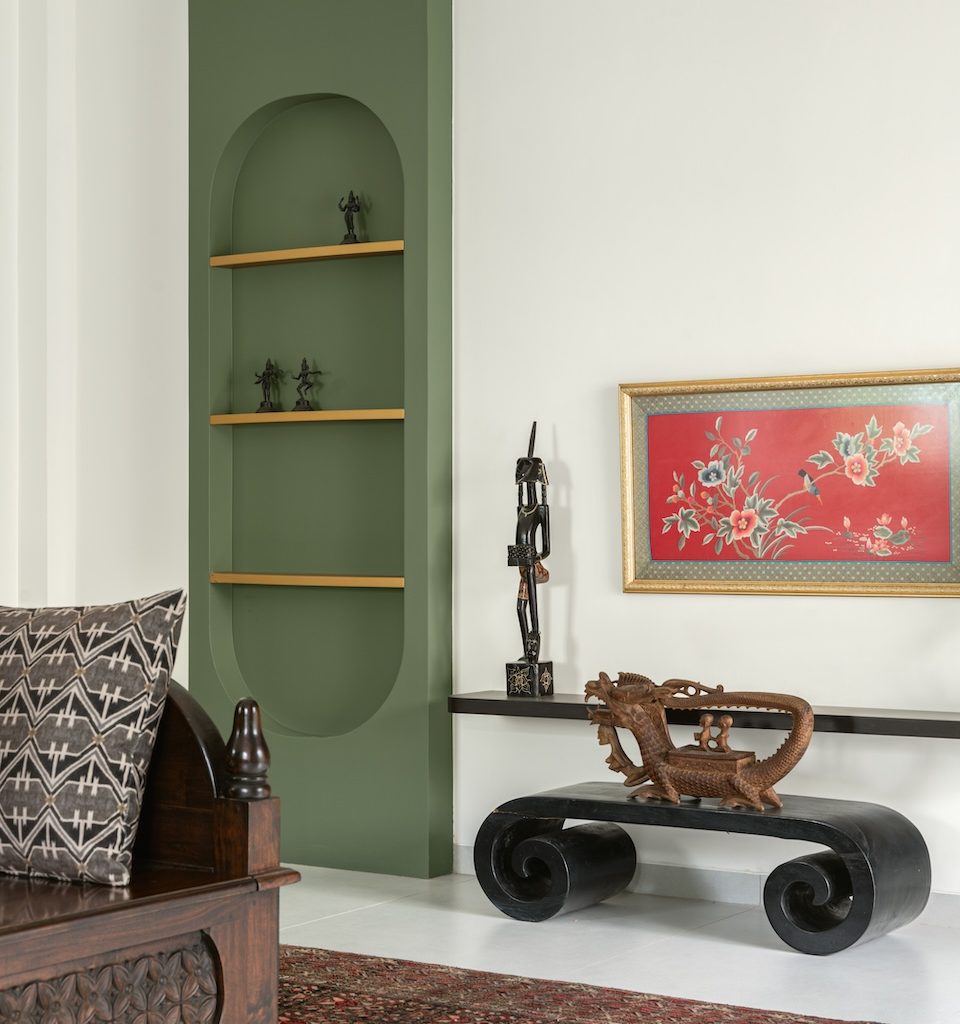
This dialogue between cultures and geographies continues through the furniture selection. In the family lounge, a carved sofa sourced from Iran sits alongside ivory inlay armchairs from China and an antique console from Malaysia.
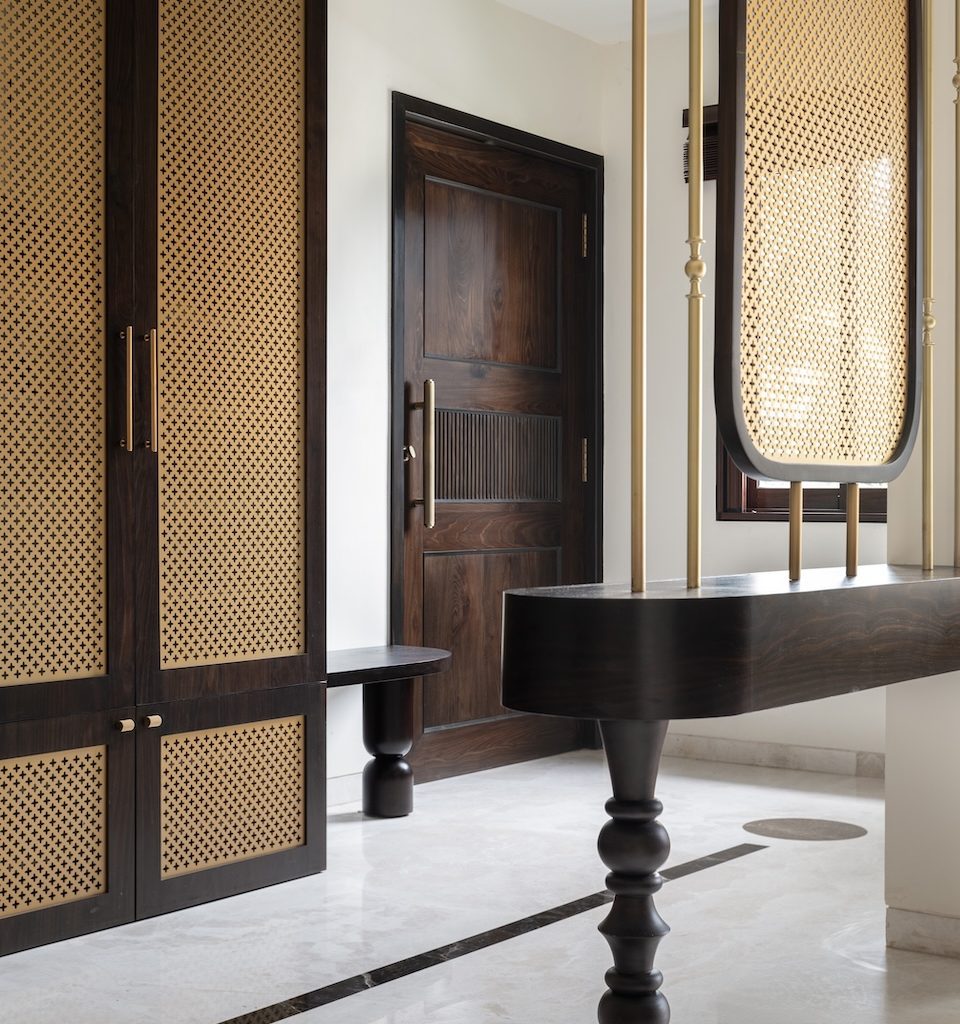
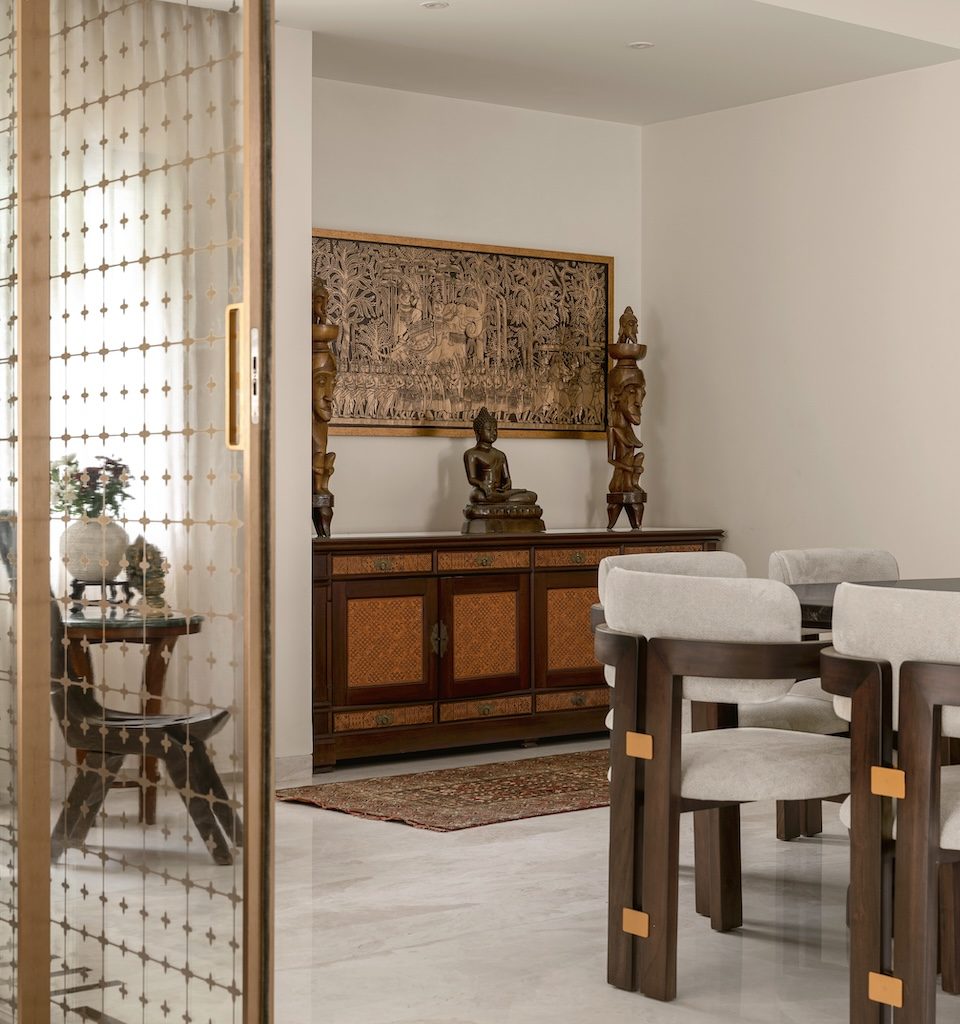
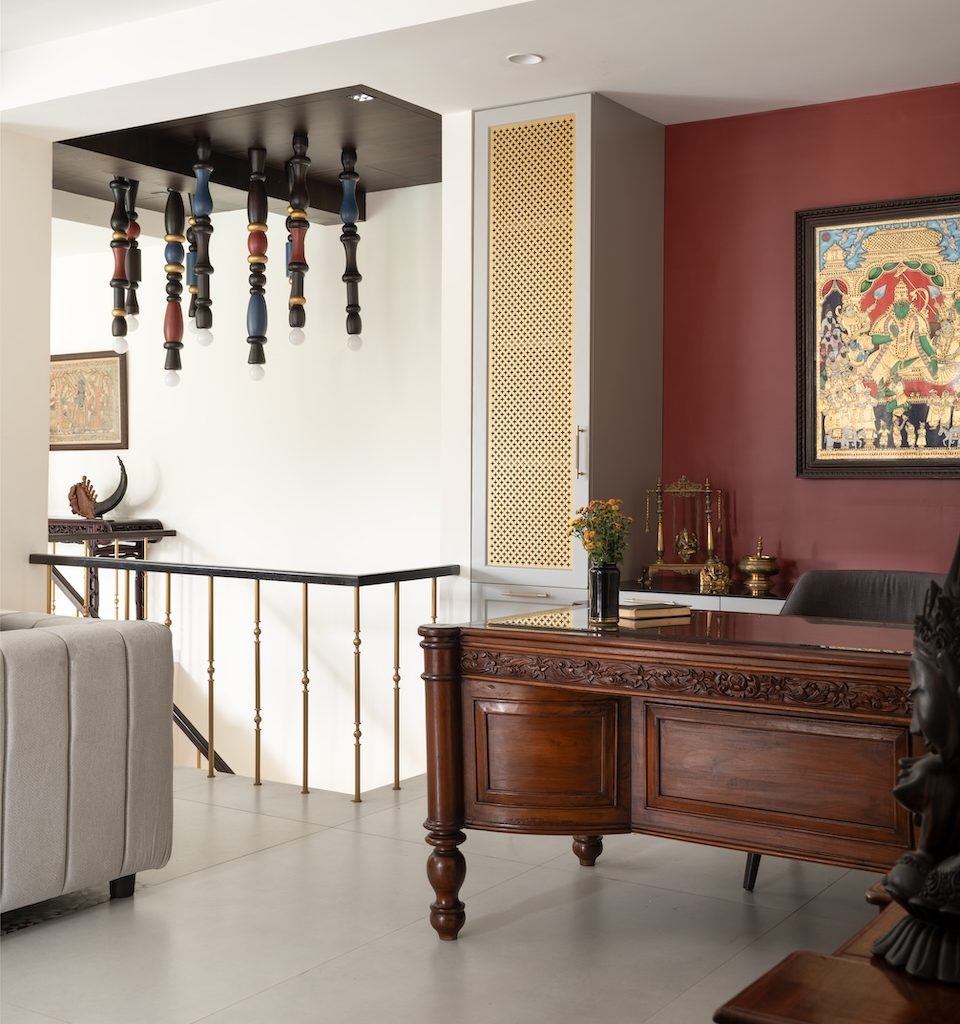
The dining area introduces a moment of continuity through a striking light fixture crafted from salvaged balustrades of the family’s former home. Custom-designed dining chairs in soft grey, detailed with subtle gold accents, surround the table. Their finish draws from the brushed gold tones seen in the partition and staircase.
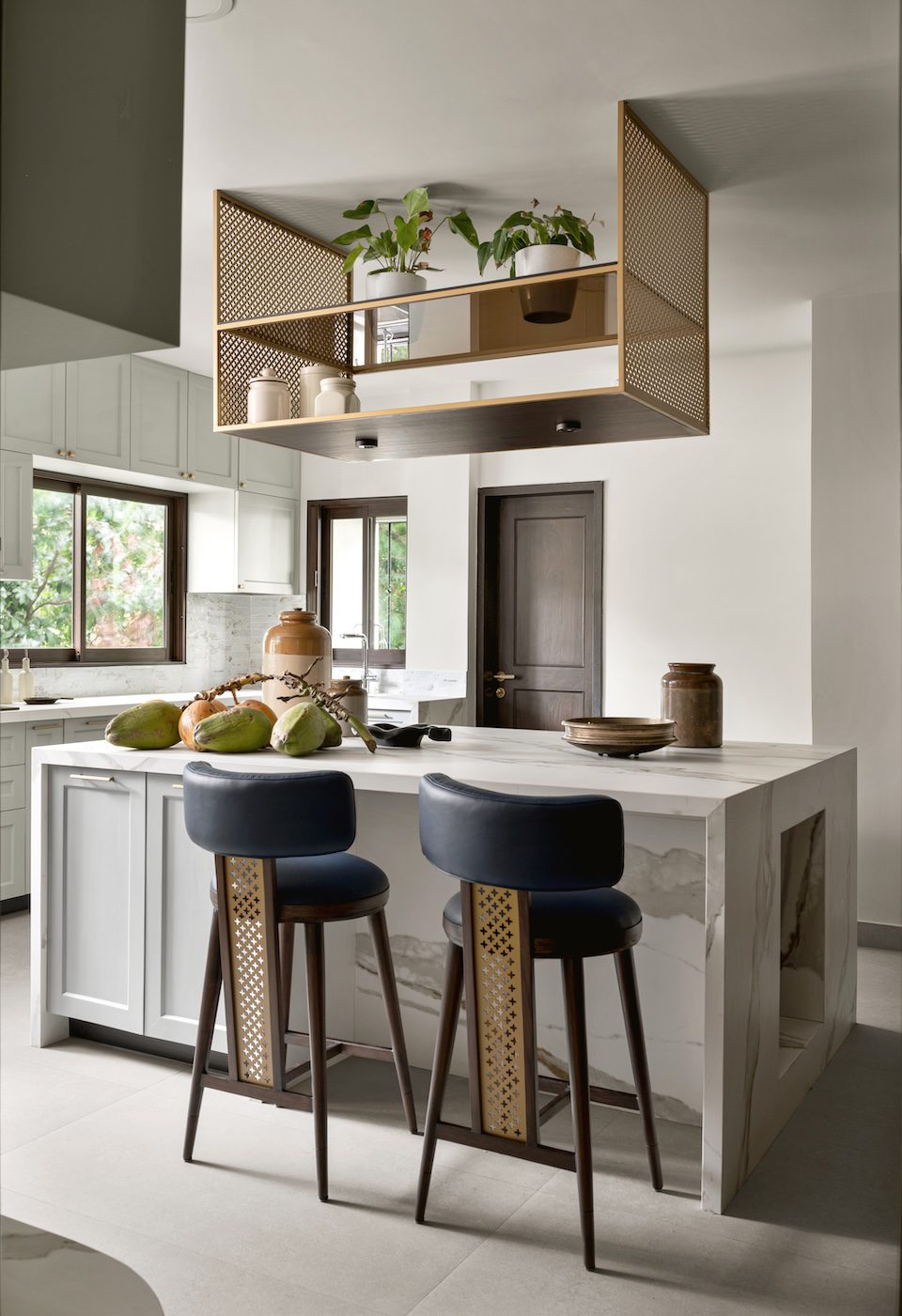
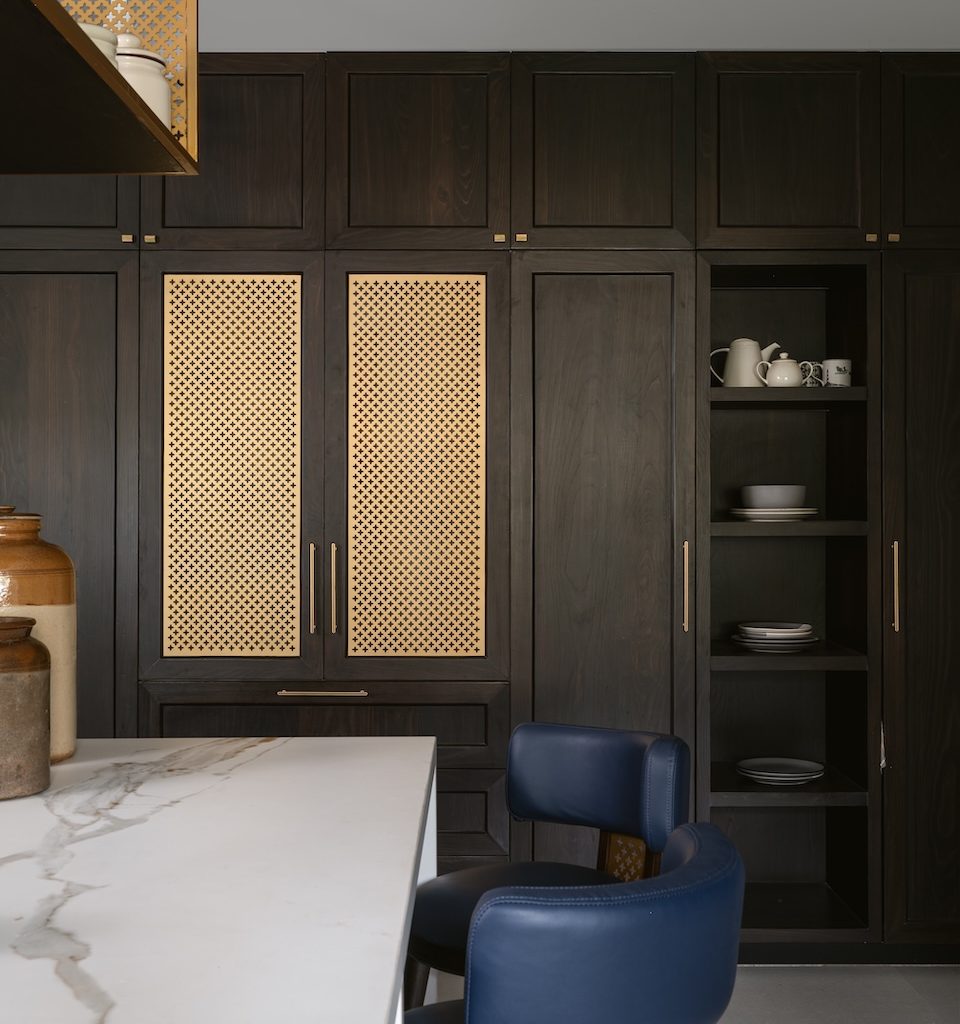
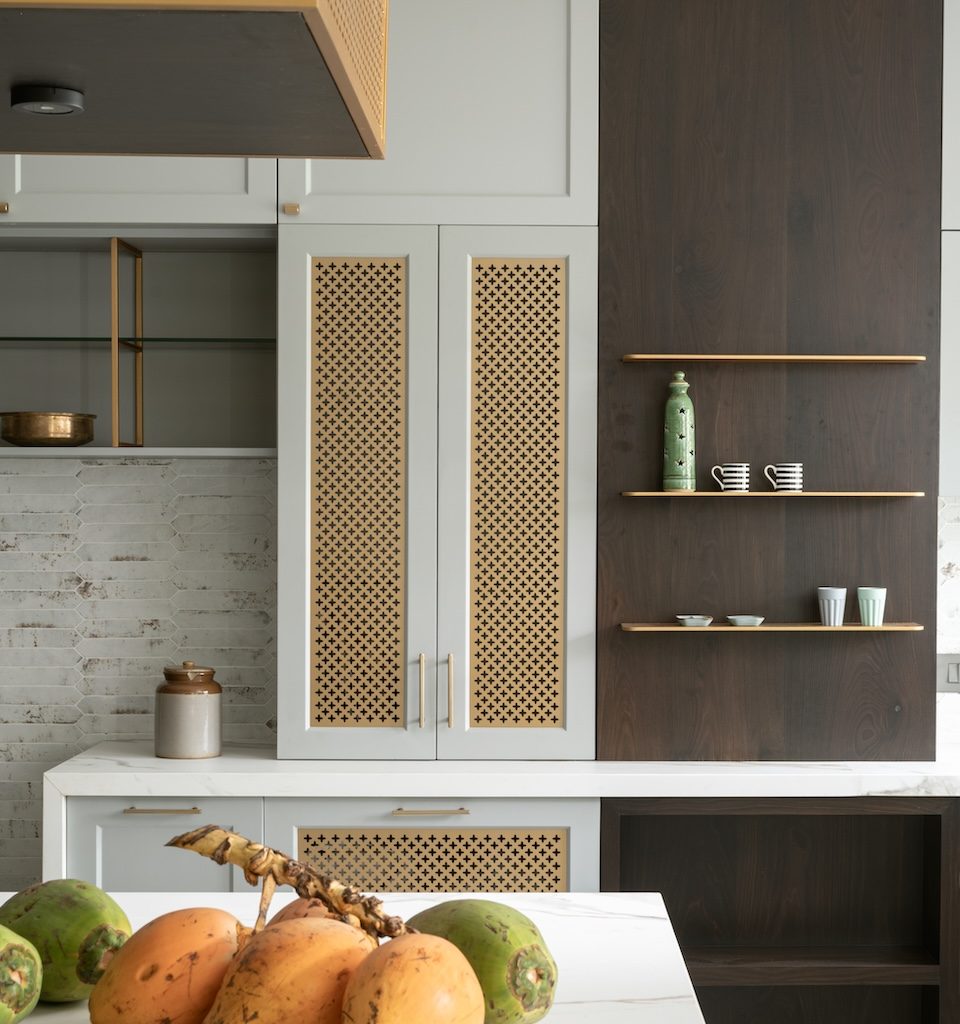
The modern kitchen is placed at the heart of the home, and features a custom-designed island counter anchors the space—functioning both as a practical workspace and a sculptural centrepiece. High stools with bold blue seats introduce a controlled burst of colour, lending energy to the otherwise muted palette.
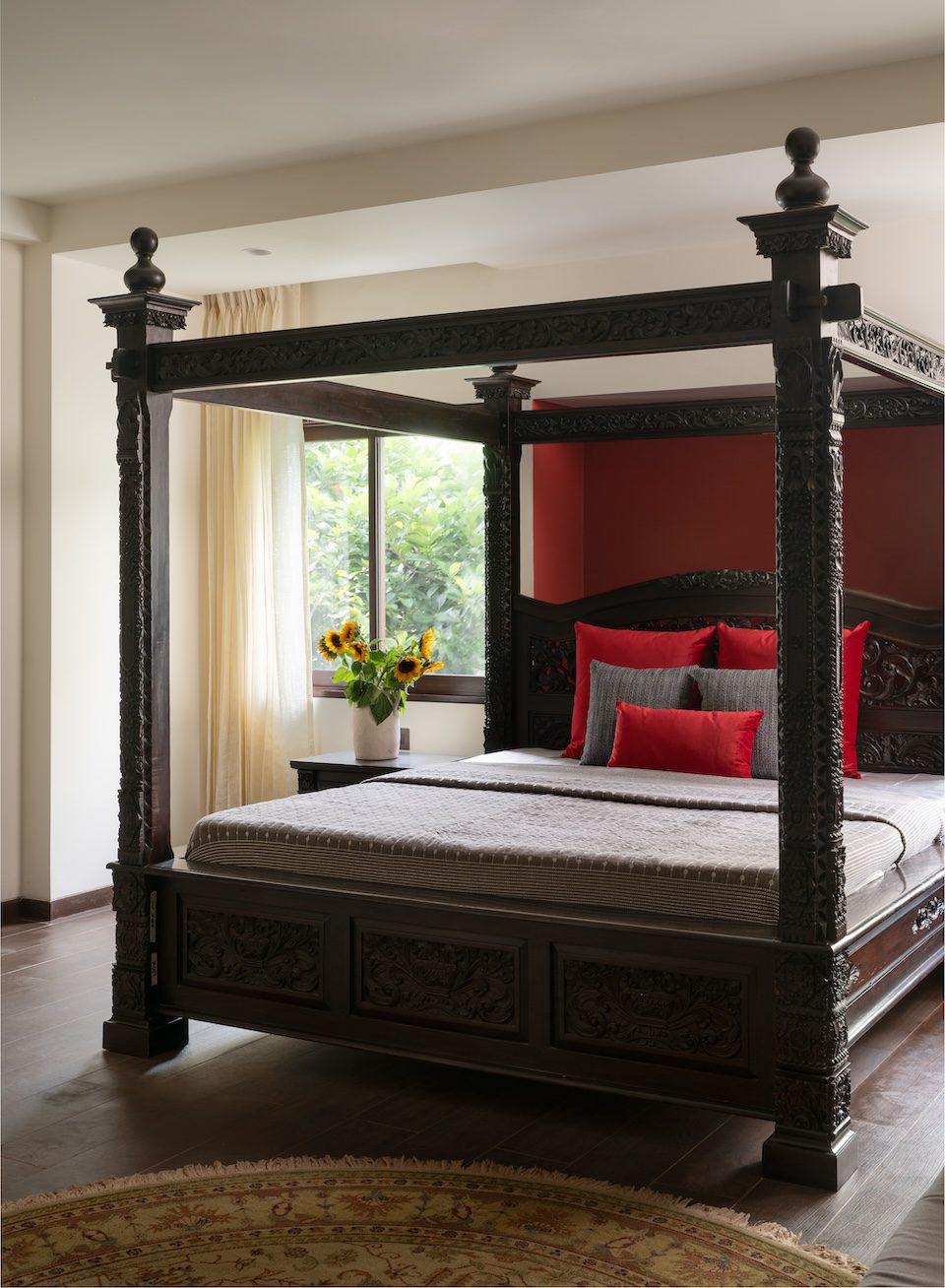
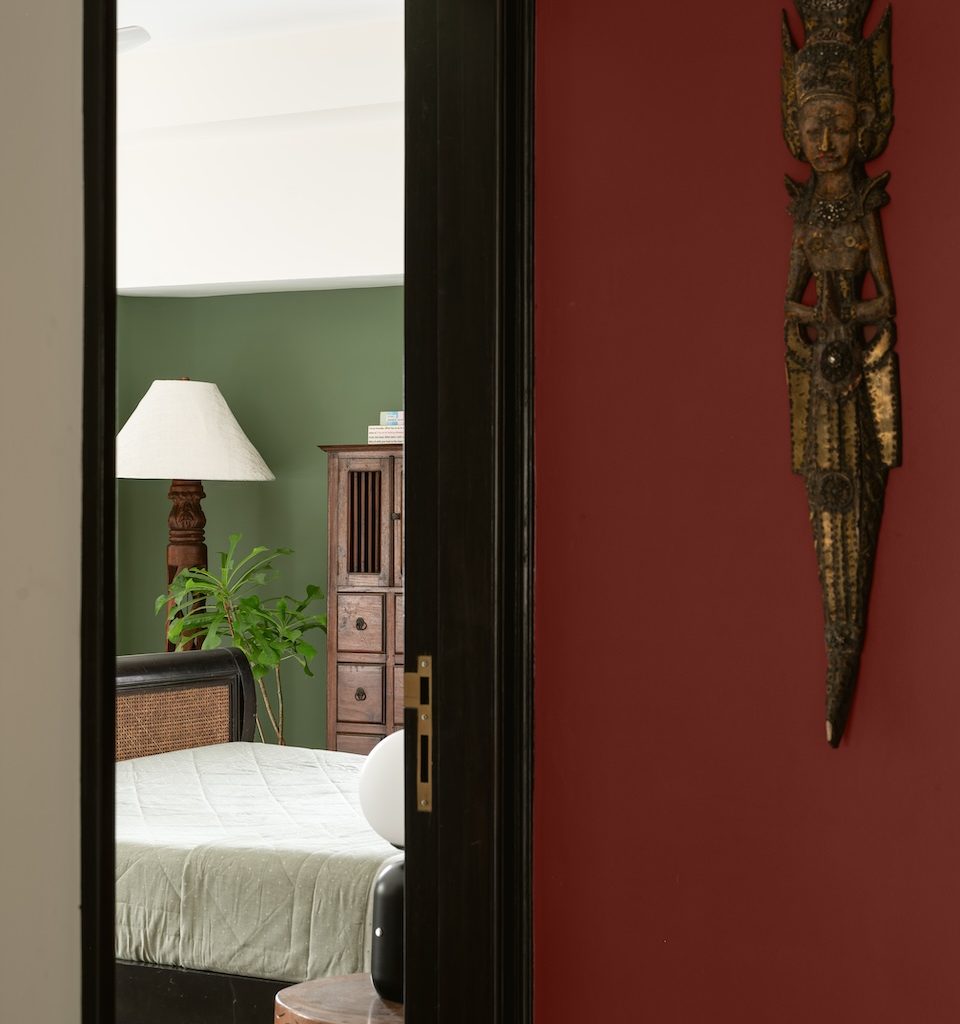
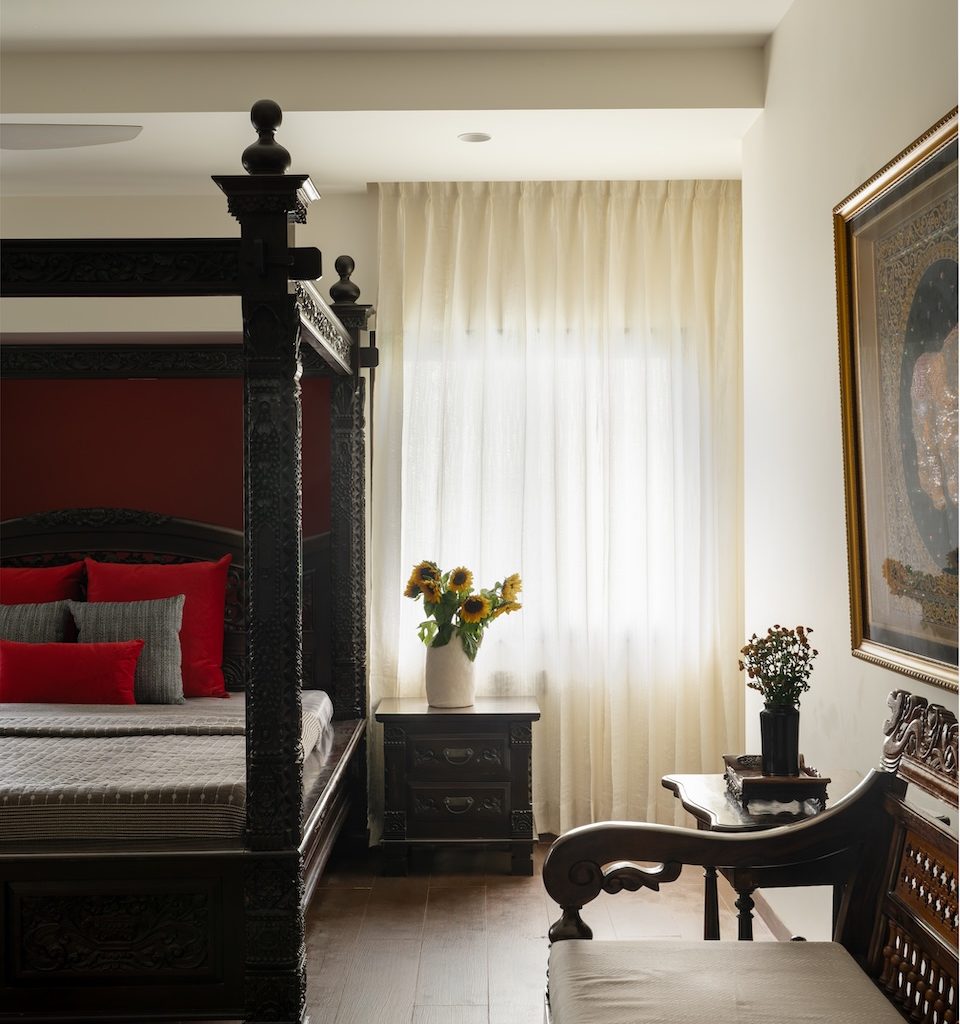
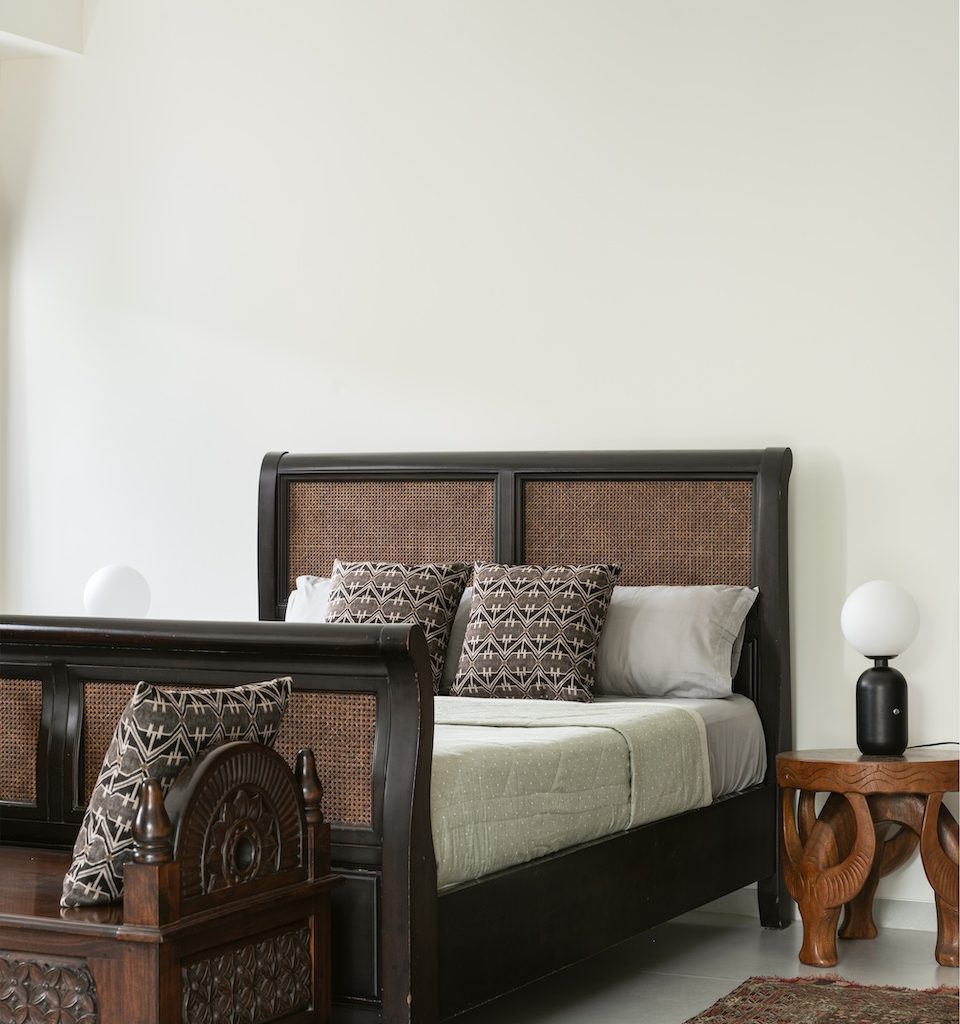
Upstairs, the bedrooms and shared zones are designed to respond to individual personalities, while a dedicated meditation room introduces a contemplative pause within the home. The master bedroom is anchored by a deep red accent wall, lending the space a sense of depth and warmth. At its centre stands a striking four-poster bed crafted from solid teak, its intricate carvings speaking of journeys across geographies and time.
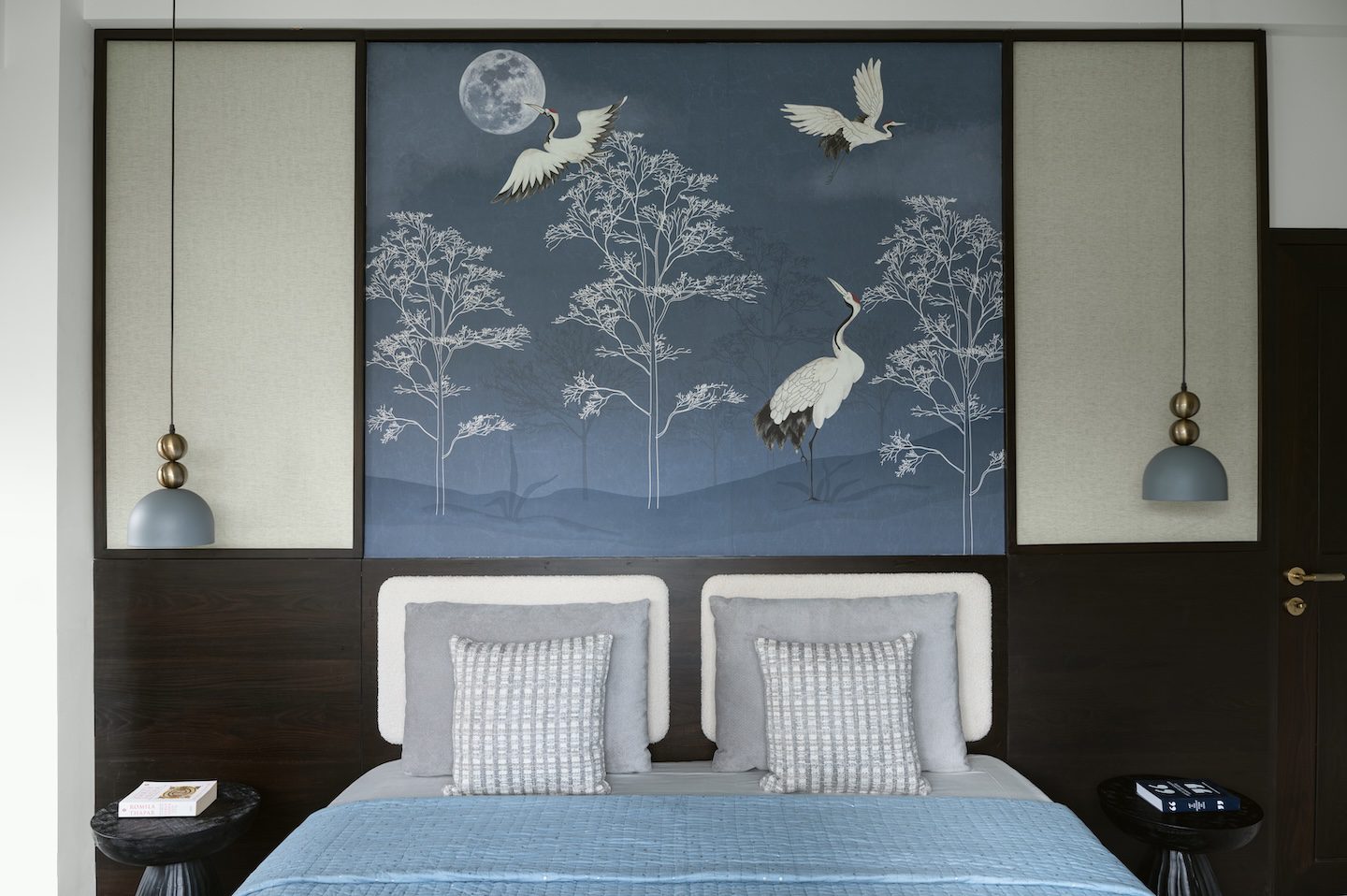
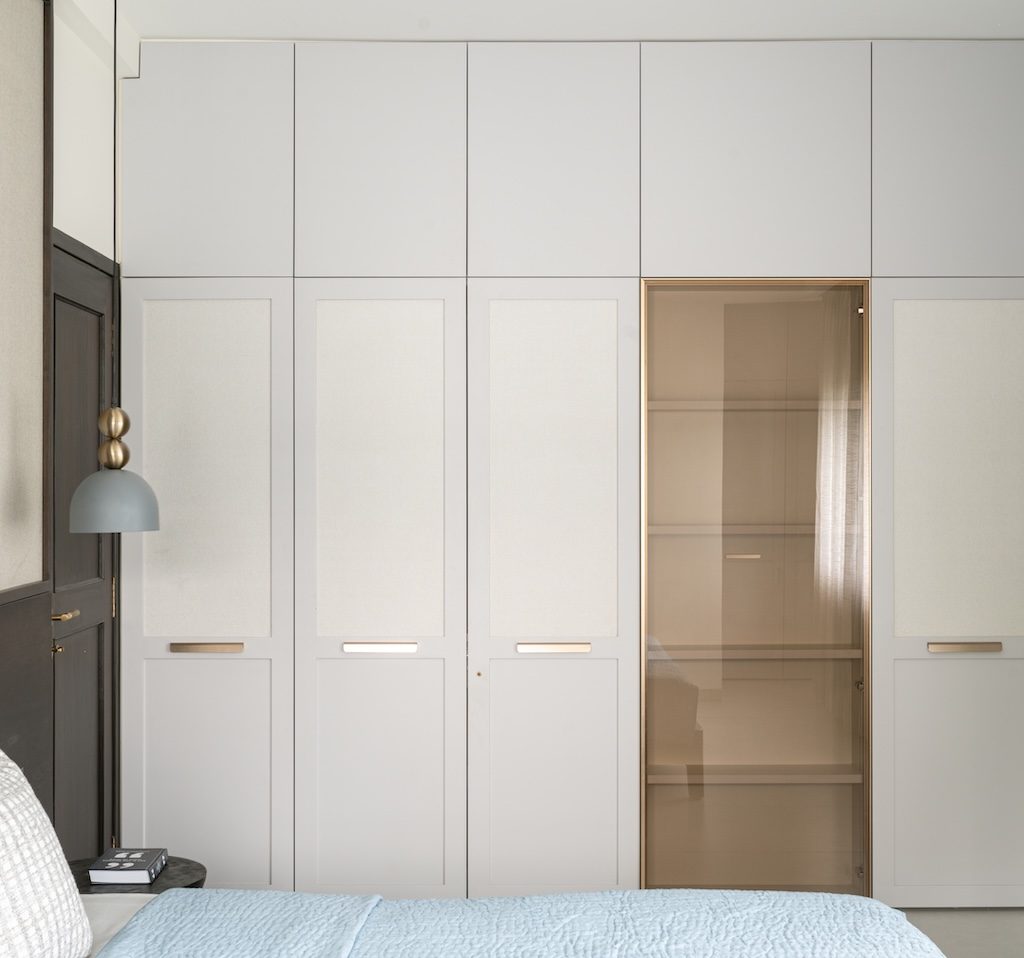
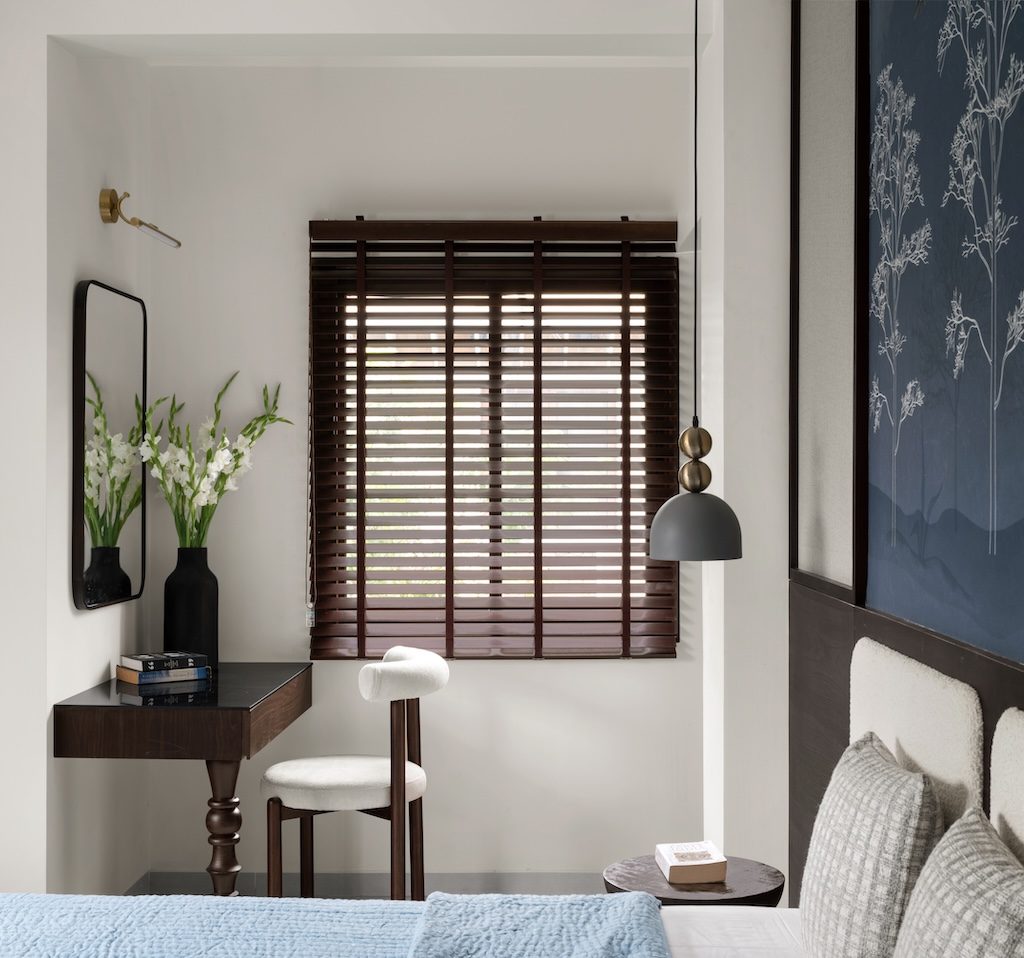
In contrast, the daughter’s bedroom adopts a softer expression, layered in calming blues and greys. Here, a wallpaper inspired by Chinese mythology introduces symbolism associated with longevity, lending the space a sense of quiet optimism and grace. The son’s bedroom is treated with restraint, pared back in white tones to allow sculptural pieces and form to take precedence.
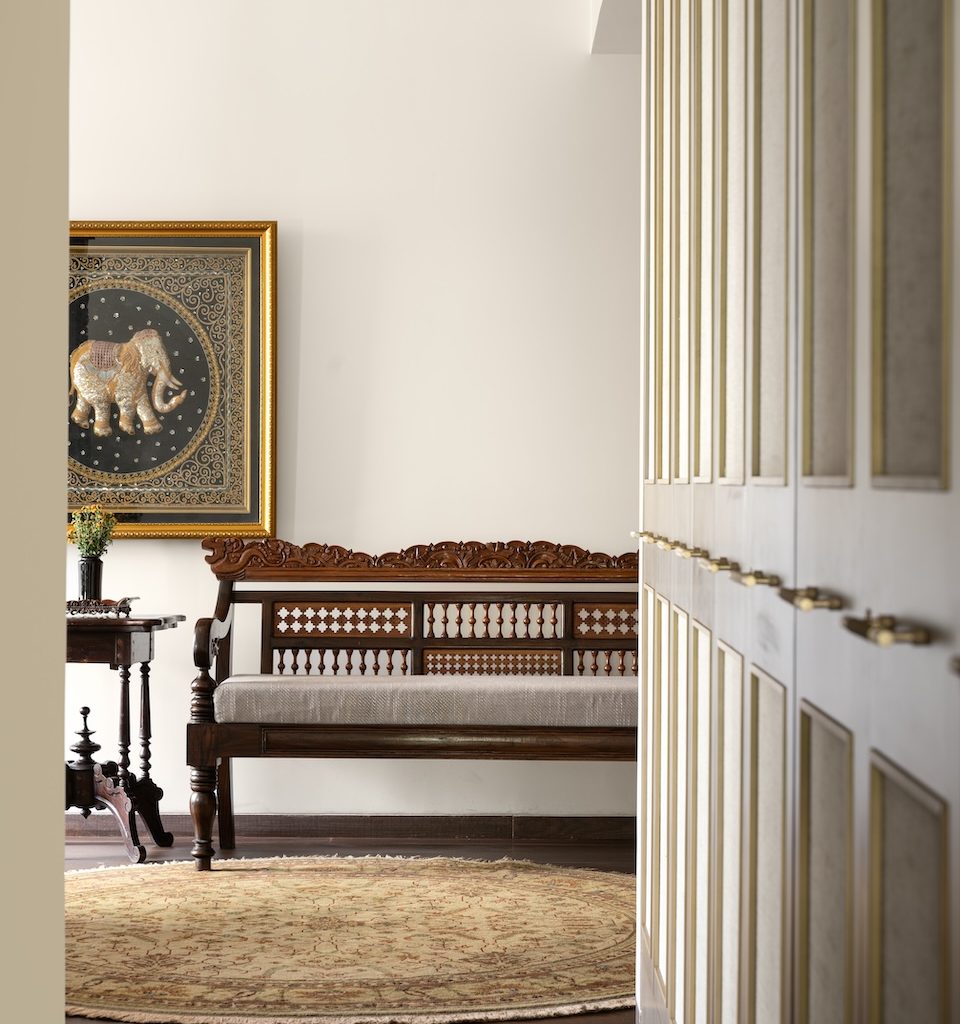
“The design approach throughout was restrained,” notes Gayatri. Walls were kept neutral. Finishes were chosen to recede. Every decision was made to let the artefacts take focus. The layout is open but intentional, designed around moments of placement. Here, a Carved Sofa from Iran, sits with Traditional Ivory Inlay Armchairs from China and Antique Console from Malaysia, without crowding the room. Raaga is a home that evolves with the rhythm of its inhabitants, blending the past with the present. Like a raaga, it adapts to the changing needs of its family, resonating with warmth, harmony, and purpose. Its strength lies in what it chooses not to do. It doesn’t overwrite the past. Rather it makes space for it.
Fact File
Project: Raaga
Location: Chennai
Area: 4,400 sq ft
Principal designer: Gayatri Gunjal
Stylist: Samir Wadekar
Add a Comment