
Int-Hab architecture+design Studio’s combines modern and vernacular architectural styles in response to the site and weather conditions of the region to craft two distinct luxurious homes for a brother and sister and their respective families.
Curated by: Deepa Nair
Photographs: Shamanth Patil J; courtesy Int-Hab architecture+design Studio
 The site
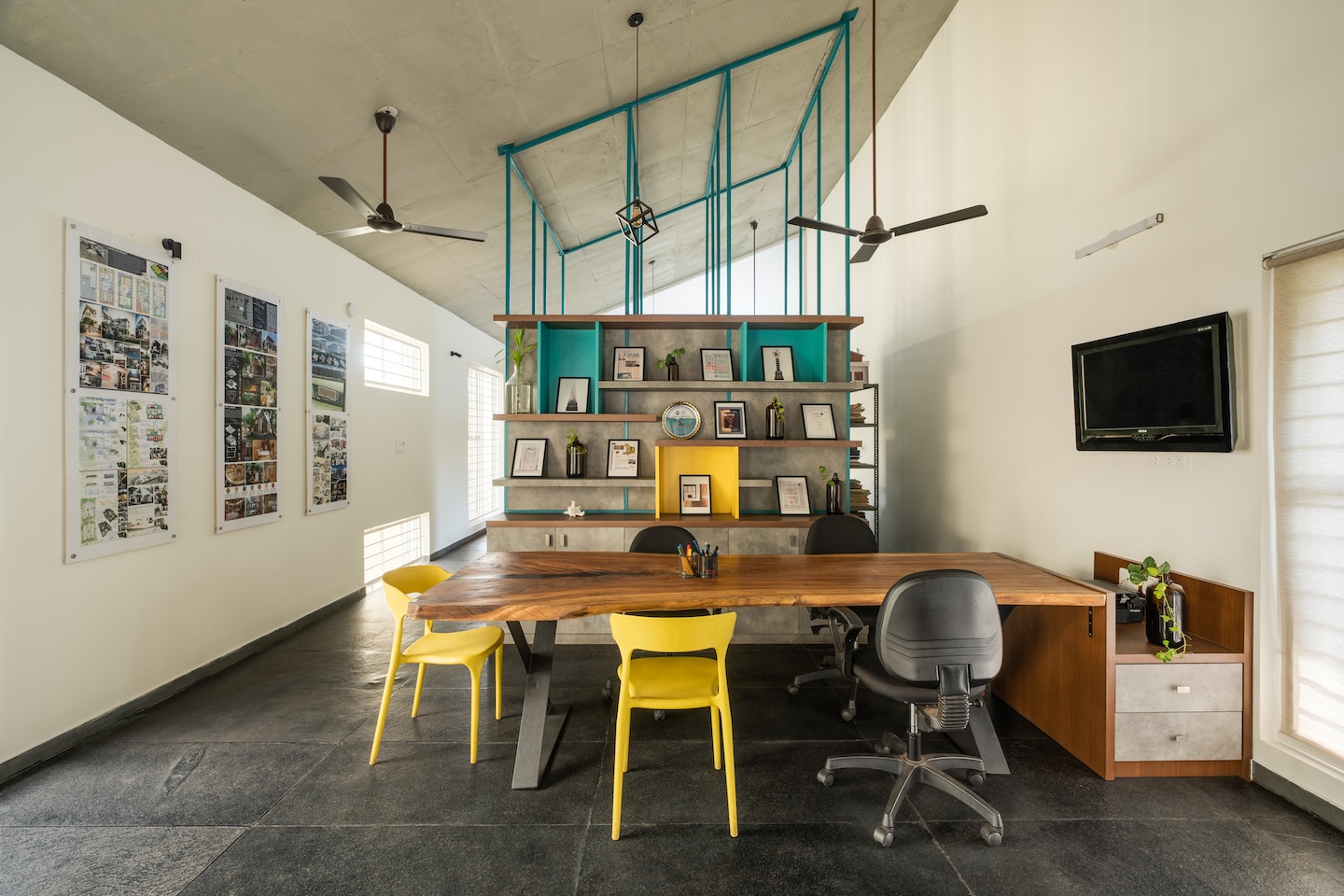
Jodi Mane project — designed by Int-Hab architecture+design Studio — includes two houses, spread across 15 cents, constructed within the same compound. The built form incorporates the needs of an extended family of two siblings. The linear house is designed for the brother, an architect by profession, and includes a studio space in the upper floors. The second house is designed for the sister, who along with her husband are doctors by profession. Situated in Mangaluru, the site receives ample rainfall in the monsoon months, while experiencing a hot and humid climate the rest of the year.
The design intent
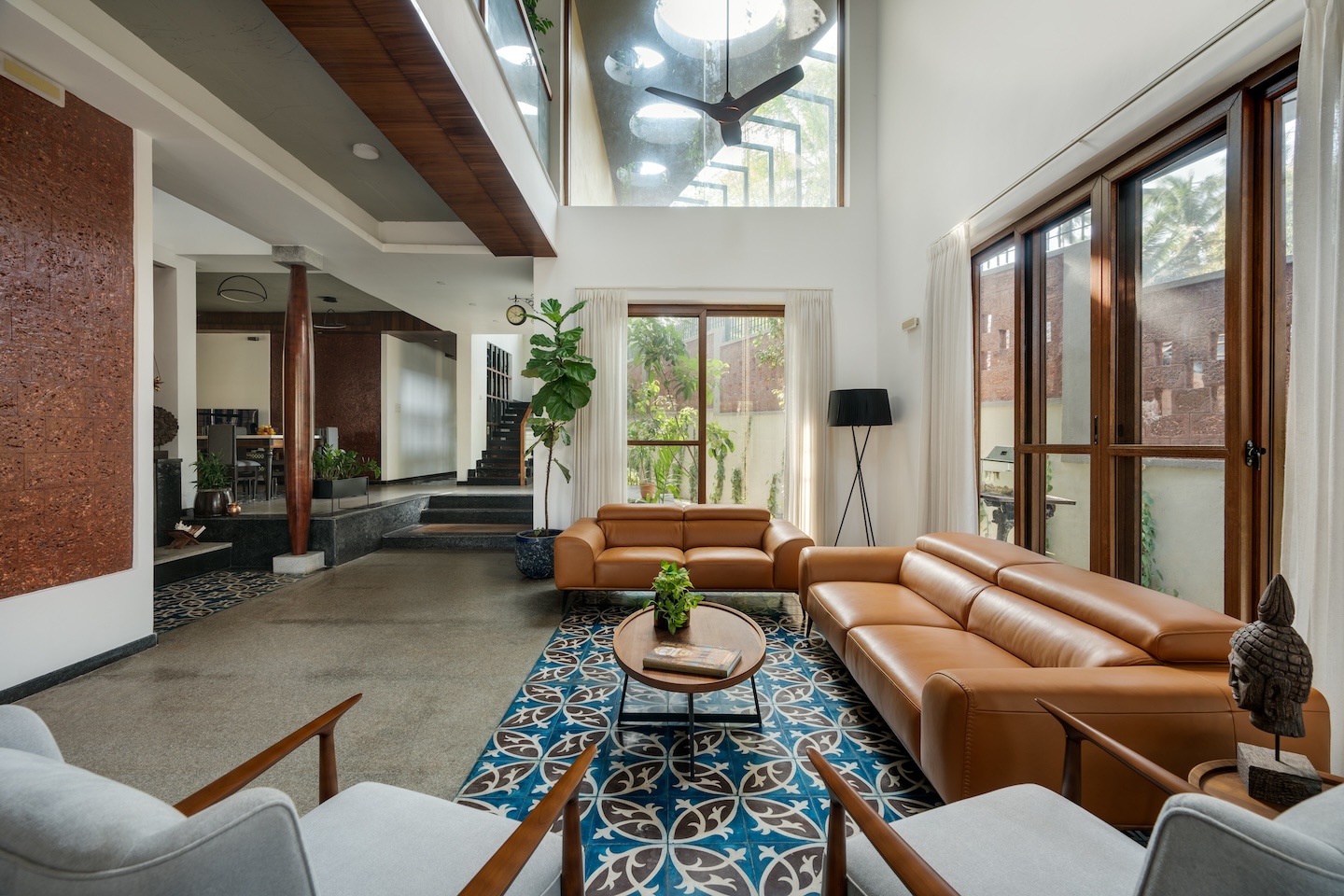
Jodi Mane is designed as a direct response to the local context of the site, both in terms of materiality and the climatic conditions. The architectural features used in this project such as the high volumes, sloped roof and large openings all serve the purpose of creating a comfortable interior environment for the occupants by utilizing the principles of cross ventilation and stack effect. The clever selection of materials ensures that the environmental impact is low while maximizing the utilitarian purpose and cooling effect within the house.
 The project combines a contemporary style with the regional and contextual styles to create a fusion that stays true to the design identity. The planning followed the unique requirements of the two families and the optimal use of the contours and level differences of the site. The linear house emphasizes clean lines and streamlined planning while the second house explores the potential for a luxurious design that includes the environment as an integral part of the built form.
The civil intervention
The existing levels on the site were incorporated into the design, leading to two different entryways owing to the level difference between the parallel roads on either side of the site. One entrance leads to the residences, while the other leads to the architectural studio situated on the first floor of the linear house.
 The architectural details
The two houses are a perfect blend of vernacular and modern design. Elements like the courtyard, verandah, and the garden spaces are married effortlessly with modern elements such as the car park with UV-resistant glass roof and metallic staircases. Characterized by distinctive volumes and clean lines, the exterior facade for the residence brings a flavour of the classic and traditional to the architecture of the house and helps in giving the overall project a complete look.
“In this project, the god is in the details. For example, the car park roof includes bamboo sticks to combat the heat from the harsh sunlight. The well in the corner of the site is blended into the landscape. The outlets provided for the rainwater have cast iron chains as ornaments to enhance the beauty of the monsoon,” explains Sachin Shetty, principal architect, Int-Hab architecture+design Studio.
 The spatial configuration
A major challenge the design team faced in the ideation process was coming up with creative ways to incorporate the large level difference across the site while keeping in mind the vastu principles involving entry points and projections. The trapezoidal site provided an opportunity to split the houses into a linear form and a trapezoidal form. This way, the level difference between the two sides of the site transformed into a main entry for the houses and a separate entry for the home office and studio.
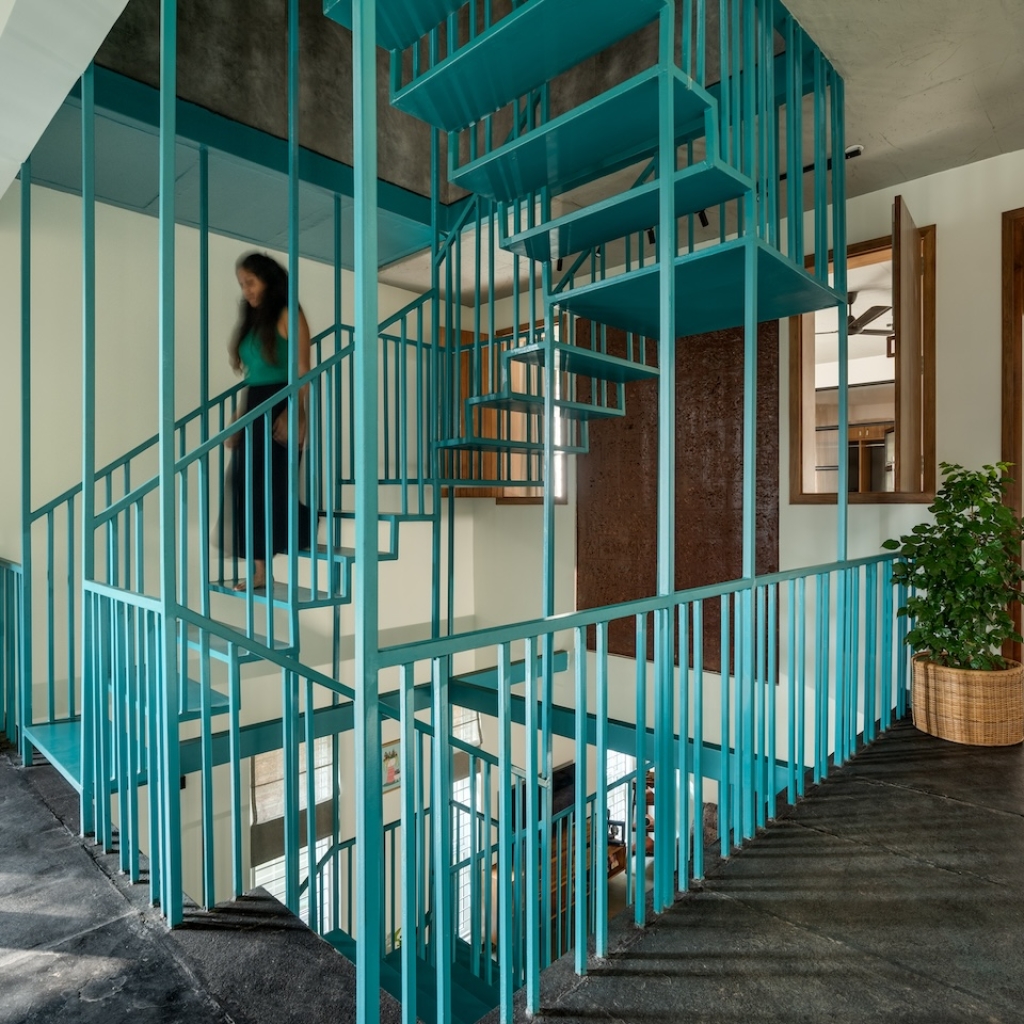
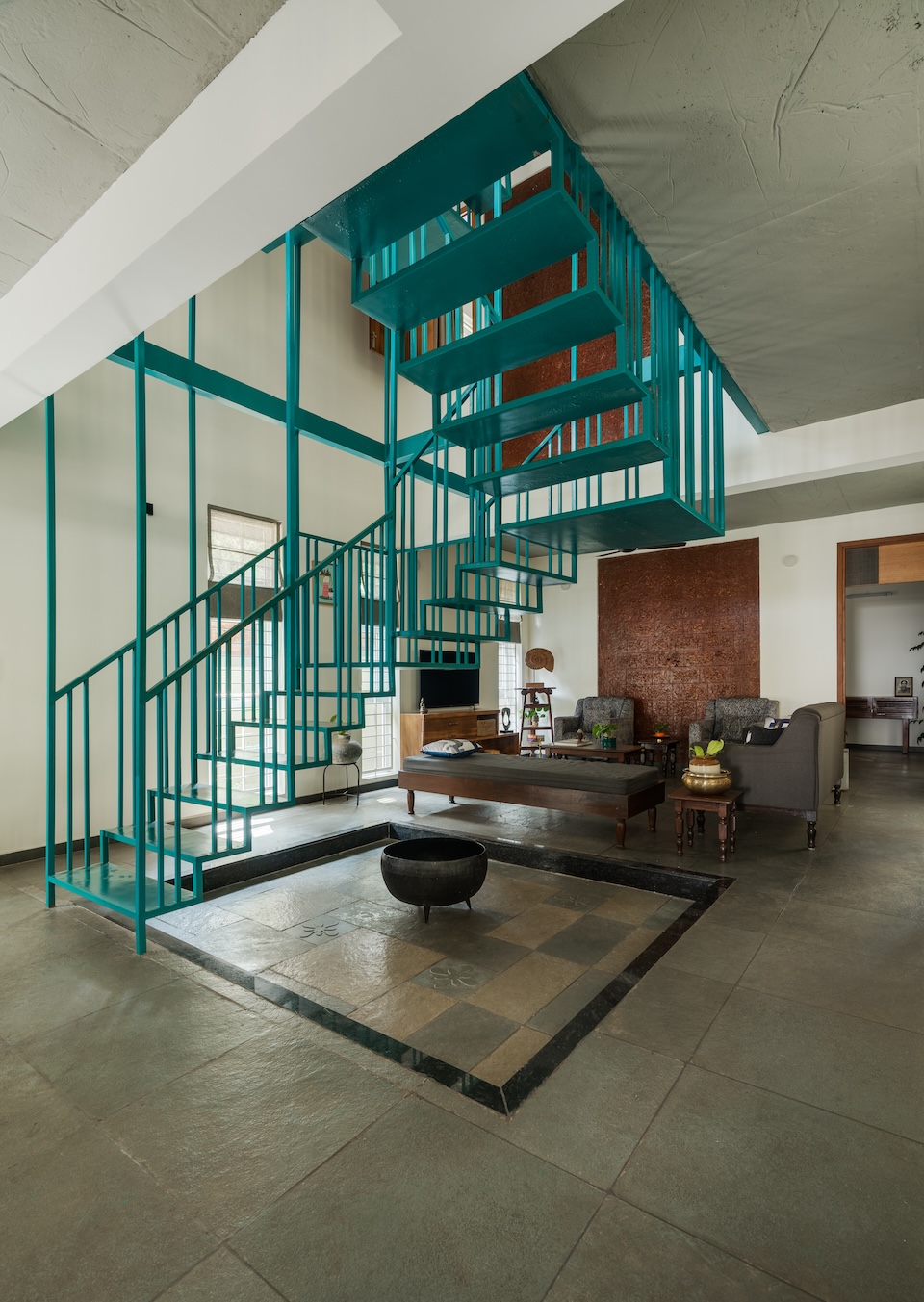
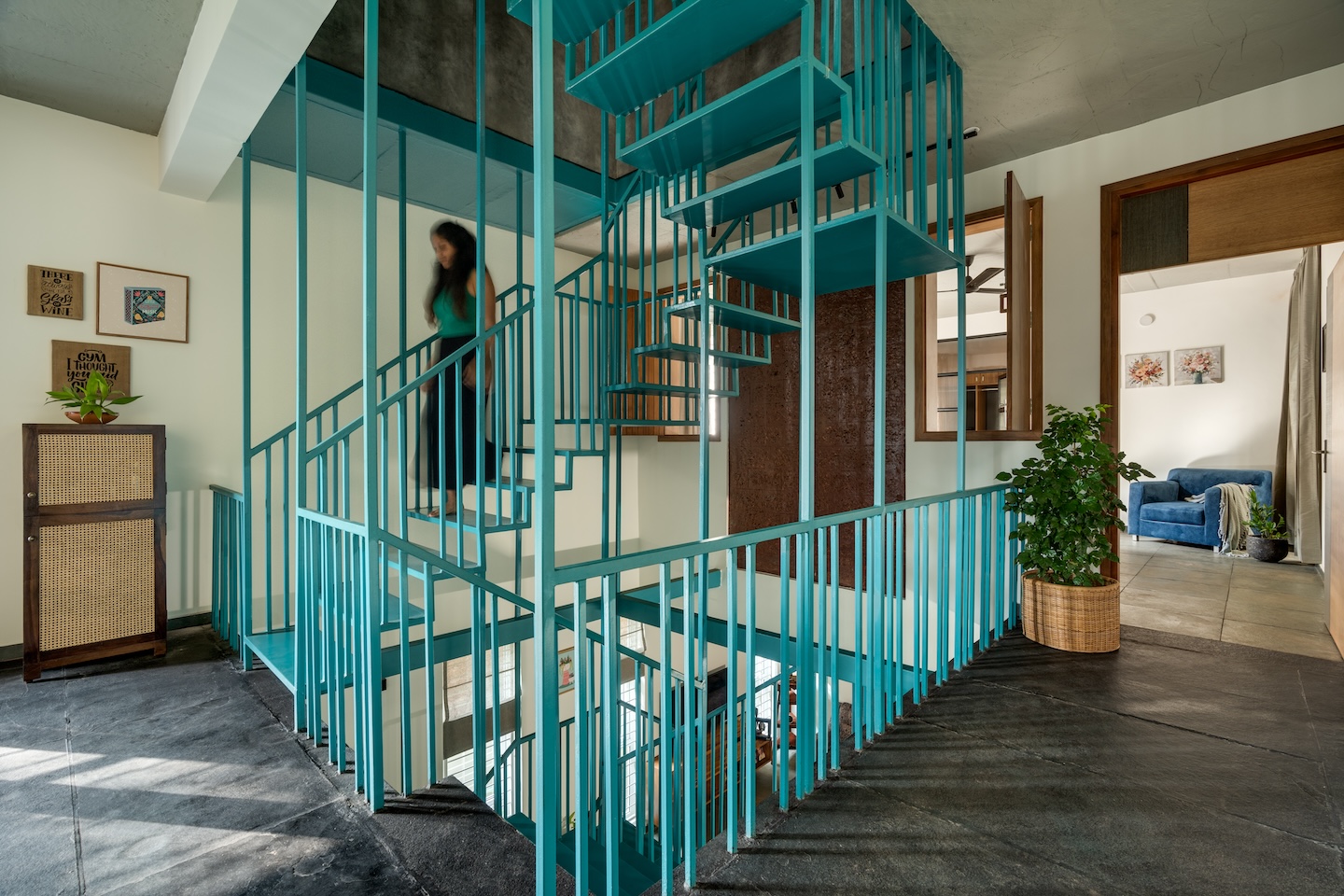
The linear house (built for the architect and his family) is designed along the length of the site with a courtyard where the stairway is provided. This house has a simple plan and is divided into two parts. The front portion has the house which includes two floors, and the back portion has the design studio. The central metallic stairway is the protagonist of the design story with its contemporary style, which is further emphasized by the bold teal colour. Having been inspired by the cradle to provide support from all directions, the stairway is safe and easy to access for the elderly and children alike. The ground floor has a kitchen, dining, living space and a bedroom. The first floor has two rooms and a family space. The internal stairs continue to the next floor that houses the design studio.
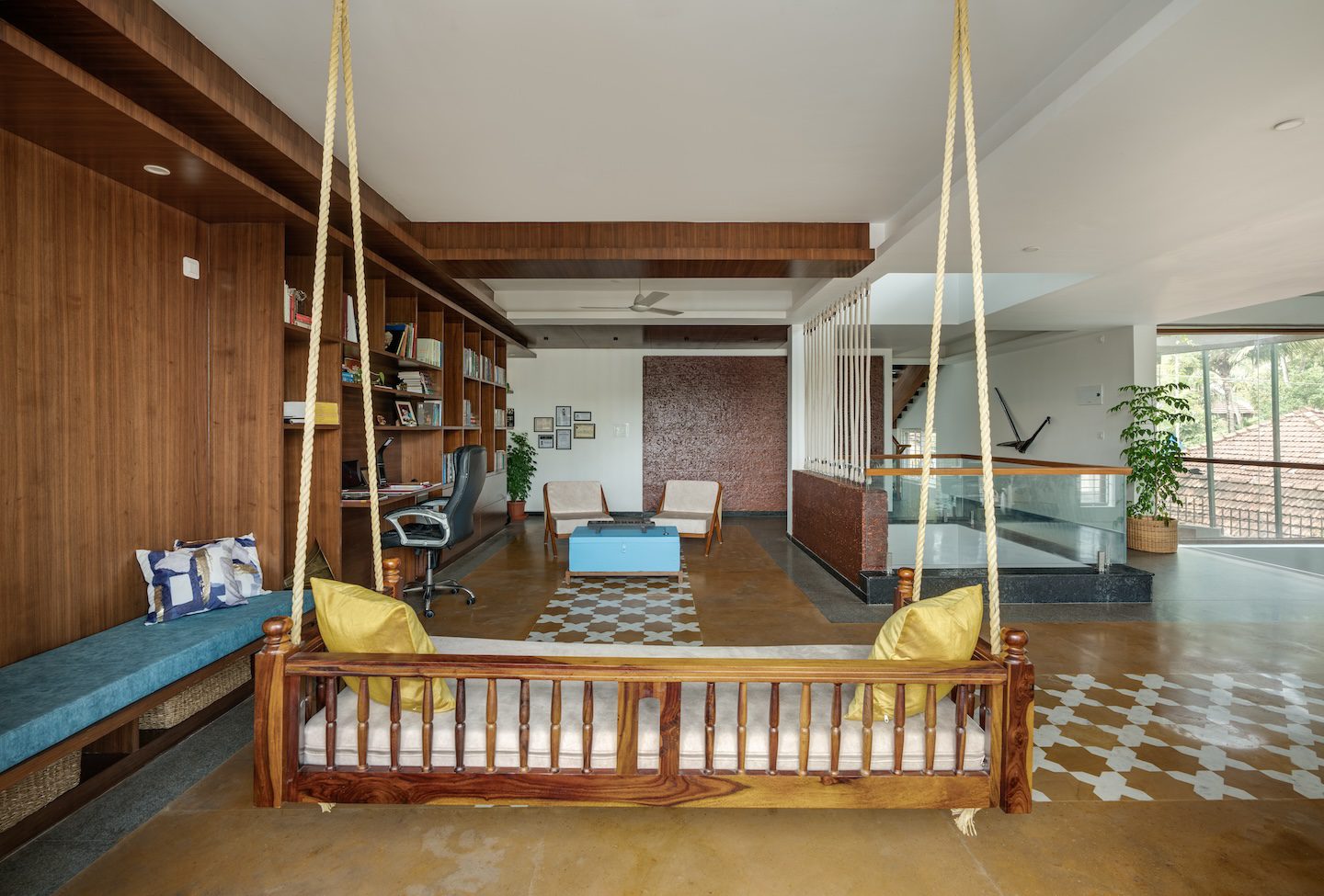 The second house is designed in the trapezoidal portion of the site. Due to this, it is recessed on one side with offsets alongside which the functional spaces are aligned. This setback makes for a nice garden which can be accessed from both the areas; besides forming a seamless connection between the interior and exterior spaces. The ground floor of the house has a living space along with dining, kitchen and two bedrooms. The first floor is completely private with a master bedroom and a library area that can be used leisure and work alike. The second floor has recreational spaces like the gym, art corner and a home theatre.
The material palette
Steel shuttering material is used primarily for the retaining wall slab; while exposed laterite masonry is seen in few areas of the exterior and interior wall surfaces to achieve the desired aesthetic look, and to add a touch of local flavour to the construction. The exposed ceiling is achieved by plywood shuttering in a few slab areas. The locally available laterite is used as a primary material for the construction of walls. As the land is located in a hilly terrain and the building is designed to have access from two roads, the difference in the land is supported by concrete retaining walls.
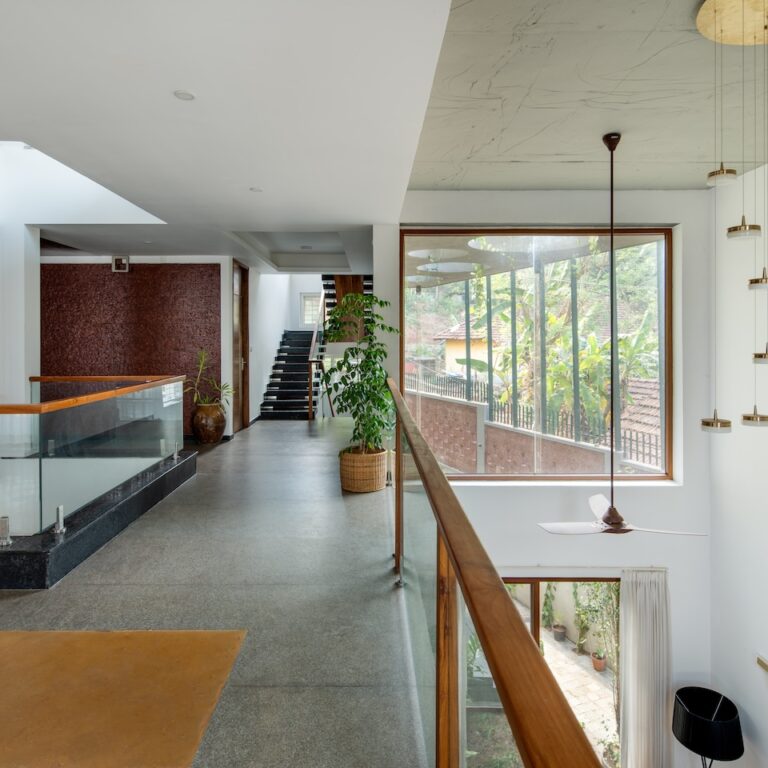 Certain rooms of the houses are highlighted with wooden flooring and bright athangudi tiles, both of which are carefully selected to complement the rest of the interiors. The colour palettes have been maintained as mostly neutral, with the warmth of wood introduced in key locations. Landscaping plays a huge part in taking the interiors to the next level, all the rooms feature large windows or balconies that provide an enticing view to the lush surroundings.
The highlights
The linear house features a dramatic steel staircase coloured in a bright shade of teal. The main concept behind this design element is that of the safety of a cradle. The multiple landings and vertical supports ensure safe movement across the floors of the residence. The pop of colour among the earthy finishes effortlessly blends the contemporary style with a more vernacular touch, becoming the hero element of the space.
The trapezoidal house set in the tapered site creates multiple offsets along the inclined wall. These offsets have been utilized as courtyards, creating pockets of lung spaces that facilitate cross ventilation in the interior spaces. The garden spaces also provide a safe haven for the local species of birds, which can often be seen nesting in the trees, creating an idyllic scene characteristic of a peaceful environment.
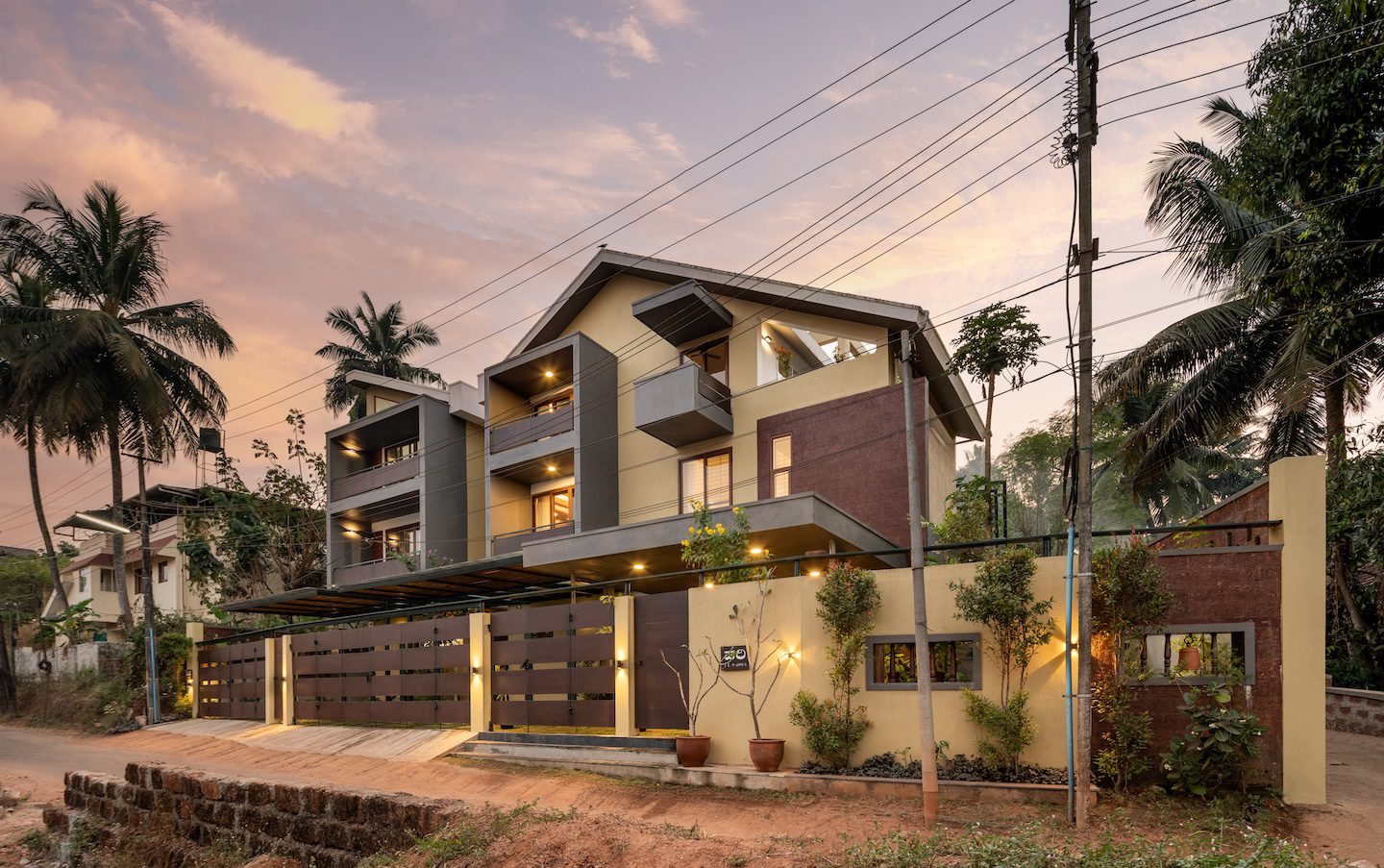 The laterite bed on the site encouraged an alternative approach when it came to laying the foundation of the structure, which was addressed by creating gradual level differences across the spaces thereby making it accommodating for the elderly occupants of the residence. Mangalore receives heavy rainfall for 4 to 5 months in a year in addition to being a hot and humid type climate. These conditions were taken into consideration while designing the volumes of the spaces by utilizing stack effect to redirect the hot air upwards. The cool air is drawn in through the well placed large openings along the houses, thereby increasing the energy efficiency of the house by relying on existing climate patterns to keep the houses cool.
Fact file
Project: Jodi Mane
Location: Mangaluru
Area: 6,534 sq ft
Principal architect: Sachin Shetty
Design team: Madhura
Add a Comment