
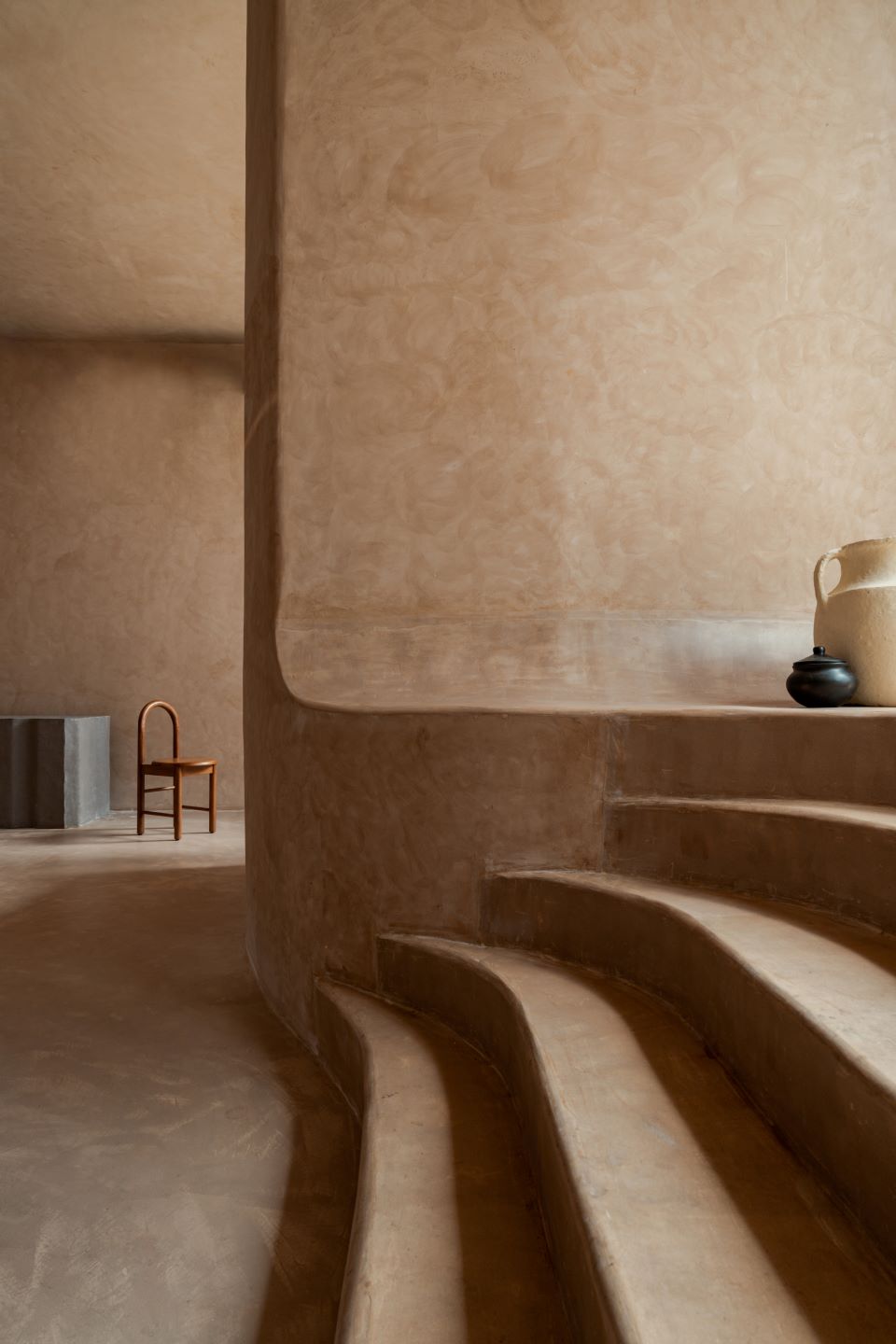
Kaviar Collaborative draws inspiration from graceful swirls of gelato, and modest art galleries of New York to create Affogato… a minimal monochromatic cafe where gelato and coffee offerings bask in the limelight.
Curated by: Deepa Nair
Photographs: Syam Sreesyalam; courtesy Kaviar Collaborative
 The site
Affogato, a gelato and coffee shop designed by architects Kasturi Wagh and Vineet Hingorani of Kaviar Collaborative, is nestled in the narrow lanes of Khar, Mumbai. The 600-square-foot site originally housed a dilapidated and dimly-lit clothing store that induced feelings of claustrophobia. Additionally, the space also had a mezzanine level and walls with extensive stone cladding.
The brief
Owners Suren Joshi and Shalini Rattan envisioned an inviting space that exuded both luxury and warmth. They wanted Affogato to strike a harmonious balance between opulence and homeliness.
 The design intent
“When we first visited the site, our thoughts instantly transported us back to our experiences in New York City, particularly our visits to the intimate private art galleries nestled within the narrow lanes of the Lower East Side in Manhattan. These were essentially “hole-in-the-wall” establishments characterised by expansive glass facades and minimalistic interiors, where the showcased art itself was the magnetic centrepiece that drew people in,” shares Kasturi.
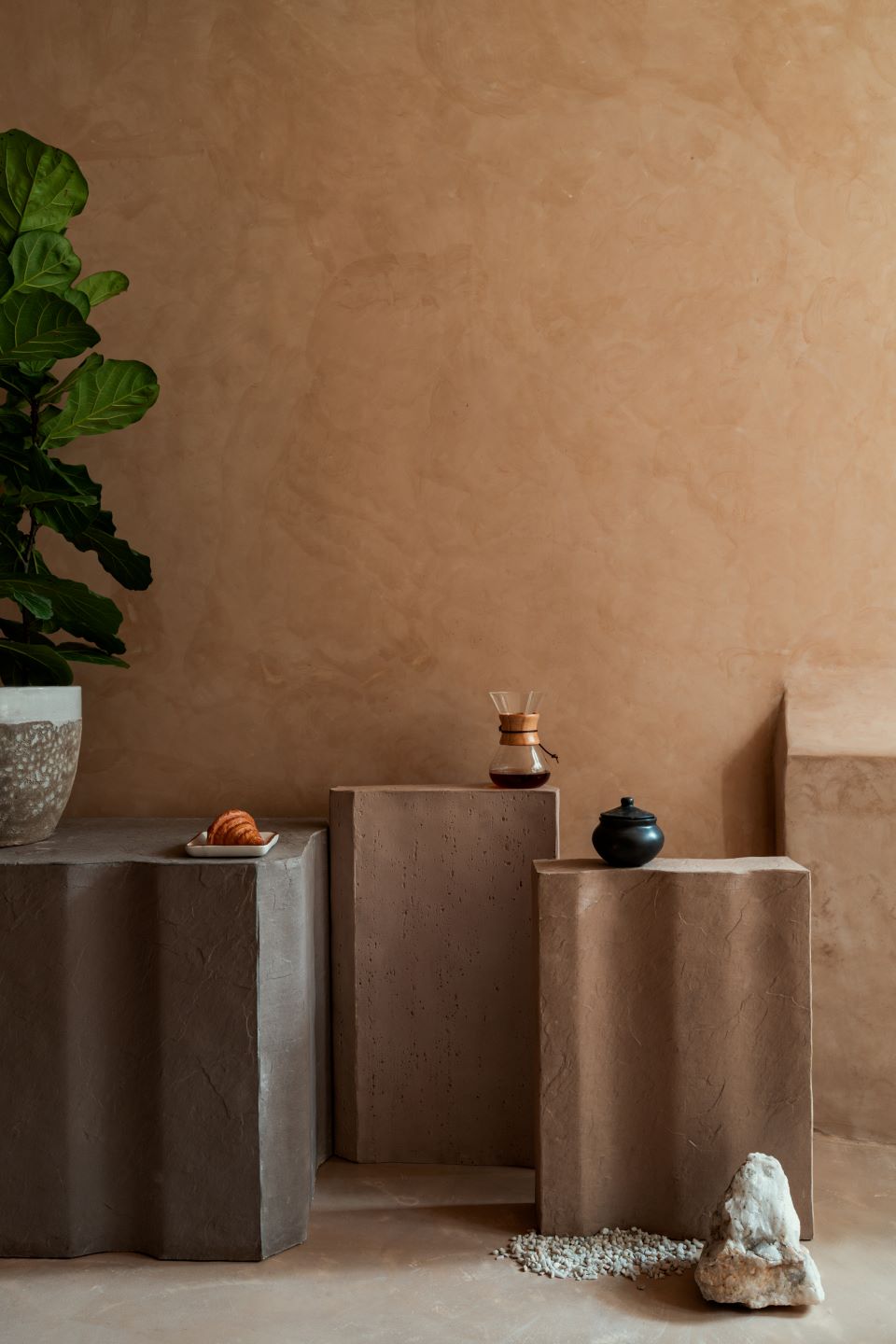
Inspired by this concept, the design team decided to transform this gelato and coffee shop into the disguise of a subterranean art gallery. The design concept revolves around a minimal monochromatic volume adorned with textures and gentle curves, drawing inspiration from the graceful swirls of gelato. In a manner reminiscent of art pieces and sculptures showcased on pedestals within an art gallery, the design places the wide array of gelato and coffee offerings centrestage… gracefully positioned atop a collection of stone blocks. “Our approach was to elevate the components of an ‘affogato’ to the status of artistic pieces rather than treating them as everyday consumables, and this philosophy is embodied in the very essence of the space we have created,” says Vineet.
 The civil intervention
To breathe new life into the dull space significant changes were carried out. The mezzanine floor was demolished, internal walls were dismantled to create an open and expansive layout, and the use of glass on the facade was maximised to allow ample natural light to flood the interior. A deliberate choice was made to opt for a lighter shade of beige concrete to instill a sense of cosiness and airiness into the space, effectively transforming it from its former “dungeon-like” state.
The spatial configuration
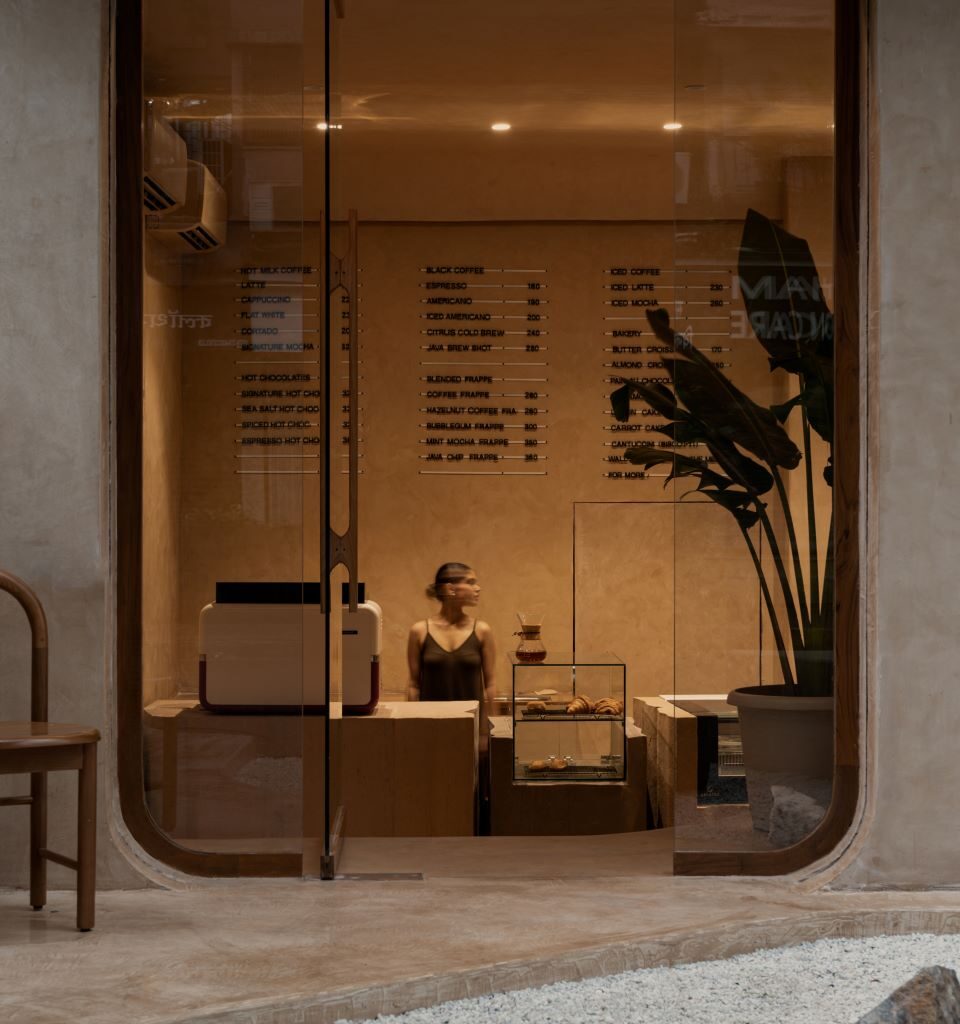
On approaching Affogato visitors are greeted by gracefully curved walls that seamlessly transition into the cafe’s interior. An al fresco seating area, adorned with Travellers’ Palms, white gravel, and minimal tables and stools, sets a serene atmosphere. The expansive curved glass facades offer a direct view of the vibrant hustle and bustle of patrons and the culinary delights within. As the site is subterranean, standing at the entrance provides a view of the artfully arranged stone blocks featuring the coffee machine and gelato offerings, along with the menu displayed on the wall.
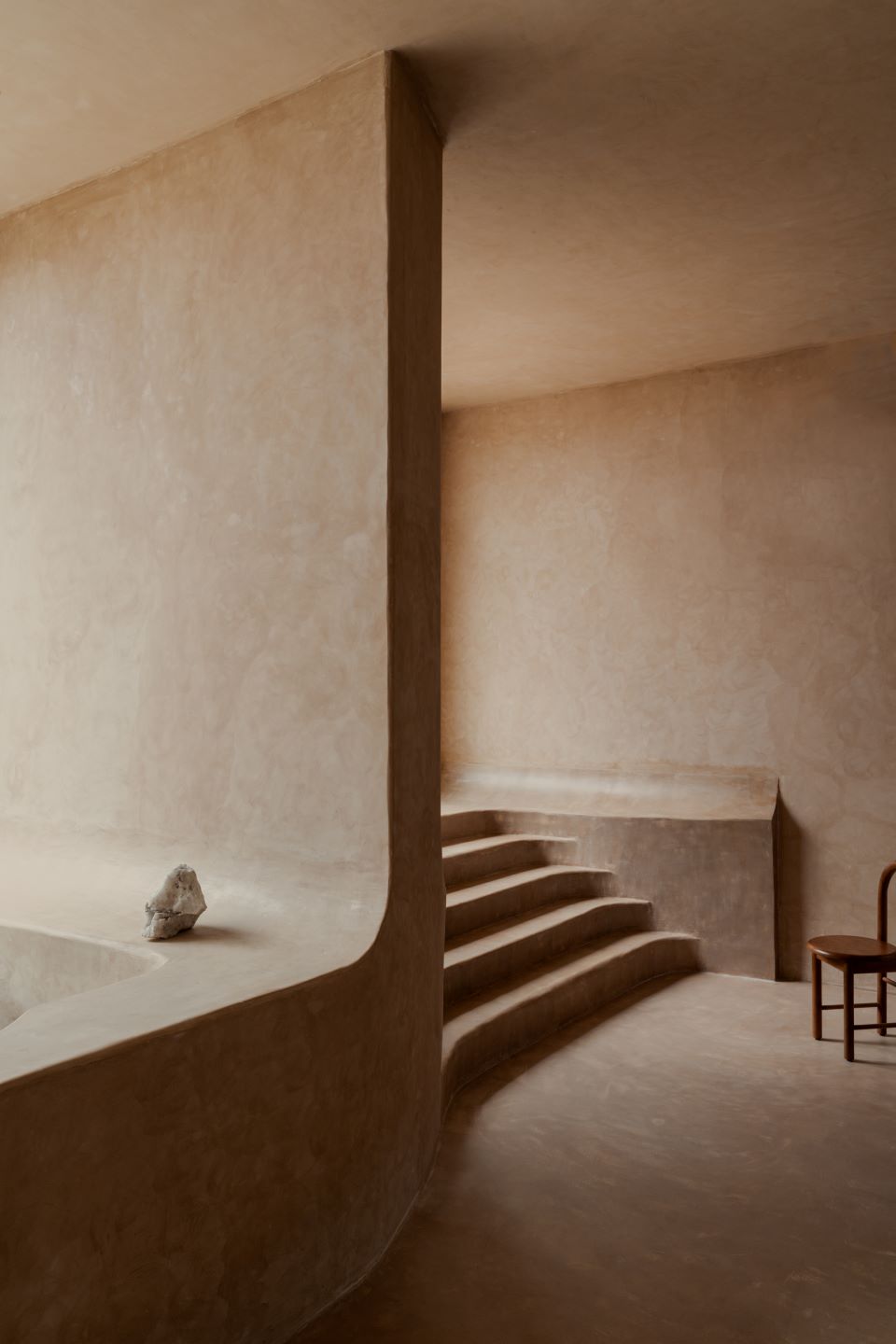
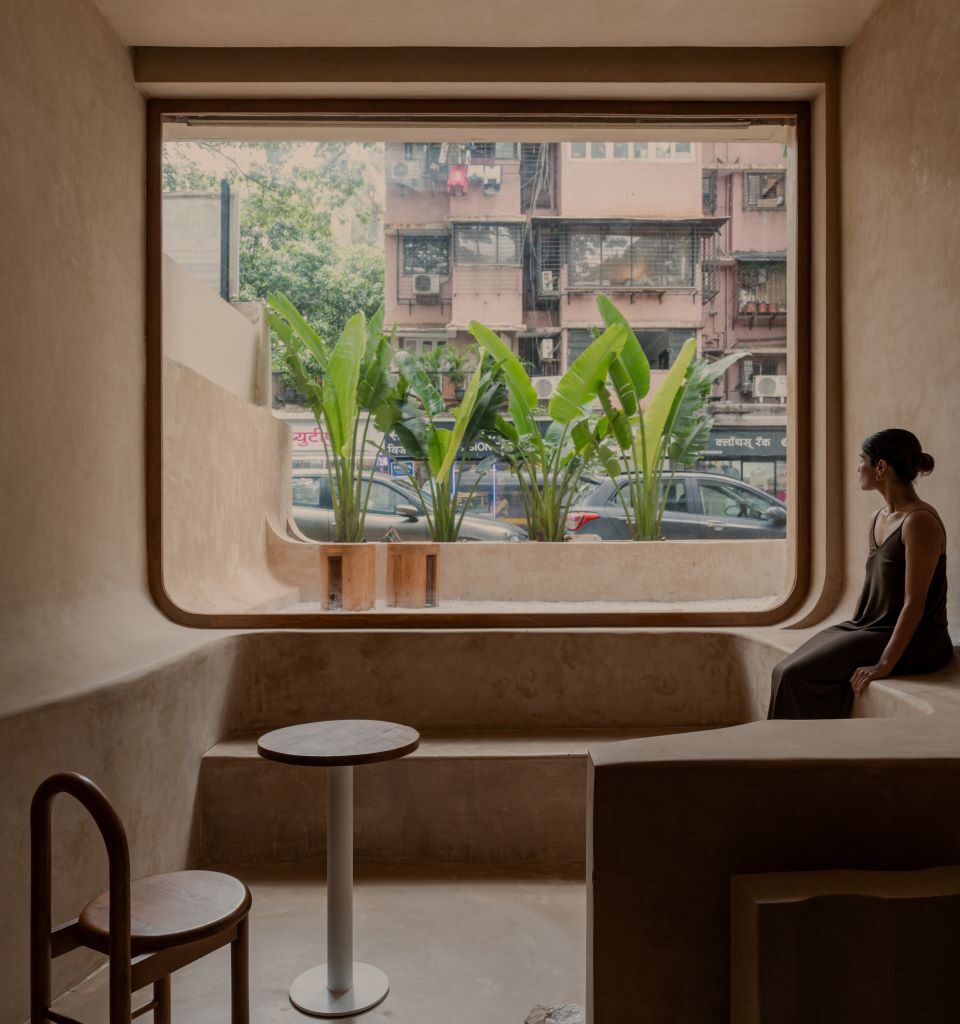
Upon stepping inside one has to take a graceful flight of stairs — which appear to organically merge with the surrounding walls — to descend to the cafe within. Adjacent to these steps, and nestled against the expansive single glass facade, is a seating area (referred to as “the pit”) that seems to be sculpted from the ground itself. Directly opposite the steps and “the pit,” you’ll find what appears to be randomly positioned stone blocks or pedestals. These serve as showcases for the coffee machine, gelato, and baked goods. Concealed behind the stone-clad blocks are two discreet doors, providing access to the “back of house” areas and the washrooms.
 The material palette
The design intentionally embraces minimalism, eschewing traditional decor elements. Both the interior and exterior spaces maintain a stark simplicity, relying on only three key materials: concrete, stone, and wood. A layer of beige microconcrete envelops the entire volume of the space, providing a cohesive and continuous finish that seamlessly spans the floor, walls, and ceiling.
Stone cladding adorns the pedestals, also known as counters, where consumables and coffee machines are housed. These stone-clad surfaces lend a touch of texture and character to the functional areas. To infuse warmth into the space, minimal furniture crafted from wood is strategically placed. This use of wood adds a natural and inviting element, creating a balanced and harmonious environment amidst the predominantly concrete and stone surroundings.
 The highlights
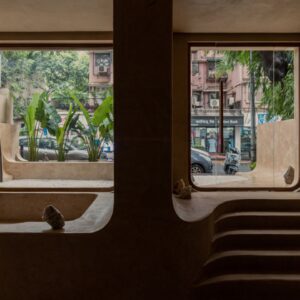
“On the opposite side of the staircase, nestled against the expansive single glass facade, you’ll find what we affectionately refer to as ‘the pit.’ This unique feature was not originally part of our initial design concept. It emerged as a creative solution during the demolition phase when we discovered that the space was actually situated below road level. As a result, we encountered the foundation of the building adjacent to the large window, which we couldn’t alter. However, we saw this as an opportunity to leverage the existing structure to our advantage,” disclose the architects.
Subsequently, “the pit” was realised by designing an in situ seating arrangement which gives the impression of being sculpted or scooped out of the ground. Apparently, it is the cosiest and most inviting spaces within the cafe, and showcases how creative problem-solving can lead to unexpected and delightful design elements.
Fact file
Project: Affogato
Clients: Suren Joshi and Shalini Rattan
Location: Khar, Mumbai
Area: 600 sq ft
Principal architects: Kasturi Wagh and Vineet Hingorani
Add a Comment