
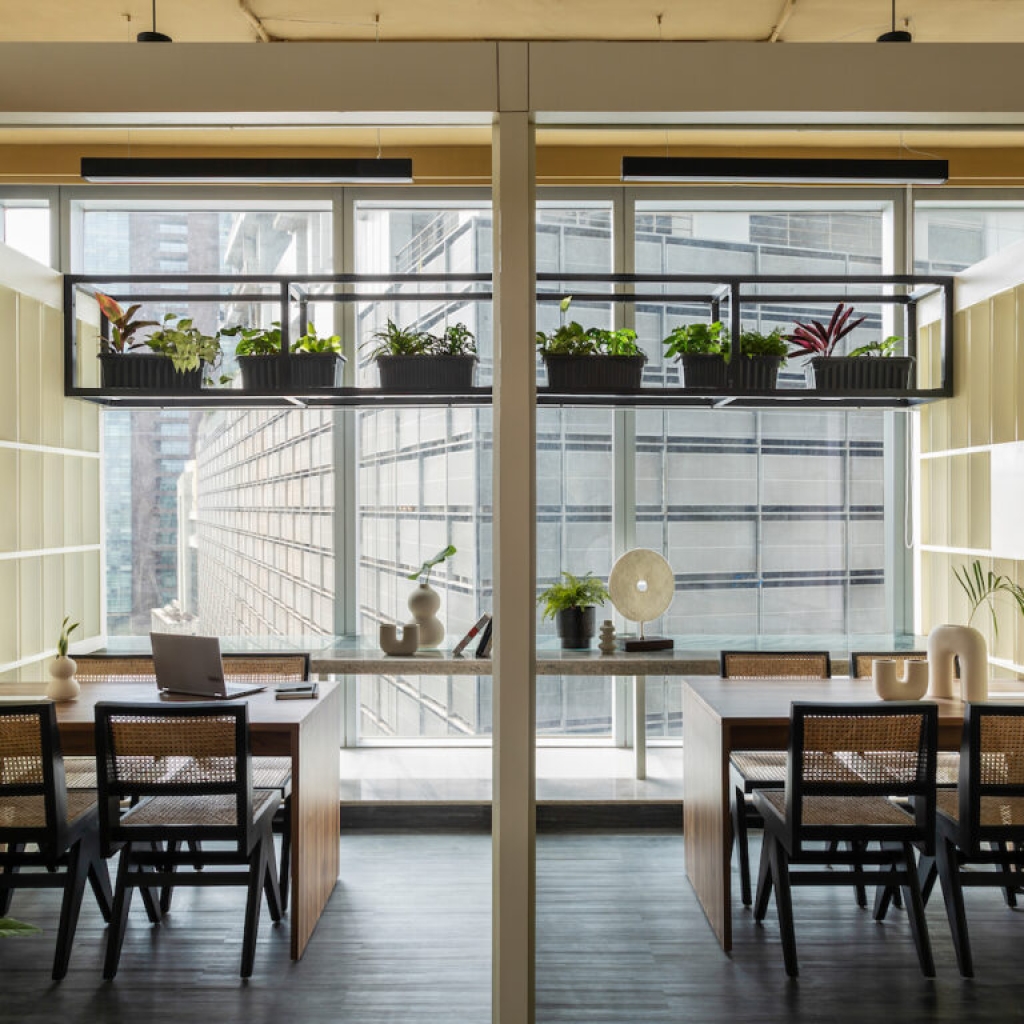
Radhika Utpat Studio and The Design Corner collaboratively deliver a workspace that exudes a sense of warmth and calm.
Curated by: Rupali Sebastian
Photographs: Anuja Kambli; courtesy the architects
 The site
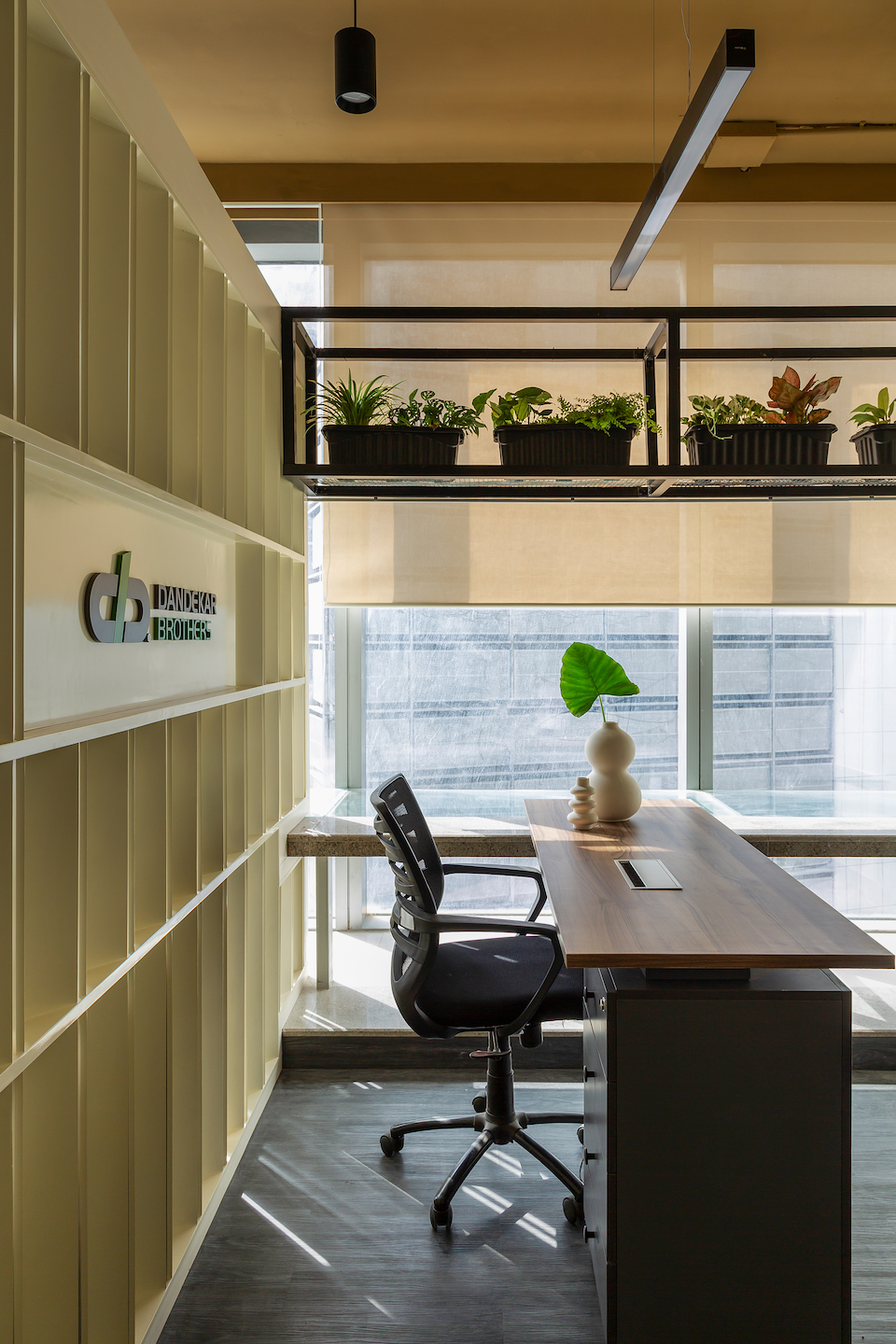
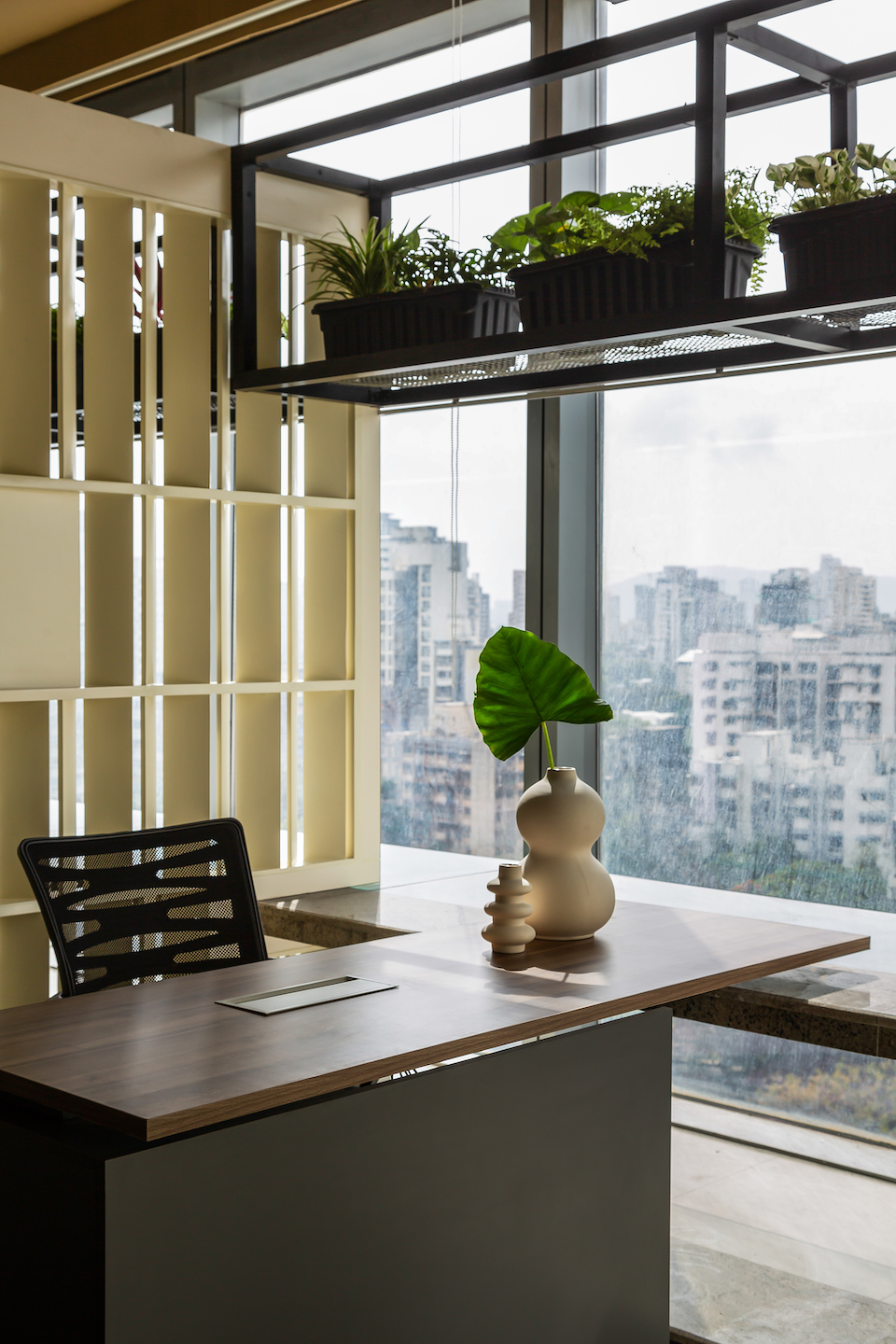
Set inside the tallest skyscraper in Dadar, Mumbai, the space is a corner office on the 10th floor, with east-facing curtain walls and abundant natural light streaming in. The modest usable space of 1,000 sq ft was further reduced since the building’s stone fenestration existing along the windows jutted inside the space.
The brief
The architects — Radhika Utpat of Radhika Utpat Studio and Shruti Dandekar of The Design Corner — were approached with a modest space and an elaborate set of requirements for a typical cubicle corporate office space. “The clients, however, were open to creative solutions to make the space flexible in its functionality,” the duo reveals.
 The design intent
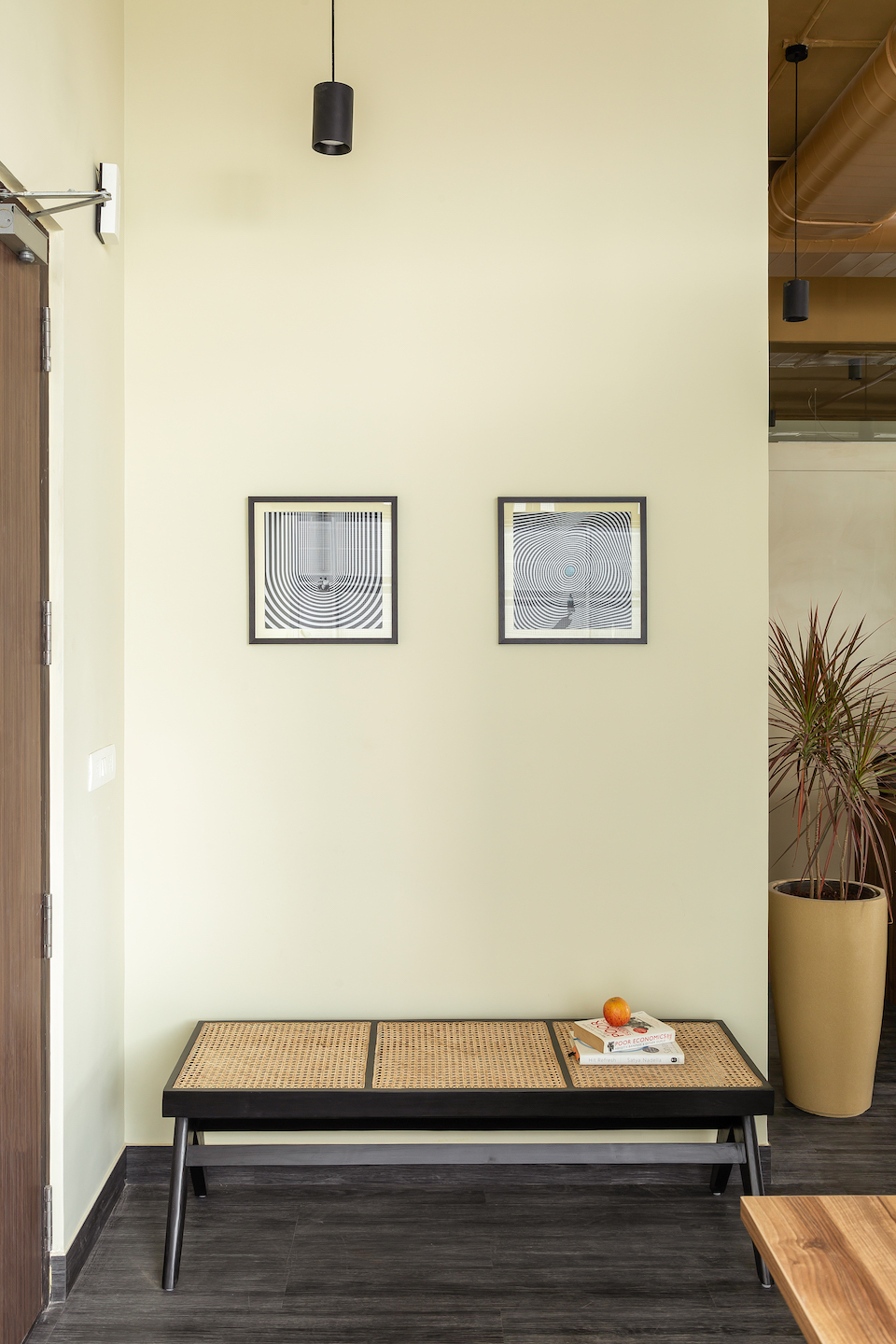
The initial diagramming revealed the necessity for accommodating flexibility in design in order to allow for multifunctional spaces. Additionally, Radhika and Shruti also realised that they had to create porous design elements to facilitate ingress and percolation of light and air. “Designing a post-pandemic office space,” they say, “we wanted to replicate qualities of a home for the employees — a sense of warmth and calm, a softness, a space that allows one to reflect and relax and find joy to work in.”
 The spatial configuration
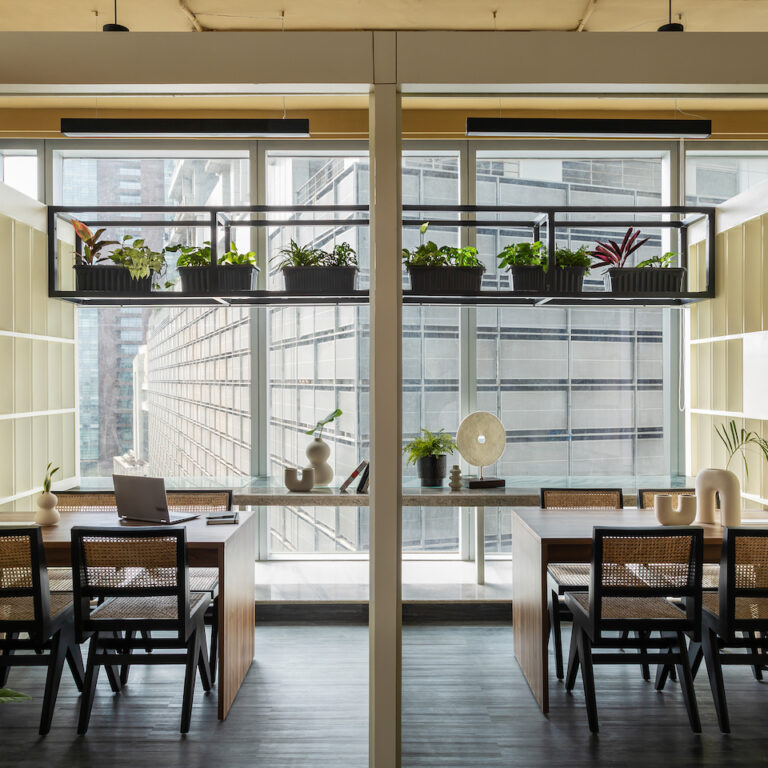
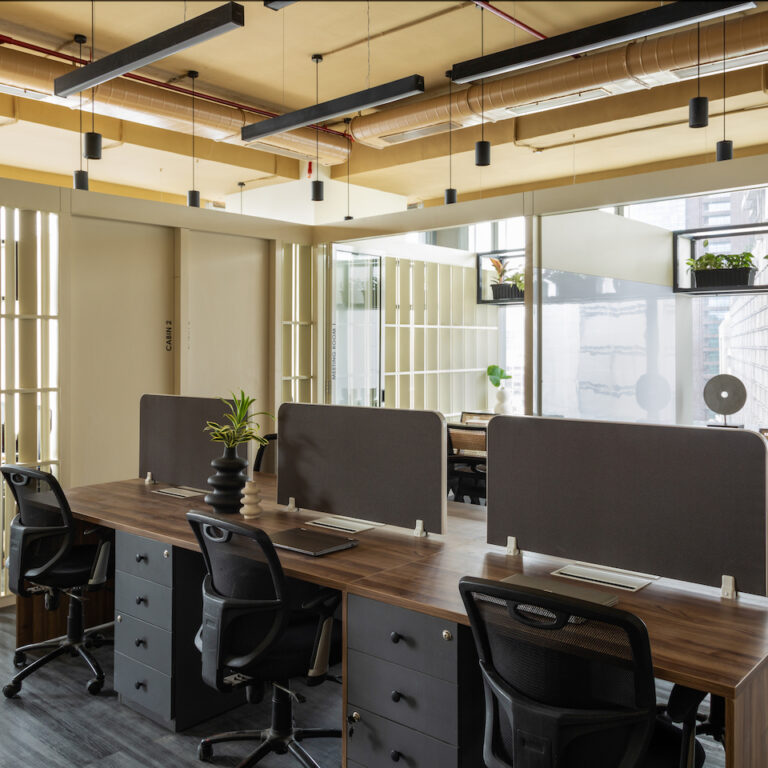
The minimalist design uses only a handful of strategically placed screens to carve up functions of the workspace. These screens become a primary design element that organise space and weave a tactility through the office. The reception area is marked by a screen that is shared with a meeting room at the back. The latter functions as an open space inviting relaxed conversation and can be enclosed with glass sliding-folding doors whenever required.
The openness of the meeting rooms ensures that the view and natural light are enjoyed uninterrupted from the central workstations. Private cabins and conference rooms use sliding doors to maximise space utilisation. The existing stone projections were used for supporting desks in cabins and reception and for providing discreet under-counter storage. “The meeting rooms that were originally meant to be typically closed cubicles in the brief were transformed into a space that could double as an interactive heart of the space,” disclose the architects, adding that this warm and relaxed space is not only their favourite but has also resonated with the client.
 The material palette
The palette of warm neutrals is dominated by ivory walls, screens and contrasted with black metal frames, furniture and vinyl flooring. Sleek metal frames hold planters that continue along the entire extent of the windows through different spaces. Lighting design is functional and consistent throughout all spaces. Wood-top desks, rattan furniture and plants introduce natural textures and tactility to the soft neutrals. “The otherwise clean and pared-down interior is given character by the patterned details of the screens, which allow the light to filter through the screens during the day, adding a bright playfulness to the space,” state Radhika and Shruti.
The challenges
The challenge was to create a space that would cater to an elaborate set of requirements but still maintain a sense of spaciousness. This had to be done without resorting to conventional cubicles and partitions that would render the space cold, closed-off, and without natural light in the central space. Moreover, owing to a strict building code no civil changes to the existing space were allowed.
 The highlights
The screens become a primary functional and design element of the space. They provide the space with a functional structure as well as a design character. The choice of keeping the screens low was made so that the eye could travel freely and avoid the claustrophobia induced by closed cubicles. Foregoing concealed cabling and air-conditioning allowed for higher ceilings which created an illusion of spaciousness.
Fact file
Project: A Space Between Screens
Location: Dadar, Mumbai
Area: 1,000 sq ft
Principal architects: Radhika Utpat for Radhika Utpat Studio and Shruti Dandekar for The Design Corner
Add a Comment