
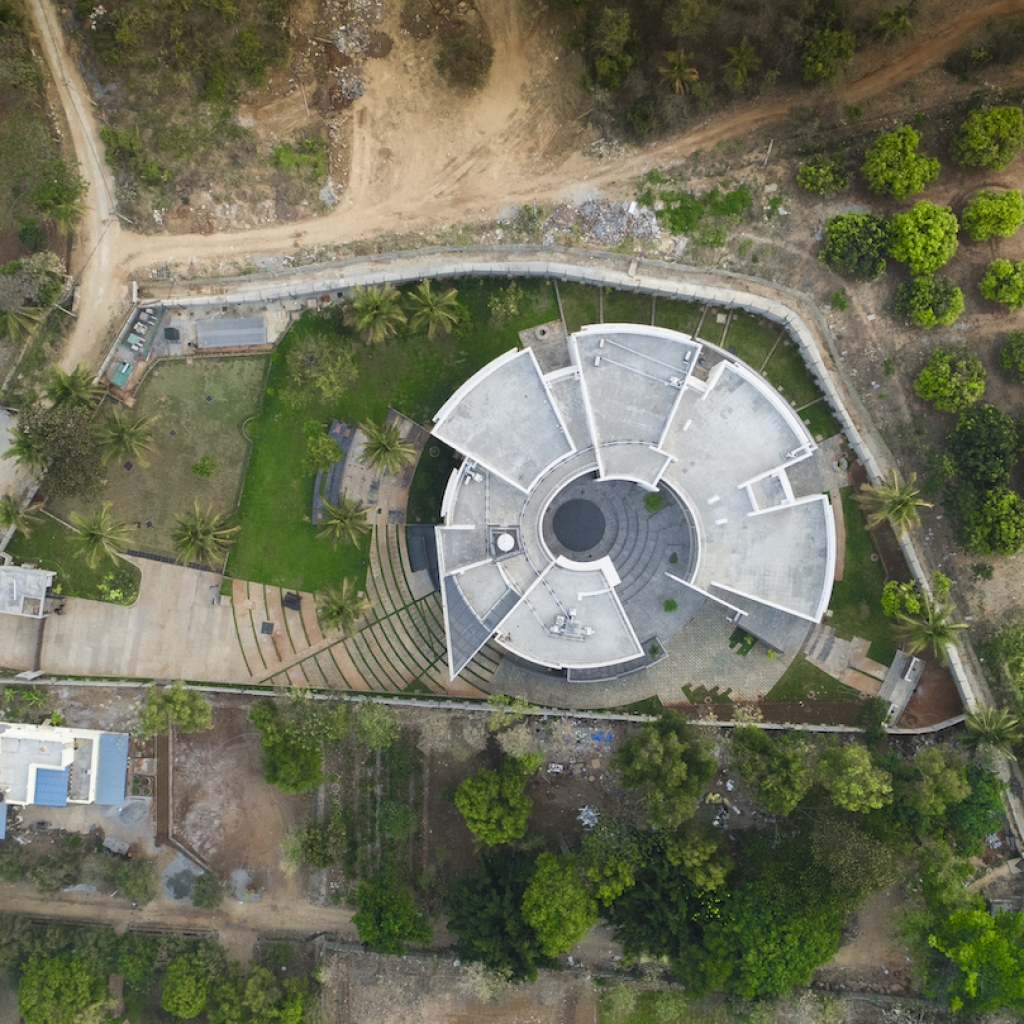
The Prayoga Education Research Centre designed by Sudhakar Pai Associates is one with the spirit of the place on which it stands.
Curated by: Rupali Sebastian
Photographs: Gurunath Chakrasali and Sanjith Seetharam; courtesy Sudhakar Pai Associates
The setting
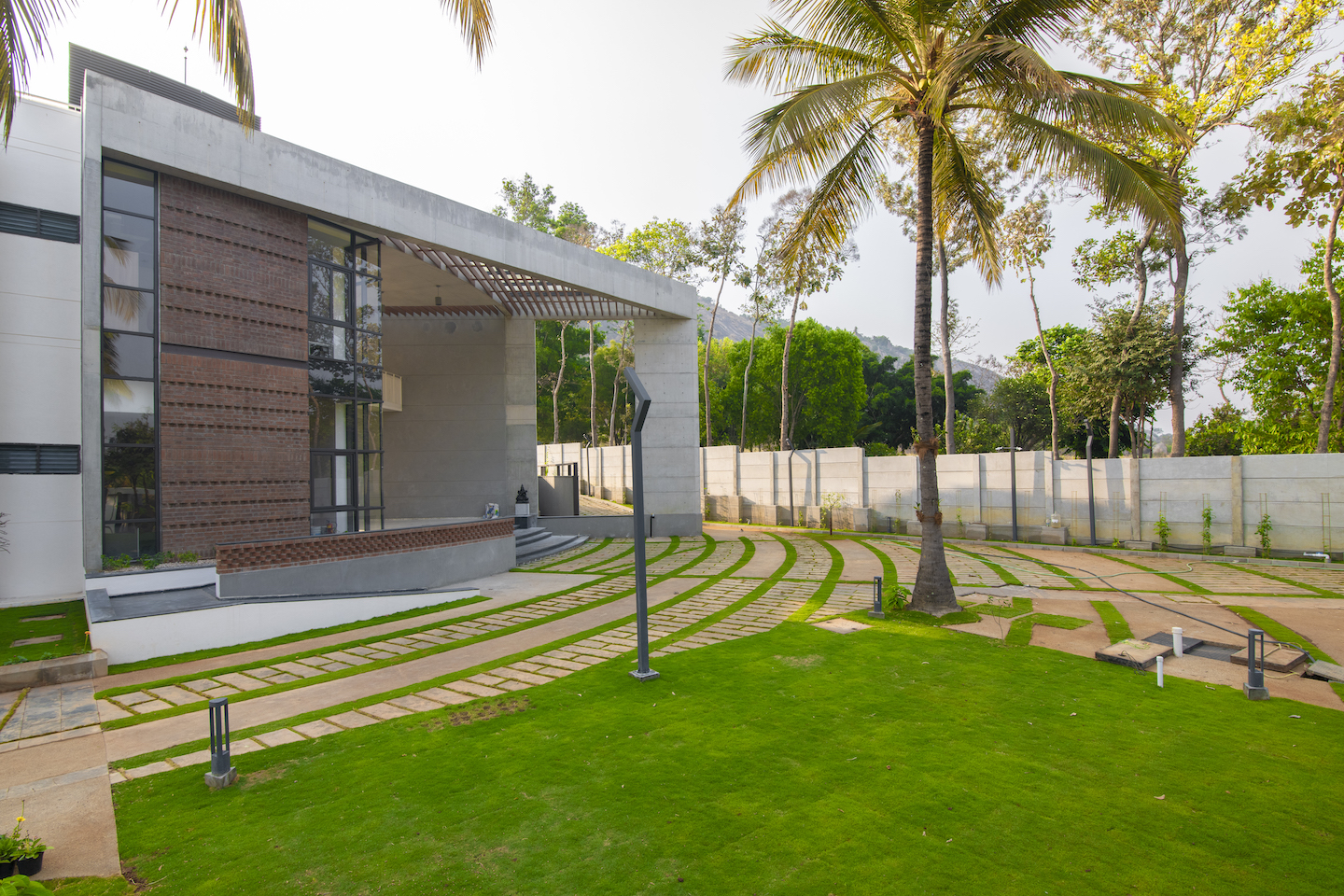
Far from Bengaluru, set in between dreamy hillocks and sleepy villages, Sudhakar Pai Associates (SPA) were shown a piece of land by the clients; this was to be the site of the proposed Prayoga Education Research Centre (PERC). “In the middle of tree clumps, chirping birds, and a rainbow of butterflies we were presented with an opportunity to design an institutional building. [It] was to be an experiential lab to research, study and, of course, teach or rather let kids learn through their very own scientific experiments guided by experienced hands,” reveals architect Sudhakar Pai.
The brief and design intent
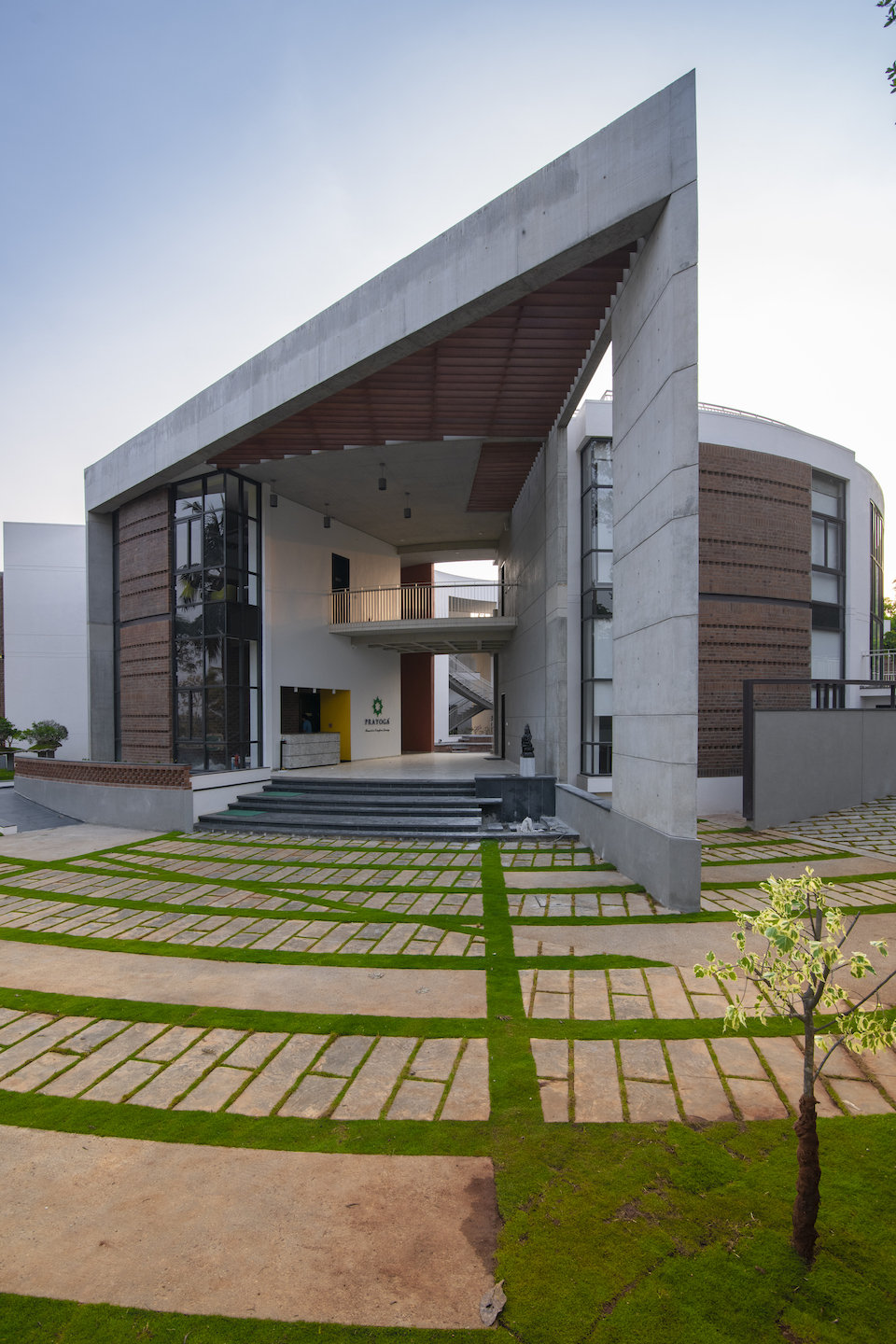
The program they were briefed with, was to design a structure that could inspire, provoke and let children enjoy some time out of their busy and hectic city schools. As architects, however, they recognised that while programming the architecture of the building to the prescribed functions was a challenge, yet it faded away in the enormity of the actual task at hand. What was more important, was to infuse into the building the spirit of the place and capture in its details the beauty of birds, the smell of the soil and the sparkling sound of the little brook you had to cross to reach PERC. “The intent of the design from the initial sketch was to build with the earth, with as minimal a footprint as we could,” explains the principal at SPA.
The central idea
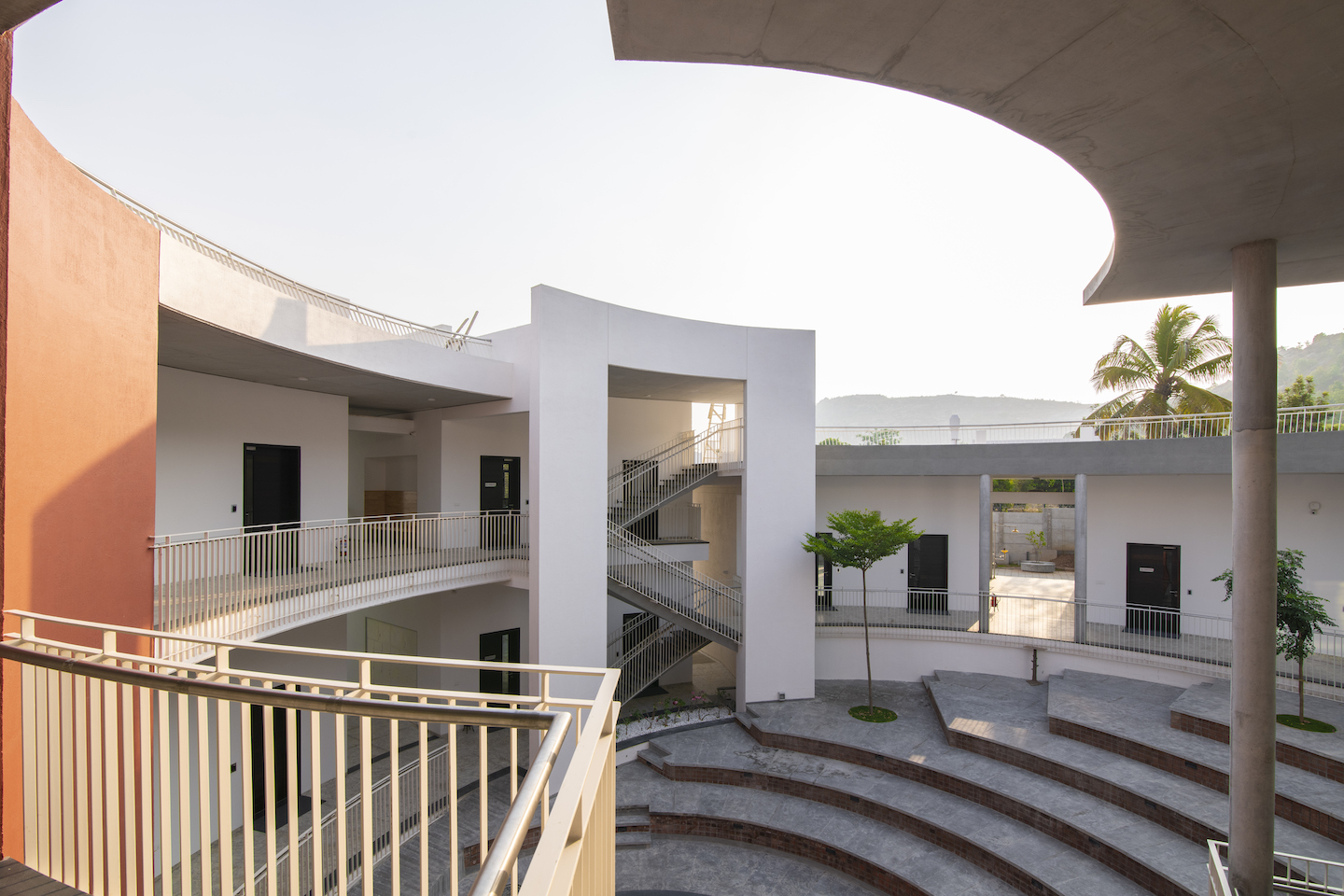
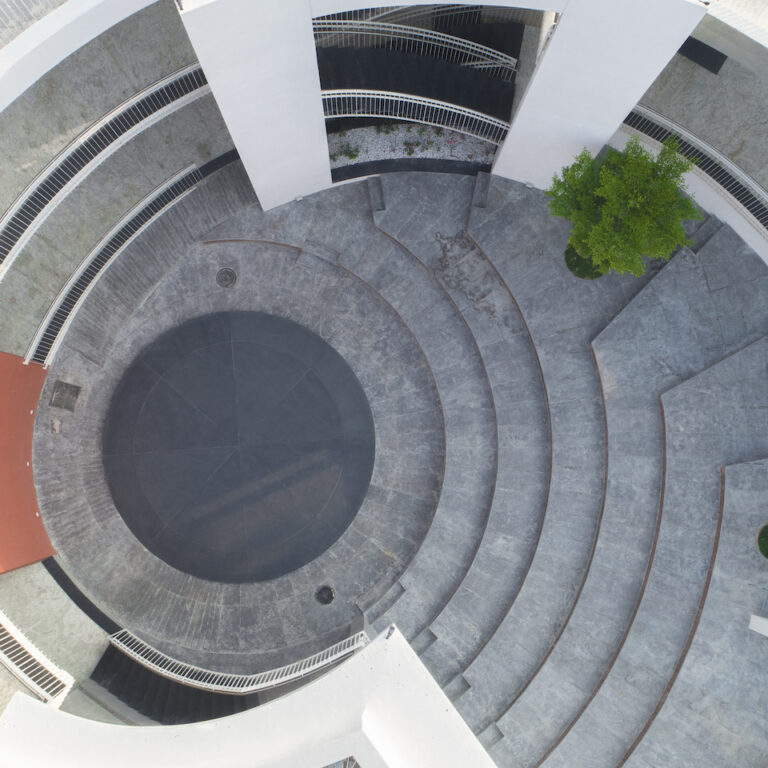
Sitting at the drawing board and probing for an idea that could fit the bill, without coming across as superficial or pretentious, the architects started to think of an organic approach: probably lifting a few strokes from a Frank Lloyd Wright building. “We reached a consensus back at the studio, that it would be a good idea to mix architecture and the penchant that the client has for mathematics,” says Yohan Vijayan, architect at SPA. The snails on the wet earth on the site played the perfect ally, turning the architects’ thoughts to the Fibonacci Sequence, which plays out as a logarithmic spiral in the shells of these gastropods. “We based our design on this sequence and organised our spaces on the spirals it generated, organising them around the central amphitheatre that opens out to the misty hillock with the little temple atop,” explains Sudhakar.
The formalisation
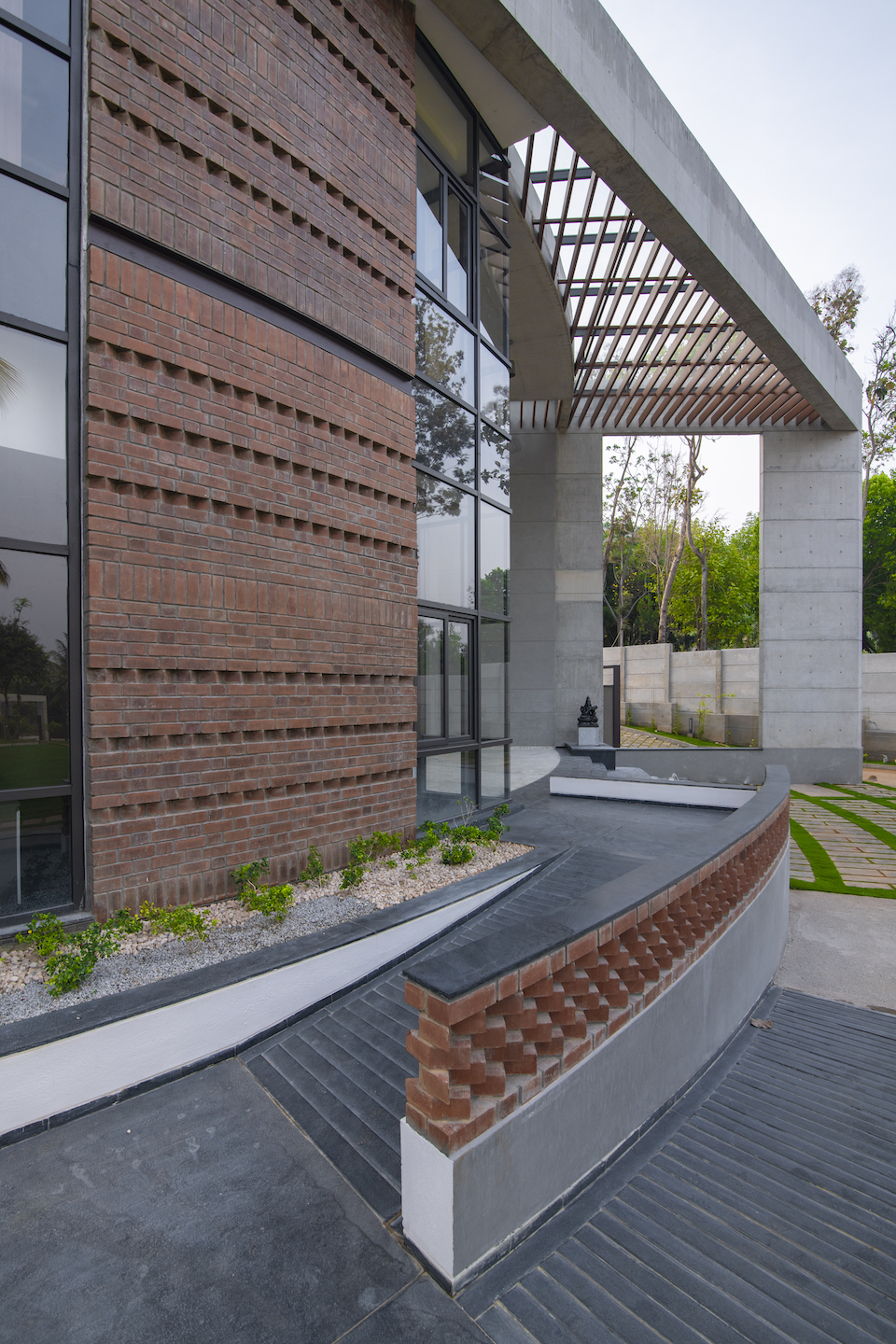
A little geometric rationalising, and the architects devised a plan that mirrored the snail closely. This was one half of the design, the other was realising it in form and material. “[We wanted] a structure that would fade into the surroundings, be and not be at the same time. We chose to build in exposed concrete and brick. The concrete would provide the framework and the brick would fill in the details, mimicking the termite mounds on the site. A building that would tread lightly on the site and be part of it as much the snail and the butterflies were,” reveal the architects. “The landscape around the building has been designed to replicate the organised chaos of the site in as much as we could intervene, respecting natural gradients and the lay of the land.”
The green
PERC has adopted several green building ideas from natural ventilation and cooling systems, to the minimal use of inorganic building materials. Trees have been replaced in a ratio of two trees planted for each tree that had to be necessarily moved. The building orientation helps to provide glare-free north lighting during the day in the labs, thereby minimising the usage of electricity during the day. Also, all campus lighting has been designed to reduce light pollution. Wastewater cycles through an onsite STP and the treated water is used to drip-irrigate the near-tropical landscape that will finally emerge. “Designing PERC has been an intense thought-provoking exercise that helped us in realising and understanding the beauty and necessity of working with nature. While we aimed to design a space to teach and encourage young children, we ended up also learning from the master teacher that Nature is,” conclude the architects.
Fact file
Project: Prayoga Institute of Education Research
Location: Bengaluru
Area: 25,000 sq ft
Principal architect: Sudhakar Pai
Lead architect: Yohan Vijayan
Add a Comment