
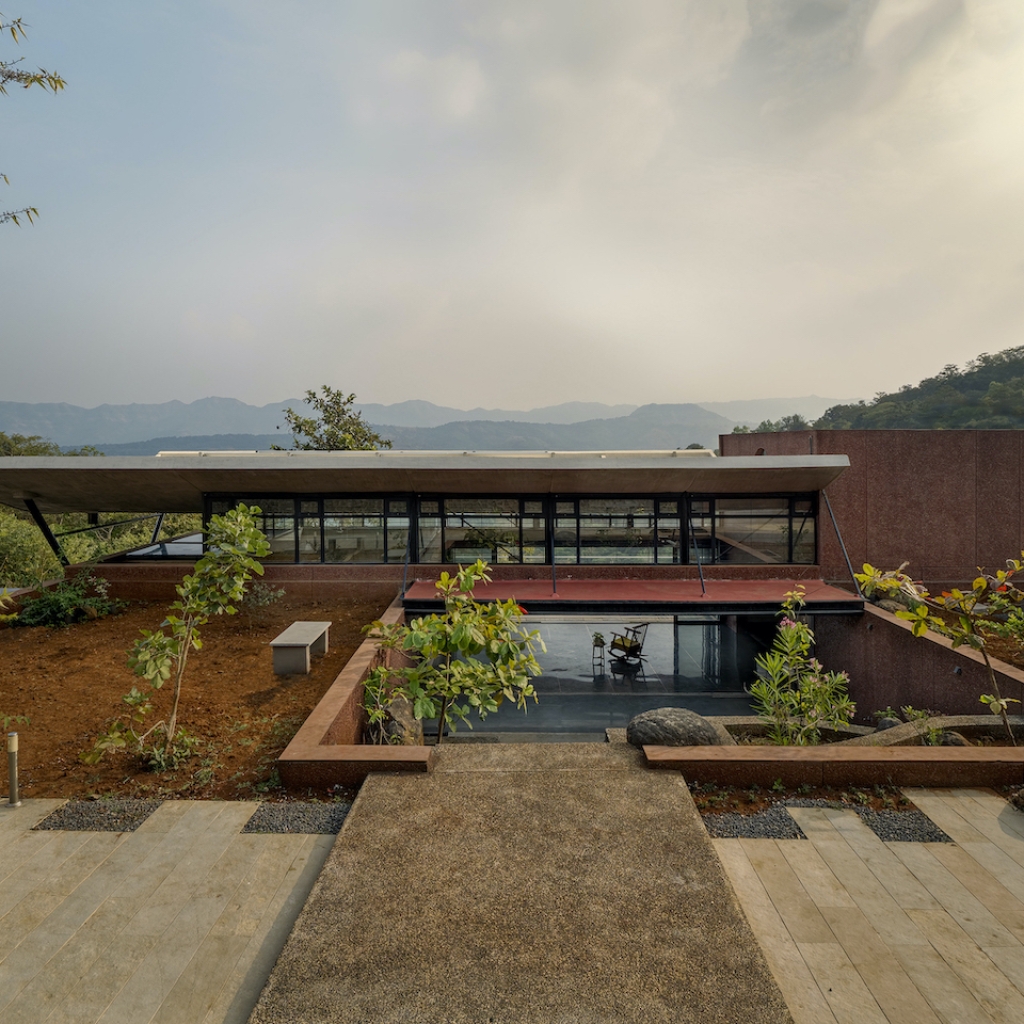
Upending the popular image of a vacation home, Red Brick Studio-built The Cove House near Panshet Dam perches on a hill face, under a levitating ferro-cement roof, and makes the most of the scenic surroundings.
Curated by: Rupali Sebastian
Photographs: Hemant Patil; courtesy Red Brick Studio
The site
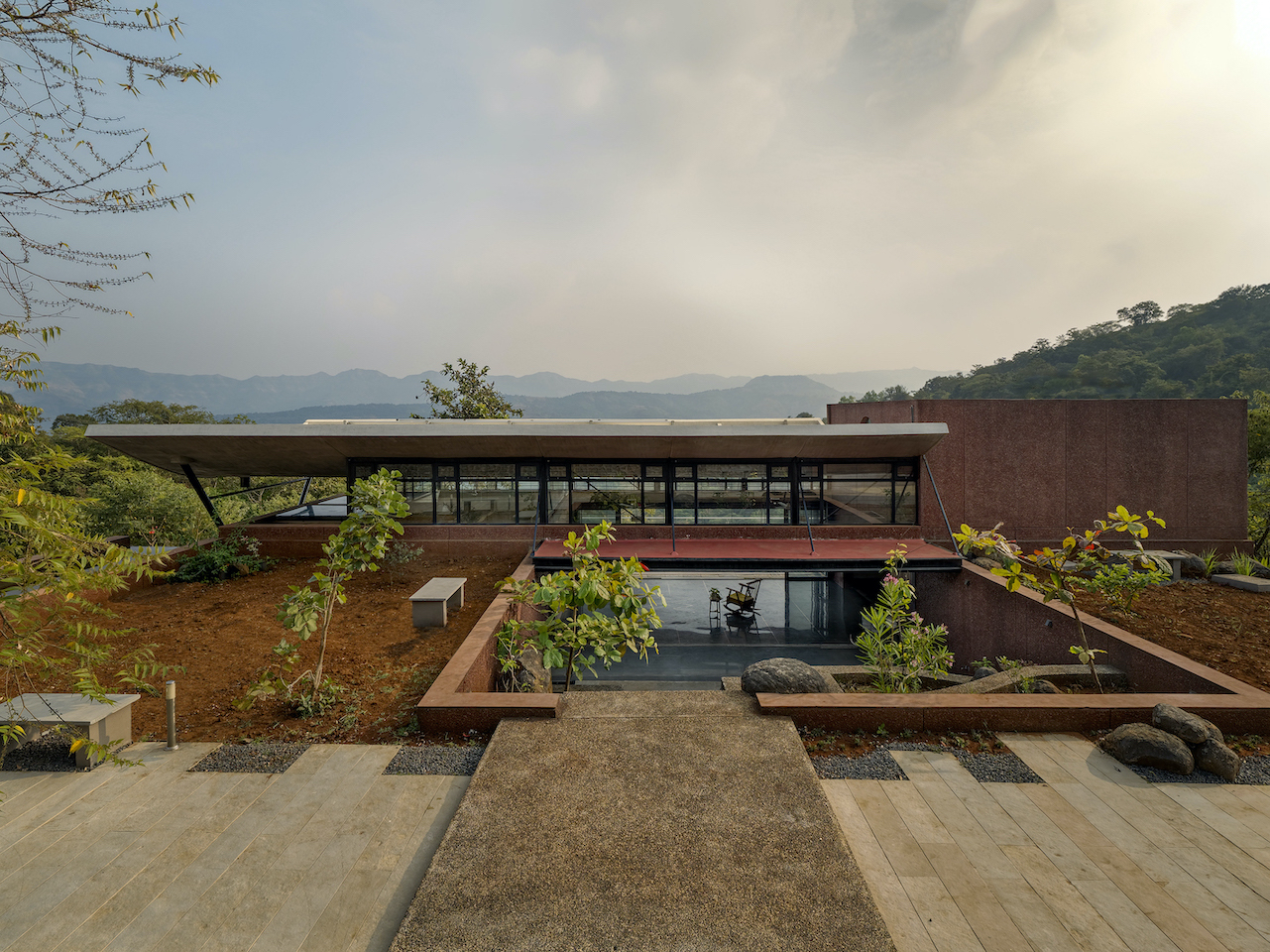
The Cove House is a weekend home standing on a contoured one-acre site nestled in the mountains of the Western Ghats. Echoing the verdant surroundings, the plot was home to champa, neem and chikoo, all of which were retained during construction.
The brief
The clients — a family of four — sought an antidote for city-frayed nerves, much of which would be provided by the picturesque views of the backwaters of the Panshet Dam the site overlooked. The limitation of a tight constructible area, notwithstanding, the family also wished for open spaces which could be integrated with the house to host larger gatherings of friends and family.
The response
Upon seeing the site and its surroundings, the studio’s first response was to create a built-form which would try and blend in rather than stand out. “Rather than using the flat part for construction, which is typical, we proposed to set the house beyond this zone and use the natural topography of the site to tuck away the majority of the house from the view at the entrance,” reveal principals Ankur Kothari and Anil Poduval.
The formalisation
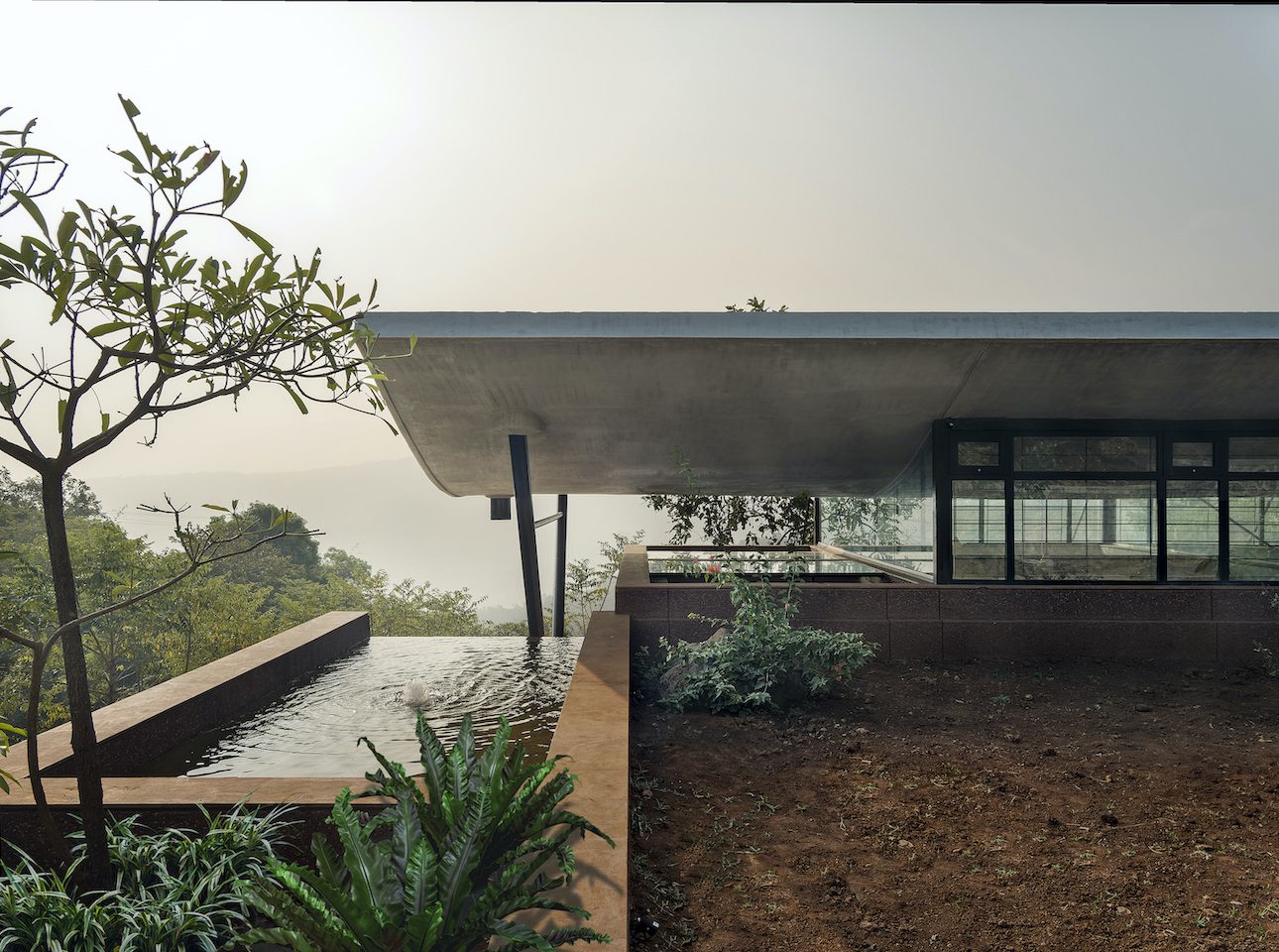
The Cove House sits lightly, on the environment and on the topography. “The reason we believe the project is unique is because it primarily breaks the notion of how a house is typically expected to be. It attempts to be more of a non-building, much in contrast to the conventional ways of looking at architecture,” state the architects. Responding to the contoured site and the scenic vistas of the Western Ghats, the architecture is formalised as structure that blends in with the surroundings; a built-form that takes advantage of the location but at no point imposes on the larger environmental fabric.
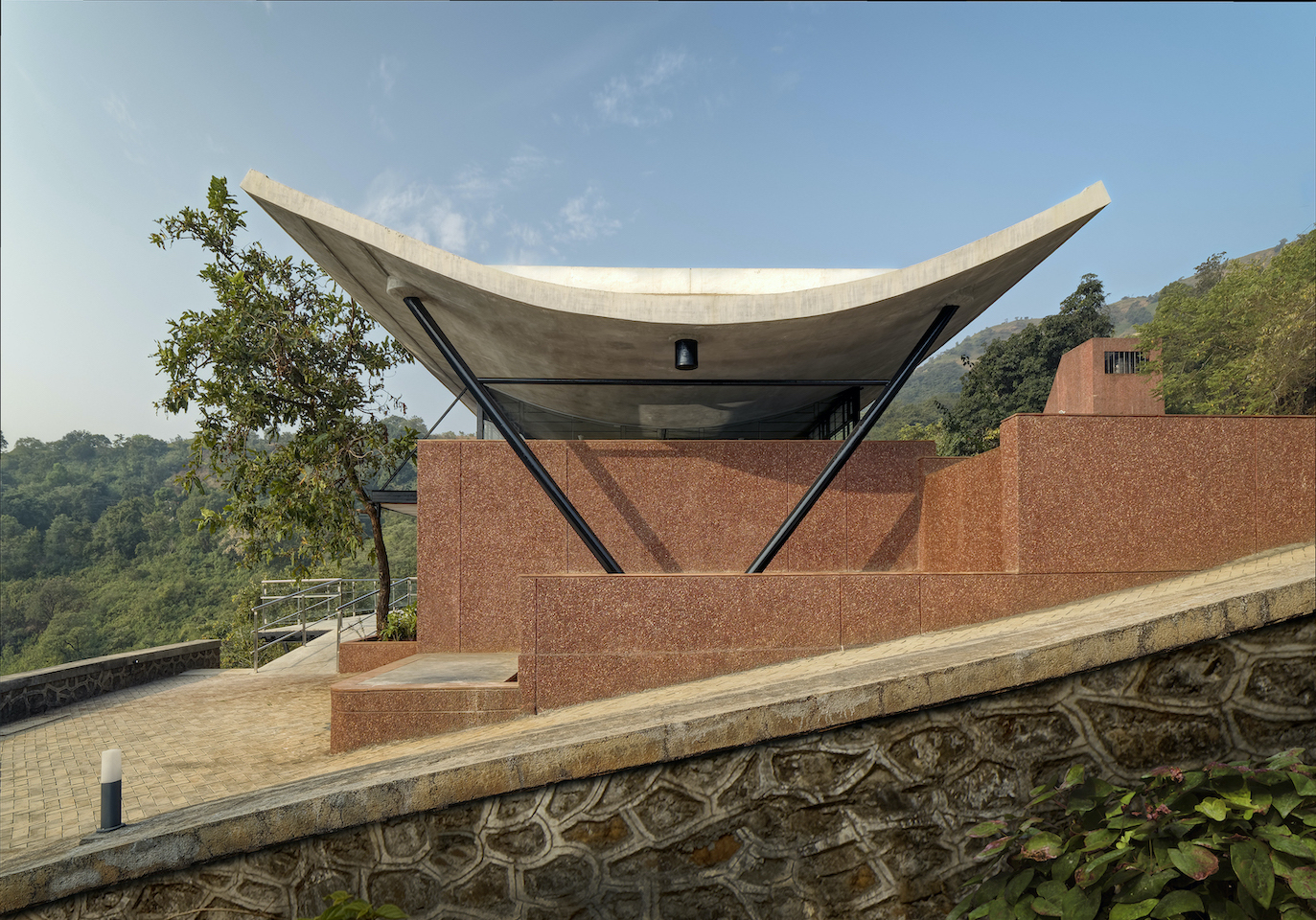
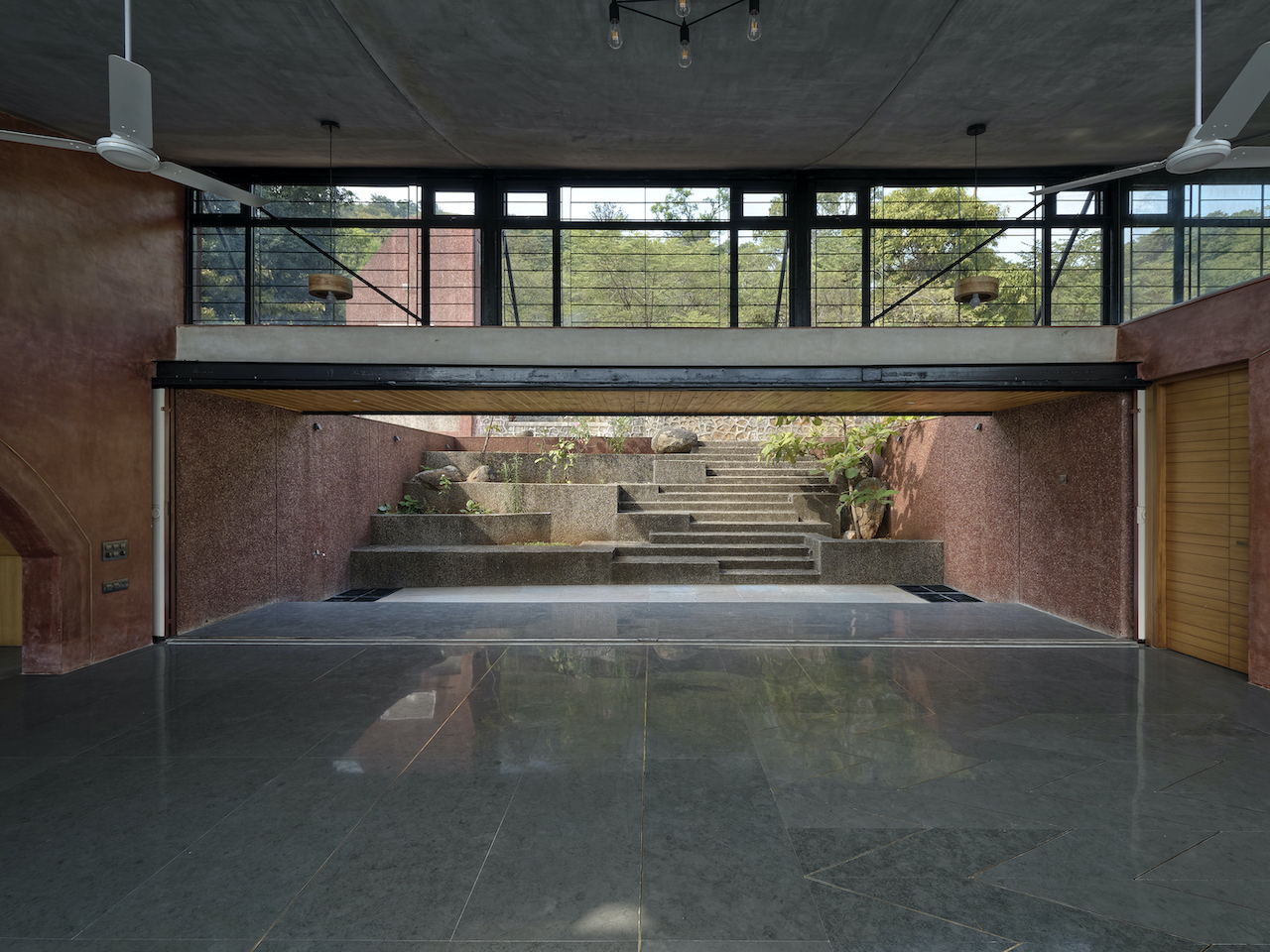
The program is simple enough: a single bay that linearly accommodates the living room flanked by the bedrooms and the kitchen. The magic is in how these are deployed on an inclined site, below road-level, with only the round hull-shaped mono-roof — that runs along the length of the house — visible. And how this concave canopy appears to levitate, thanks to the glass clerestories that invite the eye to admire the distant mountain ranges and valleys.
The entry to the house is discreet, articulated as a series of steps in a courtyard built in a natural setting with vegetation and boulders found on the site itself. The bespoke entrance doors are a response to the clients’ request for a spill-over space. These have been built using folded metal sheets, which collectively span the length of the entire living room (30’ or 10m). When slid open, the panels disappear in the cavity walls, seamlessly blending the inside and outside and revealing the heart of the house — the open and spacious living area. On the other side, the living room flows out as a large deck, a vantage point that allows you to soak in the views of the backwaters and the valley around.
Material and colour palettes
Externally, the entire house is finished in grit plaster, with a deep red pigment which allows the house to match the tonality of the natural terrain of the region. The coarse finish also allows for very good weather resistance to the extreme seasons of rain and summer in the region. Internally, all walls are finished in a combination of white and coloured polished oxide. “Local and natural materials are used in a way to ensure that the house ages beautifully,” reveal the architect duo. The roof is constructed out of ferro-cement technology.
The highlight
The most innovative part of the house is the approximately 70′ long (25m) ferro-cement roof, constructed in a structural thickness of 50mm, making it a cost-effective and sustainable alternative to the conventional RCC technology. The inverted shape allows it to harvest the rainwater which is further channeled and stored in a series of waterbodies, allowing water to be available for irrigation in the drier months.
Fact file
Project: The Cove House
Location: Panshet
Area: 1,800 sq ft
Principal architects: Ankur Kothari and Anil Poduval
Design team: Kalyani Shah and Azhar Poonawala
Add a Comment