
A mundane 530-sq-ft Mumbai apartment transforms into an exemplar of contemporary, edgy design under DIG Architects’ creative stewardship.
Curated by: Rupali Sebastian
Photographs: Niveditaa Gupta; courtesy DIG Architects
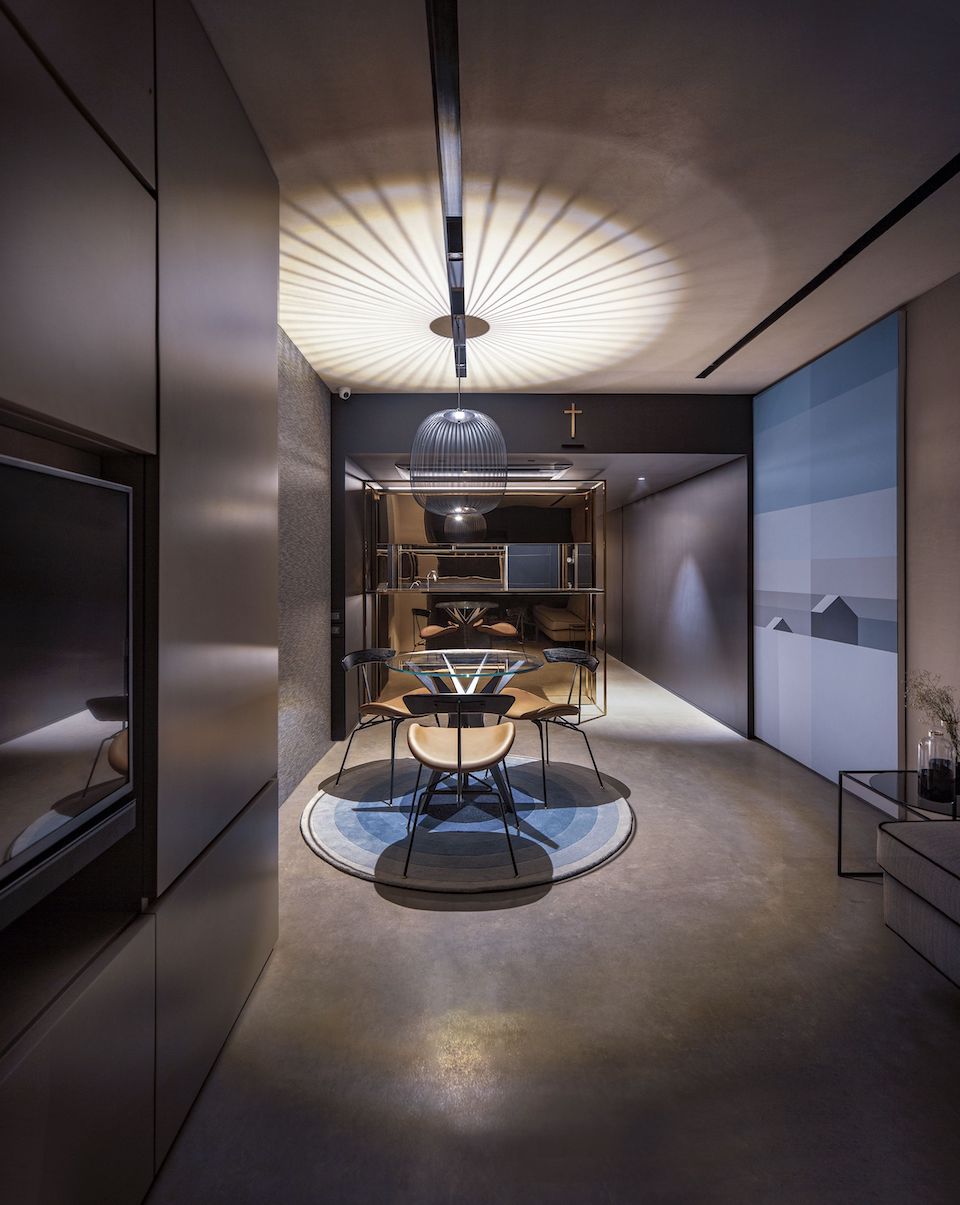
The site
The apartment was a 1BHK, with a poorly-designed linear layout, in a nondescript building in the western Mumbai suburb of Andheri.
The brief
The client, who hails from Goa, travels frequently and halts in Mumbai often as part of his itinerary. “He was quite tired of staying in hotels,” discloses Amit Khanolkar, who heads DIG Architects with partner Advait Potnis. “So he acquired this tiny apartment near the airport as a transit. He wanted the apartment for a sense of stability and repose between trips, as well as to conduct meetings.”
The response
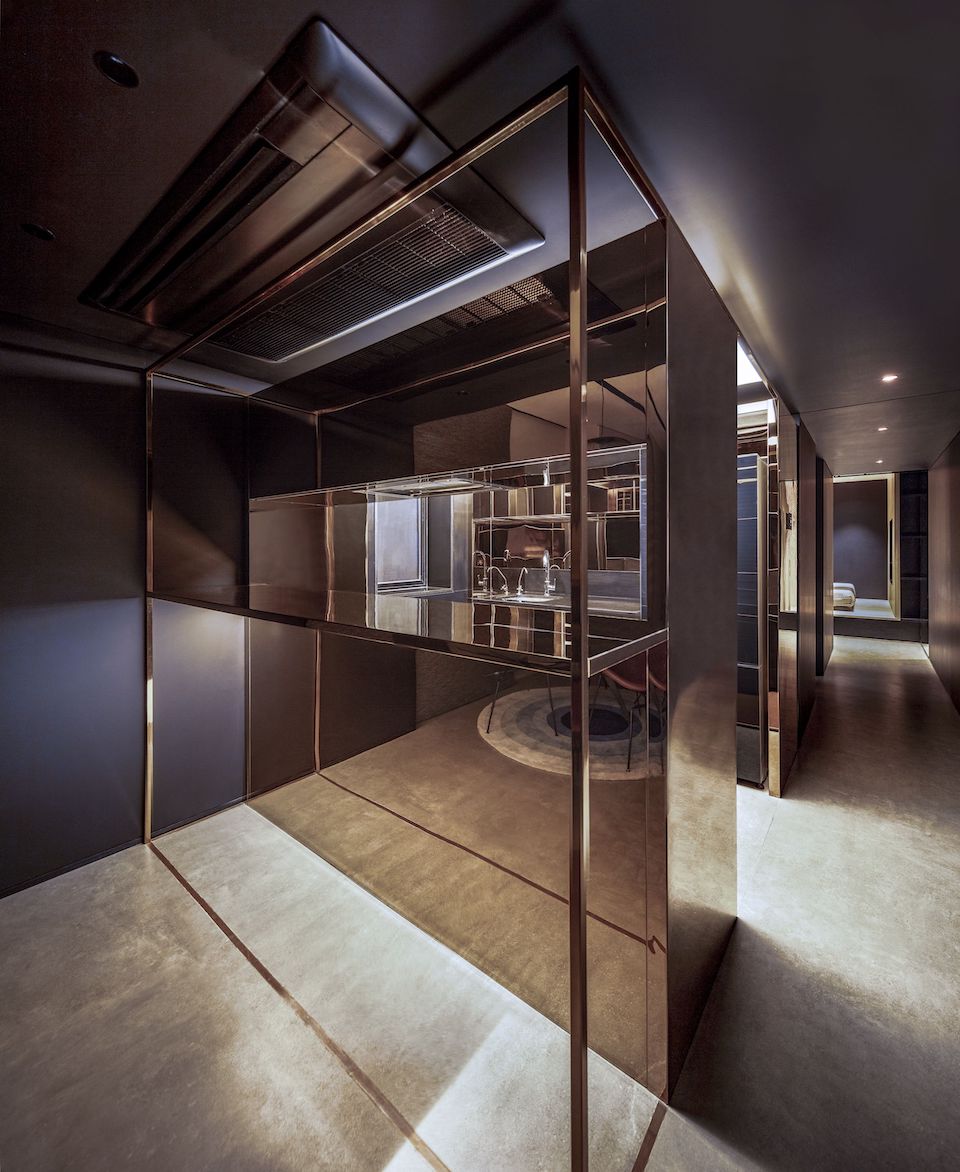
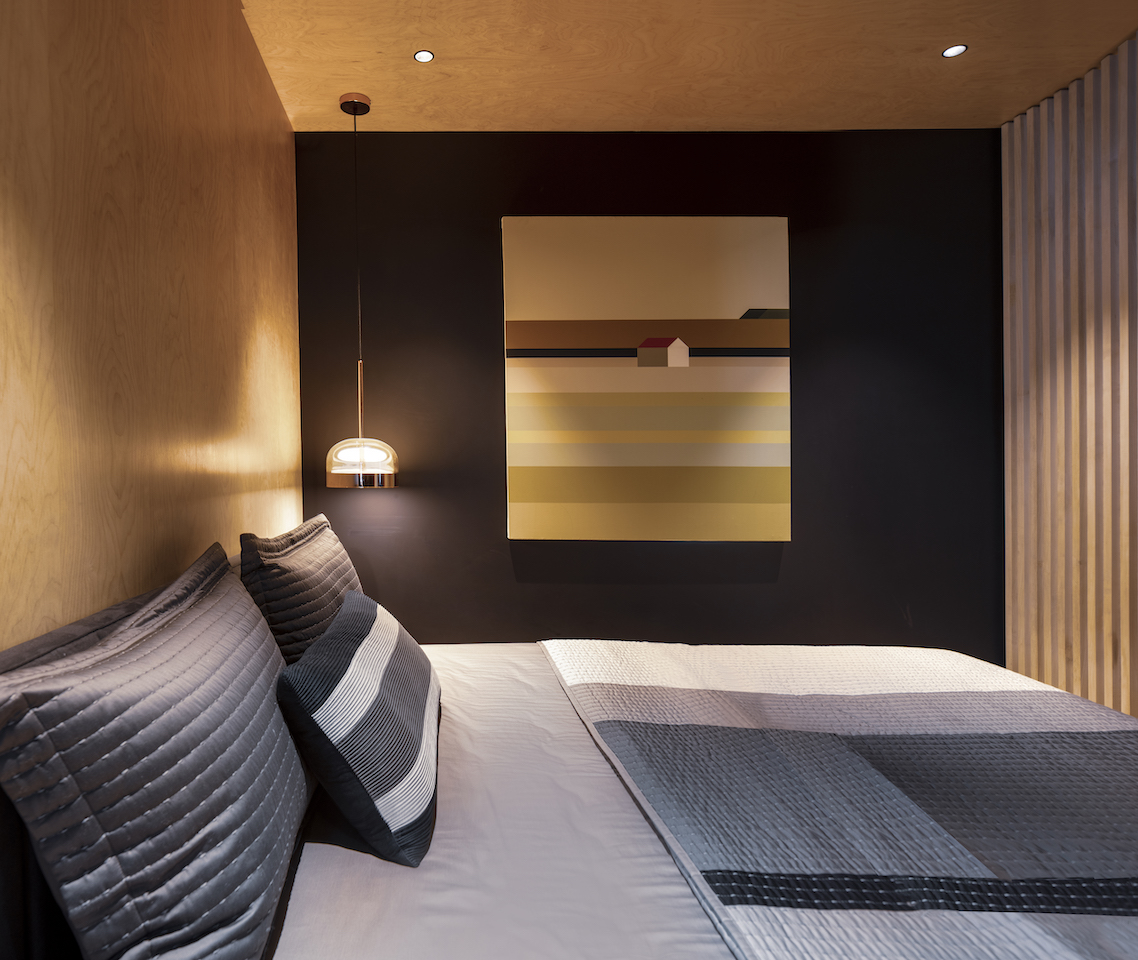
“We wanted to open up the space, but in a bold manner,” Amit tells us. For this, he and Advait took their signature volumetric approach. The kitchen was interpreted as a cuboid, detached from the walls and ceiling, and open to the living room side as well. “This way, it doubles up as a bar,” the architect points out. Its presence and character was intensified by sheathing it in copper. All cabinets and shelves within the unit are also clad in copper sheets. The ceiling features architectural fabric from Barrisol, which helps illuminate the copper expanses evenly. “Lighting was kept under 3000K colour temperature, which is yellow or golden, to give the copper its due,” adds Amit. In the bedroom, too, volumetric strategies translate into the room being articulated as a birch ply box with several space-saving strategies to liberate it from its compact dimensions.
The spatial flow
The program exhibits a linear, sequential arrangement of functionalities, starting from the living room and the bar counter (of the kitchen) opening into it. A passage running alongside the kitchen, takes you to the bathroom and culminates at the bedroom.
Optimising space
Given the modest footprint, the various space-saving strategies employed illustrate the architects’ skill in spatial modulation and problem-solving. The dining table in the living, for instance, also lends itself as a work table. The kitchen, as mentioned before, functions as a bar counter as well. A movable fabric screen performs the role of a curtain, keeping the overall volume clean. In the passage, a sliding door concealed behind the kitchen, shuts off the bathroom and bedroom, creating a sleeping space with ensuite facilities. The modular birch-ply box of the bedroom is strategically scooped out to accommodate various requirements — including a handy push-up bench between the bed and wardrobe to keep the luggage of the itinerant owner. A wall-mounted artwork slides, revealing a window behind.
Material and colour palettes
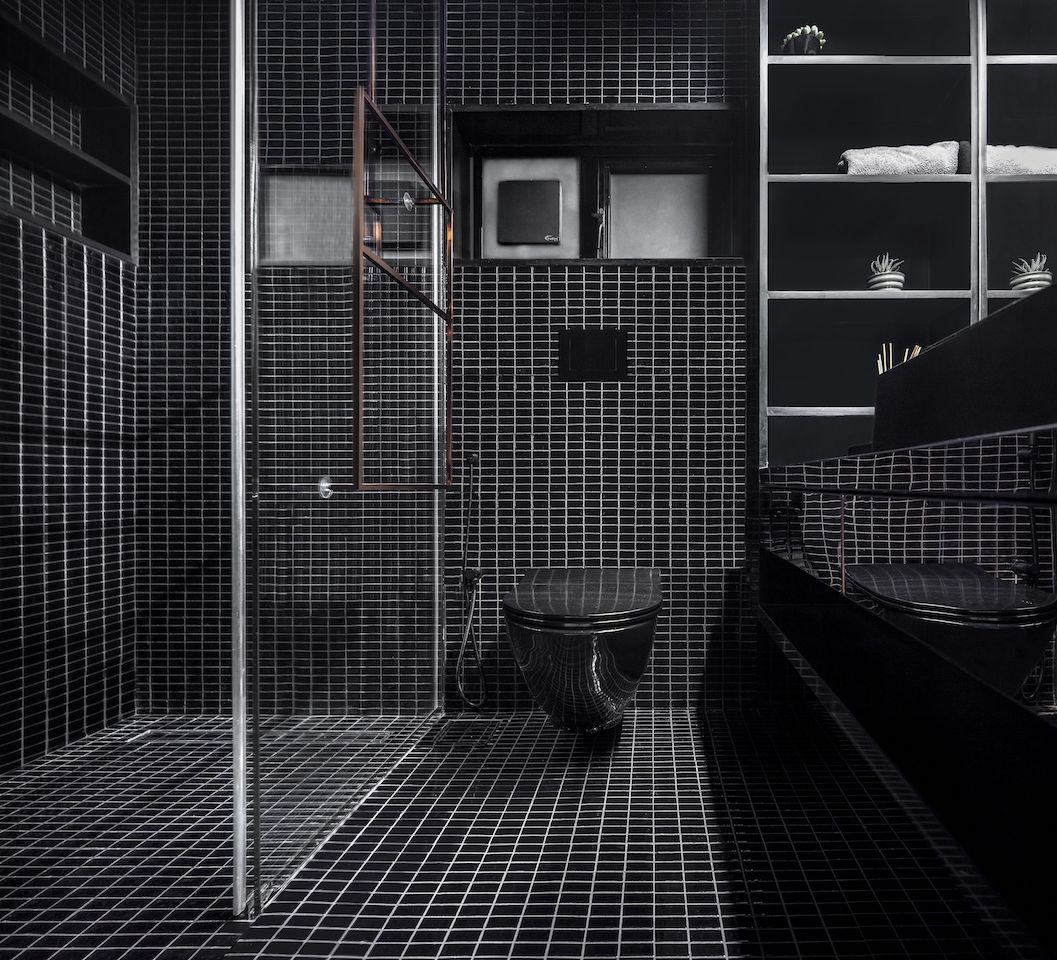
Copper is the protagonist of this narrative, around which the material selection unfolds: swathes of black and grey tiles. In the bathroom, black glass mosaic tiles, their edged sharpened with white grout, create a ‘digital’, pixelated look, delicately accented with copper hardware and surfaces. Birch ply occupies centrestage in the bedroom, complemented and contrasted with black expanses. “The idea,” says Amit, “was to create a contemporary, broody, almost industrial narrative.”
Fact file
Project: Copper Cube Haus
Location: Mumbai
Area: 530 sq ft (gross built-up)
Principal architects: Amit Khanolkar and Advait Potnis
Design team: Fenil Gala (project management), Devina Shah and Shivani Morkar
Add a Comment