

Designed by Boolean Design Studio the Ministry of Dance restobar in Pune is reminiscent of restaurants of the past, but is equally infused with contemporary design influences — creating a unique aesthetic and experience for its customers.
Curated by: Deepa Nair
Photographs: Photographix India; courtesy Boolean Design Studio

The site
The second chapter of restobar Ministry of Dance opened at Pune’s Fergusson College Road. A venture of popular choreographer Remo D’Souza, the first outlet opened two years back in Mumbai. The site was a 50-year-old rundown restaurant and bar, Hotel Rainbow, which was split into three levels: the first level (now transitioned into a cafe) was mainly used as a storeroom for liquor, the second level (now, a kitchen storage) was used as a private dining, and the third level comprised the bar and restaurant. When Harsh Shah Gowani, principal architect, Boolean Design Studio who was commissioned to design the Pune edition first visited the site it was in a state of inactivity, as the old restaurant was defunct for almost a decade.
The brief
The clients wanted the 3,000-square-foot space to be transitioned into an all-day kitchen and bar restaurant with provisions for a dance club and VIP lounges parallelly.
The civil intervention
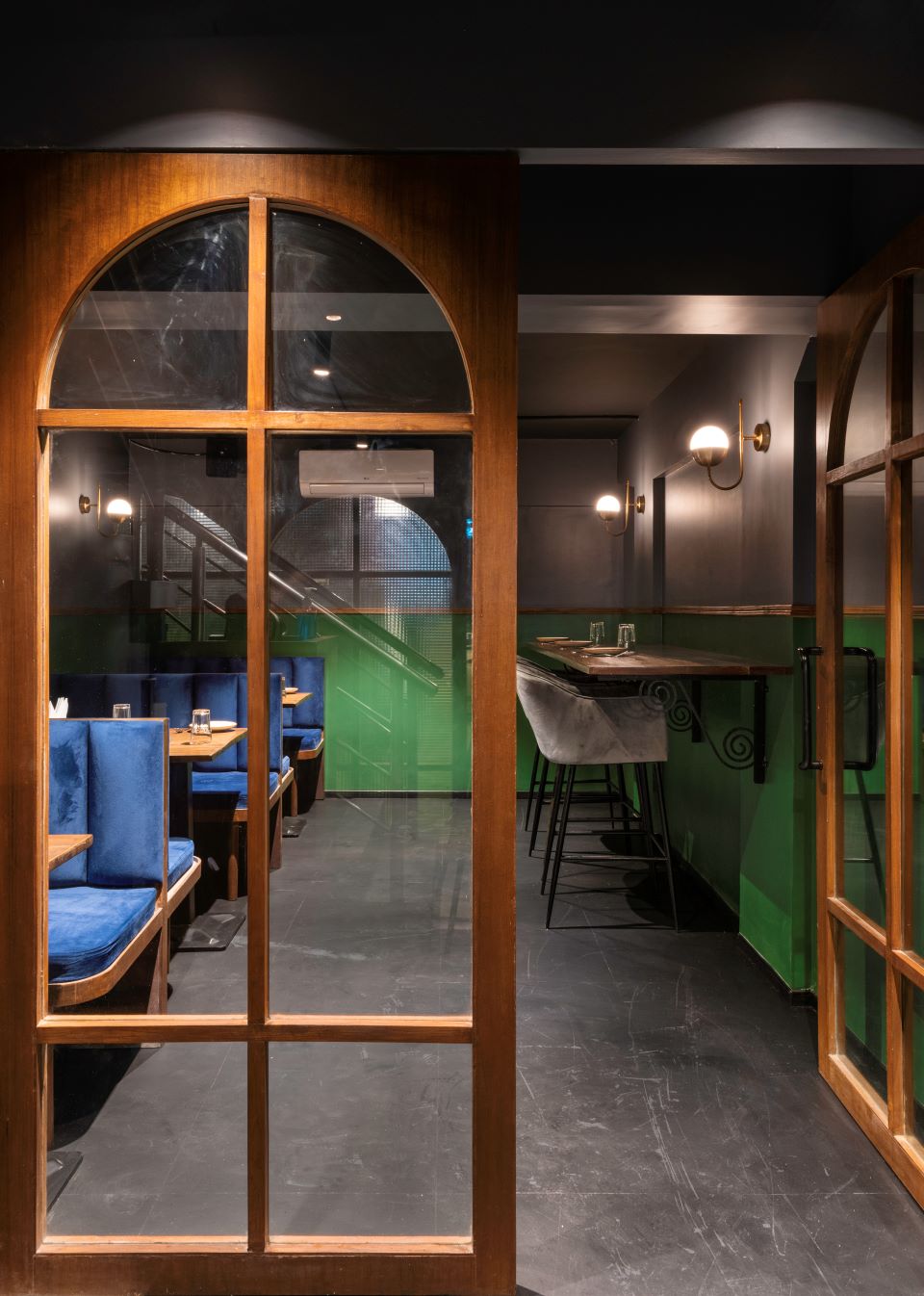
As the building was old, drastic structural modifications were impossible — but the design team carried out many repairs to the building. The existing columns and beams were jacketed with concrete to increase their structural strengths. The prevailing raised platforms — that may have accommodated the plumbing and electrical conduits of the old building — were untouched and utilised as part of the design too. The walls and ceilings were insulated with acoustical foam, in order to contain the sound that could reach as high an intensity as 120 dB during dance concerts. The glass panels of the facade were also sound-proofed.
The design intent
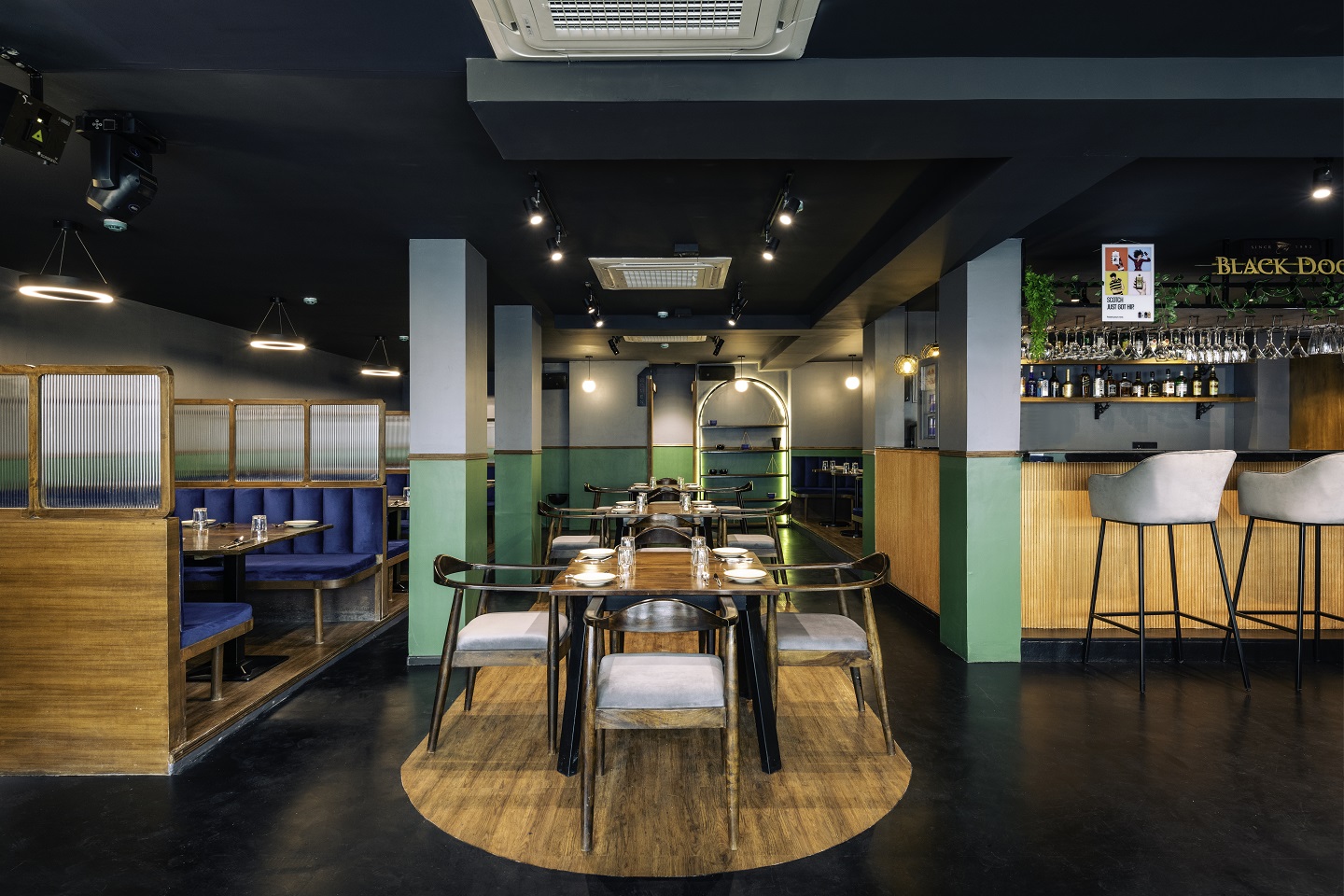
The location of the restobar was an important determinant for its design. “As Fergusson College road is home to Pune’s best restaurants and bars, Ministry of Dance demanded an aesthetic that would — in keeping with the assorted crowd and thriving competition — furnish the space with a sense of distinctness. The design of the restobar, by incorporating diverse seating arrangements that invoke different moods, makes the space fit not only for a morning breakfast or an afternoon brunch, but also for a late evening dinner and a night-time party,” explains Harsh.
The spatial configuration
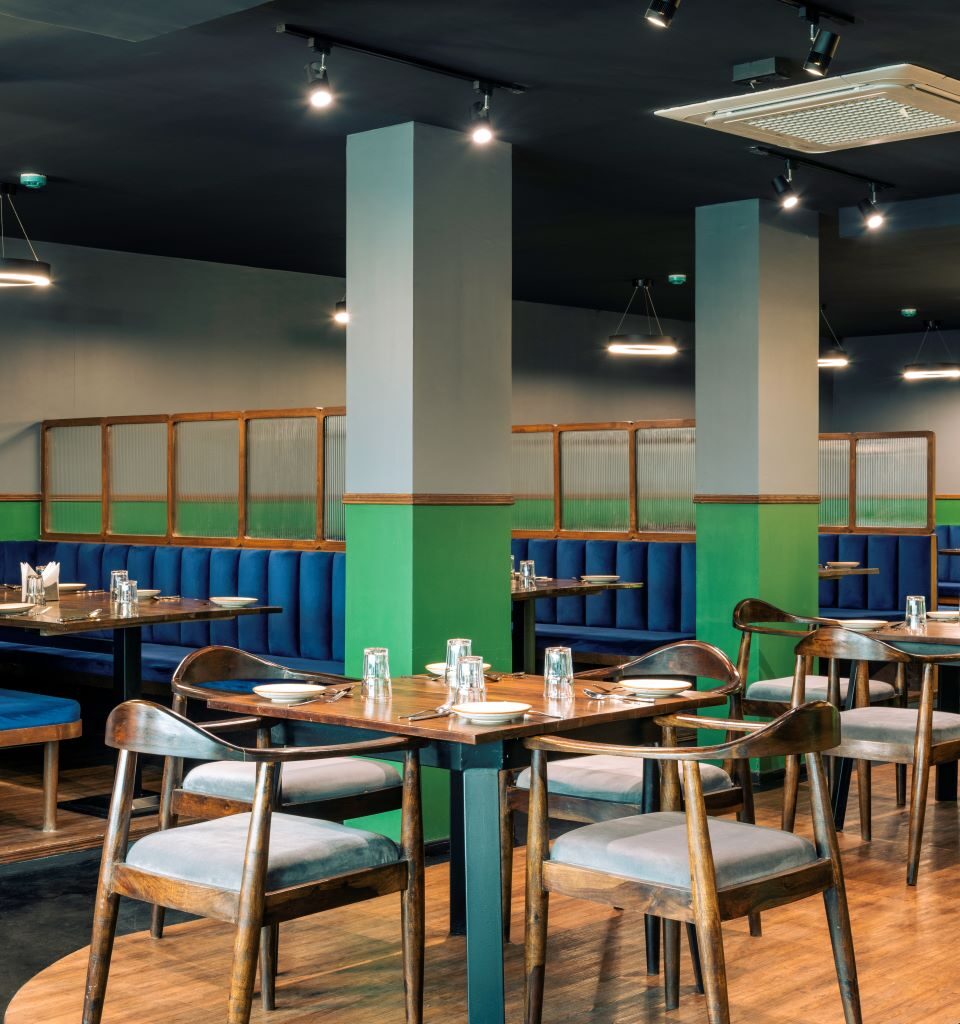
On entering the restobar, one is directed either to ascend the stairs to the main level on the second floor or to walk straight into the cafe. The second floor comprises eight types of seating arrangements, each disparate and with a character of its own. As the client ordered, these seating pockets are segregated into common and VIP zones. “The L-shaped profile of the space enabled us to achieve this; we seamlessly separated the zones by aligning each of them along different axis,” says Harsh.
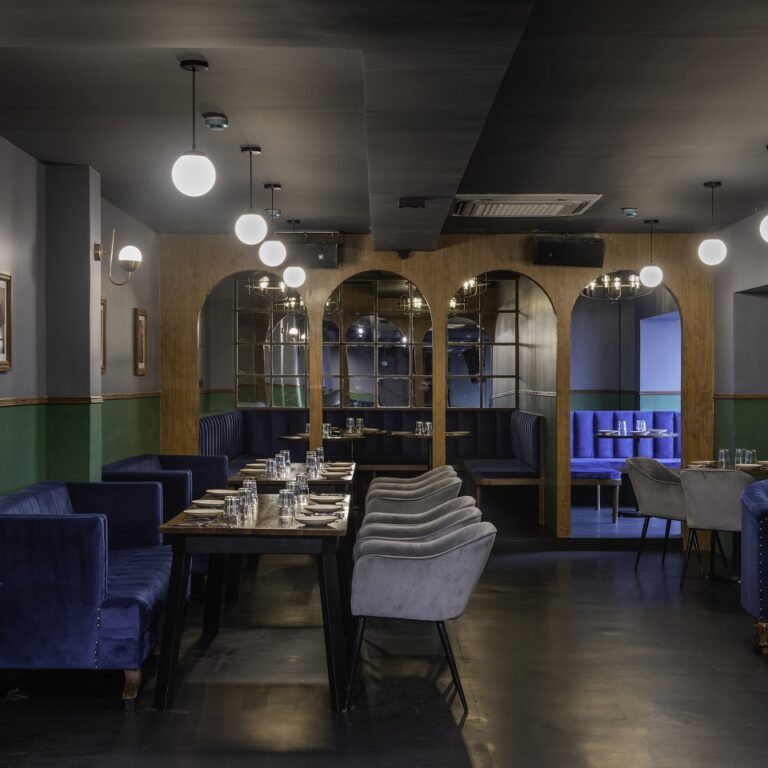
The common zone comprises four diverse seating arrangements: the semi-private booth tables, the community tables, the informal lounge, and the performance deck. The VIP zone on the other hand has the lounge and private dance rooms. The bar is placed at the centre of the space, subtly separating the zones from one another, allowing them their exclusivity and privacy. The raised platforms which were retained from the old restaurant were used to create the booths, informal lounge, performance deck and private dance rooms to infuse these spaces with a sense of distinctness, and maintains the fluidity of circulation in the restobar.
The material palette
Ministry of Dance employs a combination of dark green and grey painted walls and ceiling, and polished black natural stone flooring. It is further accentuated with powder-coated mild steel sections, polished wooden mouldings and a customised ceiling suspended, and wall hung lights. The furniture, with its use of grey and blue fabric, creates a striking contrast to the dark colour palette of the space. At night, as they are hauled to one corner of the space, the restobar transitions into a nightclub.
The highlight
The design team feels that the attainment of transition in the aesthetics and functionality of the space, from (the old) Hotel Rainbow to (the new) Ministry of Dance, notwithstanding the inflexible structural framework and age of the site remains the highlight of the design.
Favourite aspect of the project
“Our most favourite corner of the project is the lounge that is situated behind the bar,” says Harsh. “The presence of a raised platform behind the old bar of the restaurant created an awkward and a rather inaccessible corner; it could barely accommodate a chair or two. Slightly extruding the platform out by a few inches, we were able to create a quaint lounge seating that would accommodate around five to six individuals. The unfinished brick wall was preserved and re-painted, enhancing the vibe of the space,” he adds.
Fact file
Project: Ministry of Dance
Clients: Remo D’Souza and Jayamala Shivtare
Location: Pune
Area: 3,000 sq ft
Principal architect: Harsh Shah Gowani
Design team: Mateen Hashmi
Contractor: Elemantra
Add a Comment