
Mumbai and Goa-based SAV Architecture & Design create a texturally rich and craft-fuelled workspace for a pharma company in Mumbai that dovetails digital fabrication and traditional woodwork joinery.
Curated by: Rupali Sebastian
Photographs: Fabien Charuau, courtesy SAV Architecture & Design
The project
The assignment undertaken by Mumbai and Goa-based SAV Architecture & Design was to design an open-plan and minimal workspace interiors for Unilab Chemicals & Pharmaceuticals company in Andheri East, Mumbai, within a new office block that offers views to the city.
The brief
The clients who are well-traveled and trade across the world were keen to have an office with a modern and international feel as well as a calm working oasis within the chaotic Mumbai context. Keeping this in mind, SAV principals Amita Kulkarni and Vikrant Tike proposed a workspace that focused on flexibility, transparency and tactility that would bring natural light with a contemporary and fresh feel to the interiors.
The design intent
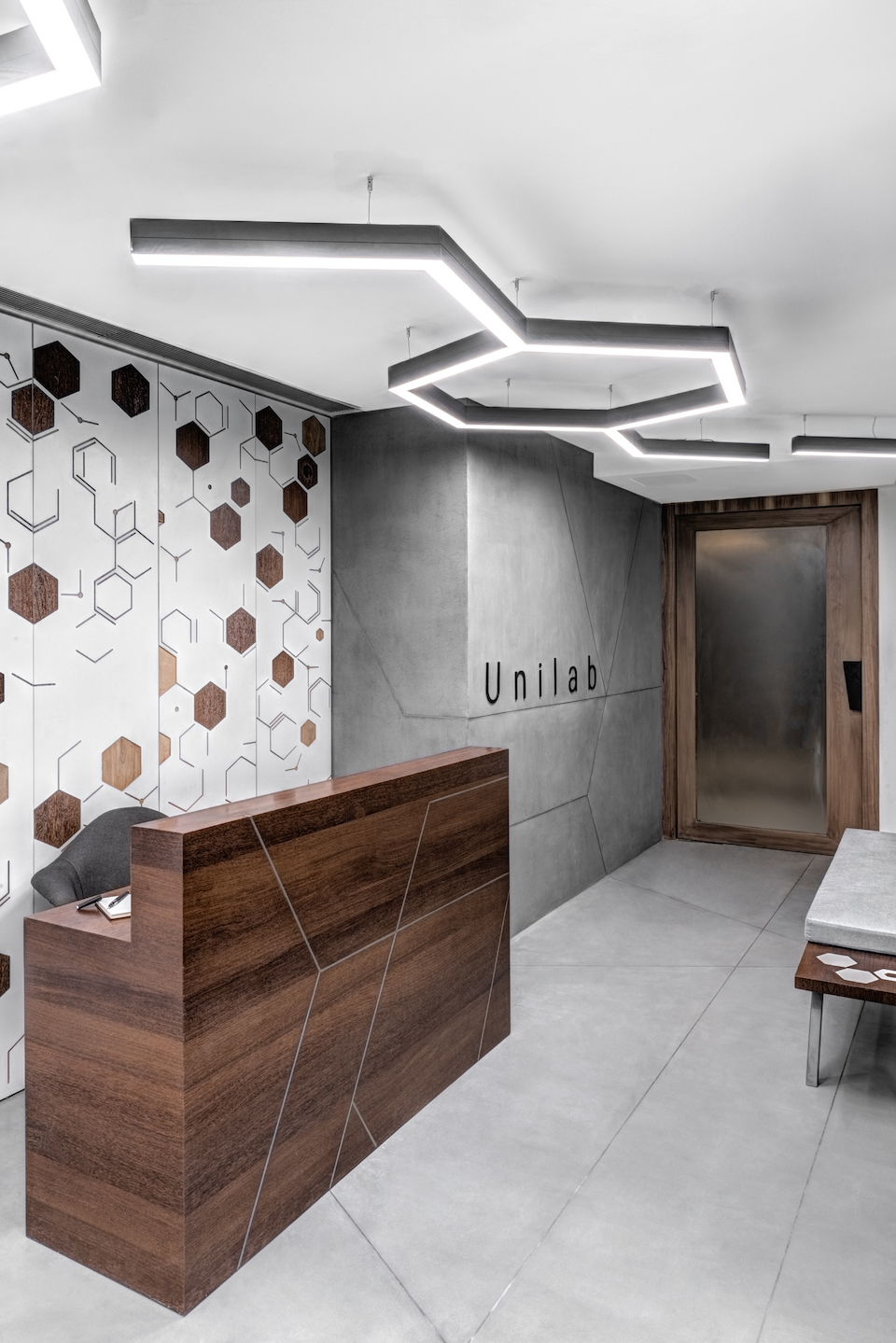
Inspired by molecular diagrams of chemical compositions, SAV conceptualized the lighting, furniture and flooring pattern to create a layered and textured design showcasing the different formulae the company uses in making their products.
The spatial configuration
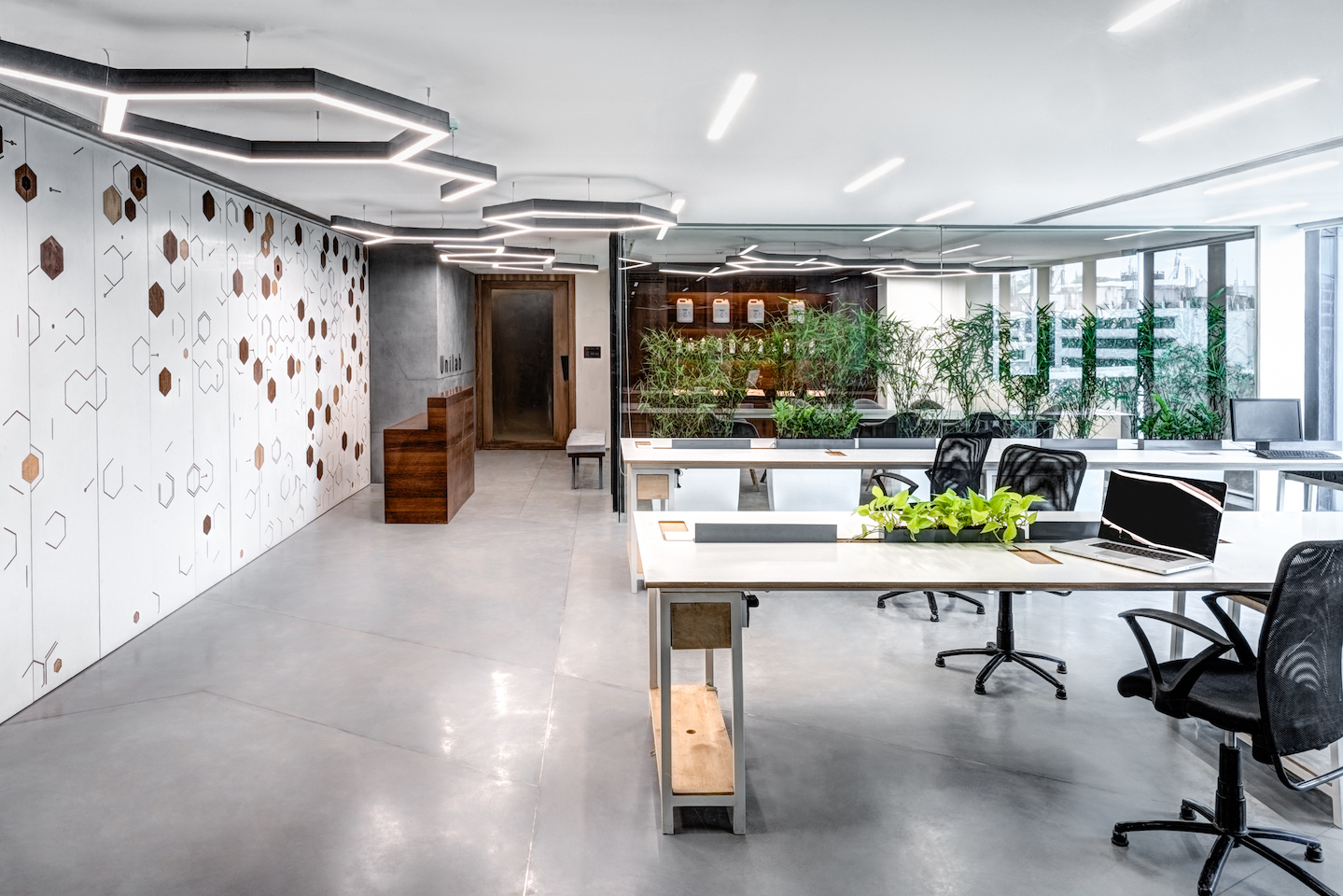
Spatially, the 1,300-sq-ft workspace compromises the meeting room placed close to the entrance and the two individual directors at the end of the space with a flexible and modular working space in the middle. All the partitions are of clear glass creating an end-to-end transparency that sets an overall light-on-the-eye mood as soon as one enters the space.
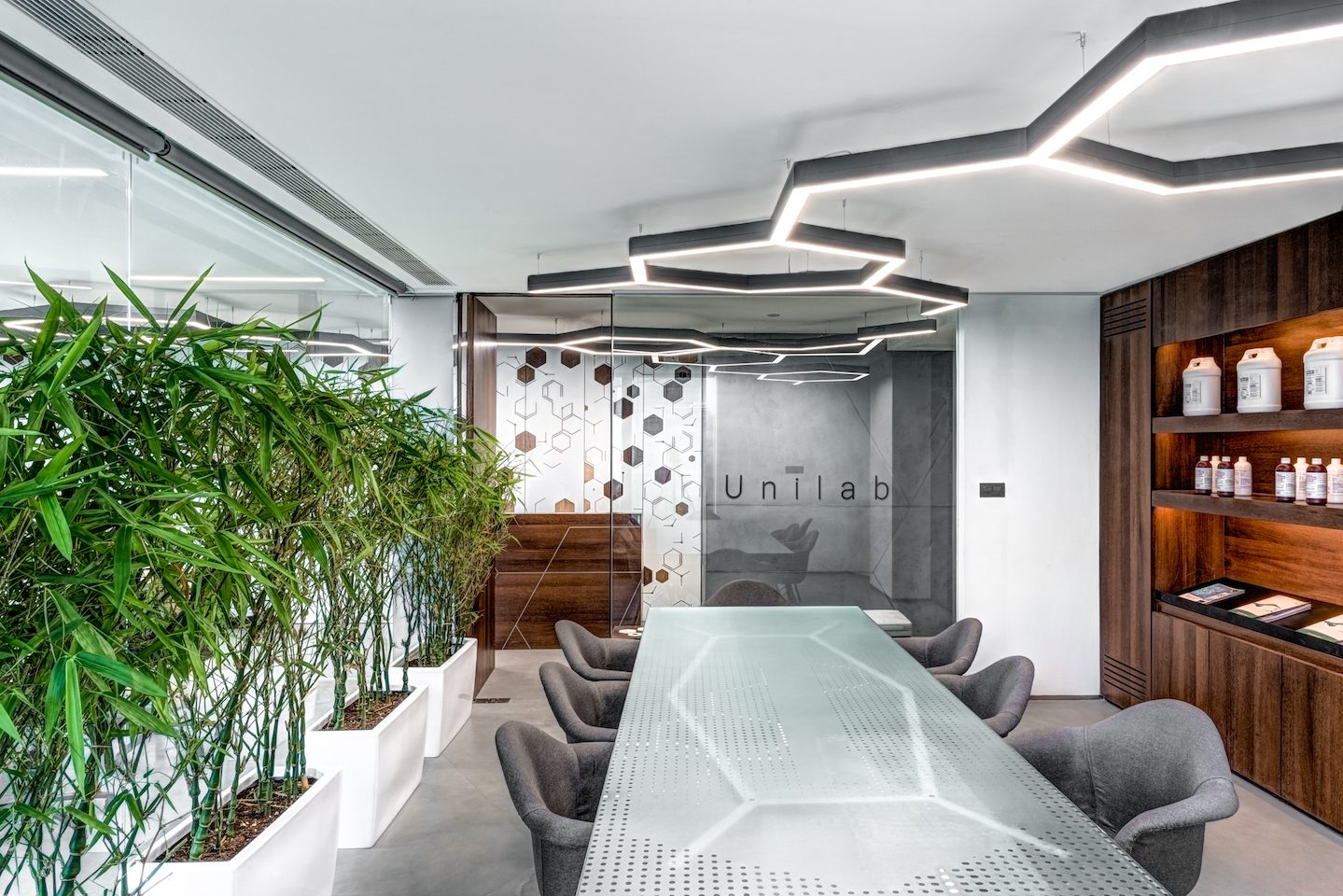
The meeting room is long and spacious with a full-height wooden cabinet on one side that showcases the different products manufactured by the company. The three-metre-long glass table features custom-fabricated steel legs. The Eames bucket chairs with an upholstered grey back generate a warm contrast to the glass. The partition between the workspace and the meeting is screened with tall bamboo planters, adding an organic and green feel to the space.
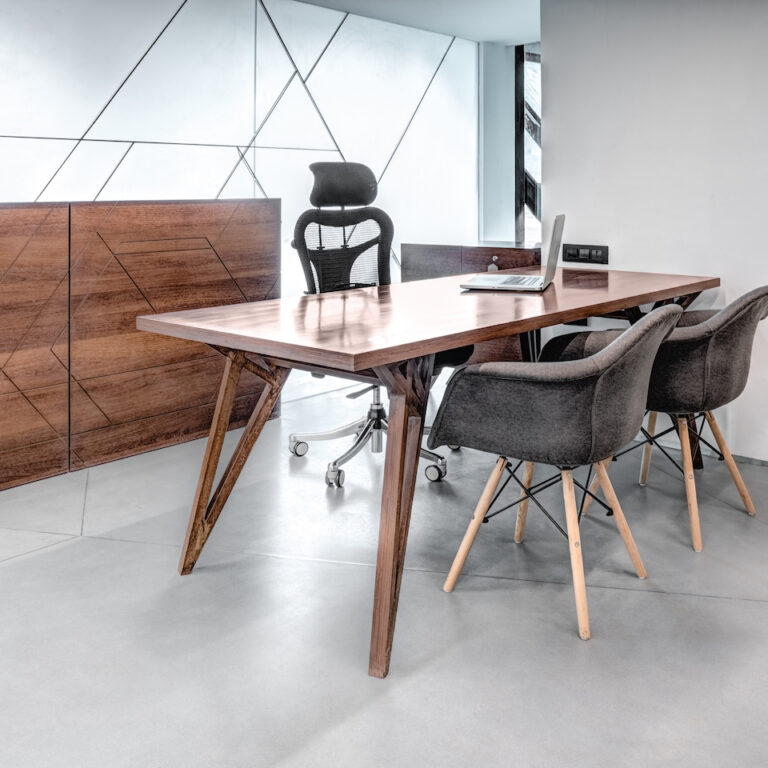
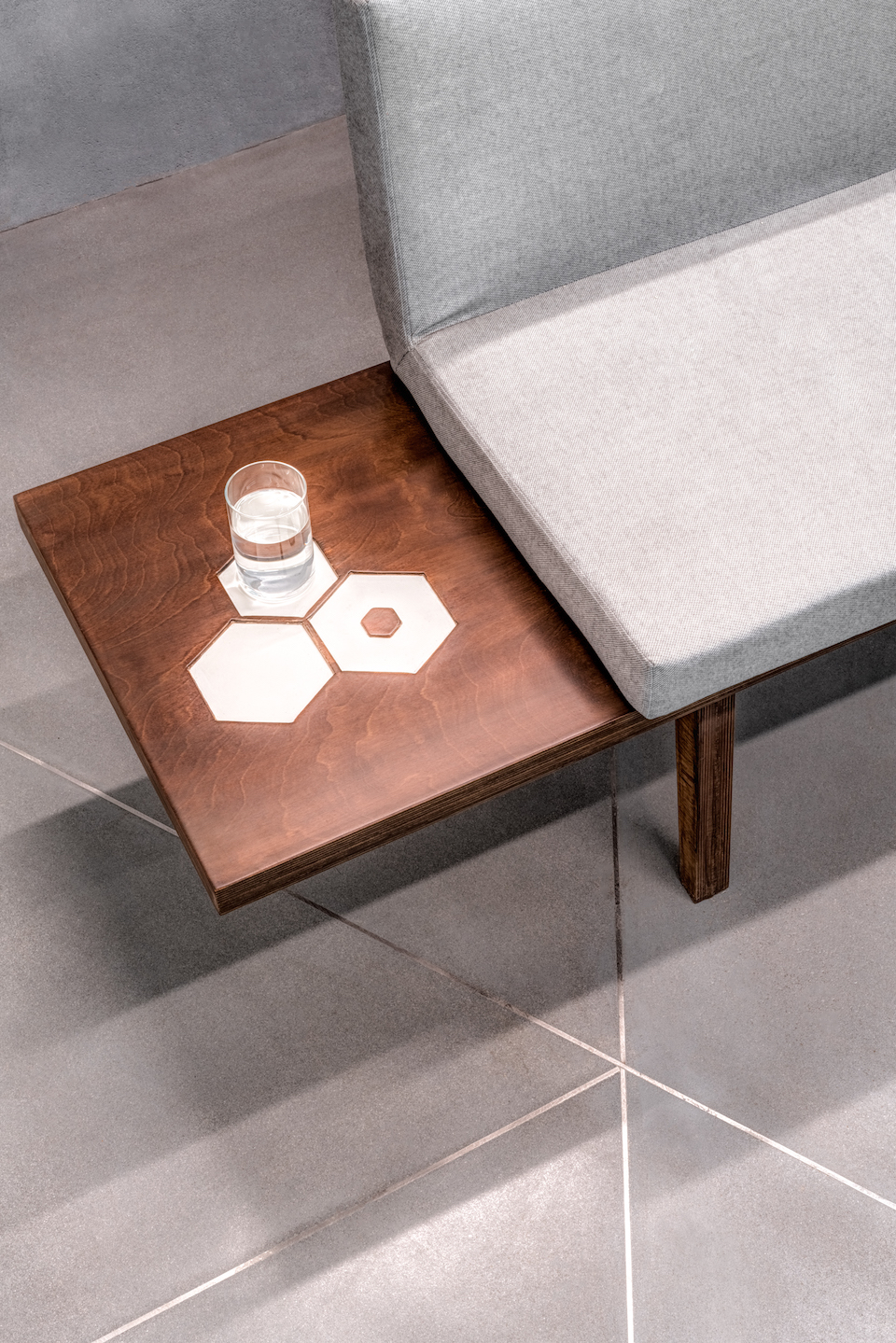
Both the director spaces have minimal furniture with desks that are custom-designed: one crafted entirely in teak wood with traditional woodwork and joinery, and the other rendered in birch plywood using CNC fabrication. The director spaces have an additional informal seating: two shell chairs by Hans J. Wegner in one and a simple, minimal sofa with inbuilt custom-designed side tables in the other.
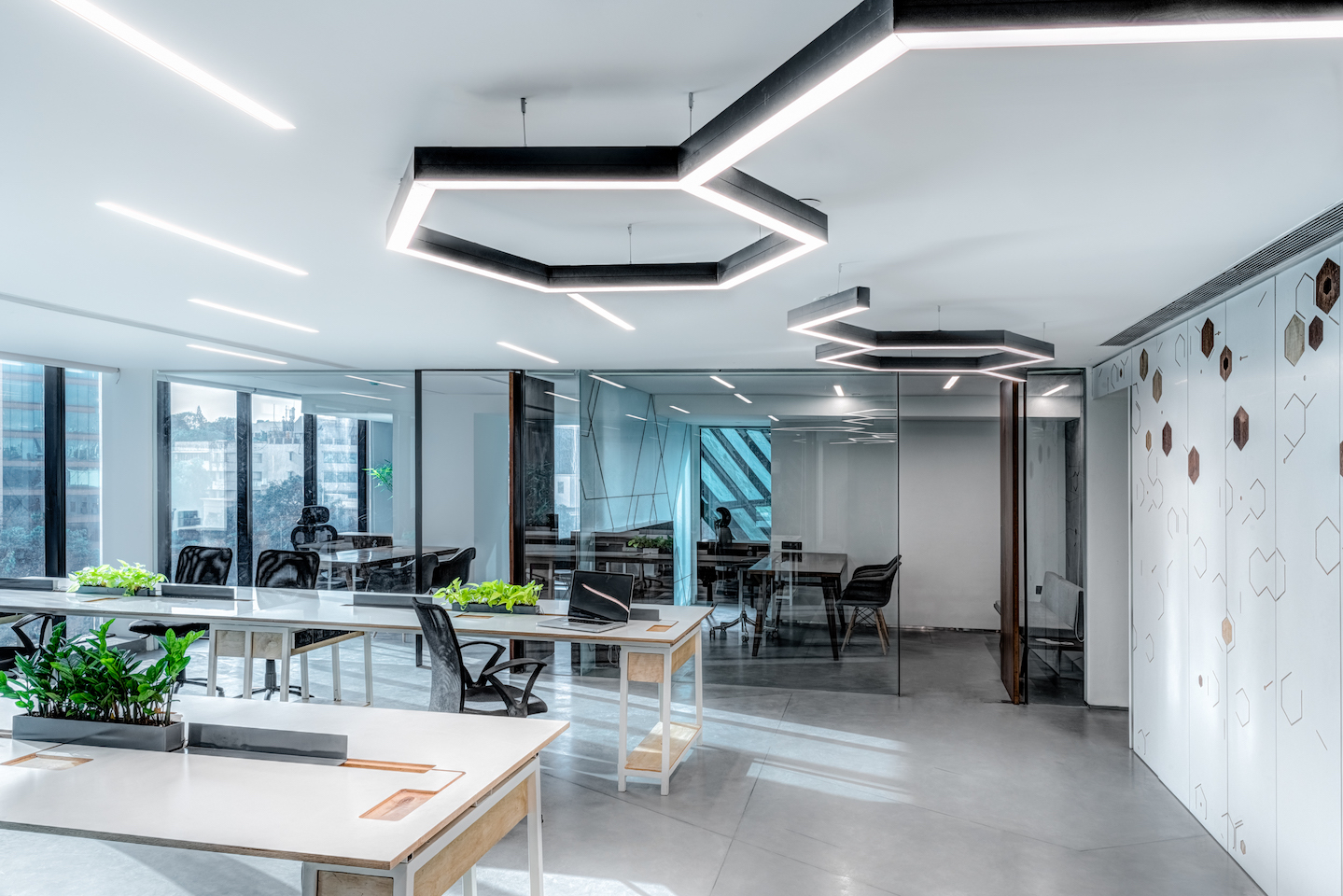
The central work area features four-metre-long custom-designed modular laminated birch ply desks with planters and concealed cable trays that allow for an expansive, green and flexible feel. The brief had asked for the desks to function presently as large, flexible work tables to seat a mix of freelance and full-time workers. These could later be used as individual working desks when the company expanded their team.
The material palette
Overall, the interior design focuses on simplicity and attention to detail along with texture and craftsmanship. Made with a mix of traditional carpentry and new computational and fabrication technologies, the design articulates an understated, bright and elegant narrative with minimal, bespoke furniture, modern furnishings and natural materials, especially concrete and wood to create a cool, calm and uncluttered working space.
The highlights
The interior design focuses on three major layers that shape the space and moods. The first is the seamless concrete floors with an overlaid hexagonal pattern in the form of steel expansion joints that flow across the floor to the concrete wall on the entrance. The patterned layer also continues to become a handcrafted inlay within the wooden cabinetry of the reception and the partition of the director spaces, creating a contrasting materiality featuring soft cool concrete and warm tonal walnut wood.
The design of the lights forms the second layer. This is composed of a mix of directional slot LEDs and free-flowing hexagonal ones. The large hexagonal pendants were custom-fabricated from powder-coated aluminium and LEDs to create three-metre-long fixtures that were then assembled on site.
Cabinetry design that occupies the entire wall on one side of the space behind the reception is the third layer. Designed as a flush storage wall to house an extensive archive of files for the company records, the flush doors are created with a mix of laminated birch plywood and walnut, milled with a CNC machine to generate a free-flowing pattern of the chemical compositions. The pattern dissolves onto the wall of the director space to create a wooden inlay within the concrete.
Fact file
Project: Unilab Chemicals & Pharmaceuticals office interiors
Location: Mumbai
Area: 1,300 st ft
Principal architects: Amita Kulkarni and Vikrant Tike
Design team: Amita Kulkarni, Dhrumil Mehta, Malhar Chawada and Vikrant Tike
Add a Comment