
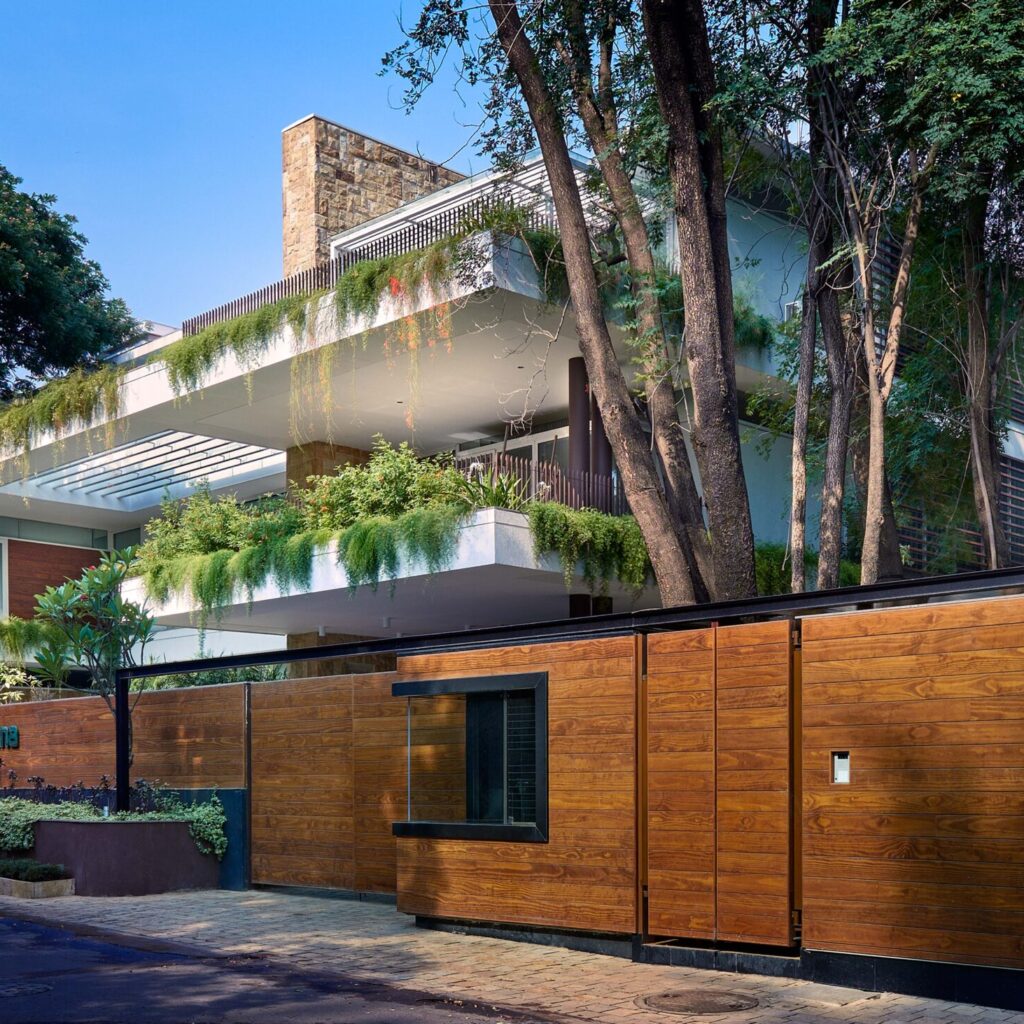
Designed by Niraj Doshi Design Consultancy, The Hovering Gardens House in Pune, is an example of contemporary design sharpened by sensitivity to the environment.
Curated by: Tanaya Pednekar
Photographs: Hemant Patil, courtesy Niraj Doshi Design Consultancy
The brief
A family of six approached architect Niraj Doshi of Pune-based Niraj Doshi Design Consultancy to design their home located in one of the gated communities in Pune. The brief for the architect was creating a residence rich in spatial experience using modest materials. The requirements were quite extensive: three master bedrooms, one guest bedroom, one service apartment and a special bedroom for the client’s mother. Ample cross-ventilation, privacy and a flexible space that adapted to the family’s evolution were key considerations.
The central idea
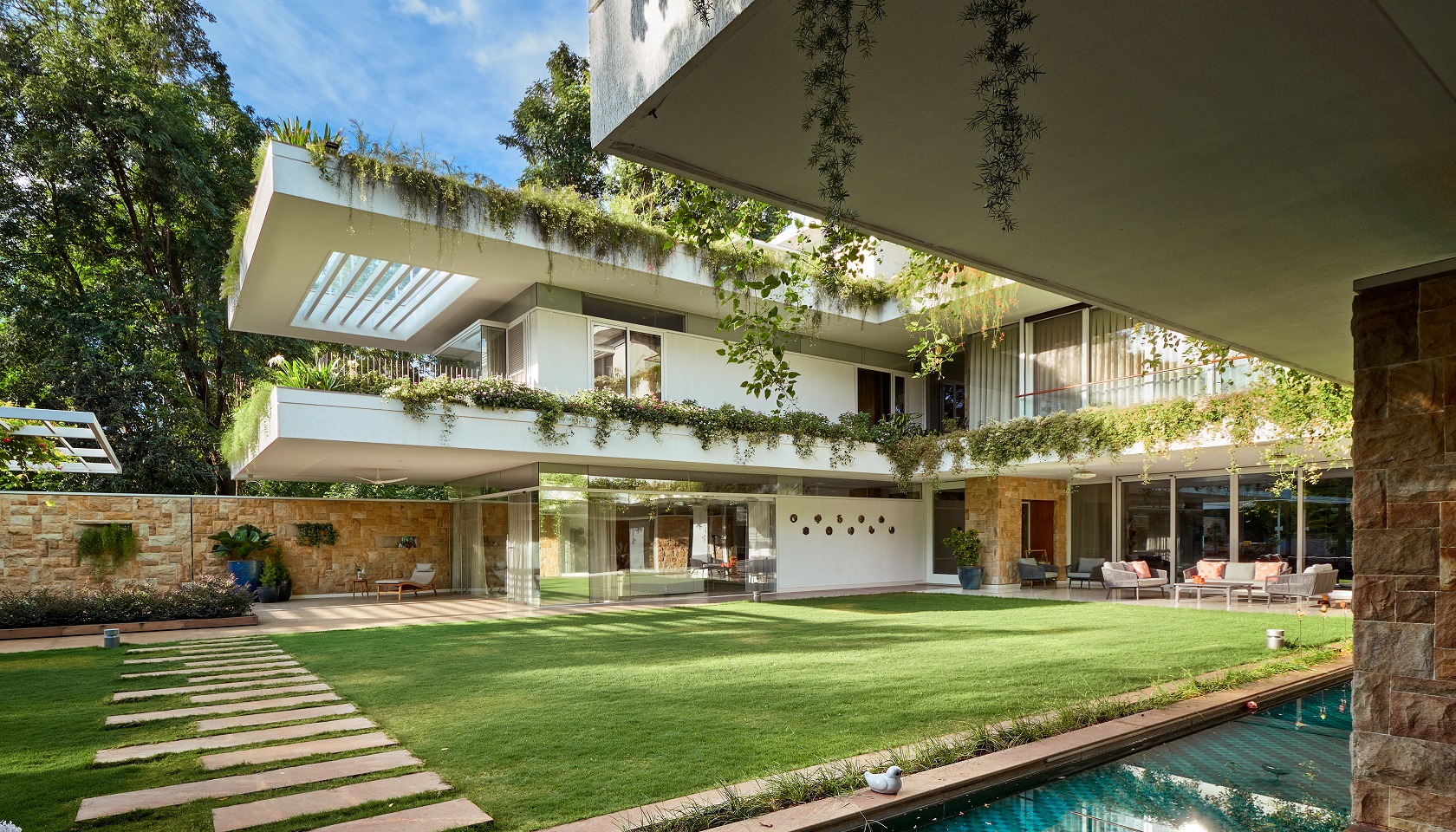
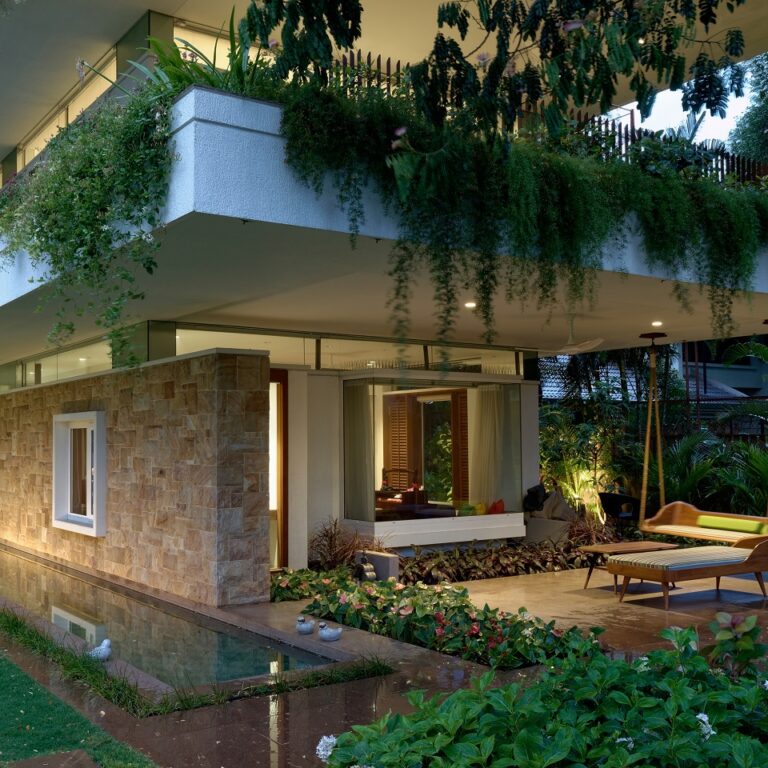
The project is based on an H-shaped plan wherein all the spaces have three external walls, thus maintaining a nice “in” and “out” connection. The use of mirrors and reflective glass create an optical illusion, amplifying the beauty of the landscaped areas. Climate plays a crucial role in design and construction. Shading devices have been used here in the form of huge cantilever slabs that give a sort of hovering effect while, at the same time, ground the building. Similarly, vertical screen facades have been devised as a barrier for the elements.
The spatial configuration
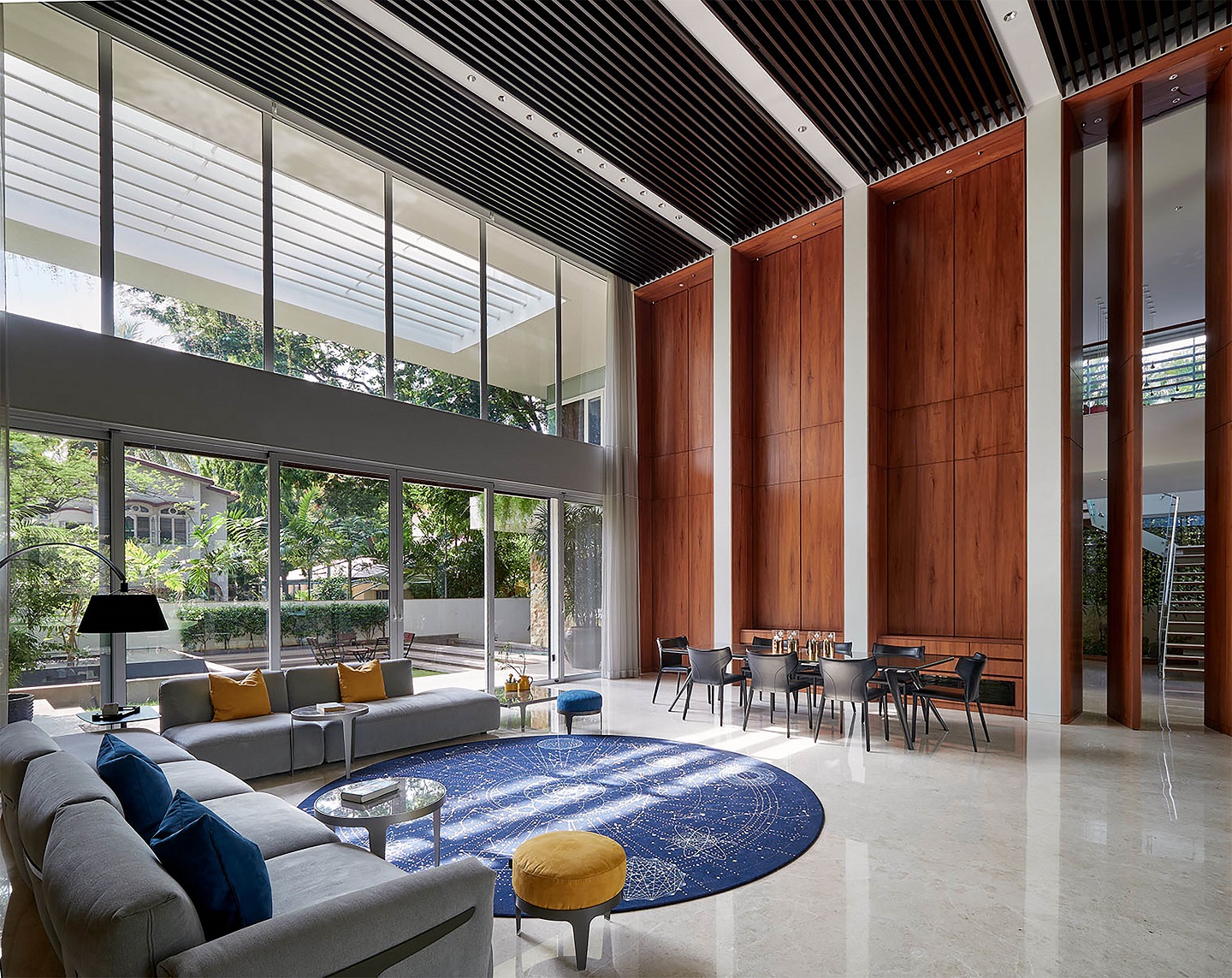
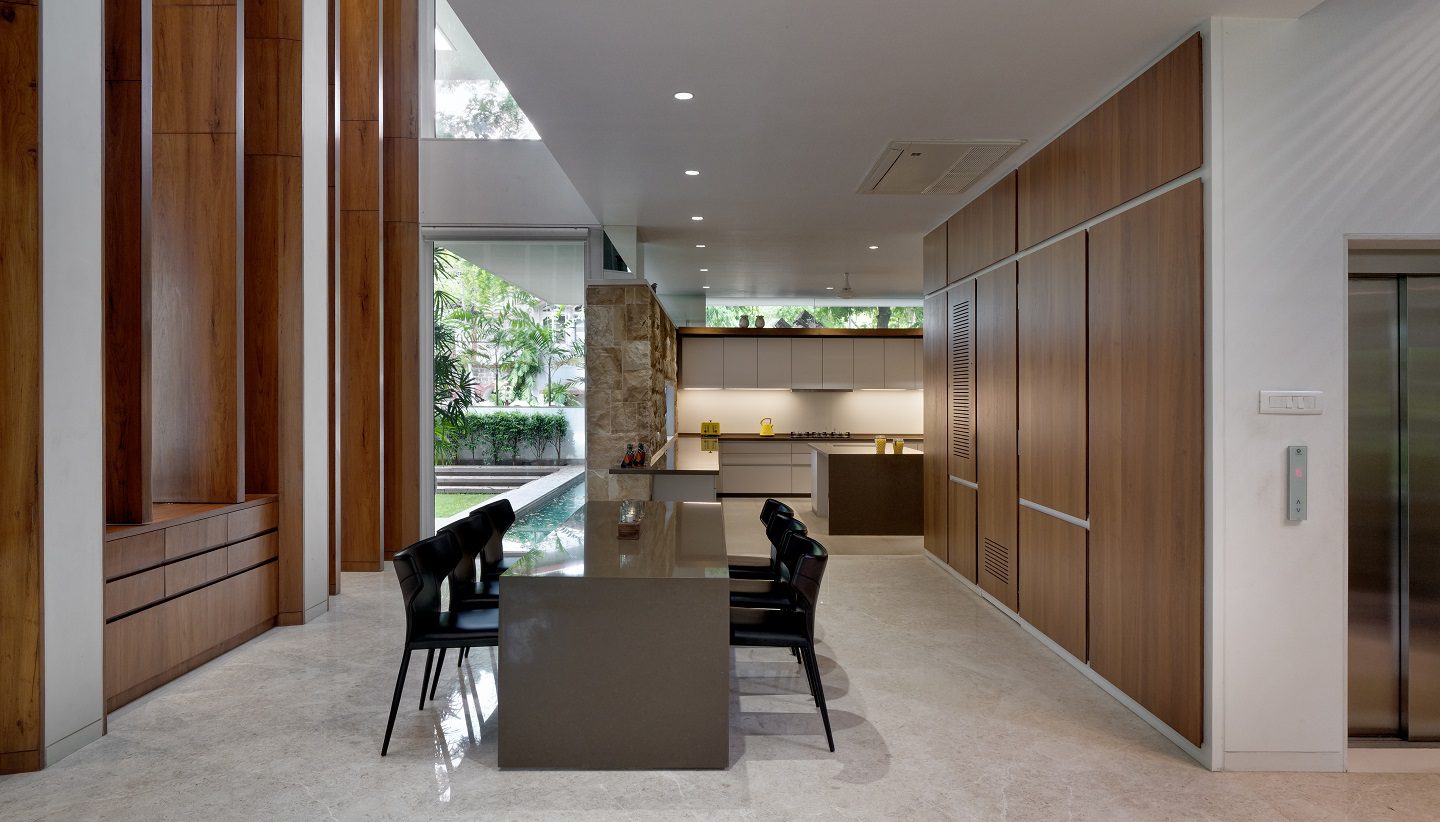
A few steps placed between two subtle and steady reflective pools lead to the entrance verandah. On the other side of a huge wooden door is the main lobby — a triple-height atrium crowned by a skylight. To the left, the main gokak stone-lined spinal wall spans all three floors. This strong aesthetic feature also has a function: it conceals ducts of the indirect evaporative cooling system. An office is placed on the left side of the lobby while the formal living room lies straight ahead. The family room, kitchen and dining space, puja room, guest room and the grandmother’s bedroom are also located on the ground floor. The first floor is a private zone comprising three master bedrooms and an artist’s studio. The second floor level houses a party hall, while the basement level accommodated a huge home theatre cum games room situated in the center adjacent to which is the garage. A spa and gym are also provided.
The material palette
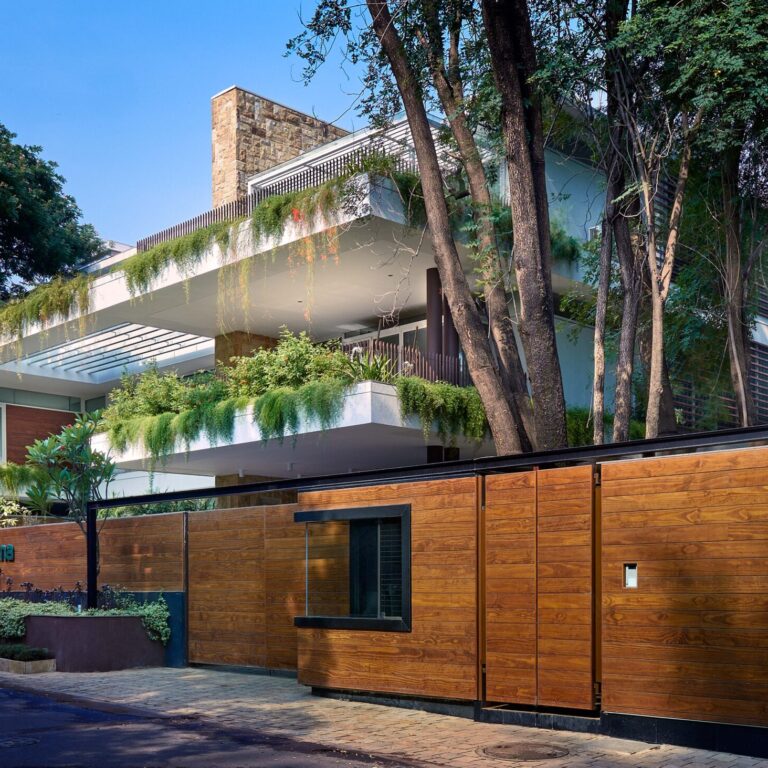
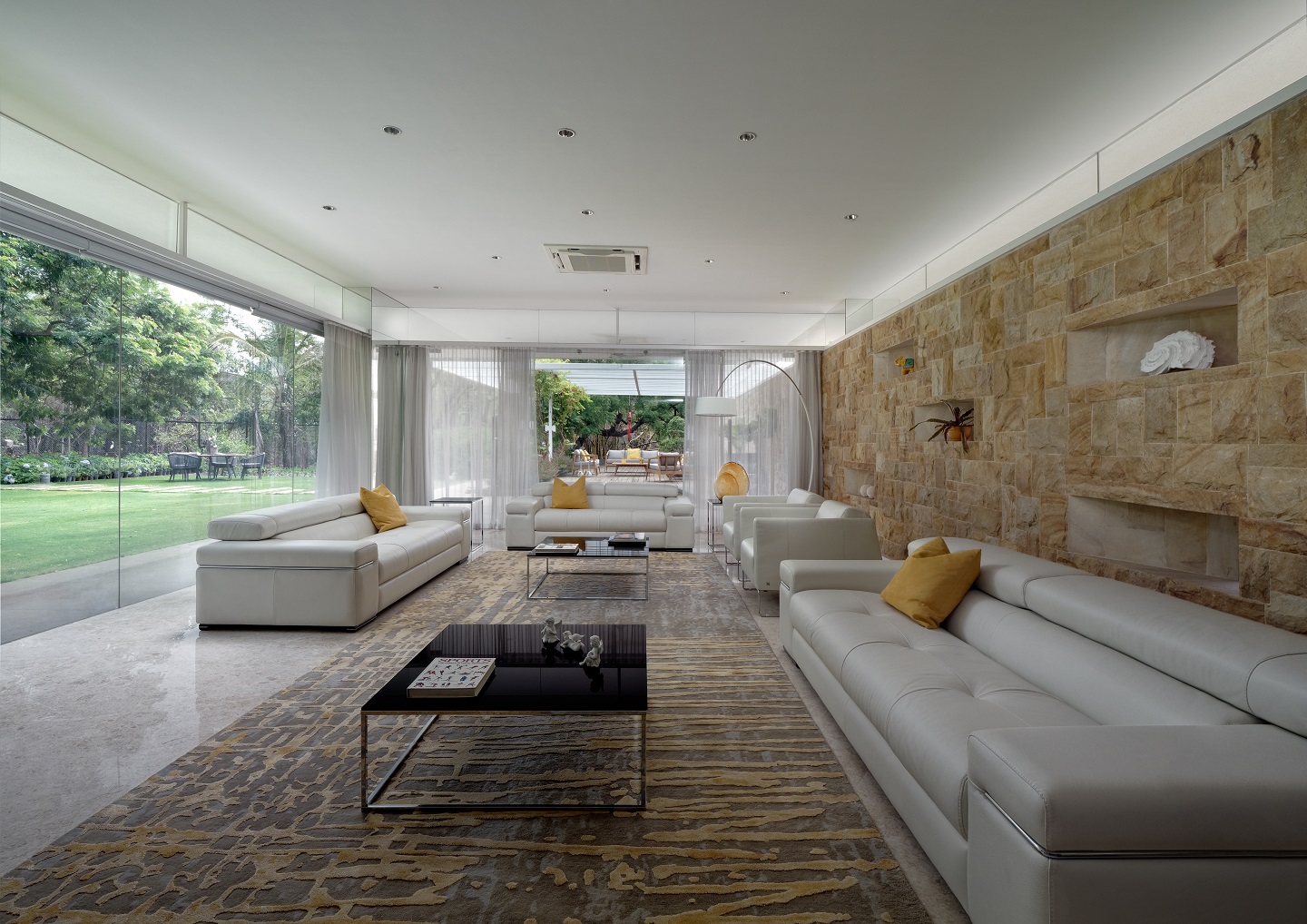
All external walls are lined with rough texture plaster. Radiation and heat is reduced with low-maintenance horizontal aluminium louvers. Natural wooden cladding is used to enhance certain sections of the building and front compound walls. The feature walls are clad with local natural gokak stone with light offwhite colour. Neutral cream-coloured natural marble is used throughout the house interiors, while the rooms are lined with natural wood flooring. All external hardscape is lined with natural local dark brown granite with anti-skid leather finish.
The challenges
The affluent client had a lot of special spatial requirements, which were difficult to fit in a humble G+1 structure. To visually avoid a huge mass of the third floor, several spaces were adjusted in the basement. One unique requirement was to account for the possibility of dividing the home into two separate houses, for which three possible homes were designed with two circulation cores.
The highlights
The integration of direct evaporative mist and indirect evaporative cooling systems at the concept stage helped in reducing dependencies on normal air-conditioning systems, serving as a benchmark to make the mansion a lot more sustainable.
Fact File
Project: The Hovering Gardens
Location: Pune
Area: 21,000 sq ft
Principal architect: Niraj Doshi
Design team: Akshay Karanjkar, Supriya Yadaw and Jagruti Gujar
Add a Comment