
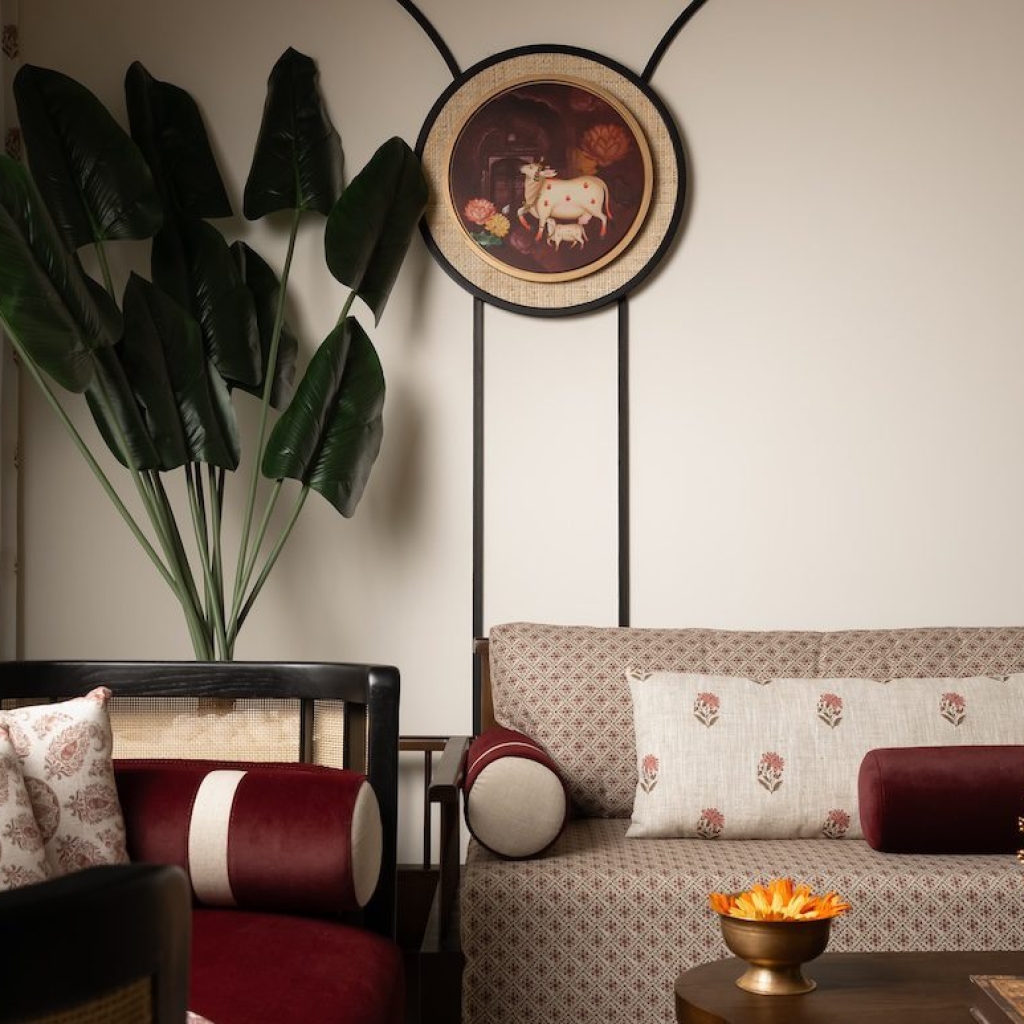
Nebulous Design Workshop breathes new life into this 50-year-old home by weaving traditional Indian craftsmanship and cherished family heirlooms into a contemporary space that celebrates spatial openness and material richness.
Curated by: Deepa Nair
Photographs: Arjun Krishna; courtesy Nebulous Design Workshop
The brief
It’s not every day that a studio gets the opportunity to revive an old home—especially one that has stood for nearly five decades, carrying within it years of family memories, traditions, and emotional history. Redesigning such a space demands far more than aesthetic intervention; it calls for sensitivity, care, and a deep understanding of how the family’s present lifestyle can coexist with the energy of the home they have long been connected to.
For the owners of this 50-year-old residence in Bengaluru, the search for the right studio was instinctive. Interior designer Kiran Sabnani and architect Manoj Sabnani, founders of Nebulous Design Workshop, came naturally to the forefront, having previously collaborated with the family on earlier projects. “The brief initially called for a modern transformation,” shares Kiran when asked about the client requirements. “However, as the design journey unfolded, it became evident that the client’s sensibilities were deeply rooted in Indian tradition, with strong emotional ties to familiar materials, textures, and artefacts,” she adds.
As conversations around the project evolved, the renovation gradually moved away from the idea of a complete overhaul. Instead, the studio chose to work closely with the emotional history of the home, allowing inherited details, existing elements, and familiar material references to shape the design direction. The intention was not simply to modernise the residence, but to create a home that felt restored in spirit—where older associations could coexist naturally with newer interventions. Beautifully so, the studio named the project Saundh, the Sanskrit word for petrichor. Much like the first showers that restore life to parched earth, the home is guided by the emotion of rain meeting soil, becoming a metaphor for revival within the ageing residence.
The design intent
As the clients envisioned a home that would balance contemporary living with a strong Indian identity, Nebulous Design Workshop chose to retain and reinterpret several heritage elements within the existing house. Instead of treating older objects and details as relics of the past, the studio integrated them into the new design language as focal points that shape the narrative of the interiors. The result is a modern Indian home where traditional references coexist naturally with cleaner lines, refined finishes, and contemporary spatial planning.
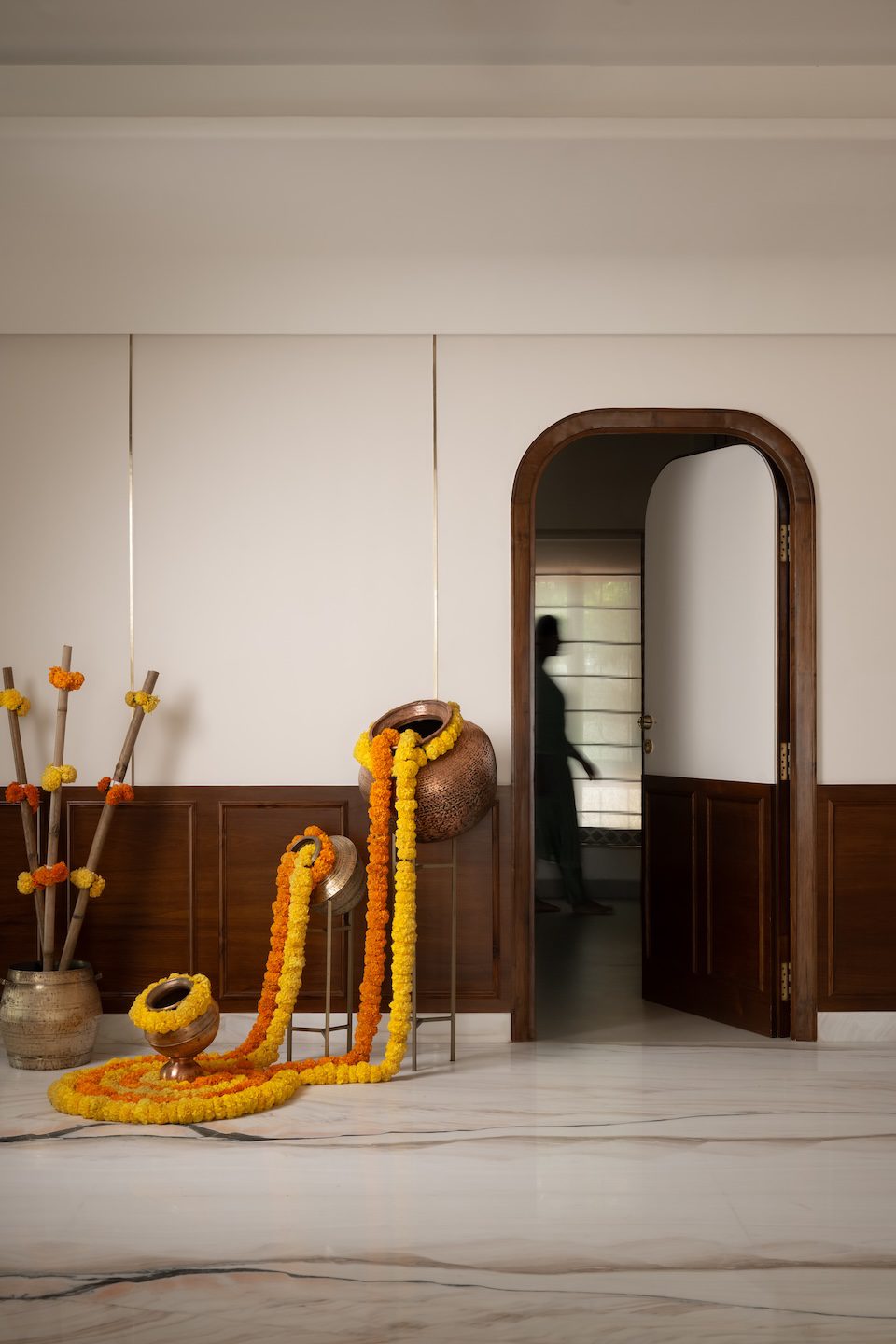
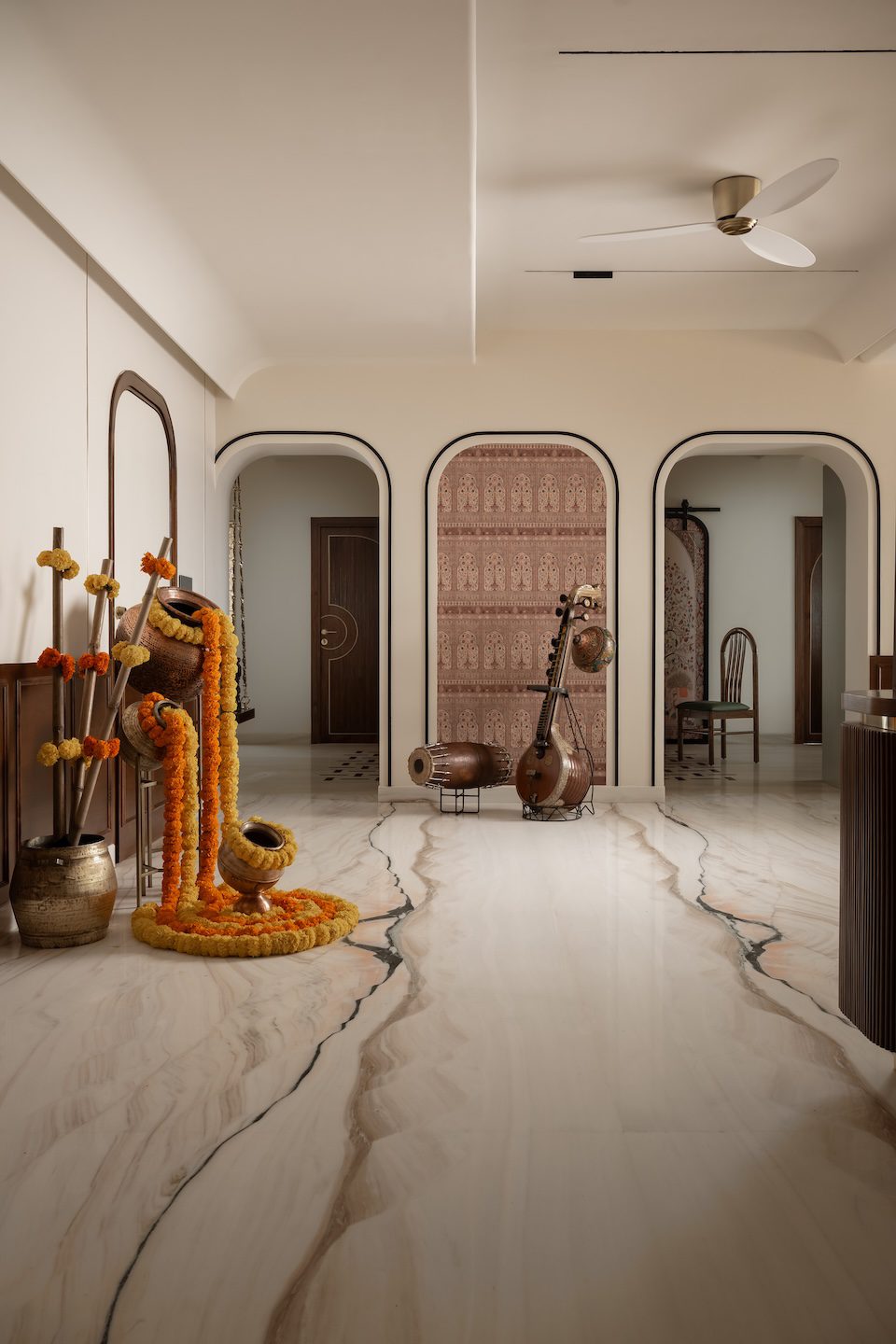
Elements such as ancestral artefacts, temple-inspired detailing, batik work, silk textures, carved teakwood, and handcrafted surfaces collectively shape the personality of the residence. Marble appears across different surfaces, bringing softness and elegance to the interiors, while arched details add a classic character. Ancestral brass objects, a veena, and a 70-year-old mridangam introduce a strong sense of cultural familiarity.
Several older elements from the original home were also carefully repurposed. Existing teakwood was reworked into doors and architectural accents, while an antique temple door was transformed into a sculptural wall feature within the interiors. Handcrafted artwork across walls and doors further reinforces the Indian character of the home.
The civil intervention
The original home was built using a load-bearing structure, resulting in a layout defined by smaller enclosed rooms with limited natural light, ventilation, and connectivity between spaces. The interiors felt compartmentalised, with each room functioning in isolation from the other. At the same time, several existing elements within the house—particularly the teakwood details and heritage features—carried strong emotional and cultural significance for the homeowners, making their preservation an important part of the redesign process.
Working within the constraints of the existing structure, Nebulous Design Workshop introduced a series of carefully planned structural interventions to open up the layout without compromising its safety. ISMB beams were incorporated strategically to support this transformation. Three small enclosed rooms were eventually merged to create a larger living, dining, and kitchen zone that now functions as the central gathering space within the residence. Openings were widened, while new windows and doors were introduced to improve the flow of daylight and cross ventilation throughout the interiors.
The spatial configuration
In the redesigned layout the entry transitions into a foyer that opens towards the living area. From here, the living, dining, and kitchen areas flow into one another as part of a larger open layout. At the centre of this shared zone sits the temple, envisioned as both a spiritual anchor and a visual focal point within the home. Nearby, the traditional swing creates a pause point within the larger movement of the interiors. The more private areas of the house, including the bedrooms, branch out from these central spaces while continuing the same material language and visual continuity established across the home.
The design and material details
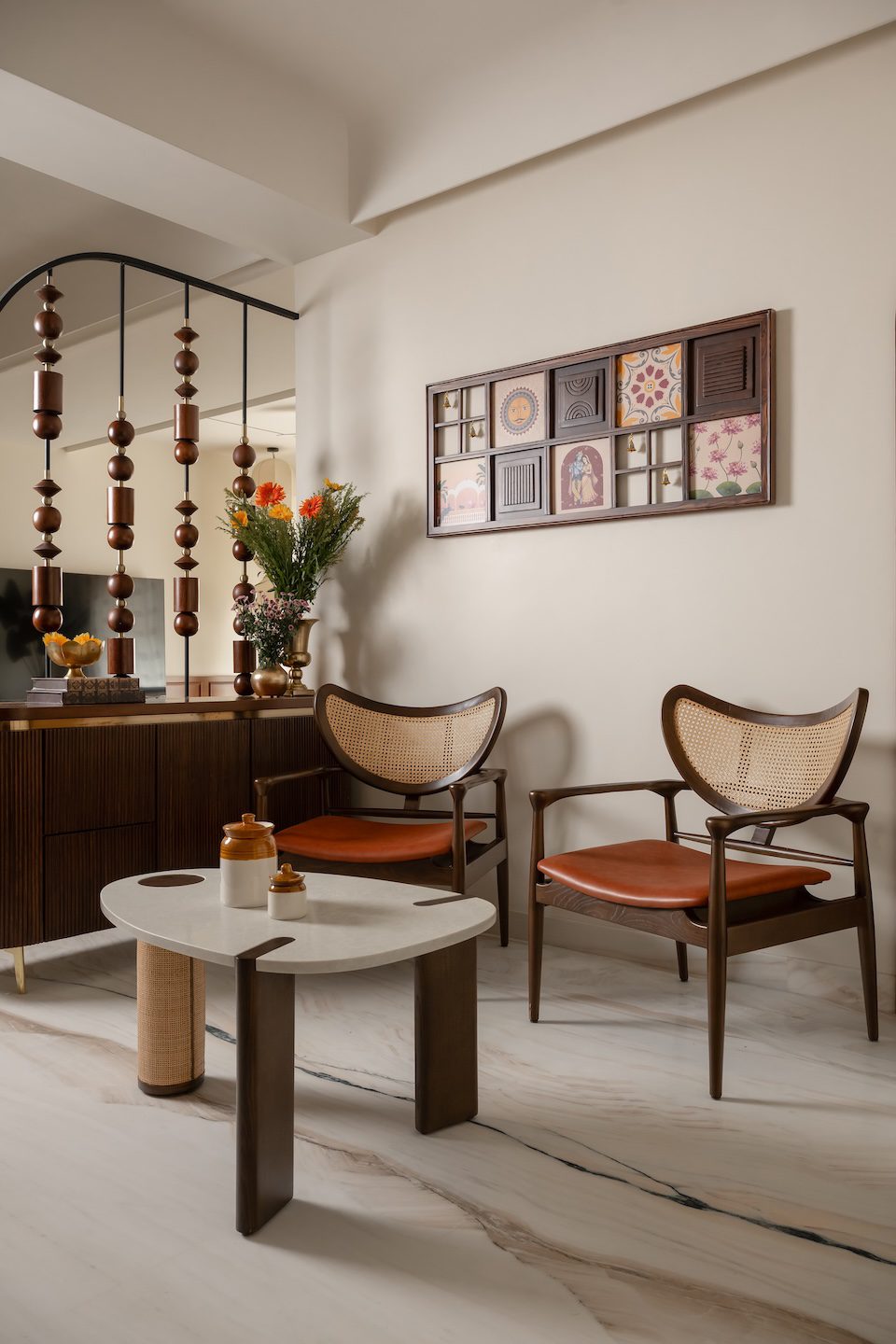
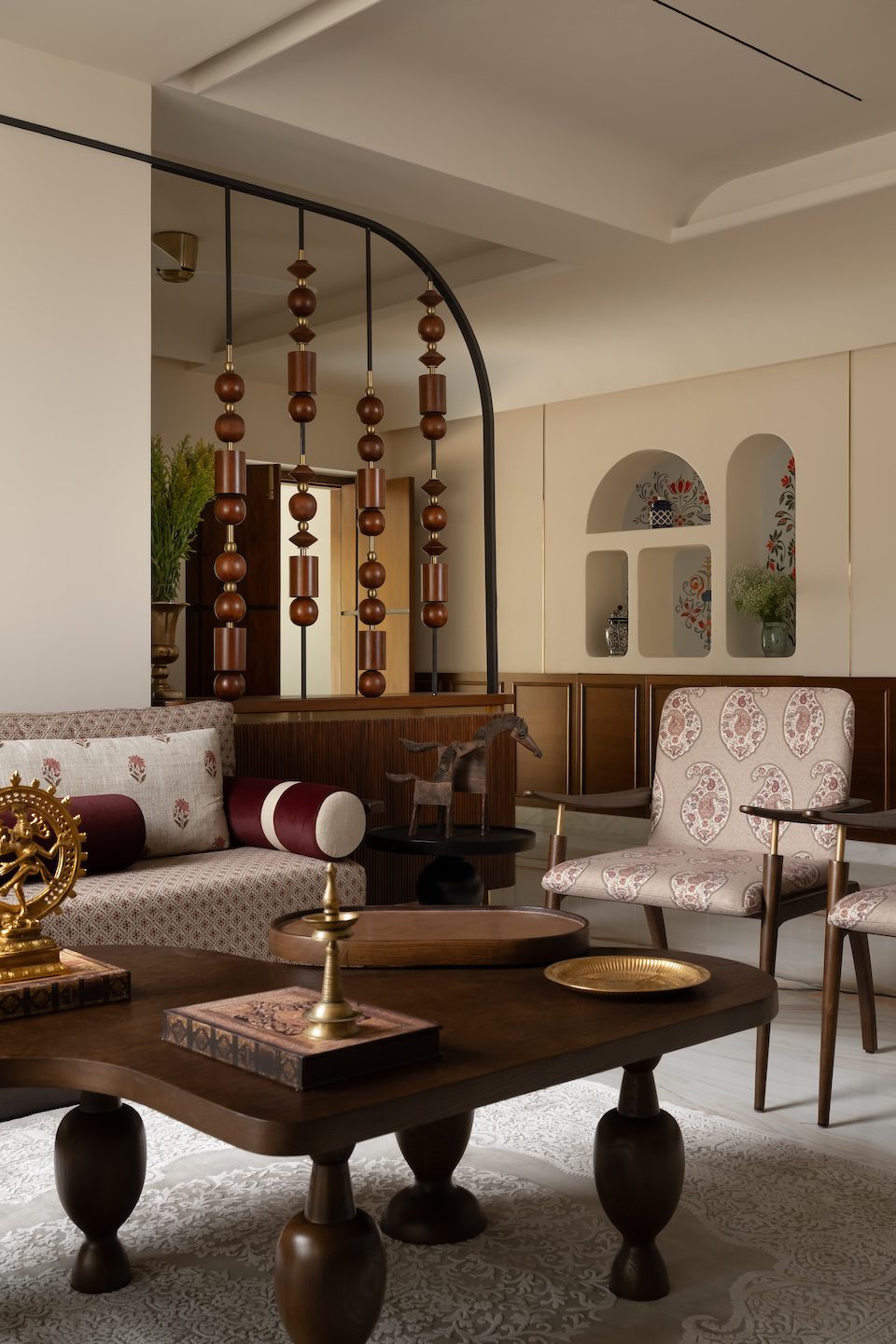
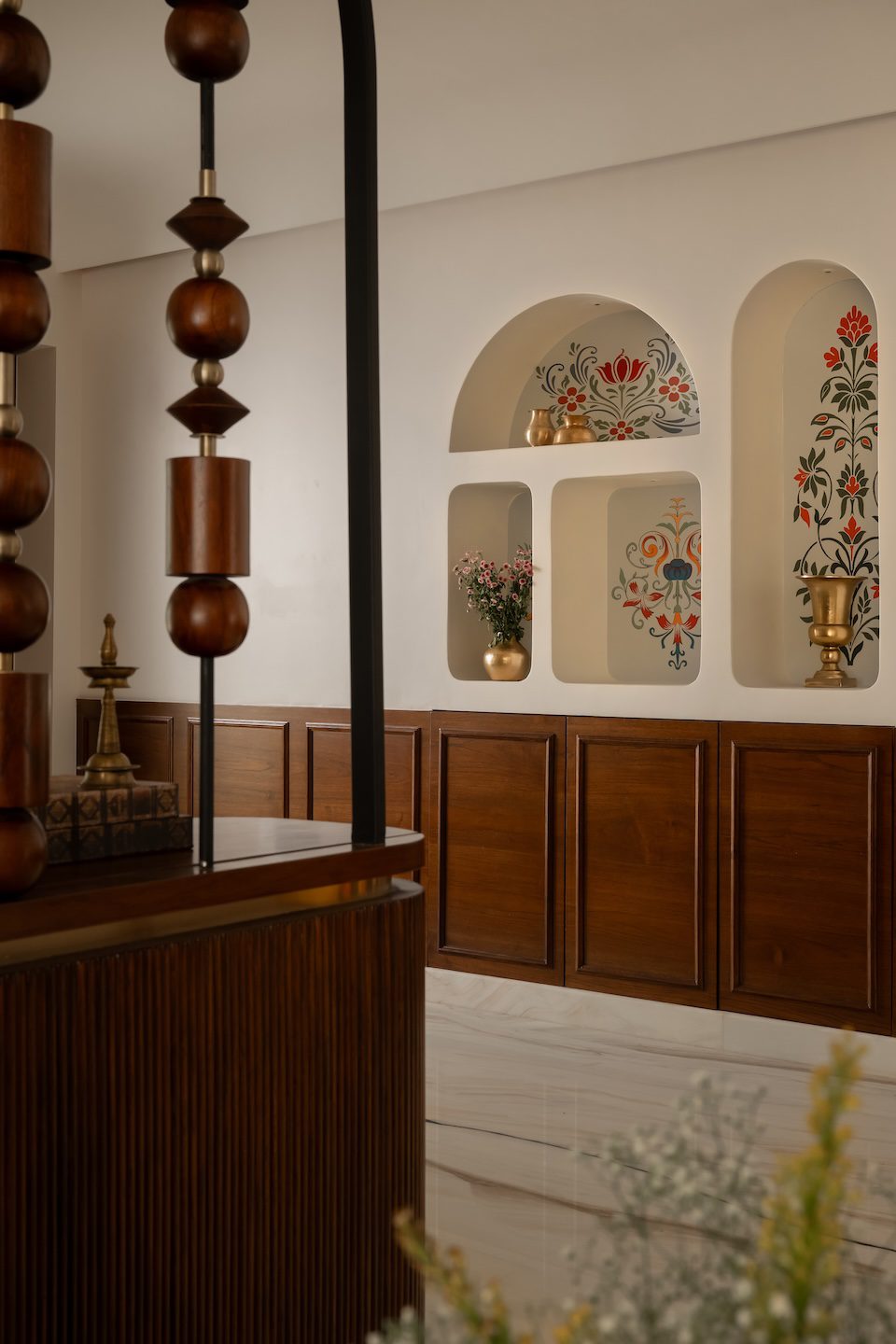
The entrance foyer is a warm and carefully detailed introduction to the home. At the centre of this space, the studio designed a console partition that functions both as a subtle divider between the foyer and living area, and as a sculptural feature within the interiors. Anchored by a fluted wood base (read console), the partition rises into a softly arched metal frame threaded with suspended Channapatna-inspired wooden elements, celebrating the craft’s distinctive turned forms and vibrant character through a more contemporary interpretation.
Rather than functioning purely as a decorative installation, the console was also designed with multifunctionality in mind. The tabletop incorporates a pull-out extension that allows the client to use it as a compact work desk simply by turning the chair around, while concealed storage within the unit accommodates everyday office essentials. The foyer further includes a cosy two-seater waiting corner with customised wooden chairs, while a wall frame sourced from Decor By The Way was specially personalised with Radha and Krishna as the focal point, reflecting the couple’s deep fondness for the deities.
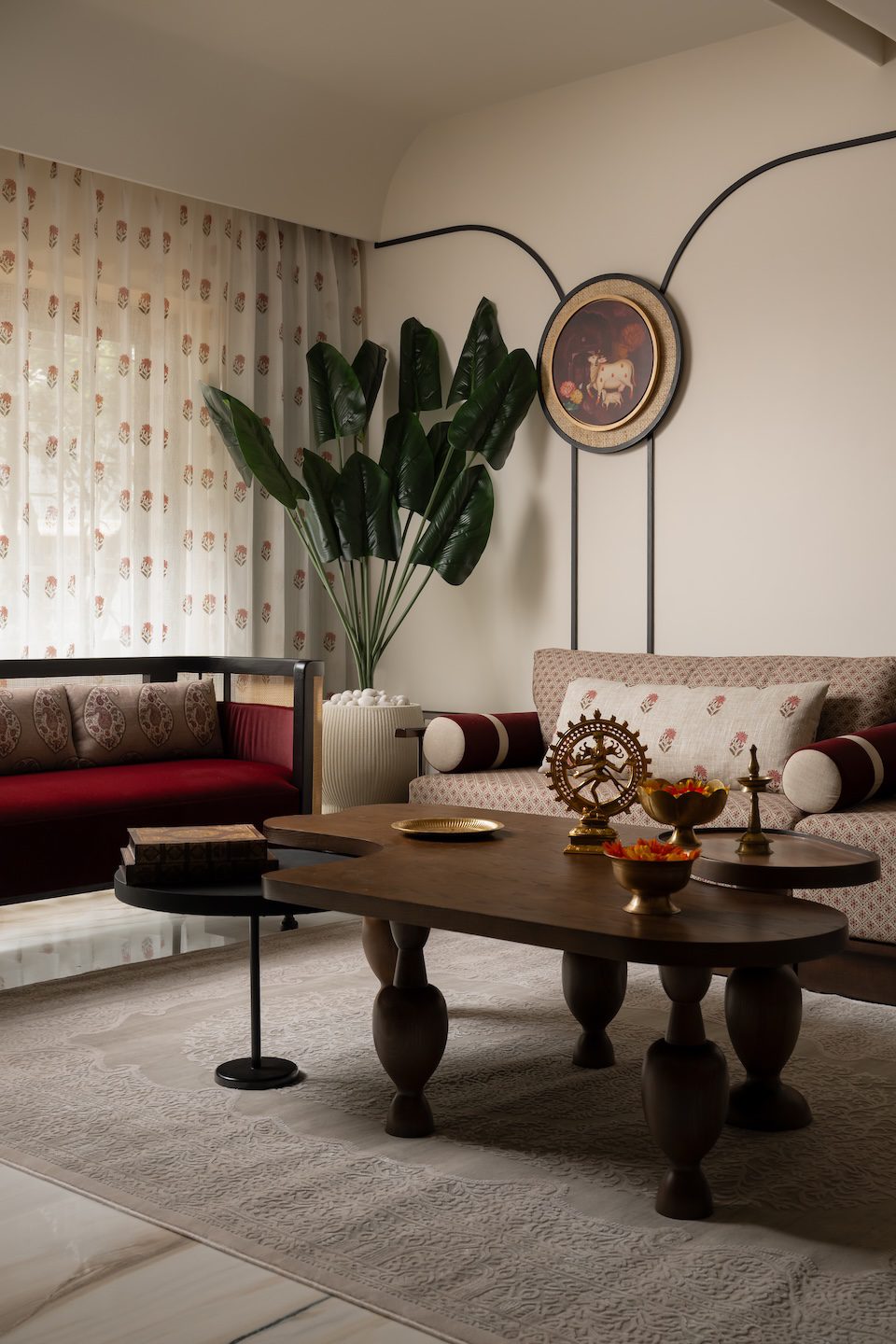
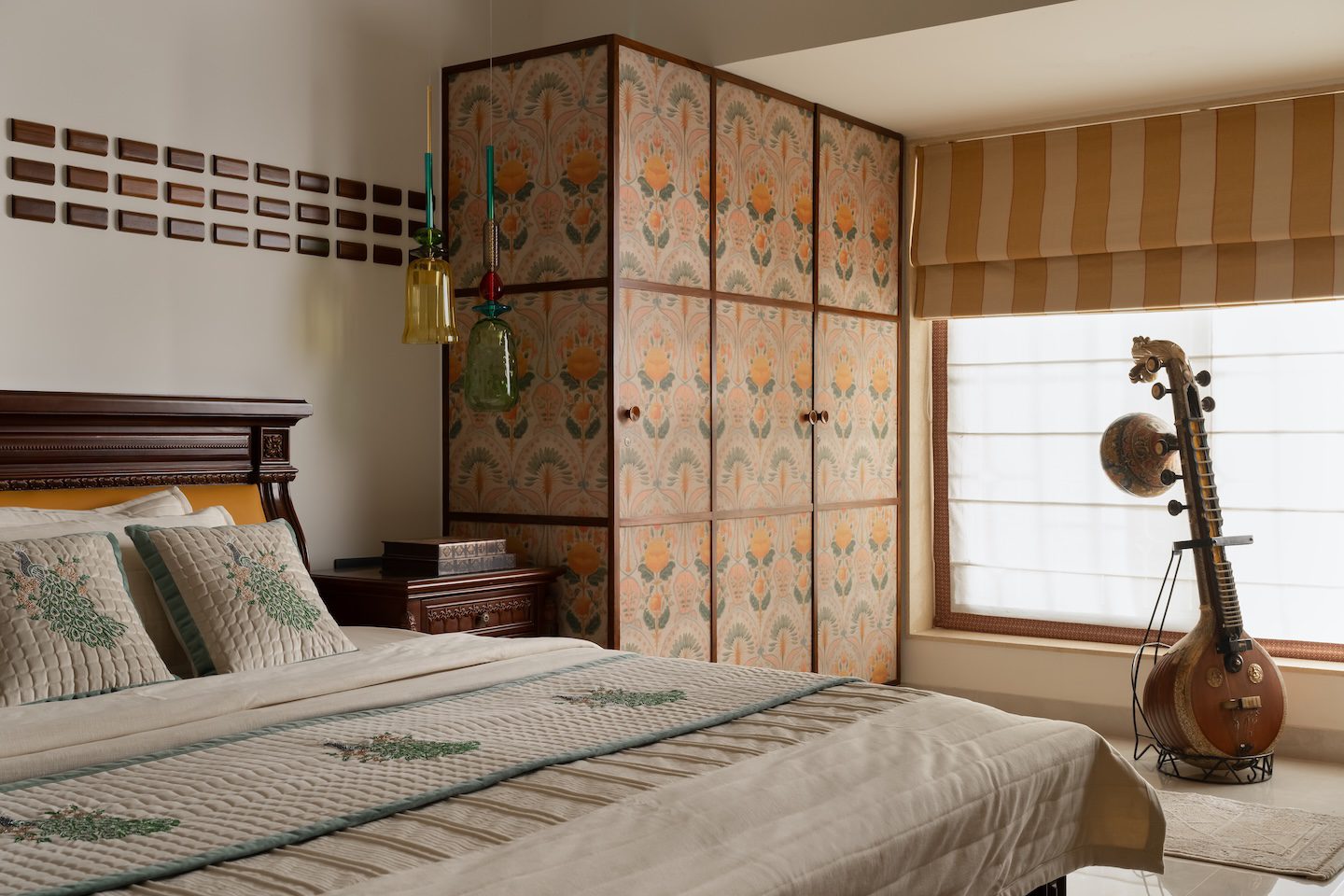
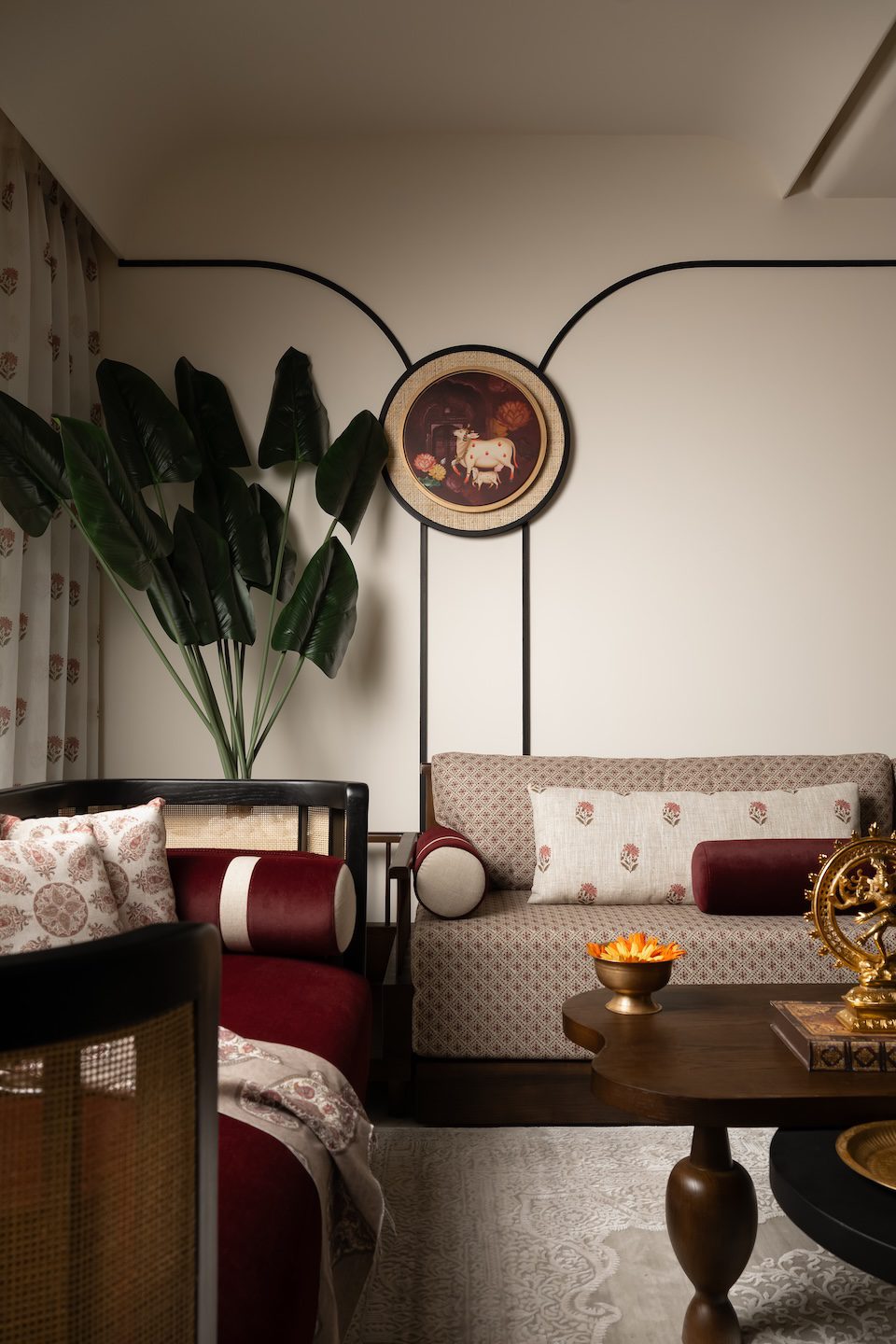
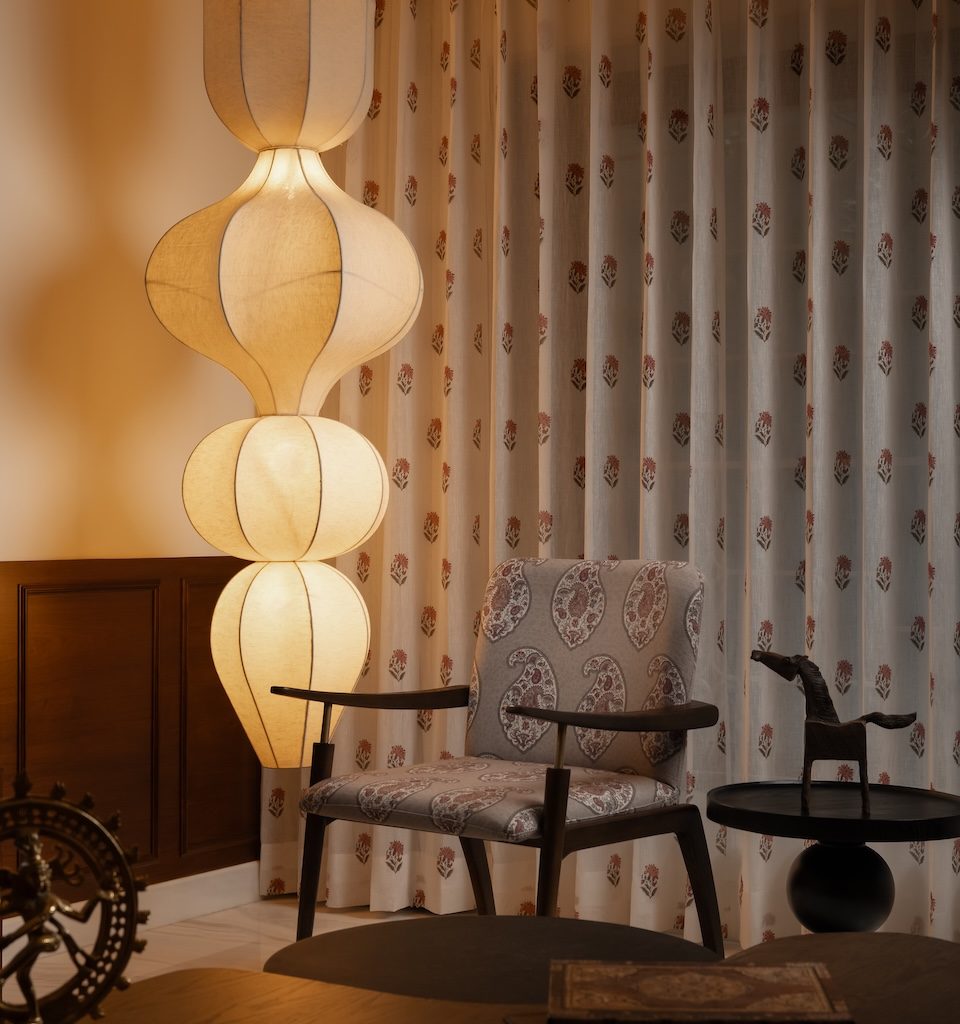
In the living area, heritage elements and contemporary design coexist naturally. Several ancestral objects belonging to the family take prominence here, including 70-year-old musical instruments like the veena and mridangam, alongside heirloom brass artefacts. Gentle arches soften the interiors, while Indian-inspired wallpapers from Sabyasachi Nilaya bring richness to the walls. Marble flooring sourced from Marble Centre International forms the base of the space, with intricate inlays adding subtle references to traditional craftsmanship. The furniture, designed in-house and crafted by Homework Living, balances artisanal detailing with cleaner contemporary forms, reinforcing the dialogue between older cultural references and the more modern identity of the redesigned home.
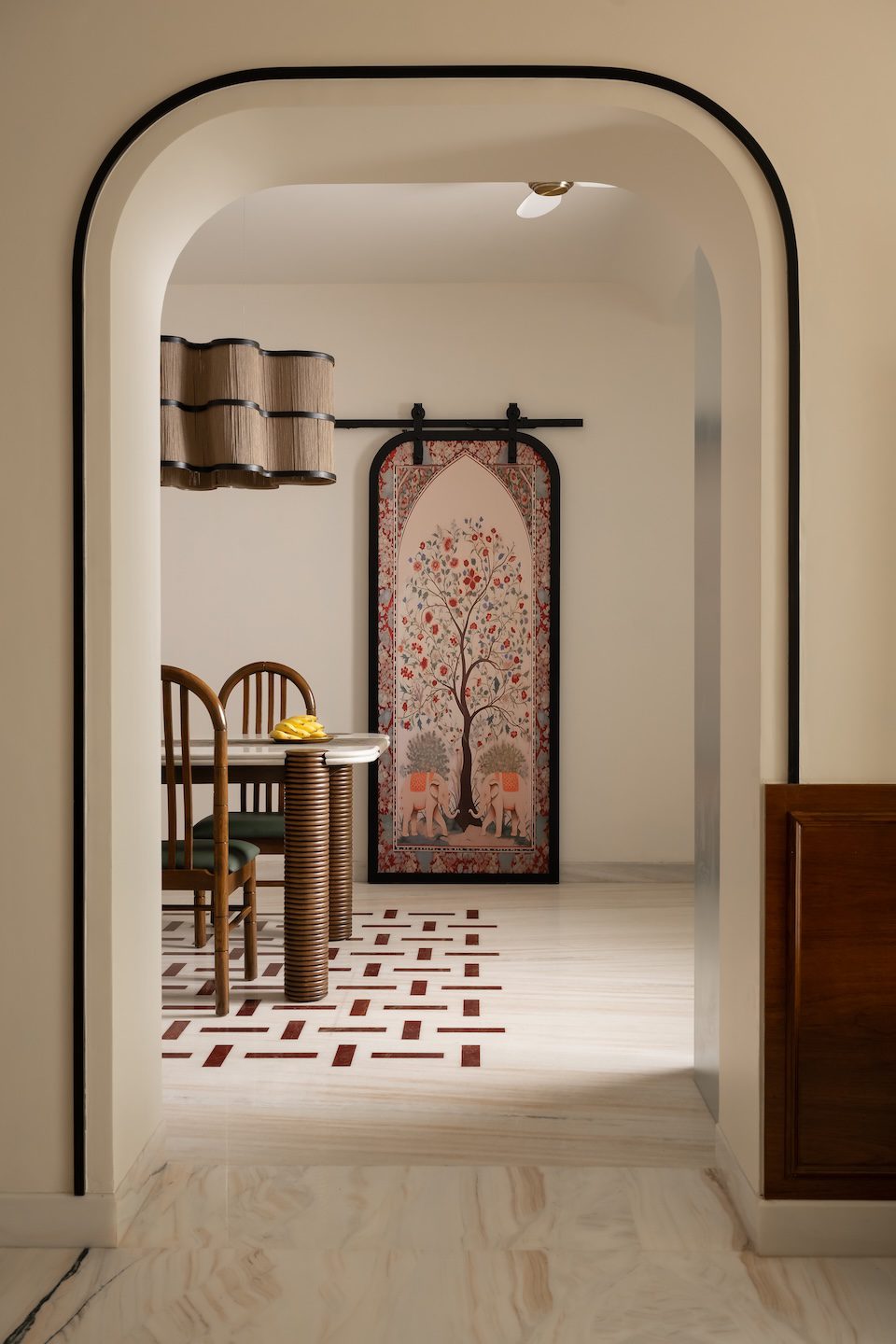
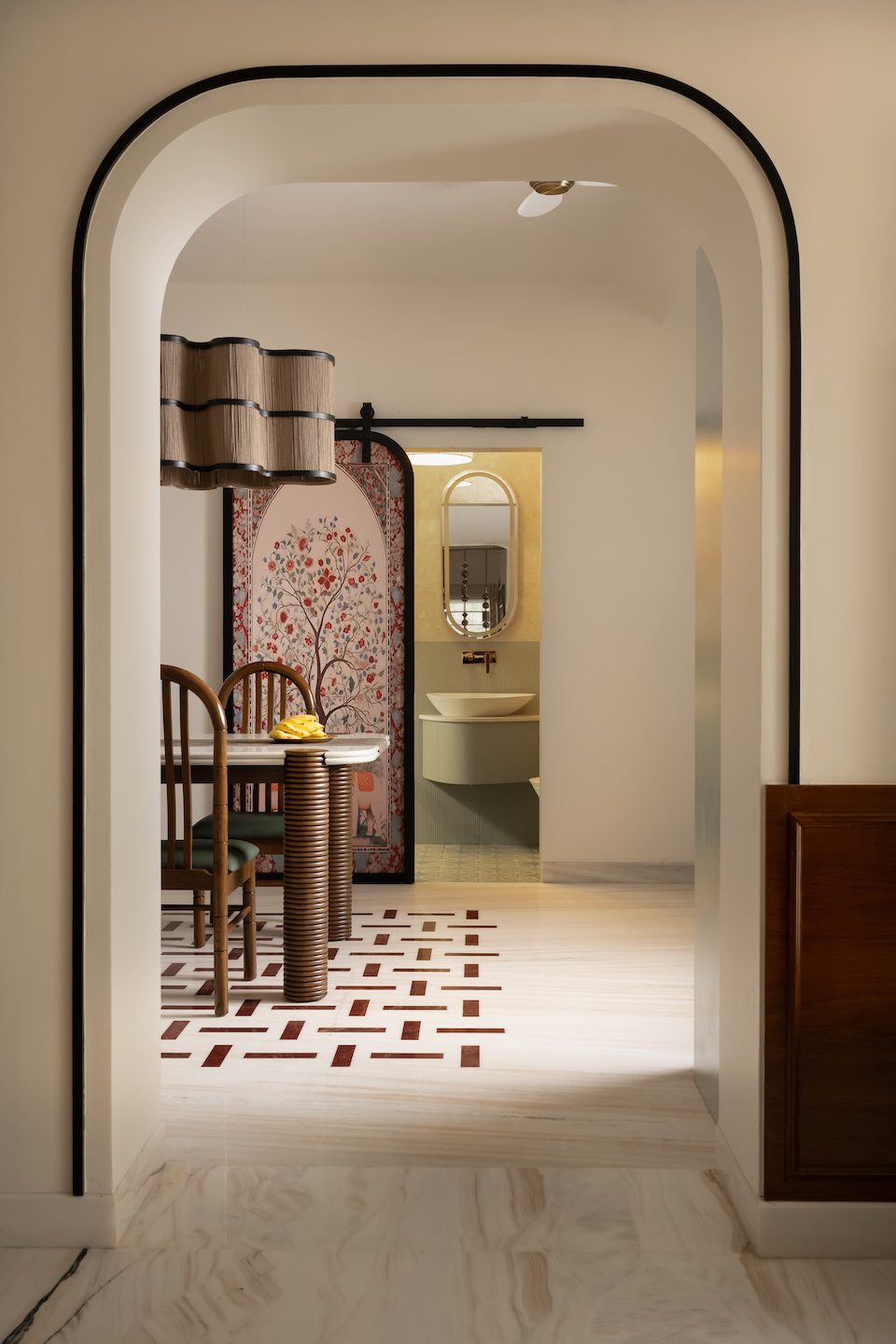
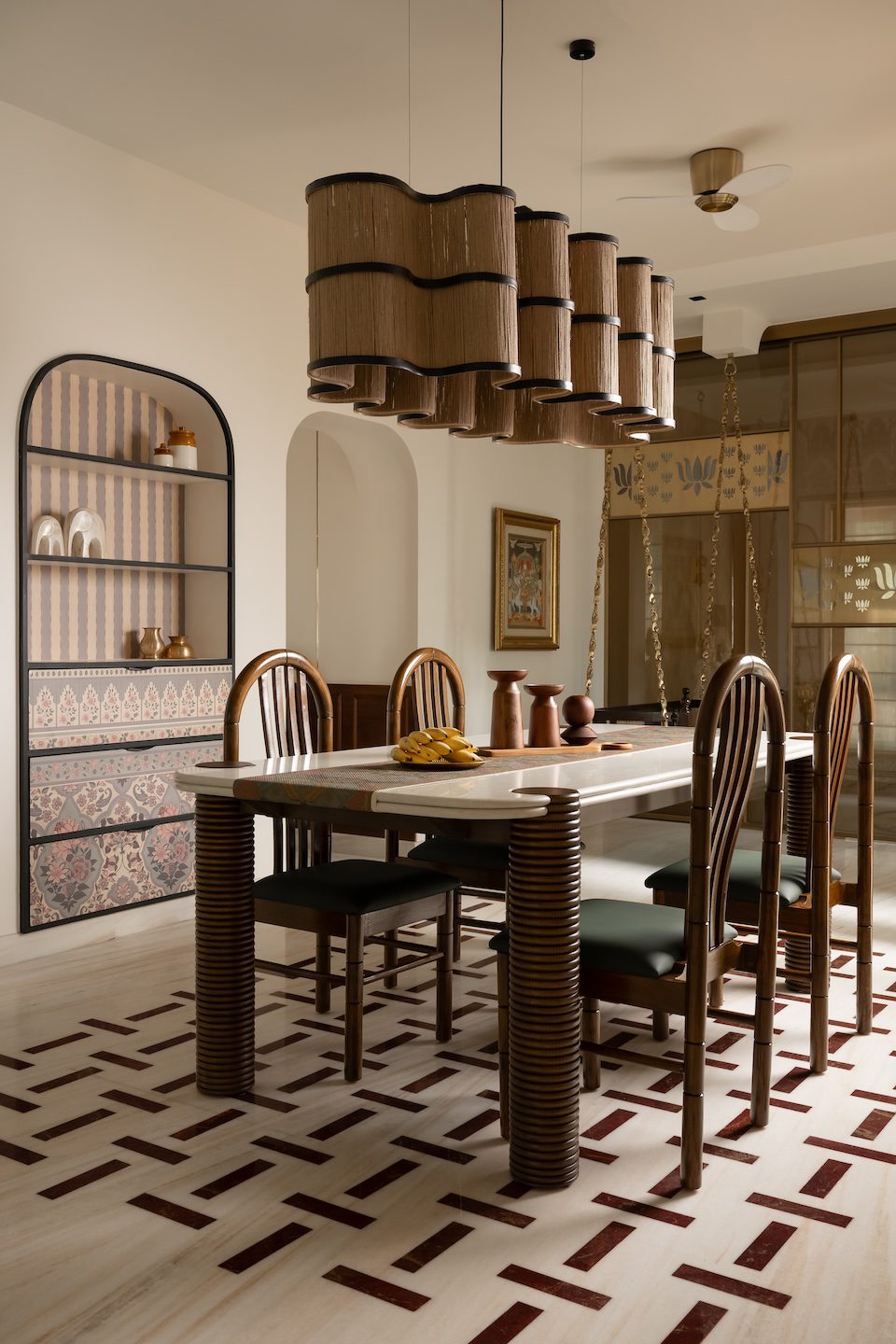
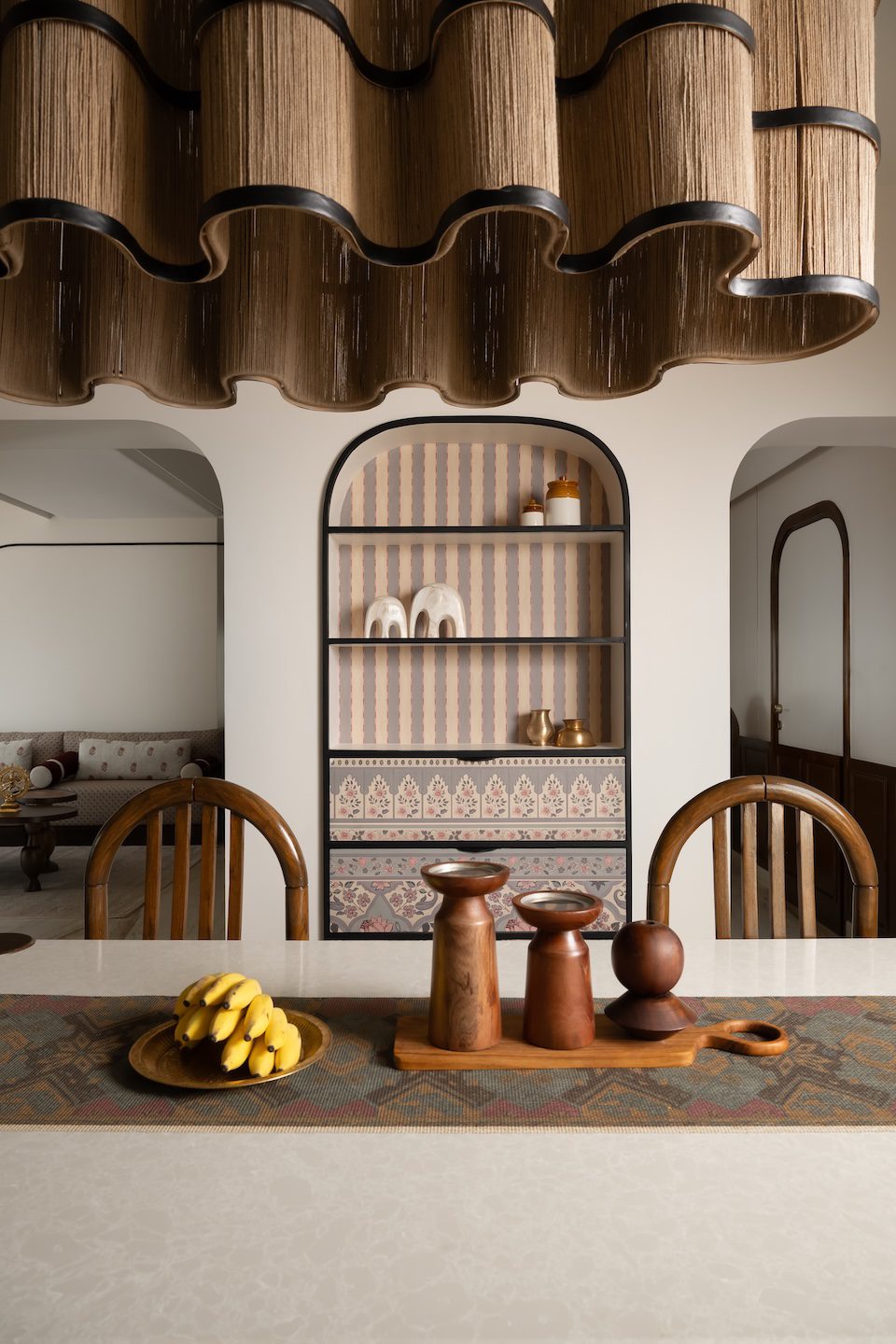
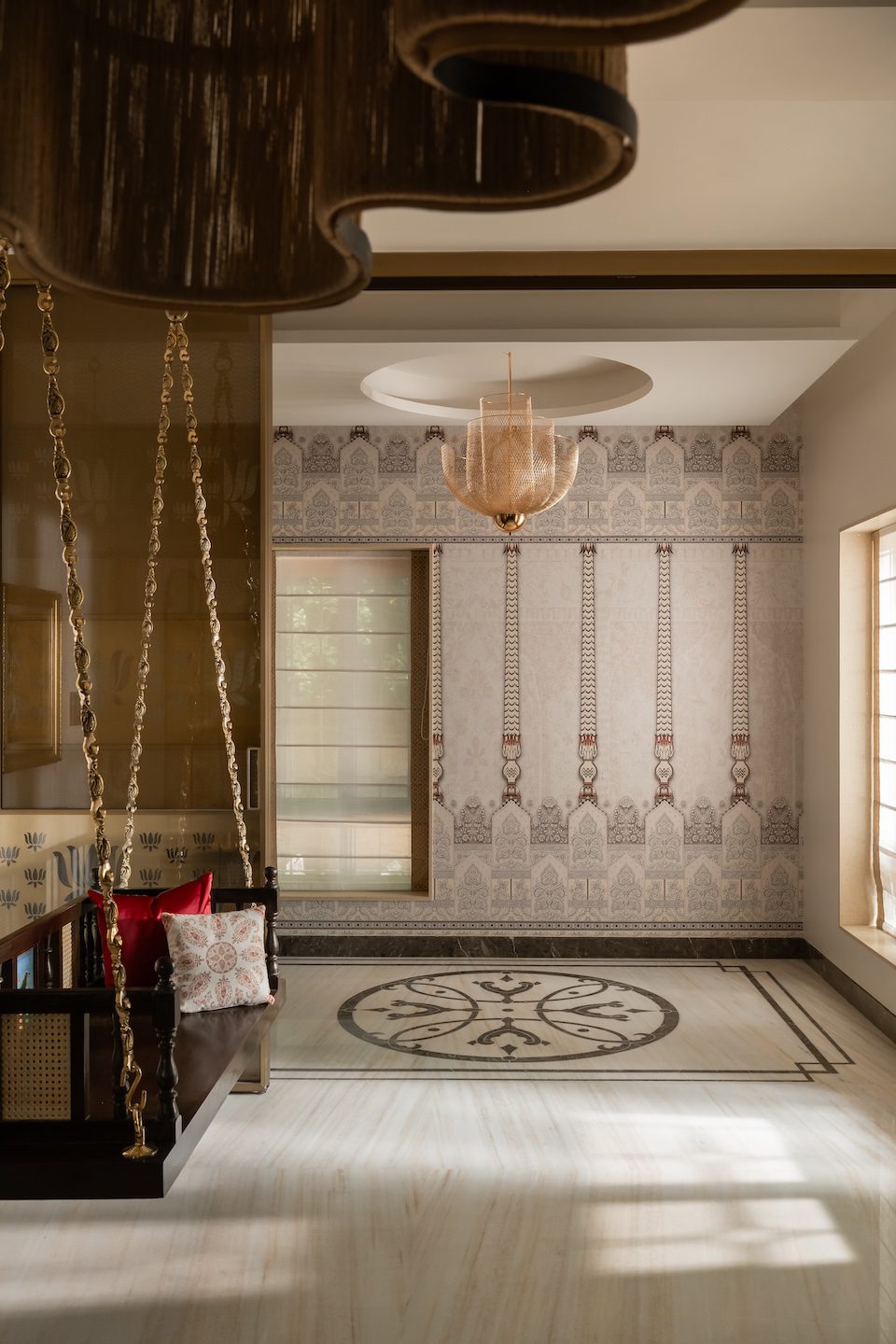
Positioned between the living area and kitchen, the dining space encourages interaction across the home’s shared zones. A traditional swing further anchors the setting, introducing a familiar element seen in most traditional South Indian homes. The dining area features subtle material interventions that help define the space within the larger open layout. For instance, the marble inlaid flooring mirroring a carpet creates subtle visual contrast through the usage of two distinct tonal families of marble. Another important intervention here was reinstating the existing 10-inch wall and carving out recessed niches and adorning it with Sabyasachi Nilaya wallpaper. Another standout feature within this space is a bespoke hand-painted sliding panel that functions both as artwork and as the entry to the powder room.
The dining setting sees another refurbished beauty—the client’s 50-year-old teakwood dining chairs—-group around a (custom-designed by the studio and crafted by Homework Living) quartz topped rectangular dining table. Quartz was chosen for its durability, stain and heat resistance, and ease of everyday maintenance. Above, a handcrafted jute chandelier customised by artisans from North India introduces warmth and character into the space.
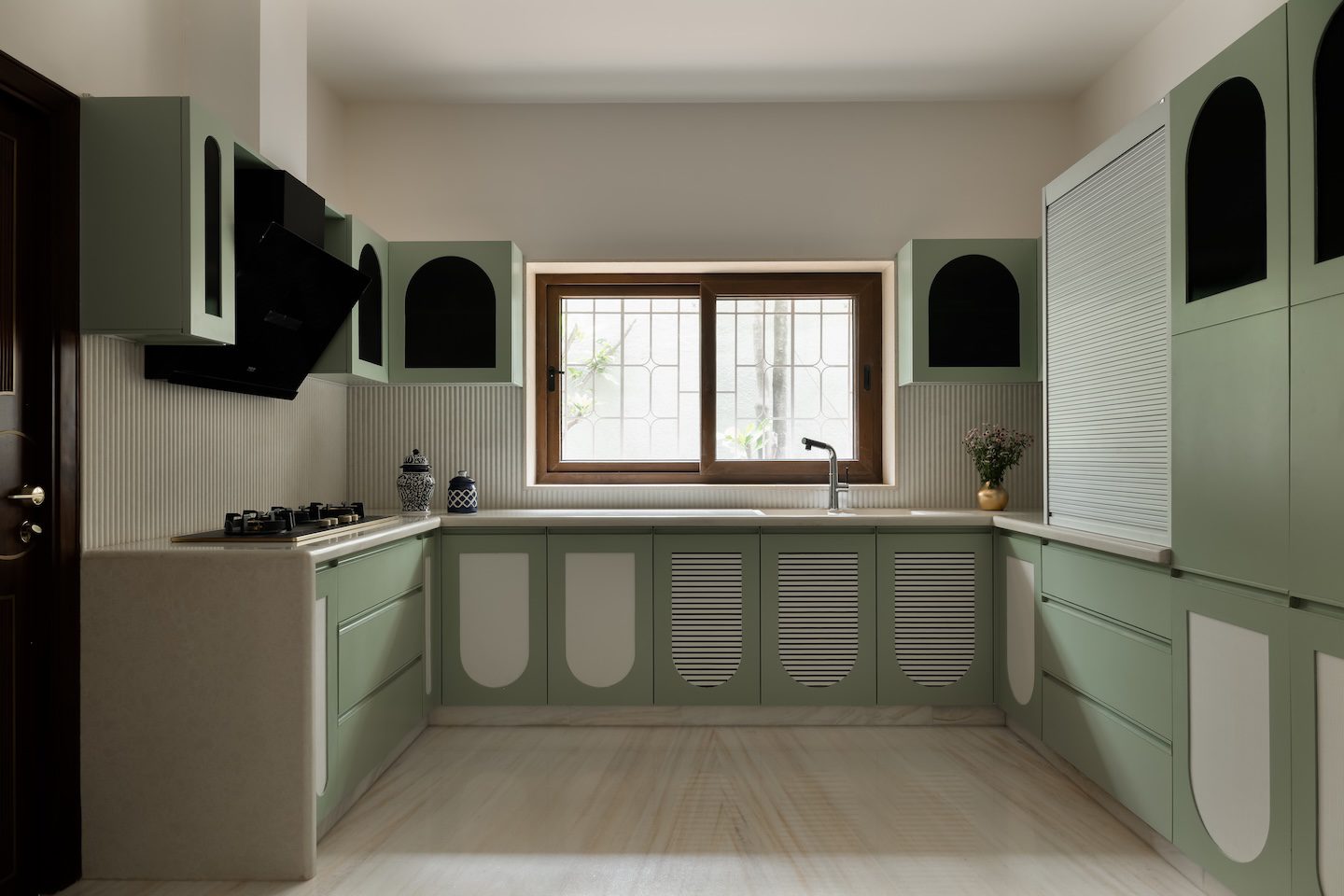
The kitchen was envisioned as a natural extension of the social spaces—open, contemporary, and understated in its expression. Duco-finished cabinetry in sage green and white is softened with cane inserts, balancing utility with warmth and texture. Quartz countertops paired with a fluted quartz backsplash add subtle depth to the otherwise restrained palette. A large central window was introduced within the kitchen to draw in natural light and improve ventilation, making the space feel brighter and more connected to the outdoors. Custom-designed and executed by Vishwaratna Interiors, the kitchen continues the larger material language of the home while maintaining a clean and functional character.
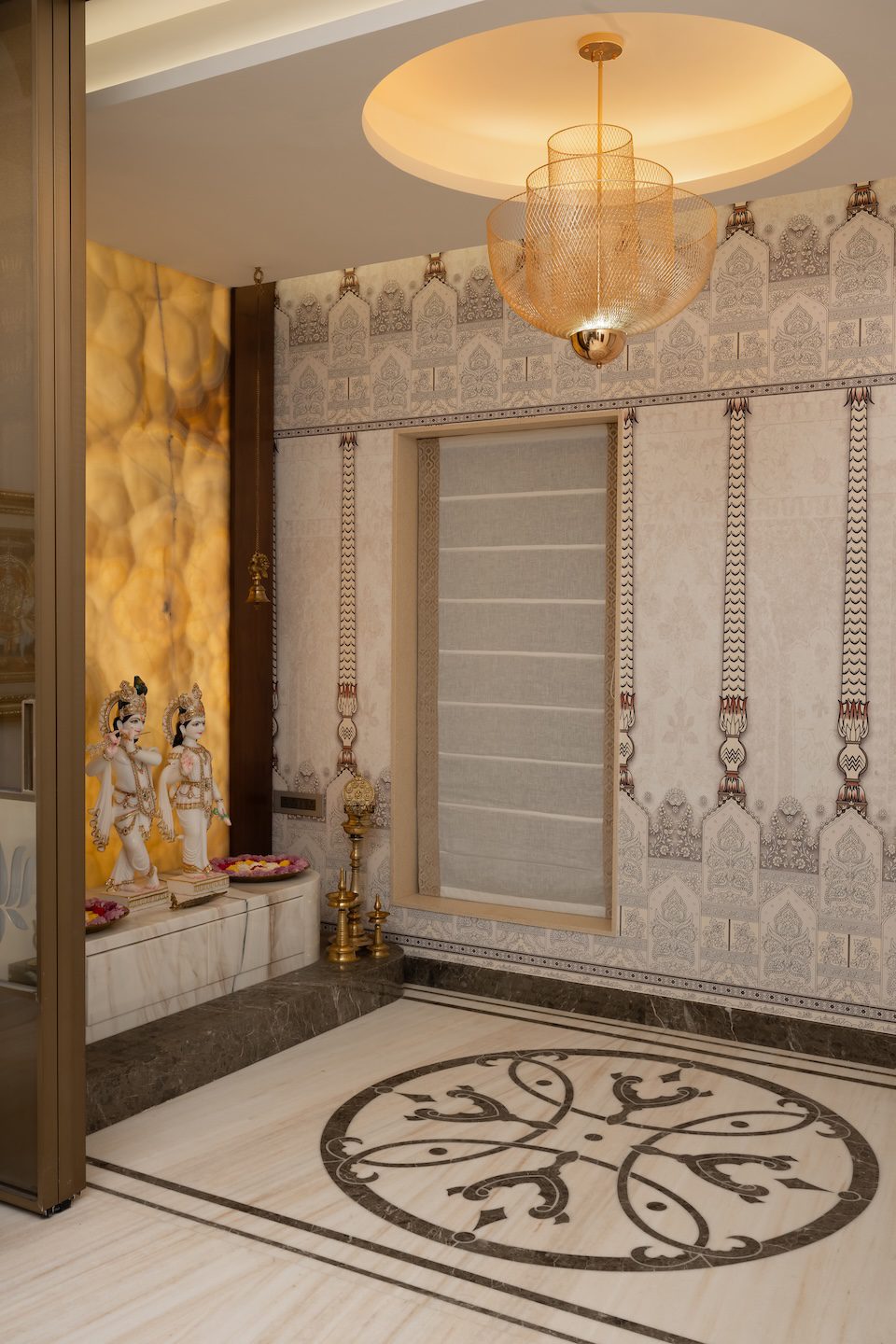
The temple is a calm and contemplative space within the larger open layout. Here, an aqua green onyx cladded wall forms the backdrop for the shrines, while an intricately inlaid marble rangoli anchors the space besides showcasing the craftsmanship. The focus wall beautifully incorporates an element which strengthen its connection to South Indian architectural traditions, albeit in a contemporary format. Like the wallpaper featuring Chettinad-inspired columns—designed by Cristy Wallcoverings—that stretches beautifully along a wall introducing a strong architectural presence, adding depth and character to the setting.
Large windows allow natural light to filter into the temple through the day, strengthening the serene atmosphere of the space. Glass partitions detailed with delicate patterns help maintain openness and visual continuity across the interiors, while Indo-modern sliding panels introduce a more contemporary intervention within the otherwise traditional setting. Another significant addition within the space is the dome-style gold chandelier envisioned by the client for the temple interiors. Sourced from Fandom Lights, the fixture complements the warmth and sanctity of the space.
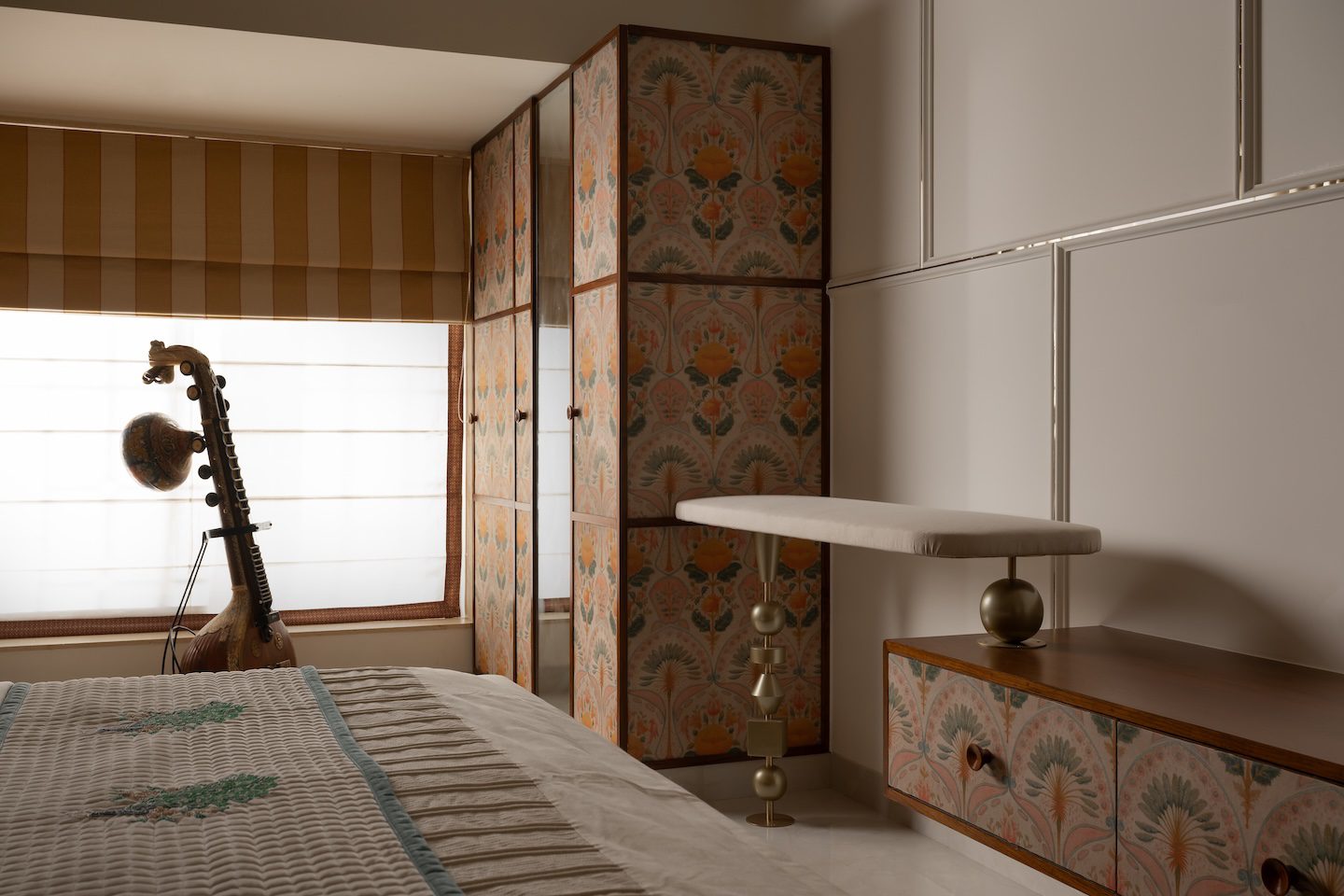
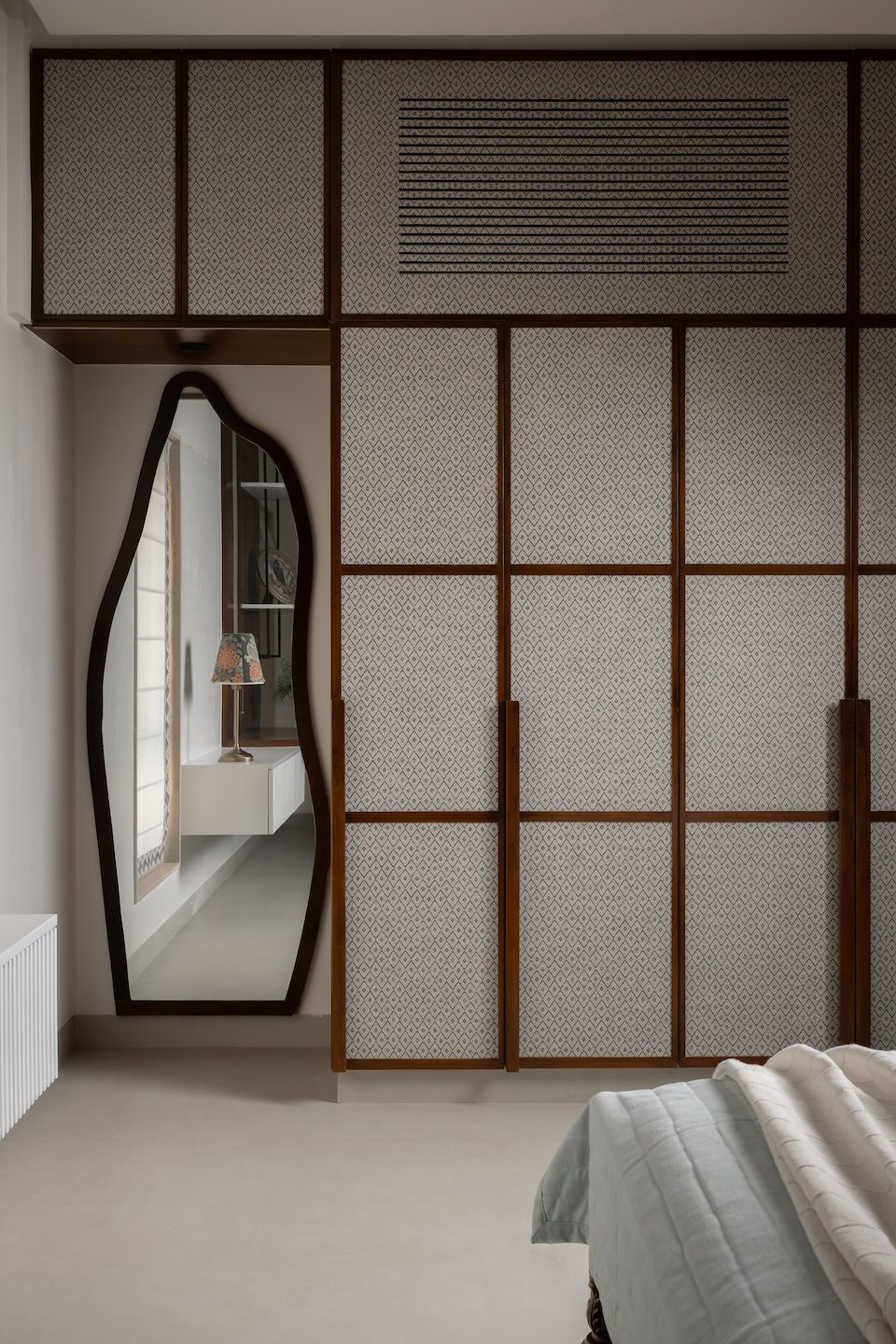
The bedrooms continue the larger design language of the home, balancing contemporary comfort with subtle Indian influences. In the master bedroom, a 50-year-old teakwood bed and side tables were carefully refurbished, allowing the original craftsmanship to remain part of the redesigned interiors. Sabyasachi Nilaya wallpapers across the wardrobes introduce richness and character, while soft furnishings from Linen Studio and drapery from Petals bring warmth into the spaces. Even the TV unit was designed with multifunctionality in mind by incorporating a cleverly concealed rotating ironing board that responds seamlessly to the client’s everyday lifestyle requirements. Adding another layer of continuity, the wall artwork was created using reclaimed teakwood pieces that originally existed within the home, thoughtfully reimagined into a contemporary design feature.
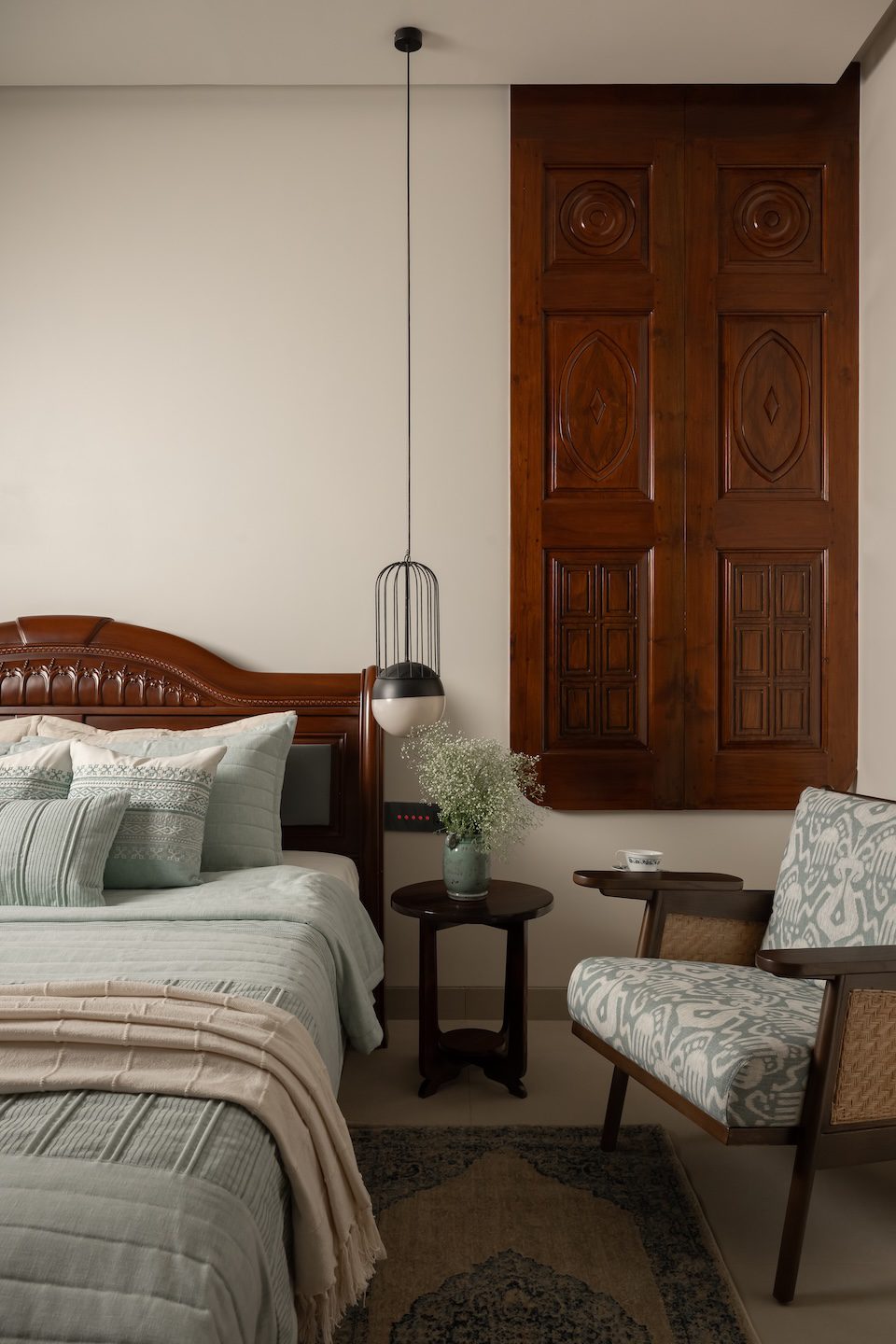
One of the most significant details appears within the guest bedroom, where a repurposed 50-year-old temple teak door has been transformed into a sculptural wall installation. Retained as part of the renovation process, the piece carries forward the age and cultural history of the original home while finding a new place within the redesigned interiors.
The challenges
“The restoration journey was a complex puzzle, layered with challenges that ranged from navigating structural constraints to achieving aesthetic continuity. Our load-bearing heritage structure demanded innovative solutions. To create new spatial layouts without compromising the integrity of the old walls, we cleverly integrated ISMB beams for support which ensured a safe, open, and column-free space,” explains Manoj.
“One of the most defining aspects of this home was the client’s deep belief in Vastu,” says Kiran “Beyond key considerations like the entry, pooja, fire elements, and bed orientations, even the smallest details—from mirror placements, swing positions to wall artworks, study seating, room elevations, and number of steps/colours—had to align precisely with his beliefs. The challenge was to seamlessly weave these intricate Vastu principles into a home that still felt refined, functional, and aesthetically cohesive,” she elaborates.
Fact File
Project: Saundh
Location: Sadashivanagar, Bengaluru
Area: 2,400 sq ft
Principal architect: Manoj Sabnani
Principal designer: Kiran Sabnani
Design team: Prerna Sarda, Saivarun Ravi and Elsa Maria Bristow
Add a Comment