
In Pune, this row house by Lahoti and Associates explores how a disciplined palette of stone, lime and micro-topped surfaces can shape interiors that feel both minimal and quietly tactile.
Curated by: Rupali Sebastian
Photographs: Vivekajeet; courtesy Lahoti and Associates
The project
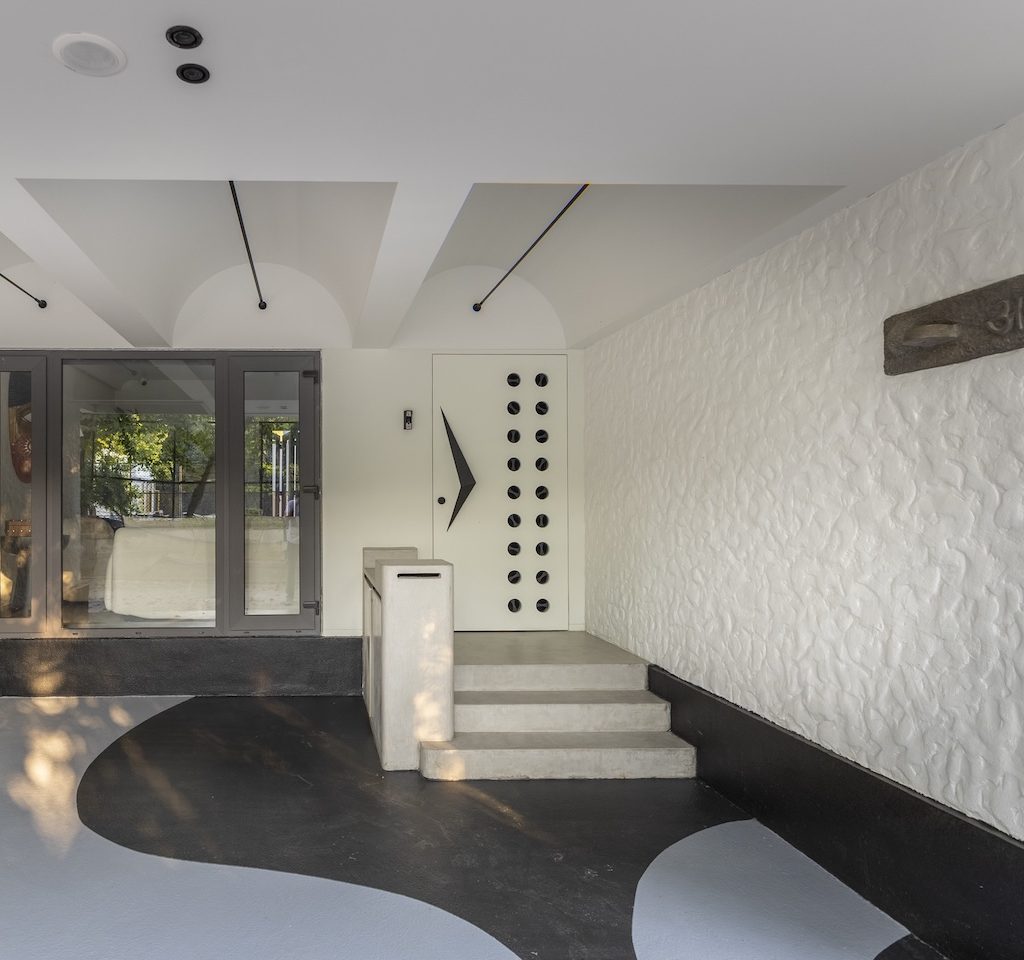
Akanch is a 2,000 sq ft residential row house designed as an exercise in restraint. Instead of relying on visual excess, the project builds its identity through tonal consistency, material depth and carefully composed spatial gestures. The design leans into a muted palette of greys and earthy tones, allowing texture and form to take precedence. Across the house, surfaces are treated as continuous planes, creating a sense of cohesion that carries through every space.
The site
Located within a quiet residential pocket of Pune, the house forms part of a row housing development. The project involved reworking an existing structure, which provided a fixed envelope within which the design needed to operate. Rather than altering the overall footprint, the intervention focused on improving internal relationships between spaces and enhancing how the house is experienced.
The brief
The clients envisioned a home that balances minimalism with warmth. The brief called for an open, connected layout for shared living areas, alongside more intimate zones for everyday comfort. Materially, the direction was clear—natural finishes, subdued colours and textures that would create a calm and inviting atmosphere without relying on ornamentation.
The design intent
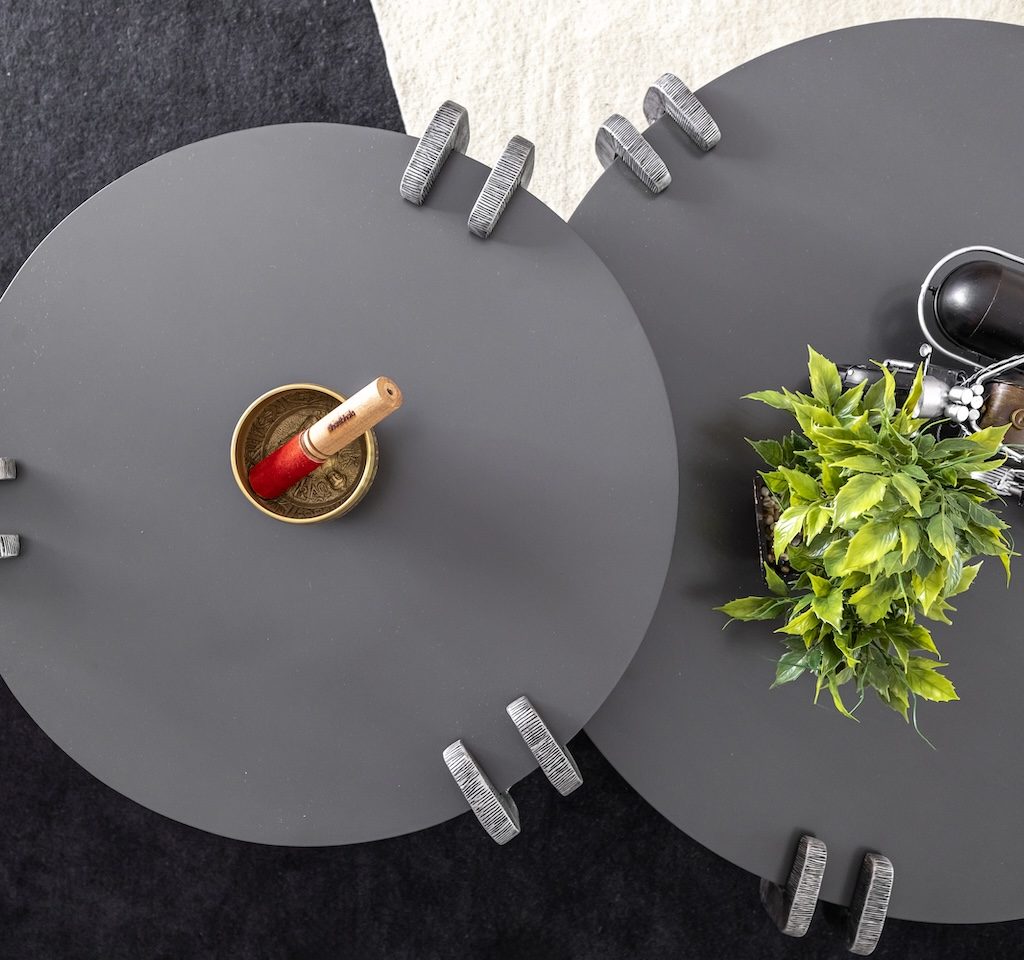
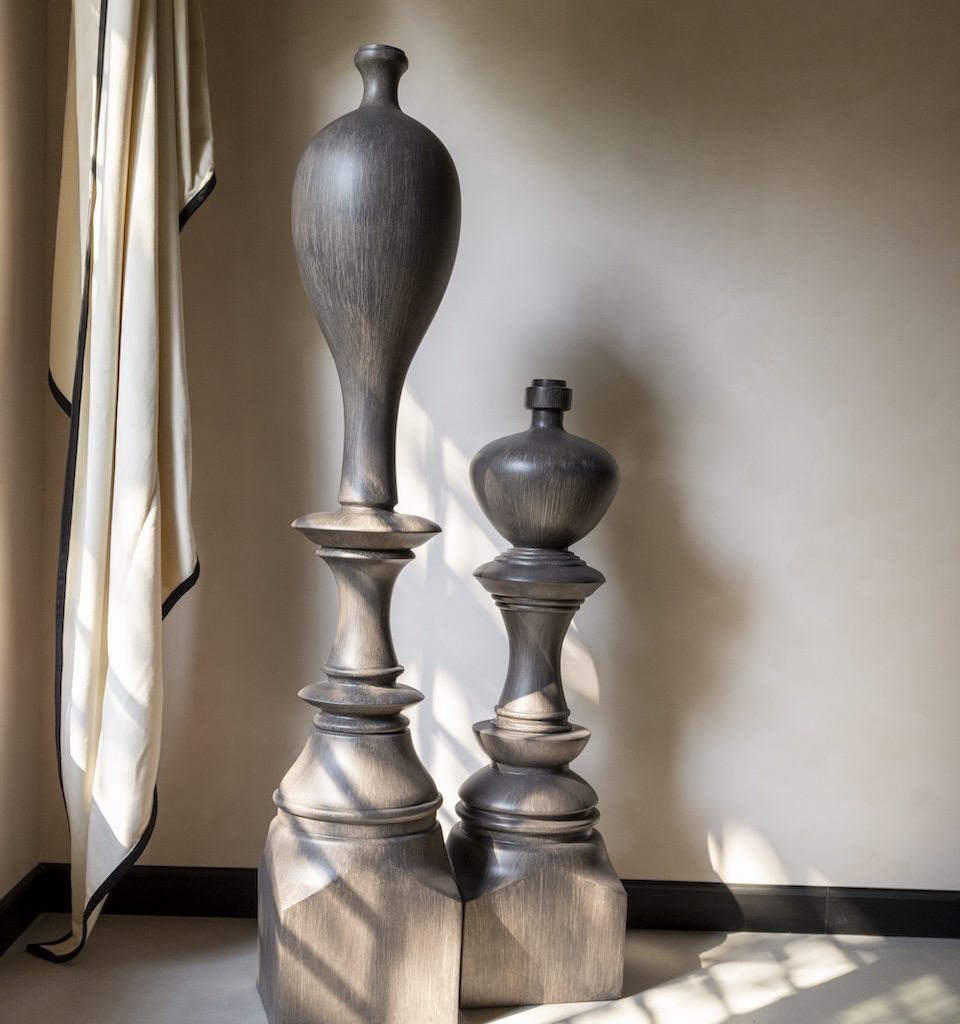
The design intent centres on discipline and material authenticity. Instead of introducing contrast through colour, the project relies on subtle shifts in texture and tone to create depth. As principal architect Atish Lahoti describes, the approach was to “prioritise texture, natural materials and sculptural forms over ornamentation, allowing the spaces to feel calm, grounded and timeless.” This restraint allows the house to feel composed, where each element contributes quietly to the overall spatial experience.
The civil intervention
The project involved a careful reconfiguration of an existing layout to better align with contemporary living patterns. Non-structural walls were selectively removed or adjusted to improve circulation and create stronger visual connections between spaces. On the ground floor, a former guest bedroom was converted into a media room, while another space was adapted into a helper’s room. On the upper level, the hierarchy of bedrooms was redefined, with the master suite relocated to offer greater comfort and privacy. These changes improve spatial efficiency while retaining the integrity of the original structure.
The spatial flow
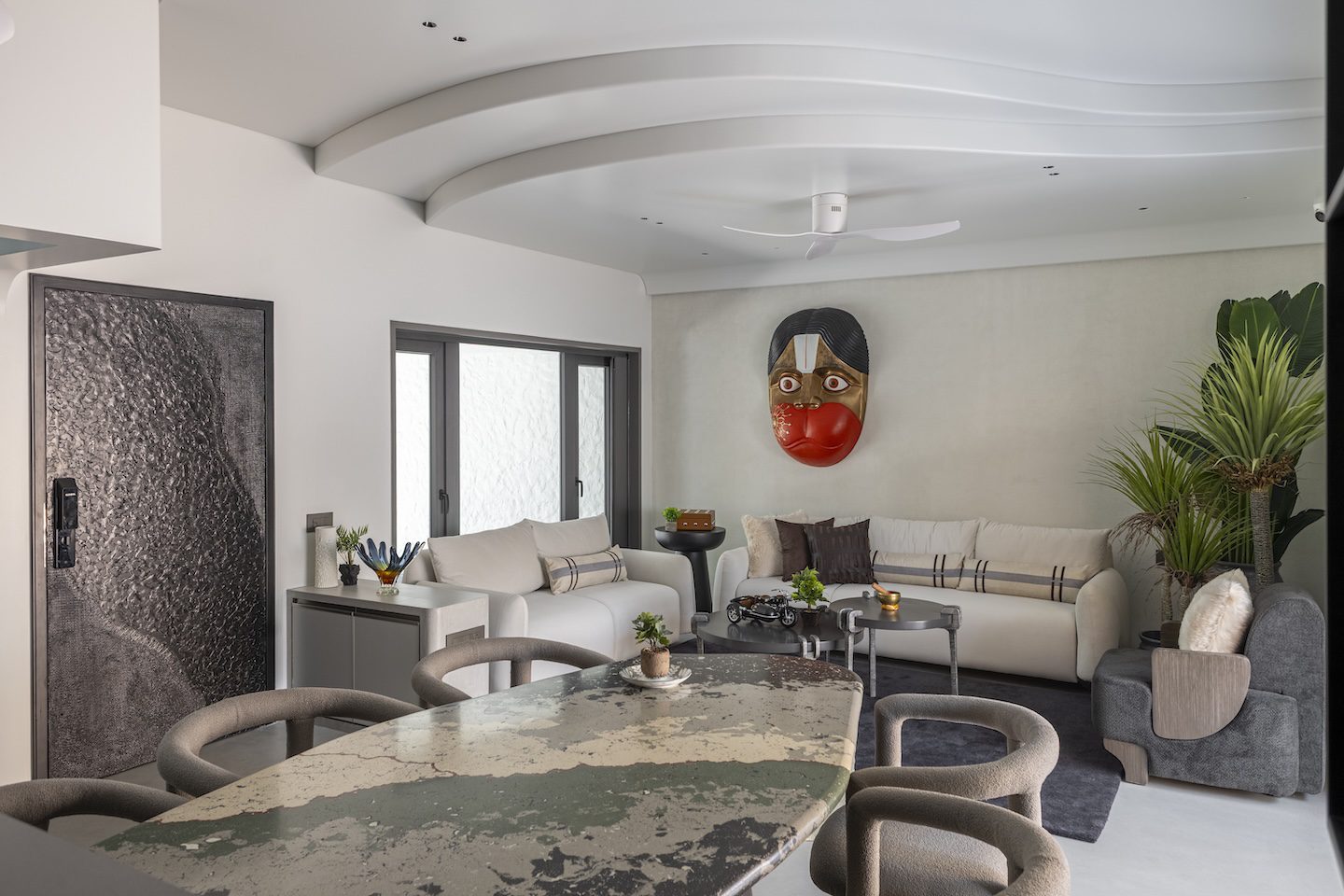
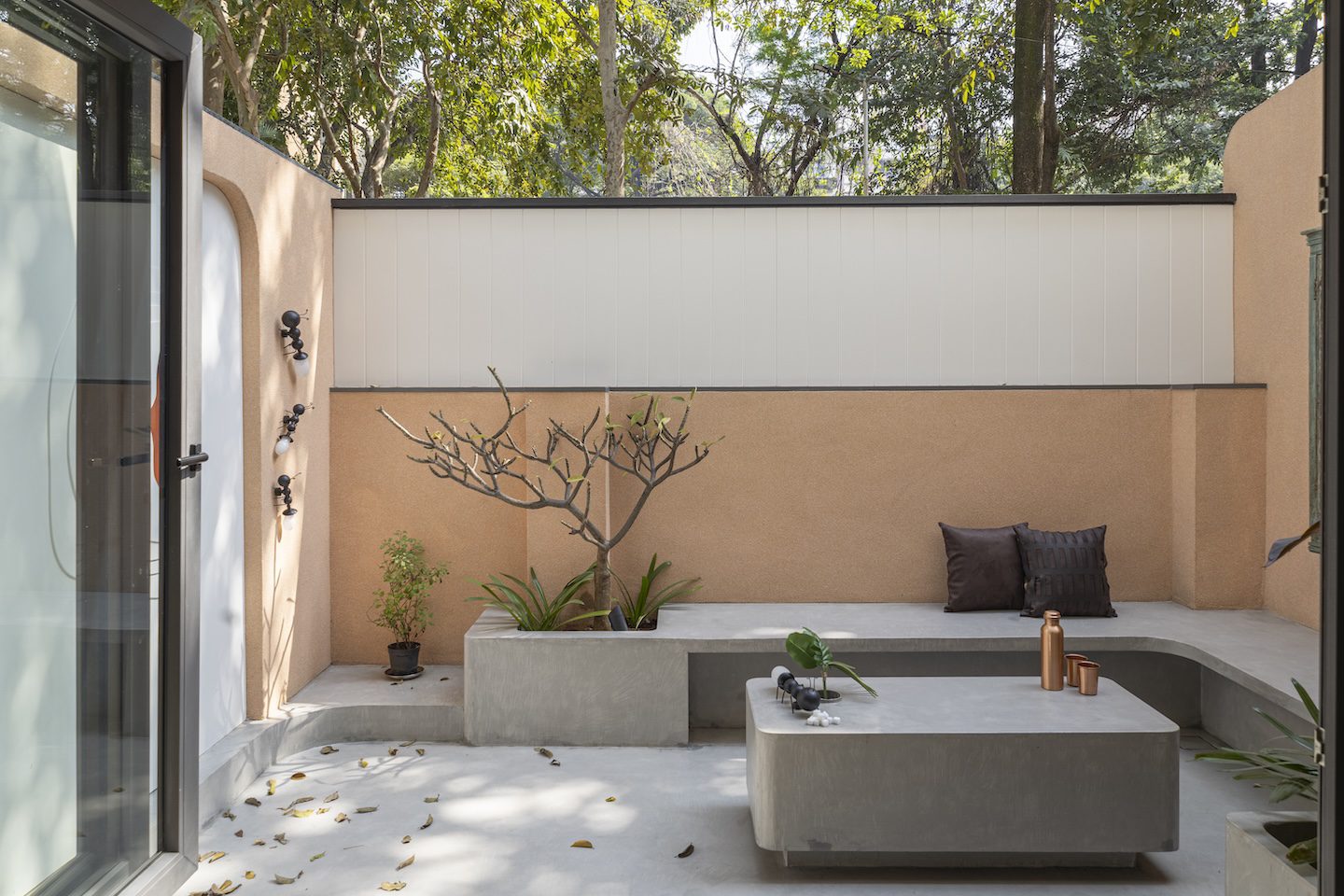
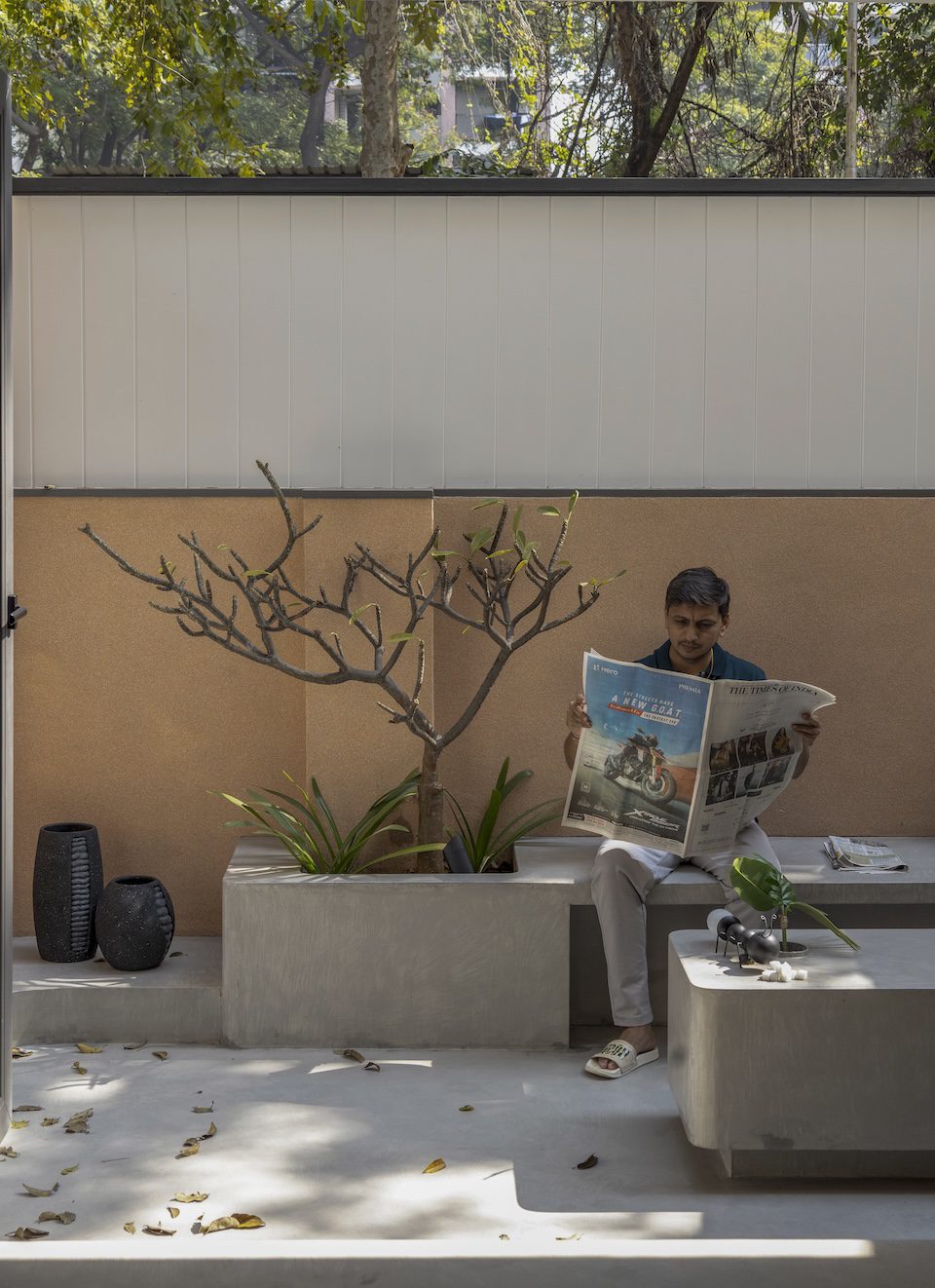
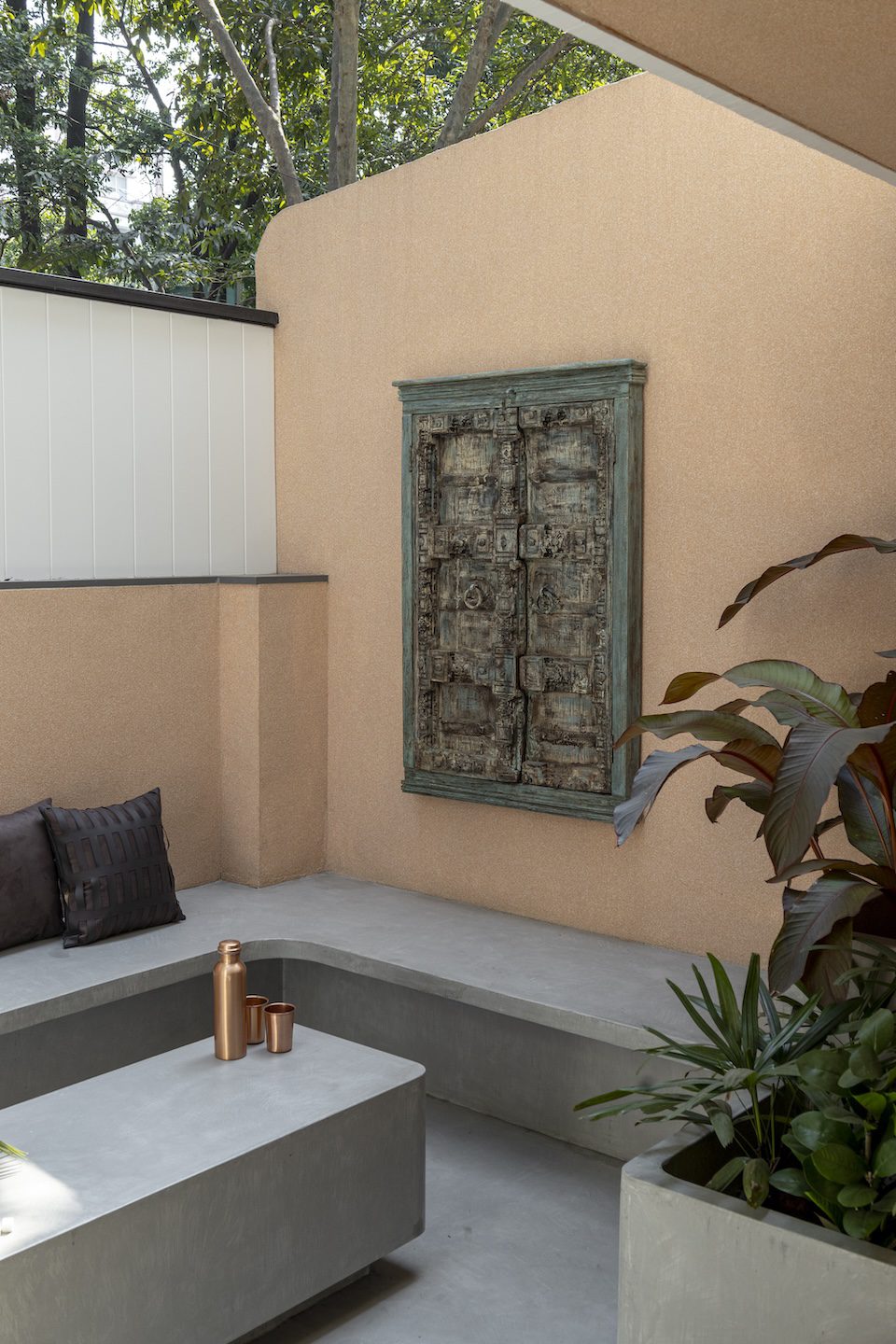
The house unfolds through a sequence of interconnected spaces where each area transitions naturally into the next. The living room forms the primary social hub, flowing into the dining area and kitchen to create a continuous shared zone. Private spaces—including bedrooms and the media room—are positioned deeper within the plan to maintain privacy. At the rear, the backyard extends the interiors outward, introducing a layered outdoor environment that connects to multiple rooms within the house.
The design and material details
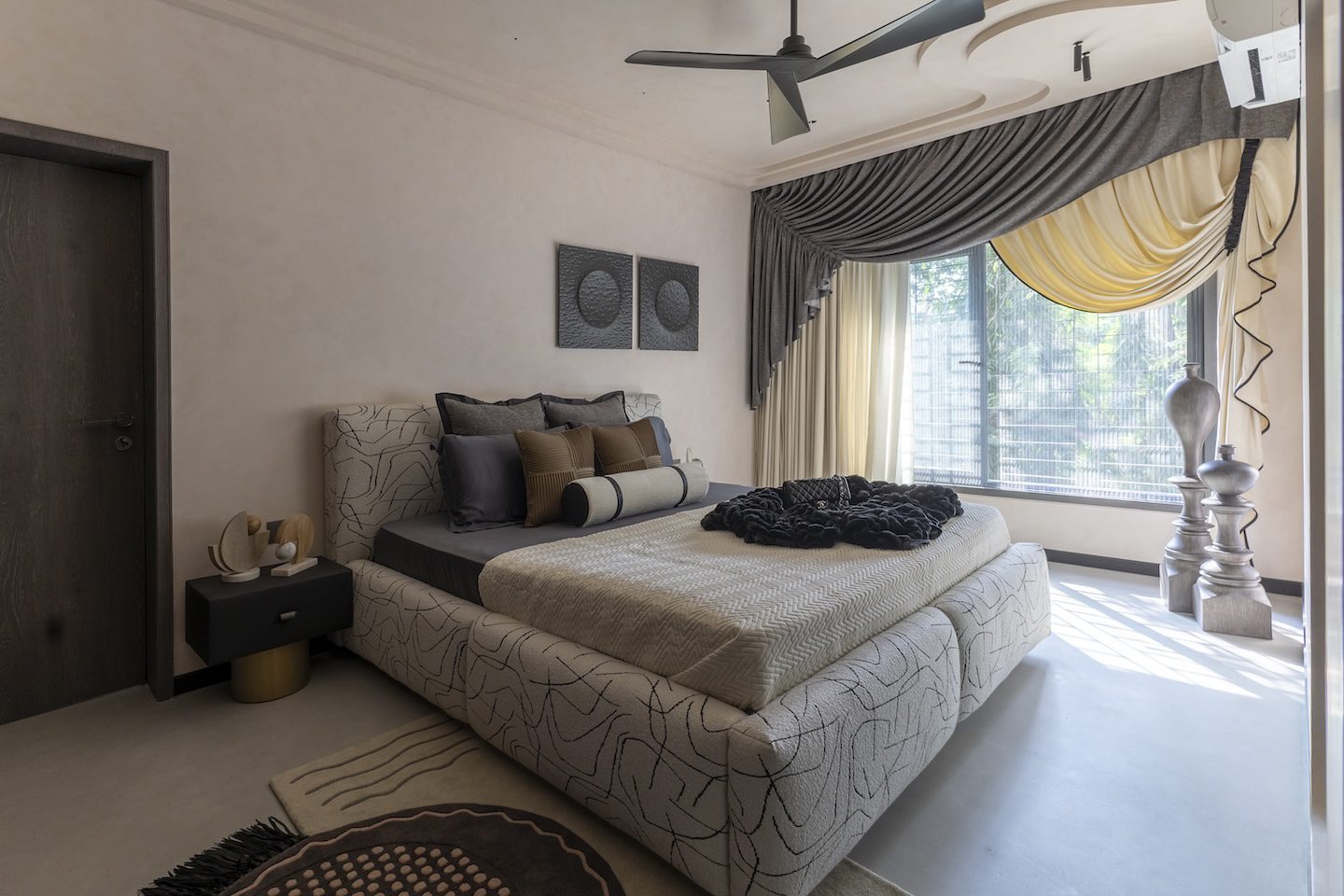
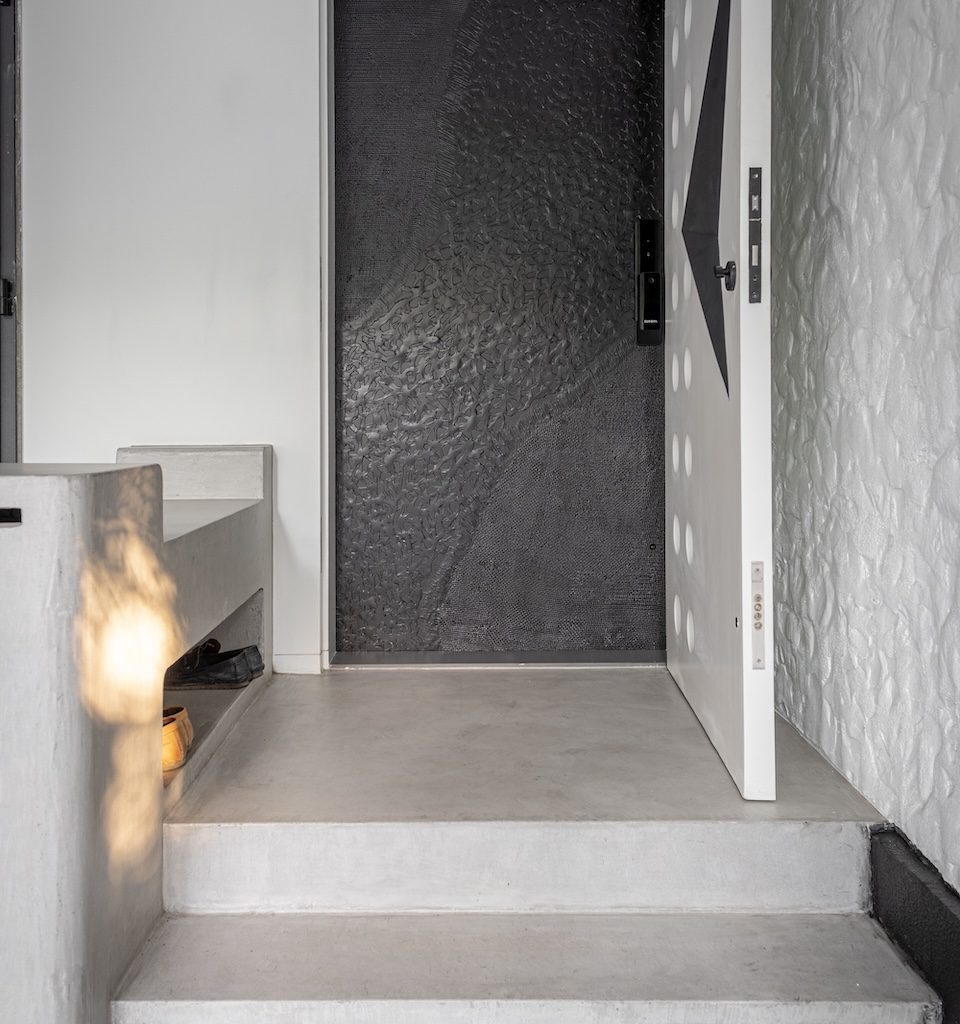
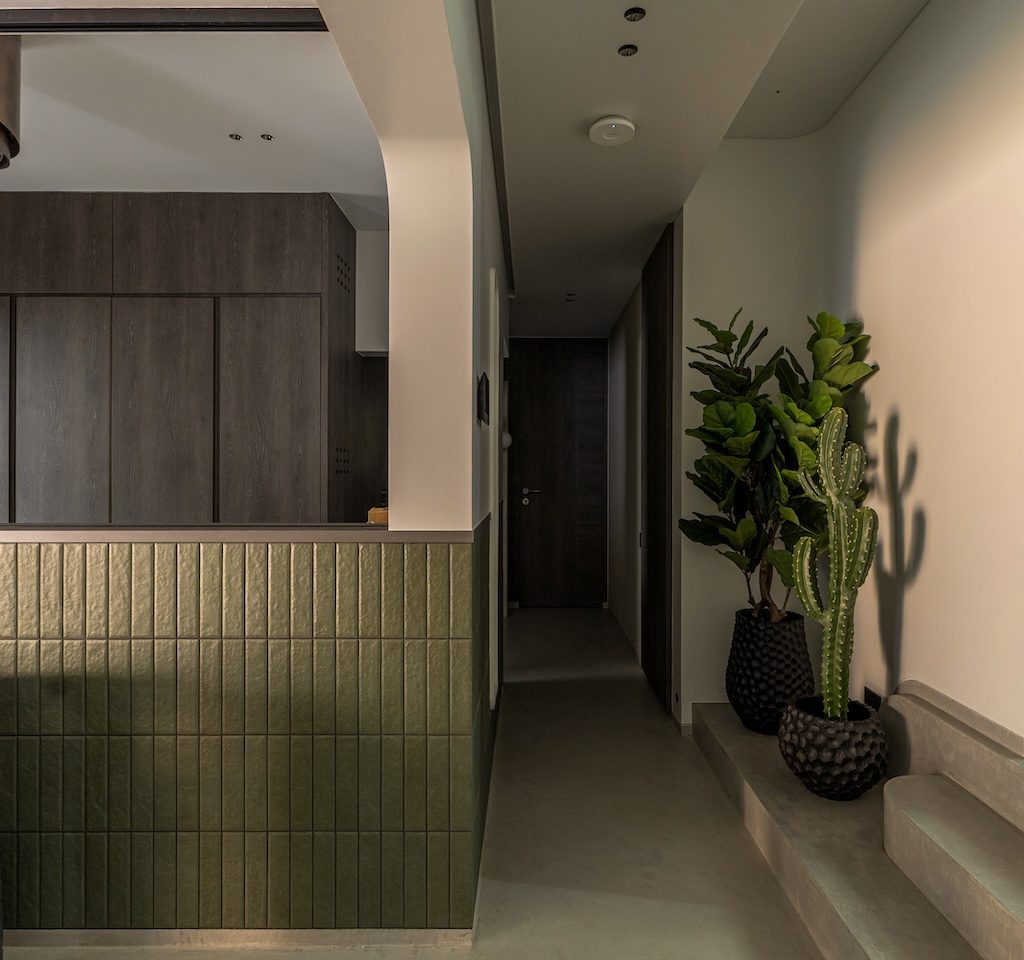
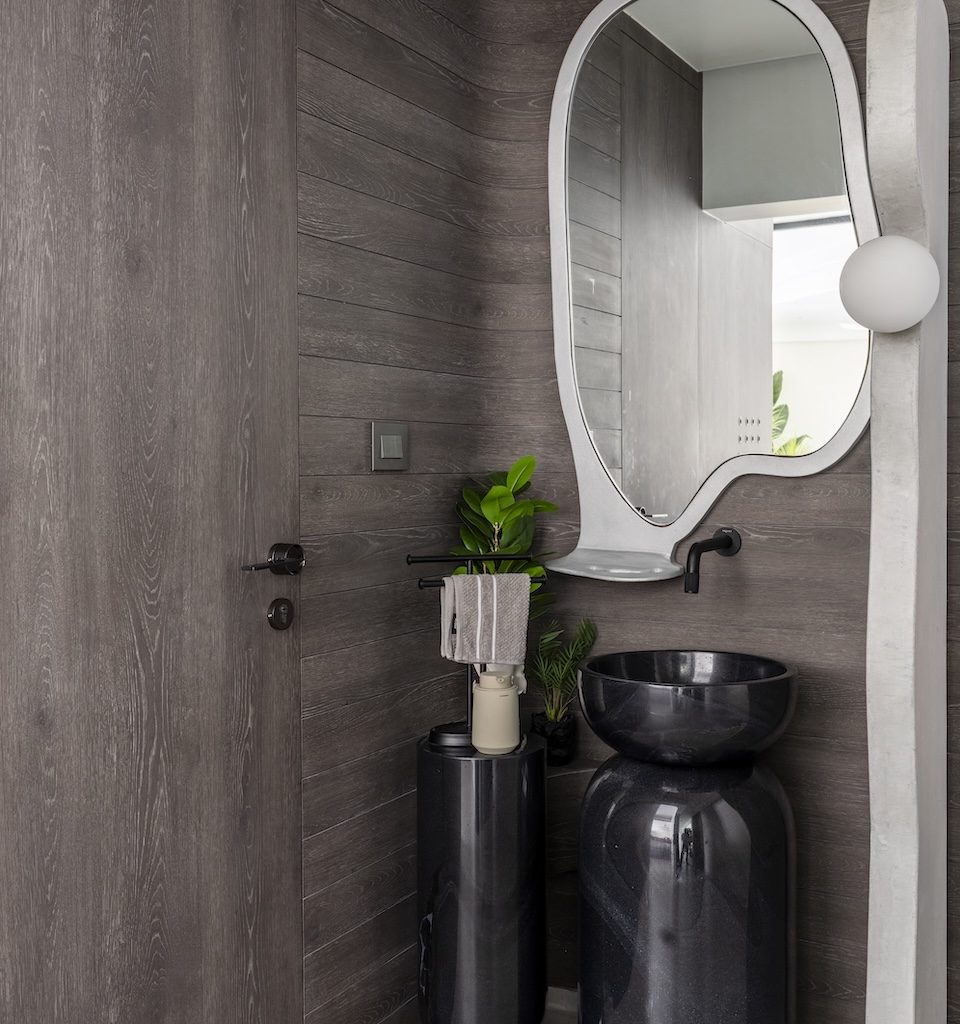
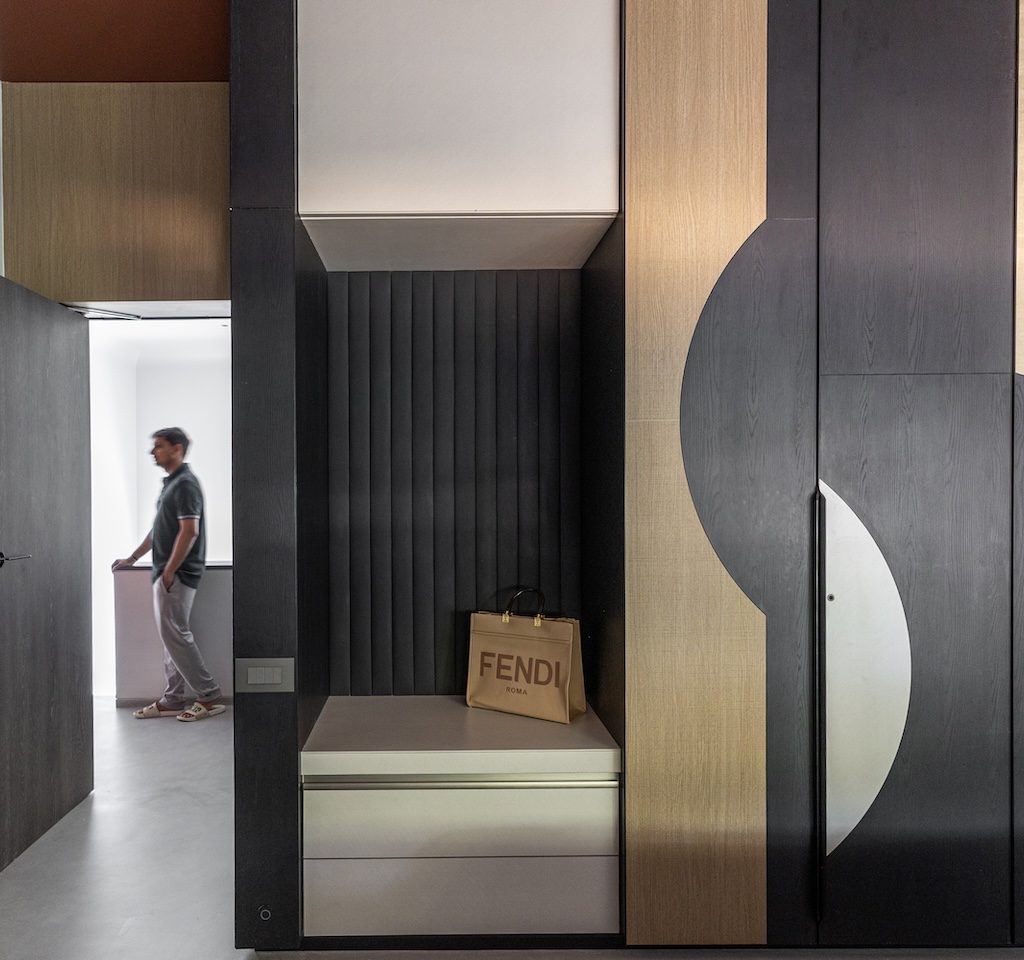
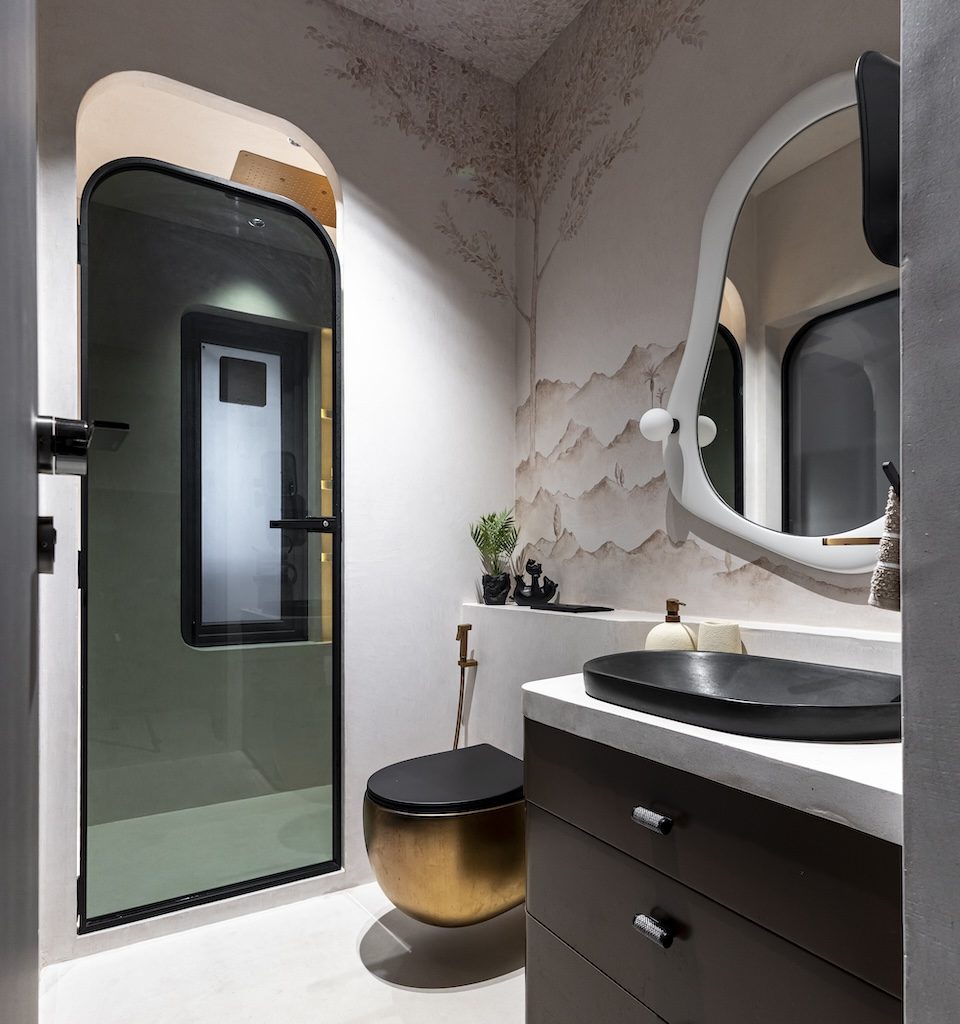
Material continuity is central to the project. A seamless layer of micro-topping flooring runs throughout the house, visually linking all spaces and dissolving boundaries between them. The palette is grounded in tactile materials—cement finishes, lime textures, basalt stone, black-finished wood and telephonic black granite. Together, these elements create a muted yet richly layered interior environment.
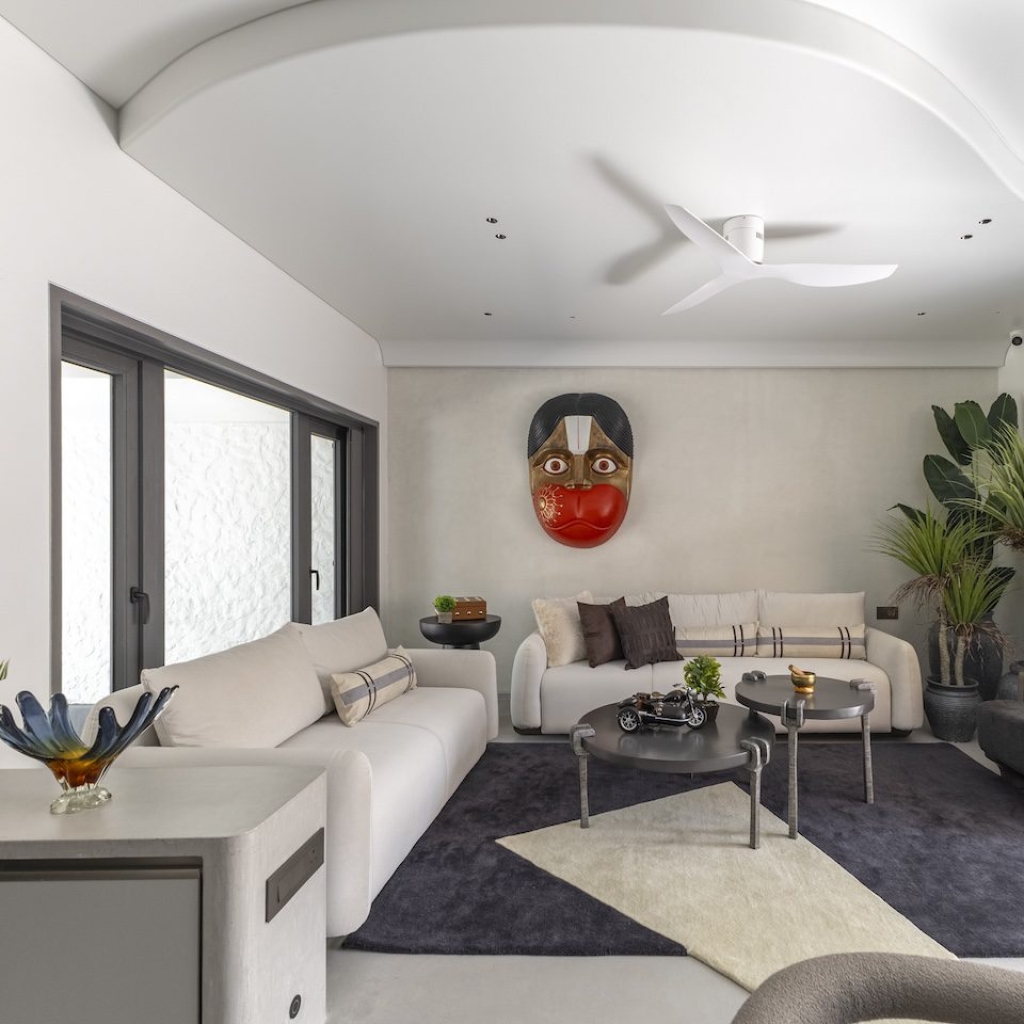
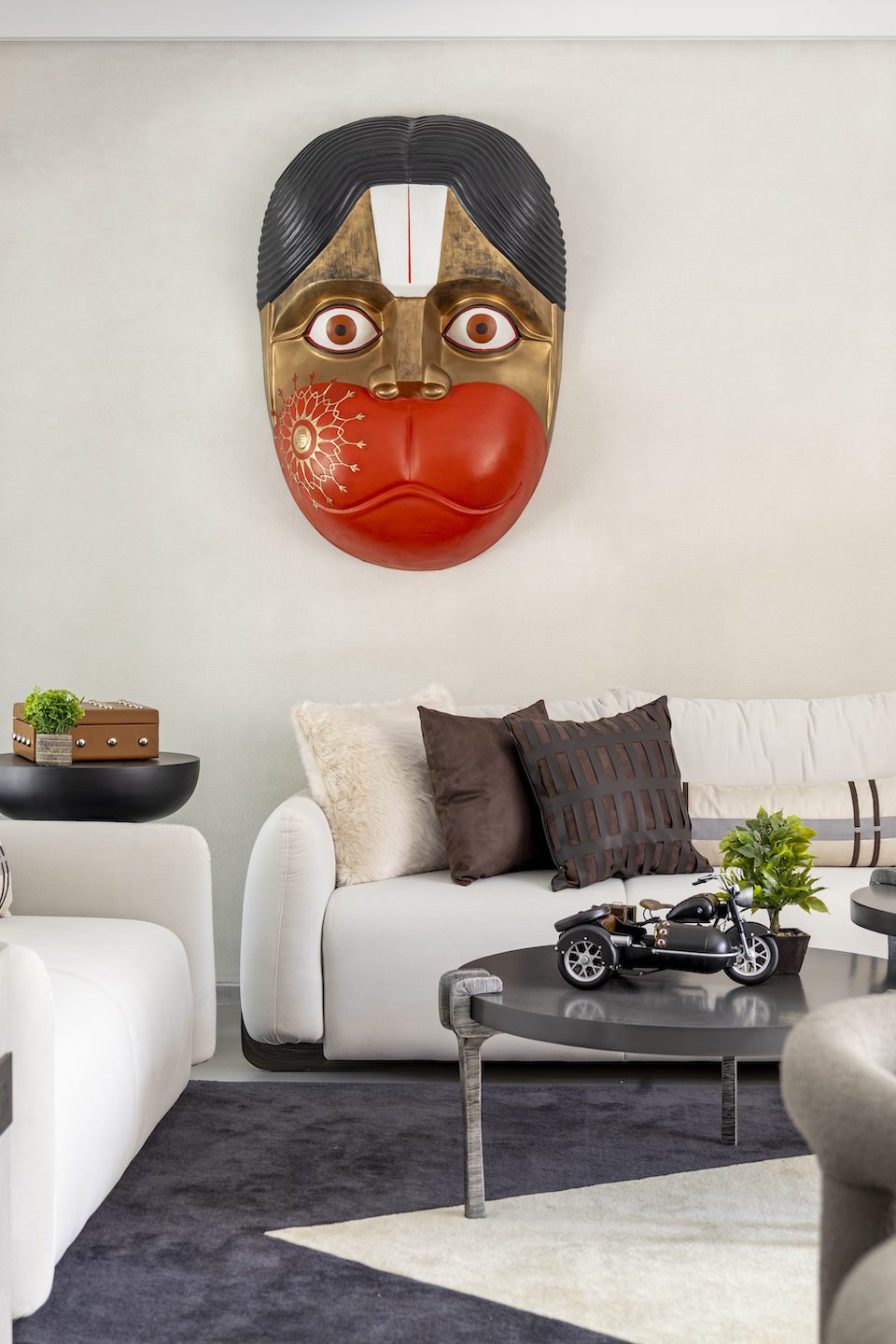
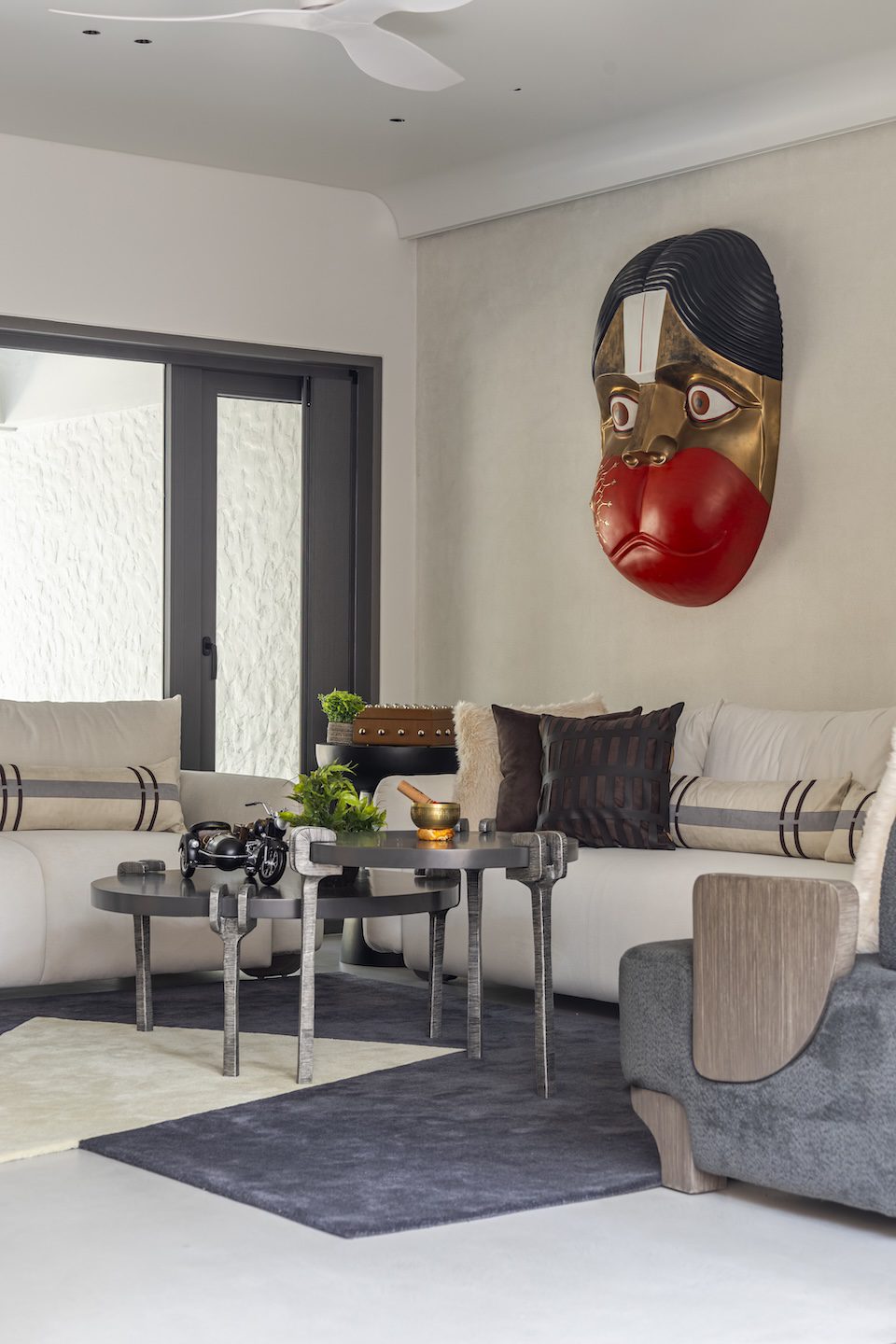
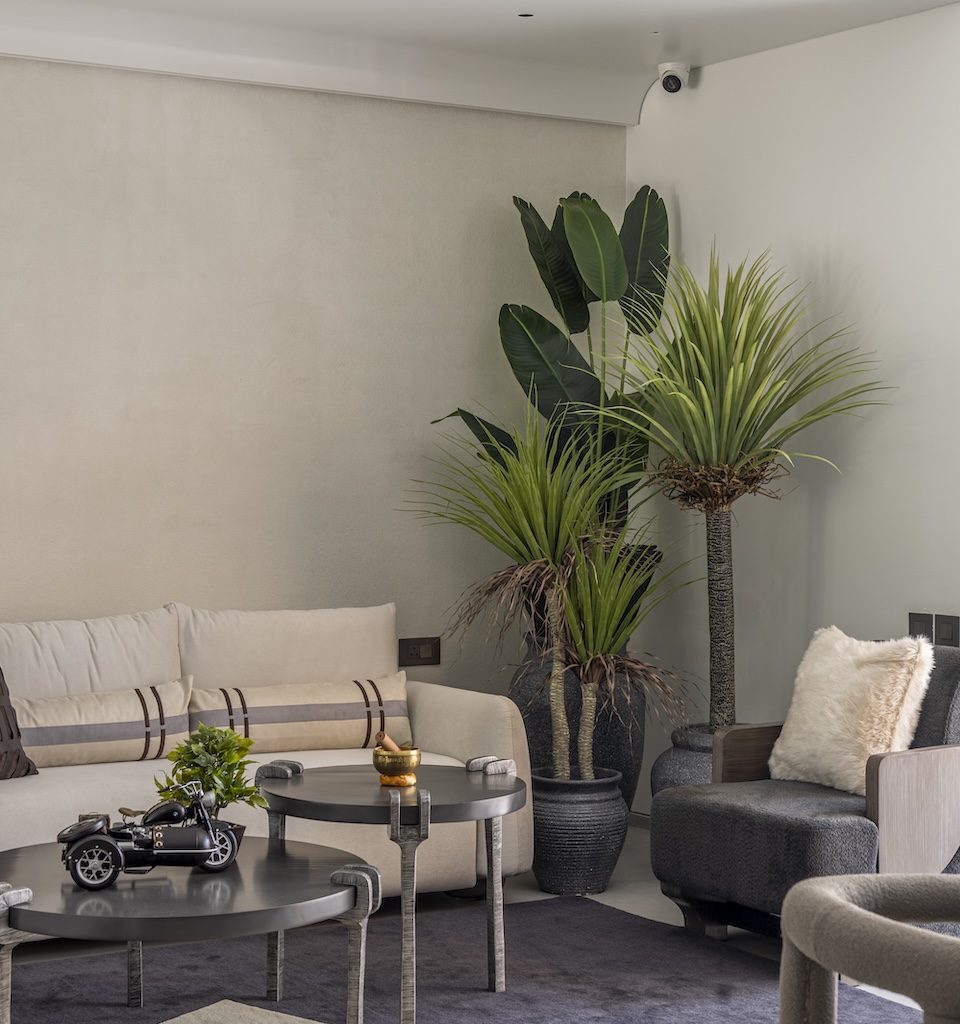
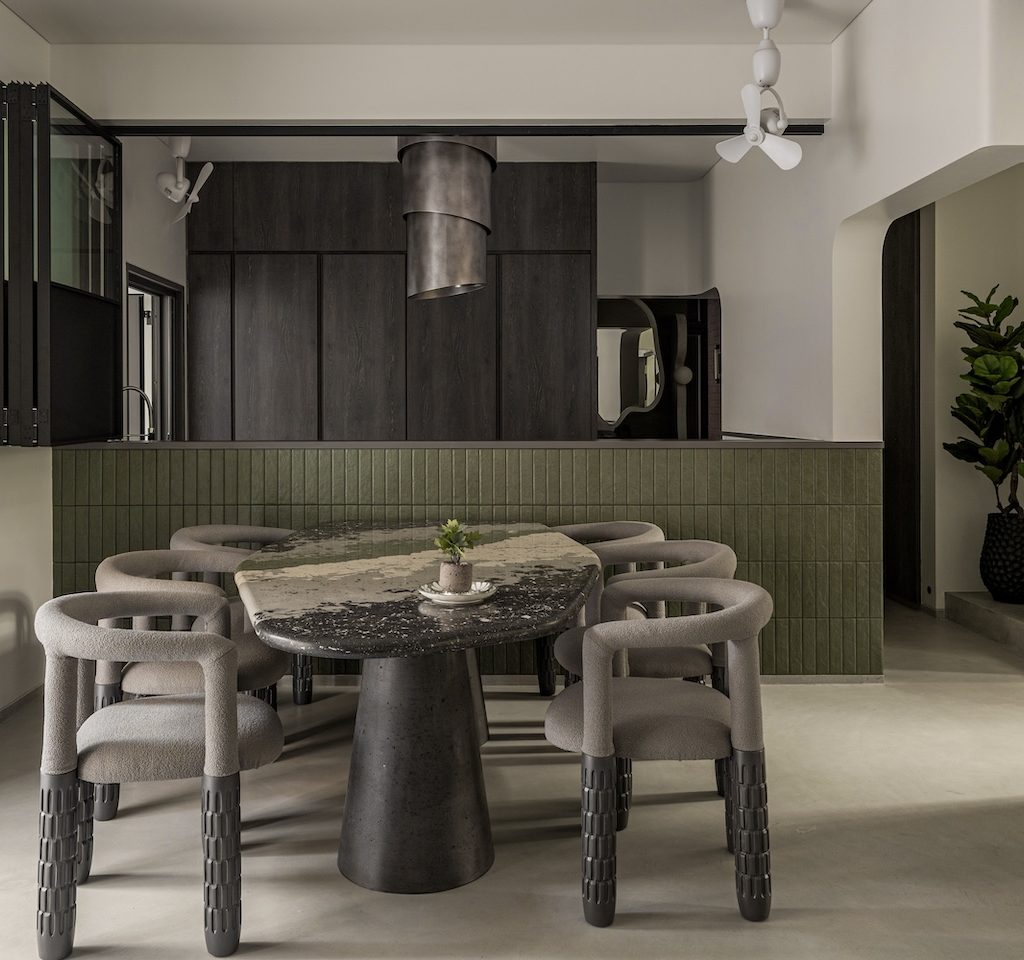
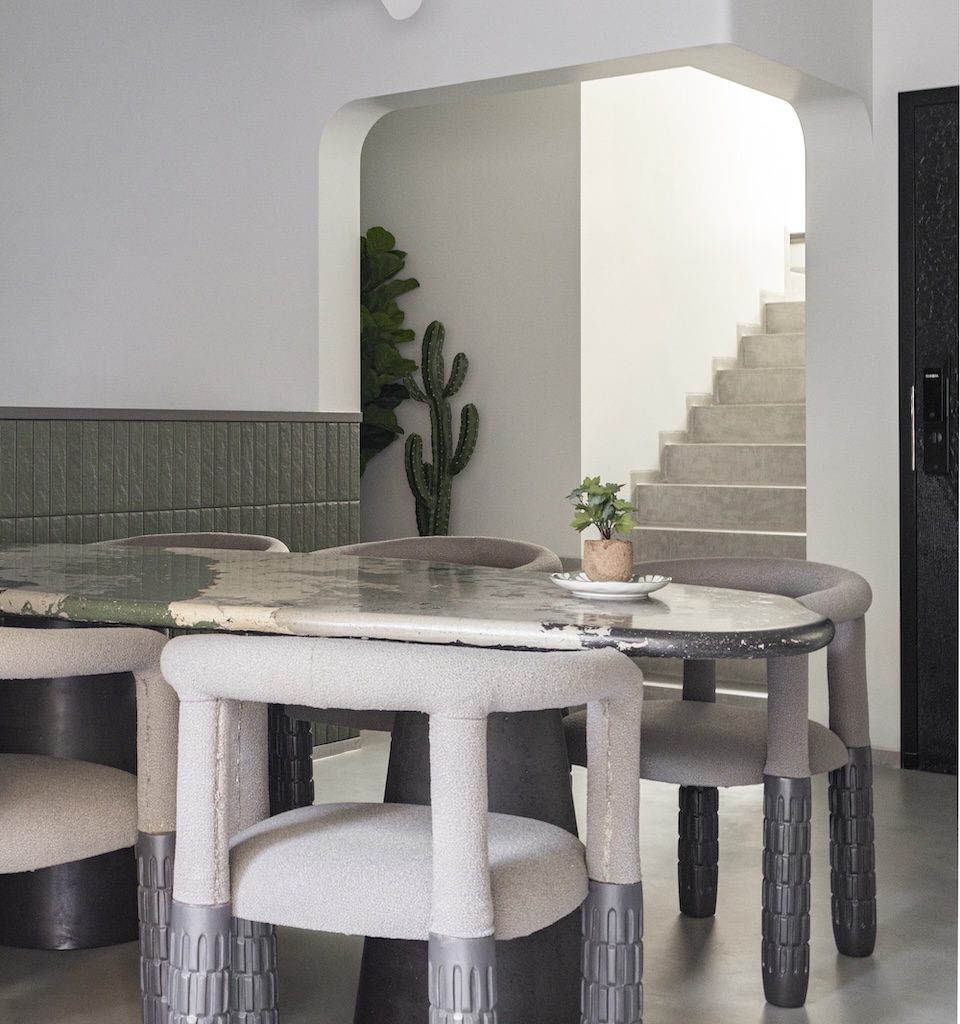
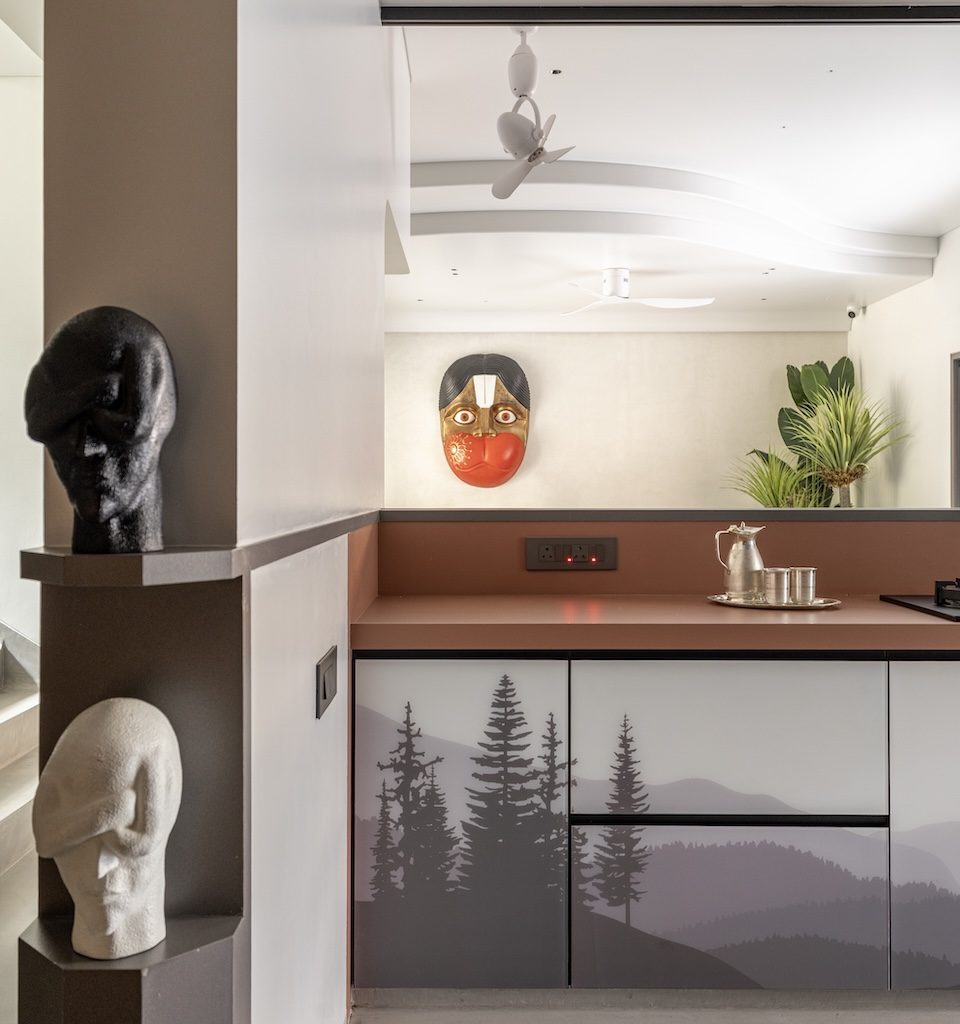
In the living room, a large artwork of Hanuman Ji acts as both a visual and spiritual anchor, set against a restrained backdrop of neutral surfaces and clean-lined furniture. Large openings connect this space to the backyard, reinforcing the indoor–outdoor relationship. The dining area introduces a sculptural element through a pedestal table, paired with upholstered seating. The composition balances strong form with a subdued material palette.
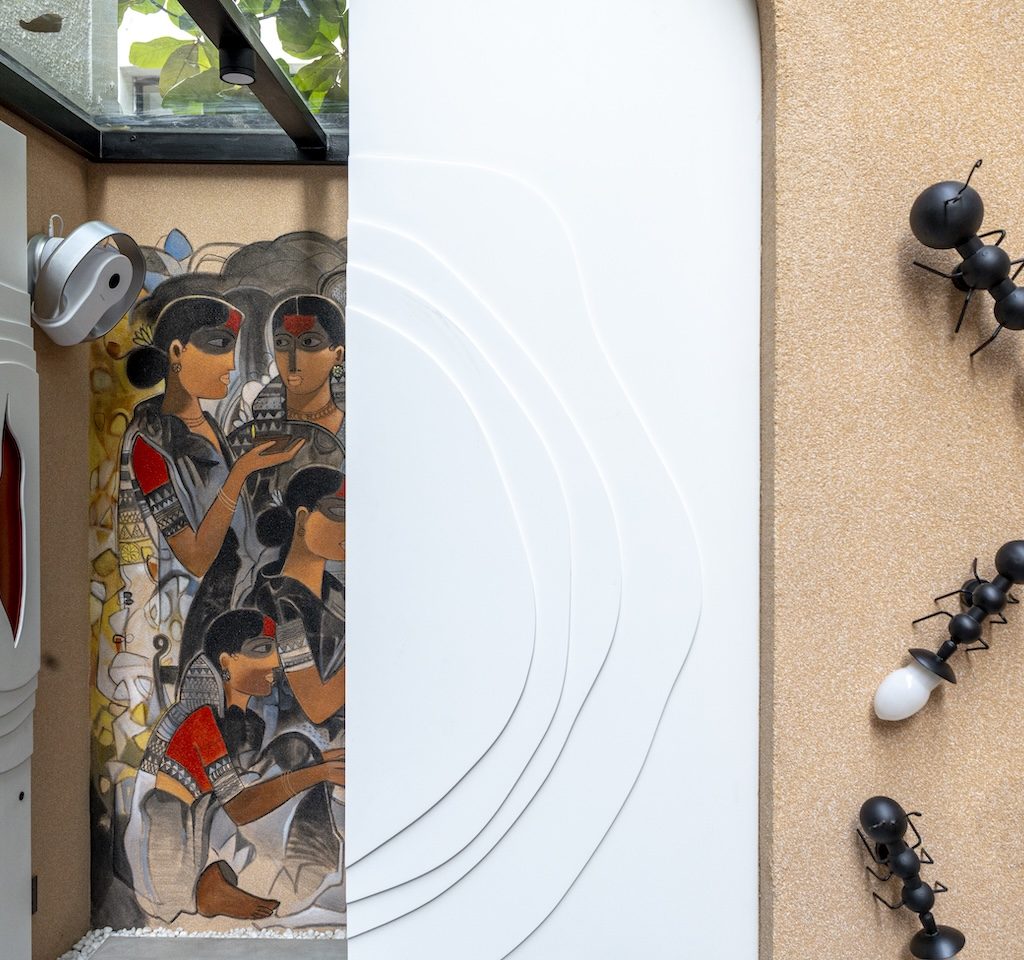
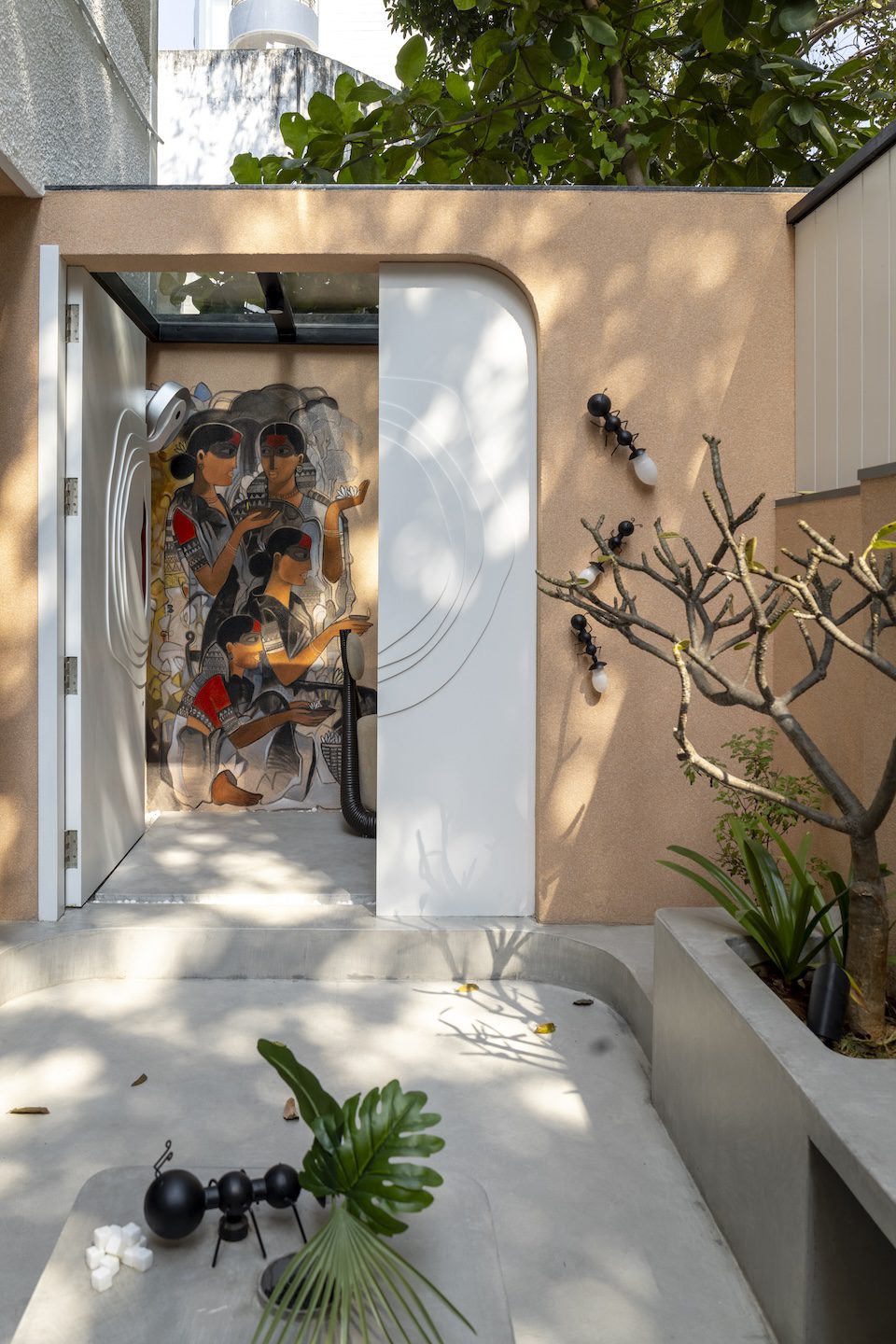
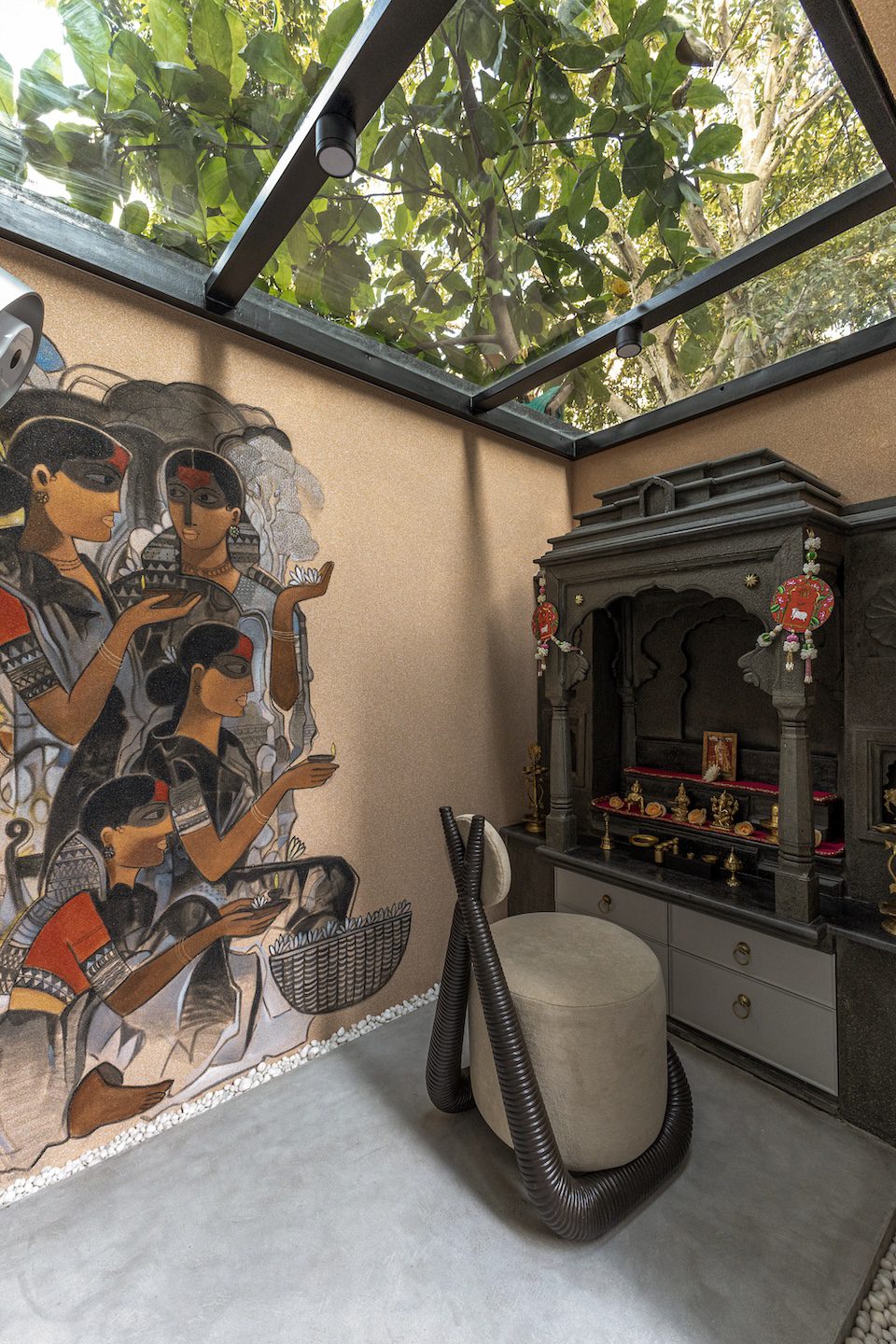
At the centre of the house, the mandir is conceived as a quiet, light-filled space. A glass roof allows natural light to filter in, creating a soft interplay of light and shadow. The space maintains a visual connection with the outdoor sit-out, allowing it to remain integrated with the everyday life of the house.
The kitchen is designed for efficiency, with clean-lined cabinetry and a service window with sliding folding shutters that allow it to open or close as required. A dry balcony connects the kitchen to the backyard, ensuring ventilation and practicality.
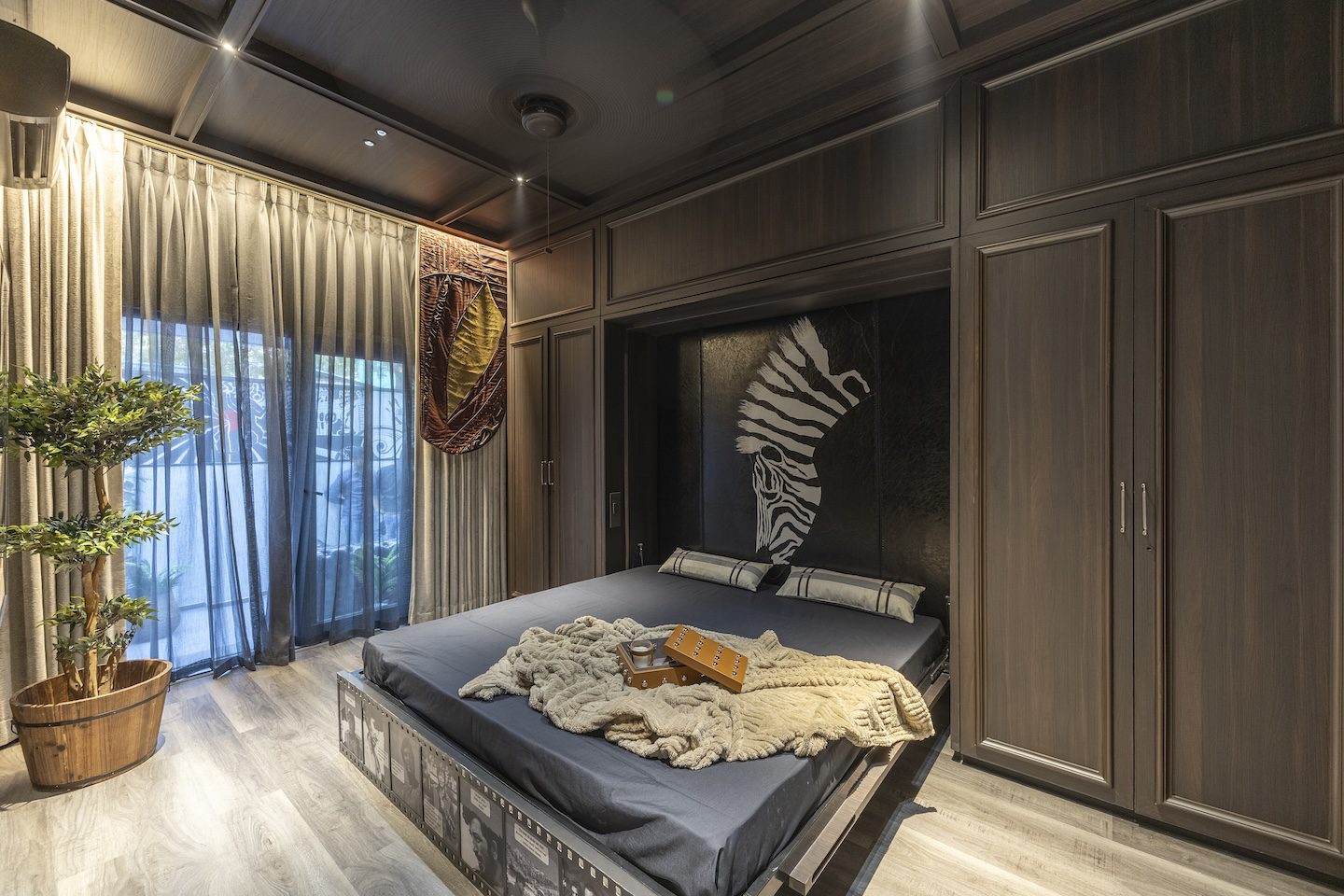
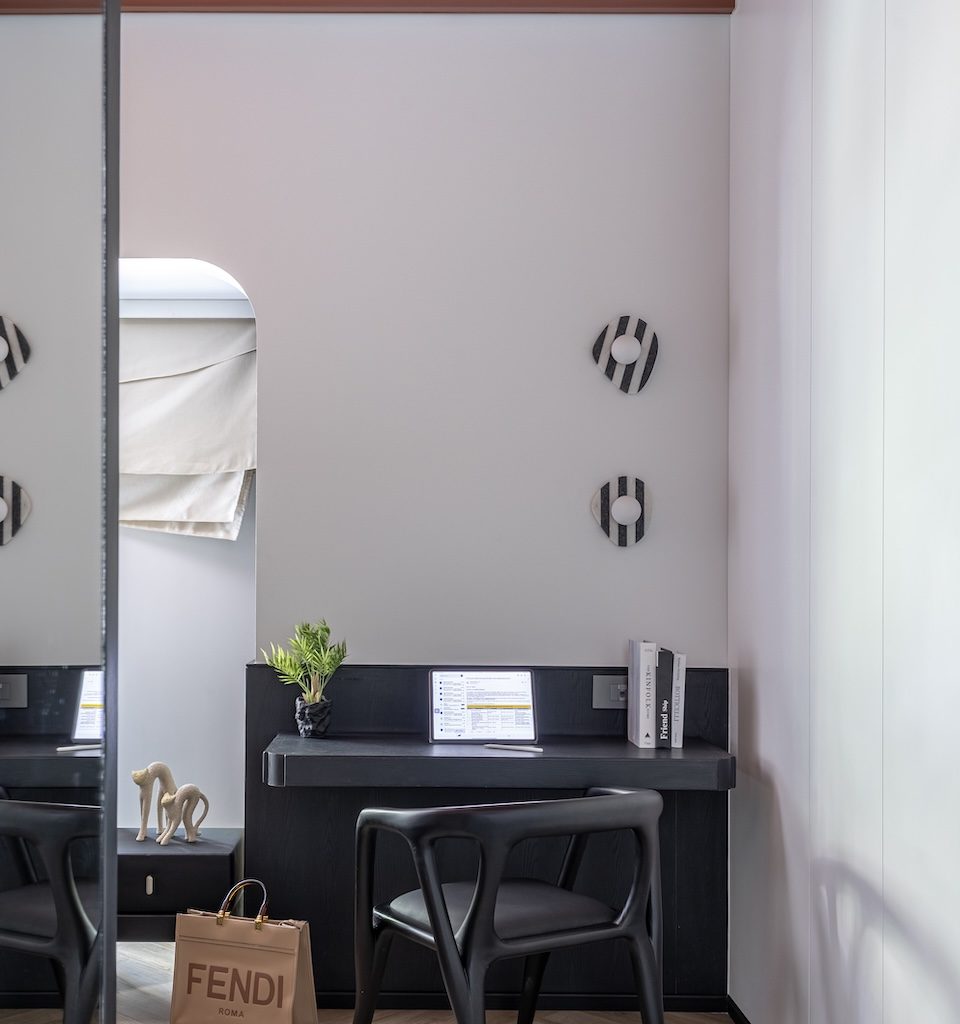
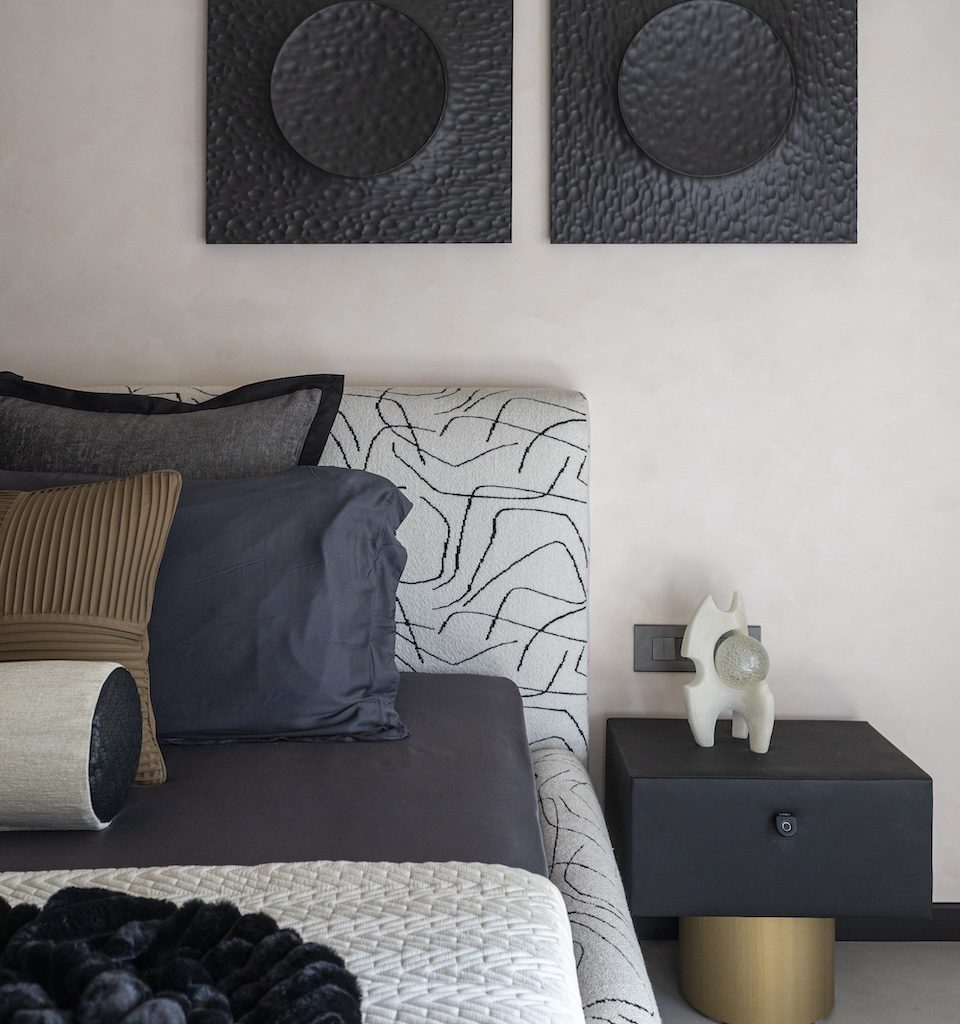
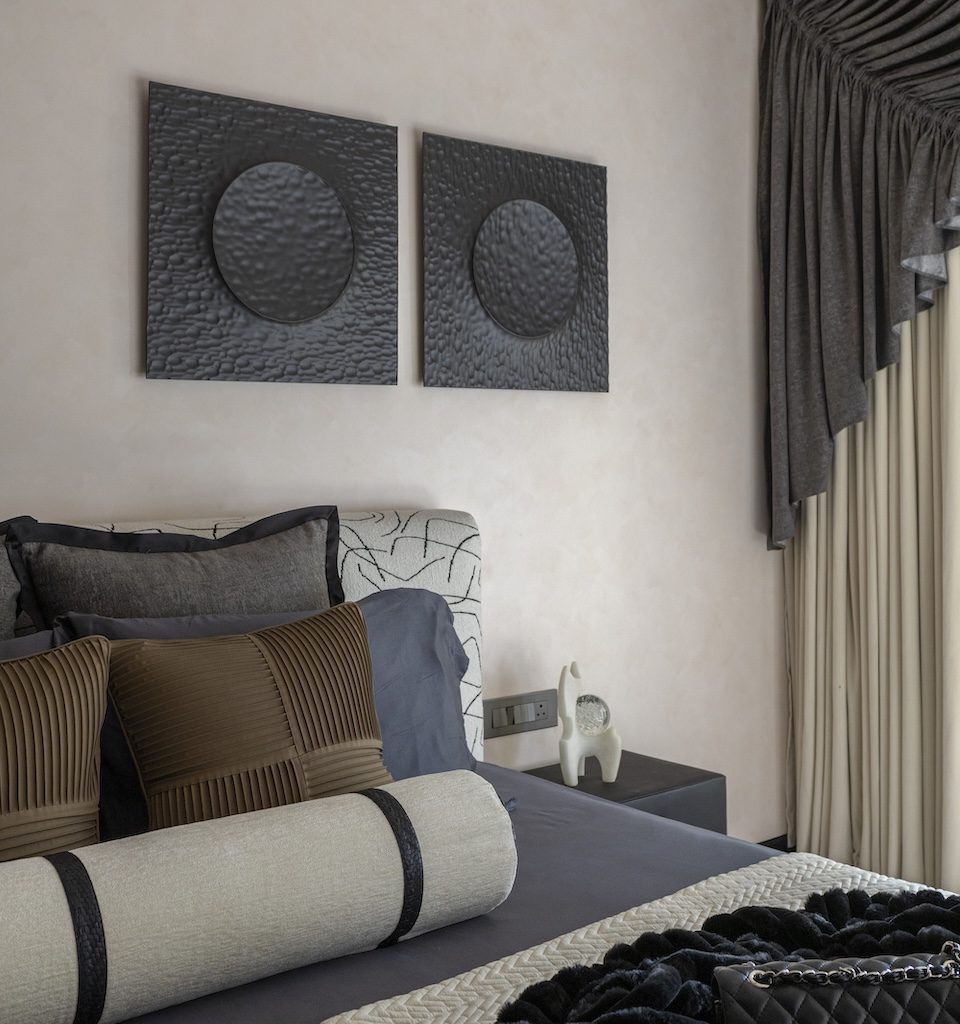
Bedrooms continue the restrained language. The master bedroom introduces sculptural elements through the bed design and ceiling articulation, while lime-finished walls add depth. The media room shifts to a darker palette, creating a more immersive environment for entertainment.
The highlights
The project’s defining quality lies in its disciplined material language. The use of micro-topping flooring and a consistent palette allows the house to read as a cohesive whole. The integration of spiritual elements—particularly the Hanuman Ji artwork and the open-to-sky mandir—adds a layer of meaning without disrupting the overall restraint. Equally notable is the way the backyard is treated as an extension of the interiors, divided into zones that support both daily use and social interaction.
The challenges
Working within an existing structure required careful planning to improve circulation and spatial relationships without extensive structural changes. The design also demanded precision in execution. With a restrained palette and minimal detailing, even small inconsistencies could disrupt the overall composition. Achieving the desired level of finish across surfaces therefore required close coordination during construction.
Fact file
Project: AKANCH
Location: Pune
Area: 2,000 sq ft
Design firm: Lahoti and Associates
Principal architect: Atish Lahoti
Design team: Nikita Bidla, Mansi Raut and Rajendra Sarvade
Add a Comment