
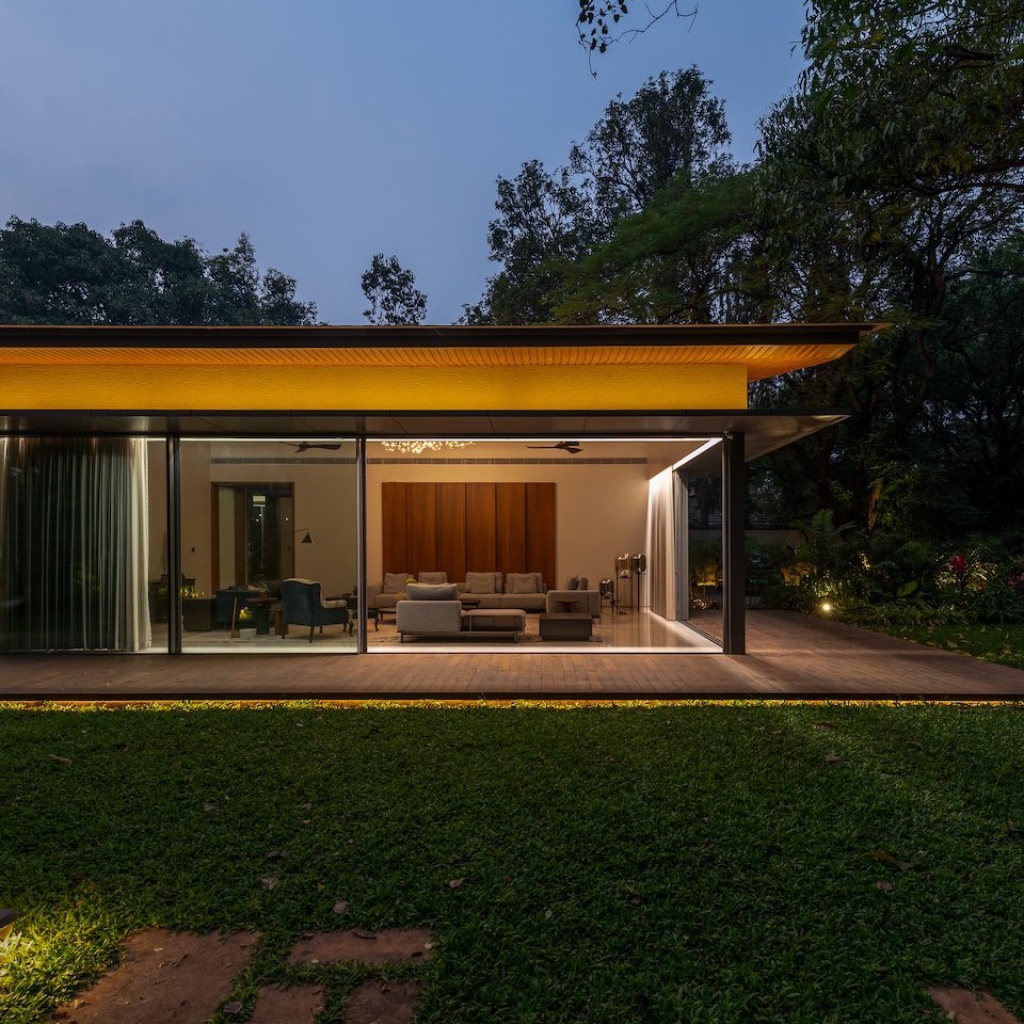
In Pune, this residence by Studio Infinity treats landscape as the primary experience, allowing the interiors to recede into a quiet, material-led backdrop that extends outward into the greens
Curated by: Rupali Sebastian
Photographs: PHX India I Sebastian Zachariah; courtesy Studio Infinity
The project
Conceived as a residence set within an expansive garden, this home prioritises openness over enclosure. Designed by architect Tushar Kothawade and interior designer Chiranjivi Lunkad-helmed Studio Infinity, the project shifts the focus away from the built form, allowing landscape, light and movement to define the experience of living. The interiors are deliberately understated. Rather than drawing attention to themselves, they support a slower, more tactile way of inhabiting space—one where greenery, filtered light and material warmth take precedence.
The site
Located in a quiet suburban precinct of Pune, the house sits within a calm neighbourhood marked by narrow roads and minimal urban bustle. When the design team took on the project, the architectural structure had already been completed as a bare shell with a metal framework and roof. The intervention therefore operates within a fixed envelope, responding to what already exists rather than reshaping it. The interiors evolve as a sensitive layer that strengthens the connection between the house and its surrounding landscape.
The brief
The clients envisioned a home that would feel personal, relaxed and closely connected to nature. The brief called for spaces that could accommodate both togetherness and solitude, with an emphasis on light, openness and comfort. Bedrooms were to remain private, while common areas needed to feel fluid and welcoming. The home also had to accommodate a growing art collection without becoming overly curated or display-driven.
The design intent
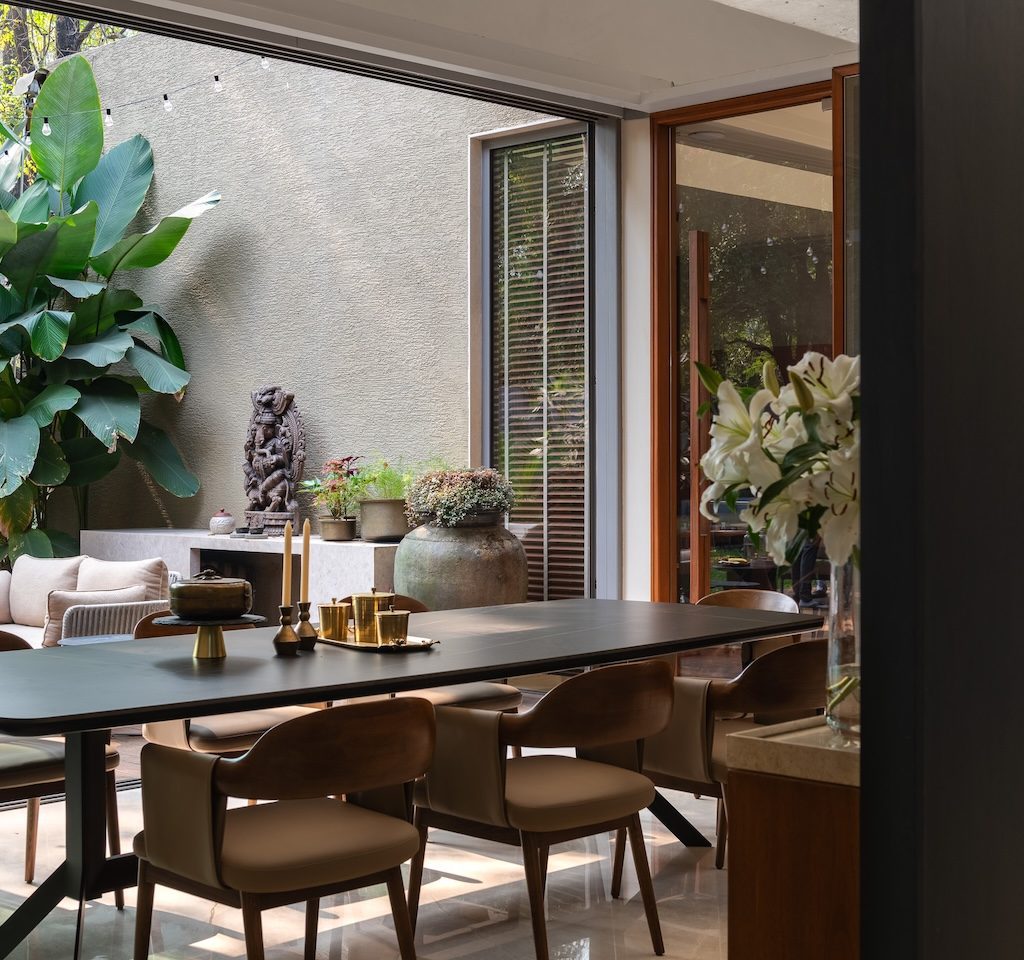
The design intent was to create a home where architecture, interiors and landscape read as a continuous experience rather than separate layers. Instead of asserting itself, the interior acts as a quiet framework that allows the garden to remain visually dominant. Proportion, texture and controlled light become the primary tools in achieving this balance. As the designers note, the idea was to create “a home where the greens take precedence, and the interiors remain calm, subtle and in quiet harmony with the landscape.”
The civil intervention
Since the architectural shell was already complete, the project did not involve major structural alterations. The challenge lay in working within an existing framework while still achieving a sense of openness and continuity with the landscape. This required careful calibration of openings, material transitions and interior elements so that the house could feel more porous and connected.
The spatial flow
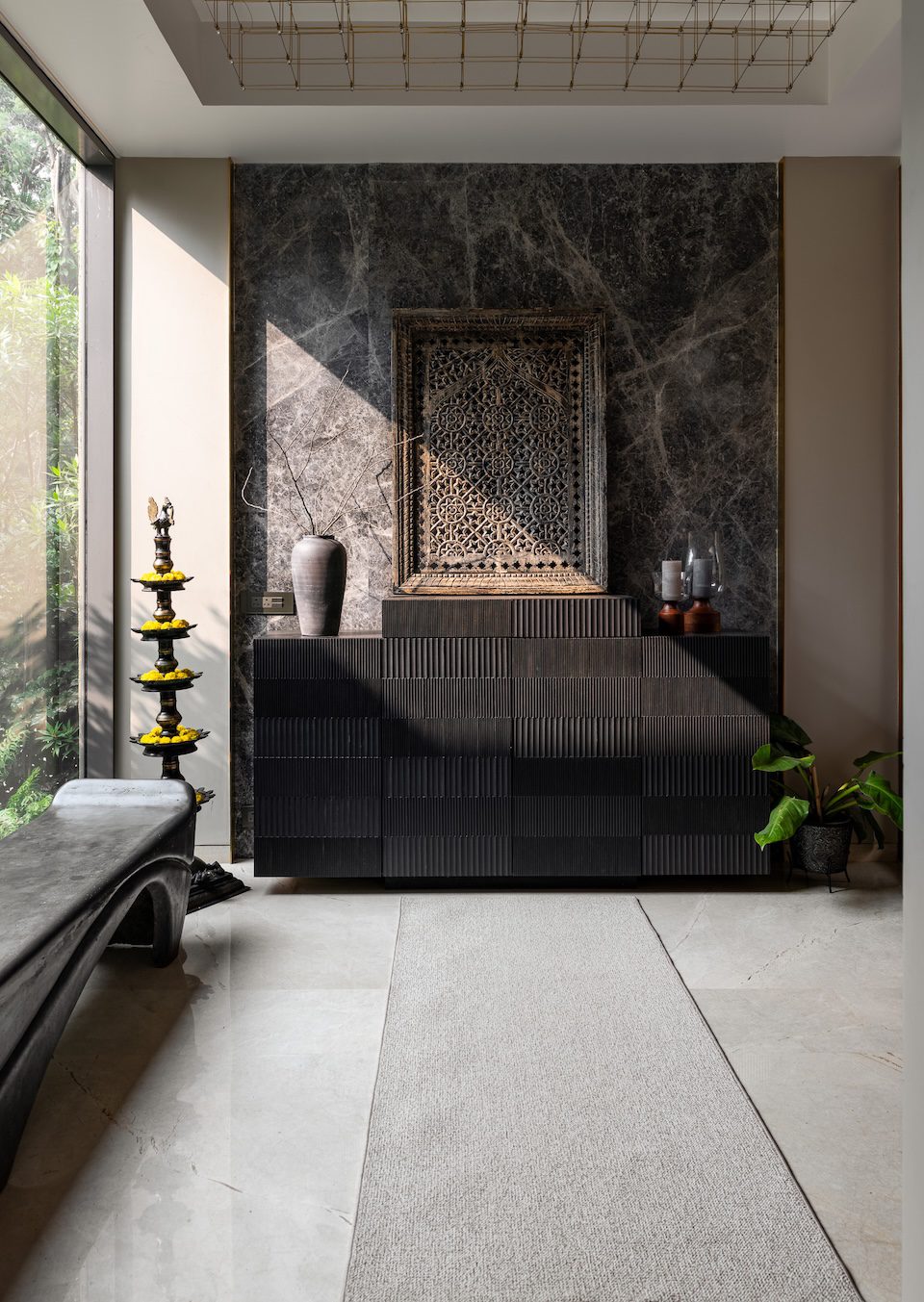
The entry opens into a light-filled lobby that establishes an immediate connection with the garden. Large openings extend this space outward, dissolving the boundary between inside and outside. From here, the house unfolds into the dining and family lounge areas, which sit at the centre of the plan. A more private wing accommodates the bedrooms, each oriented toward quieter garden pockets. Leisure functions—including an entertainment room, gym and guest areas—are positioned along a converted outhouse edge, creating a layered sequence of indoor and outdoor experiences across the site.
The design and material details
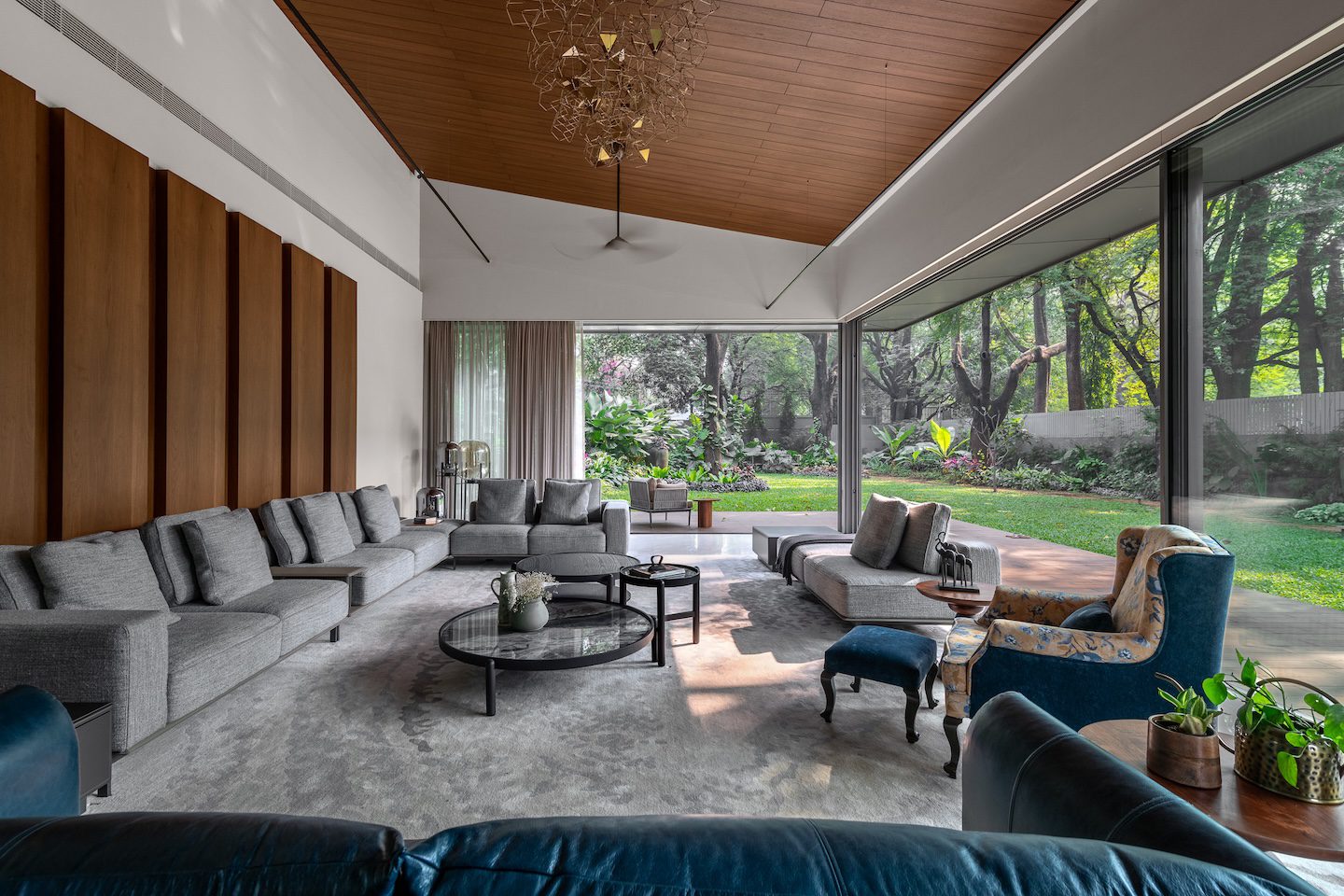
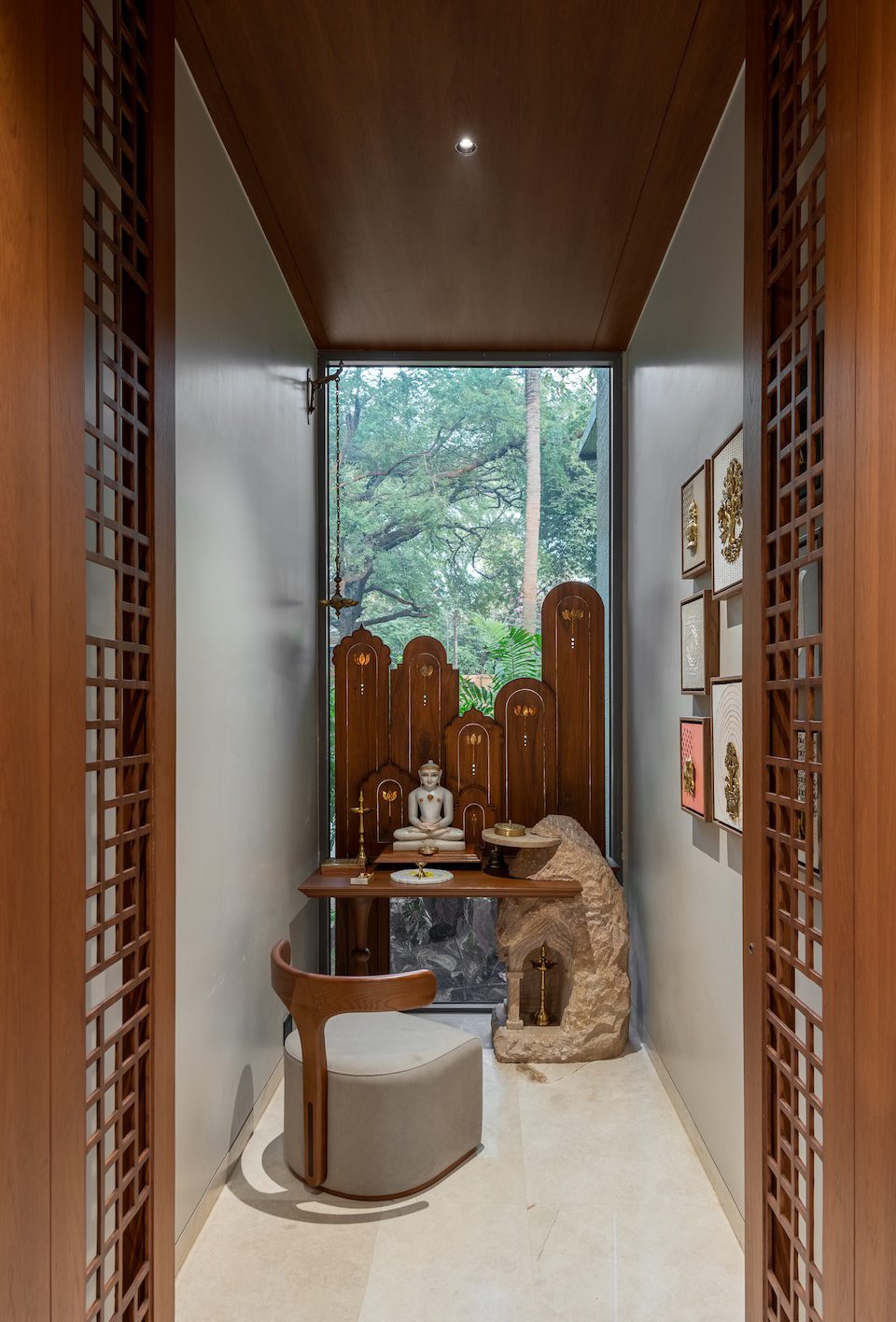
The material palette is restrained, allowing light and greenery to remain the primary visual elements. Natural stone flooring runs across common areas, while timber finishes introduce warmth through ceilings, furniture and detailing.
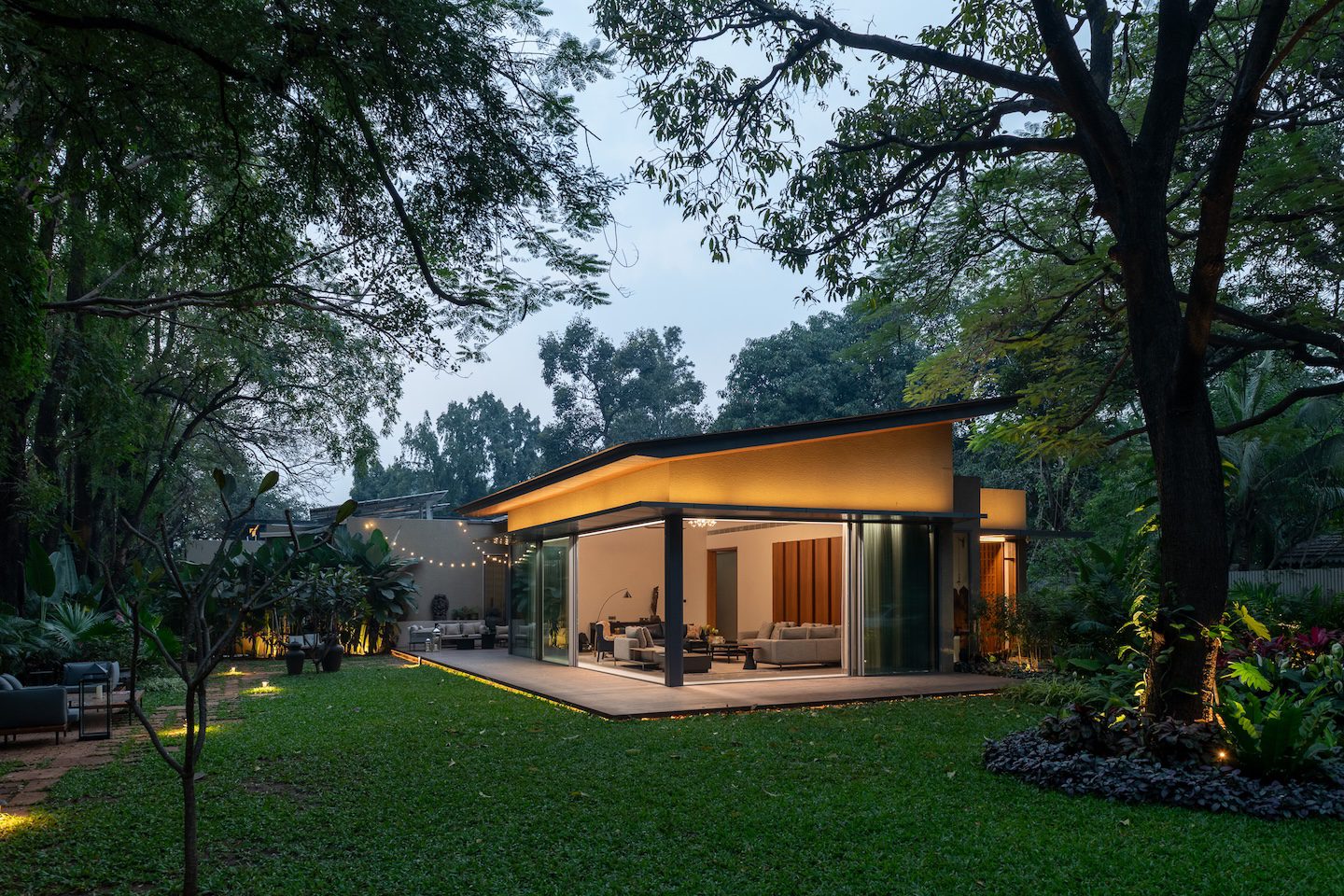
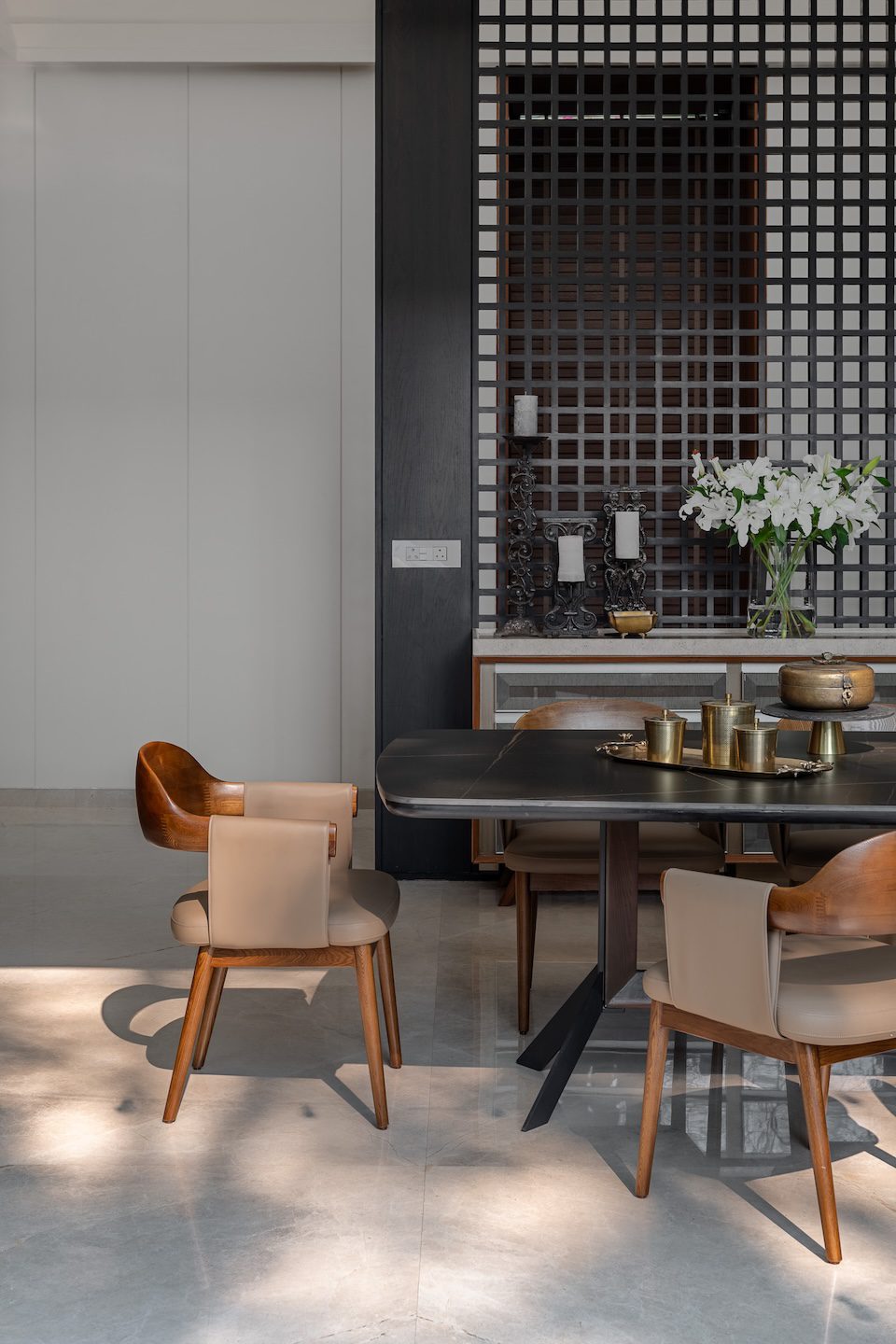
In the living room, large sliding glass panels dissolve the boundary between the interior and the garden. The timber-clad ceiling adds depth, while neutral seating and minimal furniture allow the landscape to remain the focal point. The dining area is anchored by a solid wood table paired with upholstered chairs in muted tones. Lighting is soft and minimal, maintaining visual openness across the space. The adjoining family lounge integrates built-in elements that recede into the walls.
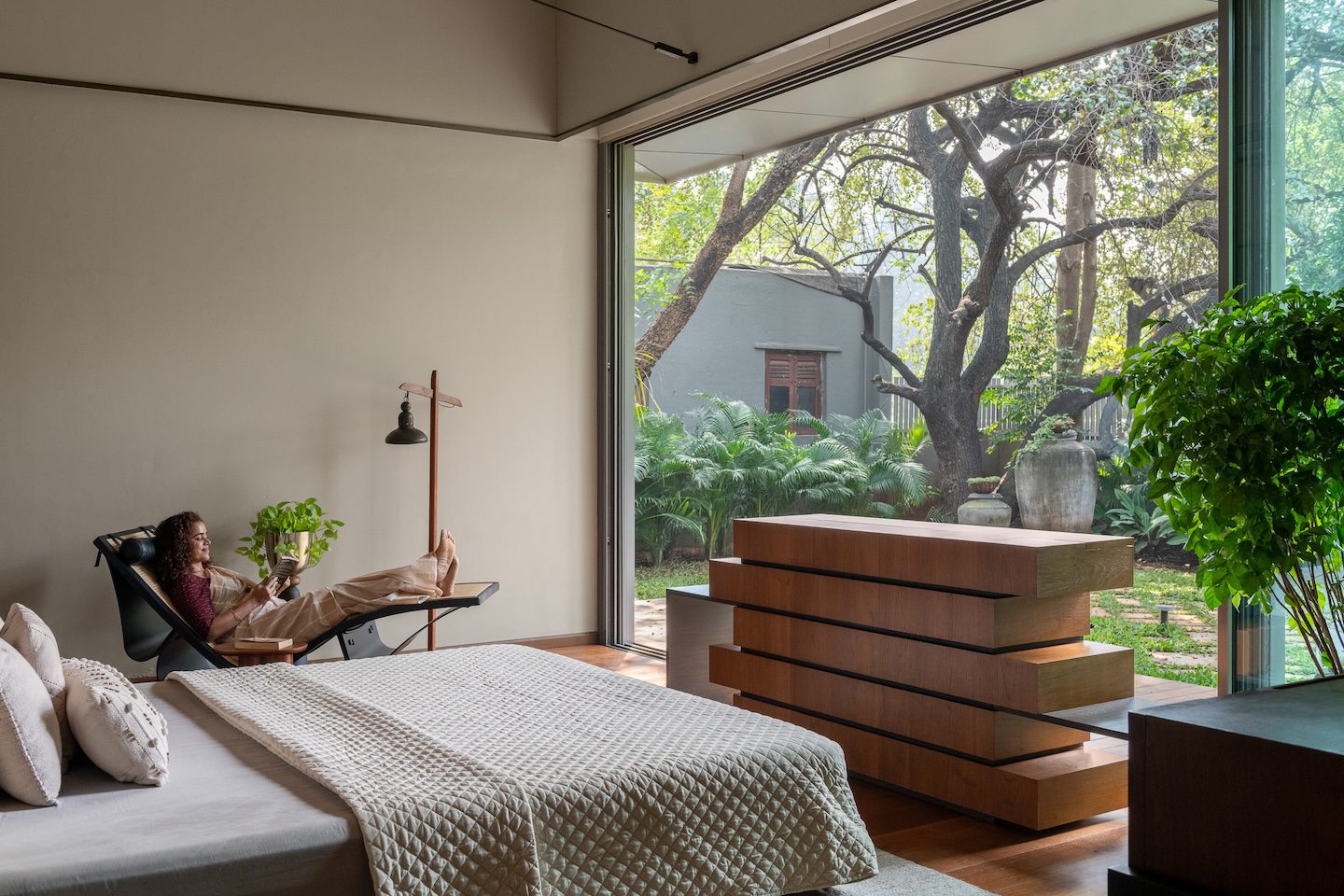
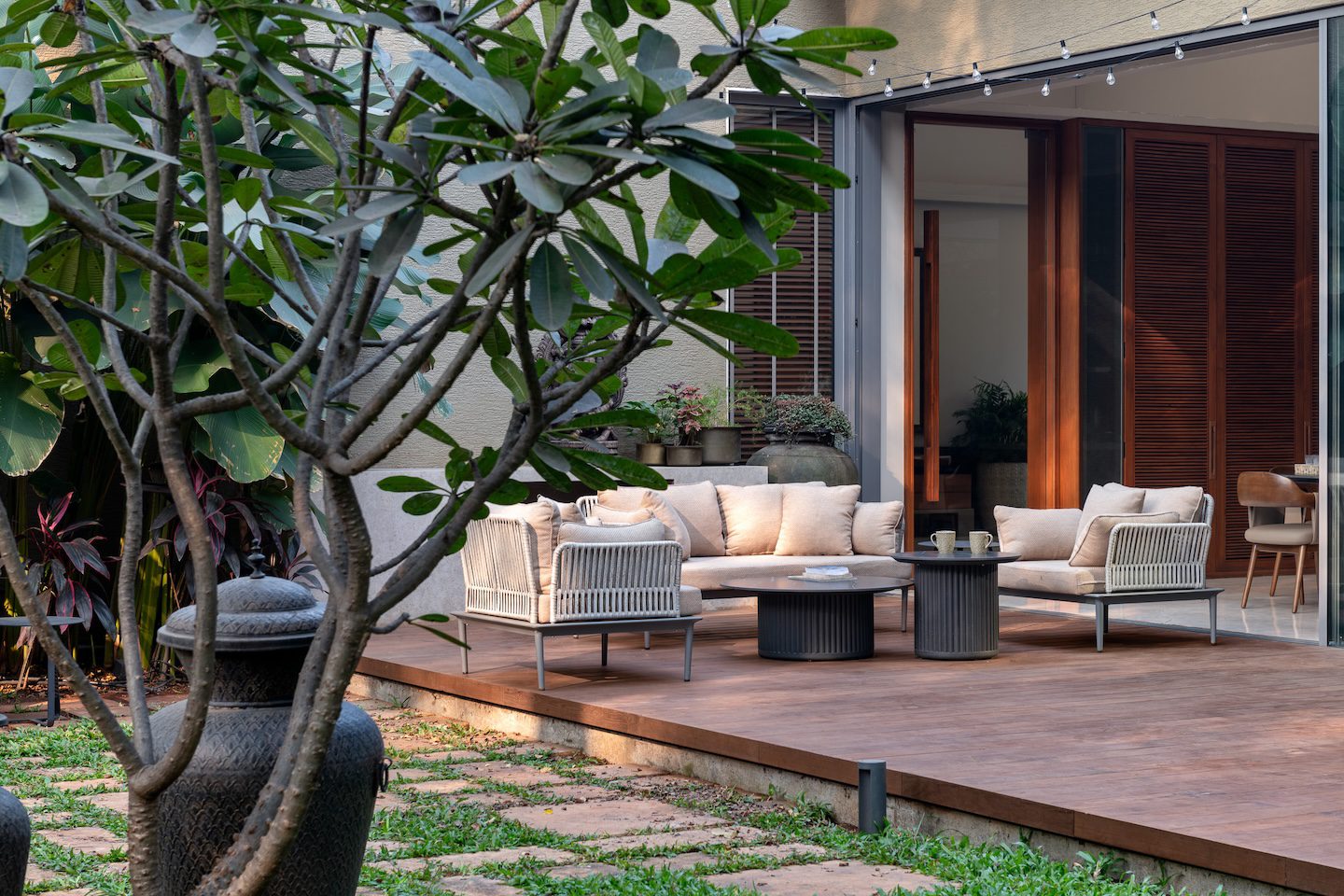
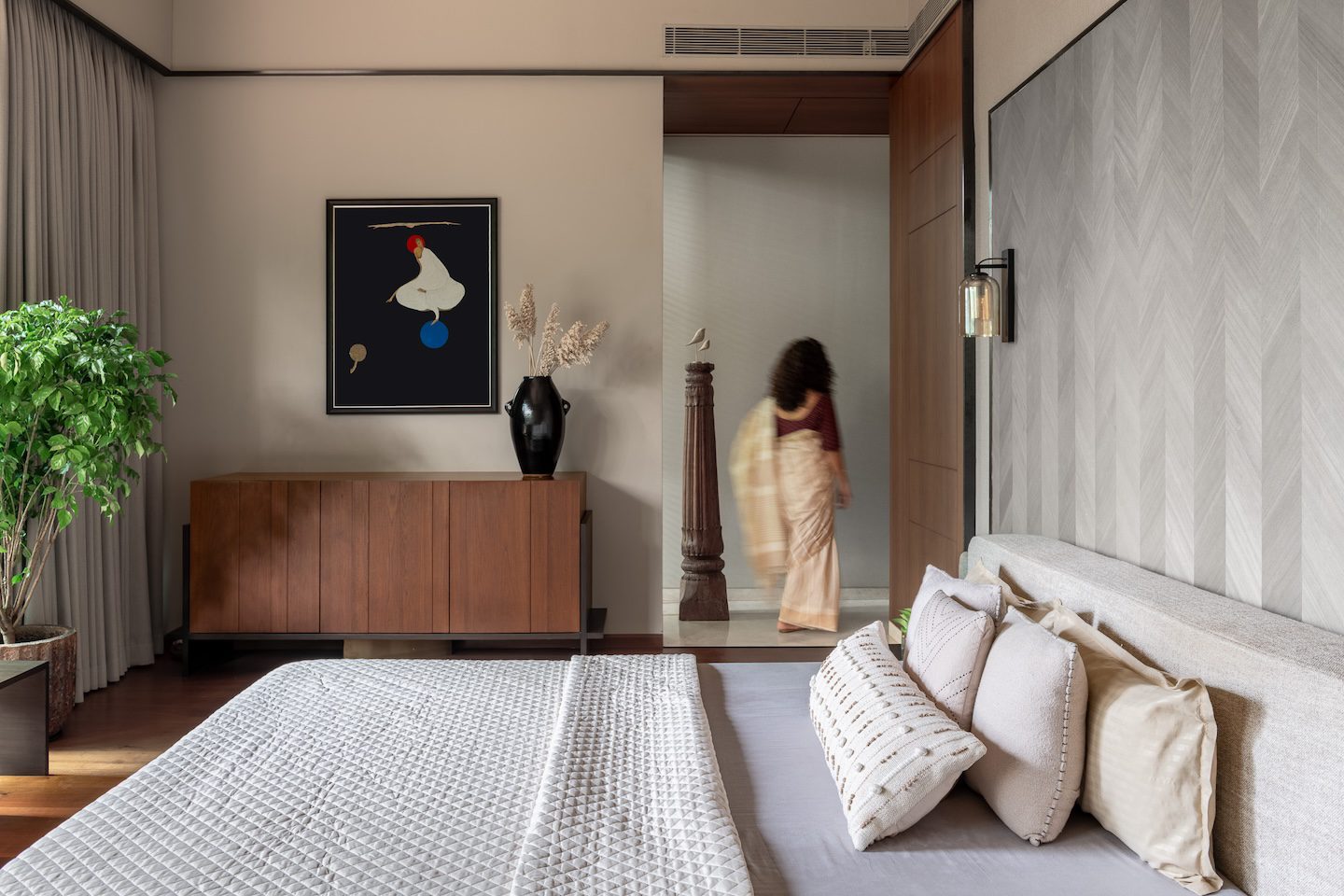
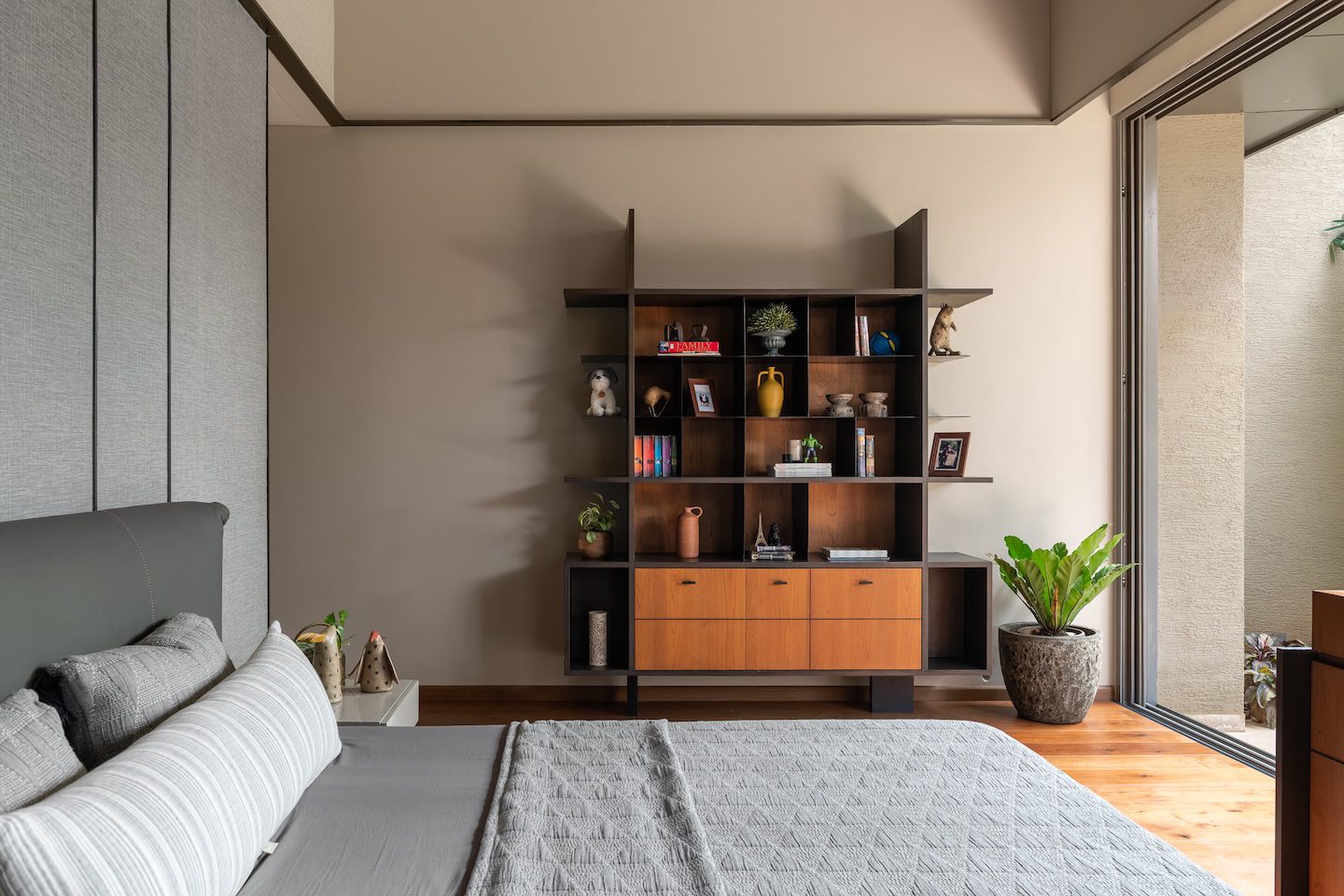
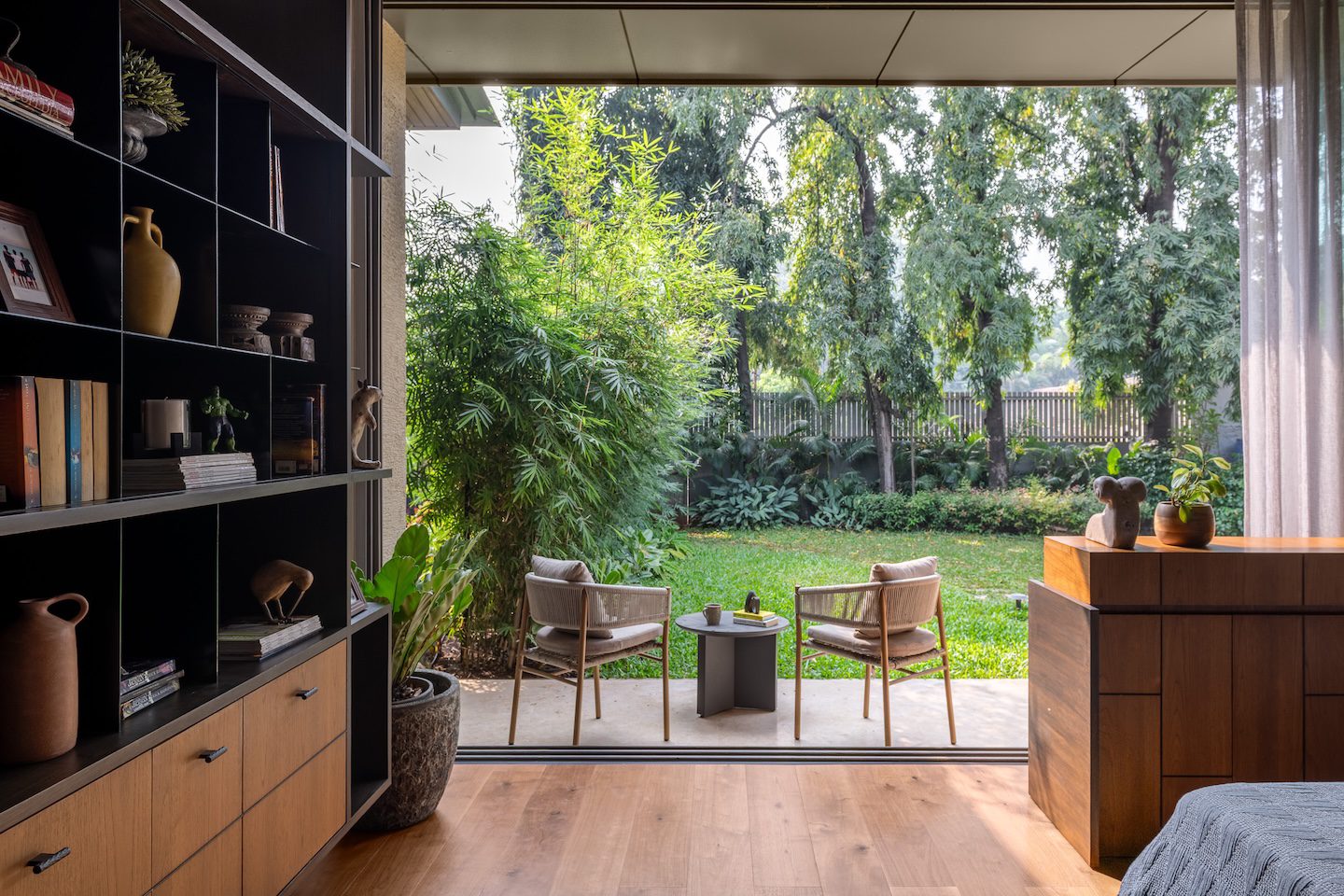
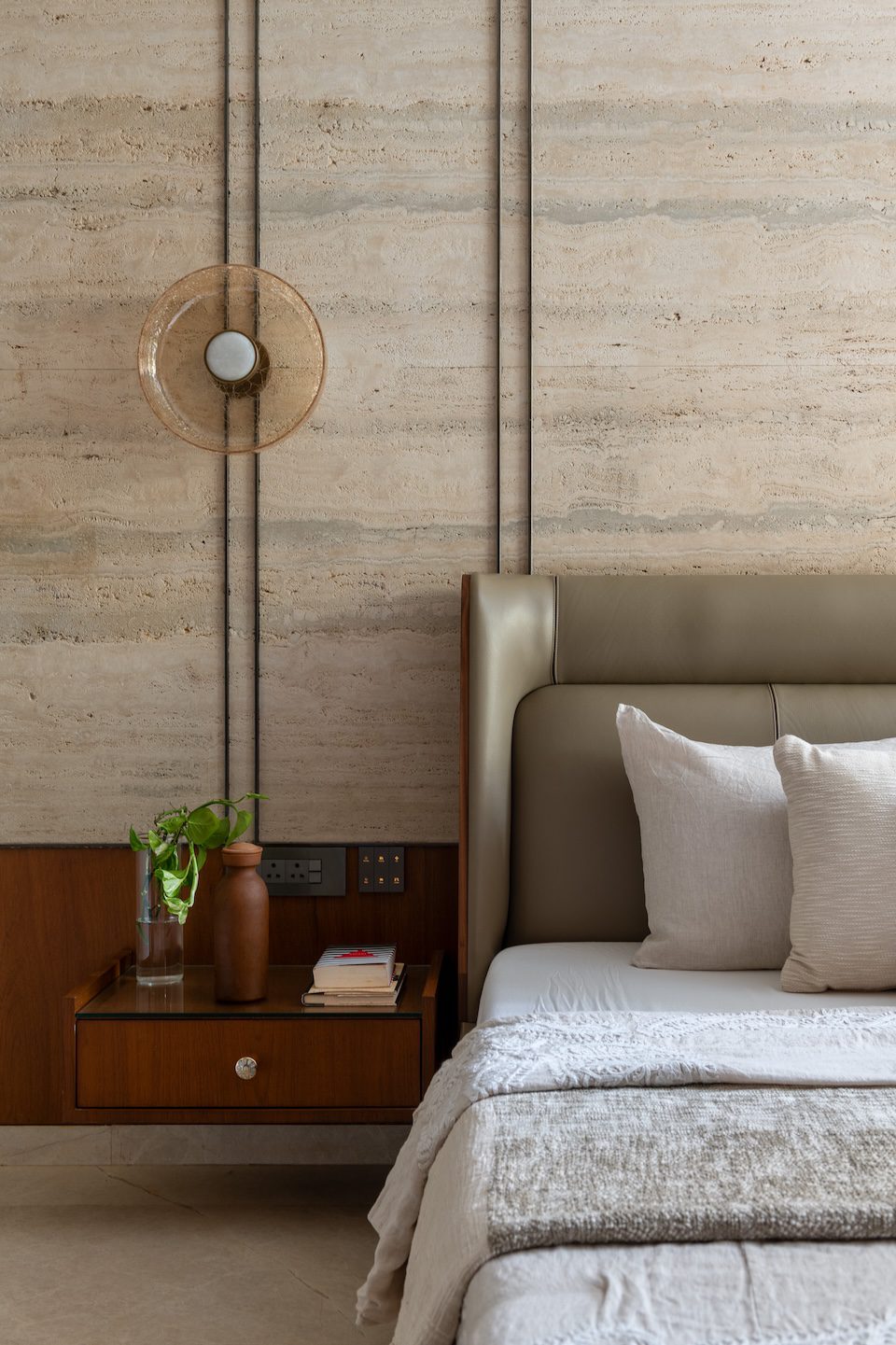
Bedrooms are conceived as quiet retreats, each opening directly to landscaped areas. Wooden flooring introduces tactile warmth, while walls remain neutral. Custom furniture in natural timber veneers maintains continuity across the house. Outdoor decks extend the interior material language into the landscape through weather-resistant timber finishes. Loose seating creates relaxed zones for informal gatherings, reinforcing the continuity between indoor and outdoor spaces.
The highlights
The defining quality of the house lies in its seamless relationship with the garden. Large sliding openings allow the interiors to extend outward, making landscape an active part of daily life. Outdoor decks and sit-outs function as transitional spaces rather than separate zones, encouraging a more fluid pattern of use. The restraint in materials and detailing further allows light, greenery and spatial openness to take precedence.
The challenges
Working within a pre-constructed architectural shell posed a key challenge. The design needed to achieve openness and fluidity without altering the primary structure. In addition, the project had to be executed within a limited time frame due to its cantonment location, where approvals and timelines are tightly controlled. Balancing these constraints while maintaining clarity in design required careful coordination across all stages of the project.
Fact file
Project: Aranya
Location: Pune
Area: 4,865 sq ft
Design firm: Studio Infinity
Principal architect/designer: Tushar Kothawade and Chiranjivi Lunkad
Add a Comment