
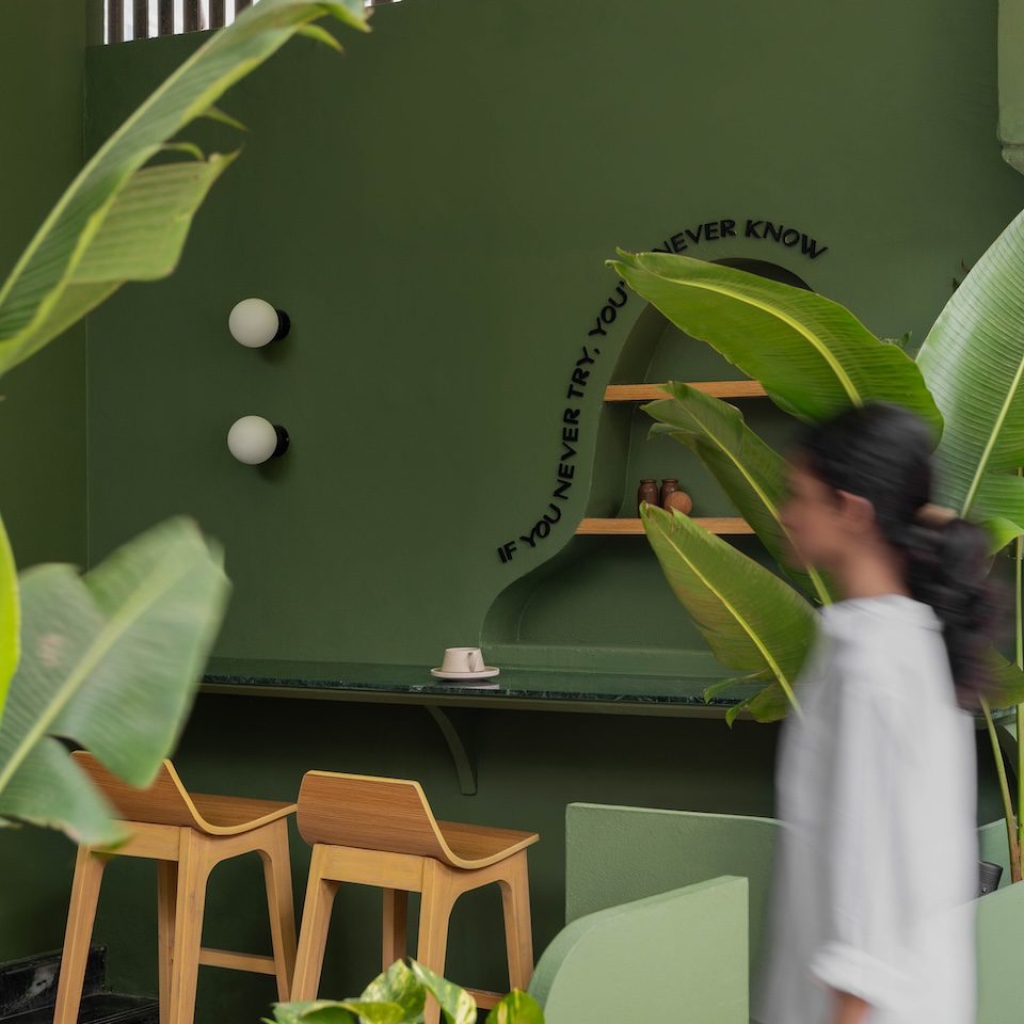
Kaviar:Collaborative shapes Kori Cafe in Mumbai as a compact yet expressive neighbourhood hangout, where visual openness, checkerboard flooring, and the recurring use of green (from facade to foliage), expand the perception of space.
Curated by: Deepa Nair
Photographs: Studio Evolve; courtesy Kaviar:Collaborative
The brief
What awaited architects Kasturi Wagh and Vineet Hingorani—founders of Kaviar:Collaborative—when they first met the clients for Project Kori Cafe, was a well-etched out brief, and a massive challenge. They wanted a contemporary cafe that felt fresh, rooted in nature, warm—an everyday destination where warmth and informality would shape the experience as much as the coffee itself. The brief also requested both indoor seating and an outdoor spill-out area; and to maximise spatial efficiency without sacrificing character. The challenge was to weave all of this into just 440 square feet.
The design intent
With no scope for physical expansion, the design relied on visual continuity, openness, and a strong connection to the outdoors to enhance the spatial experience. Central to the design is the blurring of boundaries between the inside and the outdoors, allowing the cafe to feel fluid and connected to its surroundings. A restrained palette of green, black, and white establishes continuity across the interiors, while curves, soft detailing, and warm materials introduced a sense of comfort and ease. The aim was to design a cafe that felt graphic yet relaxed, minimal but not cold.
The civil intervention
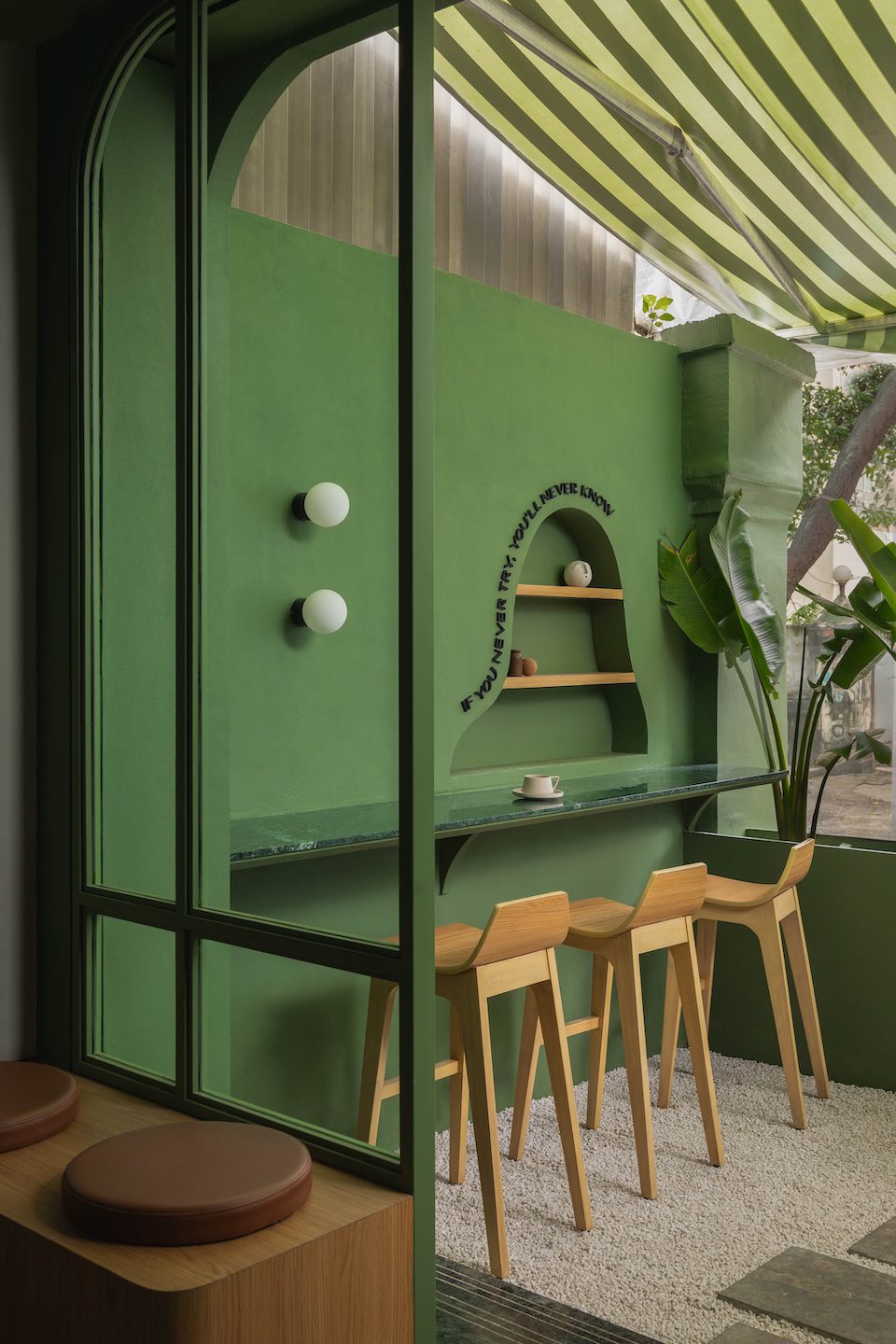
Set in one of the by lanes in Bandra, Mumbai, the site was compact with limited frontage, and was accompanied by a modest outdoor area. “The existing layout was pretty much an open layout itself. Selective civil changes, such as introducing arched openings and rounded edges, helped soften the original structure and improve flow without heavy structural intervention,” explains Kasturi Wagh, principal architect, Kaviar:Collaborative.
The spatial configuration
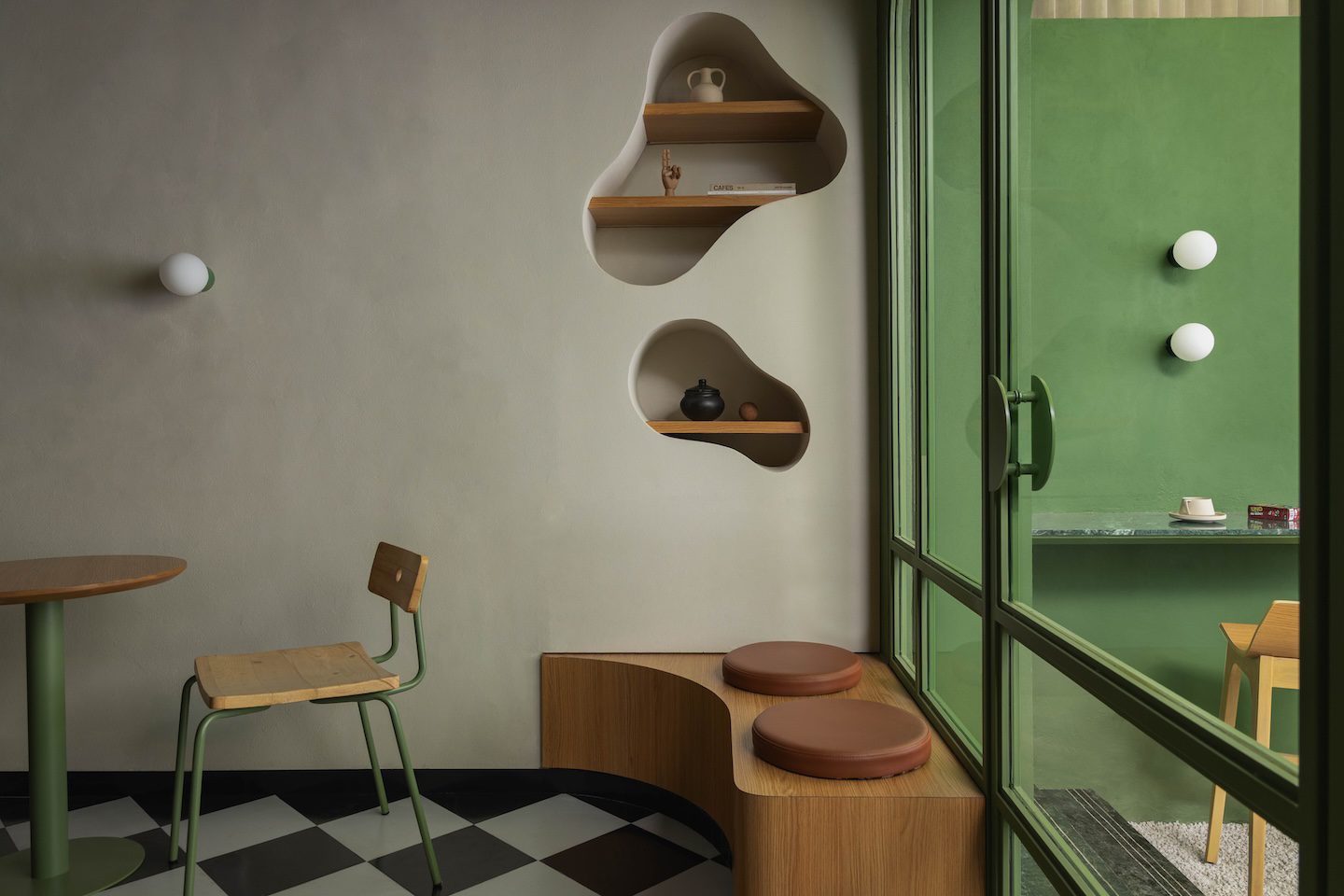
The cafe is planned as a single, continuous space where the interior and exterior are visually linked. From the entrance, the seating area, service counter, and outdoor spill-out remain connected within one clear view, allowing the space to unfold naturally as patrons move through it. This openness helps the compact footprint feel more generous and easier to navigate.
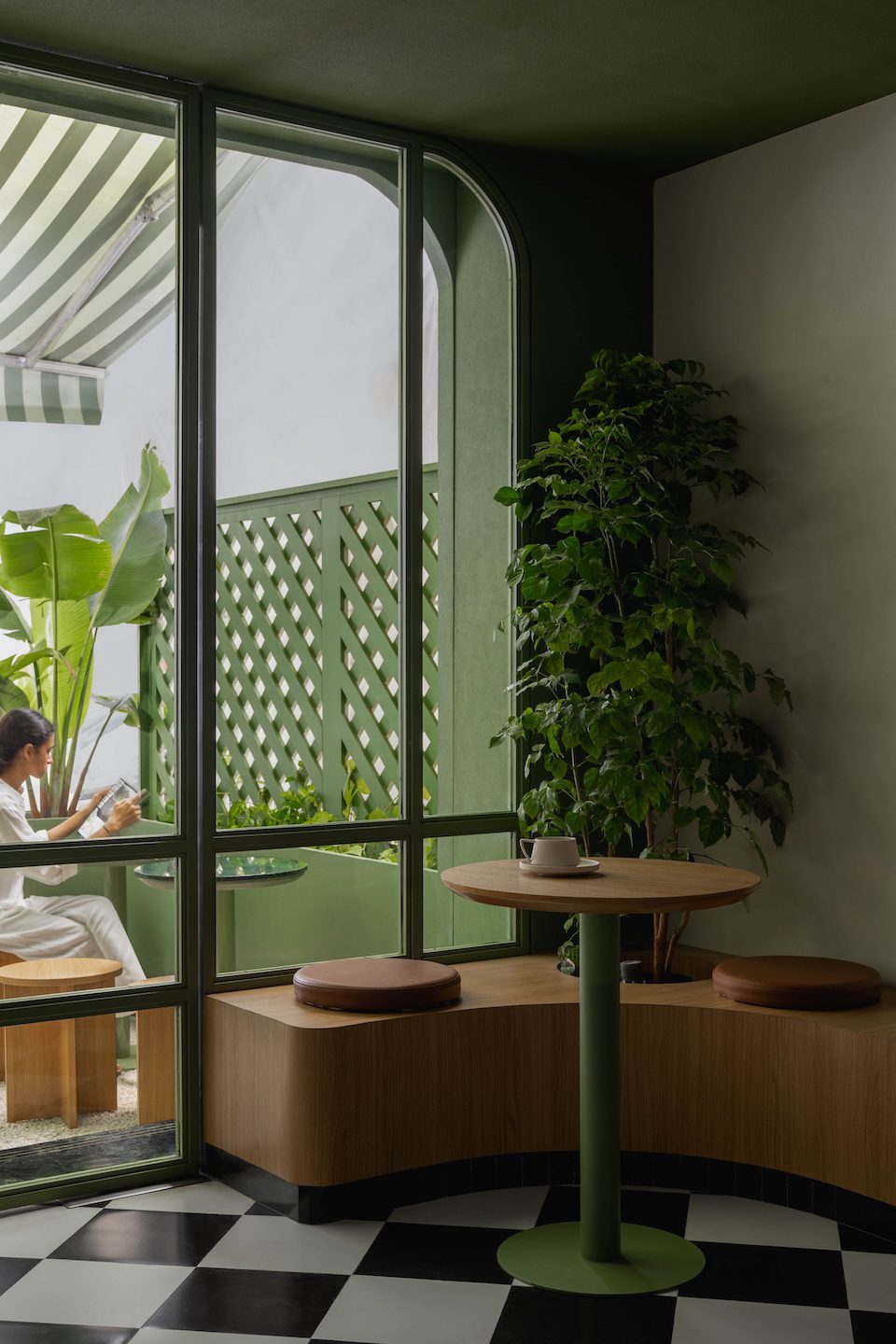
Large glazed openings play a key role in strengthening the relationship between the indoors and the street-facing outdoor area. By extending sightlines and drawing in natural light, these openings blur the boundary between inside and outside, allowing the cafe to feel brighter, more fluid, and far more expansive than its modest size might suggest.
The design and material details
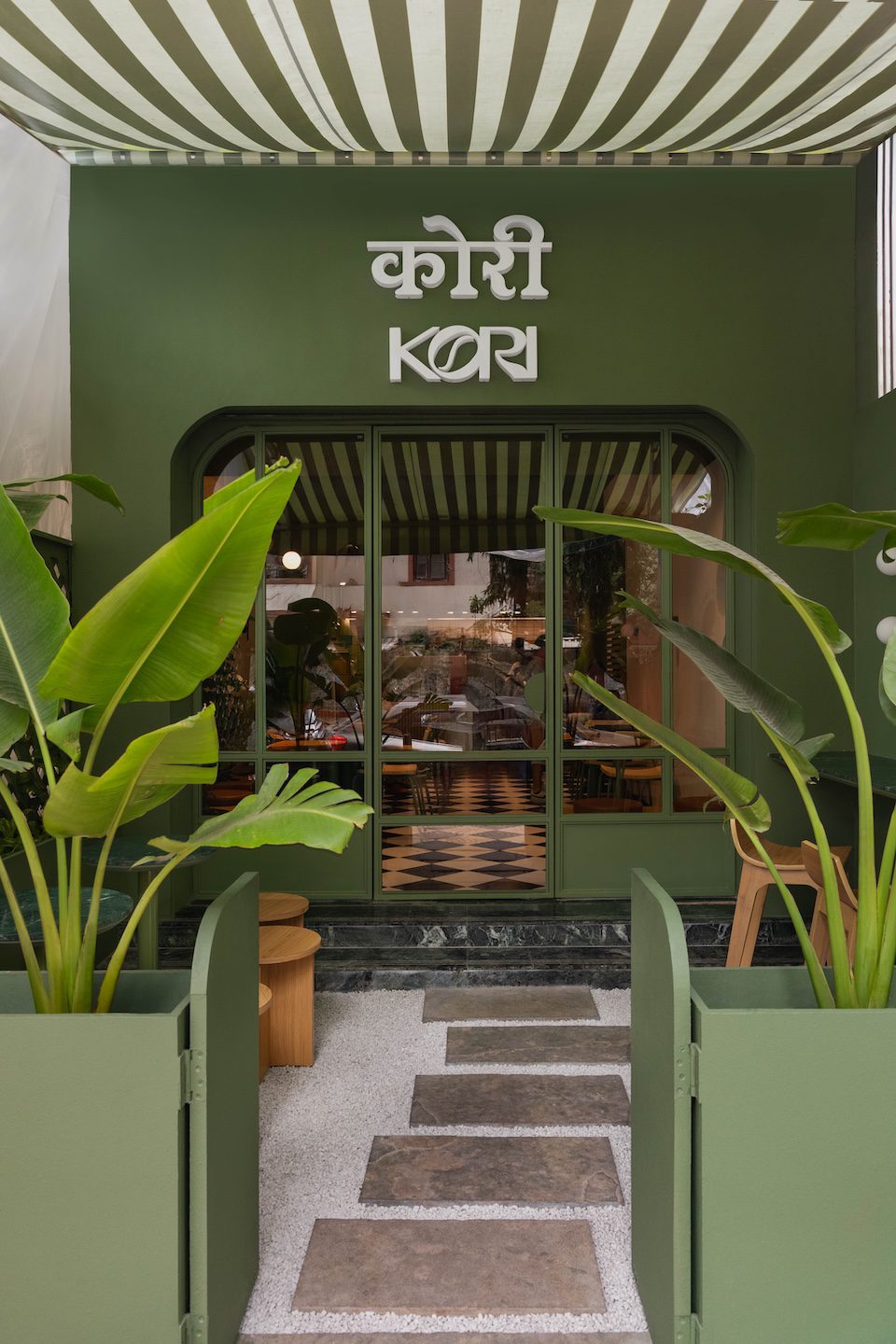
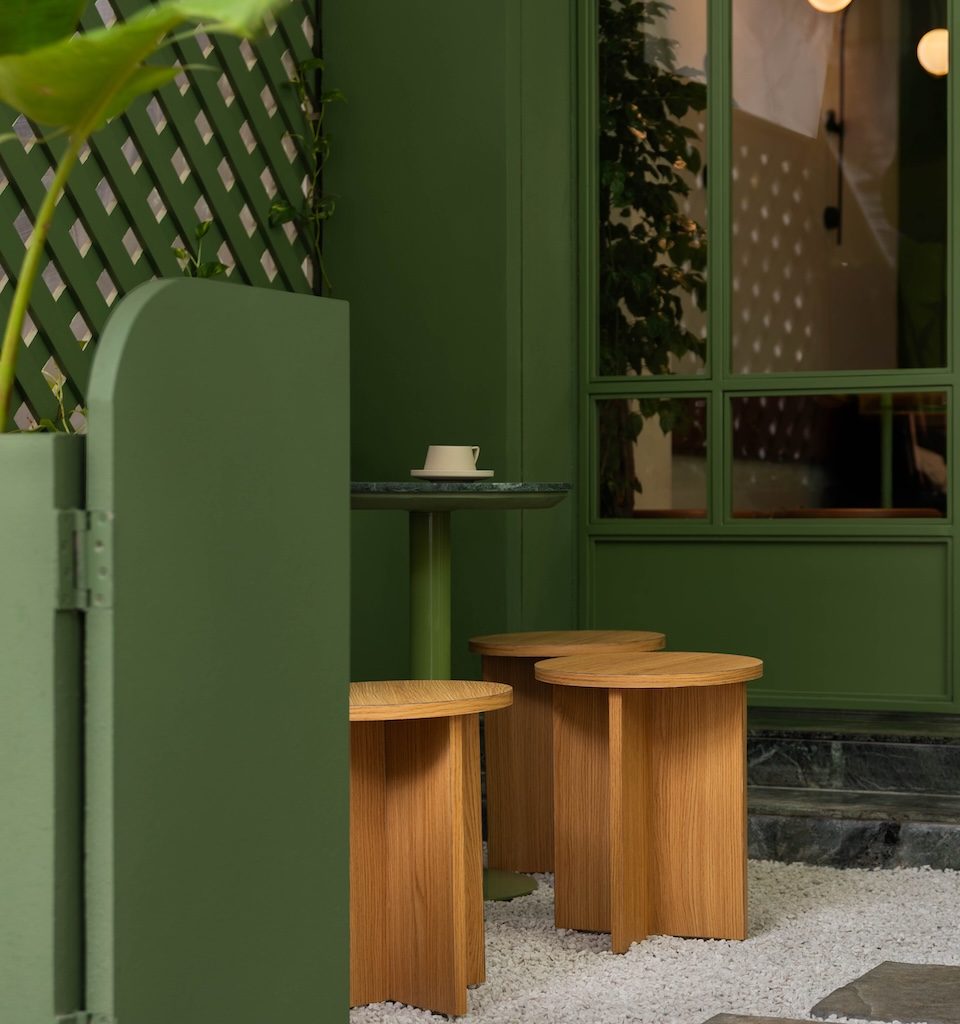
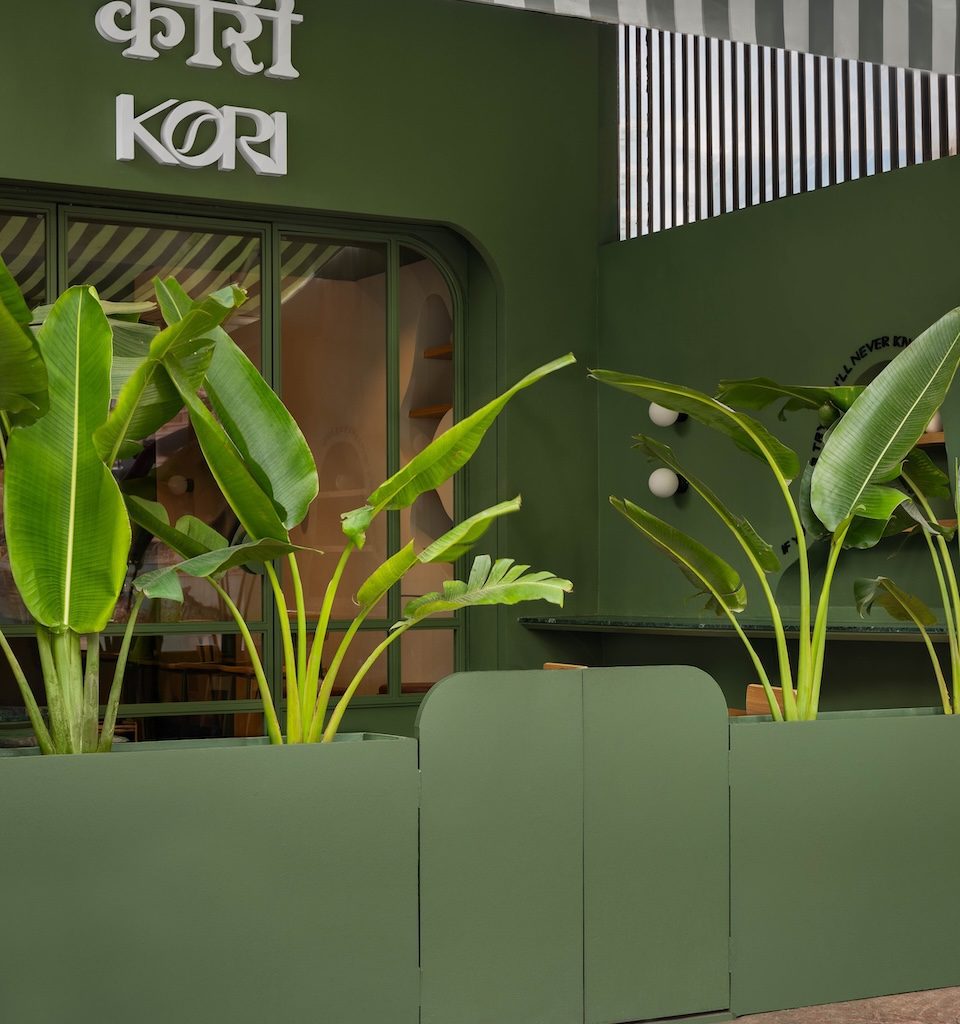
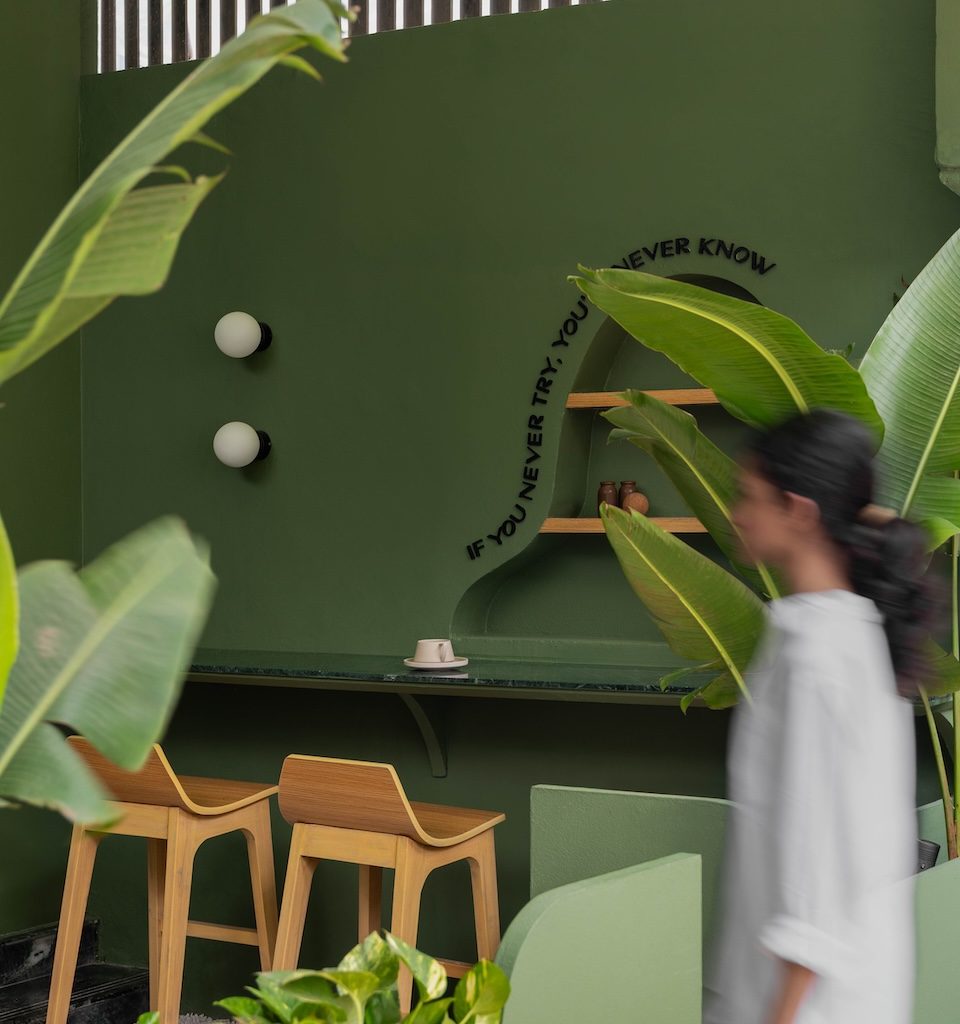
The cafe introduces itself through a deep green facade paired with striped awnings, creating an immediate visual marker along the street. This graphic yet inviting frontage establishes the tone for the space within. Planters and outdoor seating soften the transition from the pavement to the cafe, while stone pavers underfoot set within white gravel bring texture and depth.
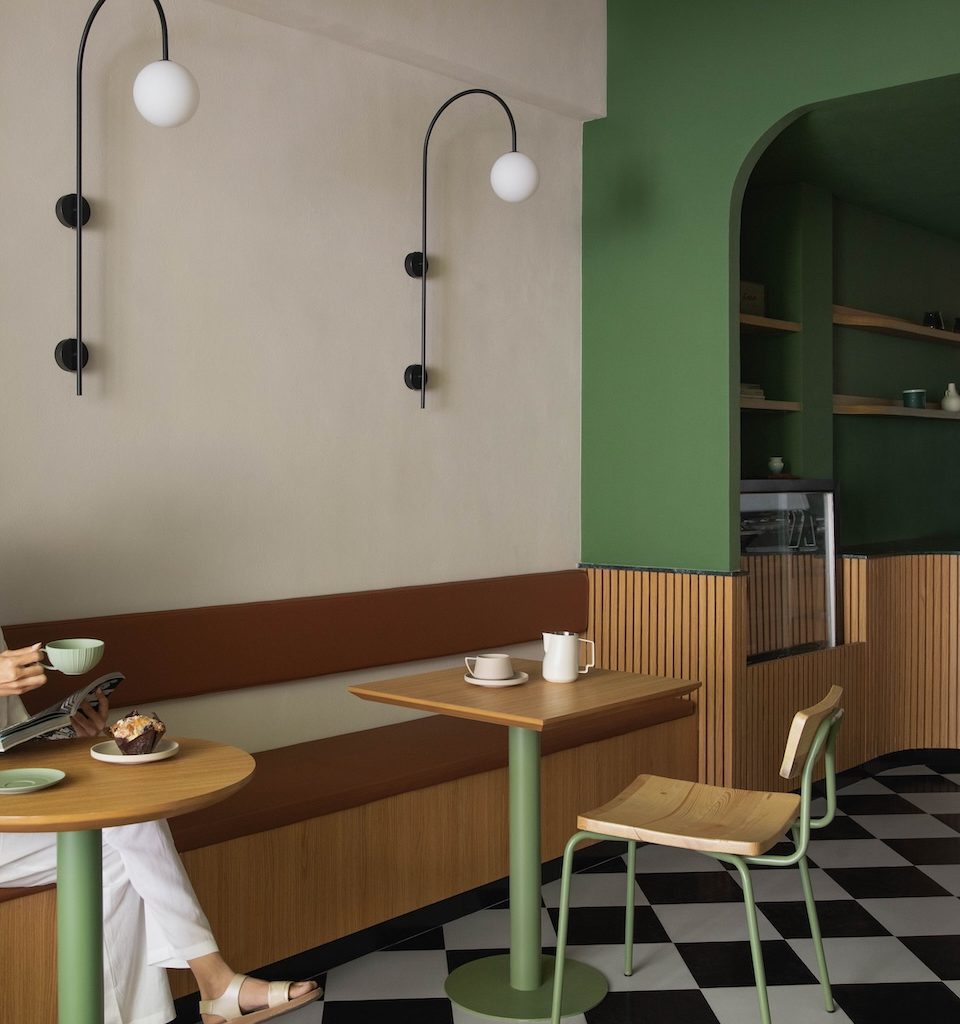
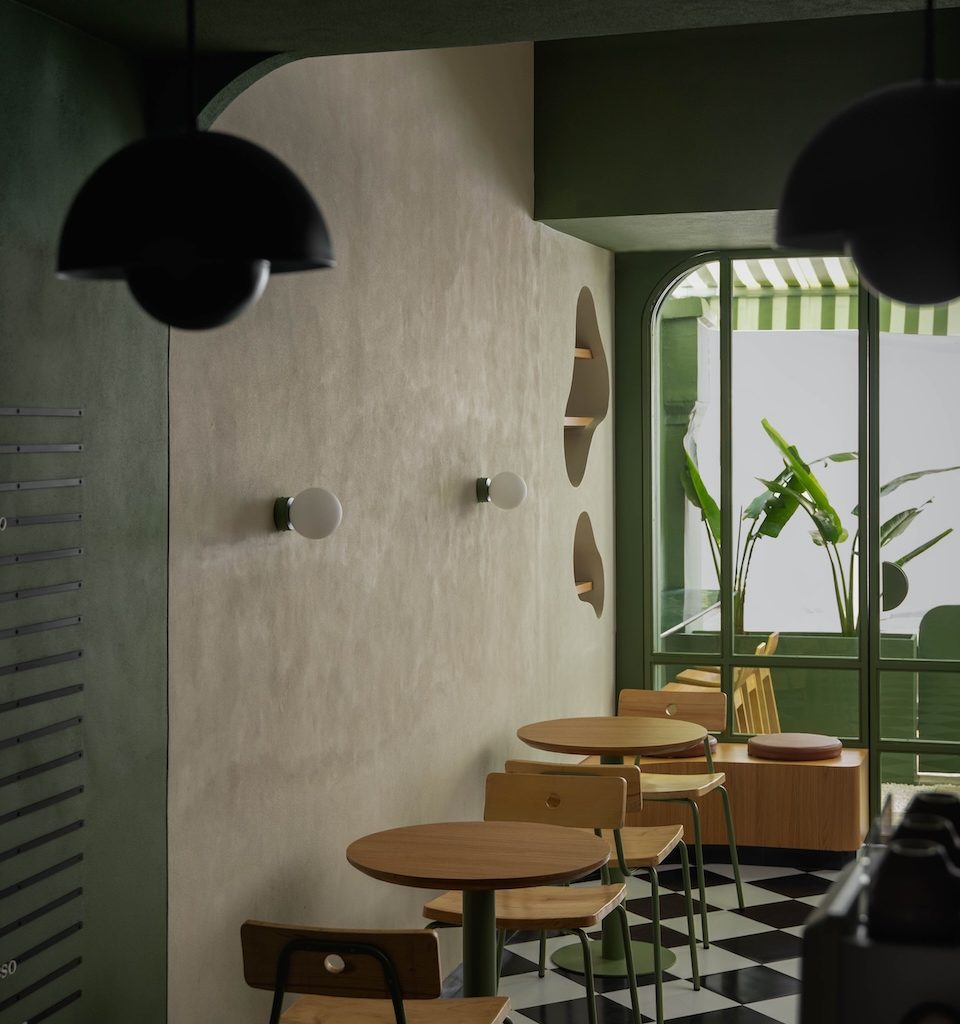
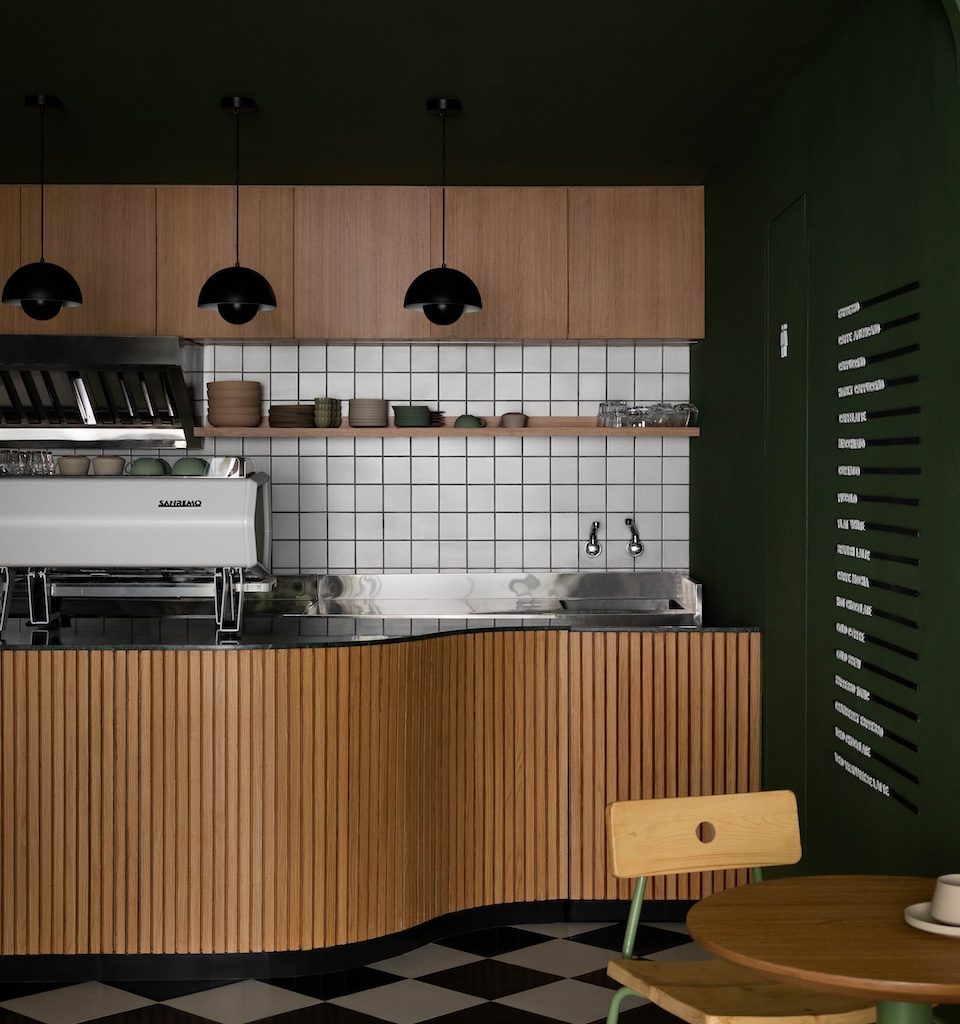
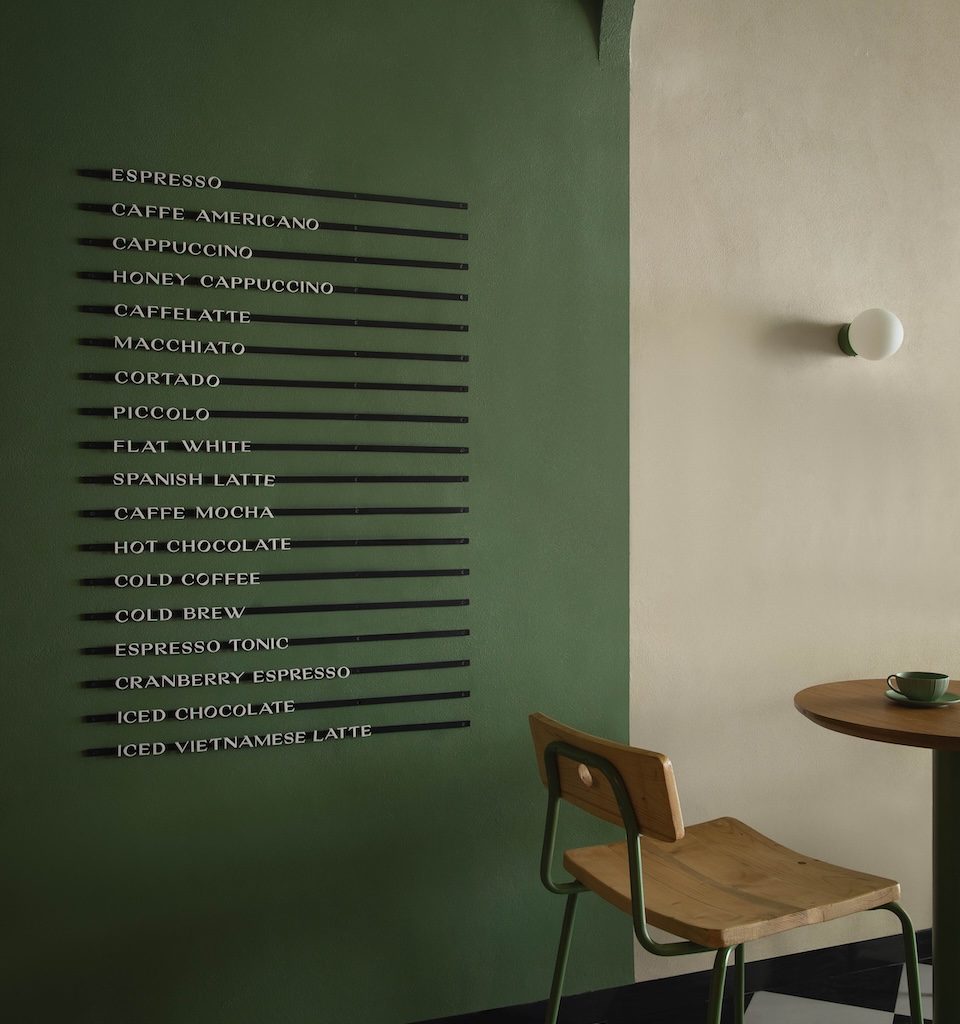
Inside, the design uses pattern and built-in elements to subtly expand the perception of space. A black-and-white checkerboard floor anchors the interiors, its bold geometry helping visually extend the compact footprint. Soft neutral walls balance the darker green architectural elements, ensuring the palette remains cohesive and calm despite the graphic contrasts. Along the edges, built-in wooden seating with gently curved edges maximises the available seating while maintaining comfort and ease of movement.
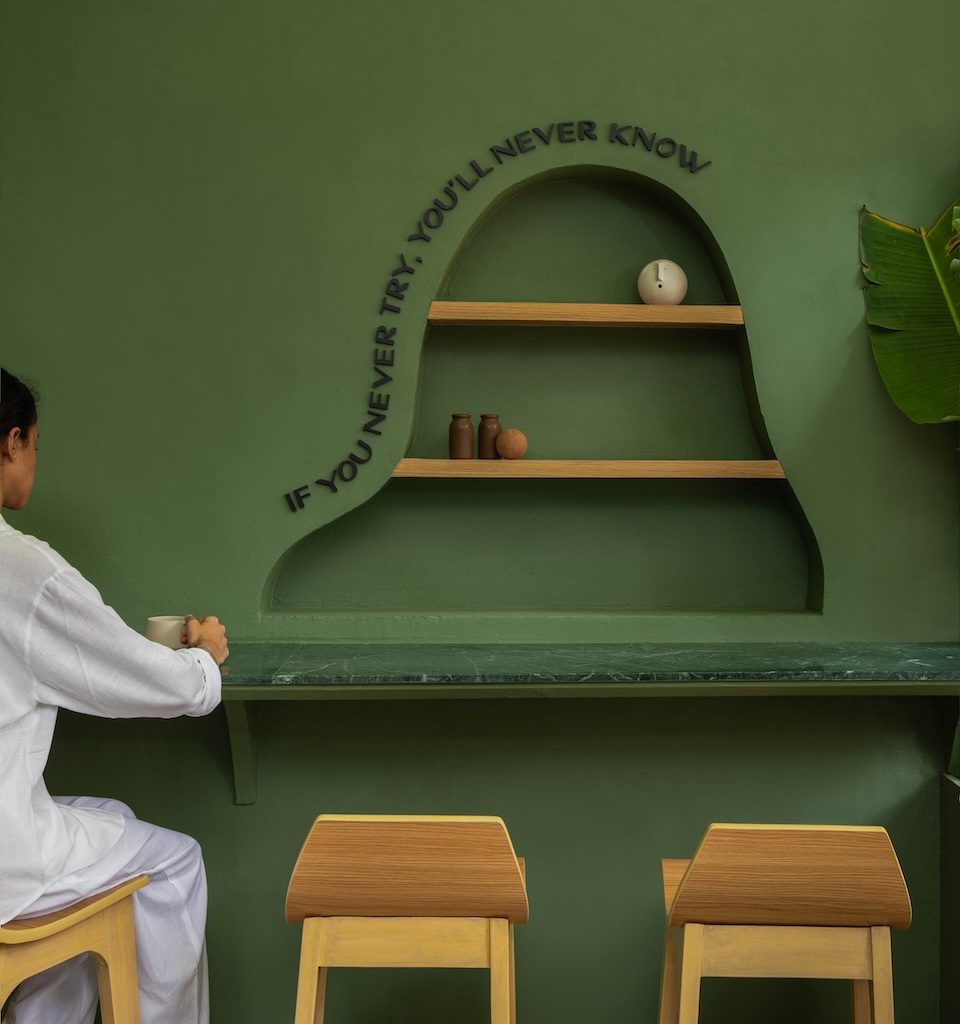
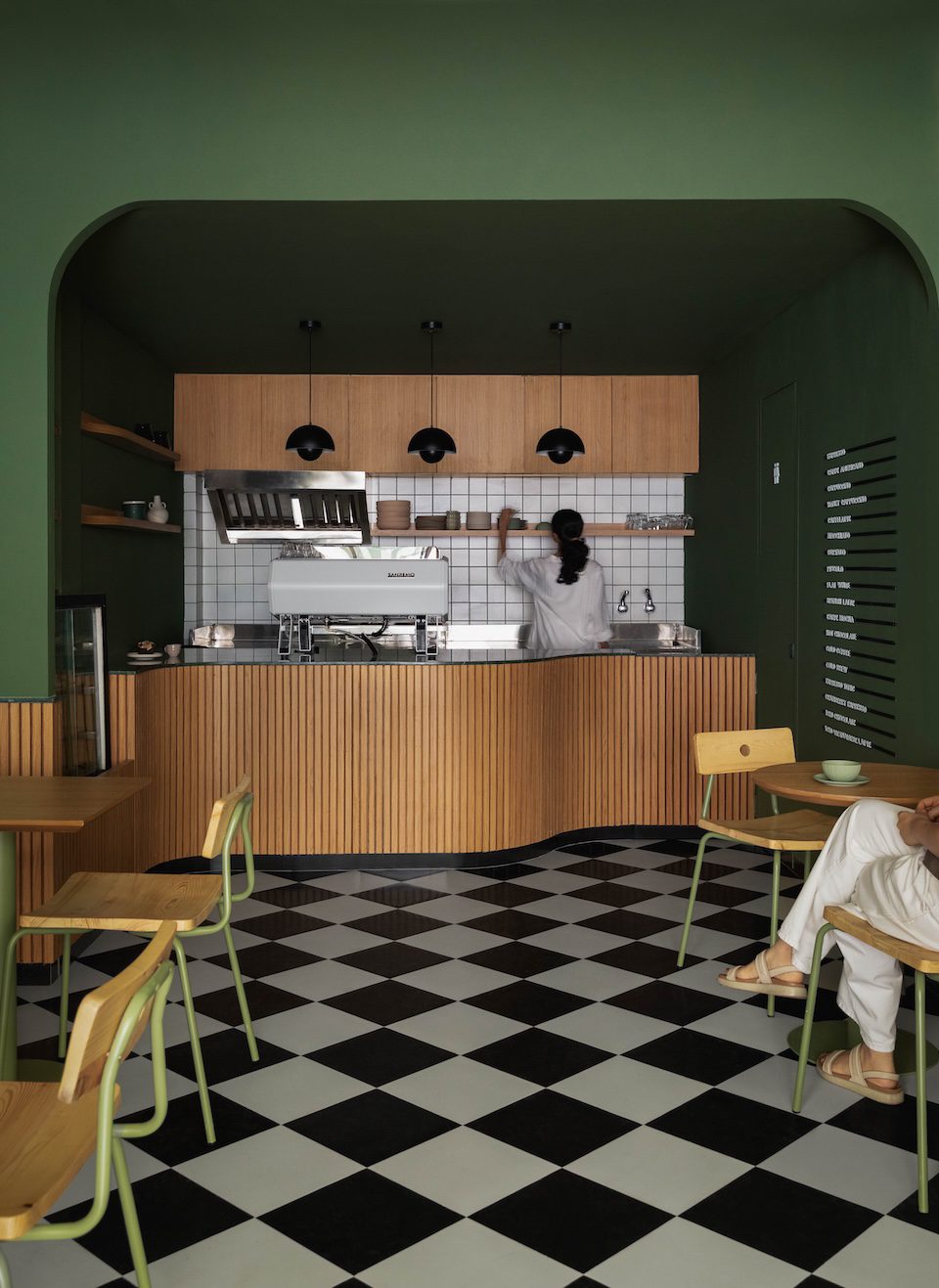
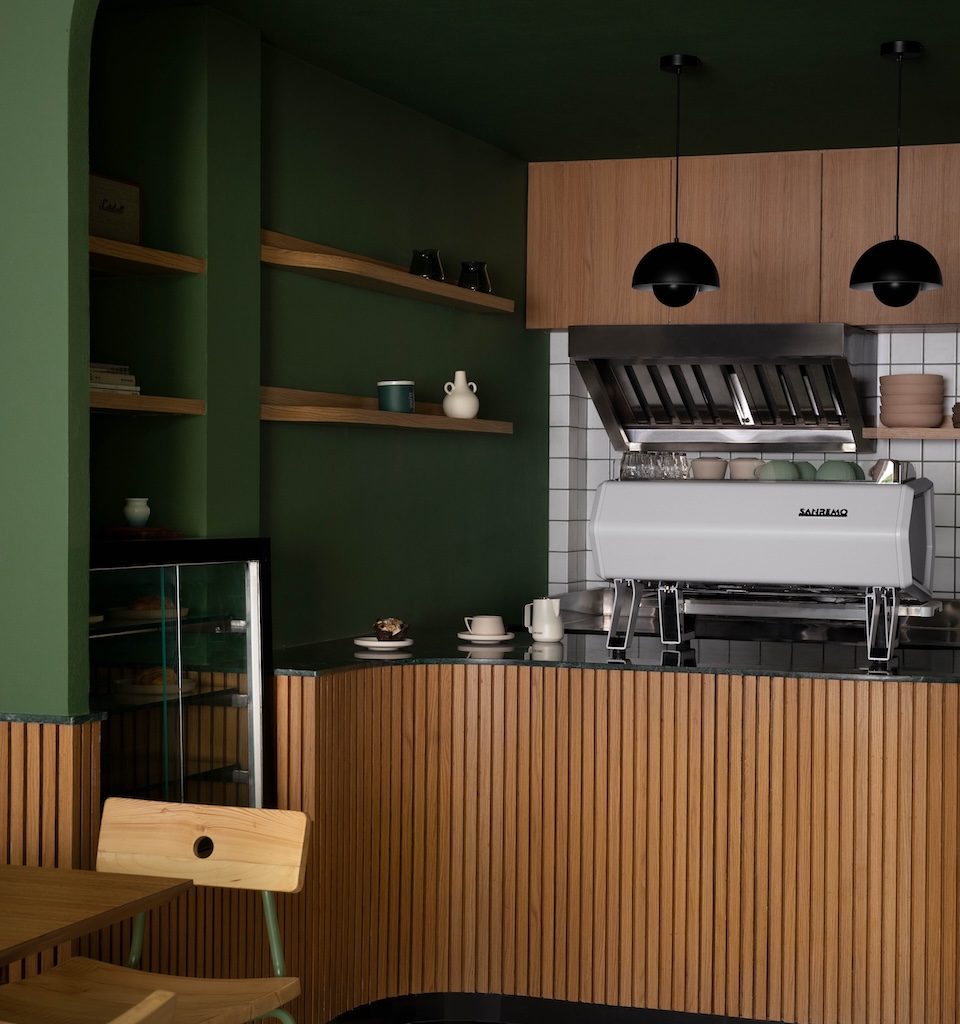
The service counter is designed to remain clean and efficient, both visually and functionally. Finished with fluted wooden panelling and framed by a white tiled backdrop, it introduces texture without overwhelming the compact interior. Open shelving and integrated storage keep essentials within reach while avoiding visual clutter. Custom furniture crafted in green-painted metal and wood reinforces the cafe’s restrained palette. Warm timber surfaces, minimal lighting, and indoor plants soften the graphic qualities of the space, bringing in warmth while maintaining the café’s fresh and contemporary identity.
The challenges
“Designing within a 440 sq ft footprint meant every decision had to be intentional. Balancing functionality with openness, while avoiding visual clutter, was a key challenge. On site, executing curves, custom furniture, and finishes with precision within tight tolerances required careful coordination,” says Vineet Hingorani, principal architect, Kaviar:Collaborative.
Fact File
Project: Kori Cafe
Location: Bandra West, Mumbai
Area: 440 sq ft
Principal architects: Kasturi Wagh and Vineet Hingorani
Design team: Ananya Sawant
Add a Comment