
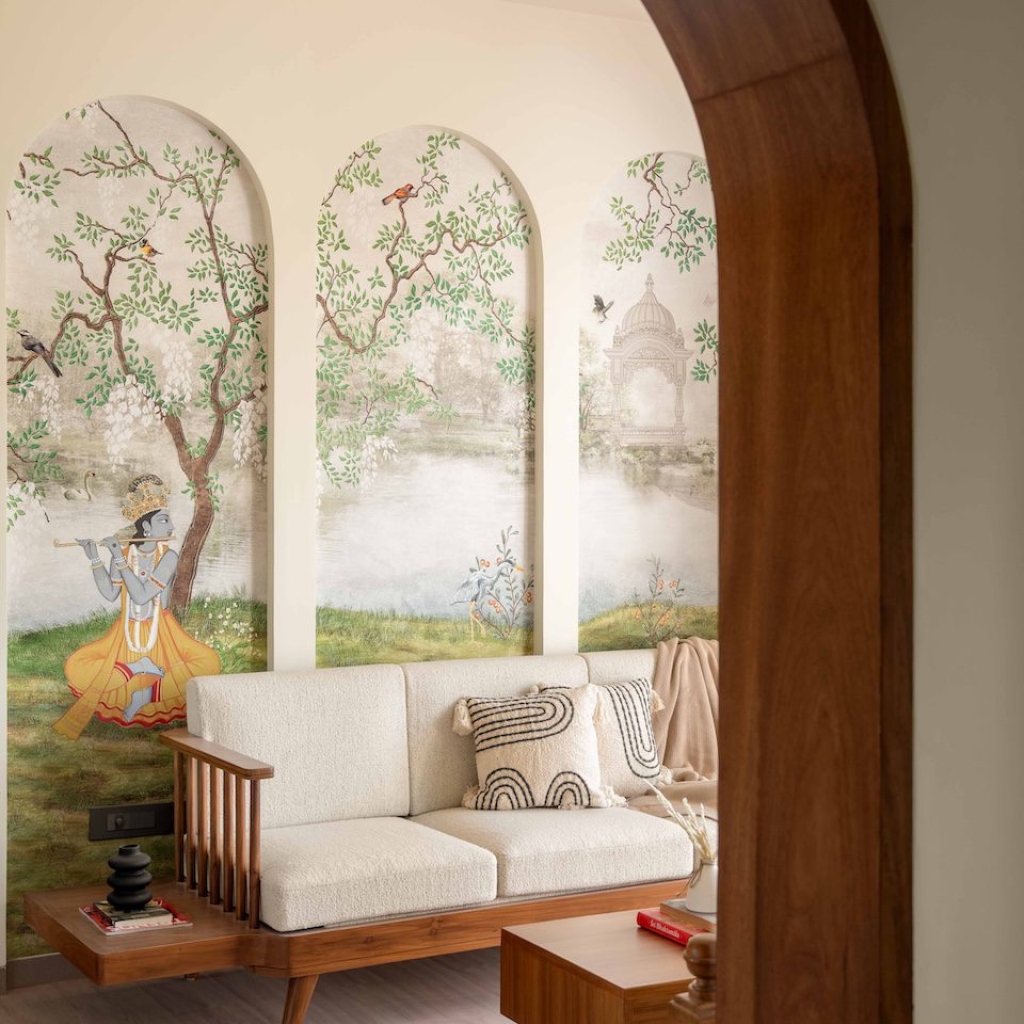
Studio KNest designs a spiritually rooted 2BHK in Vrindavan by merging two independent apartments into a cohesive second home for a Krishna devotee based in the USA. The project interprets the town’s devotional ethos through arches, murals, jaali detailing, and a restrained contemporary palette.
Curated by: Deepa Nair
Photographs: Evolve Studio; courtesy Studio KNest
The brief
In the sacred town of Vrindavan, Uttar Pradesh, Studio KNest was entrusted with shaping a second home for a Krishna devotee based in the USA… a space that would carry the spiritual cadence of the town into everyday living. What existed were two independent one-bedroom apartments, each self-contained. The client’s vision was to dissolve these boundaries and reimagine the fragmented layout as a single, cohesive two-bedroom home. “The design brief was clear: transform the twin units into a unified 2BHK that could support contemporary living while retaining a spiritual undertone reflective of Vrindavan’s essence,” says Nidhi Bhatt, principal architect, Studio KNest.
The design intent
The design studio’s approach was anchored in a delicate duality: honouring tradition while embracing modernity. “Vrindavan itself embodies this balance. On one hand, it is a timeless pilgrimage town steeped in mythological significance; on the other, it is a thriving urban settlement with modern homes and global citizens finding their roots here. Thus, we envisioned the home as an intersection of past and present—where the traditional language of arches, woodwork, jaali patterns, and murals could sit harmoniously alongside modern lines, light-filled spaces, and minimal detailing,” asserts Kunal Gupta, principal architect, Studio KNest.
“The home had to feel warm, soulful, and genuinely lived in. For a client travelling across continents, it was essential that the space offered an immediate sense of belonging–an environment that allowed the client to reconnect with the spiritual energy of Krishna, instantly,” adds Nidhi.
The design and material details
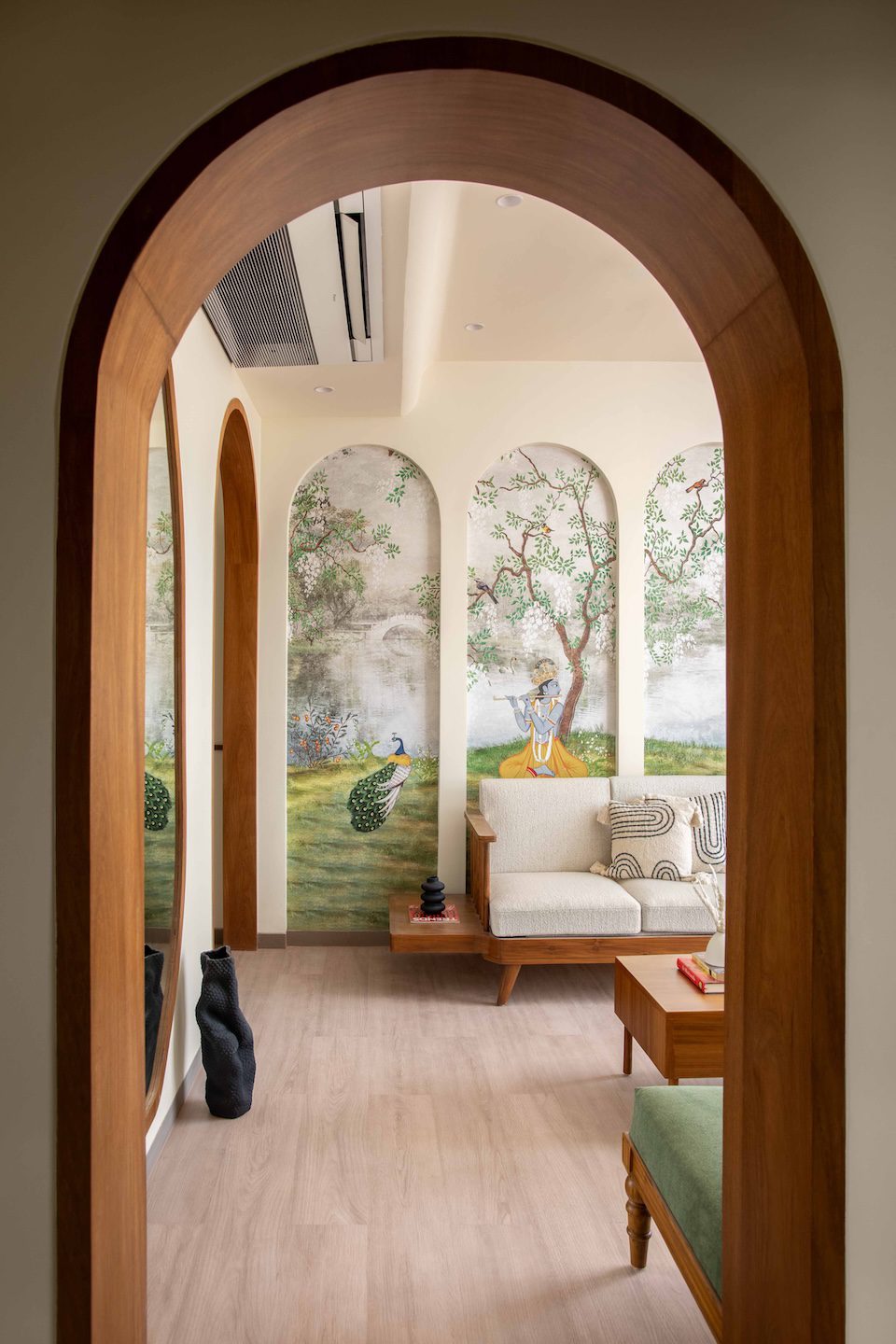
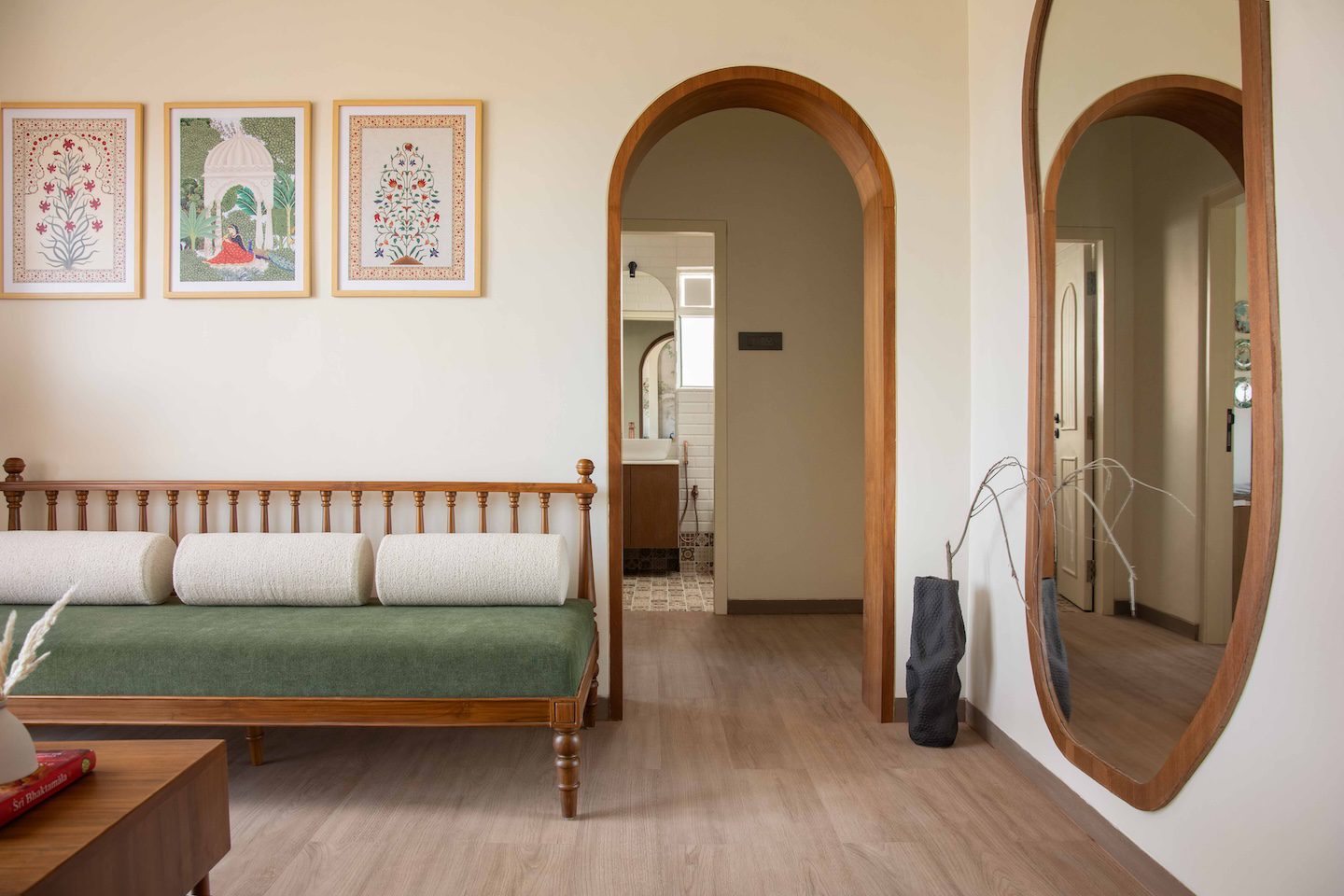
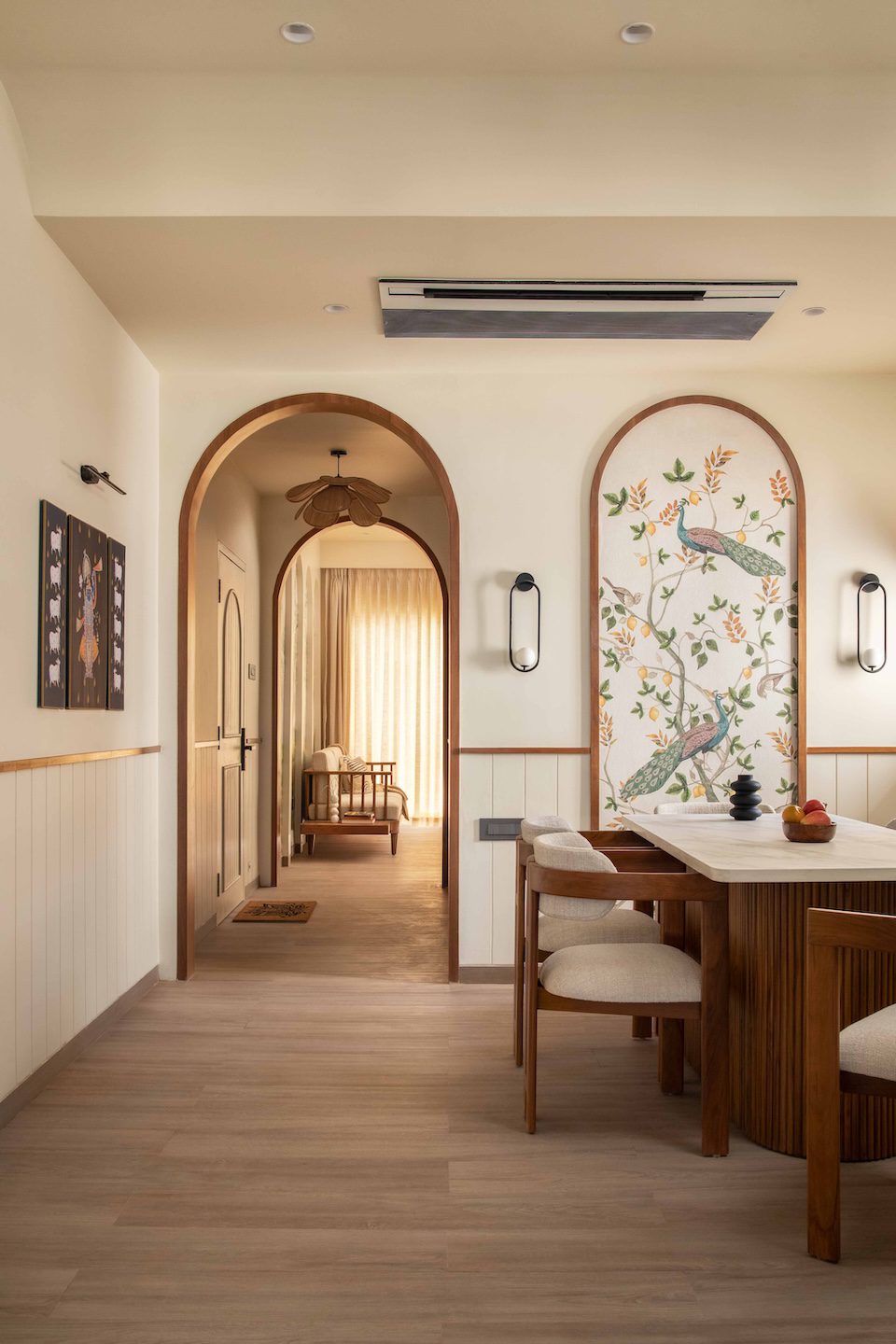
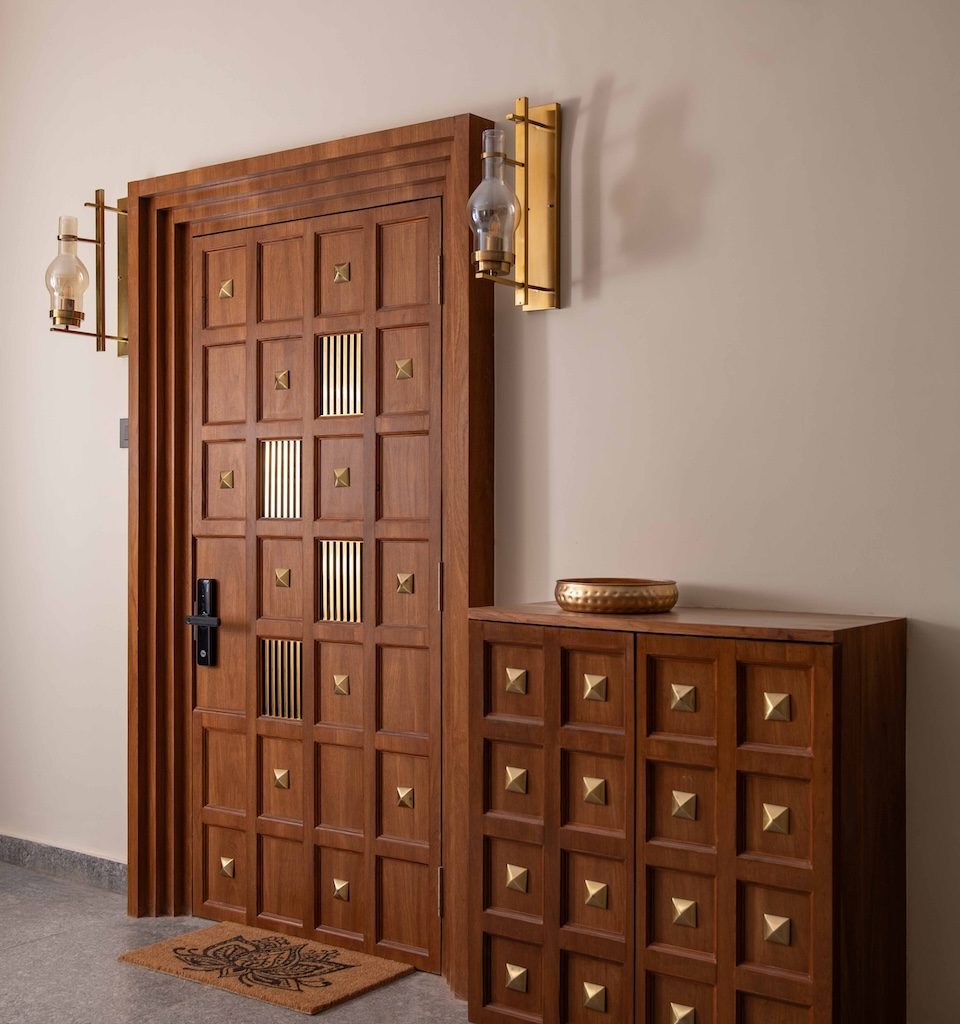
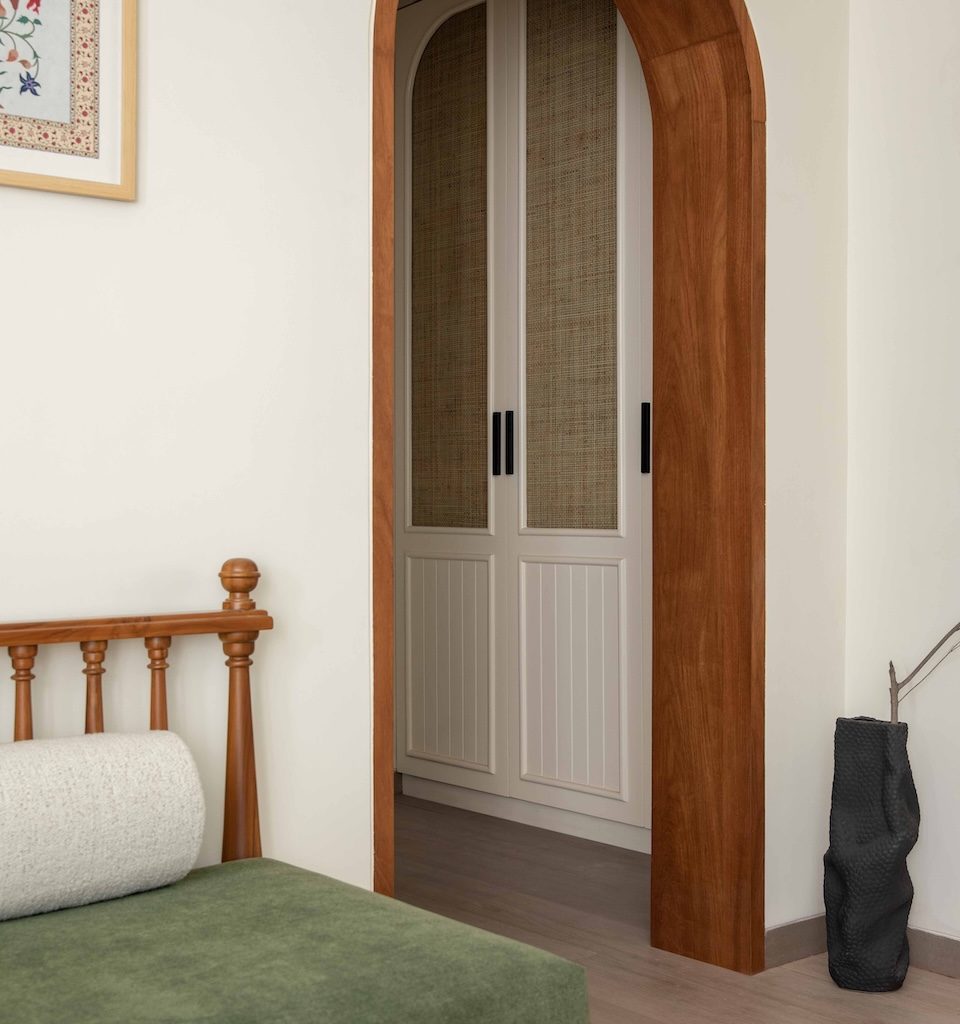
The design narrative unfolds from the entrance passage, which establishes the home’s tonal balance. Rooted in Indian aesthetics, the space is ornamental yet measured, offering a gracious welcome without excess. Arched wooden doorways frame the transition inward, operating as symbolic thresholds—guiding movement not only from exterior to interior, but from the everyday into a more contemplative realm.
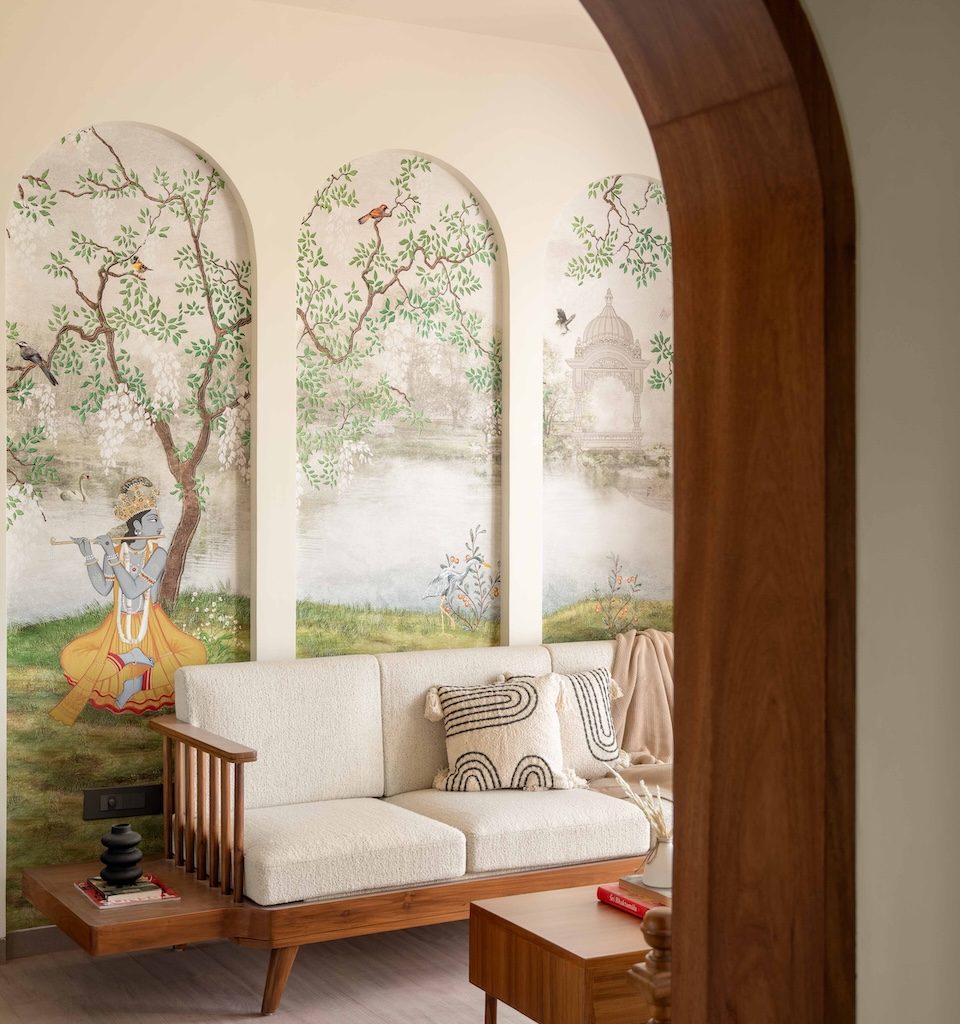
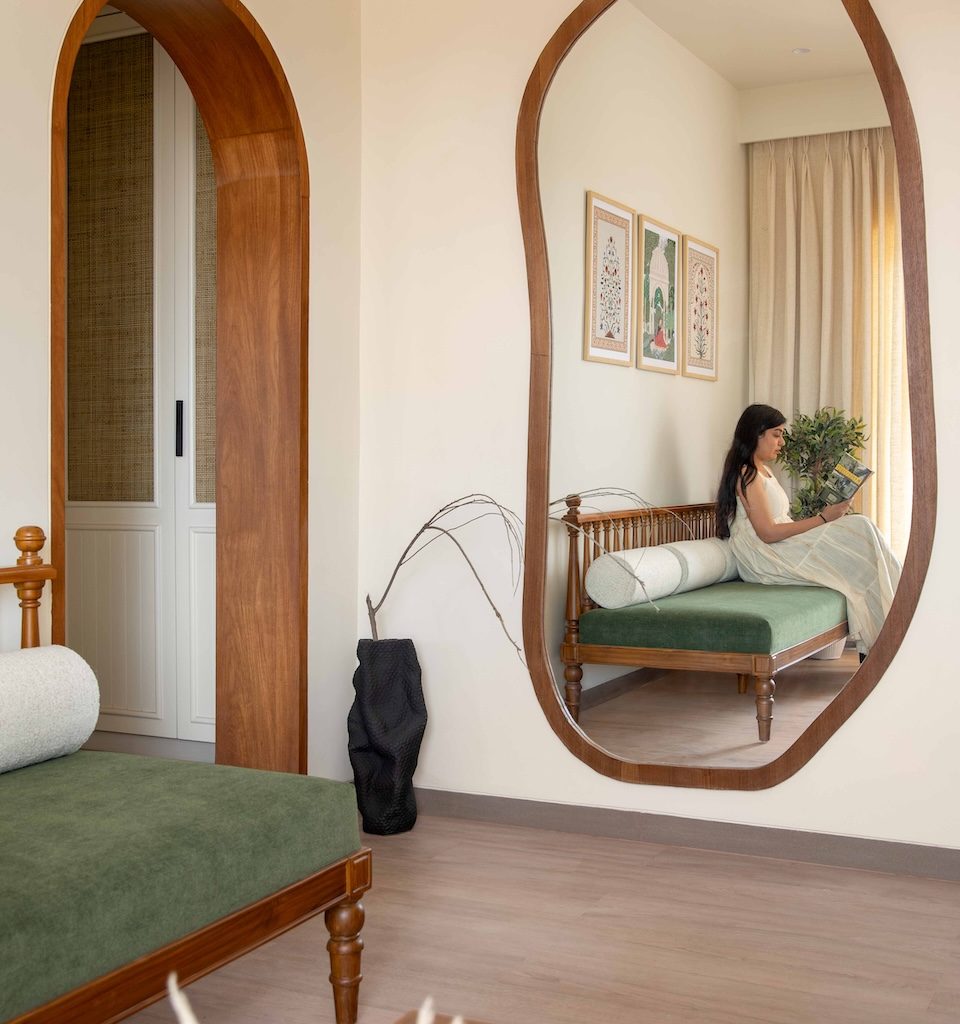
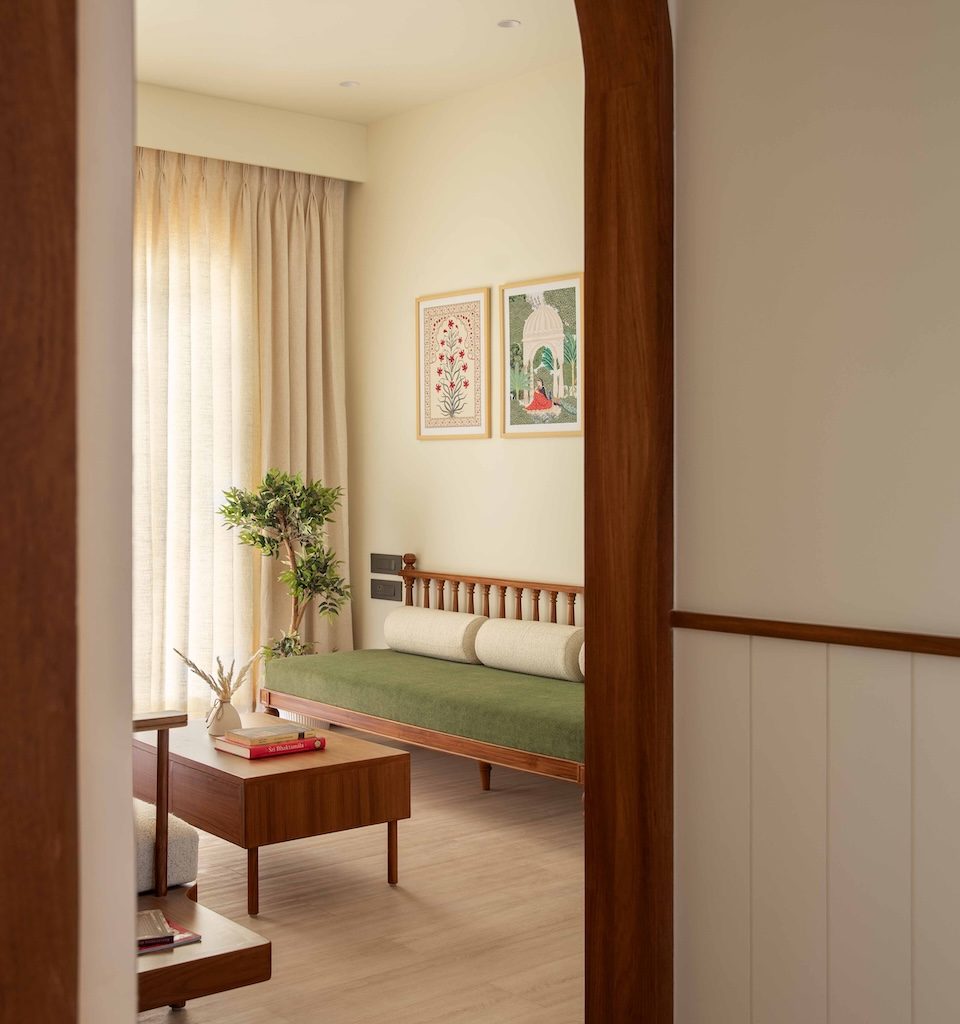
Beyond this, the living area reveals itself in a restrained palette of light timber flooring and neutral walls, allowing each crafted element to hold its presence. The warmth of the wood grounds the space, while olive green diwan seating introduces a gentle vibrancy. Chosen as a deliberate reference to traditional Indian living, the diwan supports both informal lounging and devotional gatherings such as bhajans or satsangs, reinforcing the home’s dual function as residence and retreat.
Anchoring the room is a bespoke wallpaper mural which portrays Krishna playing the flute within a verdant forest setting, layered with flora and fauna reminiscent of Vrindavan’s natural landscape. The mural does not function as decoration alone; it establishes atmosphere and intent. In moments of pause, it draws the gaze inward, evoking the groves of Vrindavan and subtly reinforcing the spiritual tone that shapes the entire home.
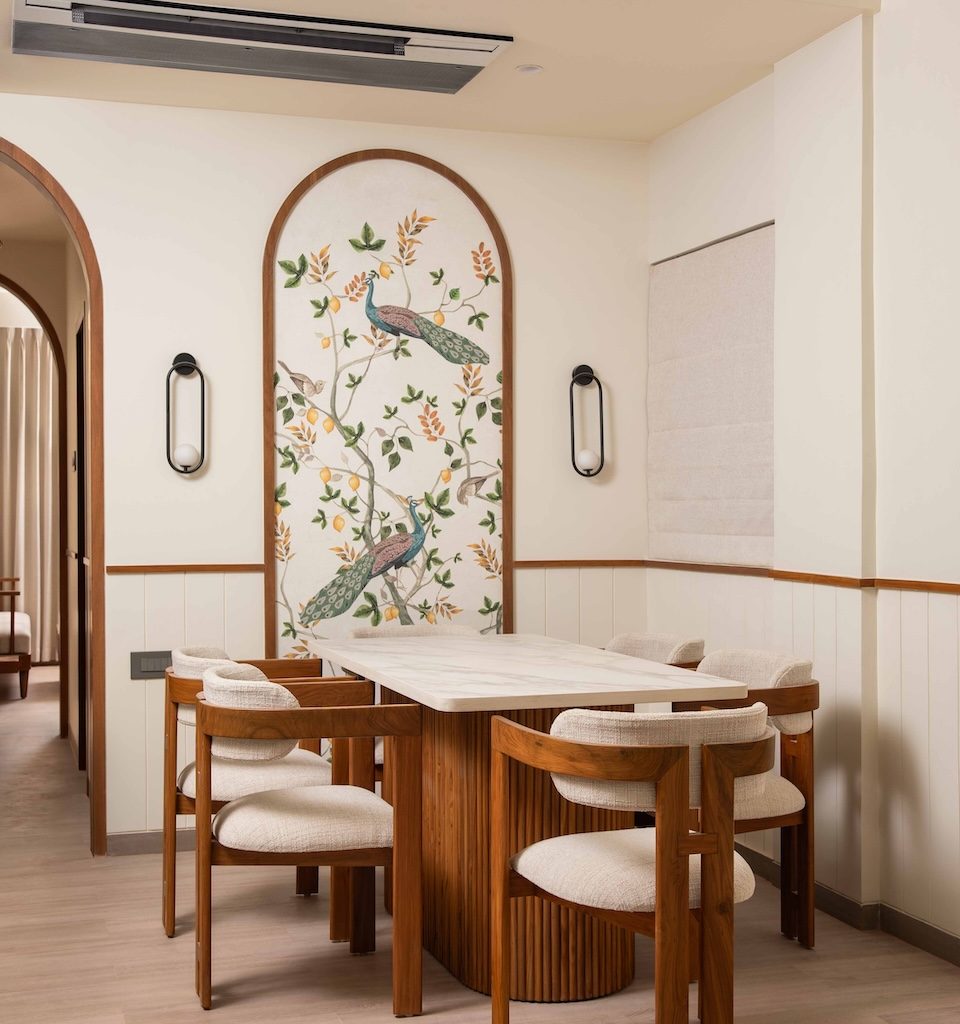
The dining area is marked by a custom-crafted wooden dining table and is paired with gently curved chairs. The furniture is set against a Kalakaari Haath wallpaper framed within an arched niche. Rich in intricate Indian motifs, the wallpaper celebrates artisanal craftsmanship and introduces a layer of timeless artistry. The arched framing subtly references the architectural language of temples and vernacular Indian homes, rooting the dining experience in familiarity and heritage.
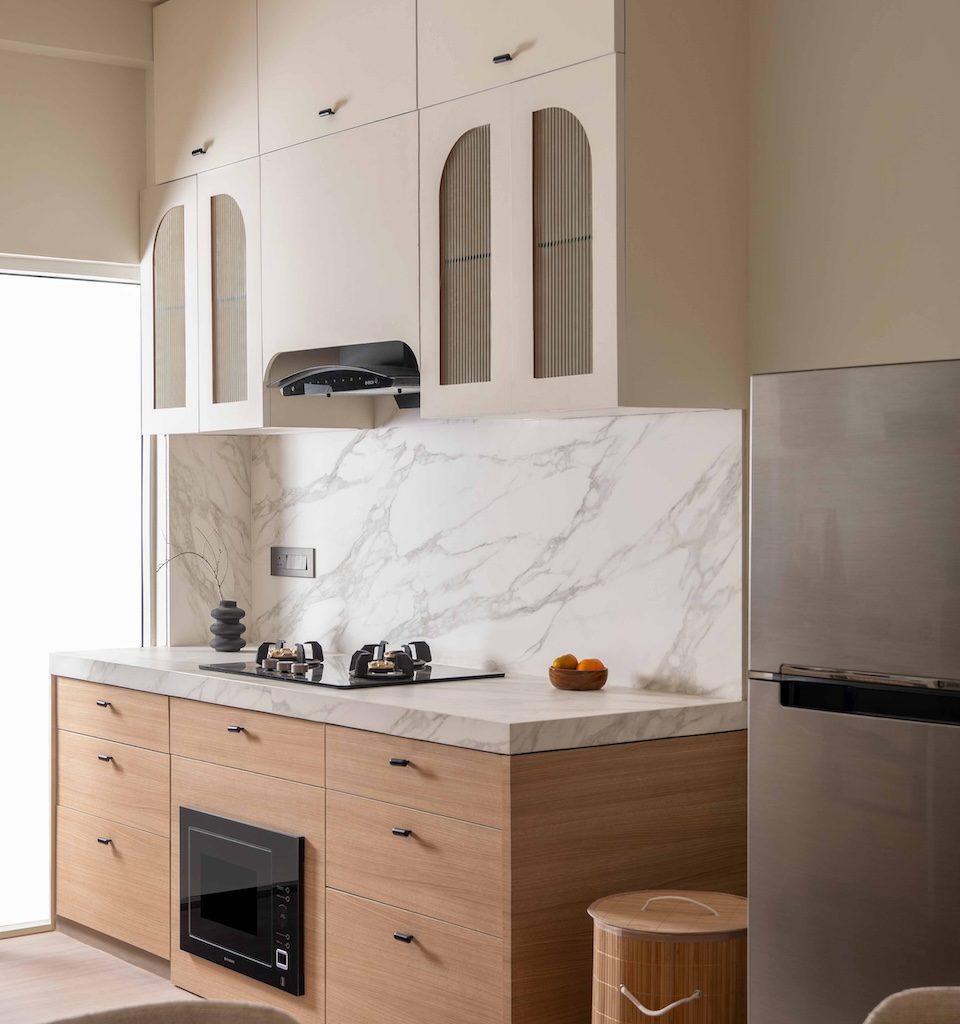
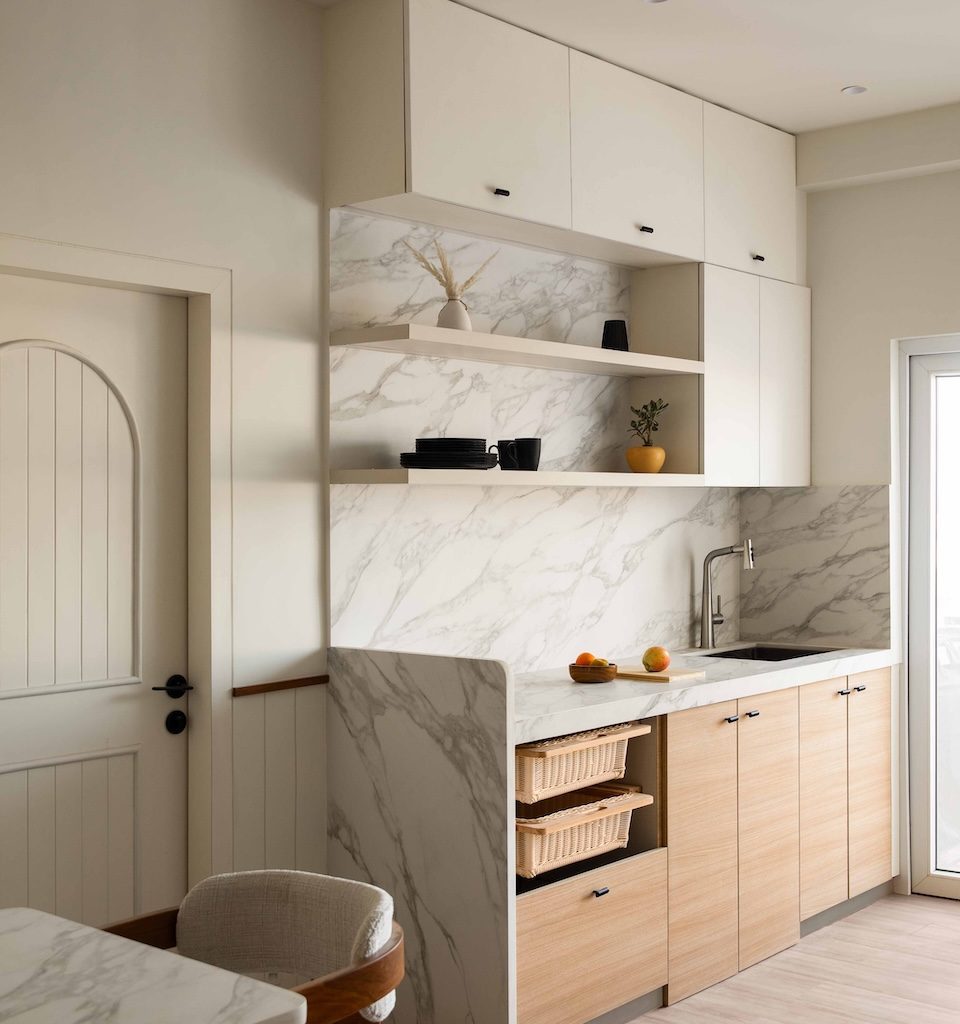
In contrast, the adjoining kitchen adopts a distinctly contemporary expression. Sleek white cabinetry, pristine marble countertops, and open shelving establish a space that feels light, functional, and effortlessly organised. For the client, it was essential that the kitchen remain modern and uncluttered, supporting ease of daily use while still belonging to the larger design narrative.
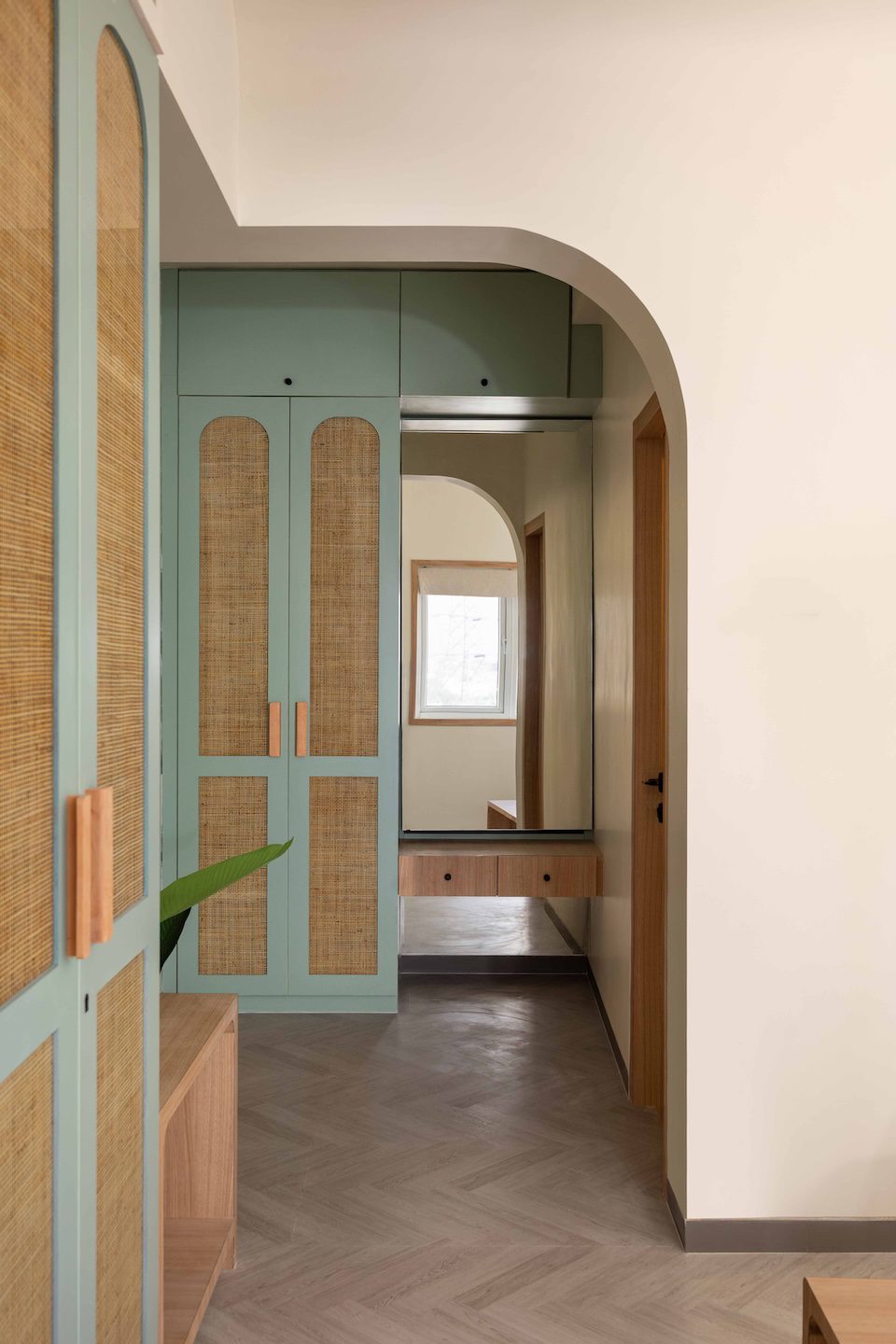
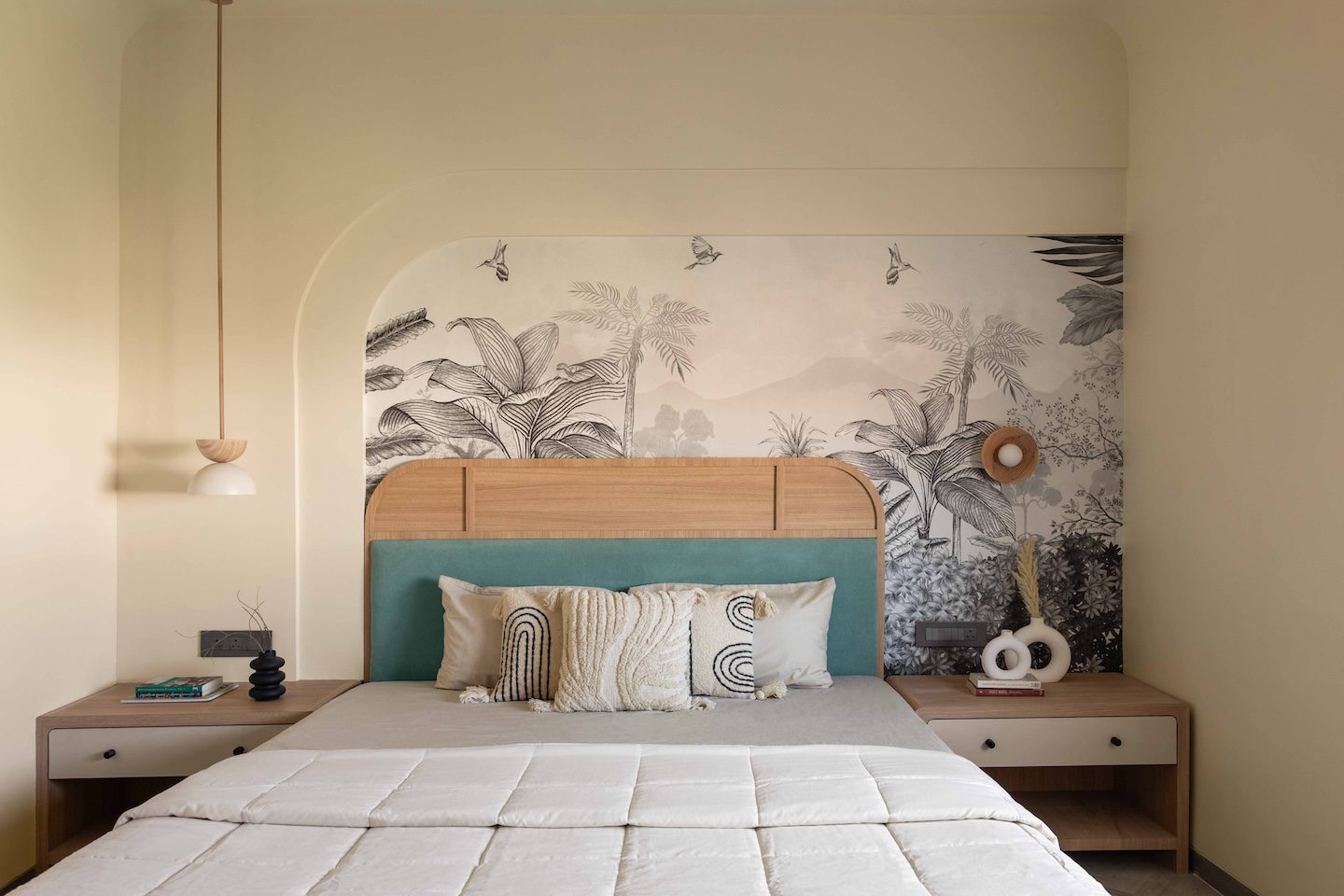
The master bedroom is composed as a retreat draped in a neutral palette and features layered rattan textures and nuanced shades of blue for warmth and depth. The wardrobes combine rattan weave with blue-toned finishes, while the light wood bed frame has an upholstered blue headboard that lends softness. Behind it, a monochrome wallpaper introduces subtle patterning, adding dimension without disturbing the room’s restful character.
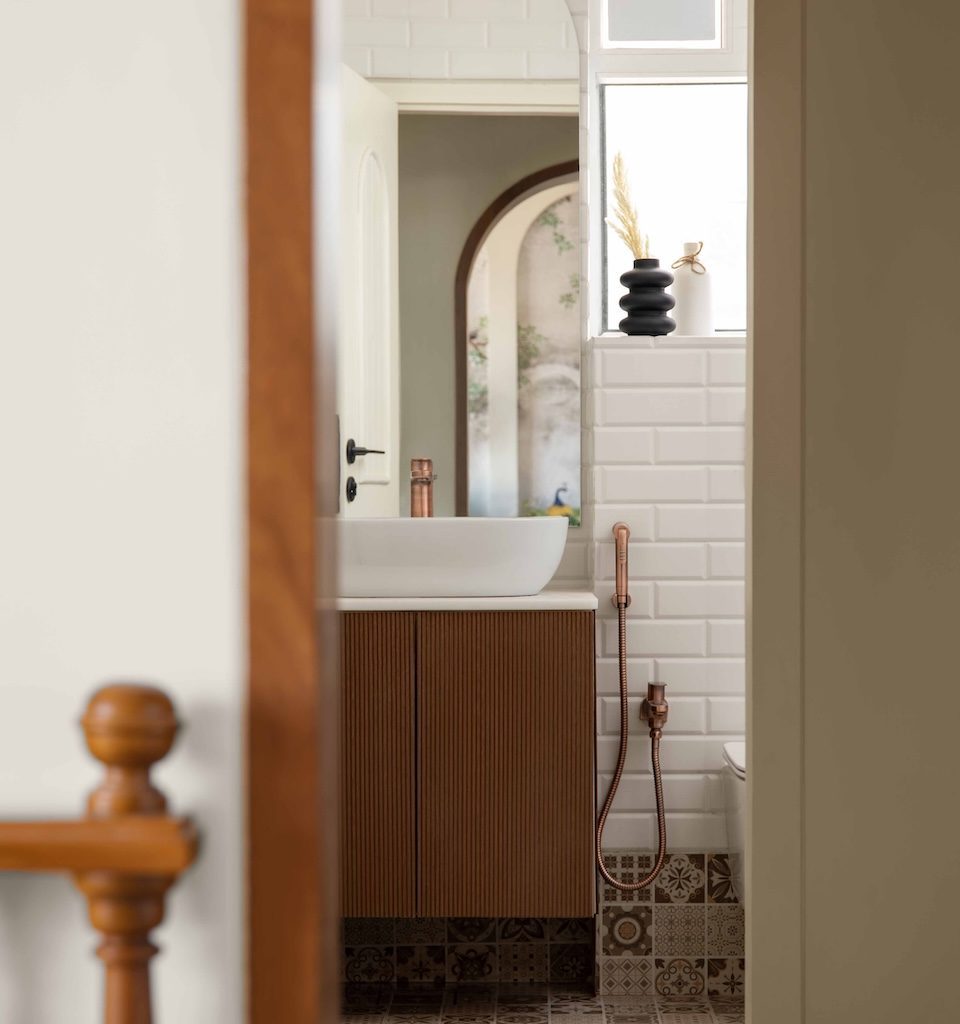
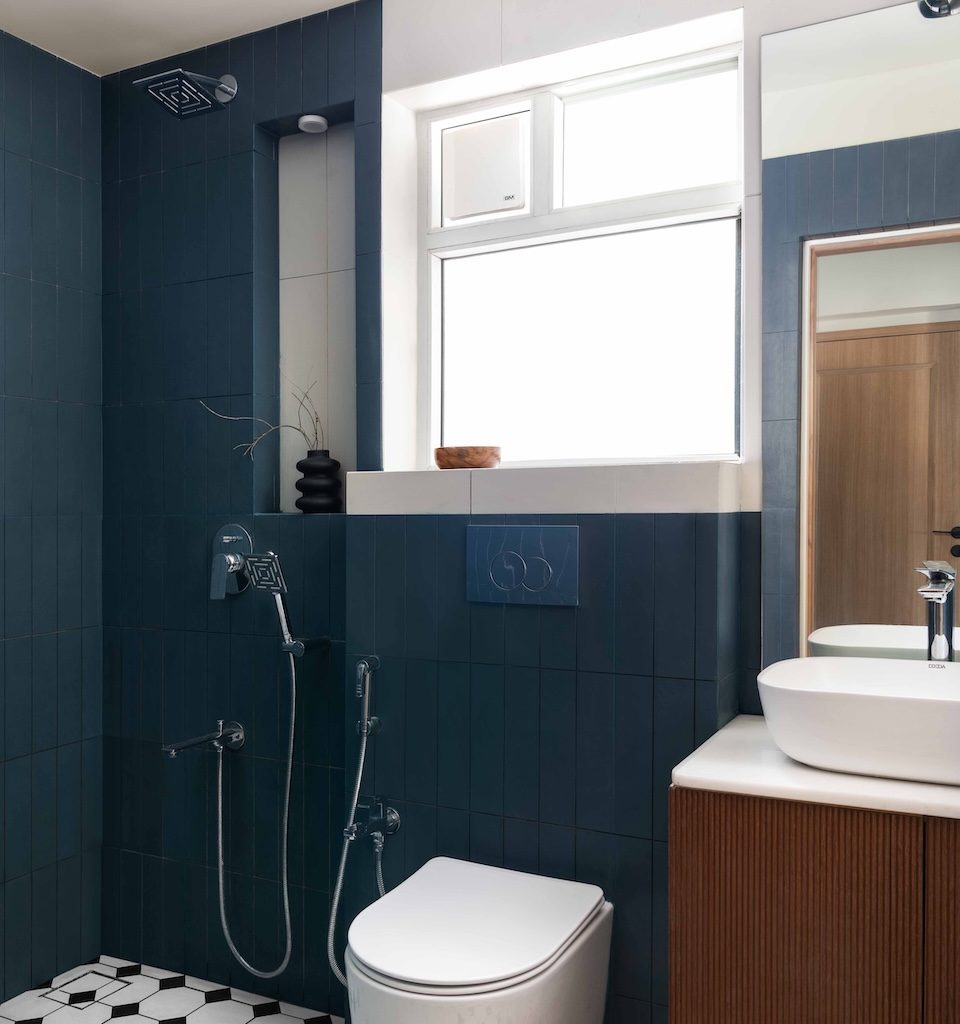
The attached bathroom extends this philosophy of balance, albeit with a more defined expression. Geometric black-and-white floor tiles establish a graphic foundation, while blue wall tiles echo the bedroom’s palette, maintaining visual continuity. A wooden vanity paired with a generous mirror brings in warmth and material honesty, ensuring the space feels considered and cohesive.
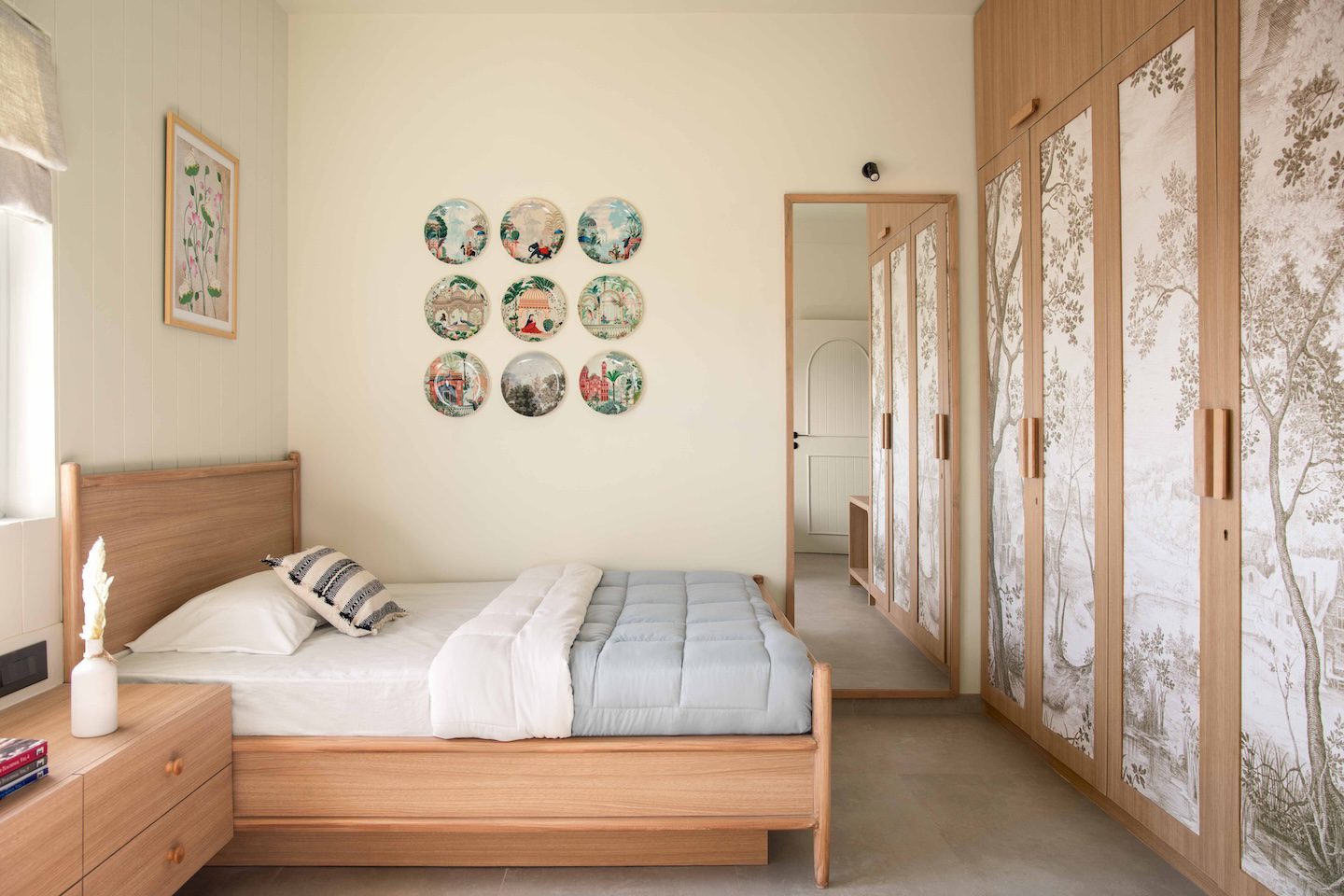
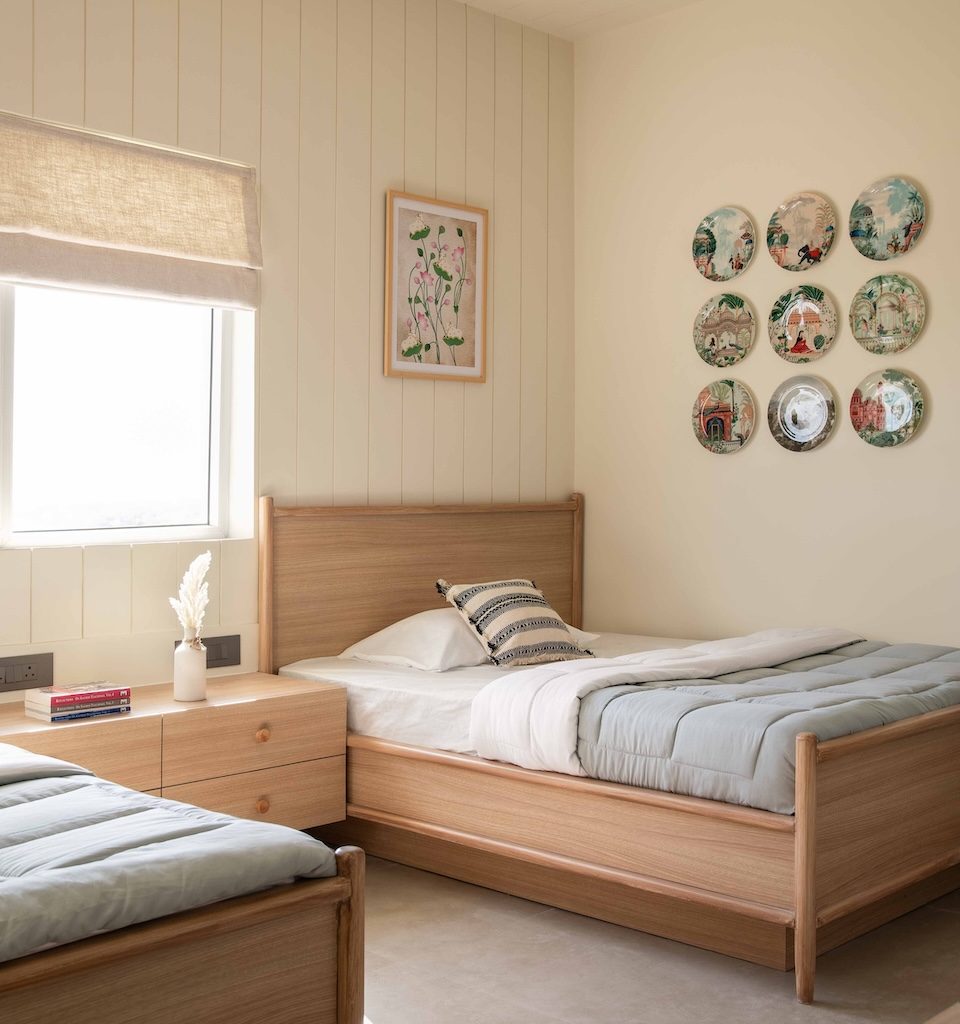
The guest bedroom is a charming twin setting that draws inspiration from Scandinavian simplicity—the space is defined by clean lines, balanced proportions, and natural finishes. Linear grooves were introduced on the walls and ceiling to add depth to this room. Furniture pieces include two wooden single beds, and a wardrobe finished in wood paired with monochrome wallpaper. The walls are adorned with decorative plates by Dessine Art… each piece carrying intricate patterns and colour narratives that quietly celebrate craft.
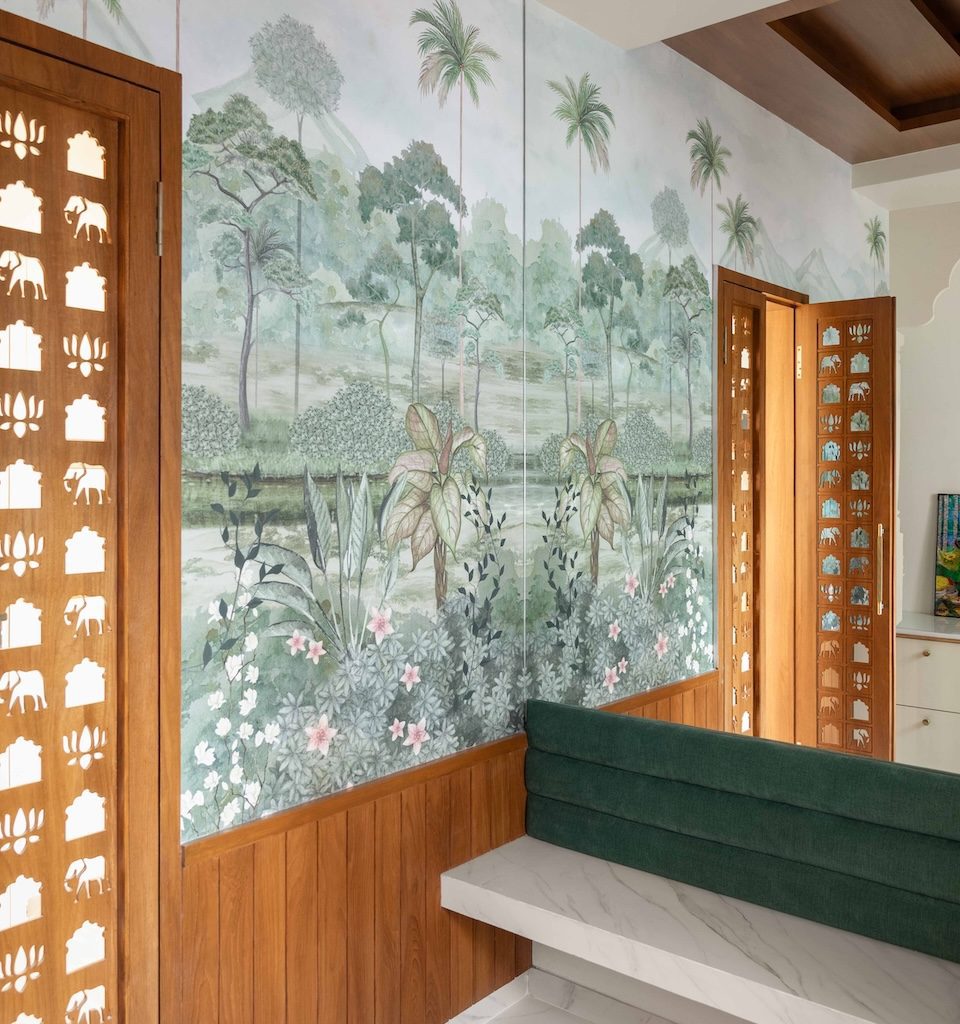
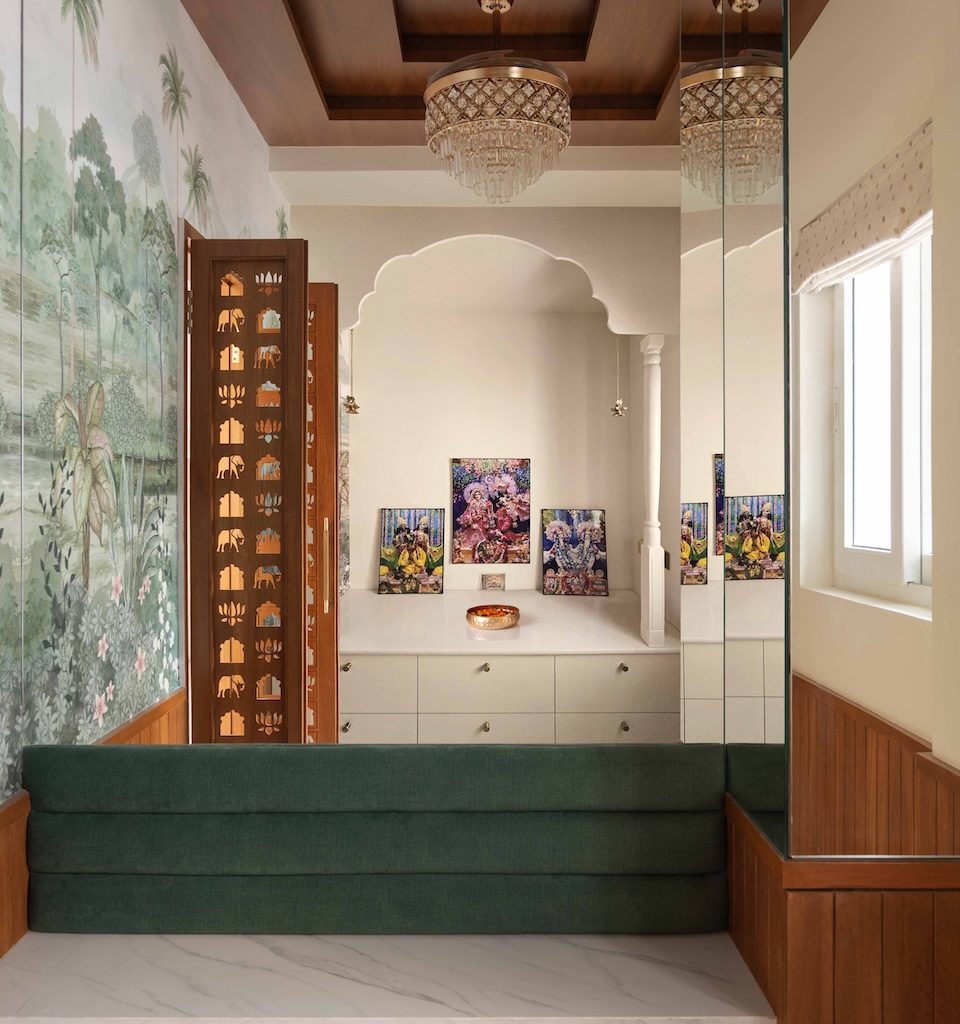
No home in Vrindavan is complete without a pooja room, and for this project, it was the sacred core. The highlight is its intricate wooden jaali door finished in veneer, designed to feel both delicate and eternal. The door itself is a symbolic threshold into the divine. Inside, the ambience is enhanced with a chandelier that brings a gentle glow, while a mirrored panel reflects light and expands the sanctity of the space. The backdrop is a lush green wallpaper, grounding the room in Vrindavan’s eternal connection with nature.
Fact File
Project: The Divine Nest
Location: Vrindavan, Uttar Pradesh
Area: 1,400 sq ft
Principal architects: Nidhi Bhatt and Kunal Gupta

Add a Comment