
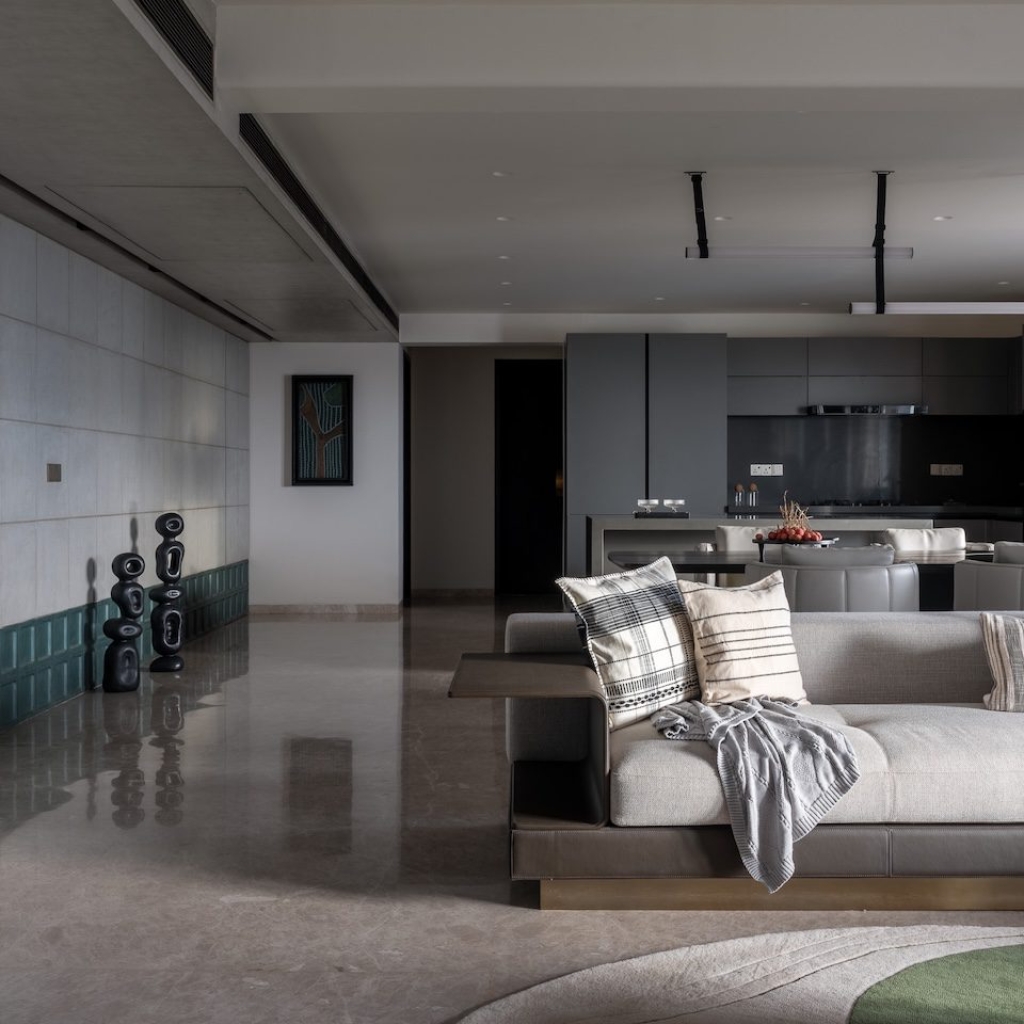
In Jamnagar, this Dhyey Chag Architects-designed residence reworks a conventional 4BHK into an expansive 3BHK, defined by seamless spatial flow, concealed detailing, and material-led restraint.
Curated by: Rupali Sebastian
Photographs: PHX India I Ira Gosalia; courtesy Dhyey Chag Architects
The project
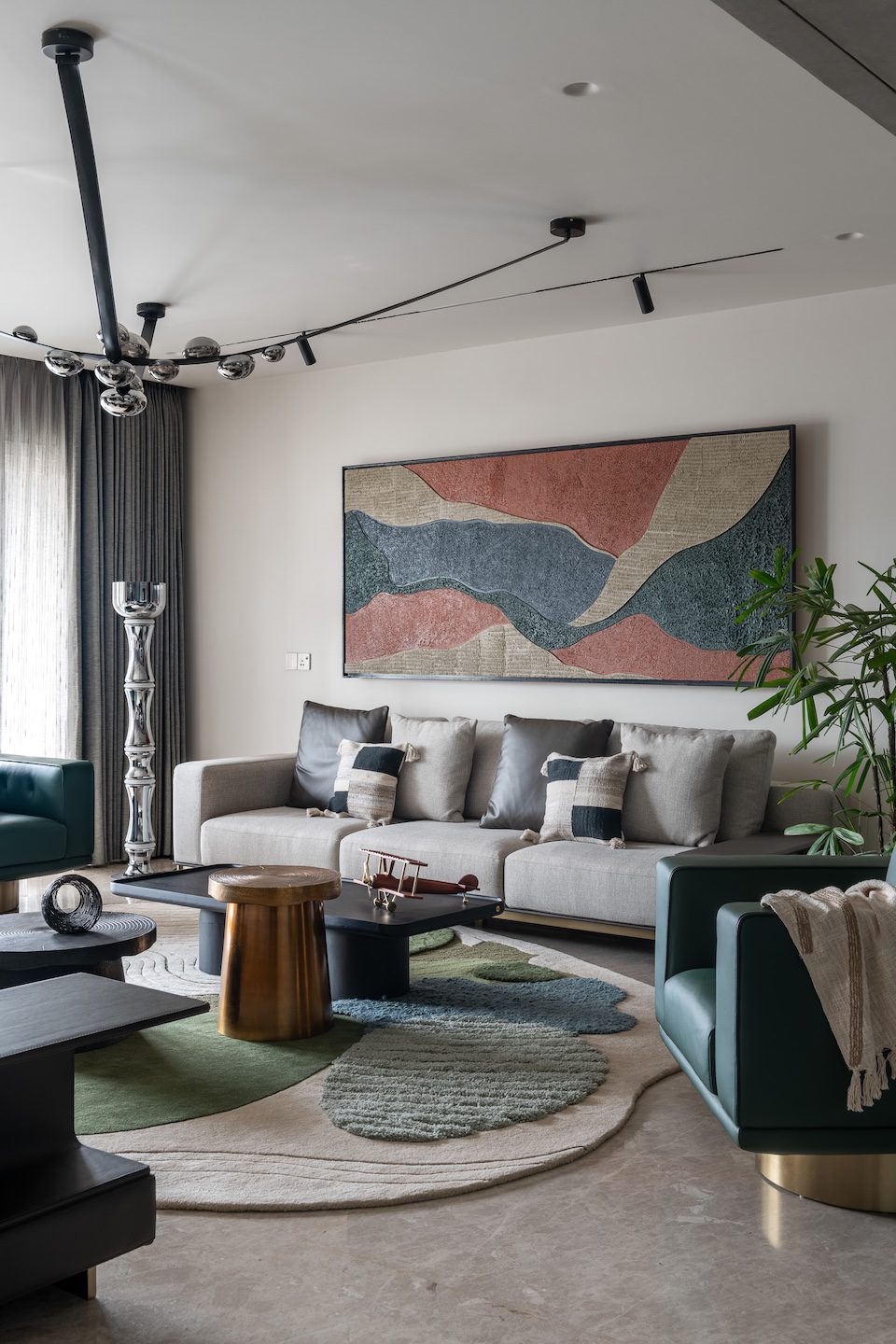
Mehta Residence is a 2,350 sq ft apartment in Jamnagar, Gujarat, reimagined from a conventional 4BHK into a more generous 3BHK. Designed by Dhyey Chag Architects, the transformation prioritises openness, fluid movement, and a refined expression of quiet luxury articulated through custom detailing and material continuity.
The site
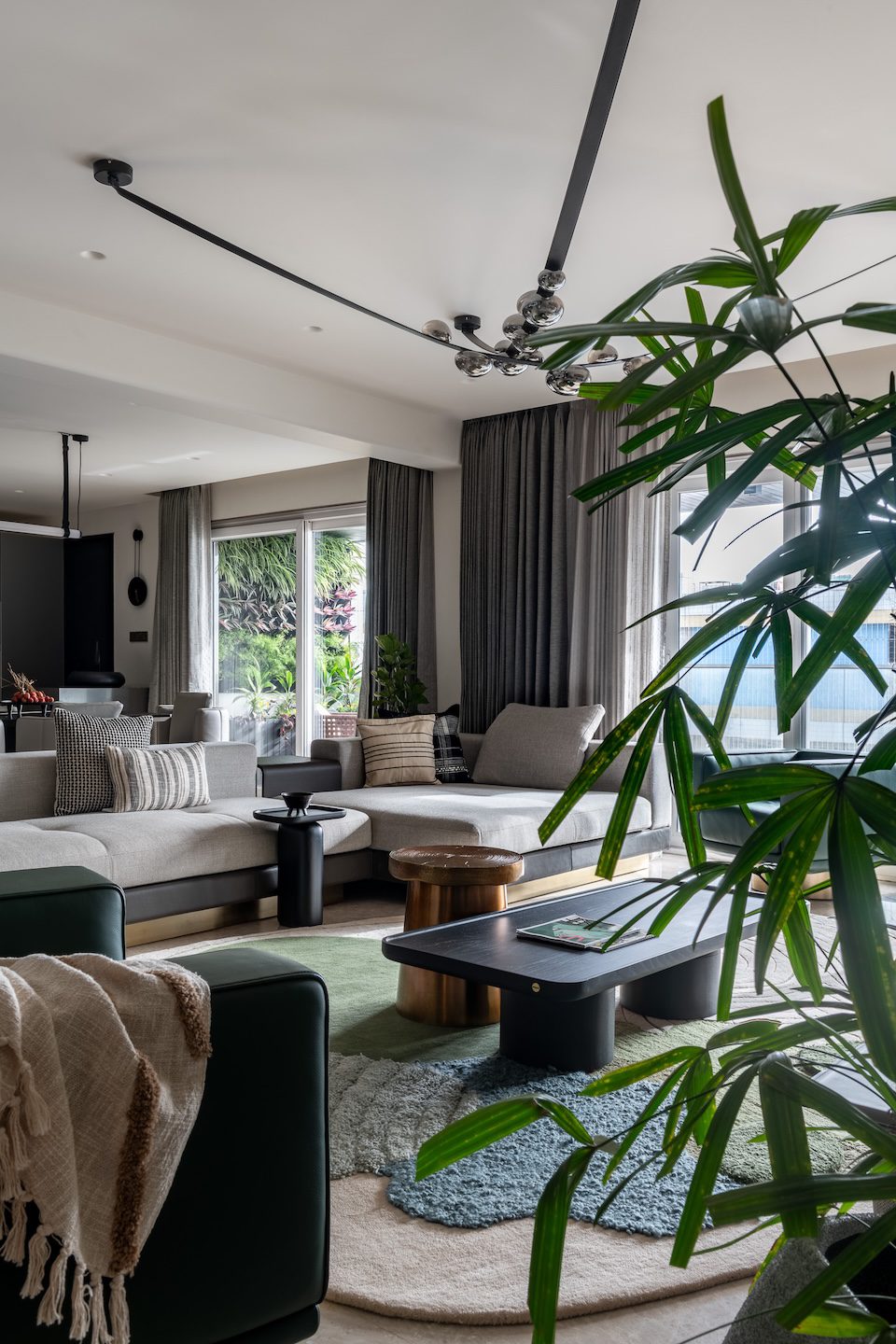
Located within an urban residential apartment complex, the home was originally compartmentalised, with fixed service cores and enclosed rooms. Generous windows and balconies provided ample natural light, allowing the redesign to focus on continuity and spatial expansion within an otherwise defined shell.
The brief
The clients sought fewer but larger spaces, favouring expansive common areas over multiple enclosed rooms. Functionally, they wanted an open living, dining, and kitchen layout suited for everyday use and social gatherings. Aesthetically, the brief called for a contemporary yet timeless language—luxurious without excess—where varied personal preferences could coexist within a cohesive design framework.
The design intent
The home is conceived as a continuous spatial canvas where architecture, interiors, and detailing merge seamlessly. Rather than relying on ornamentation, the project expresses luxury through tonal depth, sculptural gestures, and material precision. As principal architect Dhyey Chag notes, the goal was to ensure that “from the moment one enters, the home should feel grand, fluid, and uninterrupted,” allowing openness and detailing to define the experience.
The civil intervention
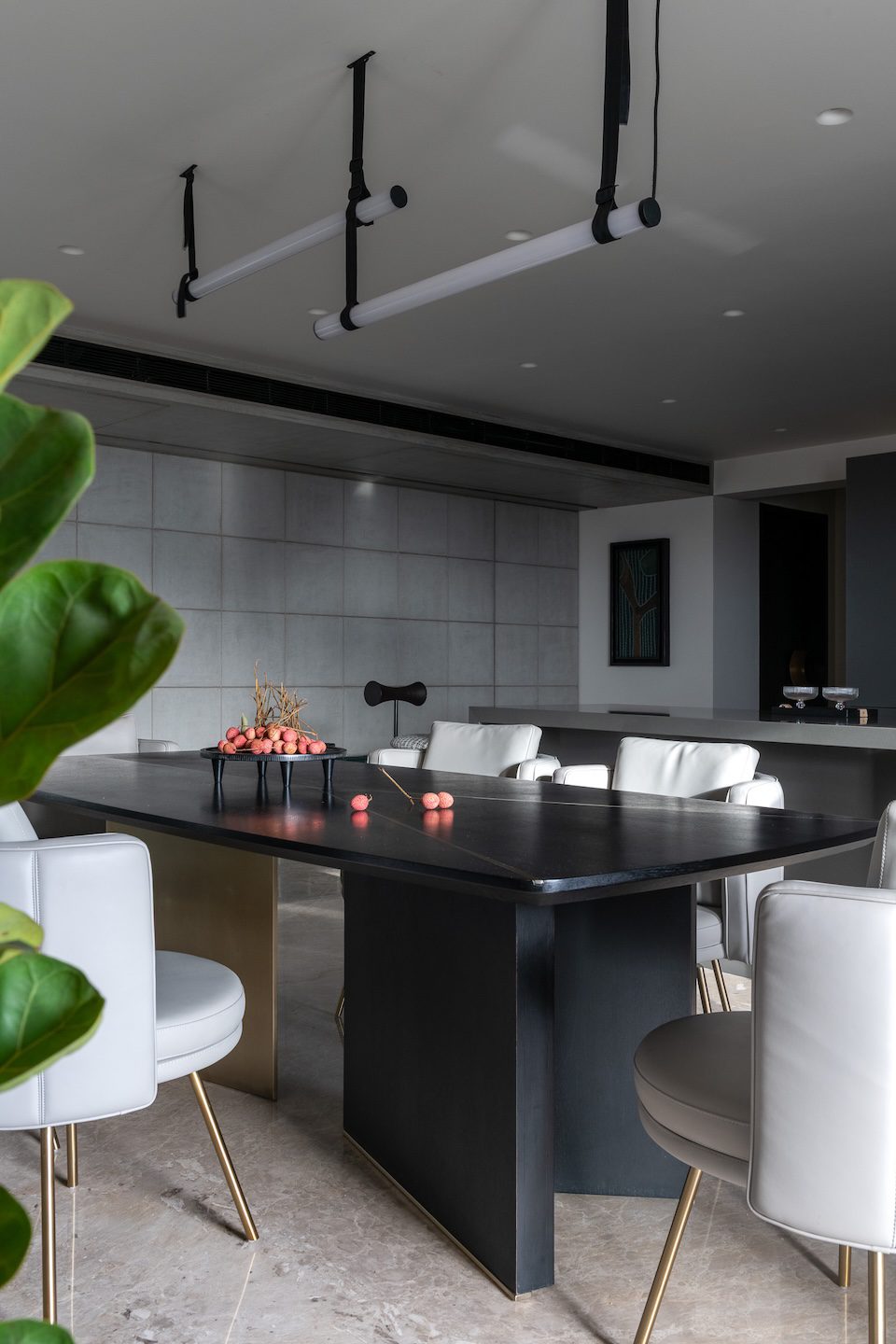
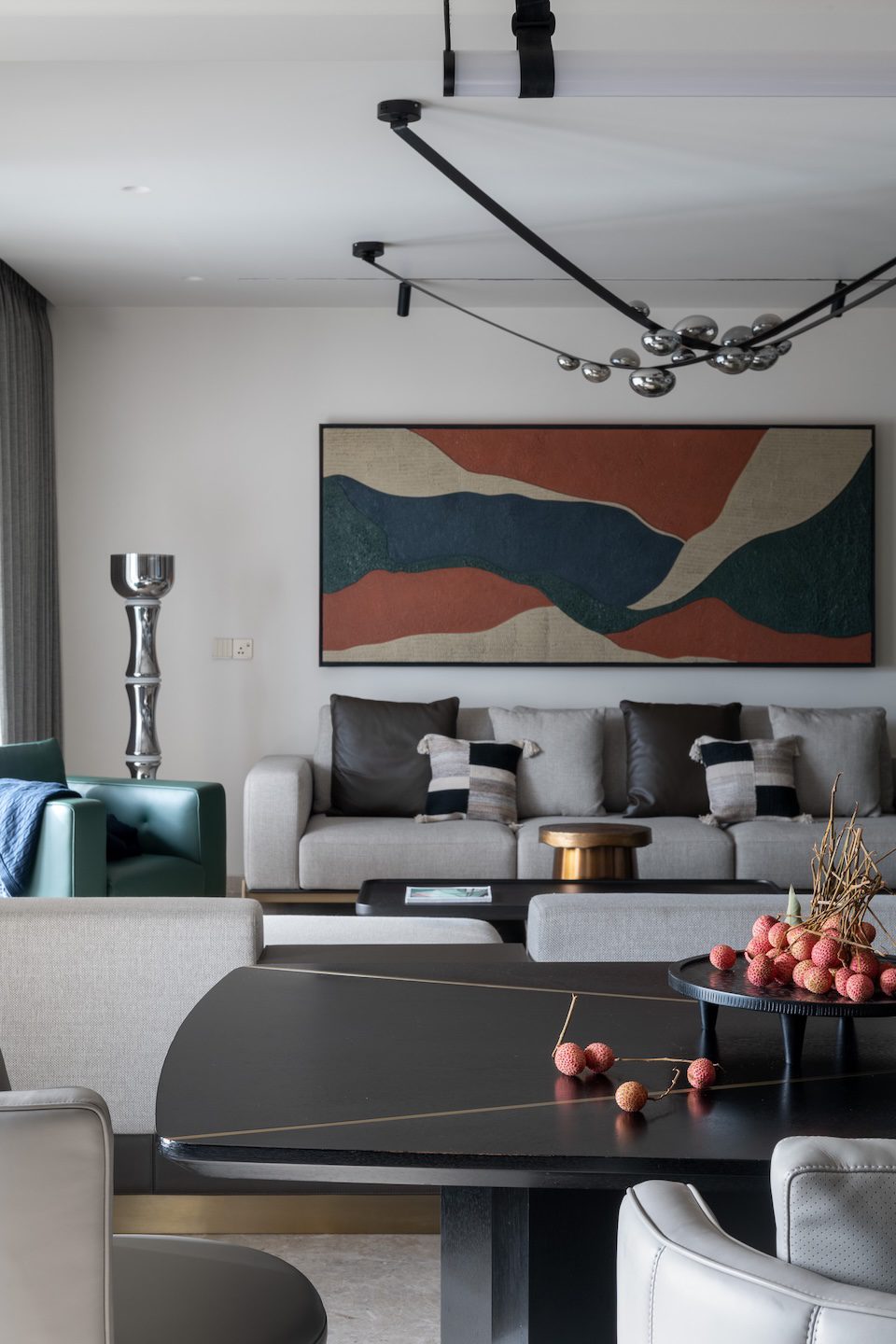
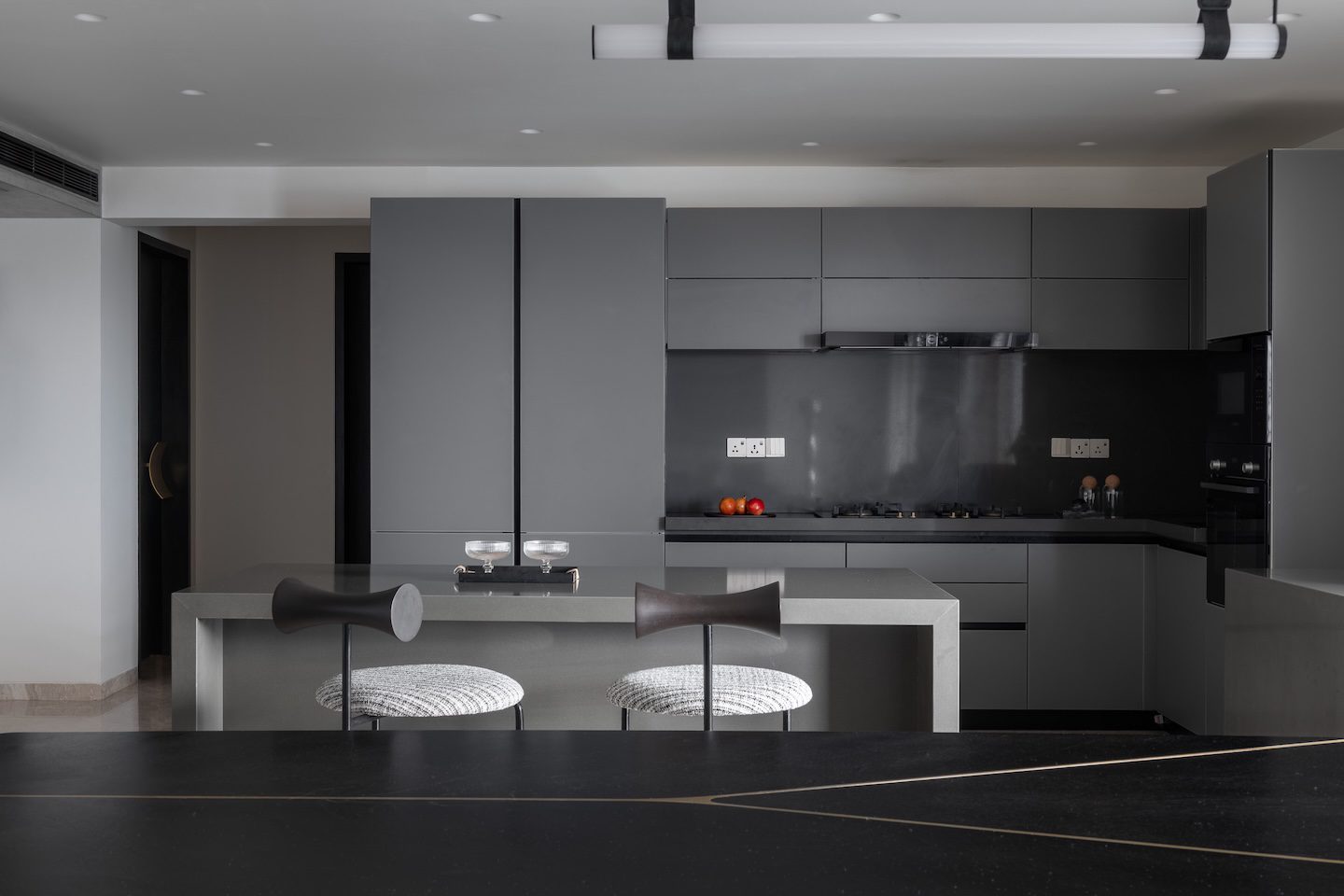
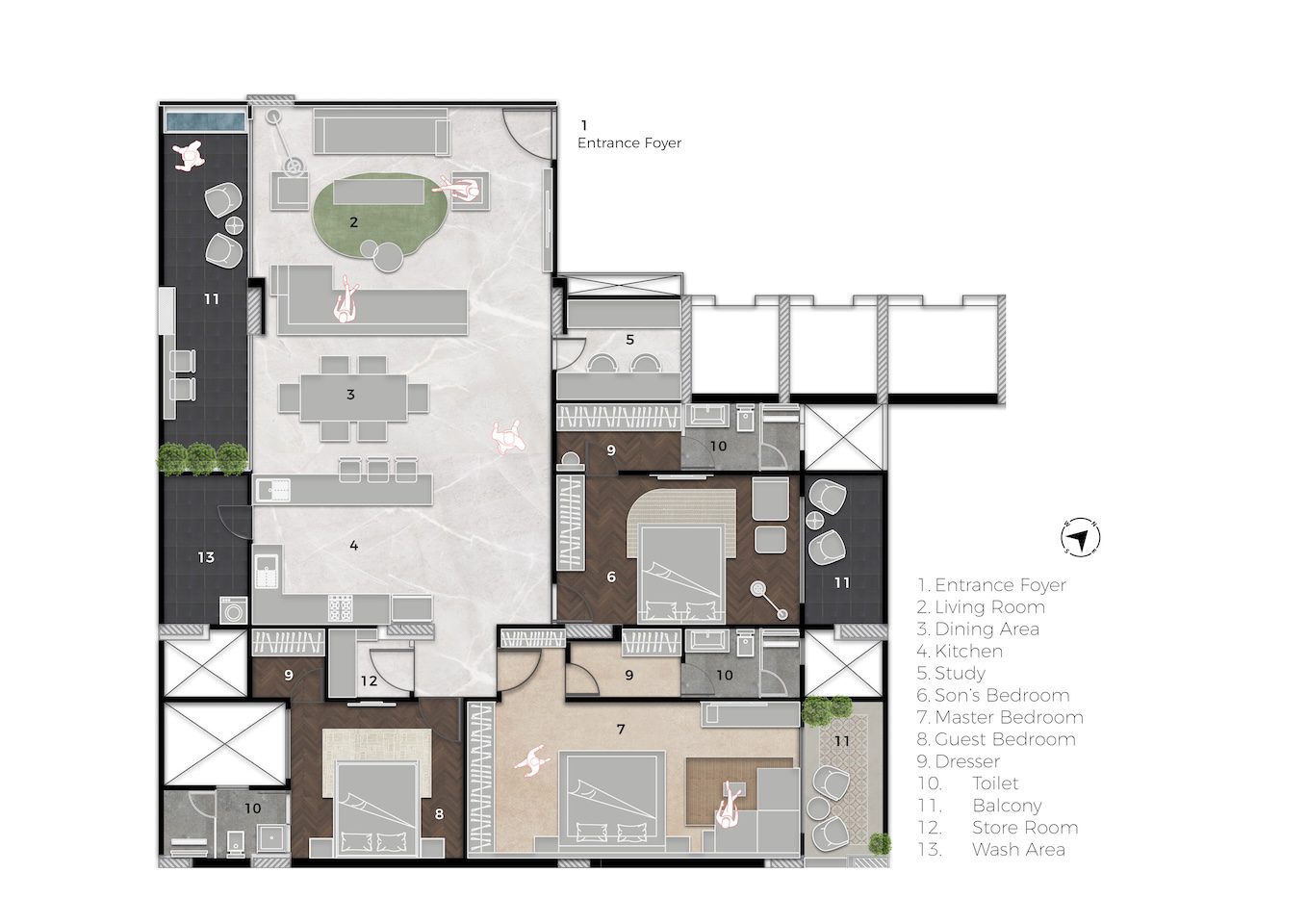
A key move involved reworking the original 4BHK layout into an expansive 3BHK configuration. Internal partitions were removed to create an approximately 880 sq ft open-plan living, dining, and kitchen area. Circulation paths were refined, and doorways were concealed within panelled surfaces to maintain uninterrupted visual flow.
The spatial flow
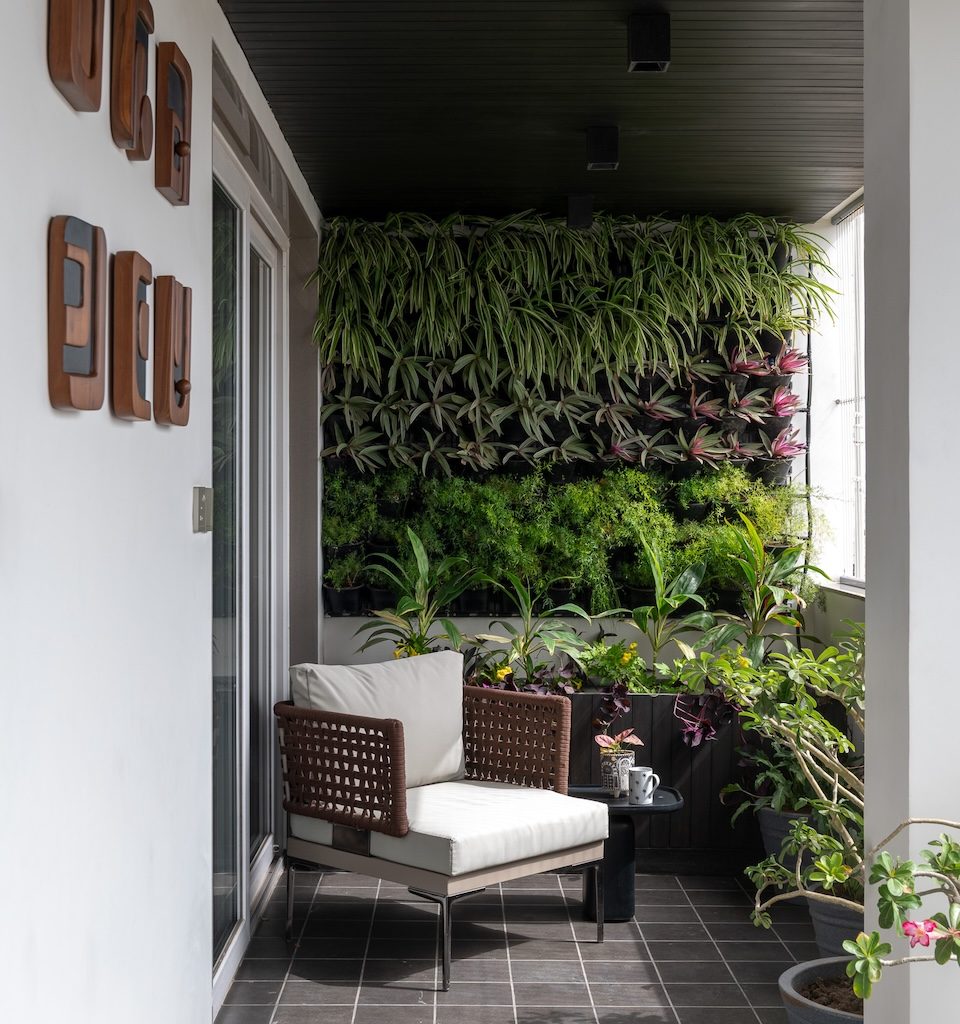
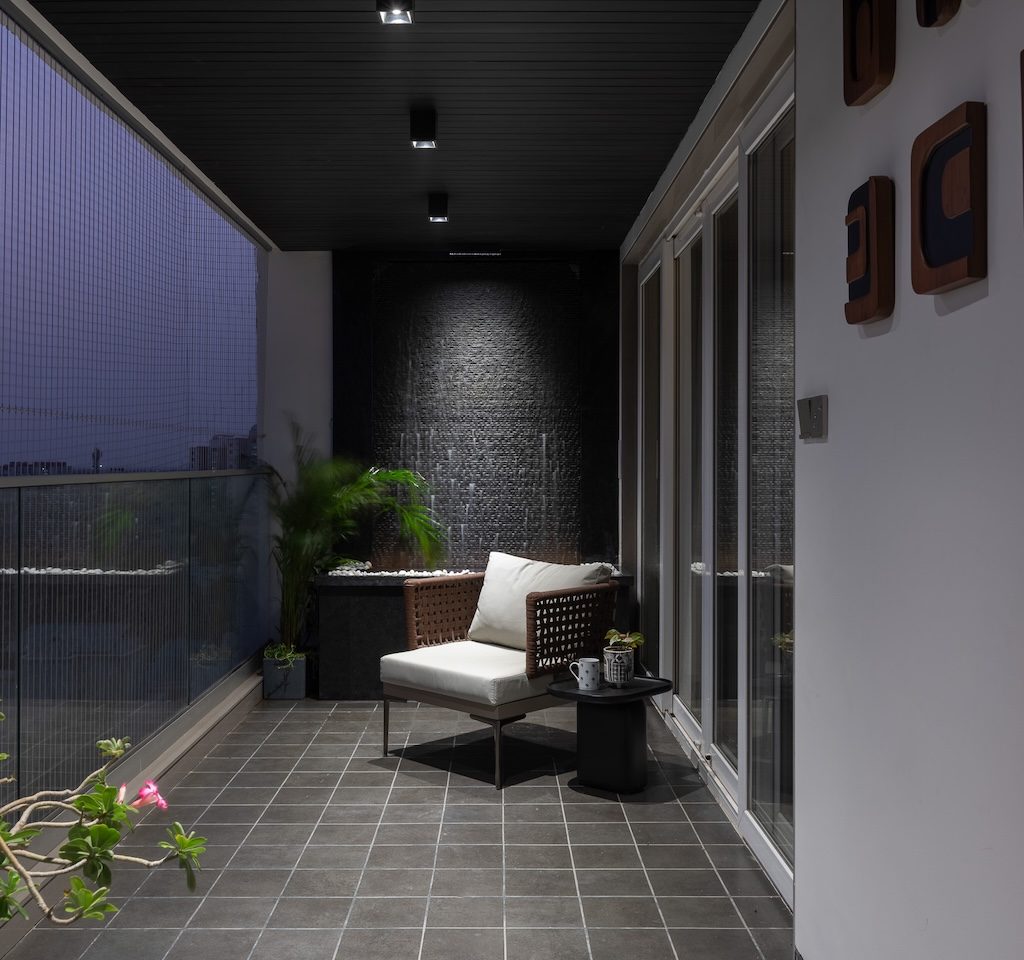
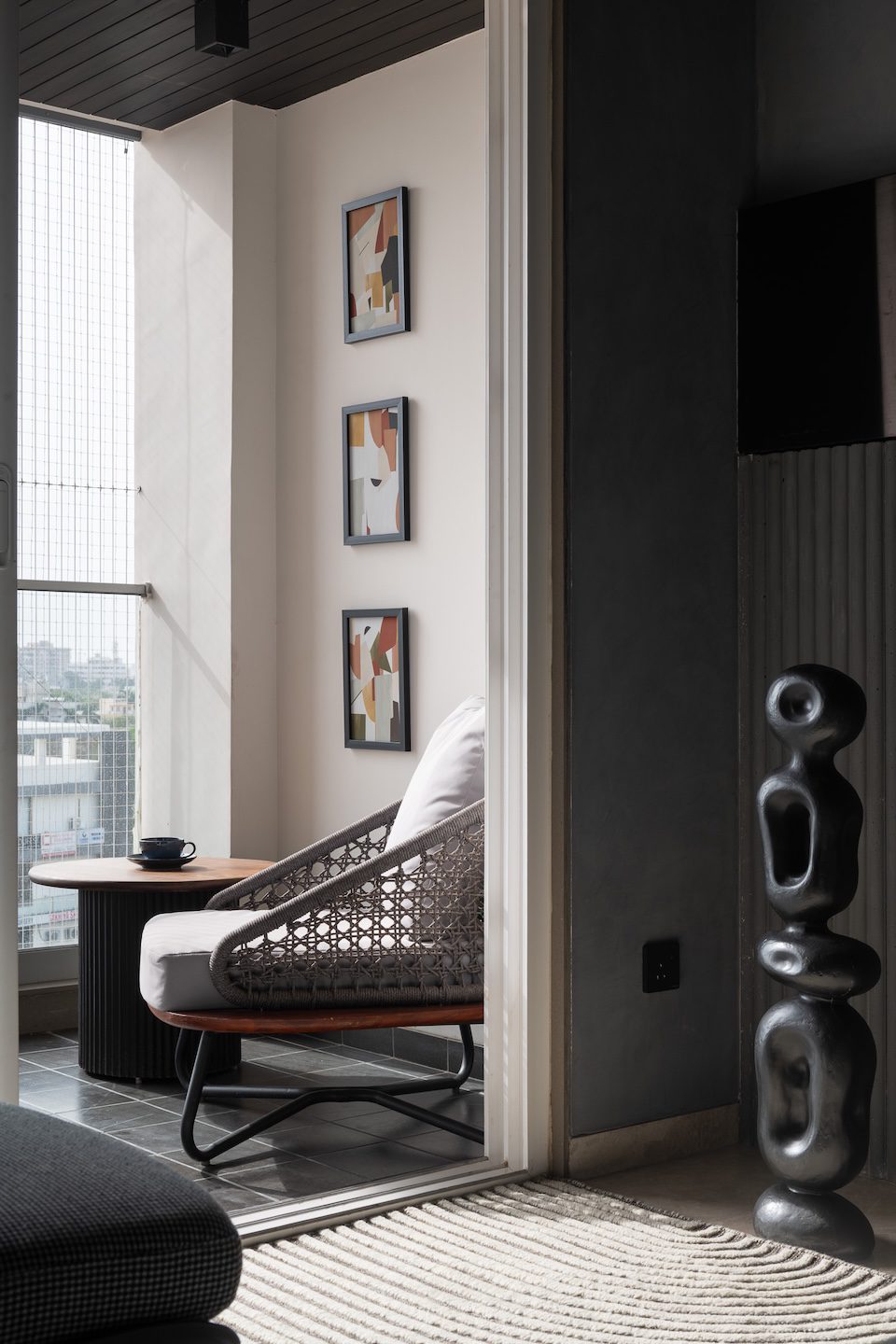
The home opens directly into a large, fluid living-dining-kitchen volume that forms the social heart of the residence. This central space connects seamlessly to the balcony, strengthening indoor–outdoor continuity. Private zones—including a study, son’s bedroom, guest bedroom, and master suite—branch off discreetly, ensuring privacy without interrupting the overall spatial narrative.
The material palette
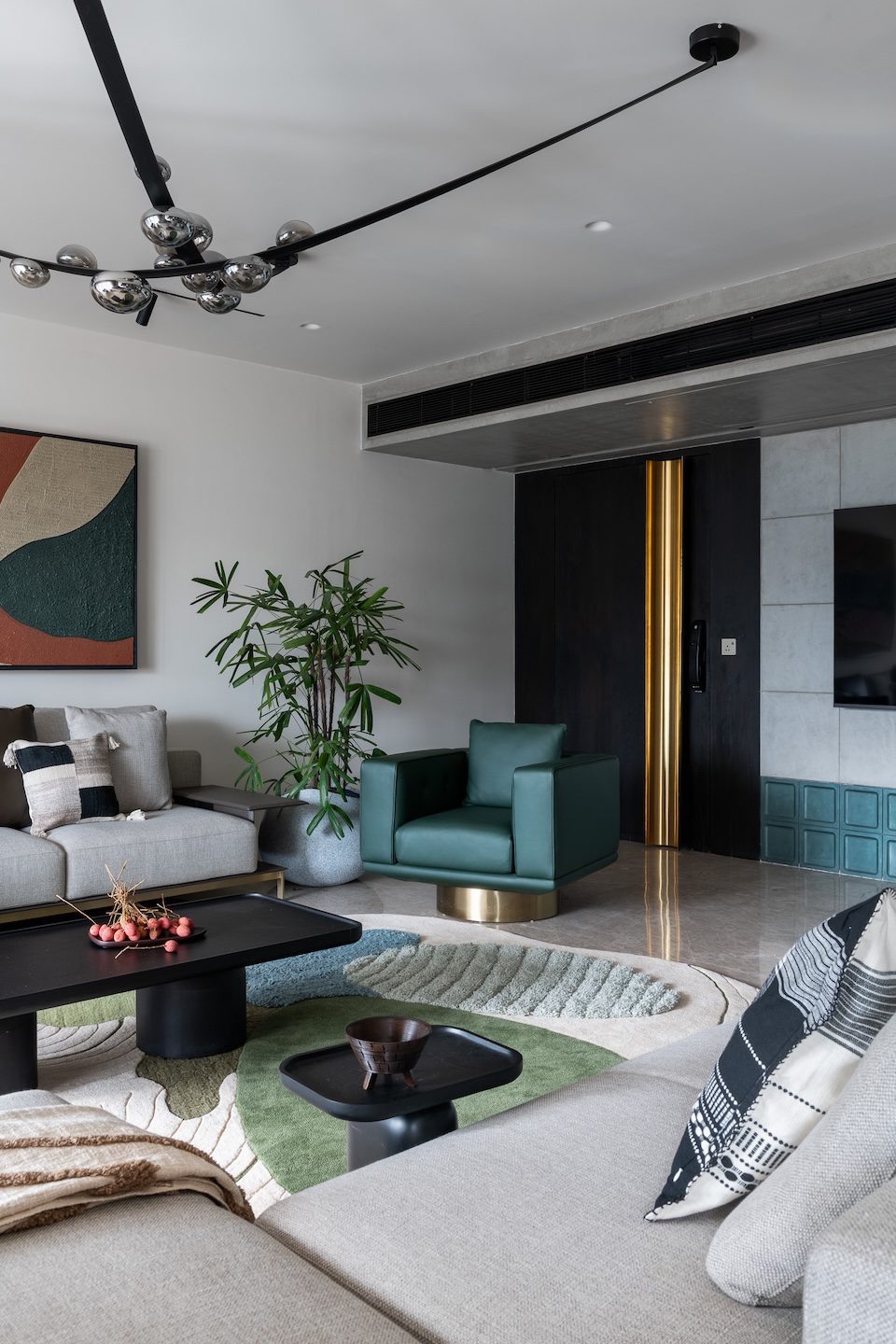
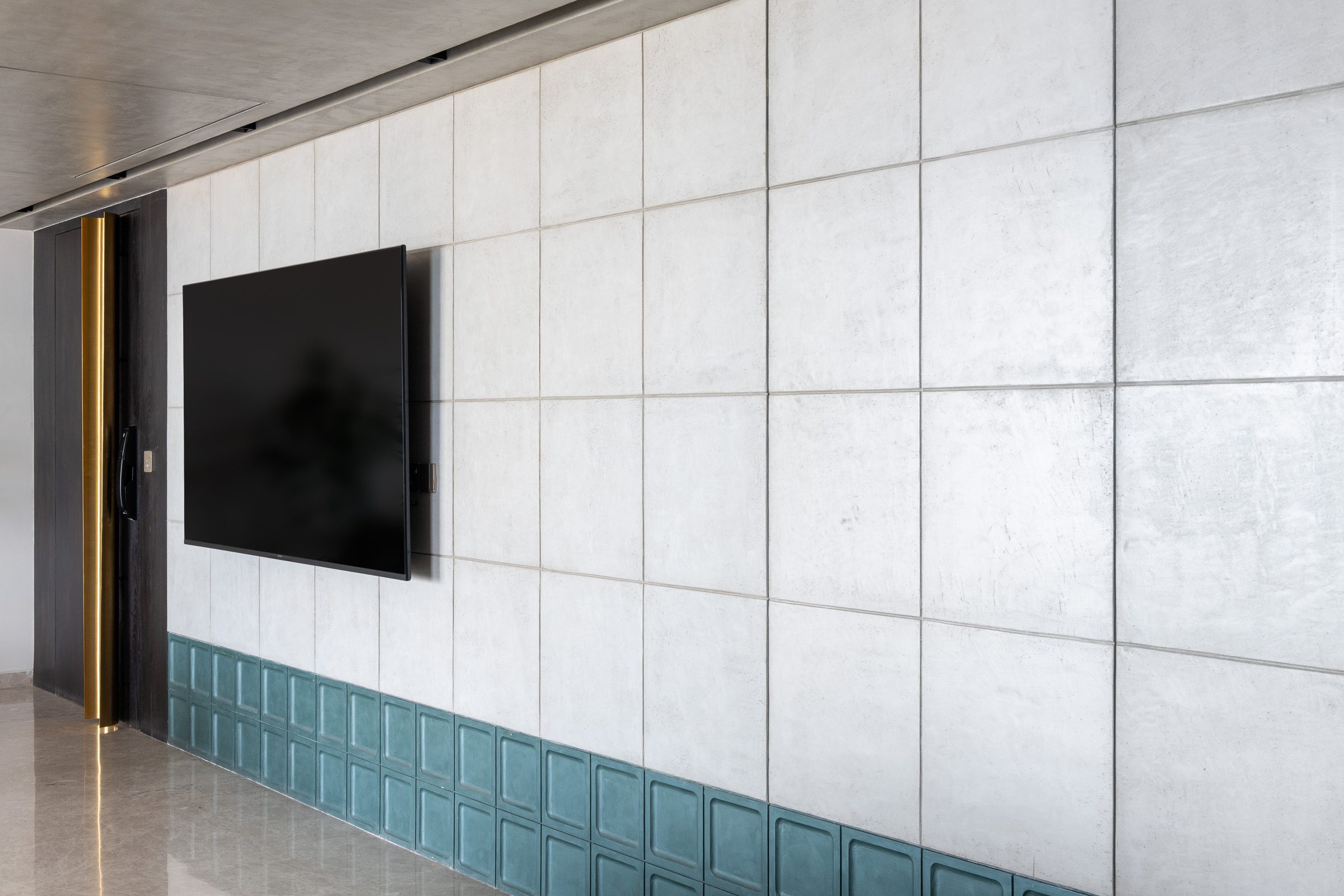
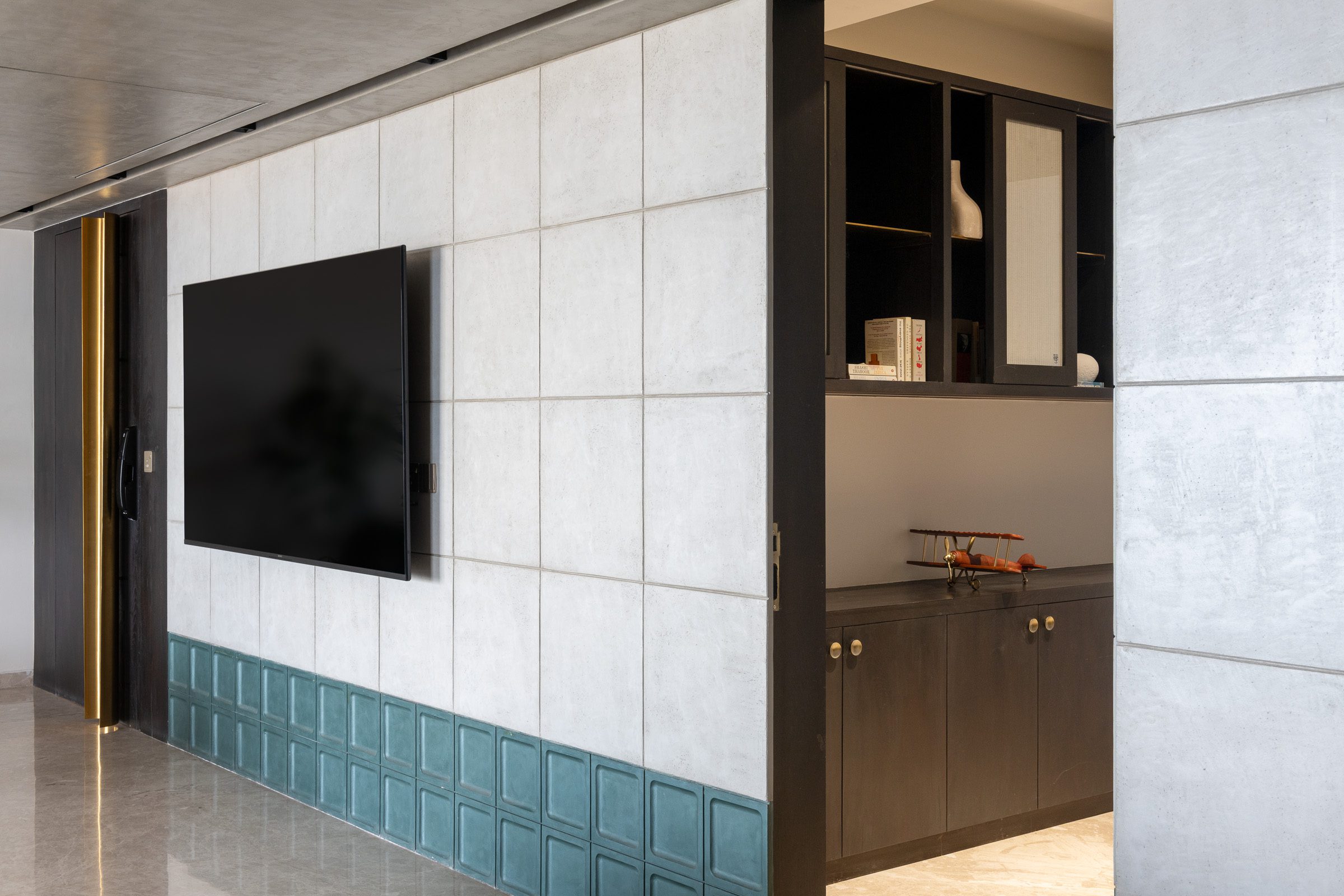
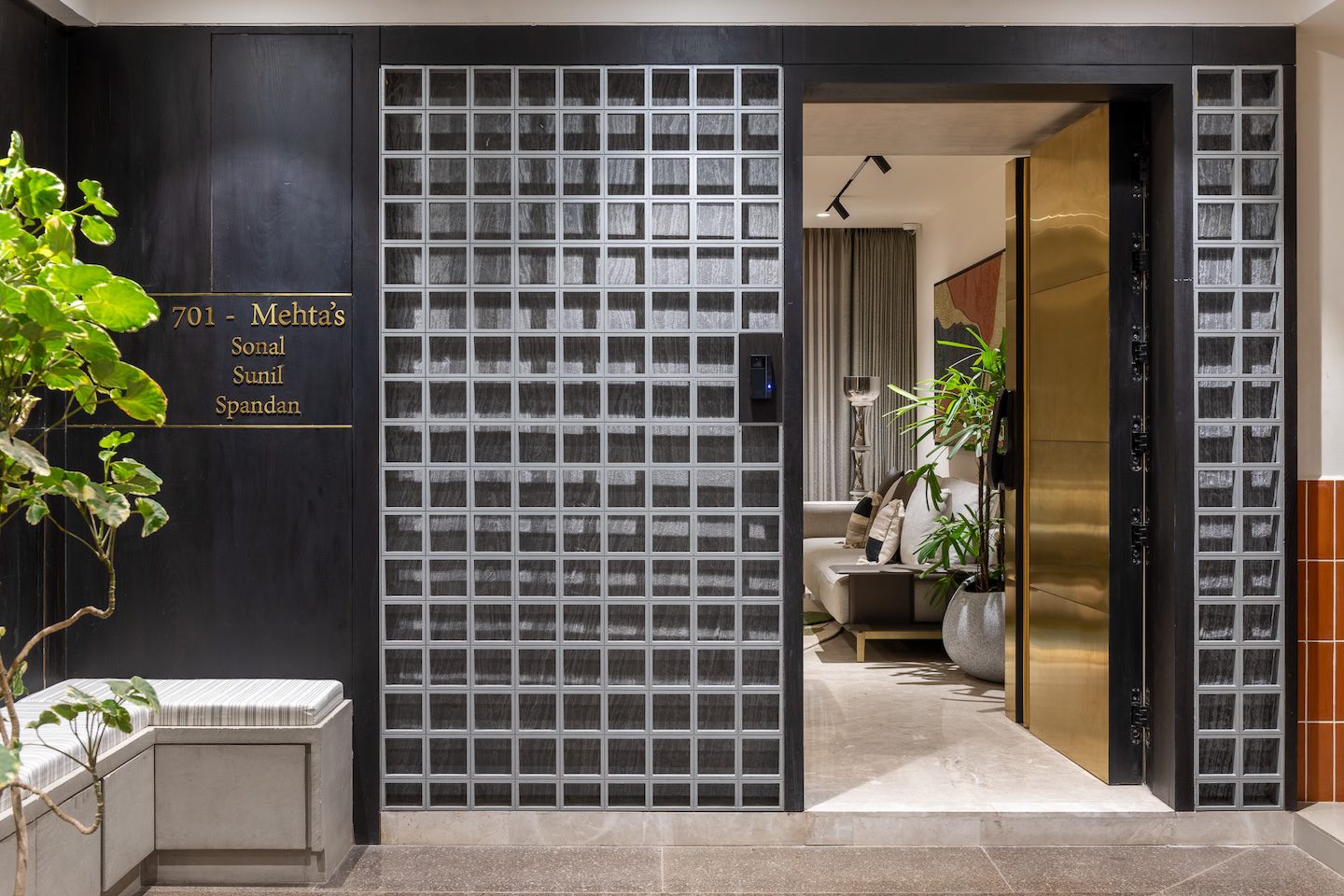
Materiality anchors the project. The entrance door sets the tone with a sculptural positive–negative brass composition: a carved brass surface reveals a contrasting black inner core, while the extracted brass is embedded into an adjacent veneer panel to form the handle.
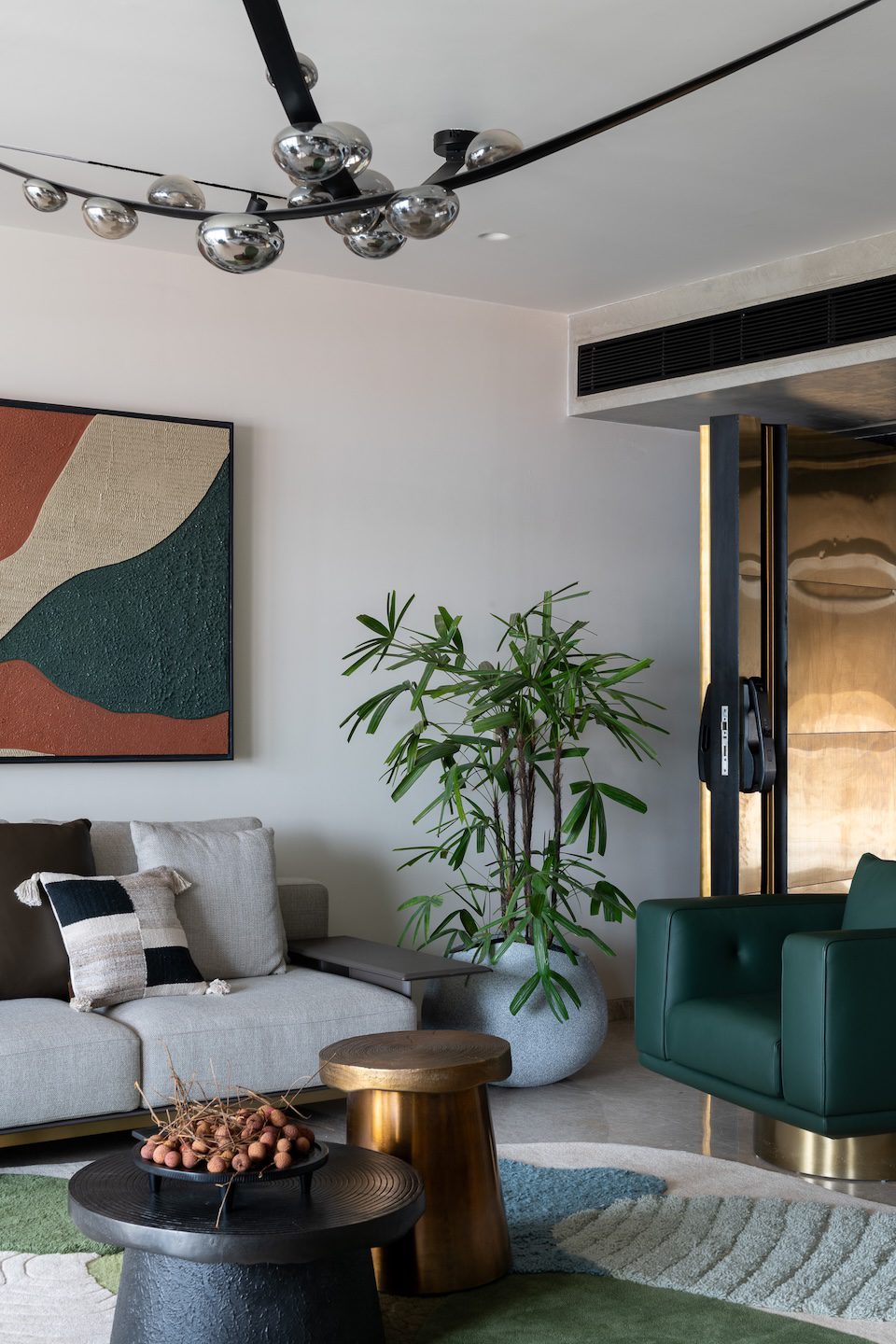
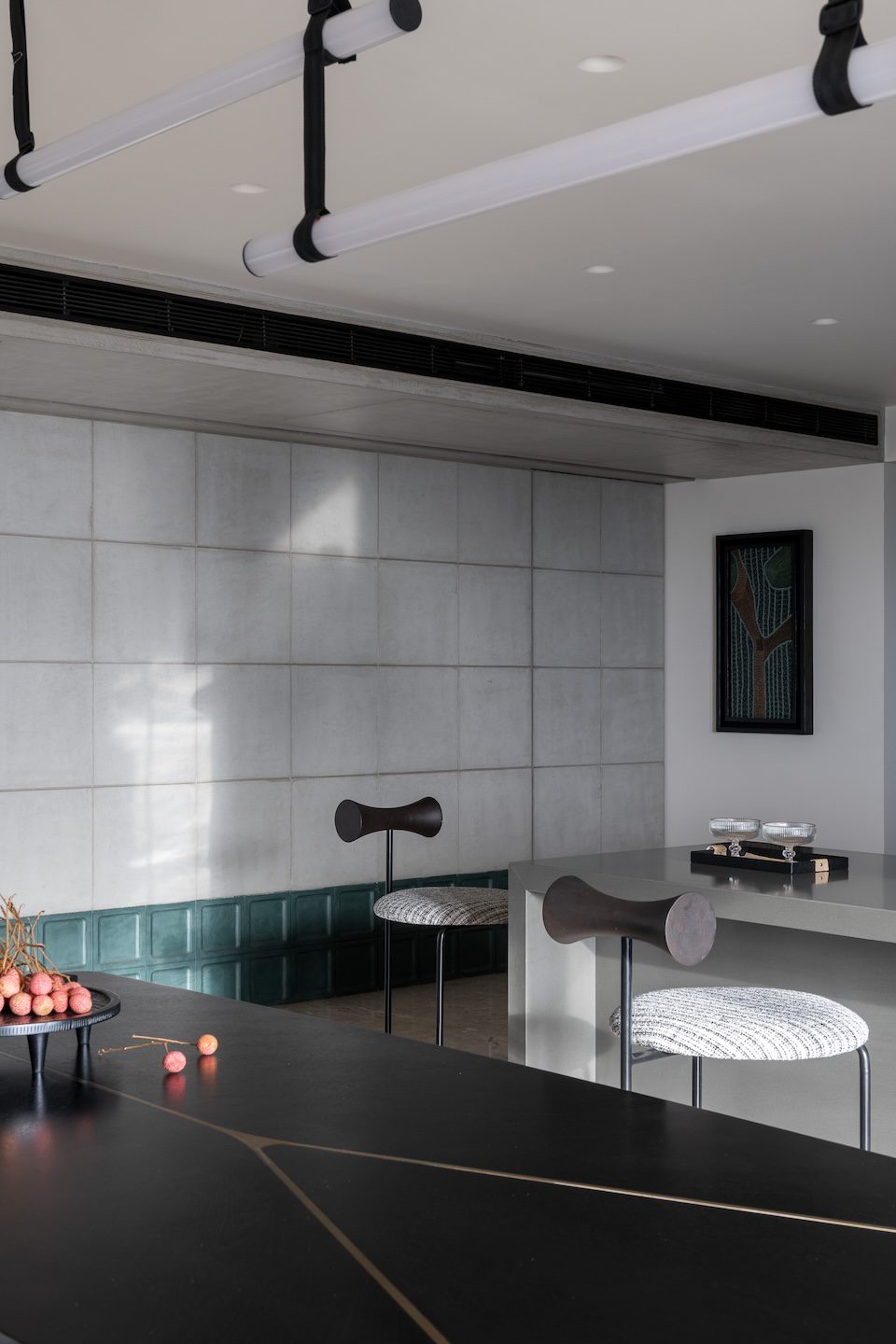
In the living area, a panelled feature wall finished in green and concrete textures anchors the space while concealing two doors. Concrete textures extend onto the ceiling, subtly housing HVAC services. The kitchen is rendered in a monochrome grey palette, with coordinated cabinetry, dado, and back-painted glass that allows it to visually recede within the open plan.
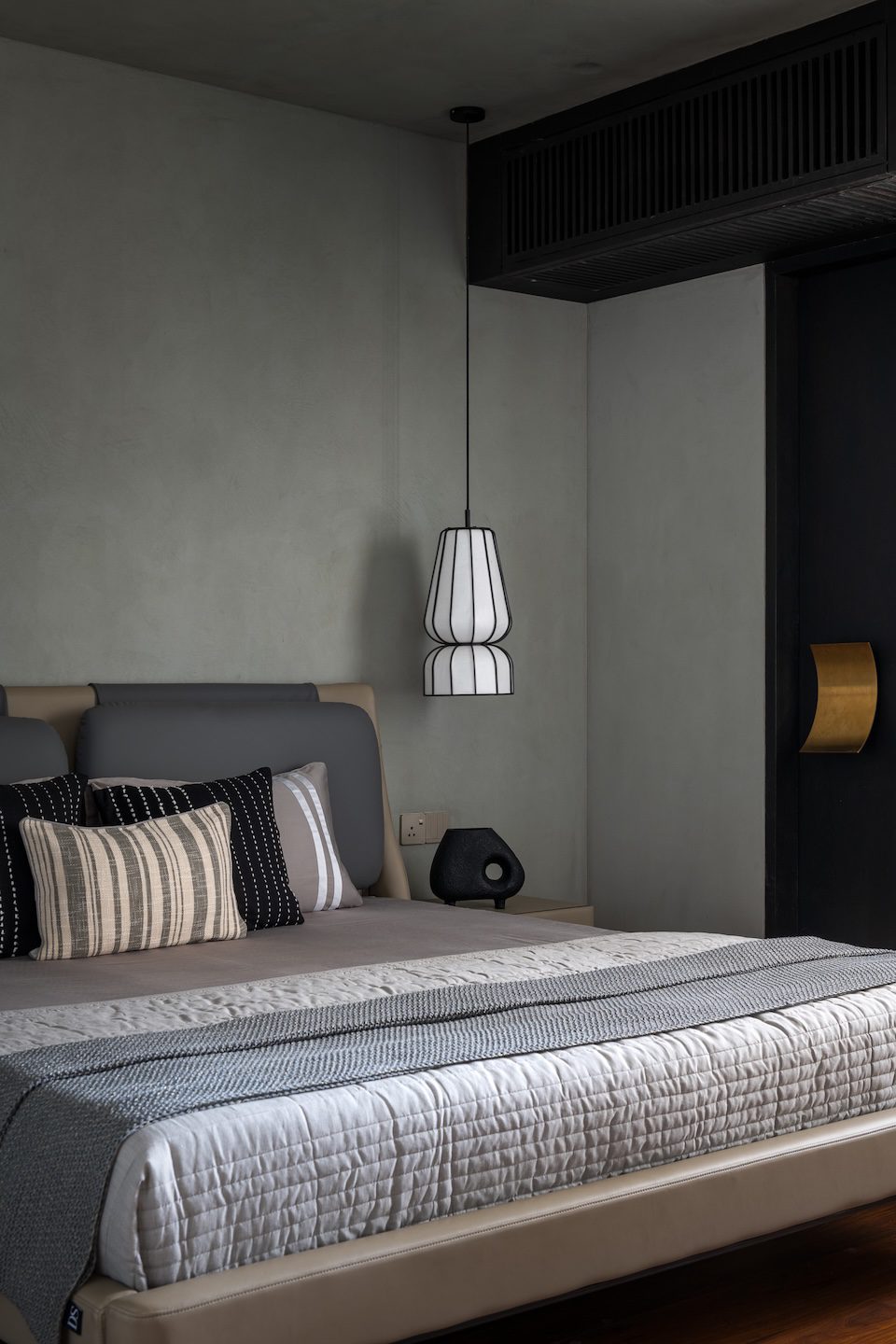
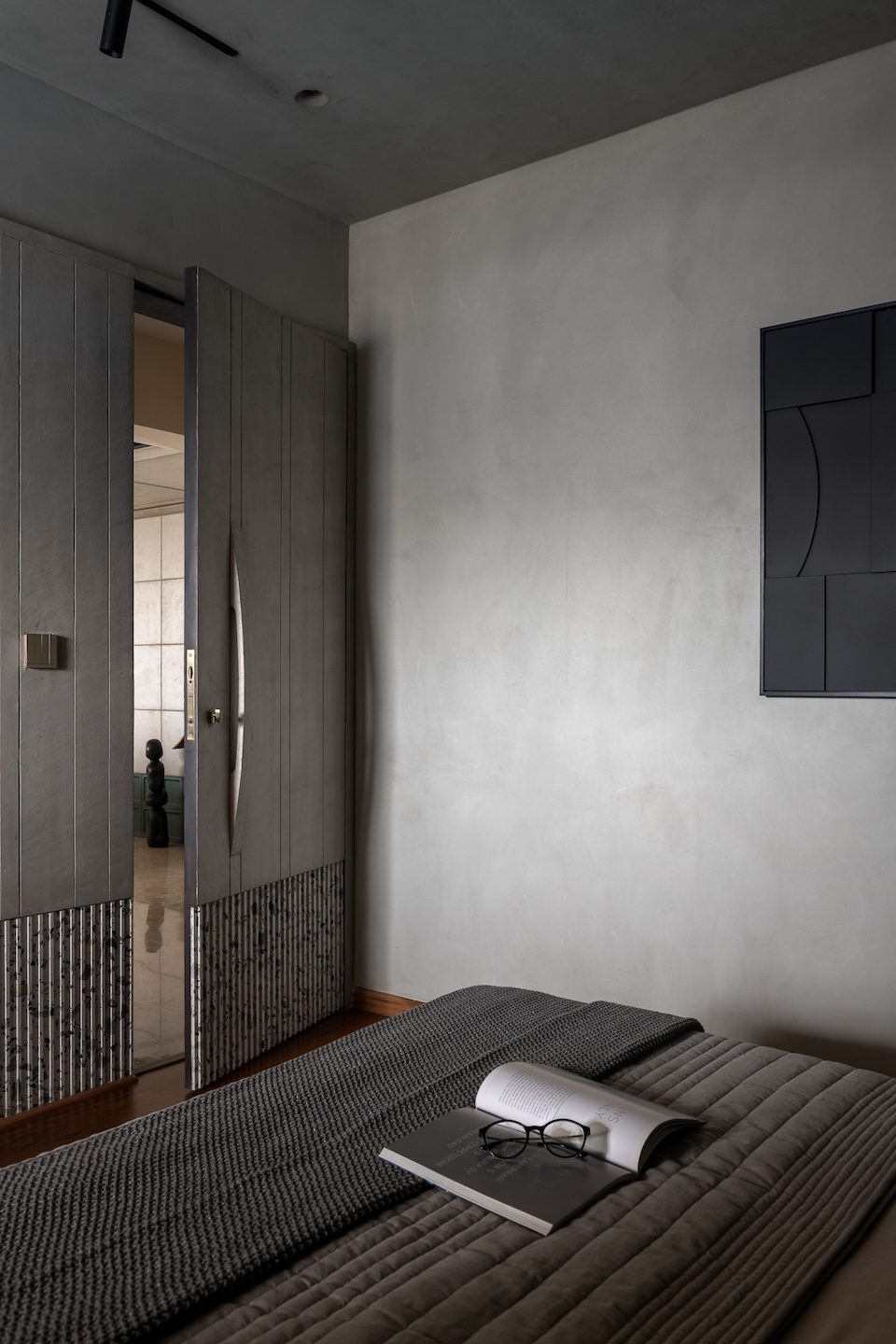
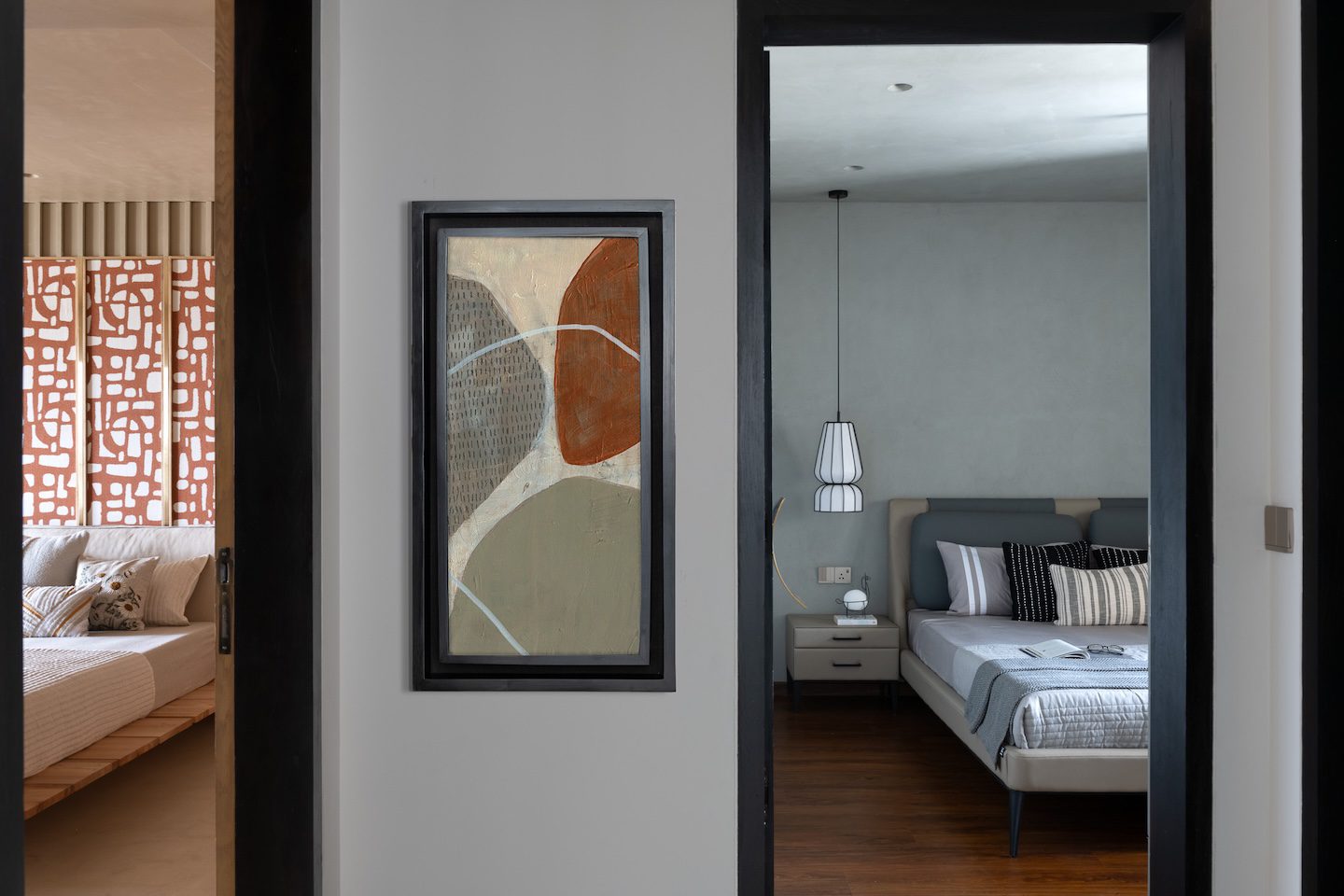
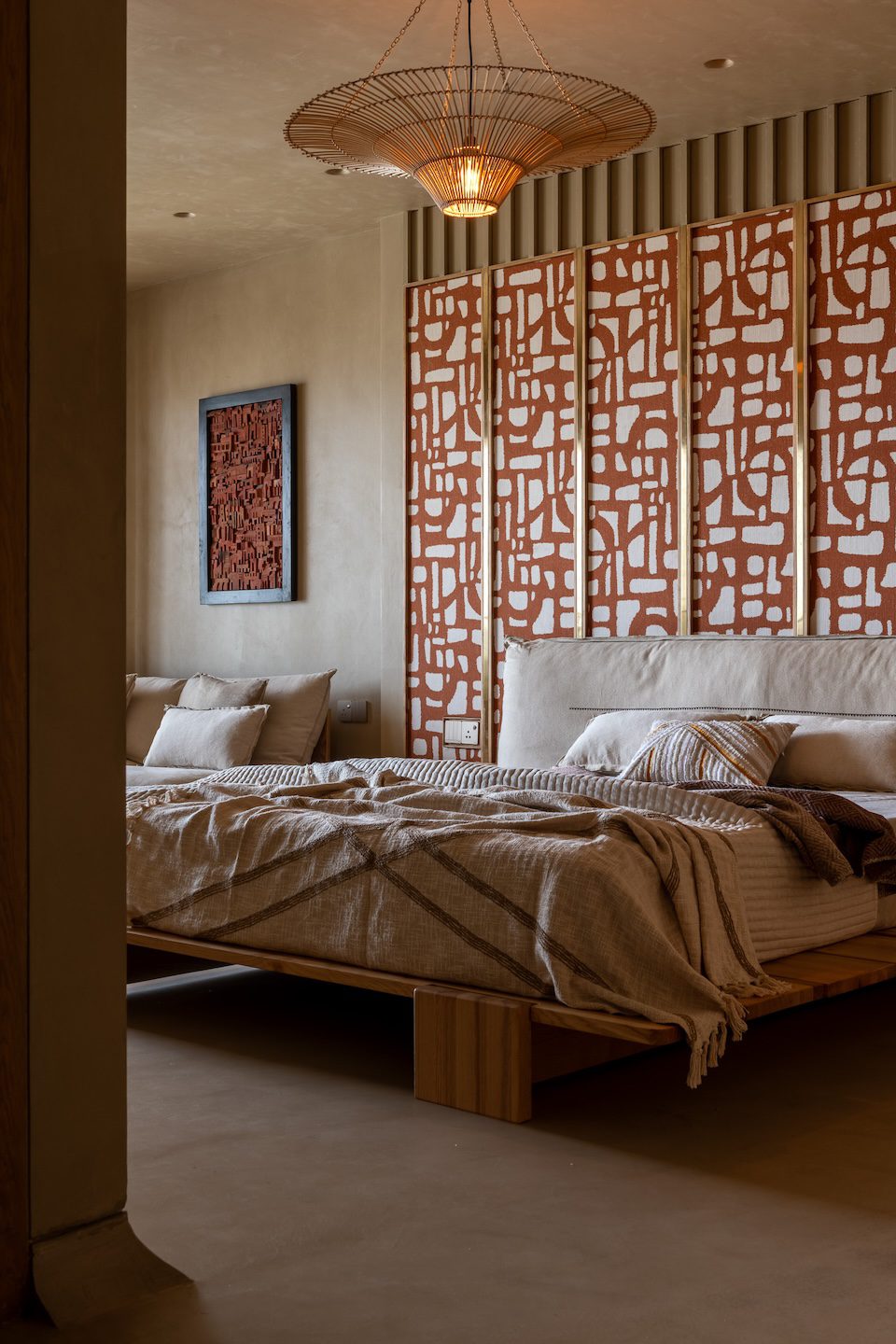
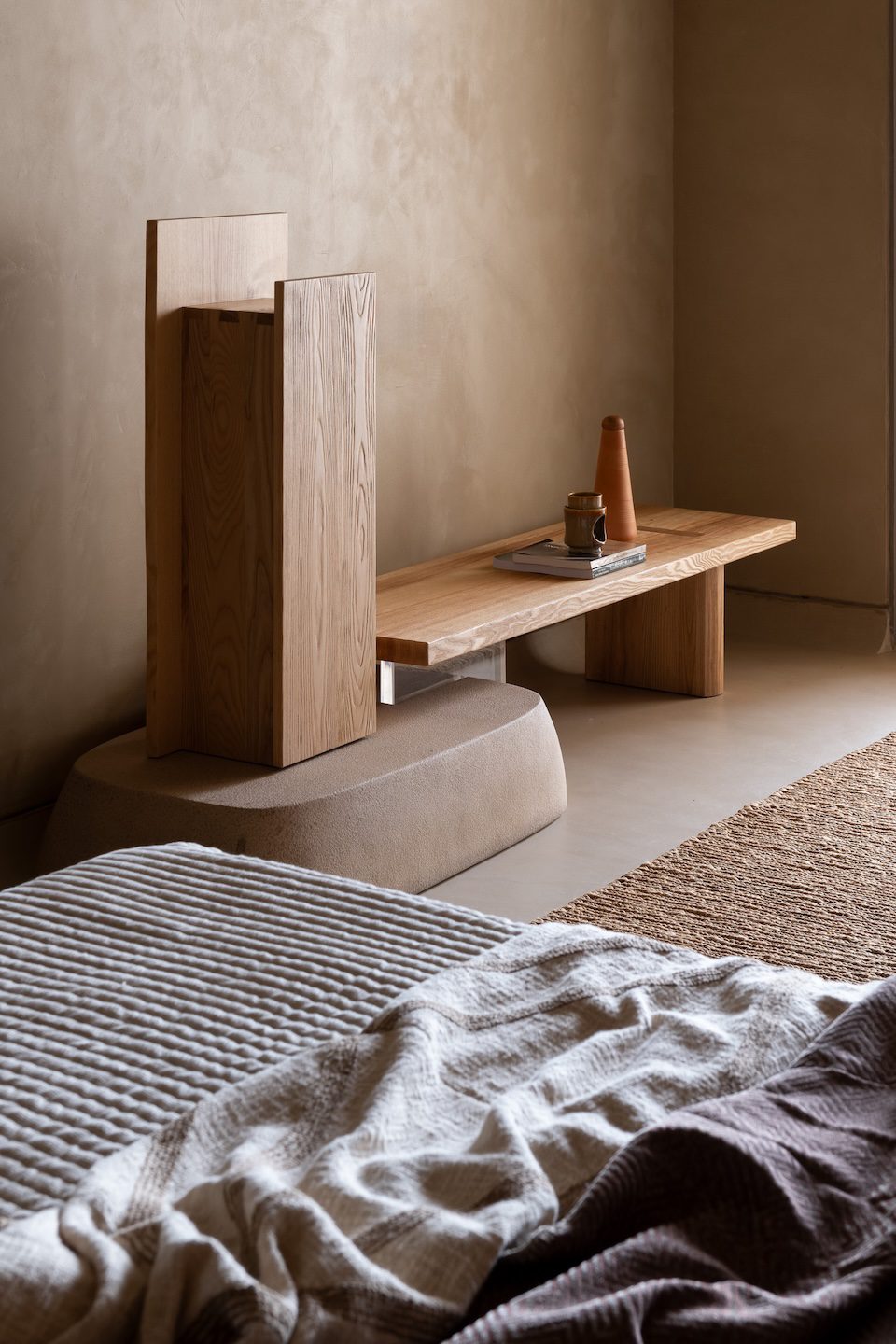
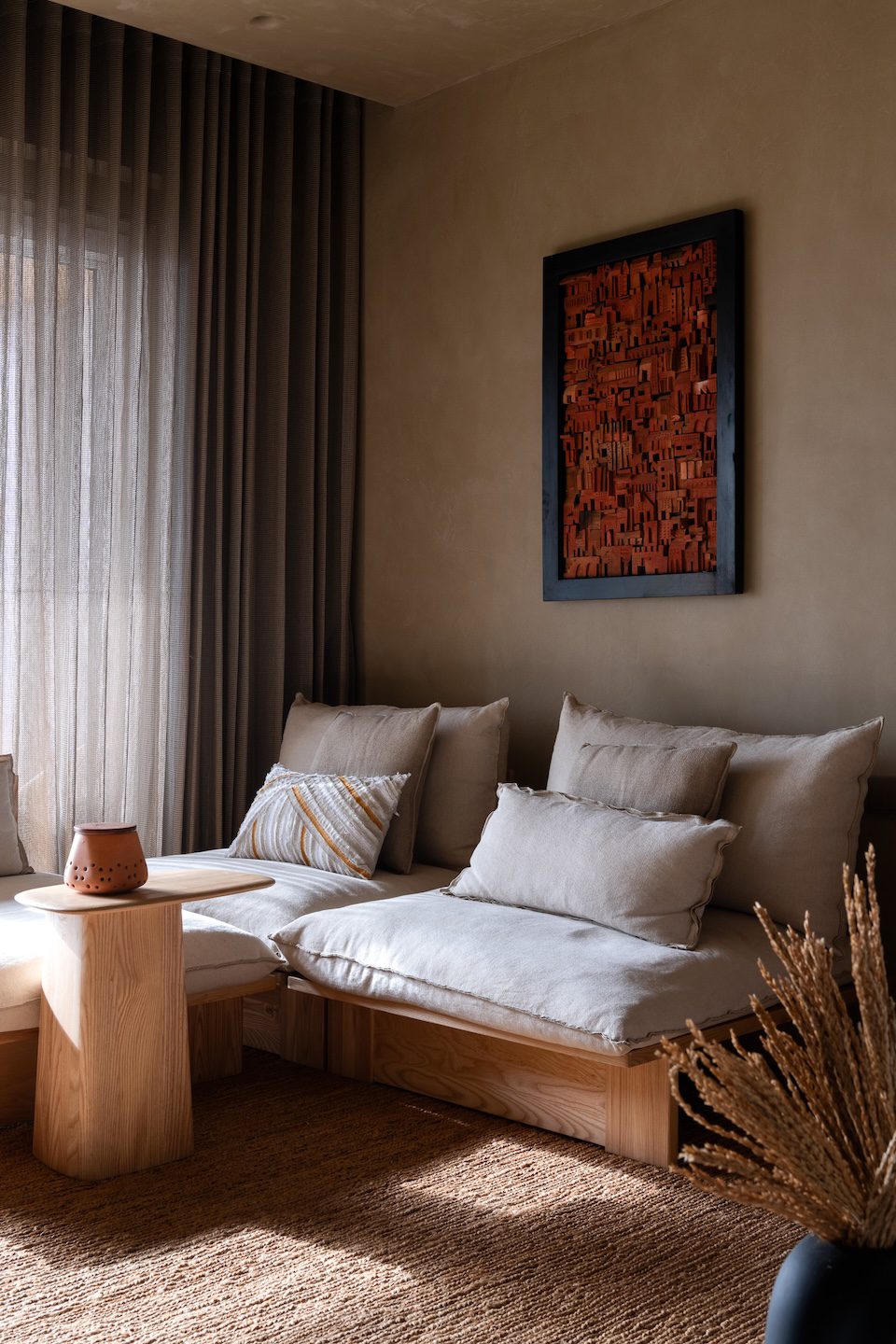
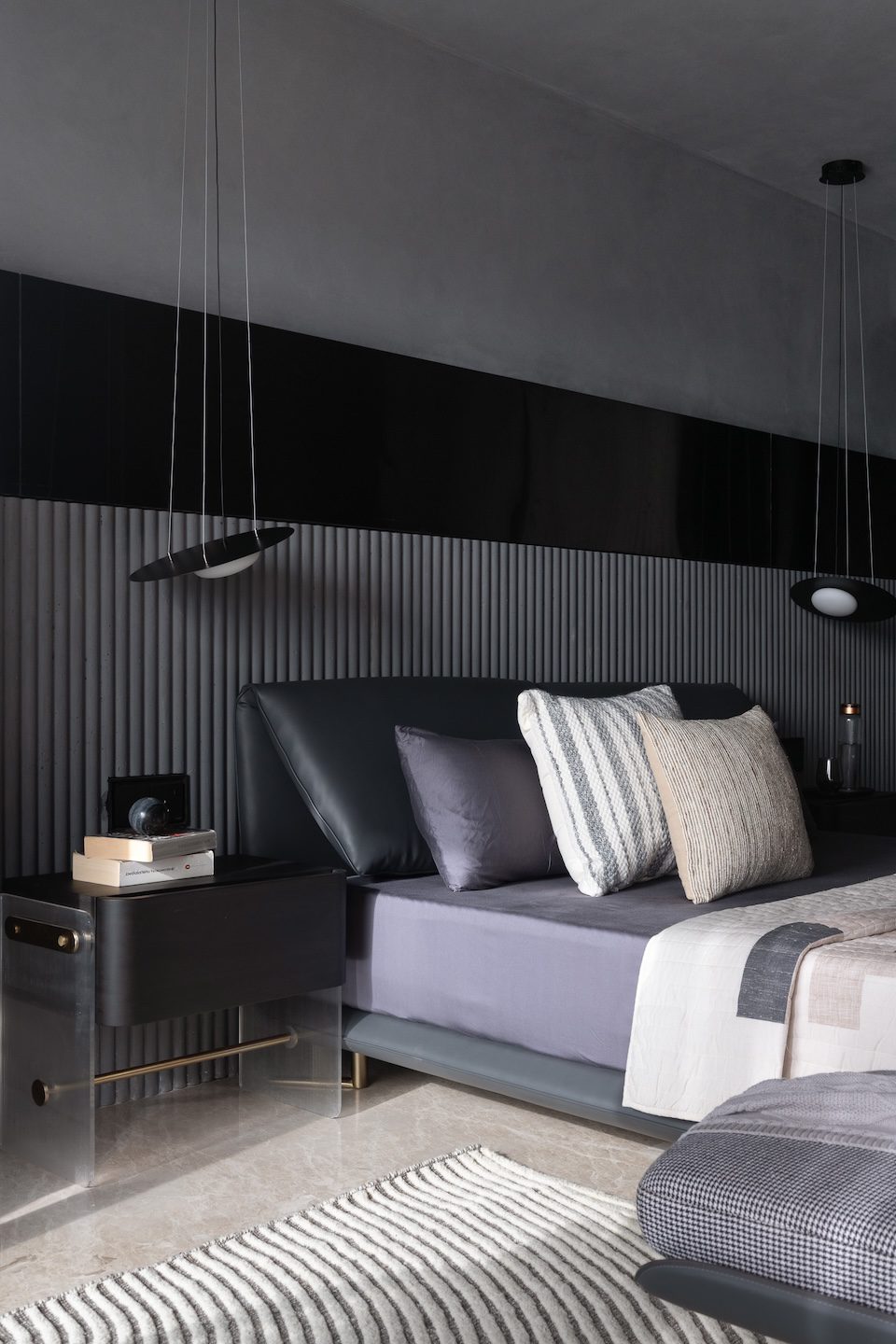
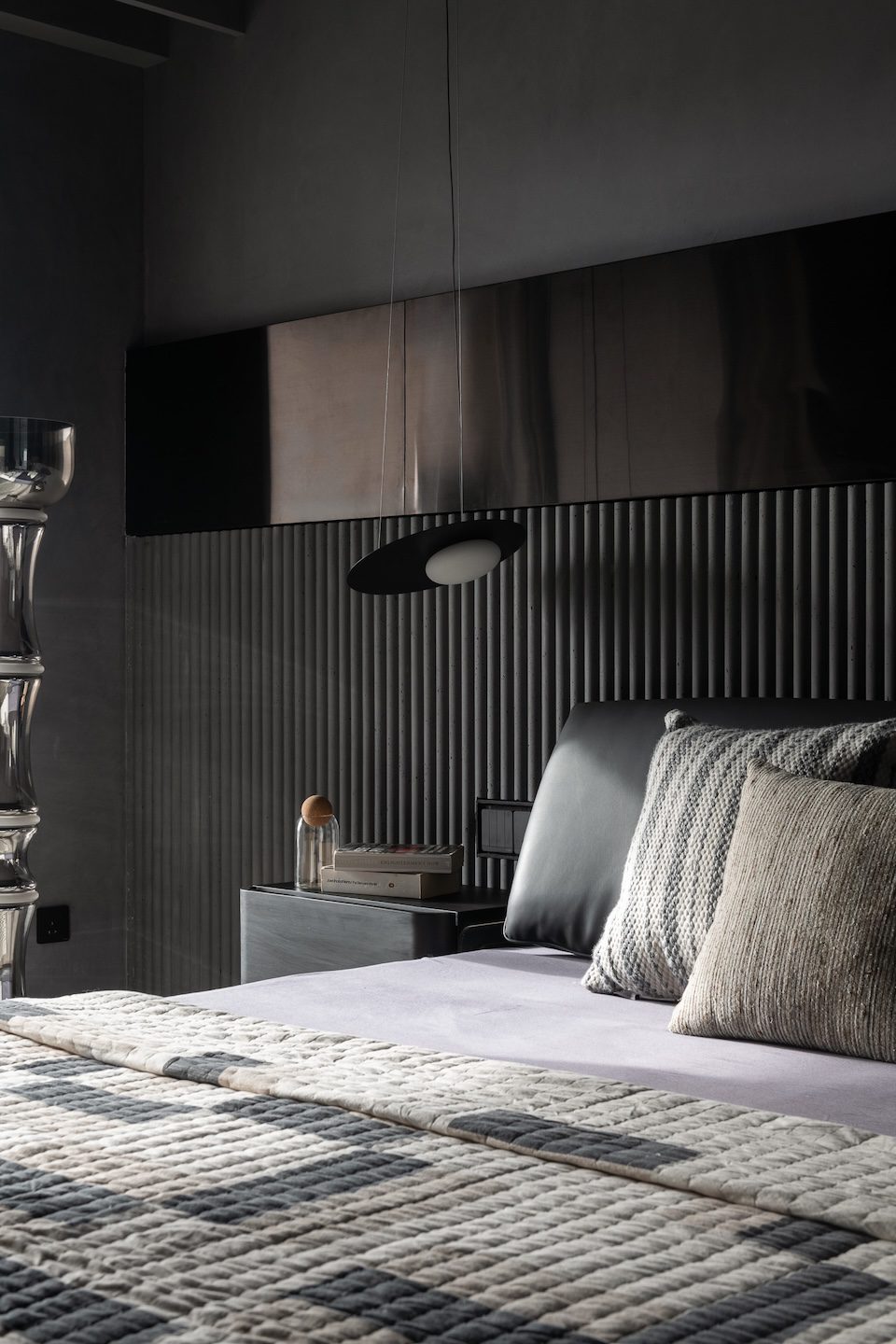
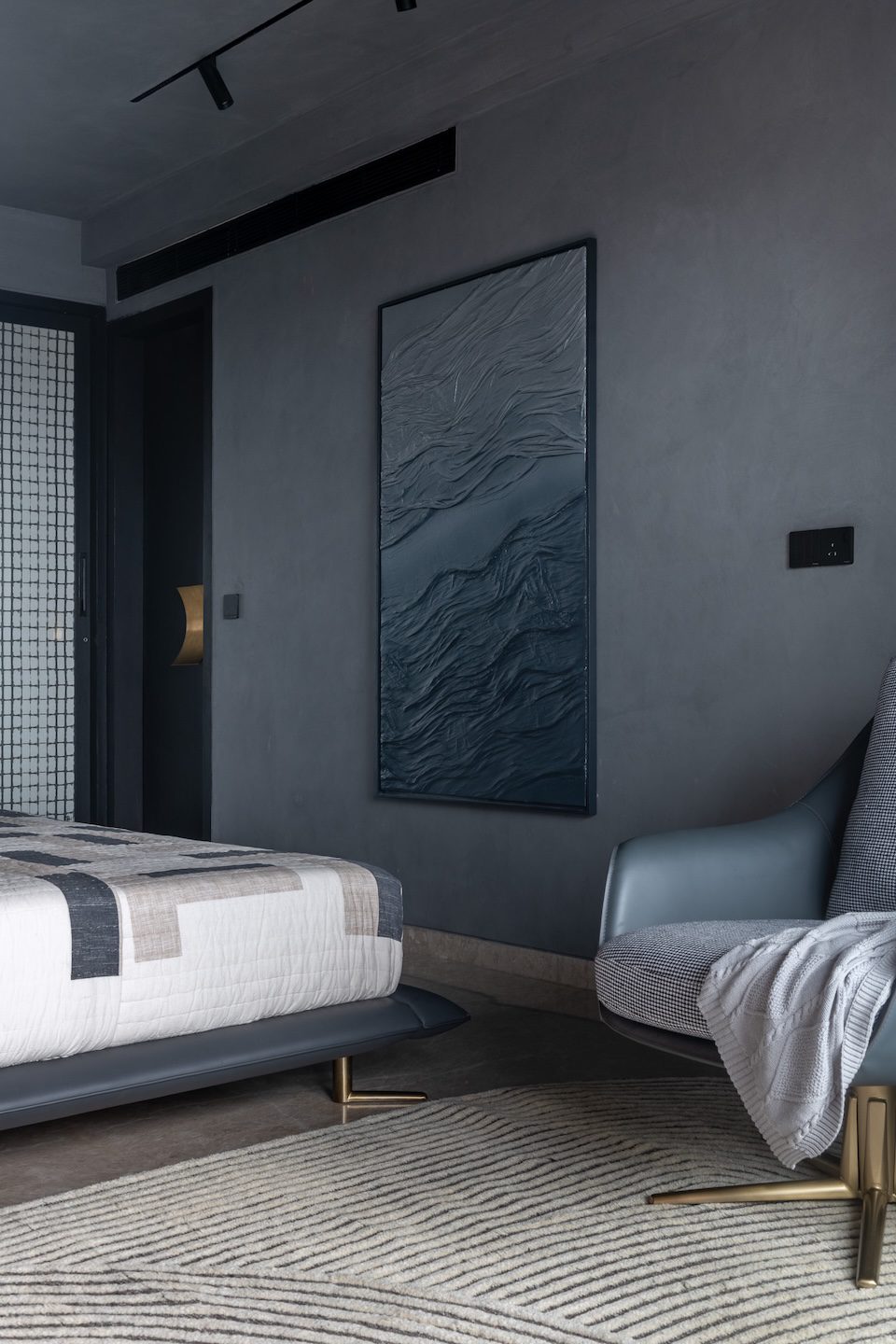
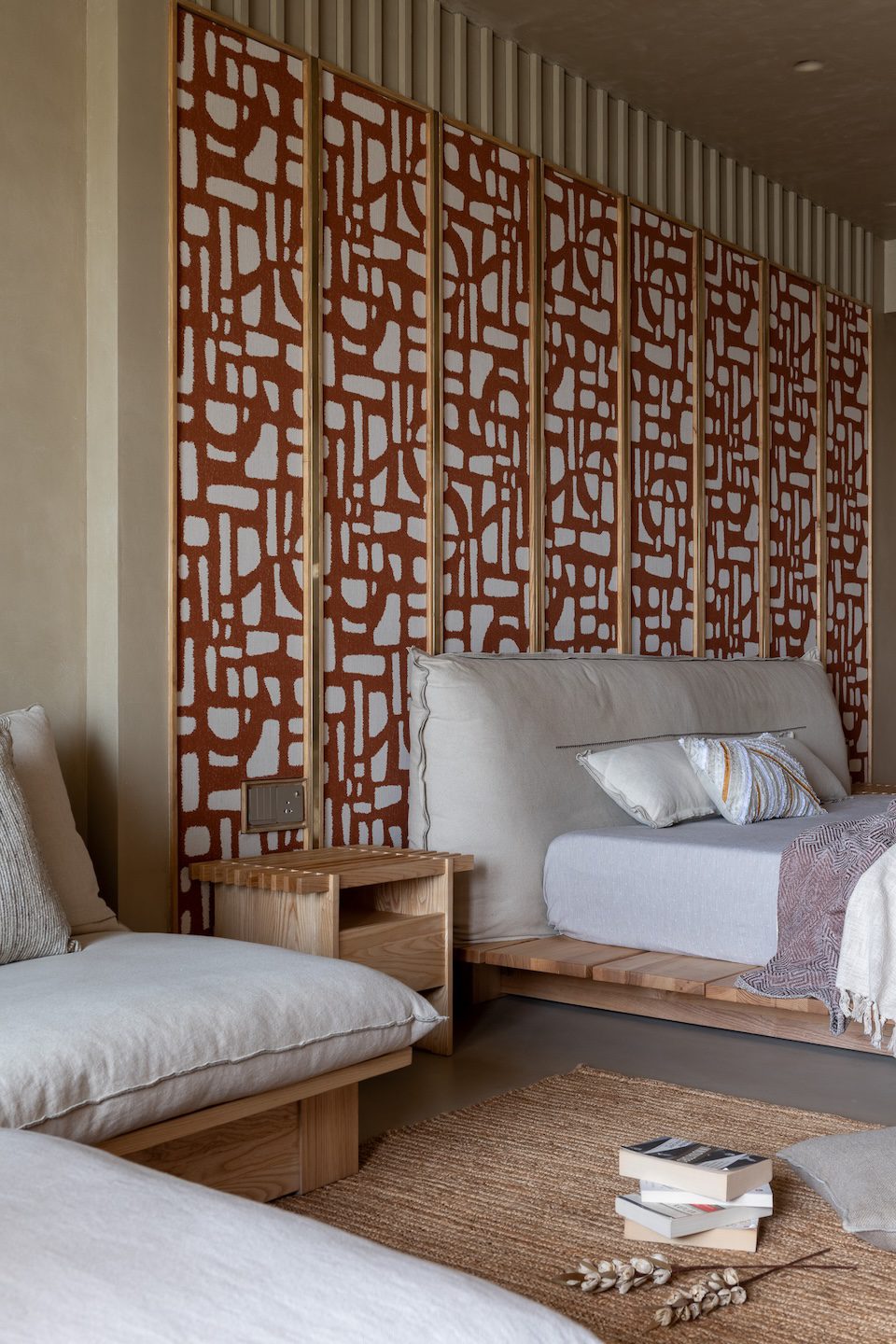
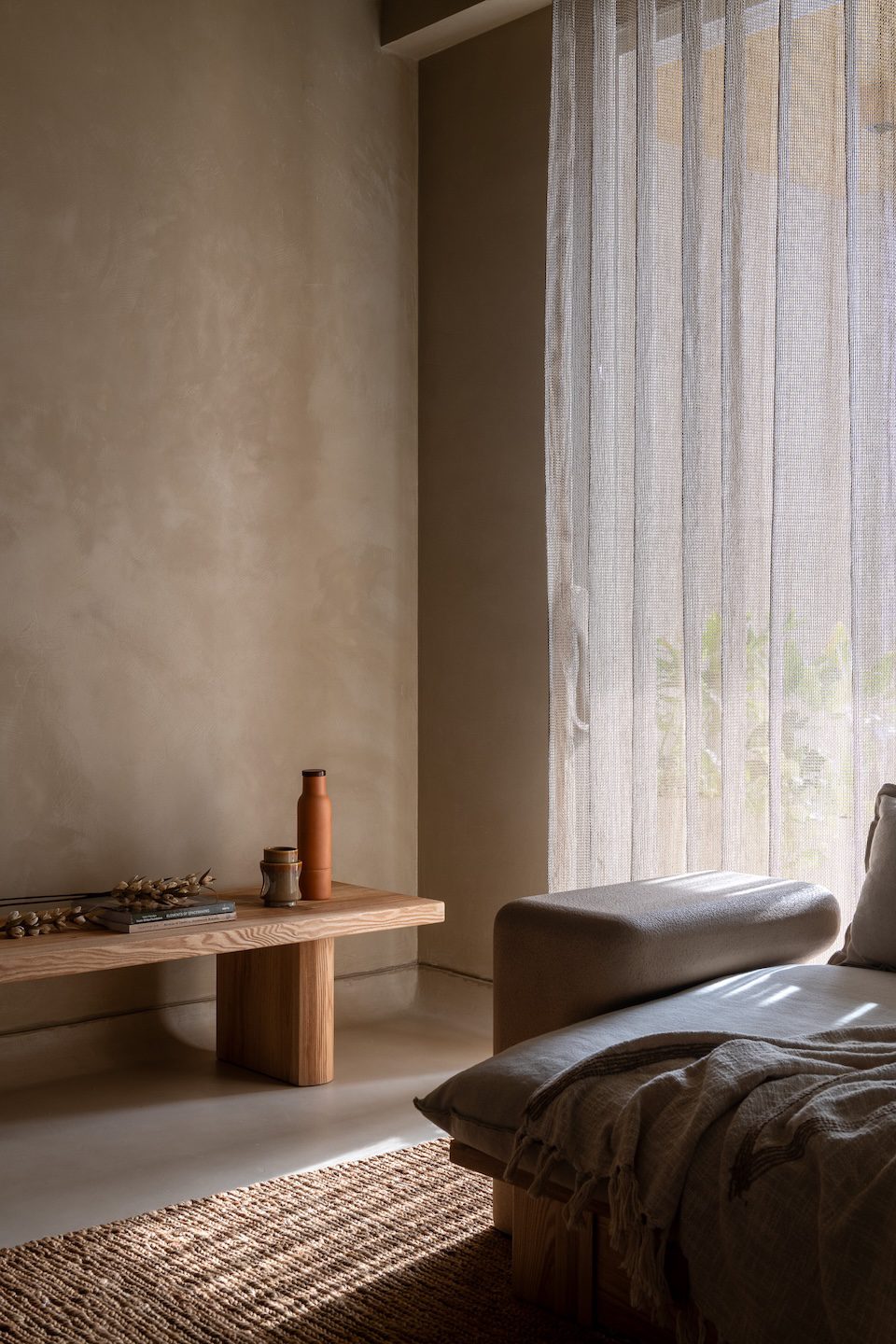
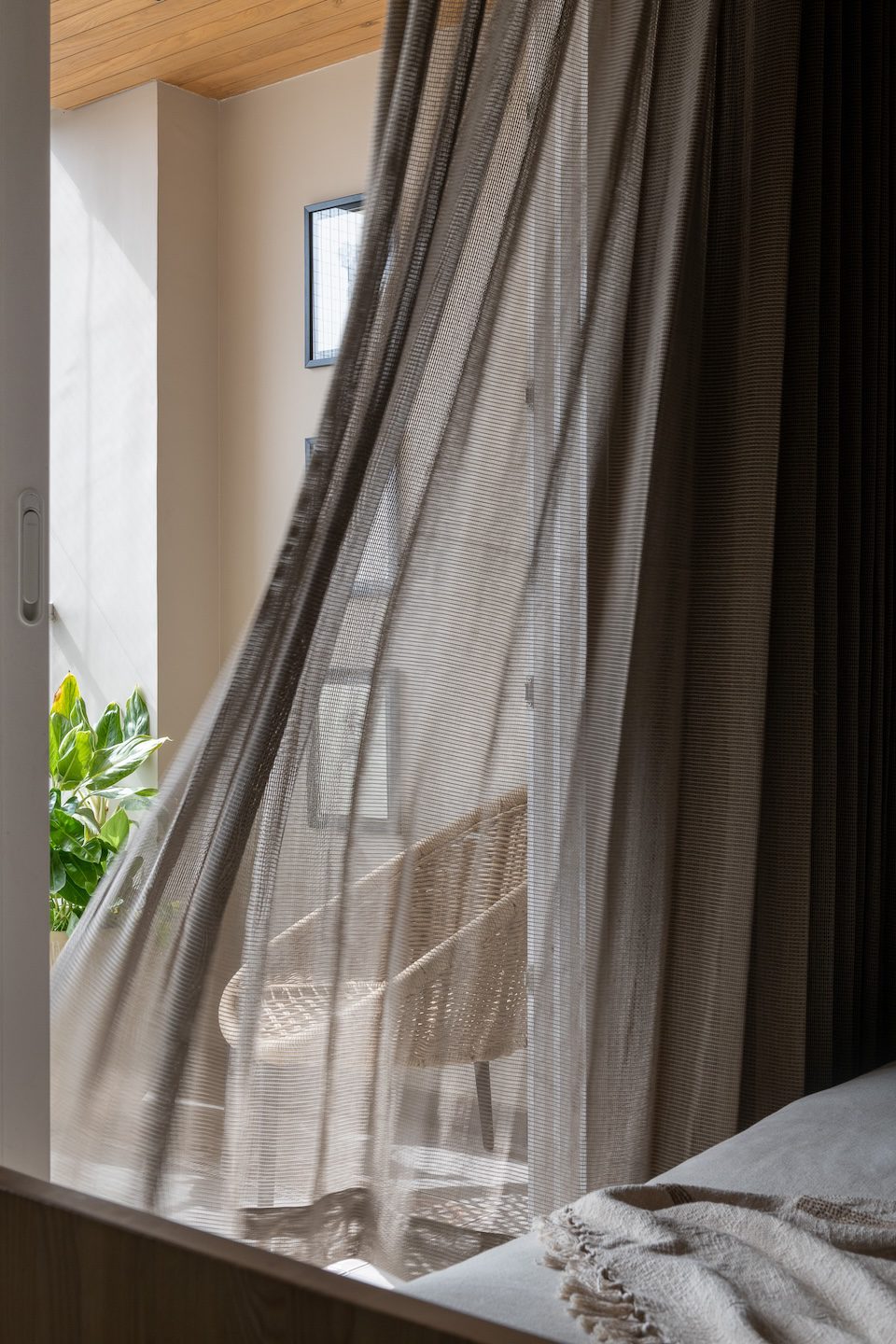
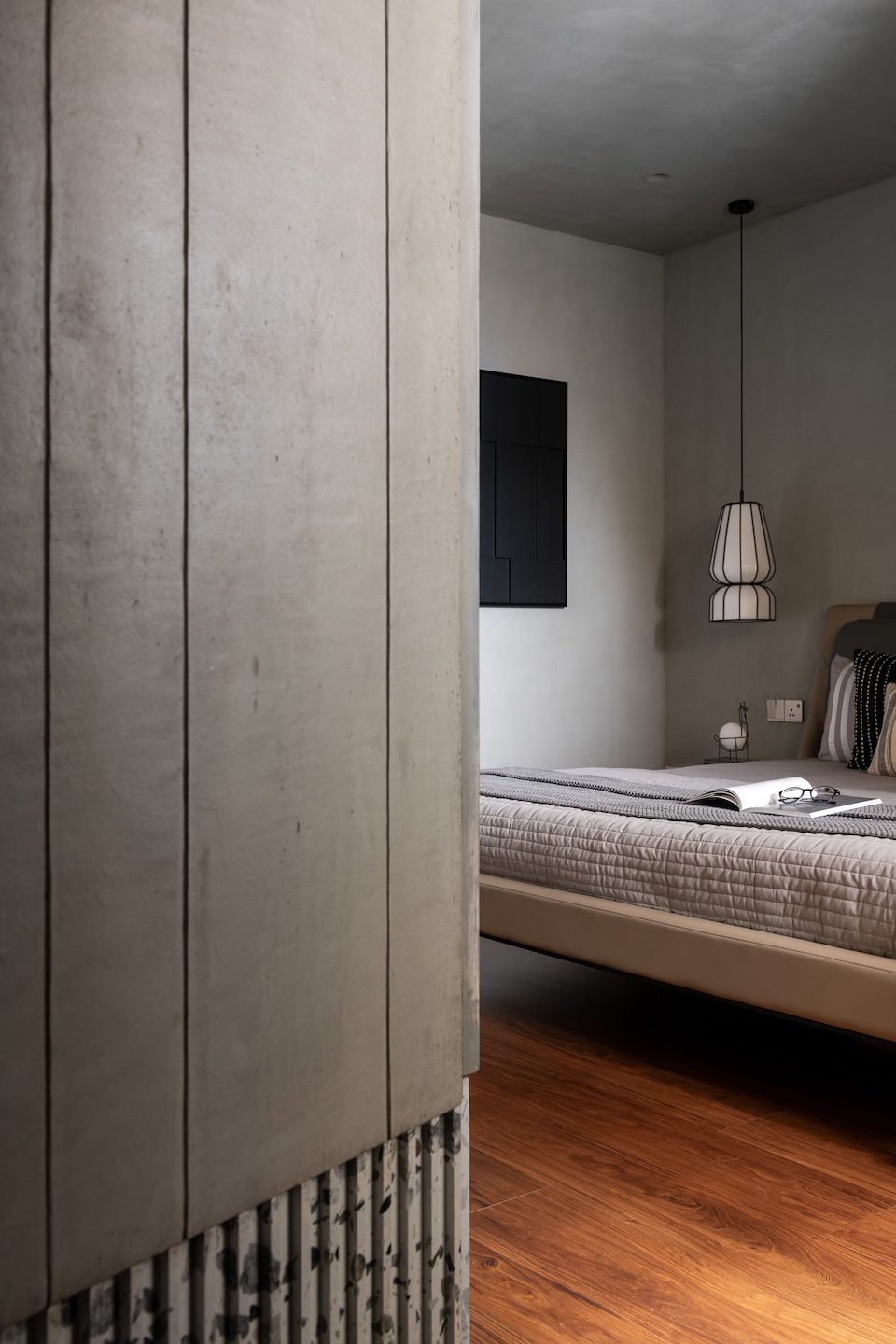
Across the bedrooms, distinct identities emerge within a shared material language. The son’s room features ribbed concrete-textured panels framed in black metal, charcoals and navy tones, and brass accents. The guest bedroom introduces a lime-textured feature wall and terrazzo bands embedded within concrete-textured surfaces that conceal doors. The master suite adopts Scandinavian simplicity, finished entirely in microtopping across floors, walls, and ceiling. Oak furniture, textured fabrics, and restrained brass detailing introduce warmth, while sheer drapes diffuse daylight. Even the attached balconies echo these finishes, blurring interior and exterior thresholds.
The highlights
The transformation from 4BHK to an expansive 3BHK is central to the project’s identity. The 880 sq ft open-plan living zone establishes a sense of grandeur and continuity. Concealed doors within panelled walls reinforce seamlessness, while the sculptural brass main door becomes a defining first impression. Microtopping, concrete textures, oak, and brass collectively articulate a restrained yet material-rich interior language.
The challenges
Executing concealed doors, continuous textures, and extensive microtopping across large surfaces required precision and close coordination during execution. Integrating services within ceilings and walls without disturbing the visual calm of the interiors was another key consideration.
The takeaway
Mehta Residence demonstrates how spatial subtraction can create experiential gain. By reducing the number of rooms and amplifying shared spaces, the project achieves a sense of openness and quiet luxury grounded in material continuity and custom detailing.
Fact file
Project: Mehta Residence
Design firm: Dhyey Chag Architects
Location: Jamnagar
Area: 2,350 sq ft
Principal architect: Dhyey Chag
Design team: Sucheetra Pradhan
Project manager: Mehul Jogal (Coreline Consultants)
Add a Comment