
Designed by Studio Urban Form + Objects in Mumbai, Raintree Home marks a return to a childhood residence within an ageing Art Deco building from the 1950s. Through careful subtraction, structural repair, and material restraint, the project peels back decades of intervention while working within the building’s original spatial logic.
Curated by: Deepa Nair
Photographs: Niveditaa Gupta; courtesy Studio Urban Form + Objects
The story
Set within an ageing Art Deco building in Mumbai, this home occupies a structure conceived in the 1950s, when reinforced concrete was still an emerging promise and domestic architecture favoured geometric order, streamlined façades, and flexible spatial planning. It is also the house where Vineet Vora, principal architect and co-founder of Studio Urban Form + Objects (Studio UF+O), was born and raised. Originally constructed by his grandfather, DD Vora—a civil engineer and contractor working in a rapidly modernising city—the home was inhabited by the family for 48 years, gradually shaped by everyday routines and evolving needs. In 2000, the family moved away, and over the next two and a half decades, the house passed through other hands, accumulating layers of intervention.
When Vineet and his partner Prachi Parekh returned to this address after 25 years, they encountered a space that felt both familiar and altered; with four inches of accumulated flooring and multiple retrofits embedded into it. The childhood home now carried traces of multiple timelines—personal memories interwoven with changes introduced by those who lived there in between. Reclaiming it therefore began with a fundamental question: how does one return to a place that holds one’s earliest memories, while also acknowledging everything it has become since?
The civil intervention
Firstly, the architects decided to eliminate a few elements from the structure. Years of accumulated additions were carefully stripped away to reduce the dead load on the ageing structure, allowing the building to breathe again. Structural strengthening of columns and comprehensive slab waterproofing were undertaken to secure the house against Mumbai’s demanding climate and ensure its long-term stability. Selective internal walls were removed to draw daylight deeper into the plan, subtly recalibrating the spatial experience without disturbing the home’s original logic.
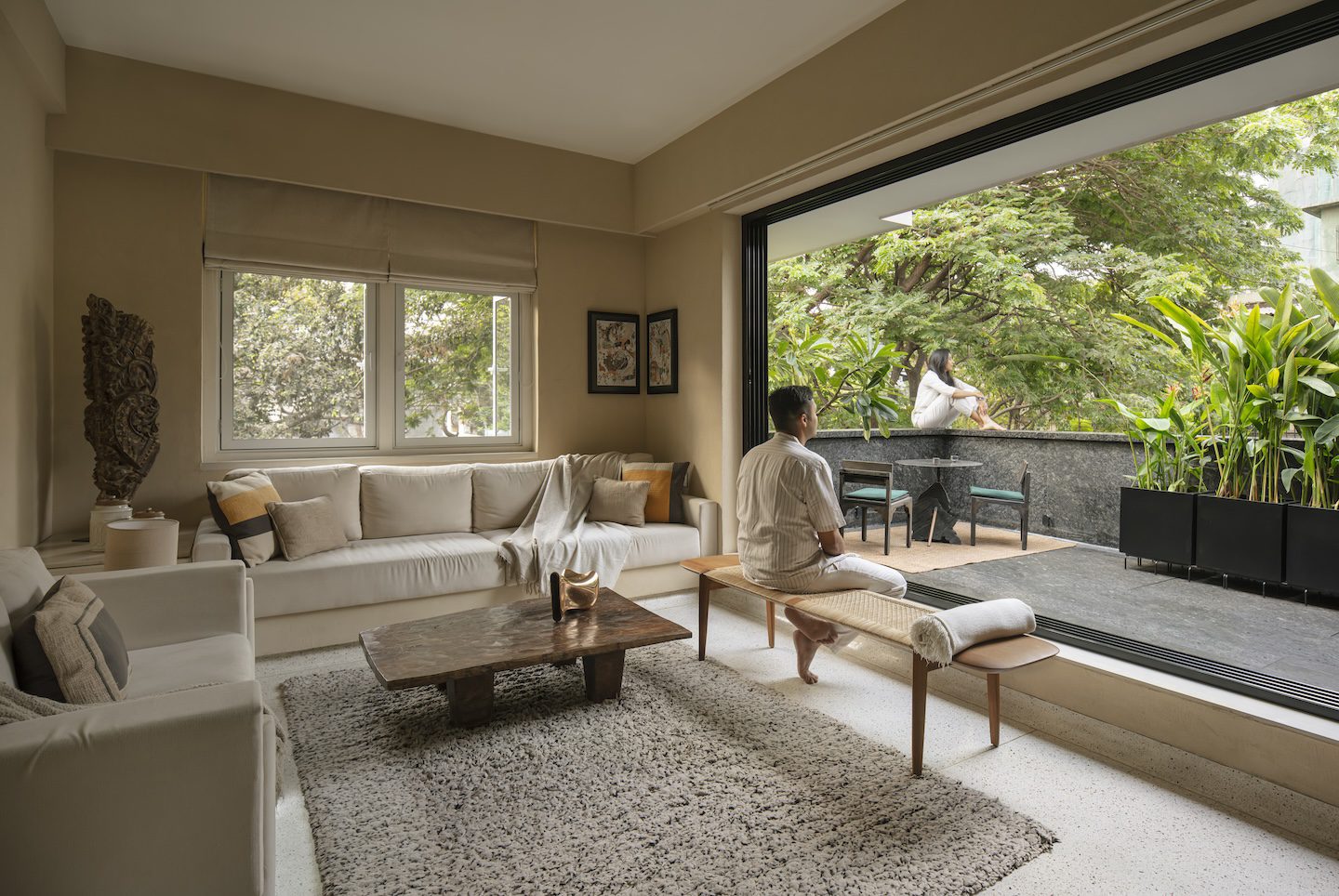
The most defining move, however, was the removal of artificial weather shades from the terrace. Their absence revealed uninterrupted views of the mature raintree that now lends the house its name, restoring a direct visual and environmental connection to the outdoors. Each decision was measured and deliberate. Rather than allowing nostalgia to dictate the process, every intervention was guided by logic, performance, and durability. The aim was not to overwrite the past, but to correct what time and circumstance had compromised.
The spatial configuration
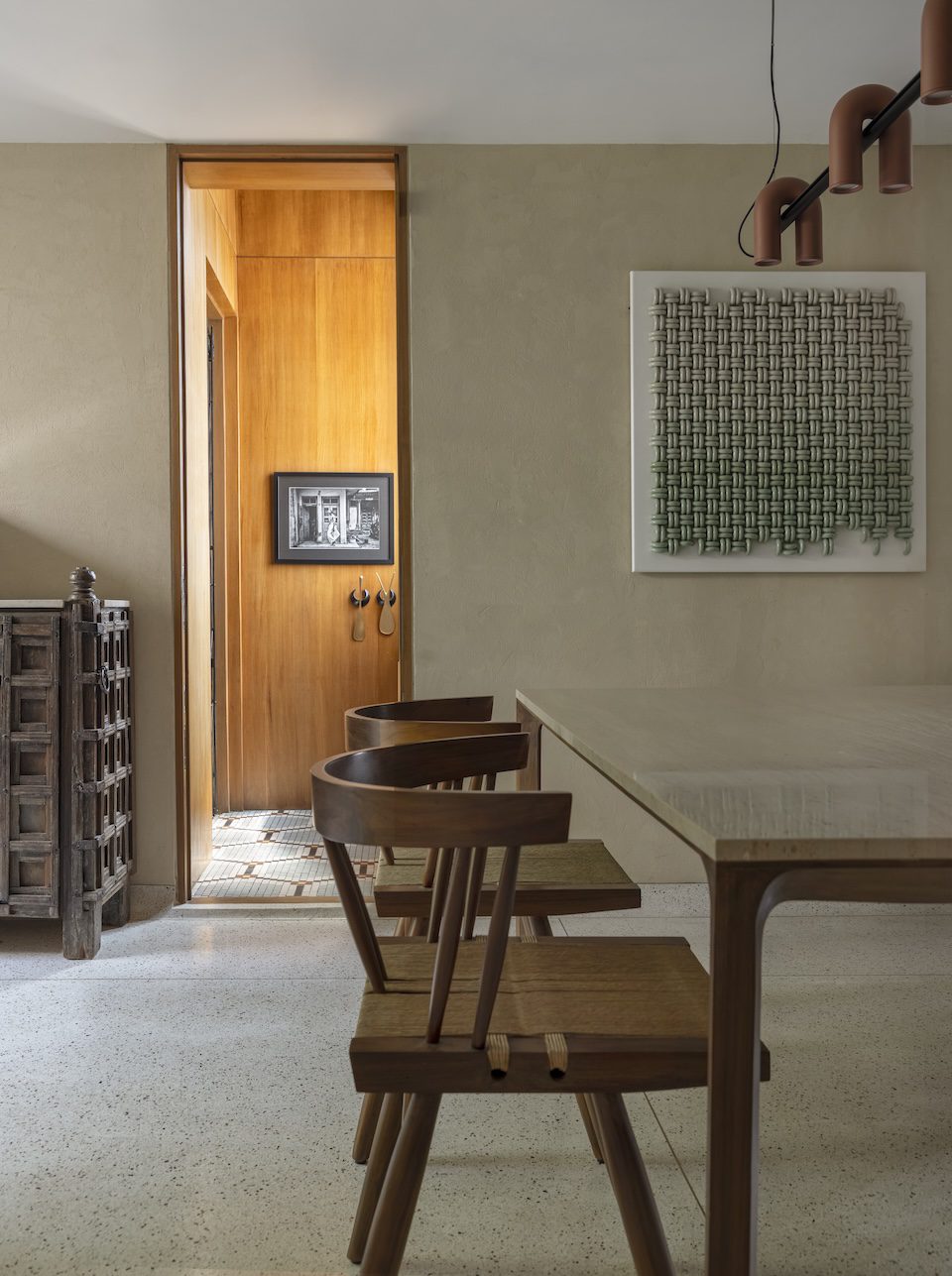
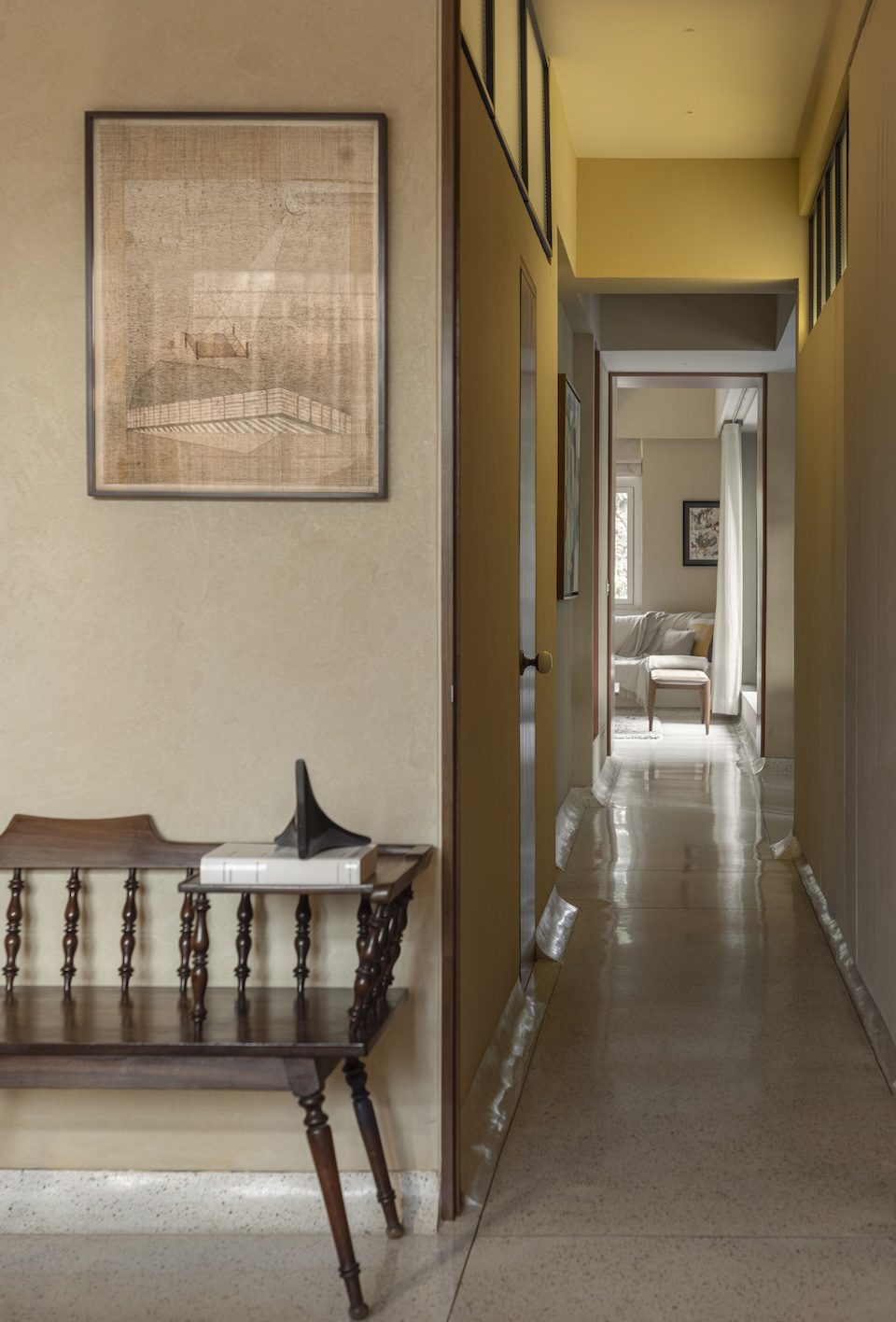
Spatially, the architects chose not to redraw the plan: the 1,350-square-foot layout is organised around a central axial corridor that leads directly to the dining area, where a private lift (an eccentric mid-1980s addition) opens into the heart of the home. Ceramic mosaic flooring with oriental patterns and a wall lined with black-and-white photographs of Ahmedabad’s pols lend this transitional space an unexpected sense of composure.
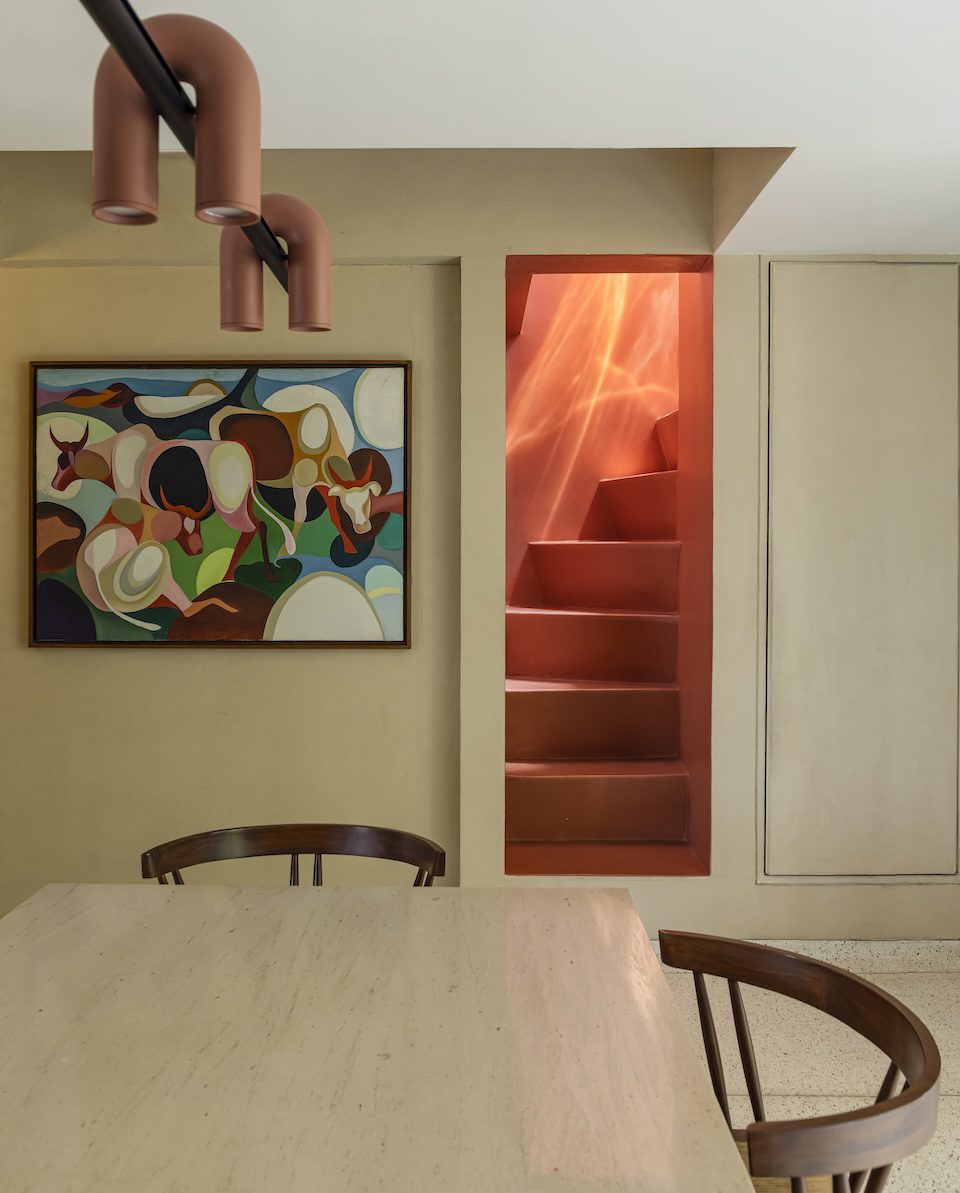
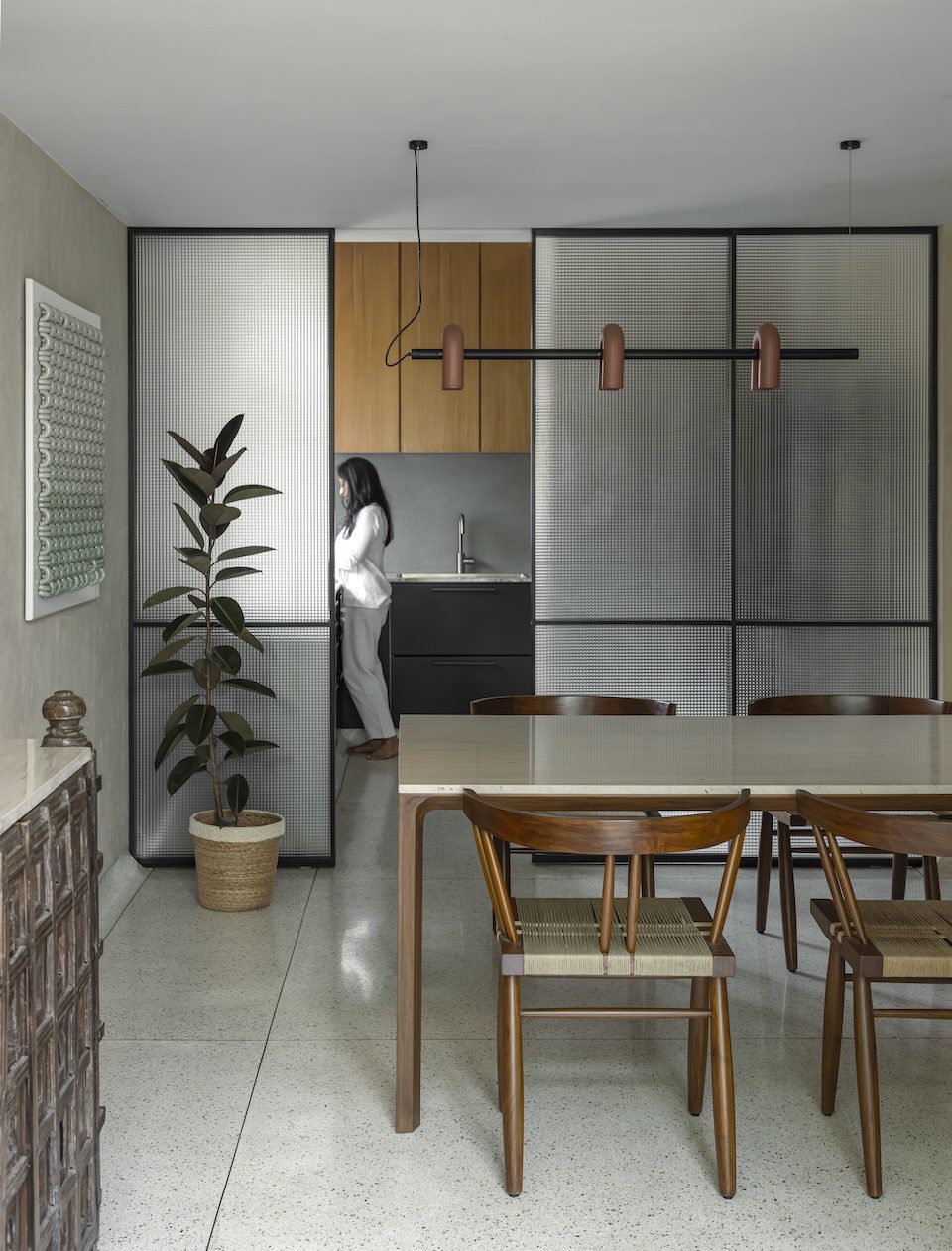
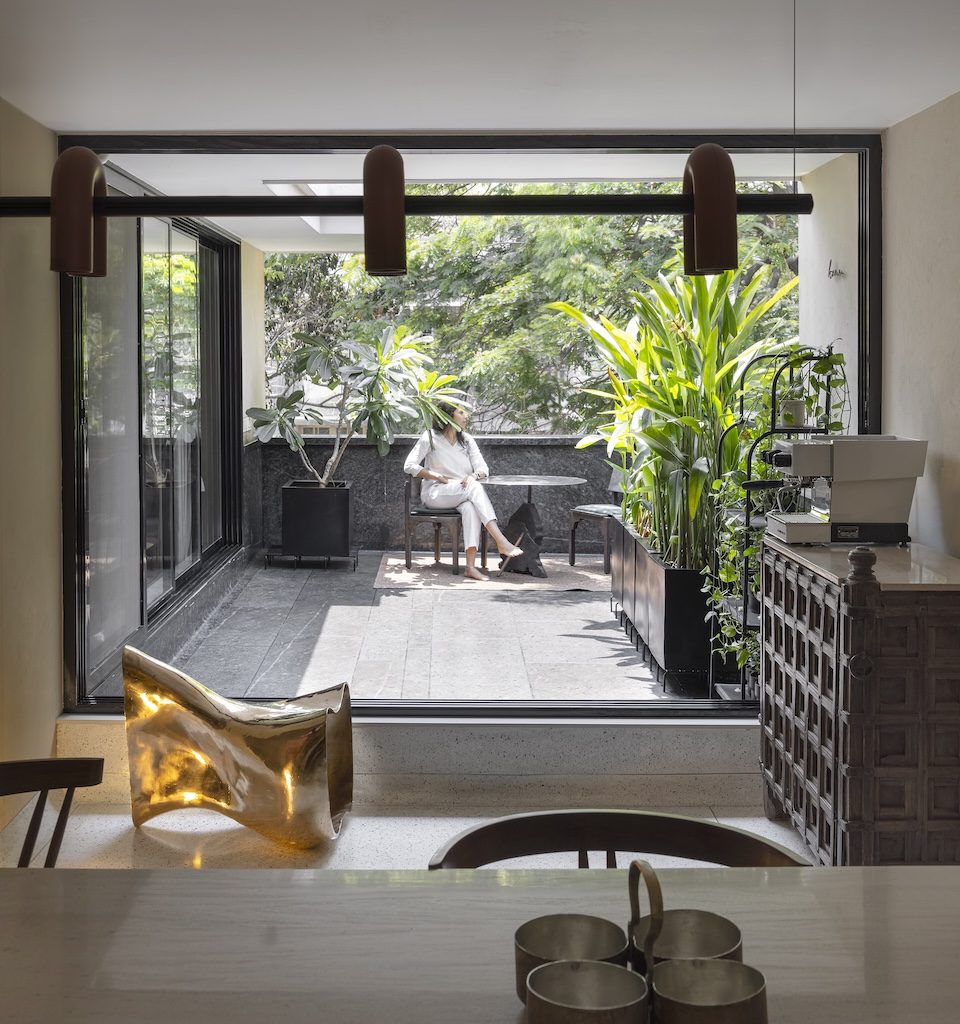
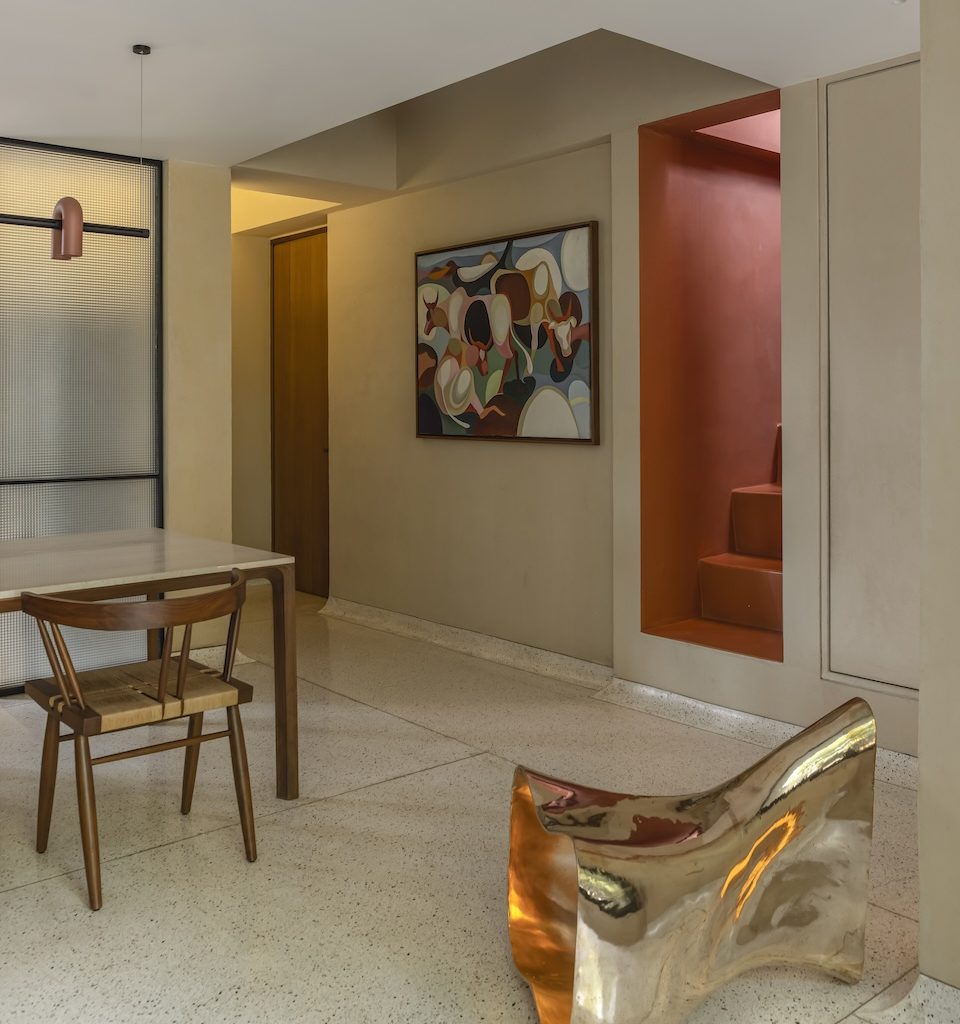
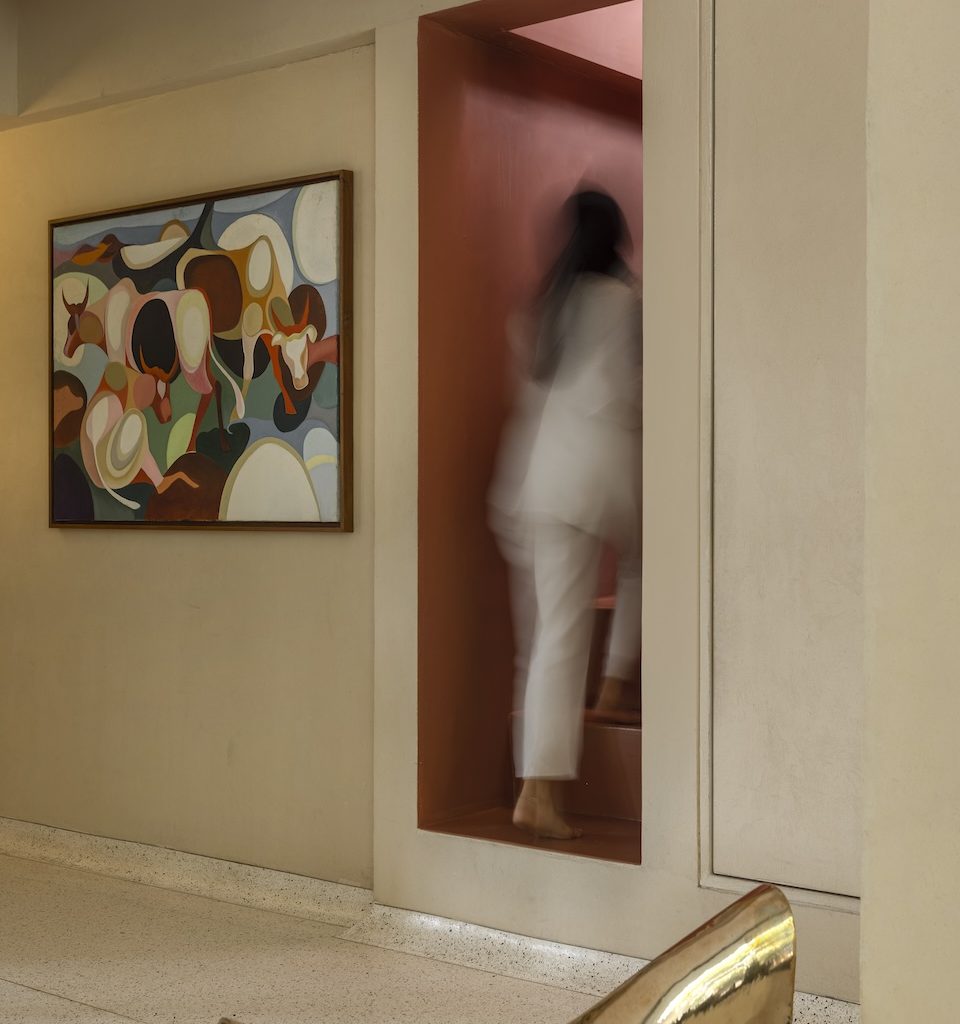
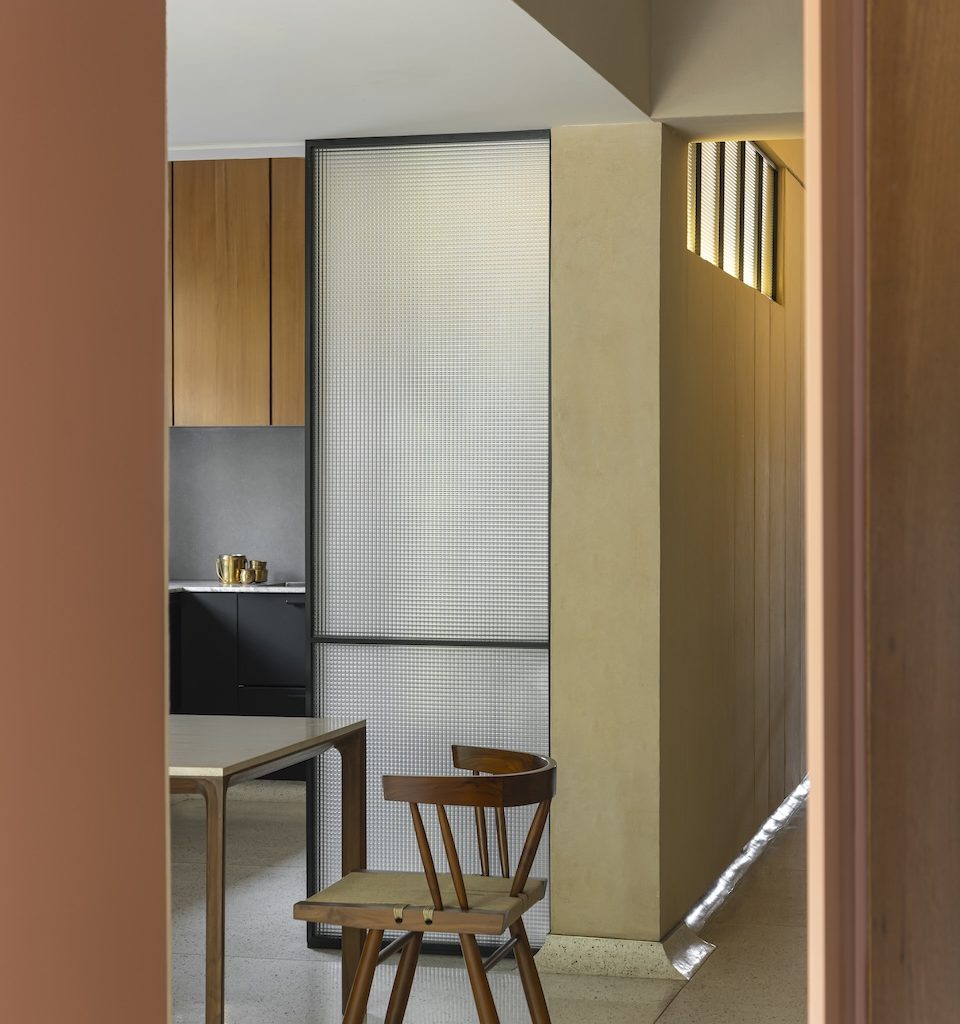
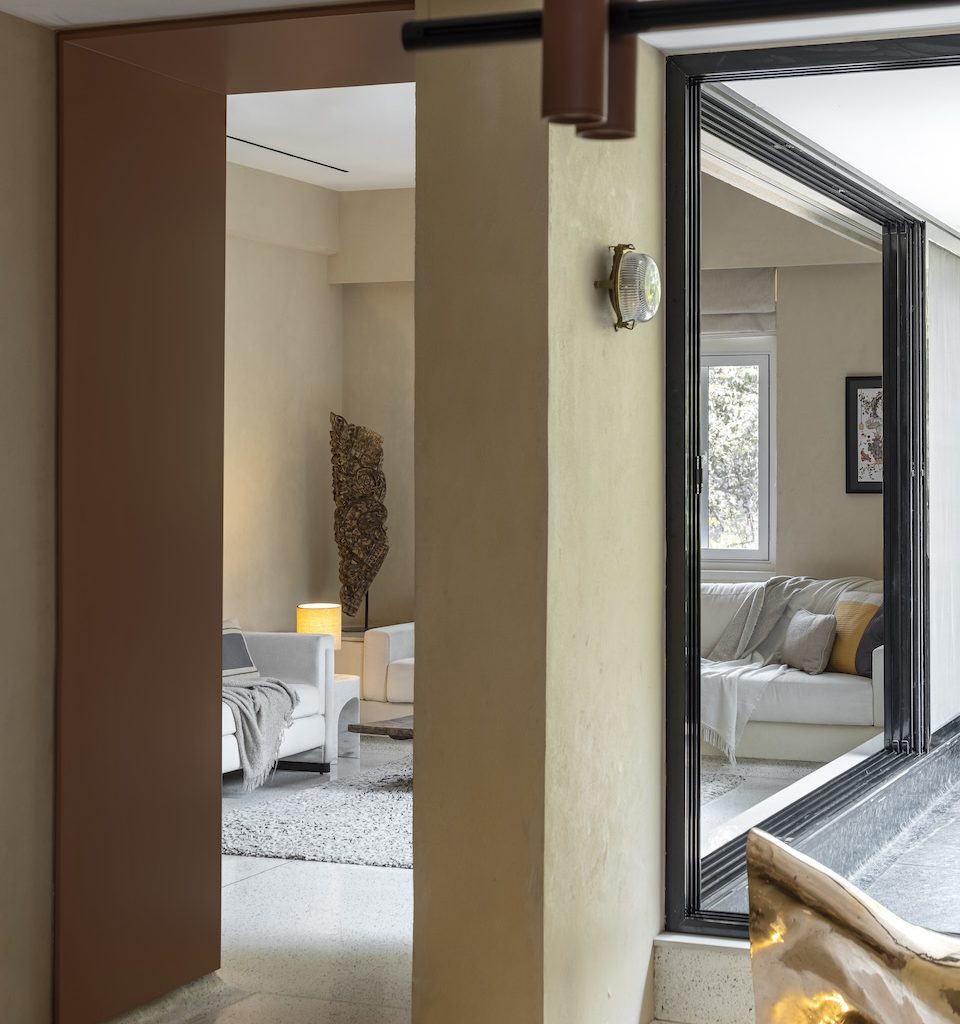
To one side of the axis, the kitchen is discreetly screened behind sliding fluted glass panels; to the other, the balcony frames dense foliage from the raintree outside. A spiral RCC staircase, painted in deep red, rises from this zone to the private terrace above. Daylight enters through a glass door at the top, filtering down through the stairwell and casting shifting patterns across the walls—a moment Vineet and Prachi refer to, half in jest, as “a stairway to heaven.”
The more private areas of the home, including the master bedroom and guest bedroom, occupy the opposite side of the house and are accessed via a secondary corridor. This central axis not only organises the residence into public and private zones, but also maintains fluid spatial relationships throughout. Utilities and storage are neatly integrated behind full-height panels, preserving clarity and continuity within the plan.
The design and material details
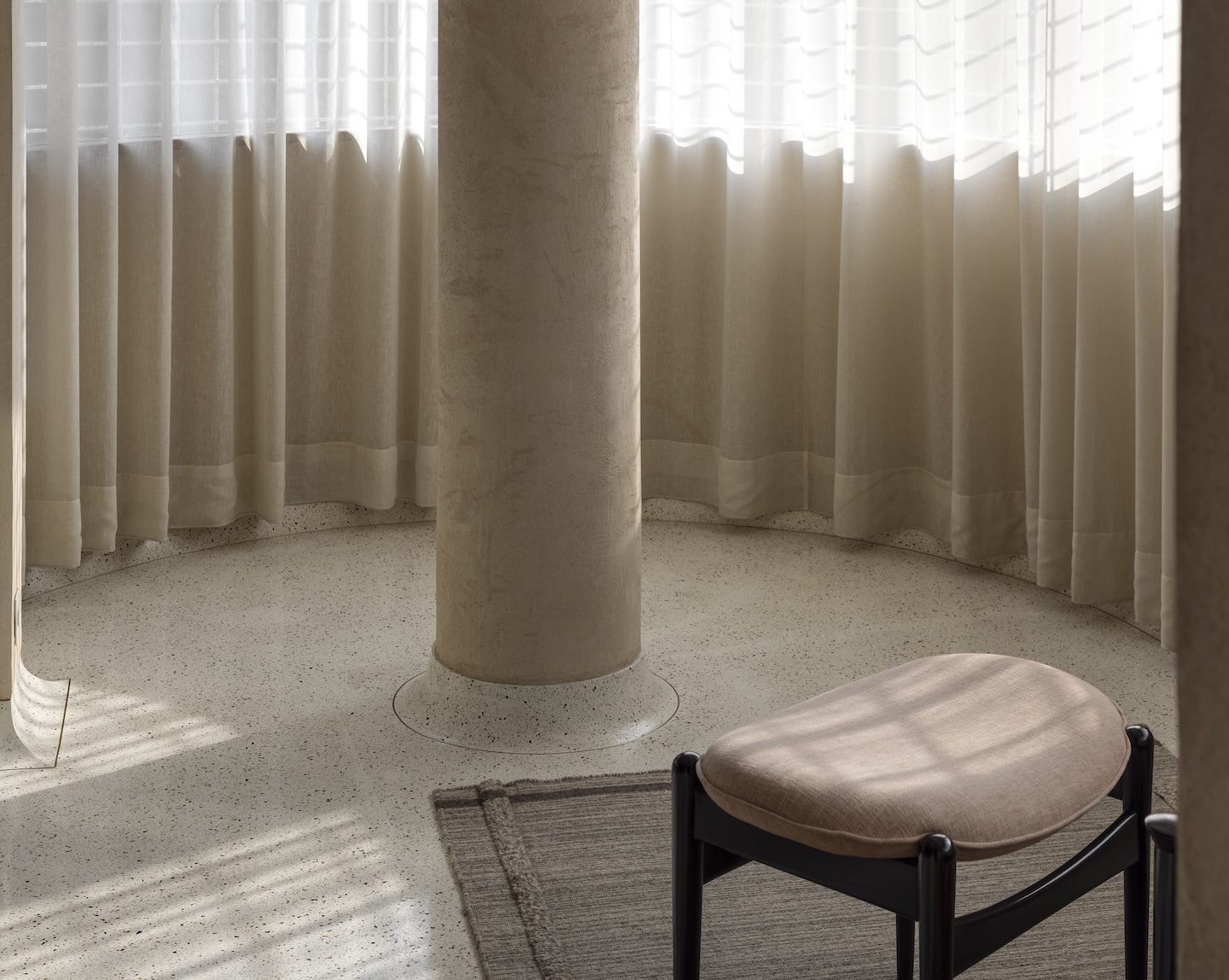
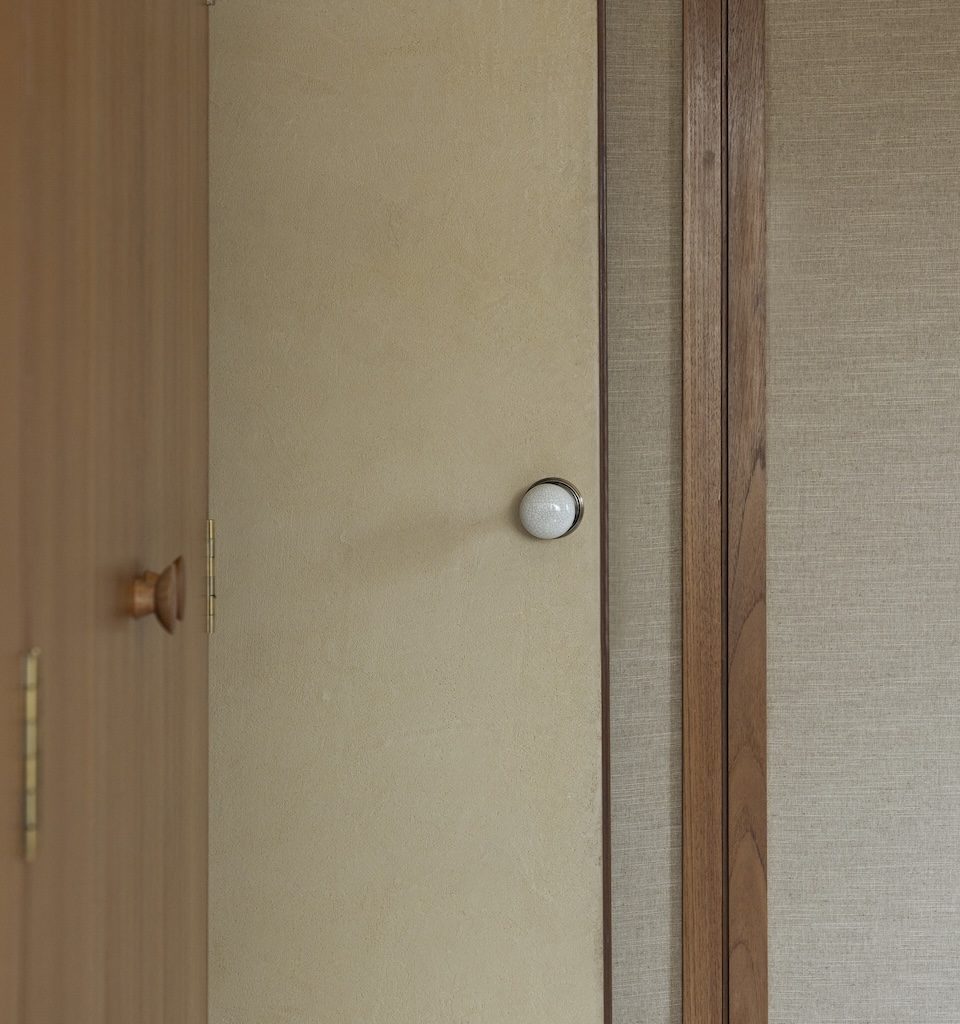
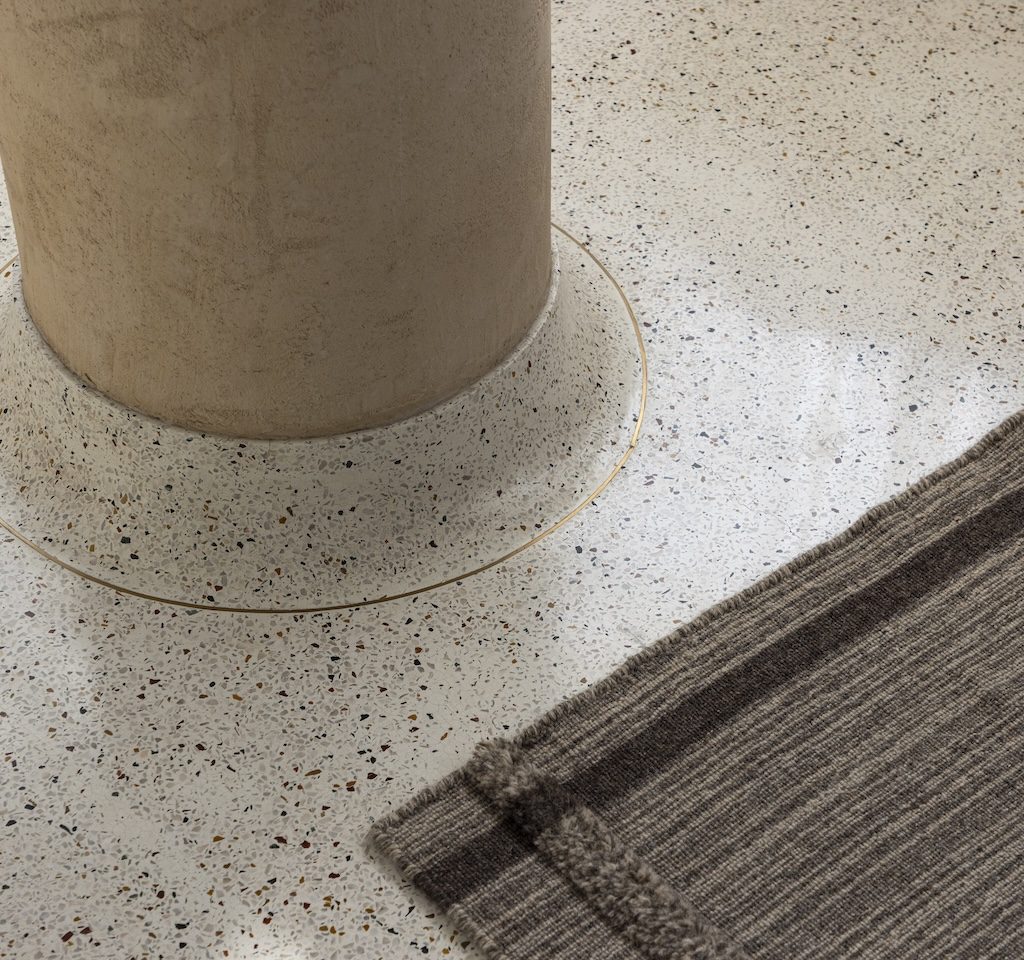
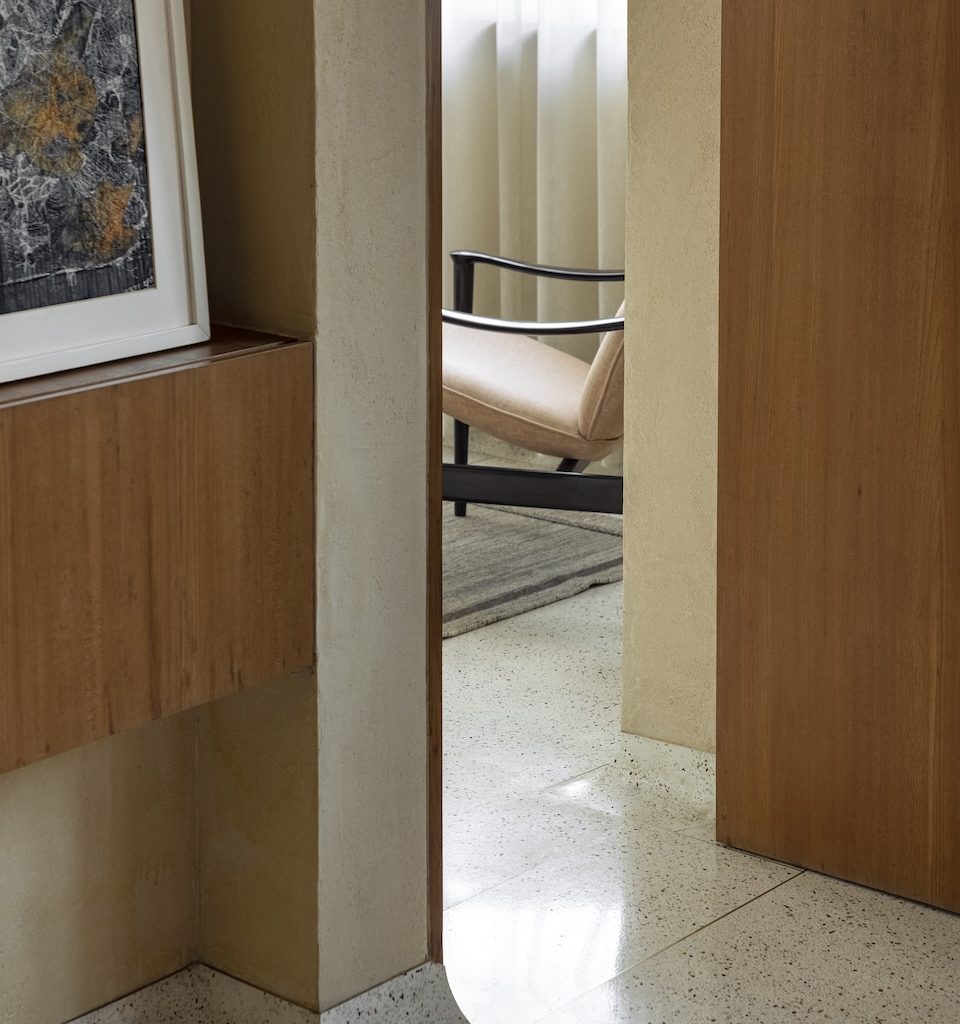
The material palette and decor of the house are personalised and shaped by memory and craft. The in-situ marble terrazzo floors recall Vineet’s childhood home, detailed with fine brass inlay strips and a traditional 3-inch vata skirting. The exact mix of marble chips was developed through on-site sampling, allowing colour and scale to be precisely calibrated. To complement the flooring, marble dust waste sourced from a local stone workshop was mixed into the wall paint, lending the surfaces a soft, nuanced texture. Even the smallest elements were considered with the same intent; all mortice door knobs across the house were sourced from Yorkshireironworks, a historic foundry in Birmingham.
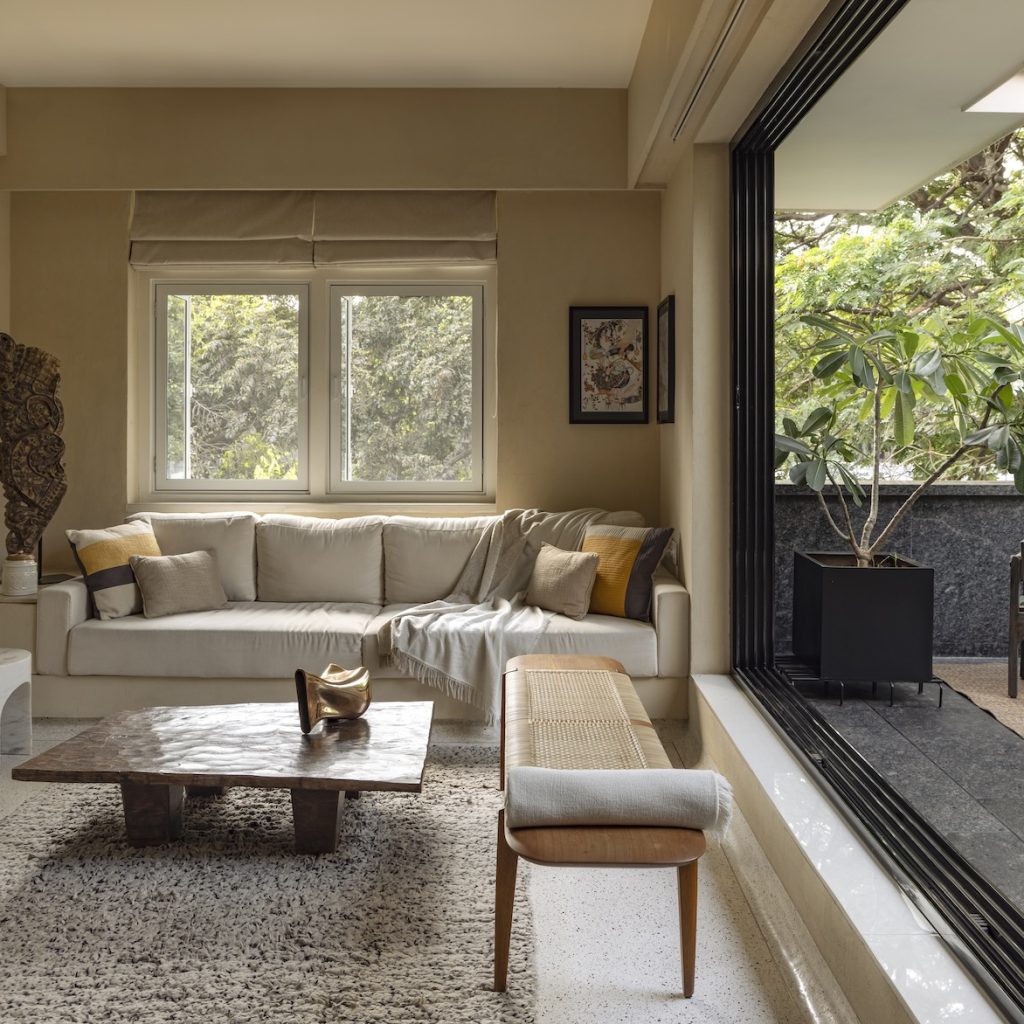
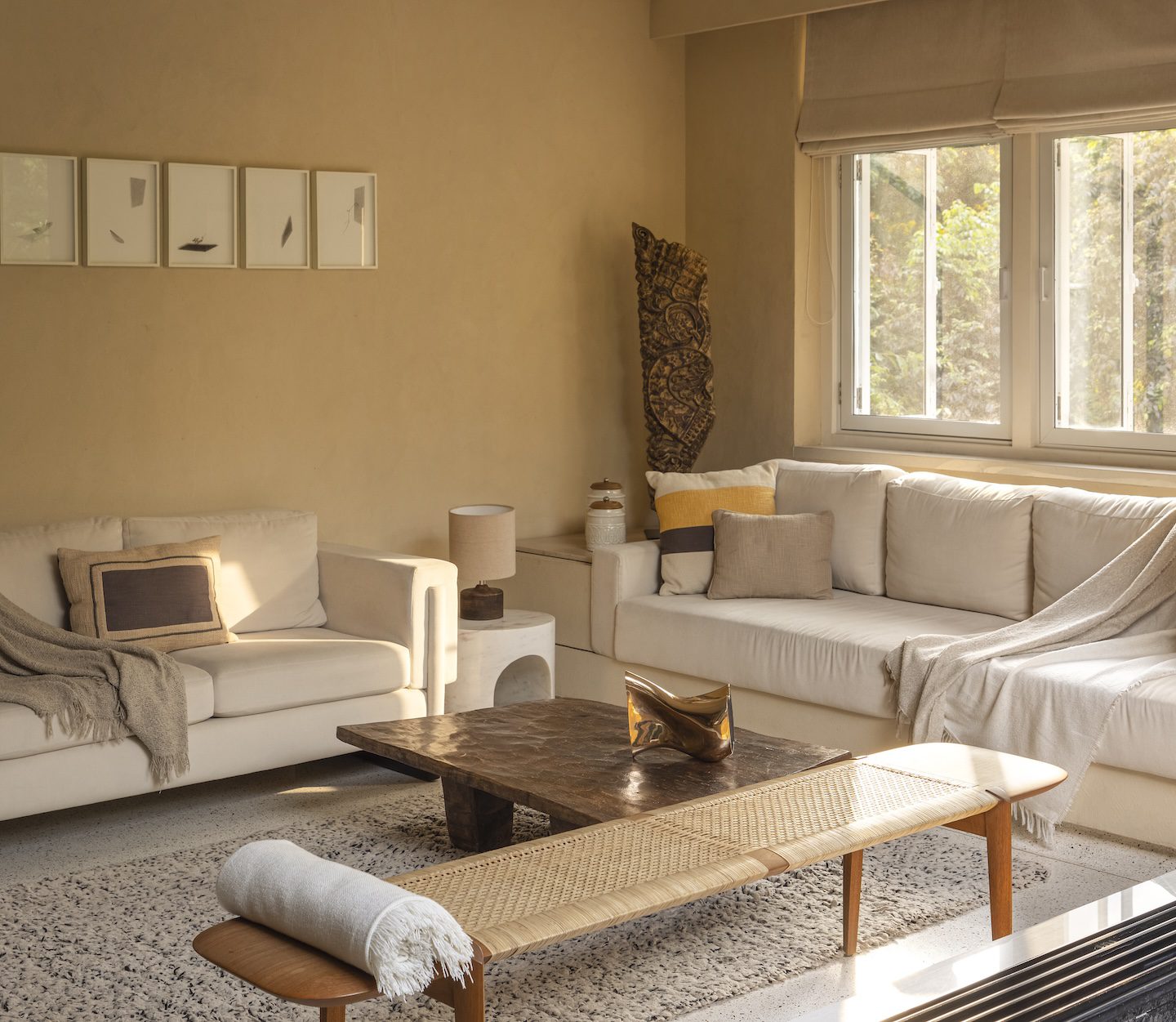
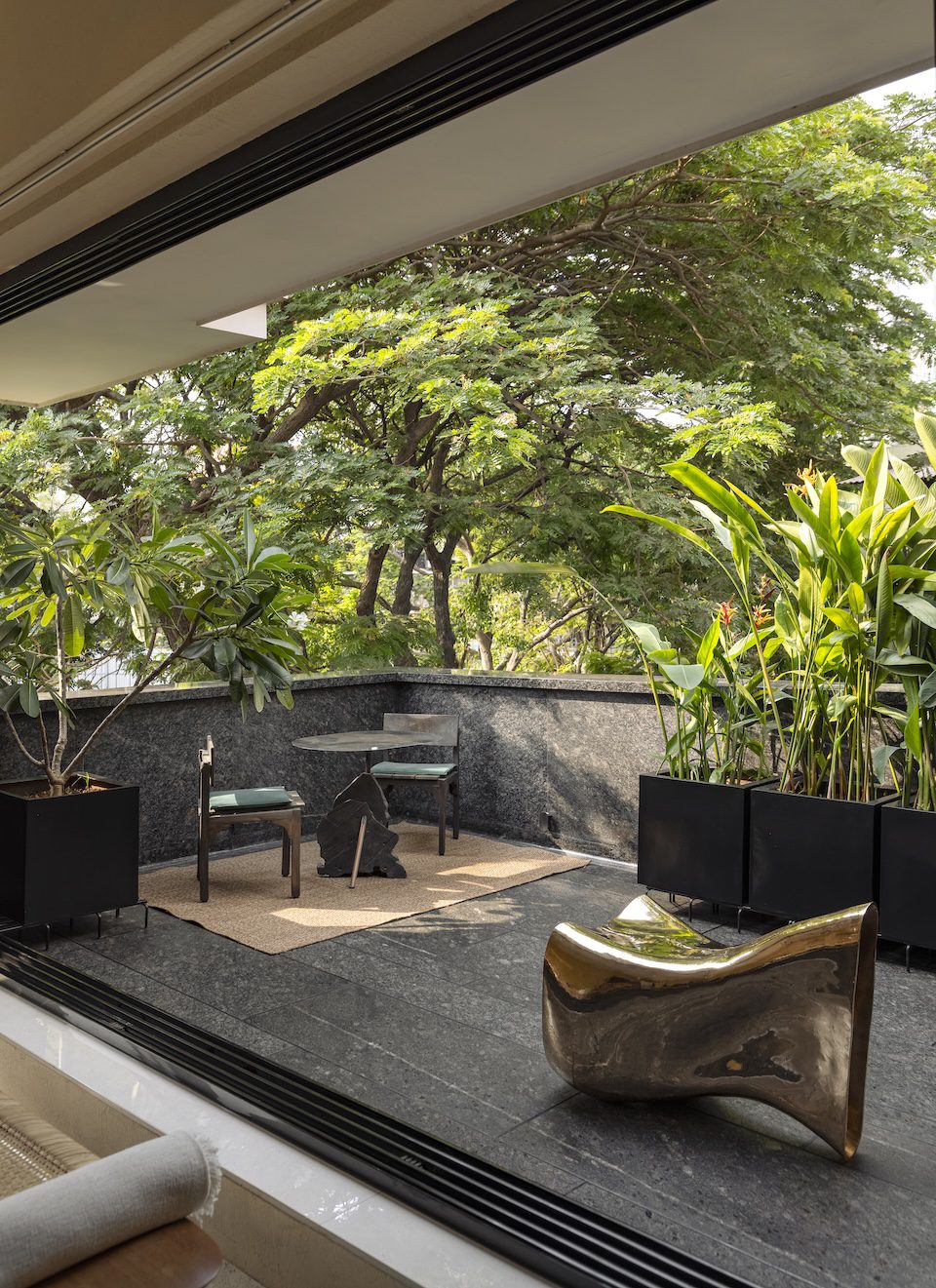
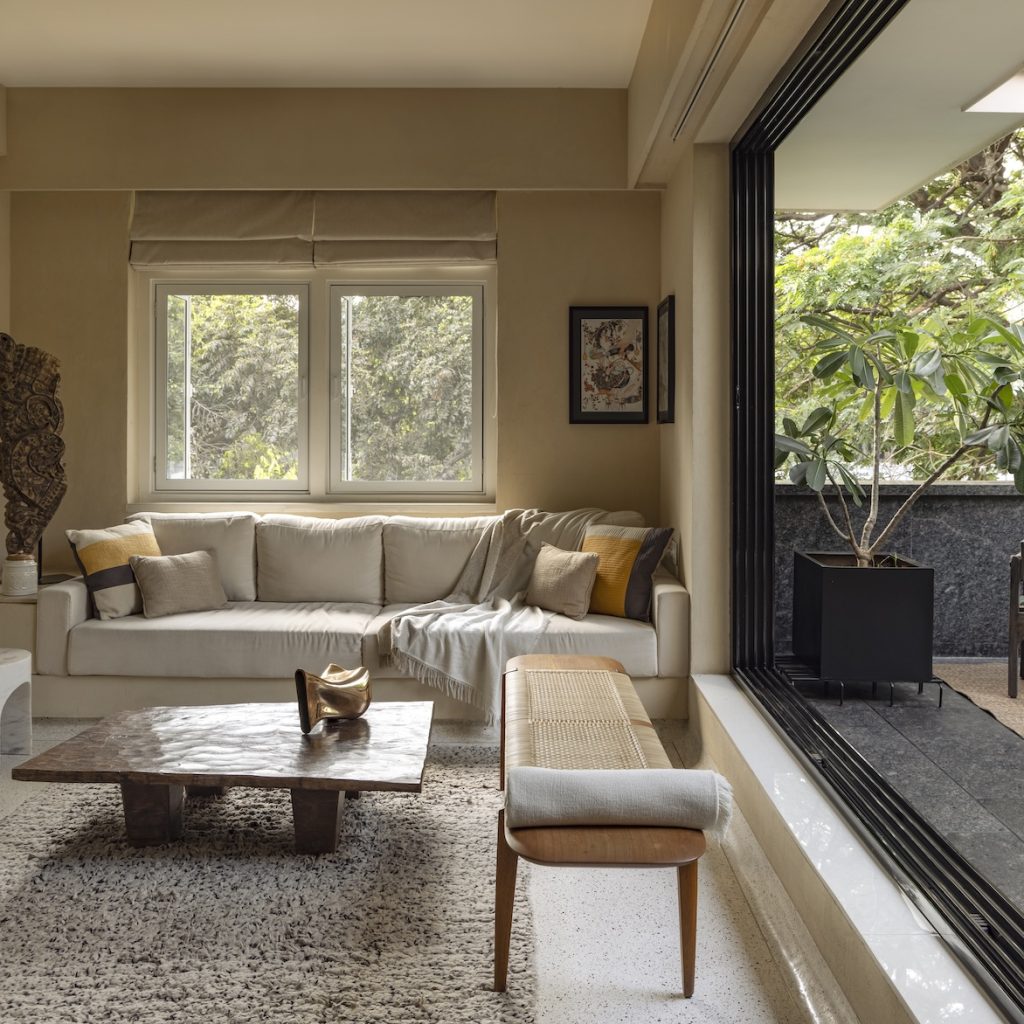
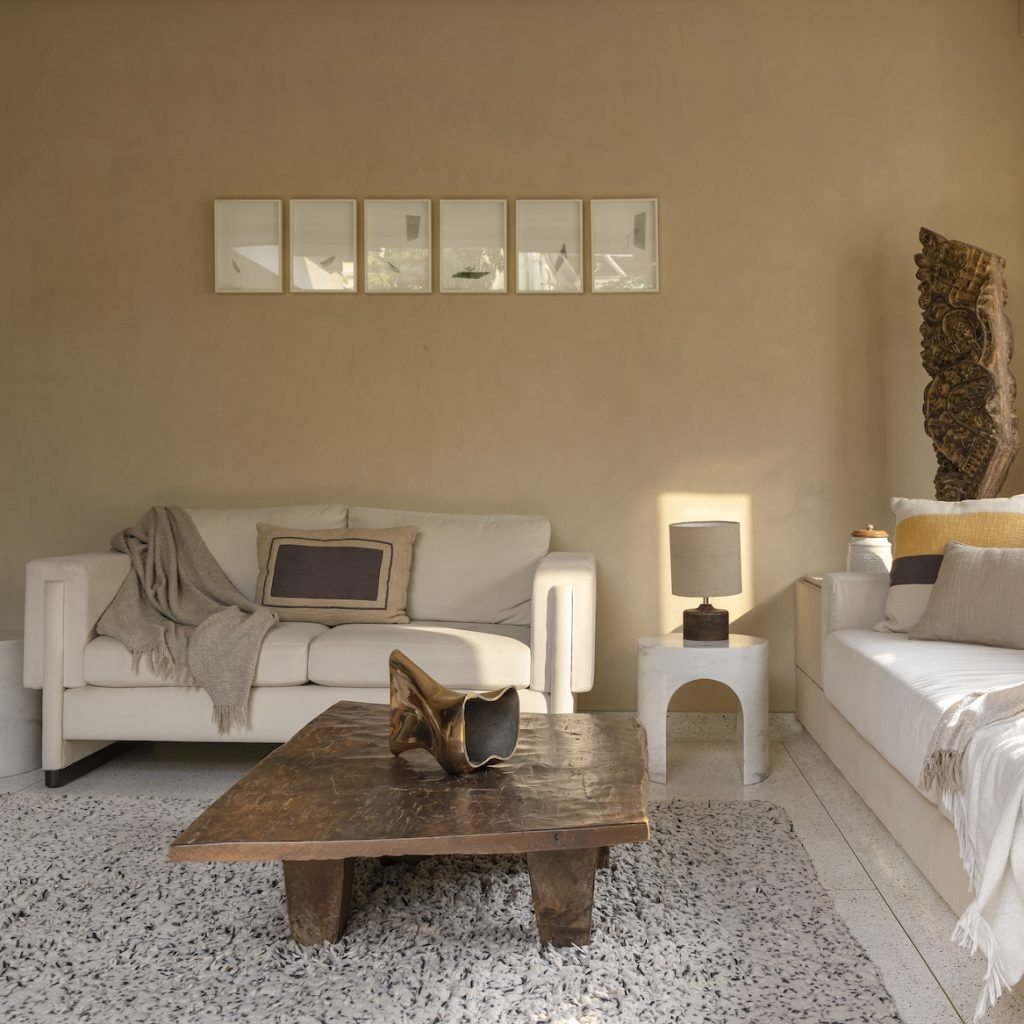
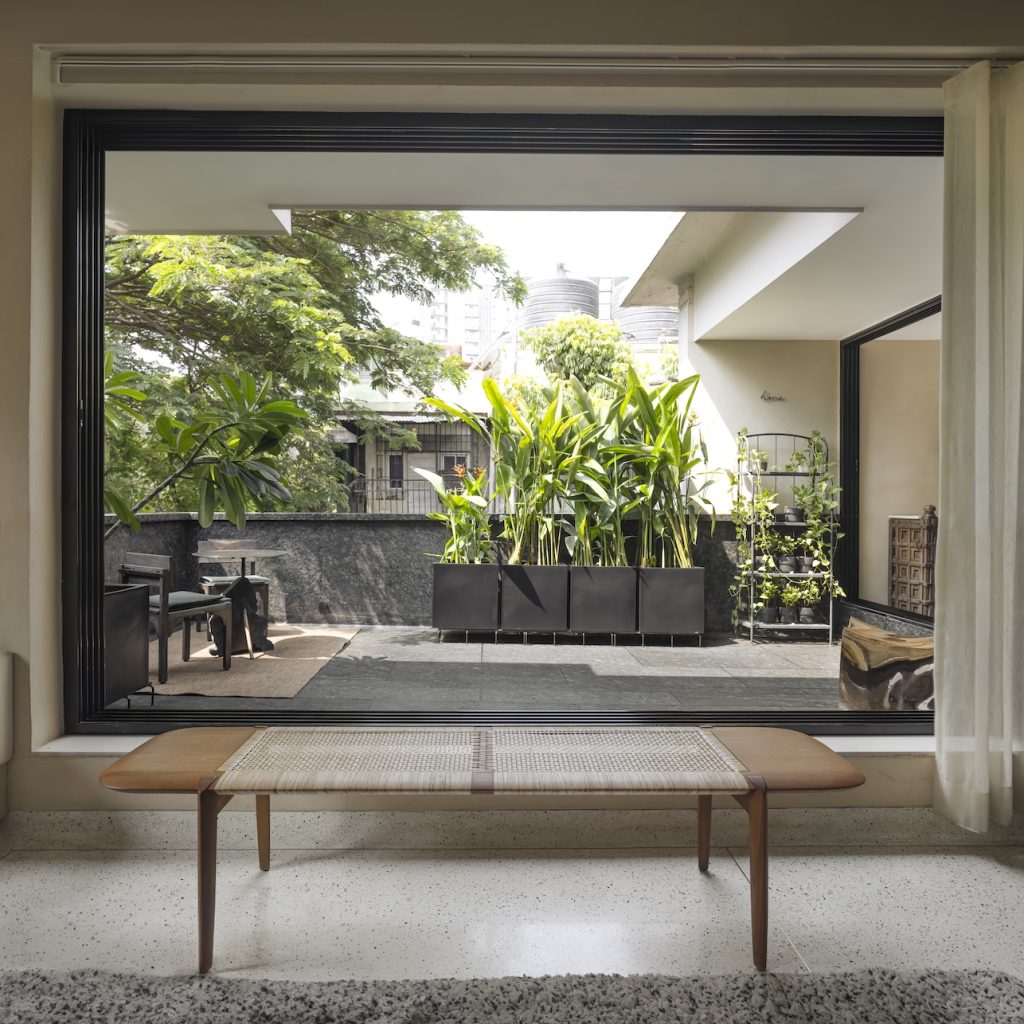
In the living room, a Burma teak bench (the first piece Vineet and Prachi purchased even before renovation began) from Phantom Hands sits facing the balcony. A low diwan replaces the conventional sofa that once occupied the family’s earlier living room, a space where Vineet and his brother spent long hours with their father, who always claimed a particular corner. This shift introduces an informality that feels familiar and distinctly Indian, allowing the room to be used more fluidly. Anchoring the space is a central Naga table, accompanied by a bronze sculpture prototype designed by Studio UF+O. It is one of the several bespoke objects developed as part of the studio’s ongoing material research in indigenous marble, concrete, bronze, and teak.
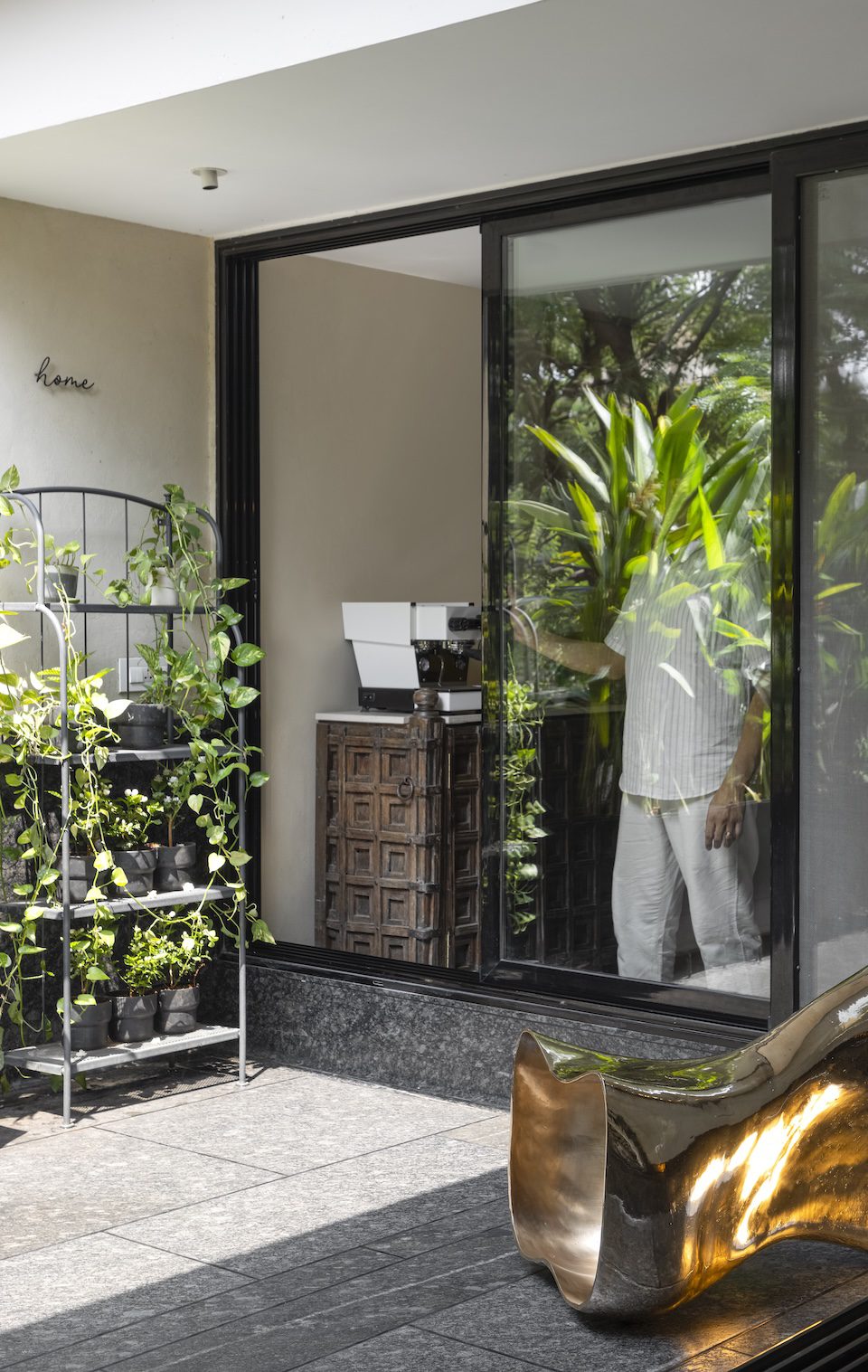
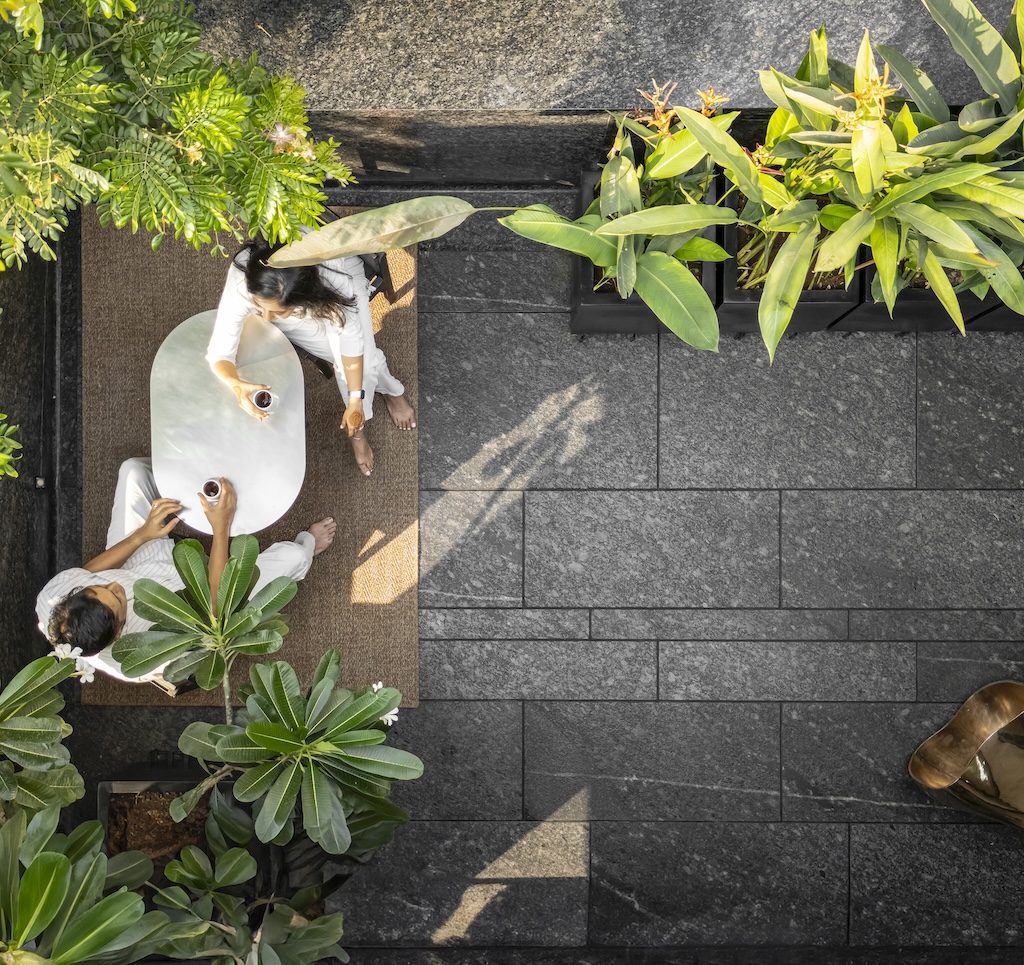
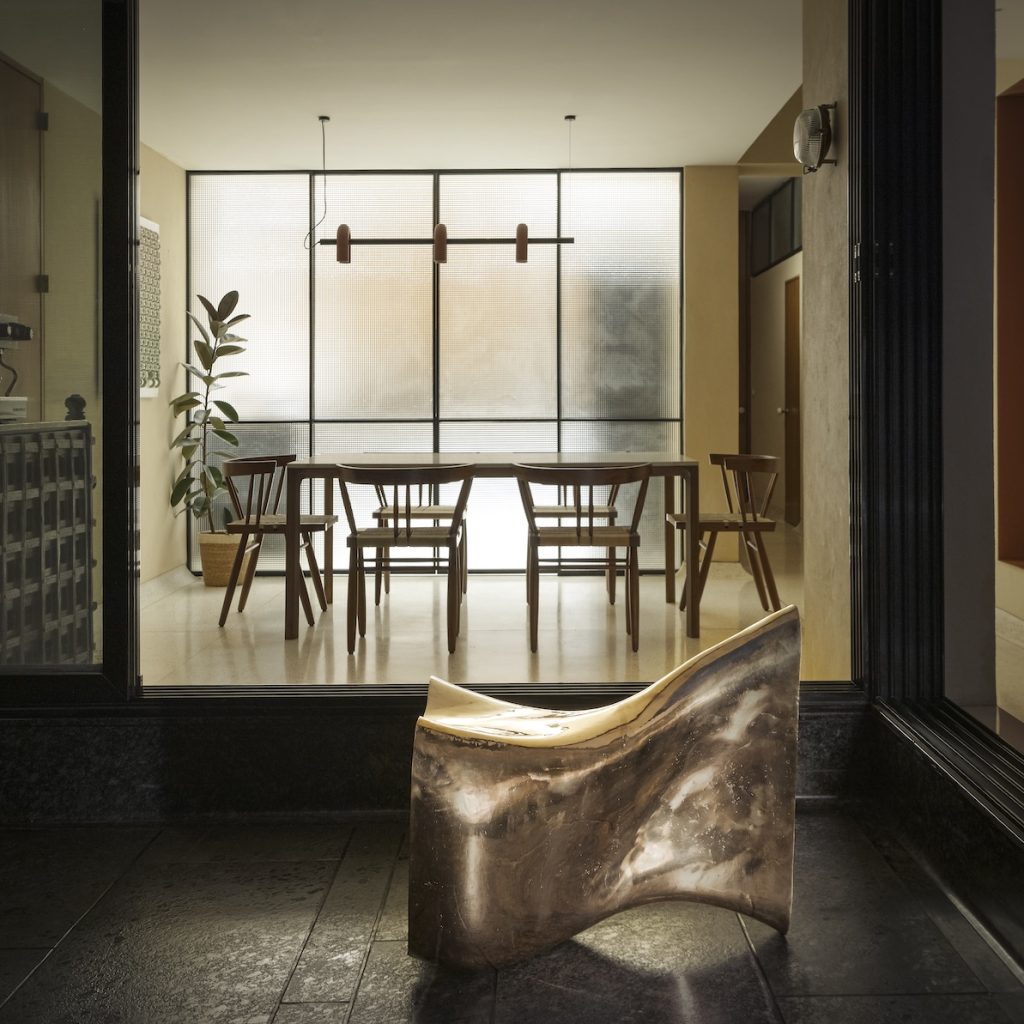
Similarly, the balcony adjoining the living and dining areas is shaped by simple, performance-driven decisions. An anti-skid, leather-finish granite floor was selected to withstand exposure to the elements, while glossy granite cladding on the walls adds depth and durability to the space. The curved vata detail, continued seamlessly from the interiors, was executed using CNC-milled granite stone. Furniture here was sourced serendipitously from a cafe in Jaipur and purchased directly from its owner, Arpan Patel (industrial designer and founder of Studio Kassa), following a chance encounter during a trip.
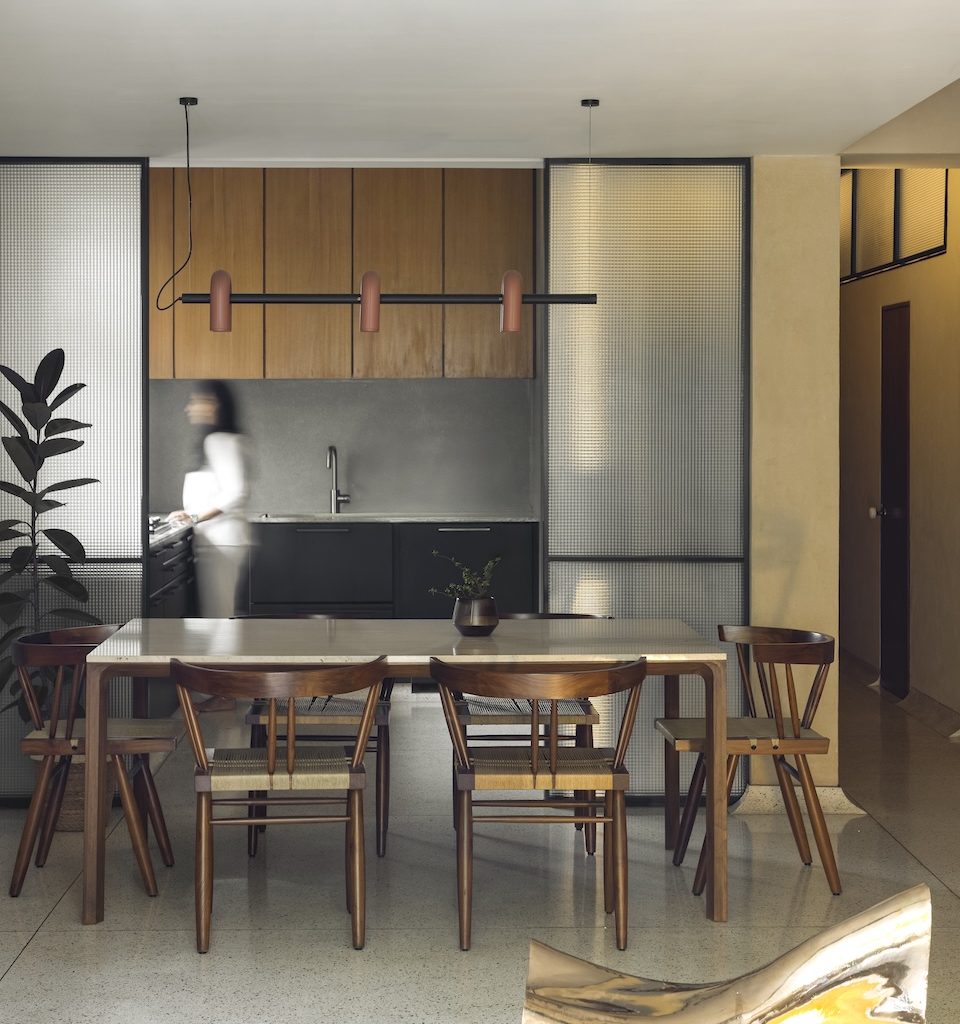
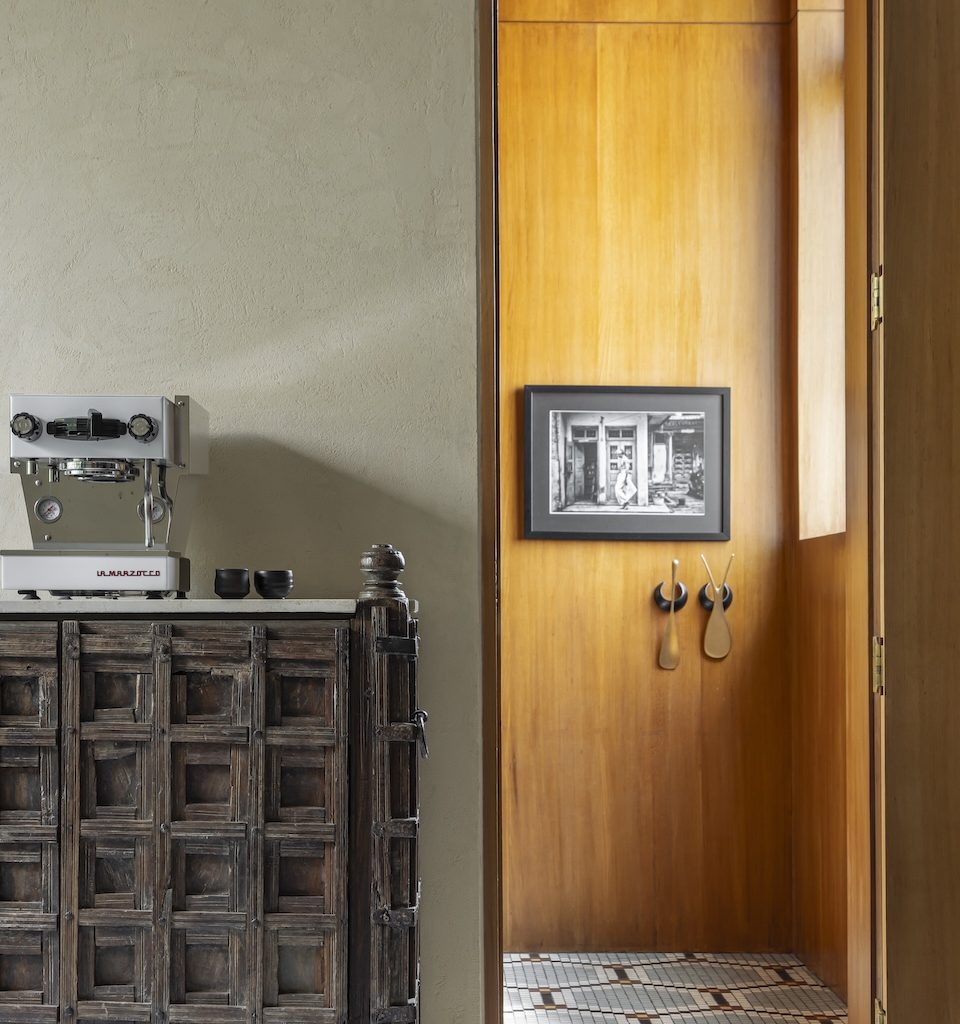
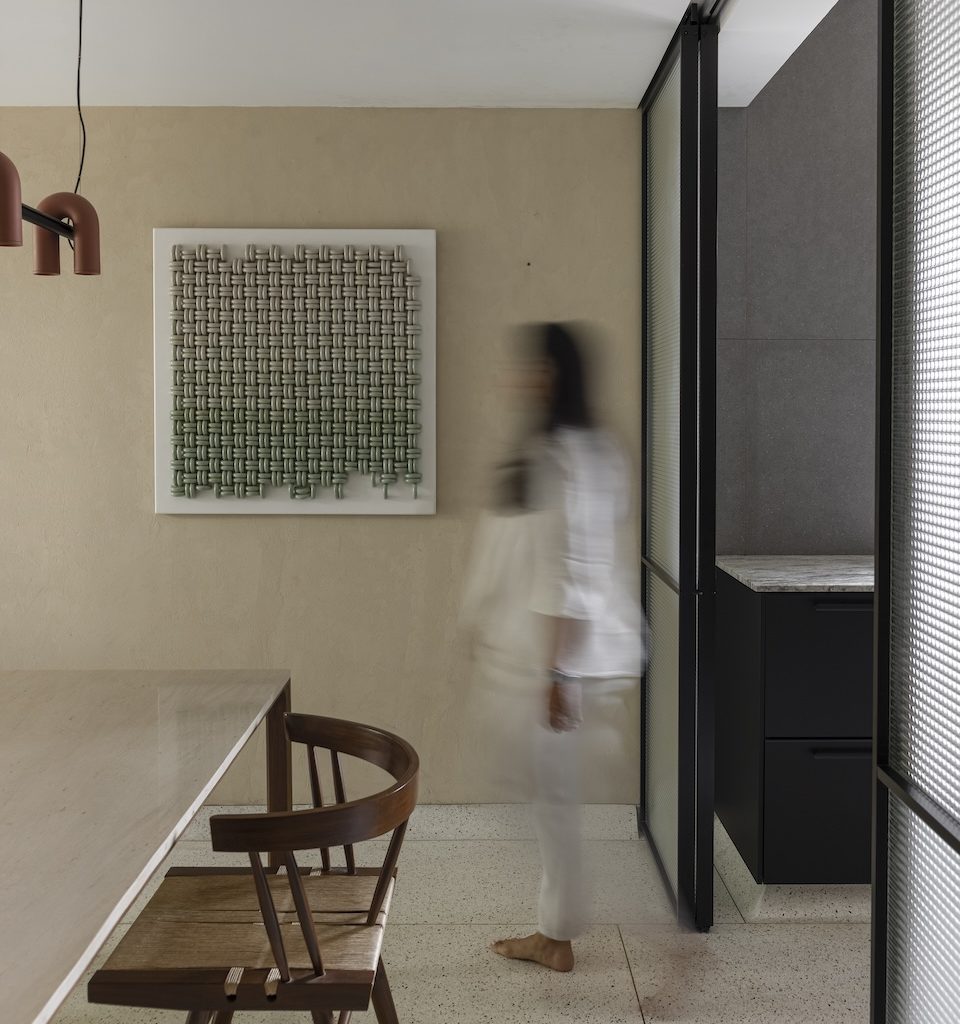
In the kitchen, black cabinetry paired with a grey stone dado is enclosed behind a sliding glass partition, detailed in a waffle glass pattern reminiscent of earlier decades. The dining table was custom-designed by Studio UF+O, while chairs inspired by George Nakashima were sourced from Design Bee. Completing the dining area is a custom ceramic artwork in beige and green by Maulik Oza, which interprets the ikat motif through a contemporary lens. On the opposite wall hangs a reinterpretation of a work by Satish Gujral, created by Vineet’s father. A century-old patara from Kutch has been repurposed as a coffee station, its original form retained and fitted with updated shutters for present-day use.
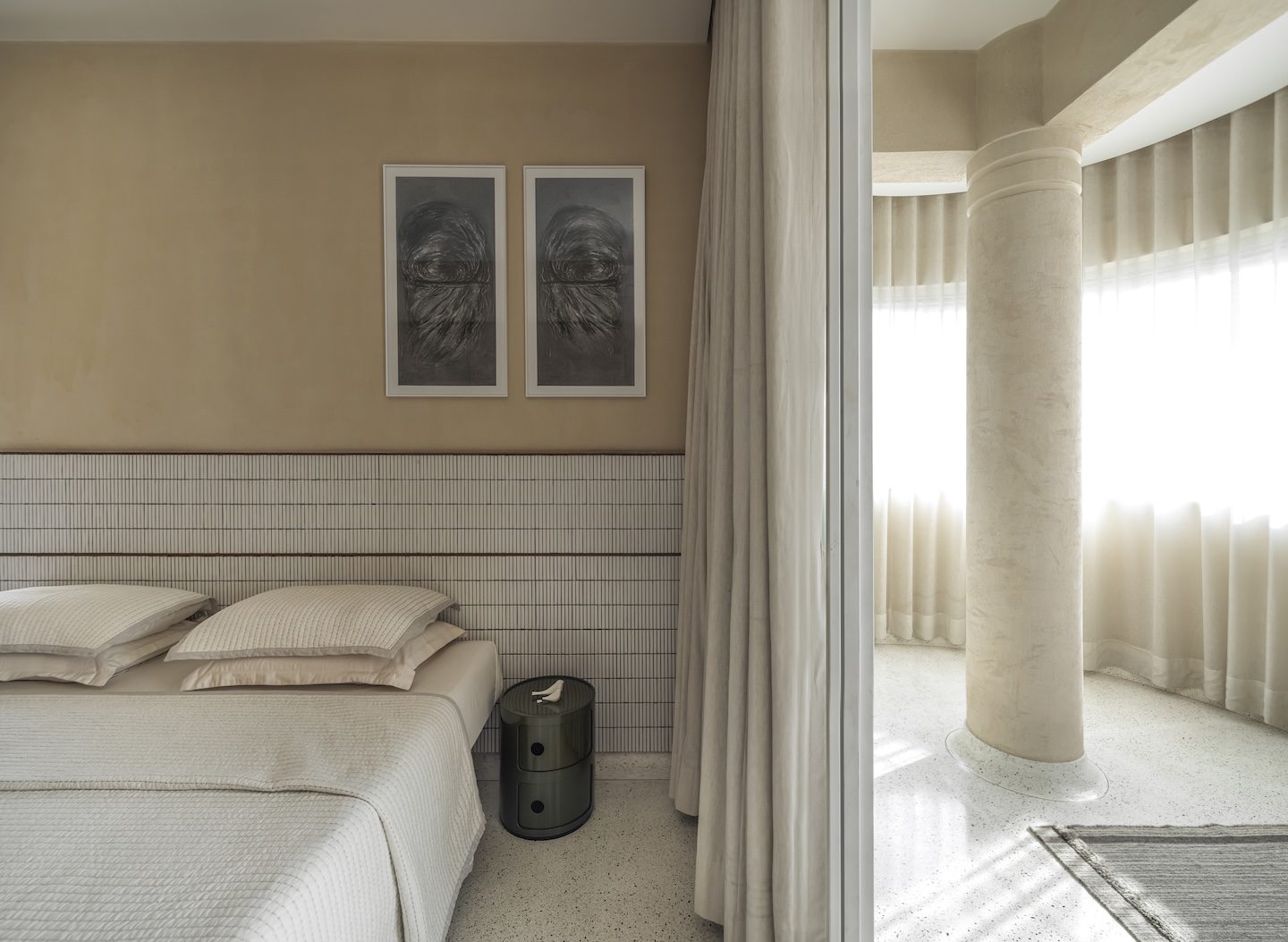
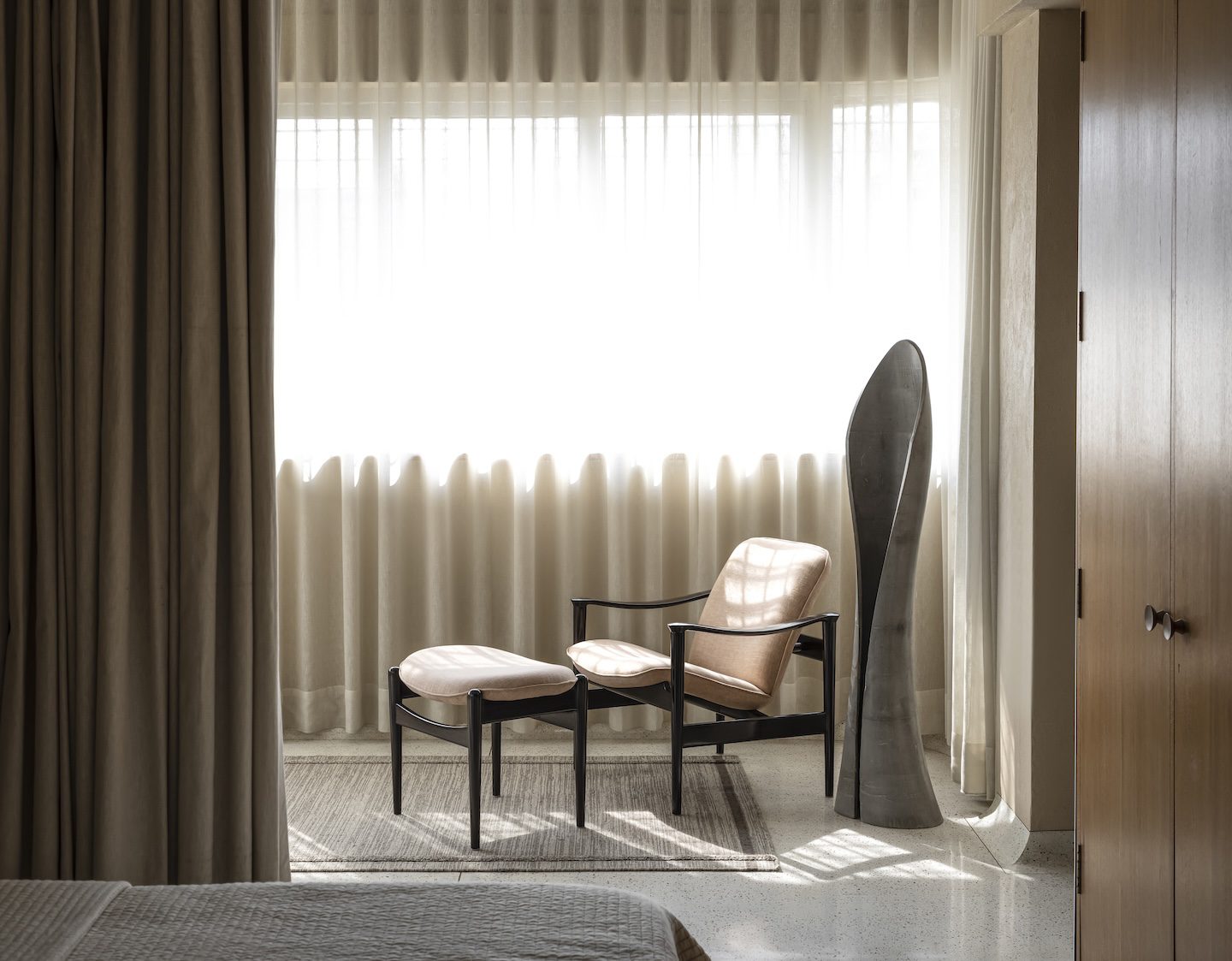
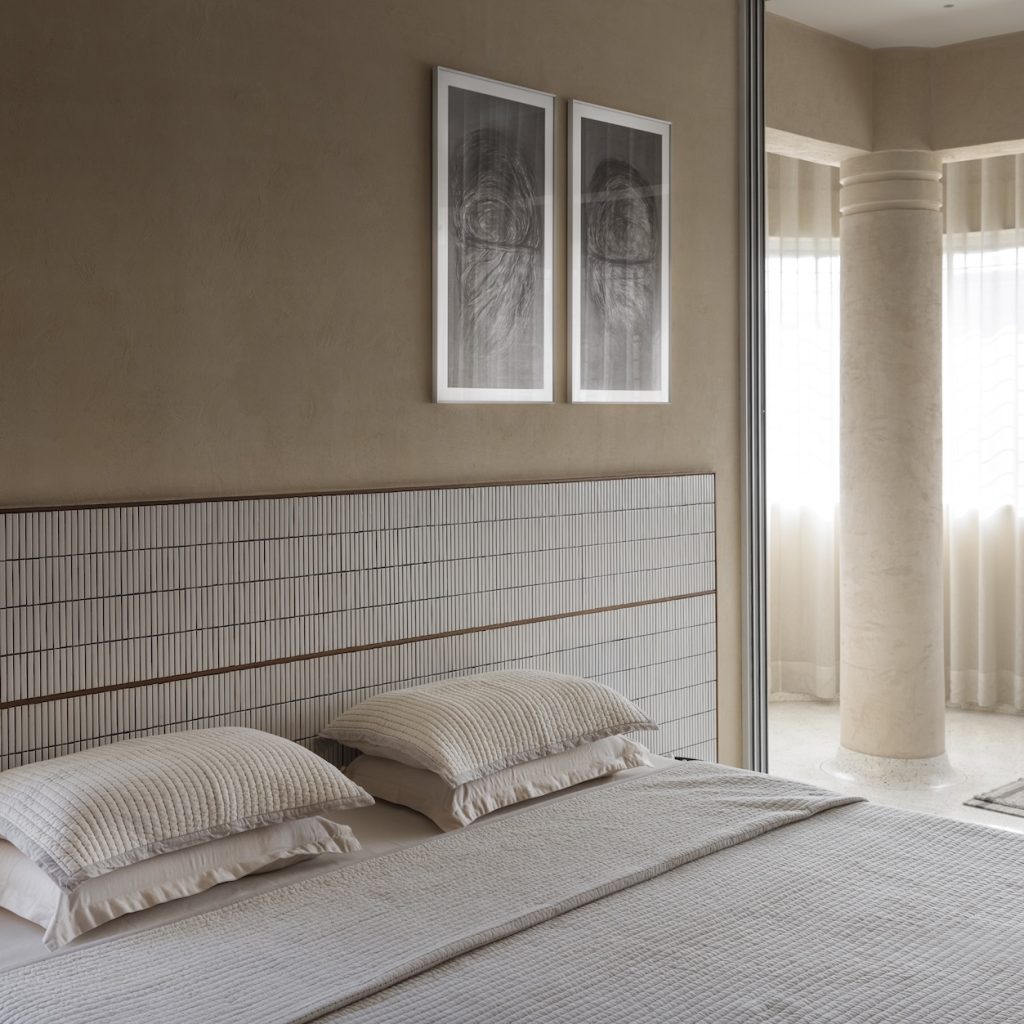
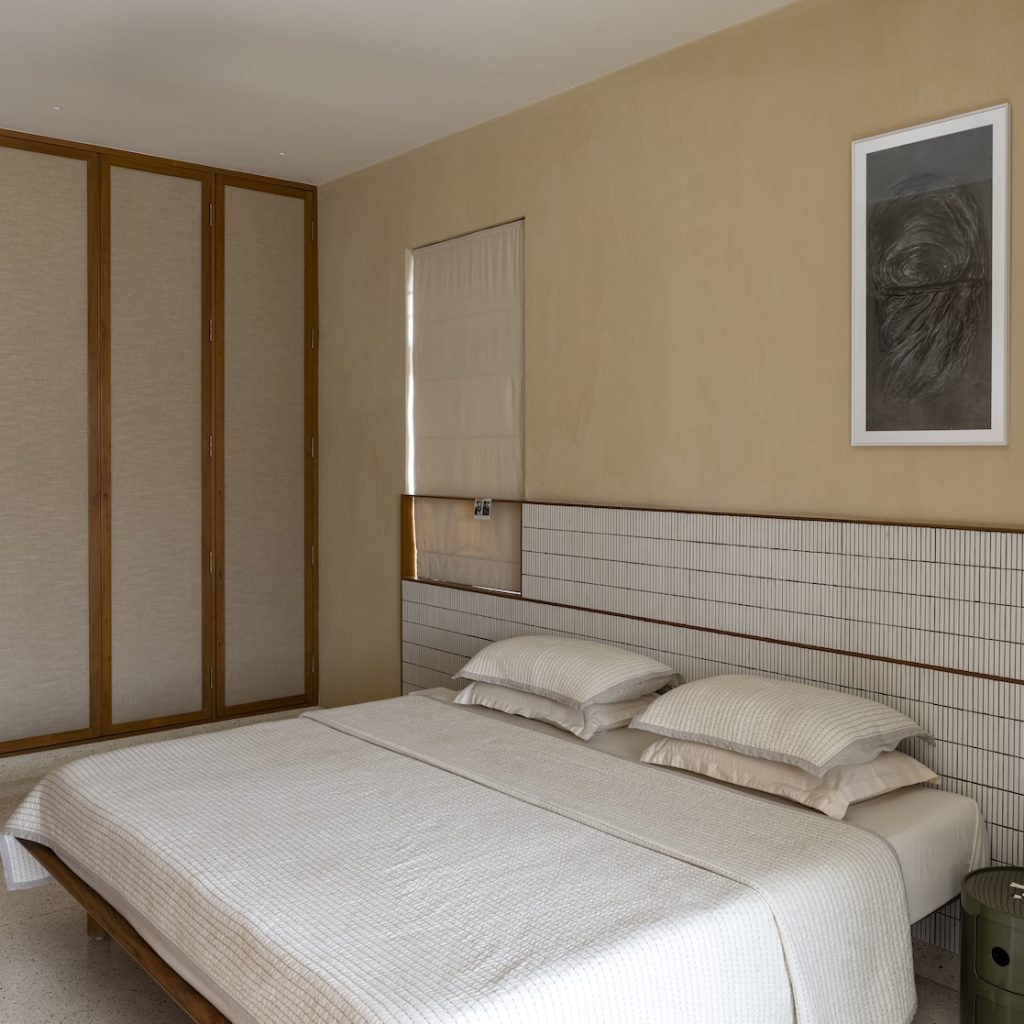
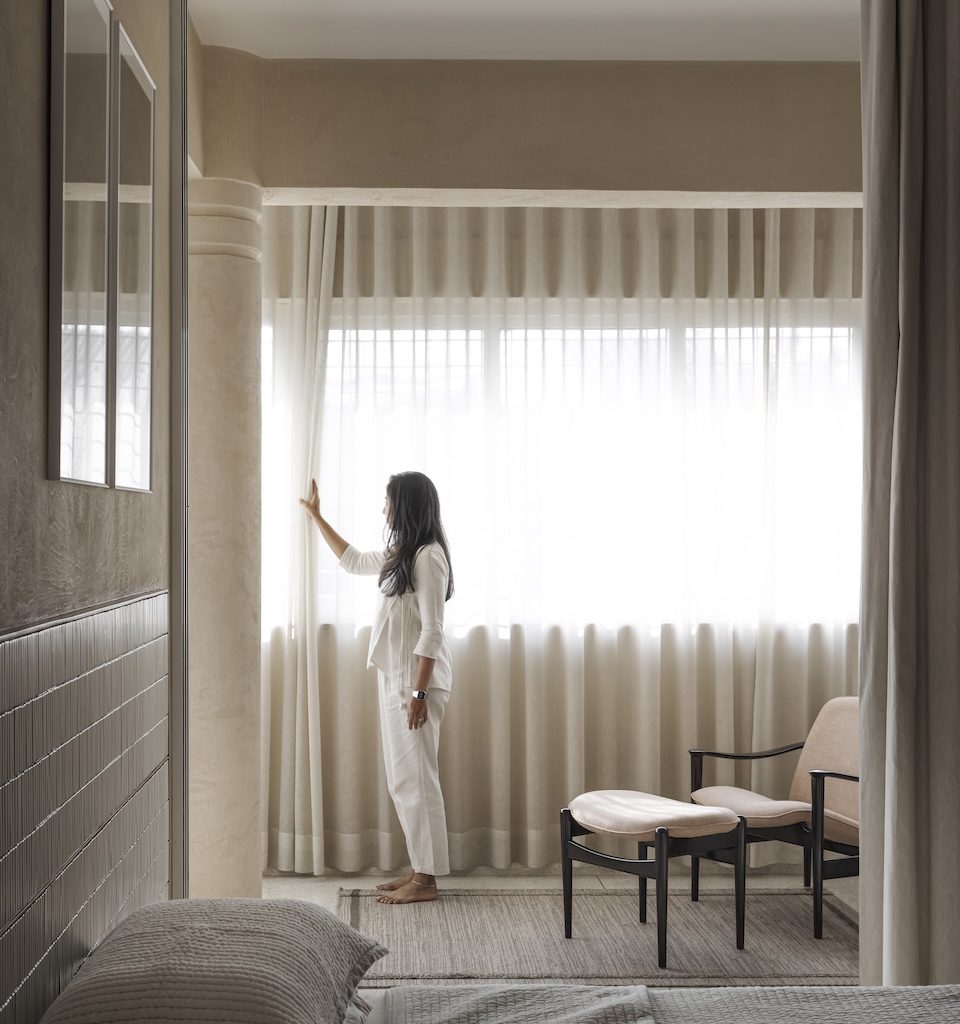
The master bedroom is shaped by a restrained palette and a ceramic headboard custom designed by the studio, composed using ceramic mosaics from Belleza Mumbai. To improve daylight and restore a stronger relationship with the outdoors, the wall that once separated the bedroom from the curved balcony was removed. The balcony itself, articulated with vata skirting and a carefully restored profile, recalls the building’s original Art Deco character. It accommodates a petal light custom designed by Studio UF+O and fabricated by Articlad, alongside a remake of a Frederick A Kaiser chair by Mahendra Doshi.
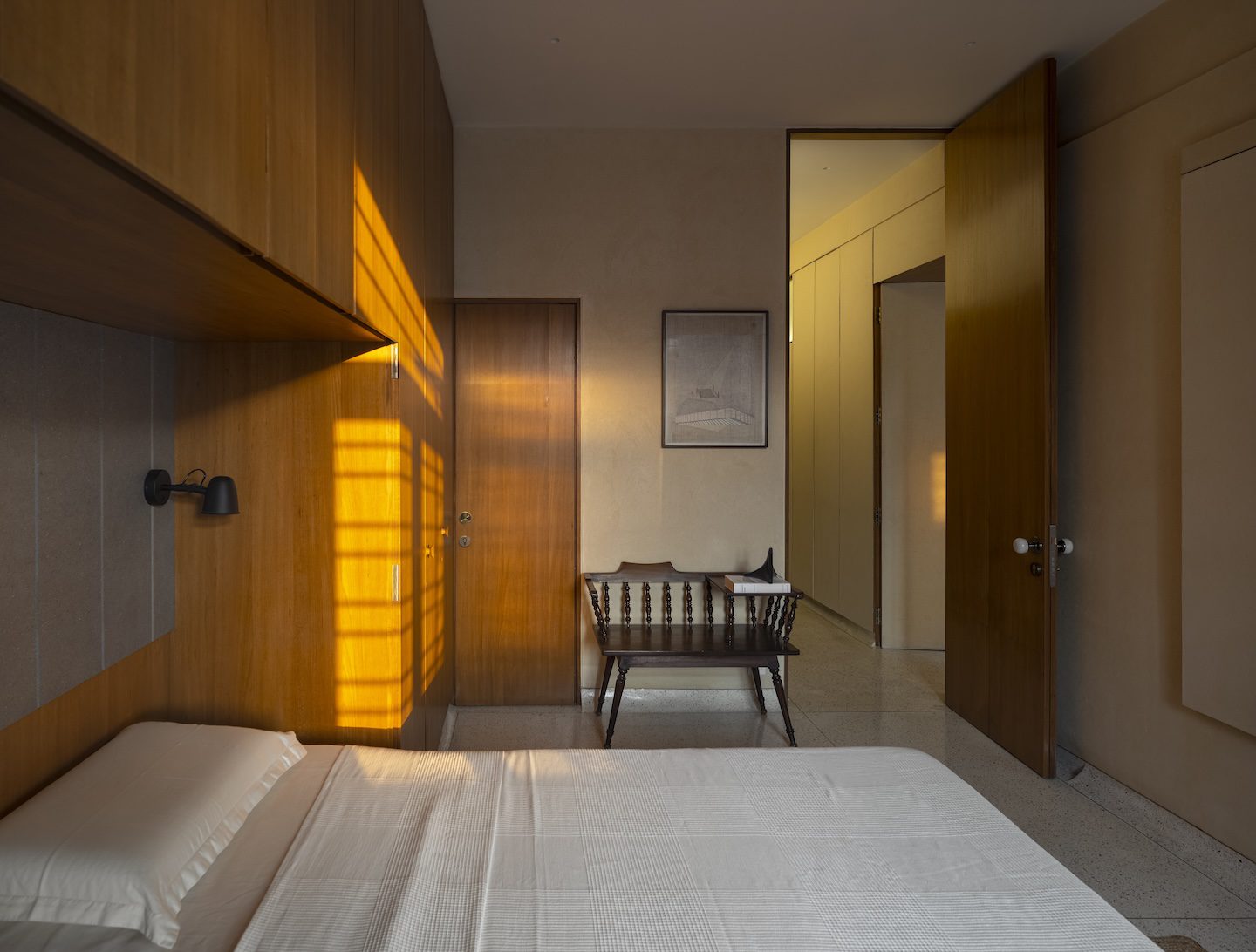
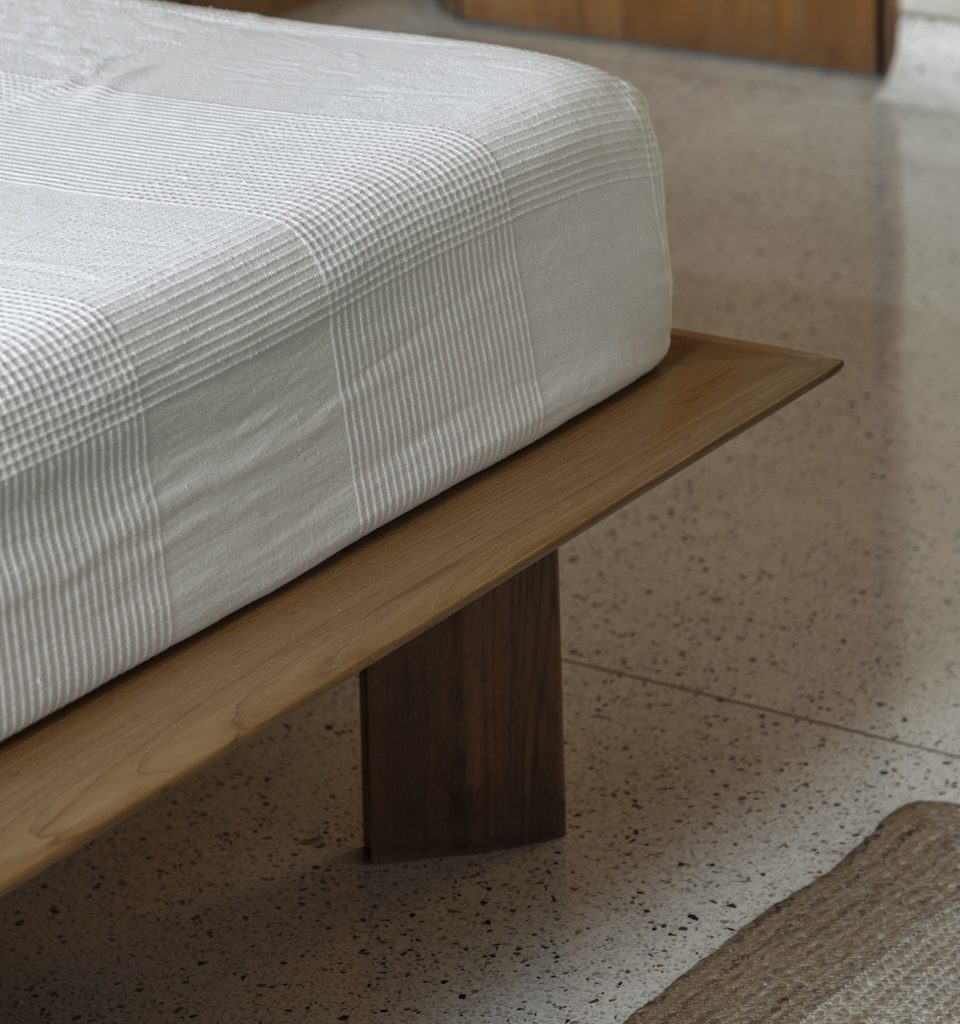
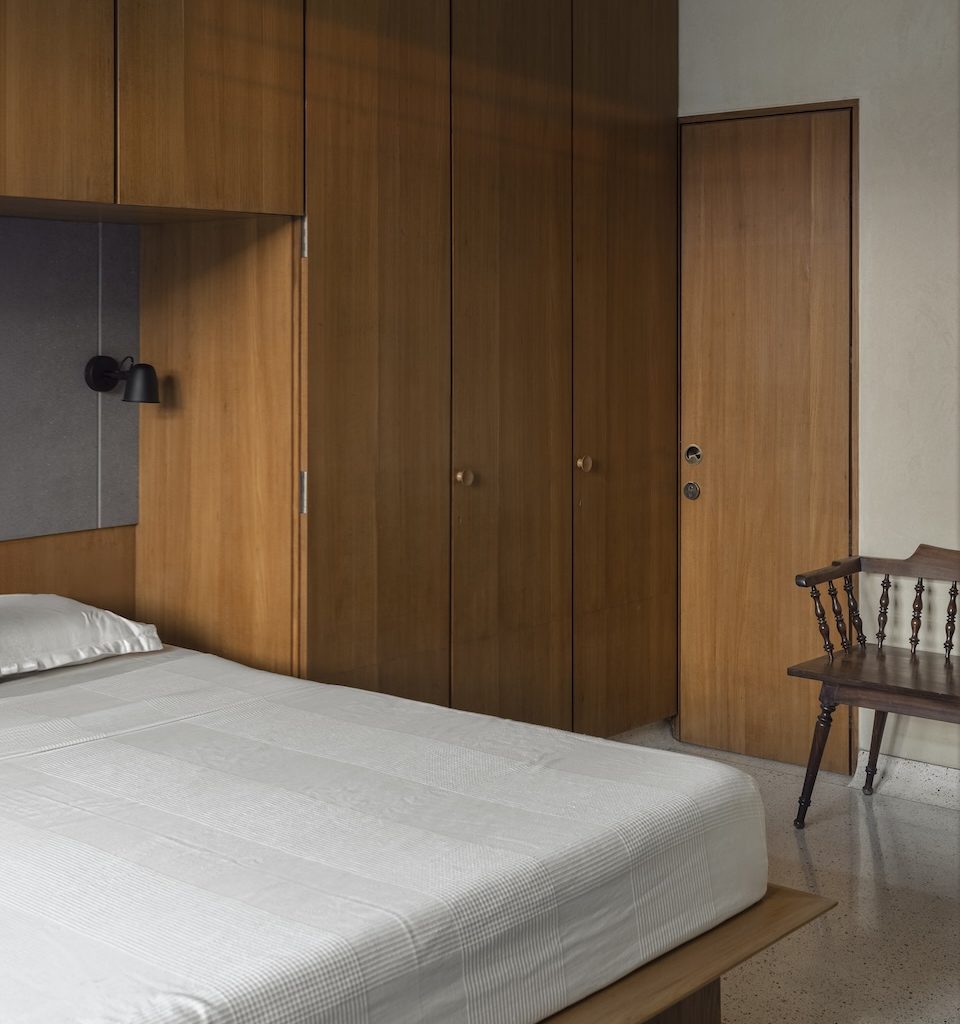
The guest bedroom, by contrast, prioritises storage efficiency while maintaining the visual clarity that runs through the rest of the house. Joinery is integrated discreetly to support everyday use without overwhelming the space. A telephone stand passed down as a family heirloom finds its place here, introducing a personal layer that connects generations and anchors the room within the home’s larger narrative.
Fact File
Project: Raintree Home
Location: Mumbai, Maharashtra
Area: 1,350 sq ft
Principal architects: Prachi Parekh and Vineet Vora
Design team: Aishwarya Gaitonde
Add a Comment