
Designed by Shrutika Raut Design Studio, Vasumati is a sensitively refurbished family bungalow that carries memory forward through restraint, continuity, and a design approach rooted in preservation rather than reinvention.
Curated by: Deepa Nair
Photographs: Hemant Patil; courtesy Shrutika Raut Design Studio
The site
Vasumati sits slightly removed from the centre of Pune, in a neighbourhood where time seems to slow just enough to hold on to memory. The bungalow has witnessed decades of family life, having once belonged to the client’s grandmother. Today, it has taken on a renewed role, becoming a place for her grandchildren to live, gather, and create their own memories within familiar walls.
What gives the site its strength is this sense of continuity. The house was never meant to be preserved as a relic of the past, but to evolve gently, adapting as the family itself changed. When Shrutika Raut Design Studio was invited to reimagine the home, the intent was not to impose change, but to carry the story forward. The design honours what already existed, allowing the bungalow to grow with care and sensitivity, while making space for contemporary ways of living.
The brief
The client’s brief was anchored in simplicity and memory. “The goal was never about demolishing the bungalow and rebuilding a new space, but about how design can preserve and maintain the authenticity and feelings that a place carries. It was always about how nostalgia could be experienced through a newly designed home, making it a preservation rather than a renovation,” explains Shrutika Raut, principal architect, Shrutika Raut Design Studio.
Beyond this guiding philosophy, the requirements were intentionally modest. The home needed only what was essential to function well, no more and no less. Plus, the design has to resist anything ornamental or performative… there was no desire to impress, only to live with ease and intention. At its core, the brief sought to rekindle the familiarity of childhood visits to this home, allowing nostalgia to unfold through everyday life rather than deliberate design gestures.
The design intent
The design intent was that of preserving rather than reinventing. It was always how design can preserve and maintain the authenticity and feelings that a place carries. “The focus was on how the feeling of nostalgia can be experienced through a newly designed home. The warmth of this old home is still maintained, and we let it grow organically, letting space evolve naturally in its true terms,” explains Shrutika.
The civil intervention
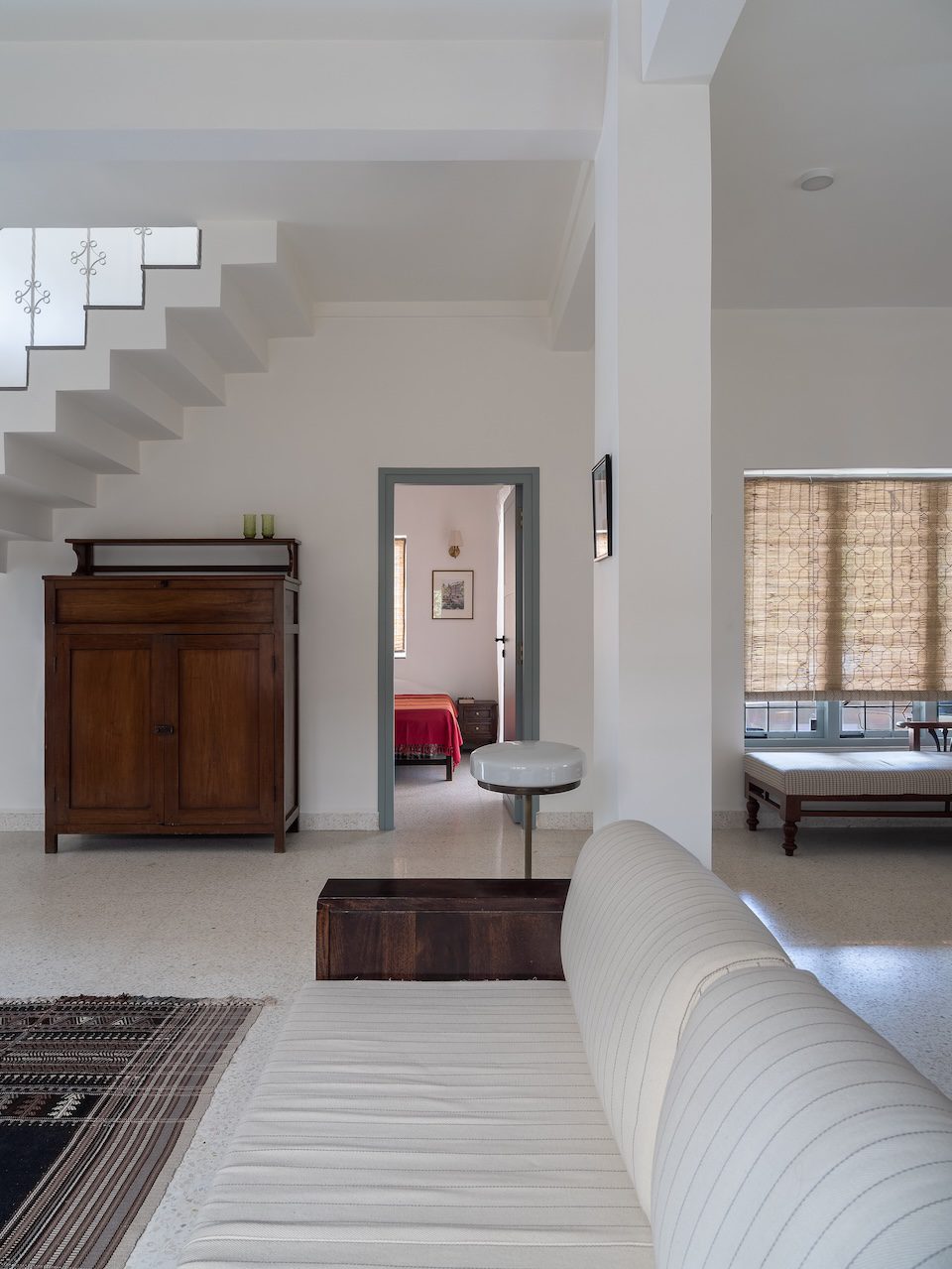
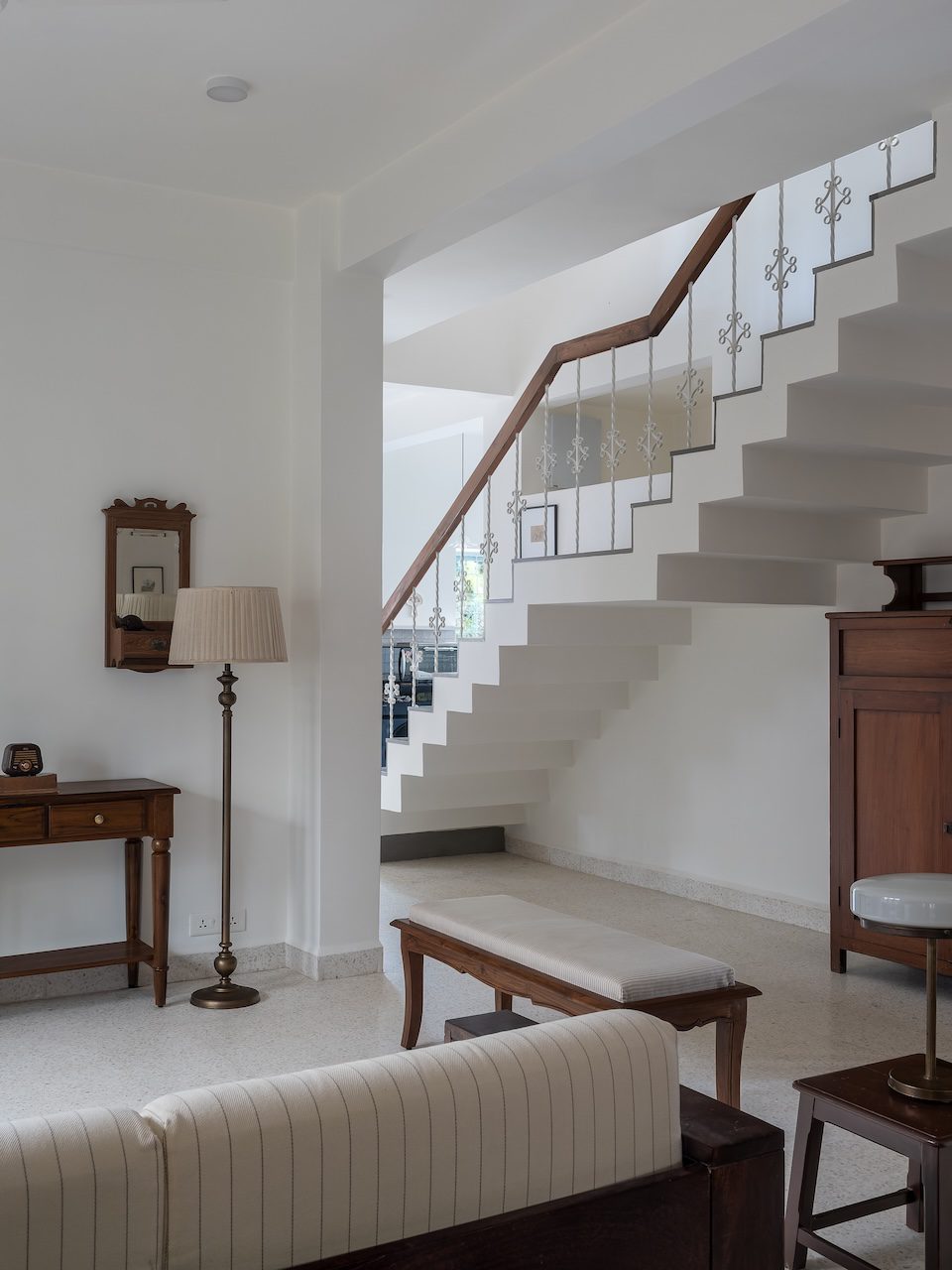
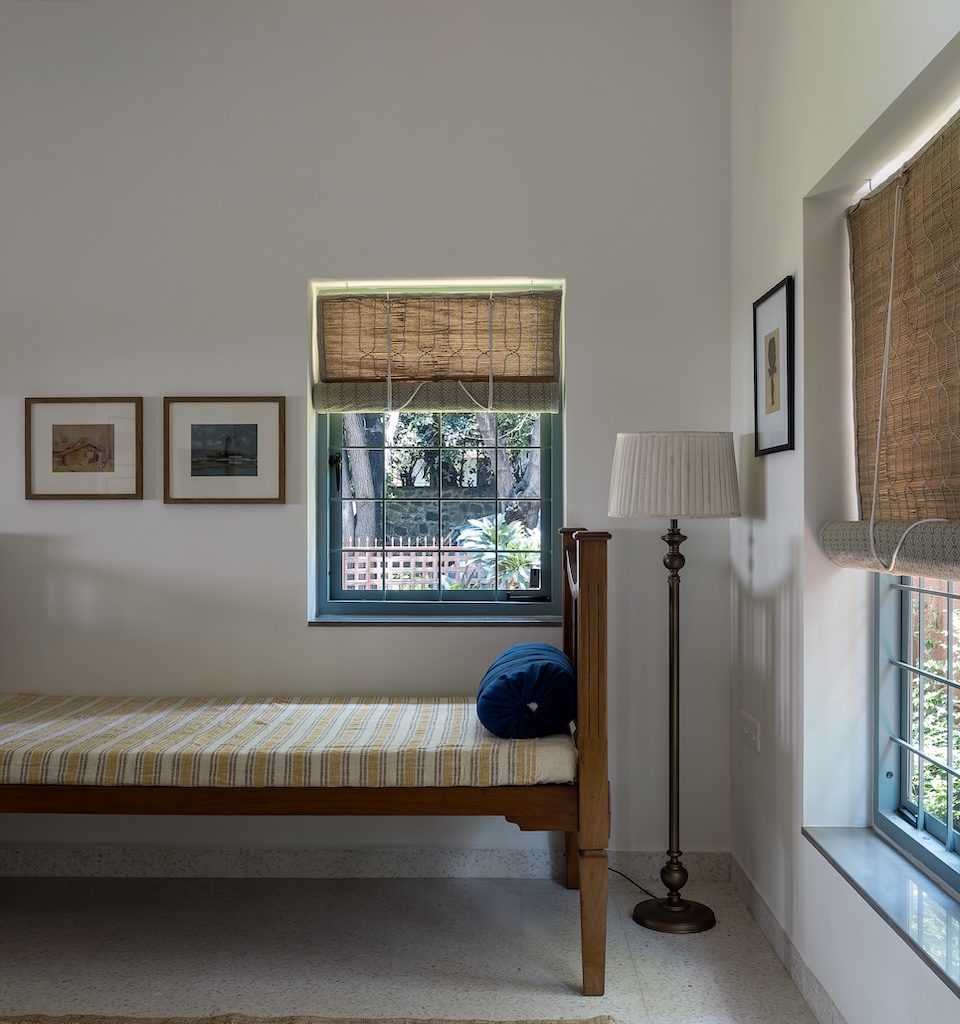
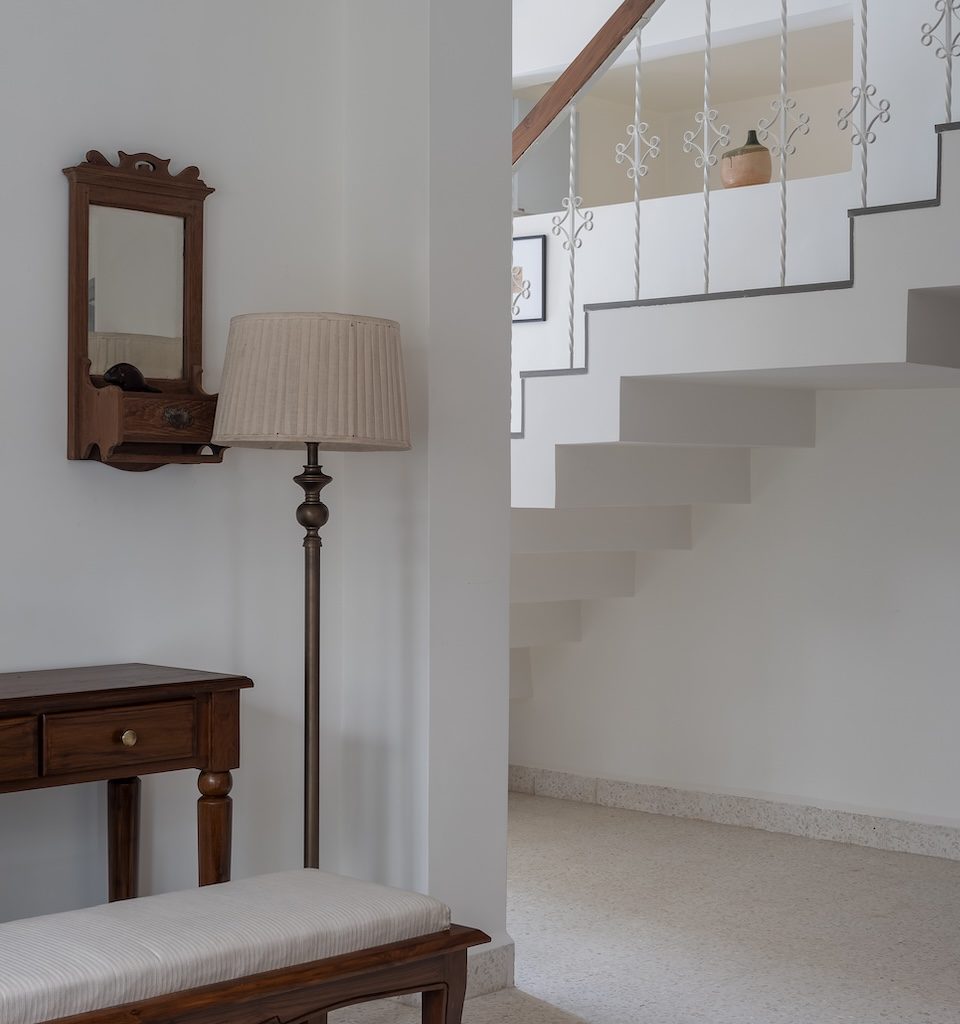
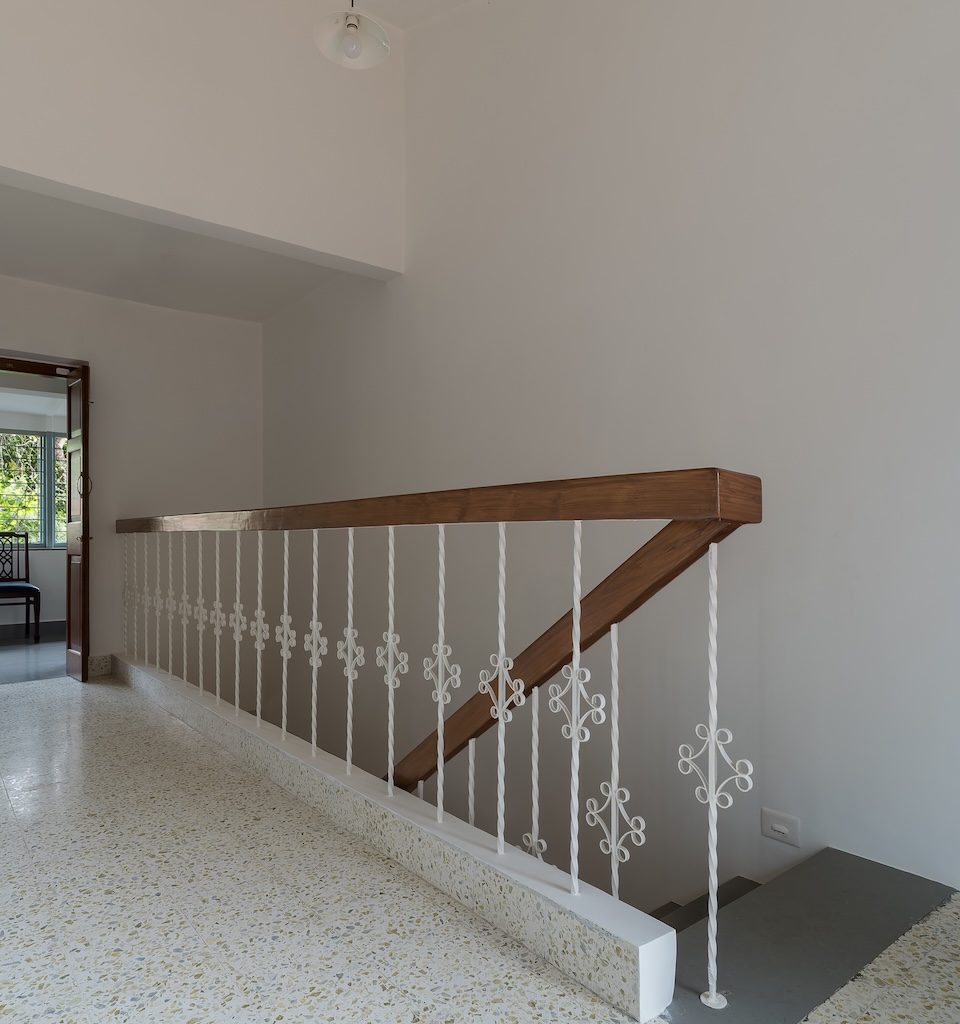
The scope of civil intervention was intentionally restrained, shaped by the decision to work entirely within the home’s existing framework. With the original structure left intact, the design embraced the spatial envelope as it was, allowing the house to guide the transformation rather than be reconfigured by it. One of the most significant decisions was to retain the original terrazzo flooring and making it a defining element of the design—each chip, set into stone, holds a quiet reminder of its time and use.
The spatial configuration
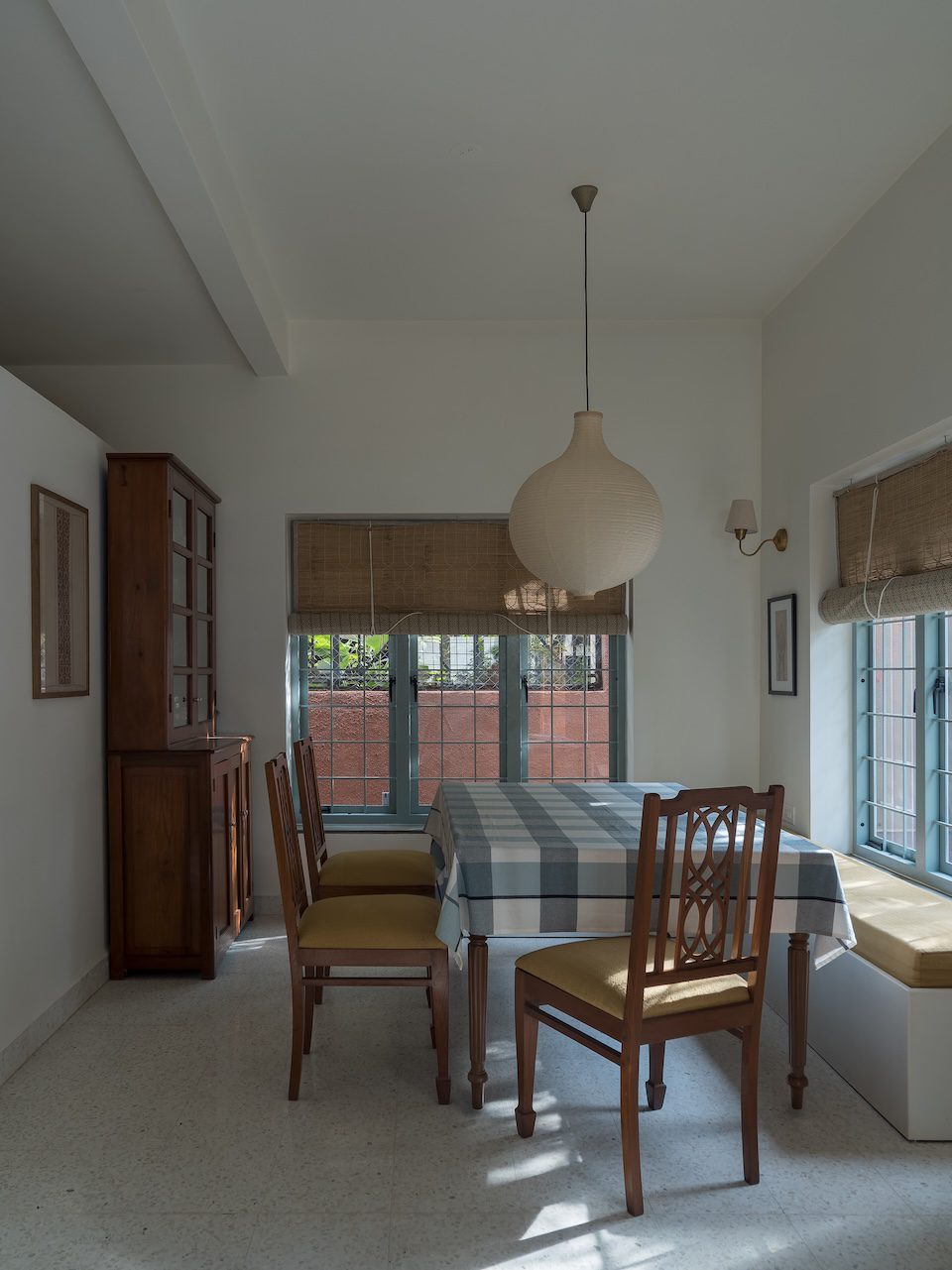
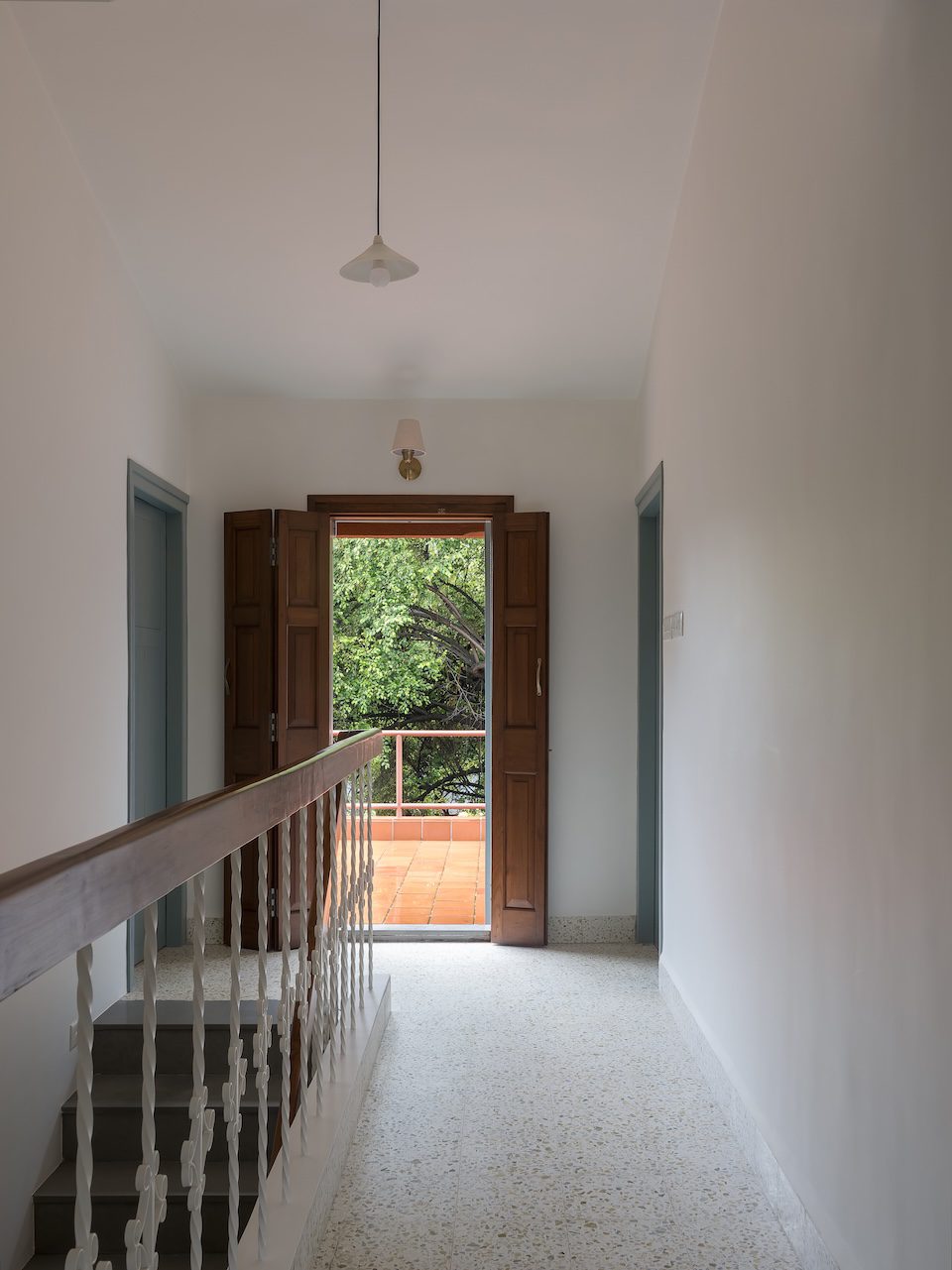
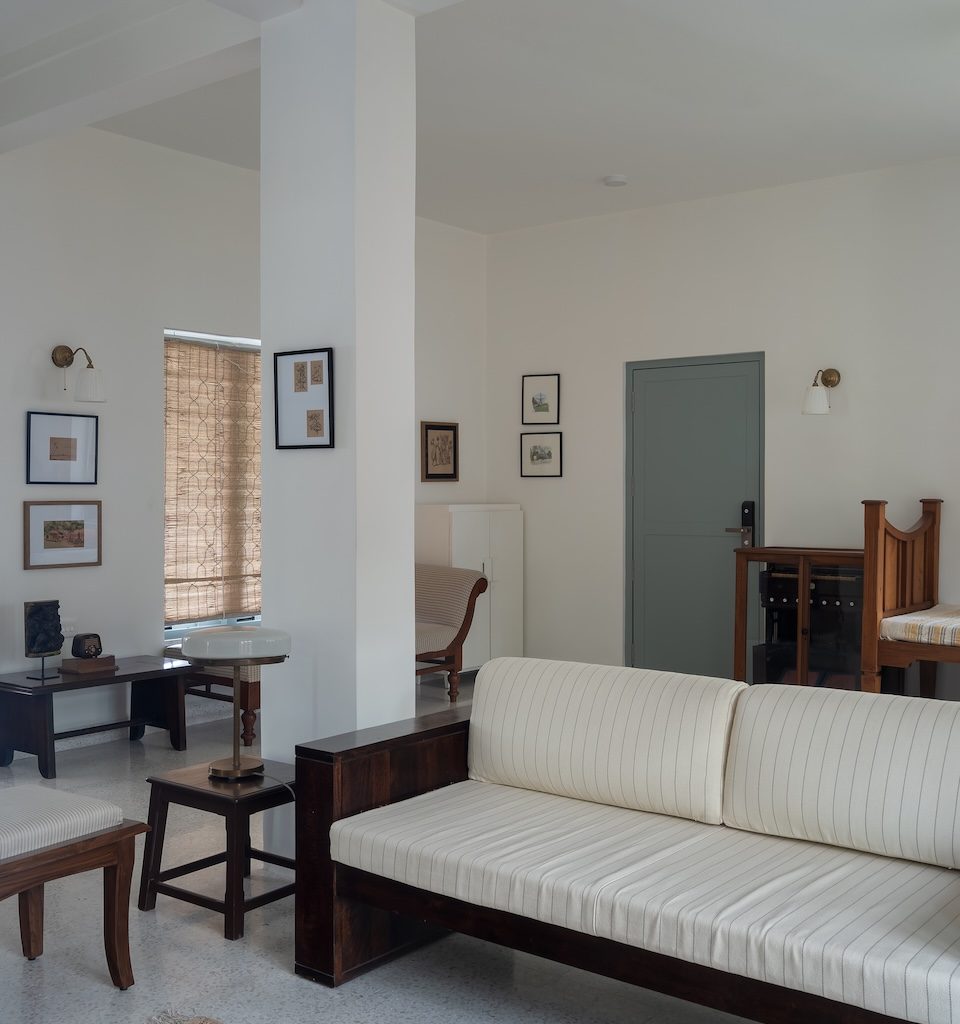
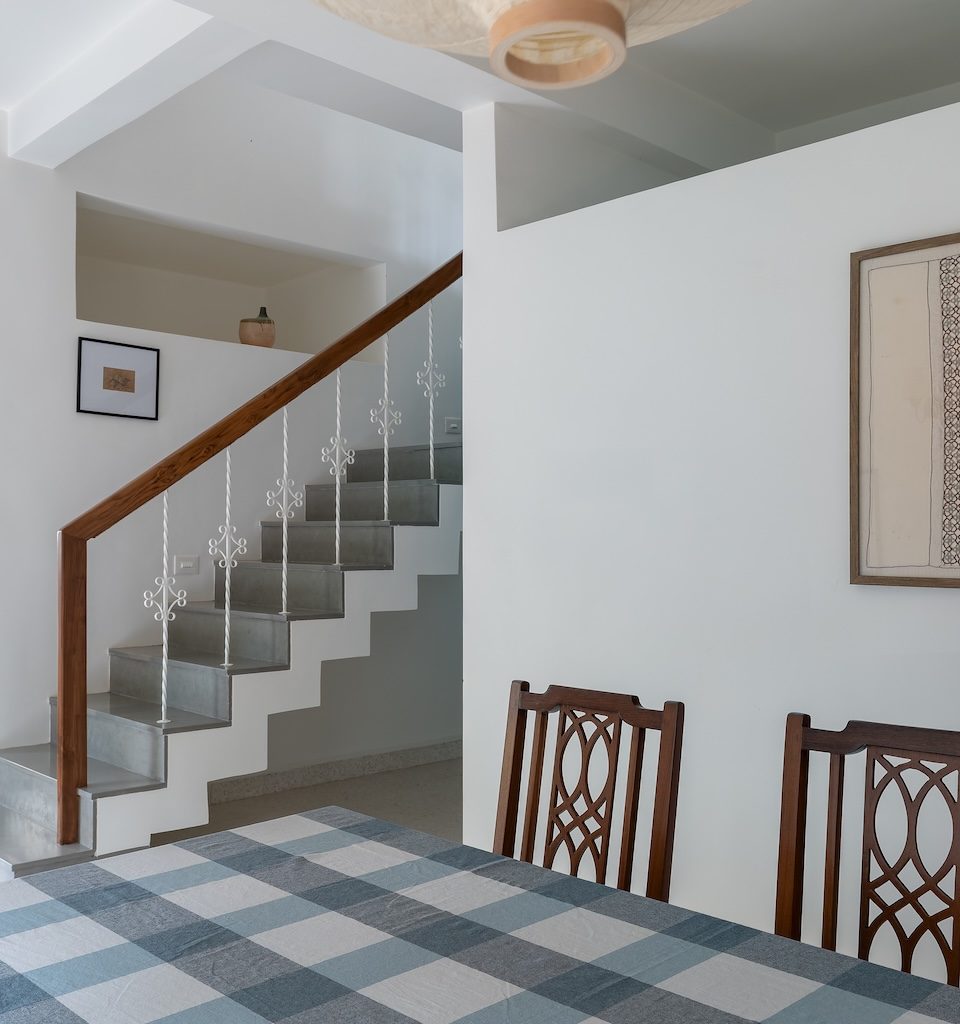
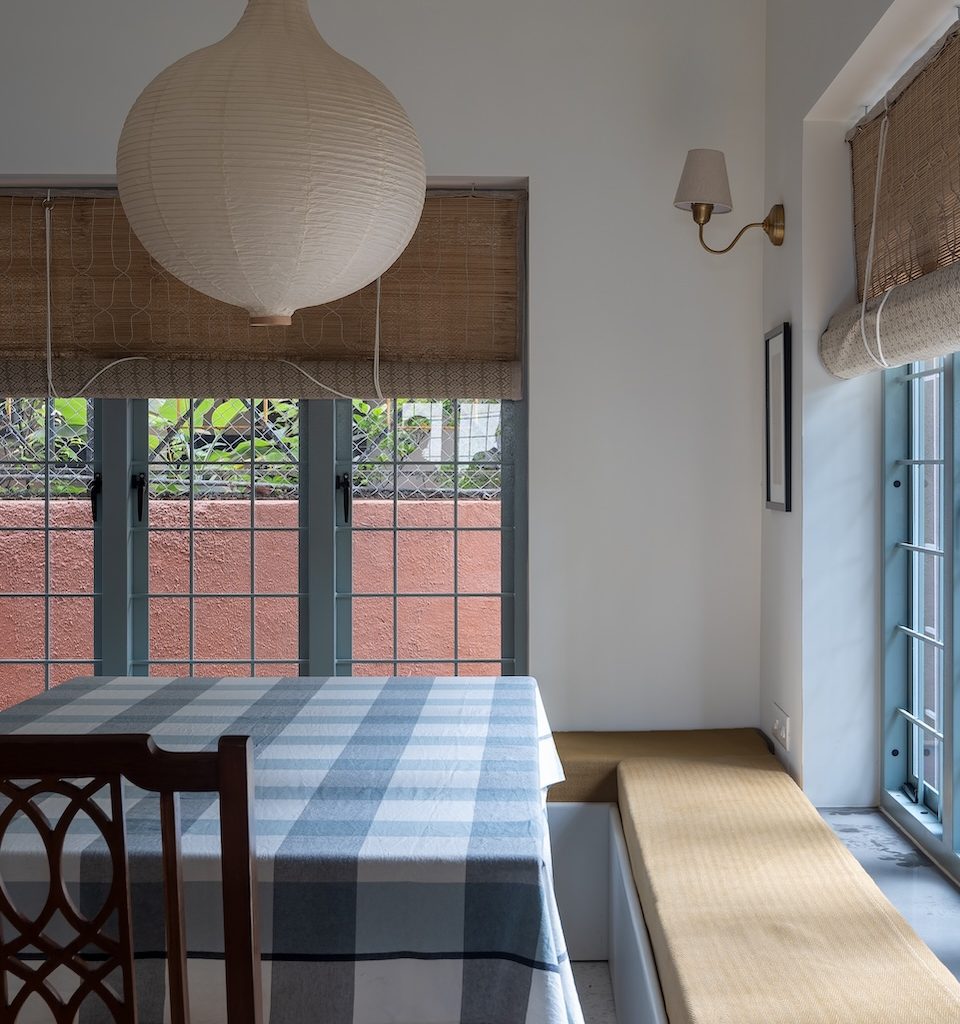
The spatial configuration of the bungalow strikes a careful balance between openness and functionality. The entrance leads into a generous living room that comfortably accommodates both the formal and informal seating zones. From here, the layout flows naturally towards the dining area, guest bedroom, and kitchen, all connected directly to the backyard—allowing indoor spaces to remain closely linked to the outdoors. A straight flight of stairs leads to the first floor, where the bedrooms look out onto the terrace, while a connecting passage extends towards the study. This organisation ensures clarity of movement and privacy, while keeping the home visually connected across levels.
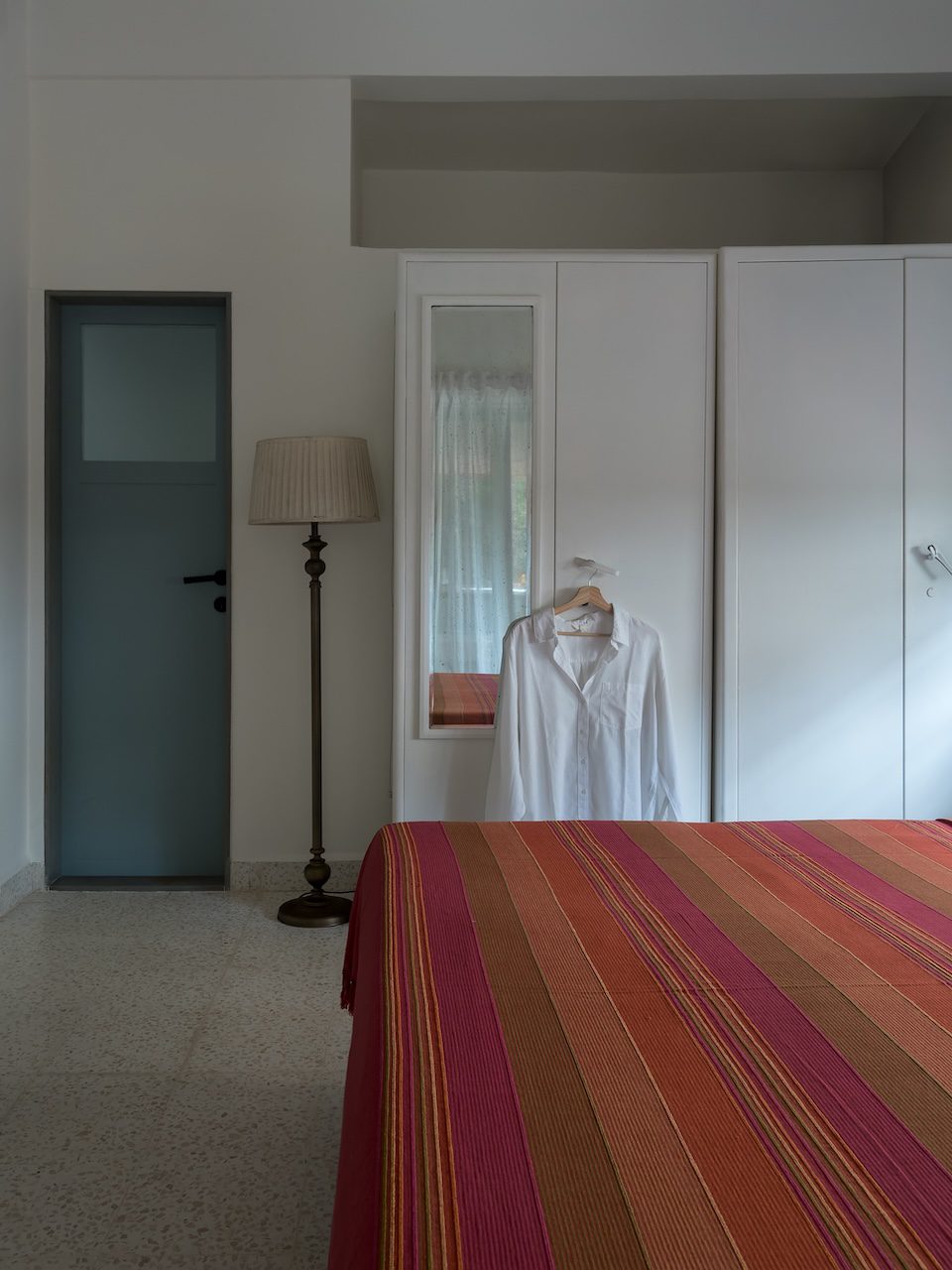
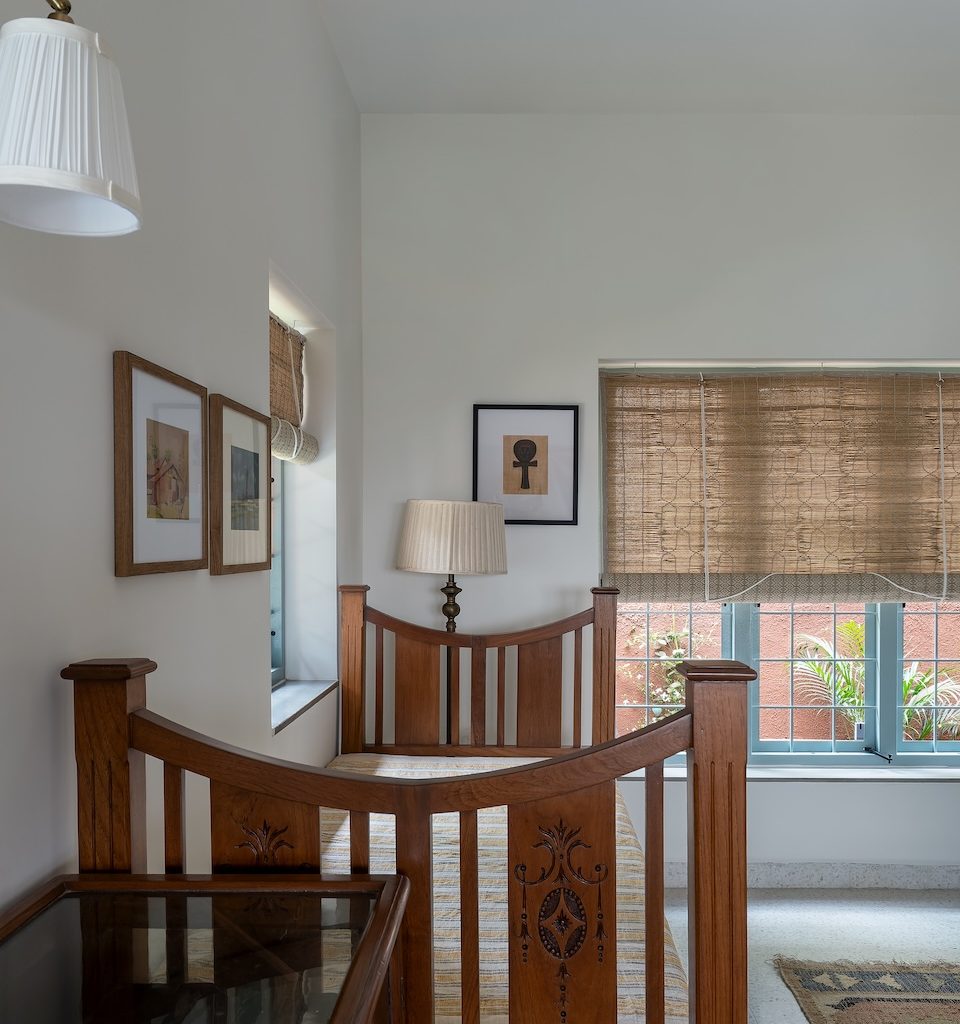
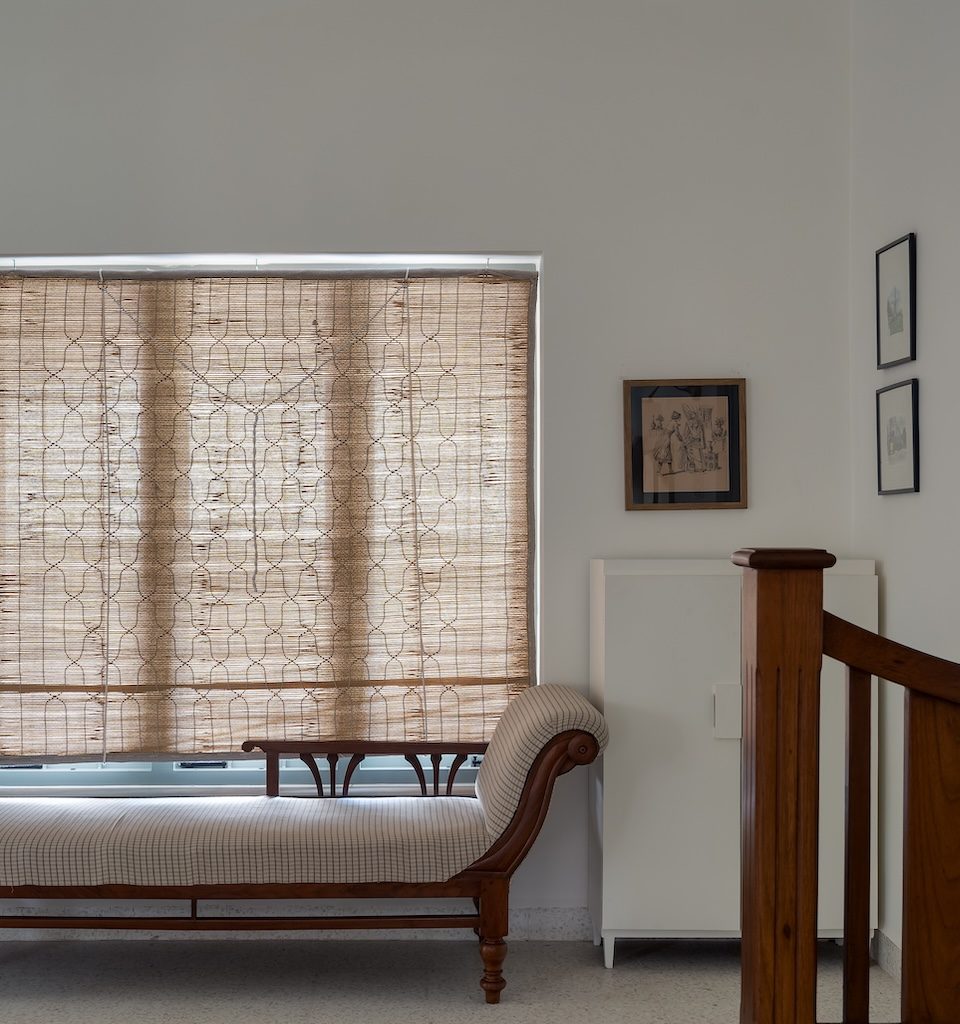
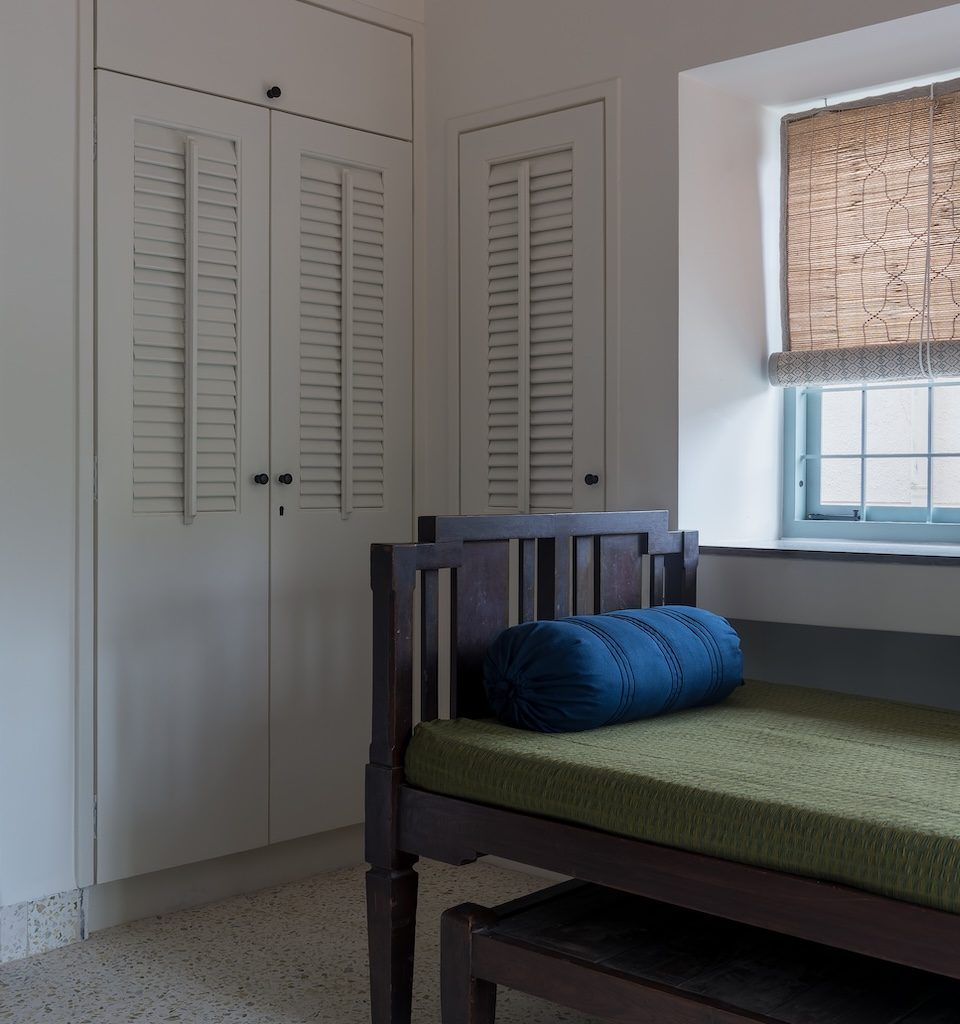
Throughout the bungalow, original elements have been thoughtfully retained. Terrazzo flooring continues across key areas, terracotta defines the terrace and exterior surfaces, and restored furniture pieces remain integral to the interiors. Together, the spatial layout and material choices reinforce a sense of continuity, allowing the home to function with ease while staying rooted in its past.
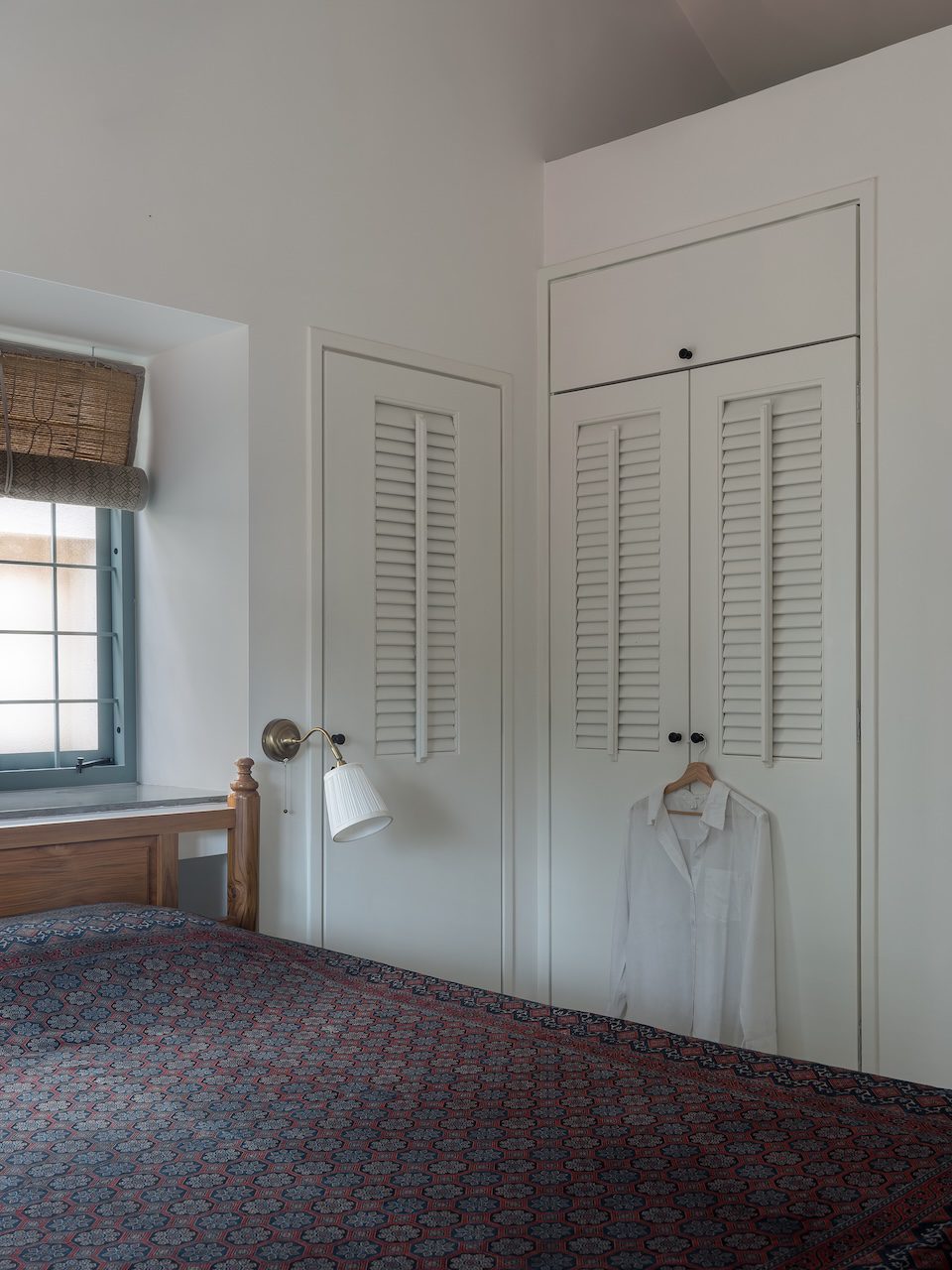
The colour and material palette
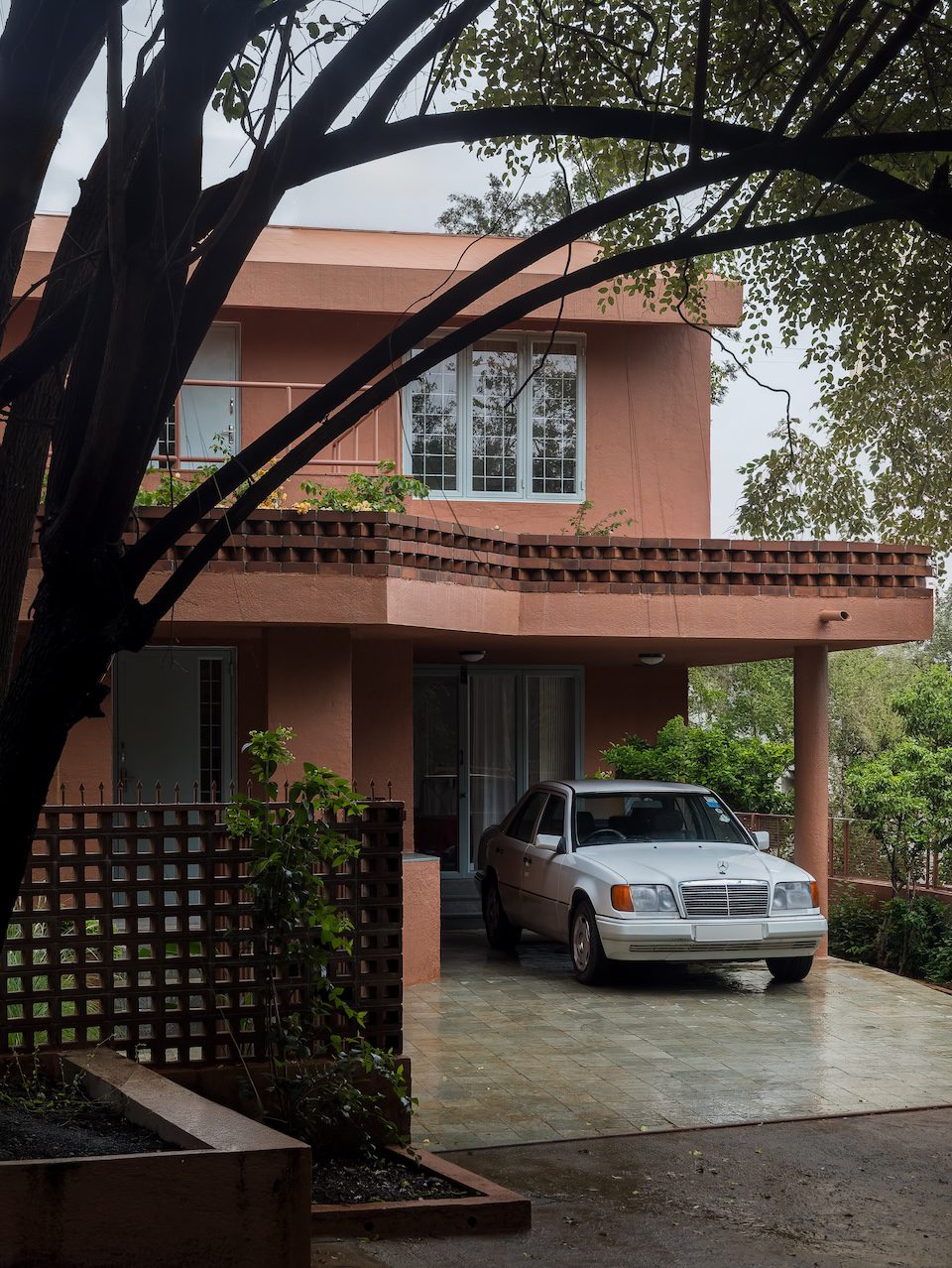
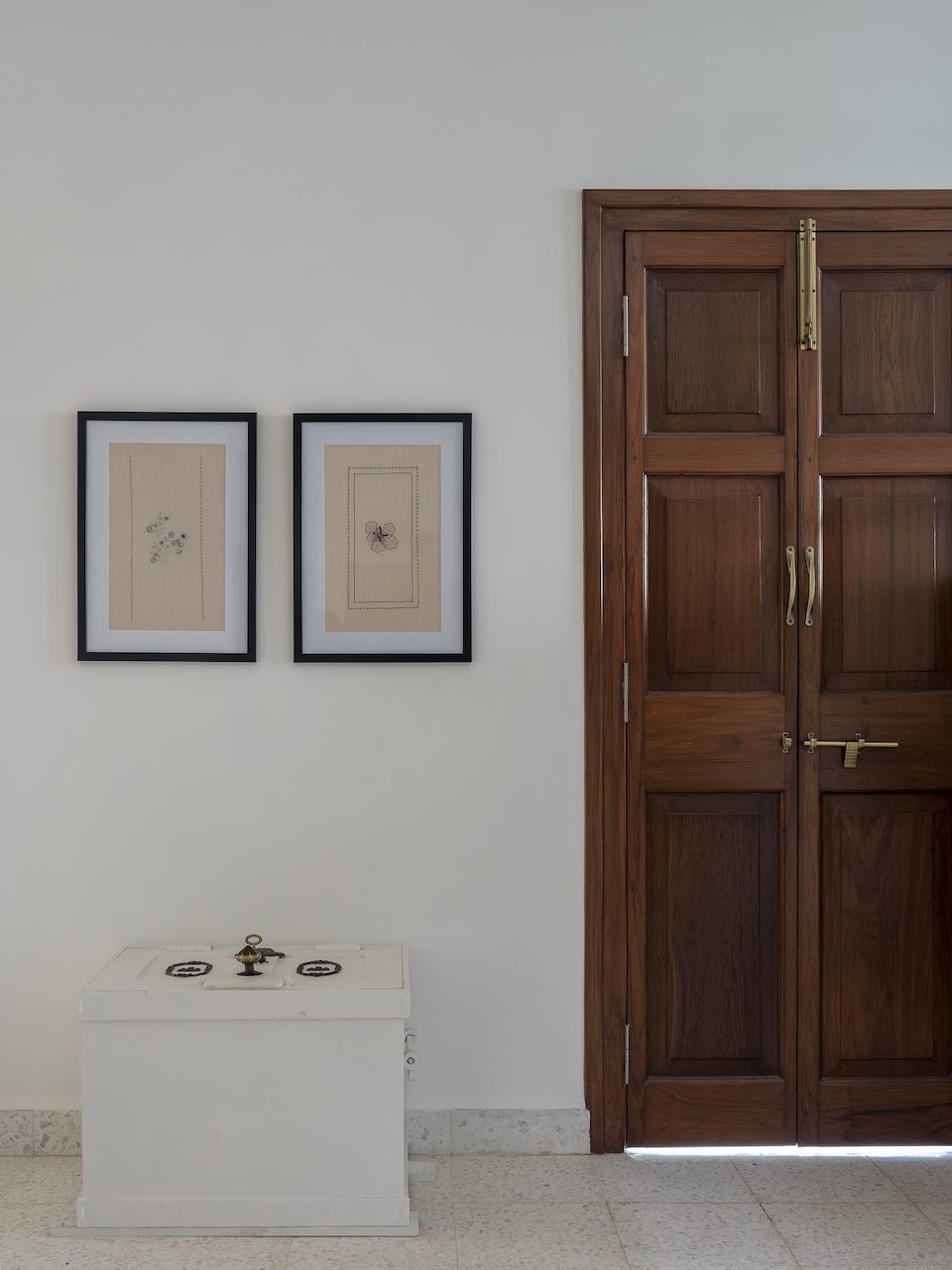
Terracotta red emerges as the defining colour of the home, extending across the exterior—from the facades to the compound wall—establishing a strong yet familiar identity. This warmth is further articulated through the perforated brick railing, which adds texture and character while allowing light and air to pass through. Equally important was the approach to furniture. Sourcing and restoring older pieces held as much significance as designing new ones. Existing elements were resized and reinterpreted, allowing them to return with renewed purpose while retaining their inherent charm. Old windows, for instance, were repurposed as shutters for custom pieces, while original railings and grills were carefully preserved, reinforcing continuity across the home.
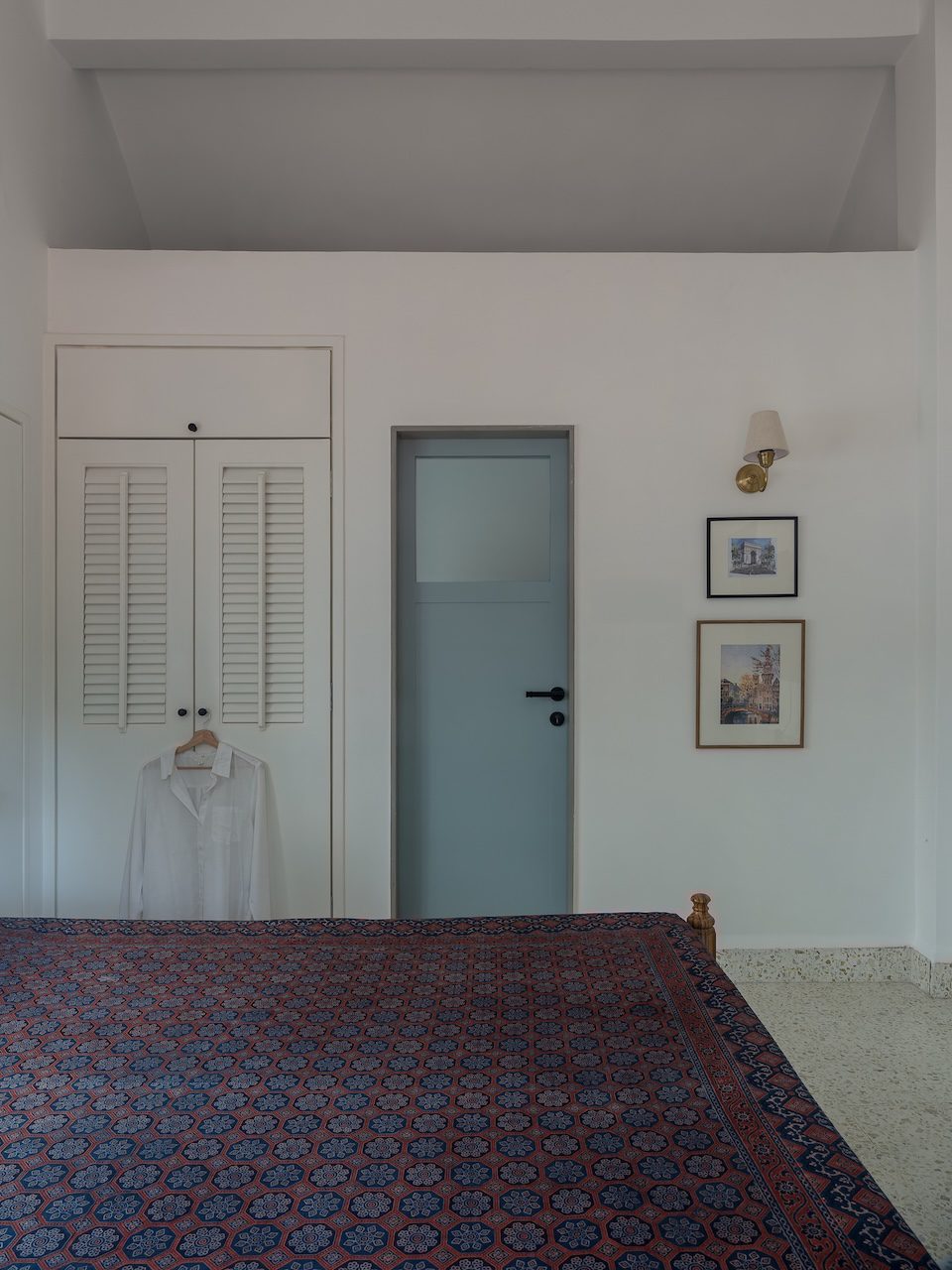
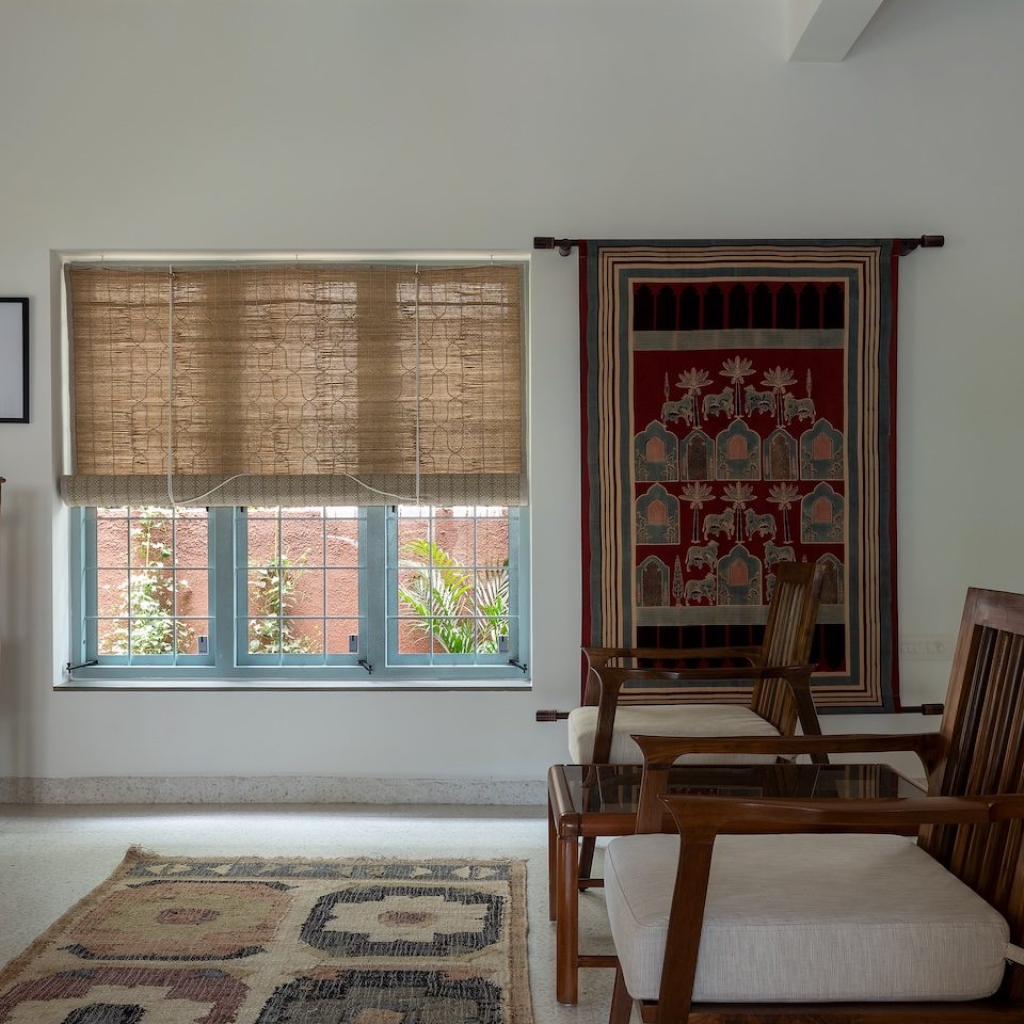
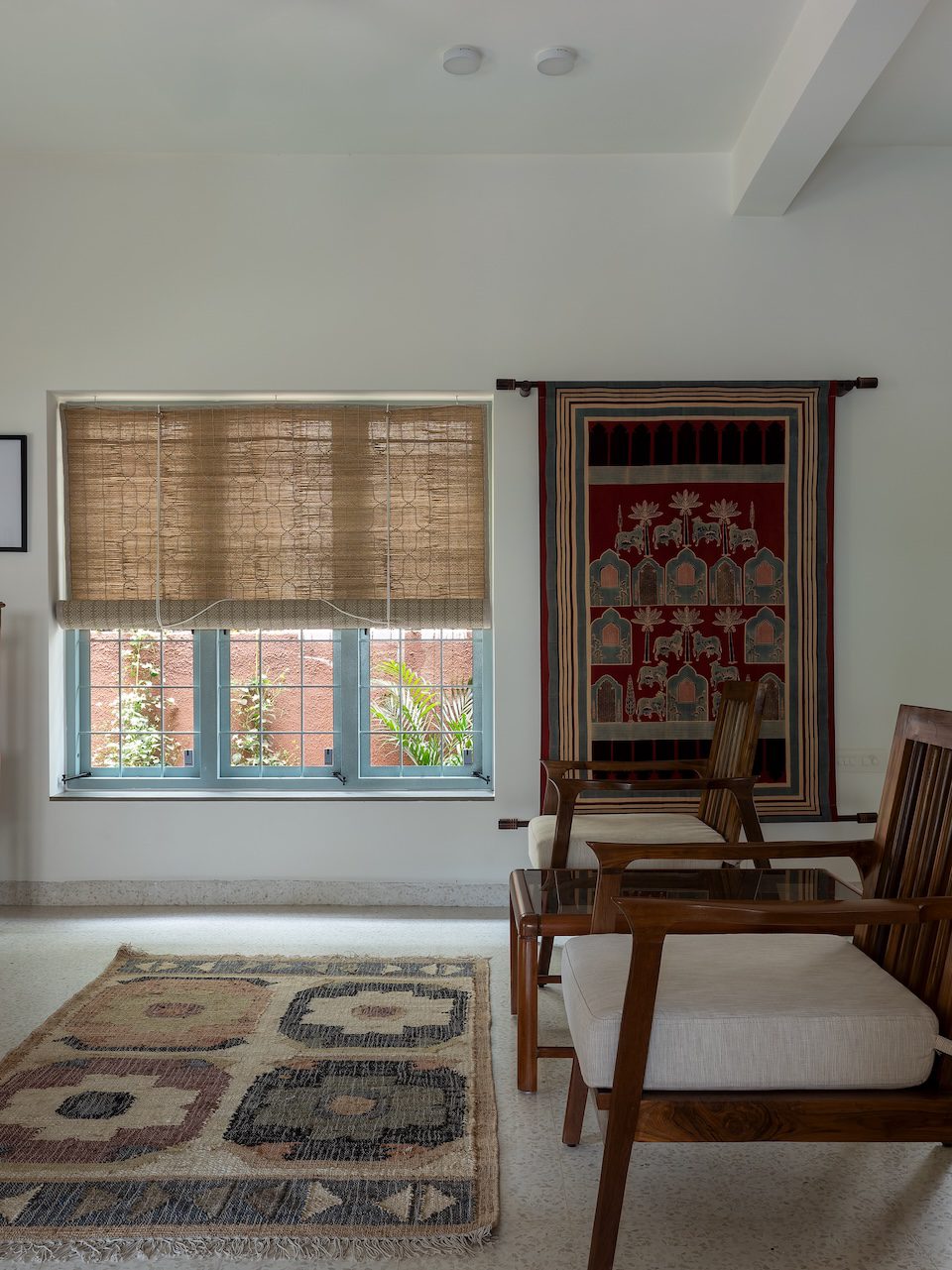
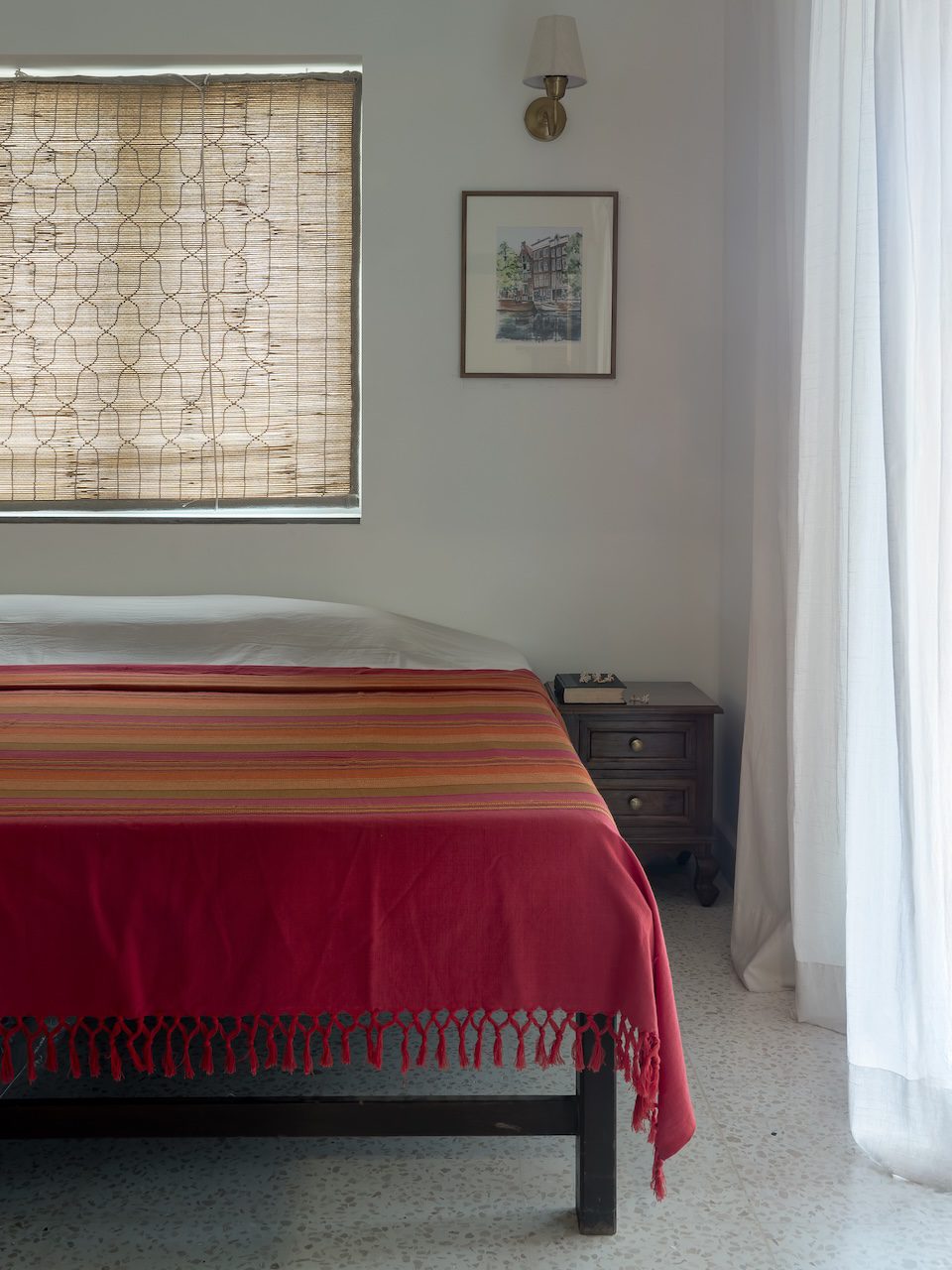
To balance the terracotta tones, a soft sage green was introduced, offering contrast without disrupting the overall harmony; while inside, white walls act as a gentle backdrop. Indian textiles, woven artworks, and handcrafted accents bring an organic layer to the interiors, adding depth through material and craft rather than ornament. In the living room, rugs from Home Neera and Aadyam ground the space, complemented by a tapestry sourced from Vraj Bhoomi and cushions from Fab India. In the bedrooms, bed linens from Fab India continue this language of comfort, craft, and familiarity.
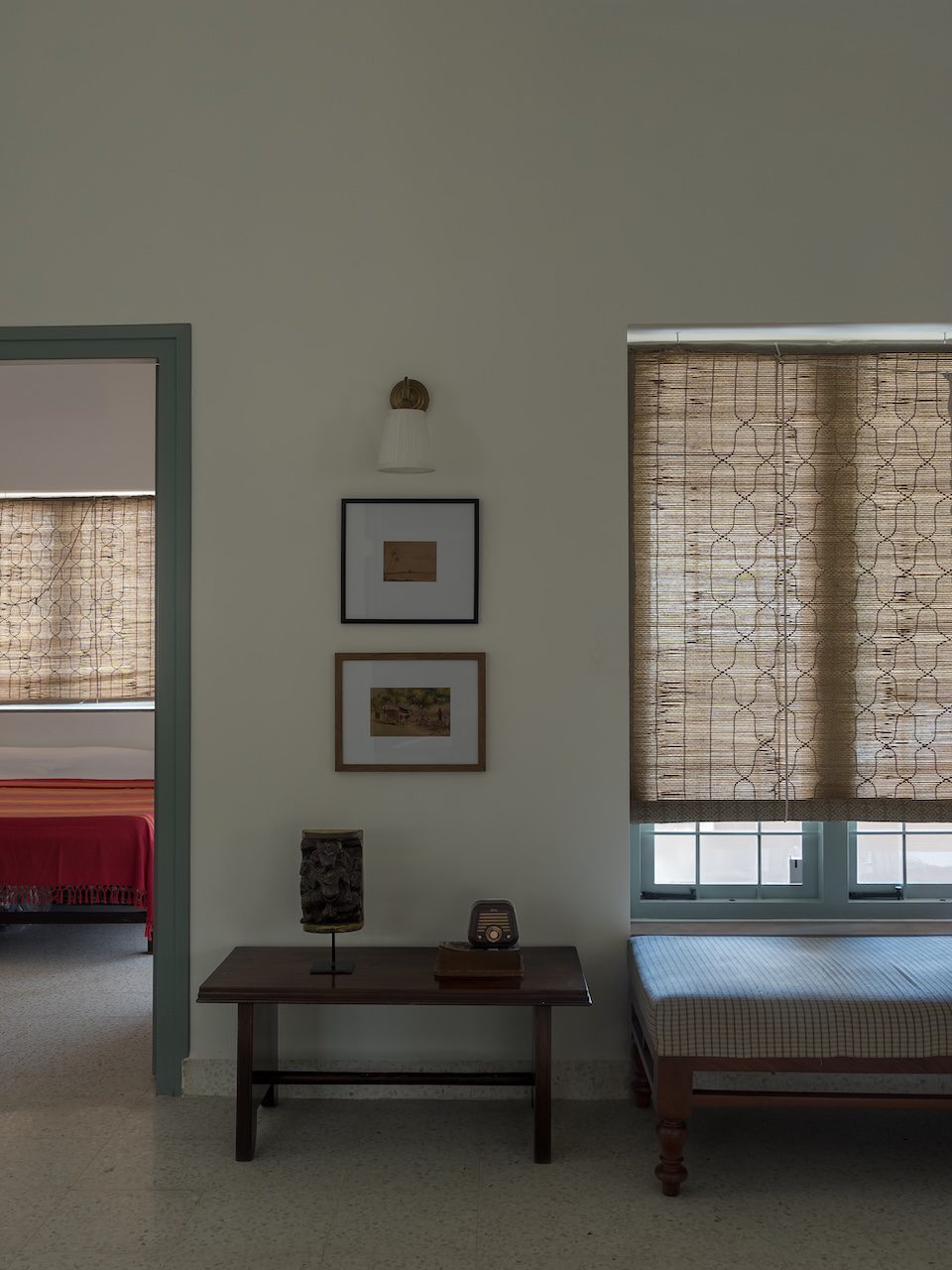
The challenges
“One of the key challenges was that we couldn’t really change the actual structure of the house, which meant working within its existing framework,” shares Shrutika. “The sourced furniture was as important as designing the new one, resizing the elements of the old pieces and bringing them back to a new character yet with its charm. These limitations became opportunities, allowing us to preserve the spirit of the home while giving it a refreshed identity,” she concludes.
Fact File
Project: Vasumati
Location: Pune
Area: 5,000 sq ft
Principal architect: Shrutika Raut
Add a Comment