
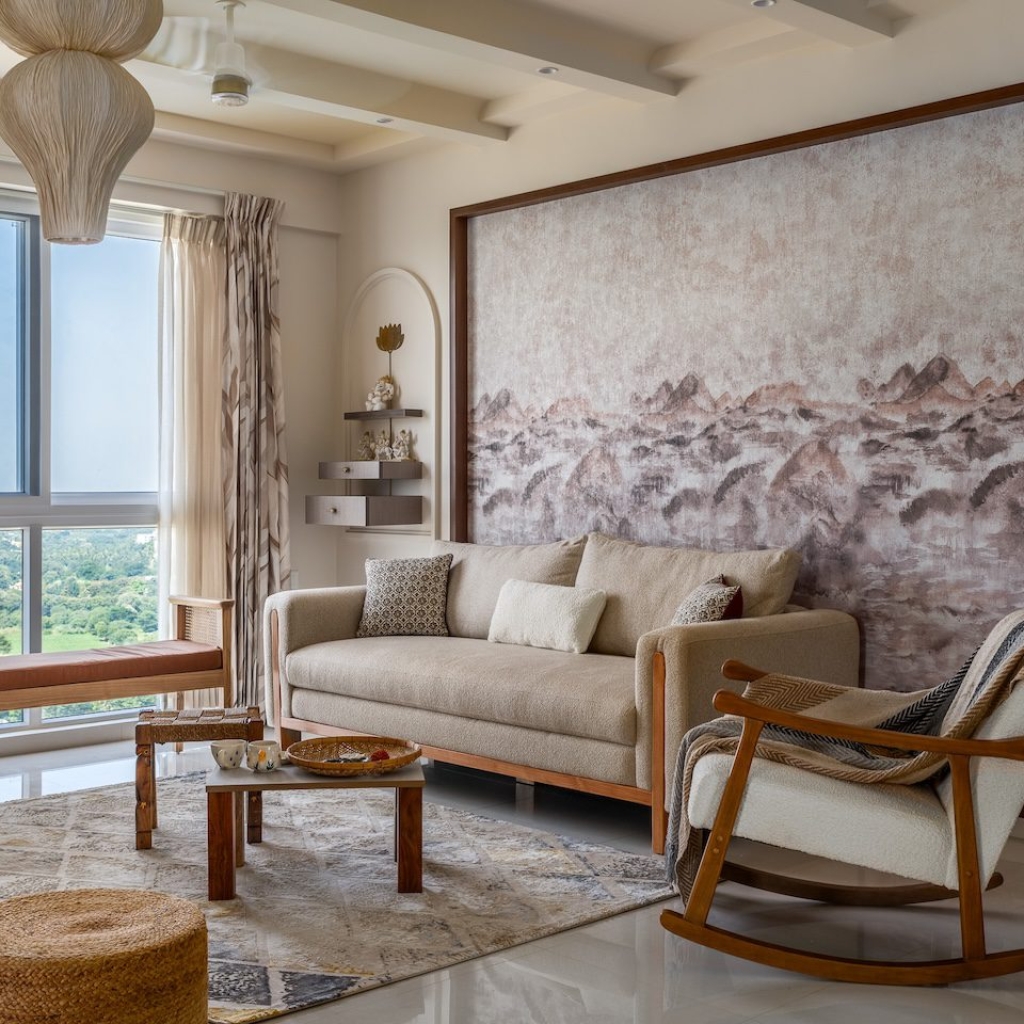
In Bengaluru, Sukoon by ESSE Designs unfolds as a thoughtfully composed apartment where material warmth, spatial ease and everyday rituals define the experience of home.
Curated by: Rupali Sebastian
Photography: Parth Swaminath I PHX India; courtesy ESSE Designs
The project
Sukoon is a private residence designed as a calm, lived-in home rooted in restraint and material warmth. Conceived by ESSE Designs, the apartment reflects a deliberate shift away from visual statements, instead prioritising comfort, continuity and the rhythms of daily life. The project explores slow living through neutral tones, tactile surfaces and spaces that feel intuitive rather than orchestrated.
The site
Located within a residential apartment building at Budigere Cross in Bengaluru, the home was received as a standard developer-finished shell. With adequate natural light and open views already in place, the design approach focused on refining spatial relationships and layering materials, rather than undertaking major structural changes. This allowed the interiors to evolve gently, building on what was already present.

The brief
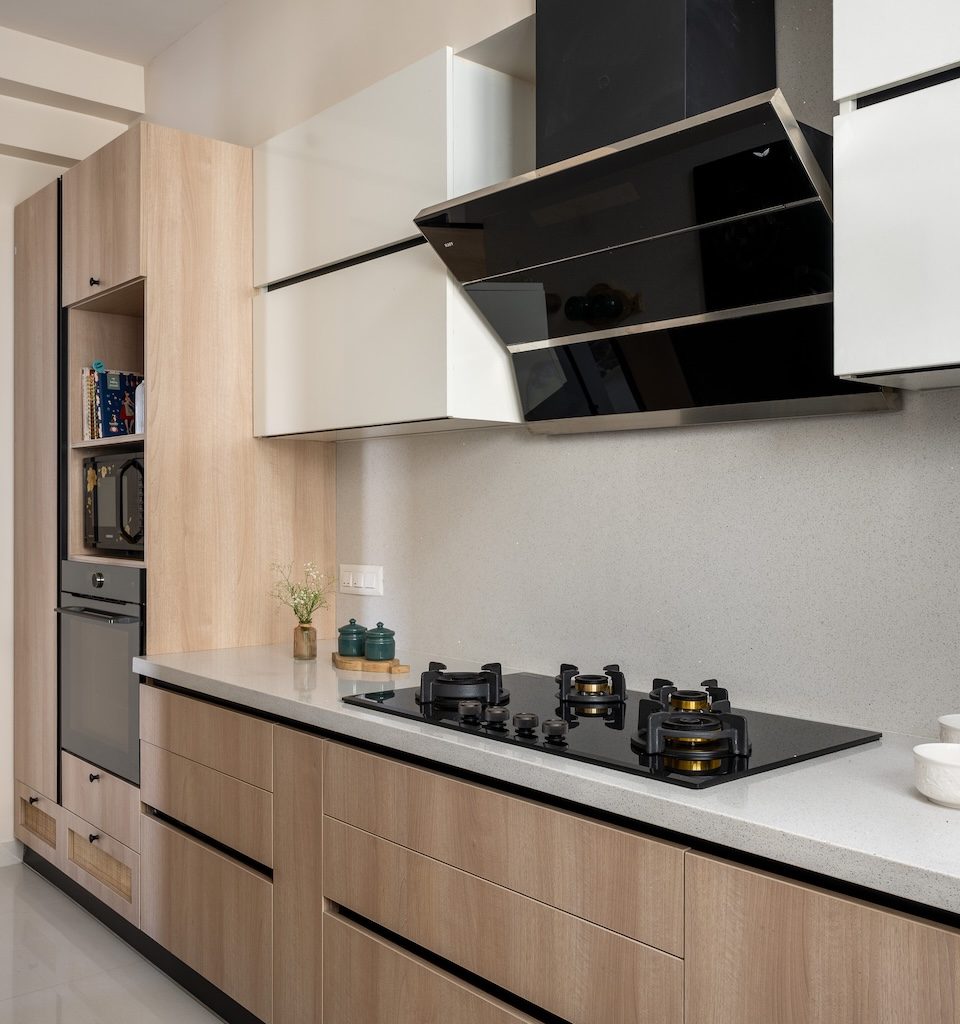
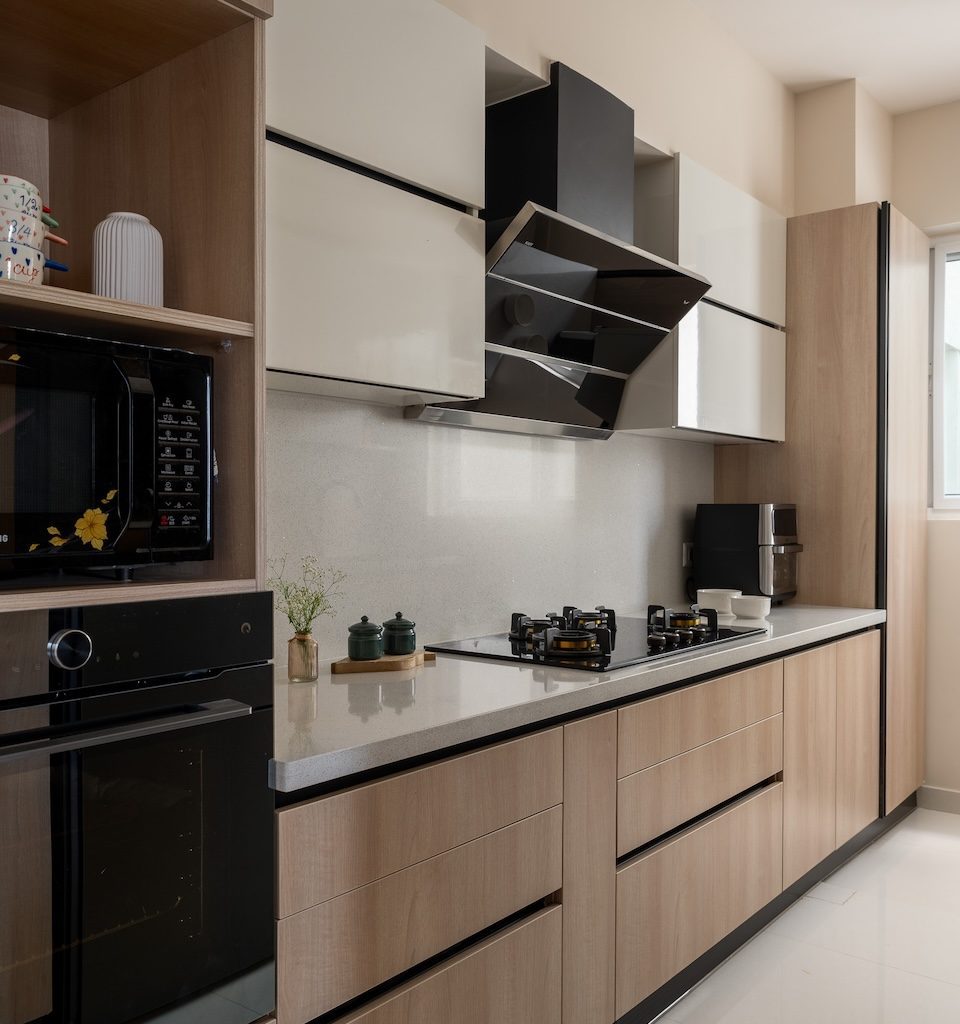
The client envisioned a home that felt serene, personal and deeply comforting. Functionally, the brief emphasised intuitive planning, generous storage and pet-friendly living, with particular attention given to creating a highly efficient kitchen suited to everyday use. Aesthetically, the preference leaned towards a minimalist yet warm environment inspired by Japandi sensibilities—natural materials, muted tones and timeless detailing were favoured over trend-driven design.
The design intent
The home was conceived as a slow, lived-in environment that unfolds through light, material continuity and everyday movement rather than visual contrast. The design language remains intentionally restrained, allowing neutral tones and layered undertones to take precedence over ornamentation. Reflecting principal architect Shraddhanjali Chowdhury’s approach, the interiors focus on restraint, material continuity and designing spaces that support everyday rituals rather than visual statements. Drawing from Japandi principles of balance, simplicity and longevity, the home embraces daily life with quiet confidence.
The civil intervention
Civil interventions were minimal and strategic. Select walls were partially modified to improve visual permeability and connection between spaces, particularly around the kitchen. These adjustments enhanced flow and openness without disturbing the apartment’s structural framework, allowing the layout to remain efficient and cohesive.
The spatial flow
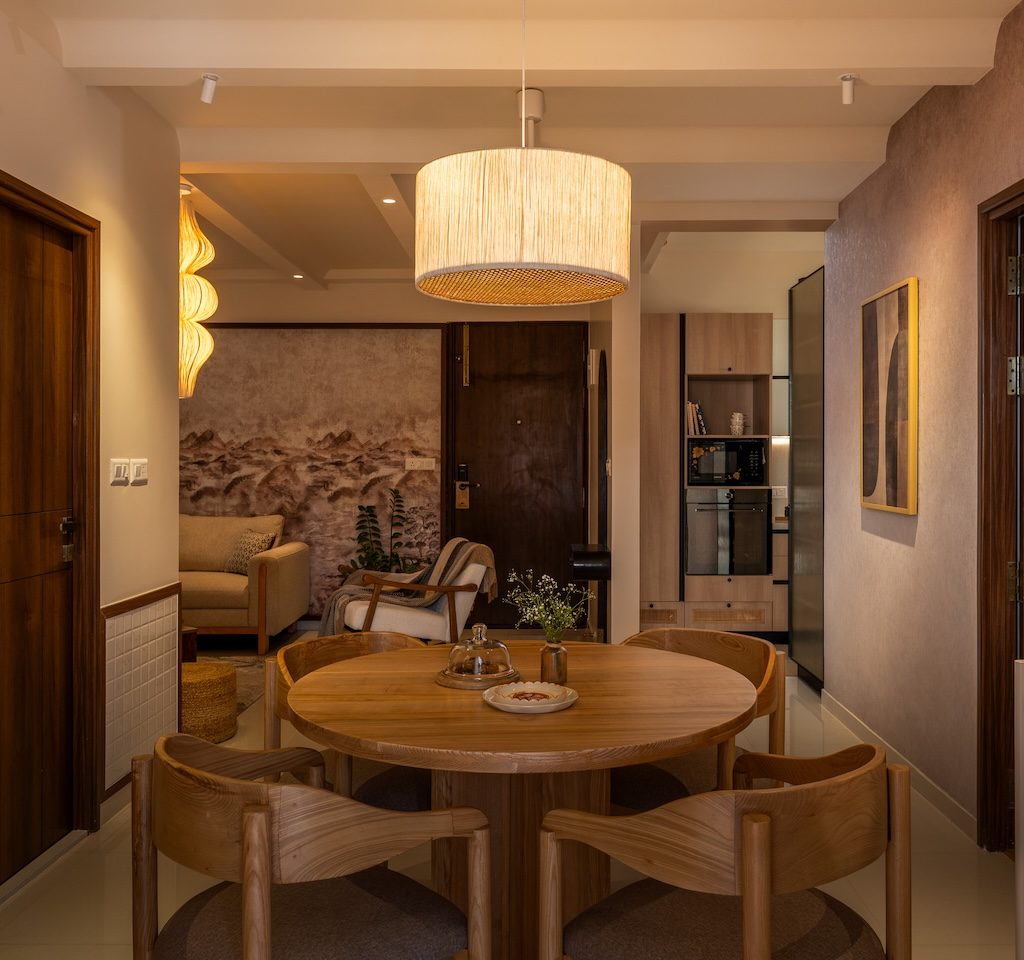
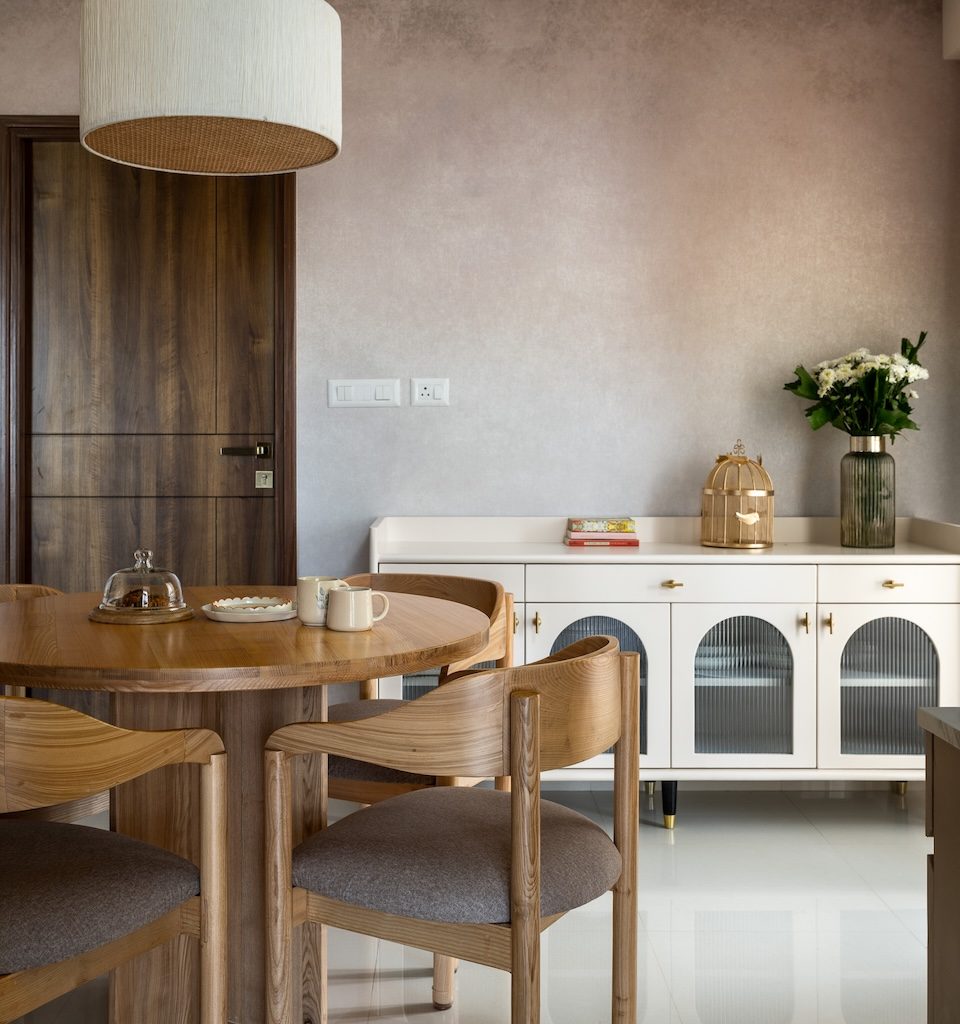
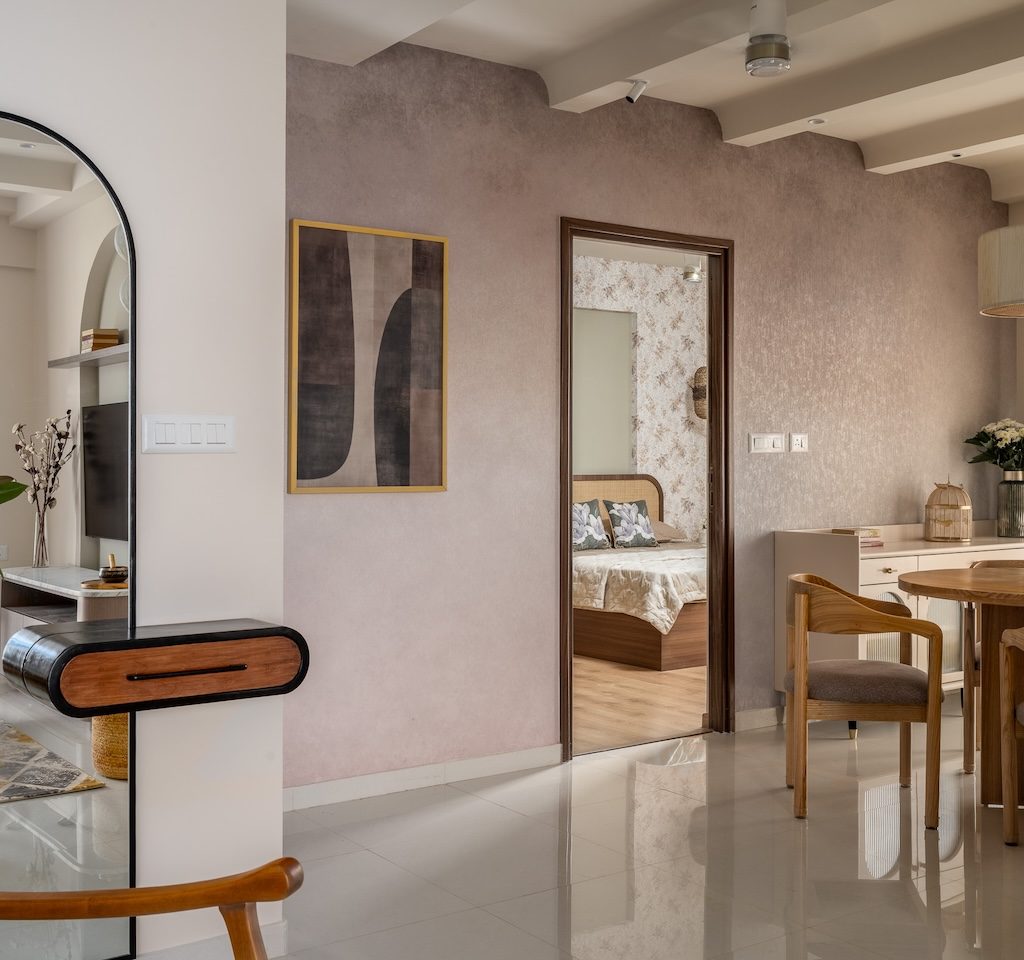
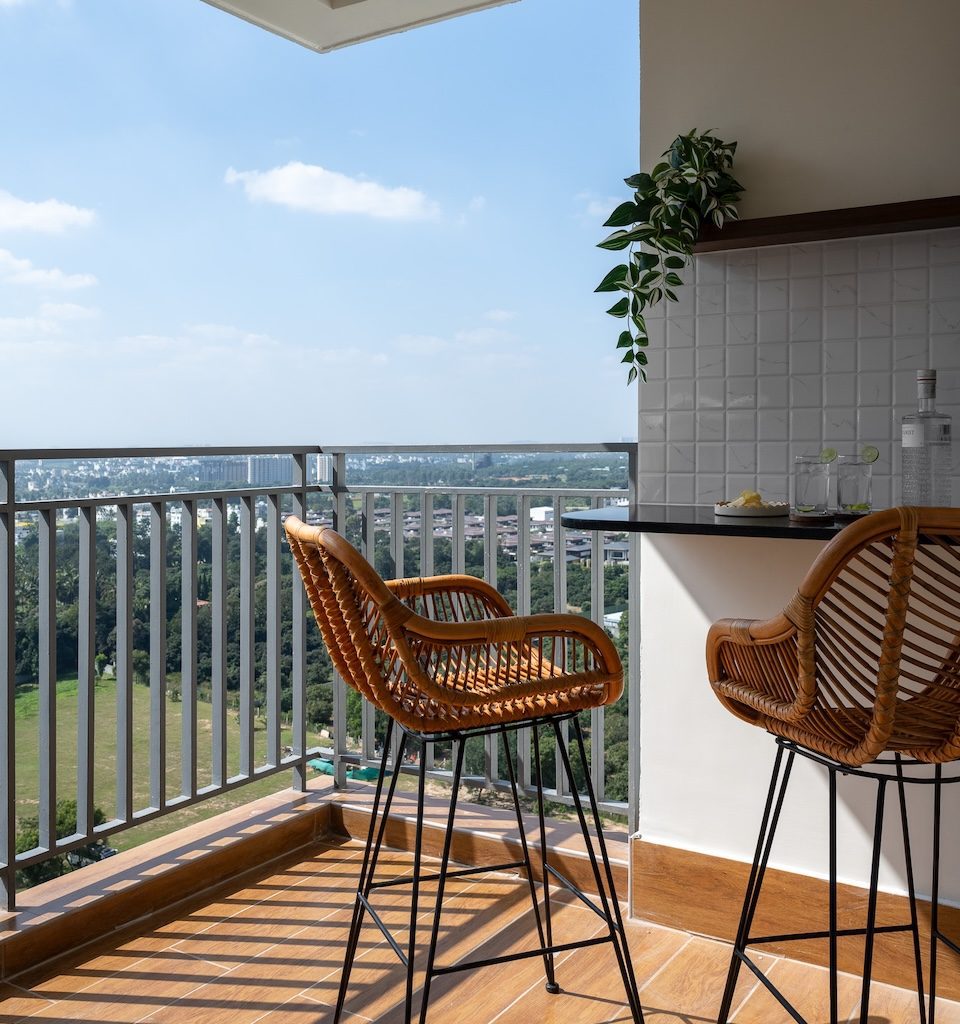
The home follows a fluid spatial sequence that begins with a calm entry and gradually opens into the living and dining areas. These common spaces remain visually connected, extending naturally towards the balcony and drawing in light. The kitchen is integrated into this flow while remaining subtly defined, ensuring functionality without visual disruption. Private spaces are positioned deeper within the layout to maintain quiet and privacy. Movement through the home is guided by light, material consistency and softened transitions, creating a sense of continuity throughout.
The material palette
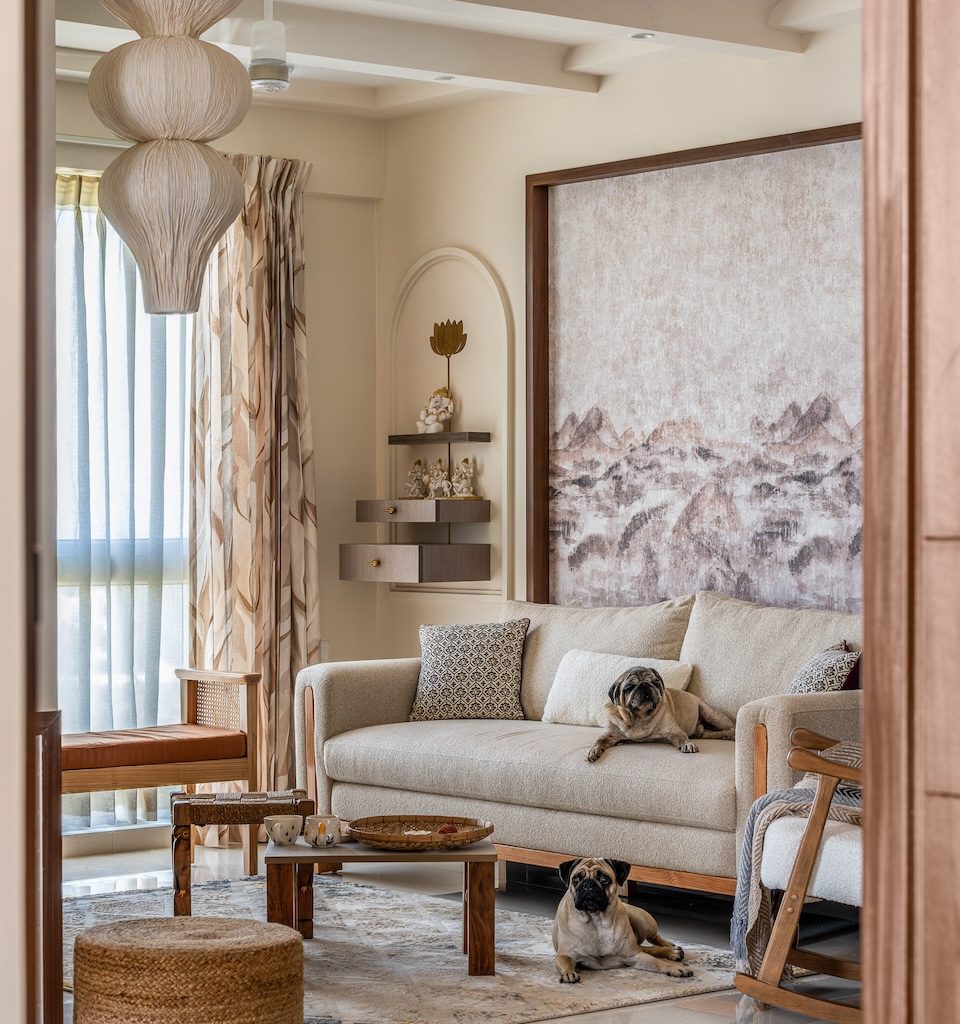
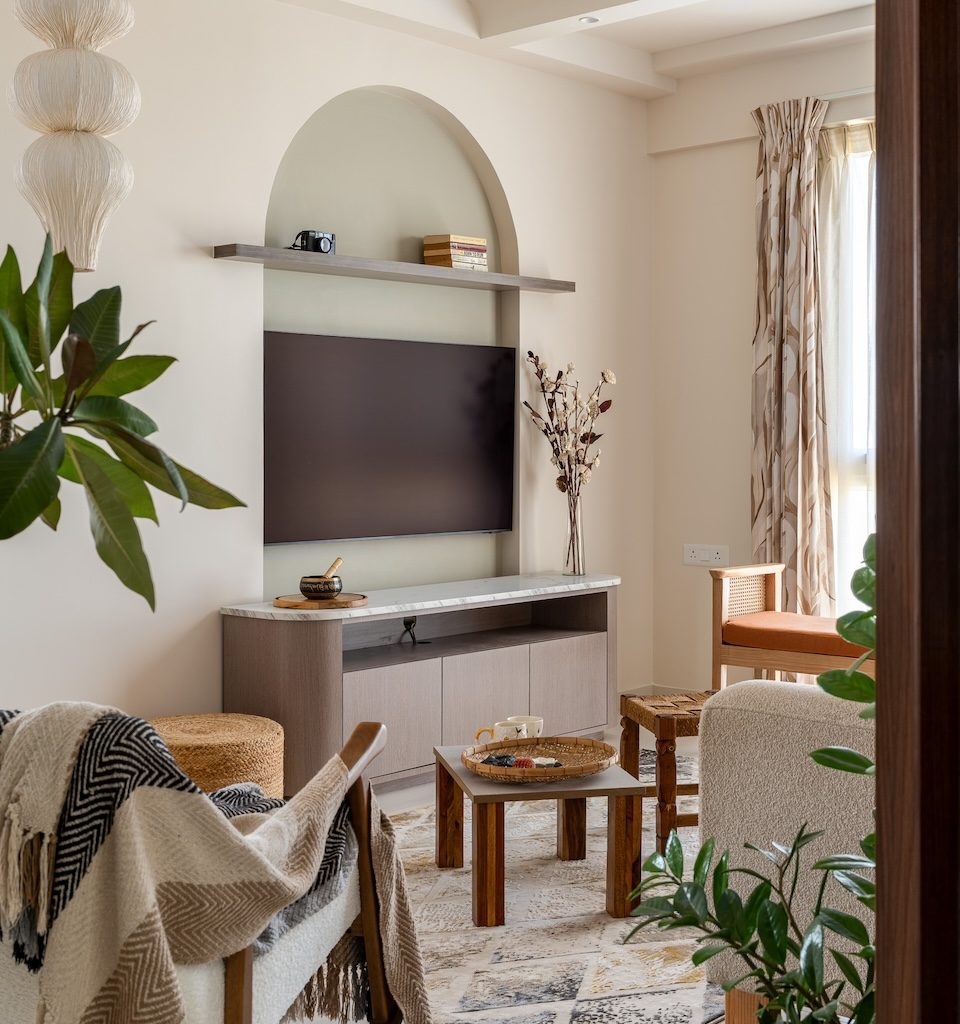
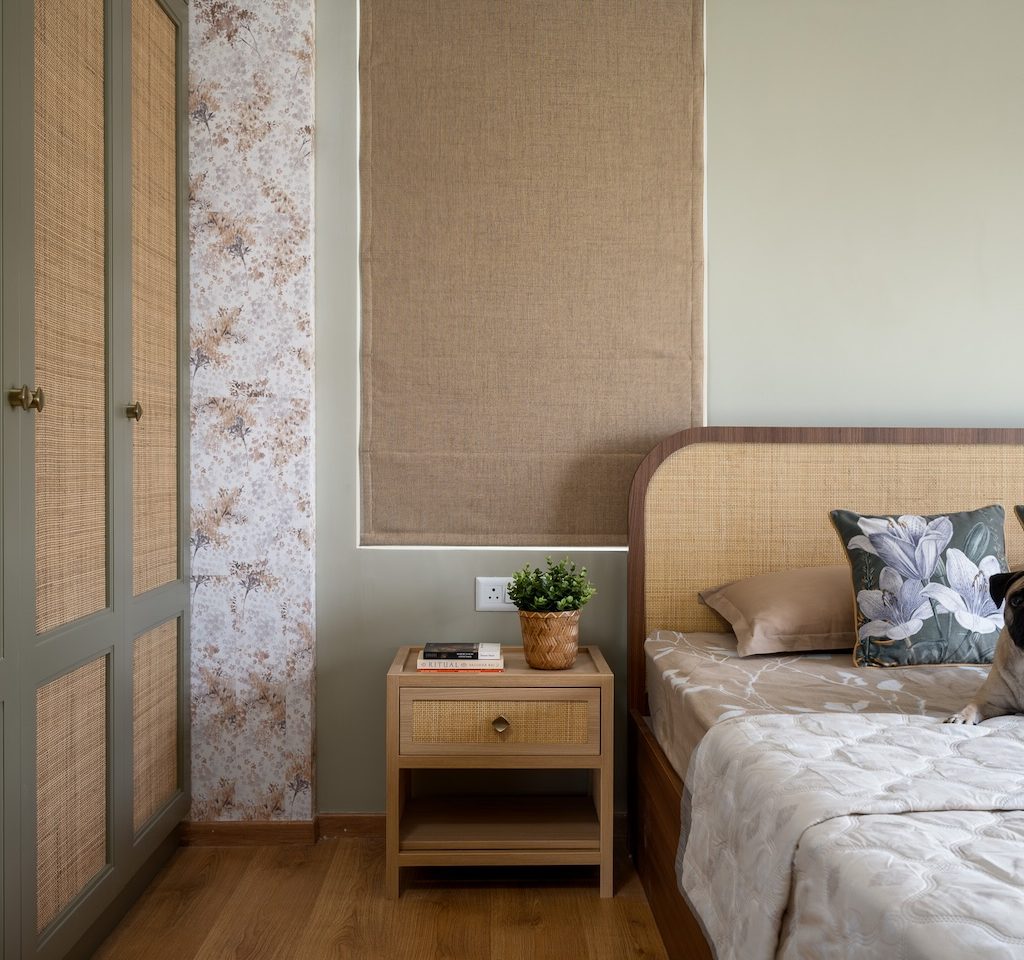
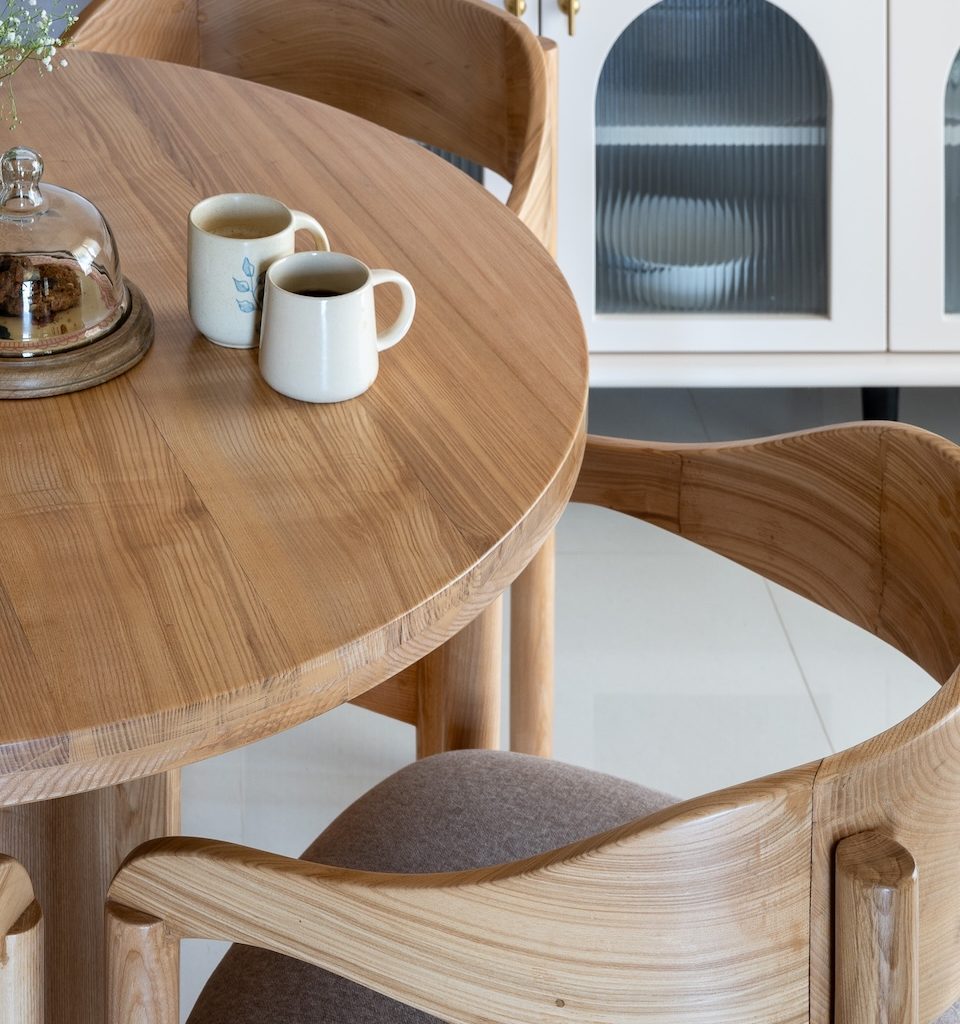
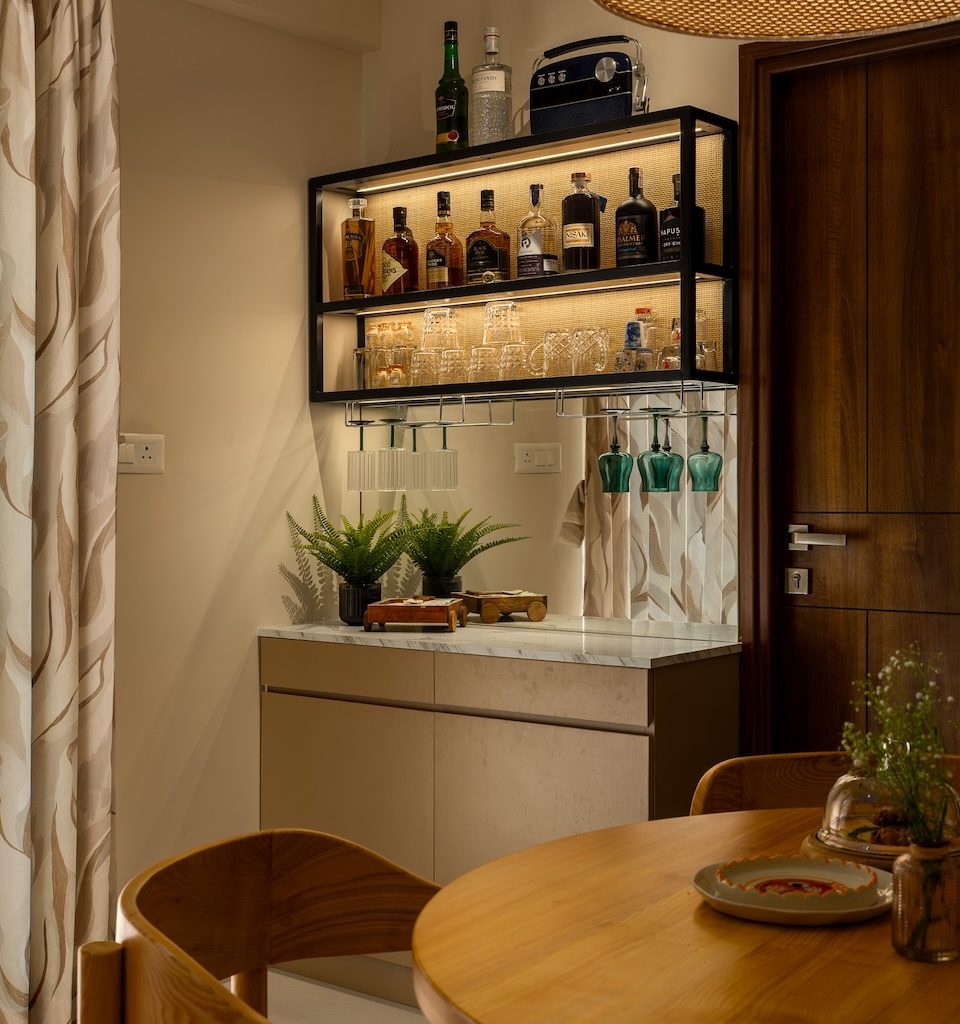
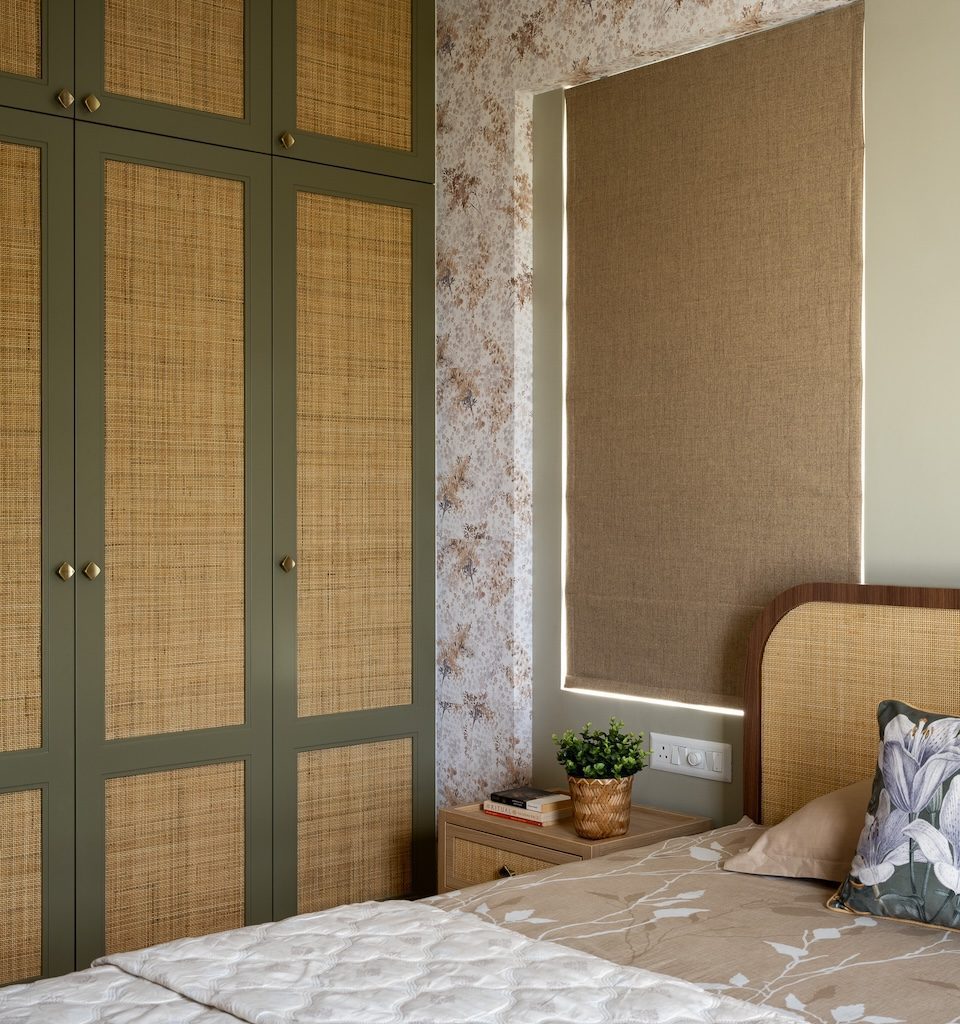
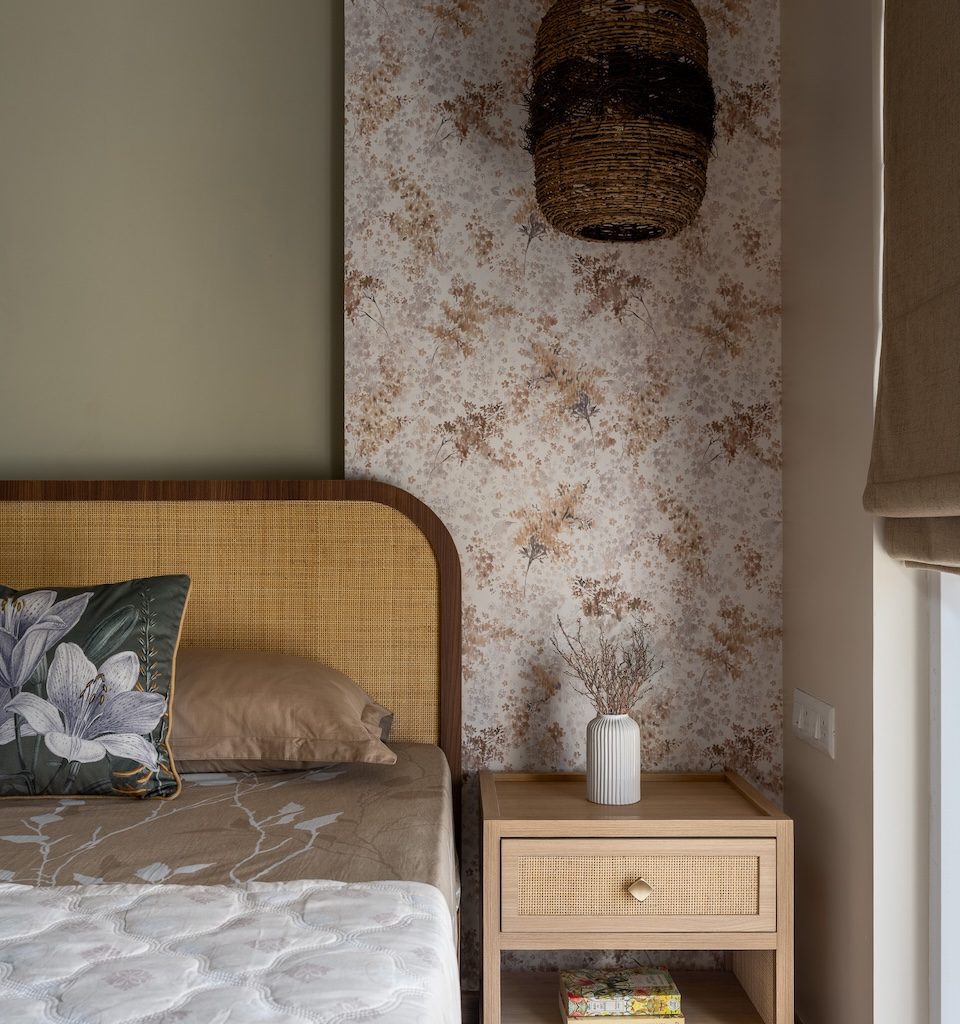
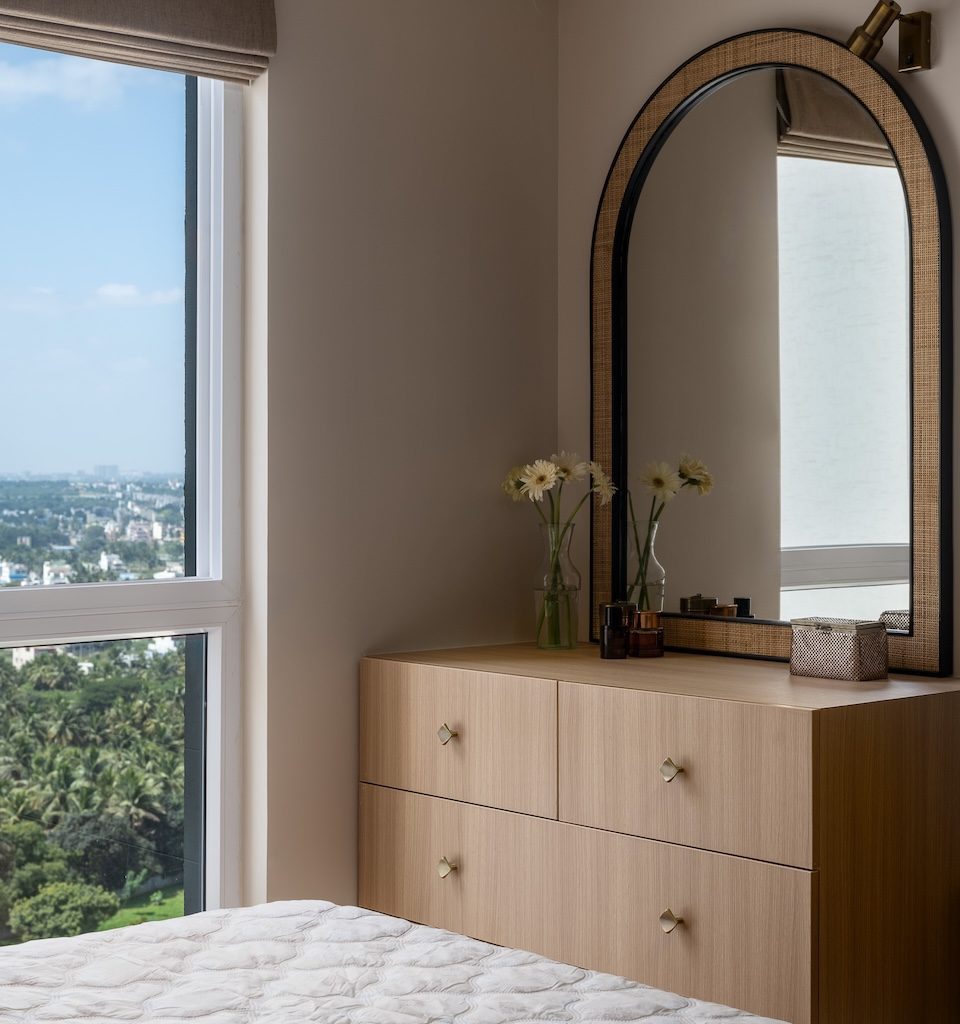
The material palette is anchored in light to mid-toned wood finishes used across furniture, cabinetry and built-in elements. Cane and woven textures recur through wardrobes, bed headboards, mirror frames, lighting and accent furniture, adding depth while maintaining visual lightness. Walls are finished in soft neutral paints and textured wallpapers with earthy undertones, allowing surfaces to gently absorb and diffuse light. Upholstery follows a similar language of warm whites, beiges and taupes that complement the wood tones. Rounded profiles, arched details and softened edges appear across the home, reinforcing a sense of ease and timelessness.
The challenges
Balancing the client’s detailed functional requirements with a restrained and cohesive visual language was a key challenge. Designing storage-rich spaces—particularly the kitchen—while maintaining a sense of minimalism required careful planning and detailing. Ensuring continuity across varied spaces without visual monotony was another important consideration throughout the design process.
The highlights
A restrained yet expressive anchor wall behind the living room sofa quietly grounds the space without asserting itself, allowing furniture, light and movement to take precedence. Subtle arches, rounded forms and woven textures soften the home’s geometry, while a cohesive material language carries across spaces to ensure continuity without repetition. The kitchen stands out as a highly functional yet calming everyday workspace, and the dining area emerges as a central gathering zone that supports daily rituals and togetherness without overt styling.
The takeaway
Sukoon reaffirms that restraint can be deeply expressive. When design responds to lifestyle, rituals and emotion, minimalism becomes layered and meaningful rather than sparse—proving that lived-in spaces rooted in slow living can feel both rich and timeless.
Fact file
Project: Sukoon
Design firm: ESSE Designs
Location: Budigere Cross, Bengaluru
Area: 1,230 sq ft
Principal architect: Shraddhanjali Chowdhury
Add a Comment