
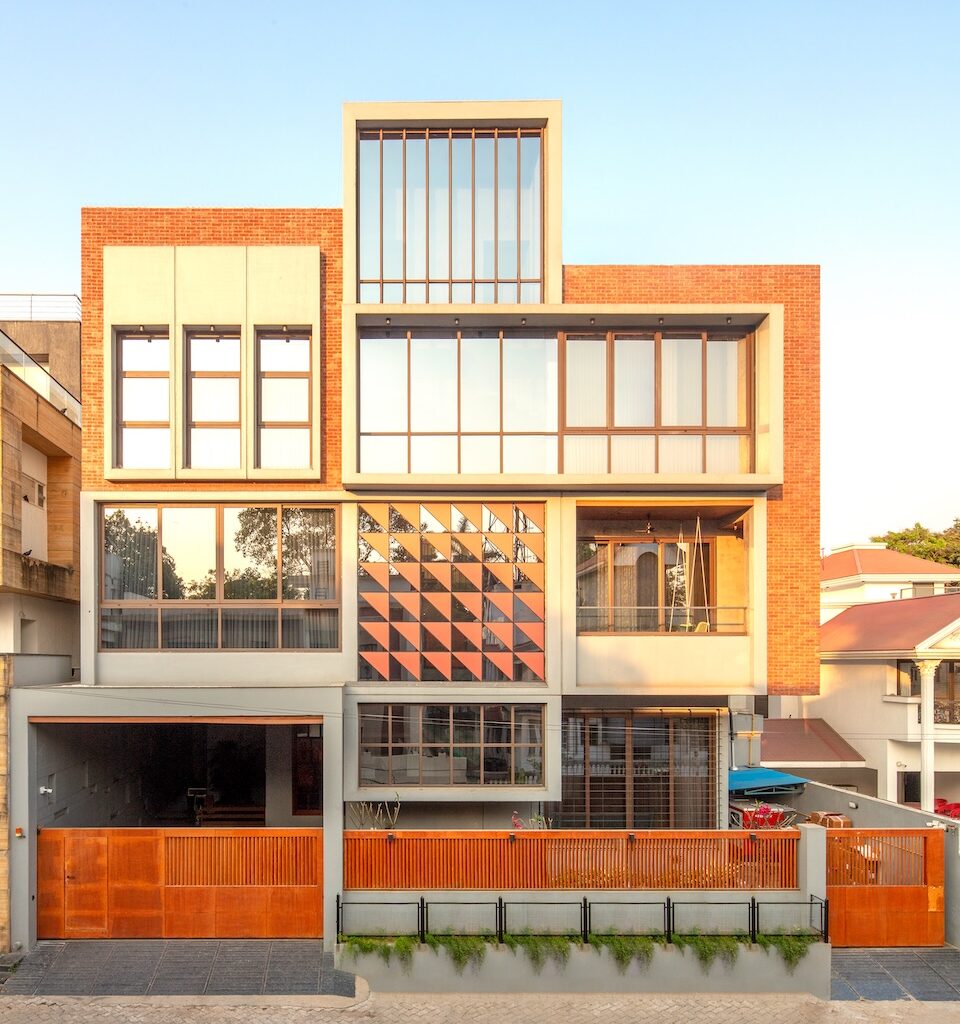
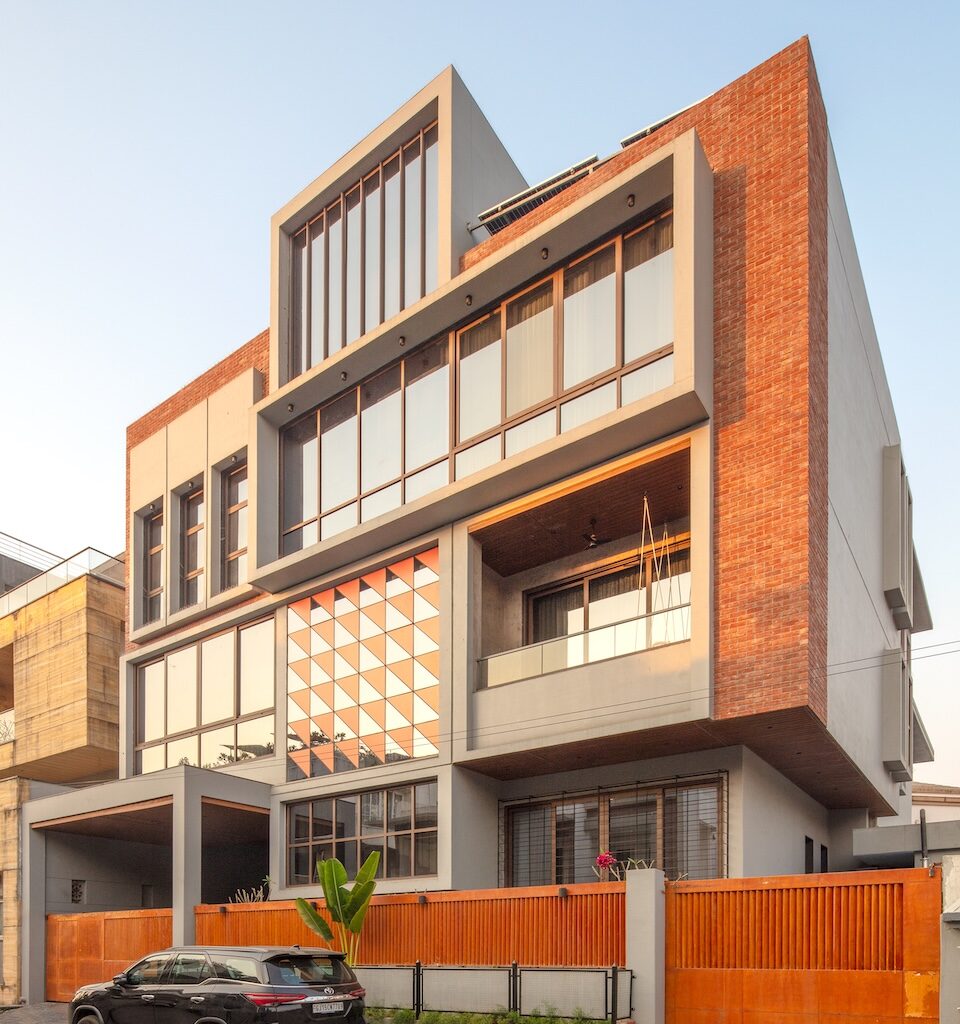
Palindrome Space’s Anantya Villa in Vapi is a 10,000-square-foot family home where openness, texture, and cultural restraint create a language of modern warmth.
Curated by: Deepa Nair
Photographs: Pankaj Anand; courtesy Palindrome Spaces
The brief
Palindrome Space’s newest project, Anantya Villa in Vapi, is a multi-generational contemporary home rooted in craft, proportion, and materiality. “The family wanted a home where light pours in, the breeze flows freely, and there’s a sense of openness without going over the top,” shares Nayan Shah, founder and principal designer at Palindrome Spaces. “We focused on getting the proportions right and keeping things breathable,” he adds.
The design intent
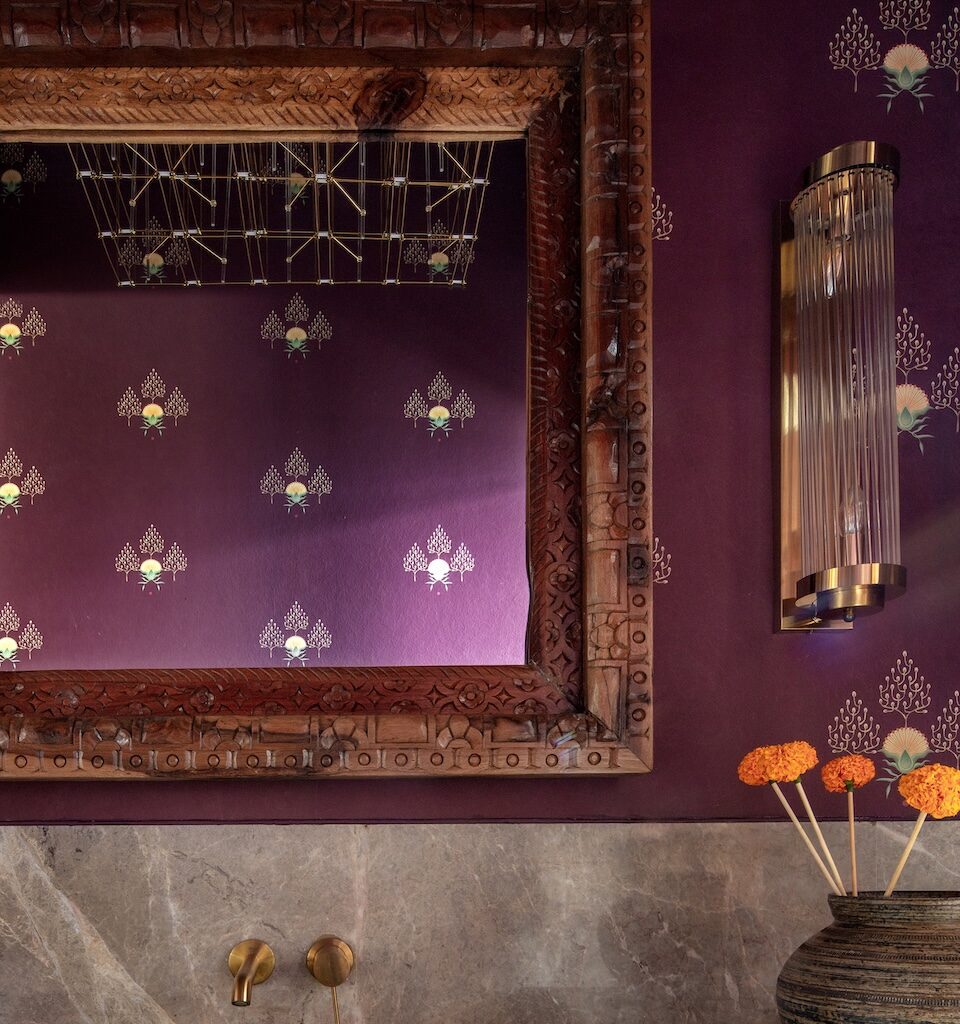
Spread across 10,000 square feet, the residence embraces light, breeze, and openness through large fenestrations, shaded verandahs, and a terrace lush with greens. Brick and lime plaster walls, etched stairwell panels, patterned tiles, and wallpapered washrooms lend texture and rhythm throughout. The design team envisioned a home that balances comfort with longevity… spaces that feel lived in yet refined. The home is designed for comfort and longevity, with surfaces serving as backdrops to open, airy and lived-in spaces.
The design and material details
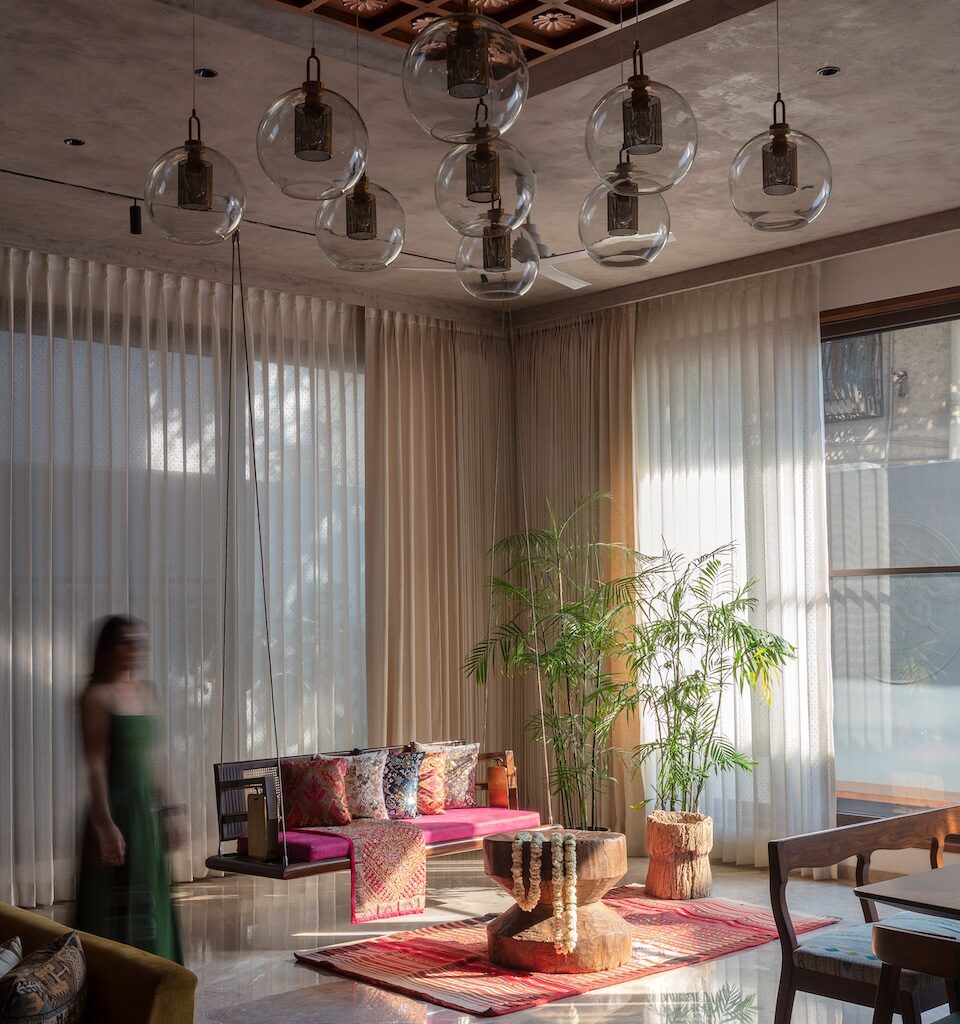
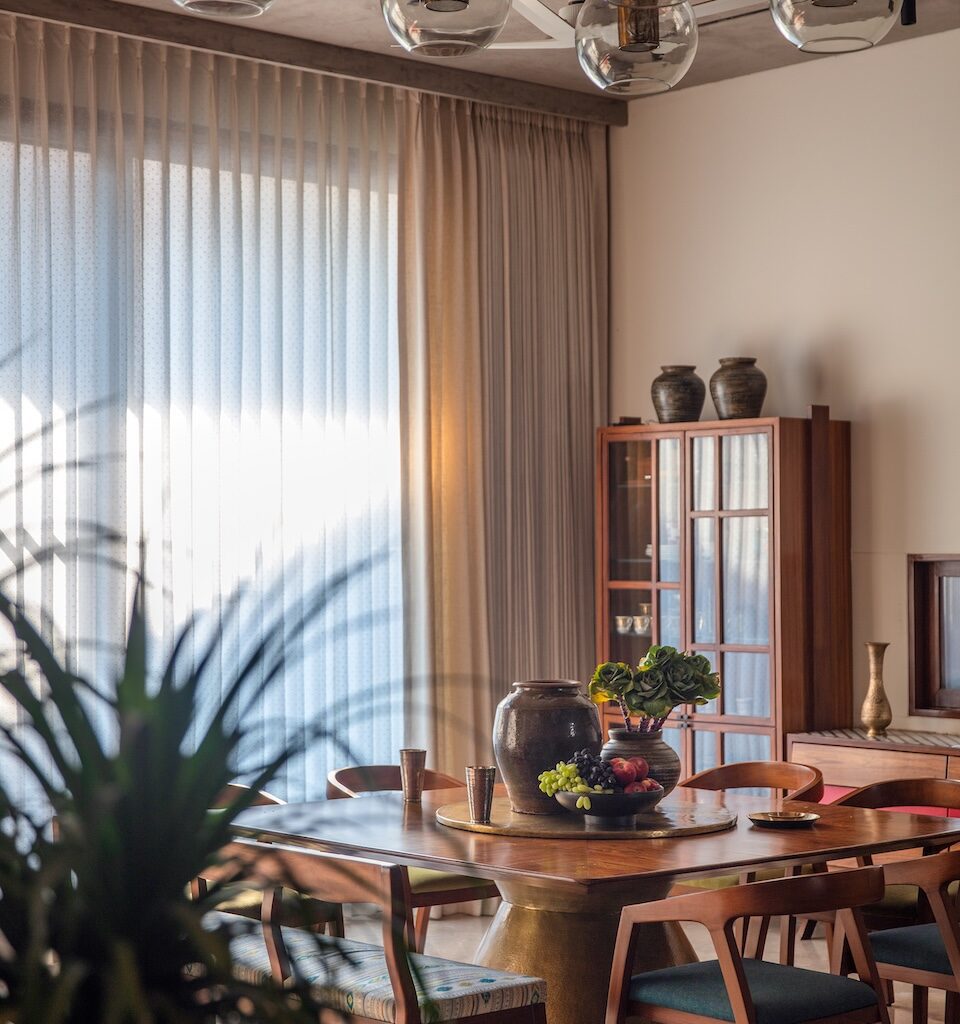
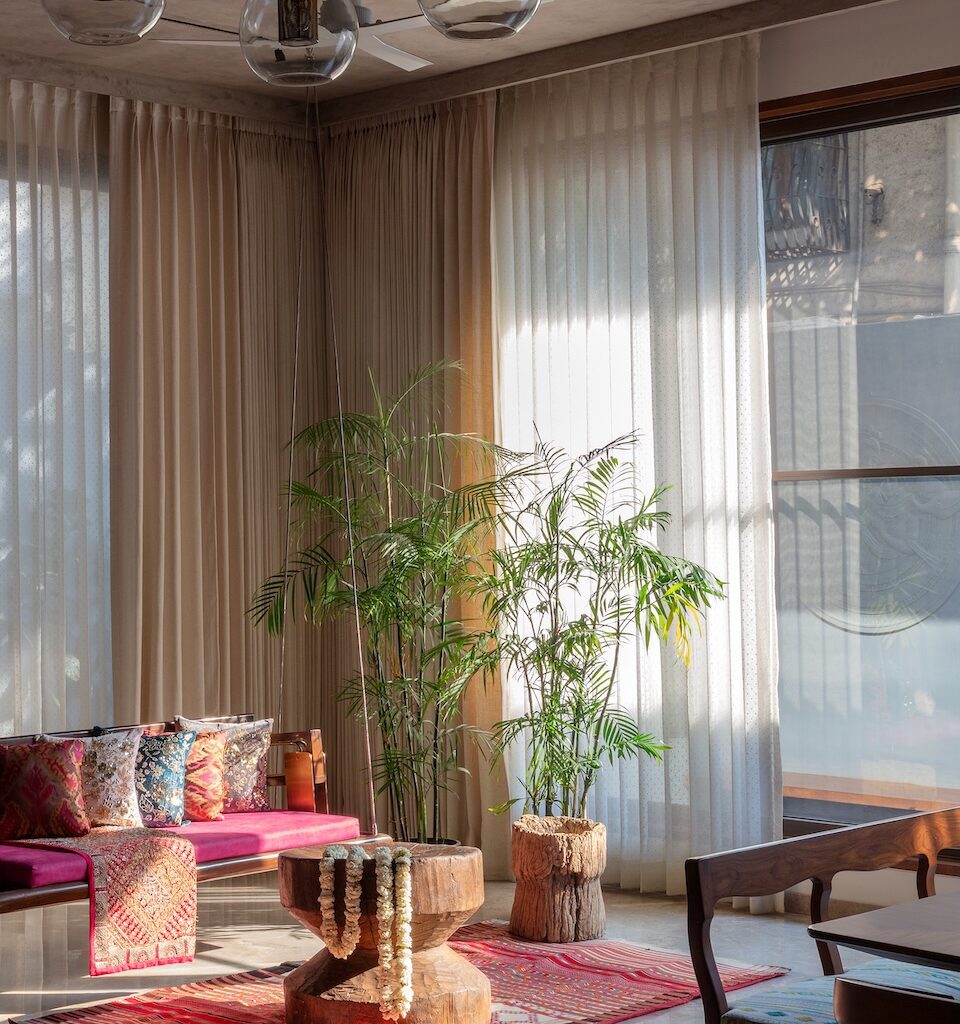
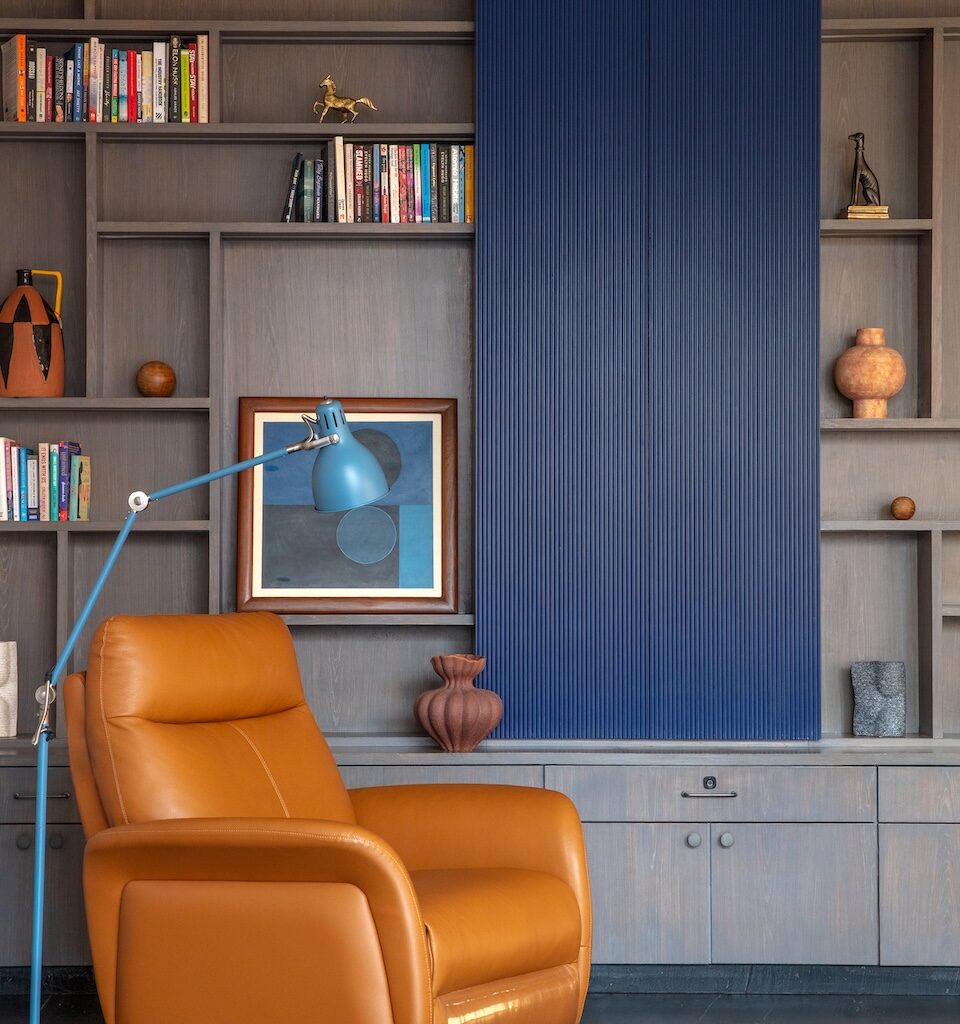
The home opens into a luminous, expansive volume where the living and dining areas flow into one another with ease. The material palette is honest and grounded, with exposed concrete ceilings, plastered walls, and rich wood furniture forming a backdrop that feels both contemporary and timeless. The seating is arranged with finely detailed wooden sofas and armchairs upholstered in vibrant tones, while cushions in bold Indian prints bring colour and craft into the mix. Together, they infuse the space with warmth and an understated cultural nod. Adjacent to this, the dining area is anchored by a solid wood table and simple chairs placed beside large windows that usher in light. A sculptural light fixture above adds a touch of drama, while the atmosphere remains open, airy and effortlessly inviting — designed for comfort, conversation and connection.
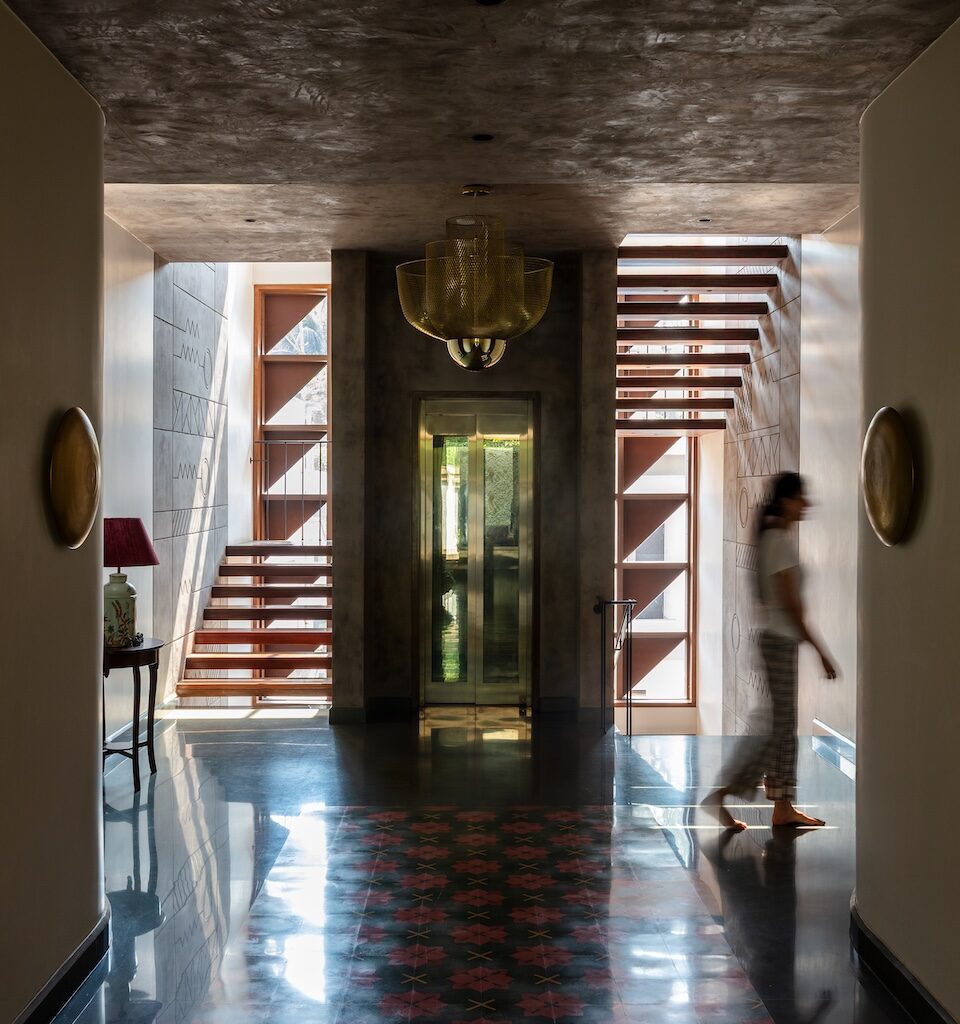
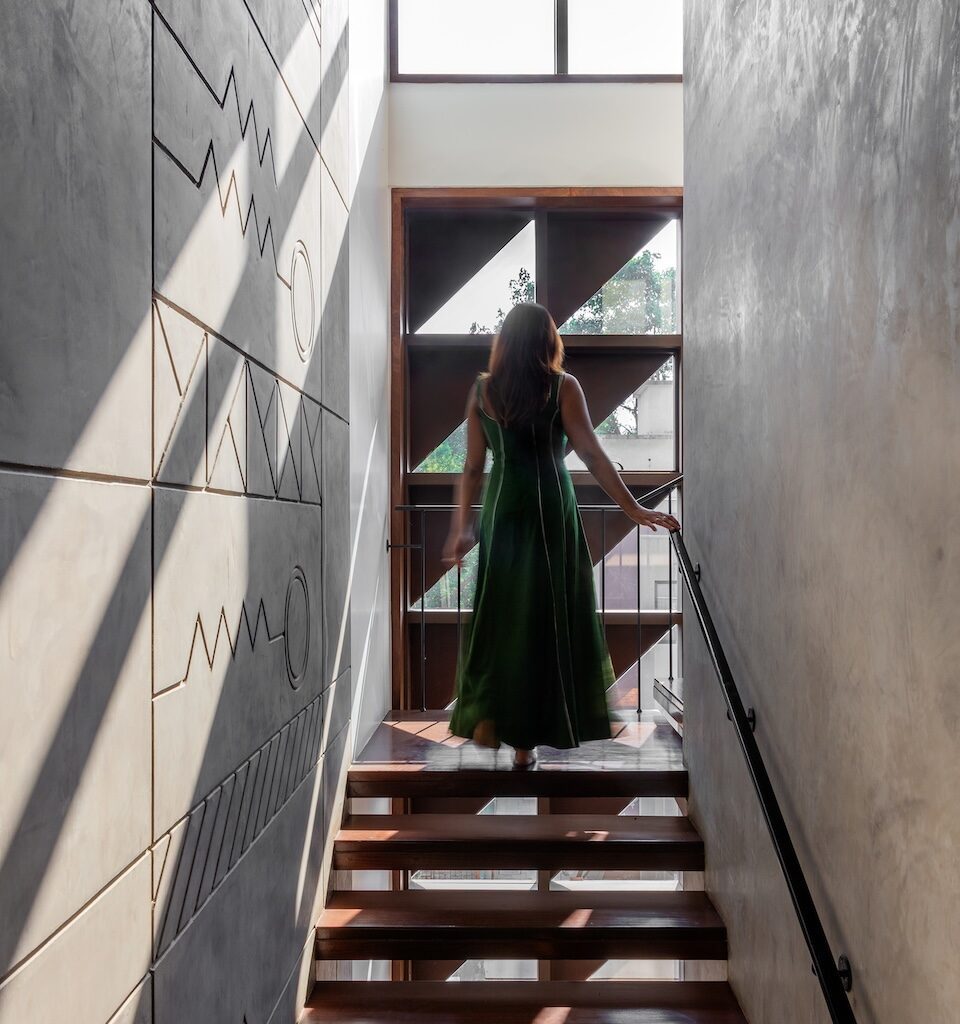
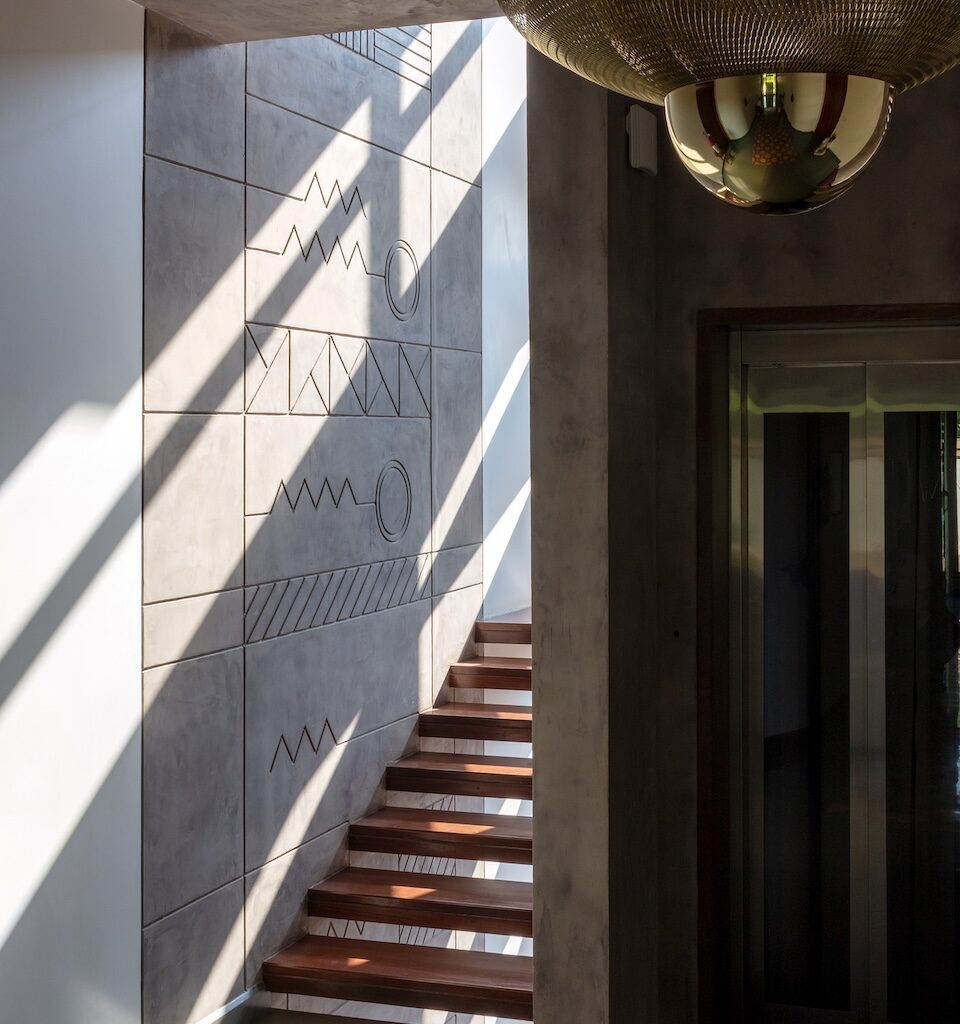
The upper floor is accessed by a wooden staircase framed by textured concrete walls. The ascent feels contemplative, almost ceremonial, as etched surfaces catch shifting light patterns. The tactile finish invites touch, creating a tangible connection between material and movement. Each step draws the gaze upward, transforming the climb into an almost meditative experience.
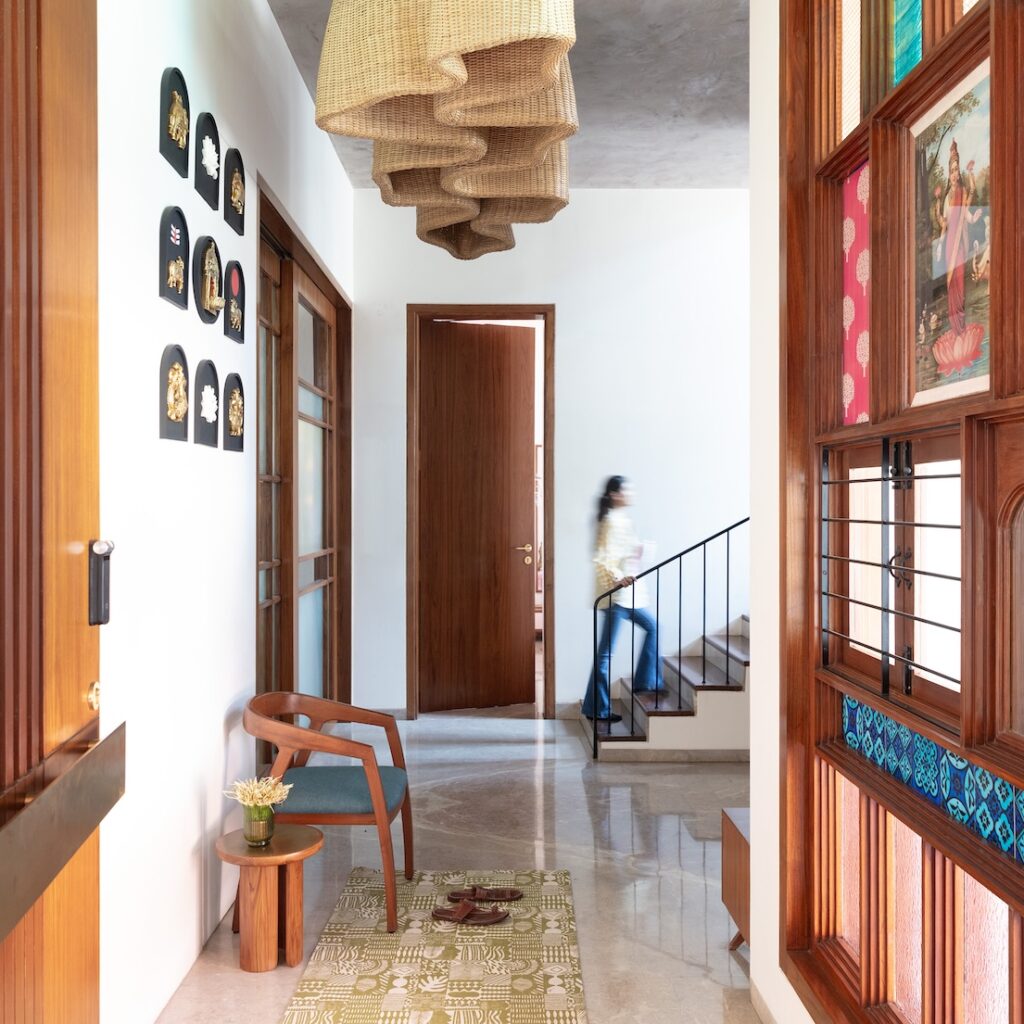
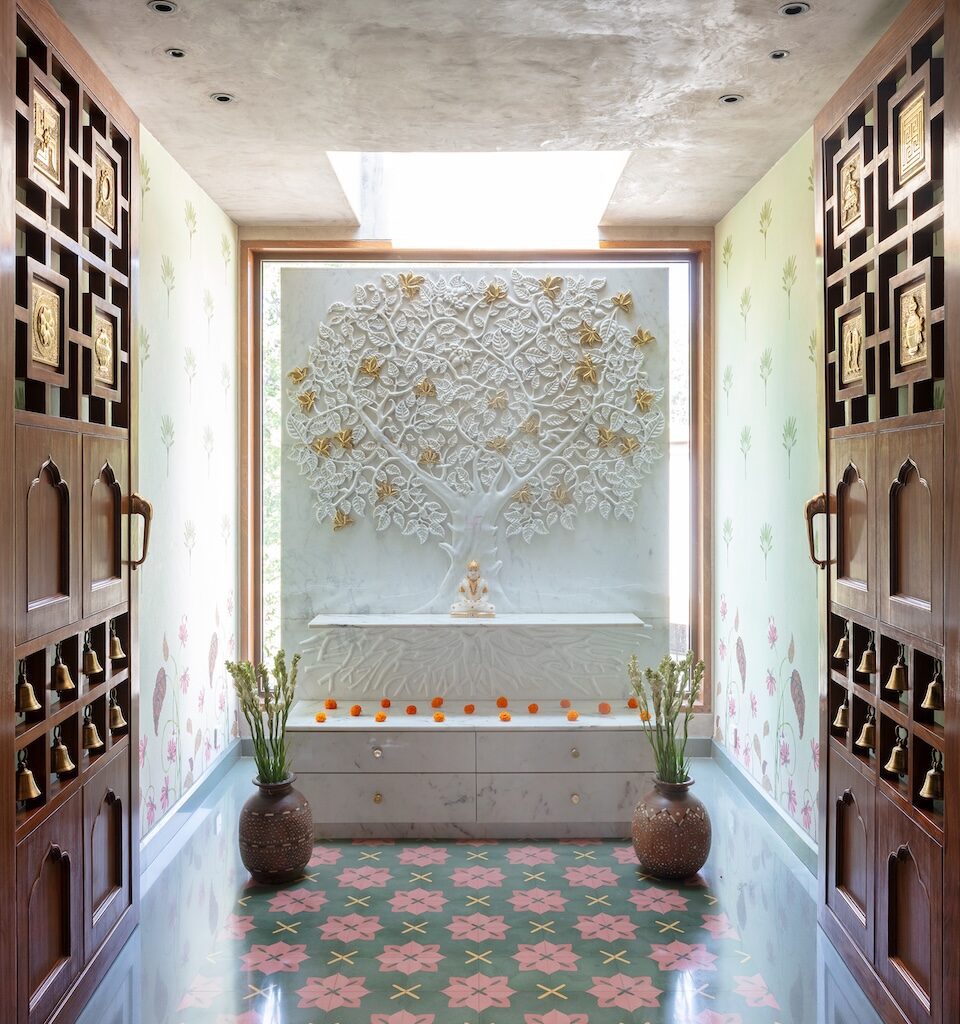
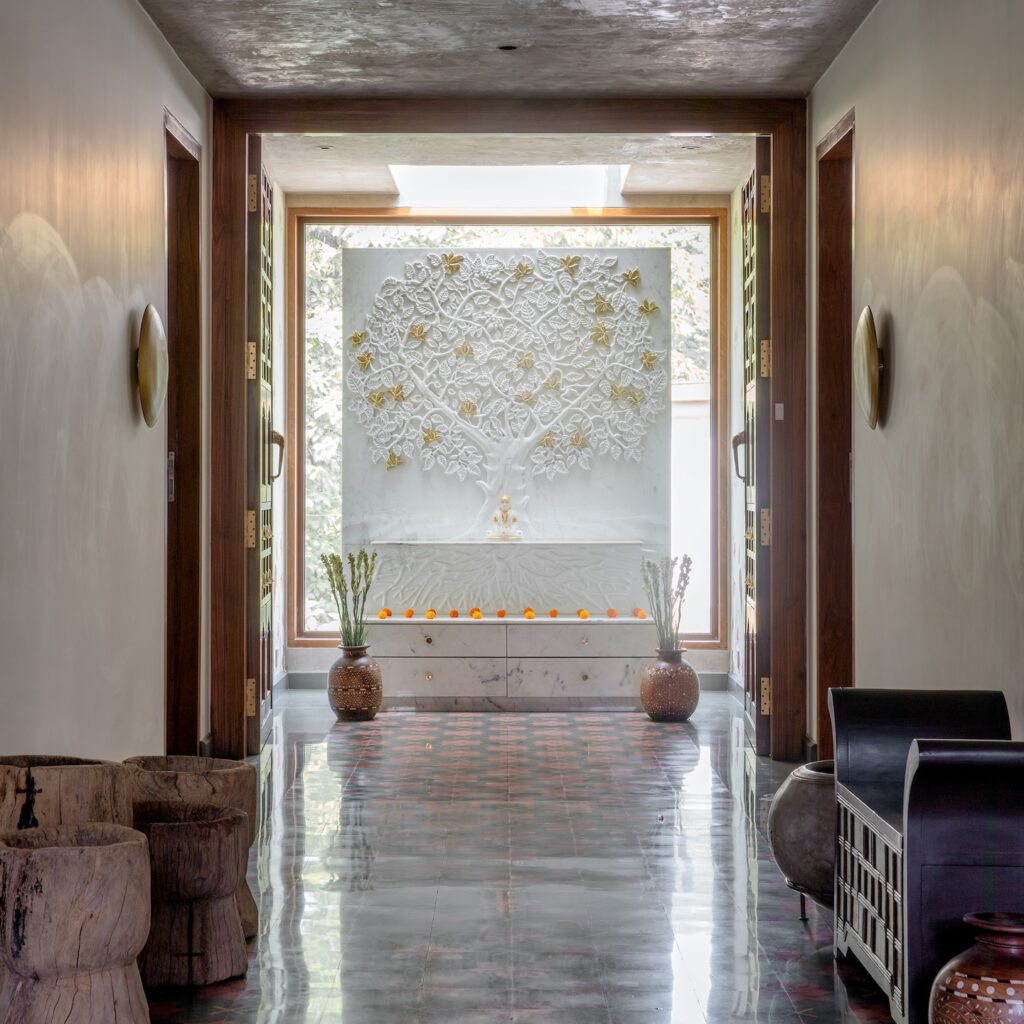
At the landing, a wide passage unfolds — its flooring an interplay of grey Kota stone and pink floral-patterned tile inlay, like offerings underfoot. Leading towards the temple at the far end, the passage reveals itself as a contemplative threshold. Bathed in natural light from a skylight above, the space becomes an experience in stillness and sanctity, where carved details and patterned surfaces deepen its spiritual presence.
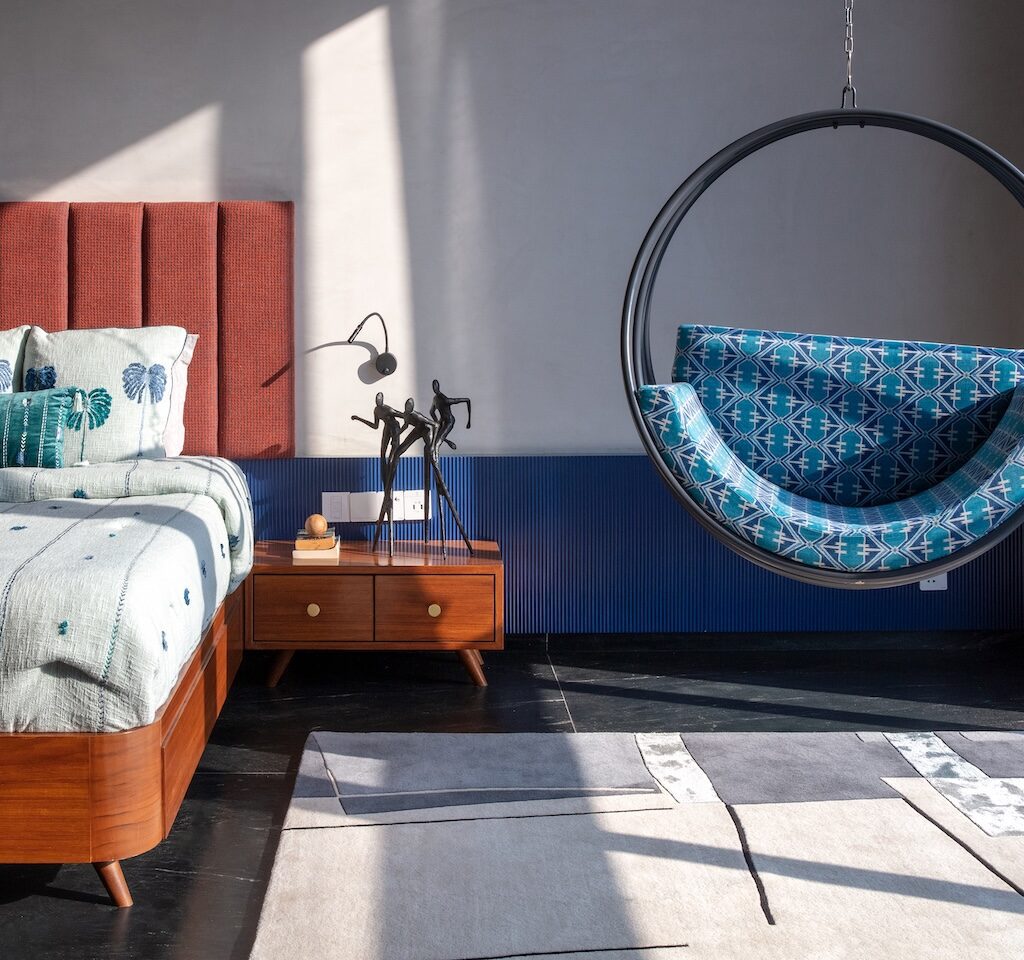
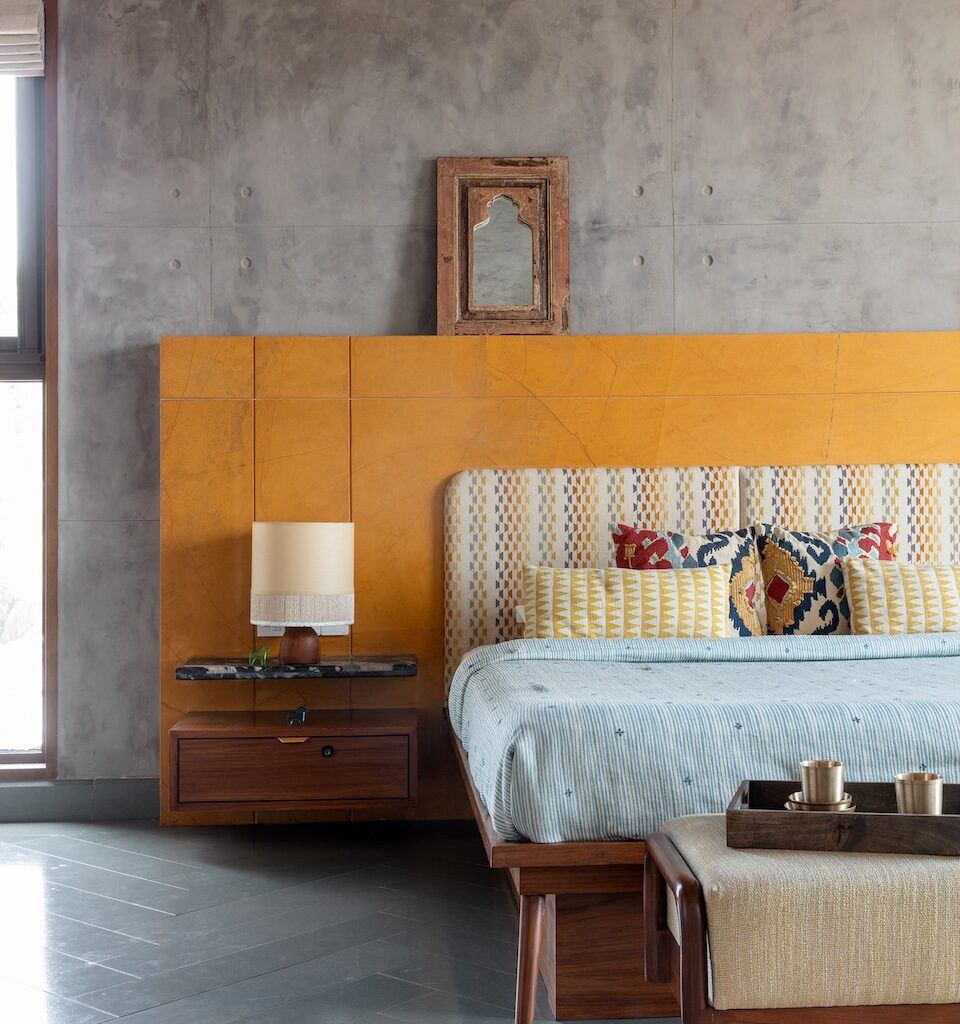
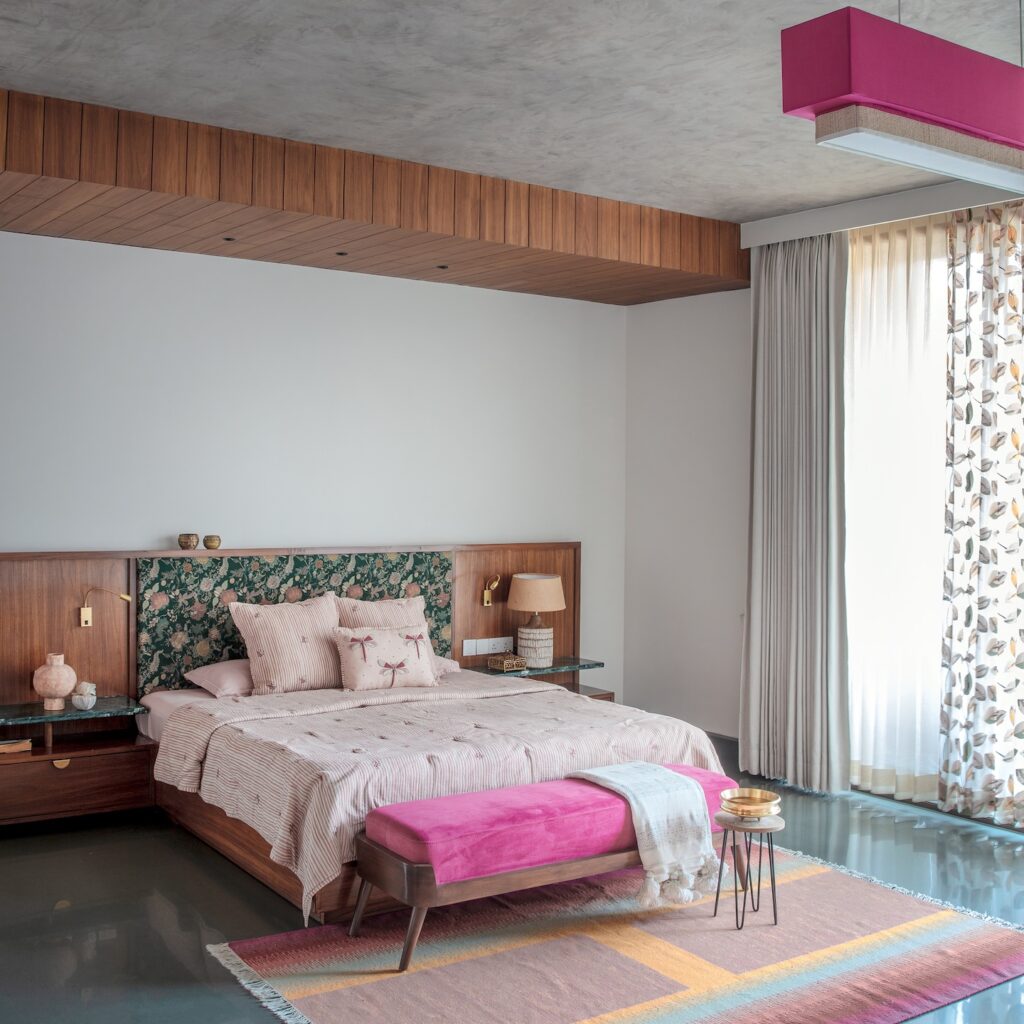
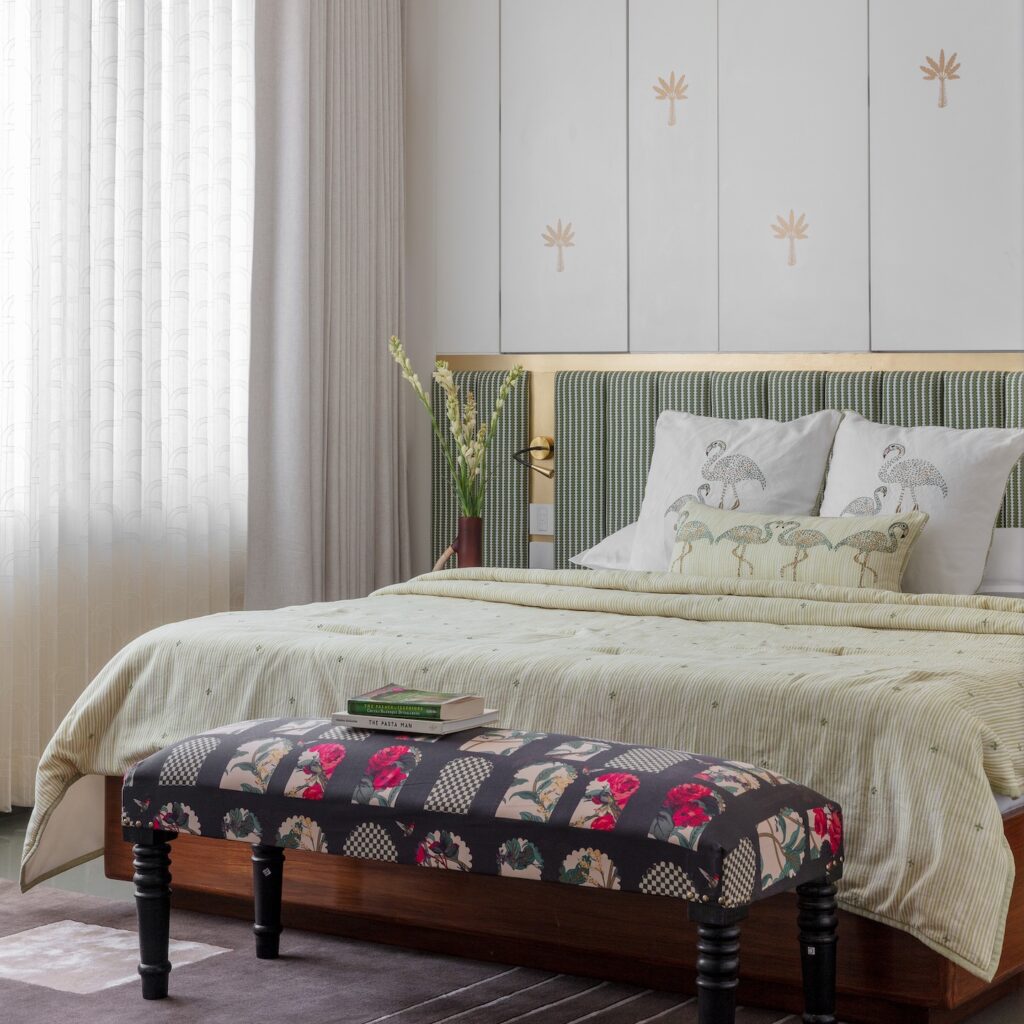
Situated along this passage are four bedrooms: three ensuites and one that doubles as a guest and storage room. The quiet continuity of Kota stone flooring runs through this level, lending a cohesive, grounded feel. Each one is imagined as a restful, tactile space, where fabric and wood form the primary palette, complemented by subtle brass accents. Instead of elaborate panelling, the rooms rely on material layering – hand-stitched and printed cushions, soft upholstery, and woven rugs add depth without excess. Wooden furniture anchors the spaces, while the soft furnishings bring in pattern and comfort. Lighting is thoughtfully placed to enhance the quiet mood, whether through minimal wall sconces or warm bedside lamps. The result is a suite of rooms that feel warm, expressive and comfortably intimate.
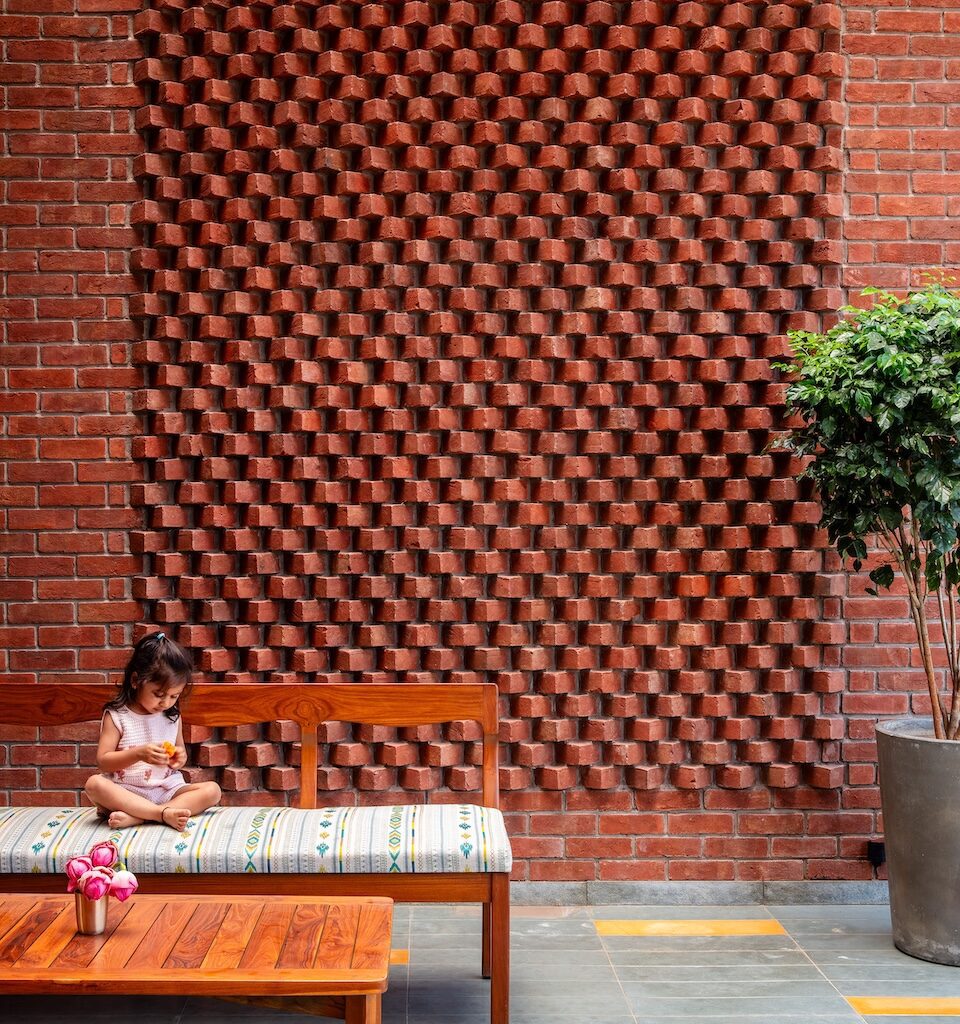
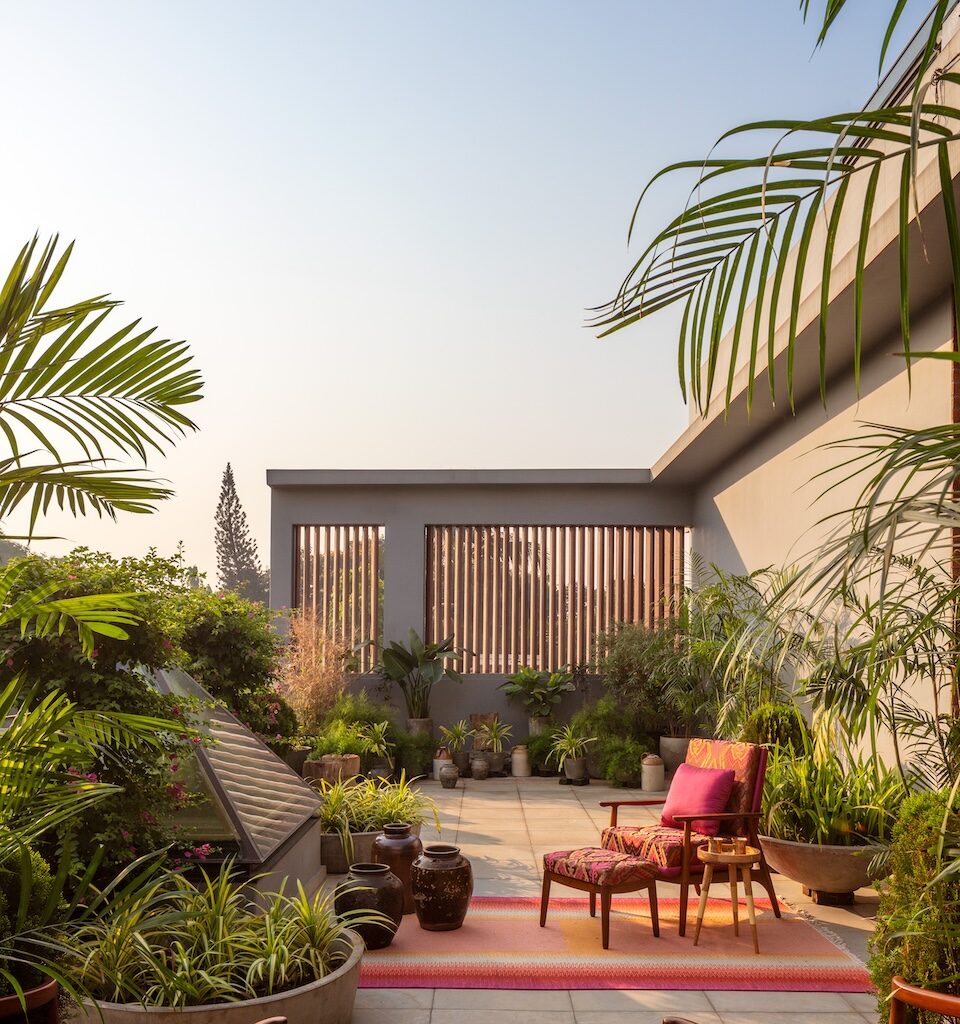
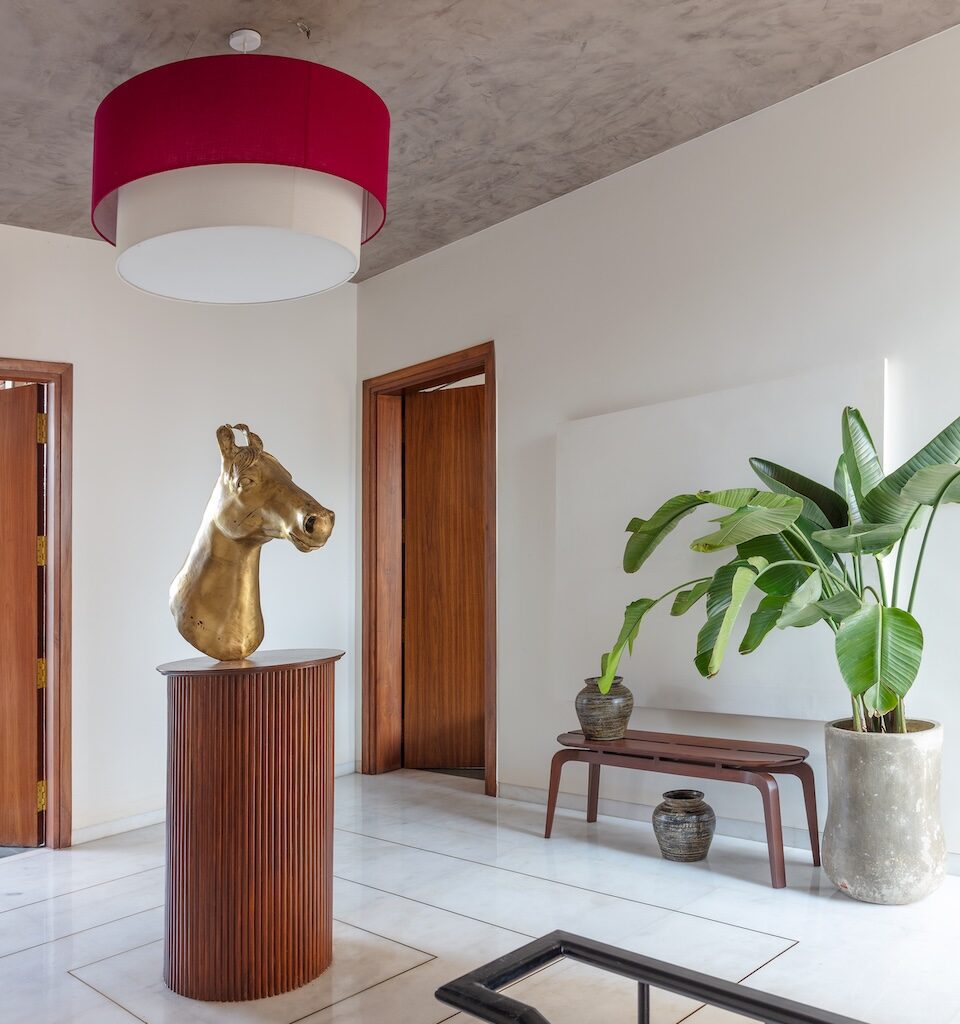
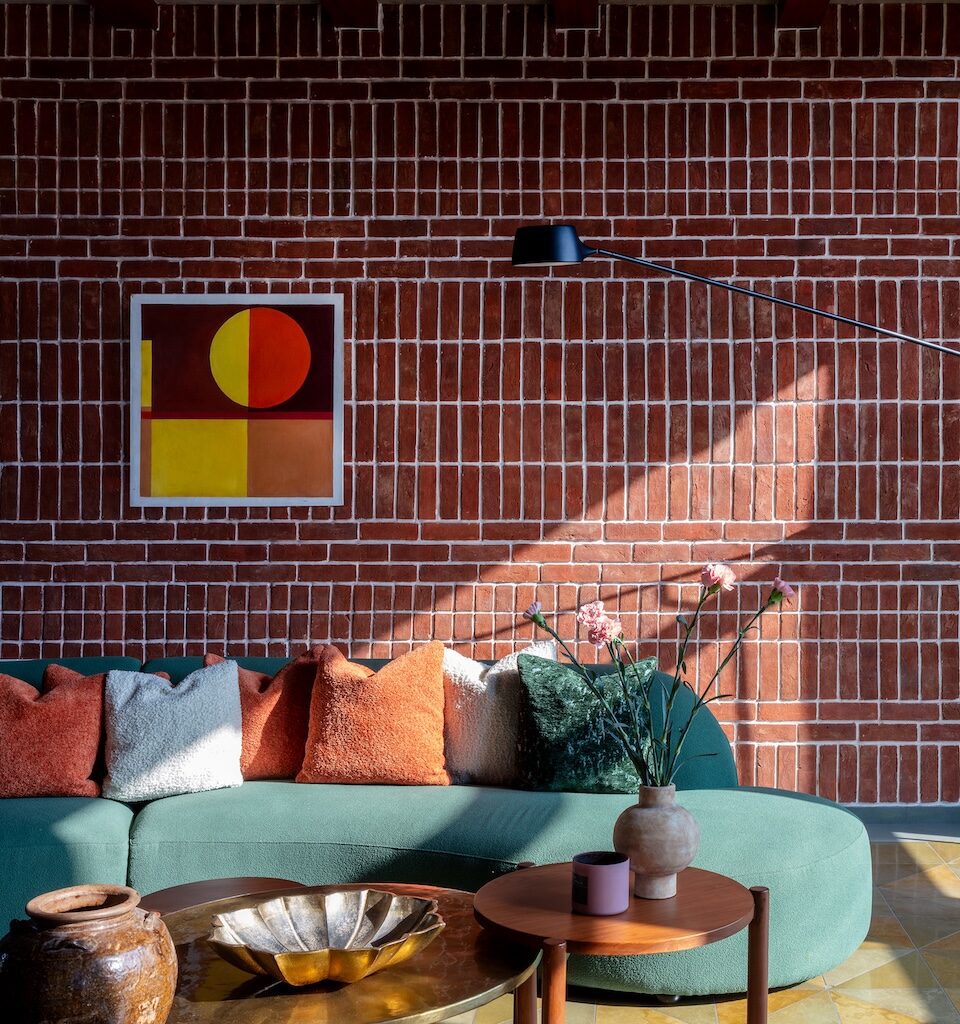
Ascending to the second floor, a compact foyer clad in white stone with brass inlays marks the landing. To one side lies a cosy home theatre room, where textured brick walls and Kota flooring with patterned tile inlays establish a warm, lived-in tone, punctuated by bursts of colour in the furniture. On the other side, an ensuite bedroom mirrors the restrained detailing seen below. Straight ahead, a passage leads to a semi-open terrace lounge which is perhaps the most tranquil corner of the home. Surrounded by greenery and curated planters, it balances openness and seclusion with natural ease. Designed for lingering moments, morning tea or reflective pauses, the terrace becomes an effortless extension of the home — where indoors and outdoors merge in complete harmony.
The highlights
“The thoughtful layering of textures—smooth, etched, polished, and patterned—creates spaces that invite more than just visual appreciation. Be it the tactile richness of the etched stairway panels, or smooth polished Kota stone, the surfaces are meant to be touched. When light moves across these textures, it reveals new facets in each space, quietly deepening the home’s bond with its inhabitants,” explains Nayan. “The subtle brass inlays and the floral-patterned tile inlays bring further dimension, each element enhancing the other. Together, these surfaces offer a gentle rhythm, making the experience of living here sensorial, ceremonial and deeply personal,” he adds.
Fact file
Project: Anantya Villa
Location: Vapi, Gujarat
Area: 10,000 sq ft
Principal designer: Nayan Shah
Styling: Drisha Jain
Add a Comment