
Sian Architects revisit Meerut’s Lal Kothi, transforming it into The Blooming Garden… a sensitive restoration where legacy, craft, and contemporary family life flourish.
Curated by: Deepa Nair
Photographs: Ankush Maria; courtesy Sian Architects
The legacy of Lal Kothi
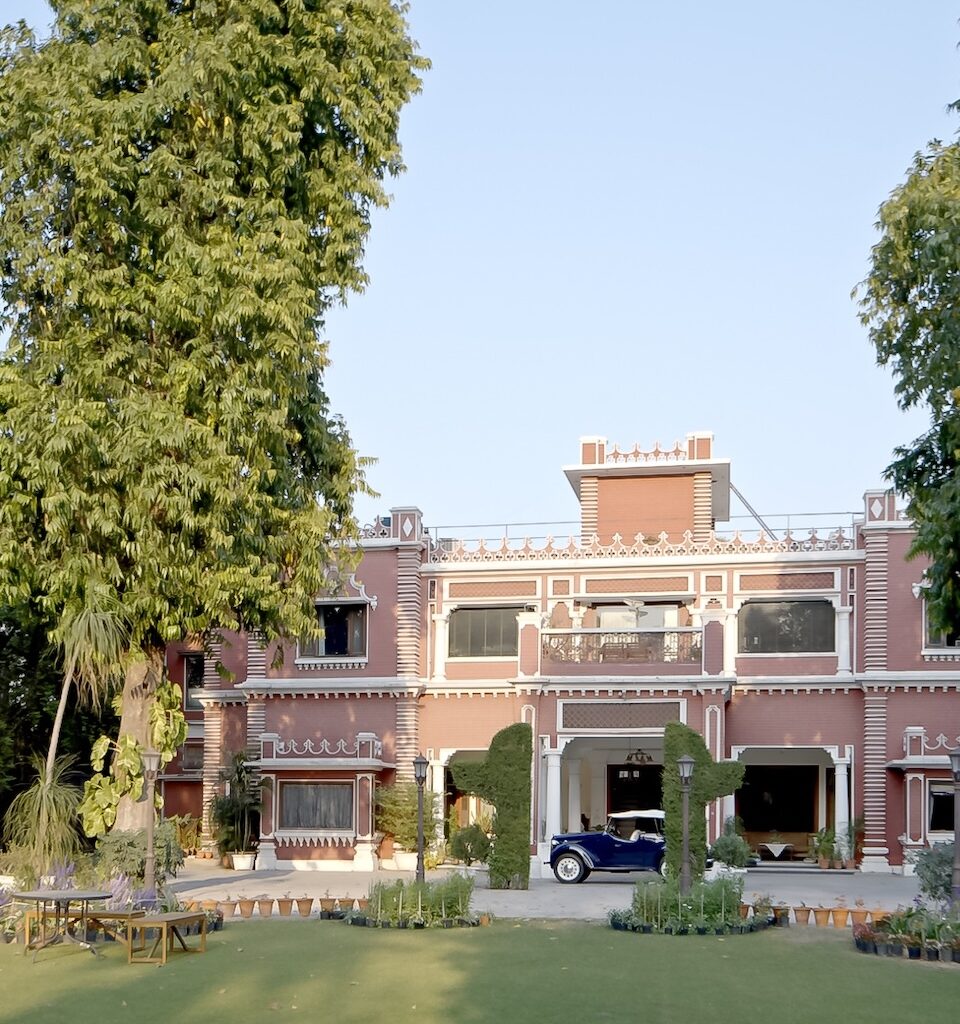
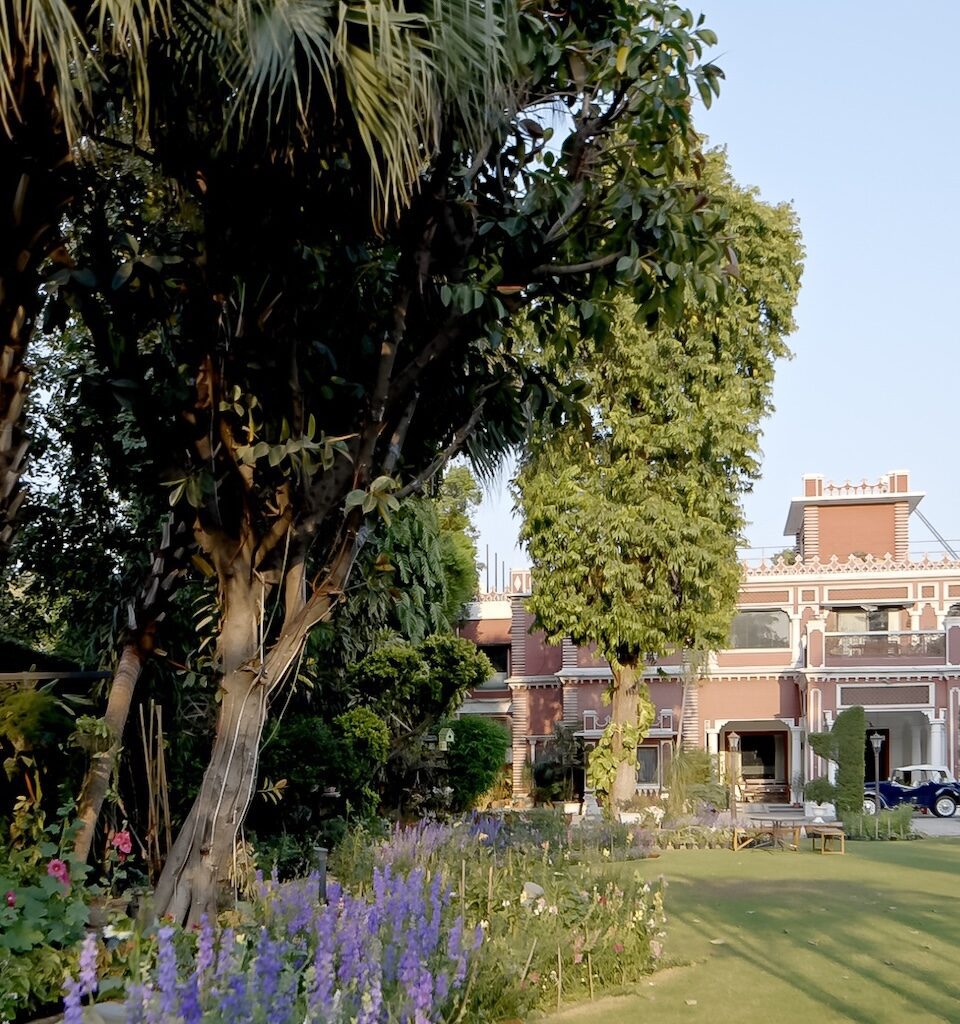
In Meerut, a pre-independence residence long known as Lal Kothi stands within an expansive landscape, its presence shaped by time and memories. In India’s architectural story homes from that era, with their blend of borrowed sensibilities and indigenous craft, remain eloquent witnesses to changing city rhythms. Lal Kothi is one such house: a place that has absorbed generations of life. Even today, by candlelight and moonlight, the house turns theatrical—glimmers and shadows slipping across reflective surfaces, drawing out restored details.
Before the current family made it their home in the 1980s, Lal Kothi belonged to Urmila Shastri, a prominent freedom fighter and political leader, and niece of India’s first Prime Minister, Jawaharlal Nehru. Her name appears on a balcony on the facade as a tender reminder of love and lineage—a wonderful gesture commissioned by her husband.
The brief
When Sian Architects were invited to reimagine the interiors of Lal Kothi, the brief was not to overwrite its past but to respond to it: to respect proportion and craft, acknowledge colonial echoes, and express them with a contemporary Indian sensibility appropriate to Meerut today.
The design intent
For Sian Architects, the brief was to deepen an already inherited sensibility of art and culture which the family lived by, rather than curate a new one. Slow living here is instinctive: days turn on artistic pursuits, conversation, seasonal rituals, and food grown a few steps from the kitchen. The cadence feels sustained over time…an organic continuation of how Lal Kothi has always been lived in.
Original architectural elements—cornices, metal railings, window projections—are preserved, repurposed, and reinstated within the interiors, creating bridges between eras and adapting what once was for contemporary life. Palettes drawn from nature—muted mint, dusty pink, forest green, and sage—shift with ease, creating spaces that feel distinctly feminine yet grounded: contemporary in attitude, and respectfully anchored to the home’s larger narrative.
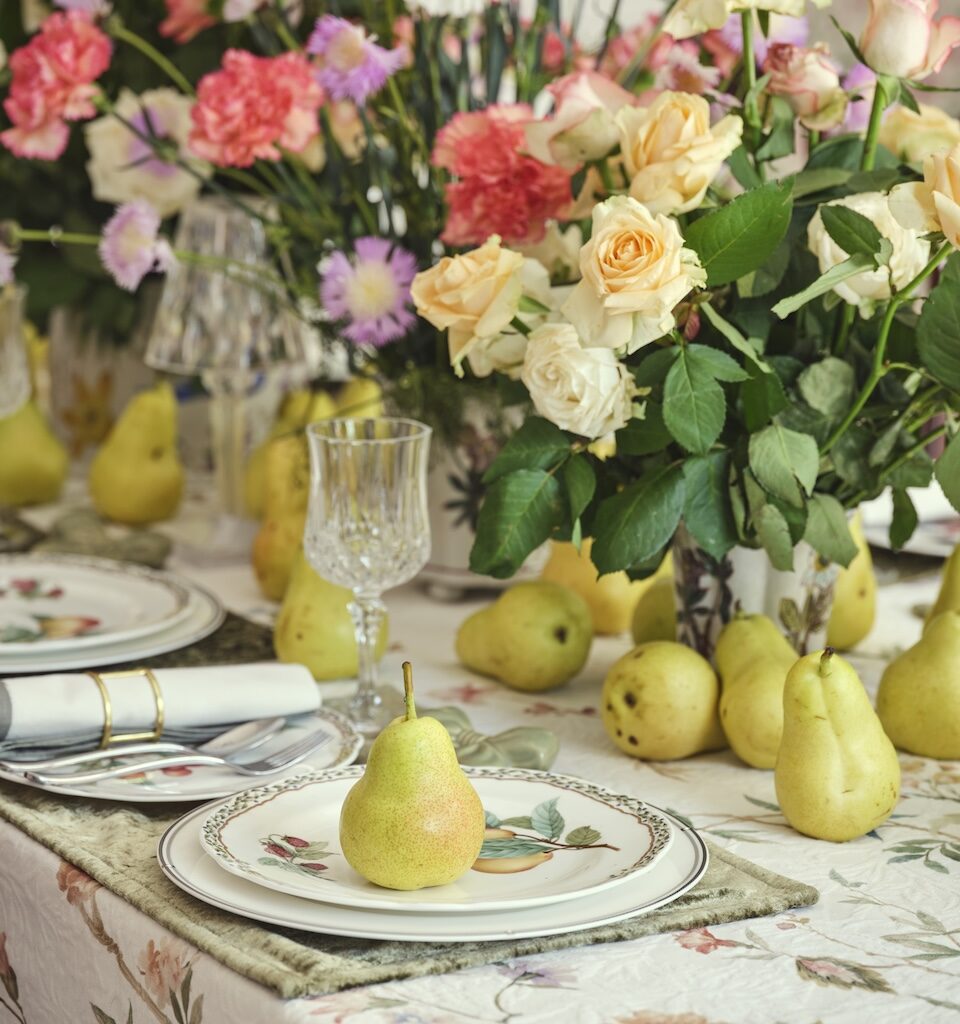
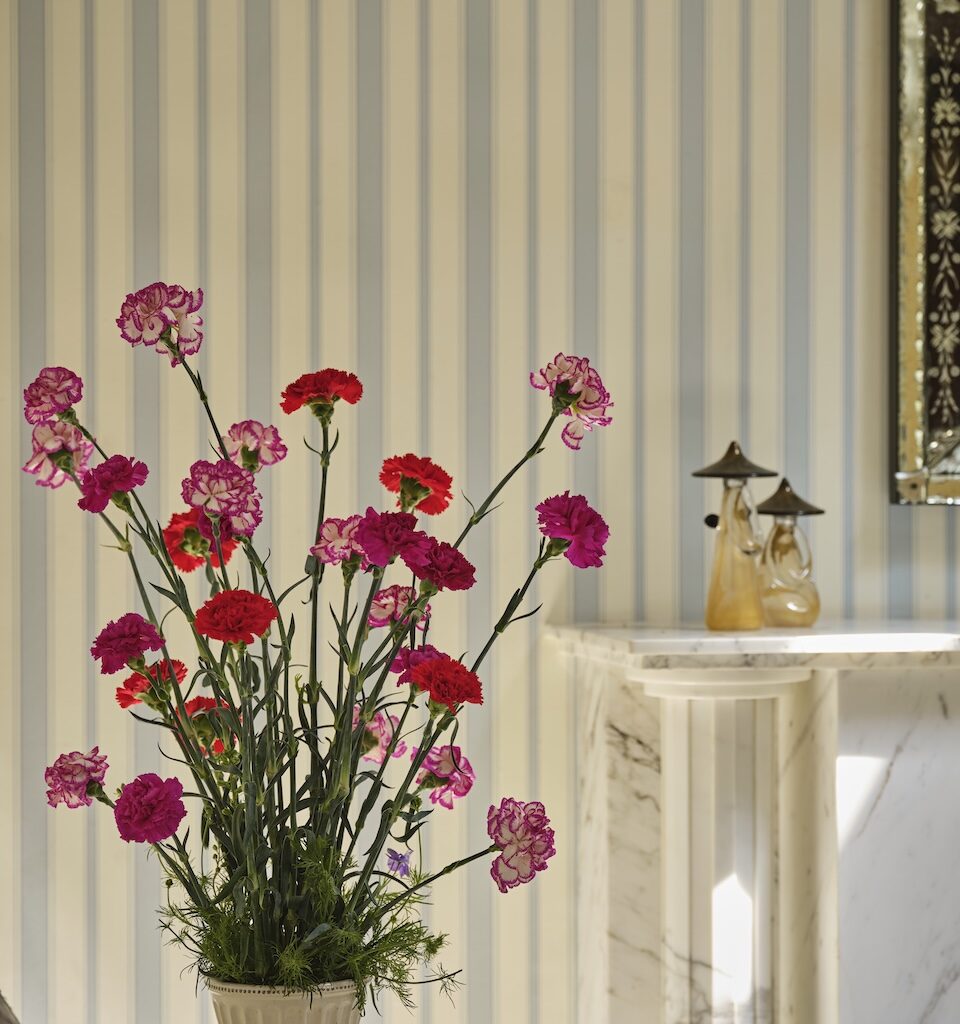
Flowers act as both muse and motif, appearing in artworks, upholstery, and fresh arrangements. In a house marked by time, they read as history made visible—seasonal, cyclical, deeply rooted—tying outdoors to indoors, the fleeting to the enduring. Colour becomes the unifying thread, moving gently from room to room. Curatorial and heritage textiles thread Moorish influences through the rooms. Bold colours meet soft, effeminate touches; embroidered pears, fruits, and florals wander across linens and wallpapers, so the house feels as if it is blooming from within.
The design and material details
The atrium
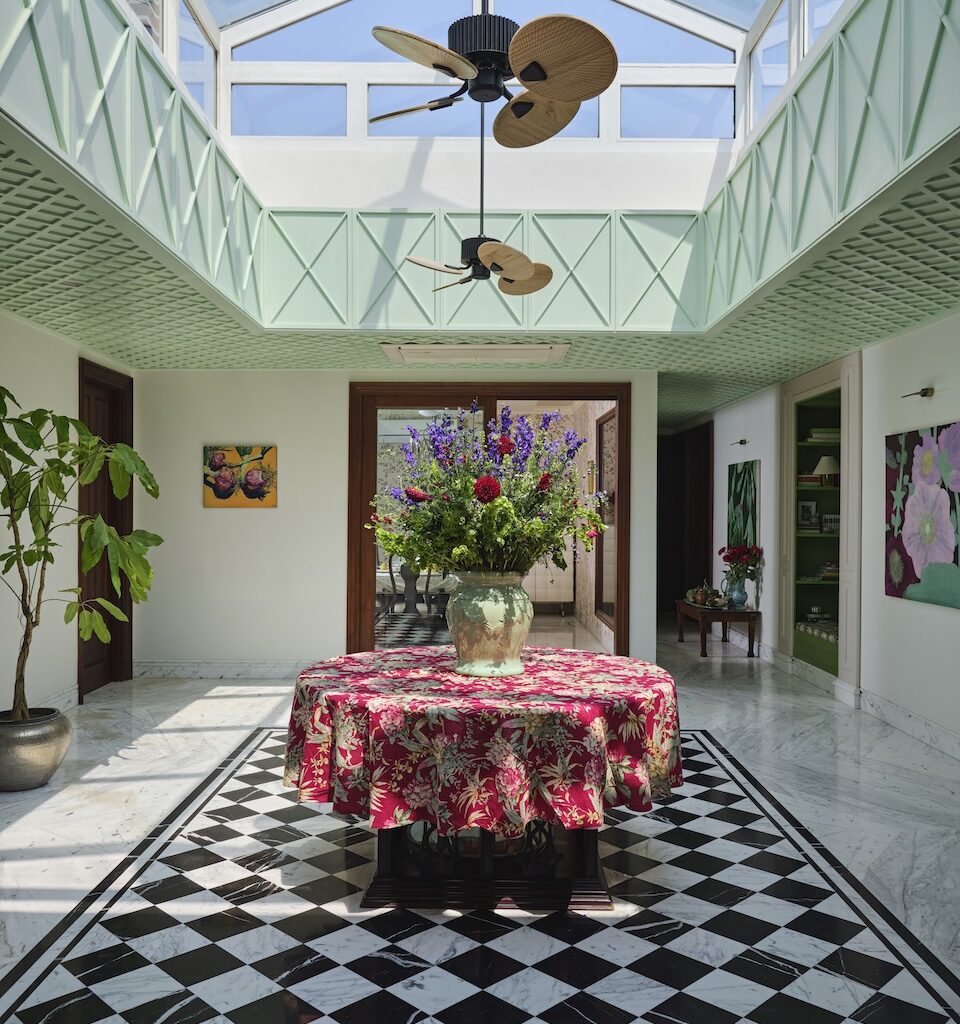
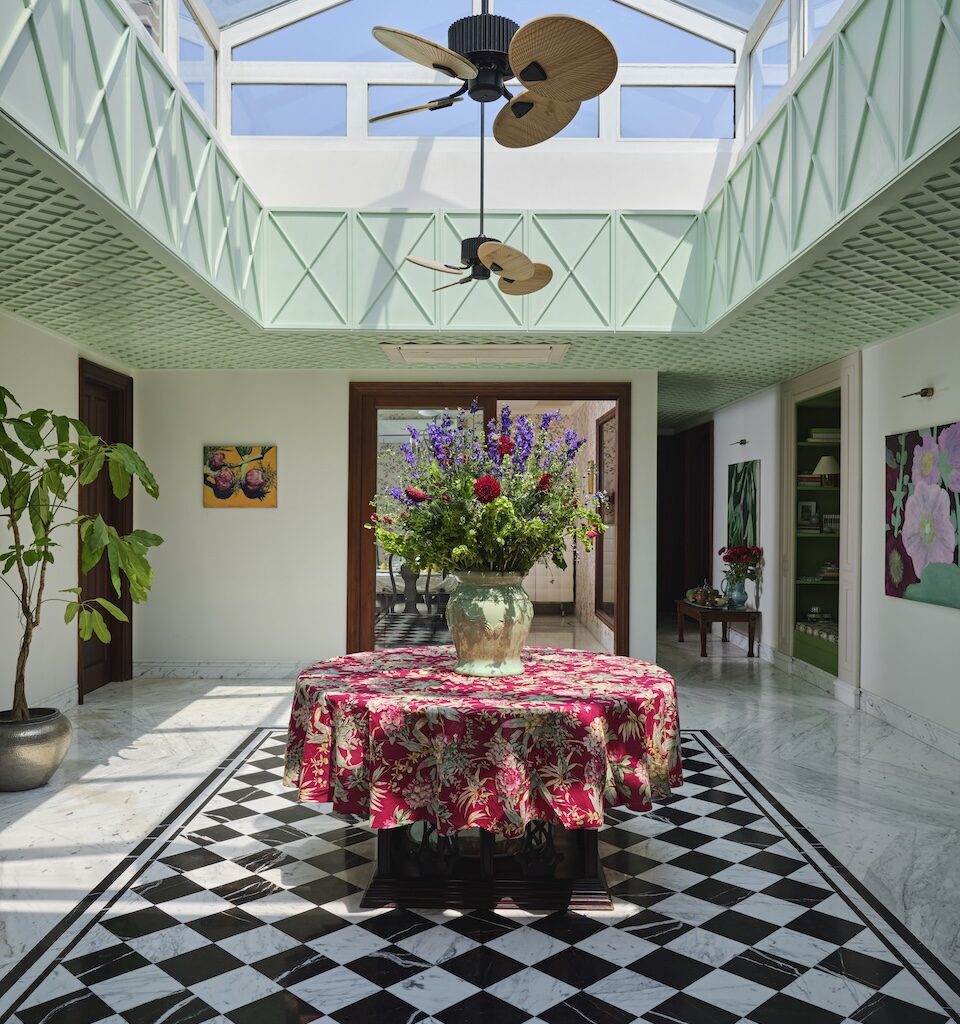
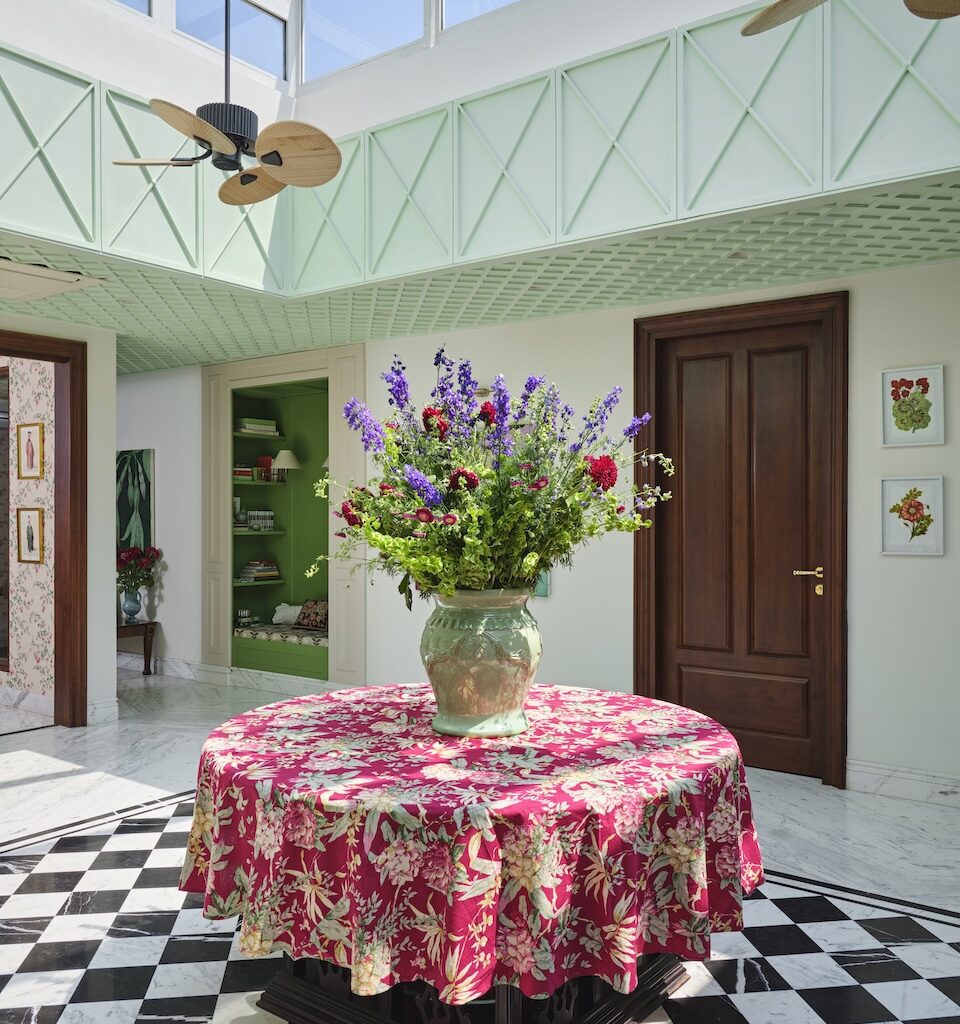
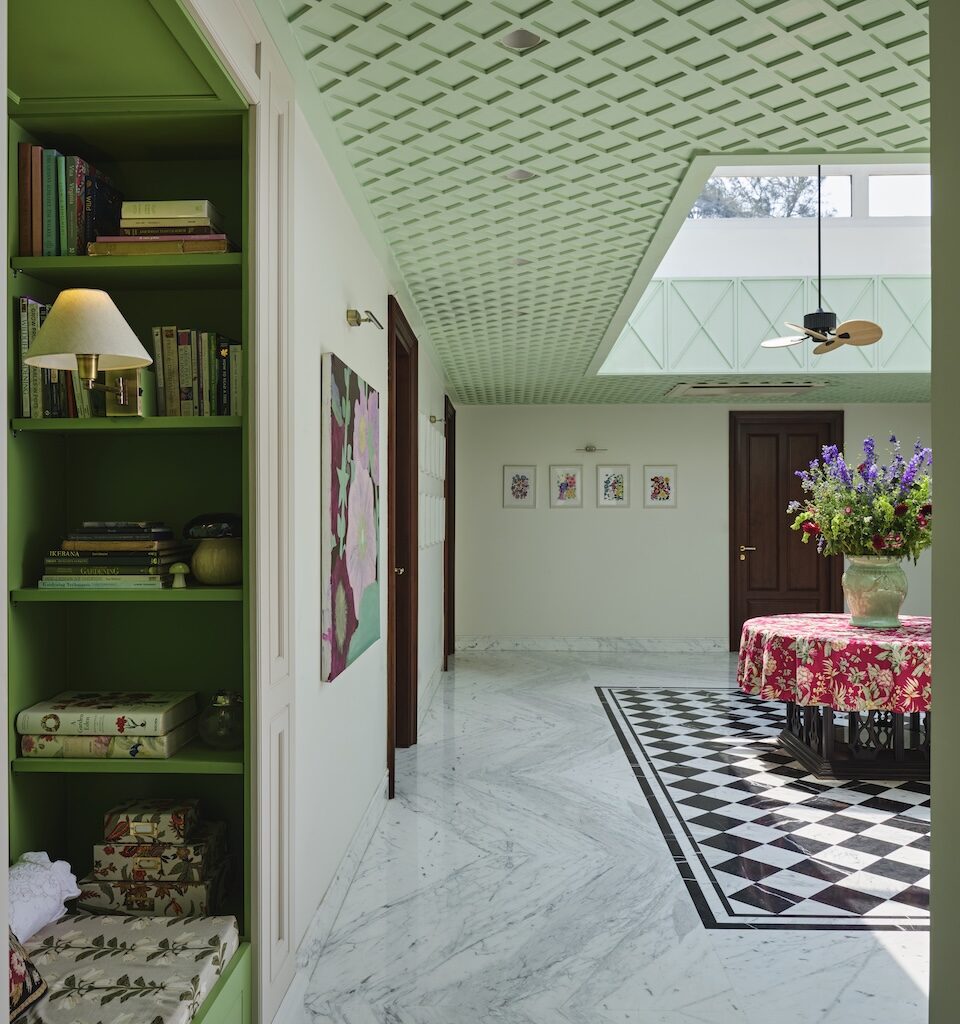
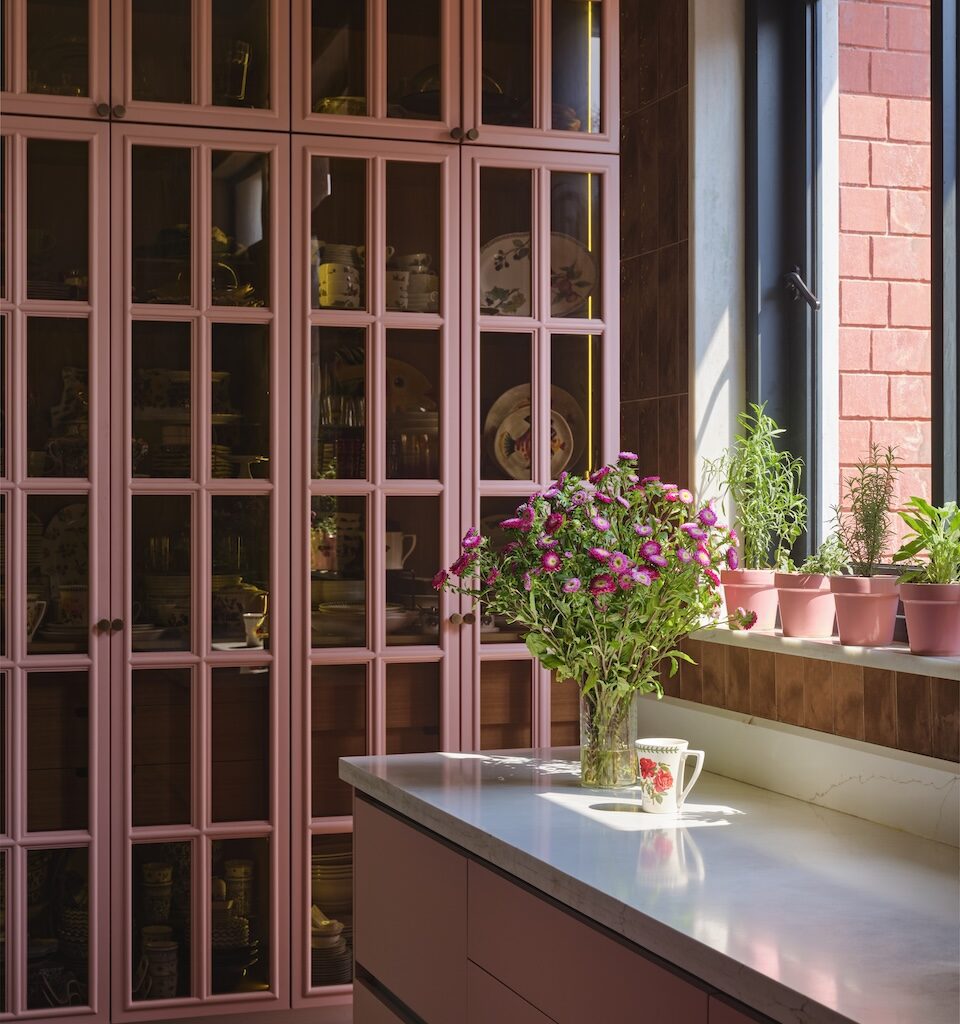
At the home’s centre, a new atrium reprises the idea of the original courtyard—still anchored by the old mango tree standing proudly in the chowk. Open to the sky, it draws light and air deep into the plan, holding the rooms around it in a gentle embrace. Mint-green lattice panels trace the walls like botanical filigree, while a bold black-and-white marble floor grounds the palette in crisp contrast. The space reads as a personal gallery: family memories, original artworks, and gorgeous floral arrangements (gathered from the property’s generous gardens) gather here. Those gardens do more than adorn: they sustain daily rituals, sending vegetables, herbs, and flowers from soil to kitchen and from beds to vases, so the house lives in step with its landscape.
The salon/living room
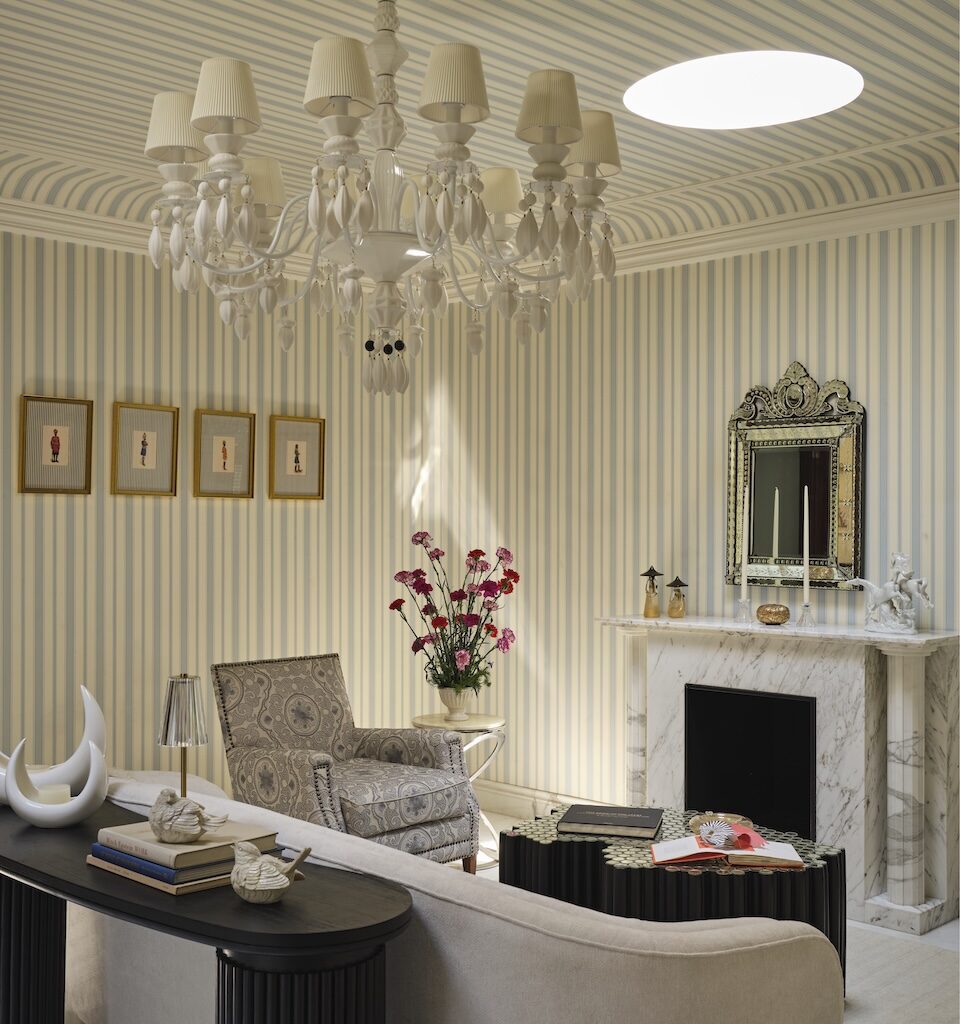
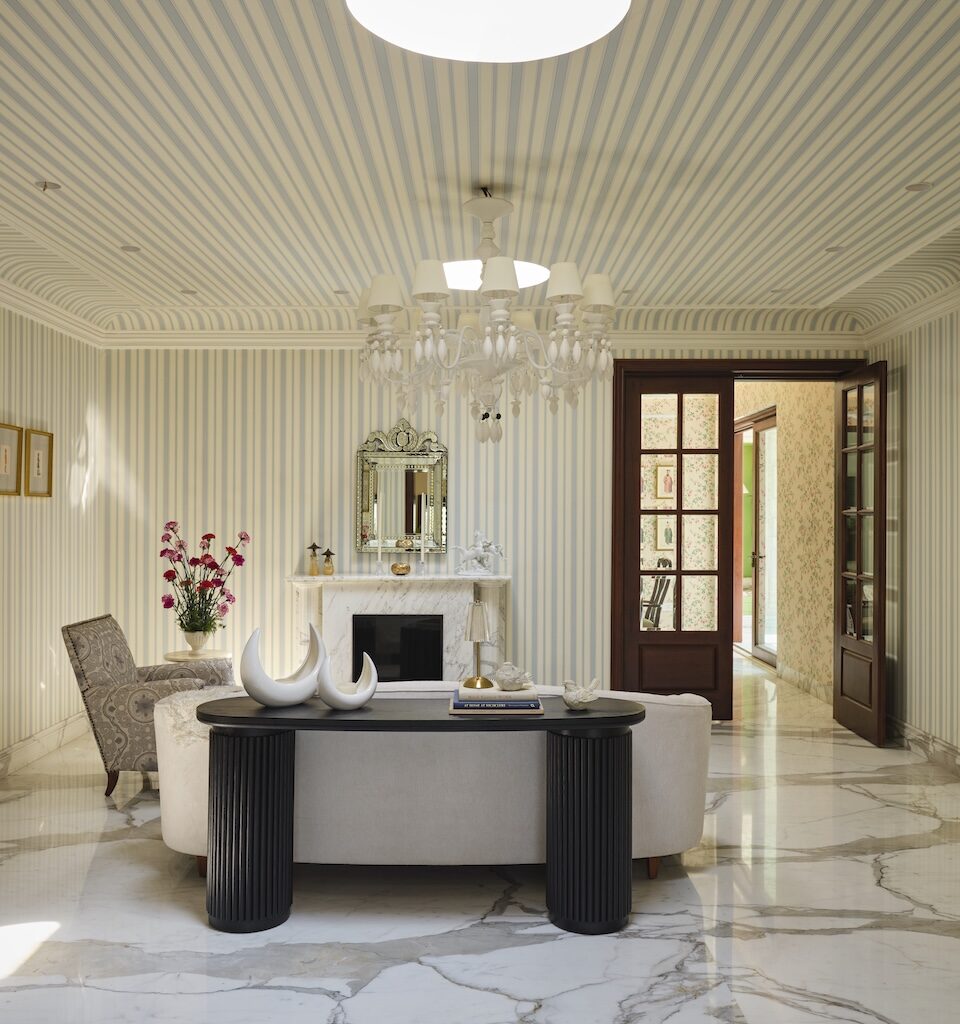
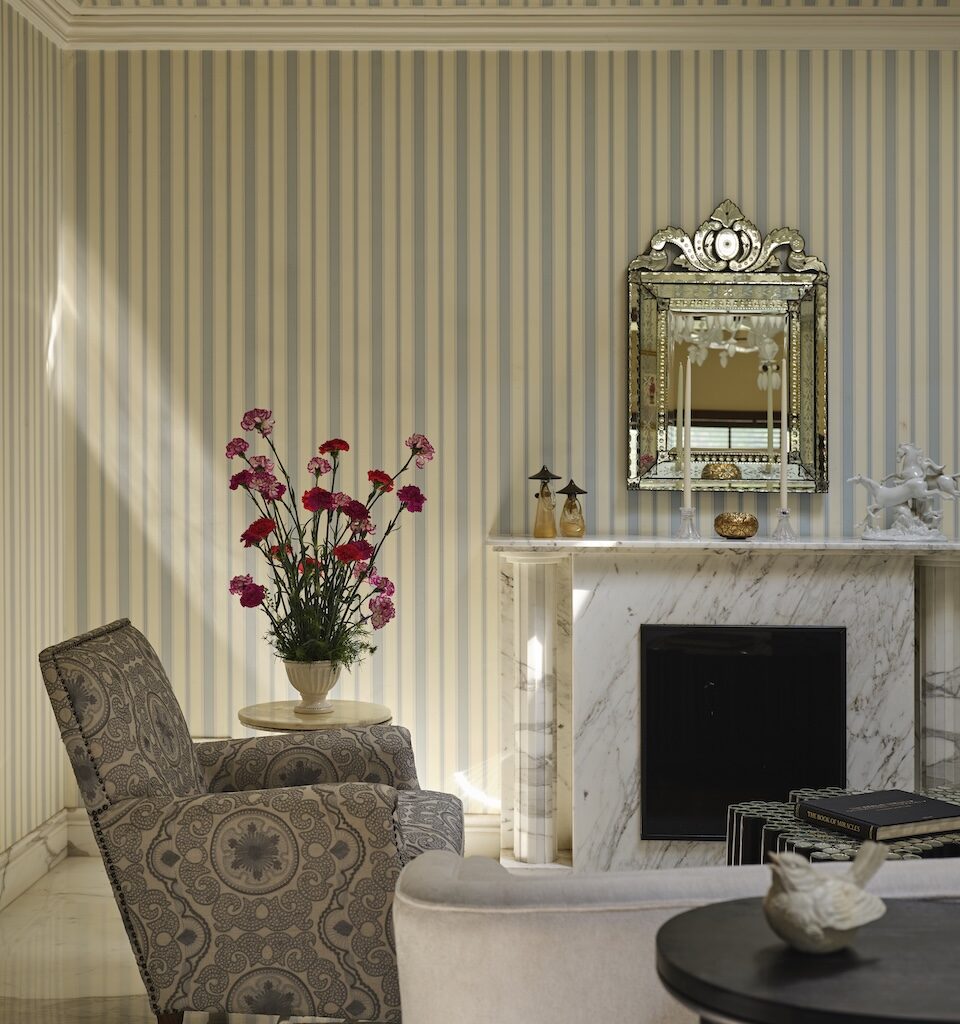
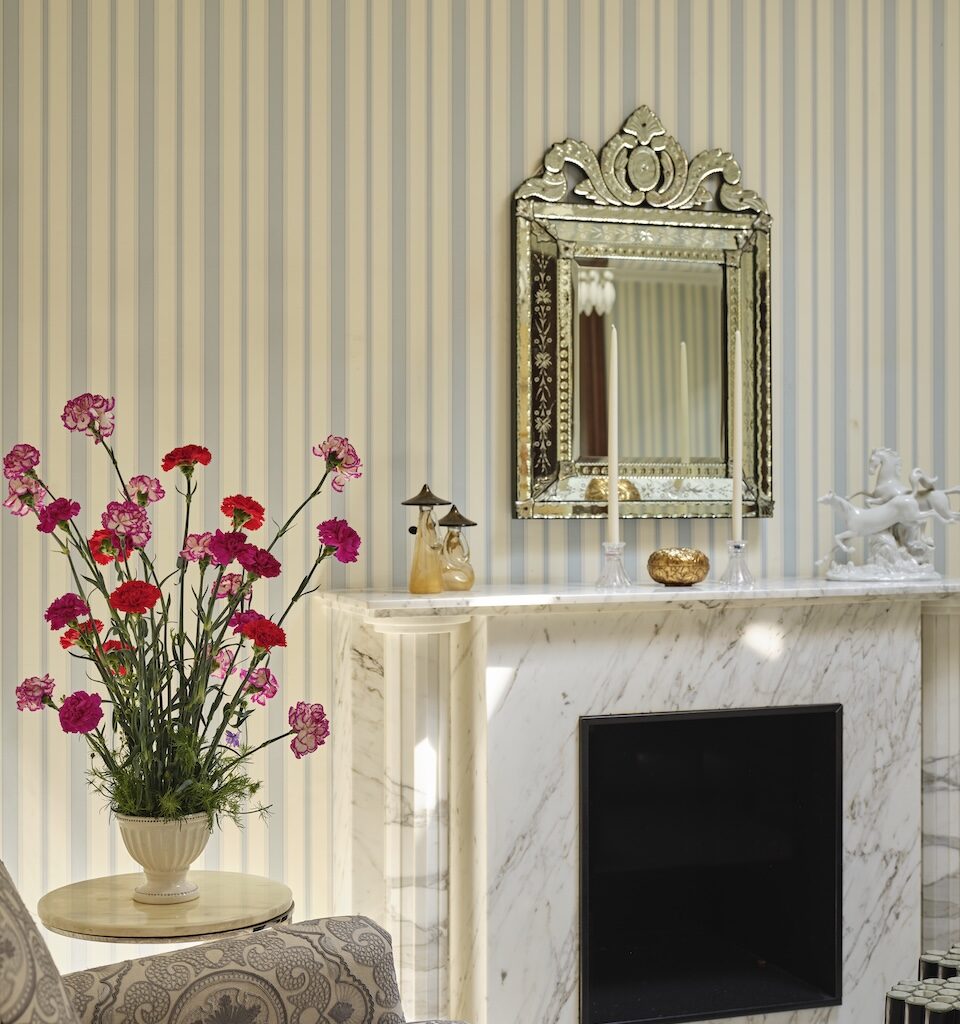
Wrapped in pale blue and ivory stripes, the formal salon carries an understated grandeur. Two circular skylights pierce the ceiling, framing sunlight by day and moonlight by night…softly marking the passage of time. Their geometry sets a language of curves that continues through the furnishings: smooth edges, rounded profiles and sculptural silhouettes that lend the room a gentle sense of movement. Light spills through the openings in a warm, golden wash, skimming the salon’s cool tones and catching on the gilded details to heighten contrast and drama. An ivory sofa arcs into the space, balanced by a crisp black coffee table and console. The original fireplace—lovingly restored and now functional—anchors the room in warmth and memory. A printed bergère tips the symmetry just enough, adding a playful note, while a classic chandelier brings the composition together.
The dining room
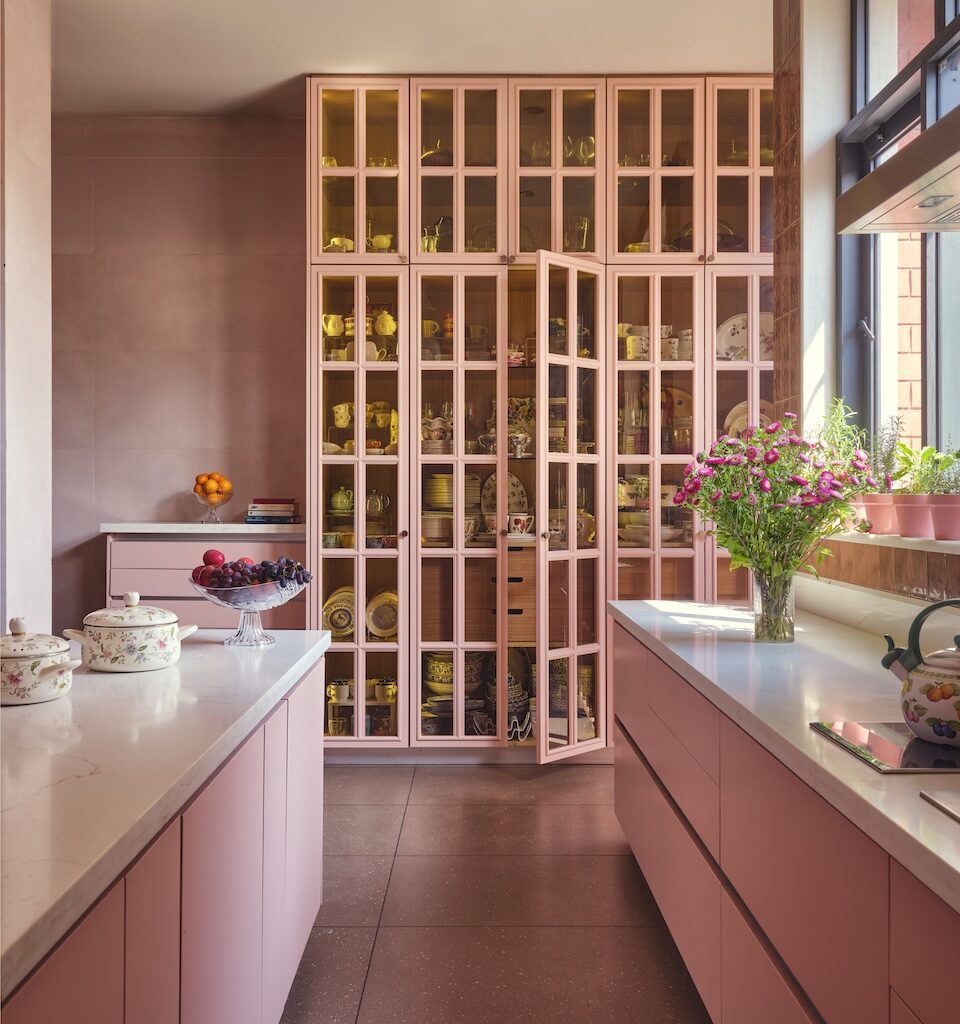
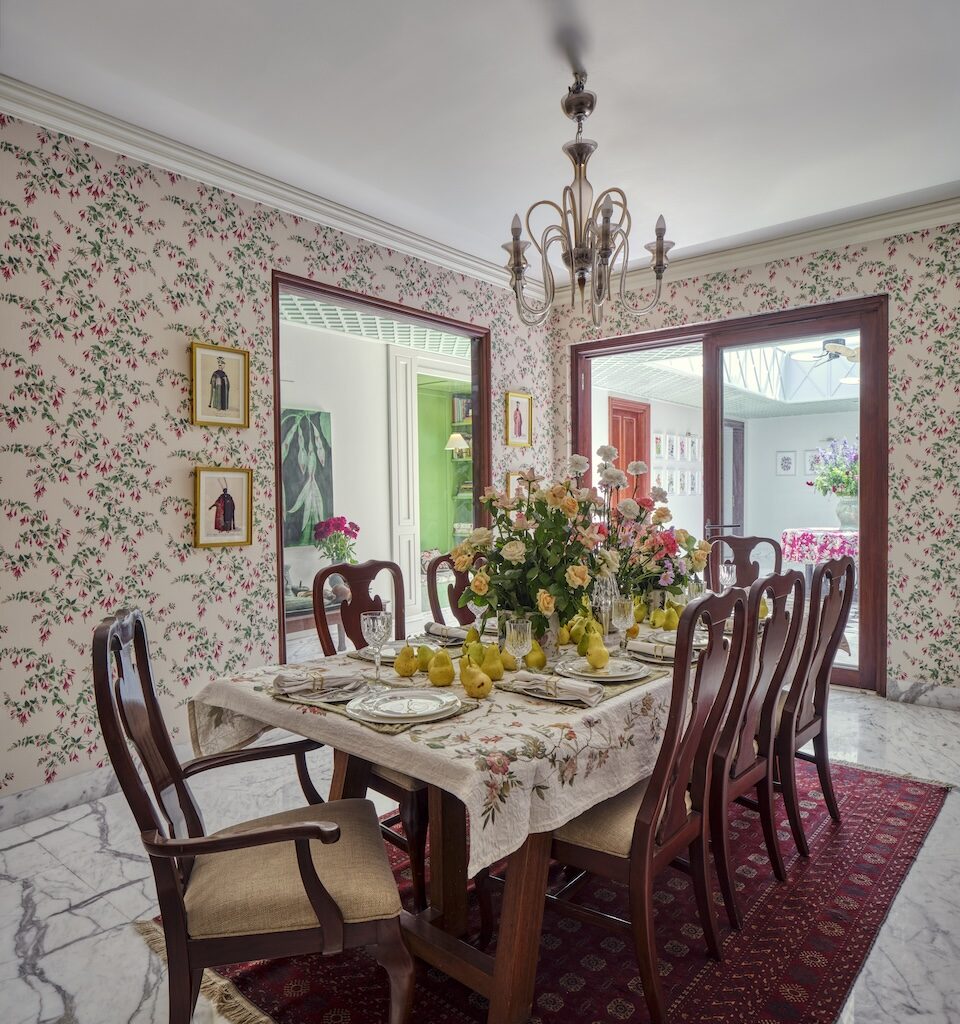
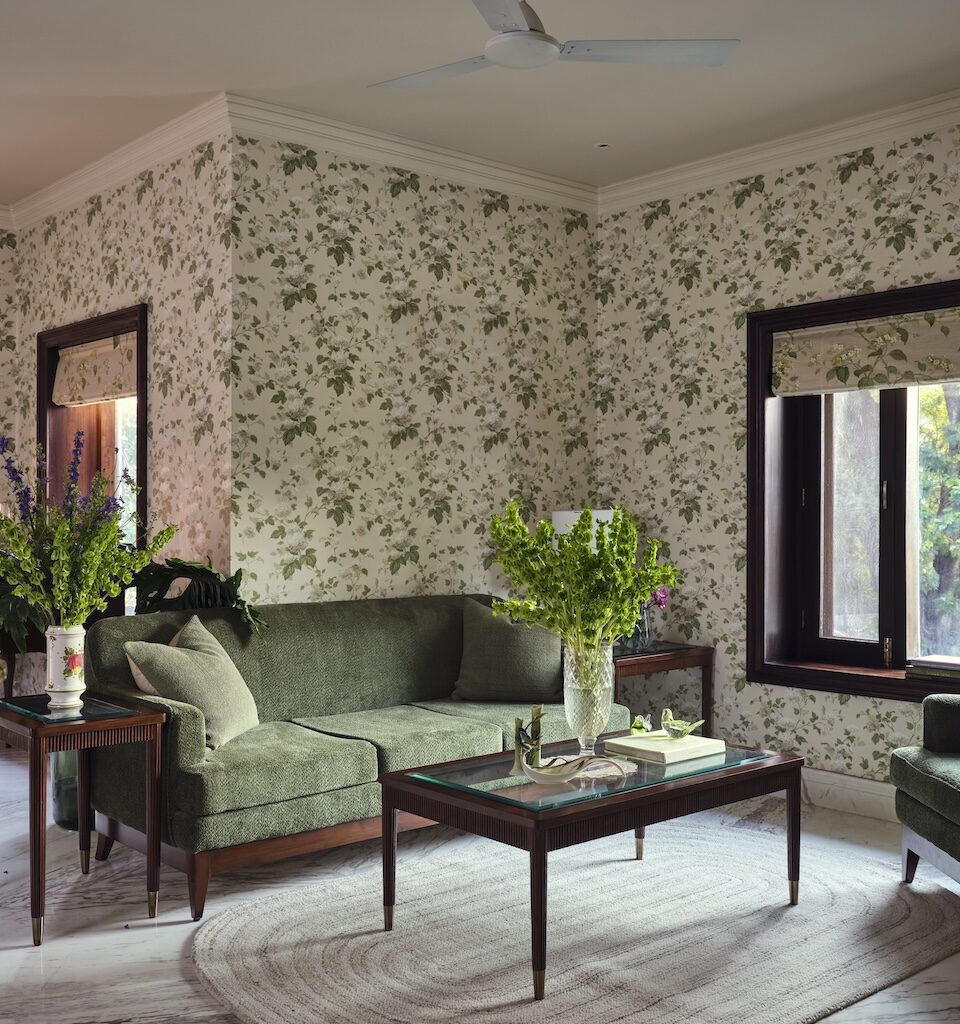
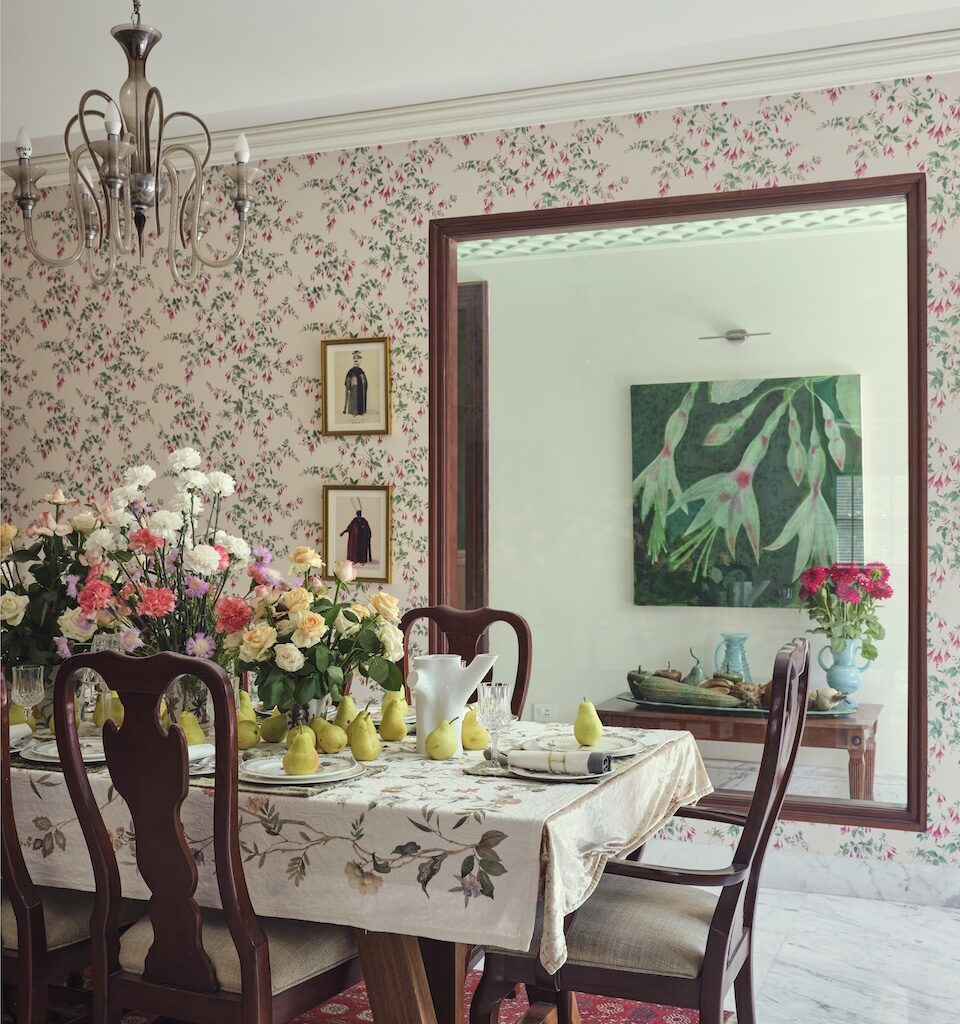
Adjacent to the salon, the dining room features a soft blush-and-cream floral wallpaper. Refurbished furniture carries the past forward; warm timber tones ground the space while florals reappear across wallpaper and upholstery. The highlight of the space is the usage of prints across the room… which is done with confidence and style.
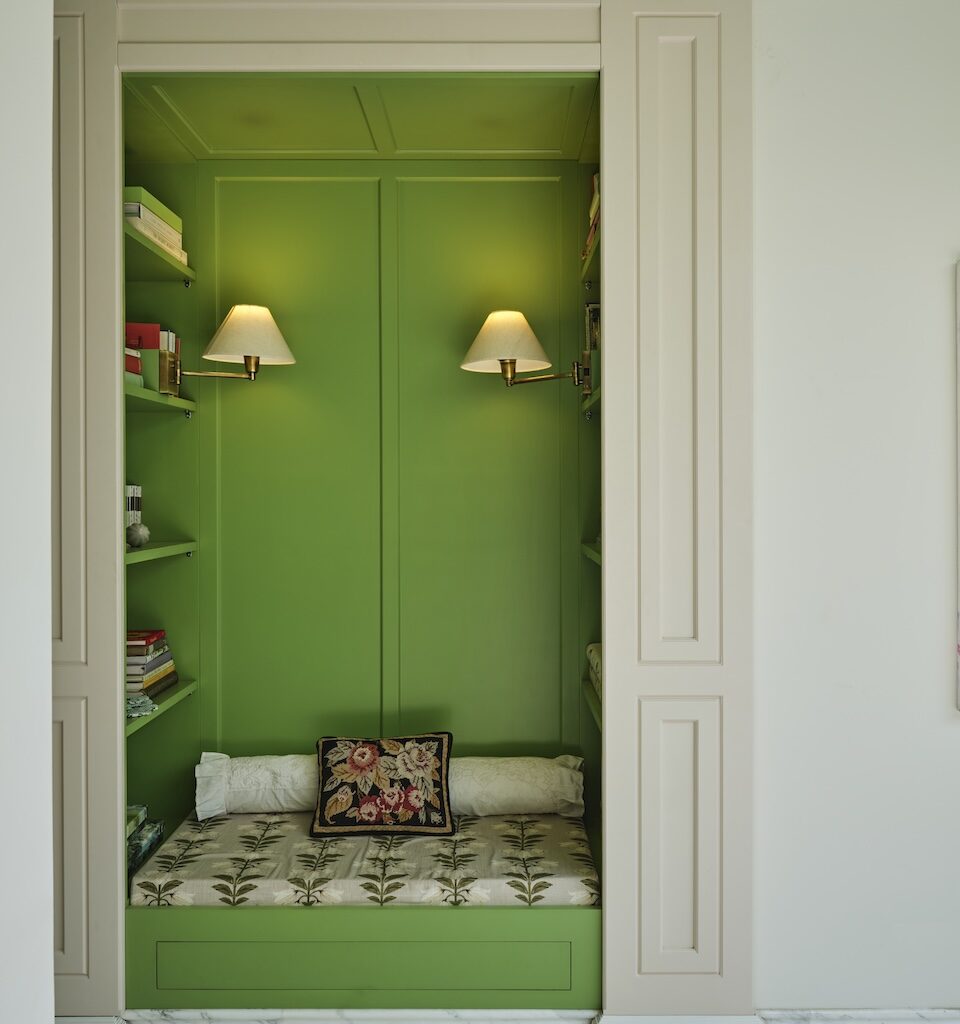
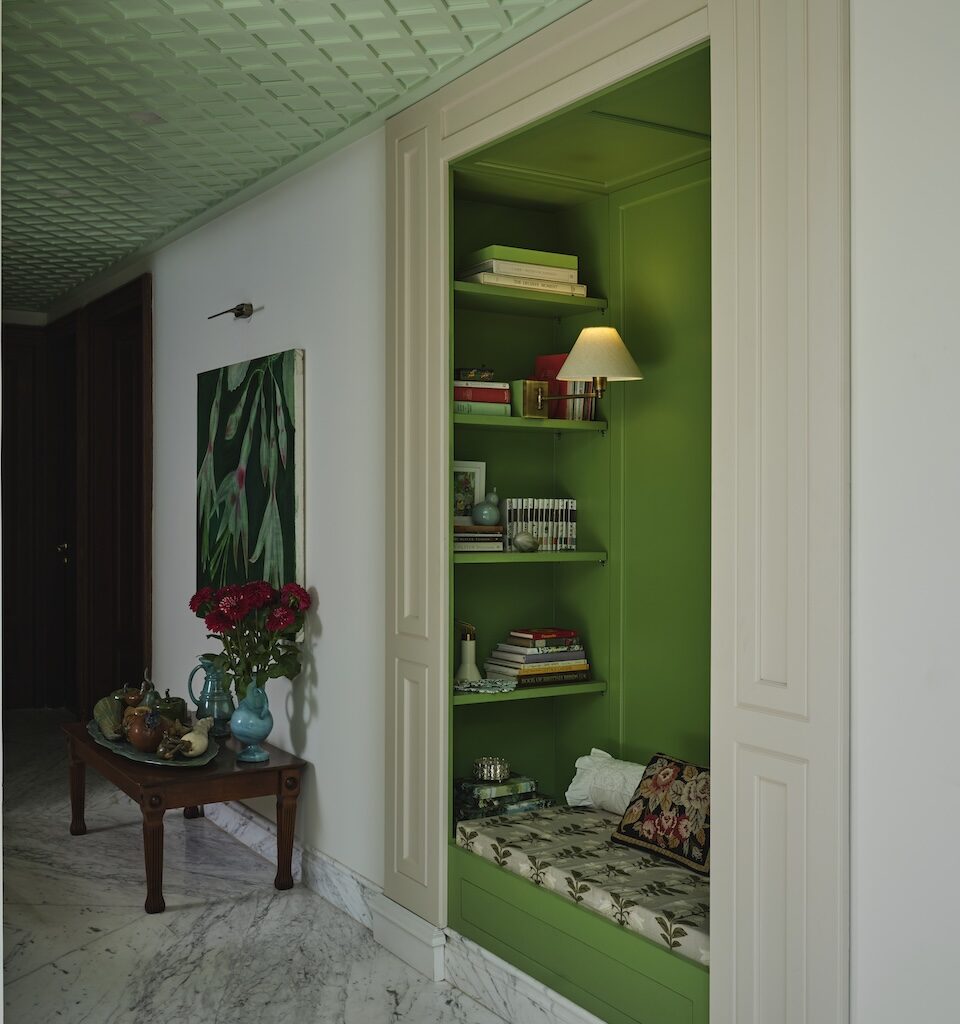
Along the passage that overlooks the dining area and links the atrium to the bedrooms, a reading nook is carved out from the wall. This cosy nook is drenched in a soothing leafy green hue, with shelves lined with books, and layered with floral cushions for comfort. More exposed than a typical window perch, this little haven sits in the cross-currents of family life—making it a front-row seat to watch the running of the house, to pause to observe, to breathe.
The bedrooms
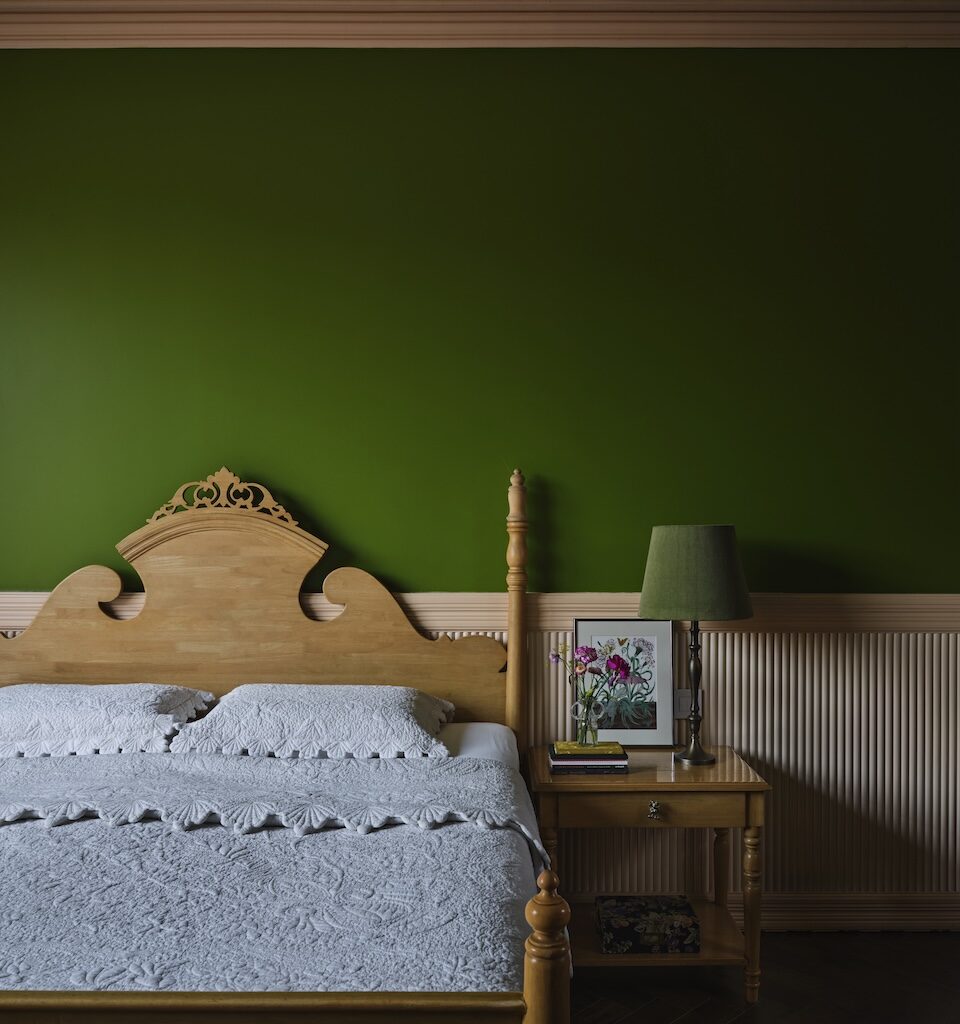
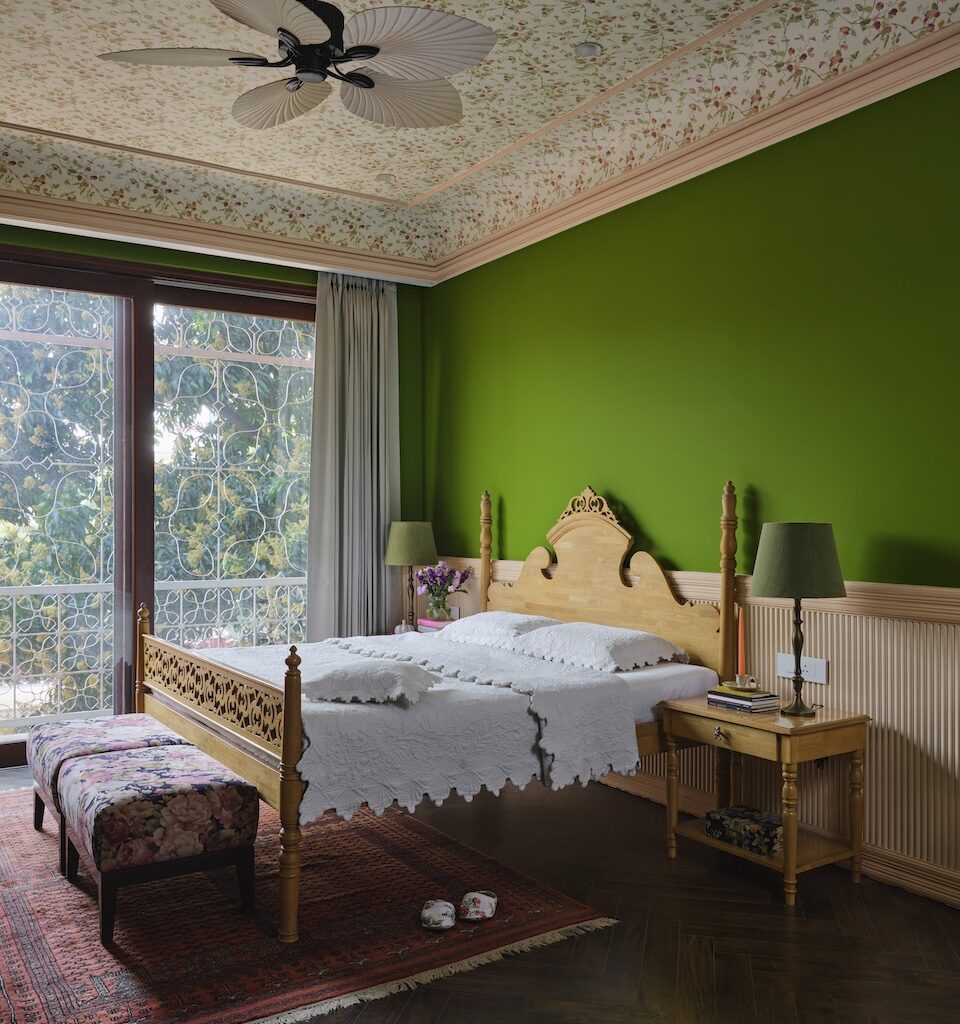
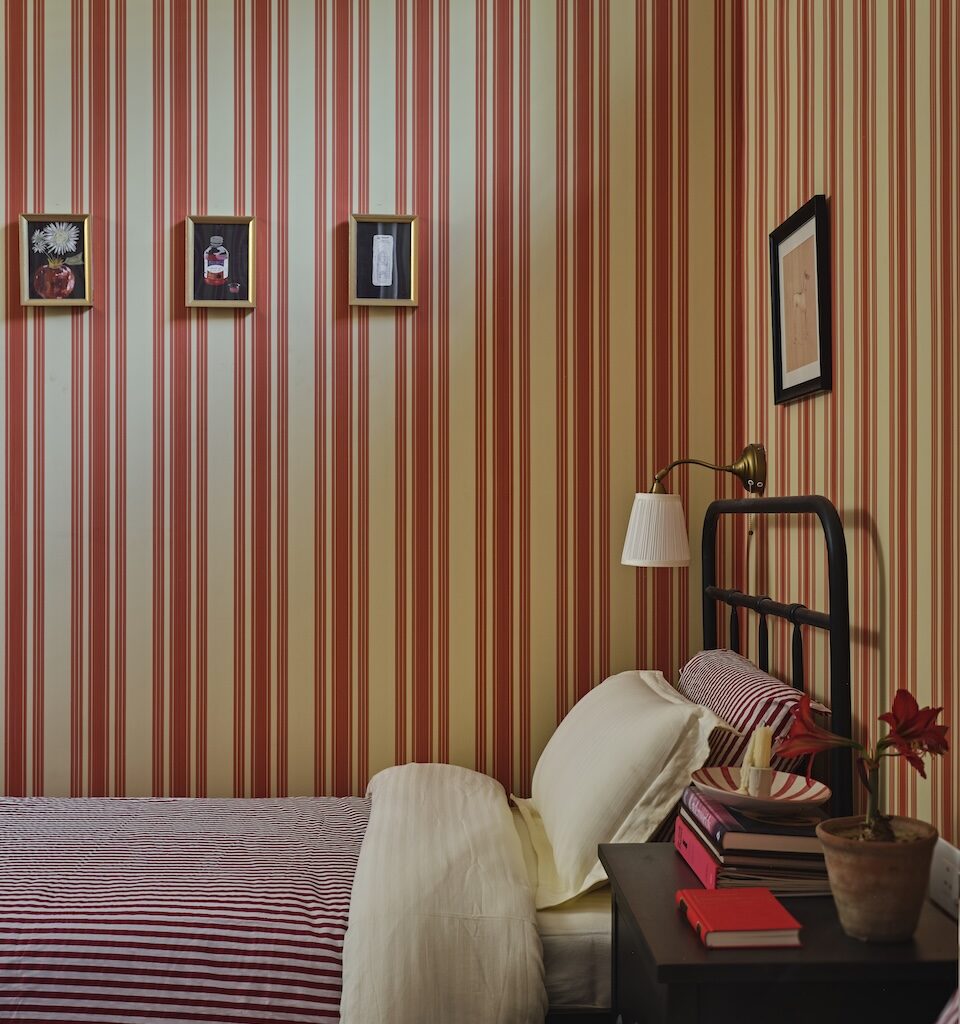
Personal expression is clearest in the private rooms. The elder daughter—an artist with a maximalist eye—threads her creative voice through the house: hand-painted tiles, wall art and botanical ceiling compositions made in her on-site studio. In her bedroom, forest-green walls gather the space like a canopy. A four-poster bed is softened by layered textiles and fine detailing, while a botanical wallpaper on the ceiling echoes one of her early drawings. Beyond the glass doors, the courtyard mango tree becomes a constant companion, filtering light and softening the edge between indoors and out. The guest bedroom, striped in terracotta and cream, feels cocoon-like despite its compact footprint. Vintage timber accents, balanced pattern and scale, and twin beds set against the stripes bring symmetry; framed art and soft lighting add an easy warmth.
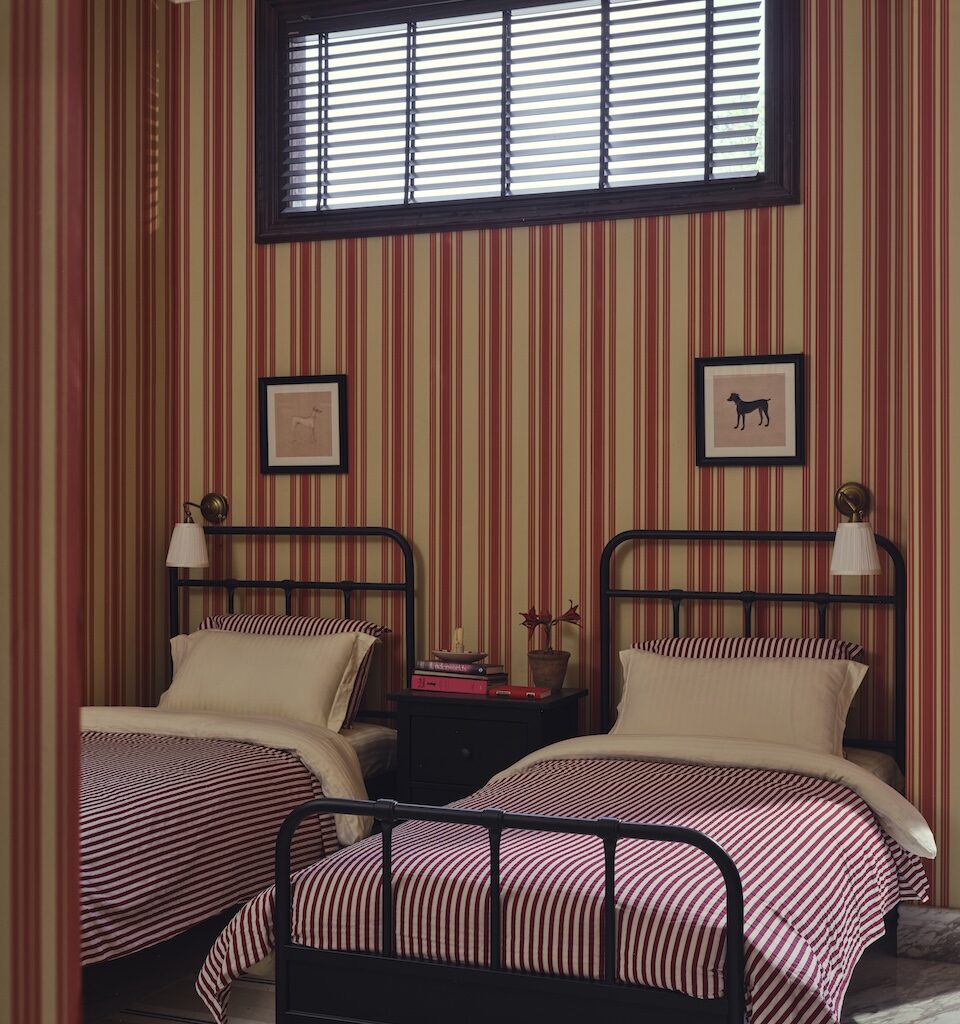
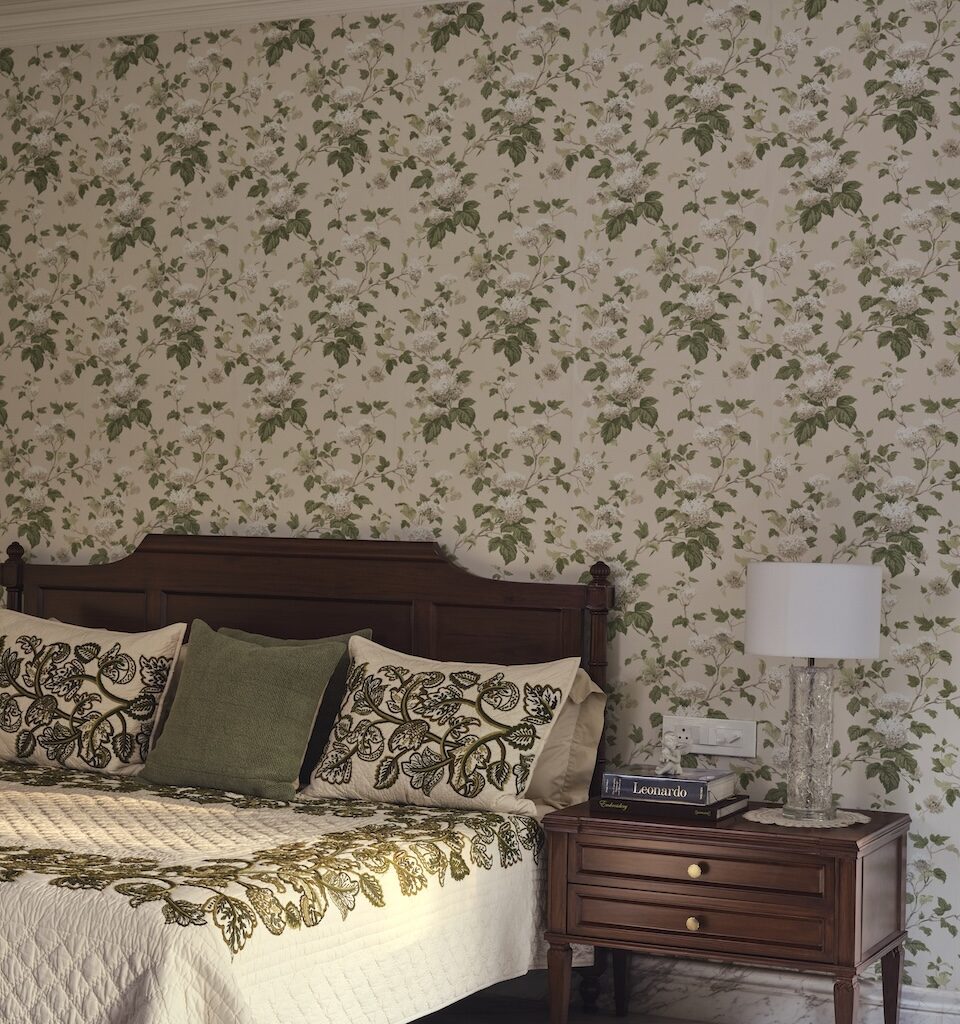
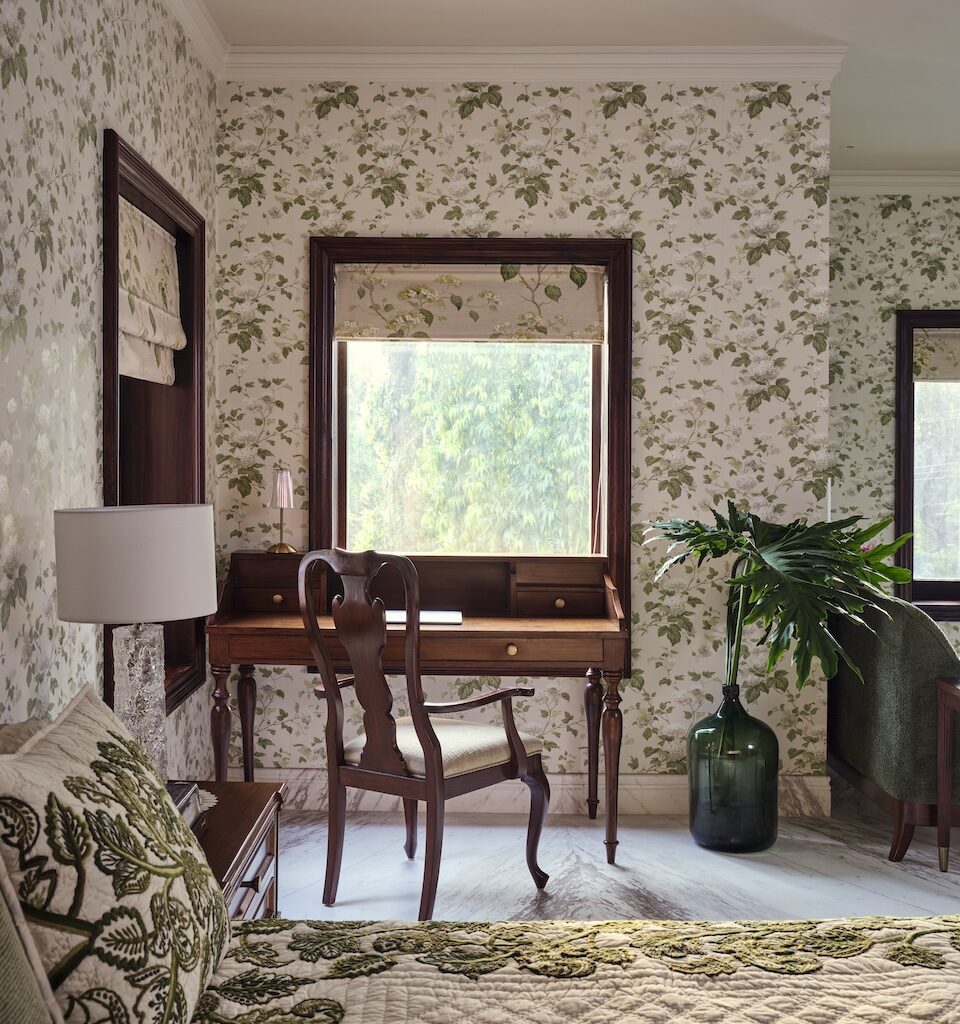
The master suite extends the garden ethos—greens layered across walls, blinds and linens in tonal harmony. Restored wooden furniture provides continuity, and leafy motifs nod to the landscape beyond, shaping a retreat that is restorative, composed and unmistakably personal. Throughout, craftsmanship ties the rooms together: artisanal wallpapers, embroidered linens and thoughtfully sourced pieces bridge beauty and everyday function.
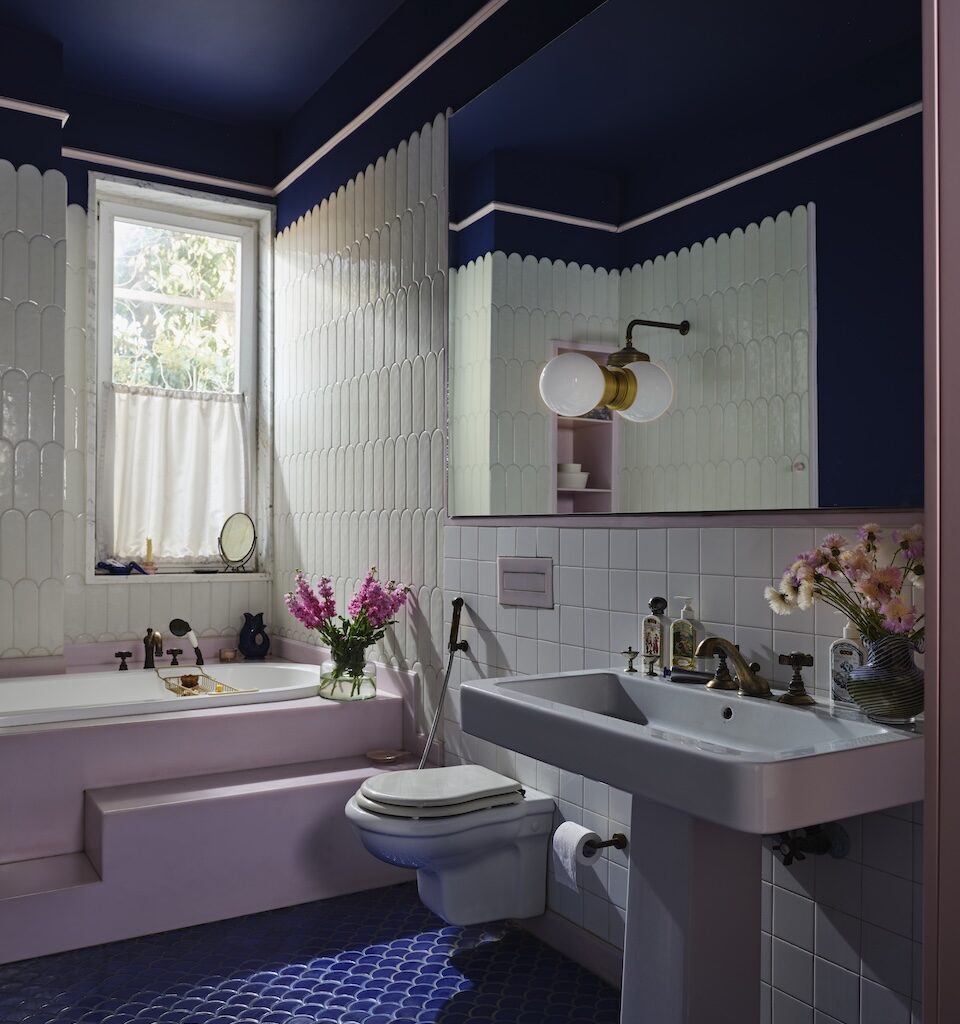
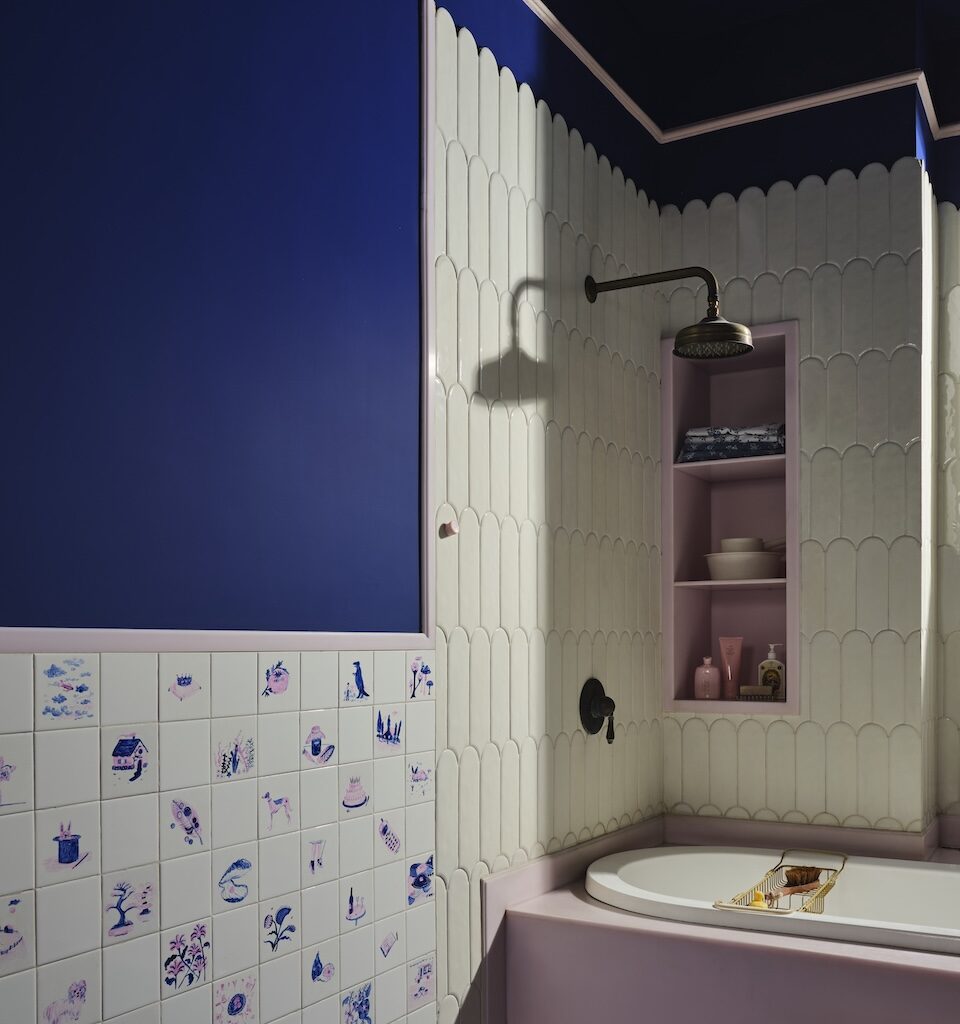
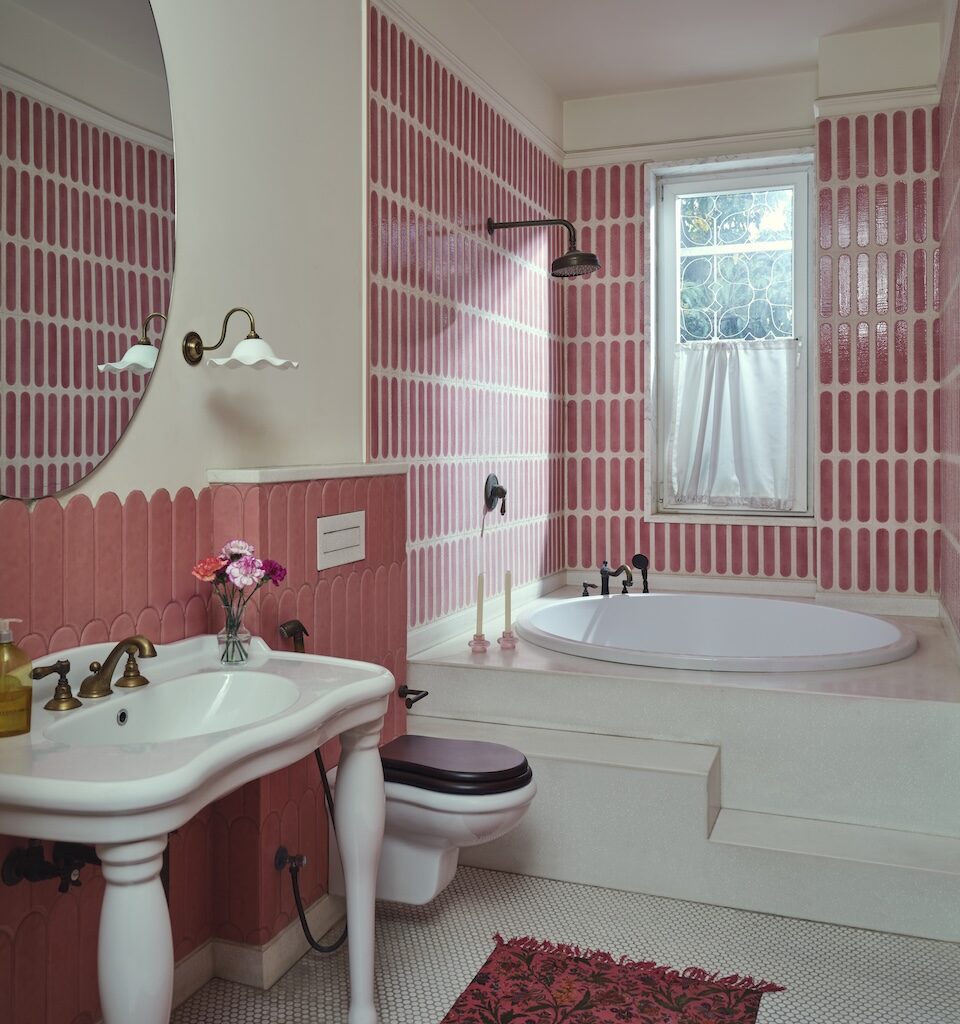
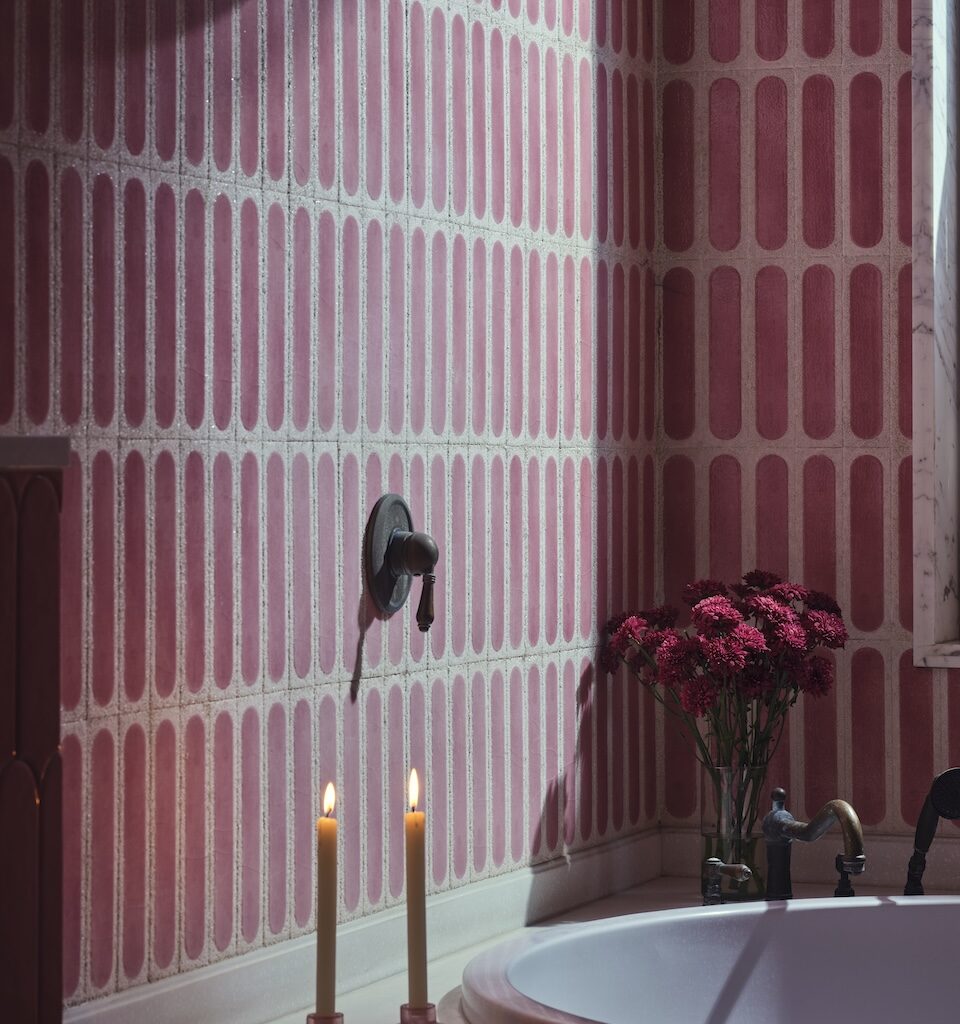
At The Blooming Garden, even the washrooms become canvases for personal expression and playful colour. Bathing here is more than routine; it is a small act of renewal shaped to preference. The artist’s bathroom features custom, hand-painted tiles that read like diary pages from lockdown—pomegranates, pets, a dancing girl, a microwave, even Adele’s Instagram live—set against ocean-blue fish-scale tiles to form a mosaic of memory. Another bath, lined in mulberry tiles with vintage-inspired fittings, leans into timeless elegance. Every element, from tiles to textiles, is chosen with care; shades of bubblegum pink, calming blue, and deep indigo turn daily rituals into crafted moments.
Fact File
Project: The Blooming Garden
Location: Meerut, Uttar Pradesh
Area: 4,500 sq ft
Principal architects: Surbhi Singhal and Deepanshu Arneja

Add a Comment