

In Powai, The Artful Habitat’s Mridū merges two compact flats into a seamless 1,000 sq ft home where curves, coves, and crafted details redefine constraint as opportunity.
Curated by: Rupali Sebastian
Photographs: Kshan Collective
The project
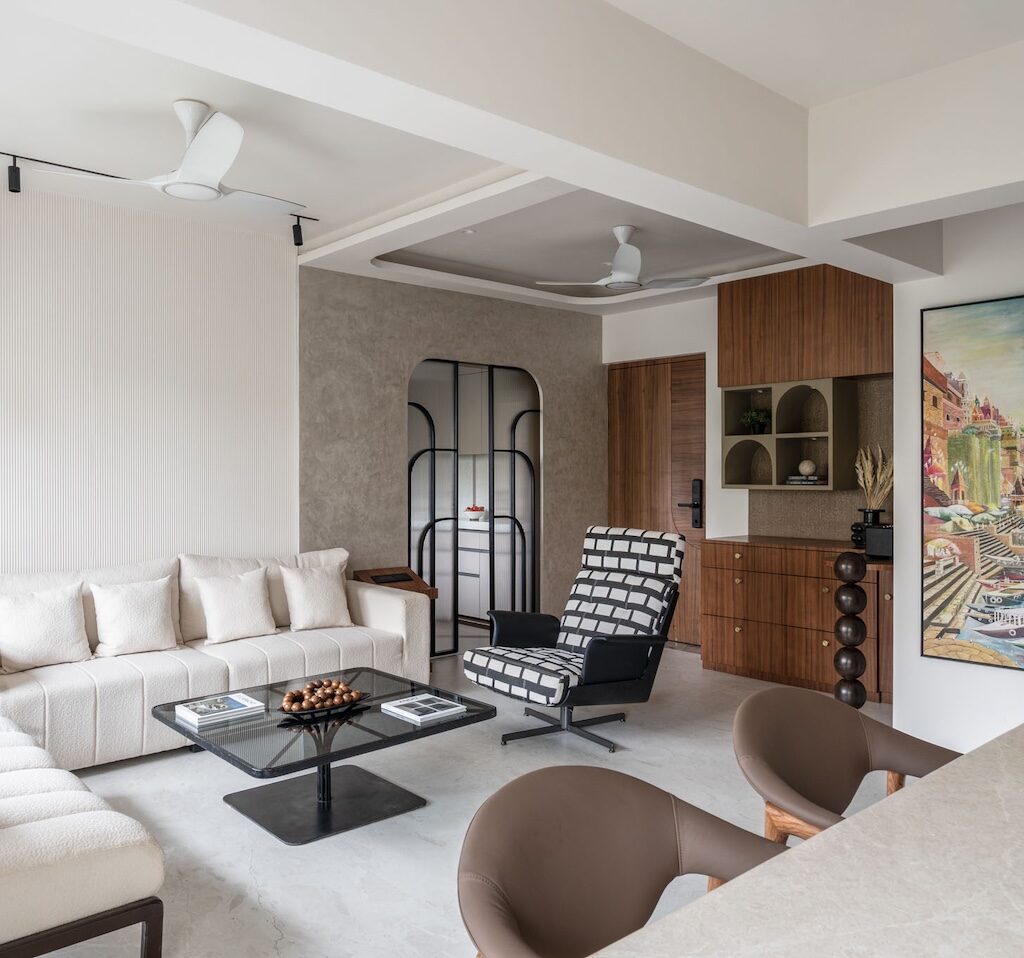
Mridū is a 1,000 sq ft residence created by combining two compact flats at Emerald Isle, Powai. Designed as a sanctuary above the city, the home balances softness and strength through fluid gestures, sculpted details, and a restrained colour palette.
The site
Set within Emerald Isle, a premium residential development in Powai, the apartment overlooks landscaped gardens. This verdant outlook, rare in Mumbai, lent the design a natural calm that the interiors were conceived to echo.
The brief
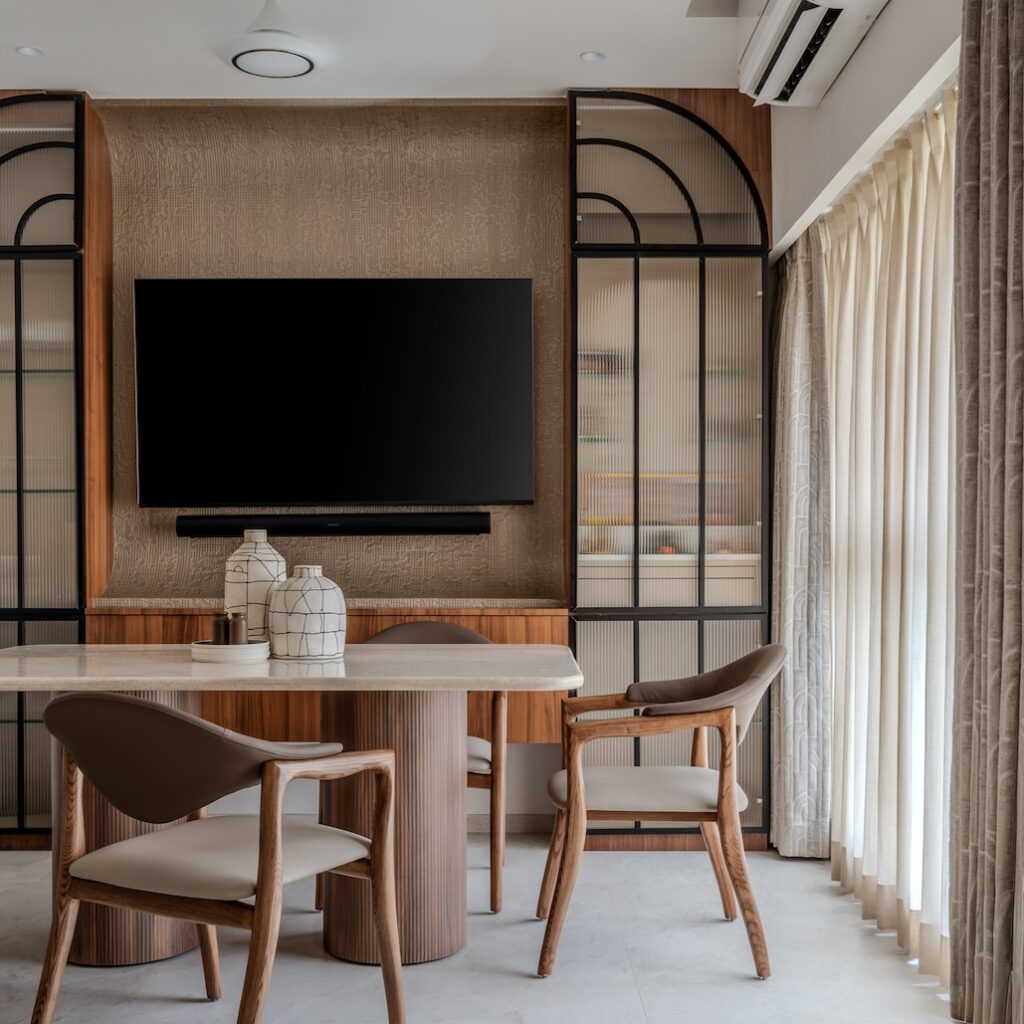
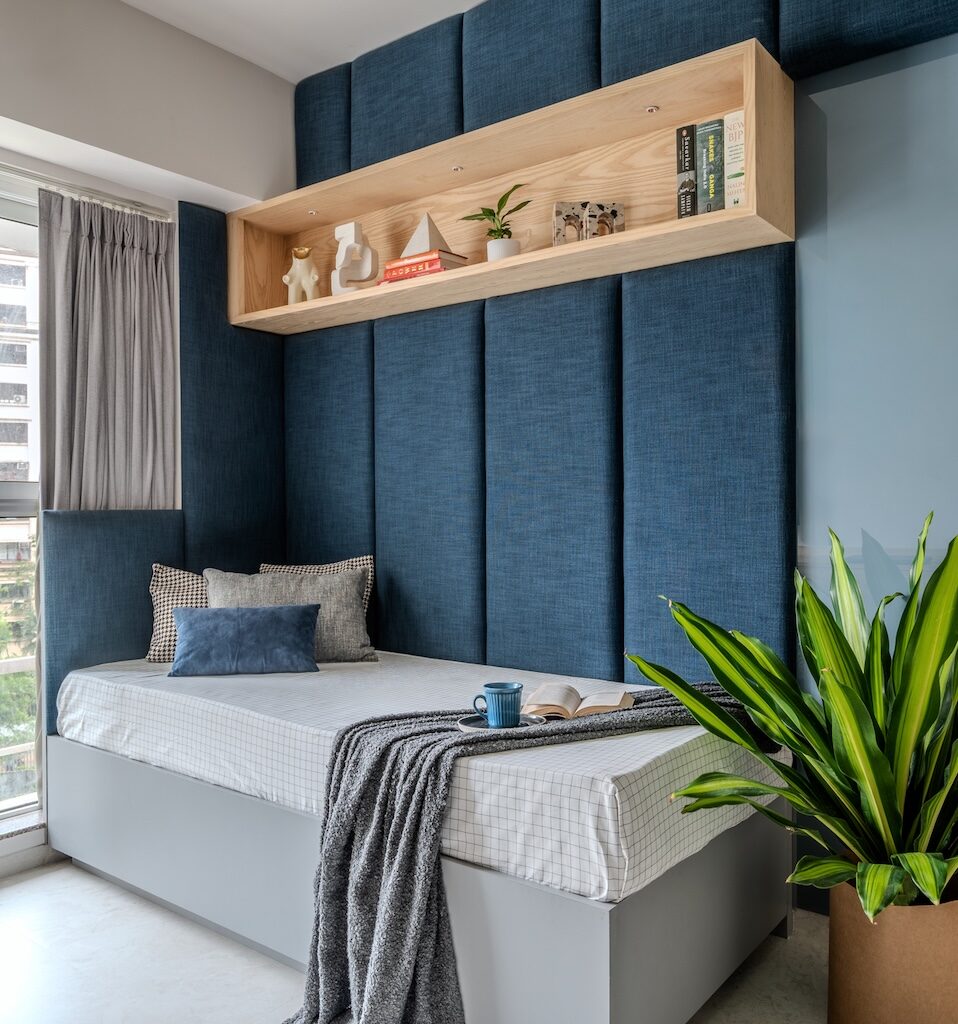
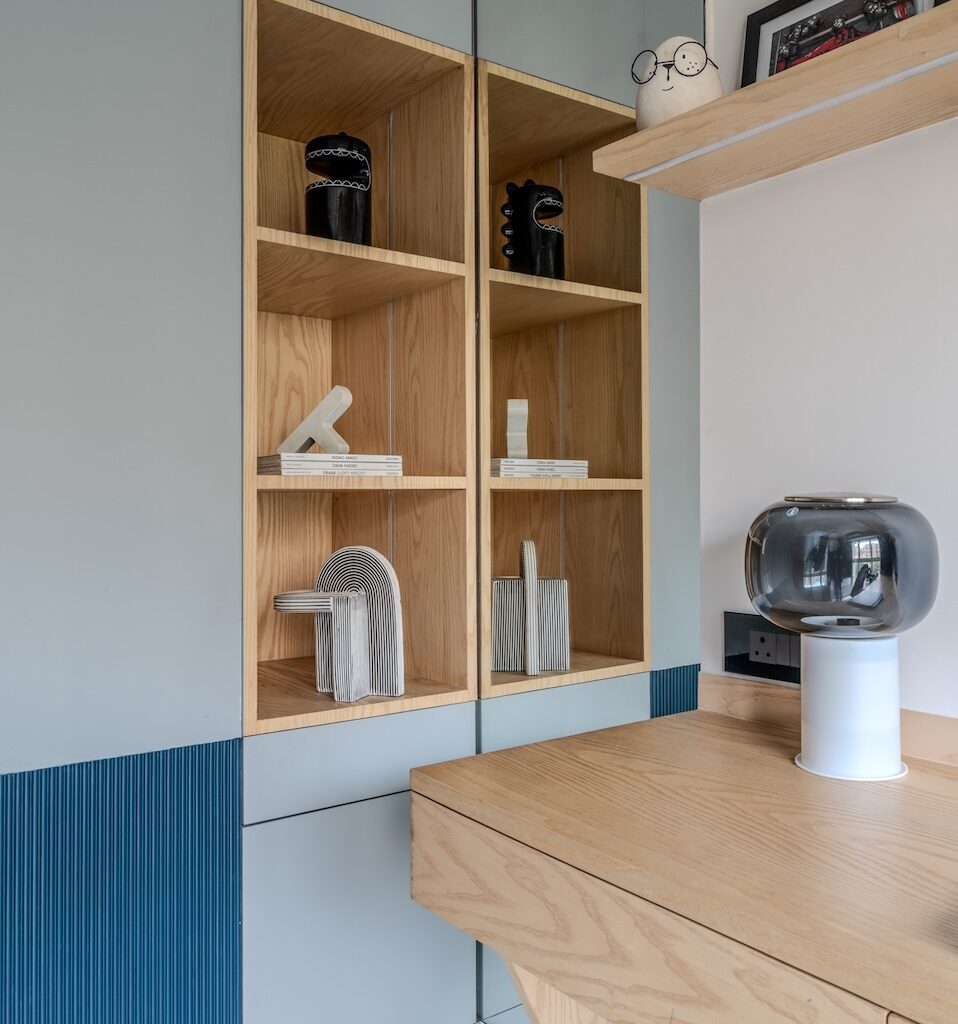
Functionally, the clients wanted a home that felt spacious and efficient despite its modest footprint. Storage had to be cleverly integrated, circulation smooth, and the kitchen—immovable due to building regulations—adapted seamlessly. A statement bar unit was non-negotiable. The son’s room was to reflect his personality through a blue palette, while the master suite needed to convey intimacy and luxury, complete with a walk-in wardrobe. Aesthetically, they envisioned an earthy, homely atmosphere with gentle gestures rather than loud statements, contemporary yet layered with crafted detail.
The design intent
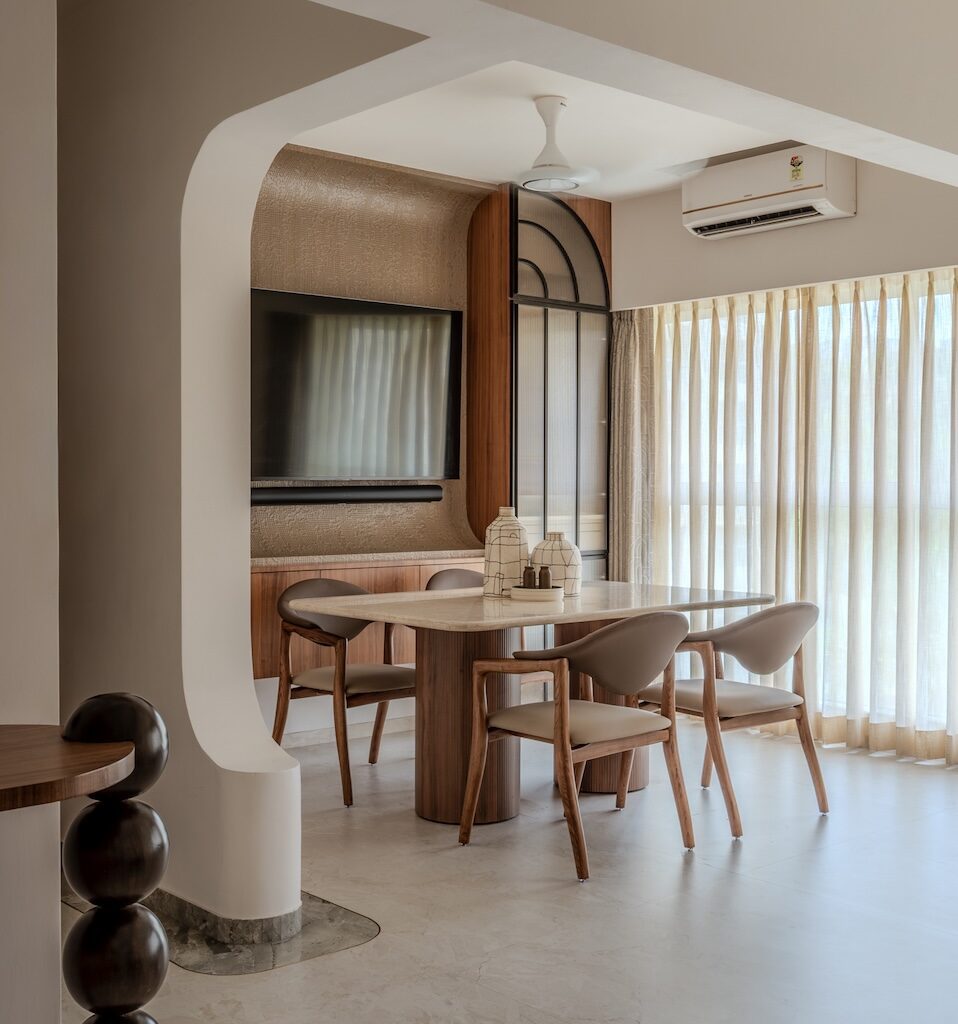
Led by Drashti Shah Zaveri of The Artful Habitat, the design philosophy behind Mridū was to express softness as strength. The Sanskrit word mridū itself means gentle, and this became the guiding idea: every surface, junction, and transition had to feel fluid, intentional, and calm. “Our intent was not ornamentation, but choreography — how light softens edges, how materials converse, how movement feels sculpted,” says Zaveri. A restrained mushroom–taupe palette anchors the home, allowing texture and proportion to take precedence, while curves and coves dissolve boundaries and turn limitations into a cohesive language.
The civil intervention
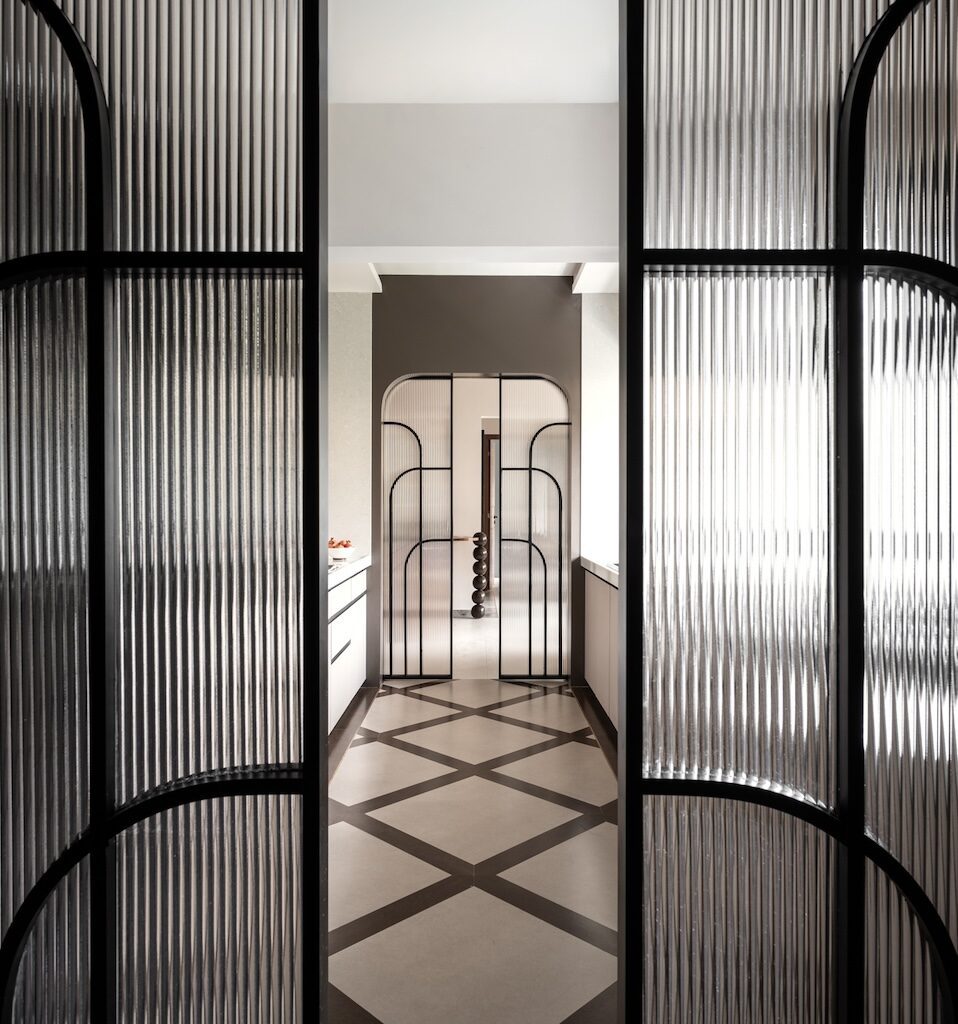
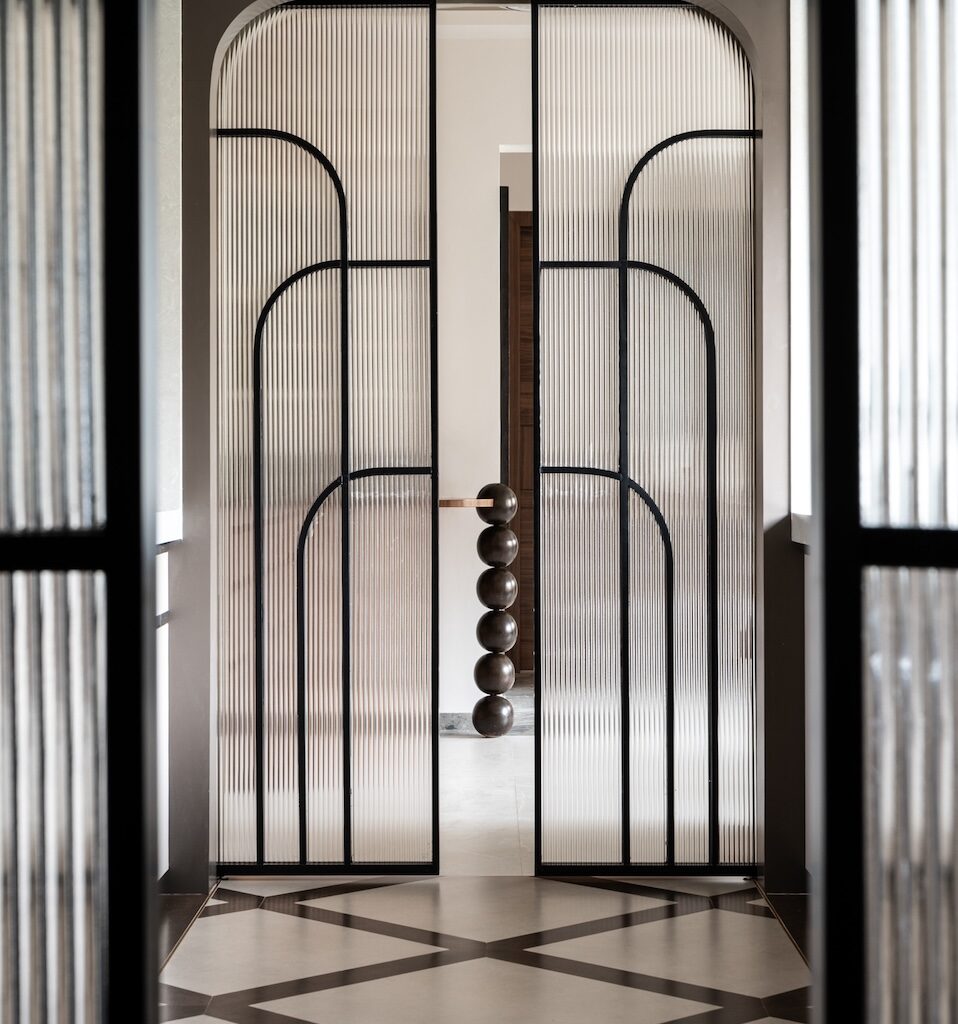
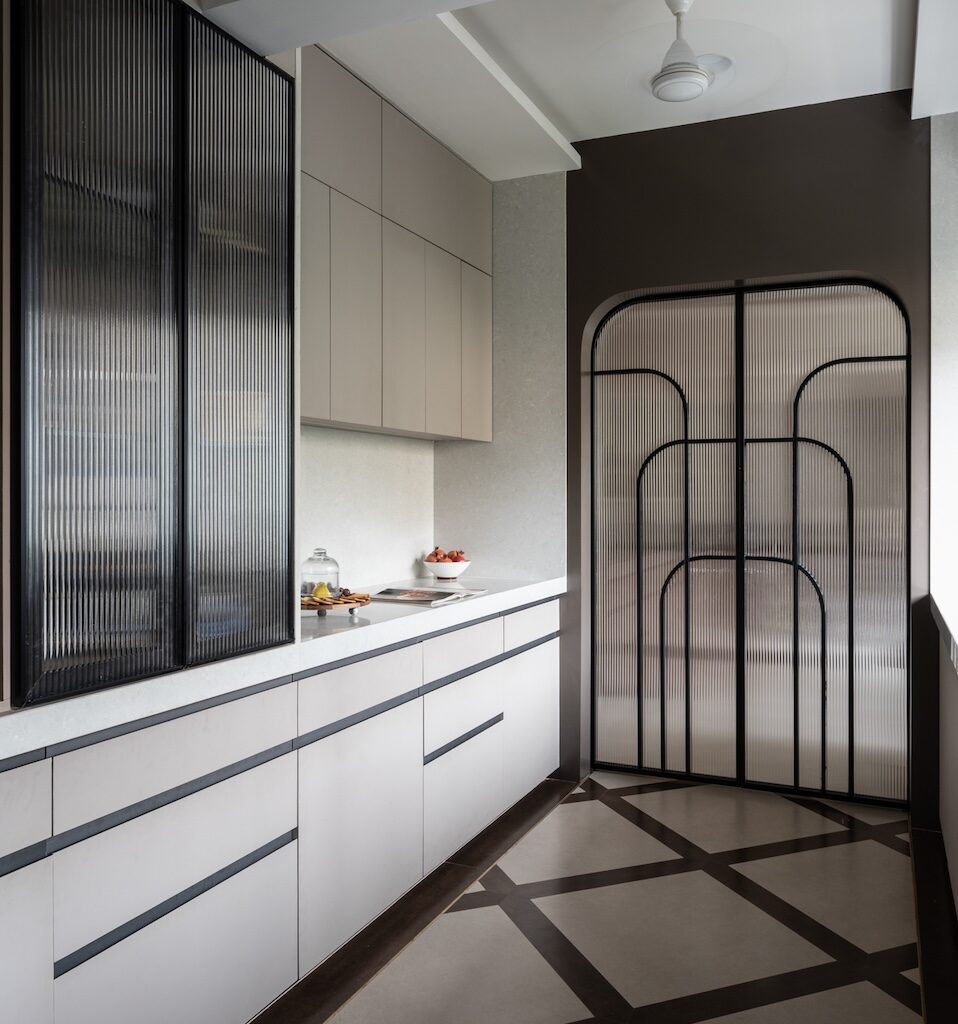
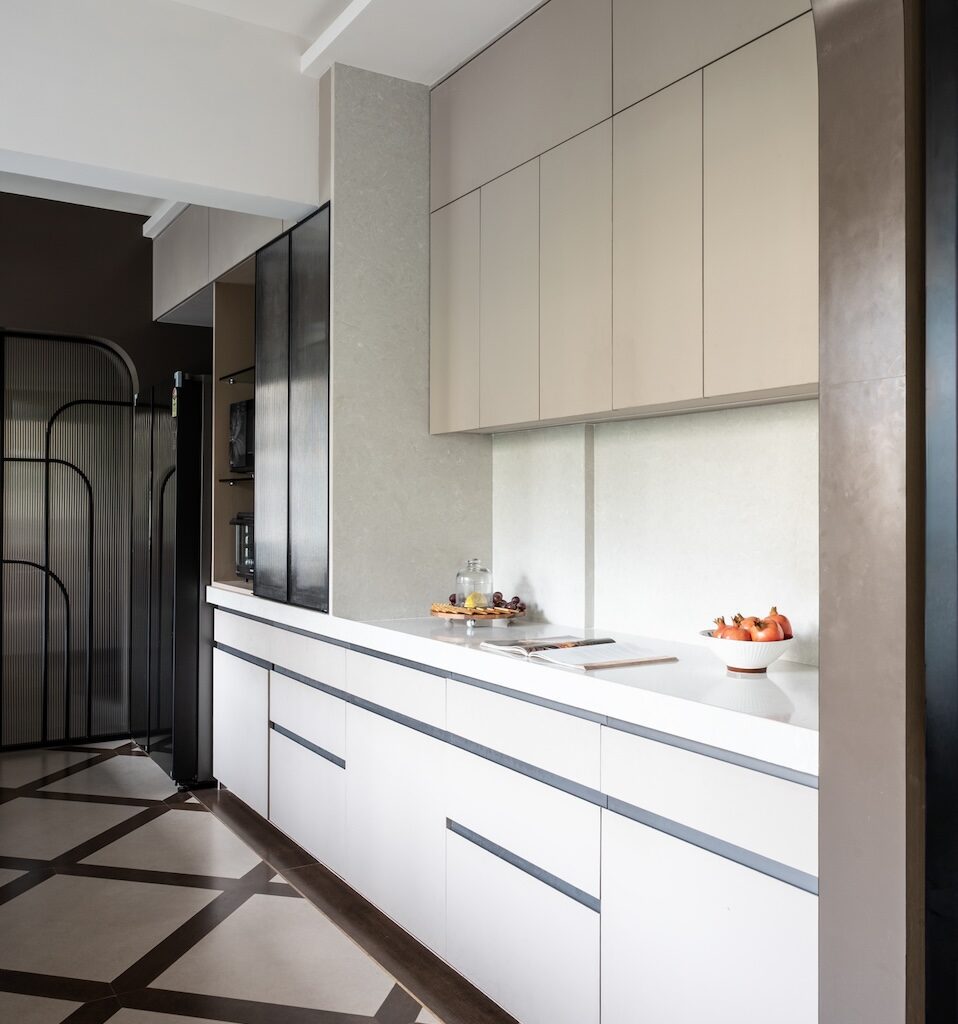
The most significant intervention was merging the two units into a coherent whole. With the kitchen placement fixed, it was transformed into a curated corridor lined with patterned tile flooring, layered finishes, and lit skirting — an experiential passage rather than a leftover service zone. Low ceiling heights were reimagined with sculpted coves and curved transitions, accommodating lighting while maintaining visual height. Firefighting lines, too, were integrated into the ceiling design. Rather than demolition, the interventions reshaped perception, making compactness feel fluid and expansive.
The spatial flow
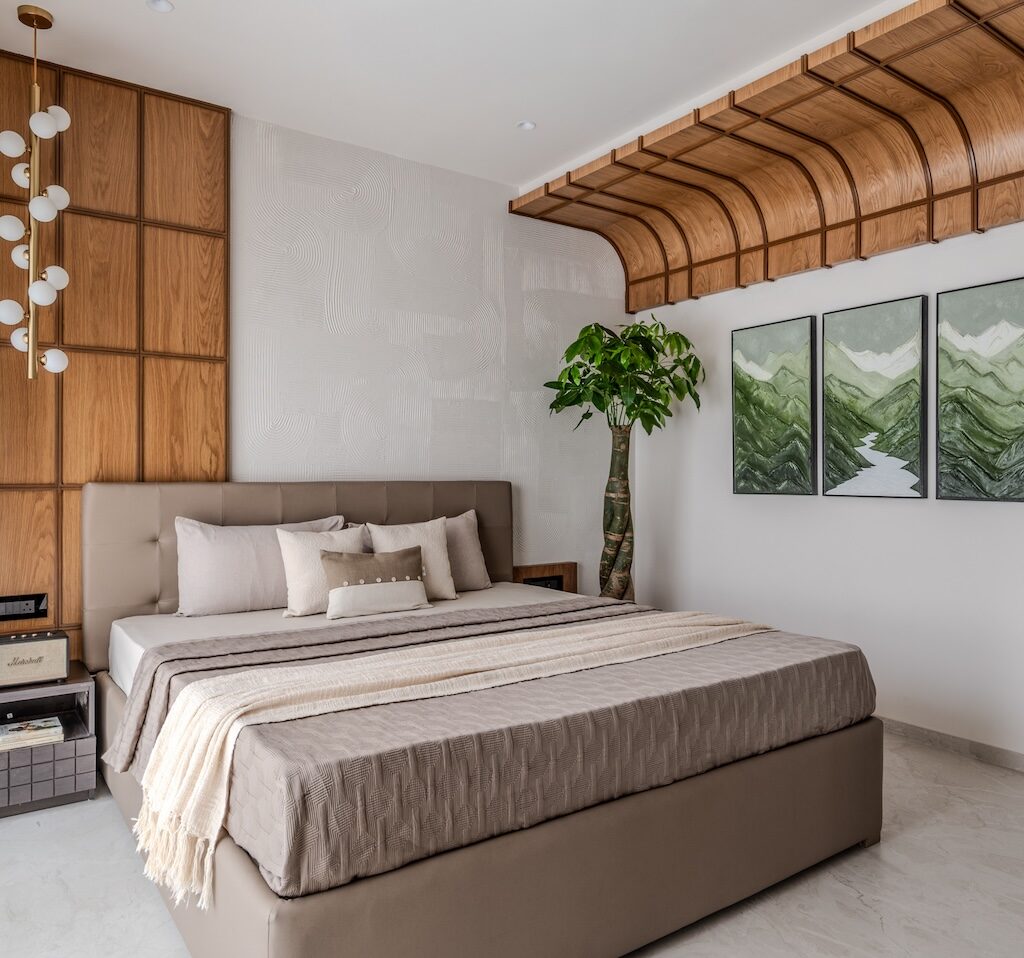
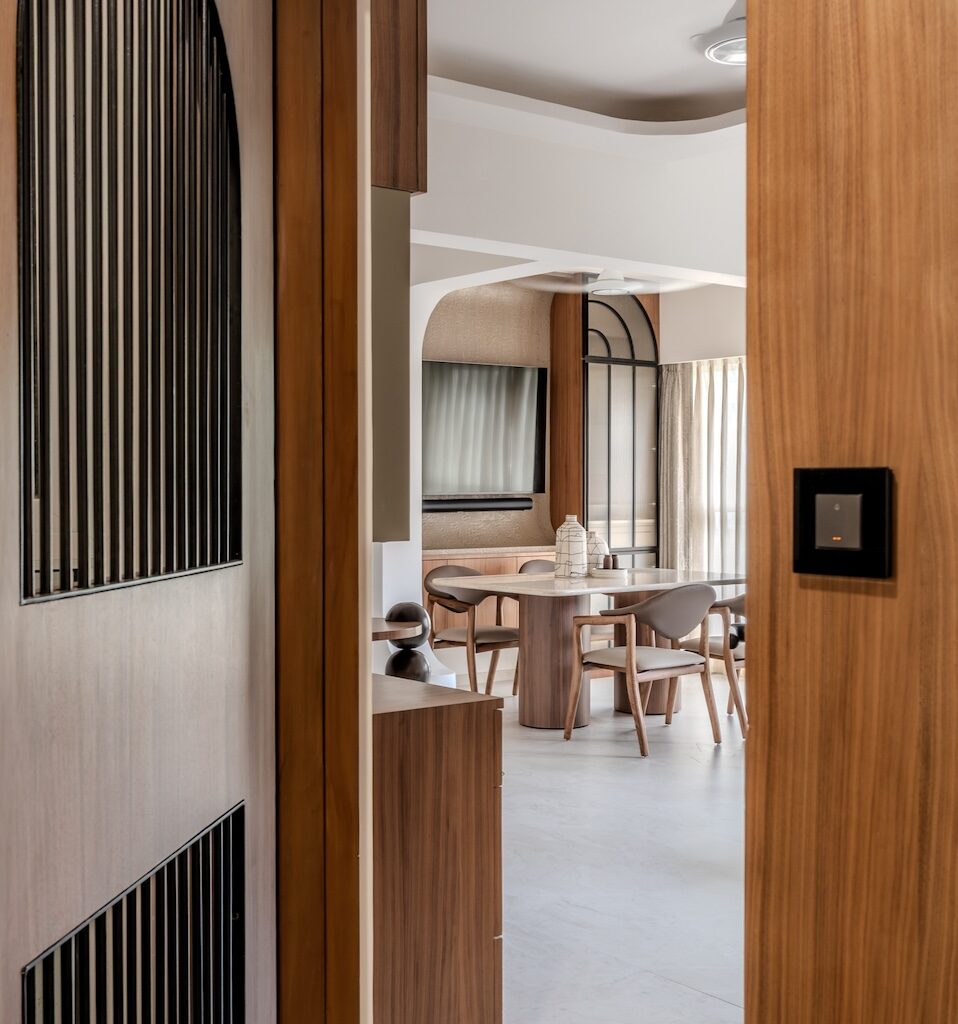
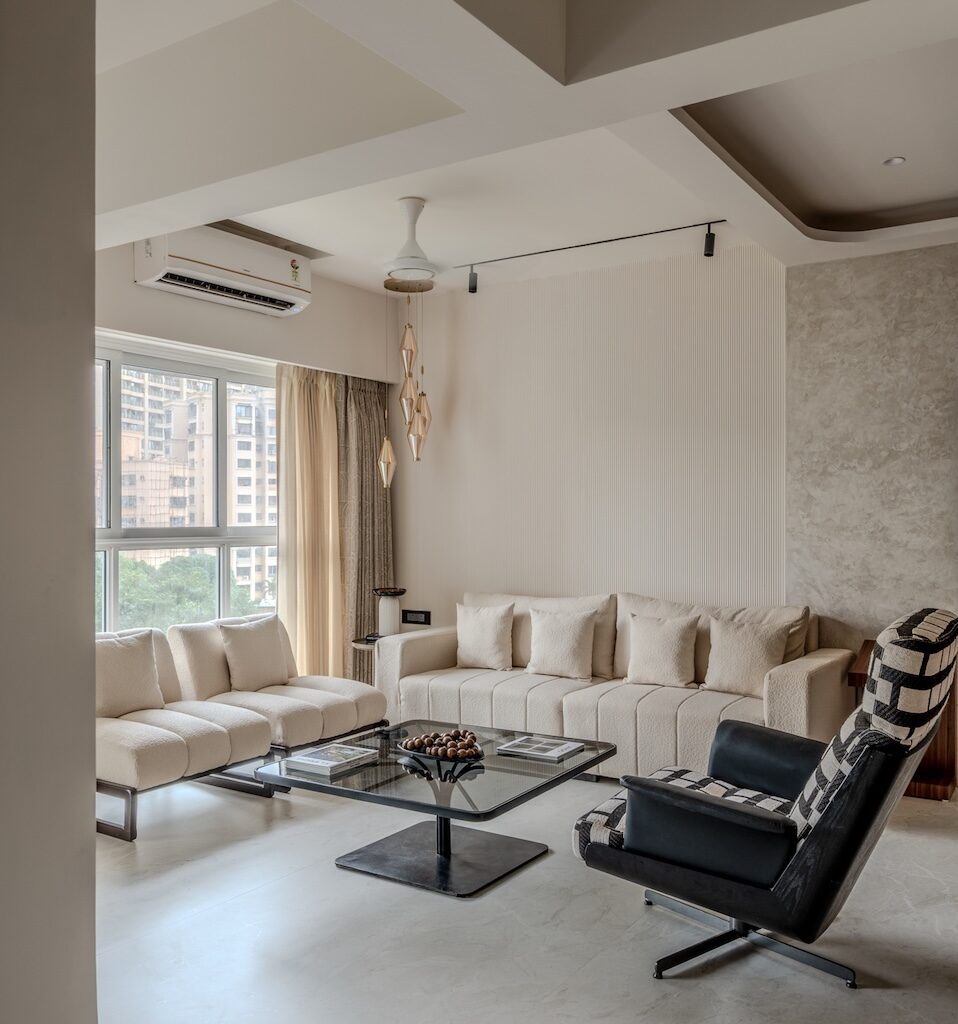
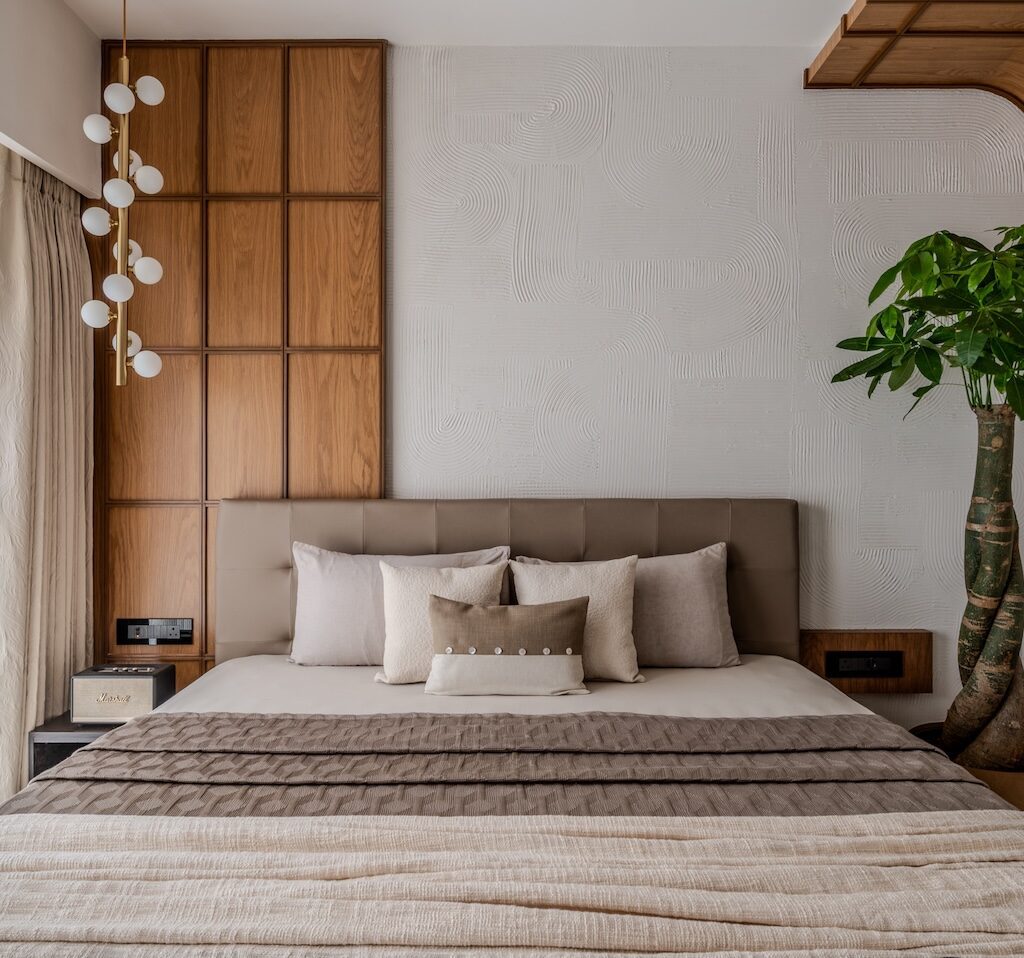
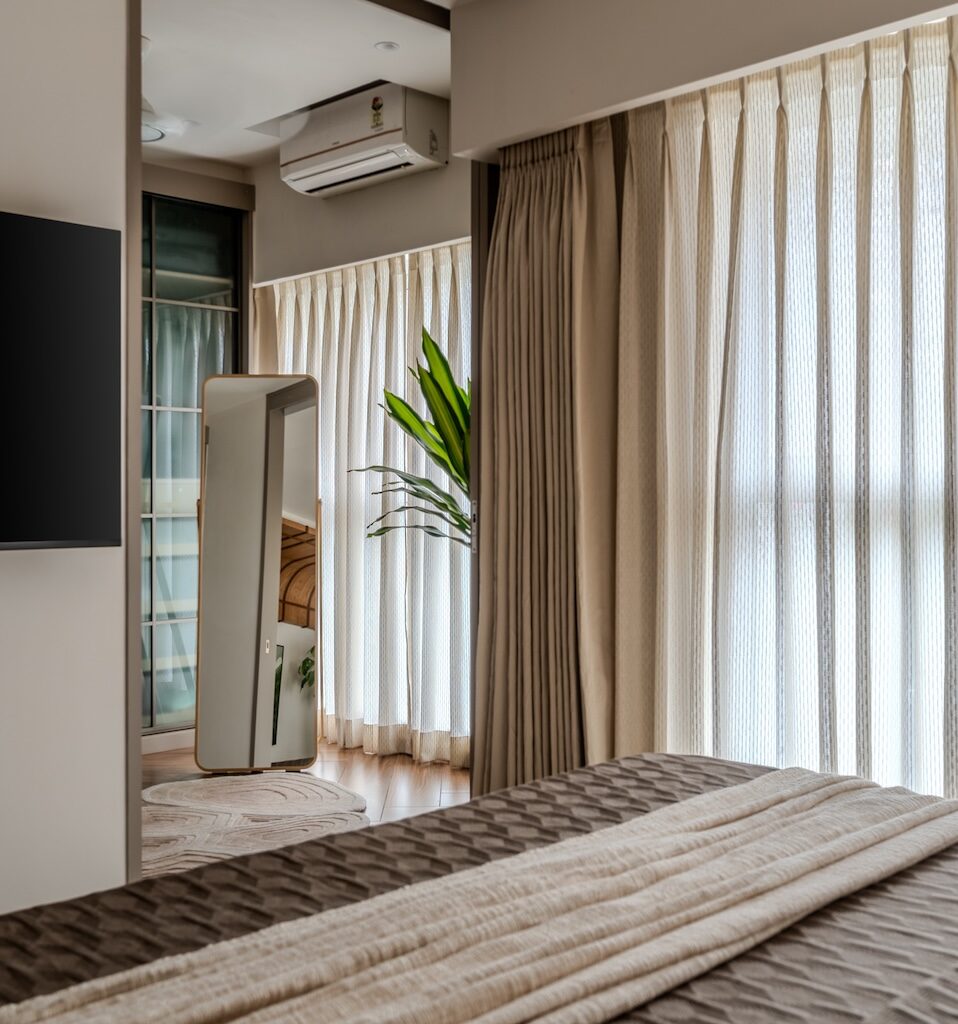
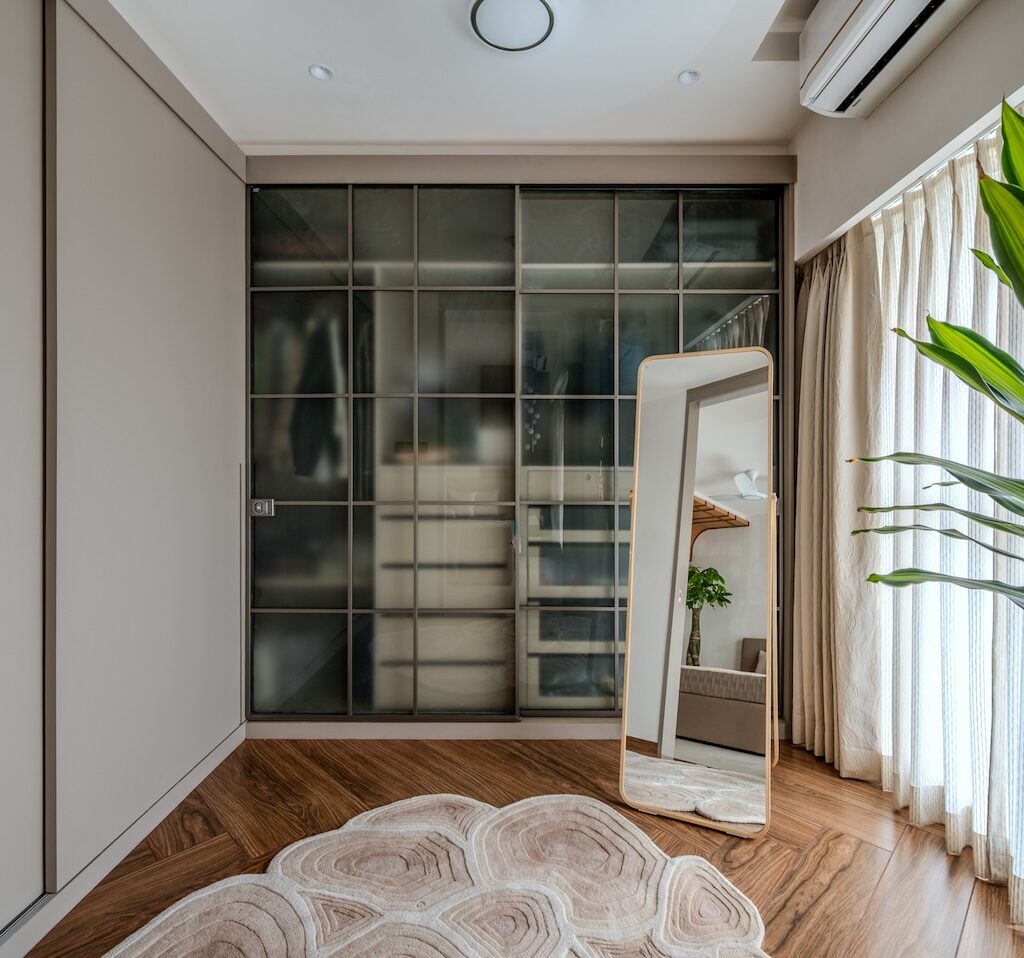
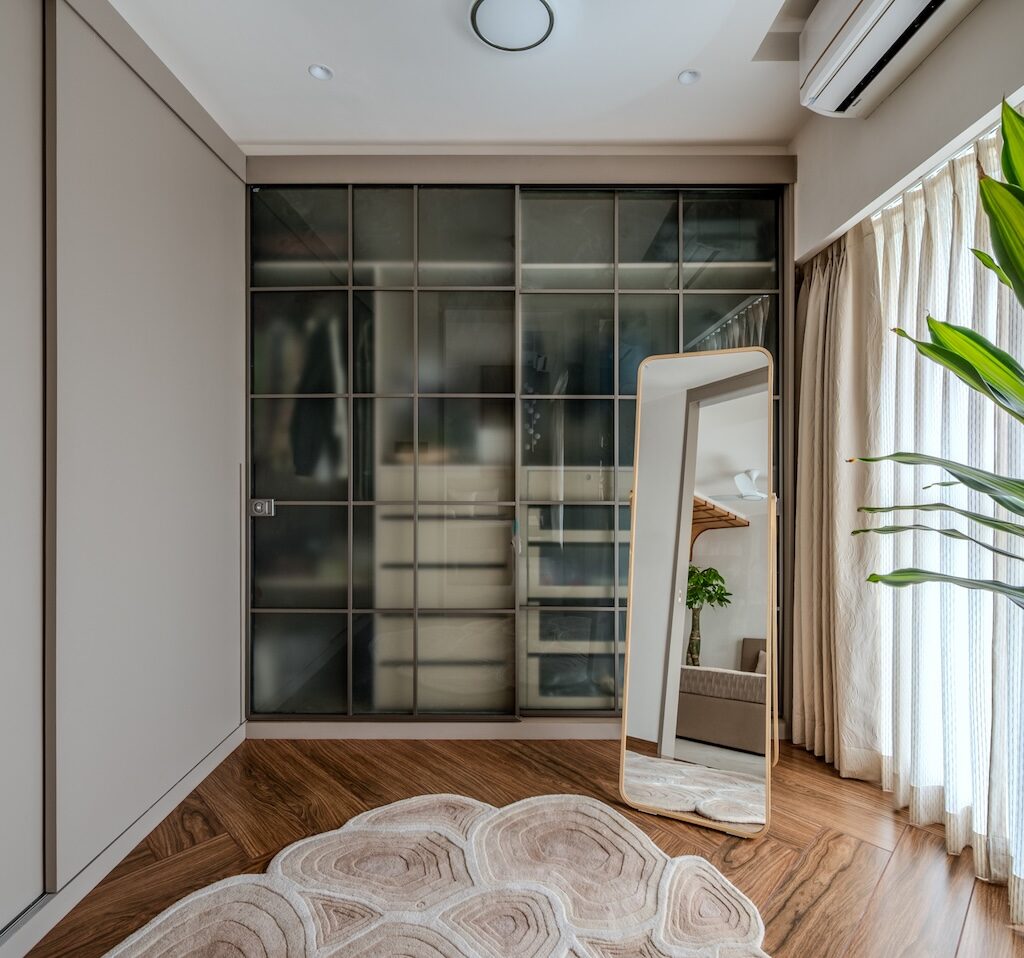
The residence reveals itself gradually. Entry leads into a central living-dining space — the calm nucleus of the home. To one side lies the son’s bedroom, defined by denim blue and yellow tones, compact yet lively. To the other, the reimagined kitchen corridor extends the journey with fluted shutters, patterned tiles, and cove lighting, leading to the guest bedroom and finally the master suite. The master blends calm and luxury: a walk-in wardrobe with herringbone flooring, ceiling coves that wash soft light over 3D artworks, and bonsai accents that evoke a forest glade. Every room connects through curves and recesses, weaving openness with intimacy.
The material palette
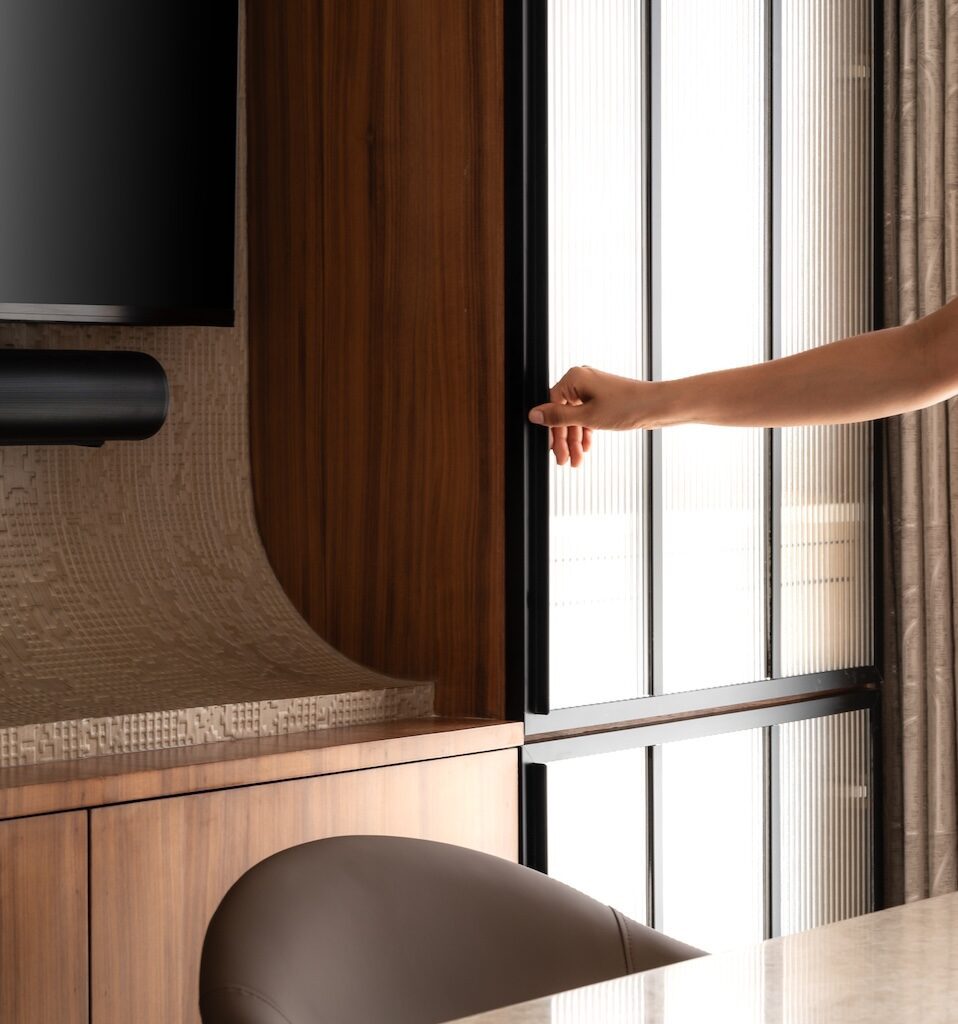
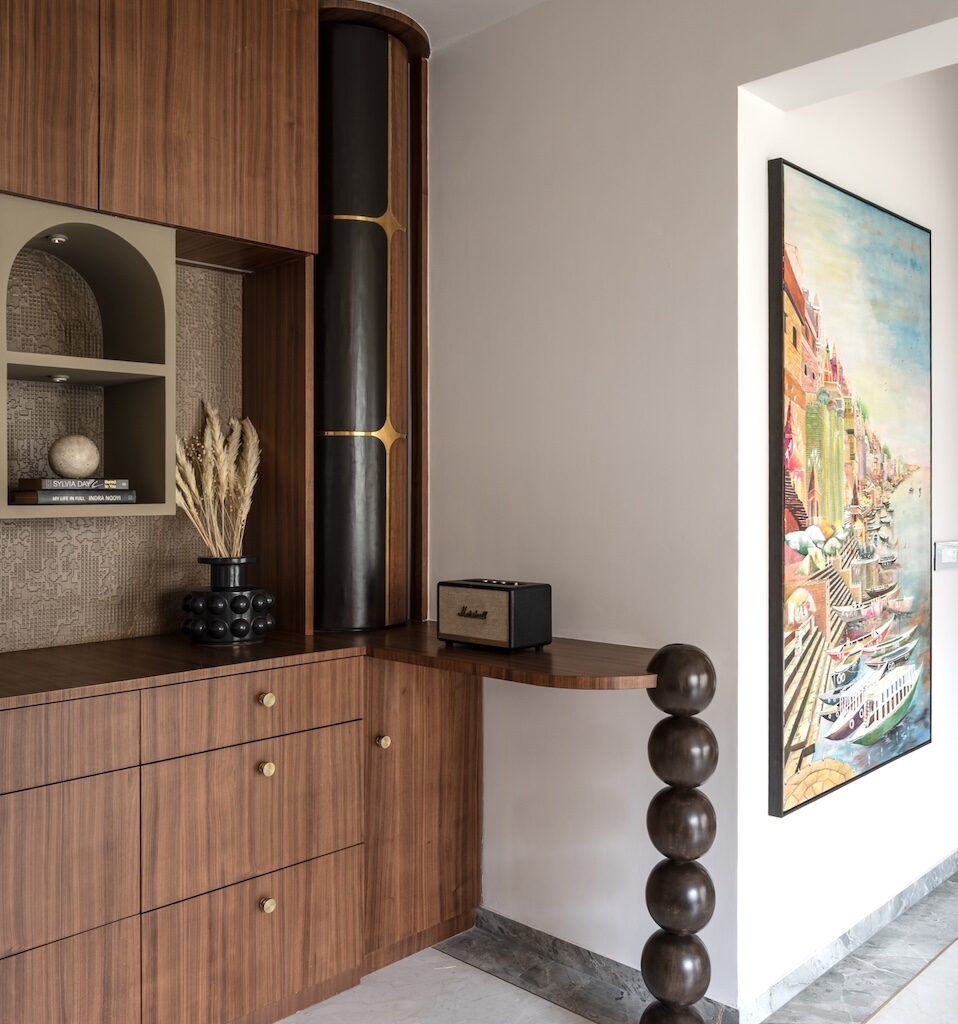
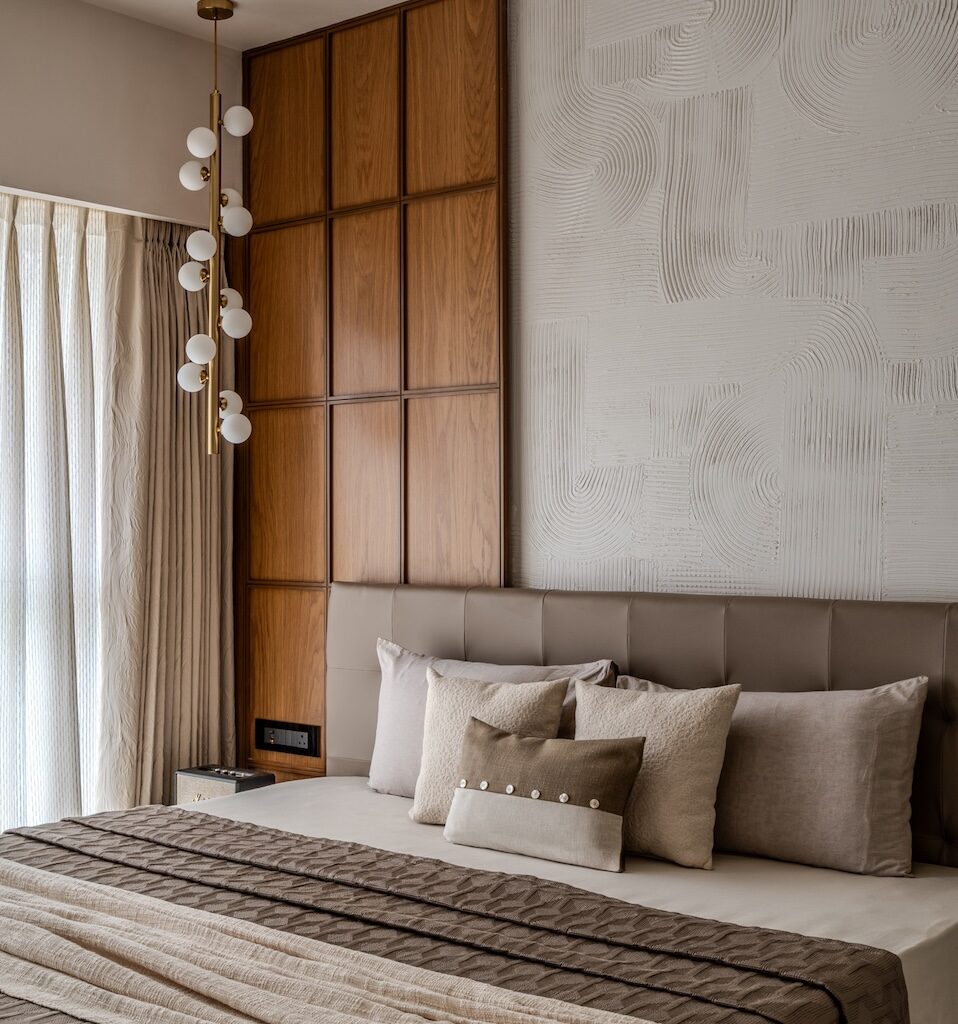
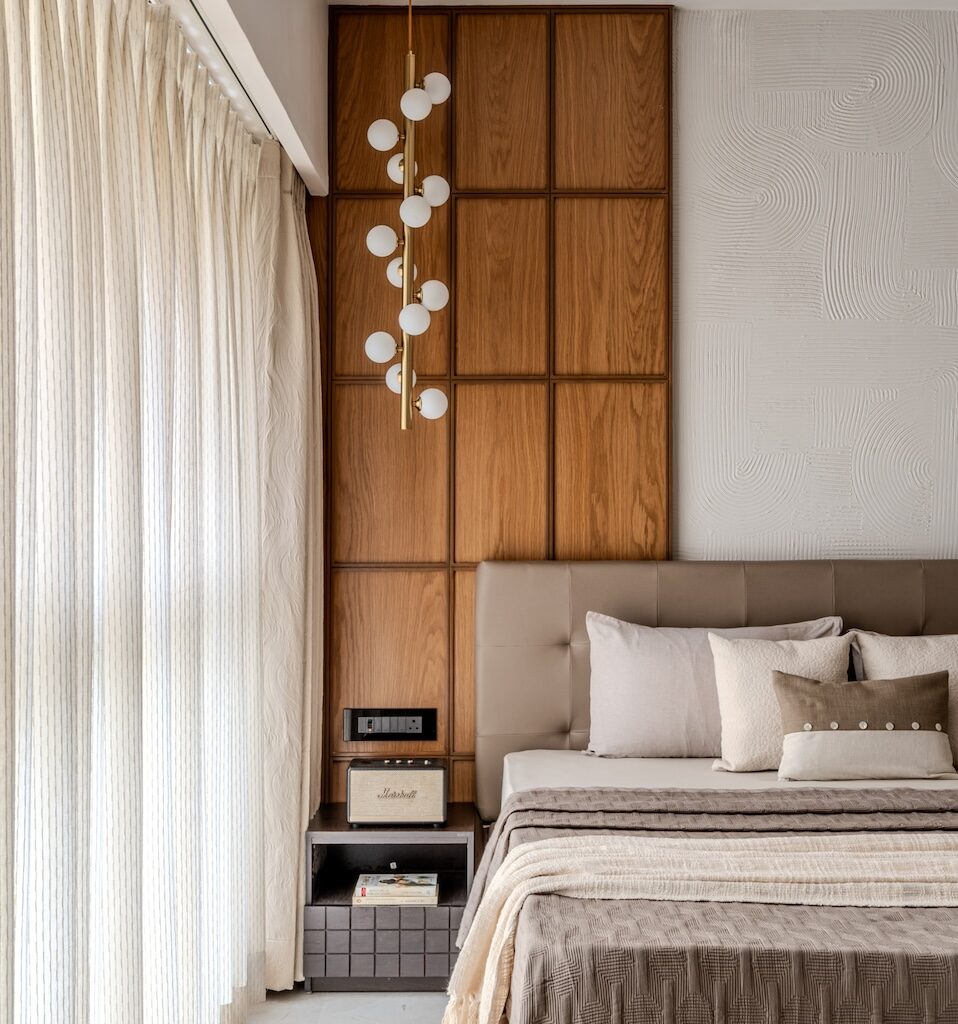
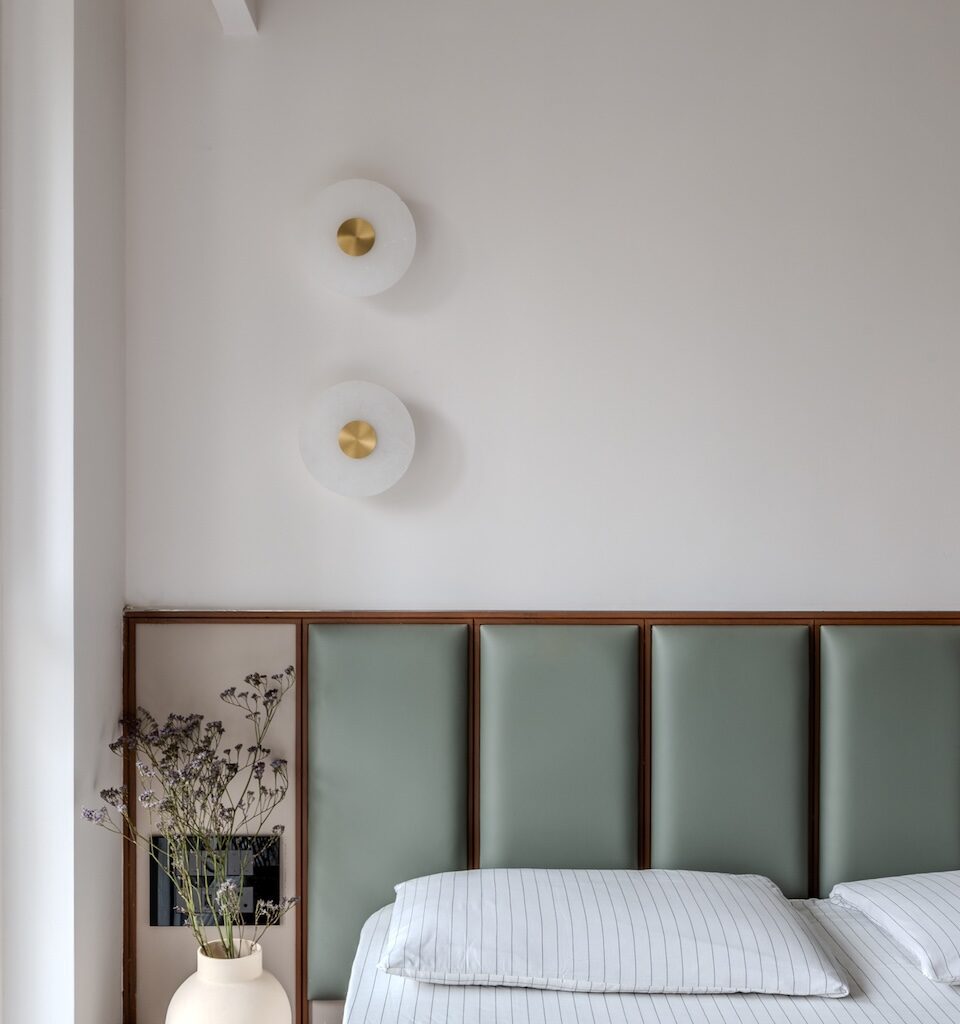
The living and dining area is finished in veneered walls, MDF flutes in PU paint, and textured paints. CNC-cut veneers act as sculptural highlights, while the bar unit becomes a centrepiece with its brass inlay, cylindrical veneer form, and teak-sphere base. Fluted glass with MS profiles adds depth without closing off space. The son’s room layers birch veneer, denim fabric, and PU-painted flutes into a dynamic, youthful palette. The kitchen combines laminates with patterned tile flooring, fluted glass shutters, and ambient skirting lights that guide movement. The guest bedroom introduces sage green leatherite against rhythmic BTC strip detailing, while the master suite pairs matte PU-finished veneer with textured walls, frosted glass shutters, and a layered rug. The walk-in wardrobe’s herringbone flooring subtly distinguishes it as a private zone.

The challenges
Key challenges included the immovable kitchen, which was turned into a design highlight, and the restricted ceiling height, addressed through curves and coves. Exposed firefighting lines were absorbed into the ceiling vocabulary. Precision execution was critical, with bespoke veneer and brass detailing requiring repeated on-site trials.
The highlights
The sculptural bar unit in the living-dining space is the home’s defining feature, doubling as furniture and conversation piece. The transformed kitchen spine, now an experiential corridor, and the master suite’s forest-glade effect with ceiling coves and bonsai are equally distinctive. Details like the guest room’s playful bed back and the TV wall cavity reinforce the project’s ethos: utility elevated into art.
The takeaway
For The Artful Habitat, Mridū affirmed that gentleness can be powerful. By embracing constraints and choreographing fluidity, a compact Mumbai flat can become a seamless sanctuary layered with warmth, craft, and calm.
Fact file
Project: Mridū
Location: Powai, Mumbai
Area: 1,000 sq ft
Principal designer: Drashti Shah Zaveri
Design firm: The Artful Habitat
Design team: Nachiketa Chavan

Add a Comment