
Design Pendulam declutter spaces, exerts a minimal material palette, and introduces environmentally-safe furniture and decor pieces in this aesthetically pleasing and easy-care villa for a NRI client.
Curated by: Deepa Nair
Photographs: Bharat Ramamruthum; courtesy Design Pendulum
 The brief
Casa De Zorro is an interior design and refurbishment project which was commissioned to Design Pendulum by a London-based young couple. The clients has purchased this villa is Goa with the intention of having a space to call their own, and one where they imagined spending the maximum time whenever they visited India with their toddler. This 3BHK two-storied villa was also a potential permanent home for the family when they eventually return to India; till then the owners intended to rent it on for short and medium durations to a select clientele. Therefore, the brief required the design team to provide gentle, airy spaces for a young growing family which was easy to maintain, whilst reflecting the client’s affinity to natural materials. The ethos of conscious living by upcycling what was possible, especially the existing wooden furniture and windows, was also a design requisite.
 The site
The existing two storey, three bedroom structure is part of a community of 20 villas situated in a quiet neighbourhood in Parra, and is very well connected to the buzzing areas of Anjuna, Assagao, Porvorim and Mapusa. “The heart of the villa is the dining space on the ground floor and the family lounge on the first floor — which in the existing layout suffered from lack of size, scale, and a sense of repose due to an indifferently made staircase. The black stone cladding and the deep sepia tiles of the staircase further added dullness instead of lending character to the villa,” explains Sukhmani Brar and Siddharth Singh; principal architects, Design Pendulum.
 The design intent
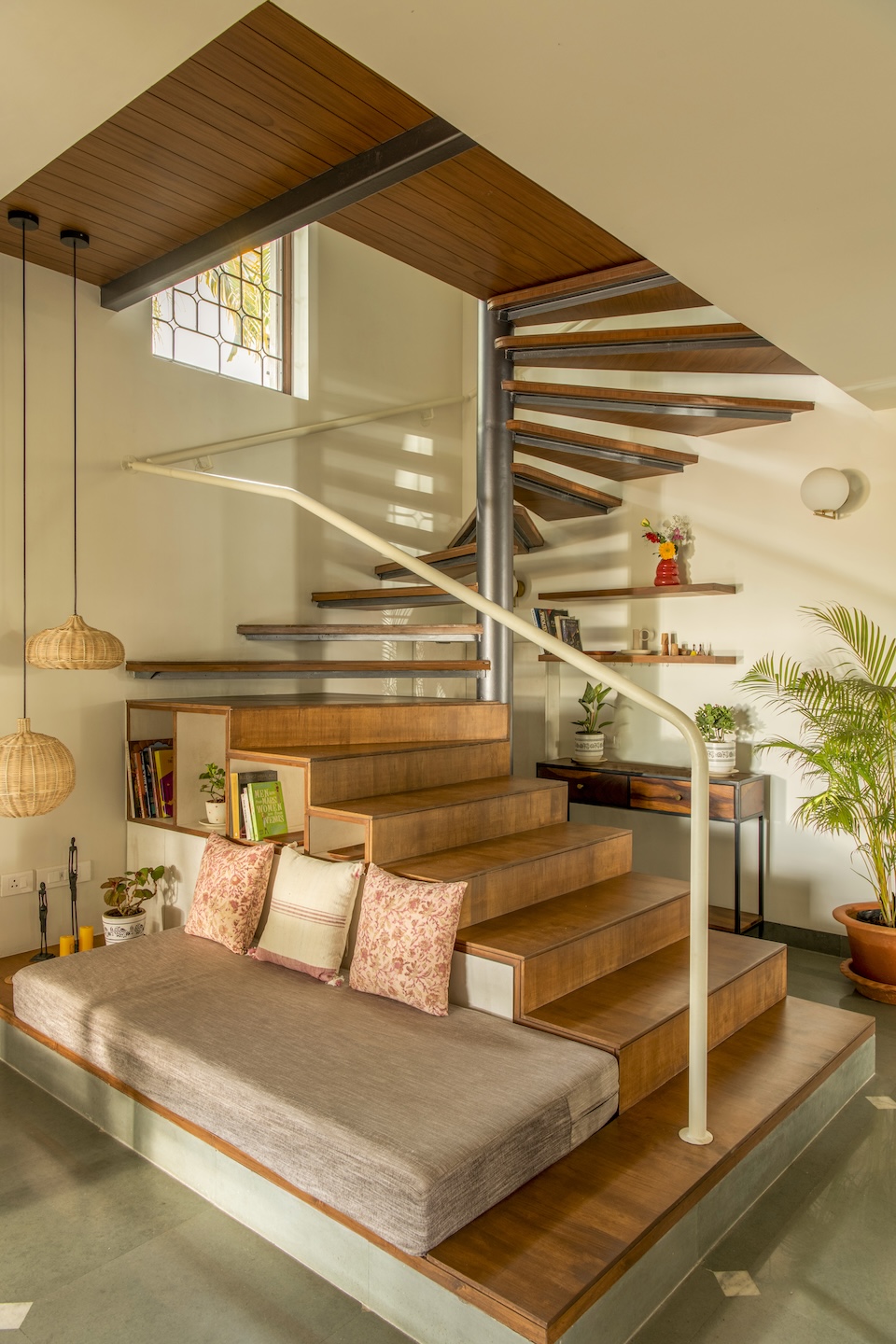
The interior design intervention entailed a restructuring through the replacement of the old staircase with a new one, which provides the cores of the house with their missing qualities of adequacy stability. Besides this, a transformation of the existing finishes to a lighter, airy and subdued aesthetic was also carried out.
The civil intervention
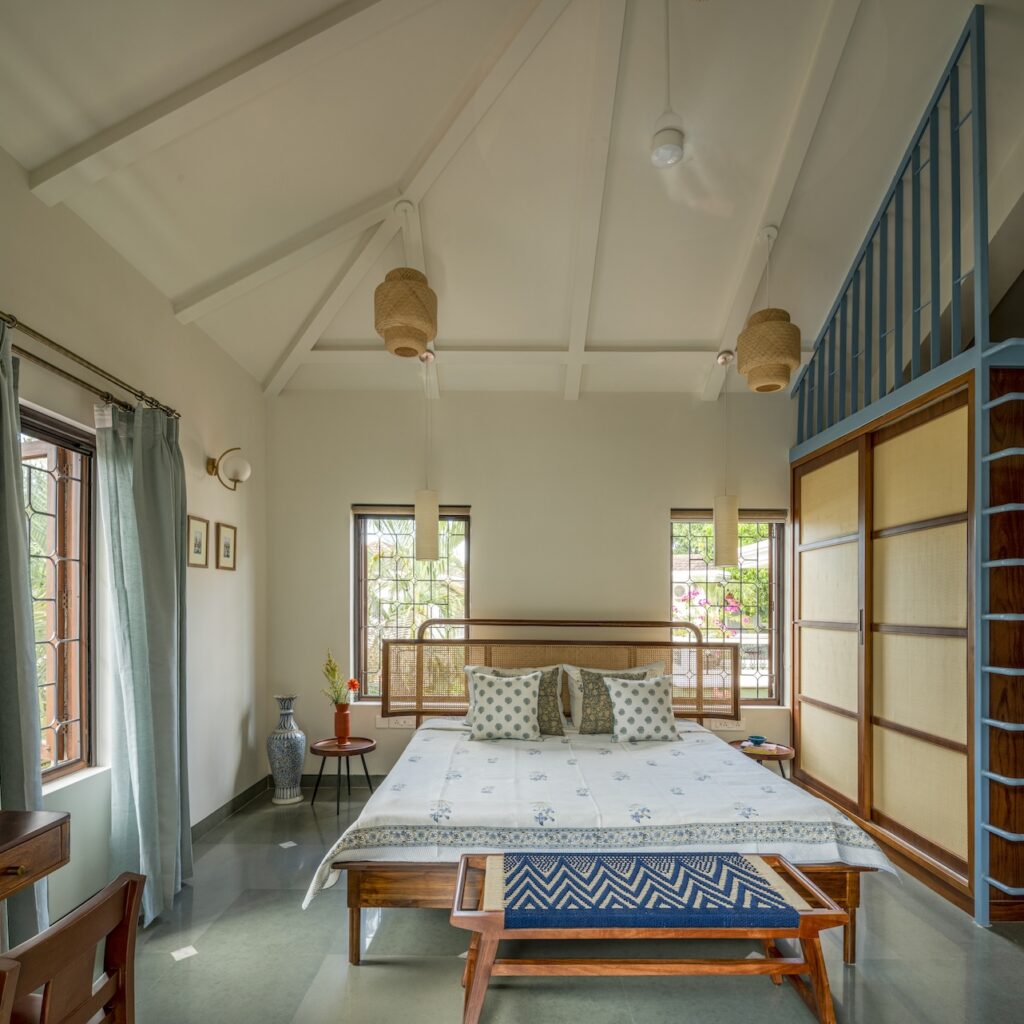
The disproportioned spatial planning was corrected by designing a new staircase in steel and wood which besides opening the layout, also enhanced the flow between spaces. Additionally, the two existing cabinets of different widths in one of the walls of the dining space was knocked down to create an arched niche to create open shelves and a bar counter beneath. Another change was carried out in one of the two existing storage lofts — the one adjoining the kid’s bedroom — by converting it into a play area which could be accessed by a monkey ladder. As for the structure: the inanimate and vast soffits of the pitched RCC roof have been scaled down using painted MDF channels which carry electrical conduits and also provide a fixing base for light fittings.
 The material palette
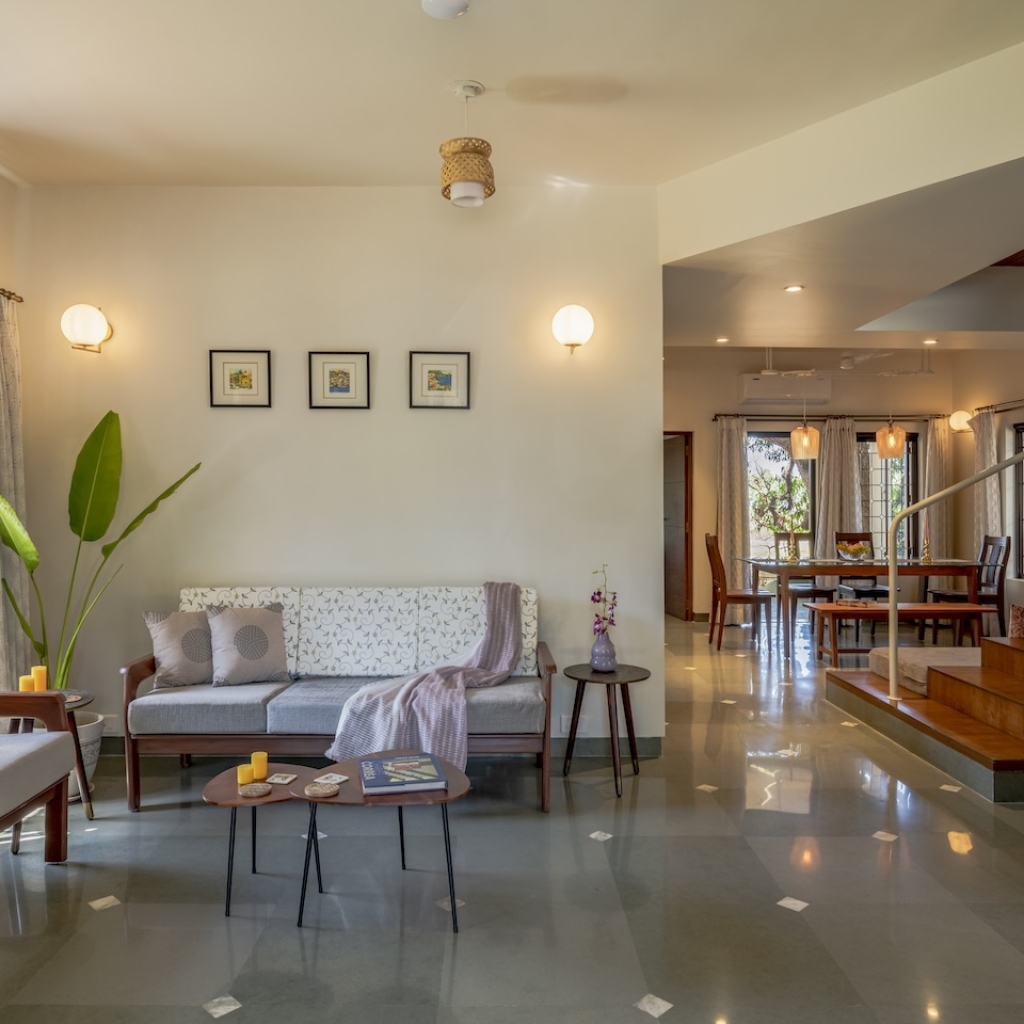
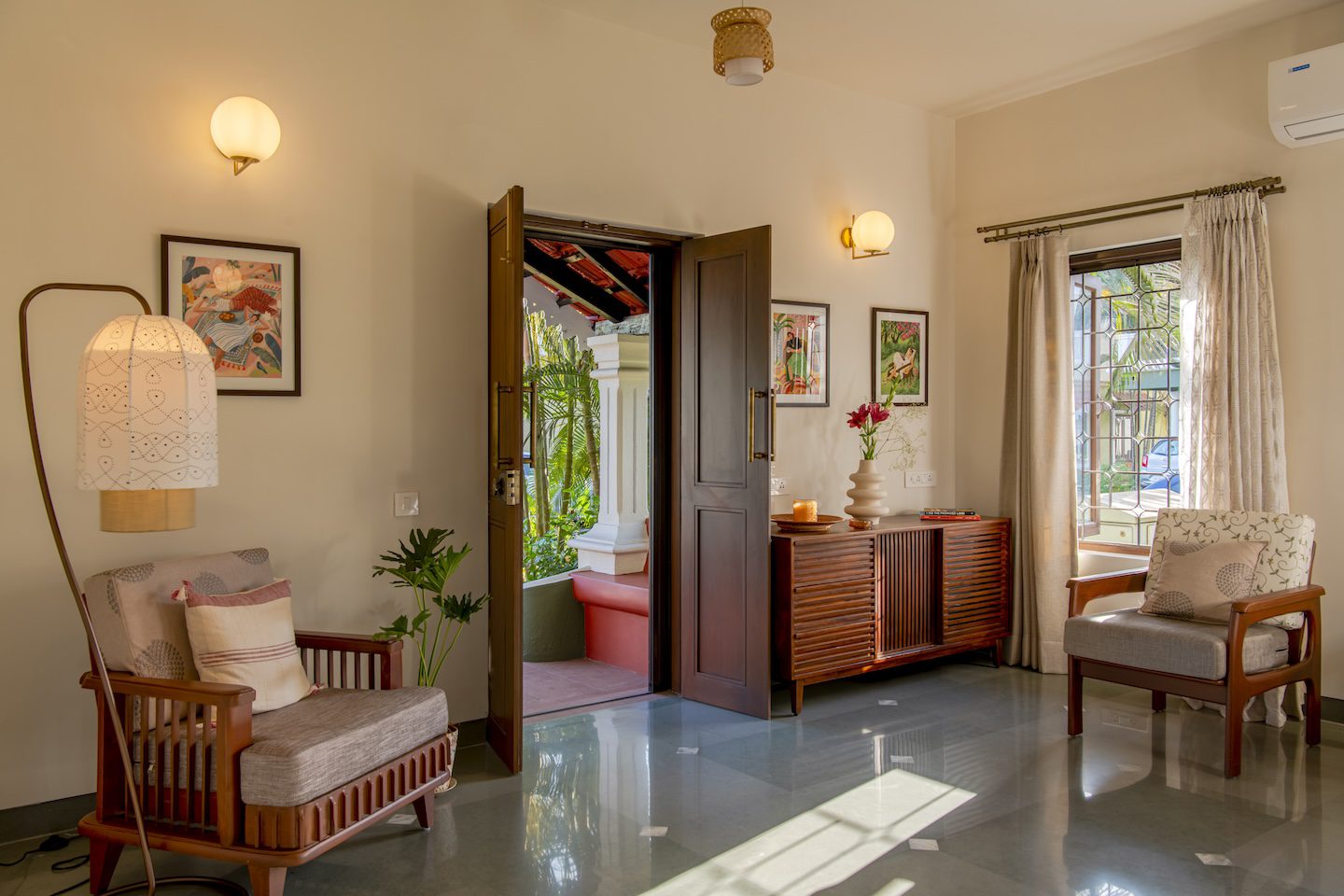
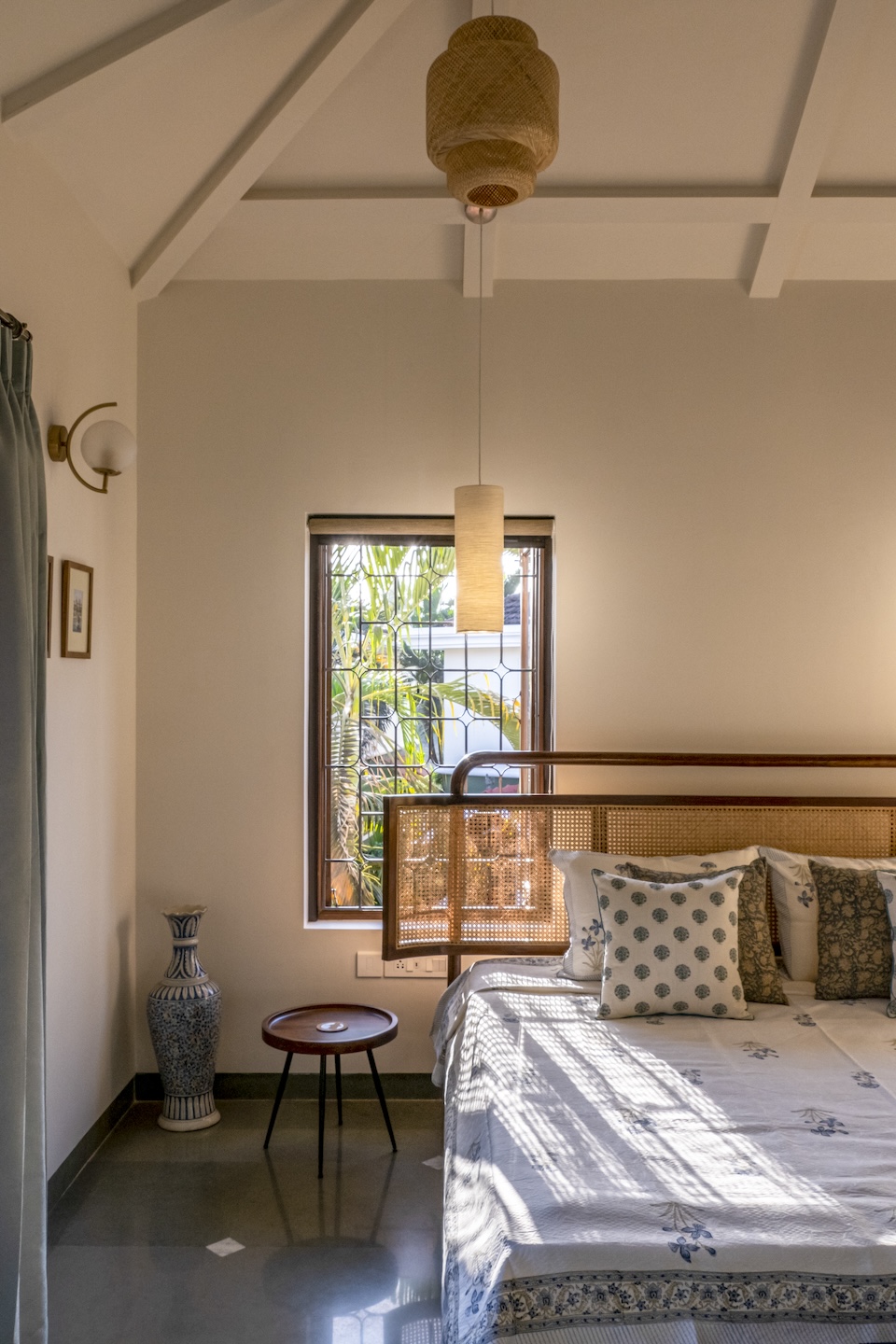
The existing dark and heavy material aesthetic of black granite, dark brown tiles and dark wood polish was completely transformed into a lighter tone with polished natural kota stone floor, white walls and pastel colours complementing each other. The rest of the house has been furnished keeping in mind the porosity of its architecture (read numerous windows) and the need to create and sustain quietude and comfort. “The material palette, thanks to the continual dialogue with and feedback from the clients, is simple and restrained, allowing the green outdoors to be experienced fully without being hindered by clutter of any sort,” says Sukhmani. The polished kota stone floor with inset white marble diamonds, is not only calming to the eyes but is extremely cool to touch and feel, a welcome relief in the hot and humid climate of Goa. It presents a beautiful foreground, while the off white walls create a soft background, and the wooden grains of the furniture, staircase and veneer finished doors create a rich and warm contrast. A subtle play of pastel colours of sage, blue and mauve in the bedrooms, and the kitchen brings in a cheerful lightness to the spaces.
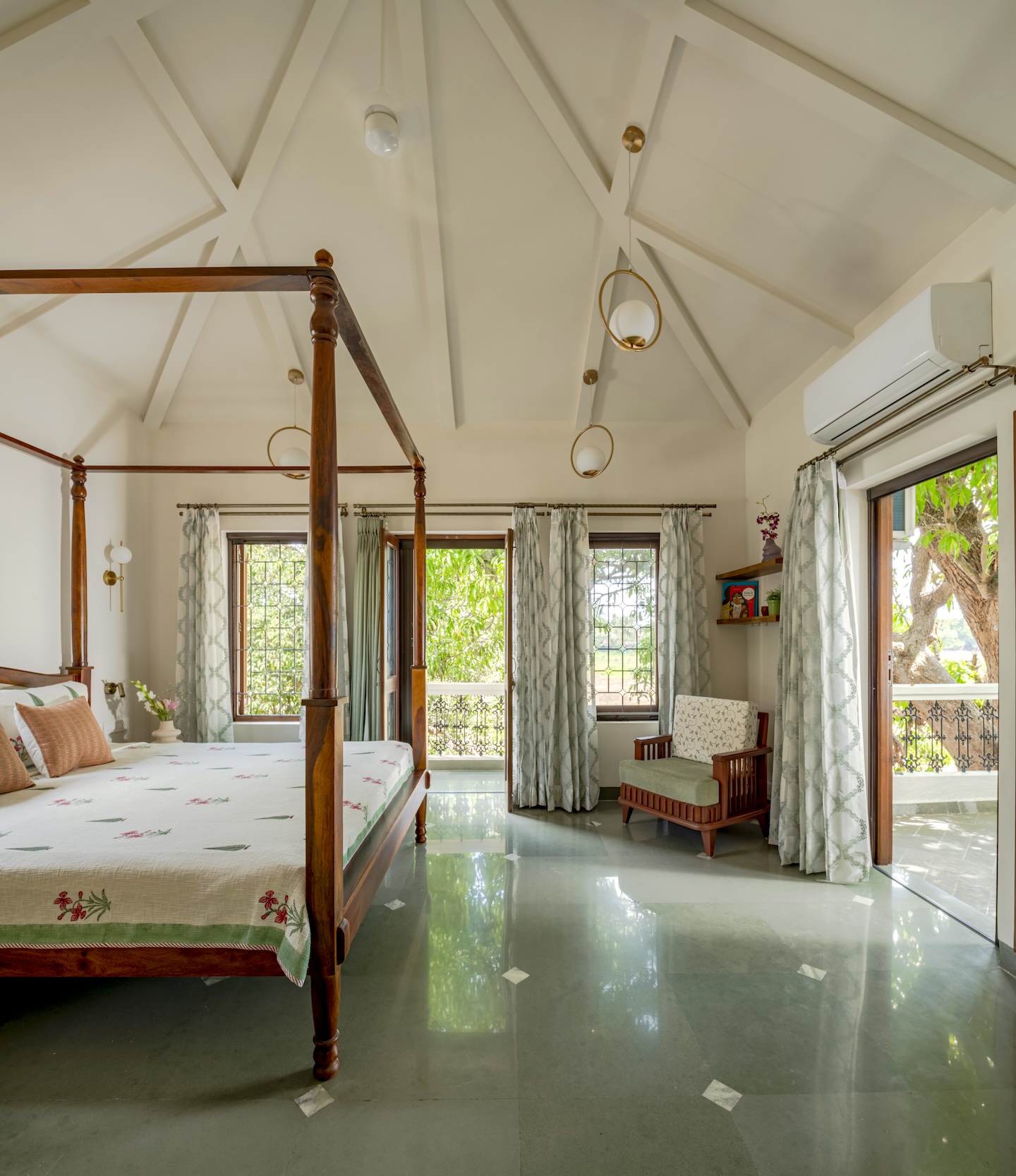 “In congruence with the clients’ idea of conscious living most of the textile in the house have been sourced directly from the makers, making each piece unique and one of a kind. There are handwoven cushion covers from Punjab which is made on pit looms by village women near Bathinda, and from Nagaland, which are made on loin looms,” shares Siddharth. Bedcovers with Bagru block printed textiles from Jaipur is part of the bed linen ensemble; in addition to the fabrics which were sourced from stock suppliers in New Delhi, and then upcycled as upholstery and curtains.
 The highlights
The central design feature of the house is the new staircase made in steel and wood, which is an exercise in intense integration: composite in form, materiality and experience. While the spiral helps in compacting the staircase space, allowing for an extension of the family lounge on the upper floor, the straight first flight helps orient the lower end of the staircase towards the living space. It forms a plinth, which on one side extends the domain of the dining space, where an intimate baithak is created; and on the other side, forms a utility space under the staircase, which accommodates the distribution boards, inverter and a host of storage drawers. The first flight is made entirely in plywood, while the spiral has a steel skeleton with treads clad in completely in wood through and through.
Fact file
Project: Casa De Zorro
Location: White Square Nirvana, Parra, Goa
Area: 2,500 sq ft approximately
Principal architects: Sukhmani Brar and Siddharth Singh
Design team: Swati Chillar, Deepak Jijo, Hiba Haif and Nikhil Gupta
Add a Comment