
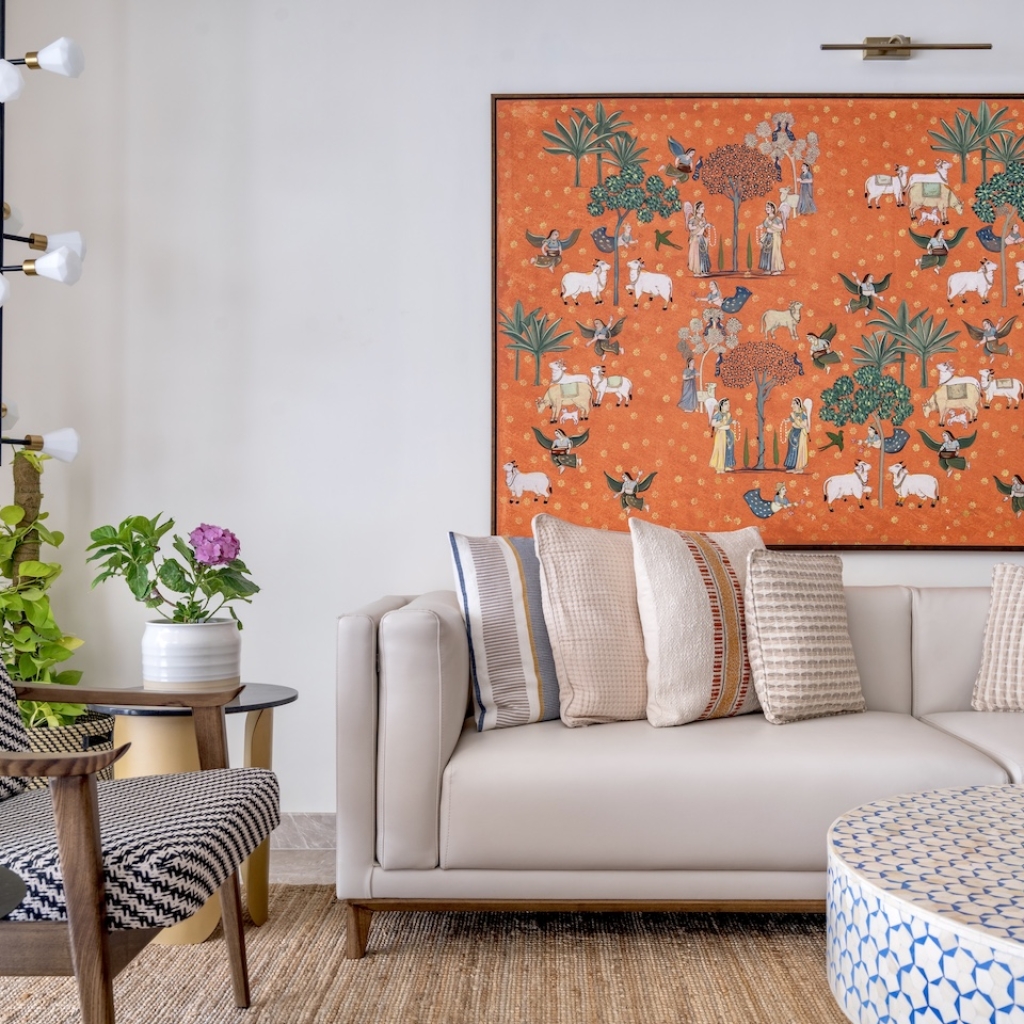
DNC Studio9 uses colour as a powerful tool to impart a unique identity to each room while seamlessly connecting the overall design.
Curated by: Rupali Sebastian
Photographs: Inclined Studio; courtesy DNC Studio9
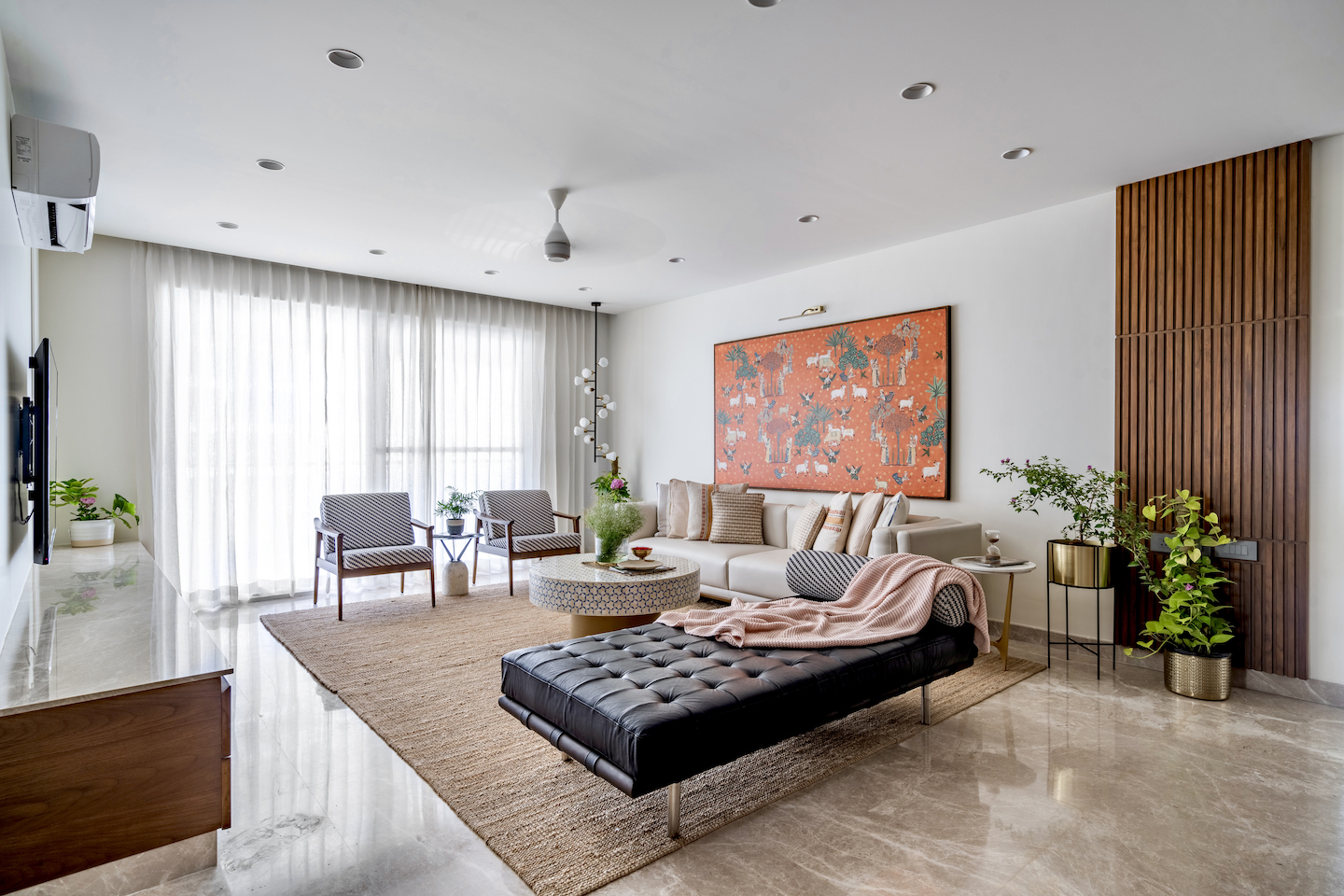
The site
The 2,900-sq-ft apartment was handed, newly minted, to the design team at DNC Studio9 helmed by architects Abhishek Chandra and Deepti Chandra. While the living area featured marble flooring, the two bedrooms and the kitchen were tiled and the master bedroom remained deliberately incomplete, awaiting the subsequent installation of a wooden floor. The walls were left with only the final coat of painting pending, and electrical points were provisioned in accordance with the builder’s standard finish. Plumbing fixtures adhered to established standards.
The brief
The family specified a contemporary-Indian approach (aligned with principles of Vastu) where hues and textures played a dynamic role while exhibiting restraint. Storage was high on the client’s list of requirements. The team focused on implanting these additions as discreetly into the spaces as possible, highlighting the design narrative instead. The design experience is headlined by geometric forms, rhythmic repetition of structural elements, colour as bookmarks, and a significant influx of daylight.
The design intent
“We joined the project at its inception, just after the builder handed over the space, while it was full of potential,” reveals the designer duo. “The client, who happens to be a family friend, greatly influenced our creative process as we envisioned and crafted her dream home. Her friendly nature became a guiding force for the project’s essence, subtly influencing the overall atmosphere we embedded into the residence.”
The civil intervention
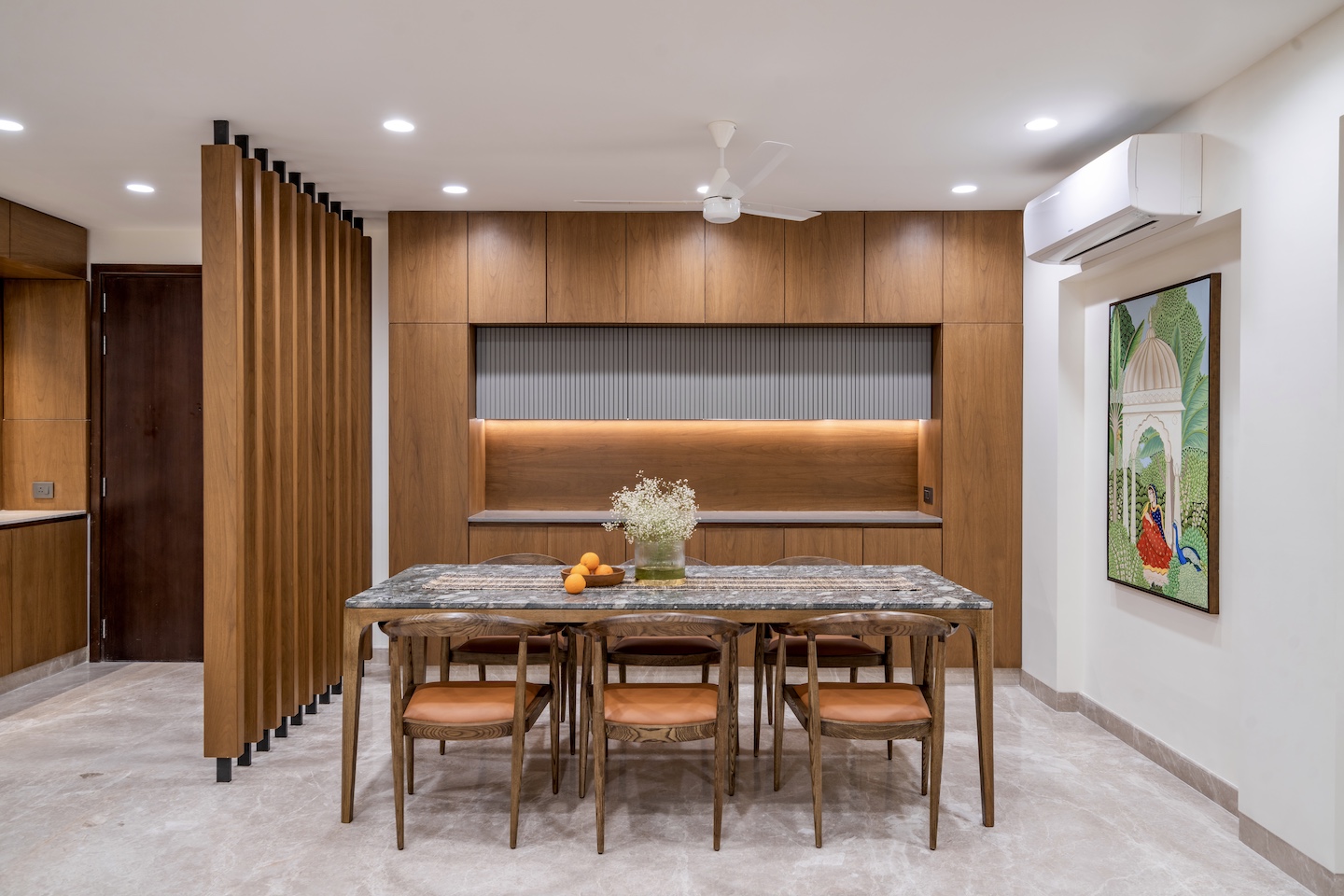
Several meticulous alterations were undertaken in this project, encompassing the replacement of kitchen tiles and the installation of new ones. Notably, the master bedroom witnessed structural modifications, involving the introduction of a newly designed opening leading to a walk-in wardrobe area, necessitating wall breakage. In the living room, a strategic extension of the wall was executed to realise the envisioned design.
Furthermore, a comprehensive relocation of electrical points was conducted, aligning with both the design specifications and the convenience of the client. Core cuts were meticulously orchestrated to interconnect all air-conditioning units with the VRV external unit, a process that mandated subsequent concealment within the false ceiling. Finally, the last set of modifications pertained to plumbing adjustments in the utility and kitchen areas, diligently implemented to achieve the desired design outcomes.
The highlights
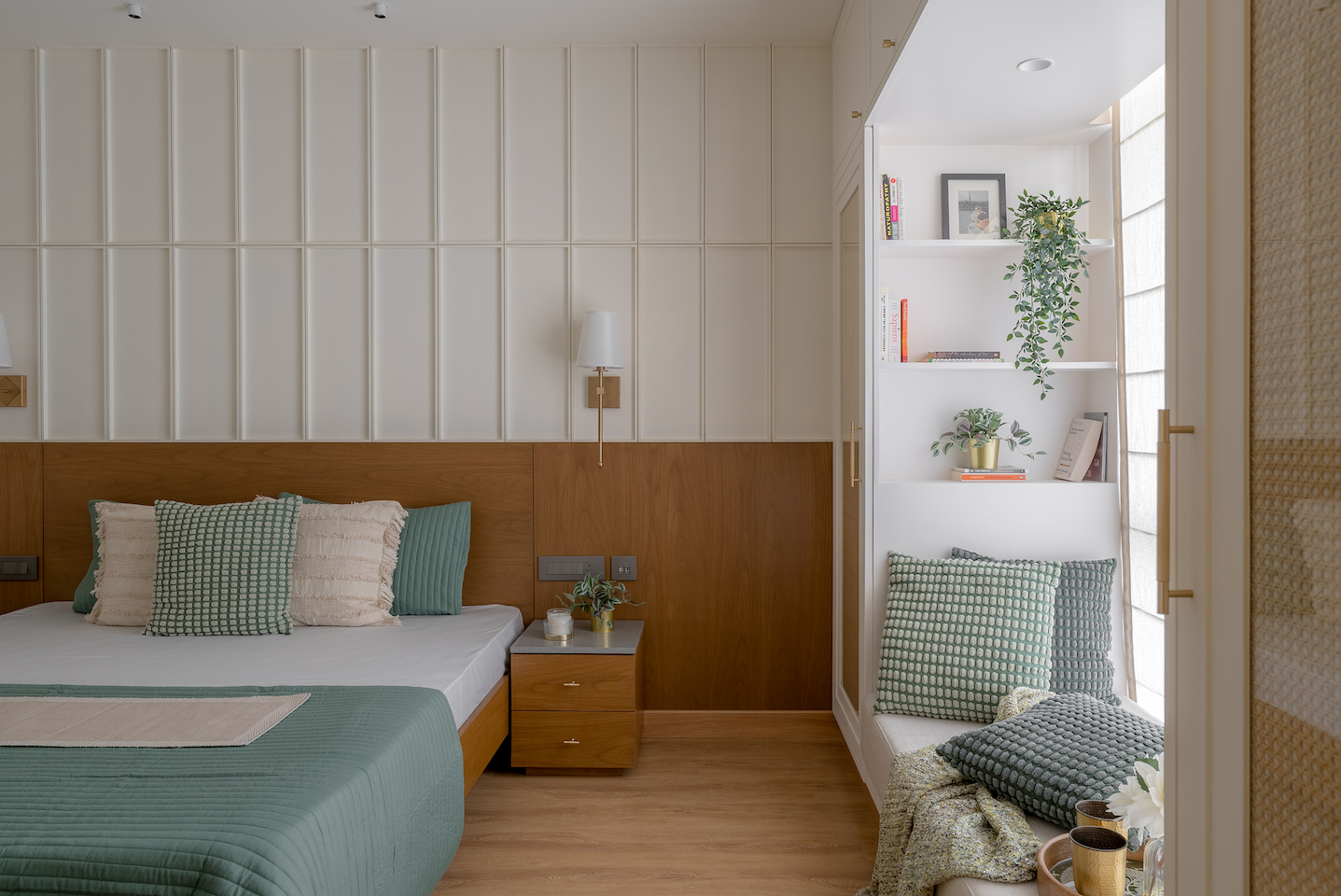
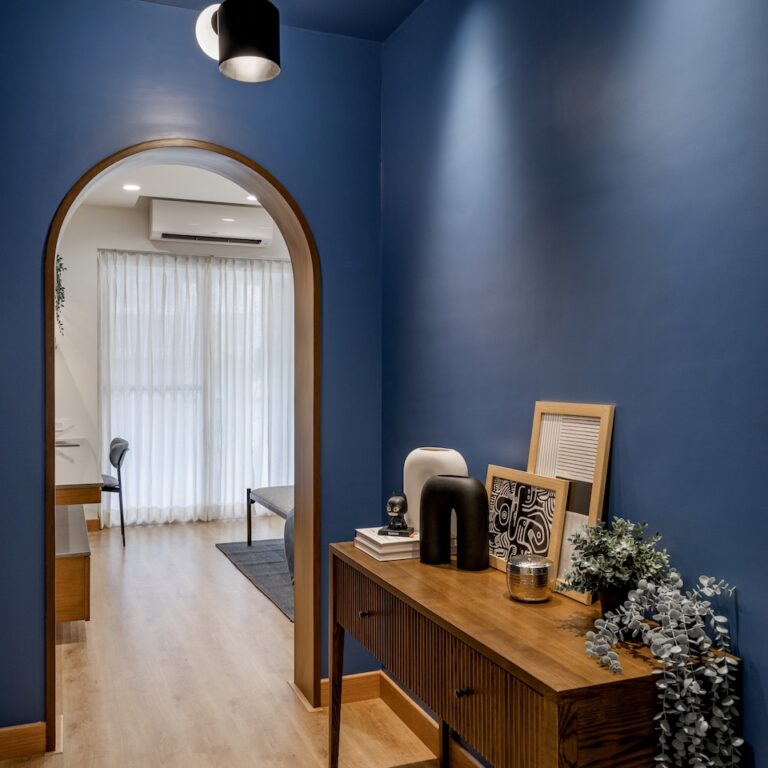
“Colour is a living and breathing part of this residence. However, our approach was inclined towards keeping the spaces minimal and simple,” say the Chandras. There is a visual equation continuously at play. The neutral zones host accents of hues such as art, décor, soft furnishings, and indoor greenery. Alternately, there are sections of the home steeped in colour, and here, we’ve kept all accompanying elements muted. This lends each room a unique experience, while colour champions expression.” Little surprise, then, that the architects choose to call this project Abode of Hues.
The challenges
Numerous challenges were encountered throughout these endeavours, foremost among them being the formidable constraints imposed by the project timelines. The demand for expansive storage solutions, specified by the client in the form of drawers, necessitated a total of 130 drawers, further complicating the logistical landscape.
Fact file
Project: Abode of Hues
Location: Bengaluru
Area: 2,900 sq ft
Principal architect: Abhishek Chandra
Design team: Deepti Chandra
Add a Comment