
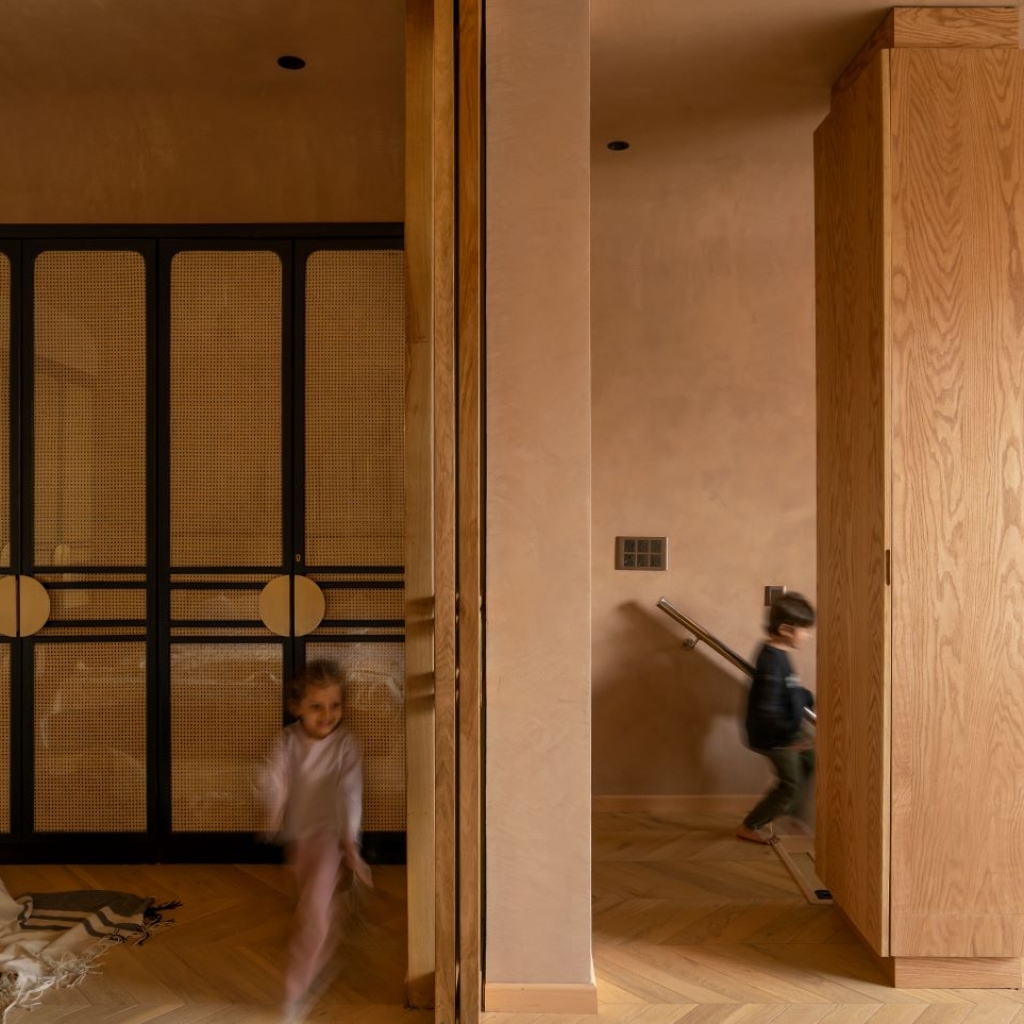
Designed by The Melange Studio, this modern residence employs simplistic lines and a warm natural material palette to craft a traditionally Zen space.
Curated by: Deepa Nair
Photographs: Avesh Gaur; courtesy The Melange Studio
 The site
Kanso House, designed by The Melange Studio, is set (at Ashok Vihar in New Delhi) in a neighbourhood with narrow streets, houses overlooking each other, and pathways lined with cars on either side. Primarily, a chaotic urban setting.
The brief
The studio was assigned to design a floor spread across 600 sq ft which originally comprised of two bedrooms with en suite bathrooms, and a balcony with a stairway attached to the terrace. Having lived in Japan for some years, the clients wanted a space that is heavily influenced from Japanese designs and follows the culture of minimalism.
 The design intent
Kanso House has been visualised as a modern residence that translates simplistic lines and a warm natural palette into a traditionally Zen space. “The traditional Japanese styles of design brings symphony to the space. It creates an environment of peace and relaxation that acts as an inner and eternal sanctuary from the stresses and strains of life in the outside world,” says architects Dhruv DV and Pranvi Jain, founders of The Melange Studio.
Since there was no direct access to gardens or any other natural recreational/retreat space in close proximity of the residence, the design team also envisioned to bring nature into the residence in every possible way. The colours of nature, the pale blue of the sky, the dark greys of rocks and the golden beige of a sandy beach… Kanso House is a habitat transpired from the surroundings with details that are drawn from nature.
 The design process
For this family of four The Melange Studio created a space which was dynamic in nature — where, instead of dividing the whole floor plate into two rooms, sliding folding partitions were used to divide and connect the spaces. This let sunlight to travel till the end of the room, and also allowed the user to recreate his personal habitat whenever required. “The personal spaces are treated like memorabilia that goes on your desk after a vacation, or that first scribble of your little one that gets proudly framed on the living room wall,” explains Dhruv.
Introducing movable partitions to connect the master’s to the kid’s bedroom and further the master bedroom to the balcony made the space dynamic in nature. This also allowed the clients to dictate the level of interactivity in the space they reside — one day they could enjoy solitude by keeping the doors of their room shut, and the next day they can open the doors to connect with their kids. All the doors in the space disappear from the room, allowing the user to move freely between the indoor and outdoor to utilise the green balcony.
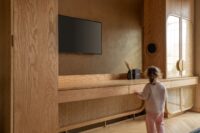 To meet the storage needs of the user, a lot of hidden multi-purpose storages were introduced in the space. A study table, kid’s toy storage (in the form of a column) and dressing cabinet were worked out together in a way that it all appears to be one element. Since the surroundings were urban and chaotic, the architects created an inward looking residence by introducing green screens in front of the facade facing the other building, and adding green plants in the balcony.
The civil intervention
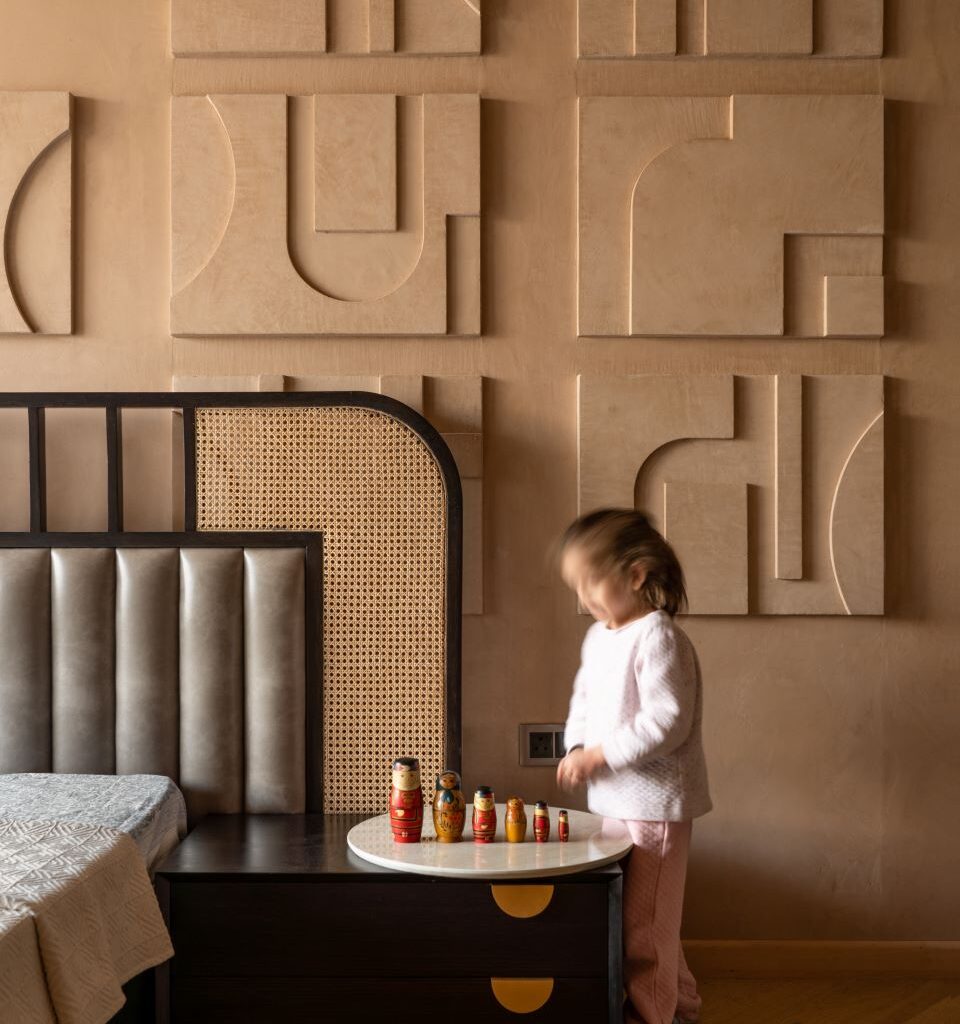
Keeping the peripheral walls intact, almost all the inner walls were broken down to make the space dynamic, and create an indoor-outdoor connection. Since the false ceilings were low earlier, the ceiling height was reconstructed and increased to give it a better volumetric proportion. Curves were introduced in the ceiling to connect it seamlessly to the walls, and to soften the edges of the room. This made the whole ambience calm and Zen-like. Once the shell was ready, a singular lime plaster finish was used on it to give it a seamless look. The subtle layering of the customised artwork on the walls of the two rooms binds them together, yet acts as a distinct feature of that room when experienced individually.
 The material palette
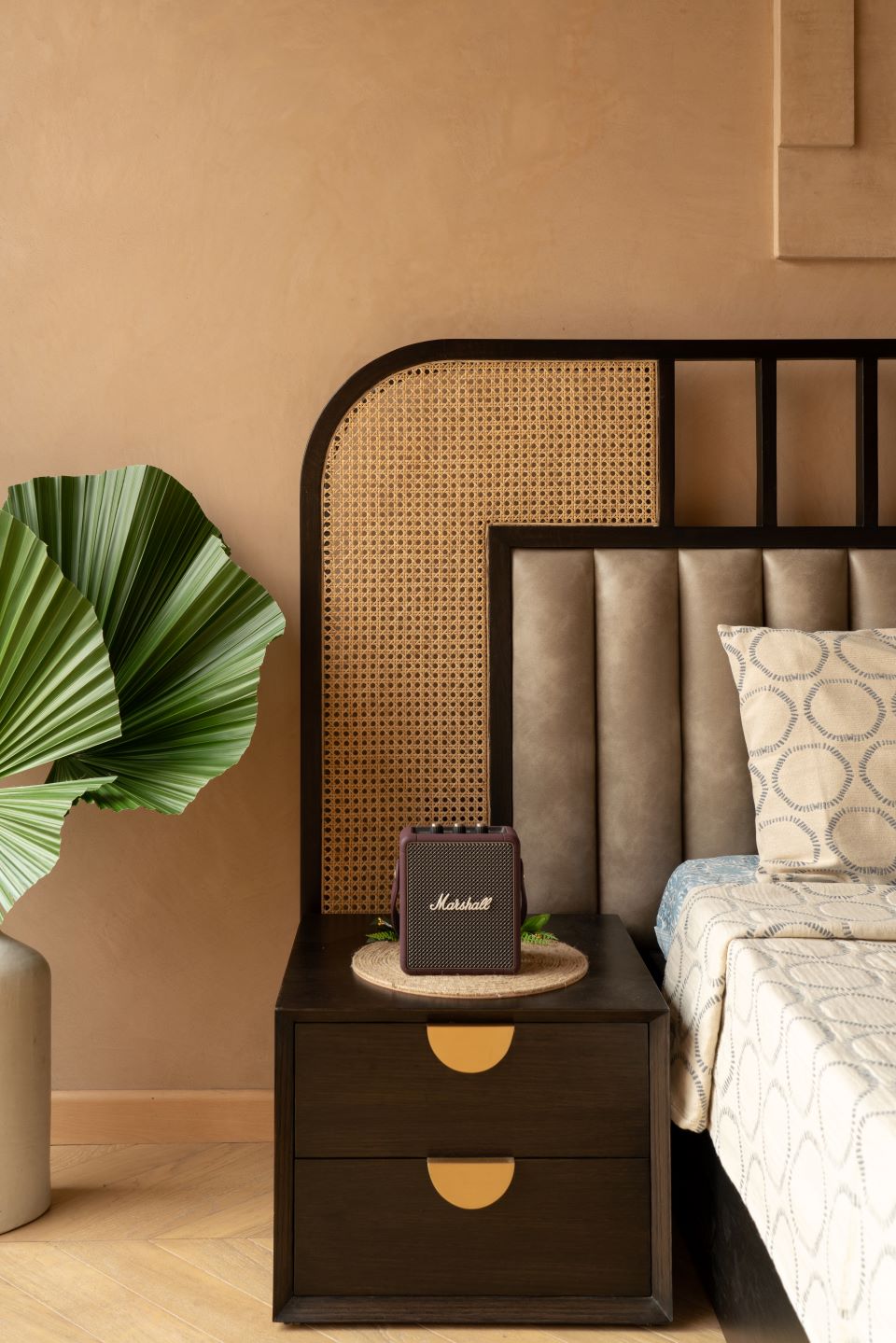
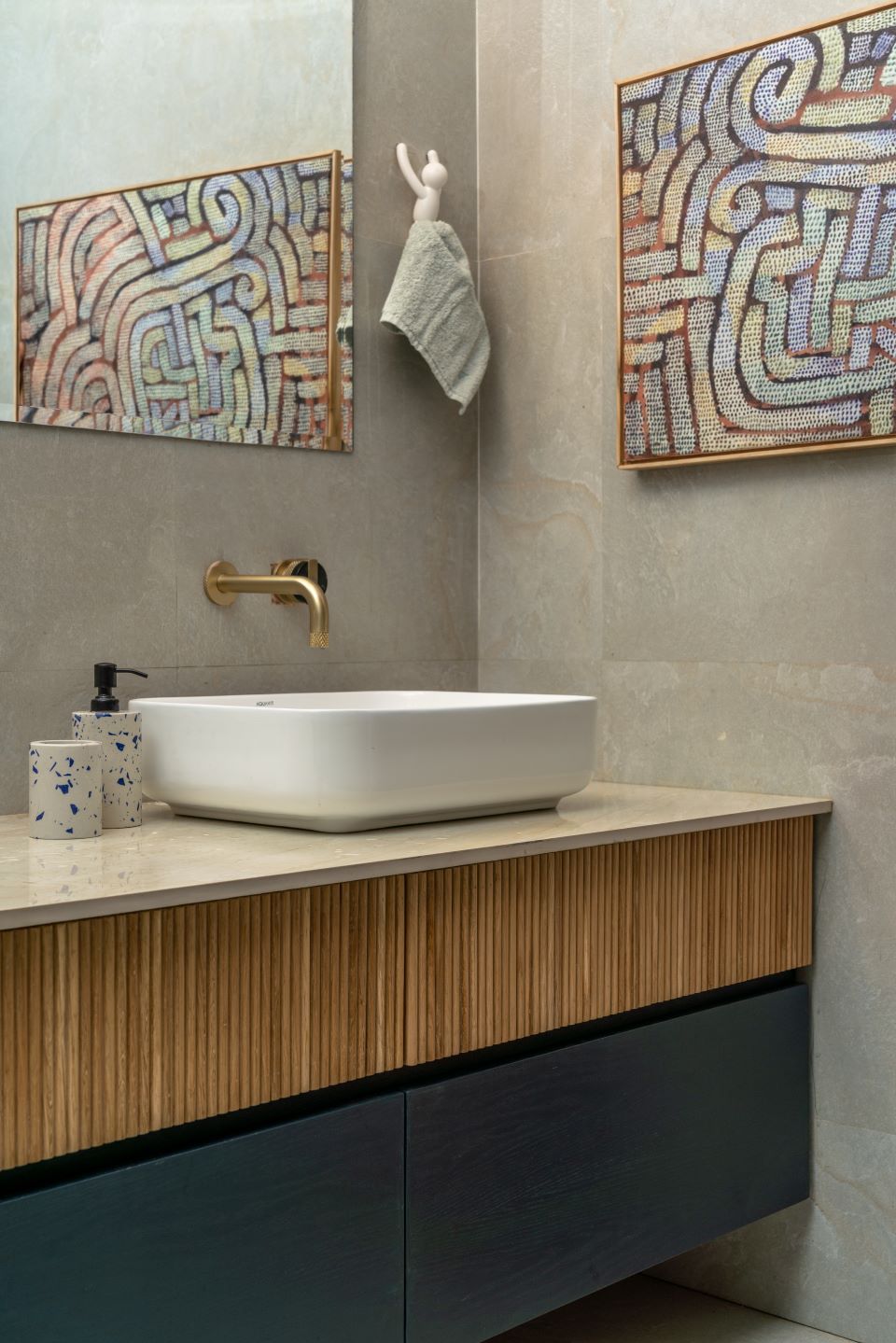
A minimal and clean material palette runs throughout the Kanso House. While the walls and ceiling has a lime plaster finish, the flooring is wooden oak engineered floor from FCML. All the woodwork (fixed and movable) has been finished in wood veneer and stained to different shades. Original brass handles customised by local vendor add hints of gold in the space. Handmade Spanish tiles in the balcony area in a blue shade adds an authentic look to the space.
“Each material used is palpable and captivating, that it makes one feel the textures. The soft floor allows the user to walk barefoot in the calm room and enjoy the subtle play of light and shadows created by the sunlight entering through the green screens,” explains Pranvi.
 The challenges
“Since the main staircase of the residence was very narrow, all the fixed and movable items had to be brought in parts and assembled at site,” says Dhruv. “Also, only one team could work at site in a comfortable way which made it very important for us to streamline the deliverables and track the site processes along with the site team,” adds Pranvi.
Fact file
Project: Kanso House
Client: Nisha Chaubey
Location: Ashok Vihar, New Delhi
Area: 600 sq ft
Principal architects: Dhruv DV and Pranvi Jain
Contractors: Mavi Buildtech Pvt Ltd
Add a Comment