

Studio Yamini design an apartment that puts the family’s art collection firmly into focus.
Curated by: Rupali Sebastian
Photographs: Photographix India; courtesy Studio Yamini
 The site
The project comprises two 4BHK apartments in Vadodara, combined and converted into a 6BHK flat.
The brief
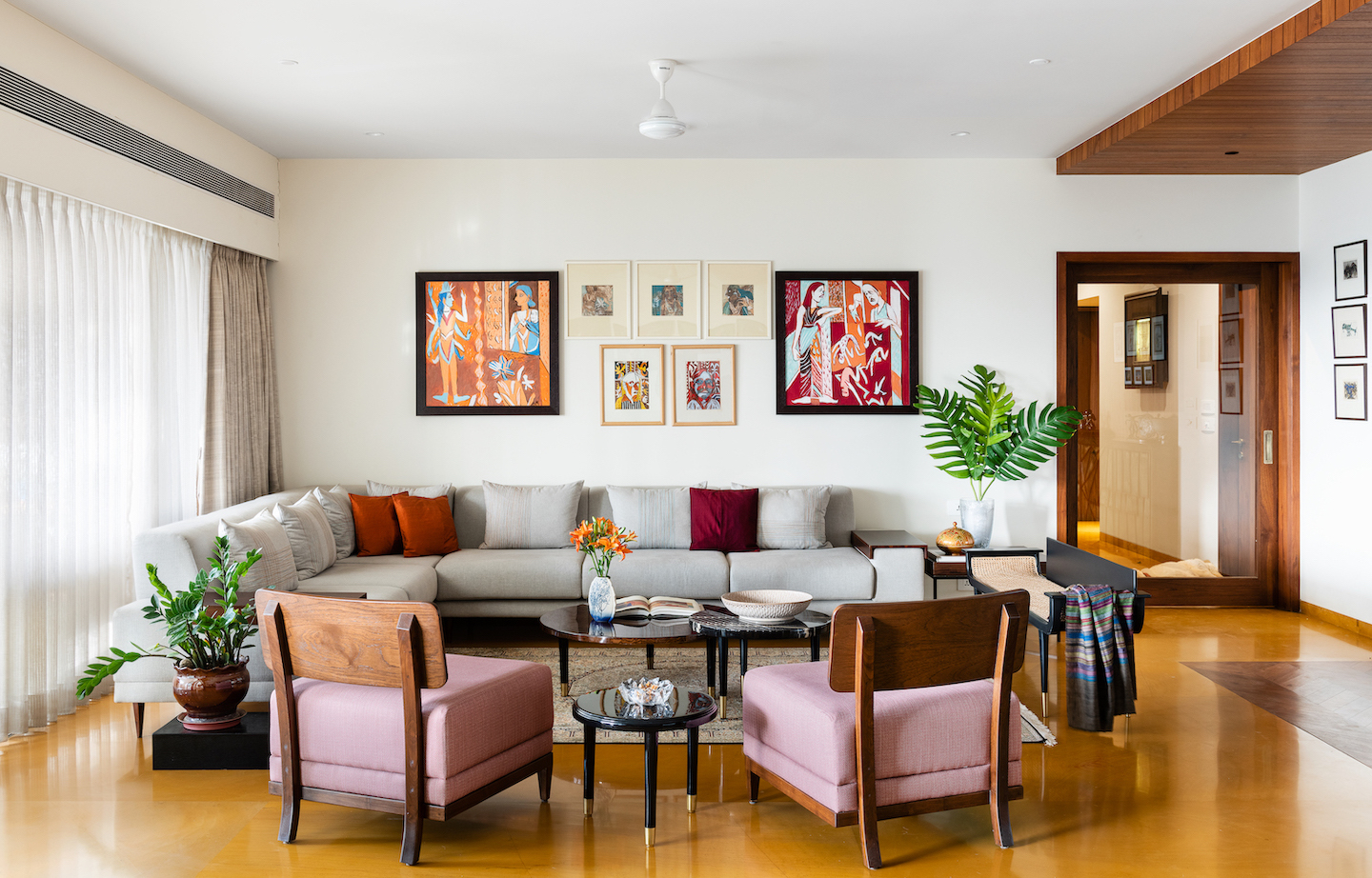
The basic requirement was to have five bedrooms, one guest room, a media/family room, dining room, kitchen, a servant room and a box room. Originally industrialists, the clients have been collecting art for many years, and now possess an enviable collection of paintings and sculptures. ”It was different but very interesting to meet the clients for design discussions,” says architects Mitul and Mehul Shah of Studio Yamini. “Different because instead of discussing technical aspects or design ideas, we would go on talking about different artists and their works. We would keep discussing which wall could be given to which artist and how we would display the works. Art became the dominant factor in our design process.” This aspect also became the challenge of the assignment.
 The material and colour palettes
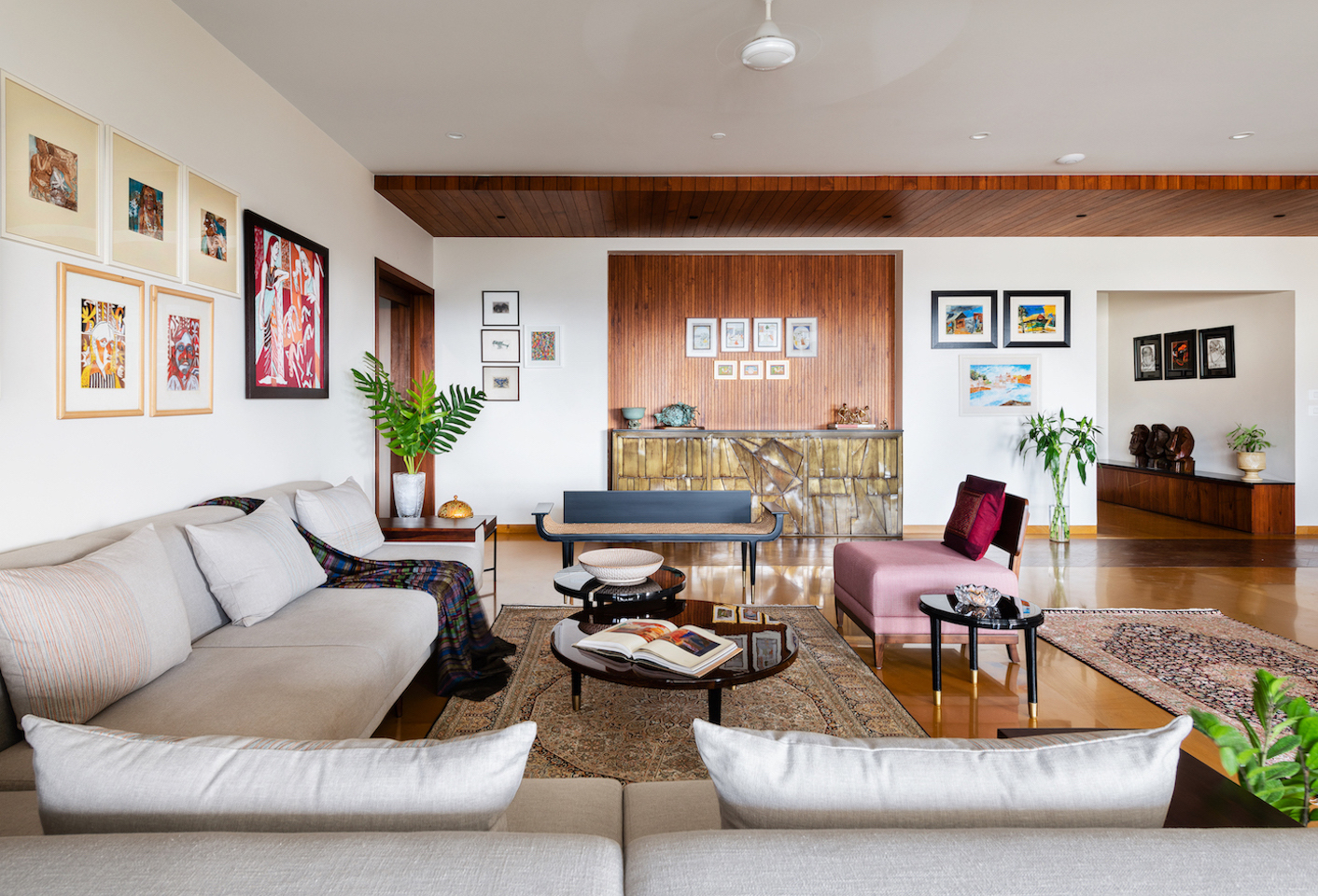
The materiality was intentionally left minimal, creating subtle, understated shells that let the beauty of the art shine through. The flooring features either Jaisalmer, Kota or wood, while brass makes an appearance as inlay, hardware or even complete furniture pieces. These materials are ably supported by exposed brick, wicker work and beautiful furnishings.
The spatial flow
The lift opens into a large lobby bedecked with plants and few sculptures. A large ceramic plate by Vinod Daroz is mounted on the top of the name plate next to the main door which features teak wood pattis and a long brass handle. The foyer opens into a wall which is panelled with diagonal patterns created from teakwood. This wall is dedicated to KG Subramanyan’s works (KG Subramanyan). The adjoining two walls display works by Jyoti Bhatt and Jyotsana Bhatt. On the floor is a a red Kashmiri silk carpet which complements the yellow from the Jaisalmer floor. On a low wooden console are three heads by Shanta, while the wall behind is uplifted by Vaikuntam’s oeuvre. Two chola sculptures in black rest on a pedestal kept on the floor.
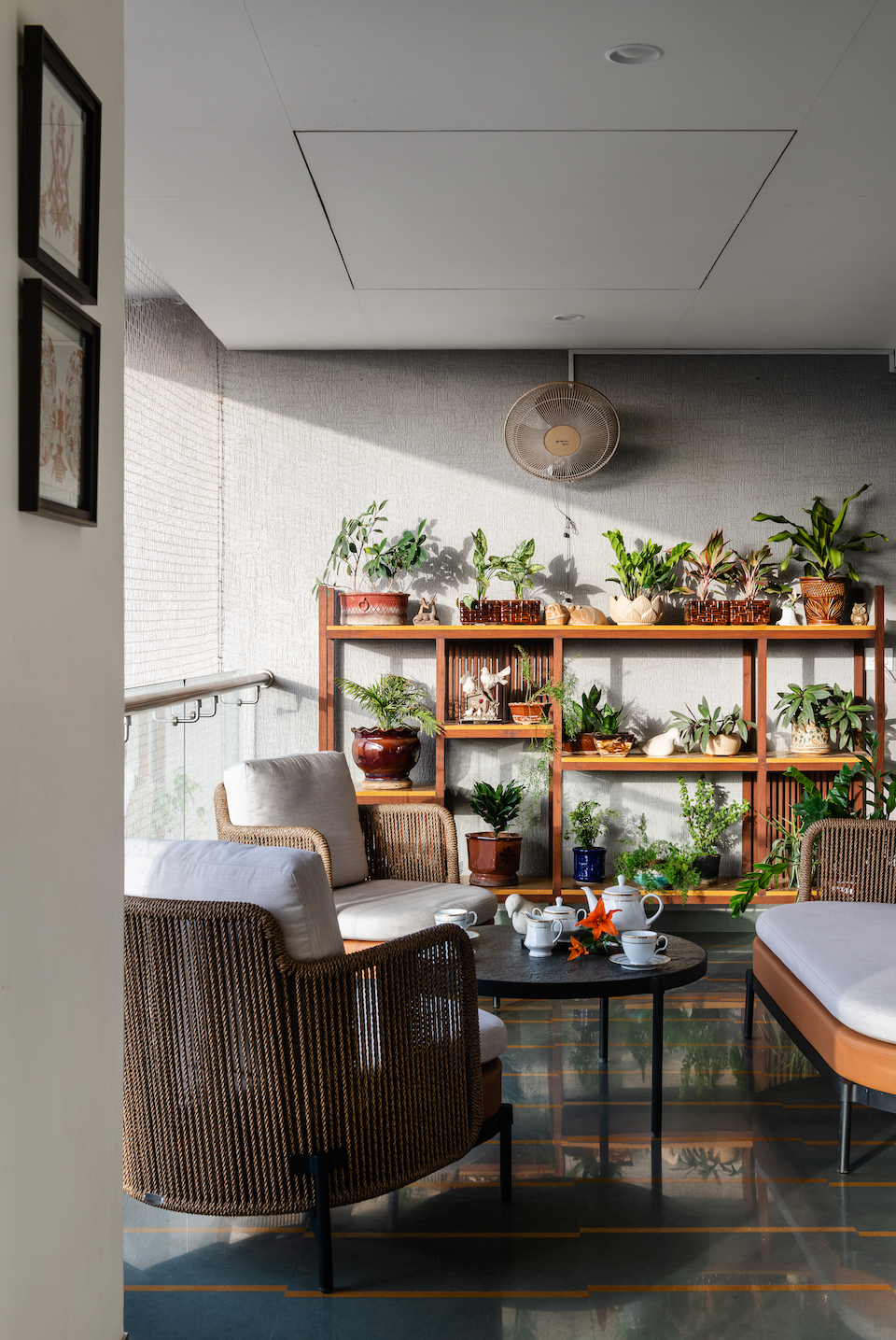
 The living room is apportioned into two separate seating areas, one slightly more formal than the other. On the formal side, the furniture is colour coordinated with wall-mounted art, while the furniture on the other side is neutral and casual. Because of its central location, the living room also became the common space to access the other areas in the house. “We intentionally designed a pattern in teak wood and inserted it in the main flooring, turning the passage into a design element for that space,” reveals the duo. In a teak wood-panelled niche on the informal side, a sculptural wall console lures the eye. Old miniature paintings from the clients’ private collection, beautifully framed in tarnished brass, are mounted over the teak wood panelling. The living room opens into a large balcony filled with beautiful bonsai — a testimony to the green thumb of the lady of the house.
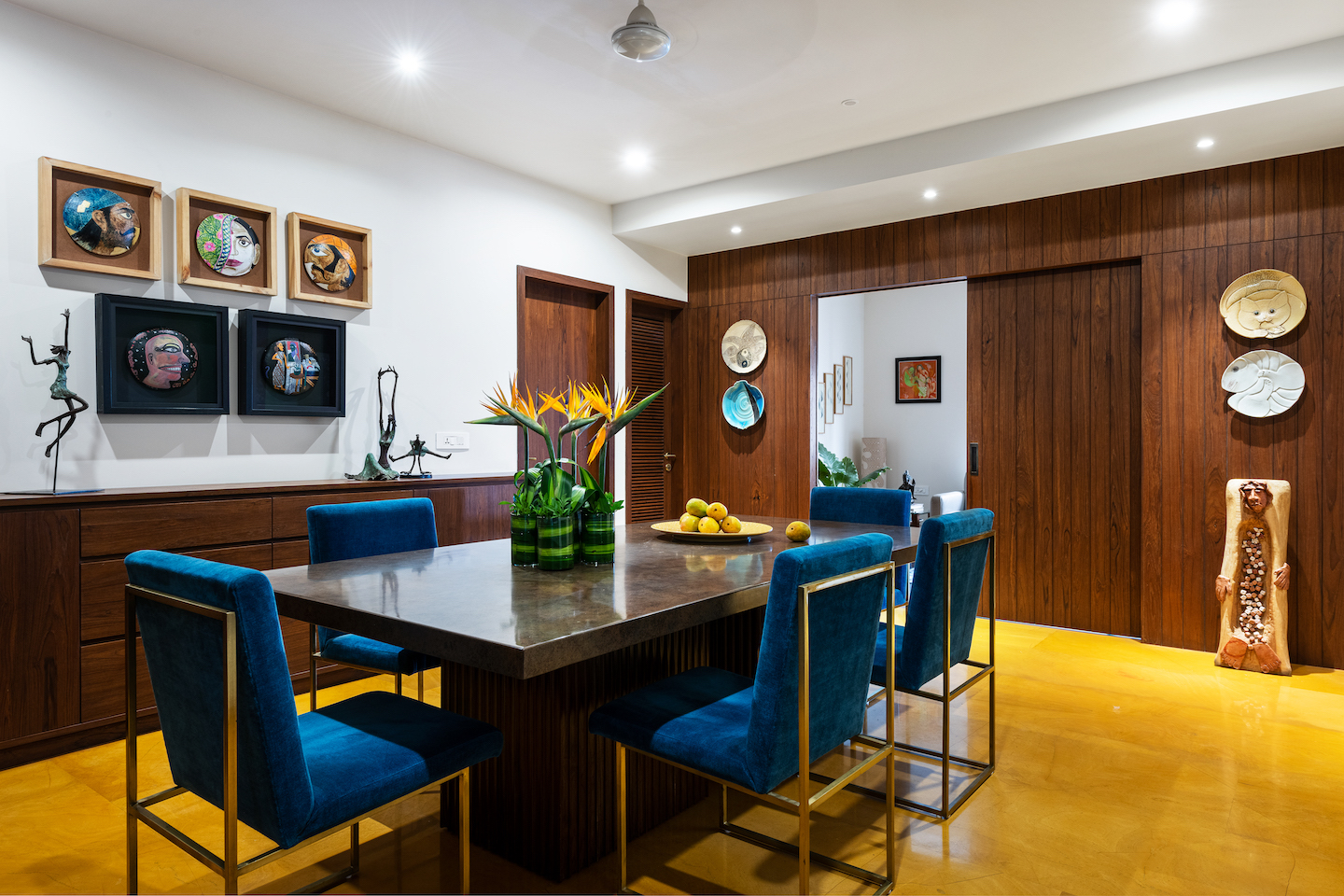
The dining area is behind the living room, and lies adjacent to the guest room. The only source of natural light for the dining area is the window in the guest room. To tackle this, a sliding wooden partition was between the two rooms. The guest room also doubles up as a spill-over seating area for the dining room. The dining chairs are made of thin solid brass members whereas the dining table has a ribbed base in teakwood with an iron ore look-alike top. The guest room has a sofa cum bed from Natuzzi.
 The room adjoining the living room on the other side is turned into a lounge area. This space becomes the connecting area for the three bedrooms and the media room. The layout was designed to accommodate a common seating area between the bedrooms as well as work as a spill-over space outside the media room. The media room also acts as a family room, and features a C-shaped sofa with leather recliners.
The master bedroom is intentionally kept neutral and elegant. Two large arts above the bed take the focus. The face of the wardrobe is clad in long teak wood pattis to give it a feel of panelling. A chest of drawers is kept in the niche near the bed. The flooring is in mirror polished Kota stone.
The daughter wanted a room with a rustic character. “Therefore we developed a mood board with exposed brick, teak wood, wicker and Kota stone as flooring,” elucidates the duo. The wall behind the bed is clad in hand made Turkish pattern exposed bricks and displays black and white art. The headboard is upholstered with a bohemian print fabric. The wardrobe shutters are finished in teak wood with wicker.
 The elder son and his wife wanted a clean and modern room. “We decided to go with a very minimal palette for the room. The son was clear to have a wooden floor in his room from the start. So we finalised with engineered wood flooring in a herringbone pattern. They had also expressed their liking for a four-poster bed in the initial discussion meeting but were not sure if it would work in this space. We decided to give the four-poster bed a modern twist using slim sections of brass. It really helped us to make the bed look sleek and modern.”
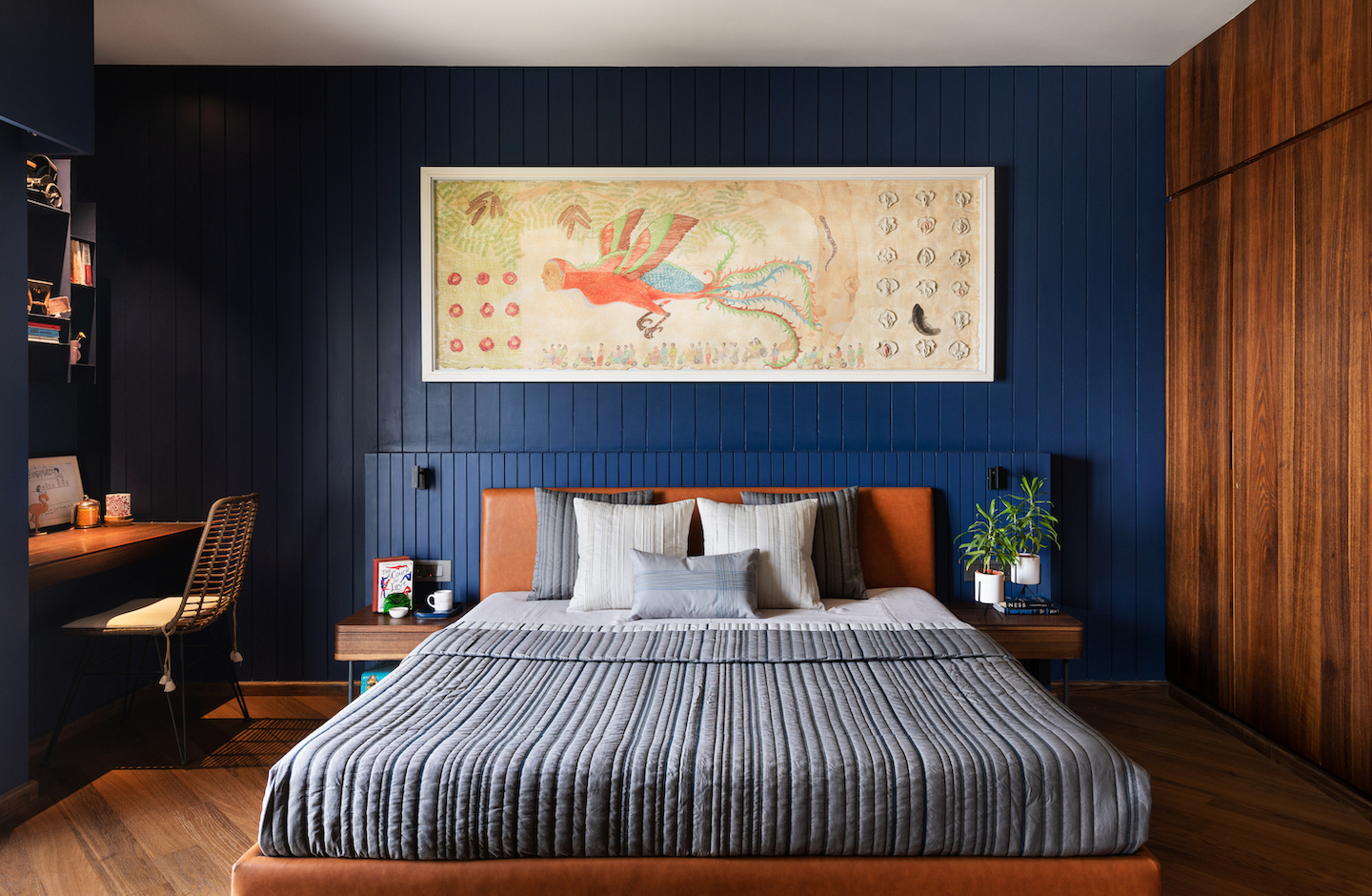
For the second son and his wife, the design direction selected was dark, cosy and plush, articulated with deep coloured walls and a bed fully upholstered in leather with sleek metal legs. The engineered wood floor is tweaked by laying the planks in a diagonal fashion. An oversize horizontal art draws the focus in the entire room. The free-standing column has a series of prints fixed on them.
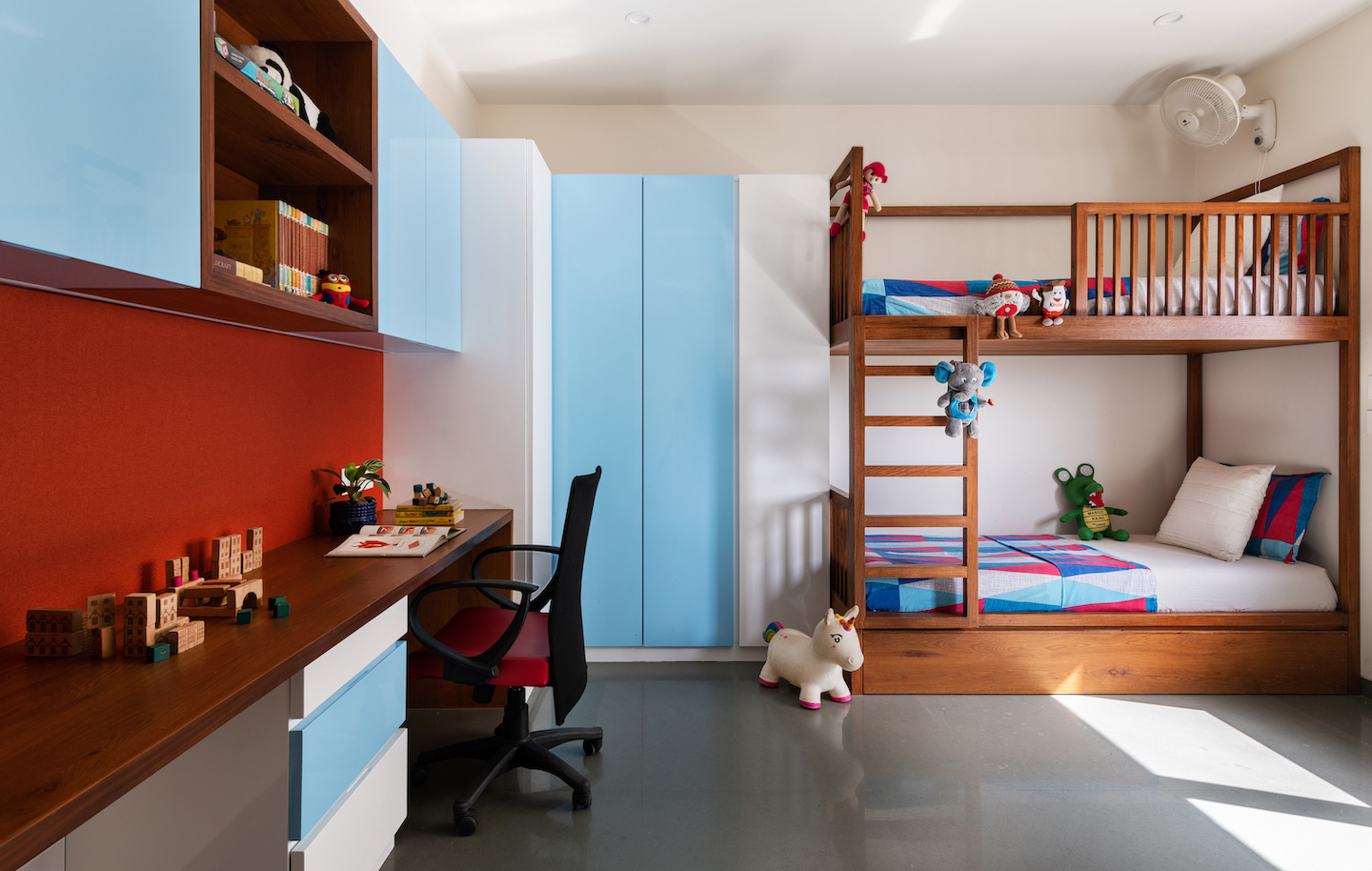 The kid’s bedroom had to look like a kid’s bedroom. “We thought of playing with shades of blue and white for the furniture and adding reds as pop for the room. The flooring for the room is in Kota stone. A bunk bed was designed for the room to save floor space for the kids to play/or do their activity.”
Fact file
Project: The Gallery House
Location: Vadodara
Area: 5,000 sq ft (approx)
Principal architects: Mitul Shah and Mehul Shah
Add a Comment