
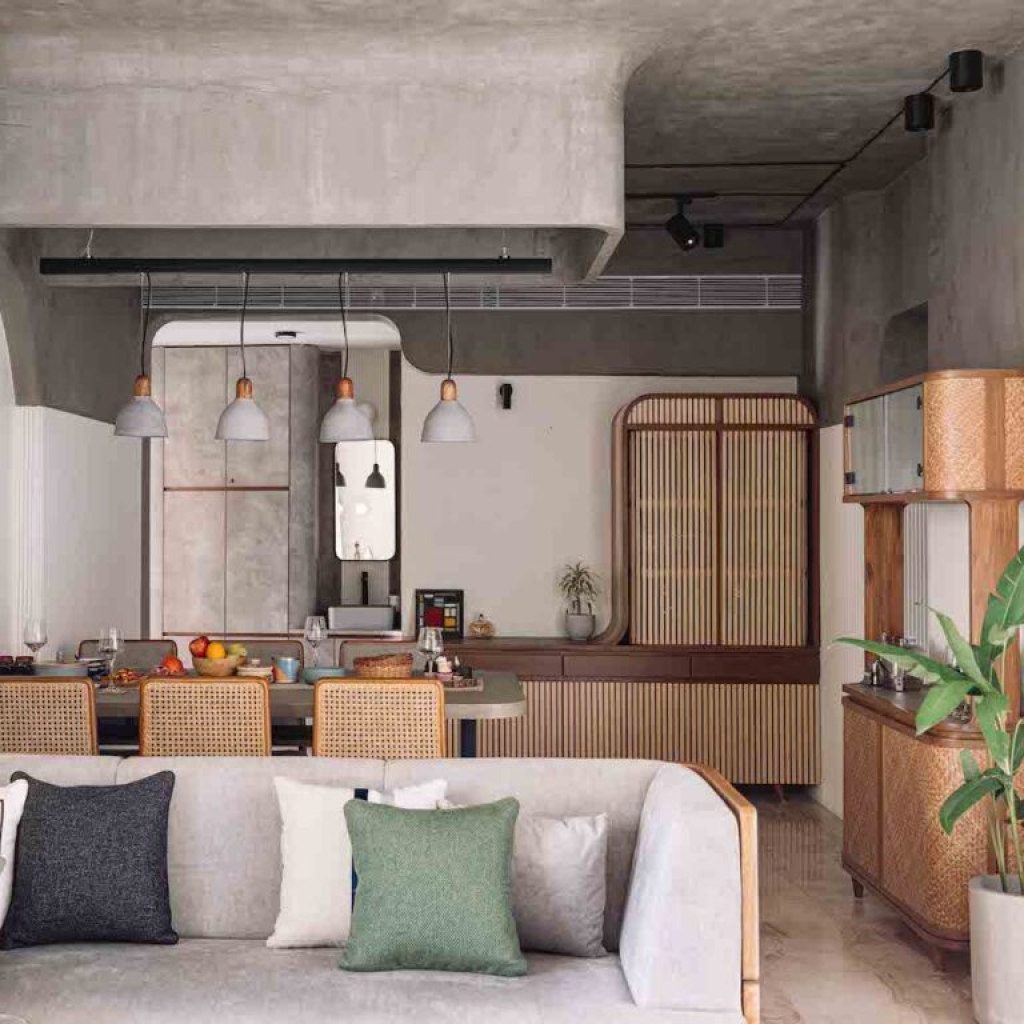
Design firm Jetsons uses flowy concrete forms and lines to spin a distinct narrative ruled by minimalism and diversity of experience.
Curated by: Rupali Sebastian
Photographs: Ishita Sitwala; courtesy Jetsons
 The site
The site is located in the west of the city, Prahladnagar, Ahmedabad — a developed locality with a mix of prominent residential and commercial projects, offering a walk-to-work concept to its residents. The design of this house is inspired by traditional homes of Ahmedabad and has a vibrant and modern look. “The site when it was provided to us was blank slate with just bare walls, windows and flooring,” reveals architect Jeet Soneji, founder, Jetsons.
The brief
“We got lucky with the clients where they came to us with an empty slate and they didn’t really have a specific brief or mood for this project,” the architect tells us. “The only brief that was given to us was to create a space which says ‘home’ the moment you step into the space.” While the clients were keenly involved with the design process and especially the details, they trusted Jetsons’ design team with its take on a post-modern contemporary Ahmedabad house. “The two words, warm and soft, are what formulated the major aspect of our design brief for the clients which we later translated into our design language,” says Jeet.
 The design intent
The given residence is an amalgamation of three major elements – curves, concrete and lines – which are repeated throughout the house in various mediums in terms of material palettes, texture, edges and finishes. Curves are used to replace the perpendicular edges with soft rounded surfaces, concrete is used as a base material in different forms to tie the house together and the repeating line detail is used as a binding element throughout the house.
The civil intervention
“There were two civil interventions that were done on this site,” explains Jeet. “One was breaking the kitchen wall to create a curved partition wall to increase the storage space from the inside. The other was in the master bedroom, where we broke the master bathroom wall to fit in a walk-in wardrobe with storage space on both sides of the closet.”
 The spatial configuration
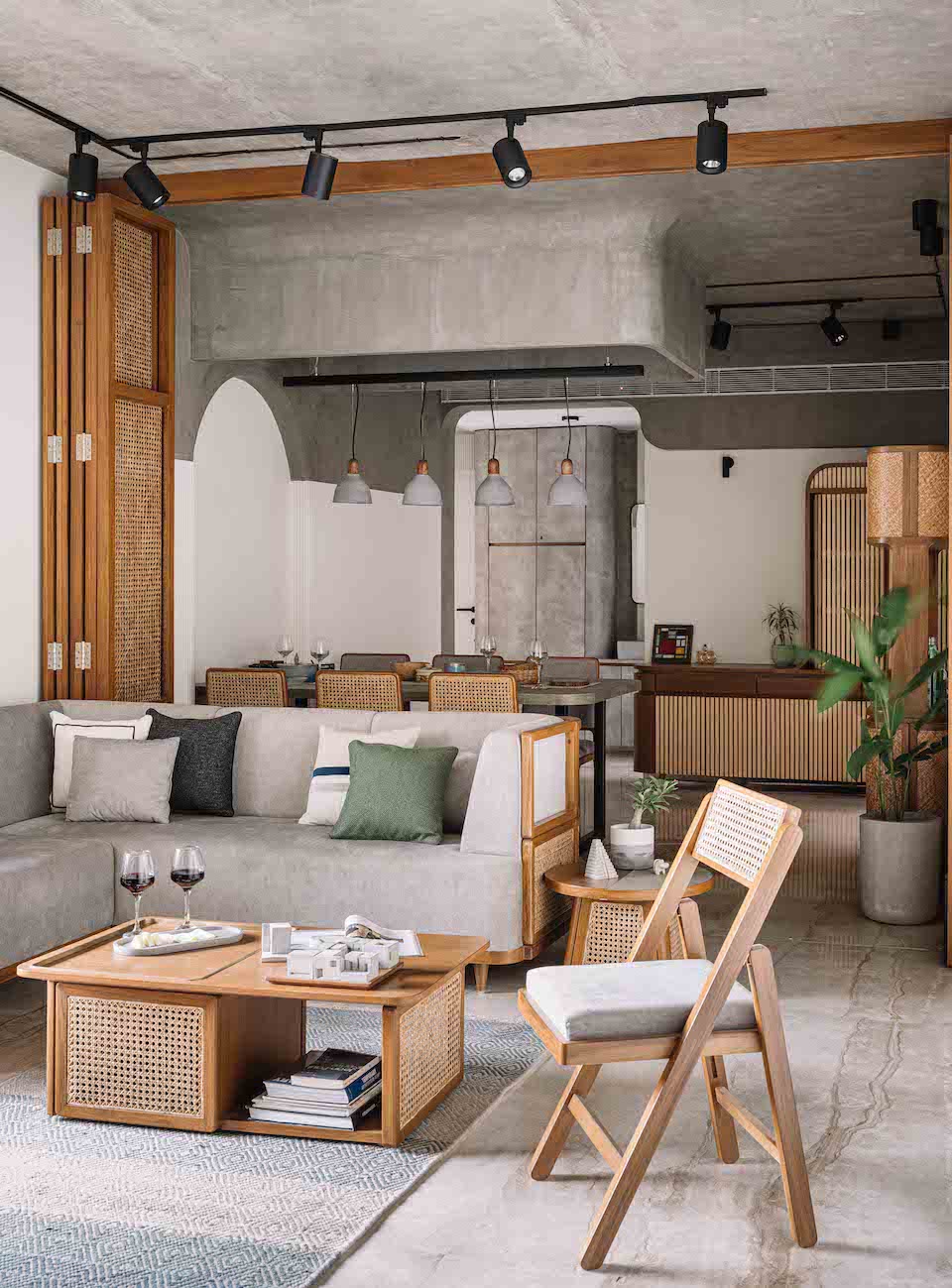
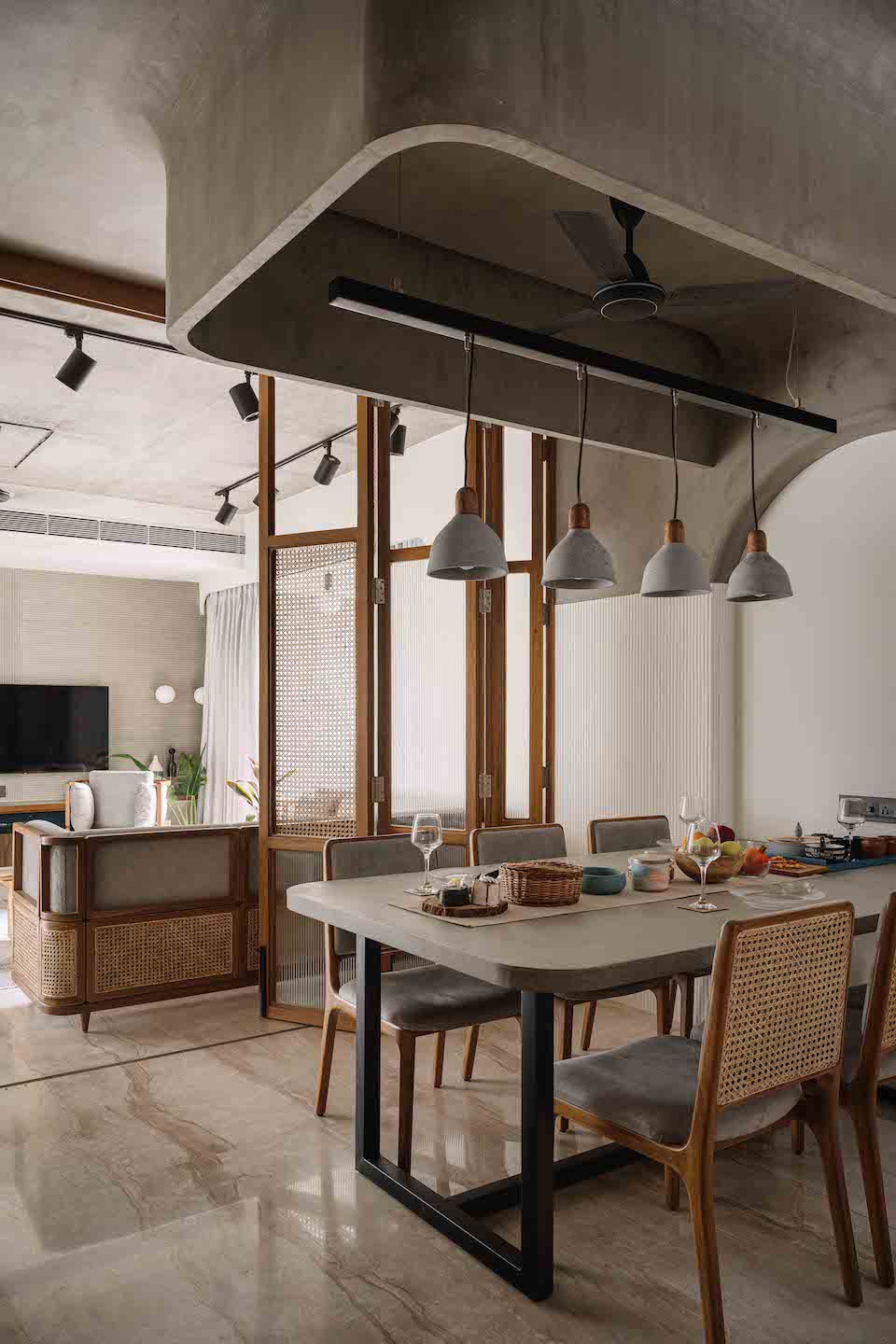
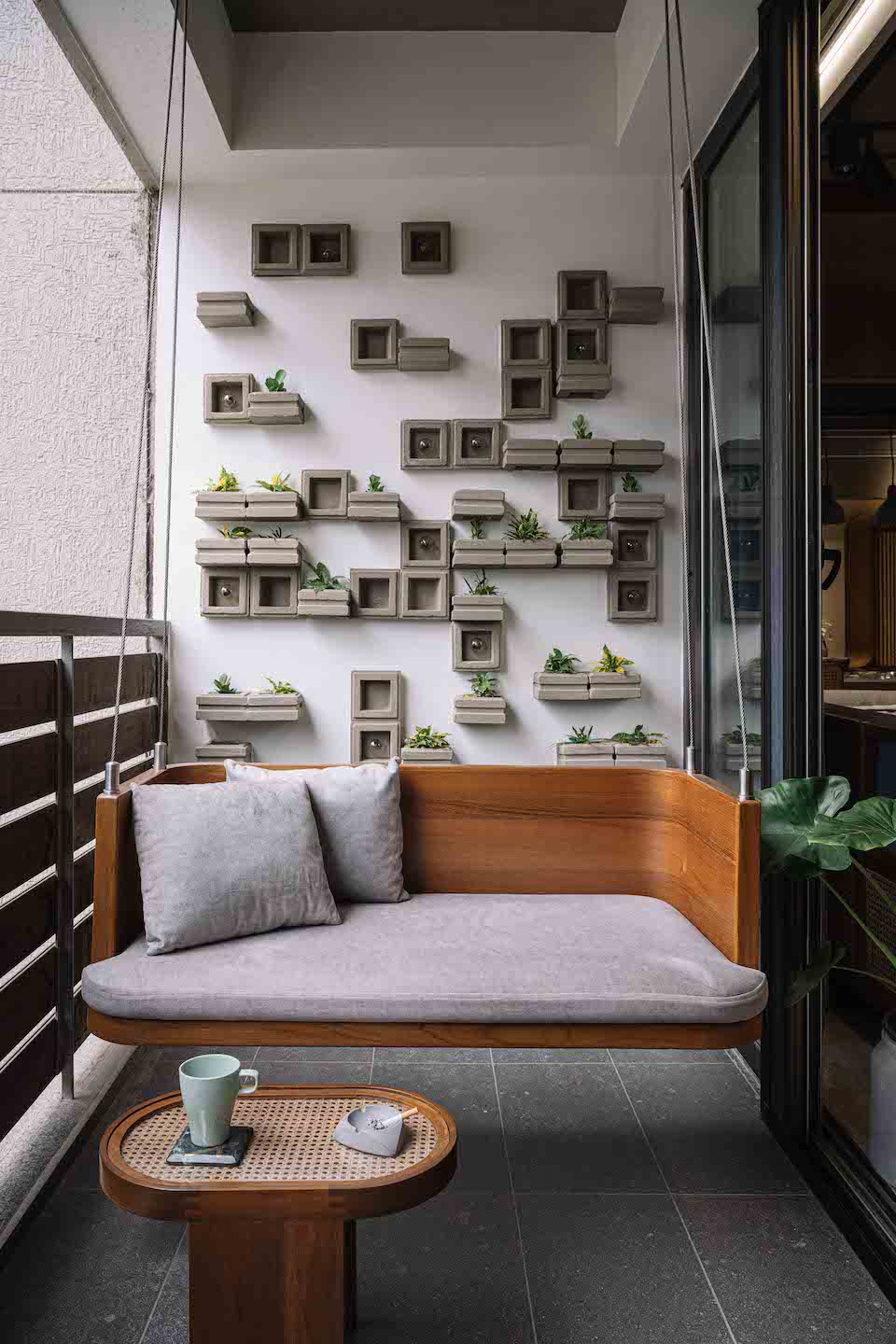
As you enter the space, the entrance has a bench seating with storage units on the sides with an entry door leading to bedroom 01 which is the daughter’s bedroom with an attached toilet. Moving right from the bedroom door, you enter the living area with an L-shaped sofa, a side chair and a centre table with a large window with a balcony with a jhula backed with a Siporex wall with planters and zero watt bulbs. The dining area and the living area are separated by a collapsible, sliding-folding partition made of wood, cane and fluted glass. Adjacent to the dining table is the bar area with a crockery/ mandir unit placed right outside the kitchen entry. As you start moving towards the passage area from the dining, you see four doors, three of which lead to the master bedroom, the parents’ room with attached washroom and a guest bedroom. The remaining door on the other side of the passage leads to the common washroom.
 The material palette
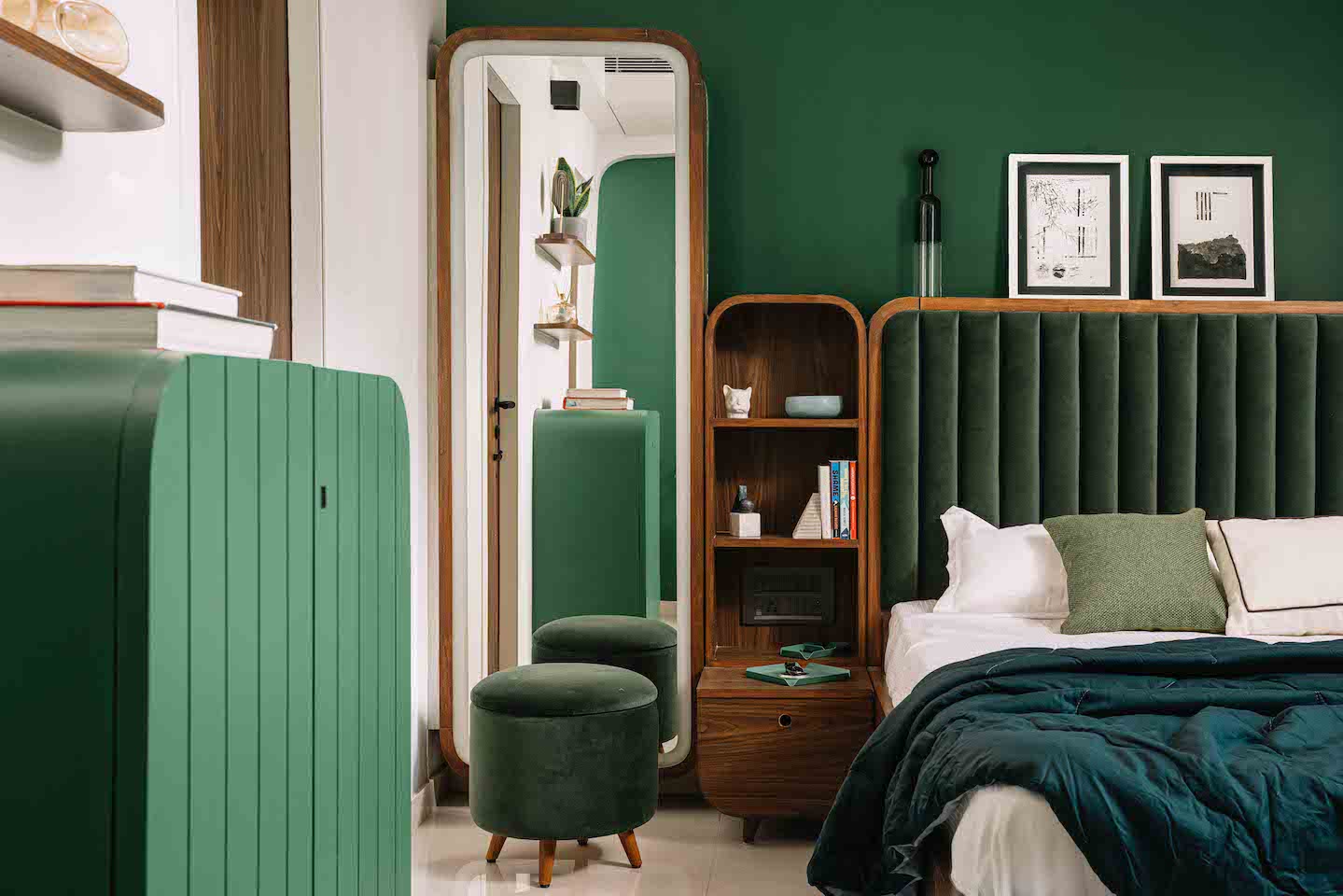
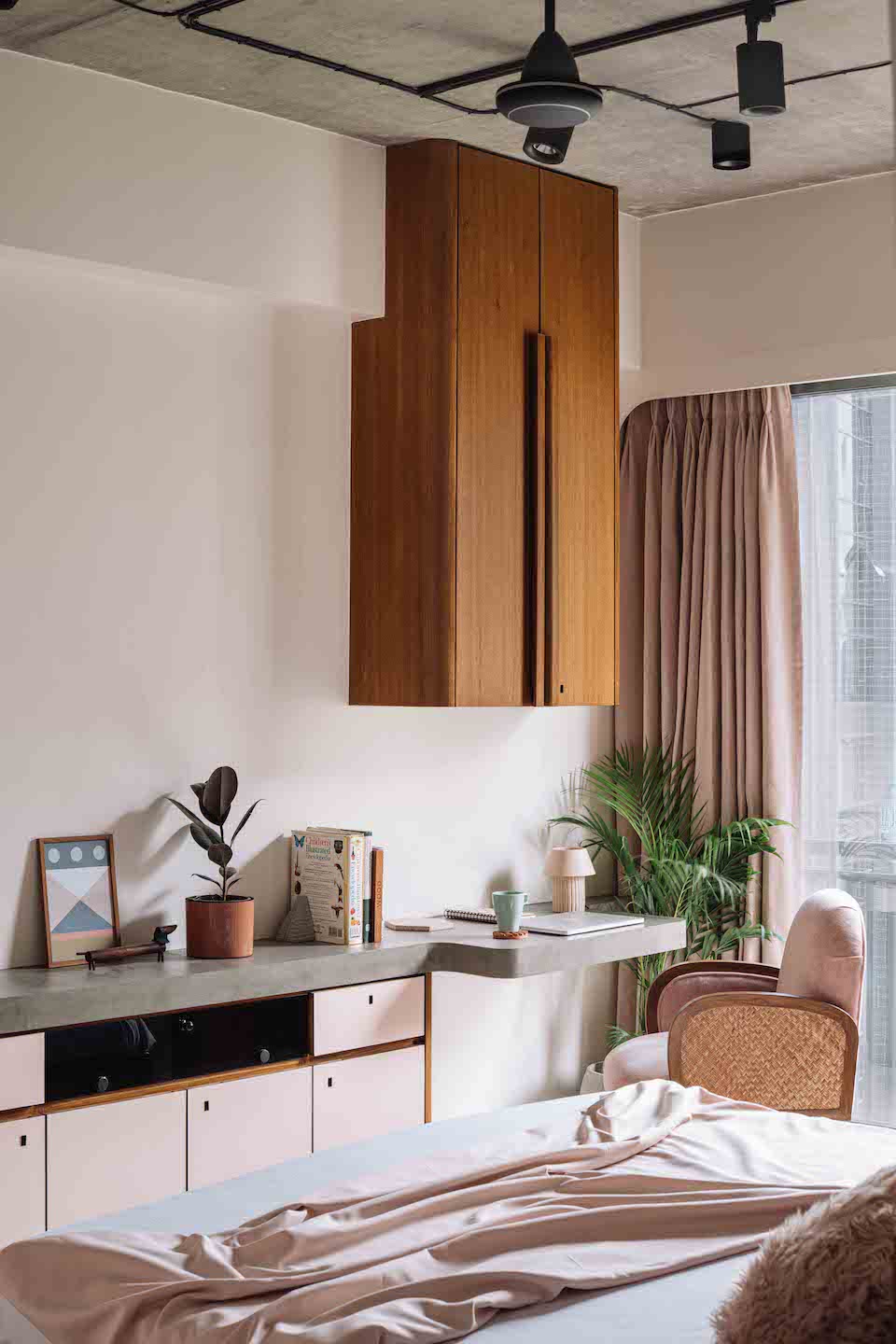
Soft edges, lines and curves are the main elements that help to pack the space with warmth and leisure. Concrete, cane and wood of different textures are used on the ceilings, walls and furniture pieces to show a relation of materials in various forms. The apartment also has textures like cane and fluted glass integrated with modern contemporary furniture pieces. Olive, nude, mustard and grey are the four prime colours in each room. These are fused with teak wood and birch ply to create a complimenting neutral colour scheme. The ceiling is kept in its raw form of exposed RCC slabs with matte black light fixtures. Some walls are covered in a palette of grey in concrete finish and others in white as a simple paint finish. The half-rounded flutes and curved surfaces are the key features of the walls which are deliberately repeated throughout the house. “In the selection of fabrics, we imitated the laminate and headboard colours in the curtains as well to create a seamless transition,” states the architect.
 The highlights
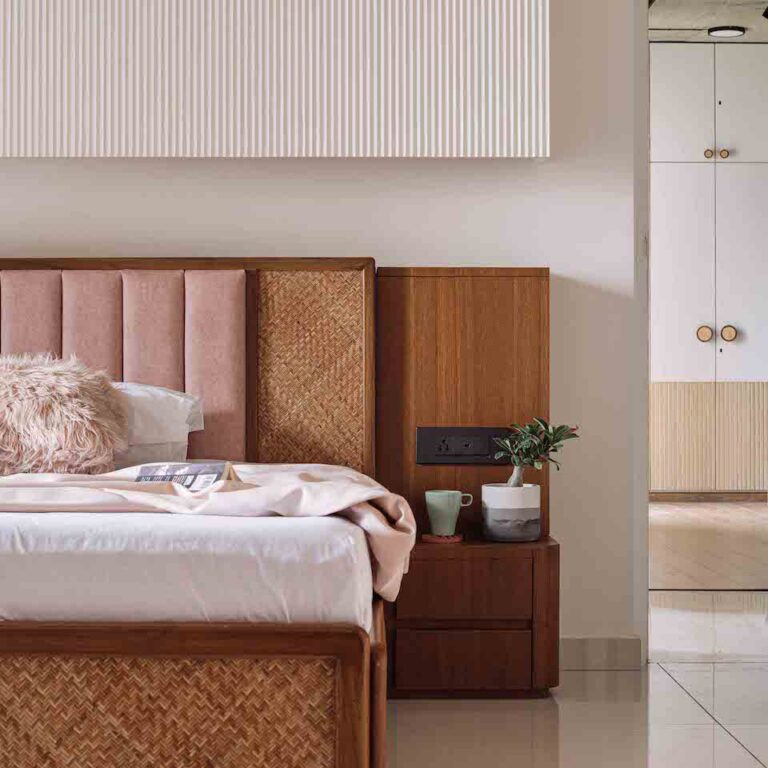
The design and aesthetics of this house are inspired by typical old-school iconic Indian furniture, but with a touch of post-modernism and a play of different materials. “We customised all the furniture pieces, be it jhula, side table, chairs or the dining table,” discloses Jeet. Each piece of furniture depicts the amount of time and detail spent behind it, from the way it looks to the way each texture feels, everything was given a thought. “The idea behind such intimate detailing was to create a home where the furniture and the materials used would not only define the given space as home but it would make it feel like a home,” he adds.
 The challenges
The sliding-folding partition screen in the living area is both the highlight and the challenge of this project. It separates the living and dining space into two sections when needed and is made in a fluted glass, teak wood and cane. The screen is a folding system of interconnected collapsible partition systems which can be arranged in six or more combinations. “The 9′ ft height of these humungous shutters with added fluted glass, computed the challenge of its movement but our main man and head carpenter Suresh Gajjar made it possible like a piece of cake. This set of doors separates the dining and living area, and as it unfolds itself, it displays a tease of the dining space through the fluted glass. The blend of teak wood and cane with its integrated detailing along with the vertical flutes and a few open windows, makes it a highlight of our house.”
Fact file
Project: Curves, Concrete and Lines
Location: Prahladnagar, Ahmedabad
Area: 1,531 sq ft
Principal architect: Jeet Soneji
Design team: Tejanshi Shah and Suhail Panjawani
Concrete Accessories: Concrete Crio
Lamps: Harshita Jamthani Designs
Add a Comment