
Designed by Loop Design Studio, Tulum Rooftop Restaurant and Bar is an experimental paradox in the brutalist context of Chandigarh — it a green, vernacular jungle themed space which aims to create a unique eating experience for the people of the city.
Curated by: Deepa Nair
Photographs: Purnesh Dev Nikhanj, courtesy Loop Design Studio

The site
Tulum, designed by Loop Design Studio is located on the 5th storey service terrace of The Toy Hotel in Chandigarh. The terrace offers beautiful scenic views of the skyline and the Shivalik mountain ranges surrounding the city. The terrace was converted and optimised into an open-to-sky restaurant space.
The brief
“The client brief directed the design team to create a restaurant space that is a complete contrast from the architectural language of the context. The directions were to curate a comfortable open-to-sky restaurant space that had a warm and vernacular material palette. The space also had to be nestled in and around a continuous natural green envelope that highlights the earthy monotone of the intervention,” informs Suvrita Bhardwaj and Nikhil Pratap Singh, principal architects, Loop Design Studio.
The civil intervention
The design called for a complete facelift of the existing service terrace space which was loaded with heavy equipment (generator, AC outdoor units and solar panels) and their busy network of wires. These had to be left untouched and unhampered as they catered to the hotel building below. The entire restaurant floor was raised in a metal frame to conceal the network of pipes beneath it. The service equipment were further concealed using movable/slider panels, green trellis and free standing walls.
The design intent
Tulum draws inspiration from the Mexican getaway destination by the same name and is curated as a superfluous, green and vernacular oasis. The design reflects a natural and earthy undertone that comes together in a systematic fashion using natural stone, bamboo, terrazzo, wood, cane, plaster and greens. Tulum is designed as an ode to nature and a complete antithesis to the cold modernist context of Chandigarh. “The intent is to create a story for the space with different elements acting out as various characters. The dynamic and organic sensory experience aims to provide a break from the rigid and controlled environments of regular restaurants,” explains Nikhil.
The spatial flow
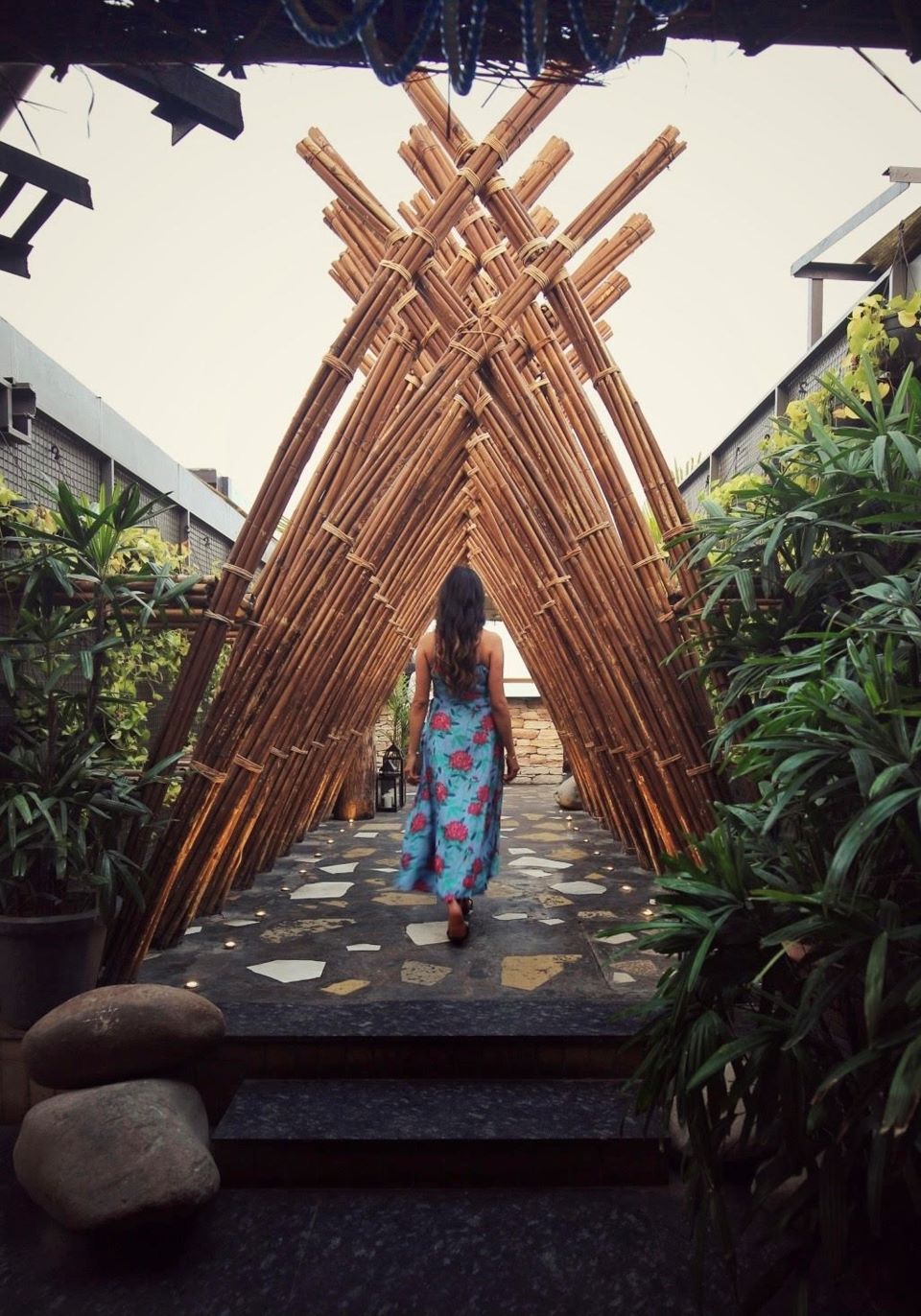
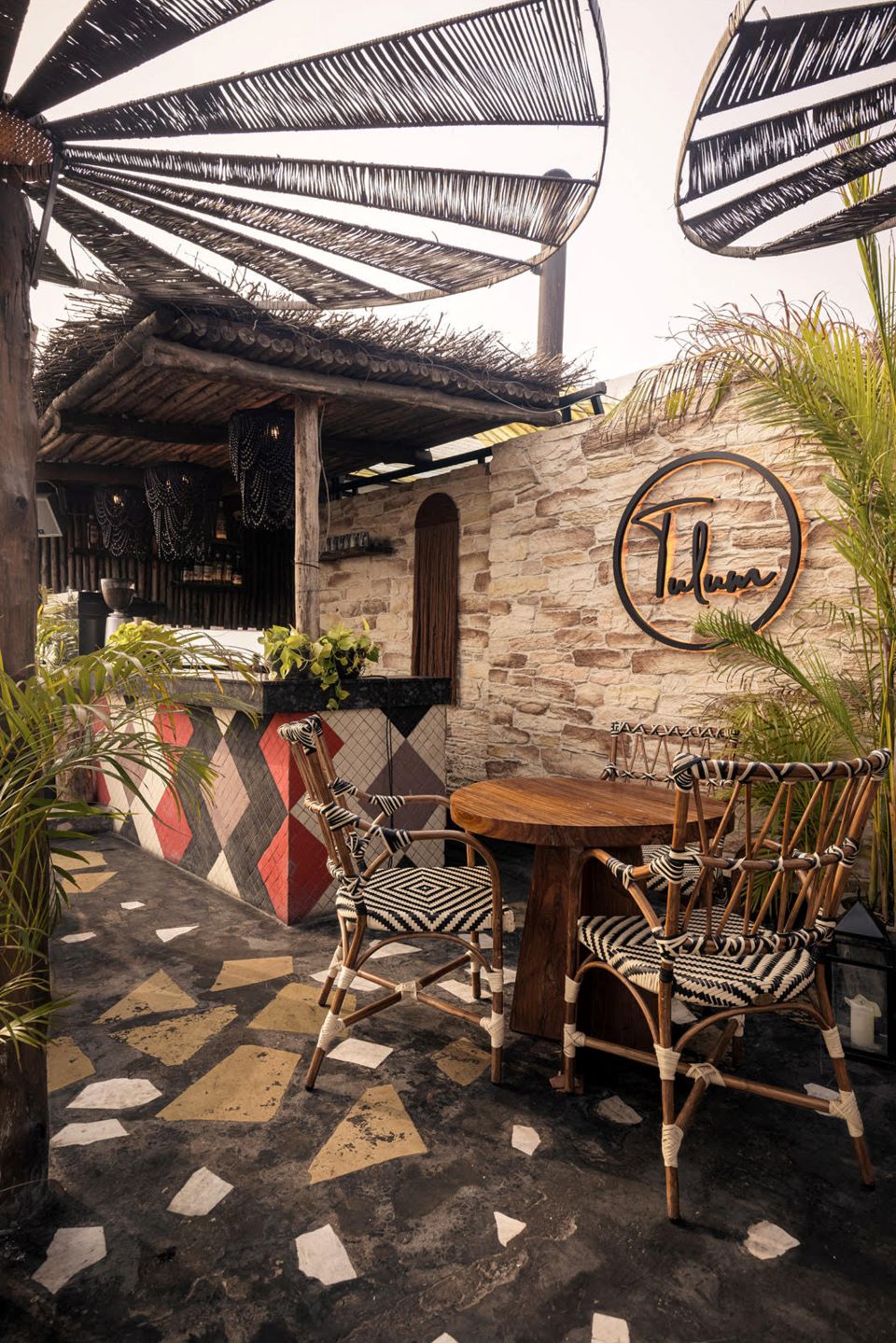
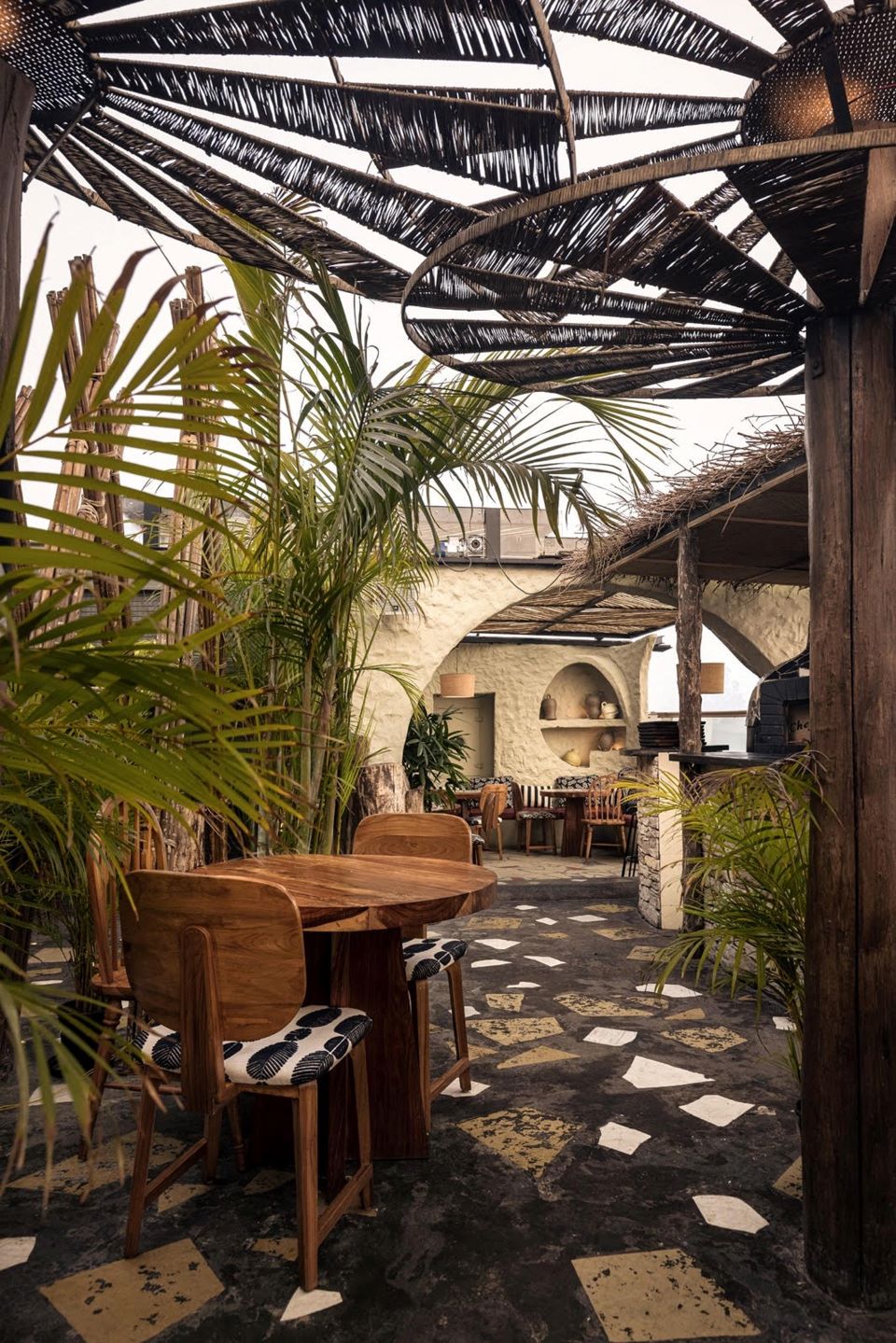
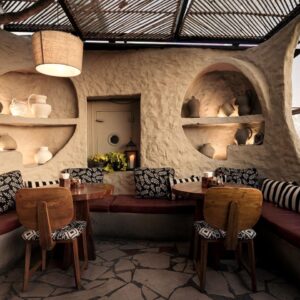
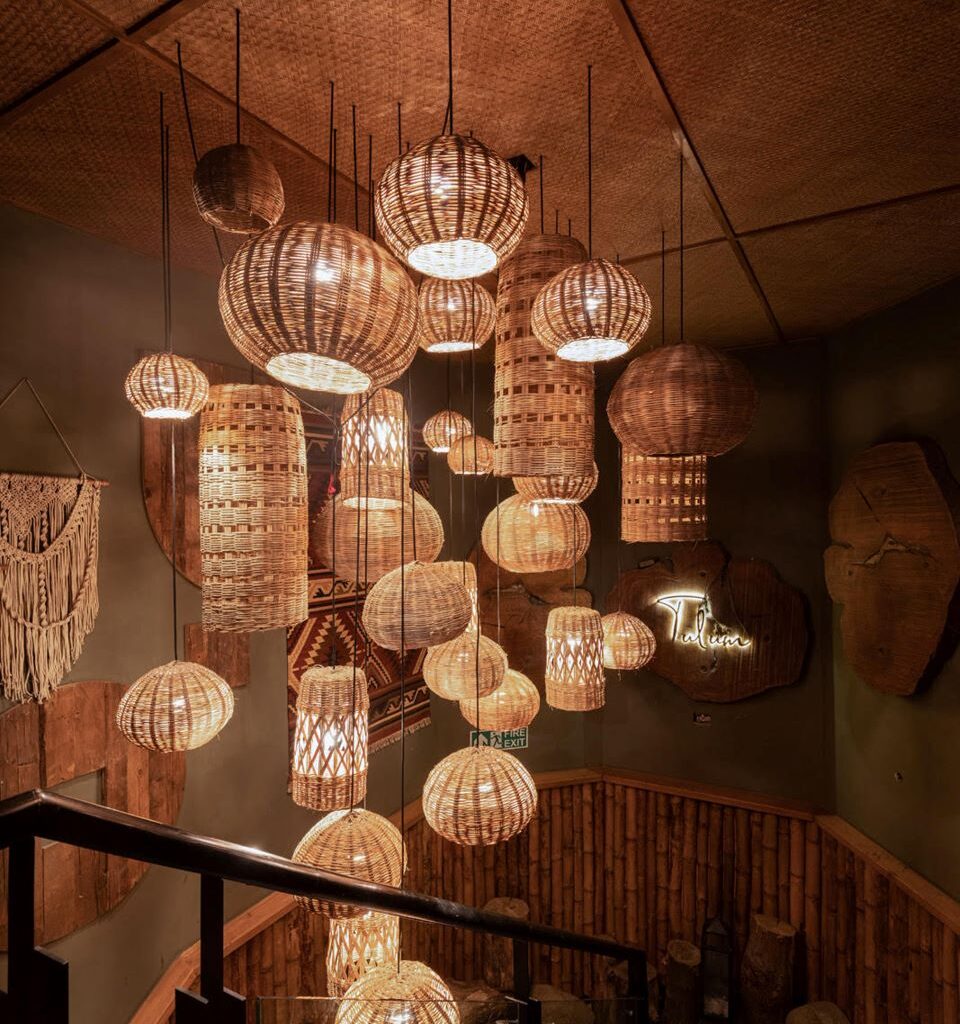
The mood for Tulum is set right from the entrance atrium which sees bamboo wainscotting and ethnic abstract ornamentation on the walls. What forms an impression, and a stunning one at that, are the cluster of cane lamps which hang from the ceiling, creating a surreal vibe as one moves closer to the restaurant. The entrance reflects the same aura of the atrium with its water cascade and a bamboo arched passage that frames and encompasses the view. The narrow bamboo gateway opens up into a cosy and dynamic seating area. The dreamy set-up consists of freestanding cane umbrella structures supported on actual tree trunks that create a semi permeable super structure above. The envelope is an architectural and aesthetic injection to the space and fulfills its function as a shading device to cut down the sun. The restaurant has an open pizzeria and a bar on opposite corners that are created using an organic material palette of mosaic, stone, cane and wood. A section of the restaurant is designed as a cave like corner that has undulated walls created in mud plaster. The curvilinear walls wrap the rigidity and create a free-flowing volume where surfaces transform themselves into niches and benches. The corner radiates its own energy yet comes together in a fluid fashion with the rest of the space.
The material palette
The palette constitutes of an earthy monotone of vernacular materials like cane, bamboo, wood and stone. Colour is added in the space through natural greens and Aztec print fabric for the kilims and the furniture.
The challenges
“The main design challenge was to create a stark contrast w.r.t the spatial language and yet assimilate it smoothly within the context. The green skyline of the city served as an infinite extension to the restaurant and we used it as the complementing factor to bind it to the city. The execution challenge was to create a restaurant space with minimal change to the existing service floor. So we created a layer of restaurant by camouflaging the existing structures using movable panels, metal frame floor and free standing walls,” says Suvrita.
The highlights
Out of the two specific elements that need special mention, one is the bamboo arch gateway that opens into the main restaurant space; and the second are the freestanding umbrella structures above the seating spaces. The arch frames the restaurant beautifully and creates a perfect journey for the visitor as it opens up into a larger seating space. Both the elements strengthen the vernacular character of the space and add al lot visual weight and impact to the restaurant.
The takeaway
“The one important takeaway from the project is that vernacular aspect of architecture can be a bit tricky w.r.t the execution. The material palette should be neat and the space should age gracefully as it heads into the future. Also, one should not be shy to experiment in an alien context. The job of an architect is to innovate and create new algorithms rather than blindly emulating a pre-existing language in the name of legacy,” say the architects.
Fact file
Project: Tulum – The Jungle Rooftoop Restaurant
Location: The Toy Hotel, Chandigarh
Area: 1,750 sq ft
Principal architects: Suvrita Bhardwaj and Nikhil Pratap Singh
Clients: Akshay Verma and Saanya Verma
Add a Comment