
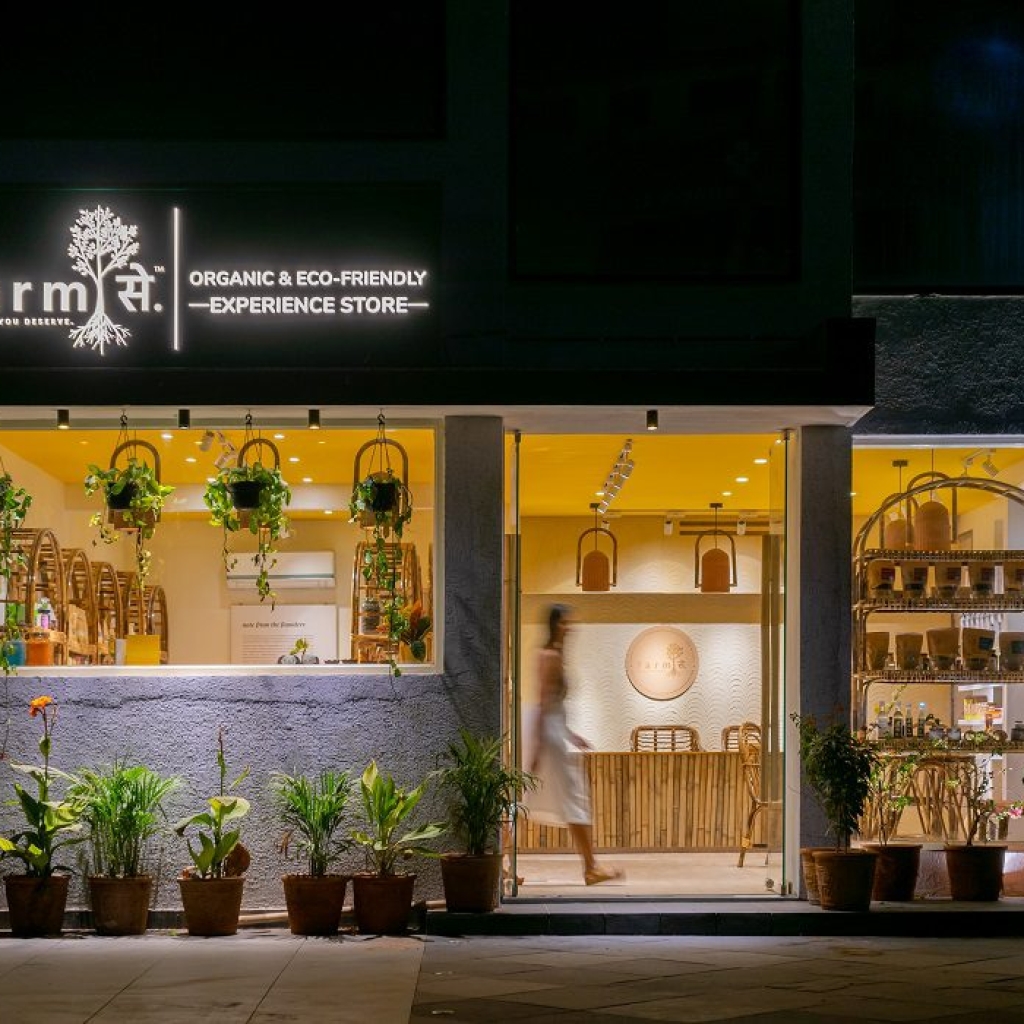
Studio Deshi’s design for the Farm Se India retail store in Ahmedabad complements the products they sell… all natural and organic.
Curated by: Tanaya Pednekar
Photographs: ShutterSpace, courtesy Studio Deshi
The brief
When Farm Se India decided to create a retail store, they approached Devanshi Doshi and Shivam Vaidya, principal architects, of Ahmedabad-based Studio Deshi to design the space. The brief was to design a 545 sq ft experience store, and create a visual identity for Farm Se India and their future franchisees. Farm Se India aims to provide access to affordable organic produce which include dry fruits, oats, kombucha among other products. As a brand was moving slowly towards becoming a zero plastic retail chain, the emphasis was on using natural and sustainable materials that aligns with the brands philosophy to provide access to organic and natural products.
The design intent
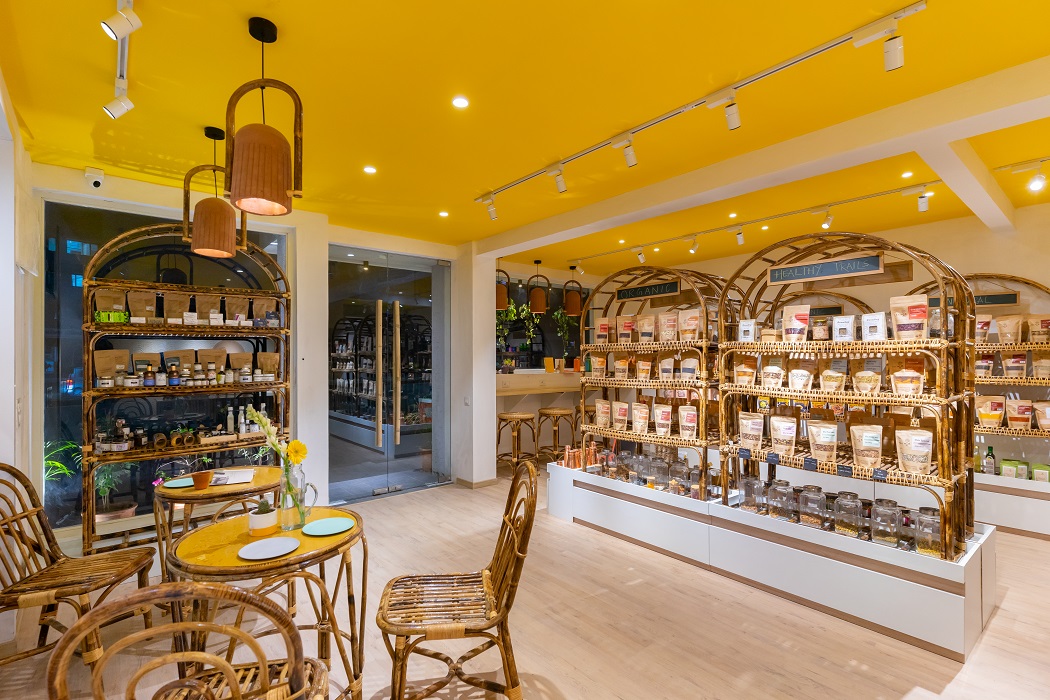
Farm Se India provides organic and natural products with an emphasis on the connection with people who make/produce them. Therefore, an organic, natural and sustainable store was envisioned with this brand philosophy at the core. From the cane racks, to the terracotta lamps, to the lippan art wall (a traditional mural craft of Kutch done using mixtures of clay) — each item was handcrafted by local artisans in the city. The store design is a celebration and tribute to these local crafts and artisans.
The spatial configuration
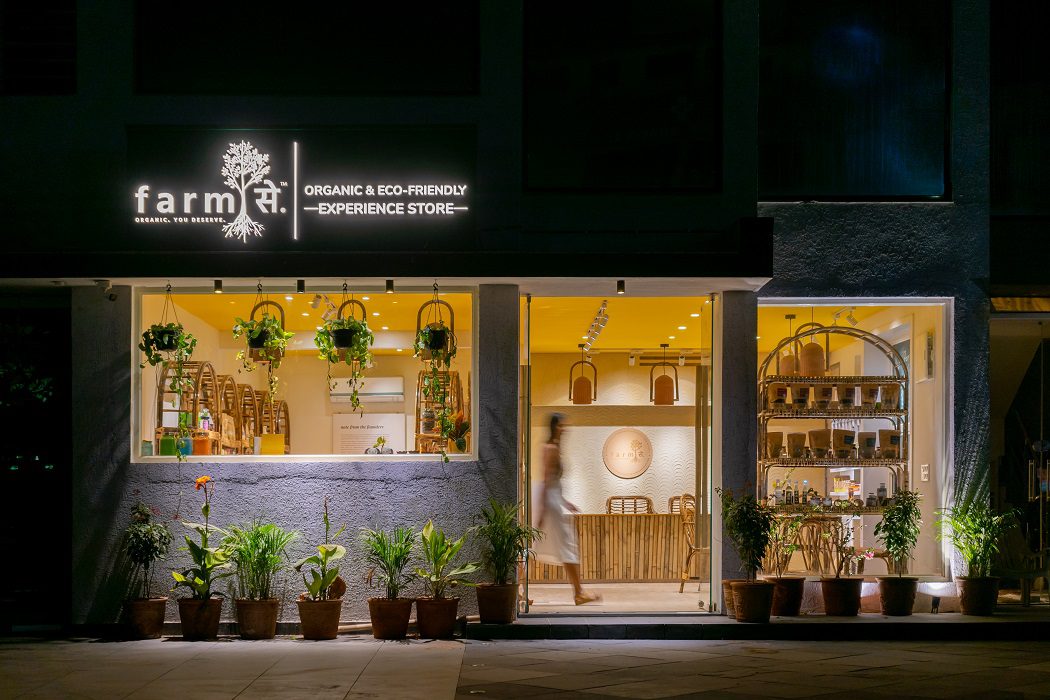
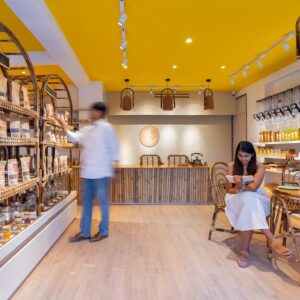
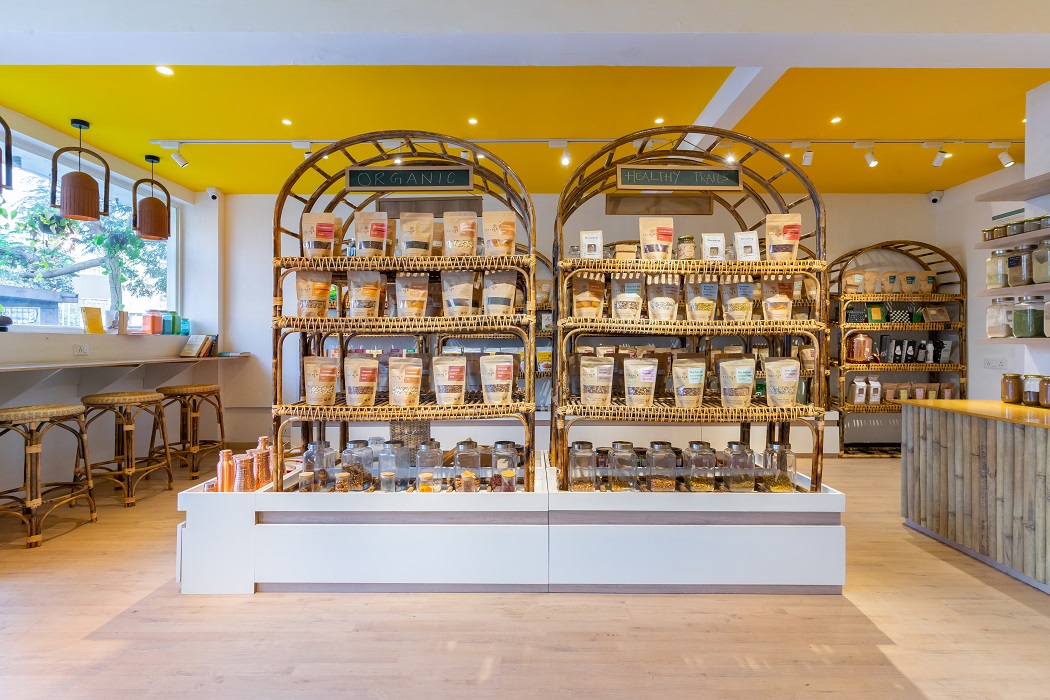
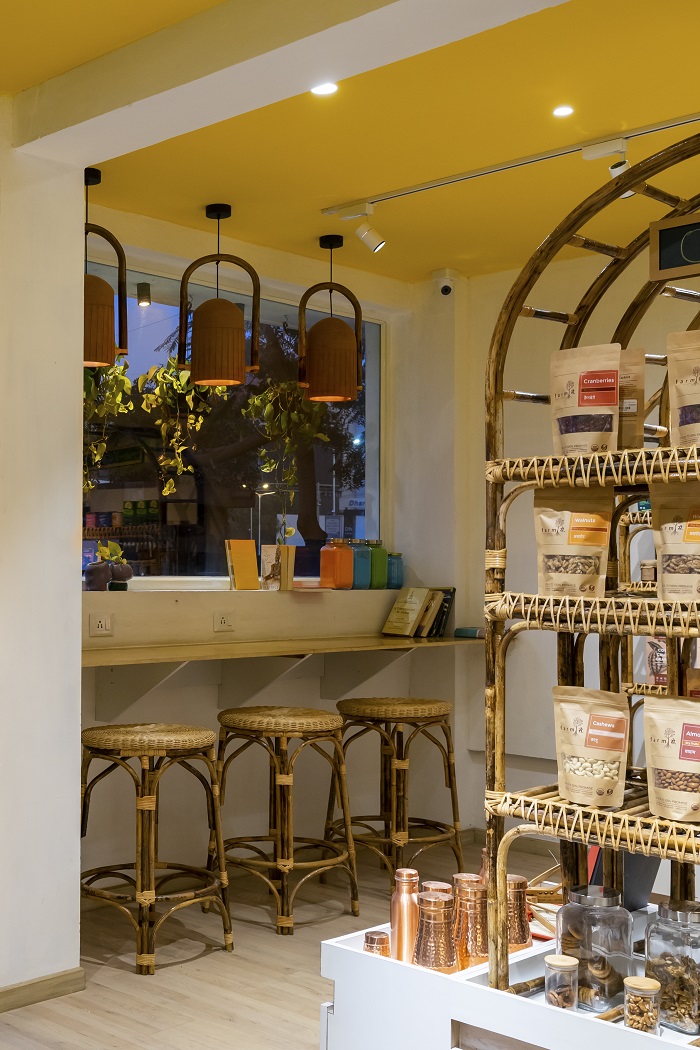
The store is located on the ground floor of a commercial building overlooking a busy street. Discarding the initial entry from the foyer, a front facing entry with full height glass windows is provided to allow a visual connection for anyone passing by. A half window puncture is made on one side to make for a bar seating area inside overlooking the street. The store has a simple layout which was kept sparse to celebrate each product, unlike a conventional retail store. The billing desk at the end of the store with the lippan backdrop and hanging terracotta lamps is placed directly opposite the entrance — the display racks are arranged on one side, while a small cafe set-up is accommodated on the other.
The material palette
Natural and sustainable materials like bamboo, cane, terracotta, wood and stone were the primary materials used in the design. The flexibility and strength of cane gave an opportunity to use the material to create multiple design elements — a contemporary arch, display racks, furniture and lighting. The brownish-black charred skin of cane developed due to thermal effect was retained. Cane’s skin is put to good use too, it is woven in a specific manner to hold the display units in place while also becoming a design element. Hanging terracotta lamps were made by a local potter with a cane structure. Discarded jaisalmer stone with rings and blemishes — which would otherwise be thrown away — is used for cafe tables and the billing counter. The main branding wall behind the counter is done using traditional hand lippan craft with semi-circular motifs from white chhatt sand, wet waste paper mesh and gundar (natural binder). This lippan wall along with a bamboo cladded reception table, cane racks, bamboo flooring, jaisalmer stone and hanging terracotta lamps gives the store a distinct identity.
The challenges
“Working with natural materials required learning and unlearning from master craftsmen and artisans. From selecting the type of cane considering its strength and flexibility, to the frequent cracking of stones due to rings and blemishes, to working with the potter community for terracotta lamps on the outskirts of the city — each material posed its own challenges,” explain the architects.
Fact file
Project: Cane Crush (Retail Experience Store for Farm Se India)
Client: Farm Se India
Location: Ahmedabad
Area: 545 sq ft
Principal architects: Devanshi Doshi and Shivam Vaidya
Design team: Vedangi Raval
Add a Comment