
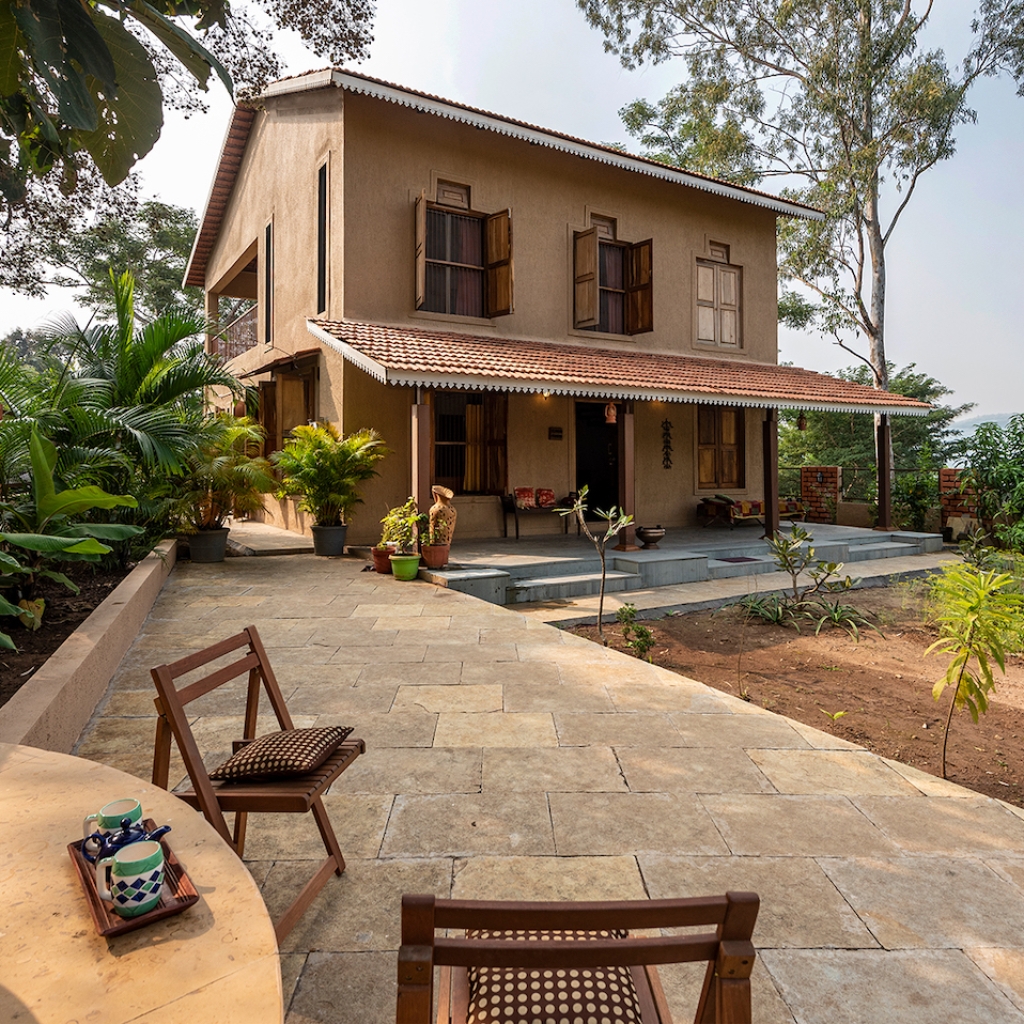
Mohor designed by Planature StuDio in Pune strikes a balance between vernacular architecture and a modern lifestyle.
Curated by: Tanaya Pednekar
Photographs: Atul Kanetkar, courtesy Planature StuDio
The site
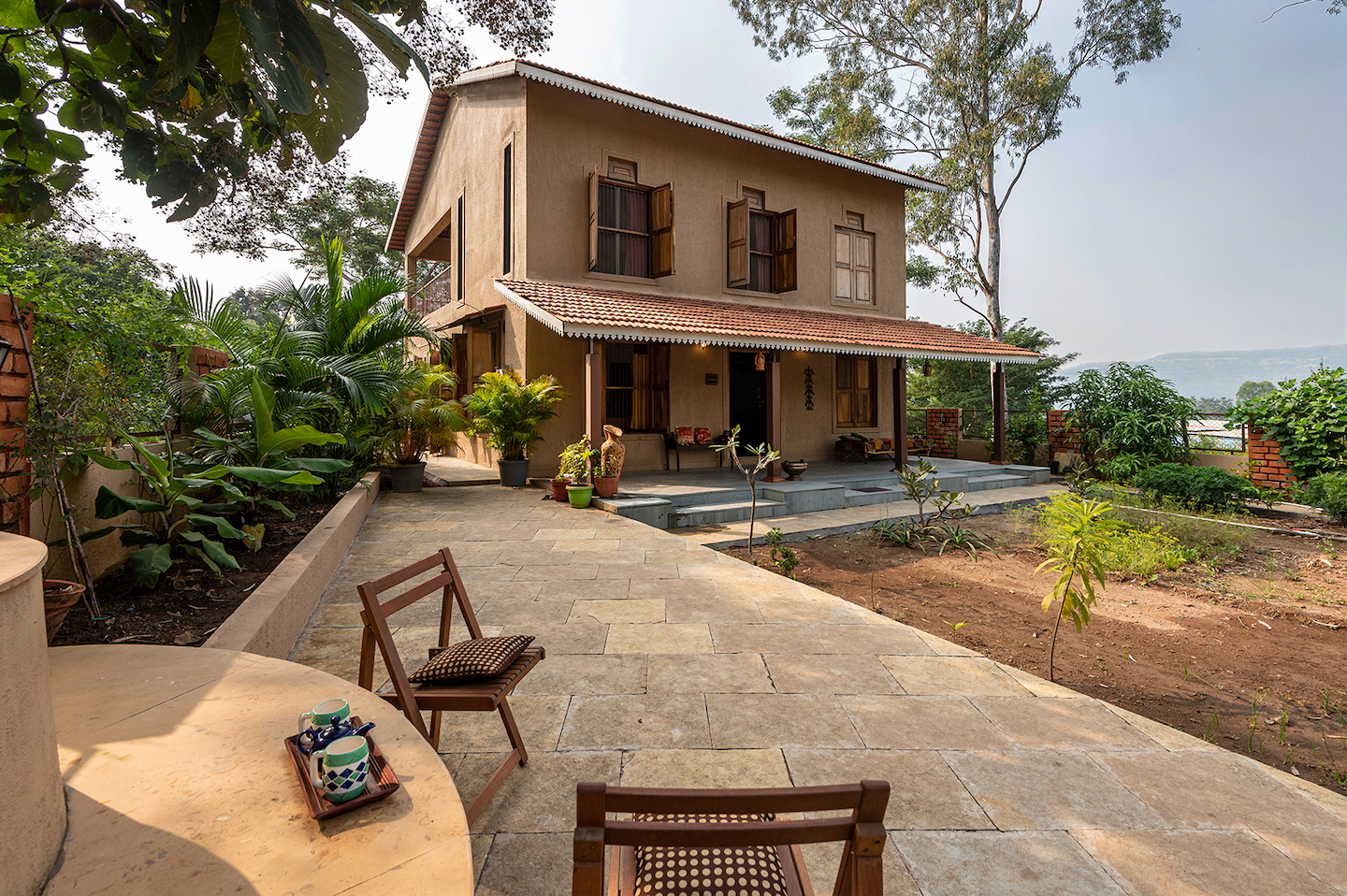
The plot has hills on the east side with existing mahua plantation and a view of Rajgad-Sinhgad range on the west side, at a distance. Thus, owners can enjoy both, sunrise and sunset sitting at various places — like the terrace with a swing and the verandah abutting the landscape. A muddy approach road with lingering cattle adds to the context, giving the rural feel as you enter from the Mumbai-Bengaluru highway.
The brief
The client desired a house that was different from urban spaces with their usual palette of white, grey and brown. One specific requirement was to use ‘kaul’ — mangalore tiles — for the roofing. When the architects started defining the requirements of the client, they realised that the place should not be designed for just two to four people. The house should offer enough room for larger groups to come together to celebrate life and reconnect with culture.
The design intent
The aim was to create a vernacular design through which one would be able to connect with memories from the past and experience the ‘at home’ feel. Also to bring the subtleness and simplicity of the house in its finish and yet set it apart from the surrounding modern buildings.
The spatial configuration
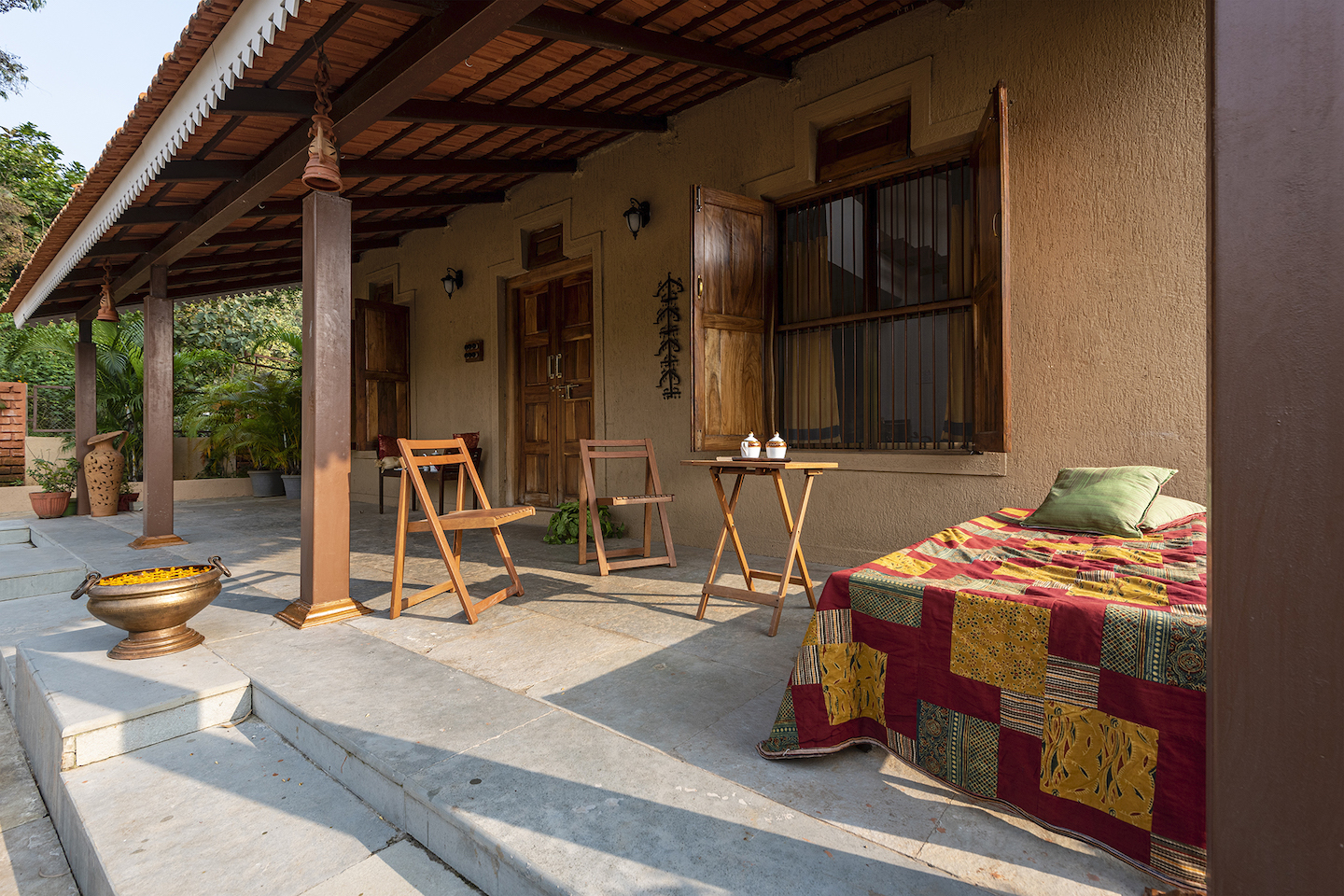
Mohor welcomes you with a large verandah which offers seating close to the garden. It acts as an extension to the living room. A centrally located main door flanked by windows makes the structure appear simple and beautiful.
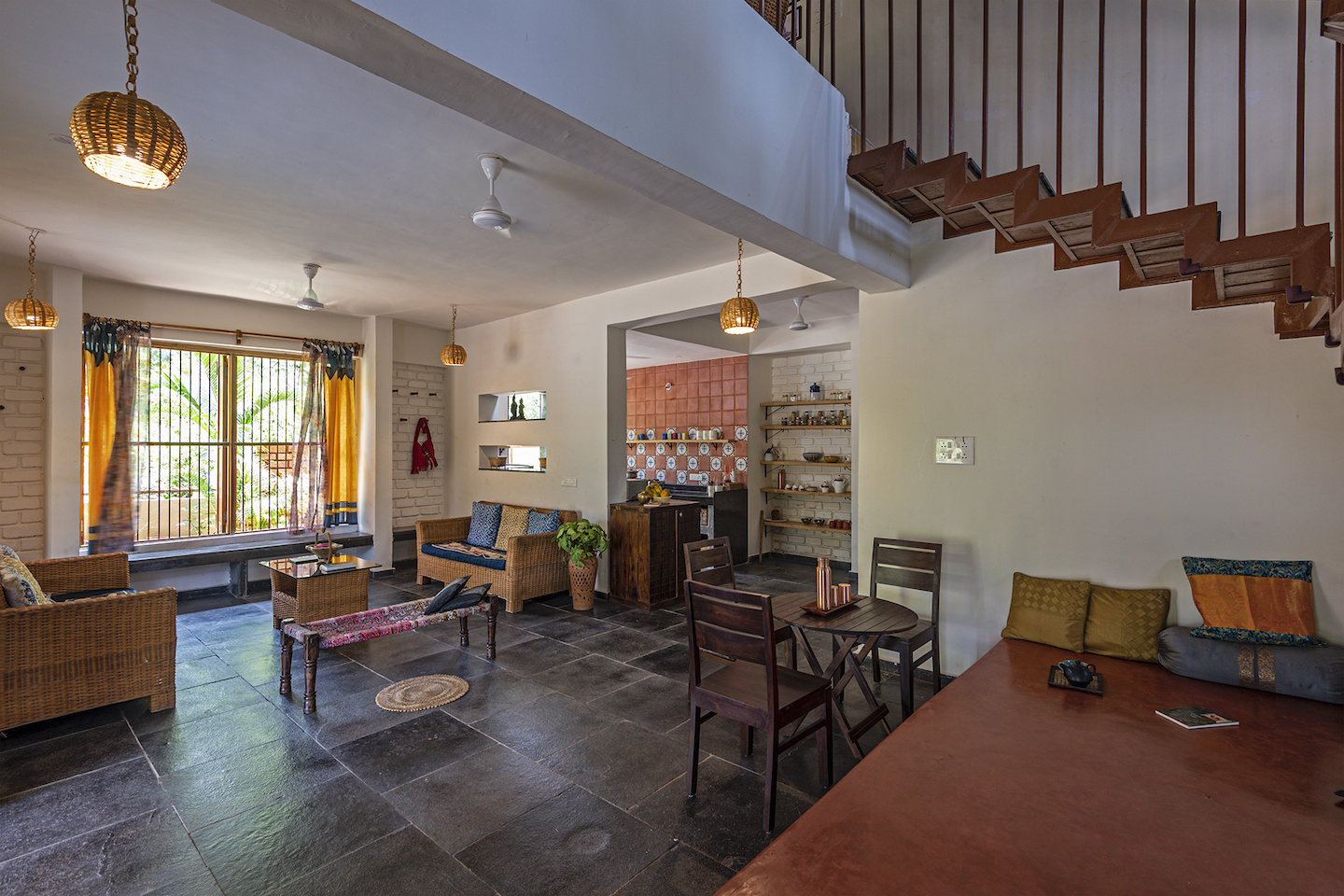
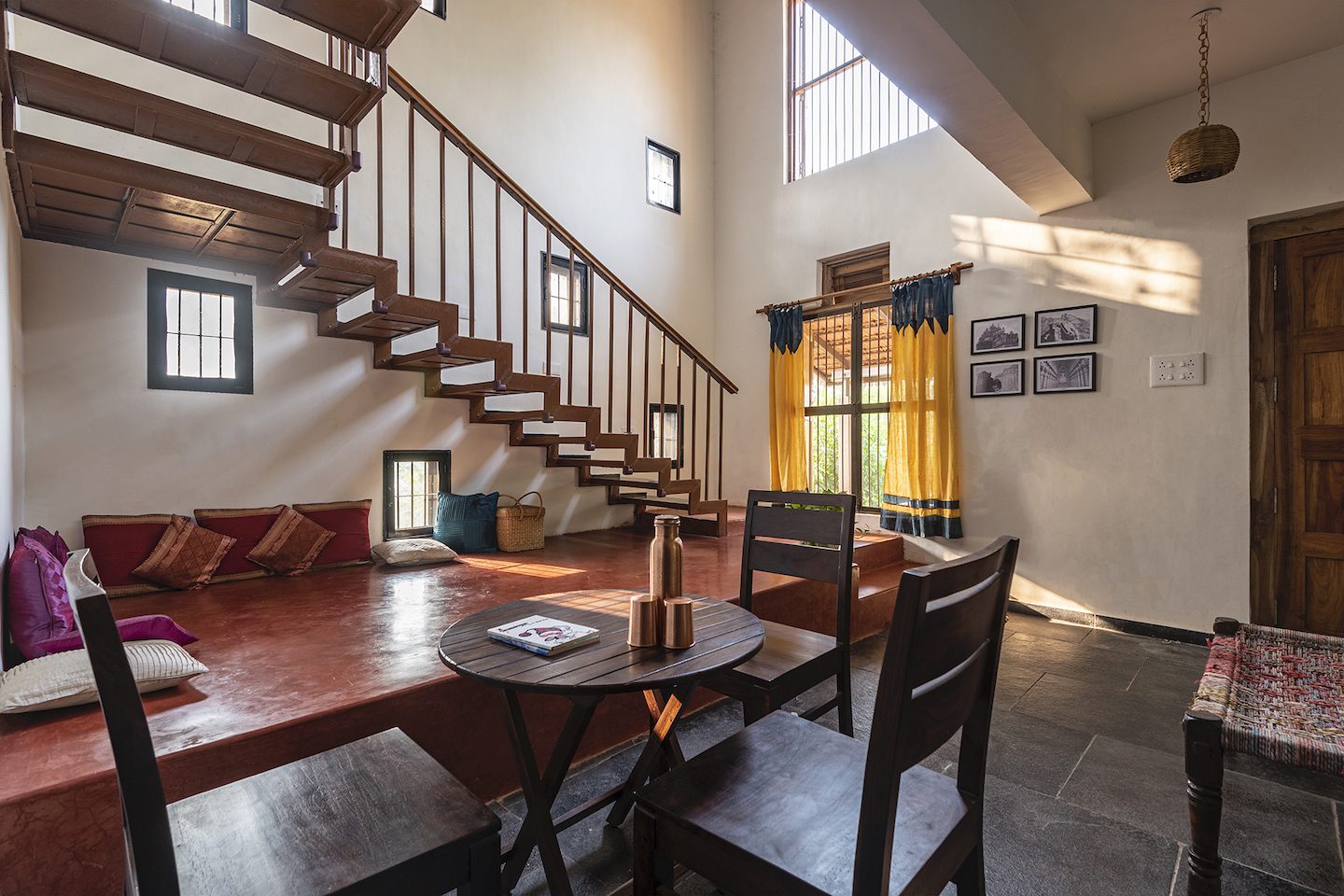
You step inside a large drawing room, which can accommodate 20 to 25 people at a time, with an adjoining kitchen-dining. A fabricated staircase makes the hall appear bigger and lighter. A raised platform provides space to play board games and relax. This level has one bedroom with an attached toilet, a caretaker’s room with an additional kitchen setup and a backyard for utility purposes.
On the upper floor, a multipurpose hall (catering to 18 to 20 people) with a provision for a projector can hold small workshops, musical functions, lectures, etc. The adjoining terrace, which gives unobstructed views of hills on the east and south west while sitting on a swing, serves as an extension to the hall. The common hall has access to a common toilet and a changing/makeup room. In addition to this, there is one bedroom with an attached toilet. This hall leads to an attic on the second floor which is perfectly isolated for dedicated work or reading activity. A small circular opening maintains visual connectivity with the lower floors and garden views.
The material palette
The house is designed using materials with lifelong beauty and requiring less maintenance. IPS platforms serve as beds and for sitting. Old-style wooden windows form an integral part of the front elevation. The floors of the house — barring washrooms — feature natural materials such as cudappah (living room), kota (verandah) and jaisalmer (first floor). The roof is lined in mangalore tiles, while exposed bricks highlight a few walls.
The challenges
Getting the work done and maintaining the standard of finishing from the local masons was a constant battle, requiring many, many site visits — three times more than normal!
Fact File
Project: Mohor: Let Our Soul Blossom
Location: Pune
Area: 4,500 sq ft (plot) and 2,250 sq ft (built-up)
Principal architects: Prachi Purandare and Sachin Deo
Design team: Prachi Purandare, Sachin Deo and Vaidehi Thorat
Add a Comment