
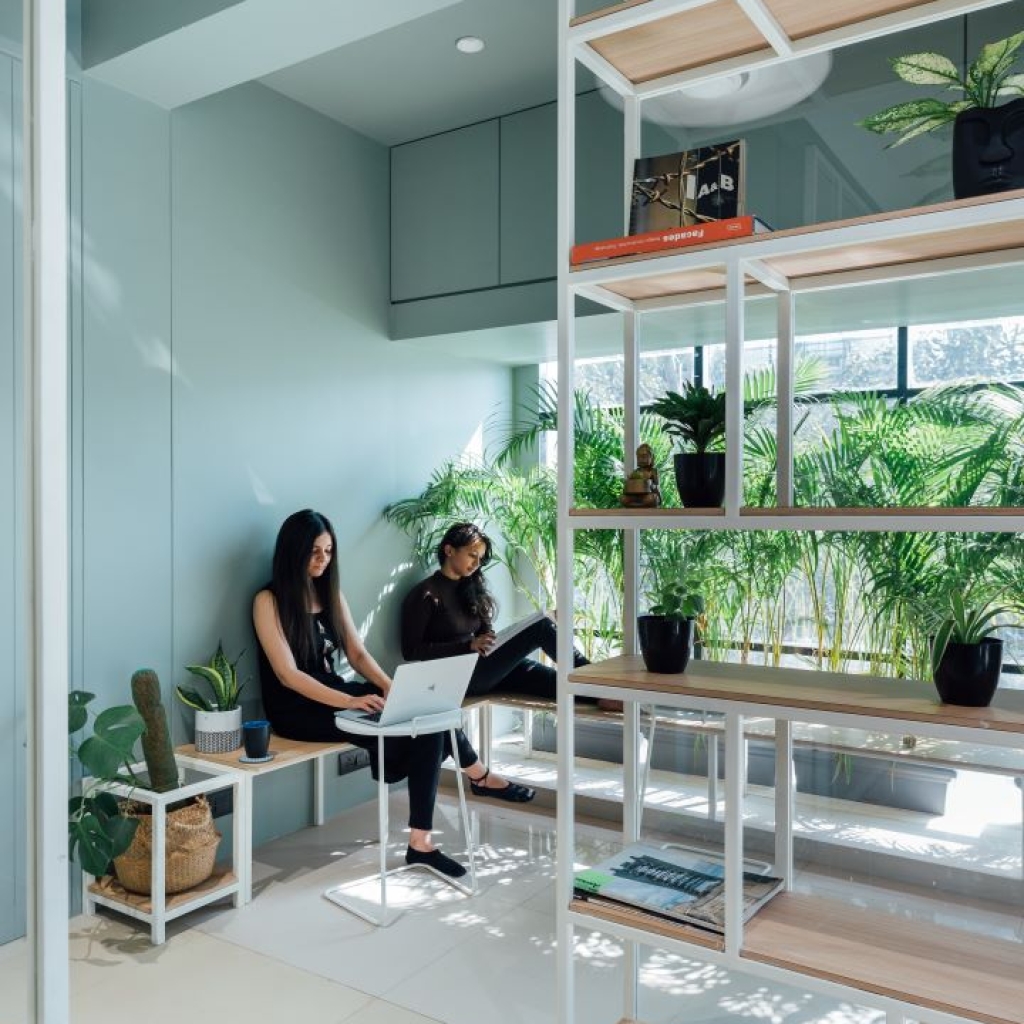
The BAD Studio takes inspiration from artist Piet Mondrian’s paintings for a Surat-based teaching facility which had irregular placement of beams and columns.
Curated by: Deepa Nair
Photographs: Ishita Sitwala; courtesy The BAD Studio
The brief
The client, being an educator and board member of many educational institutes, wanted to establish an institute for career guidance along with a teaching facility for foreign languages within a rented commercial space. The brief demanded an array of functions within a compact space. The designed space should pose a sense of formalism and at the same time, should allow social interaction. The architects also had to adhere to a strict budget and a time frame of three months to complete the project.
The design intent
The site had a complex structural grid with irregular placement of beams and columns which proved difficult to place functions. To solve this problem the architects took inspiration from a series of paintings by artist Piet Mondrian, where he tries to find a visual within the framed network of unevenly placed lines, and balances them with colours. With a similar exercise, in this project, the irregular structural grid works as the base, which is balanced with colours in various zones. As a result, a series of iterations with the various placement of zones were obtained. These iterations are then investigated based on light quality and ease of space to achieve the ideal workspace. The basic idea was to take advantage of complexity to facilitate a balanced workspace environment.
The spatial configuration
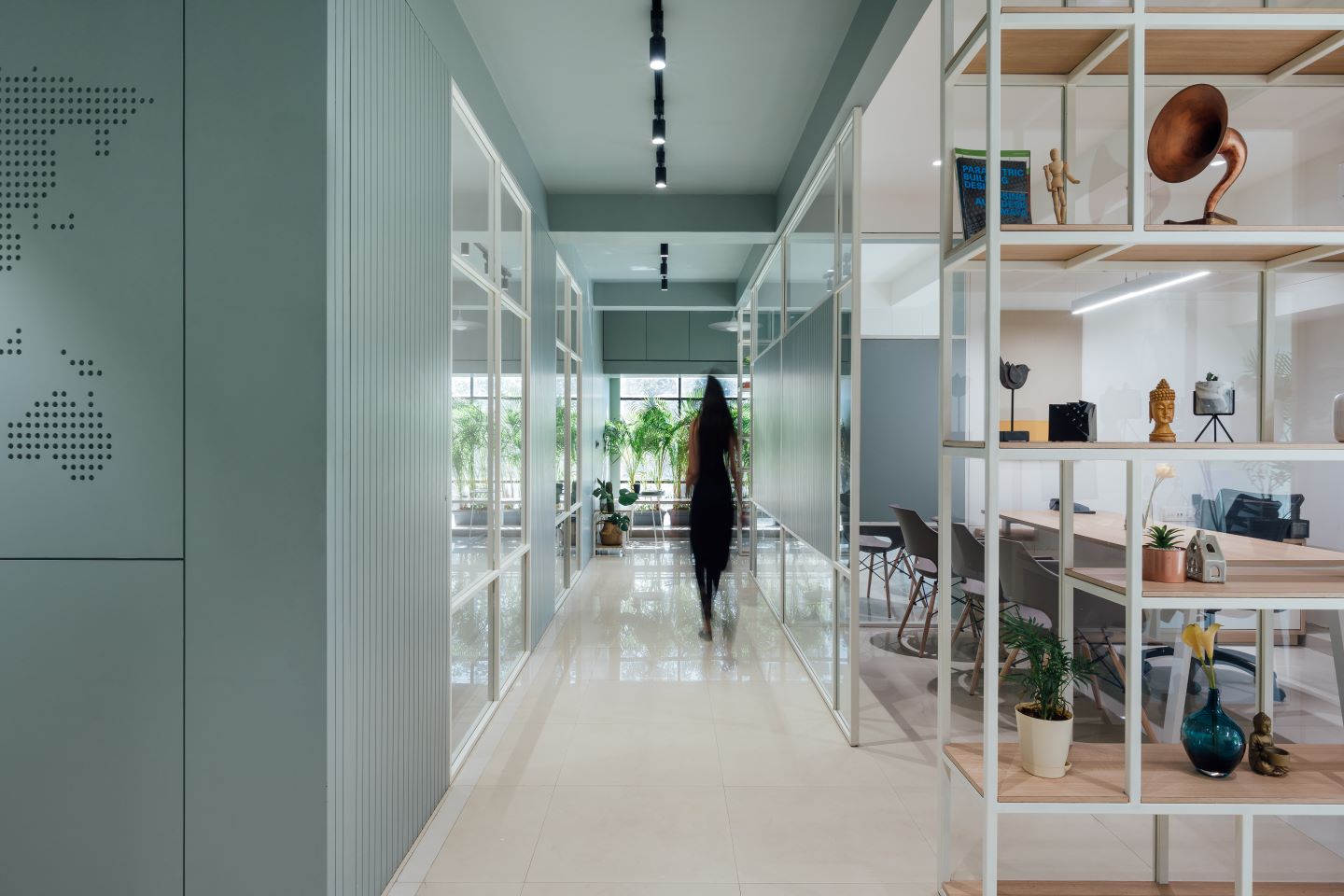
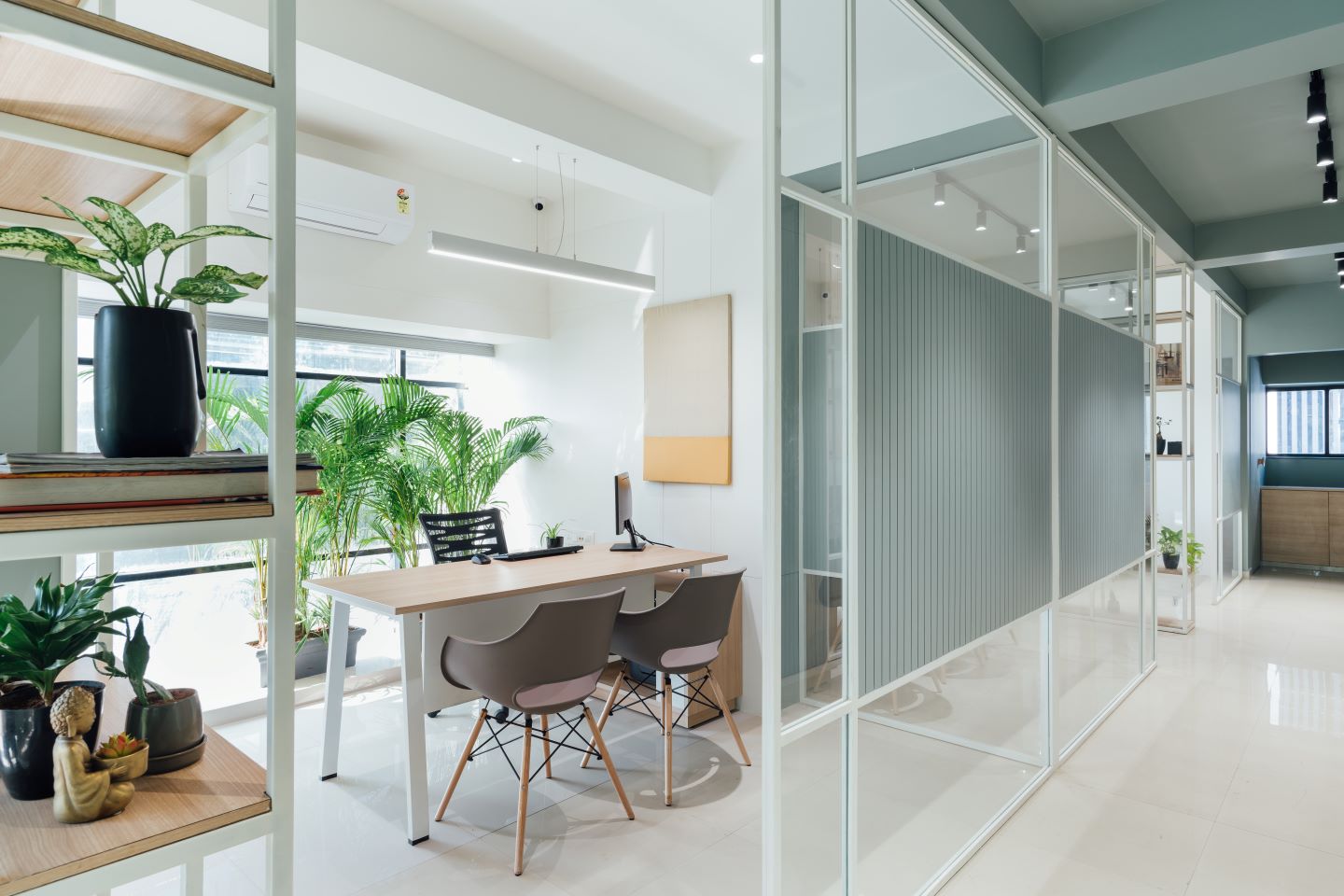
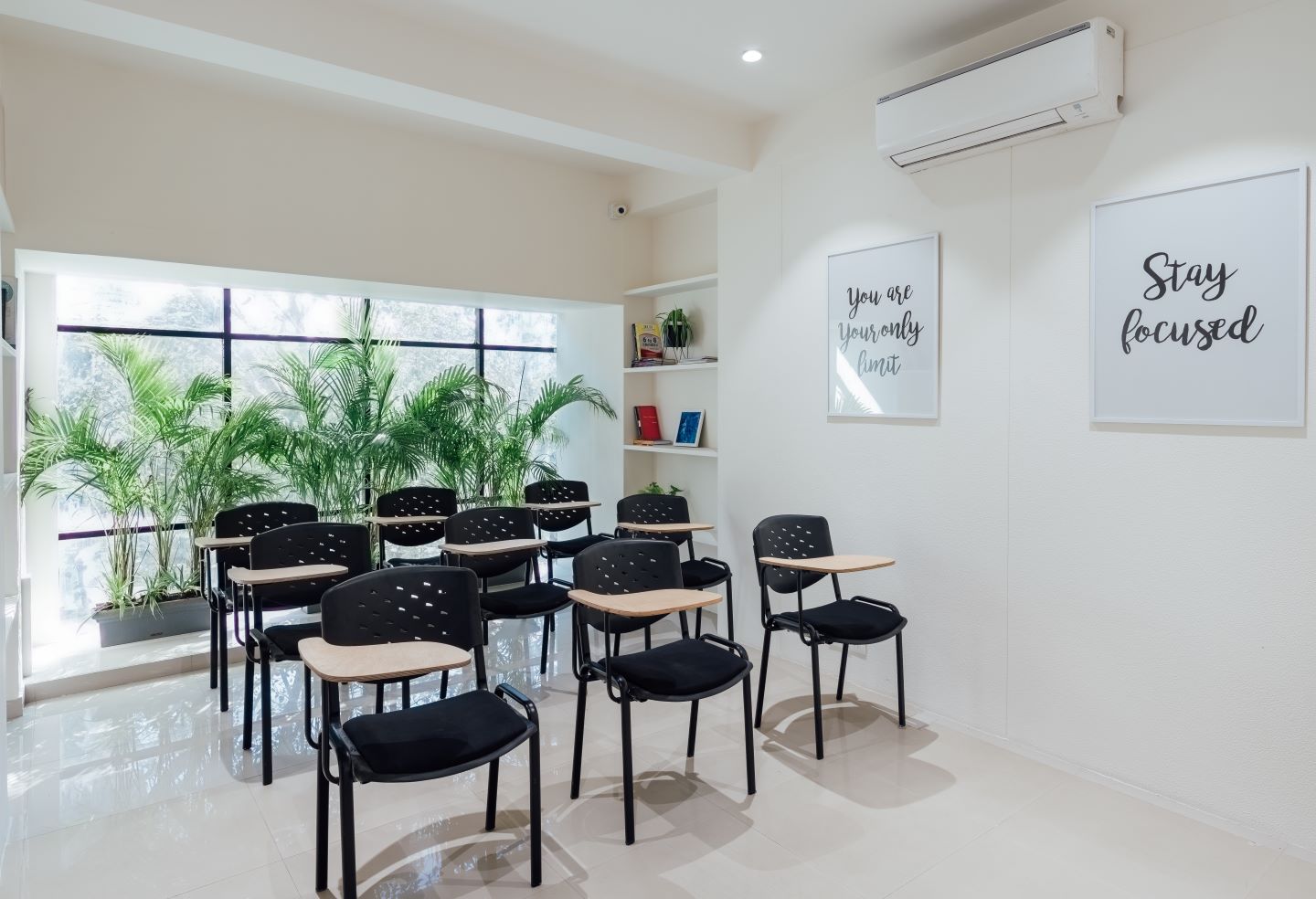
To allocate multiple functions in a compact space with a complex structural grid, the workspace was segregated into three zones based on the privacy it needed. “We generated several diagrams by placing these zones within the structural grid based on its occupancy, utility, daylight requirement, circulation and movement. As a result, a workable iteration is obtained,” inform the architects. The spaces with maximum occupancy and high frequency of visitors — classrooms and waiting area — are placed along the entrance. The semi-public zones with open counselling booths with a comparatively average frequency of visitors and by appointment only are arrayed along the periphery allowing maximum natural light to penetrate within interior spaces. The private zones comprising of owner cabins and meeting rooms are sandwiched between public and semi-public zones.
The material palette
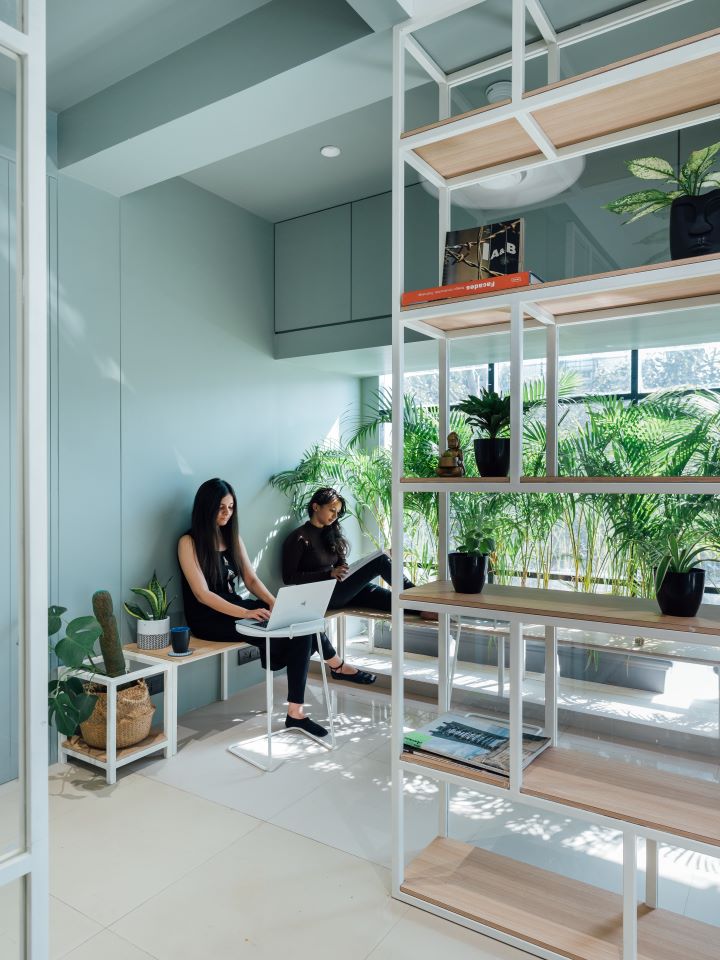
A series of partitioning systems were devised based on the zoning with an idea of adaptive re-use and to minimise cost. These partitions take an indirect reference of the reflected structural grid. A semi-open partition between the counsel booths and passage were created to avail a sense of enclosure along with privacy during meetings. Metal rack partitions between the booths display pamphlets and brochures. The circulation zone is washed in sage green colour while the workspace are in white to amplify the space with the bright work environment. A series of indoor plants were arrayed along a window periphery to reduce the harsh sun along the south and west facade. These plants form the backdrop for the booths besides being natural air-purifiers. The green leafy plants complement the white workspace along with sage green.
Fact file
Project: Follow the Grid
Location: Surat
Area: 1,650 sq ft
Principal architects: Boney Keriwala and Alak Parmar
Add a Comment