
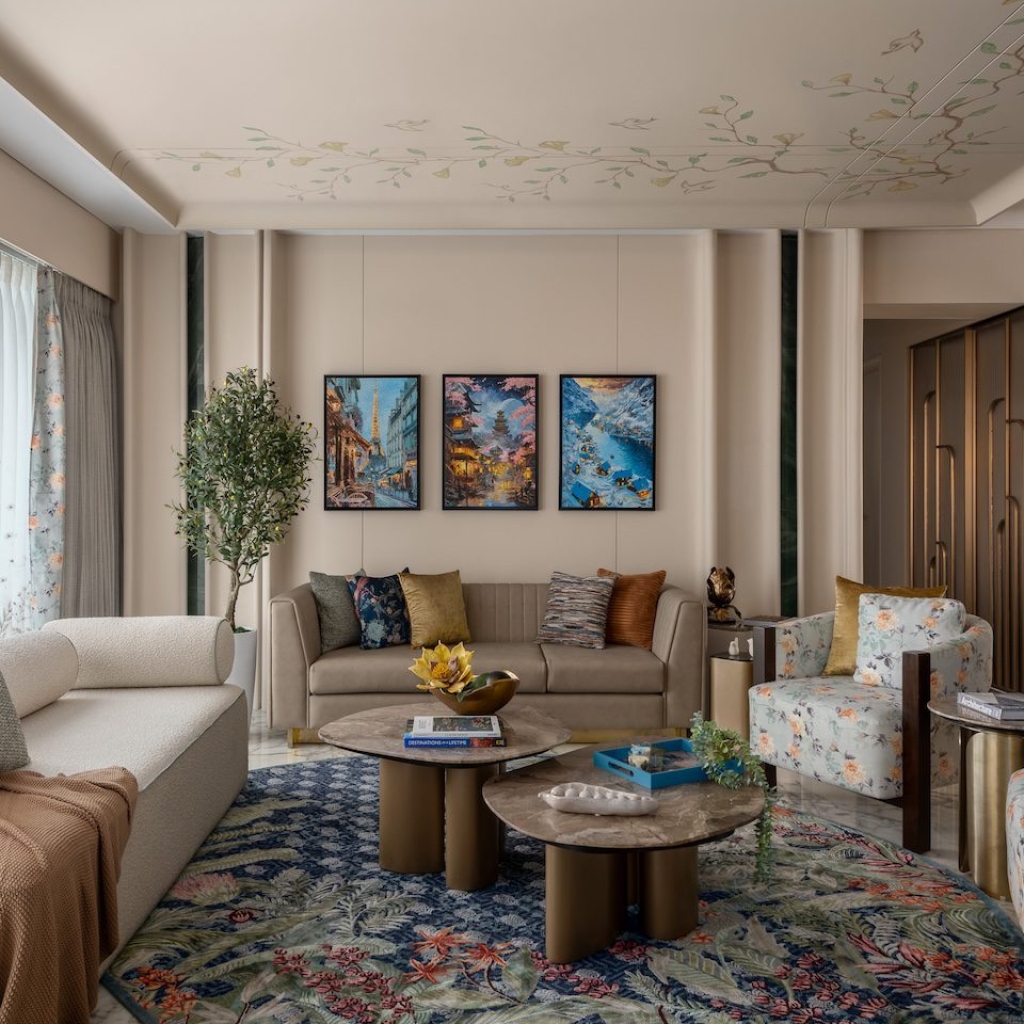
In Khar, Mumbai, Zindagi by Chie Design reimagines a contemporary apartment as a layered, emotionally driven home shaped by personal memories, crafted surfaces, and spatial fluidity.
Curated by: Rupali Sebastian
Photographs: Aaditya Kulkarni I PHX India
The project
Zindagi, also known as the Kumar Residence, is an 1,800 sq ft private home in Khar, Mumbai, designed by Chie Design LLP for a family seeking a contemporary yet emotionally resonant living environment. Conceived as a modern residence with strong narrative undercurrents, the project balances clean-lined planning with tactile surfaces, artistic interventions, and moments of surprise that unfold gradually across the home.
The site
The apartment was received as a bare-shell interior—a blank canvas that allowed the design team to build the spatial and material language from the ground up. Rather than imposing a rigid layout, the approach focused on creating a sense of openness and continuity, ensuring that circulation felt fluid while allowing individual spaces to retain their own identities.
The brief
The clients envisioned a clutter-free, open home with spaces that could adapt to different moods and functions while maintaining privacy where required. A dramatic yet refined aesthetic rooted in nature guided the brief, along with the need for intelligent storage integrated seamlessly across the apartment. The home needed to feel contemporary and chic, without losing warmth or emotional depth.
The design intent
The design language is intentionally restrained yet expressive, allowing moments of surprise to emerge through crafted detail rather than form alone. Simple materials with bold characteristics—such as veneer and stone—anchor the interiors, while bespoke techniques elevate everyday surfaces into storytelling devices. As principal designer Mithila Singh explains: “The intent was to keep the design language simple but impactful, allowing customised techniques and material expressions to narrate personal memories and moments of joy across the home. Functionality and space efficiency form the project’s backbone, ensuring that visual richness never comes at the cost of comfort or usability.”
The civil intervention
To preserve the openness desired by the clients, transition passages were eliminated and spaces were allowed to flow directly into one another. Flexibility was built into the layout, enabling visual openness in daily use while allowing privacy to be achieved when needed. These interventions ensured that the apartment feels expansive and connected, despite its defined footprint.
The spatial flow
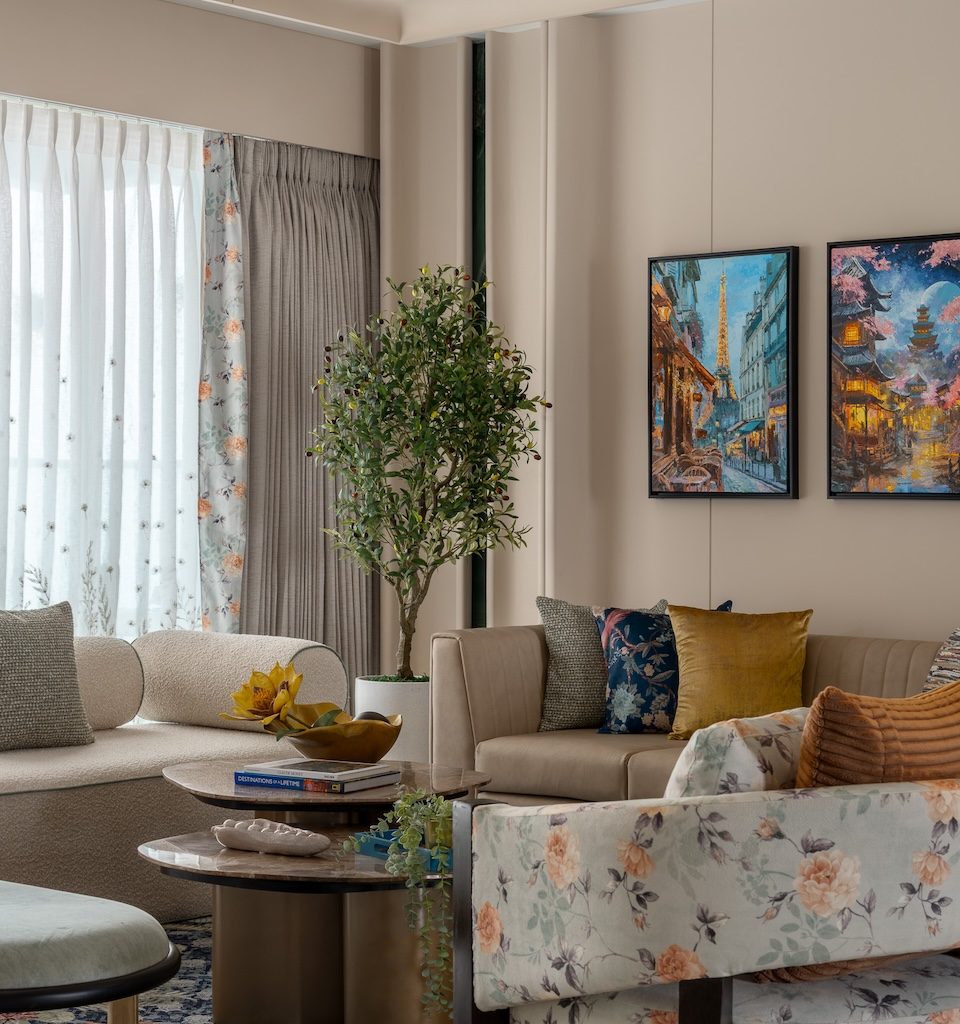
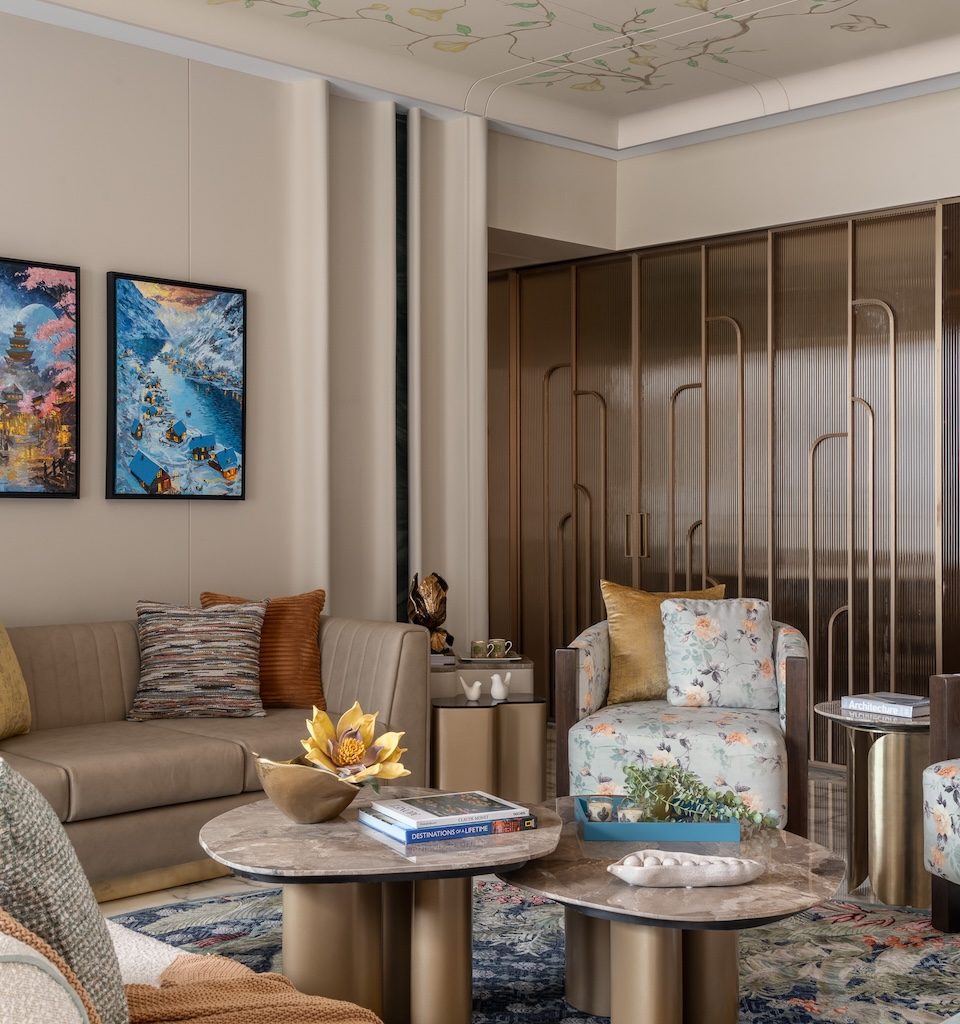
The home unfolds as a continuous sequence of interconnected spaces. The living area forms the heart of the apartment, designed as a generous, modern space layered with subtle textures and refined finishes. A hand-painted biophilic artwork on the ceiling introduces an unexpected moment of pause, reflecting cherished travel memories and adding a personal layer to the room. A fluted glass partition simultaneously conceals storage, connects the living space to the kitchen, and opens into the dining area, reinforcing both functionality and fluidity.
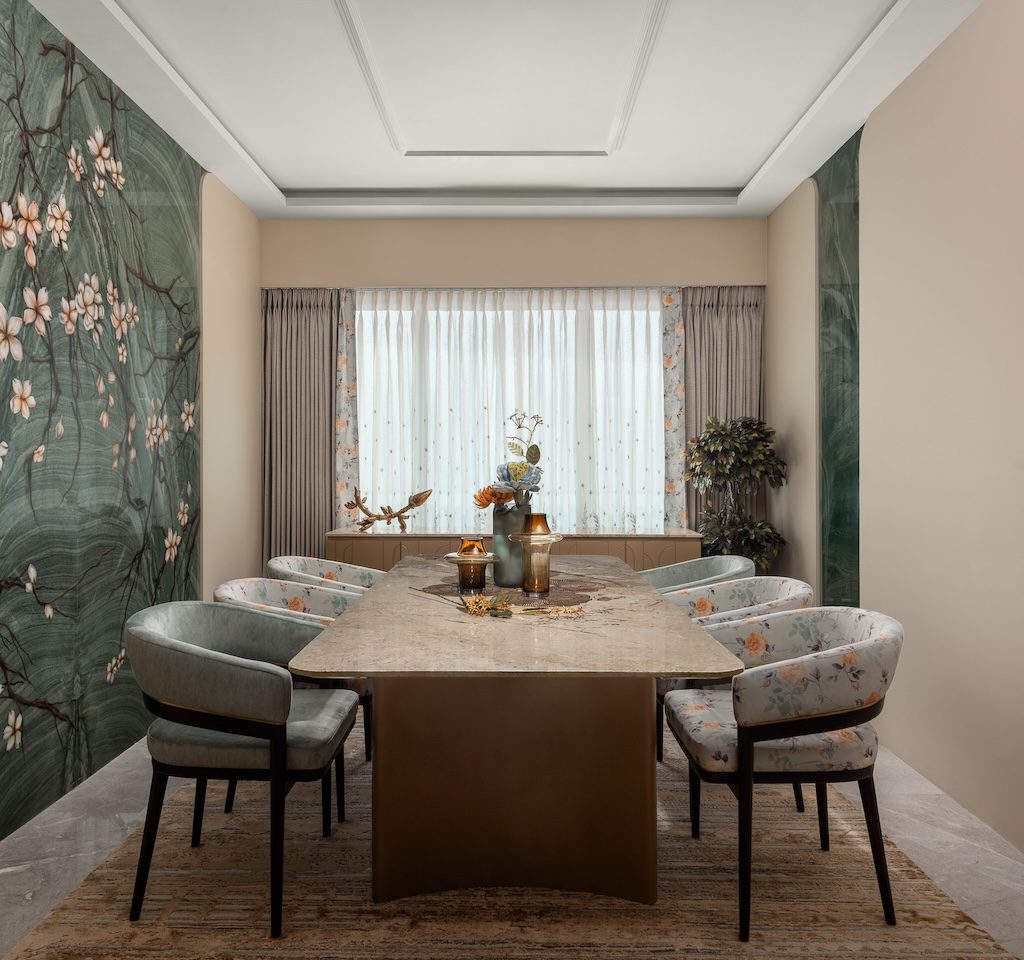
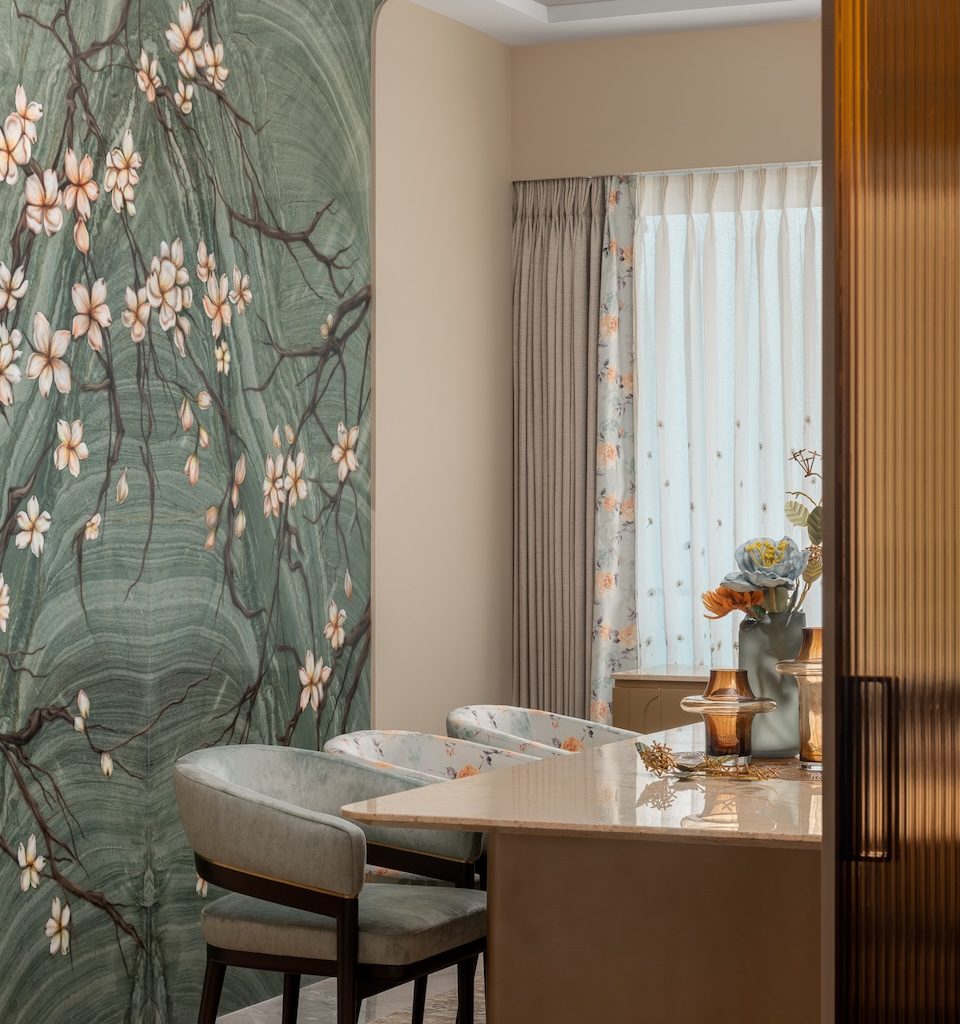
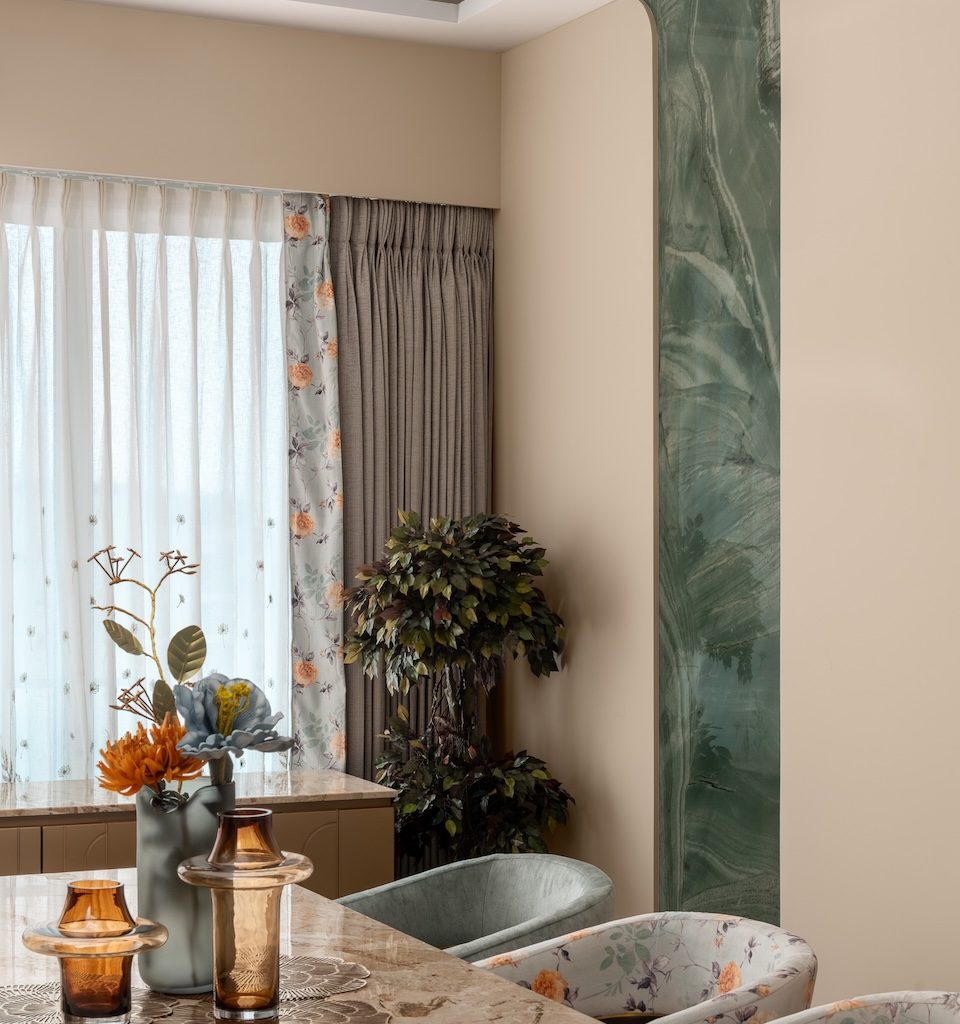
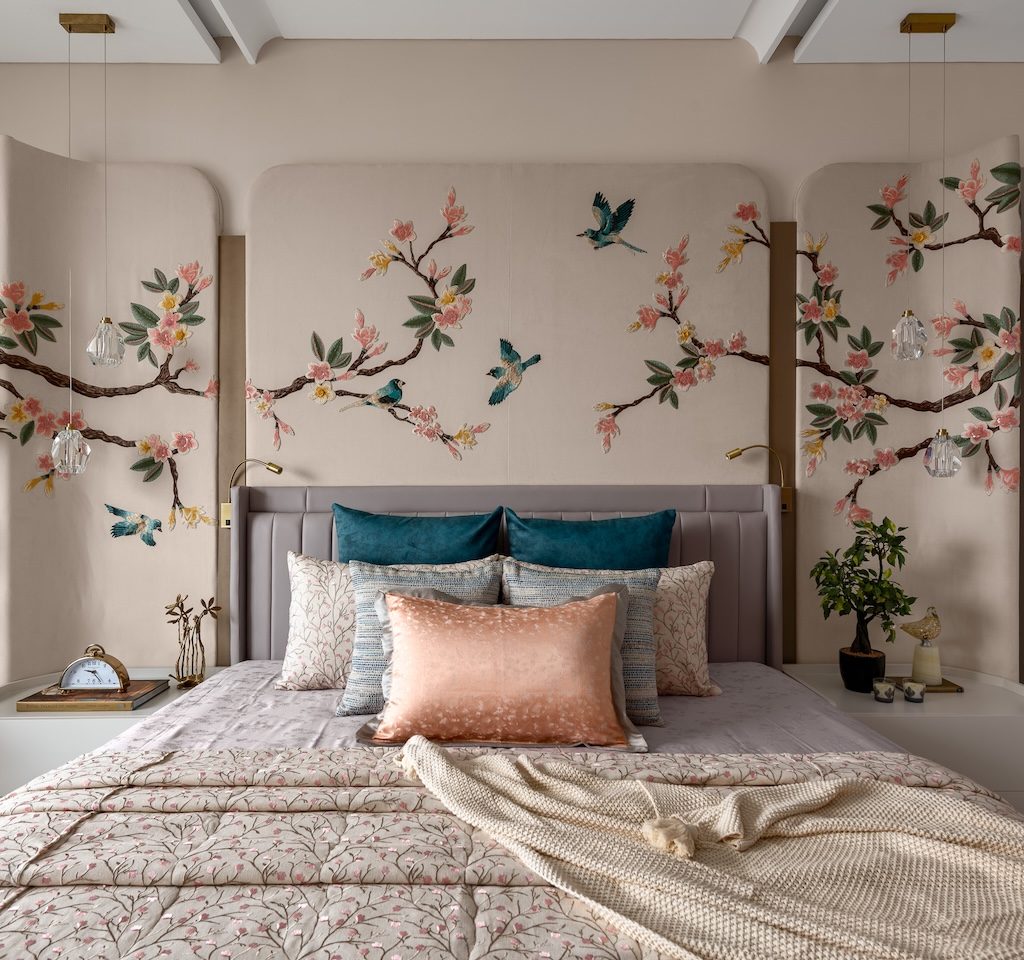
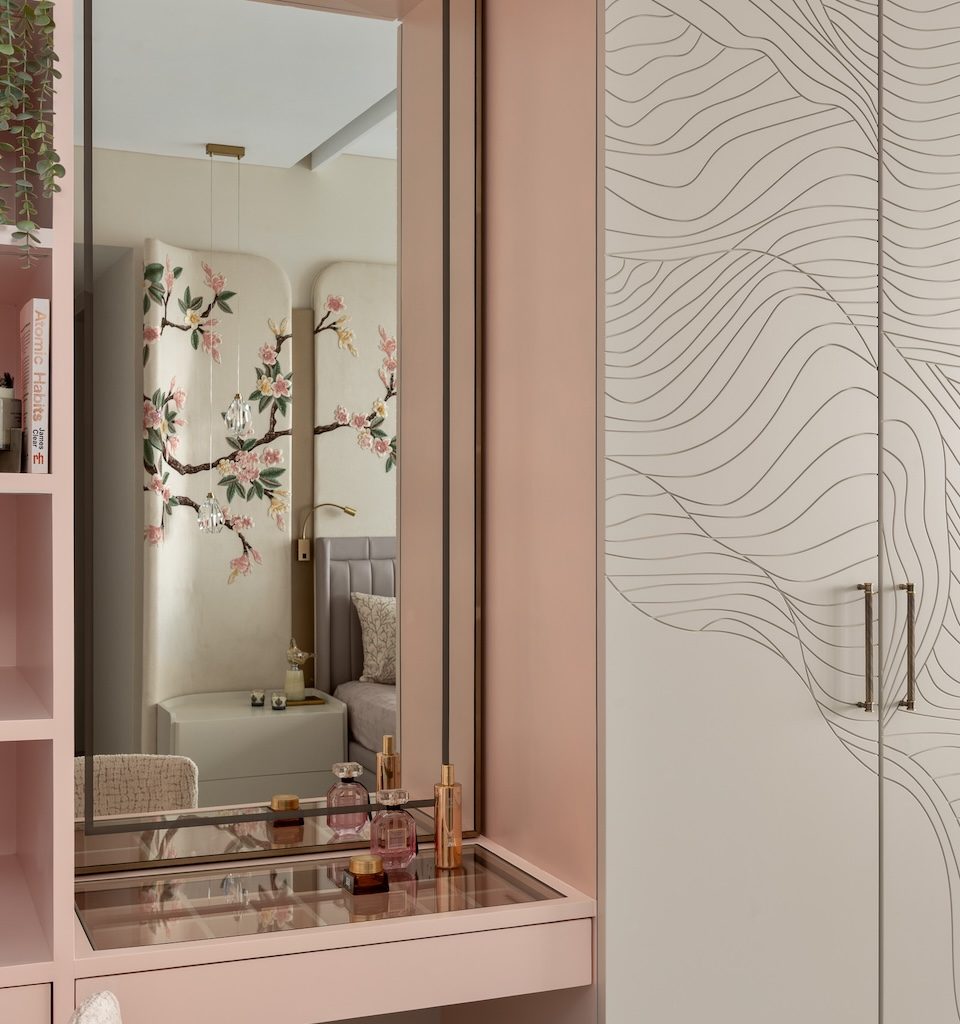
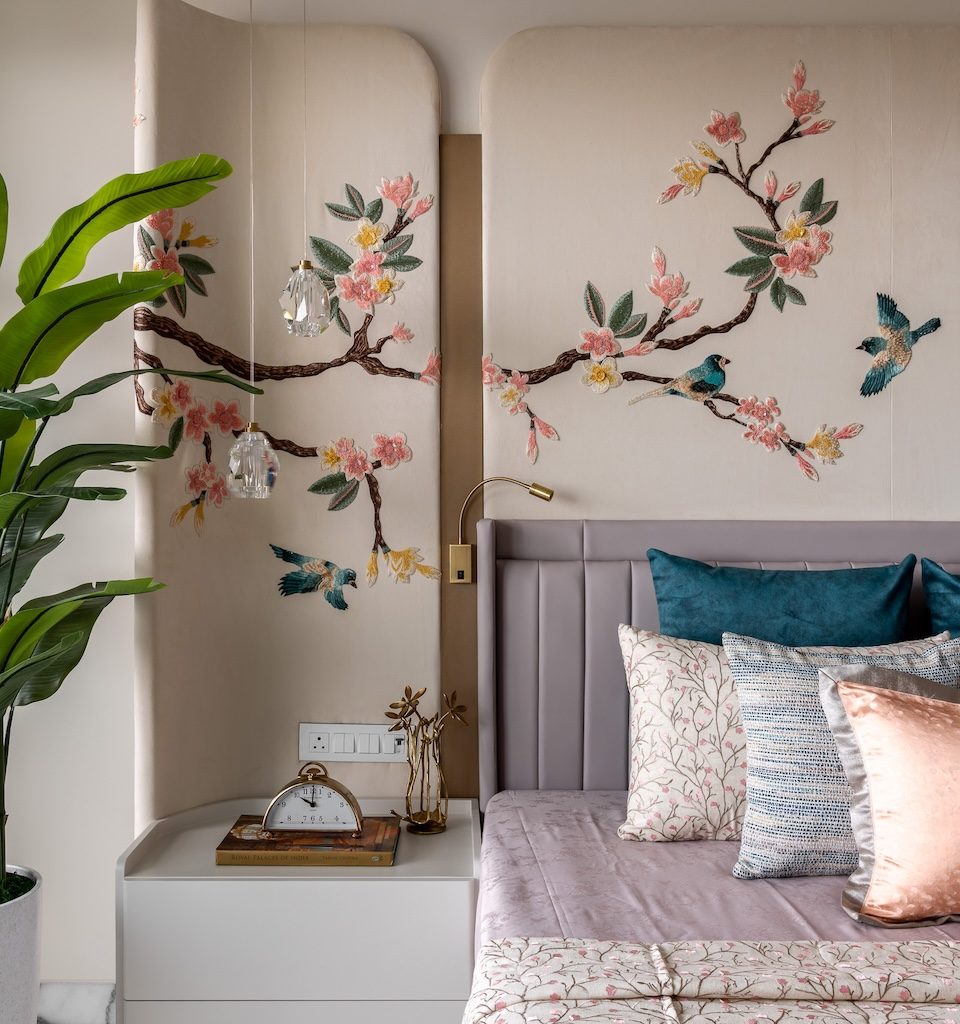
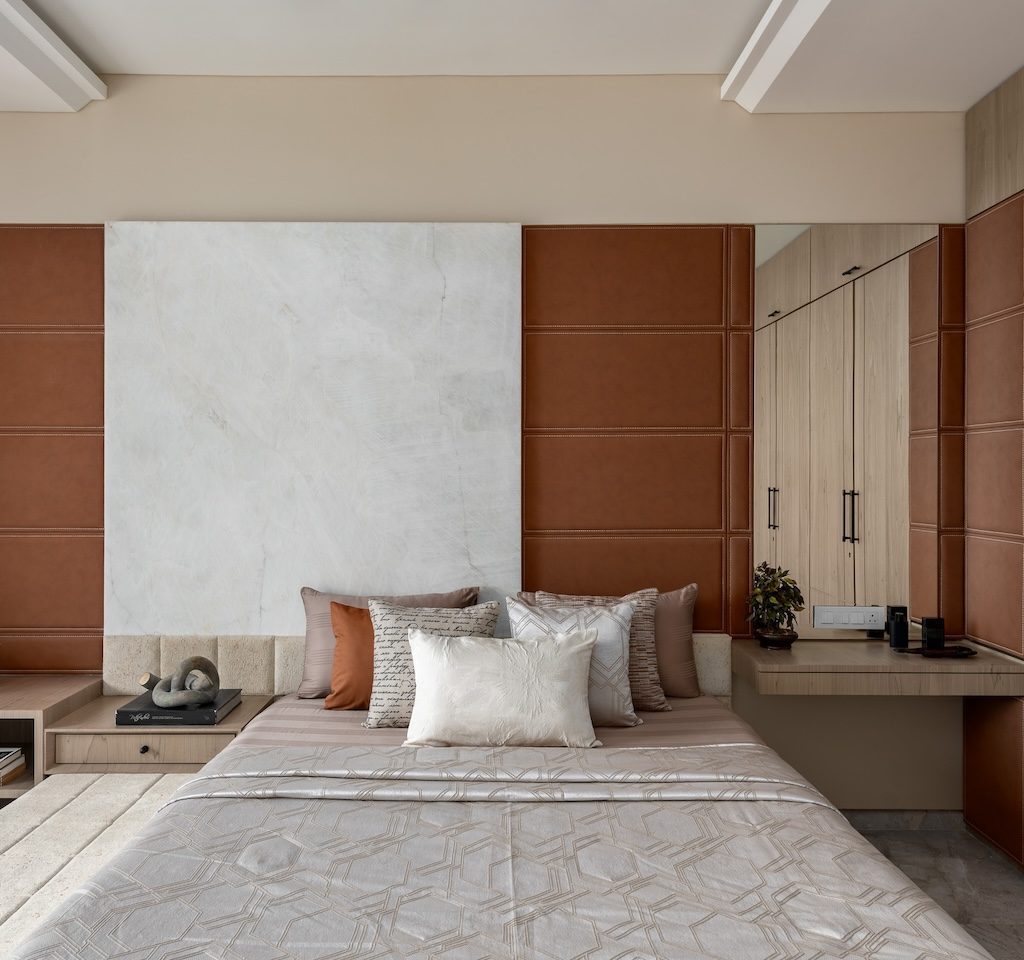
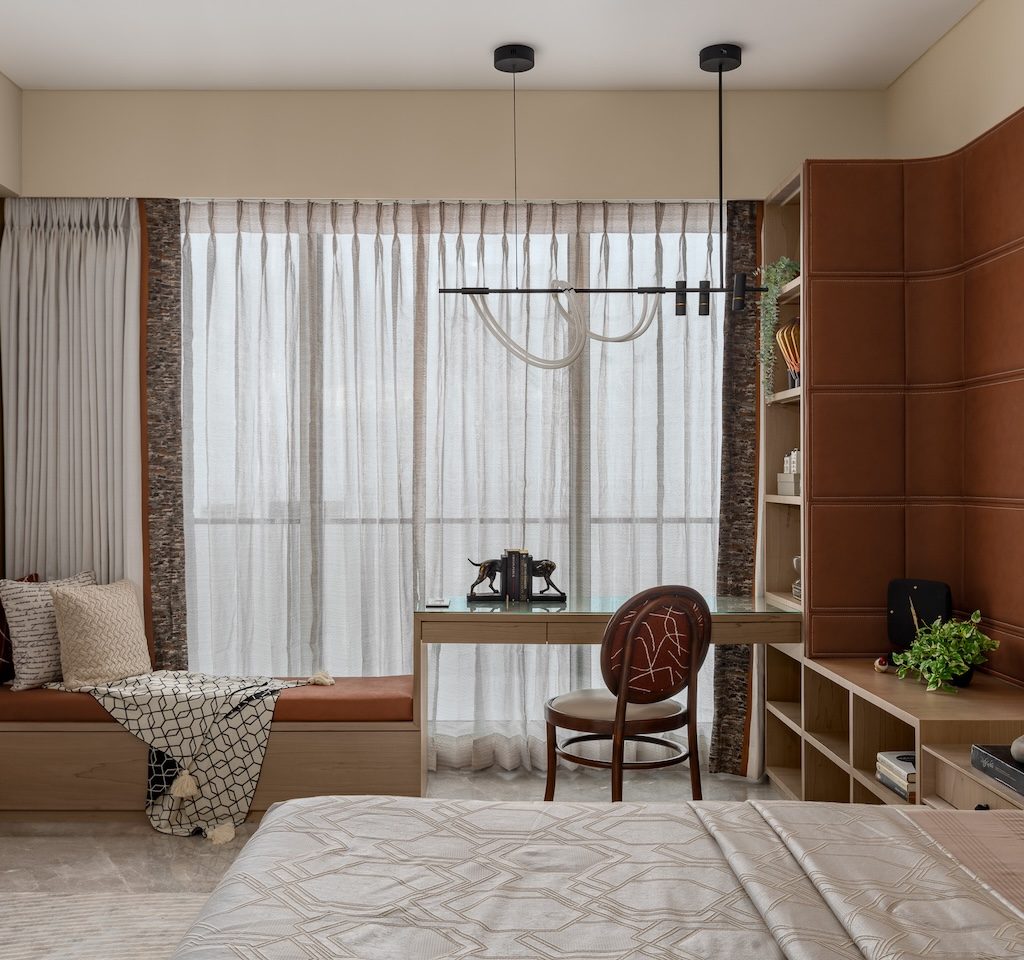
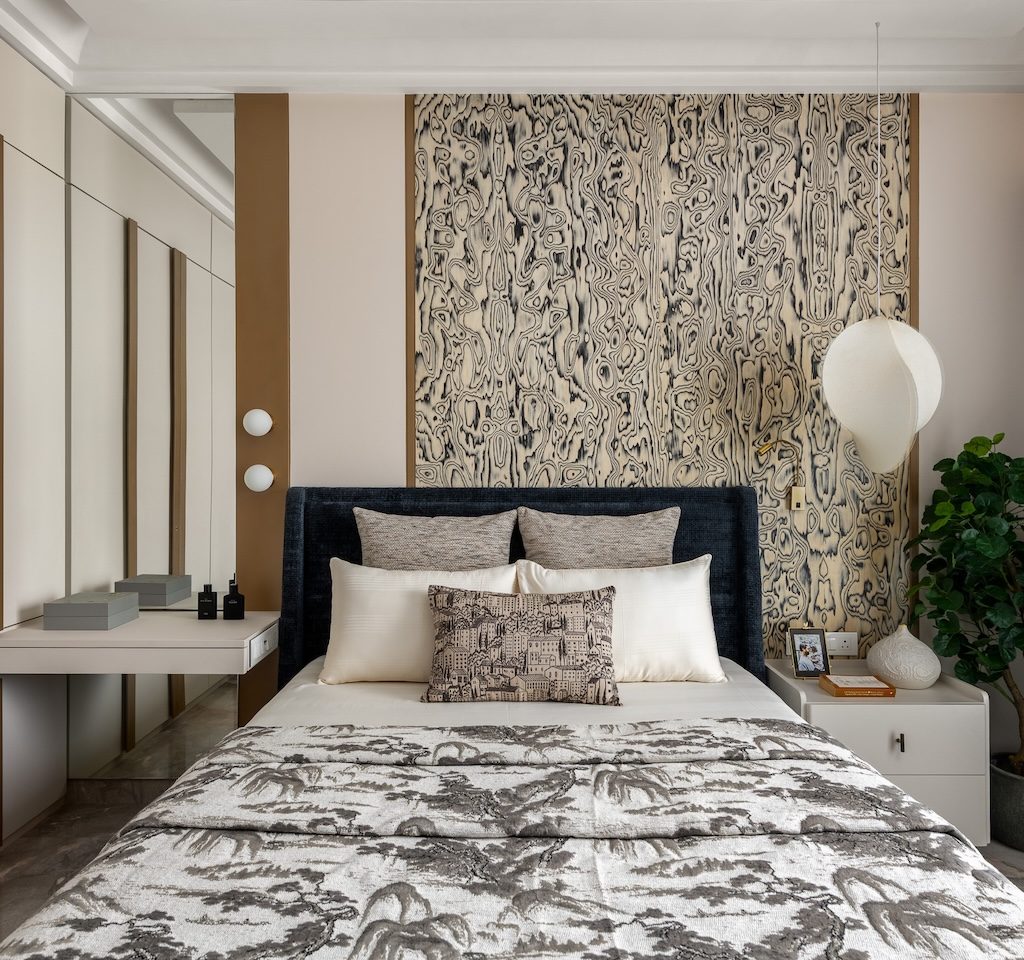
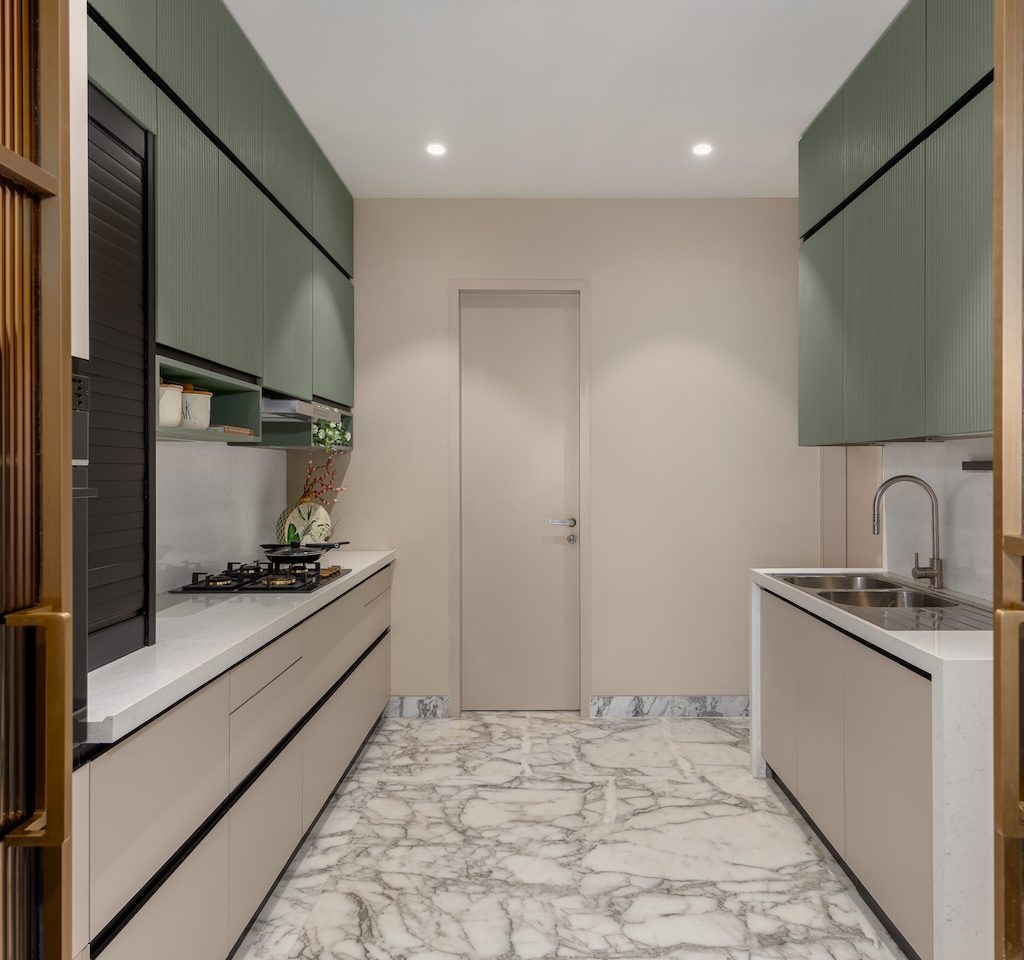
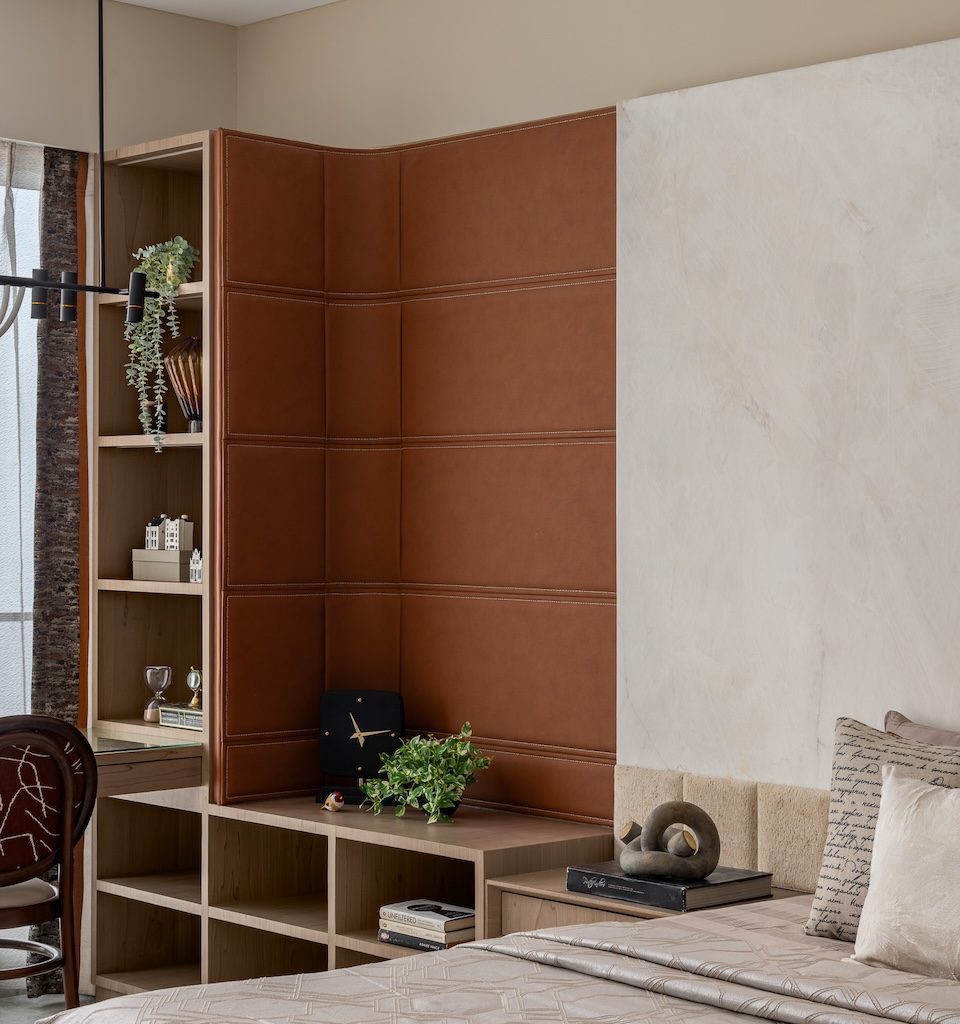
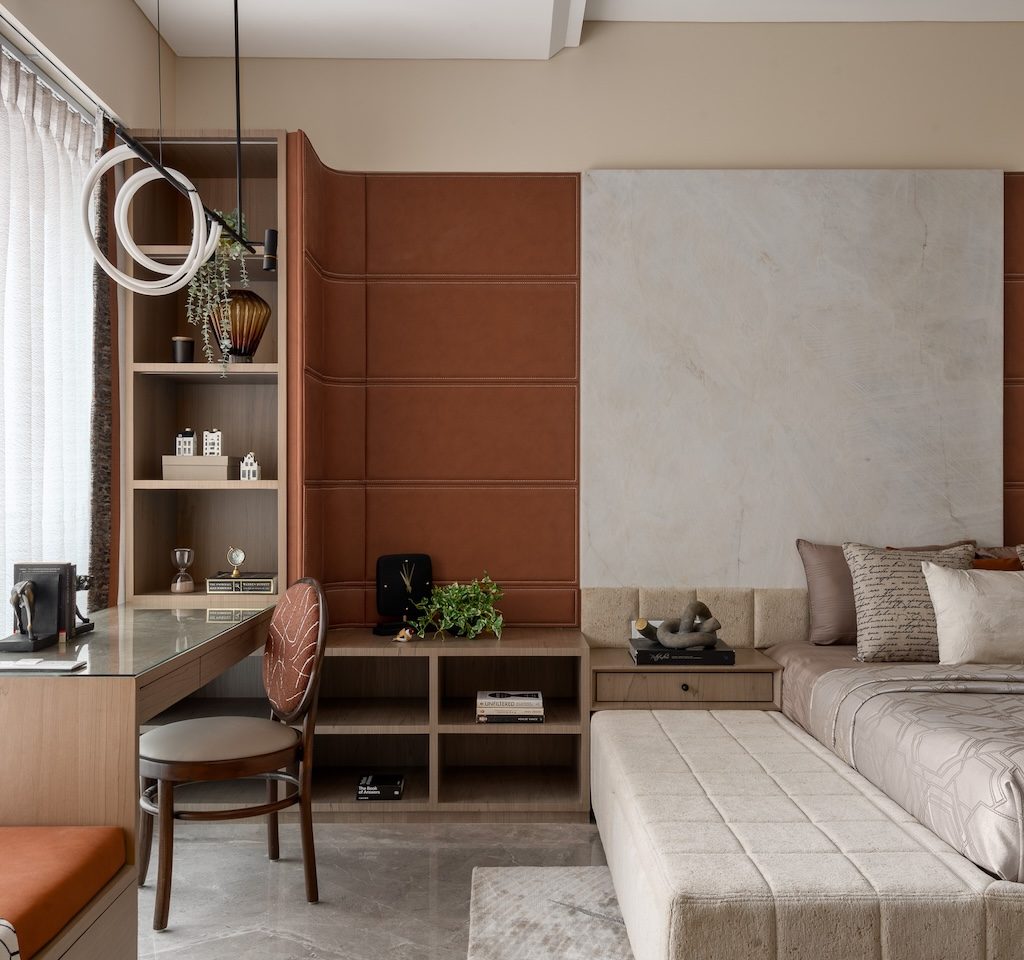
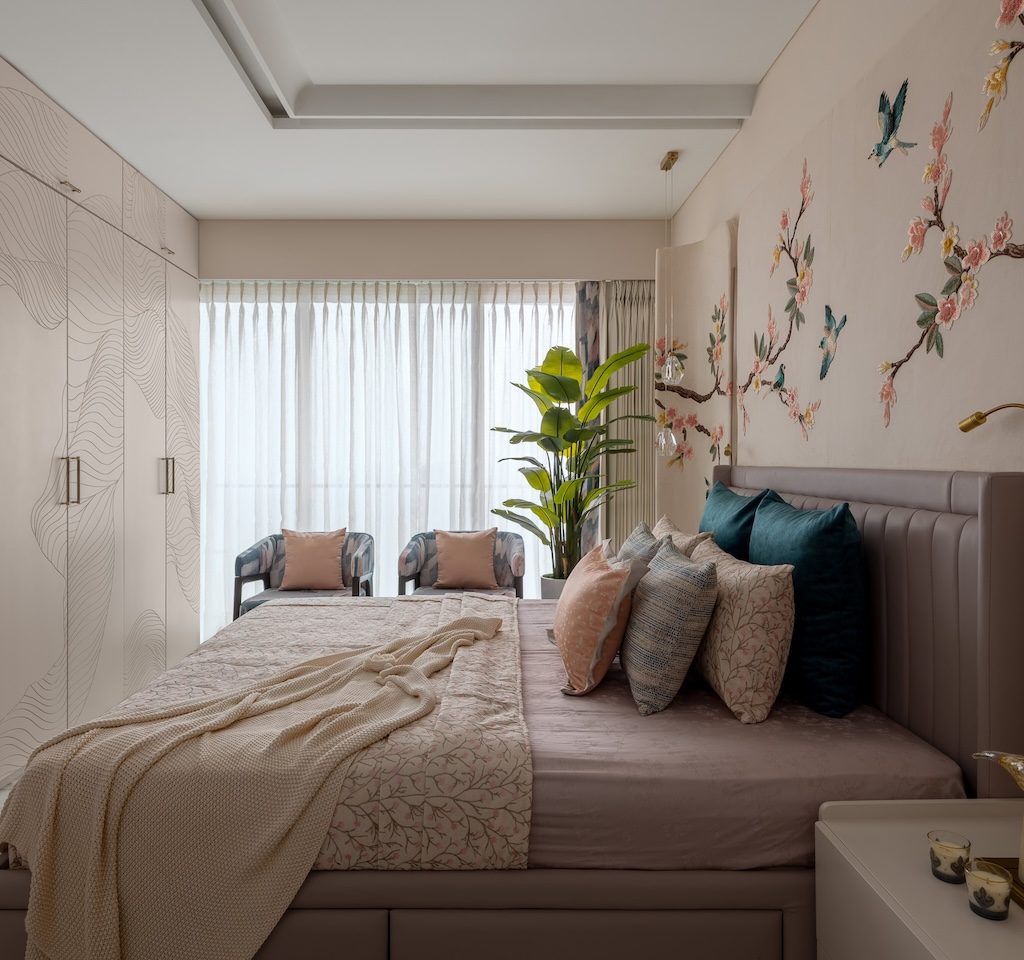
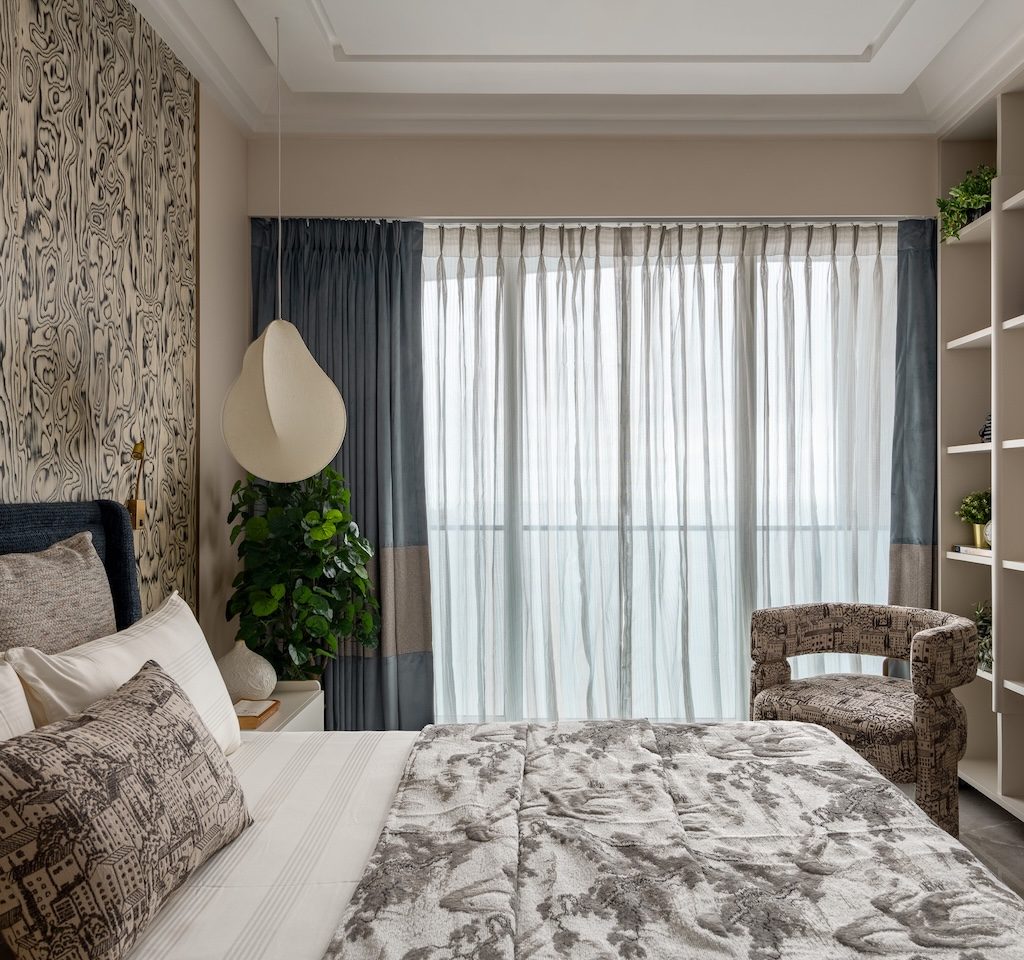
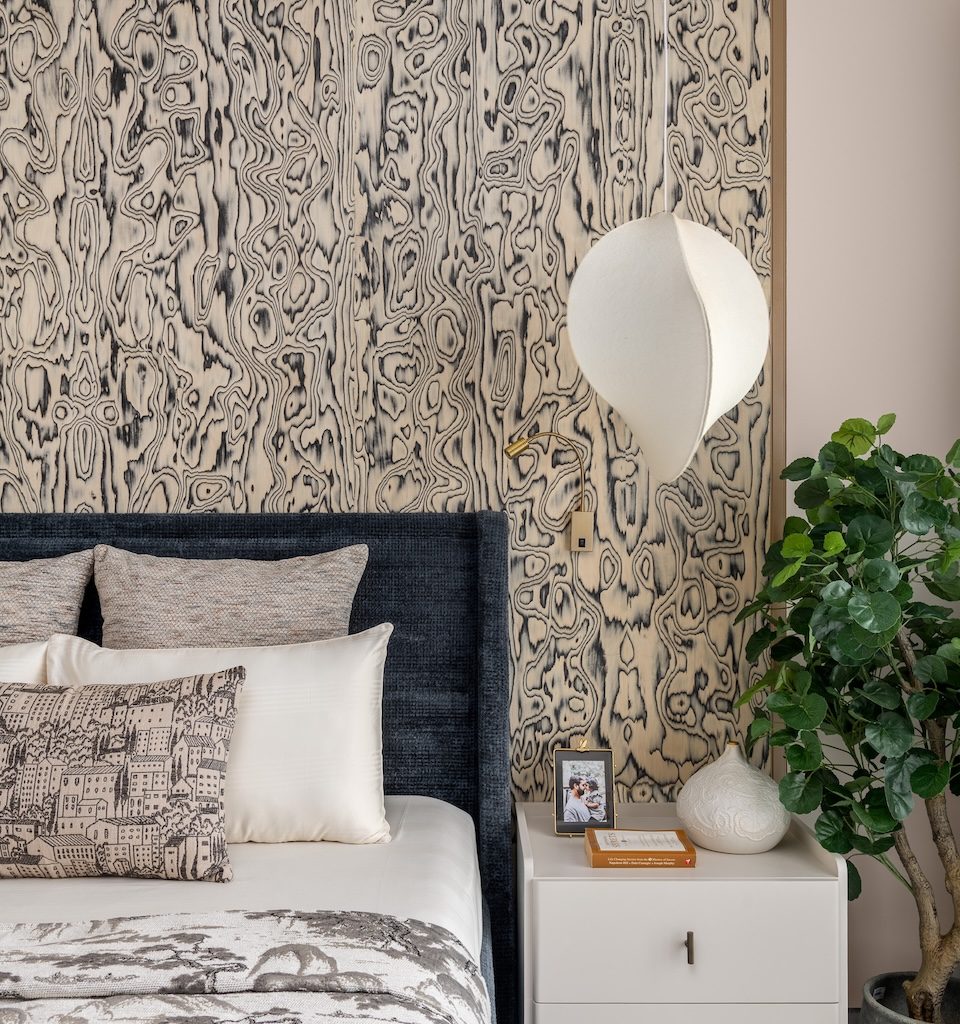
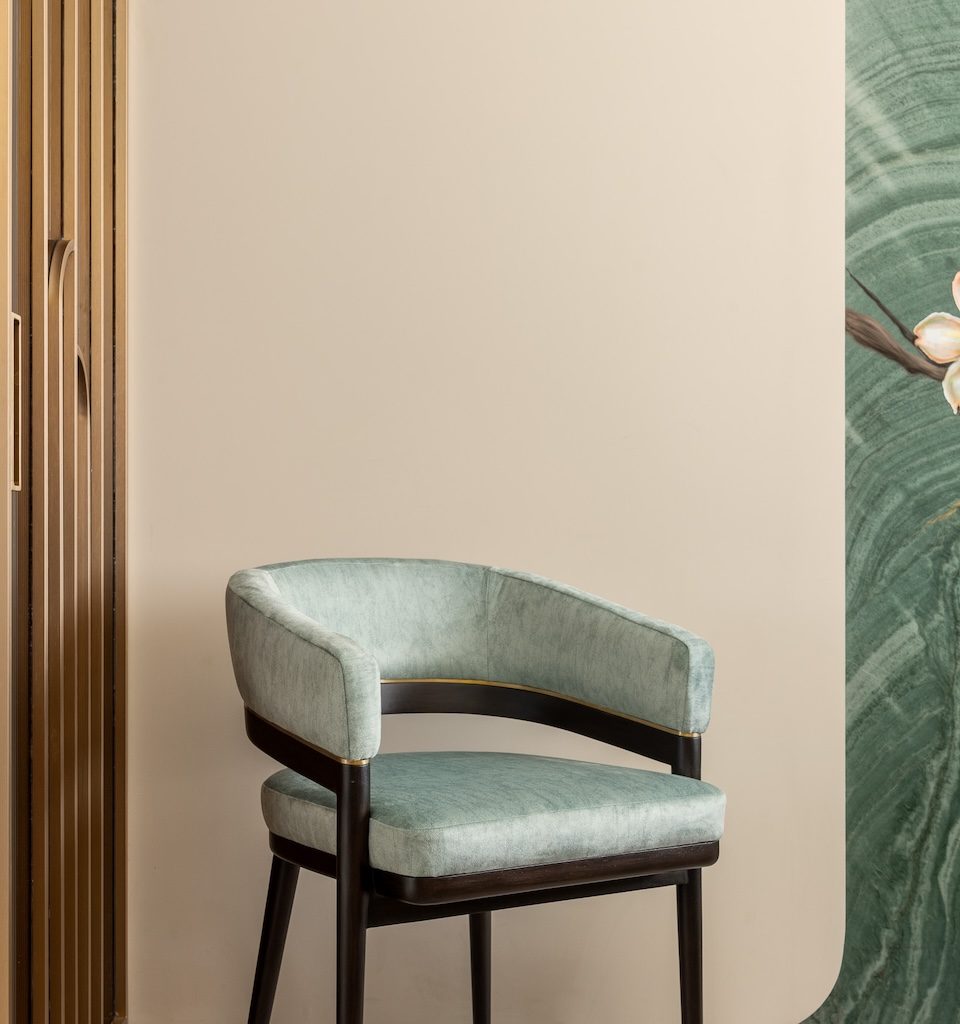
The dining room is carved out as a snug yet elegant extension of the living space, anchored by Havana Green quartzite enhanced with custom hand-painted artwork. Bedrooms are conceived as distinct narratives. The master bedroom draws from a memory of a frangipani tree in full bloom, translated through an embroidered bed back, fluid wardrobe shutters, and a tranquil palette accented with teal and blush. The son’s bedroom adopts a bolder, more contemporary language through backlit stone, dyed veneer, leather, and black accents, while the guest bedroom introduces contrast through high-veneer finishes and Prussian blue tones. The kitchen remains contemporary and efficient, connected through fluted glass doors that allow openness or separation as required.
The material palette
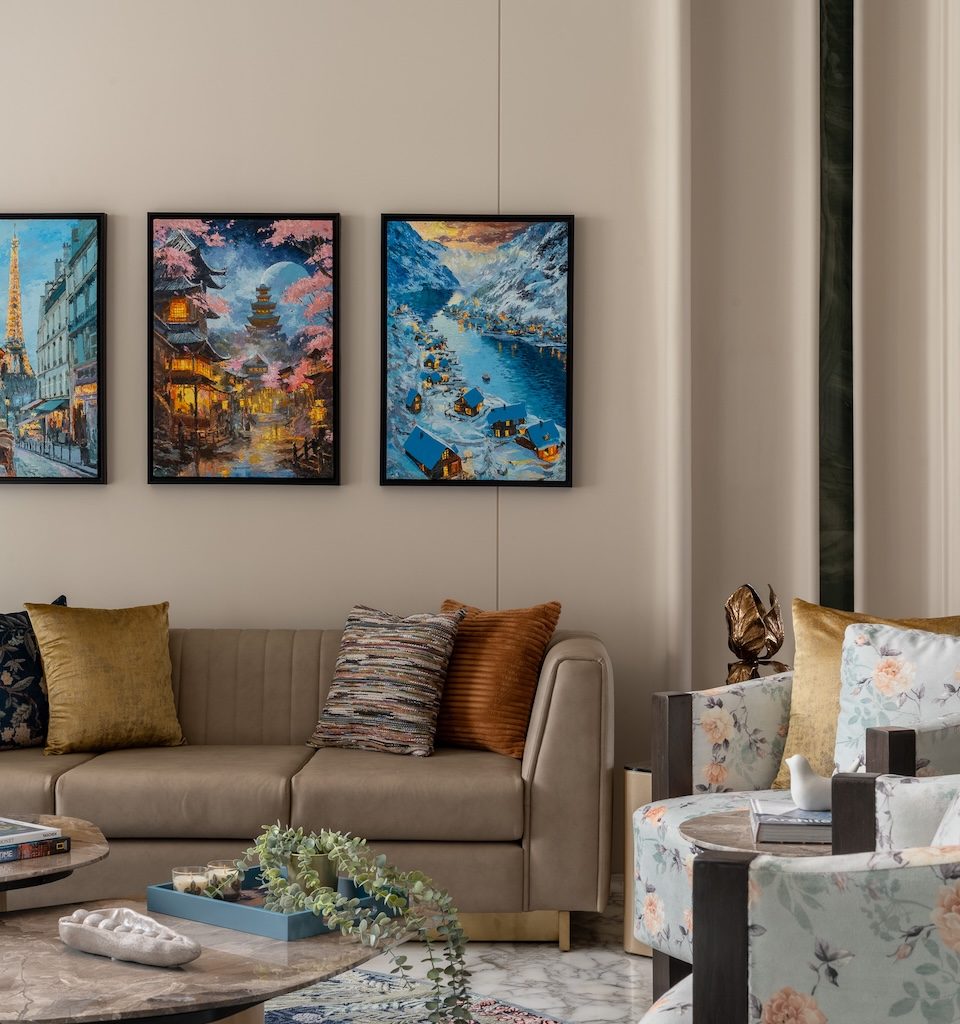
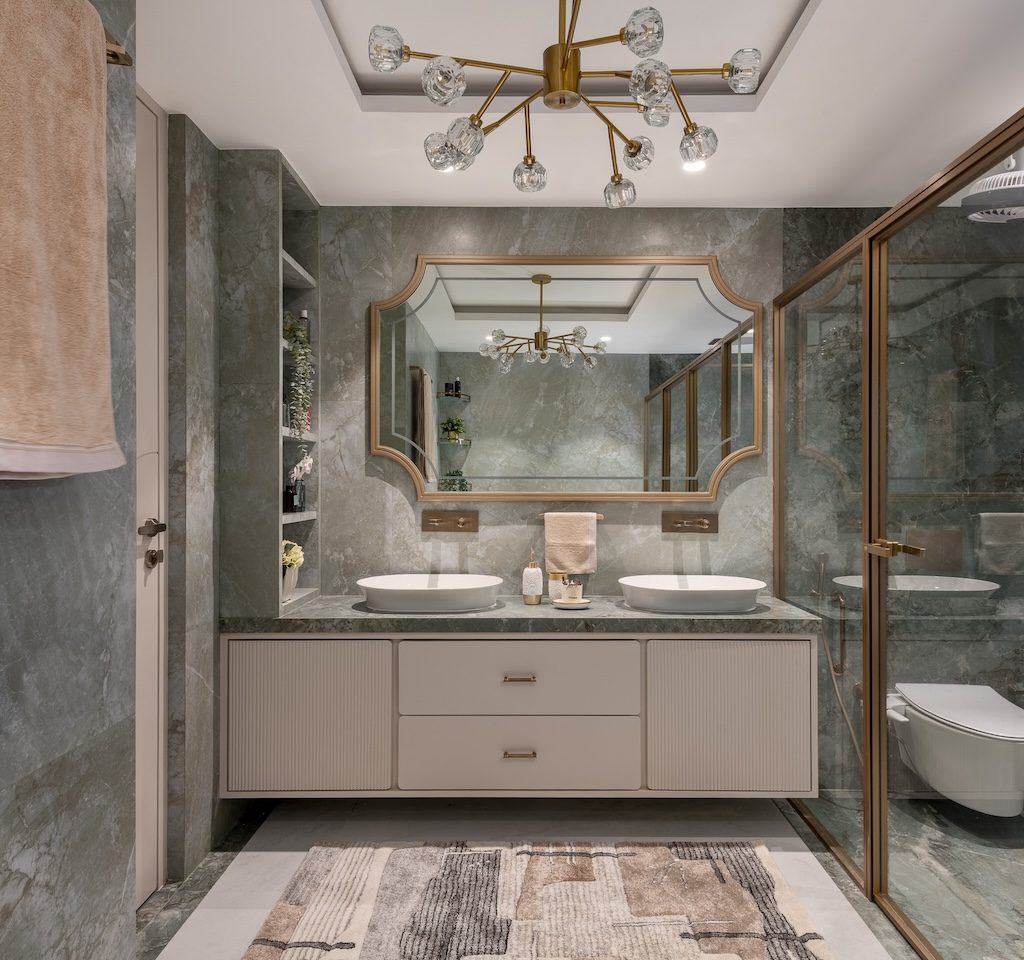
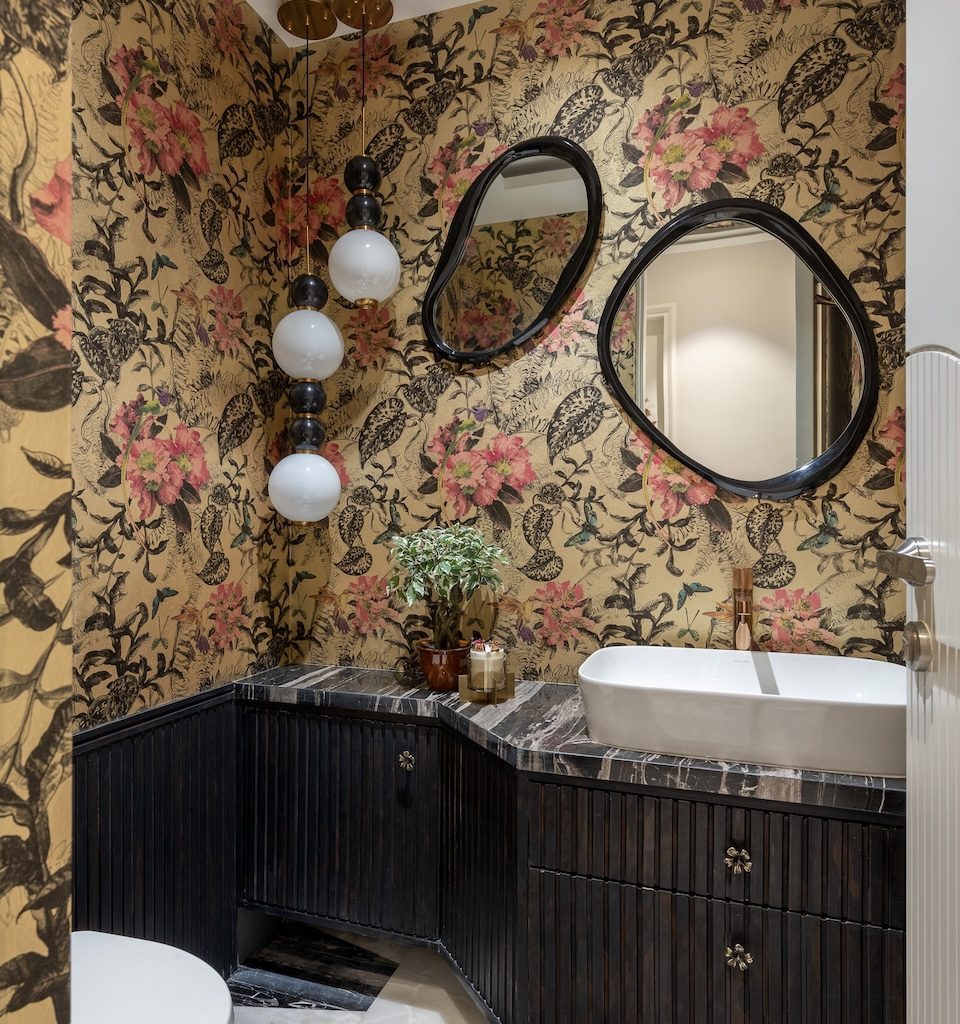
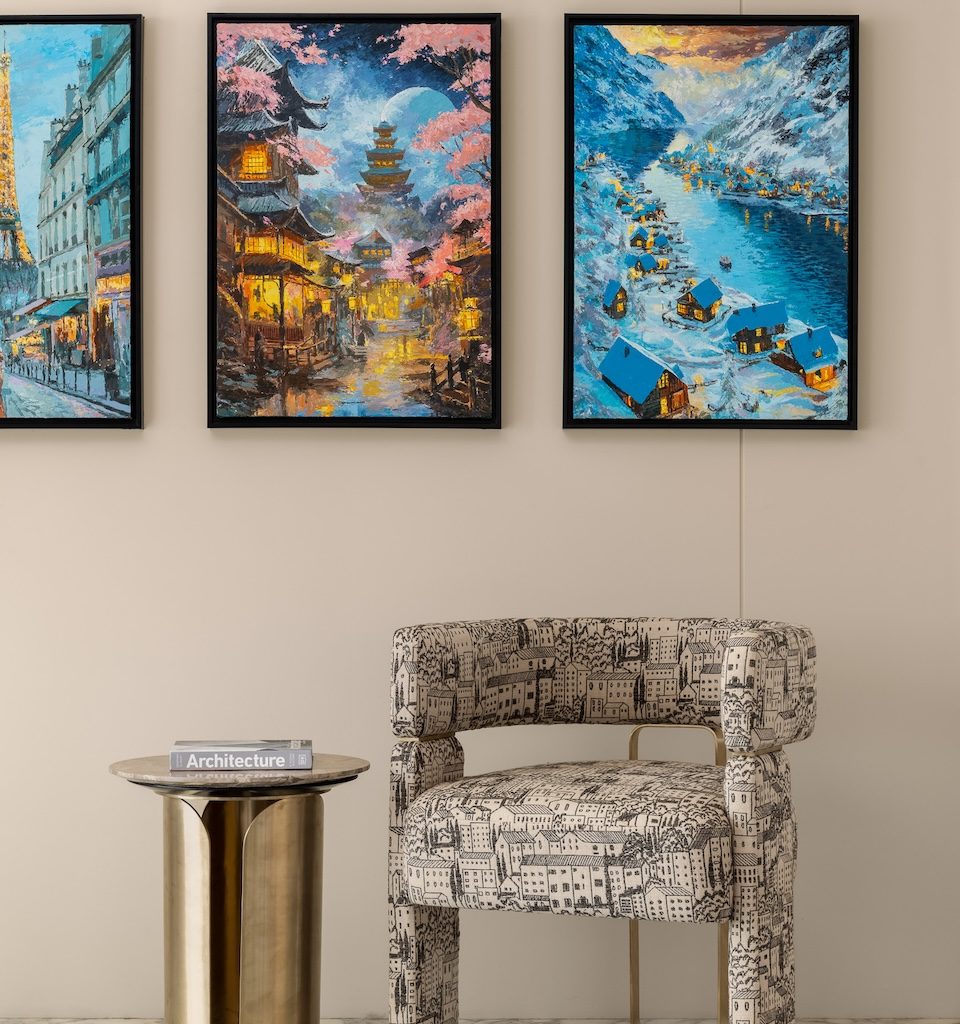
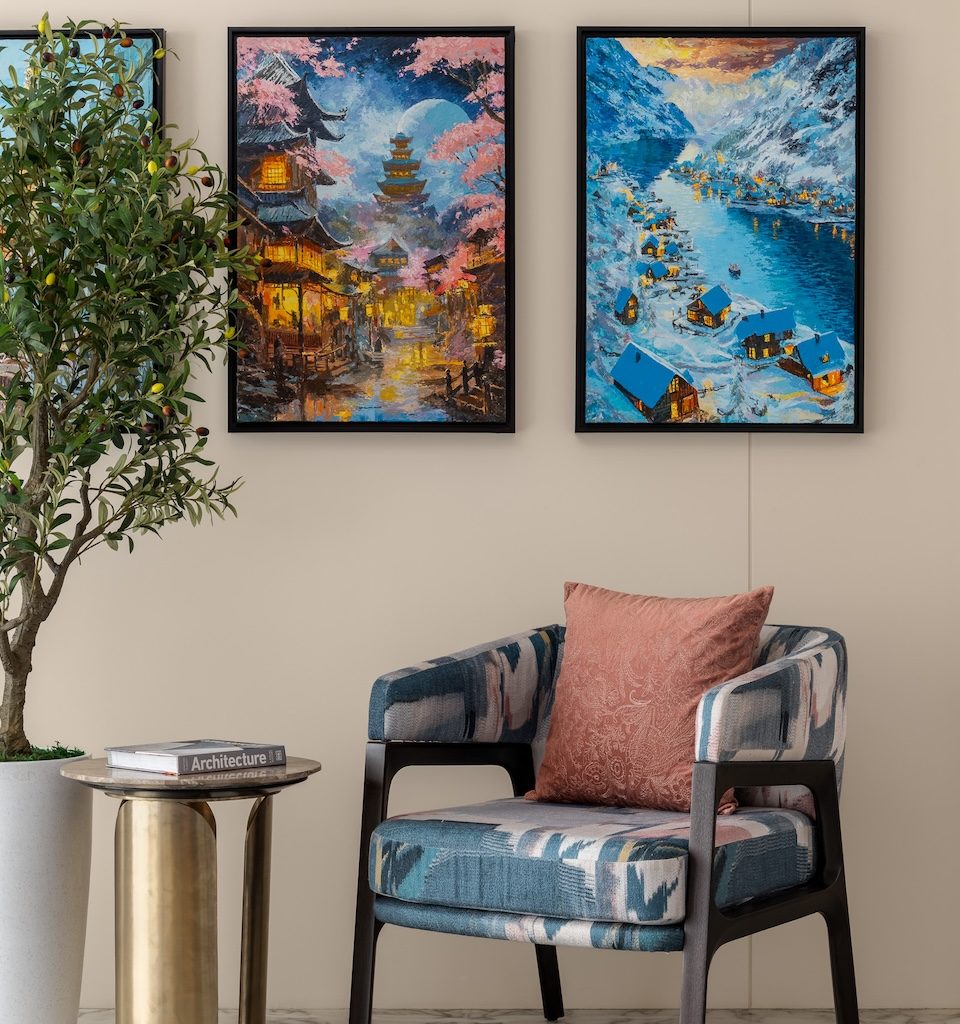
Materiality plays a central role in shaping the home’s character. Veneers, stone, quartzite, leather, and embroidered textiles are layered with care, allowing each surface to contribute to the overall narrative. Custom-painted artworks, hand-embroidered panels, and detailed finishes elevate functional elements into expressive features. The palette remains grounded in natural tones, ensuring that even dramatic moments feel cohesive rather than overpowering.
The highlights
Bespoke artistic interventions stand out as defining moments across the home—from the hand-painted ceiling artwork in the living room to the embroidered master bed back and the customised quartzite dining surface. The fluted glass partition emerges as both a functional and visual anchor, seamlessly integrating storage, circulation, and spatial continuity.
The challenges
Balancing openness with privacy while accommodating extensive storage and customised detailing required careful planning. Translating deeply personal memories into tangible design elements without becoming literal was another key challenge, addressed through abstraction, material choice, and crafted detail.
The takeaway
Zindagi demonstrates how contemporary homes can move beyond surface aesthetics to become deeply personal environments. By weaving memory, material, and craft into everyday spaces, the project shows that modern design can be both expressive and enduring—rooted as much in emotion as in form.
Fact file
Project: Zindagi
Design firm: Chie Design
Location: Mumbai
Area: 1,800 sq ft
Principal designer: Mithila Singh
Design team: Achira Javeri, Anjali Salunke and Mehul Kadam
Add a Comment