
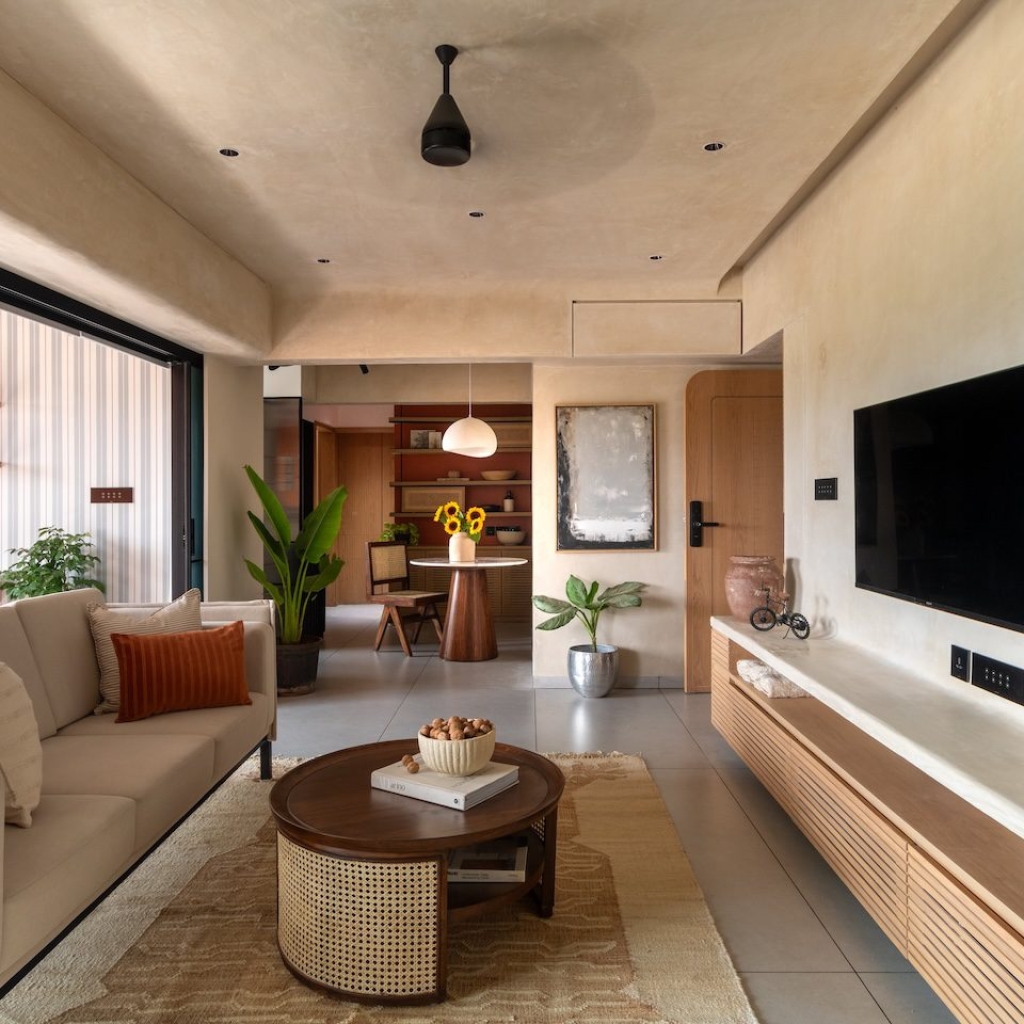
Intraa Design Studio demonstrate how warmth, material honesty, and spatial clarity can transform a compact 850-sq-ft apartment into a deeply lived-in family home in Pune.
Curated by: Rupali Sebastian
Photographs: Architectural Captures; courtesy Intraa Design Studio

The project
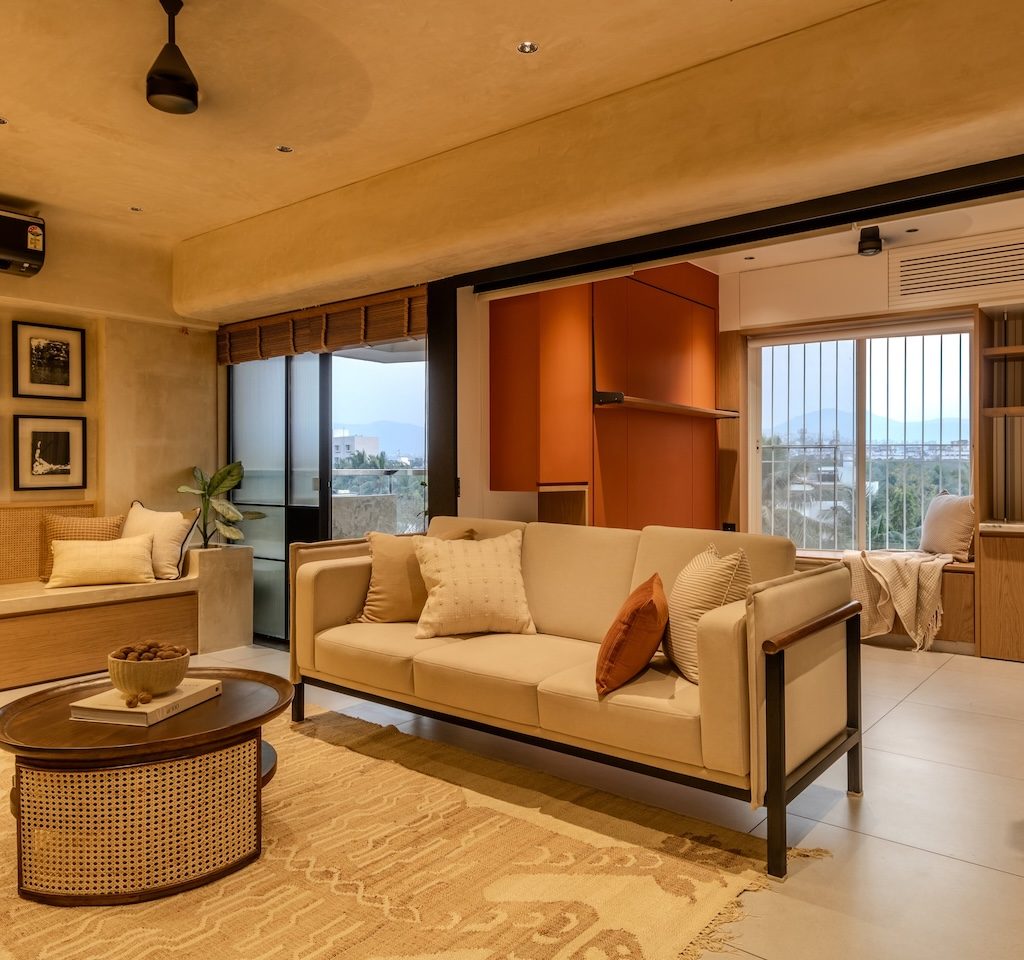
The Cocoon Home is a compact 850 sq ft residence in Dhankawadi, Pune, designed by Intraa Design Studio for a young family of four. Conceived as the clients’ first owned home after several rental apartments, the project places comfort and usability at the forefront. Rather than pursuing stylistic statements, the design focuses on creating a welcoming, calm environment where shared family life, individual routines, and everyday work can comfortably coexist within a modest footprint.
The site
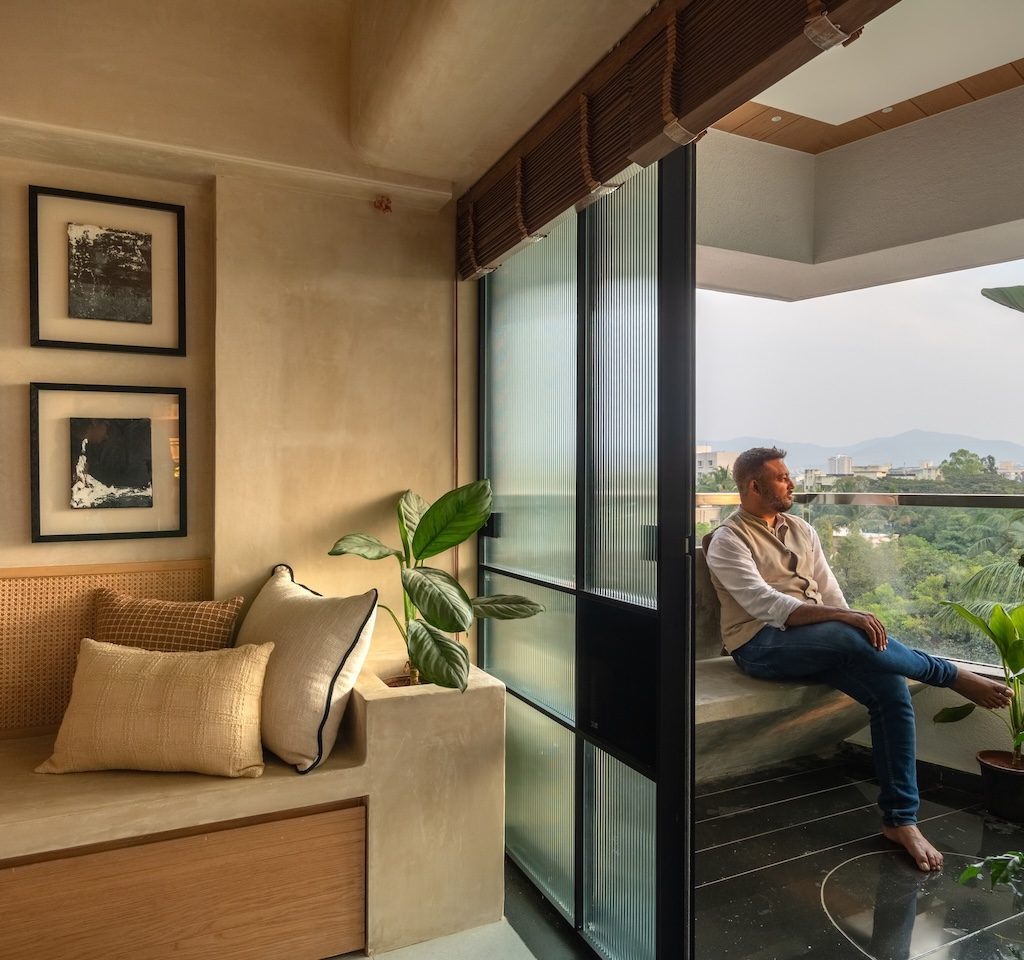
The apartment’s limited area posed an immediate challenge, especially given the family’s need for multiple functional zones. Received as a conventional residential flat, the space required careful rethinking to accommodate private rooms, shared areas, and work-friendly corners without feeling congested. The surrounding greenery and expansive views became important contextual cues, encouraging a design approach that prioritised openness, light, and visual continuity.
The brief
The clients wanted their first home to feel warm, homely, and distinctly personal. Functionality was paramount, particularly given the compact size of the apartment. Aesthetically, they were open to exploring materials and finishes beyond what they were familiar with, even though these choices initially felt unfamiliar. Midway through the process, the clients expressed their growing trust in the design direction, recognising that the home would be “very different from other interior spaces,” yet aligned with their lifestyle and values.
The design intent
The design intent was rooted in the clients’ simple, working-class lifestyle and their natural inclination towards understated living. The designers sought to create a home that feels grounded and closely connected to nature, drawing from the apartment’s verdant surroundings. As principal architect and designer Chinmay Huddar and Vrunda Satarkar explain, “The idea was to create a calm, earthy home where materials and spaces feel honest, natural, and deeply comfortable rather than decorative.” This philosophy guided the choice of finishes and the overall spatial language of the home.

The civil intervention
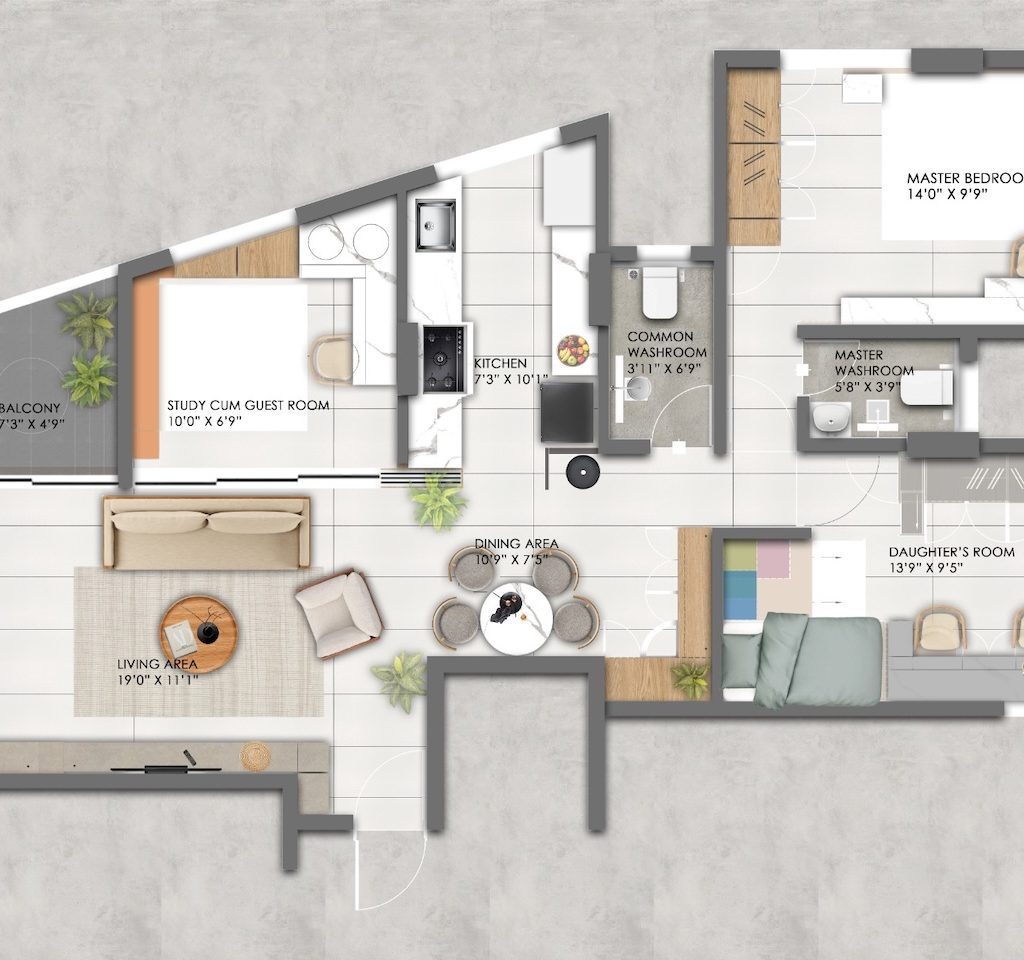
Civil changes played a key role in enhancing openness and light. Openings were widened wherever possible to maximise natural light and ventilation, making the interiors feel larger and more breathable. Several walls were removed, including those between the living area and guest bedroom, the kitchen and dining space, and the balcony and living room. These interventions transformed underutilised zones into functional, light-filled spaces while allowing the home to function as a flexible, interconnected whole.
The spatial flow
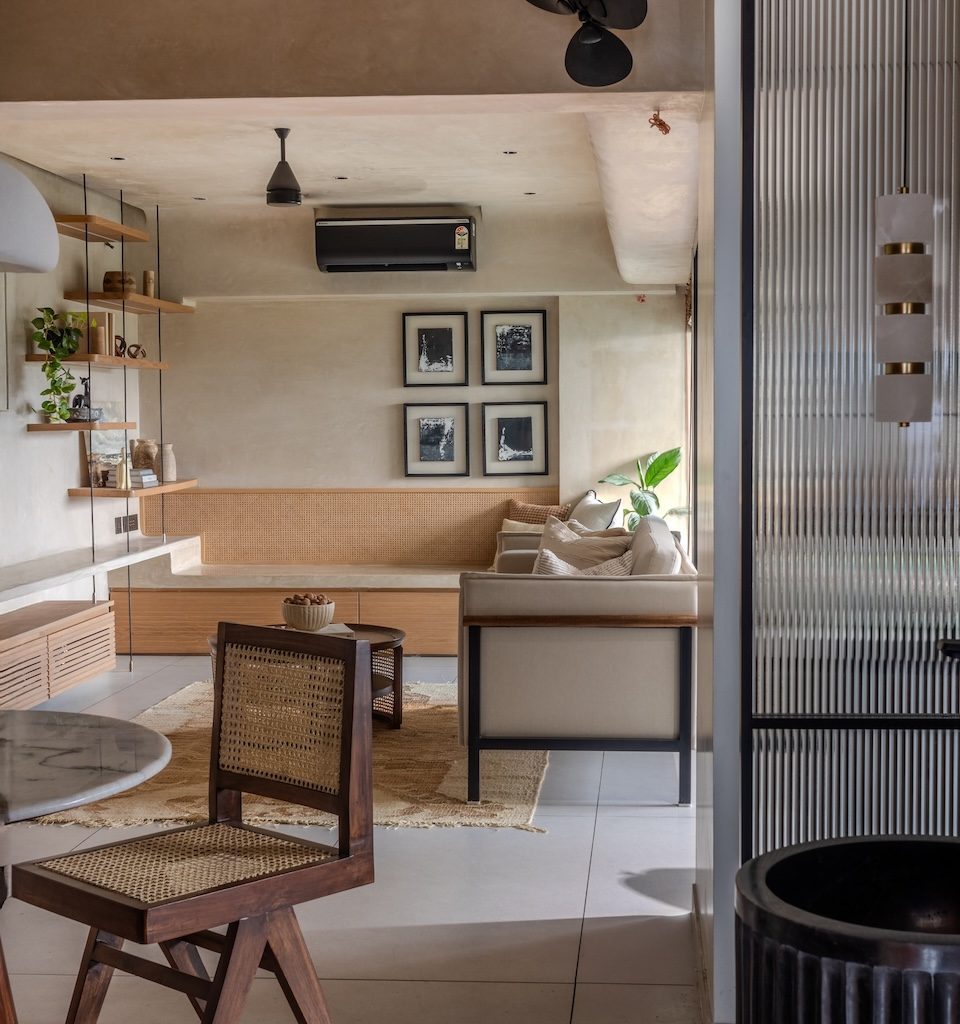
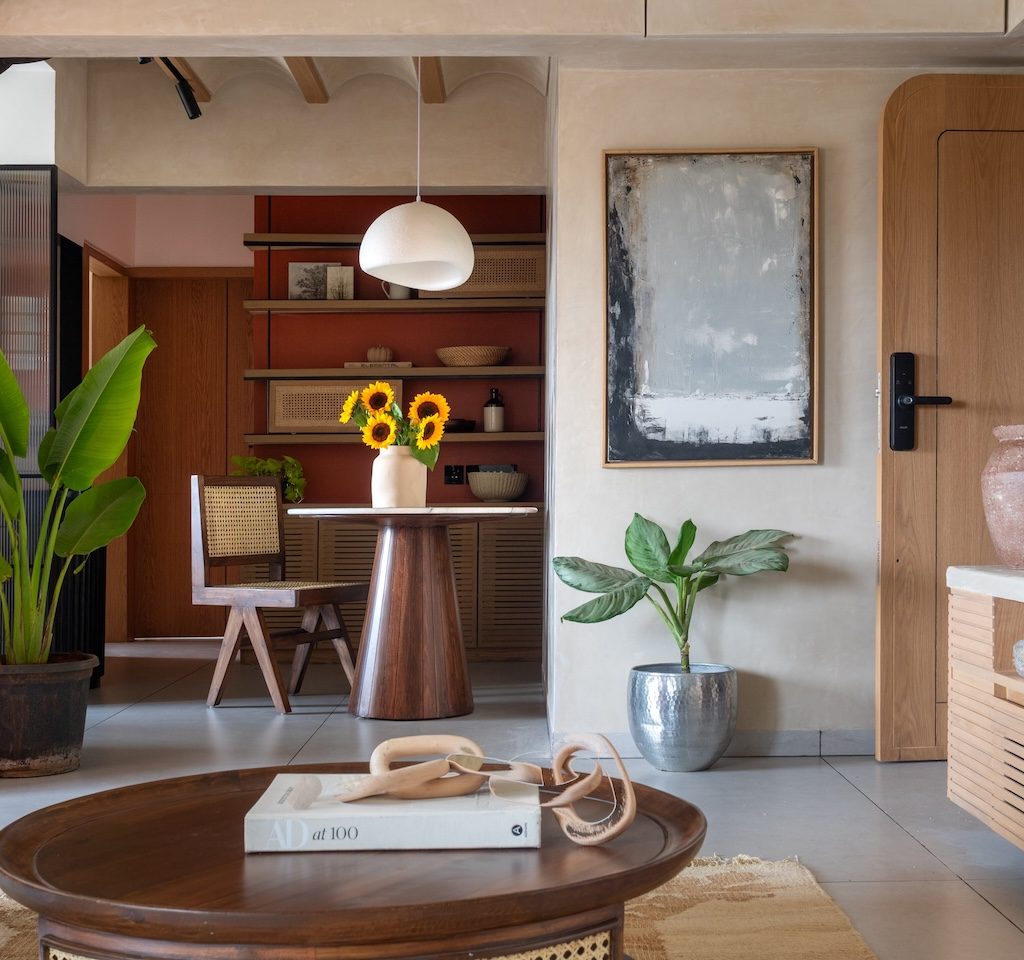
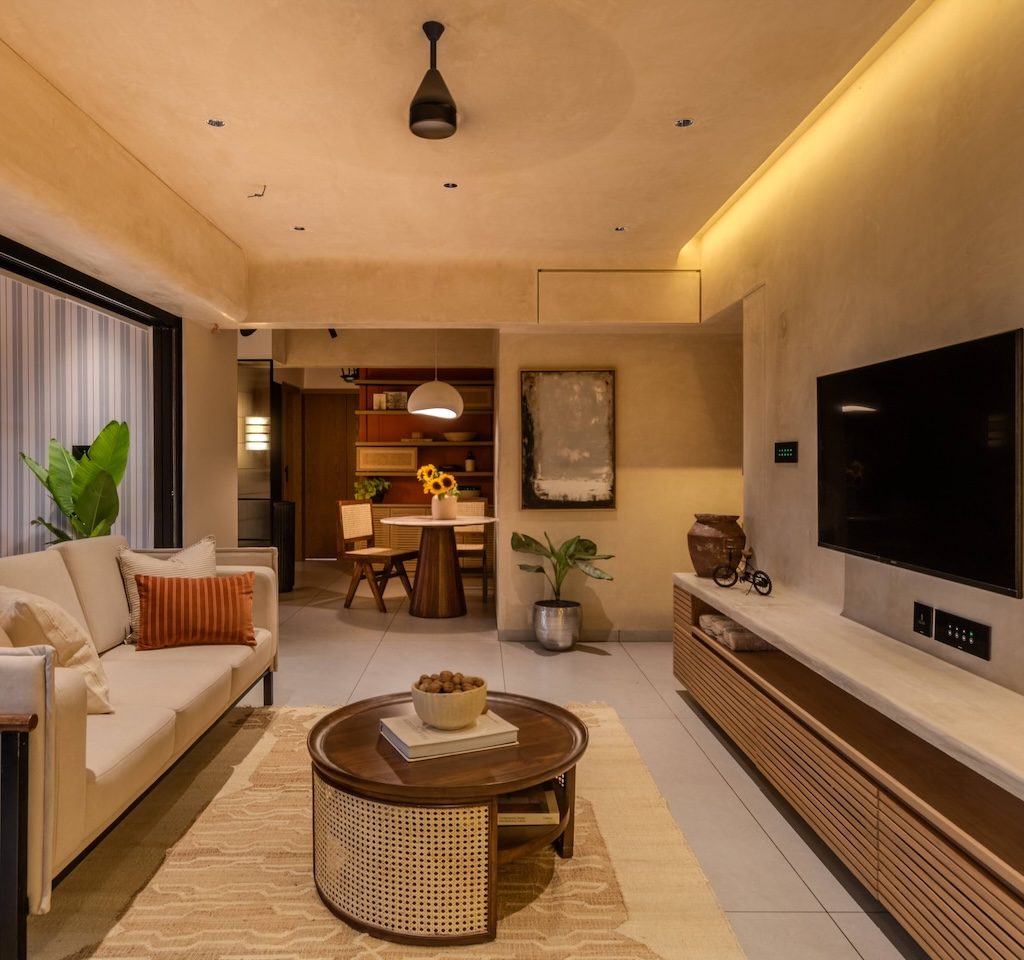
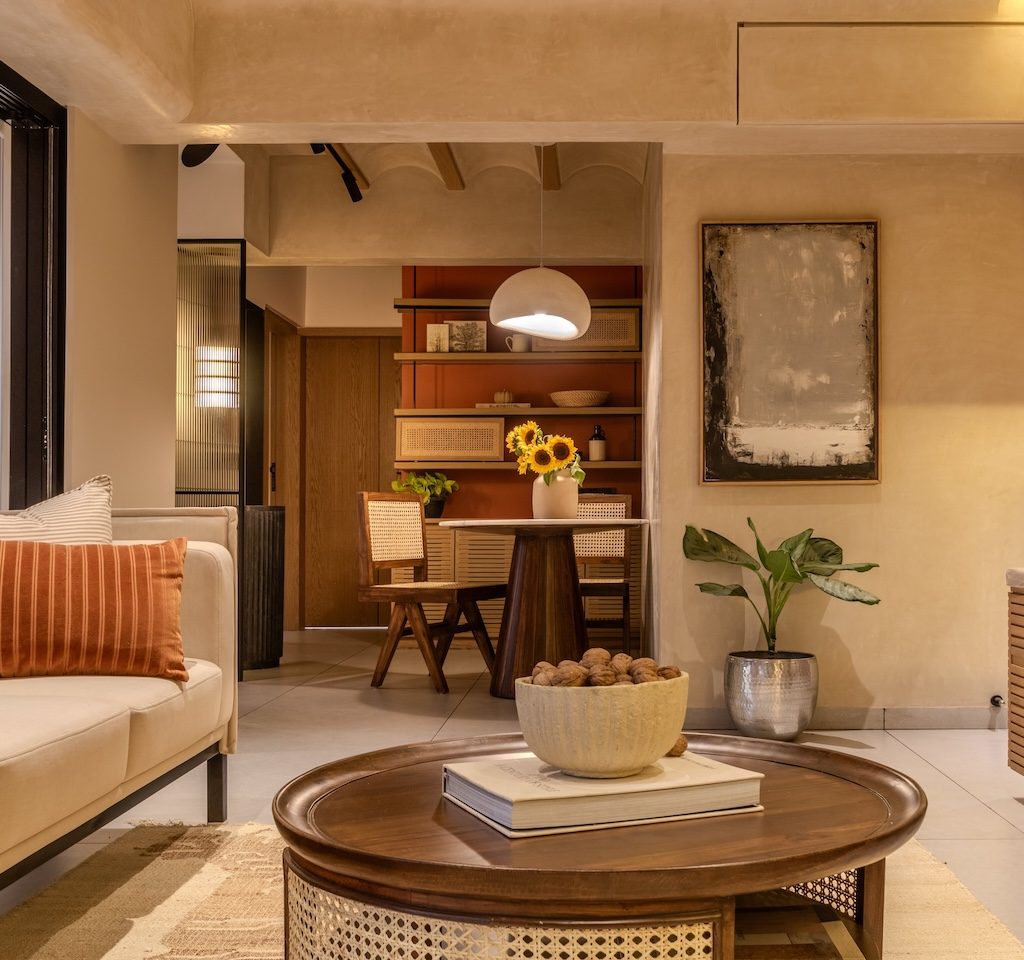
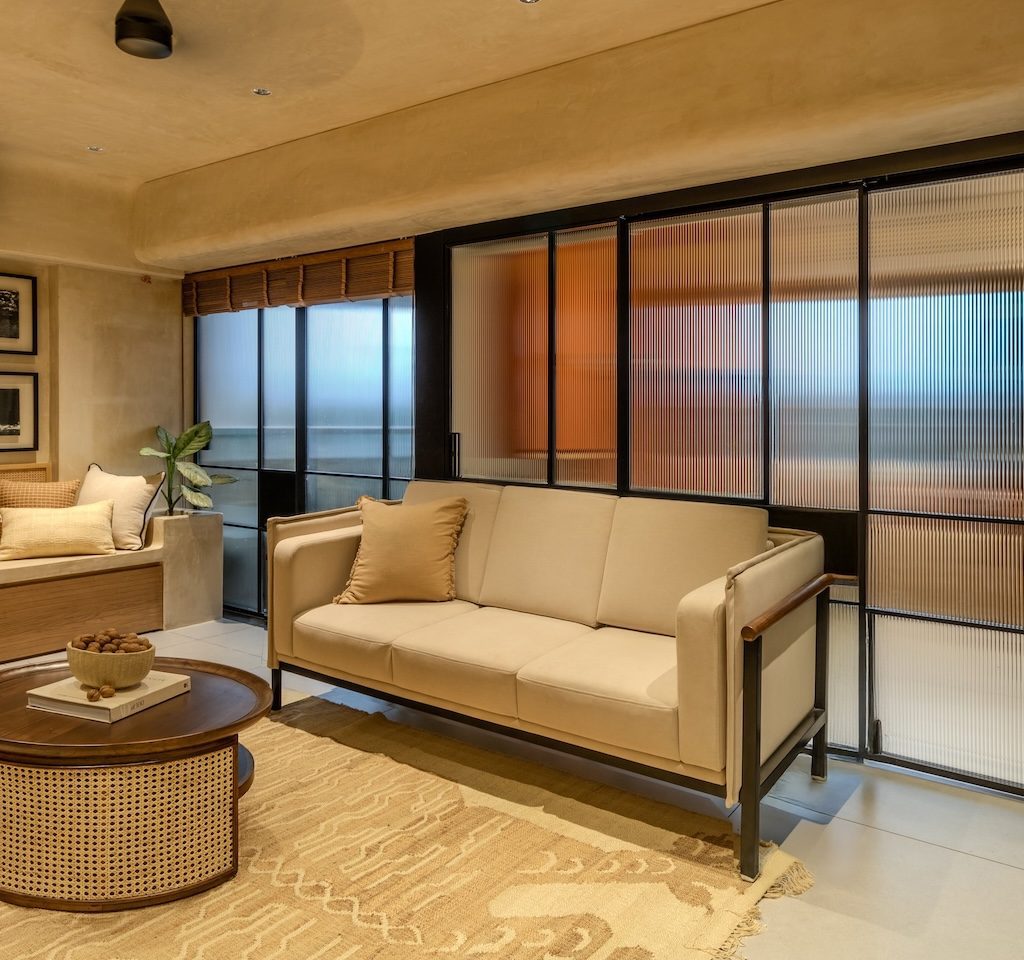
Entry into the home is through a compact buffer passage that opens directly into the living room, establishing an immediate sense of openness. The living area connects seamlessly with a multi-purpose guest bedroom and the balcony, with telescopic sliding doors allowing the bedroom to be visually merged with the living space or closed off for privacy when required. The same door system is extended to the balcony, creating a unified backdrop when shut. The dining area, previously segregated, is now integrated into the living space, further enhancing visual continuity. A short passage from the dining zone leads to the remaining two bedrooms, ensuring privacy without breaking the flow of the home.
The material palette
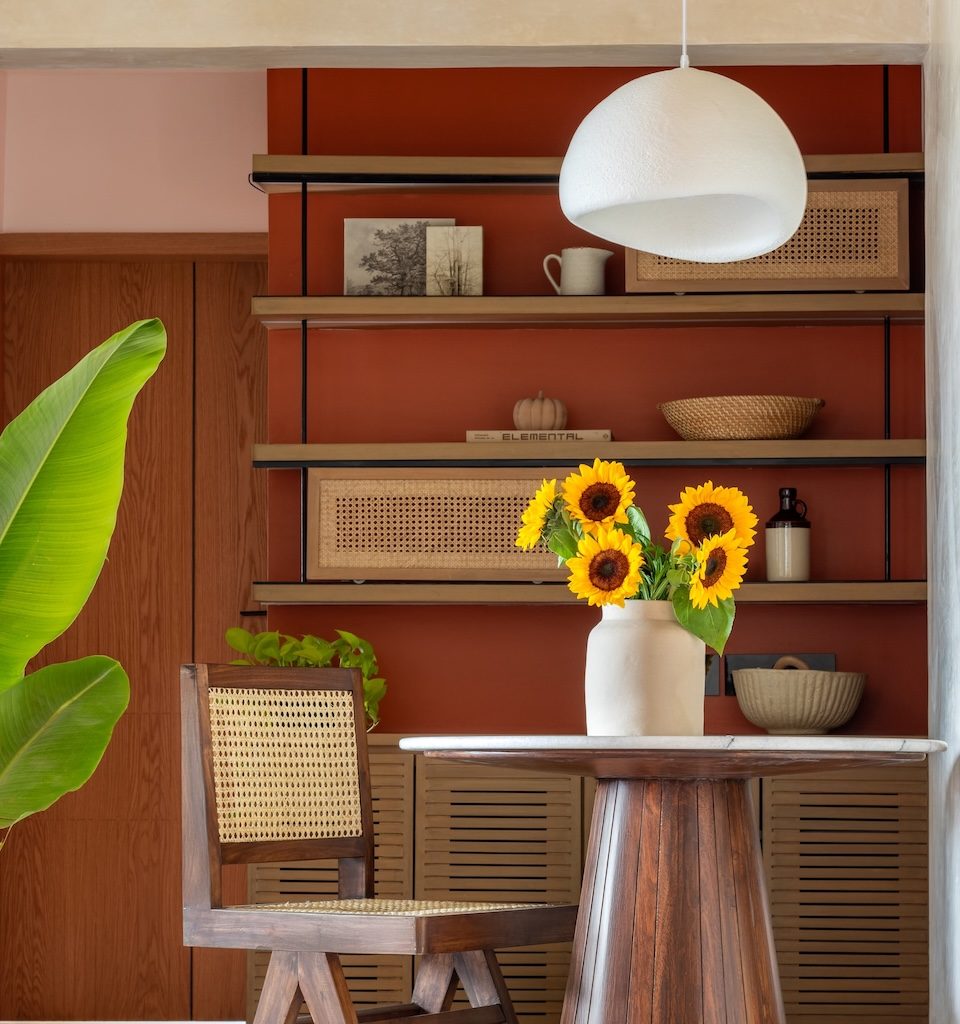
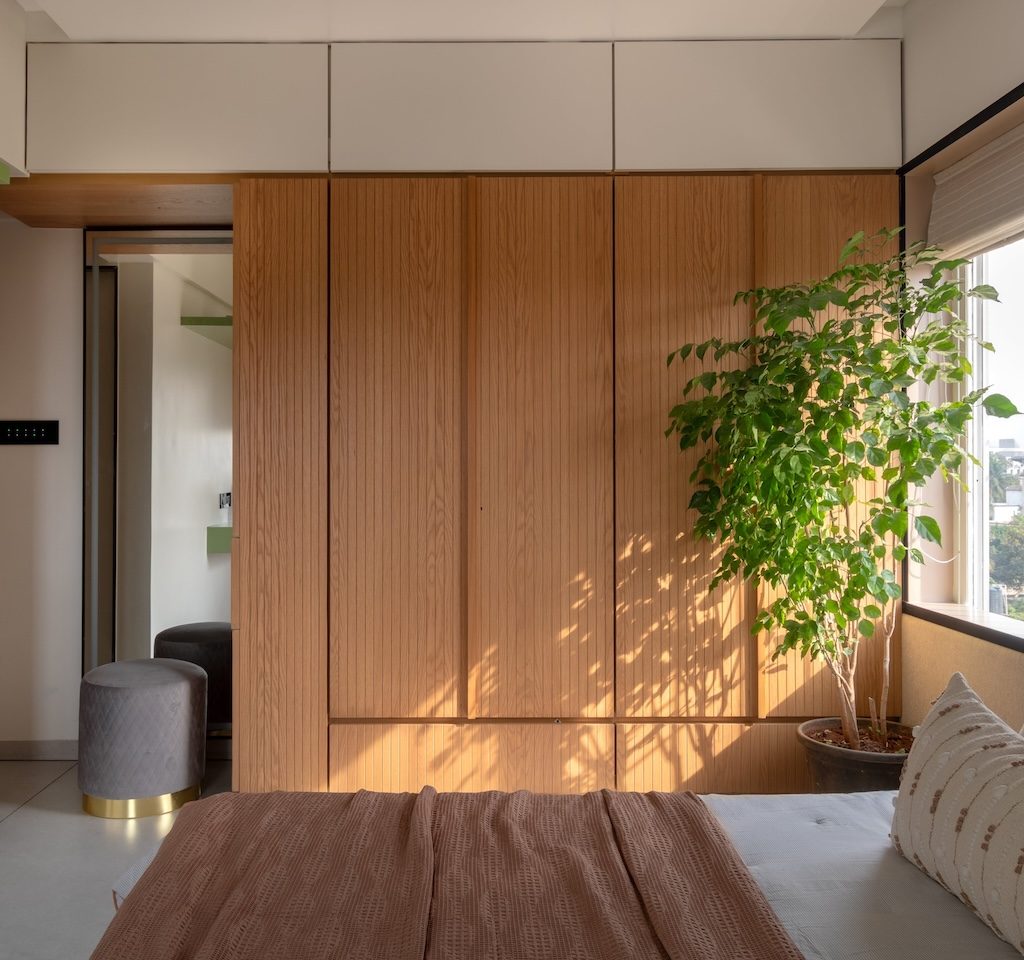
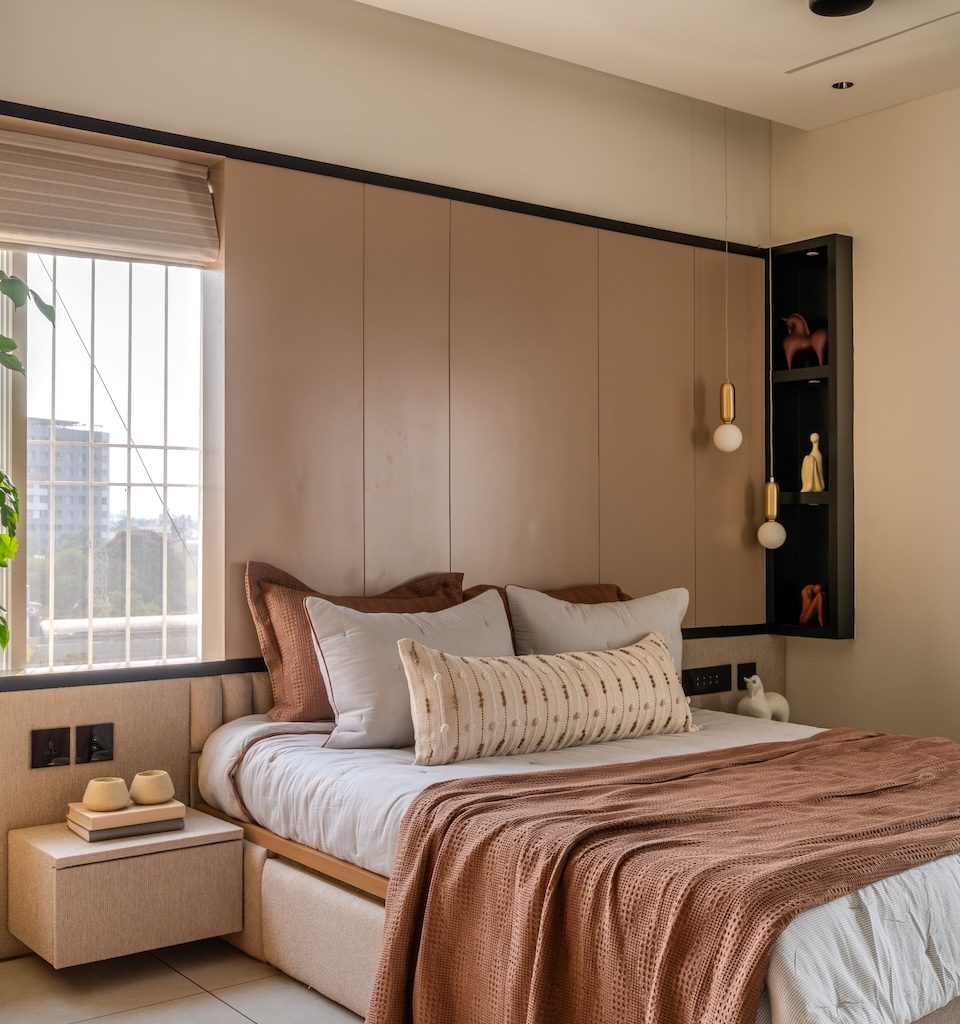
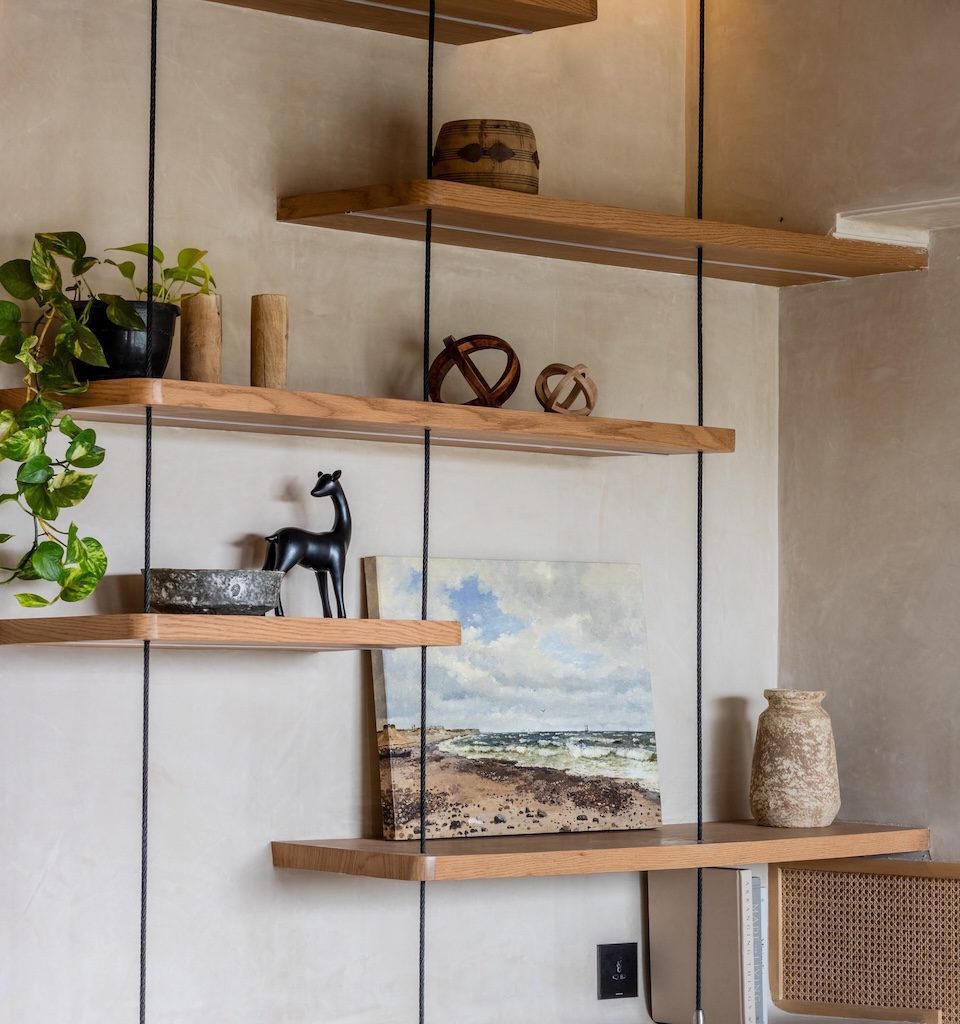
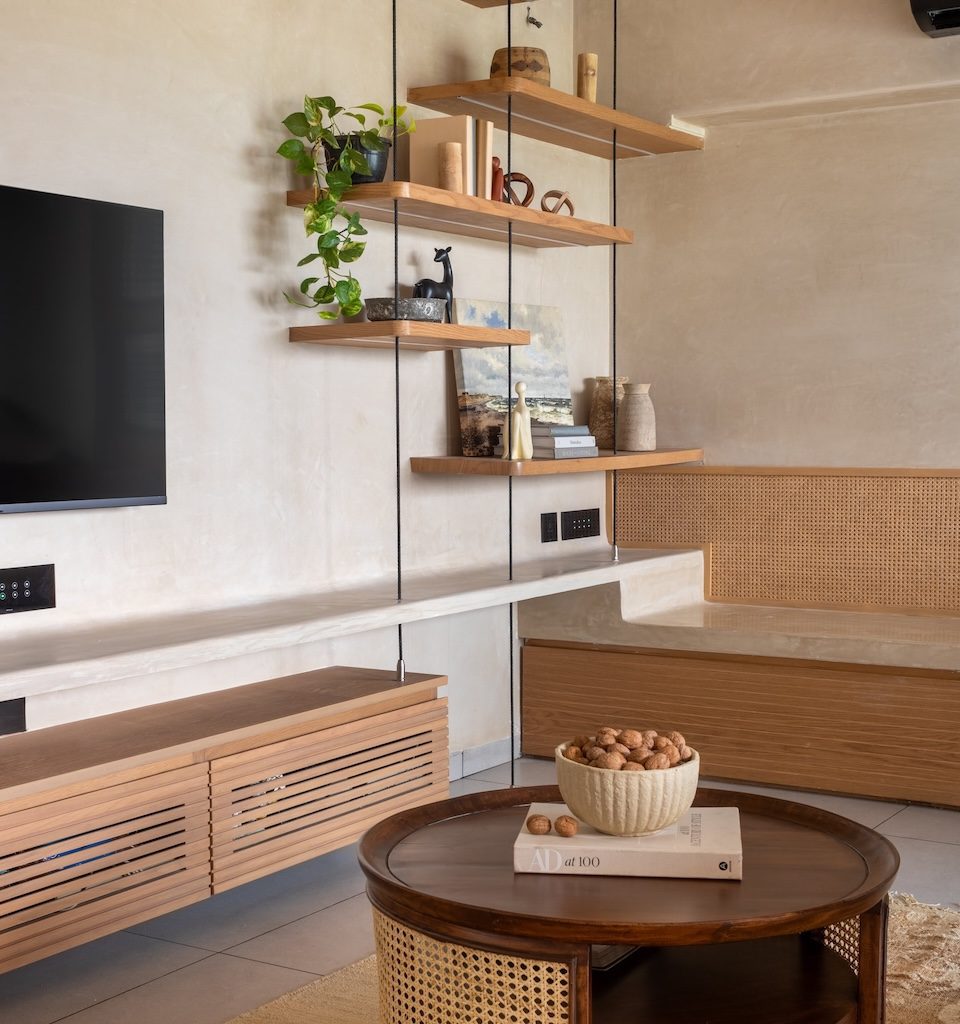
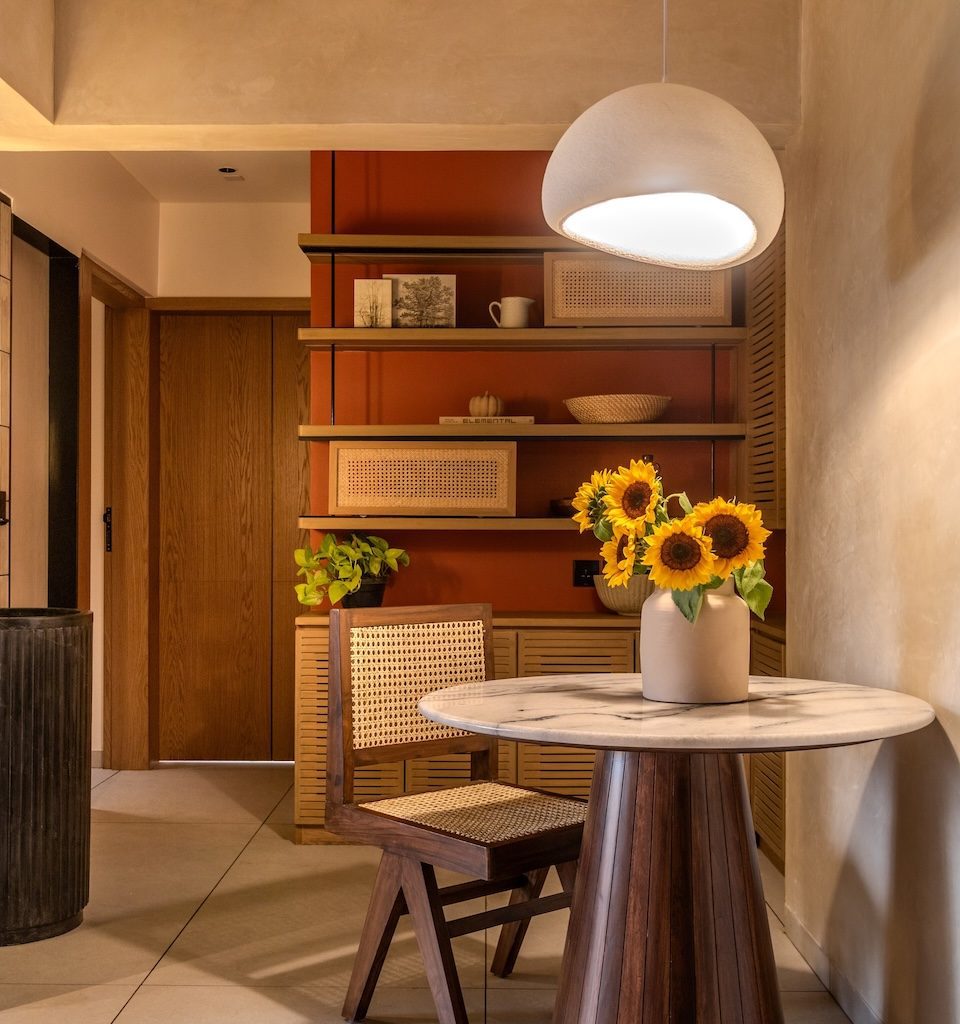
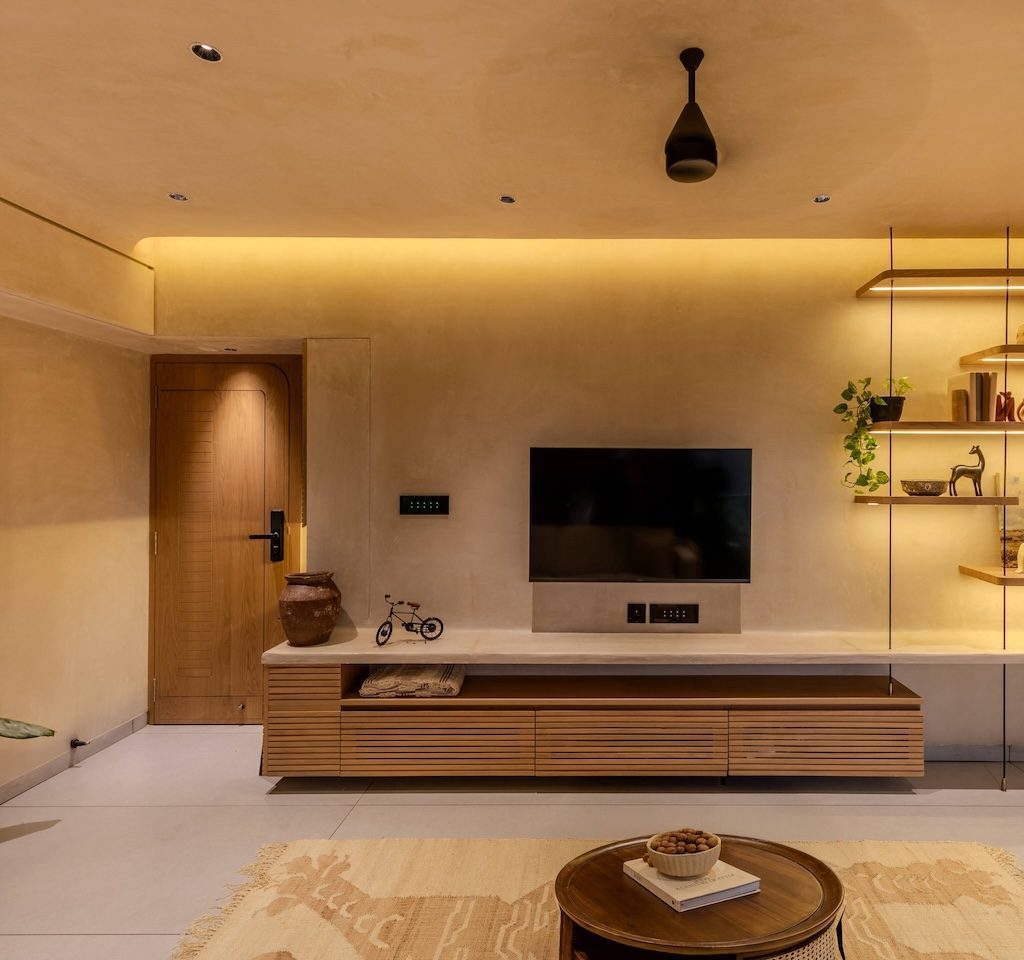
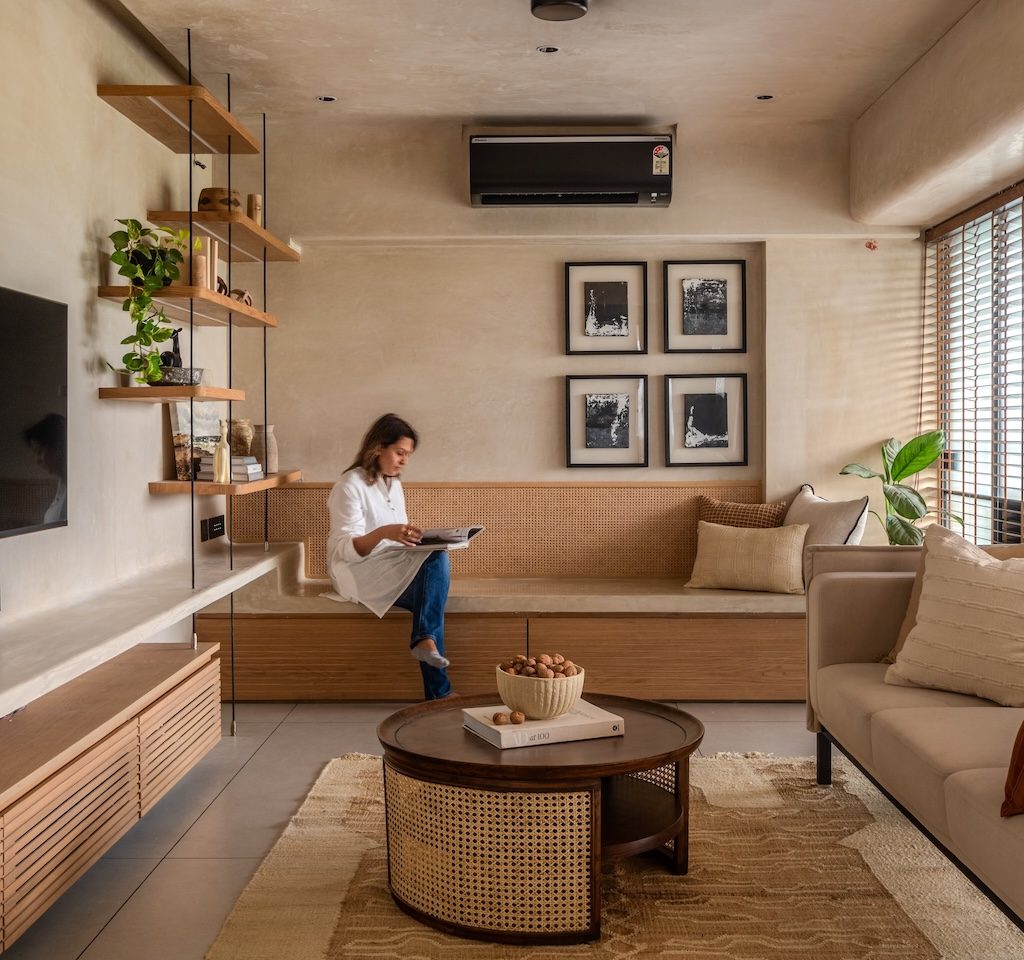
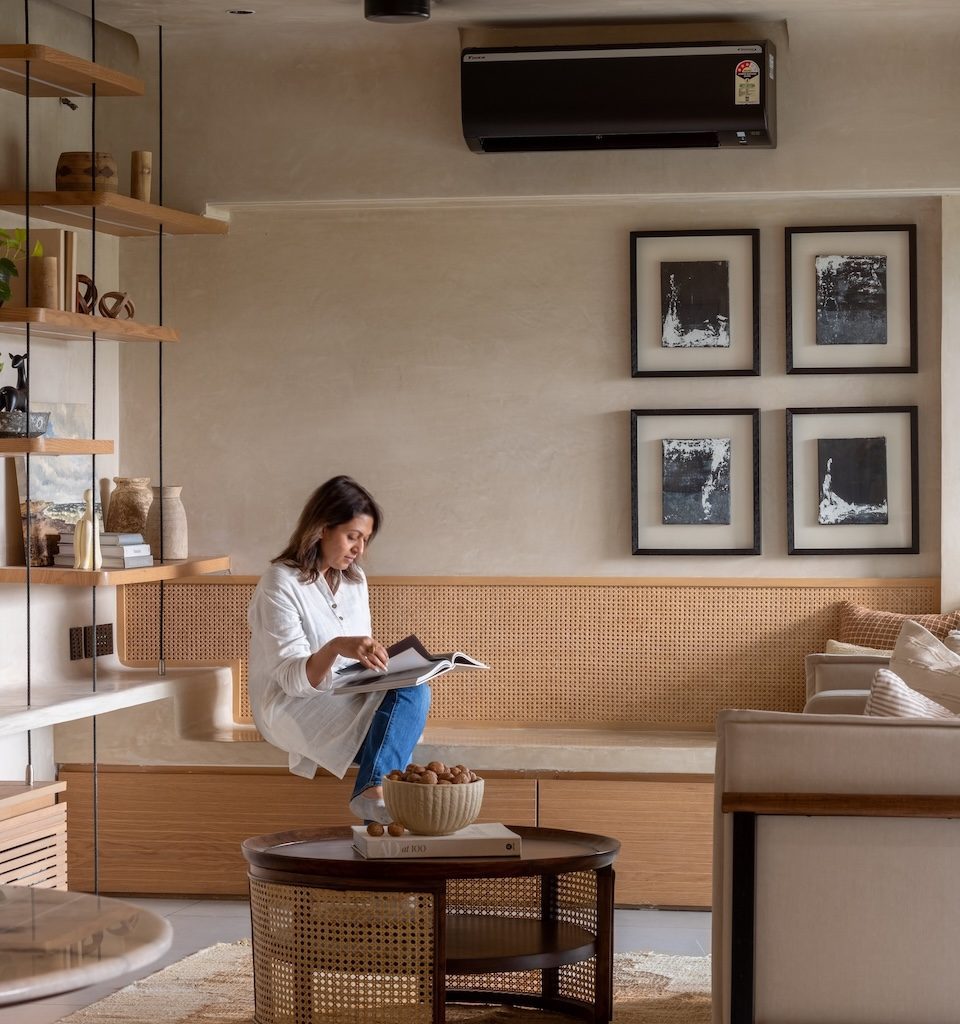
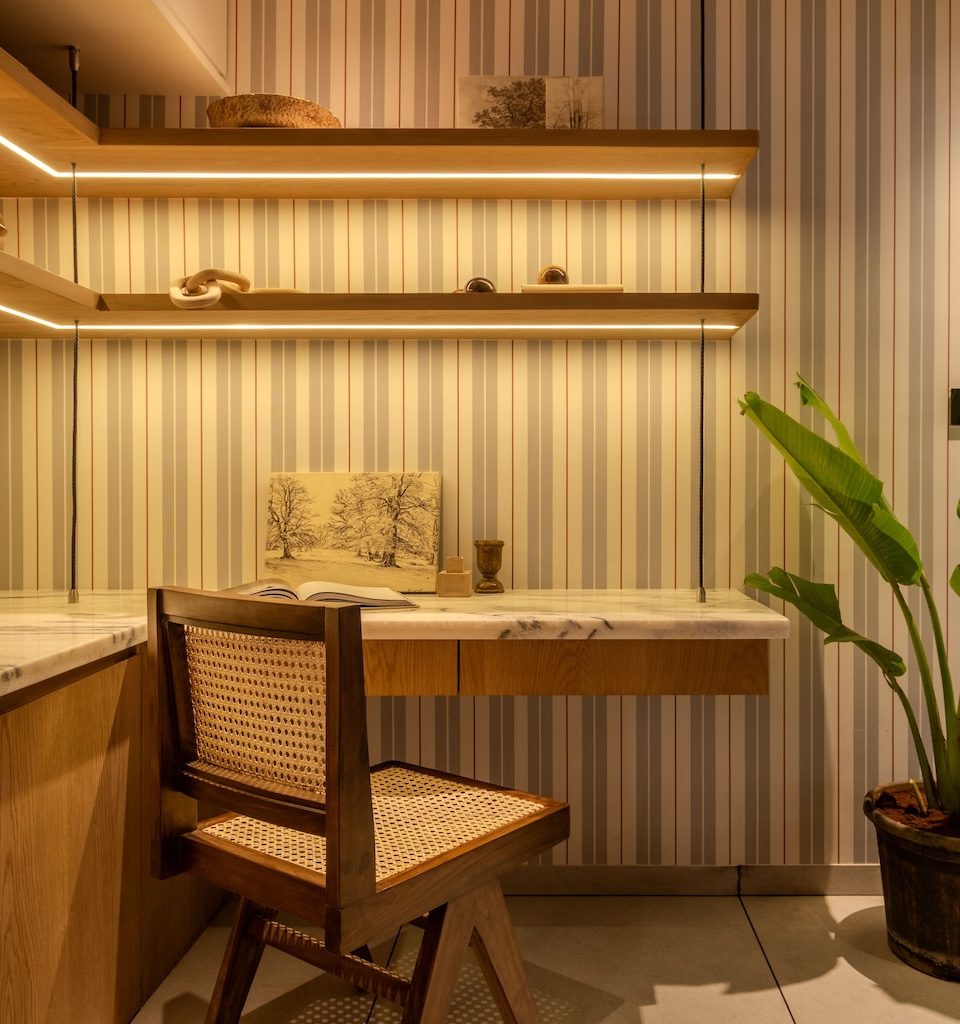
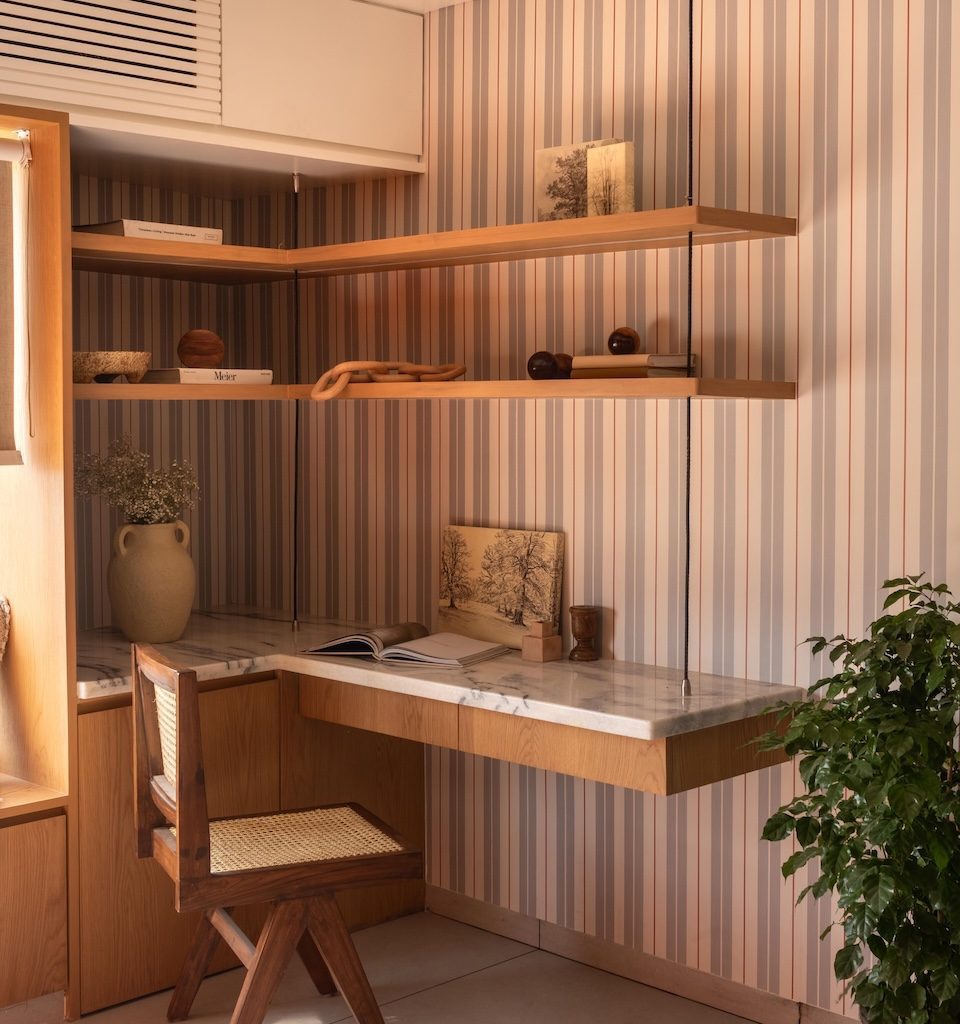
Materiality is central to the home’s identity. Lime plaster is used extensively across walls, ceilings, and ledges, creating a monolithic, soft-toned envelope that lends calm and cohesion to the interiors. Wooden finishes, natural veneers, Indian white granite, and basalt introduce warmth and tactility, while wicker furniture, jute rugs, and indoor planters reinforce the home’s earthy sensibility. Indian stone is used for the dining table and workstation, reflecting the studio’s preference for locally sourced materials and traditional craftsmanship. The restrained palette allows texture and material honesty to take precedence over visual ornamentation.
The highlights
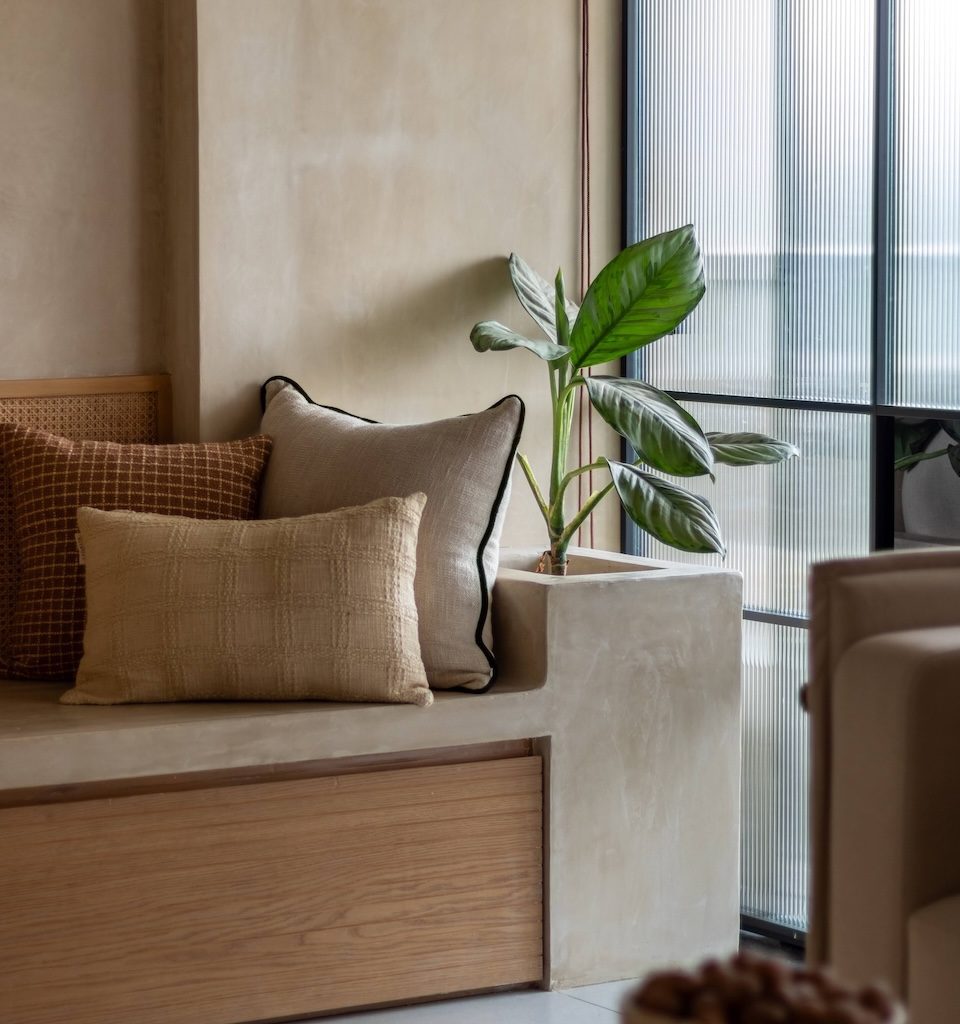
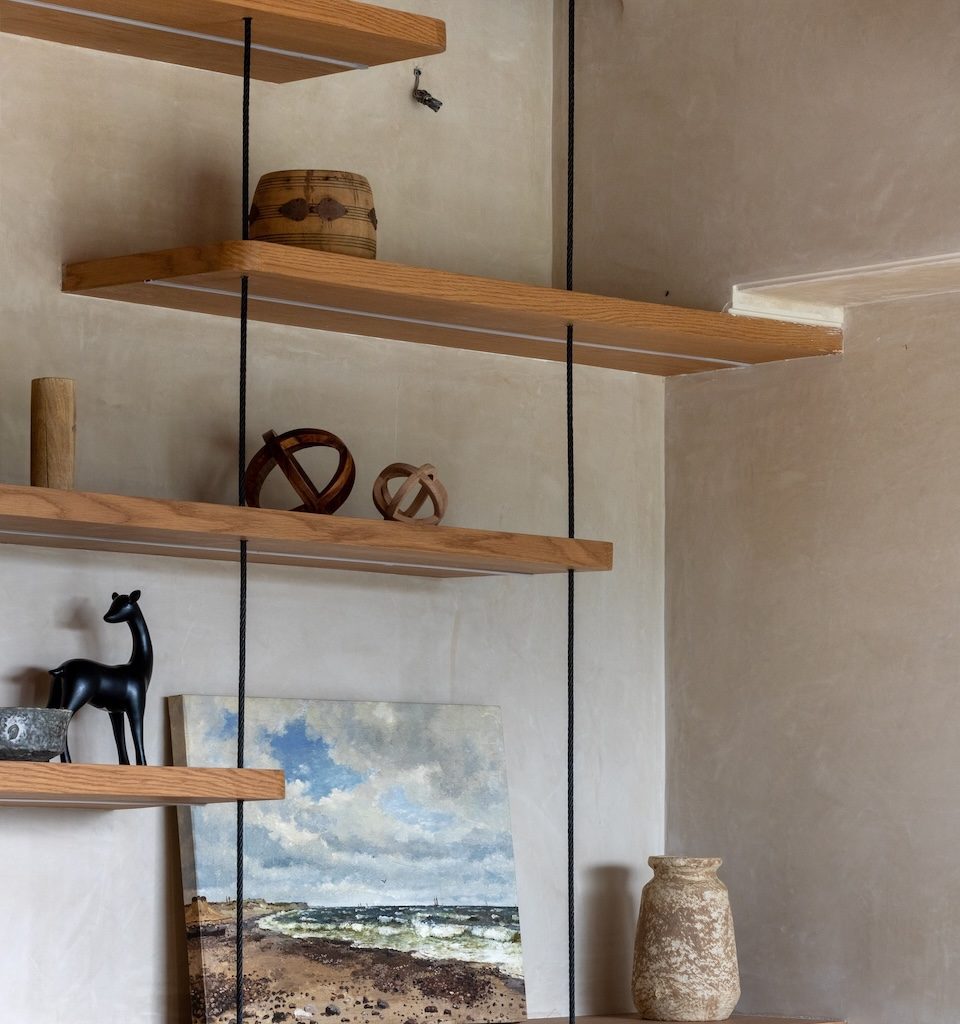
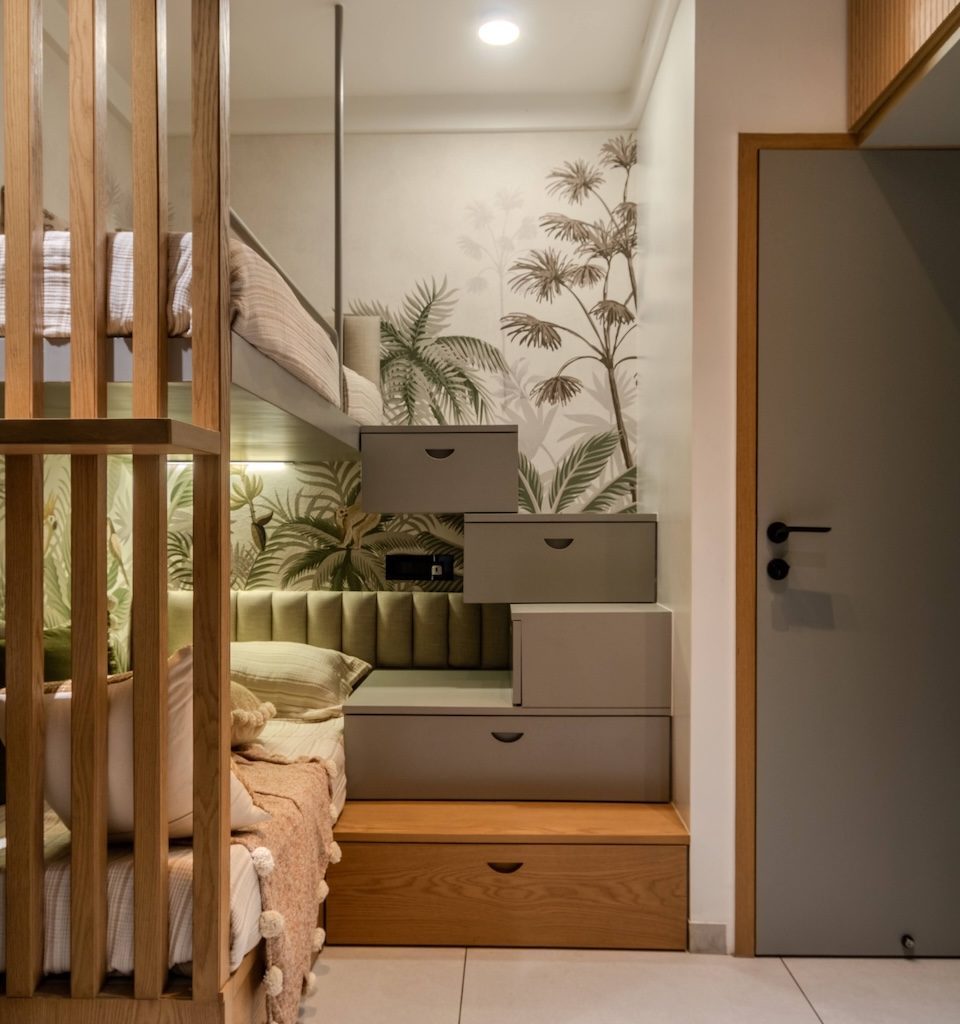
The lime plaster finish stands out as the defining feature of the home, particularly around the seating area, TV wall, and dining nook, where its soft tonal variation becomes most apparent. Initially uncertain about this unconventional choice, the clients now value its tactile quality and calming presence, enjoying the flexibility of working, relaxing, and spending time together across different corners of the home. Custom-designed elements such as the sliding door system, the TV unit with integrated seating and planter pocket, the Murphy bed, and the children’s bunk bed with storage embedded into the staircase further reflect the project’s focus on thoughtful, space-efficient design.


The challenges
Communicating an unconventional material and design approach to clients without a design background was an early challenge. This was addressed through detailed drawings, mock-ups, and visualisations that clarified intent and built confidence. Executing lime plaster across furniture surfaces also demanded careful construction detailing, including layered assemblies of plywood, gypsum, and plaster to achieve a seamless monolithic effect. Multiple trials were conducted to finalise the exact tone of the plaster, ensuring it delivered the intended warmth and softness.
The takeaway
The Cocoon Home reinforces the value of designing with empathy and restraint. By prioritising material honesty, spatial openness, and everyday comfort, the project shows how compact homes can feel generous, grounded, and deeply attuned to the lives they support.
Fact file
Project: The Cocoon Home
Design firm: Intraa Design Studio
Location: Pune
Area: 850 sq ft
Principal architect: Chinmay Huddar
Principal designer: Vrunda Satarkar
Design team: Sayali Kumbhujkar, Aakanksha Kolte


Add a Comment