
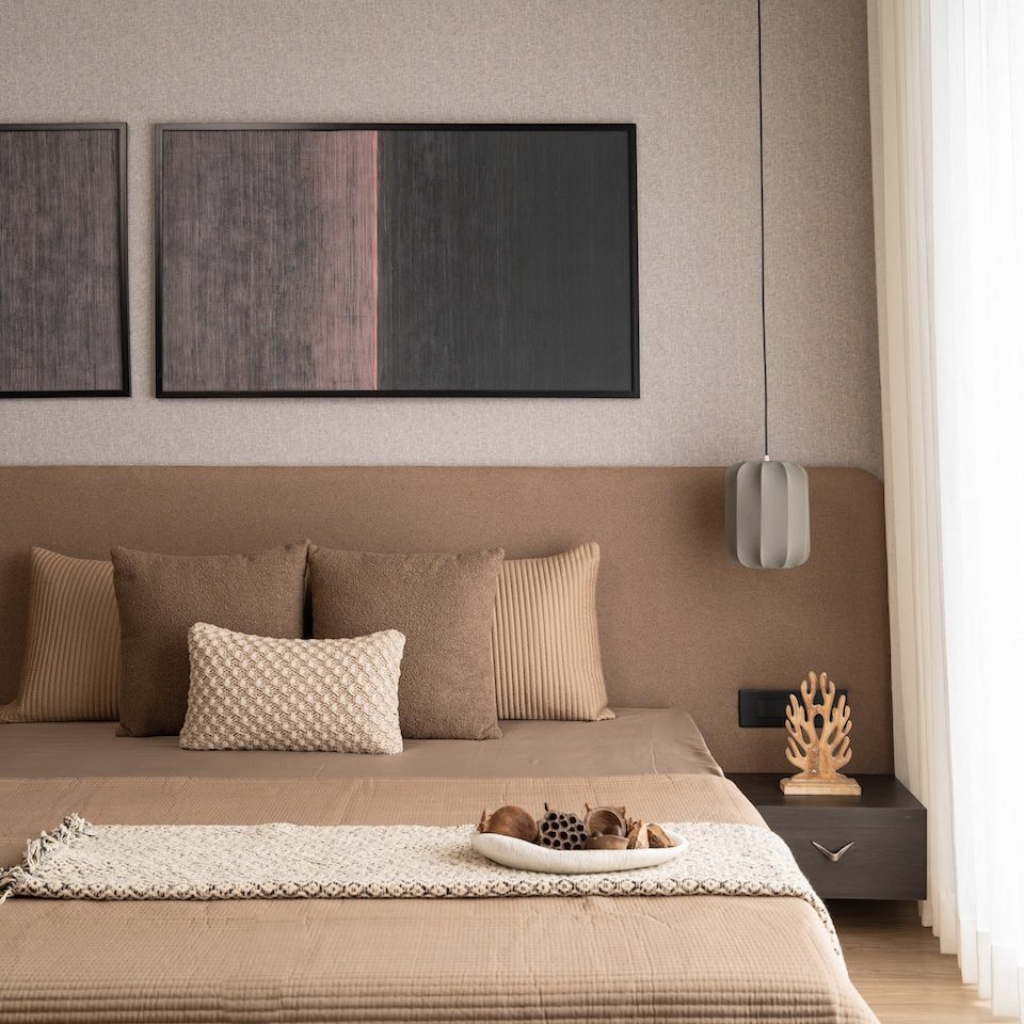
In Surat, The Concept Lab’s Tranquil Oak distills modern serenity through oak wood, organic forms, and neutral tones—creating a 1,600 sq ft home where stillness feels alive.
Curated by: Rupali Sebastian
Photographs: Samarpan Pictures


The project
Tranquil Oak is a 1,600 sq ft apartment in Surat designed as a meditative retreat from city life. Guided by the belief that a home should be a serene sanctuary, the interiors are defined by natural oak, sculptural furniture, and a palette of muted whites and earth tones that together form a tactile, uncluttered environment.
The site
Located in Varacha, Surat, the apartment’s linear plan allowed The Concept Lab to compose spaces that flow seamlessly while maintaining calm proportion. Natural light filters through large windows dressed in black blinds, providing contrast against the warm, neutral envelope.
The brief
The clients sought a peaceful, minimal home that would be open, bright, and rooted in natural materials. Functionally, it had to include efficient storage, an elegant living-dining core, and a bedroom that evokes quiet luxury. Aesthetically, the house was to be modern yet comforting—a space for repose, reflection, and simple living.
The design intent
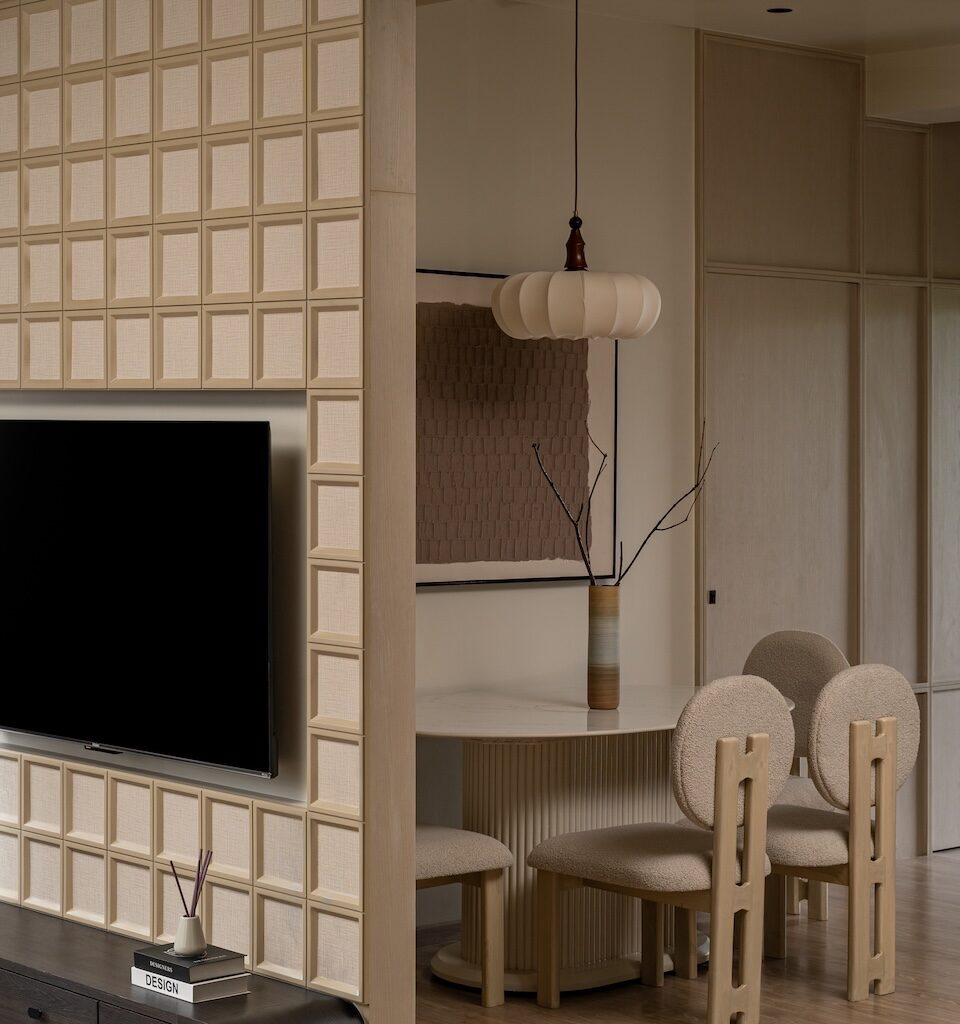
Led by principal designer Nirja Choksy of The Concept Lab, the design philosophy emphasises stillness through warmth, precision, and natural tactility. Oak is used as the central material, anchoring the interiors with continuity and character. “Our aim was to create a home that feels tranquil but never cold—a space where organic form softens minimalism and where every detail speaks quietly of care,” says Choksy. The signature approach is evident in the perforated entrance door, the grid-like divider, and the fluid silhouettes of the furniture and lights.
The spatial flow
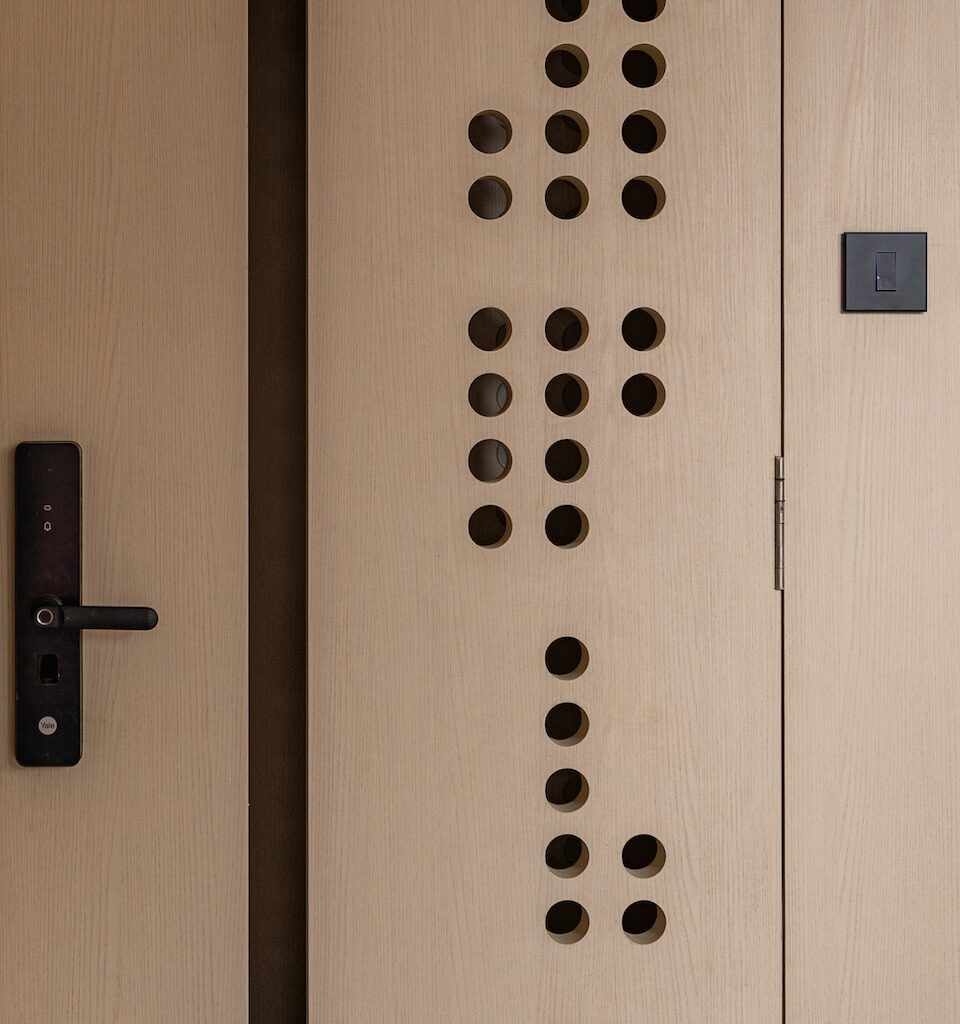
Entry begins with a perforated wooden door featuring circular cutouts and a vertical slit—both functional and sculptural. Inside, a textured screen defines the foyer without closing it off, allowing filtered glimpses into the living space beyond.
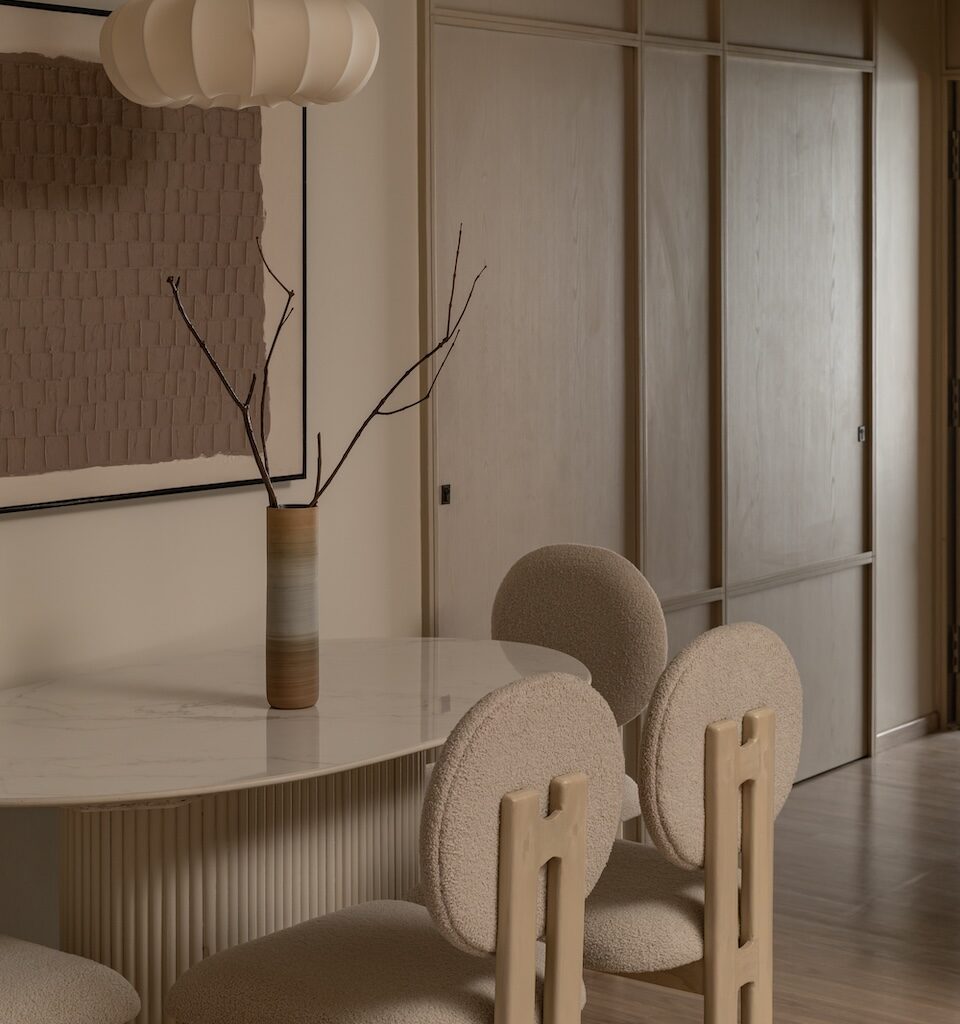
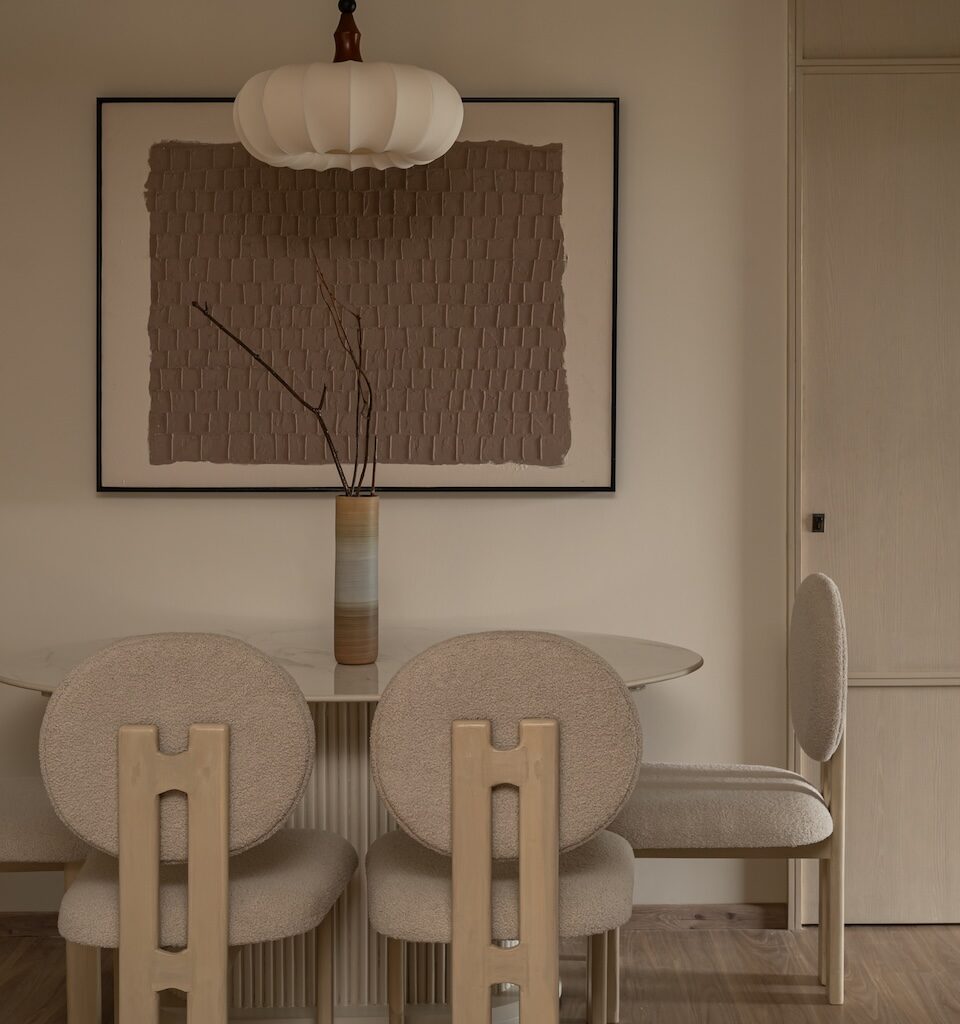
The living and dining area forms the home’s heart. Curved sofas in rich textured fabric face each other, centred around a ribbed coffee table. Black blinds frame the full-height windows, contrasting the oak flooring and pale walls. A circular marble dining table with ribbed base and paper-lantern pendant becomes a luminous focal point.
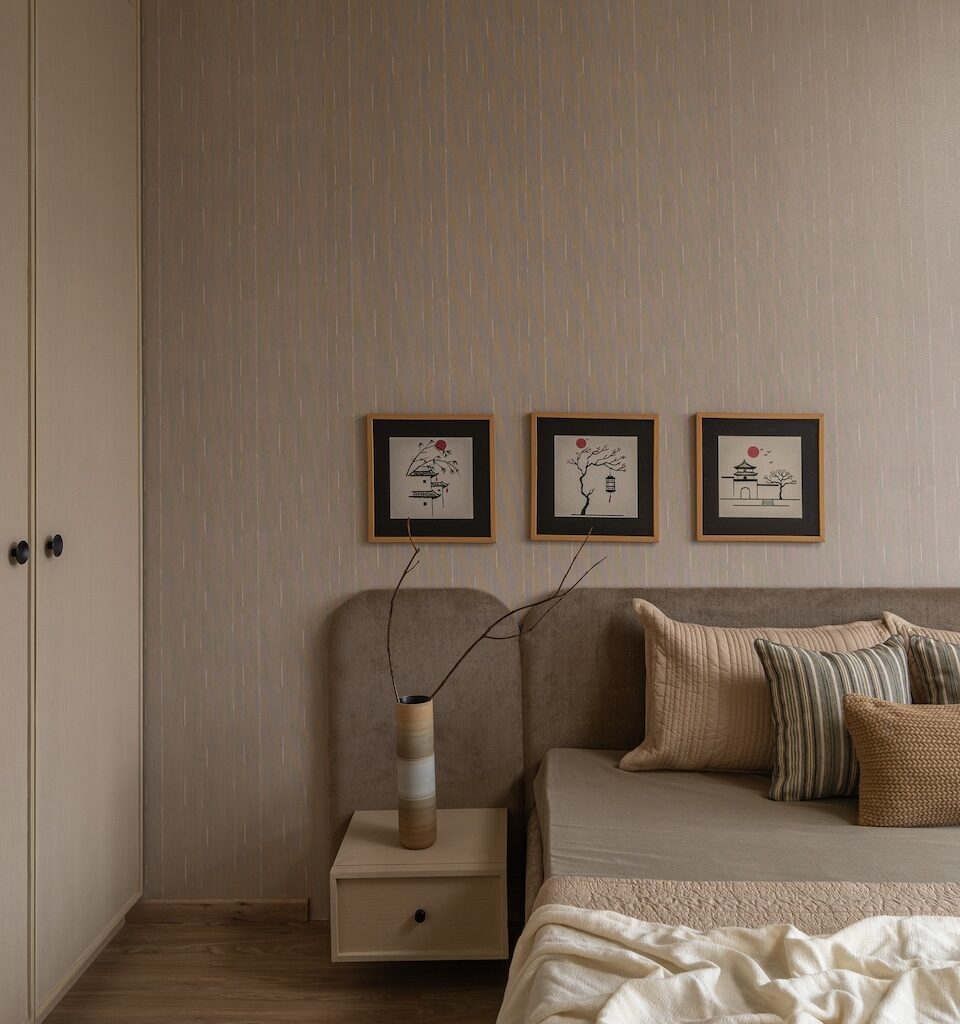
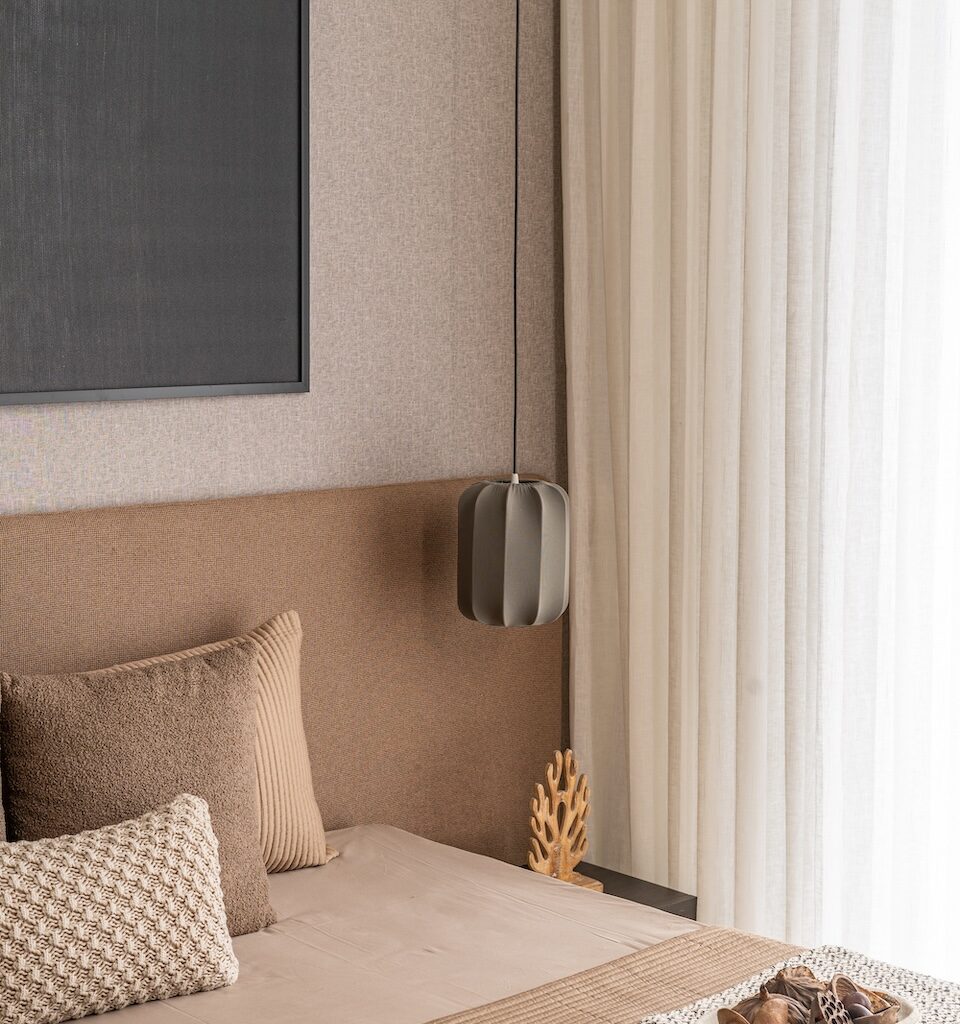
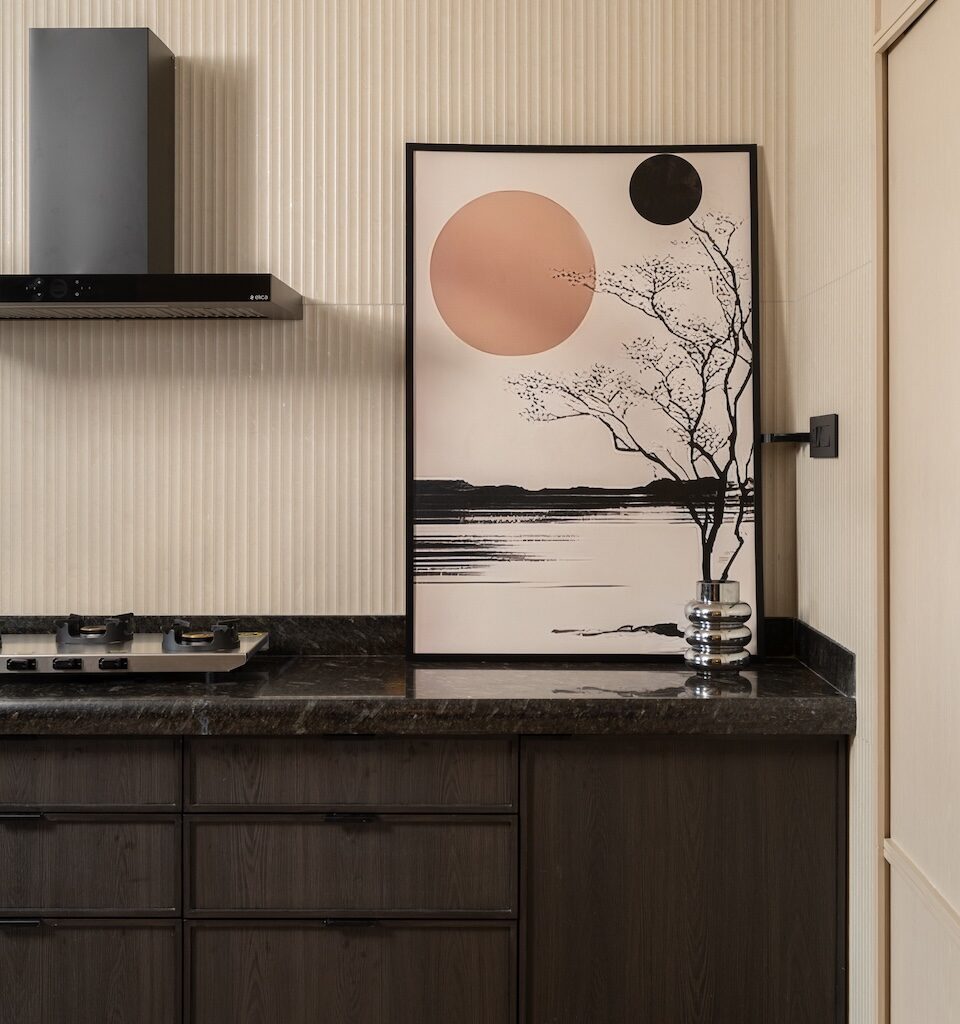
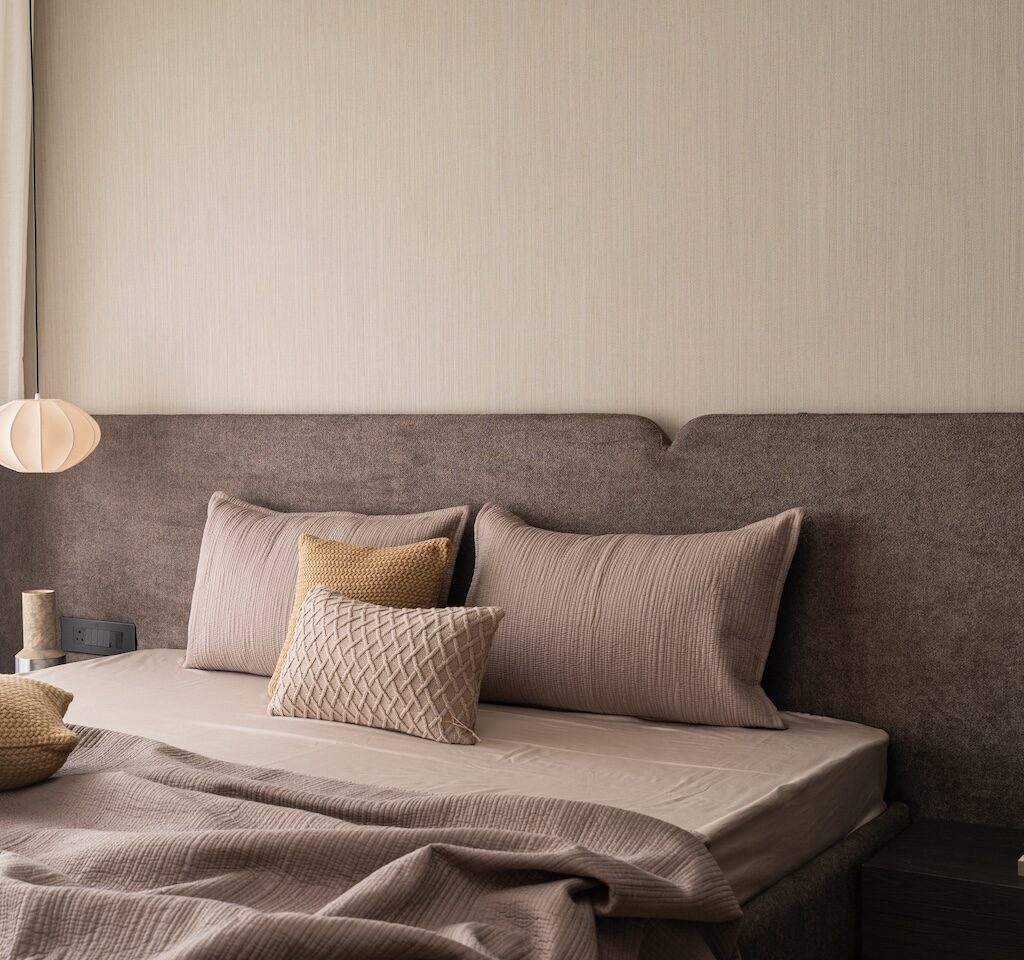
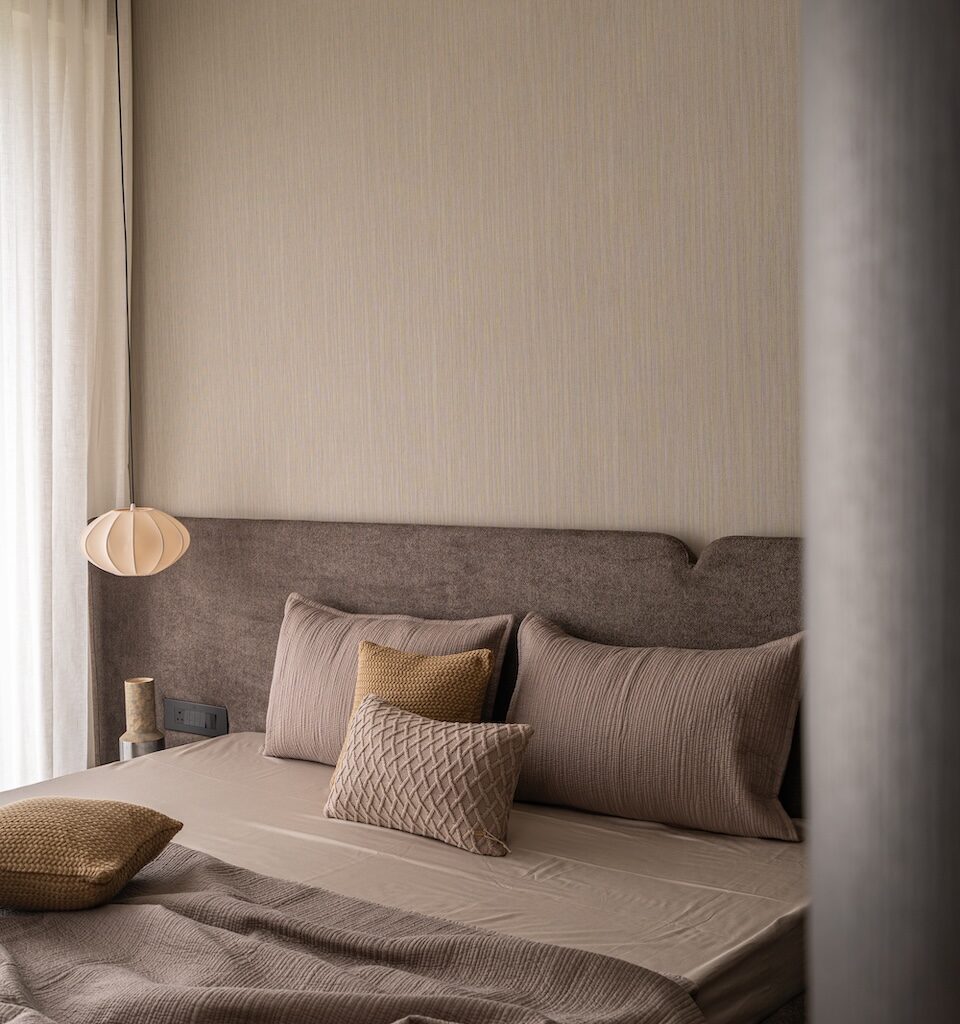
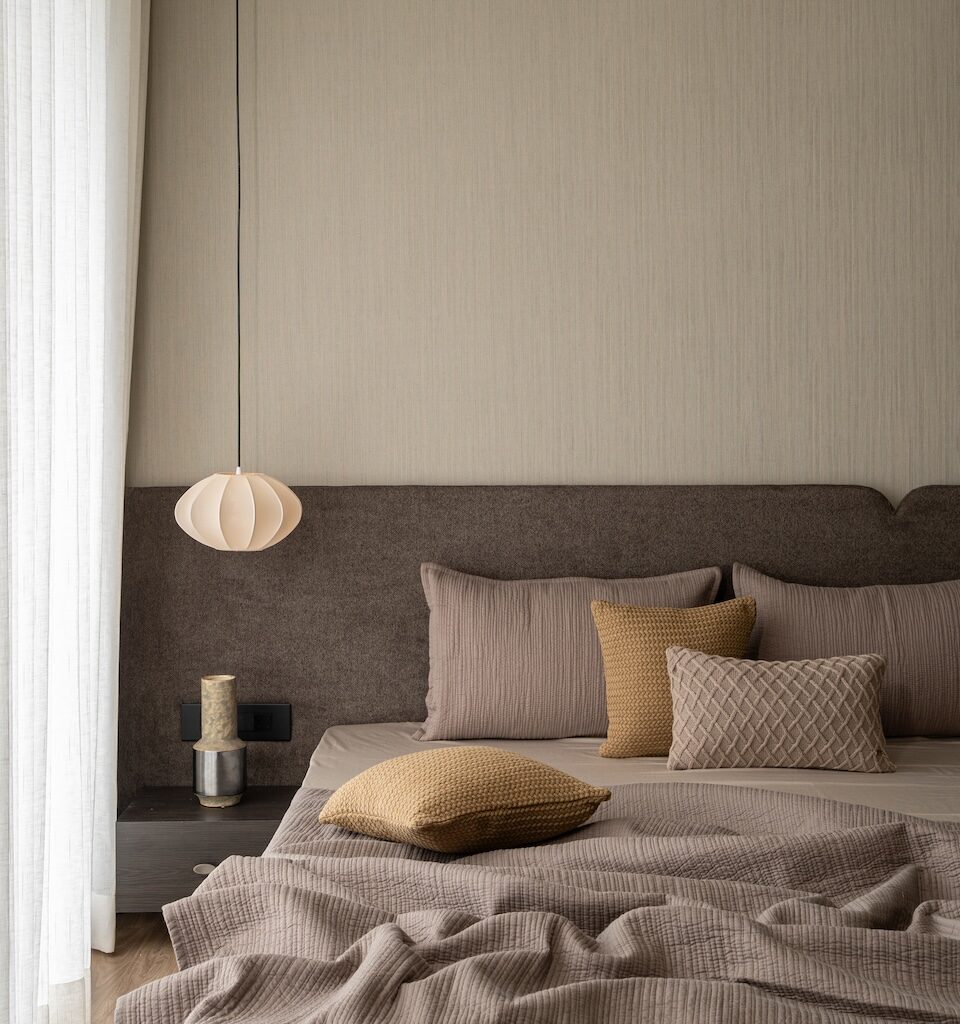
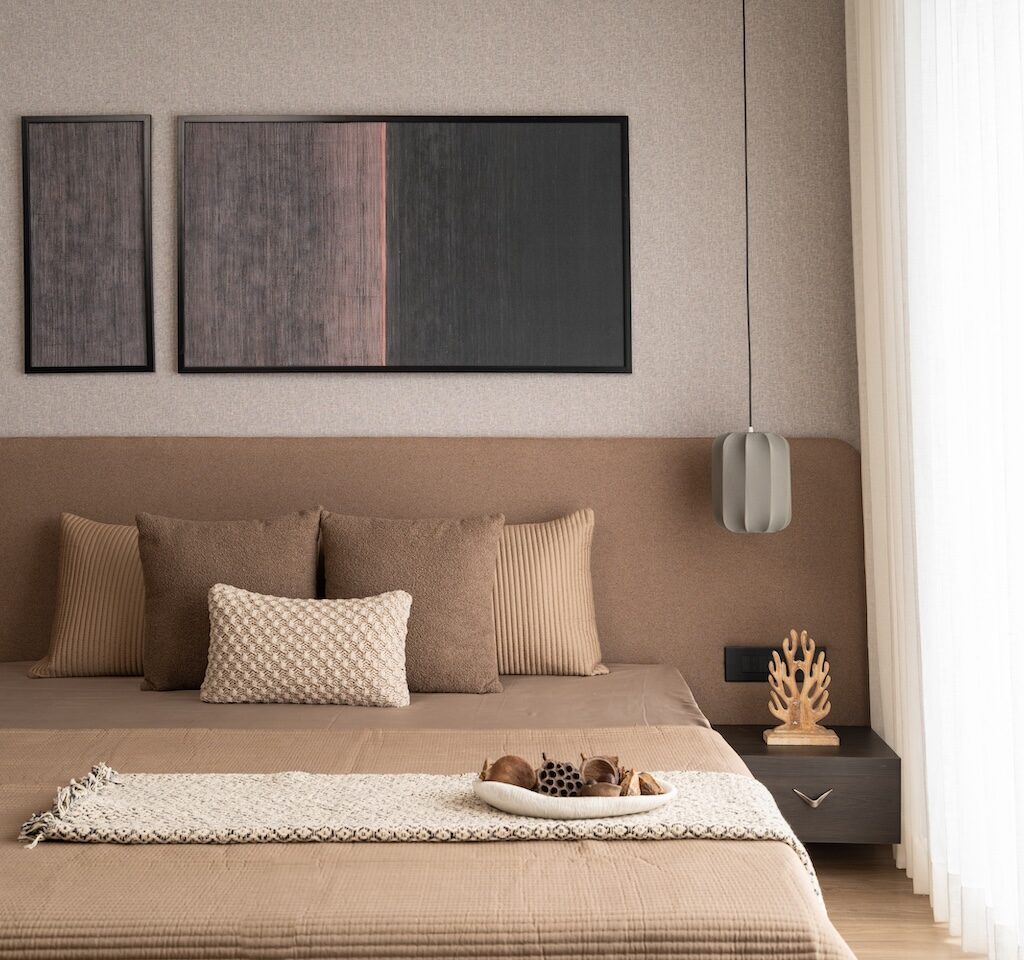
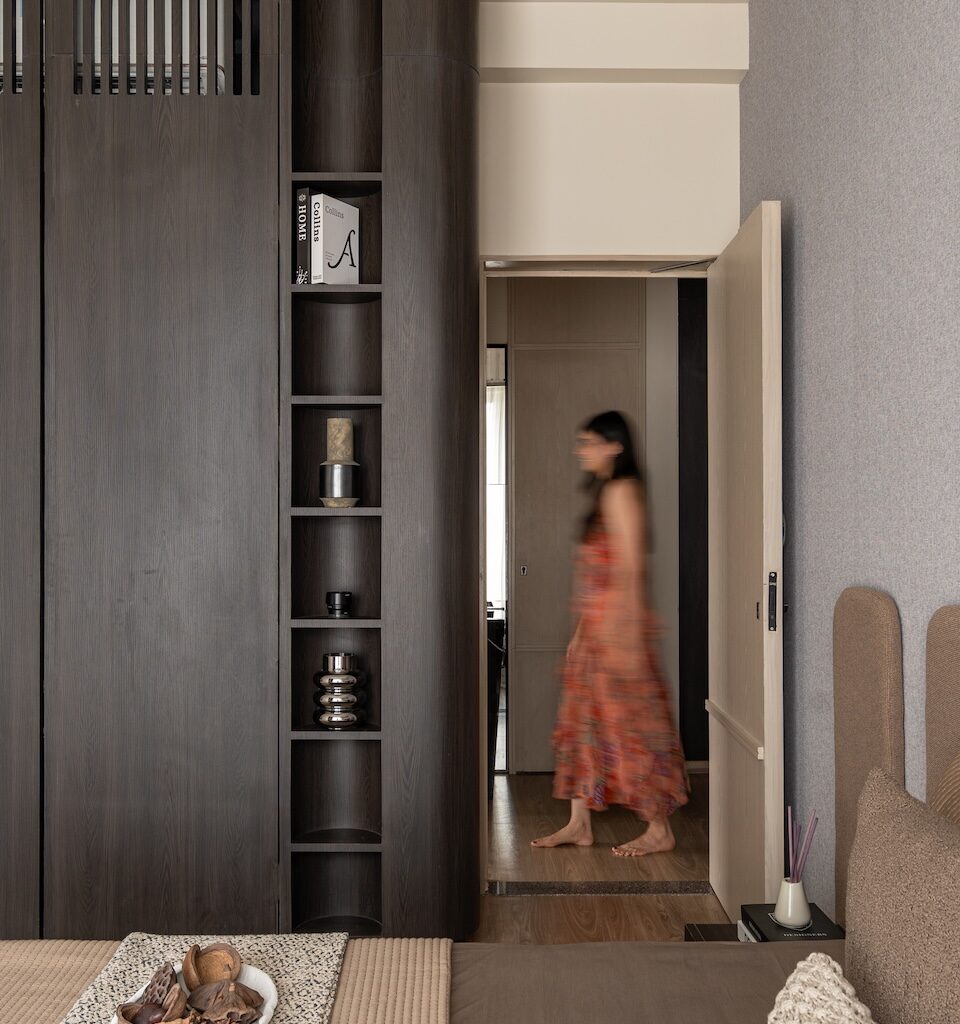
The kitchen continues the language of subtle contrasts—dark wood cabinetry, a ribbed wall panel, and a black countertop ensuring both continuity and distinction. The bedroom extends the same tranquil vocabulary through oak wall panels, layered linens, and a single organic pendant, achieving calm through simplicity.
The material palette
The home’s restrained palette draws from natural materials and Zen-inspired tones. Oak wood sets the foundation, paired with stone, boucle upholstery, and woven textures. Marble introduces coolness, while black metal accents and sculptural lighting ground the palette. Beige, off-white, and warm brown hues are layered through furnishings and finishes, creating a tactile, biophilic calm.
The challenges
Maintaining warmth and visual depth within a neutral palette required precision. Every texture and material junction was studied to avoid sterility. Bespoke details like the perforated door and grid screen demanded careful fabrication and finishing.
The highlights
The perforated wooden door and grid screen are key visual anchors, balancing transparency and privacy. The sculptural curved sofas, ribbed tables, and pendant lights add softness and rhythm. Every element, from furniture to artwork, was curated to harmonise rather than dominate.
The takeaway
For The Concept Lab, Tranquil Oak reaffirms that minimalism need not feel empty. By layering texture, tone, and craft with quiet precision, serenity is designed not as silence, but as a lived, sensory experience.
Fact file
Project: Tranquil Oak
Location: Varacha, Surat, Gujarat
Area: 1,600 sq ft
Design firm: The Concept Lab
Principal designer: Nirja Choksy
Design team: Vansh Kejariwal, Arjun Chaudhary

Add a Comment