
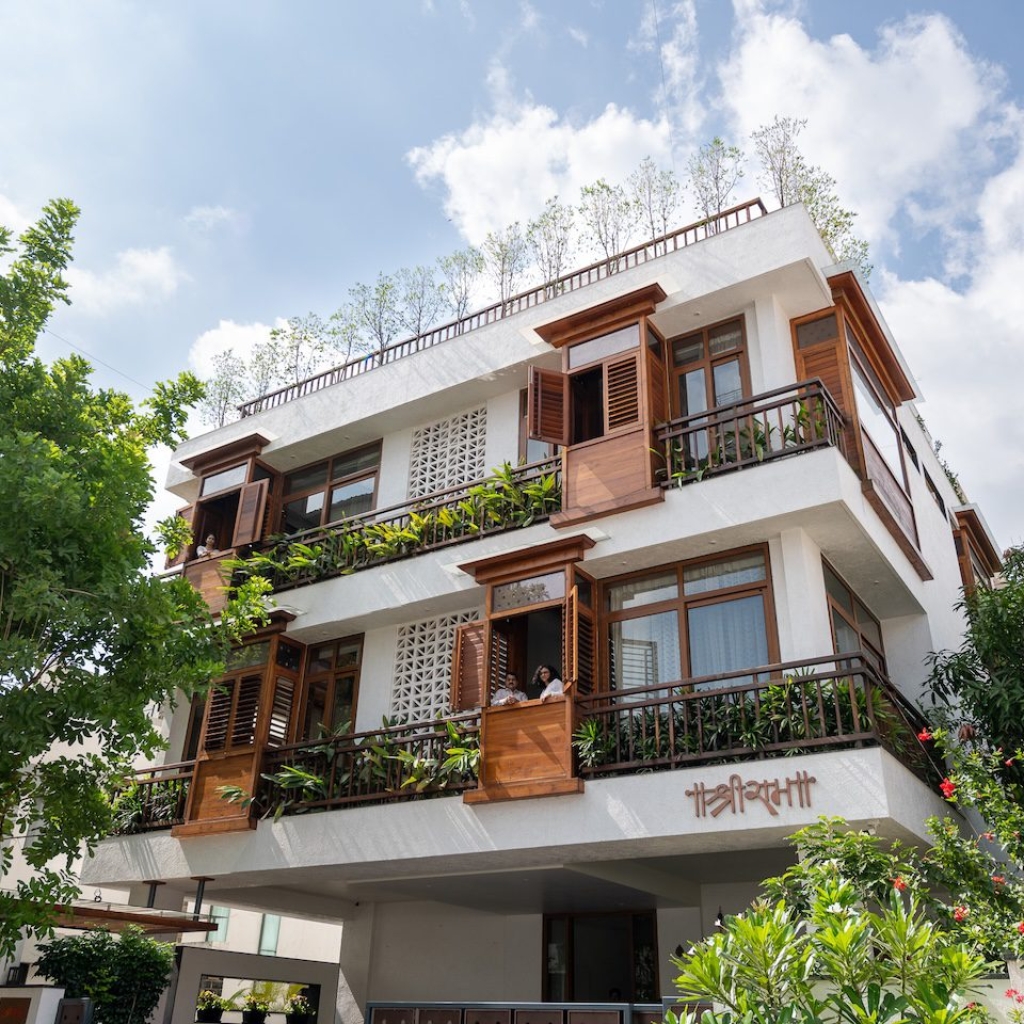
Environ Planners reinterpret the spatial memory of a traditional wada through The Jharokha House, a climate-conscious, vertically planned contemporary residence in Nashik.
Curated by: Rupali Sebastian
Photographs: PHX India I Sebastian Zachariah + Jacob Nedumchira; courtesy Environ Planners
The project
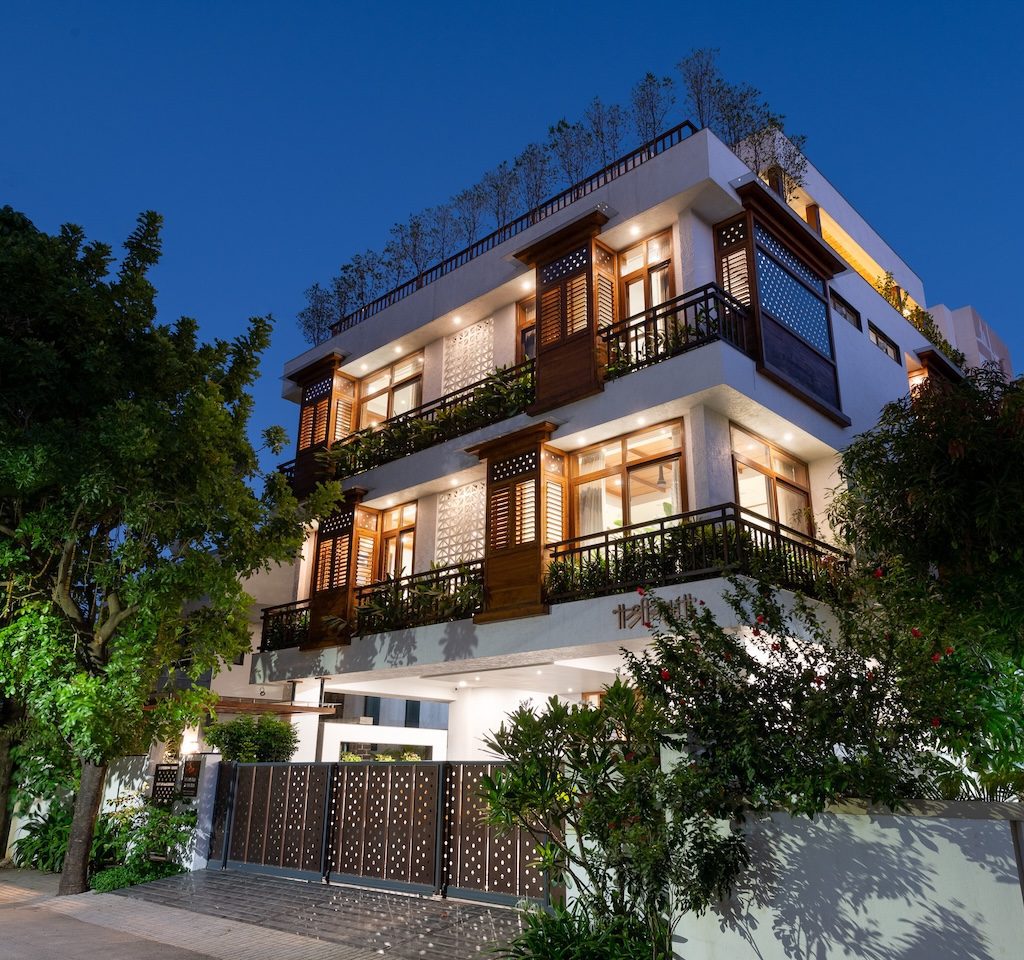
The Jharokha House is an approximately 7,400 sq ft residence in Nashik, Maharashtra, designed by Environ Planners. Inspired by the client’s fond memories of growing up in a traditional wada, the home translates nostalgia into a contemporary architectural language, balancing cultural recall with present-day living aspirations.
The site
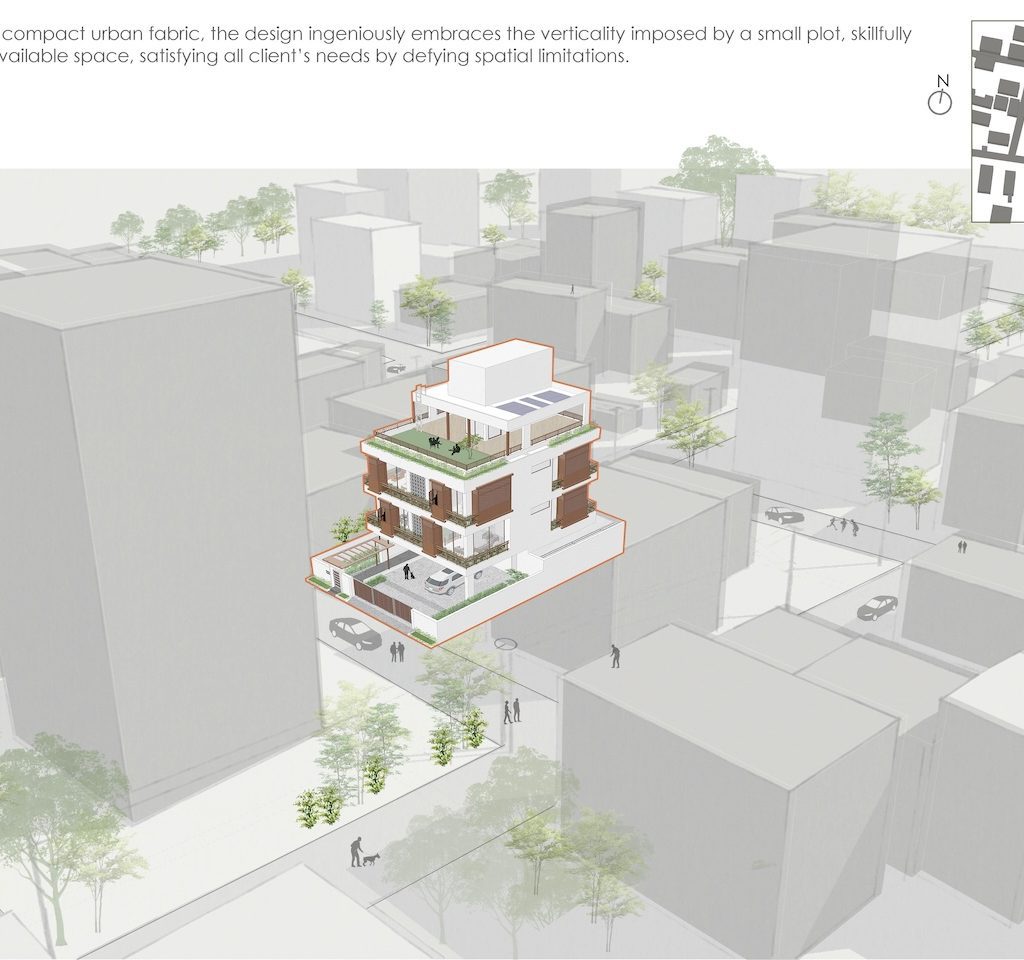
Located on a compact urban plot, the project responds to spatial constraints through vertical planning. The limited footprint necessitated careful zoning across levels, allowing the house to accommodate multigenerational living while maintaining openness and environmental responsiveness.
The brief
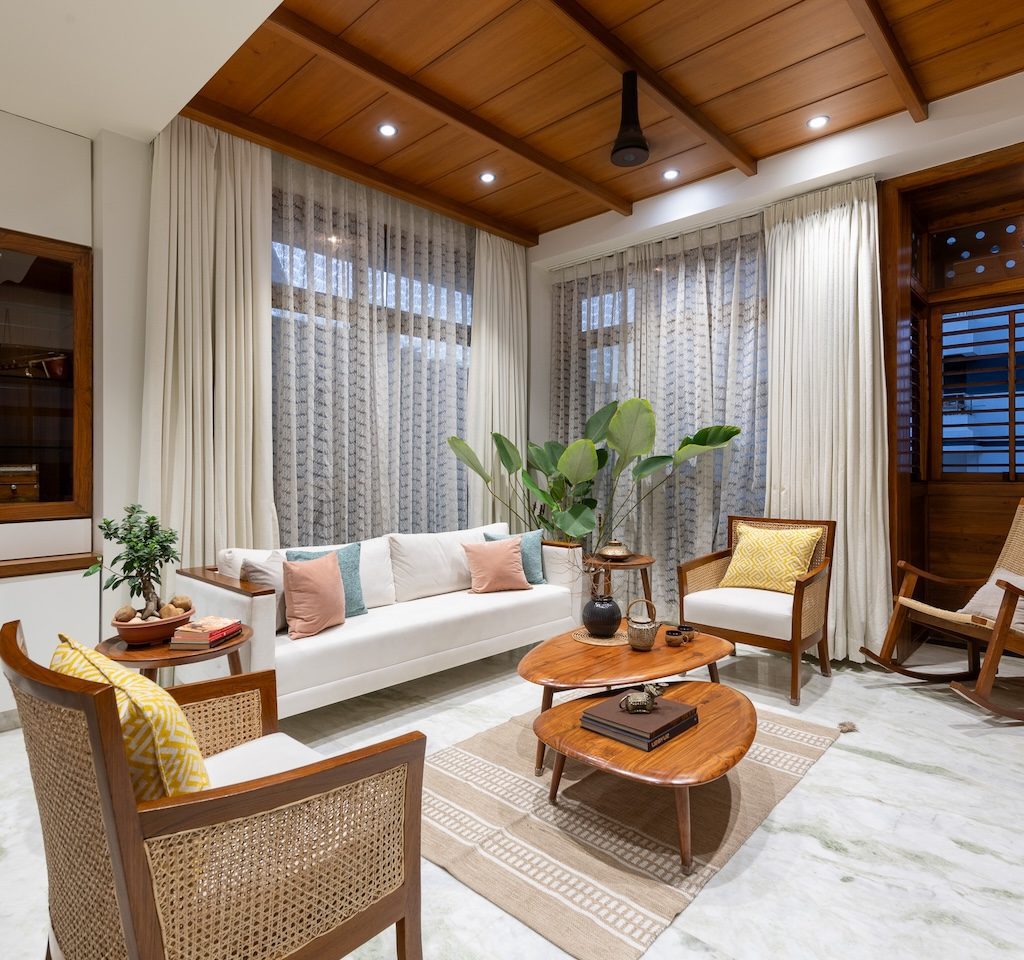
The client sought a home that would echo the warmth and experiential quality of a wada while supporting a modern lifestyle. Functionally, the house needed clearly defined zones for gathering, privacy, and everyday services. Aesthetically, it was important that the architecture retain an Indian essence through material choices and spatial articulation.
The design intent
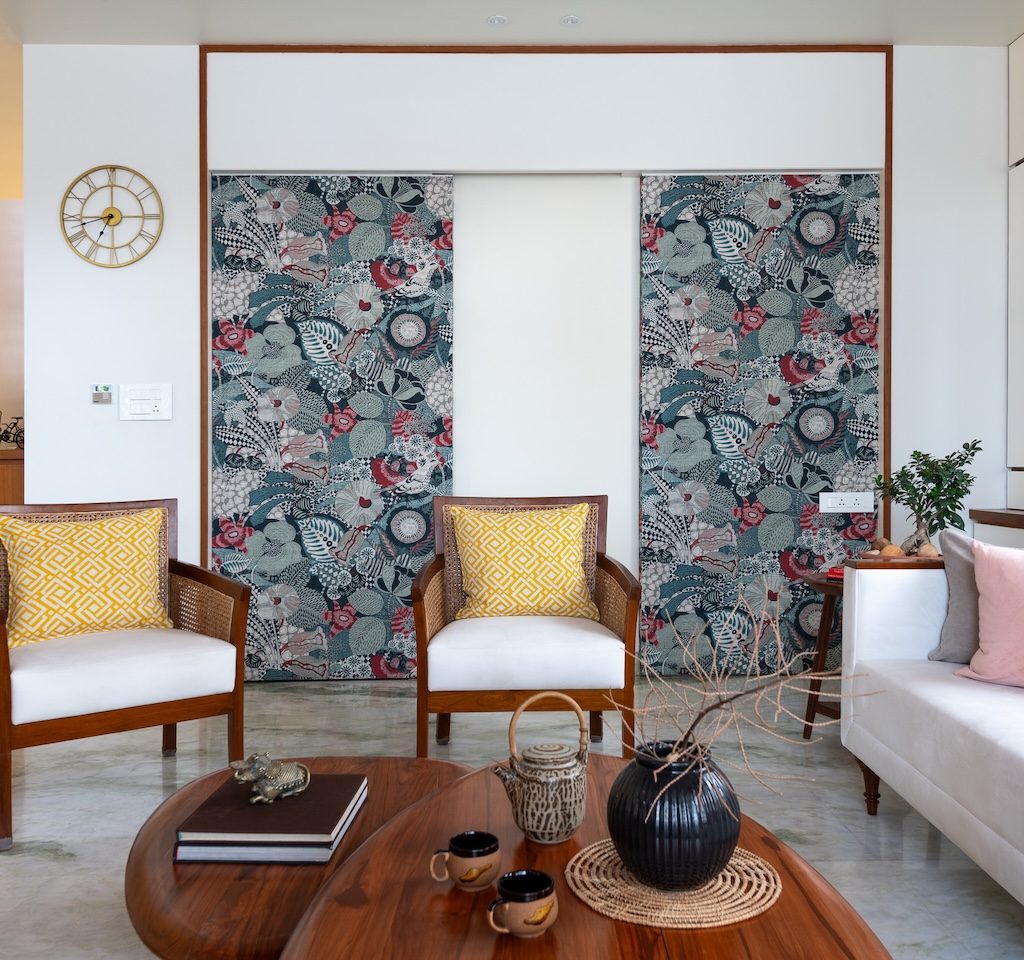
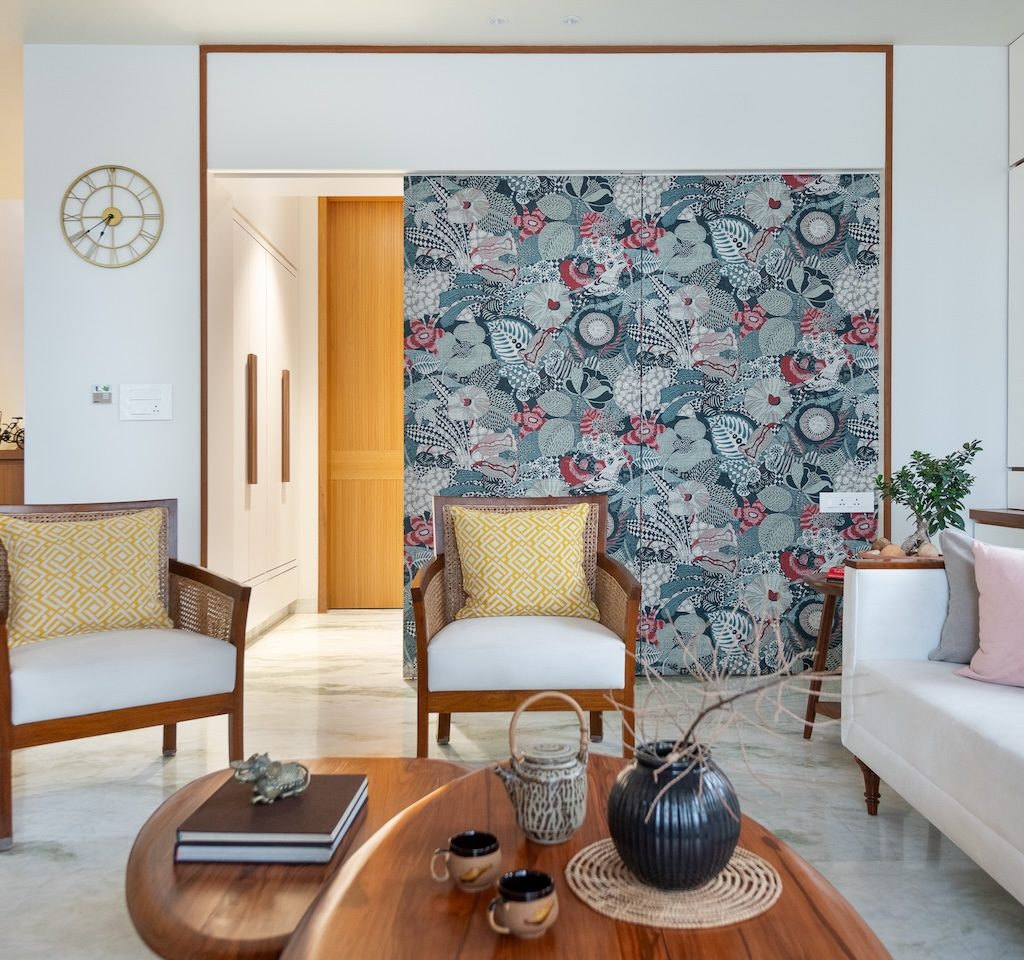
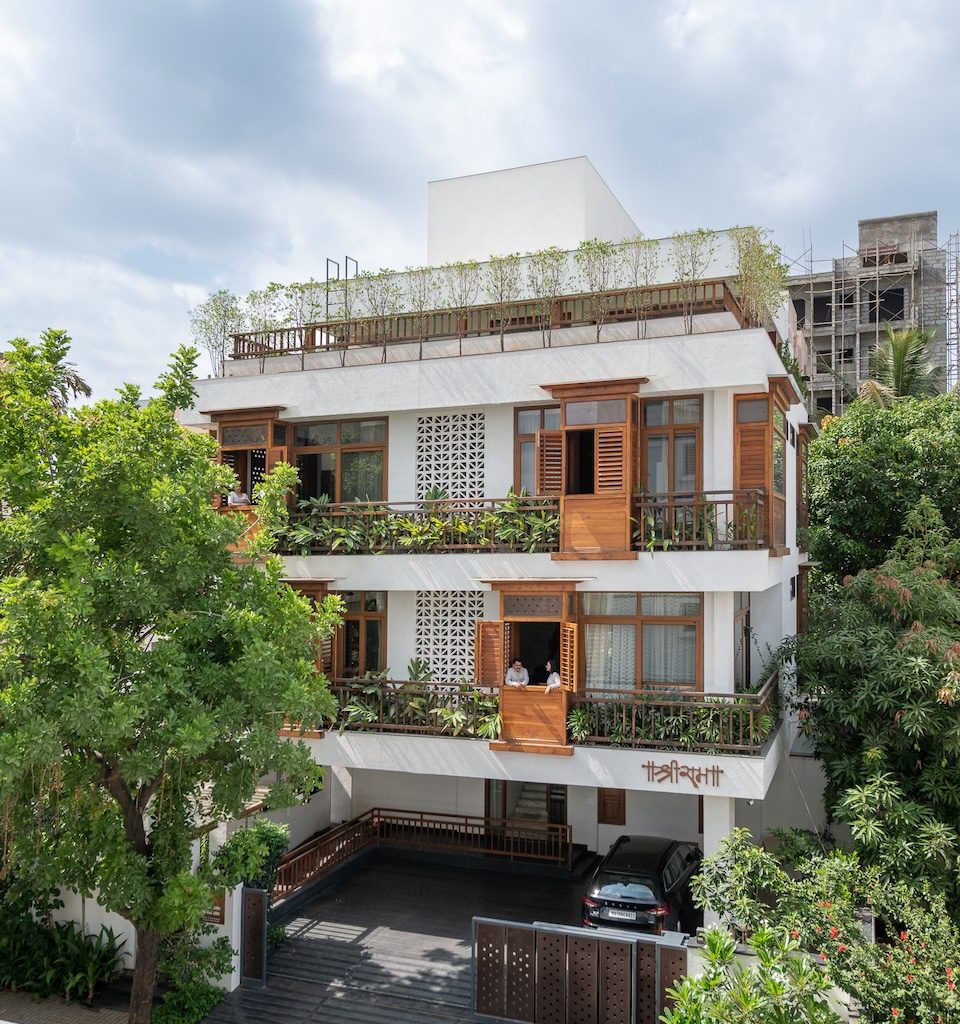
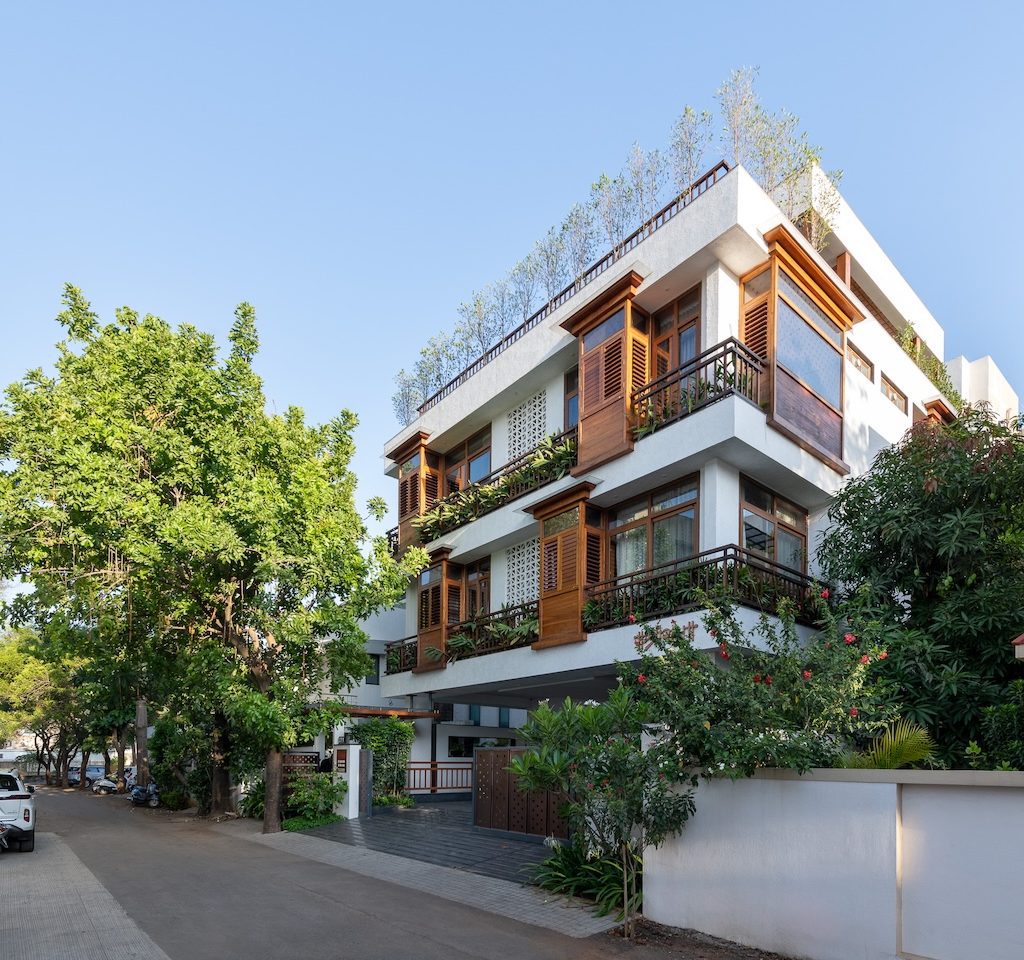
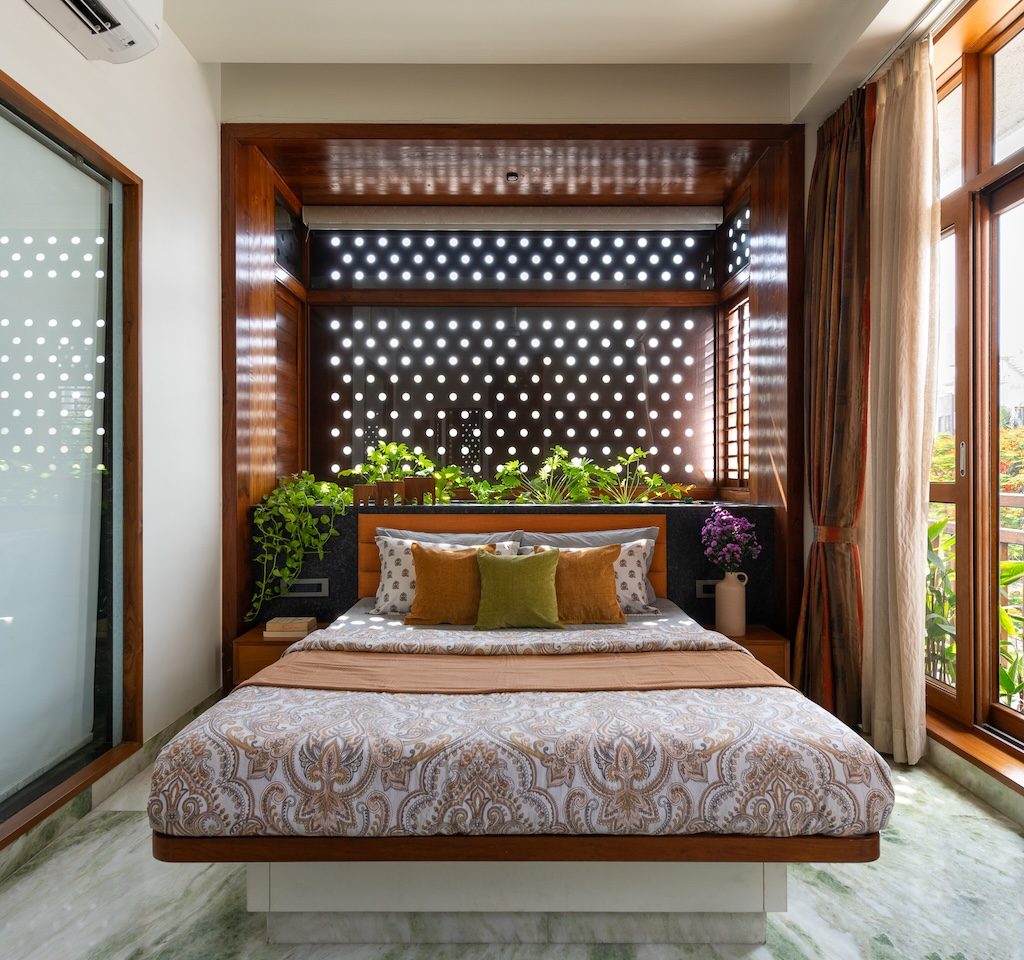
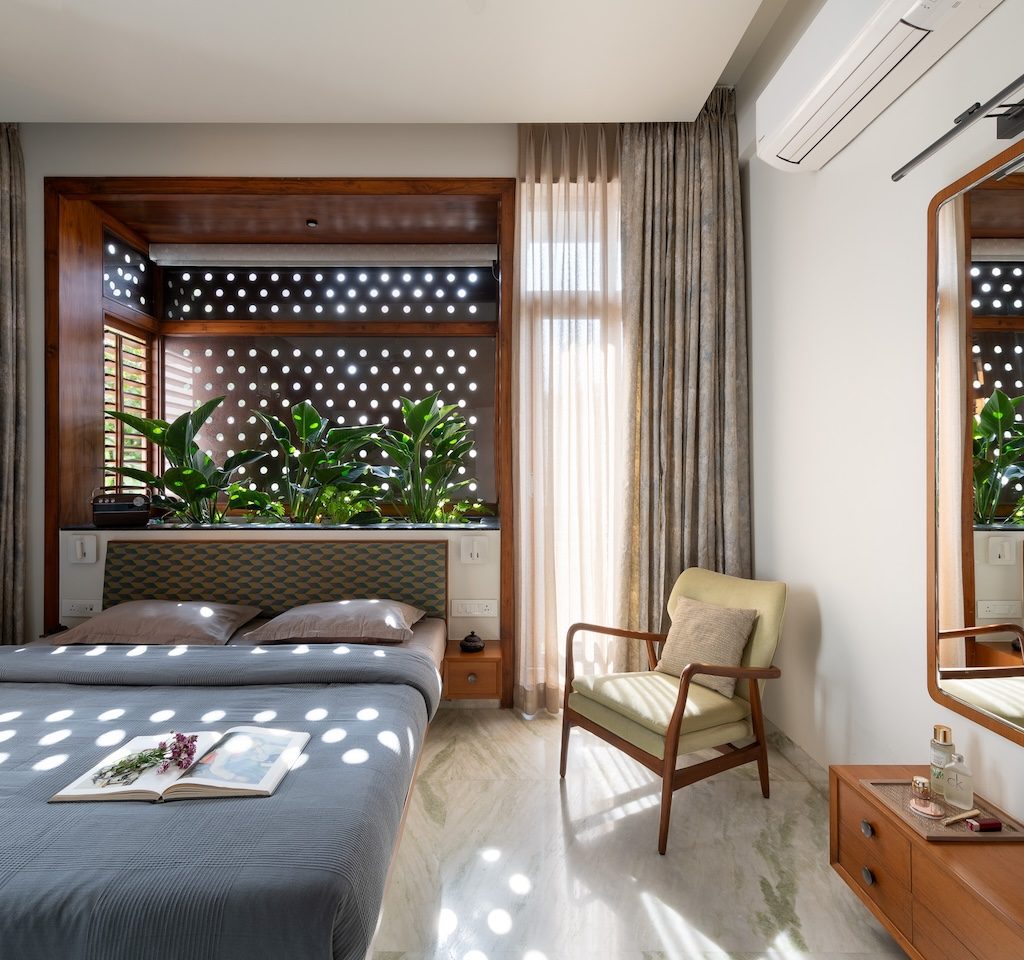
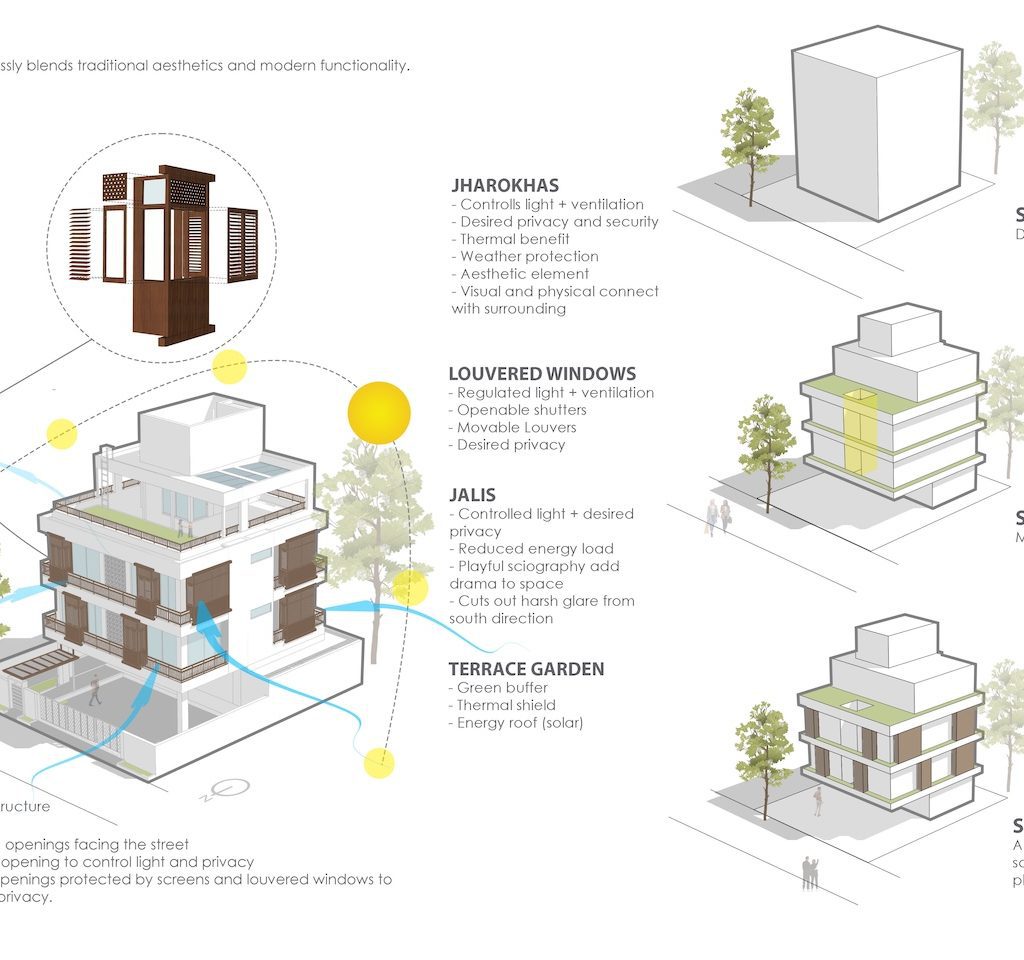
Central to the design philosophy is sustainability and climate-conscious planning. Natural light and ventilation are maximised through orientation-based window placements, screenings, and carefully calibrated openings. Windows and facades are designed according to climatic orientation to optimise thermal comfort, regulate sunlight, enhance cross-ventilation, and reduce energy use, contributing to occupant well-being.
The civil intervention
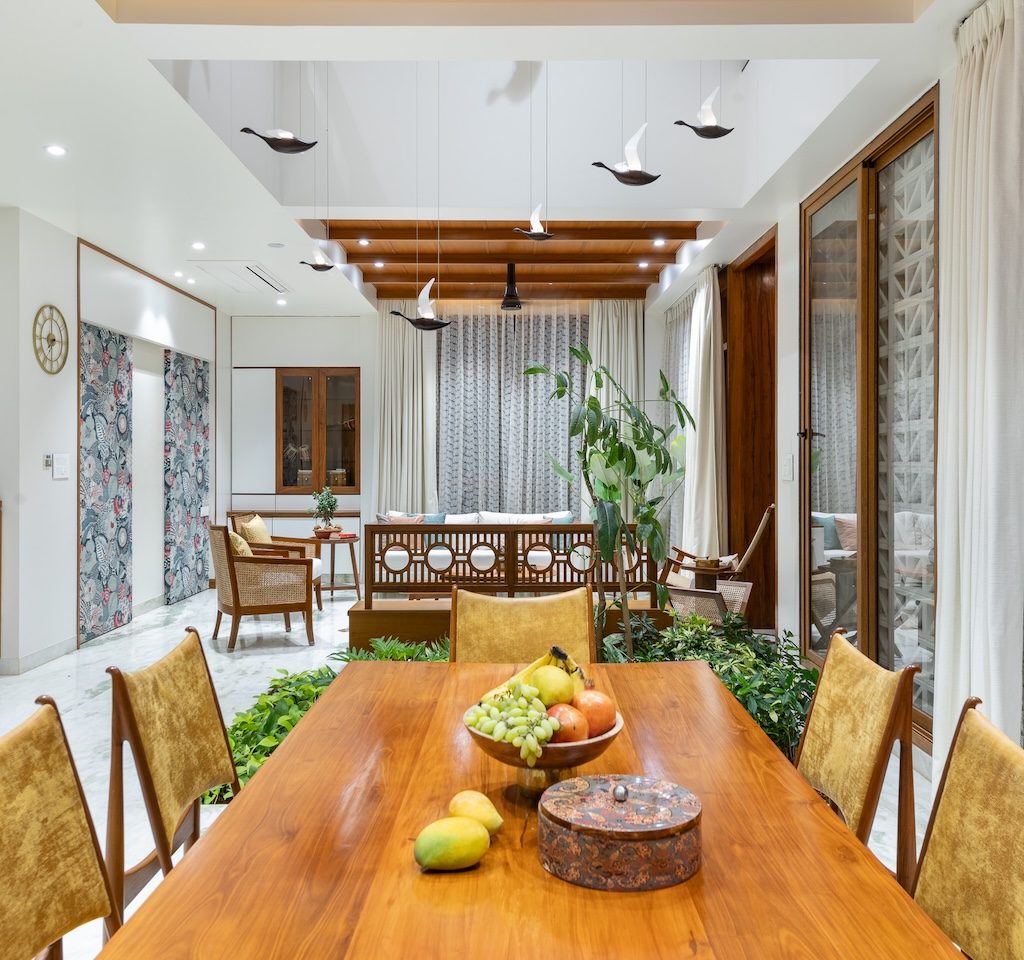
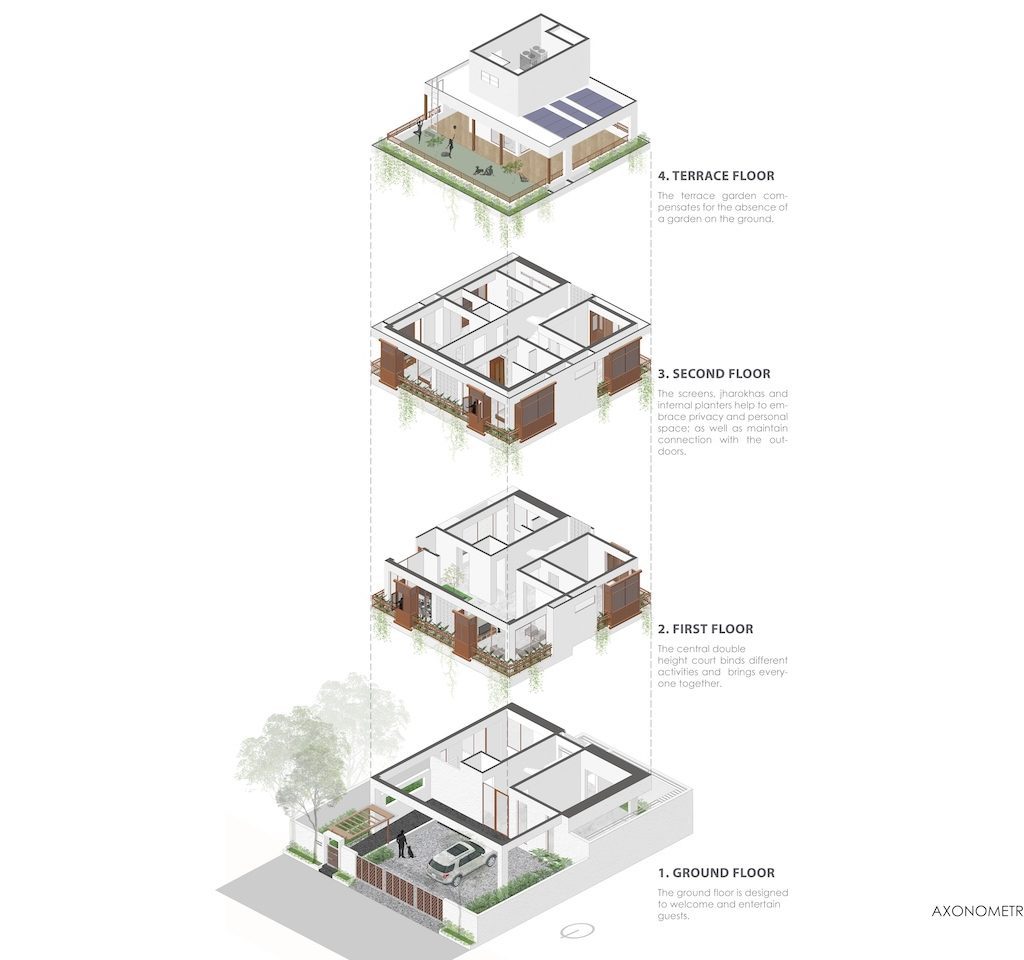
Within the constraints of the compact plot, the design strategically utilises vertical space. Each floor is organised to serve distinct aspects of daily life and family interaction, ensuring clarity of function while preserving connectivity between levels.
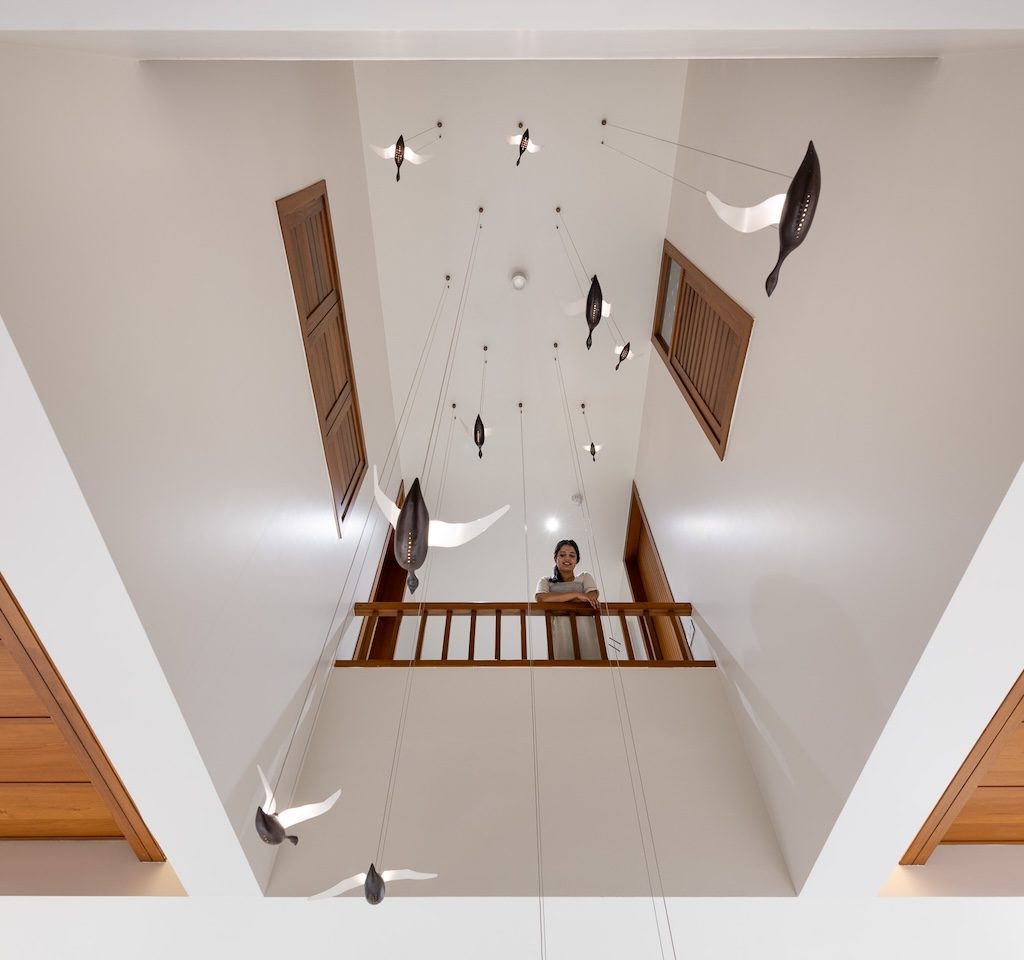
The spatial flow
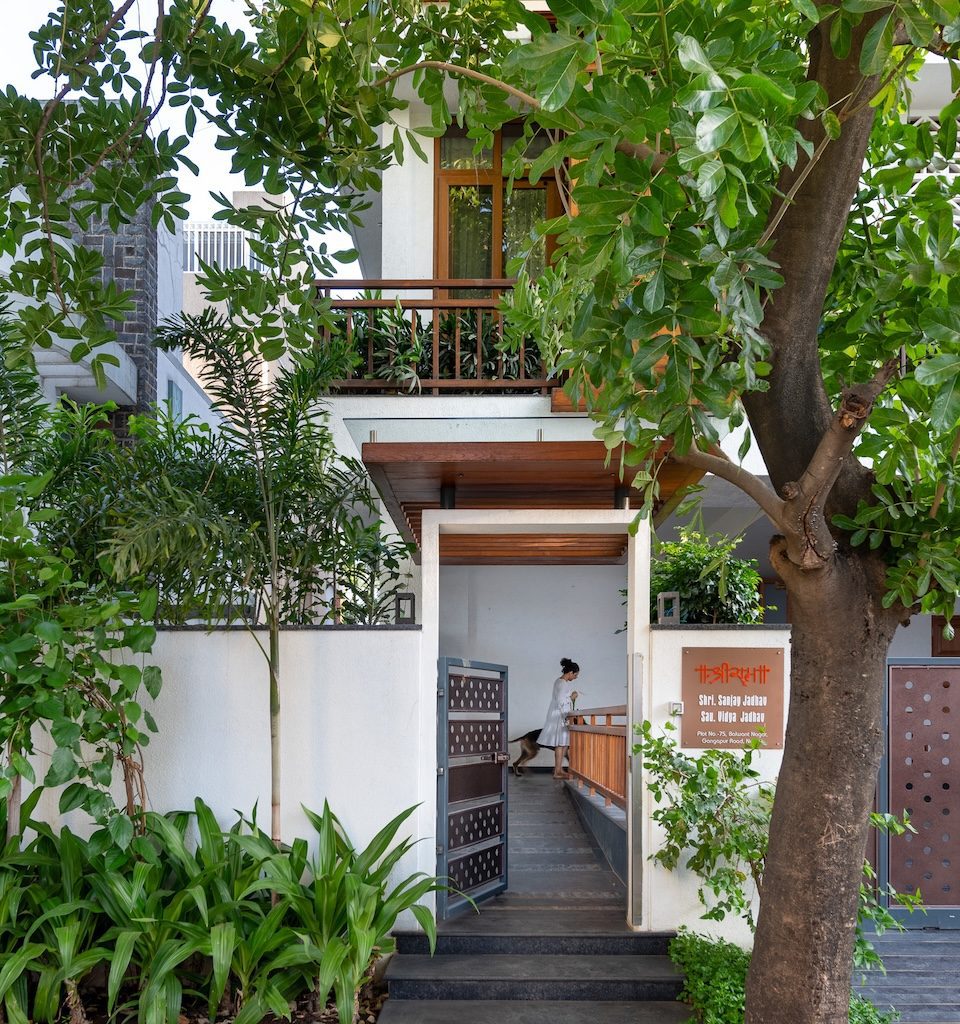
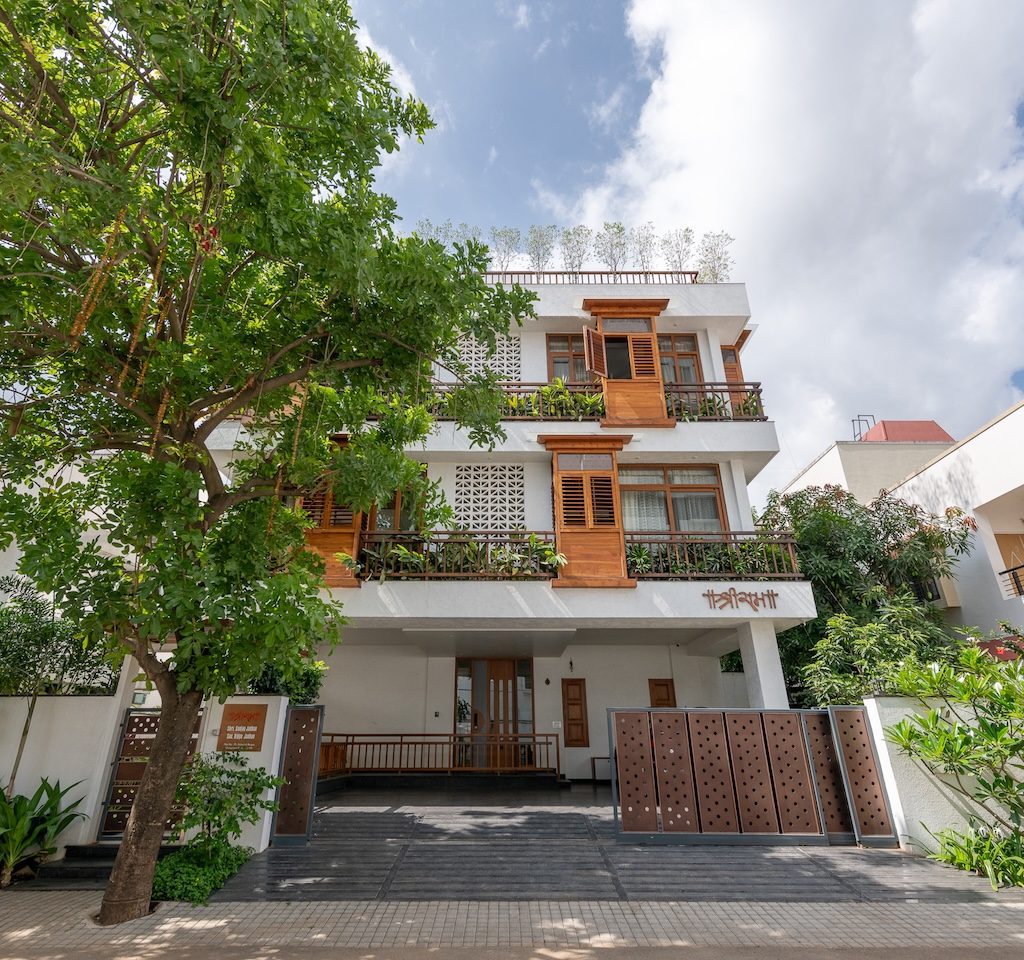
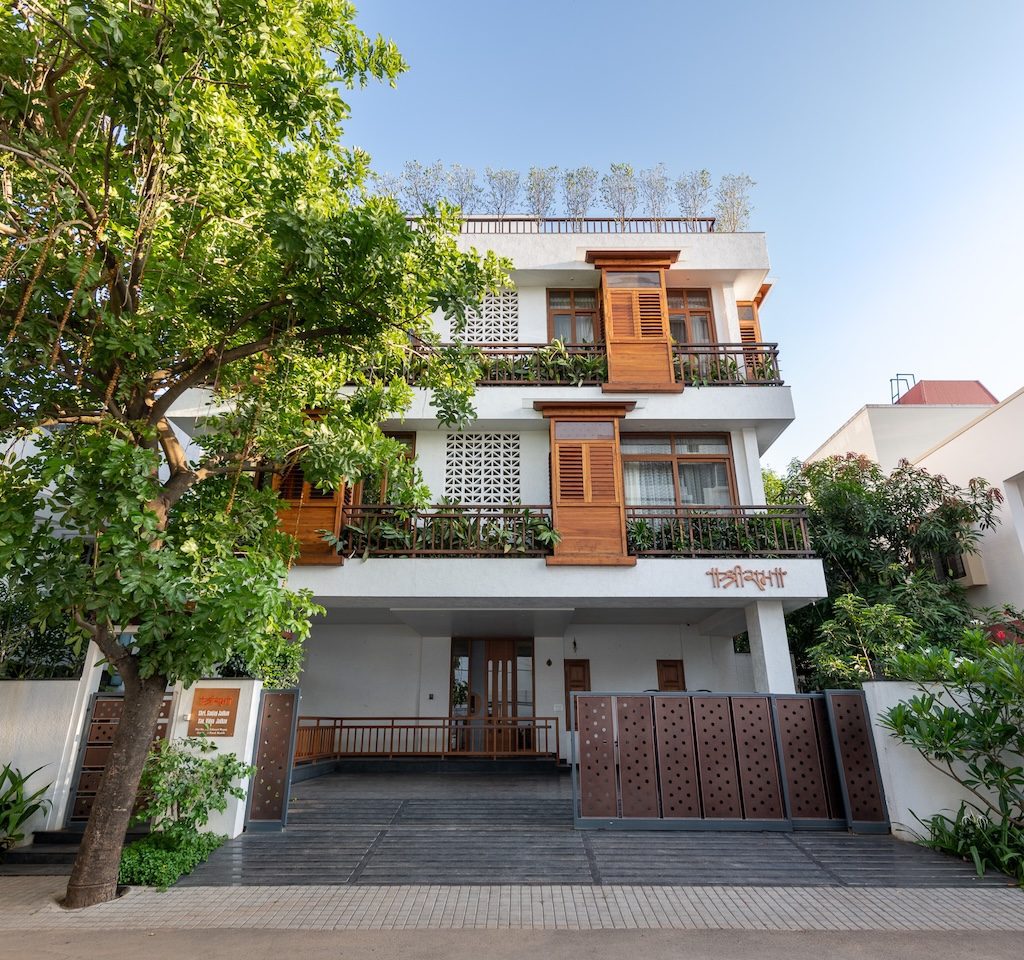
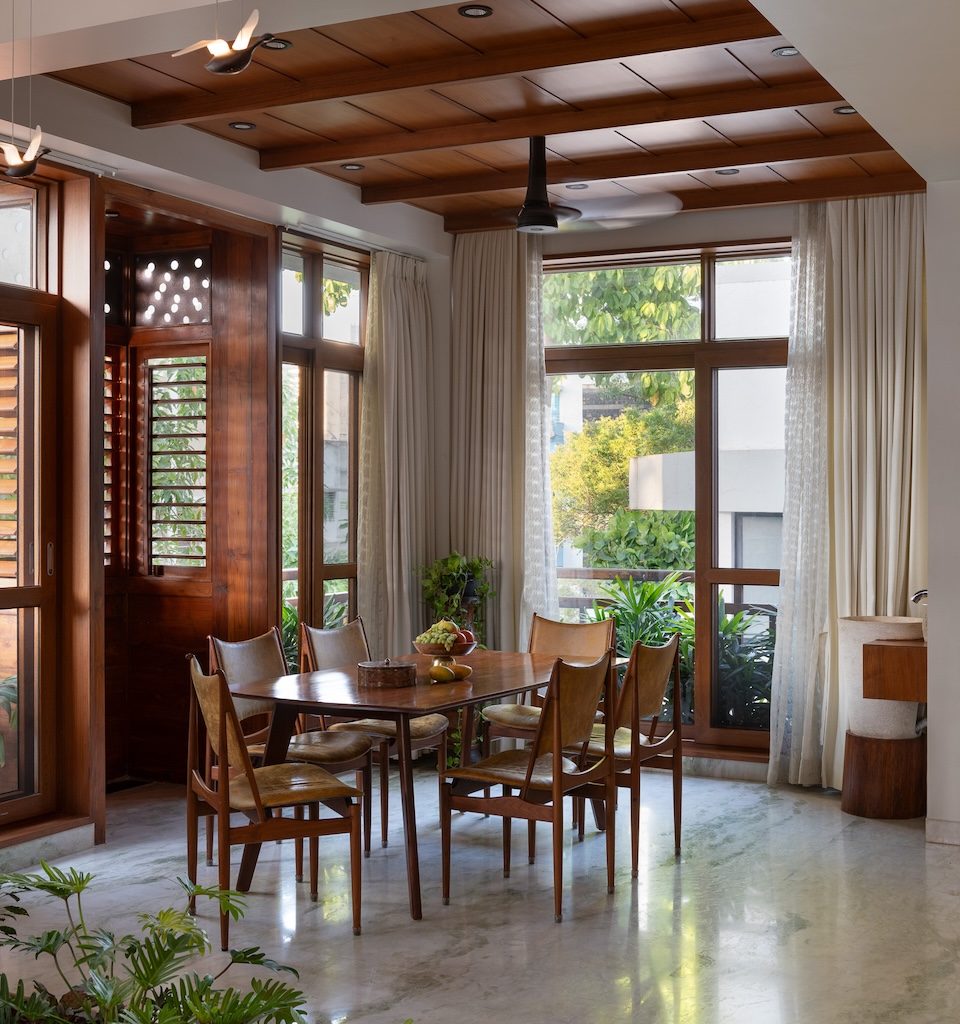
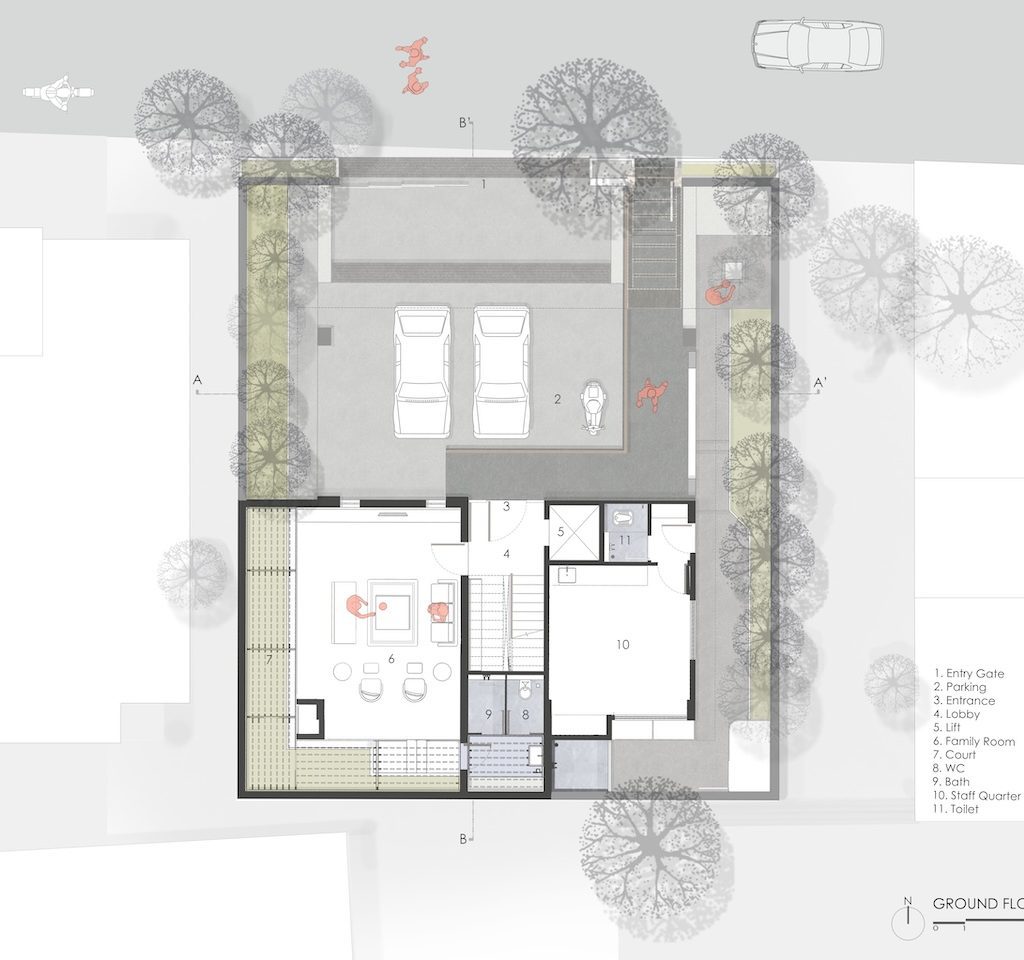
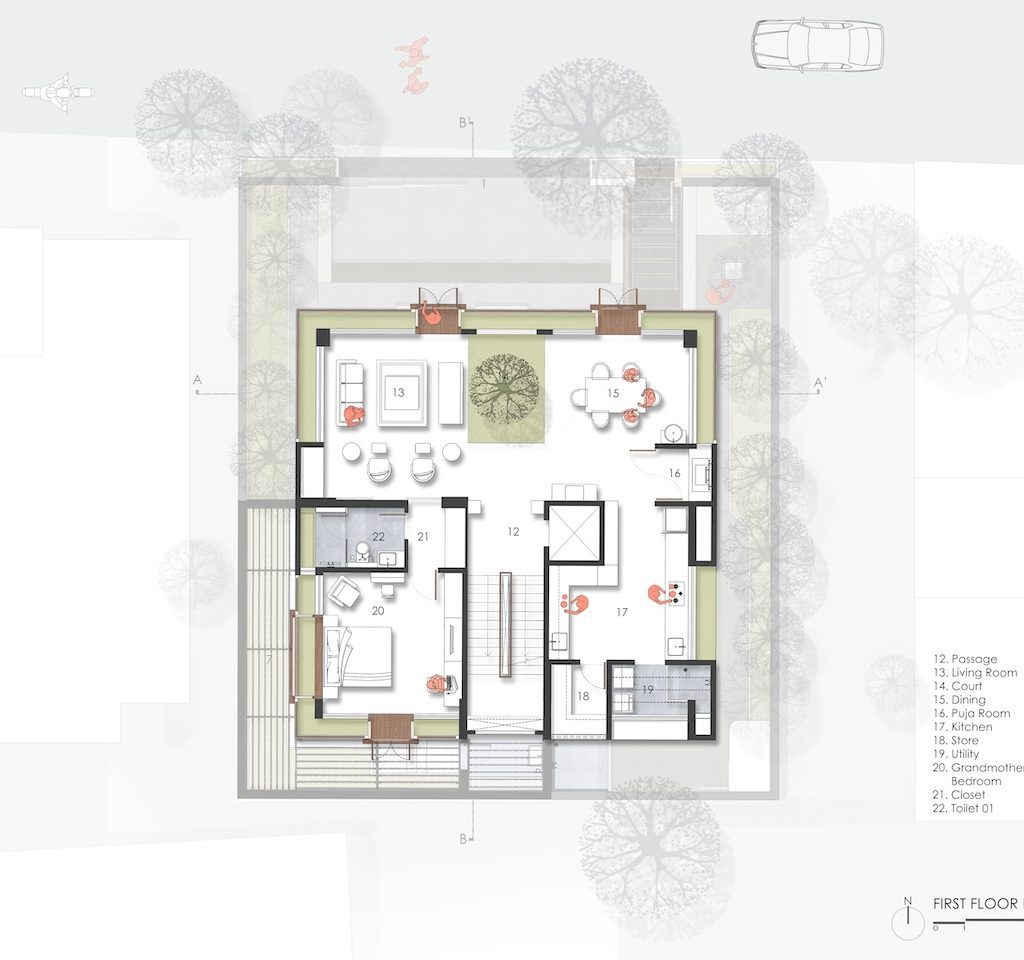
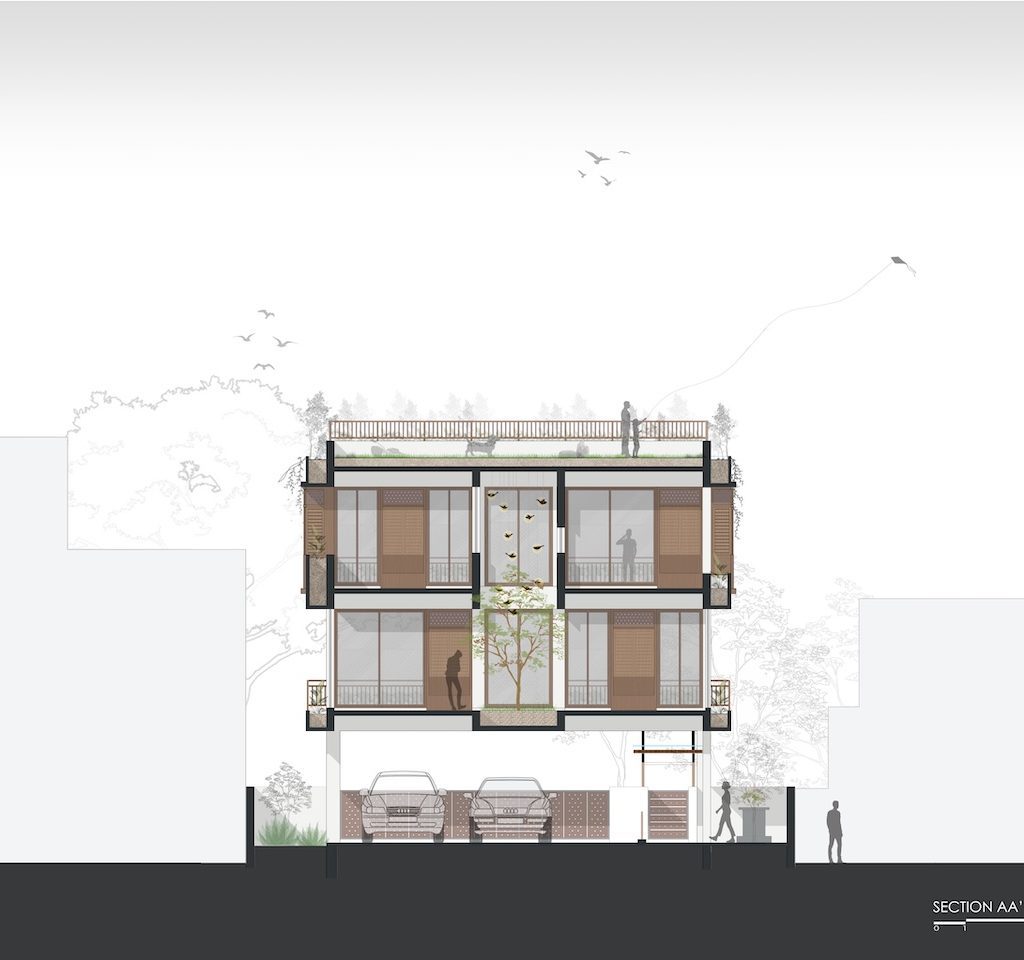
The ground floor welcomes visitors with a gathering-oriented space that accommodates essential daily services alongside a drawing room intended for meeting friends and extended family. The first floor becomes the social heart of the house, dedicated to cooking, dining, and shared activities. This level also includes a room for the grandparents, reinforcing multigenerational inclusion within the central domestic zone.
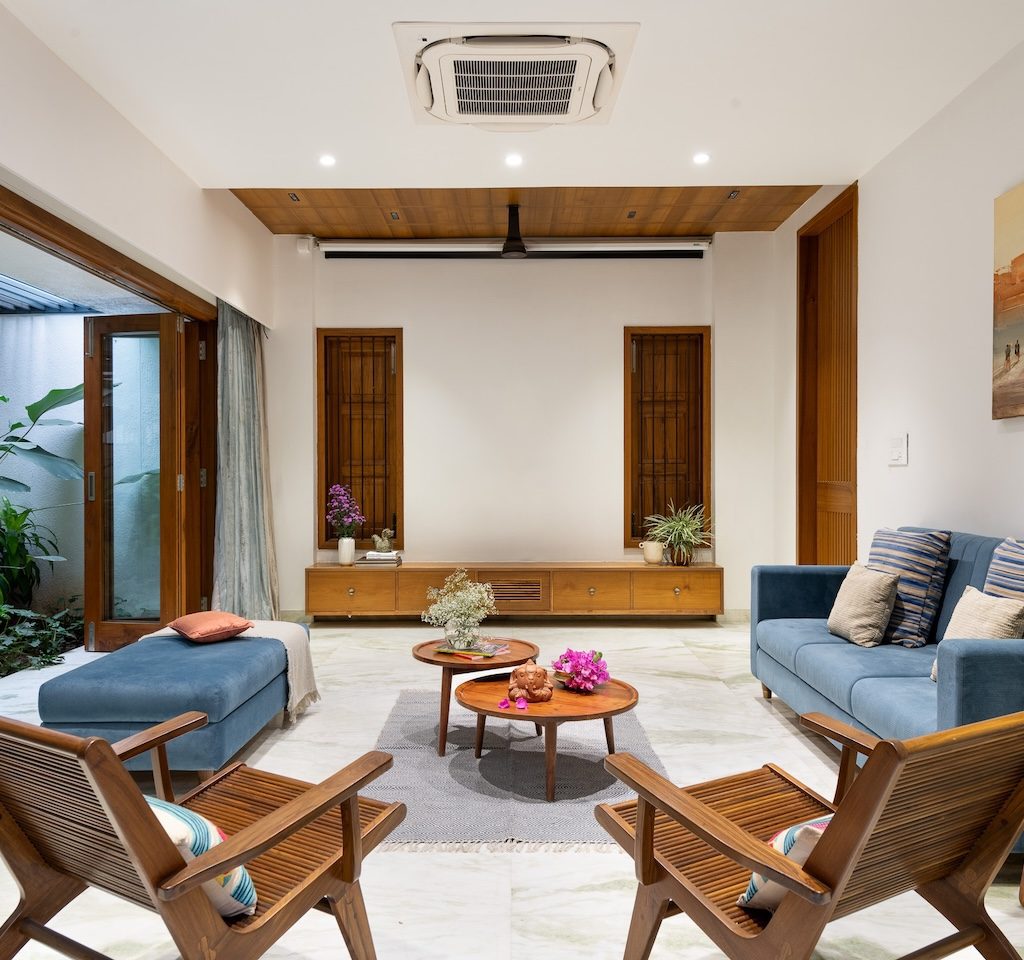
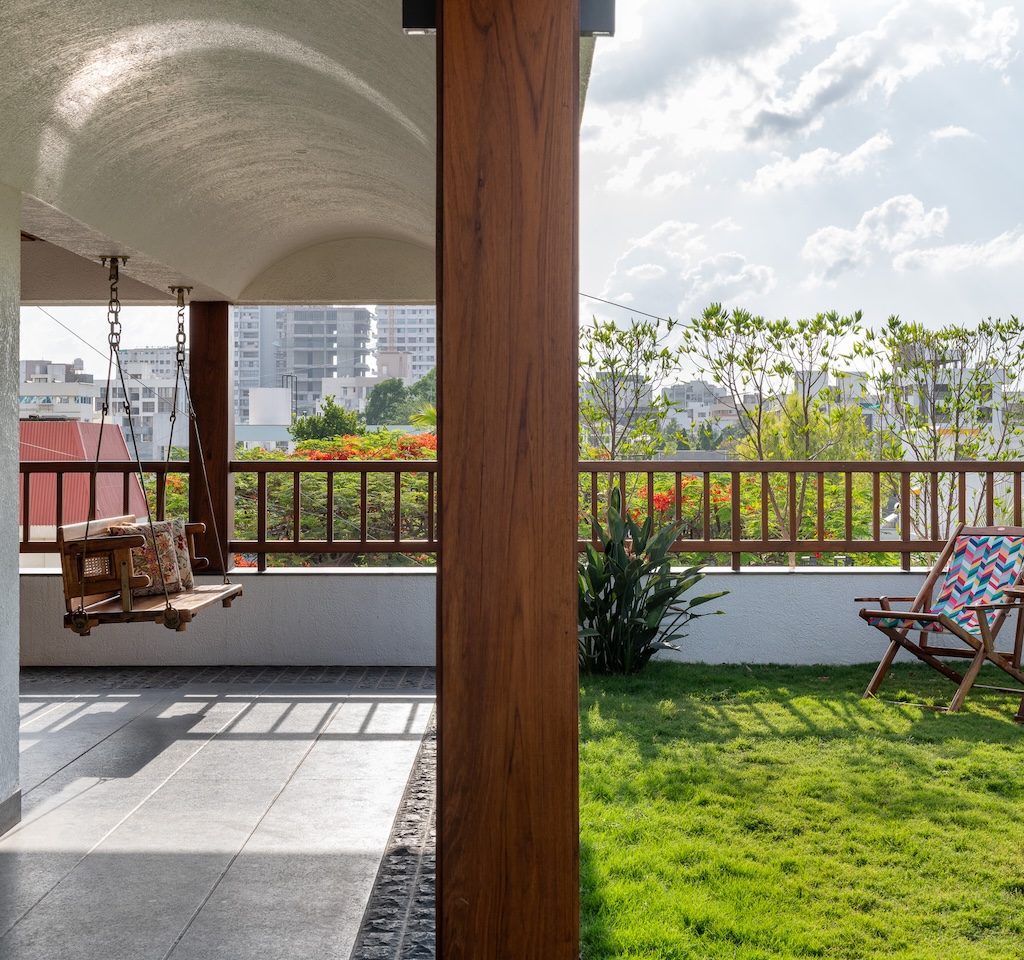
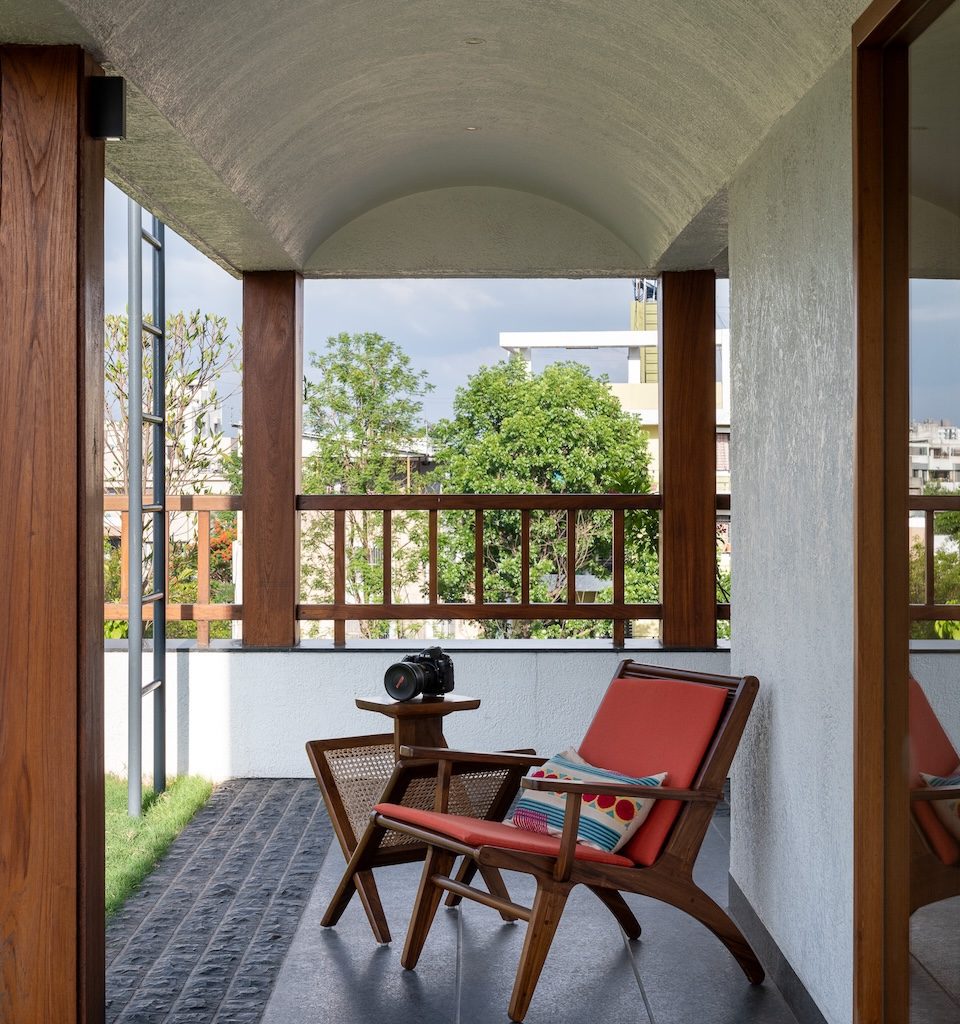
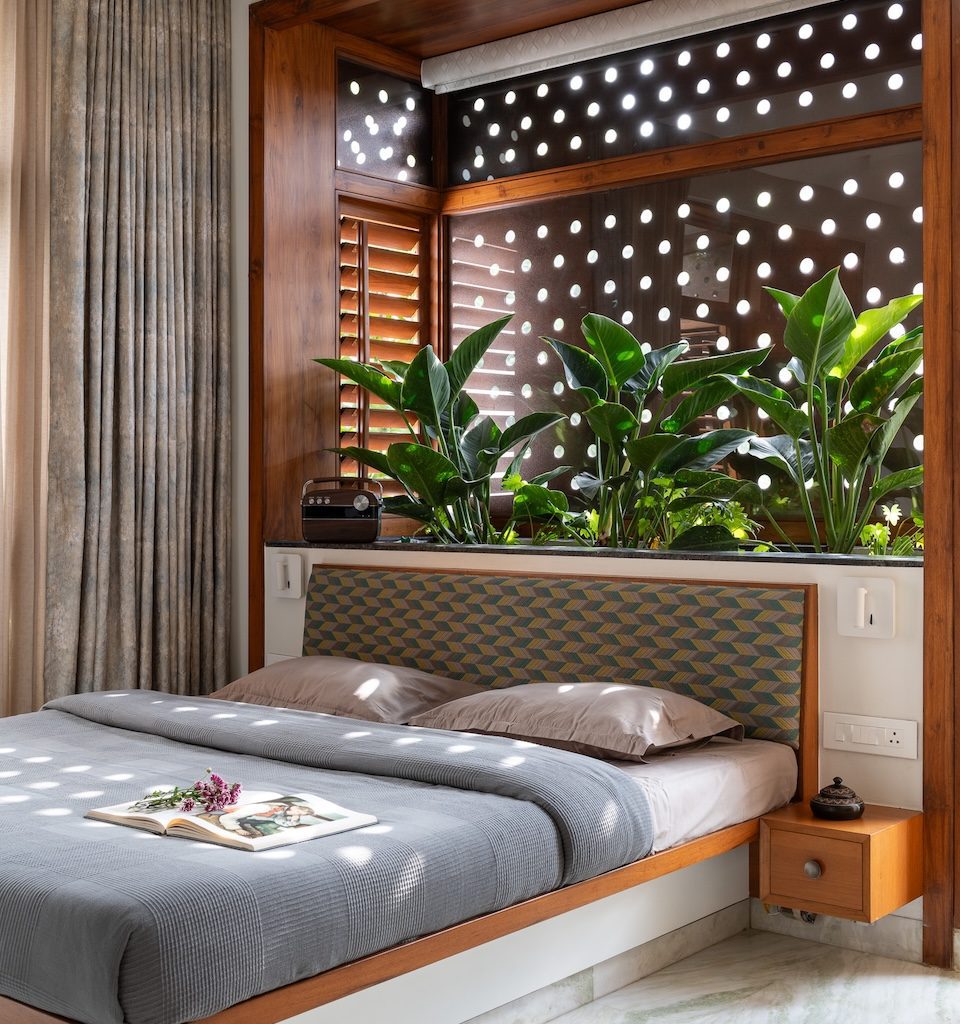
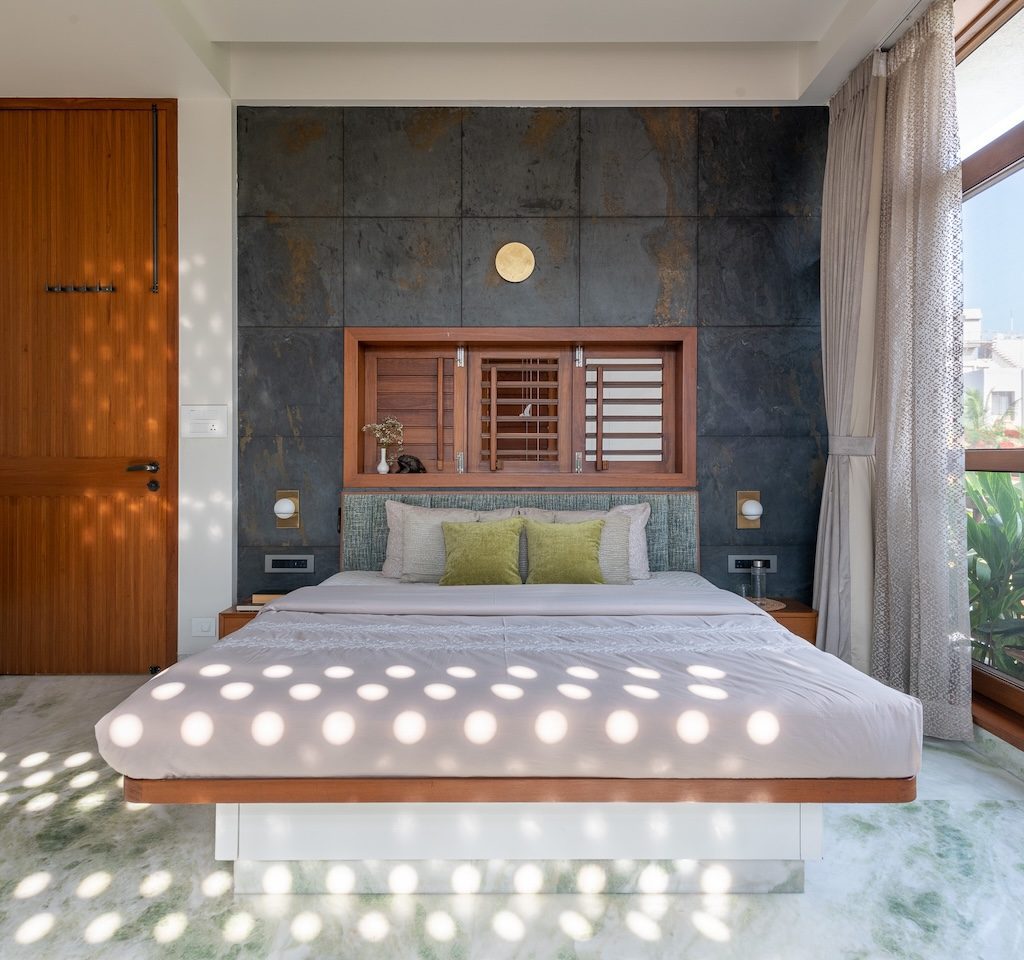
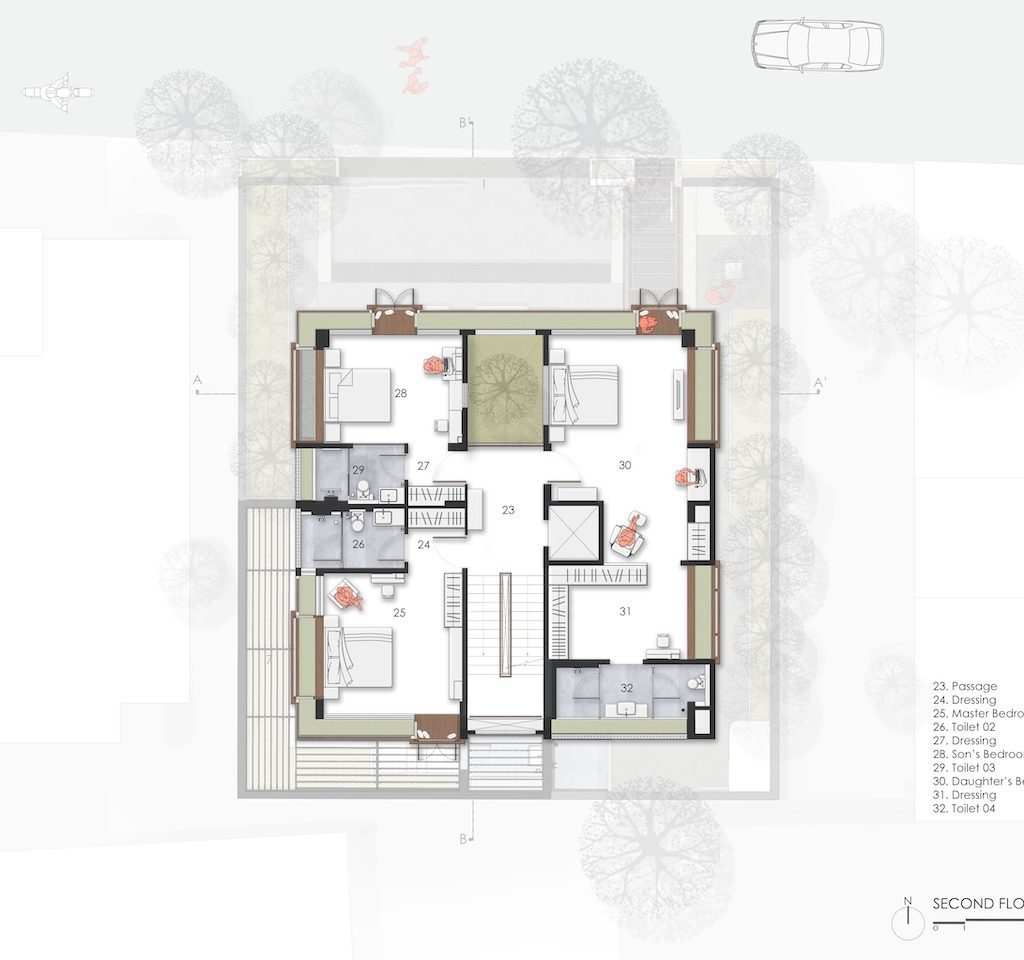
The second floor is reserved for bedrooms, offering privacy and retreat from the livelier lower levels. Despite the vertical separation, visual connections between floors foster a sense of continuity and togetherness. The terrace garden crowns the home, compensating for the absence of a ground-level garden. Conceived as an elevated outdoor space, it allows for relaxation, celebration, and open-sky experiences while contributing to thermal insulation.
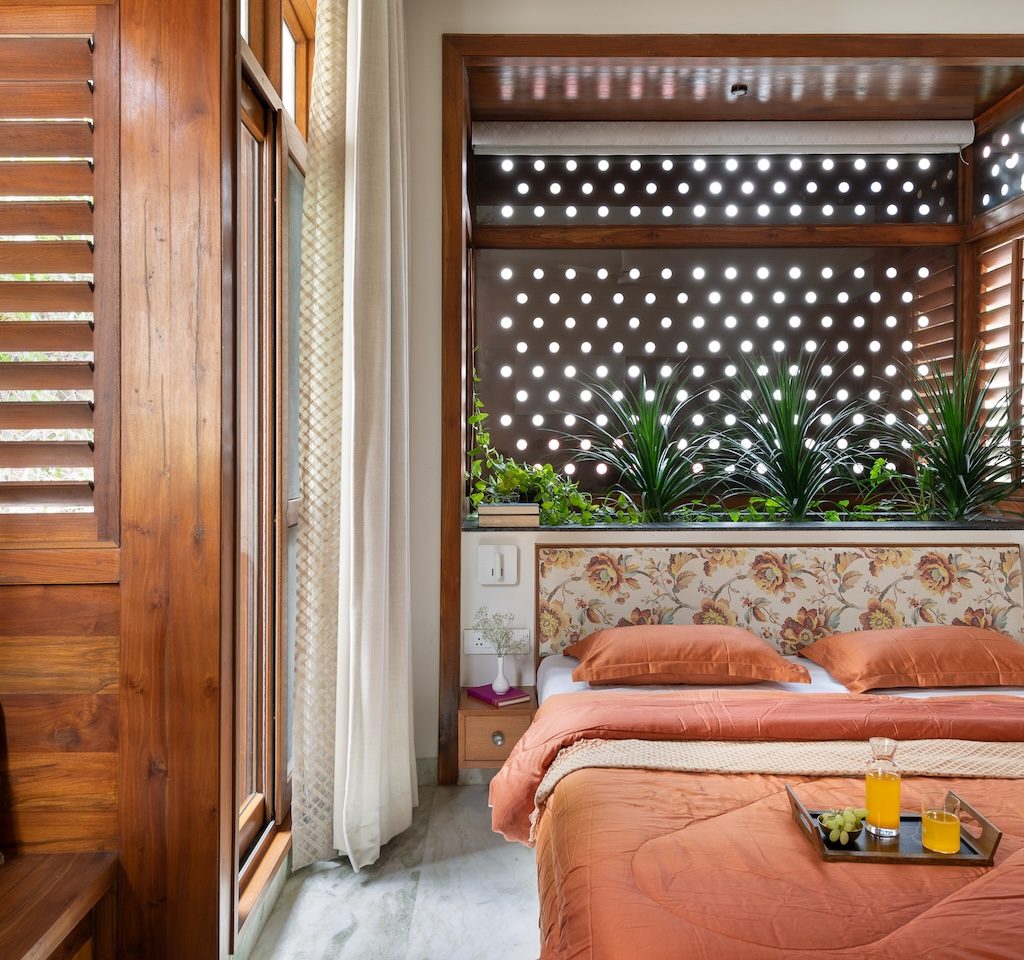
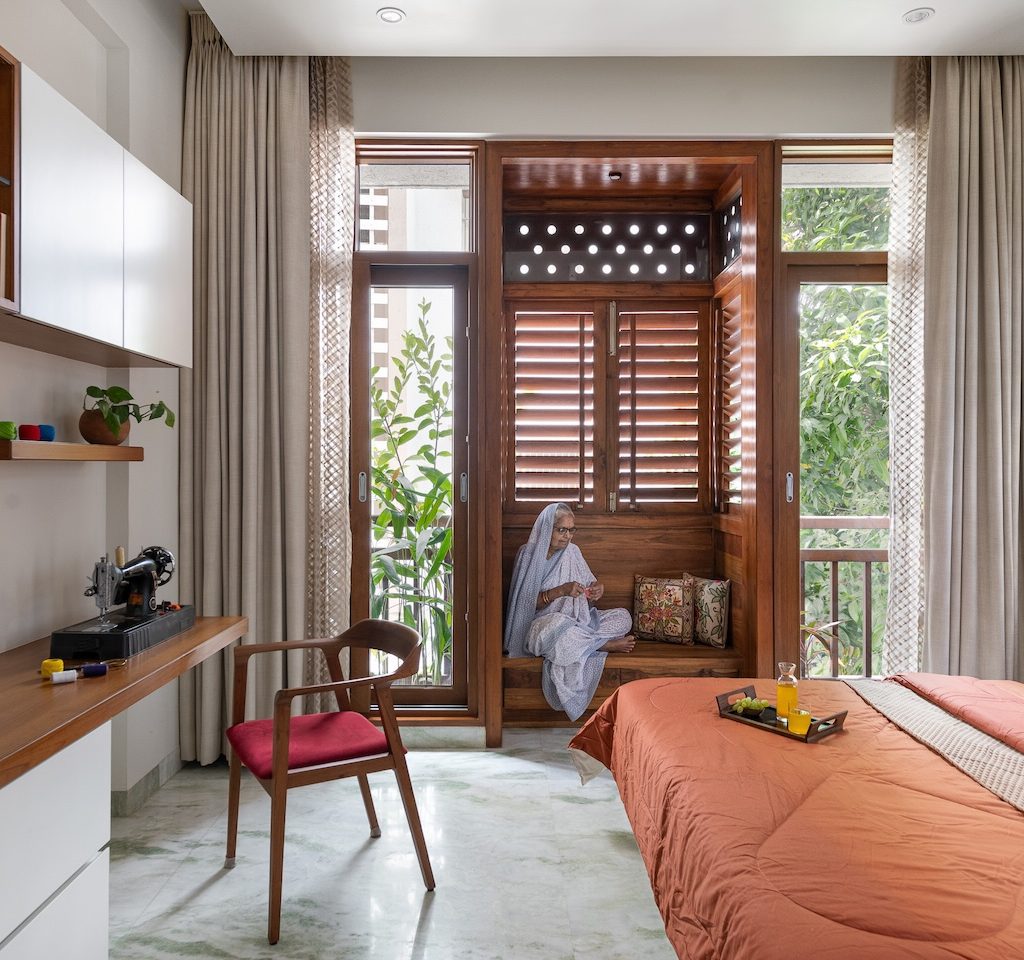
The material palette
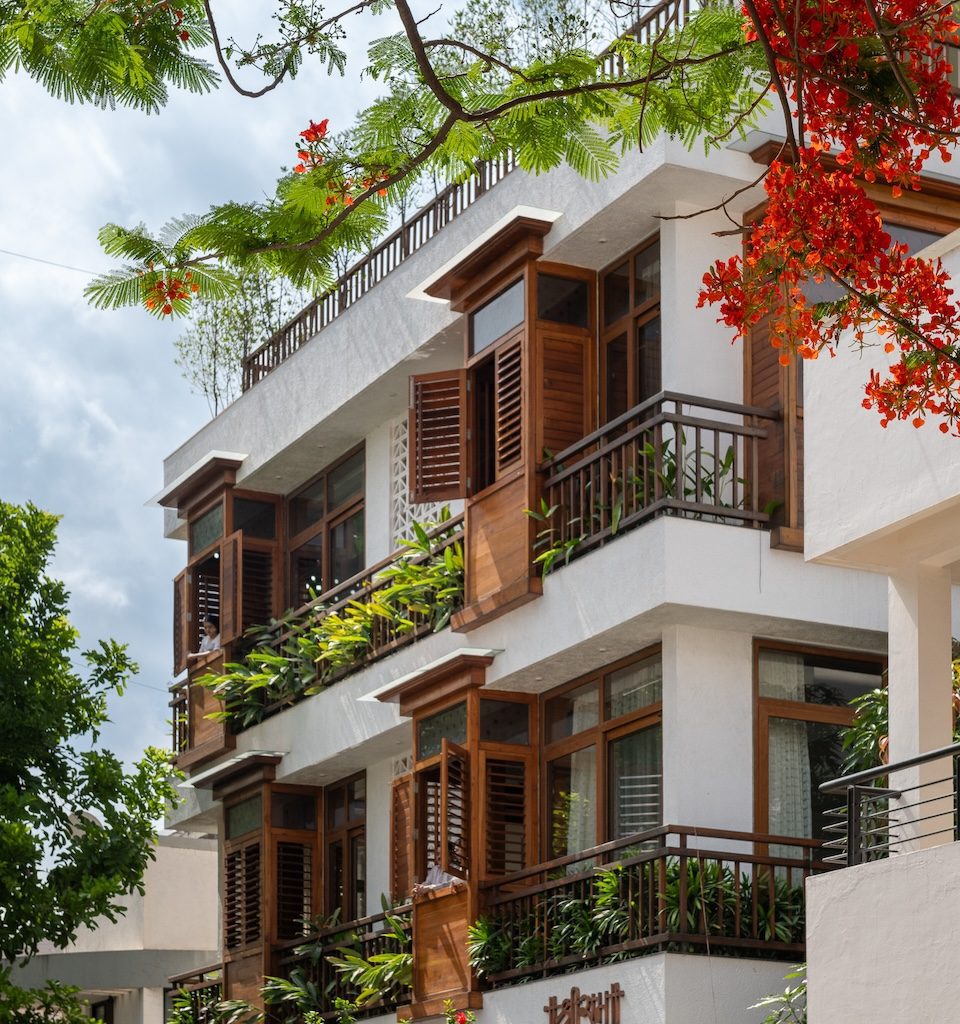
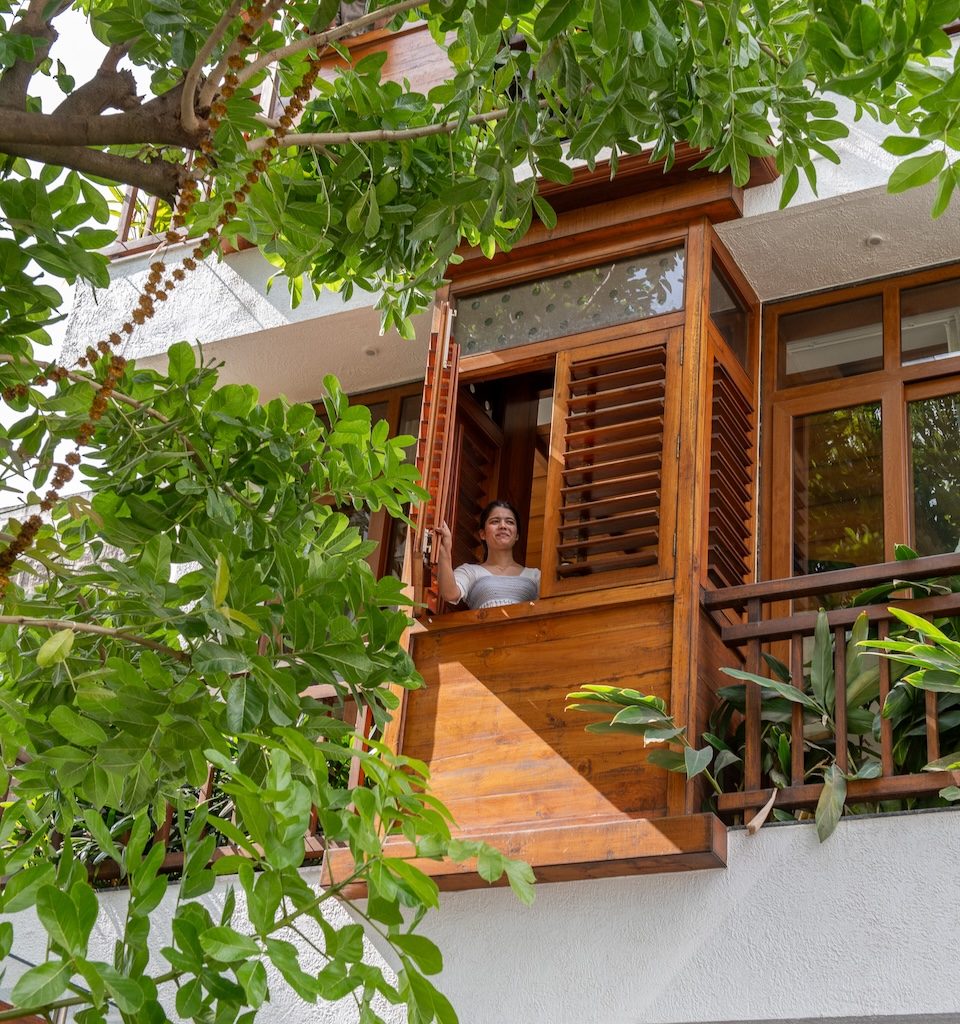
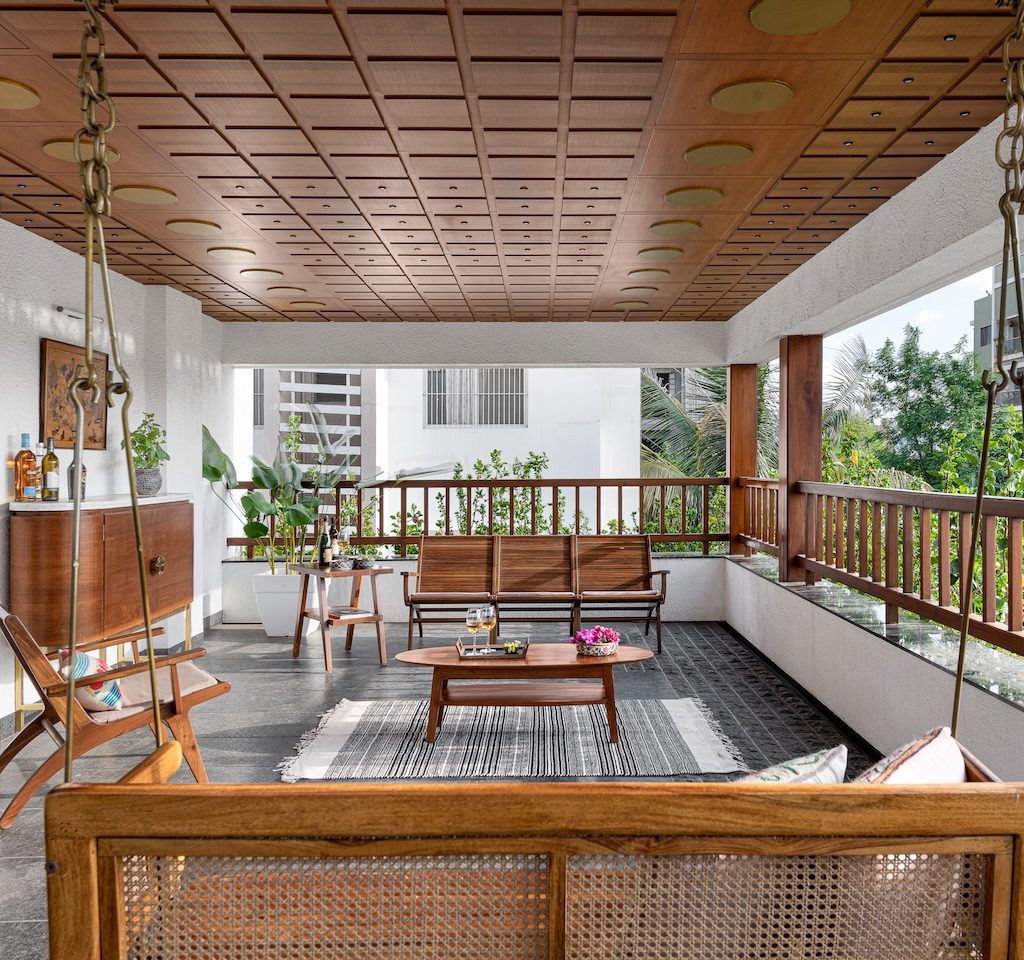
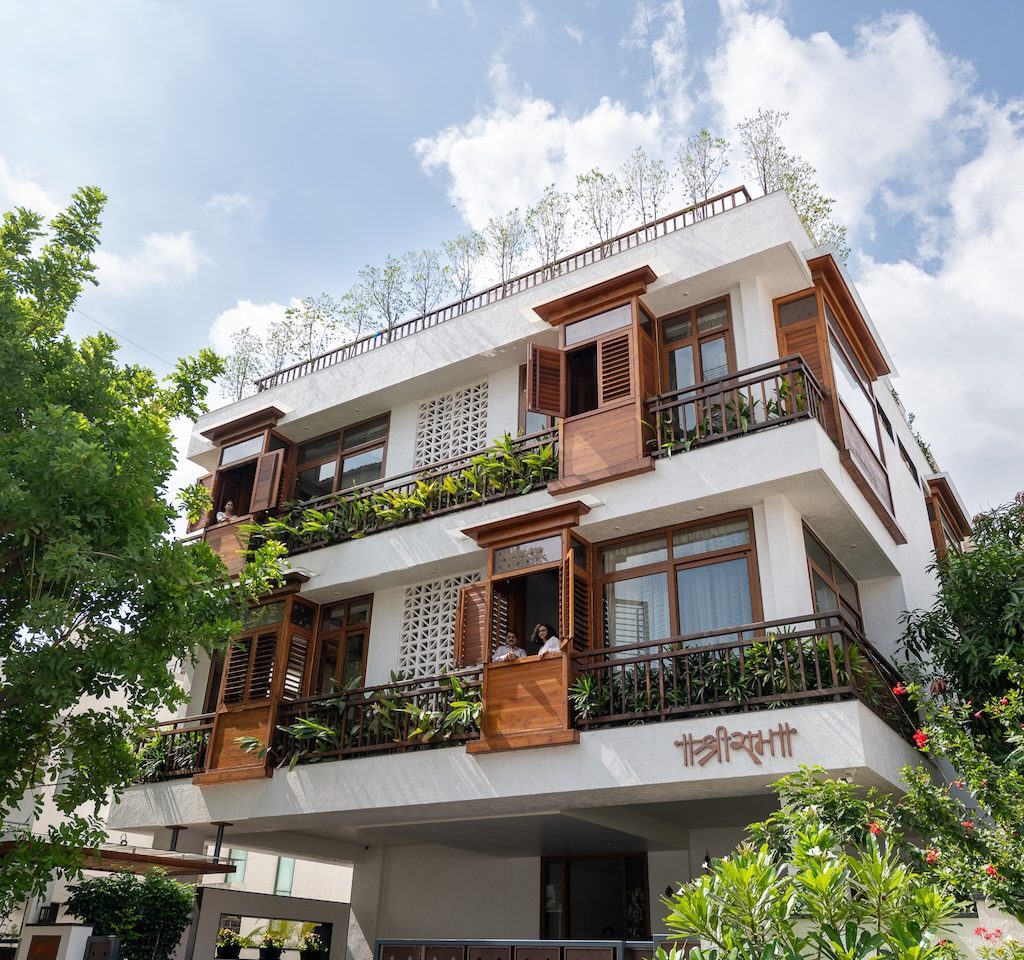
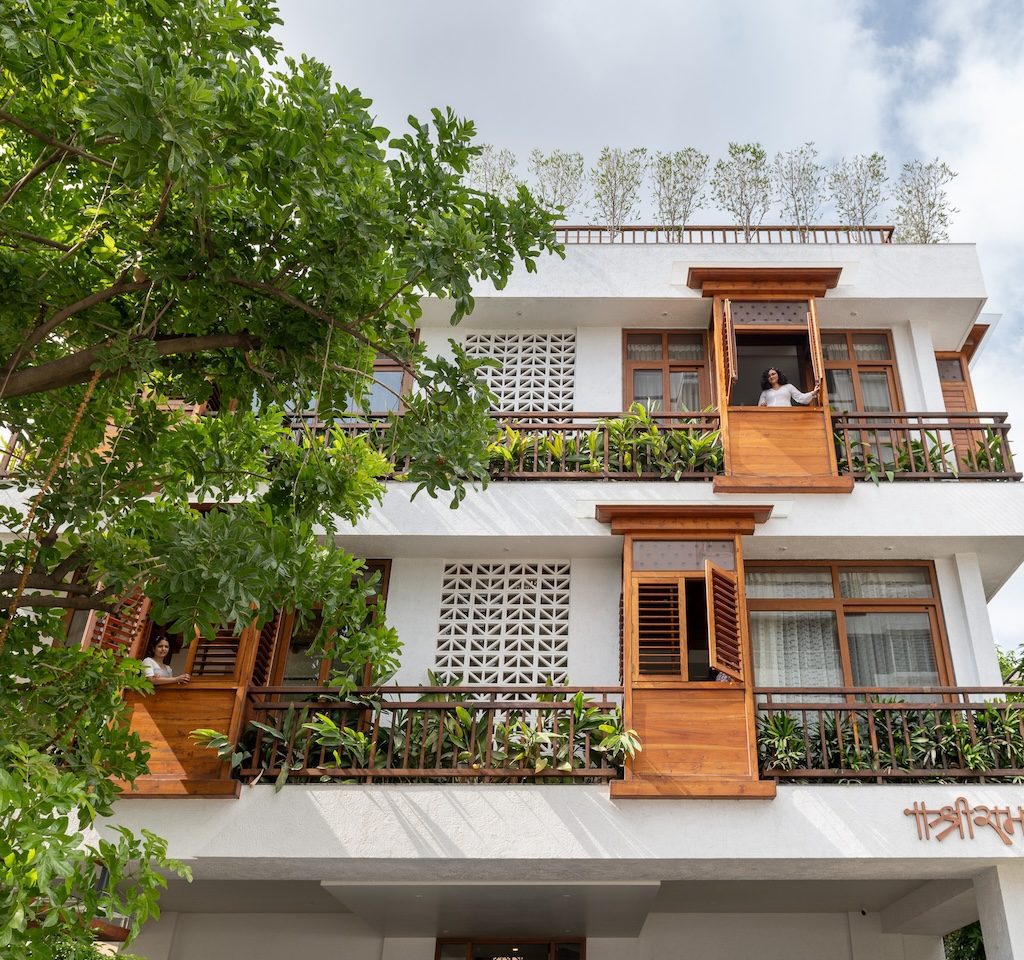
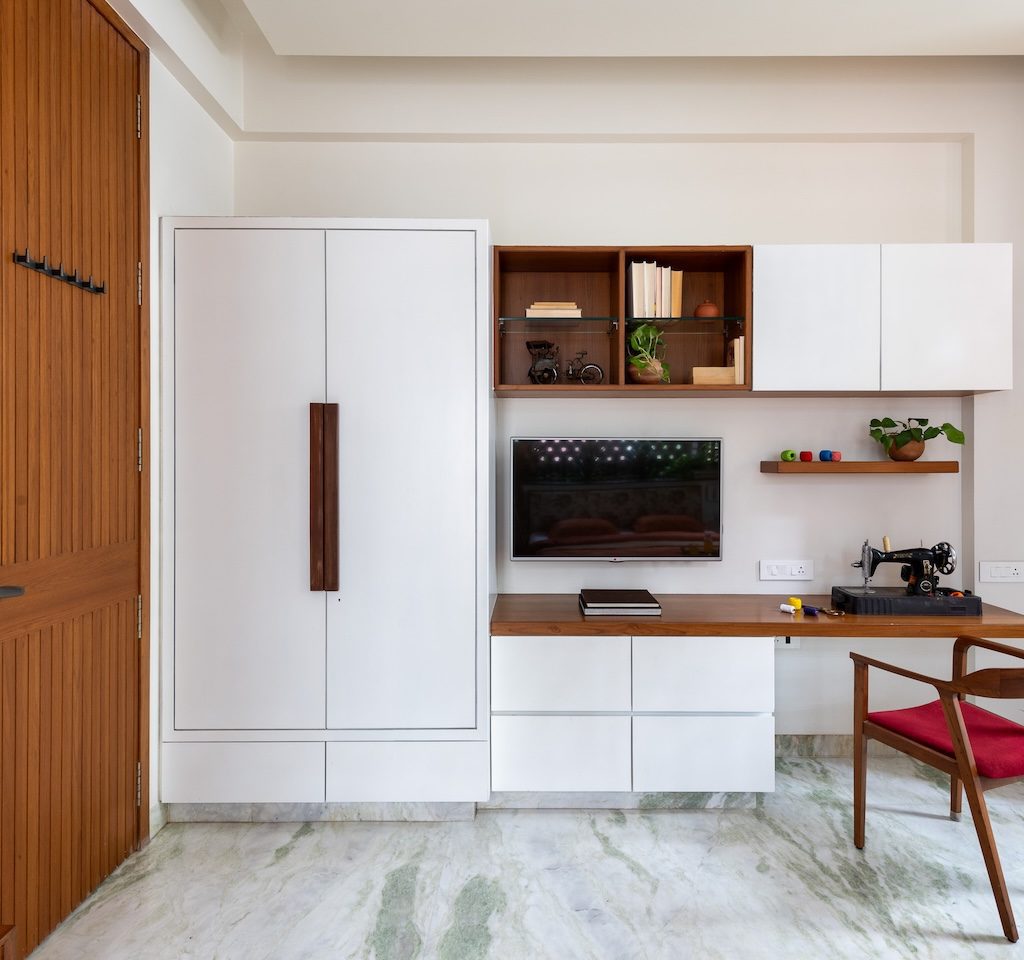
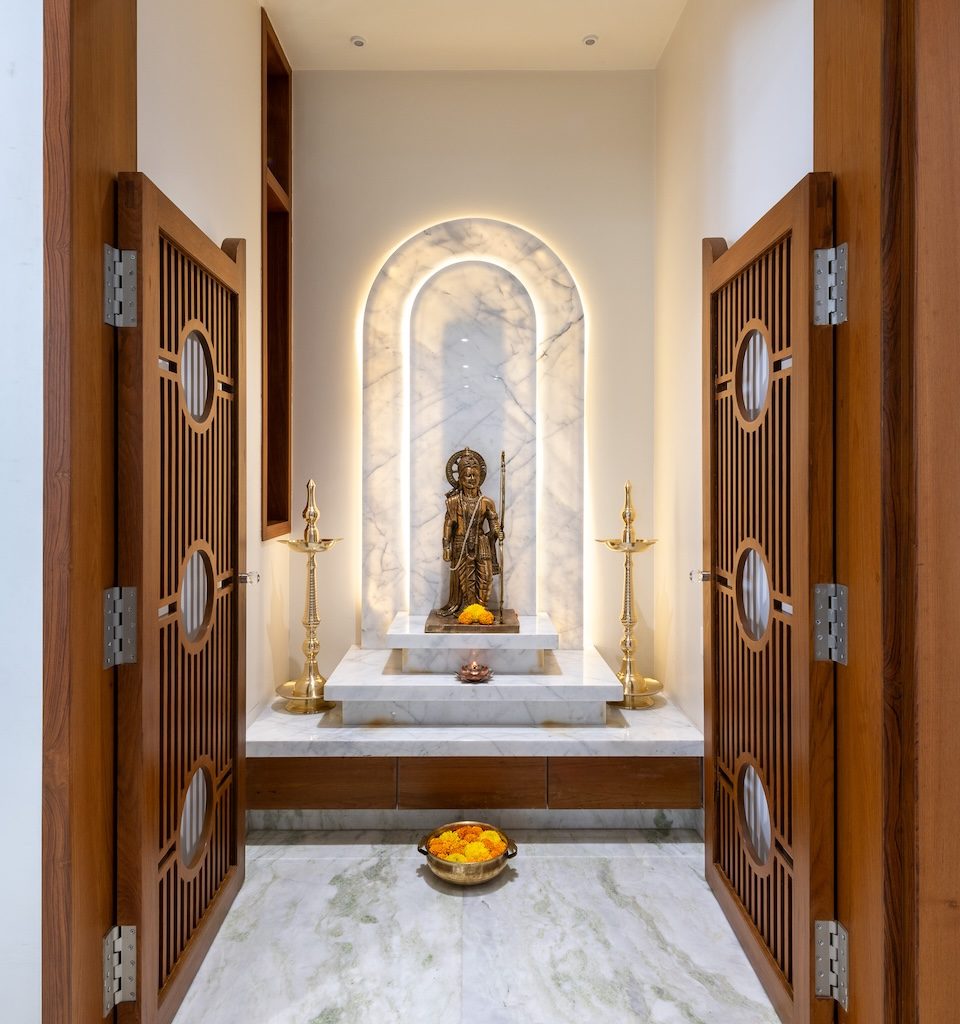
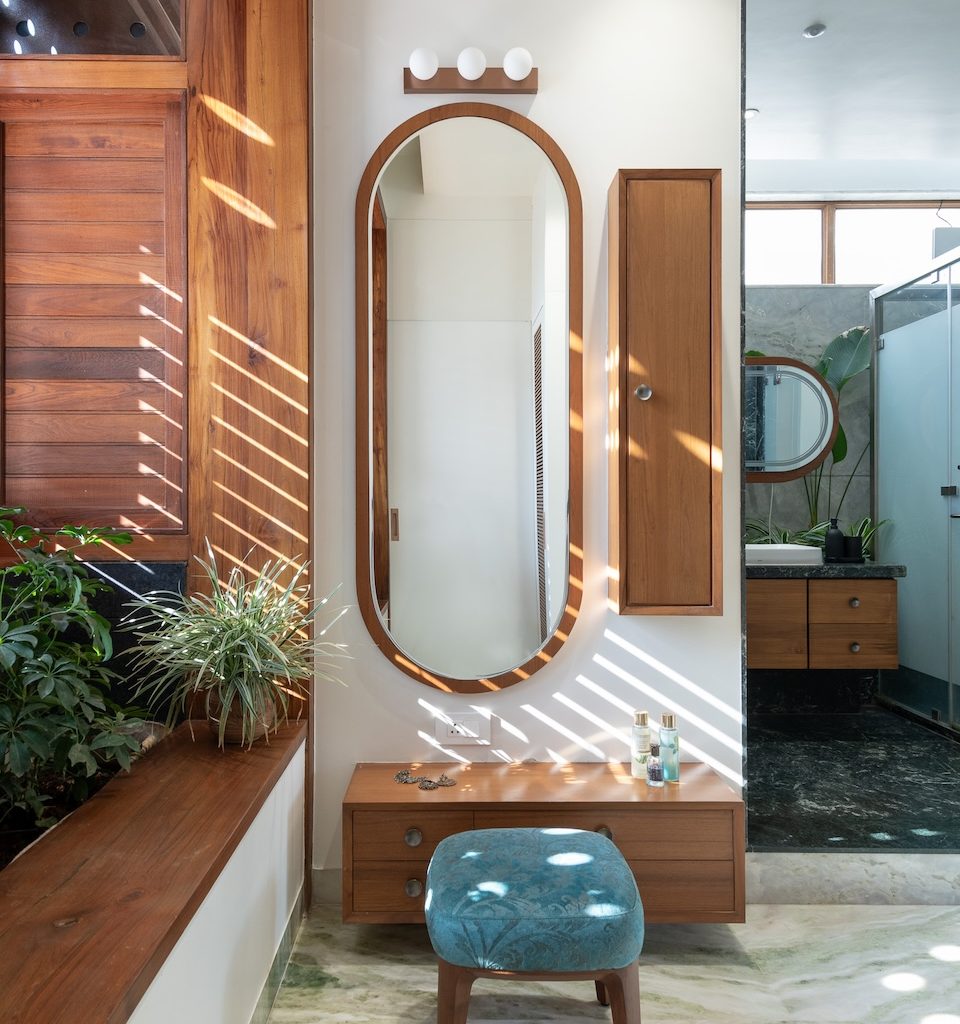
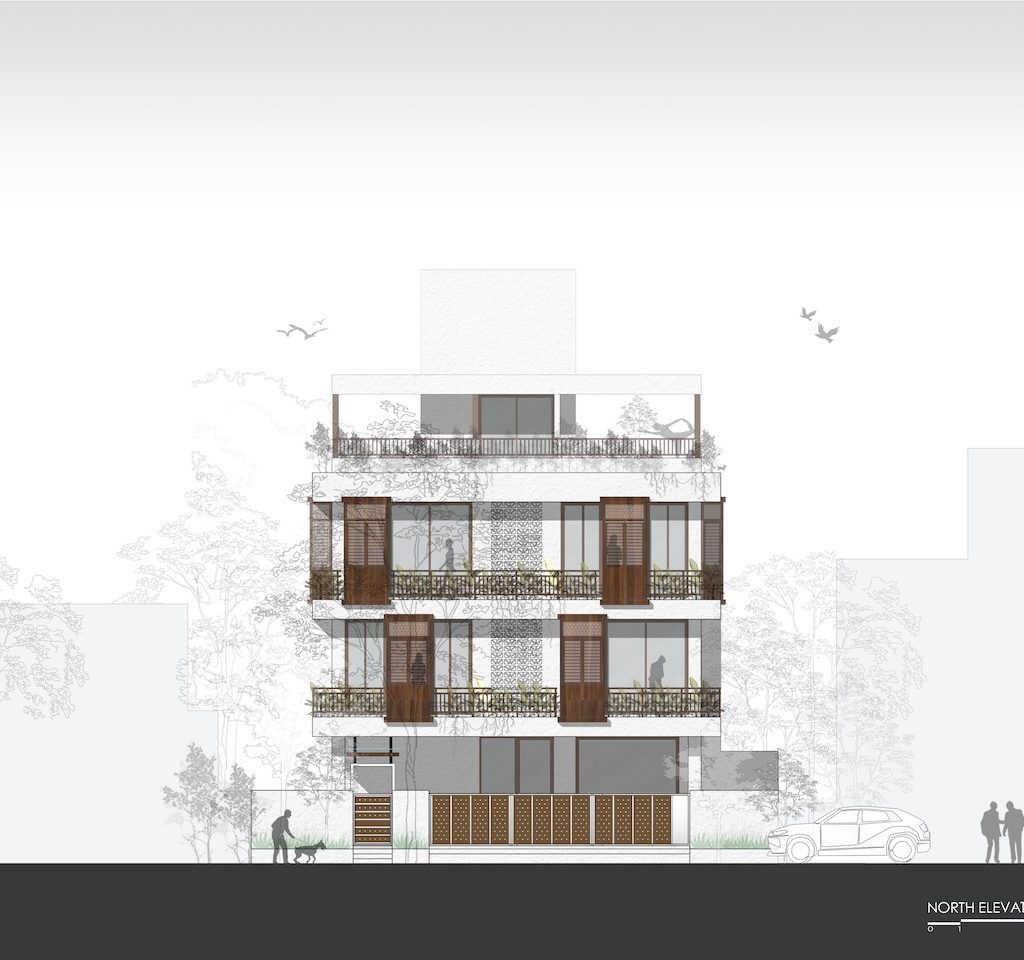
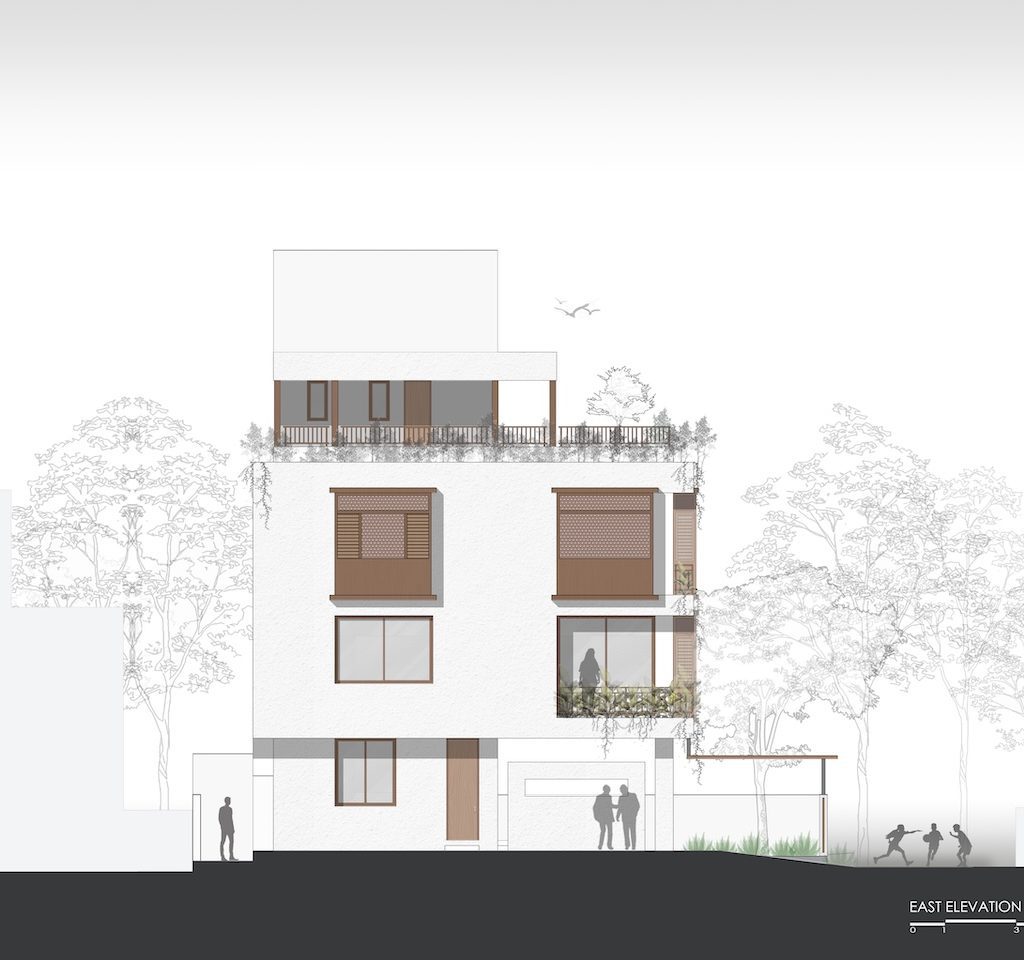
Seasoned teak wood plays a defining role in the project, appearing in jharokhas, railings, louvered windows, and ceilings within common areas. The structure is an RCC framed system with brick walls. North-facing openings incorporate soundproof UPVC wooden-finish windows with laminated toughened glass. East and west facades have minimal openings, protected by M.S. powder-coated jalis flushed with toughened glass. The staircase and central court are enclosed with precast concrete jalis, integrated with windows and operable mosquito screens.
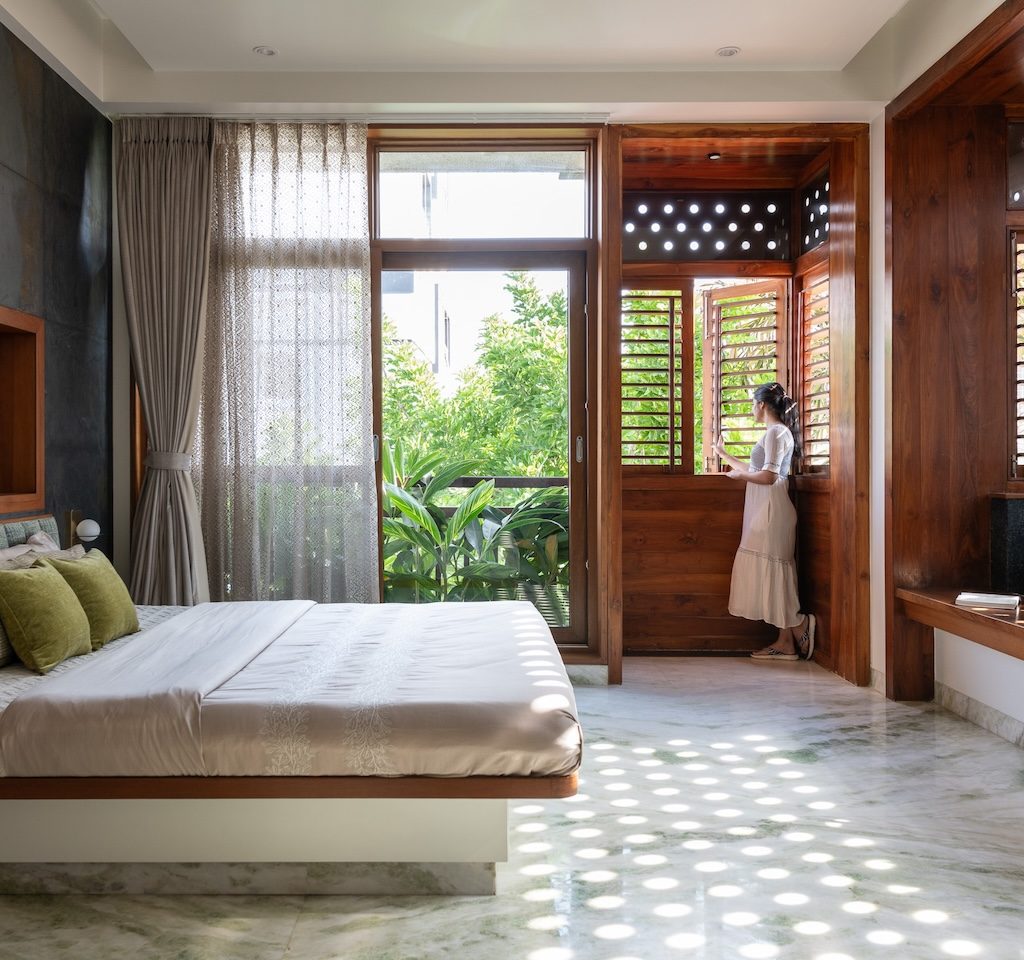
Indian marble is used across interior floors and toilets, while the exterior surfaces feature granite and cobbled stone. Most materials and furniture are locally sourced, reinforcing Indian craftsmanship and regional identity.
The highlights
Exquisite wooden jharokhas and screens lend vintage character while performing climatic functions—offering thermal insulation, controlled daylight, ventilation, and privacy. They allow residents to engage visually with the street while maintaining discretion. Peripheral planting and a central court introduce greenery as both visual relief and climatic buffer. Motorised blackout curtains enhance privacy, and photovoltaic cells contribute to energy efficiency. The terrace garden provides panoramic views and acts as an additional thermal layer, reinforcing the home’s environmental strategy.
The takeaway
The Jharokha House demonstrates how memory, climate responsiveness, and contemporary planning can coexist within a compact urban setting. By translating the experiential qualities of a traditional wada into a vertical residence, the project bridges cultural heritage and modern domestic life.
Fact File
Project: The Jharokha House
Design firm: Environ Planners
Location: Nashik, Maharashtra, India
Area: 7,405.5 sq ft
Principal architects: Ar. Anagha S. Patil and Ar. Sanjay M. Patil
Design team: Ar. Devashree Choudhary and Ar. Nikita Jadhav
Add a Comment