
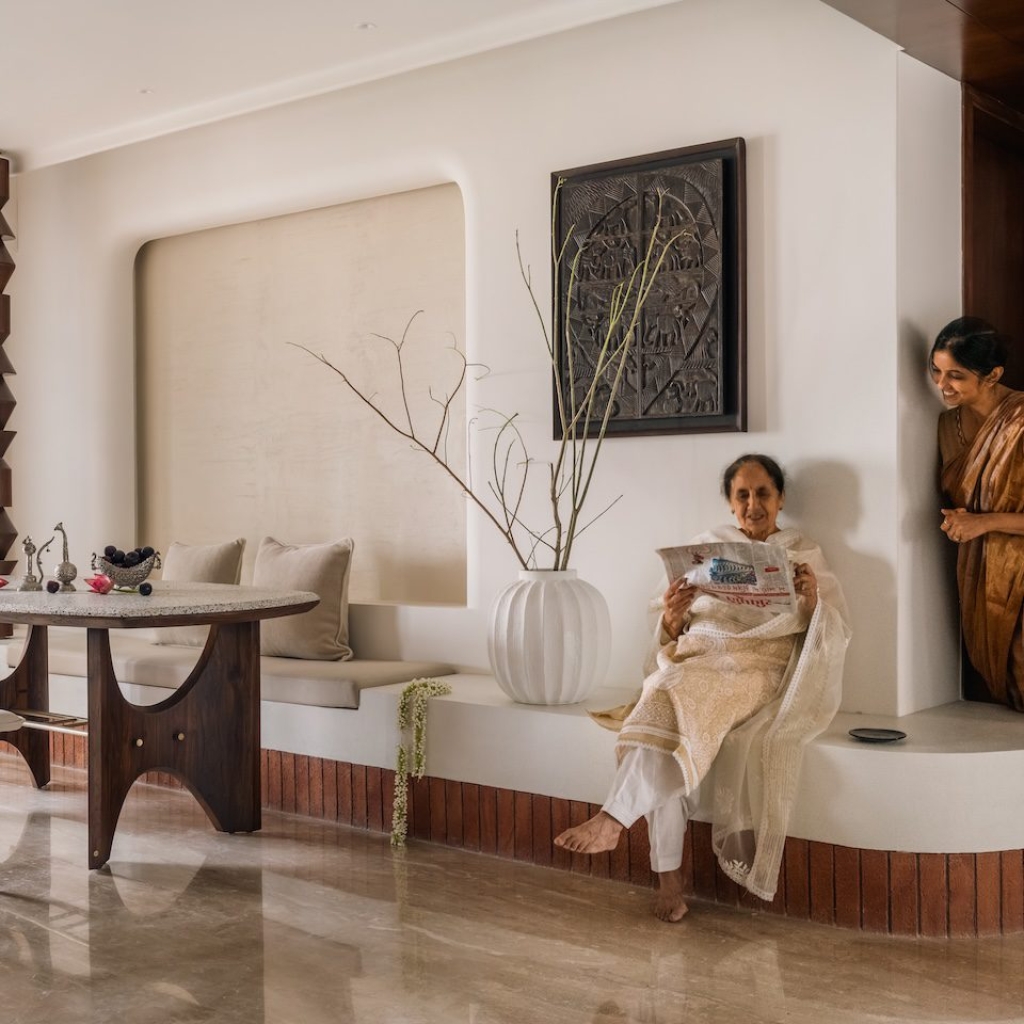
Aantara, designed by Space Karma in Ahmedabad, takes its name from the idea of an interval—a gentle in-between. Created for a family transitioning cities, the home becomes a series of intentional spaces that balance tradition with modern restraint.
Curated by: Deepa Nair
Photographs: Murtaza Gandhi; courtesy Space Karma
The brief
When a Punjabi family of four relocated from Mumbai to Ahmedabad, they carried with them a way of living shaped by compact homes—spaces where every corner is purposeful and familiar. Their new residence, though larger and slower in pace, needed to preserve that intimacy. They entrusted Space Karma with the design of their new home, and through sustained dialogue, the brief slowly clarified into a cohesive and intentional direction.
“At the beginning, the design journey tilted towards a traditional South Indian aesthetic—rich in wood and layered in detail. But as conversations deepened, so did understanding. The family realised they wanted something lighter. Rooted, yes, but not heavy. A language that was Indian in spirit yet modern in rhythm. They gravitated towards a space that did not declare tradition, but expressed it subtly through material, layout, and light,” explains Shweta Jain, principal designer, Space Karma. What emerged was a distilled vision: clean lines, a restrained material palette, and spaces where proportion, daylight, and spatial flow guide the experience.
The design intent
The design process was guided by a space-efficient mindset, where every corner was planned with clarity of purpose. Each room was conceived to perform beyond a single function, reflecting the spatial intelligence the family carried from Mumbai. Bedrooms, in particular, evolved into self-contained worlds—layered environments that support rest, reflection, and daily rituals.
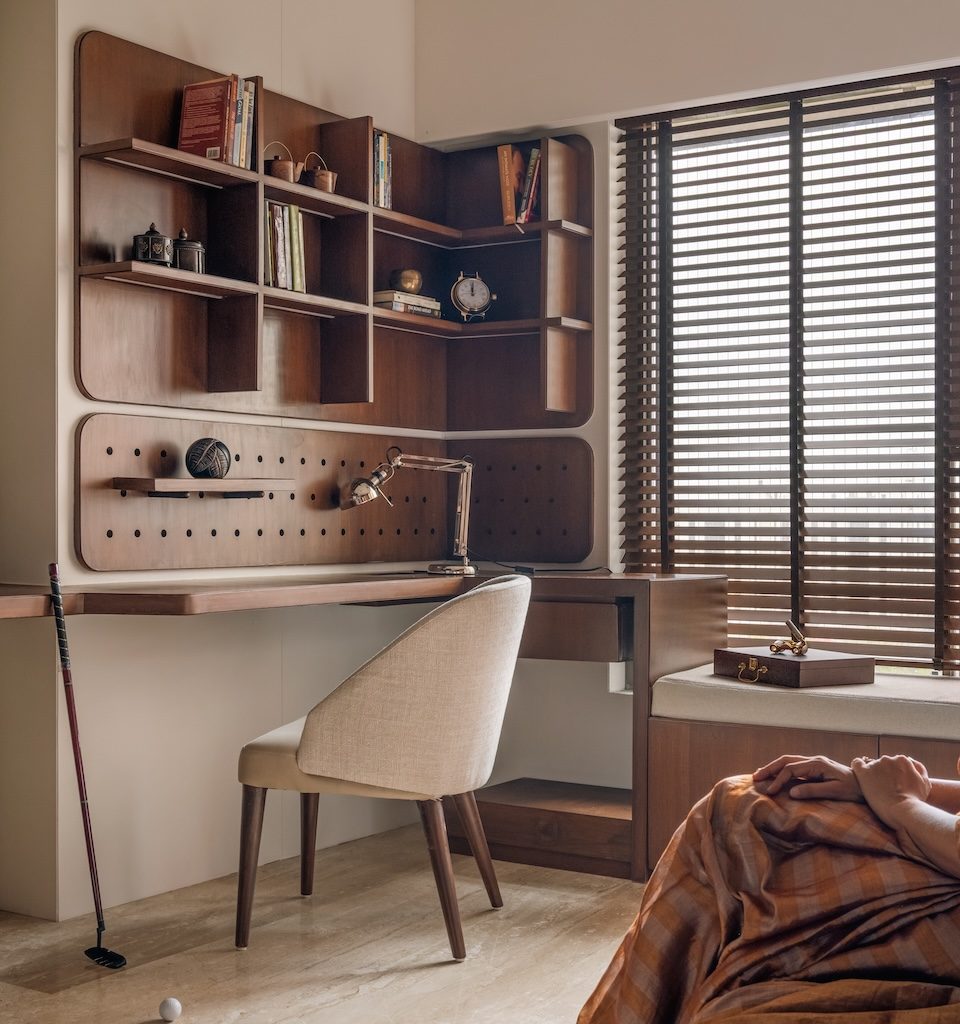
A defining gesture within every room is the bay window seat. More than a visual feature, it was envisioned as a pause within the home—a place for morning tea, an unfinished book, or a moment of stillness before the day gathers pace. Each bay seat is paired with its own personal library shelf, not a collective bookcase for the house, but curated collections that mirror the personality and interests of the room’s occupant.
These intimate alcoves became emotional anchors, ultimately inspiring the name Aantara… a word that suggests an interval, a pause between movements. Wood, expressed in a single consistent tone and polish, forms the unifying thread throughout the residence. It moves seamlessly from room to room, offering warmth and familiarity while establishing visual cohesion.
The design and material details
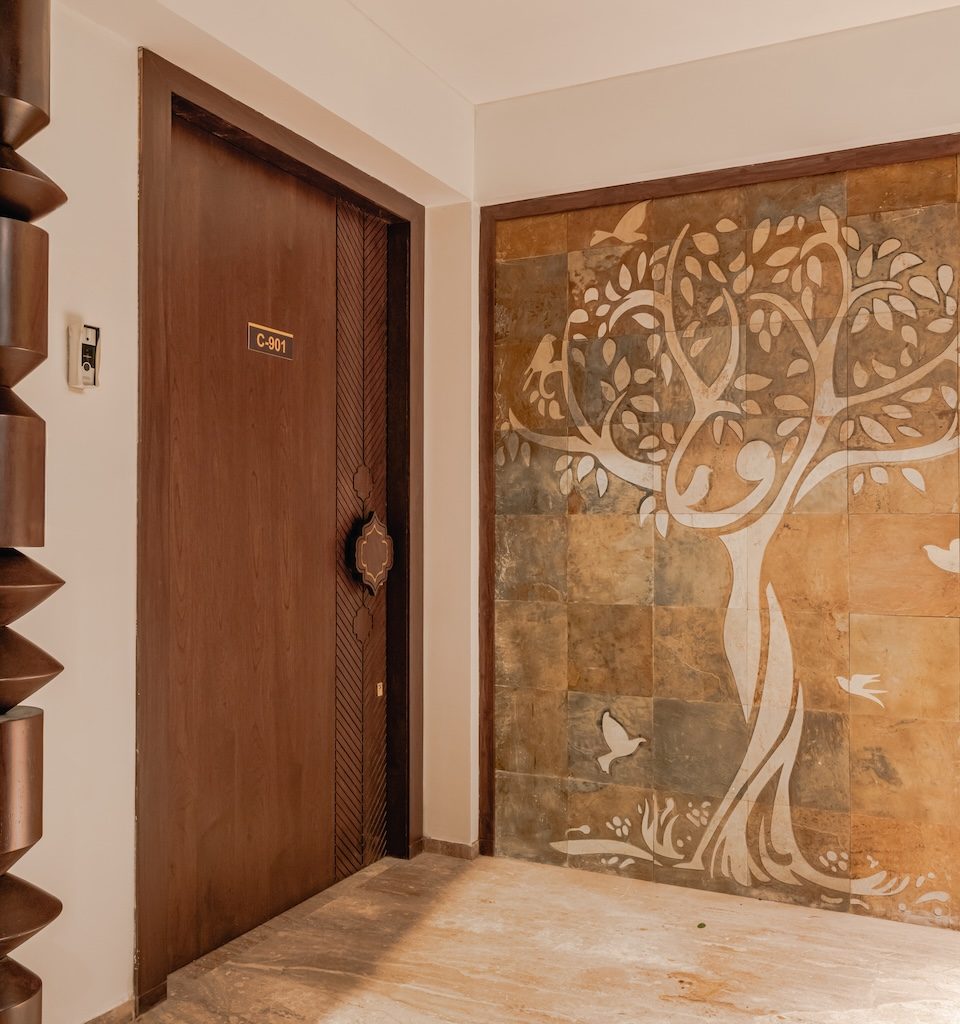
Just outside the main entrance, a tall totem stands as a subtle marker, drawing from traditional forms and establishing the tone of the home. Beside the doorway, a natural stone wall grounds the threshold, holding a handcrafted metal Tree of Life. With its branching form and rooted base, it symbolises resilience, continuity, and hope, transforming the entry into a considered moment of arrival.
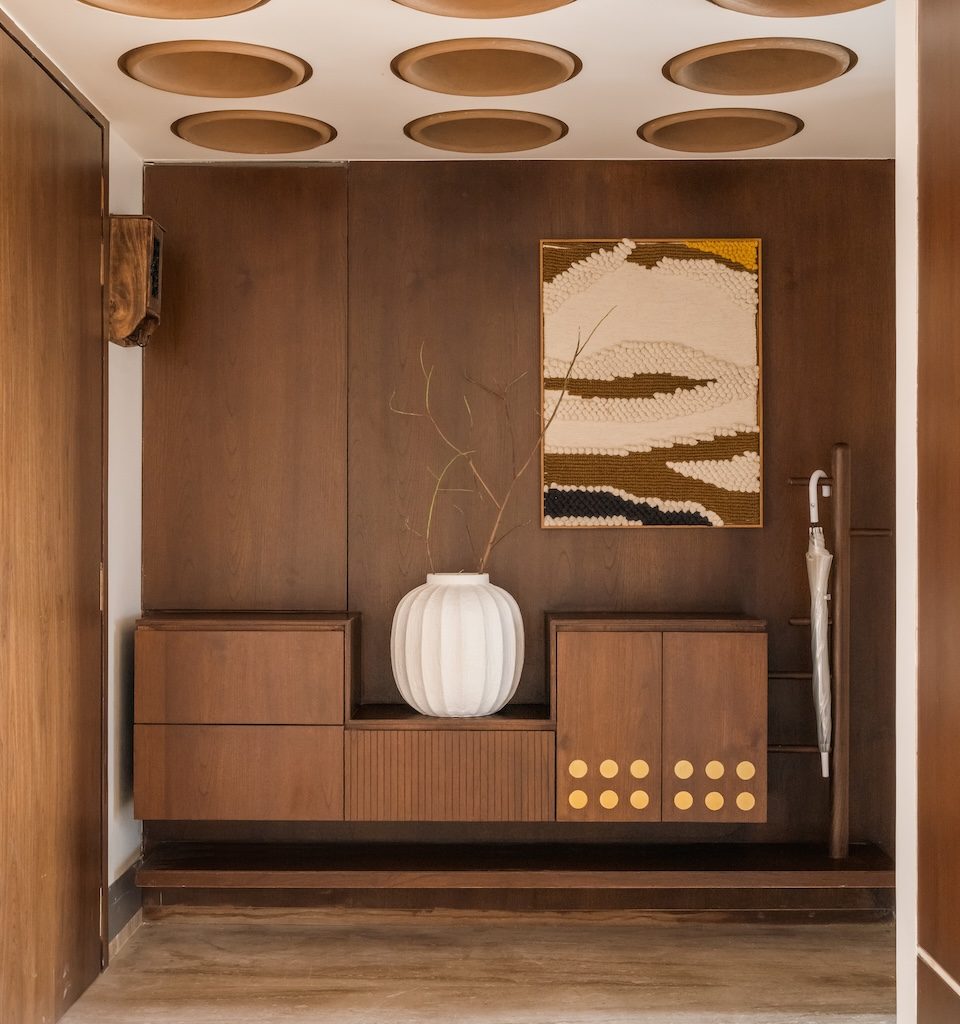
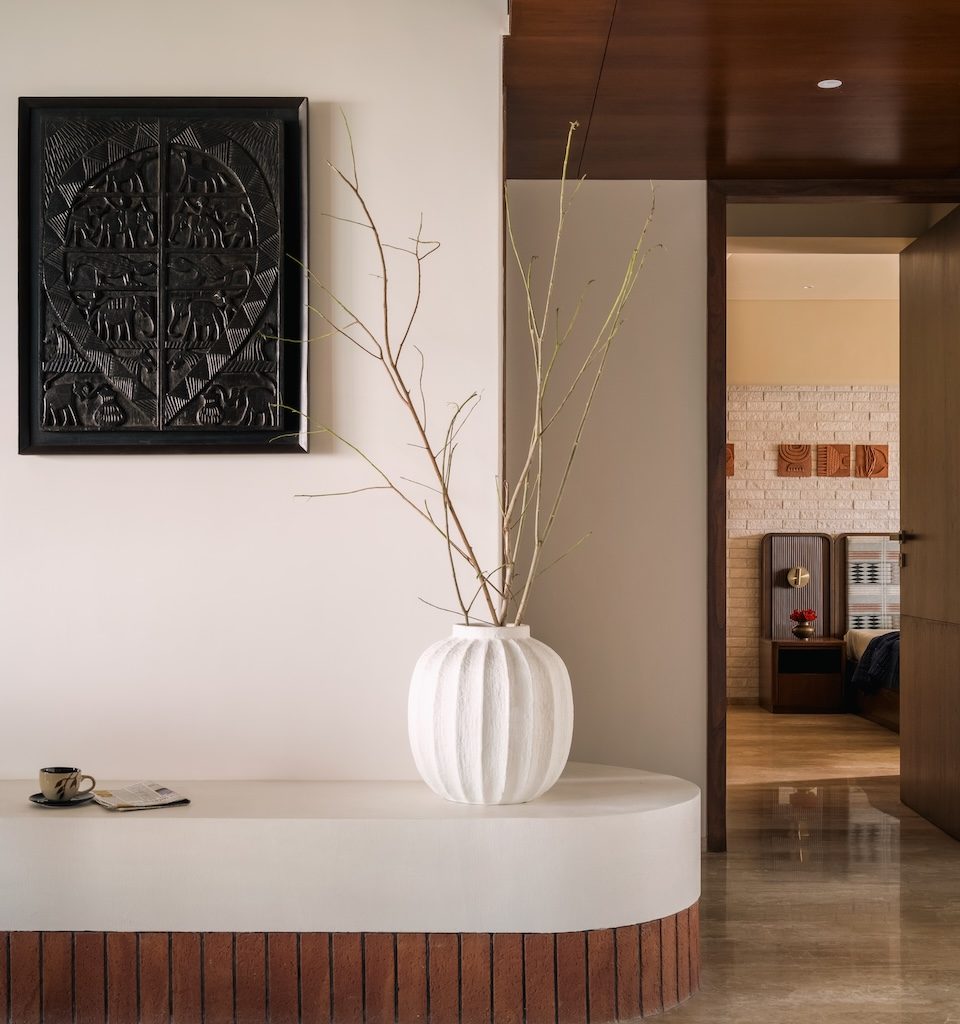
Inside, a custom-designed wooden cabinet becomes the daily pause before stepping in or out. Carefully detailed, it incorporates umbrella pegs, concealed compartments for newspapers, a tray for keys, and open shelving for parcels—elevating it beyond a utilitarian storage unit. Above it, a woollen knotwork artwork introduces texture and warmth, subtly referencing Indian craft traditions. The ceiling completes the composition with a cluster of suspended earthen pots inspired by South Indian homes. Their tactile presence and organic form lend the entryway a grounded, material richness, setting a tone that feels rooted yet contemporary from the very first step inside.
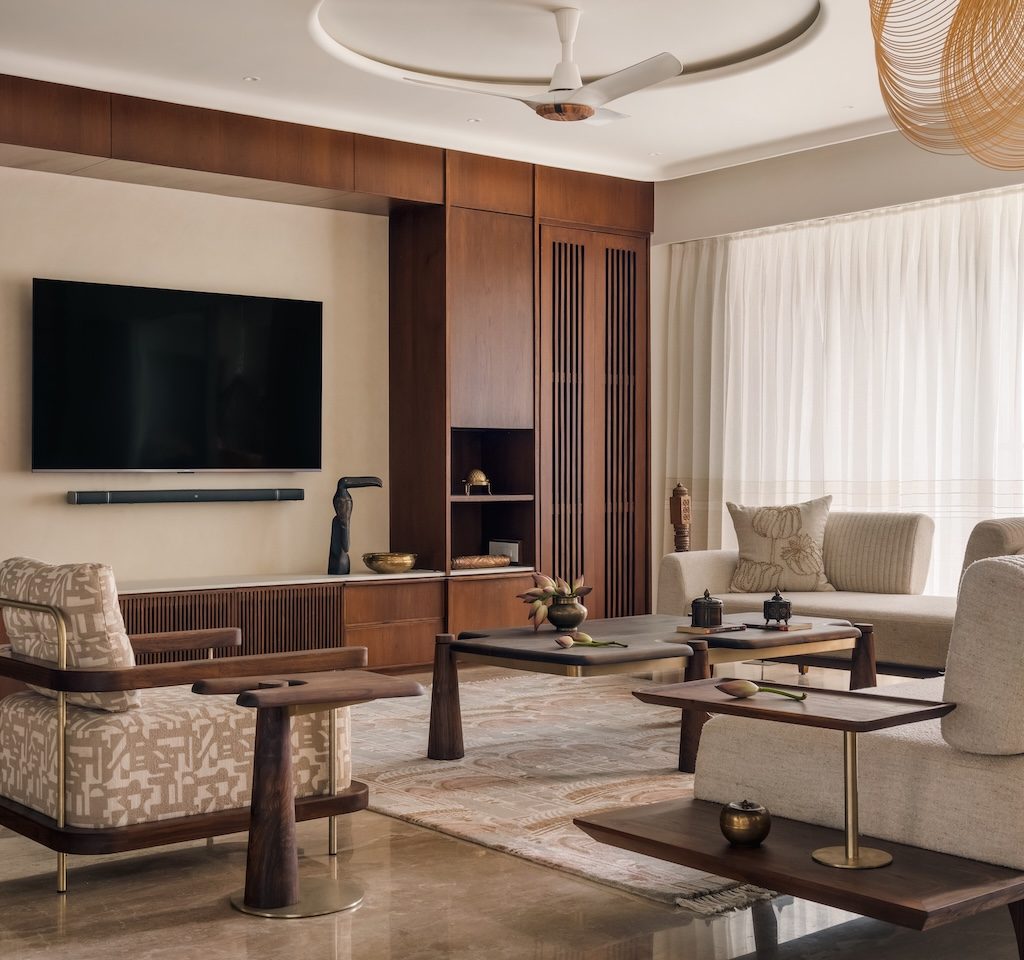
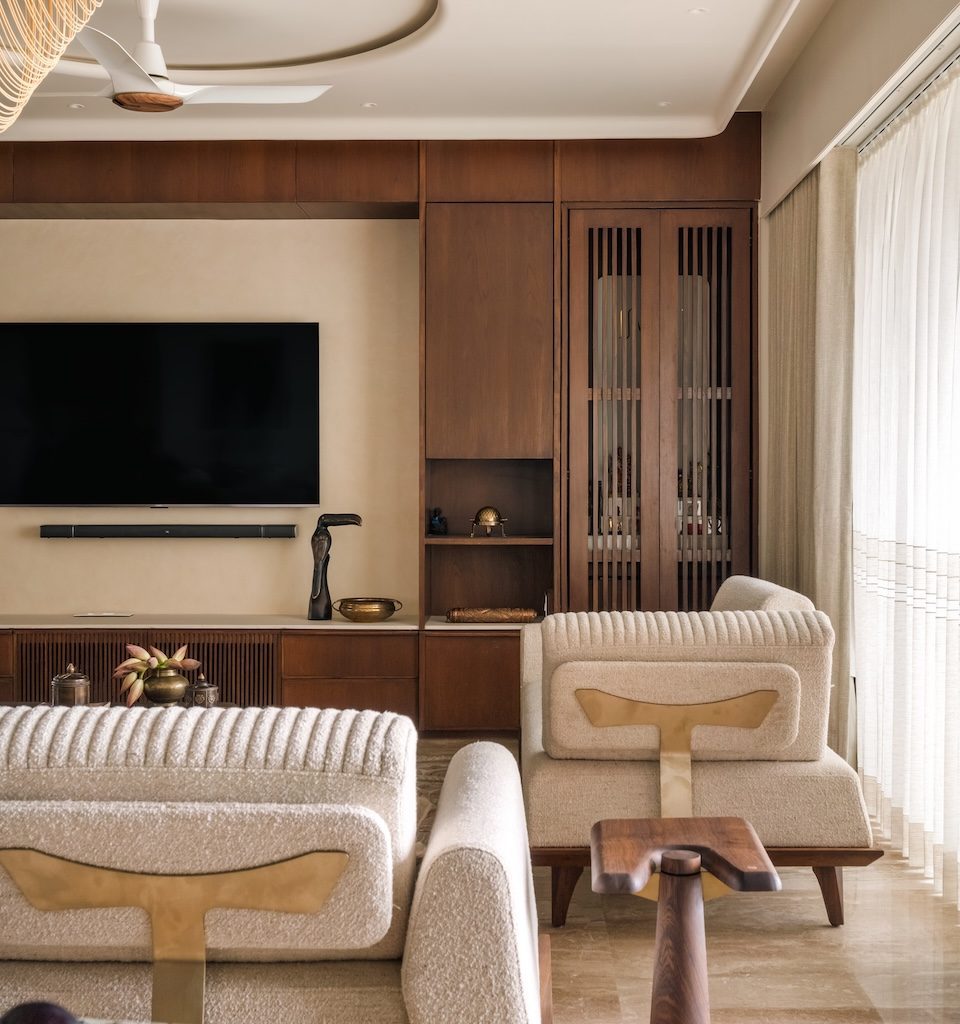
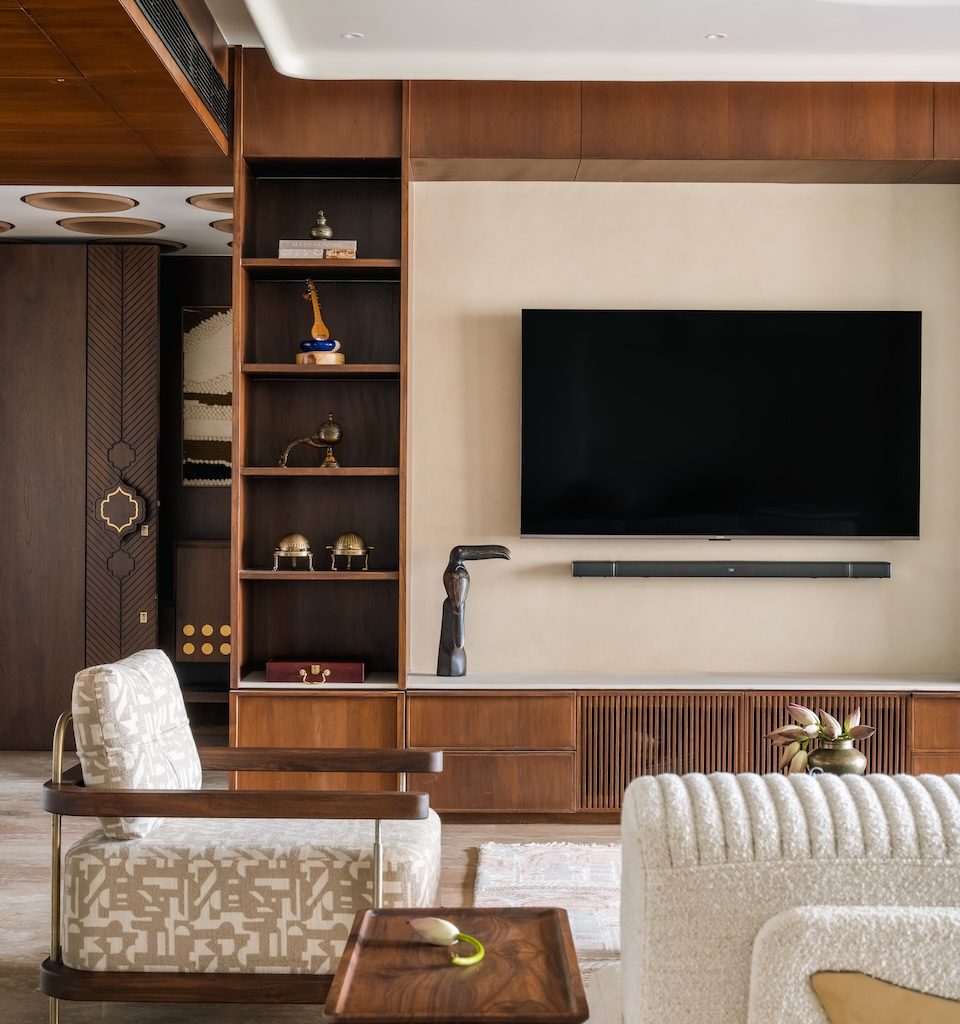
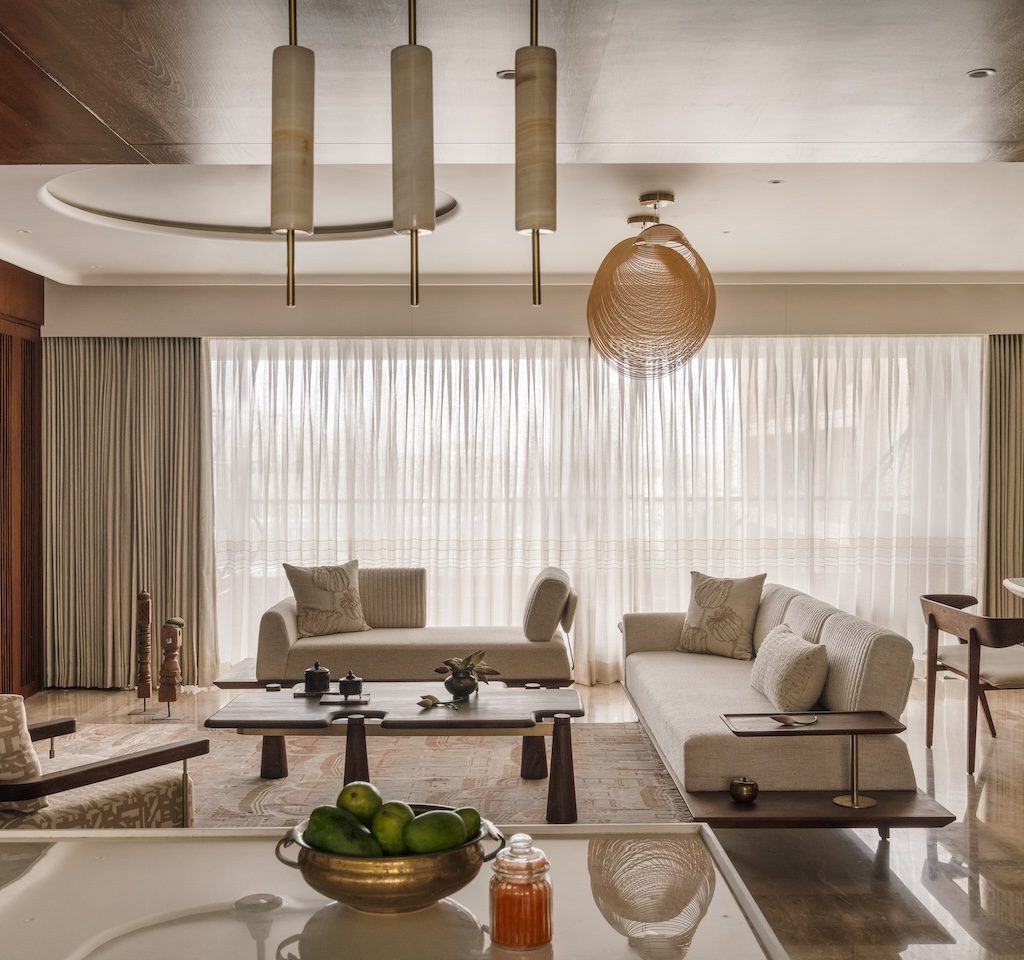
The living room is washed in daylight through a full wall of French windows, creating a luminous backdrop for everyday life. Furniture in soft beige tones introduces a sense of ease, while subtle brass accents lend understated elegance. A large wooden cabinet beneath the television conceals technology with discretion, while its flanking surfaces offer space for personal mementoes and memory objects.
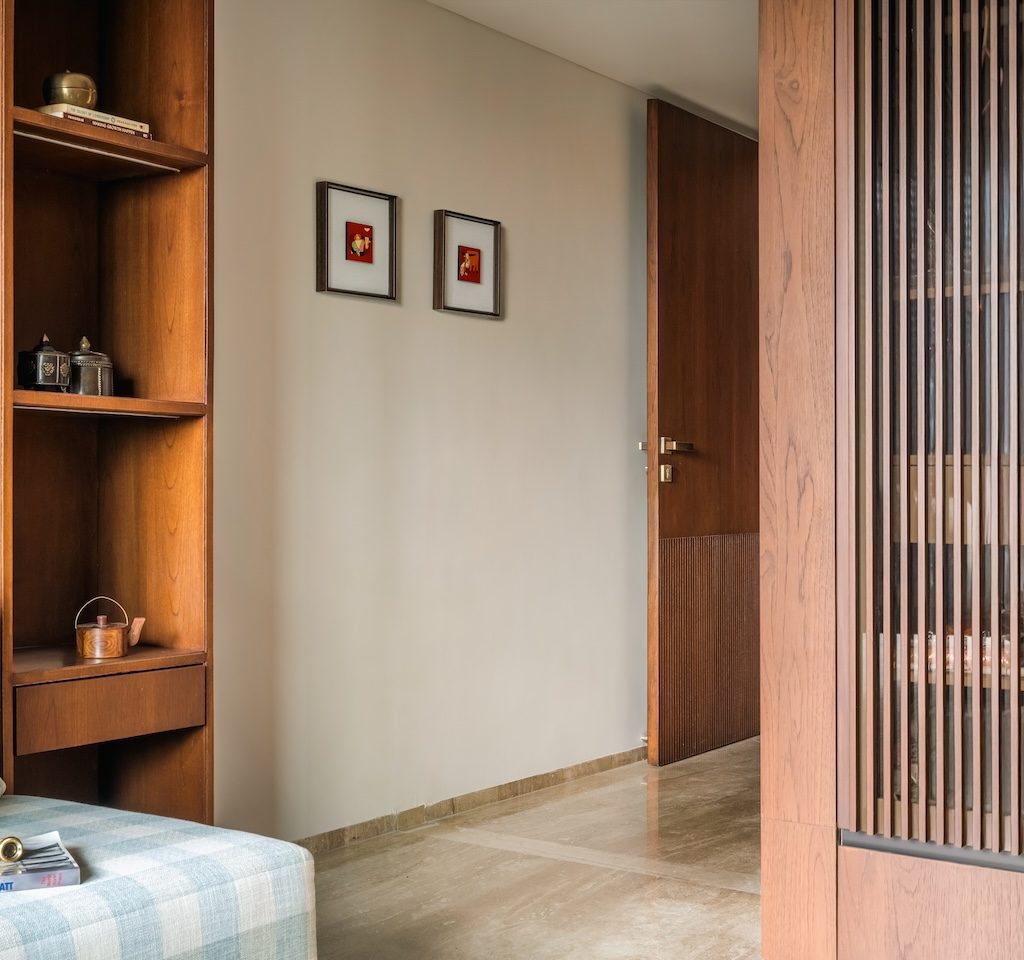
Tucked beside the television unit, the mandir remains concealed behind wooden pocket doors. When drawn open, it reveals a sacred alcove—intimate and composed, present without spectacle. Folded seamlessly into the larger living space, it reflects a spirituality that coexists gently with daily life rather than standing apart from it.
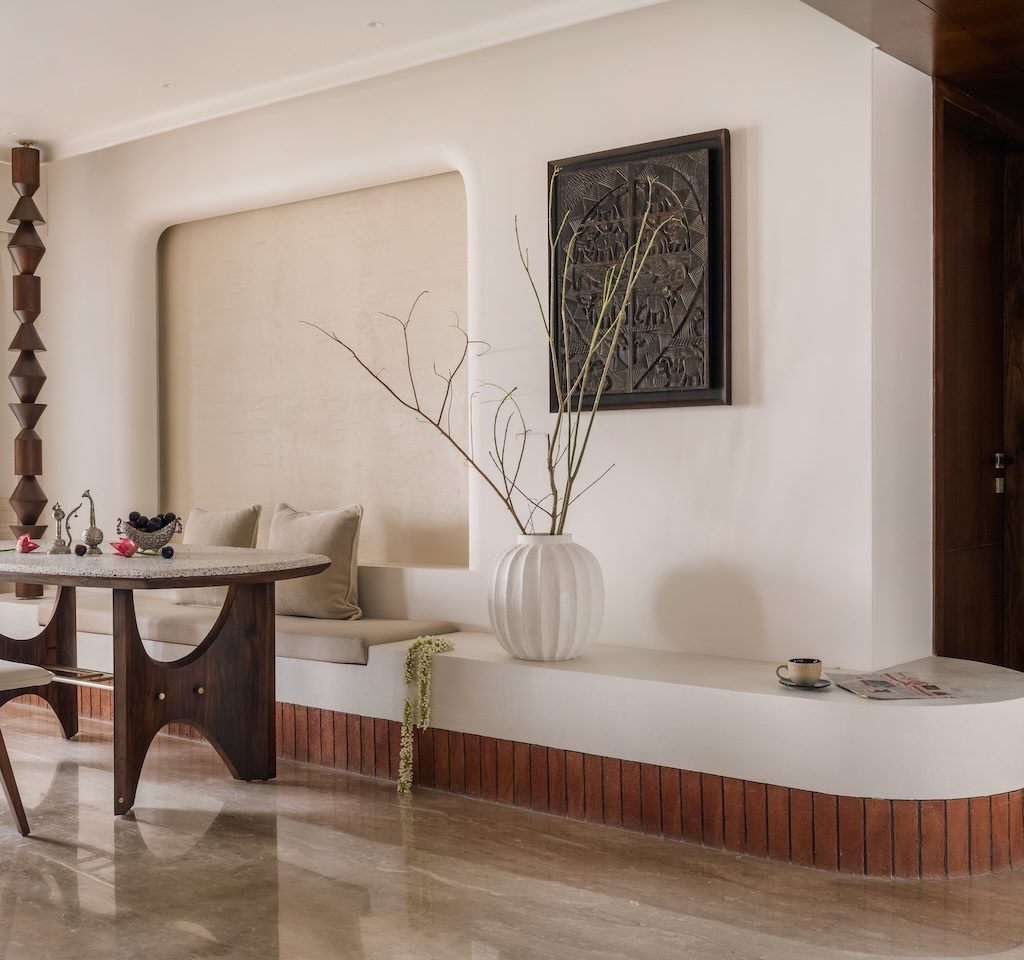
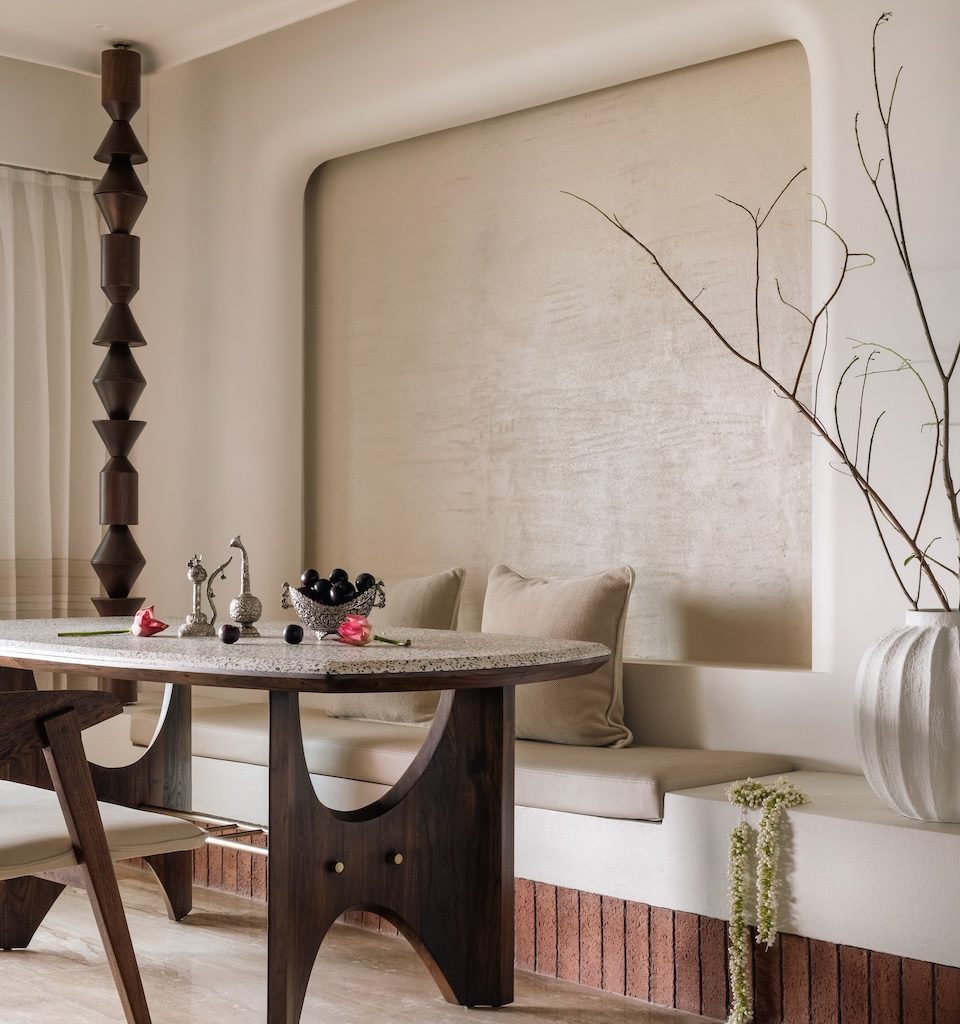
The dining area extends fluidly from the living room, maintaining visual continuity while introducing its own character. A long wooden bench runs along the wall and beyond the dining table, carving out a secondary pocket for leisure—suited to coffee, reading, or lingering conversation. Above it, a tribal artwork adds texture and depth. The dining table pairs chairs with the extended bench, striking a balance between comfort and refinement. The generous bench encourages guests to settle in, savour each course, and remain long after plates are cleared. Standing nearby, a reinterpreted totem inspired by South Indian wooden columns anchors the space—both sculptural presence and cultural reference woven into the rhythm of everyday living.
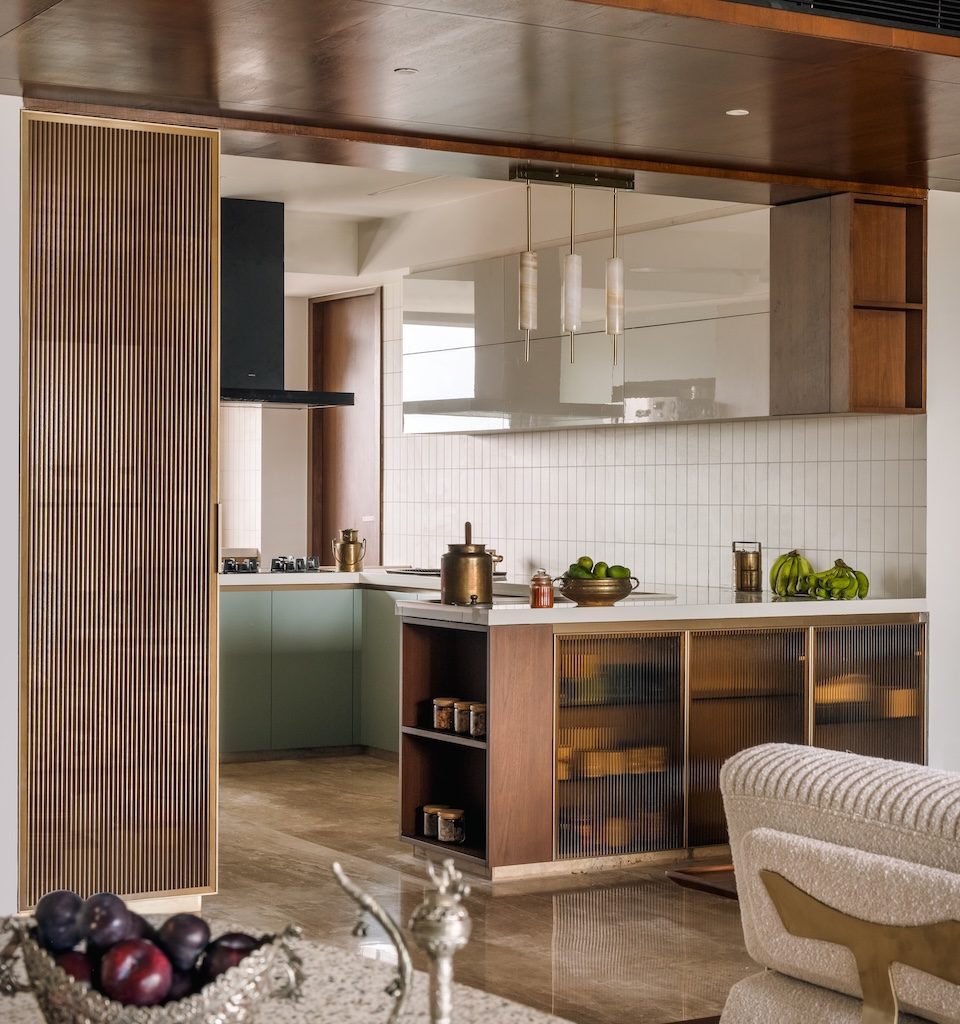
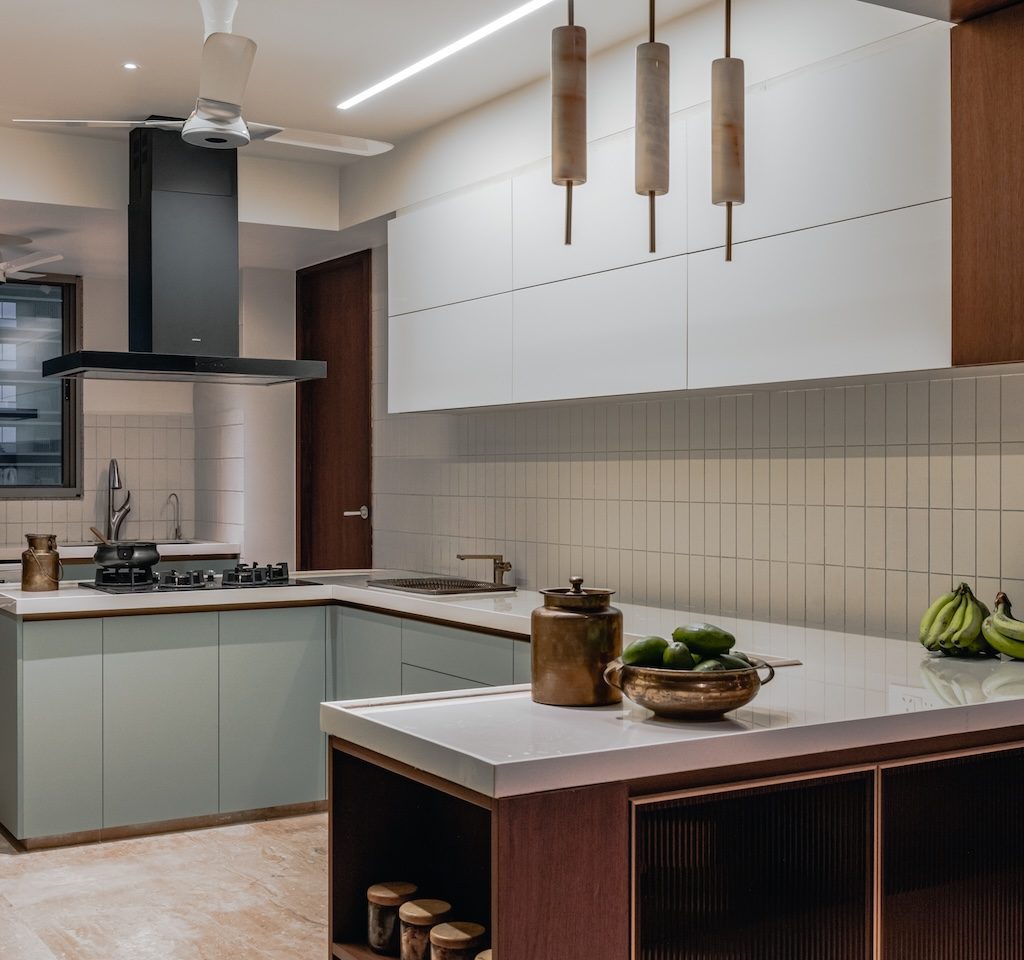
The kitchen was conceived as a space of connection, where cooking becomes a shared ritual rather than a solitary task. At its centre, two parallel islands structure the layout, allowing the couple to move with ease—chopping, stirring, and conversing without interruption. One island accommodates the hob and chimney, establishing it as the active core of both preparation and exchange, while the second functions as an expansive prep and serving counter. Integrated storage beneath ensures snacks and everyday essentials remain within effortless reach. Beyond the central workspace, a dedicated wet platform handles the more rigorous tasks of washing and cleaning.
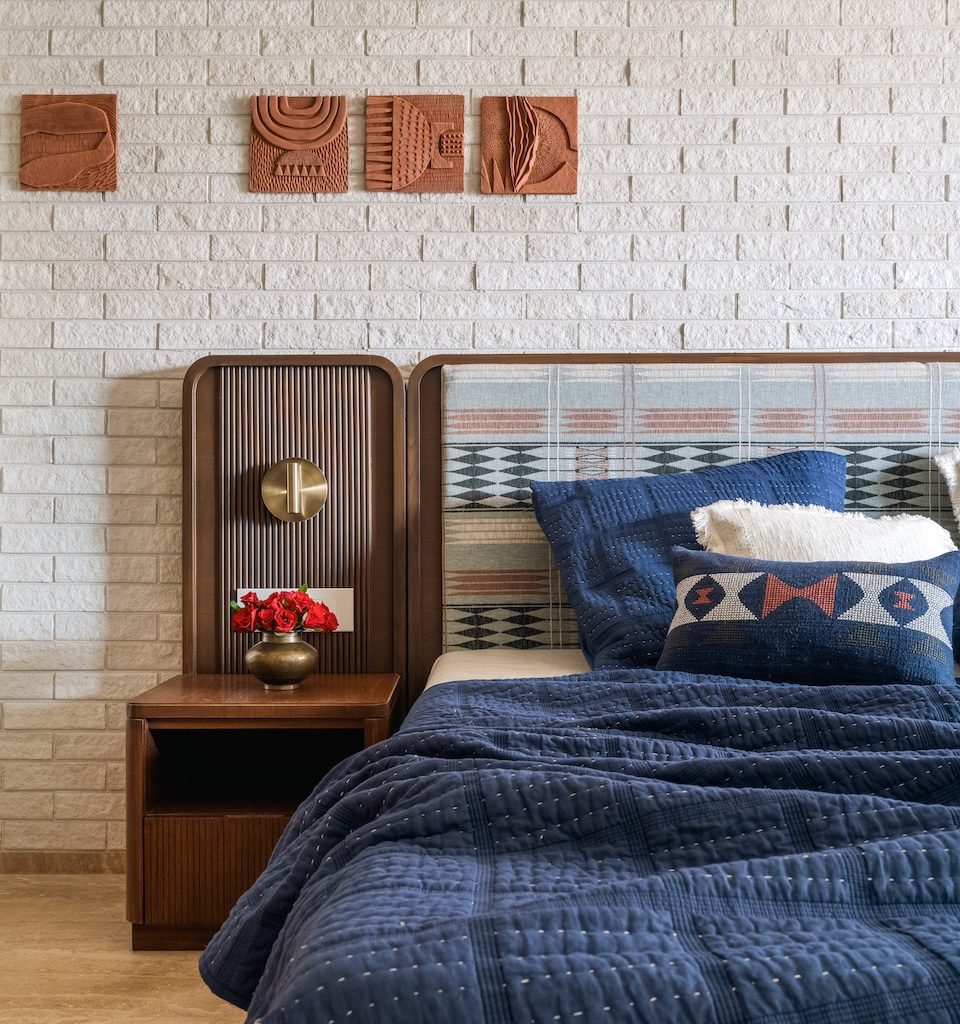
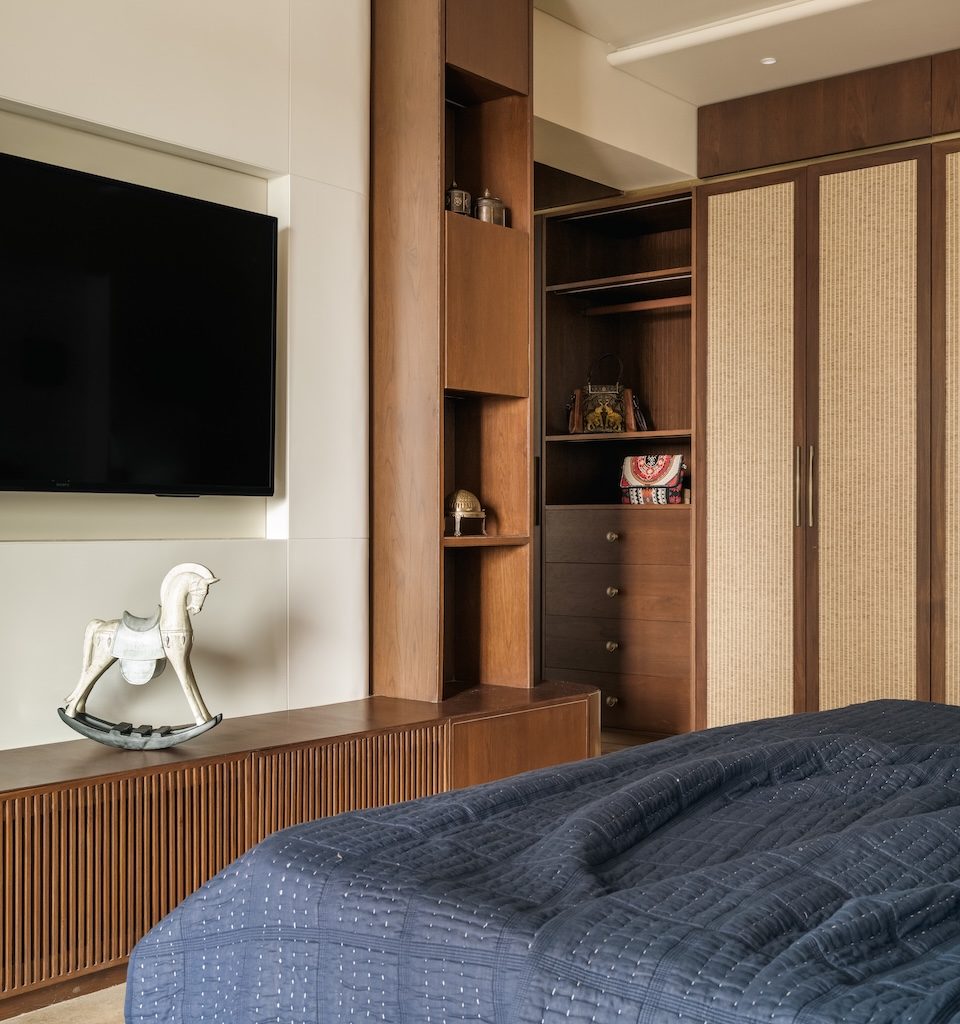
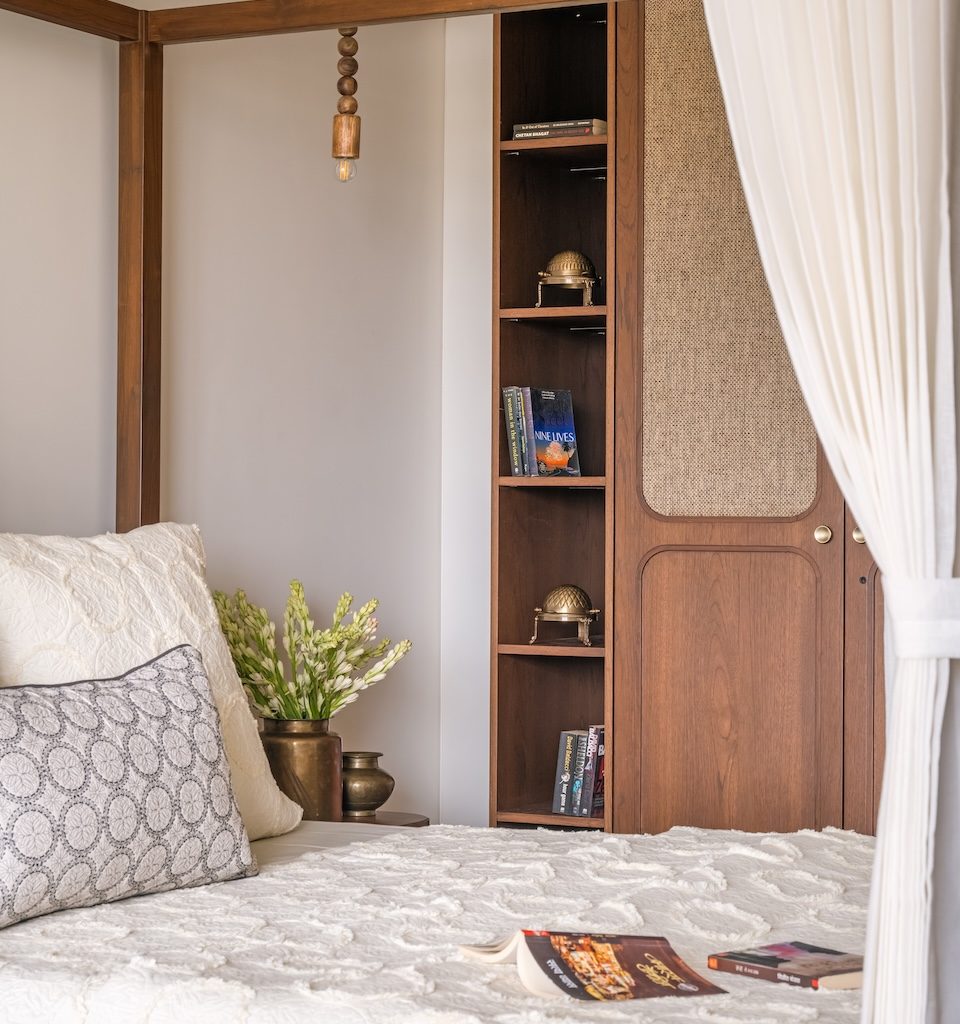
The warm and minimally-designed master bedroom features wood as a defining element. The bed here is framed by a woven headboard, and anchors the space with tactile warmth and subtle texture. Adjacent to the wardrobes, an open display unit offers space for daily essentials. The open bookshelf beside the bed accommodates a growing personal library, and a softly polished television unit that introduces sheen without drawing focus. A seating nook beside the French window creates a gentle pause within the room.
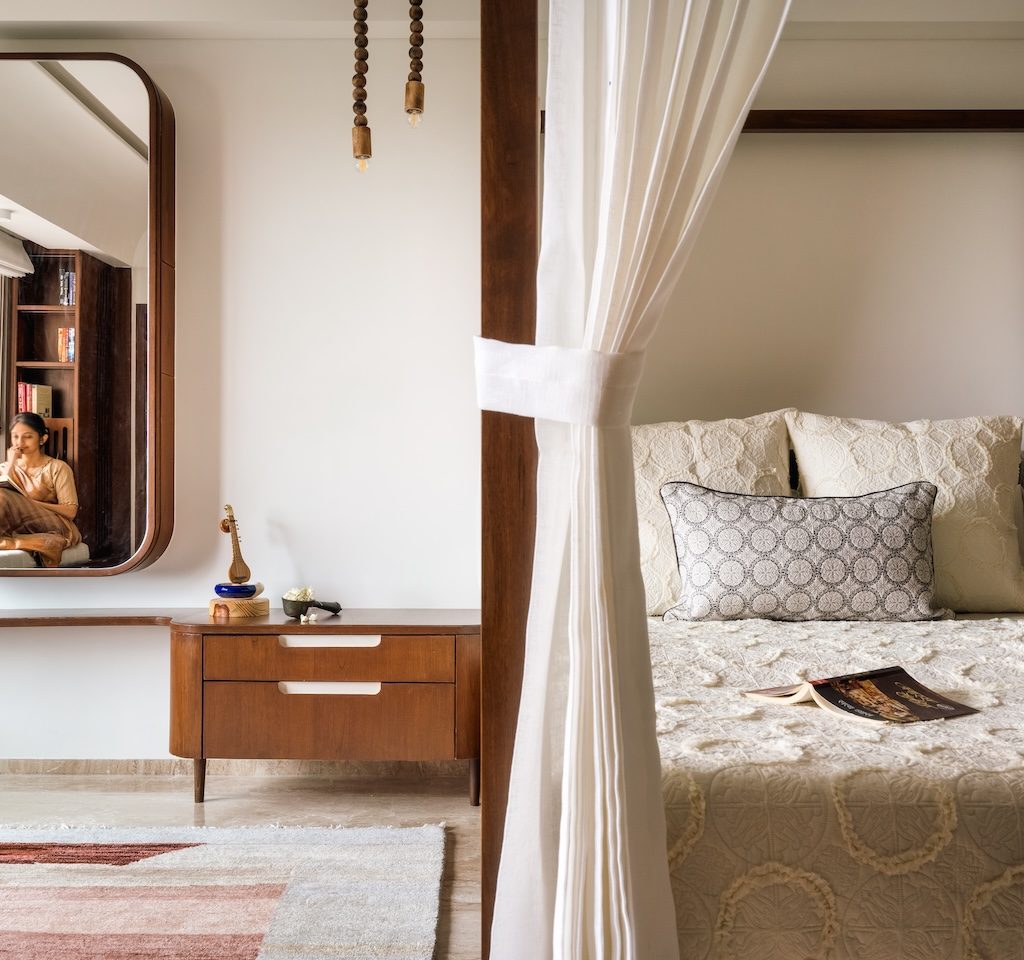
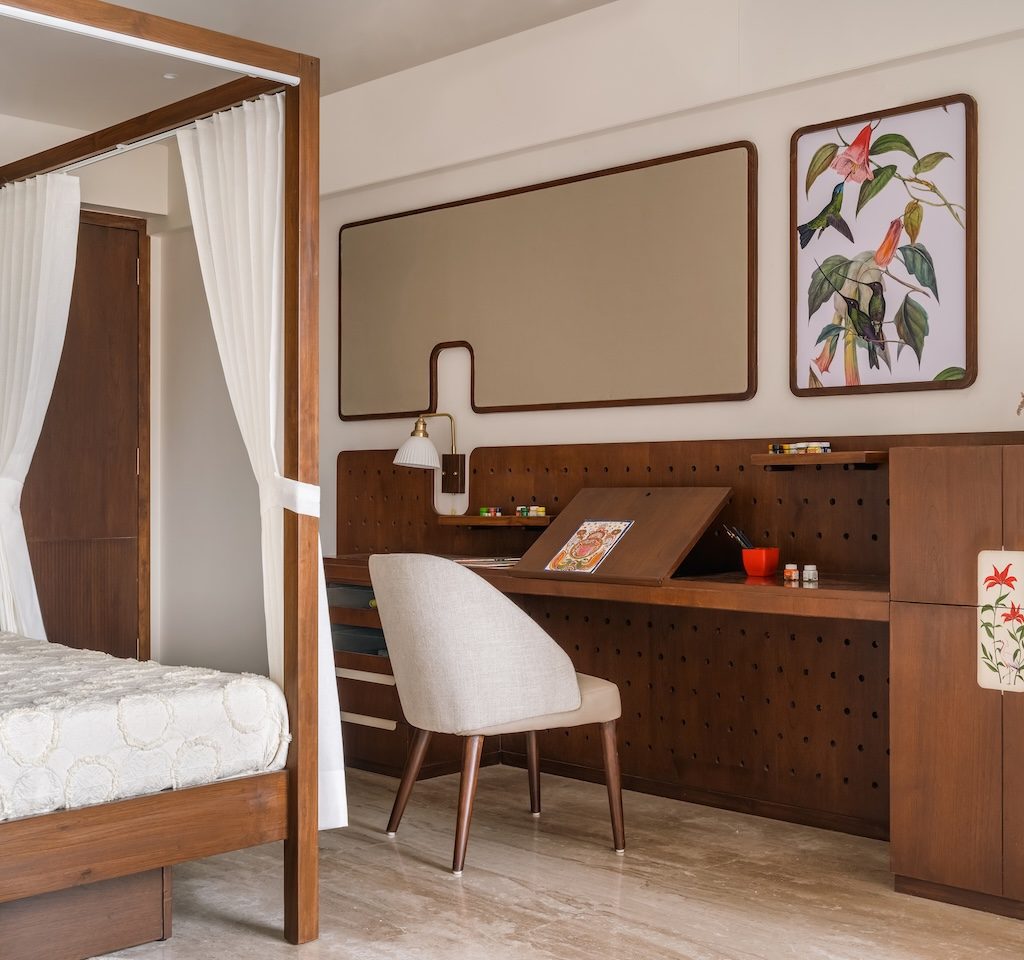
The daughter, a dancer and artist required a room that could accommodate both expression and focus. The design team intentionally preserved an open floor area in her room for practice, while a modular study supports her creative pursuits. The poster bed is positioned to leave uninterrupted space before the mirror, allowing her to rehearse freely without visual or physical obstruction.
The study table incorporates a fold-out section that transforms into an adjustable easel, adapting to her evolving artistic needs. Glass-fronted drawers within the desk display her art supplies, turning storage into a visual extension of her creativity. Above, movable peg shelves allow the layout to shift as her interests grow and change. Cabinet shutters beside the desk feature delicate hand-painted detailing around the handles, introducing a personalised touch to the space. The bay window seat, paired with a dedicated library unit, offers both open and concealed storage for her favourite books and collectables.
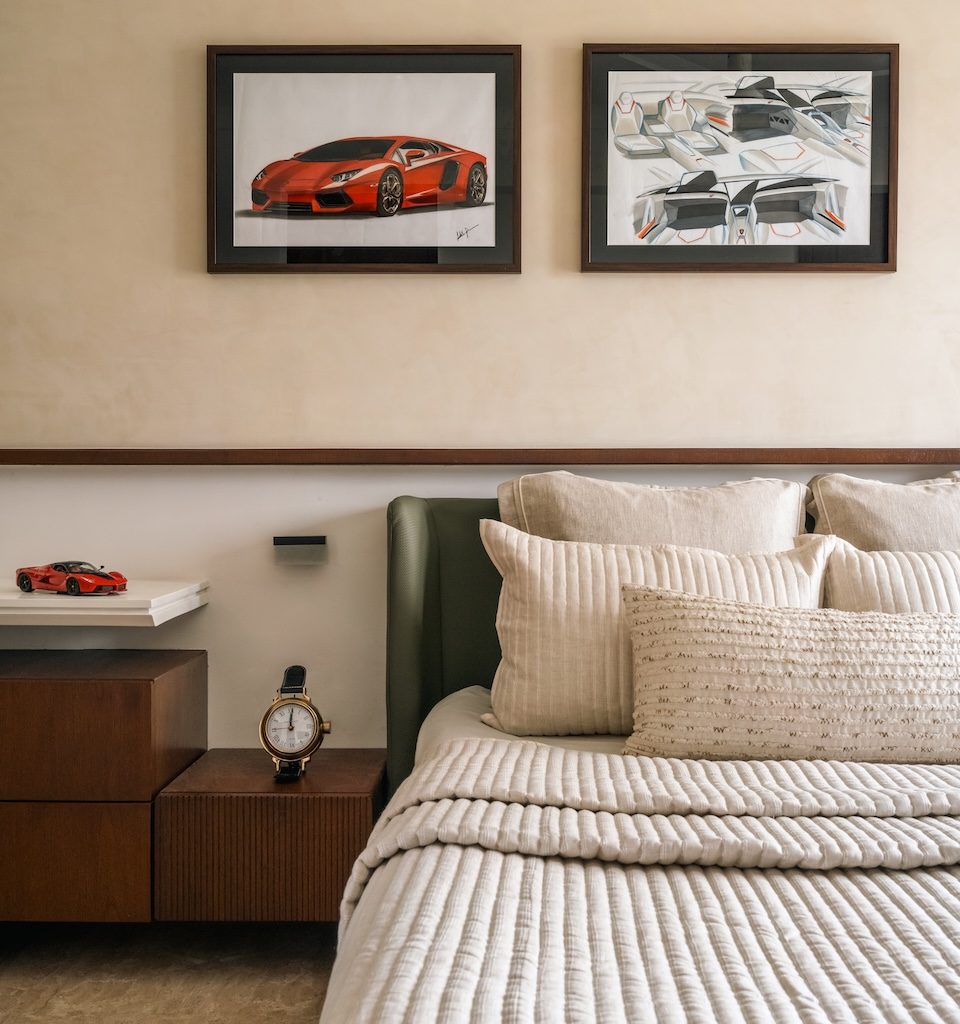
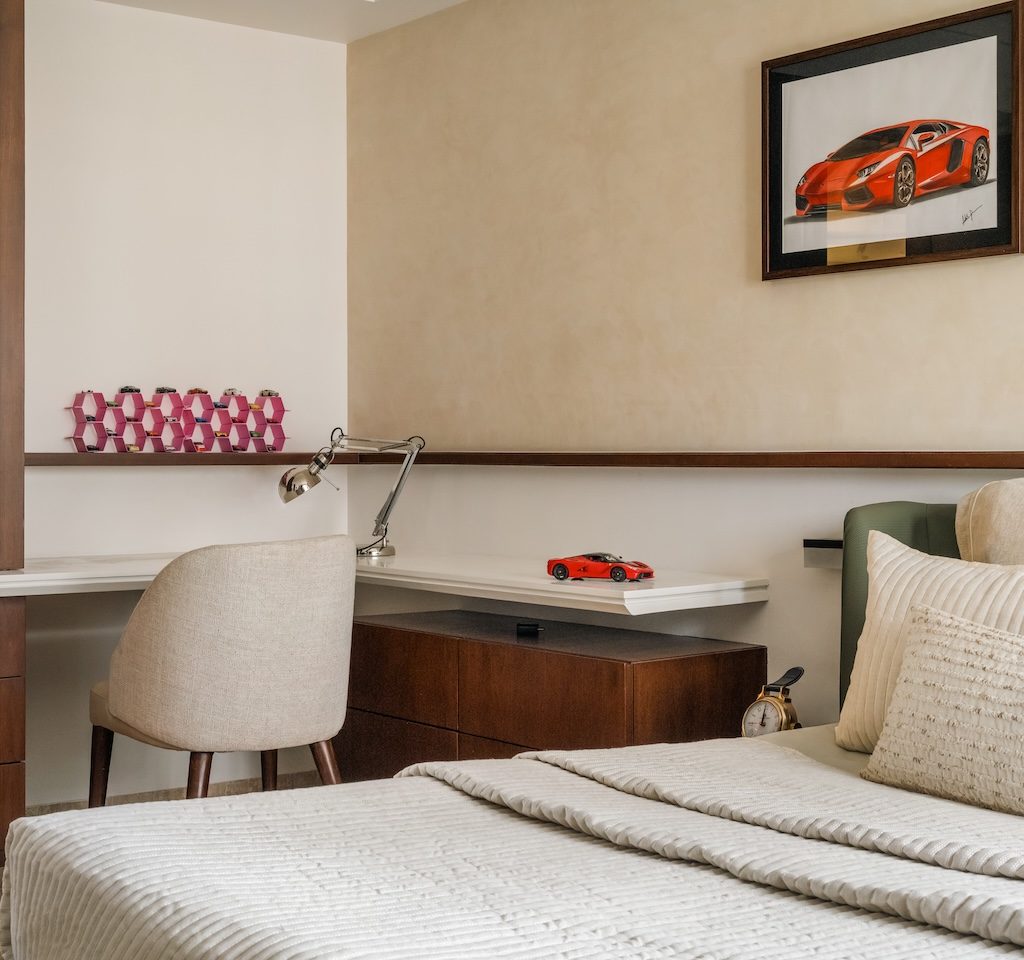
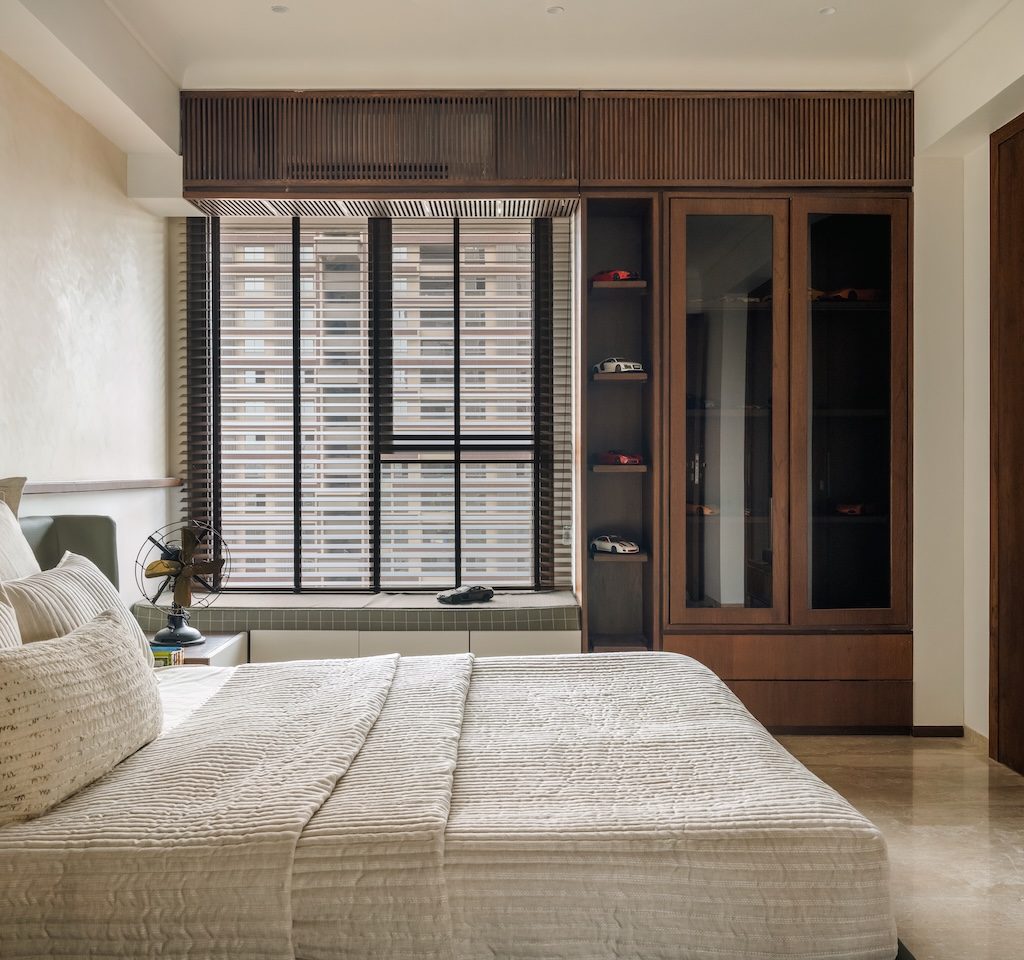
The son, an automobile designer, sought clarity and minimal distraction. His bedroom reflects that mindset—crisp, structured, and purpose-driven. Custom cabinetry lines one wall, thoughtfully designed to display the car models he has collected over the years. A mix of open and closed units, fitted with glass shutters and integrated lighting, ensures his collection is both protected and showcased with pride.
The study table extends into an L-shaped configuration beneath a wooden light strip that merges seamlessly into the adjoining wall, creating a focused workspace without visual clutter. Beside the bed, a compact side table with integrated pockets accommodates books and chargers, maintaining the room’s streamlined aesthetic. Above the bed, two early hand-sketched drawings from his design school days are framed and displayed—subtle yet meaningful markers of his journey.
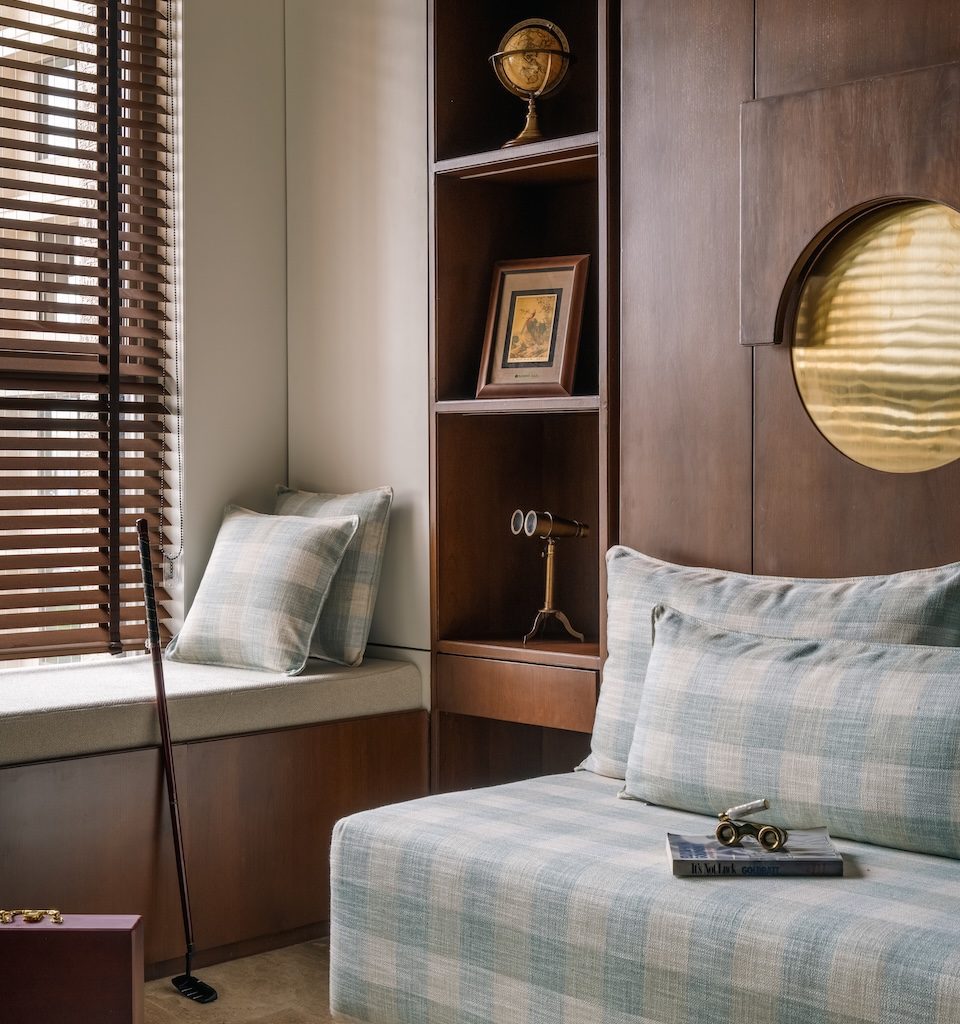
What was initially conceived as a guest bedroom gradually transformed into a multi-functional family study. The husband envisioned a dedicated reading corner alongside a workspace of his own, leading to the introduction of an L-shaped wooden desk fitted with adjustable pegs and shelving—a system designed to evolve with his needs.
A Murphy bed concealed behind the sofa wall preserves the room’s adaptability, allowing it to shift effortlessly between functions. At different times, it serves as a relaxed television lounge, a focused work-from-home nook, a reading retreat, or a welcoming guest room. Here too, the bay window holds a shelf for collectibles, while the sofa opens its arms for those moments of retreat.
Fact File
Project: Antaraa
Location: Ahmedabad, Gujarat
Area: 2,450 sq ft
Principal designer: Shweta Jain
Stylist: Saniya Tadha
Add a Comment