
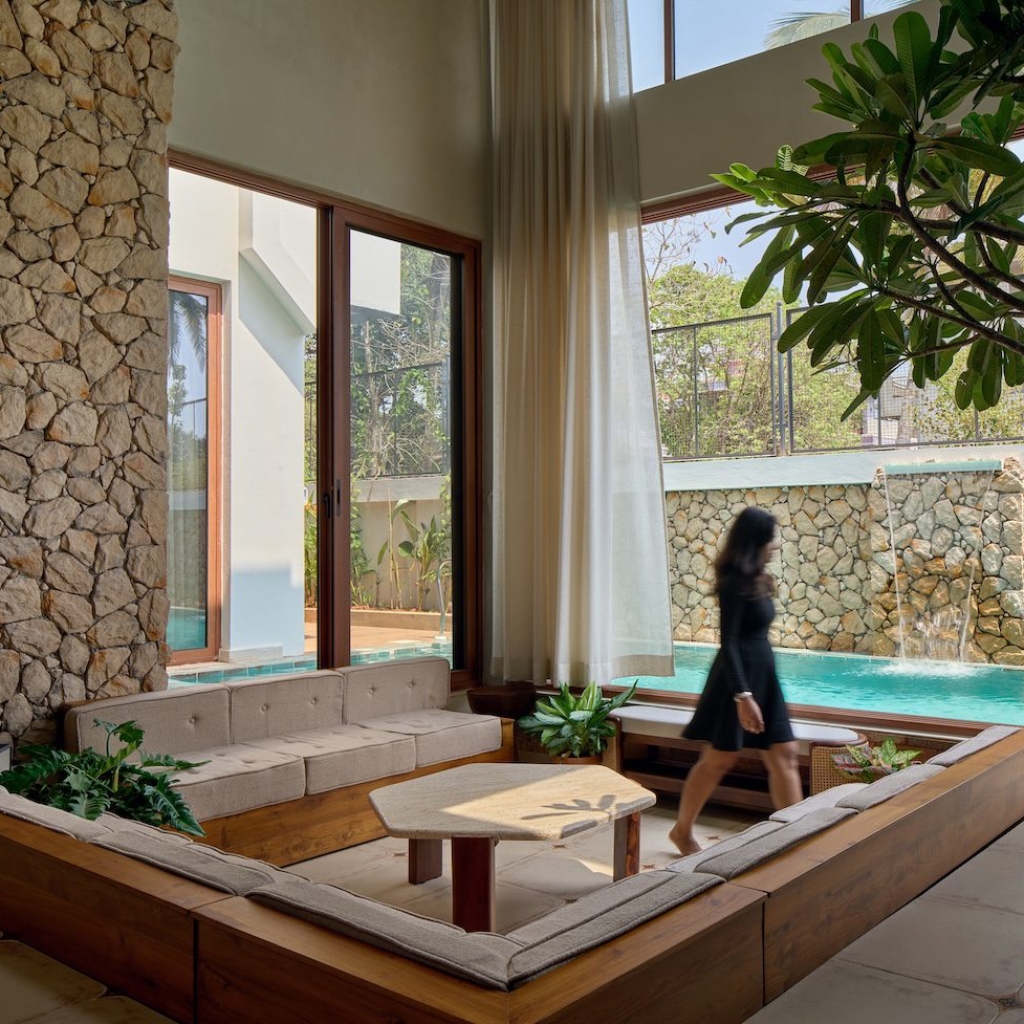
Designed by Studio Tilt in Varca, this four-bedroom villa reimagines tropical living through light, water, and layered volumes. Conceived for a family of four, the home draws subtle Balinese influences into a climate-responsive framework rooted in its coastal setting.
Curated by: Deepa Nair
Photographs: Manthan Yadav; courtesy Studio Tilt
The site
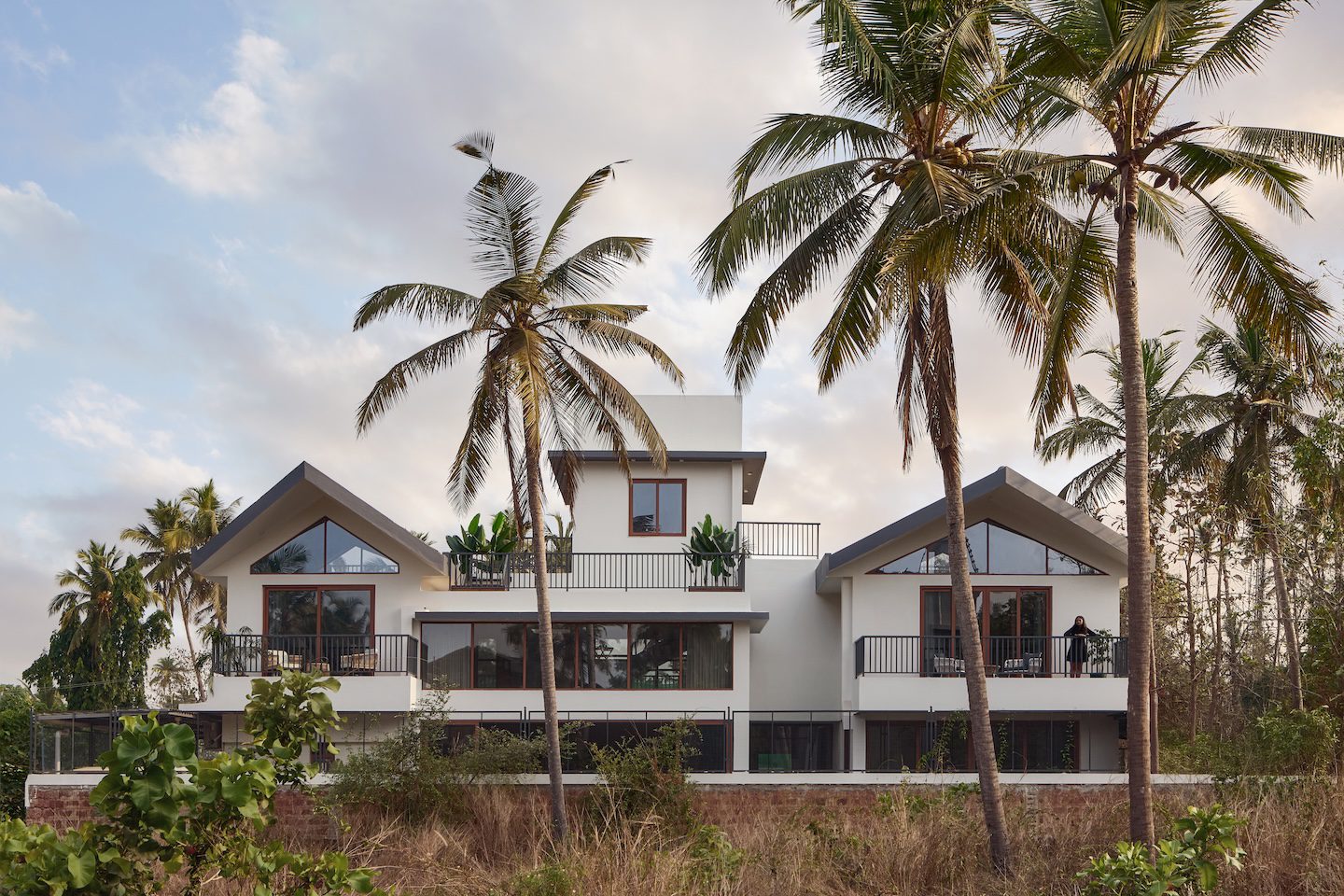
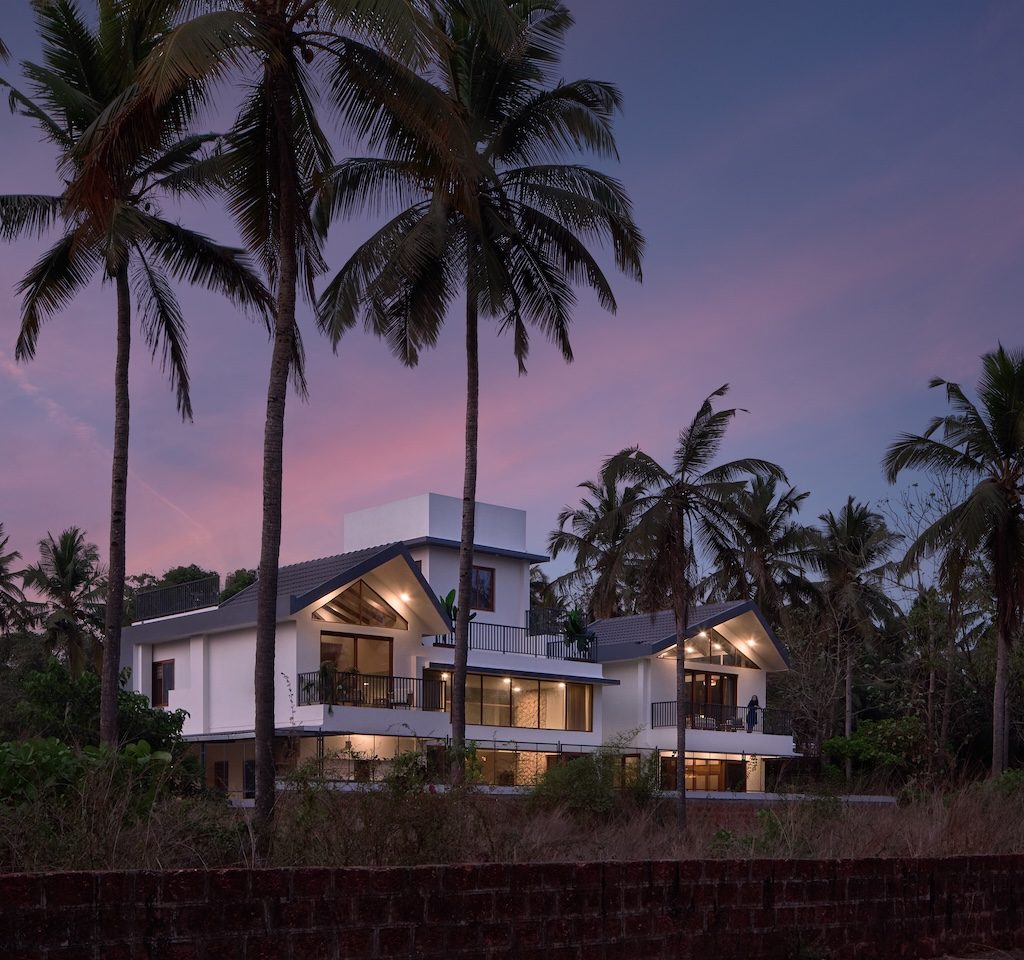
Designed by Studio Tilt, this four-bedroom villa in Varca—christened A Slice of Ubud (after the Balinese town known for its tropical architecture)—reimagines coastal living for a family of four and their feline companion. Chosen by a retired colonel as his post-service home, the site offered open views on all sides, allowing the architecture to unfold with a strong connection to its lush Goan setting.
The brief
The family approached Studio Tilt with a clear aspiration: they wanted a home that carried a distinct “wow” factor.
The design intent
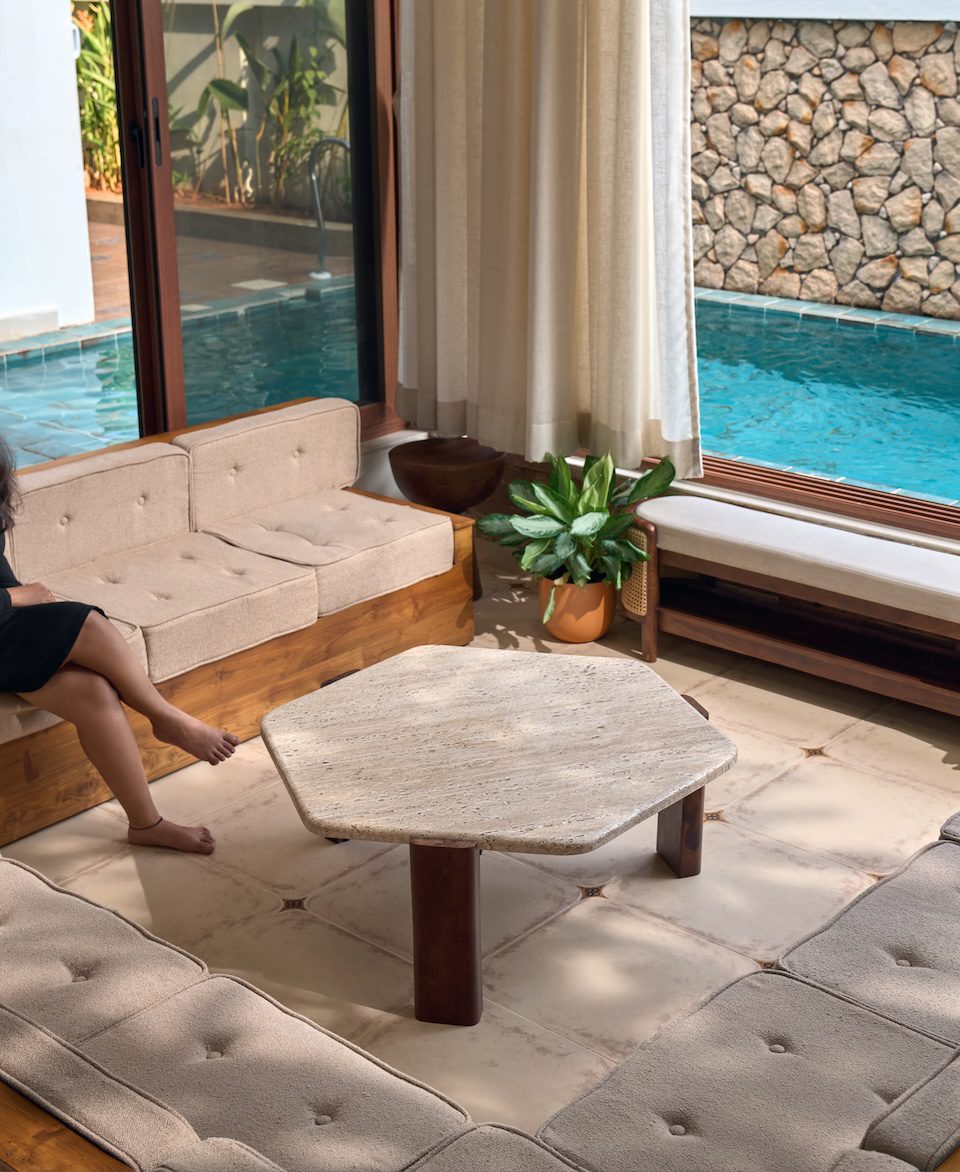
For Studio Tilt, being nature-centric is not a stylistic choice but a fundamental principle. This alignment shaped the direction of the project. “Rather than imposing a statement structure, the design evolved as a tropical residence informed by subtle Balinese influences—one where nature is not an accessory but the central design force. The architecture deliberately dissolves boundaries between built form and environment, ensuring that water, greenery, air, and light remain constant companions to daily life,” explains Abhijit Sawant, principal architect, Studio Tilt.
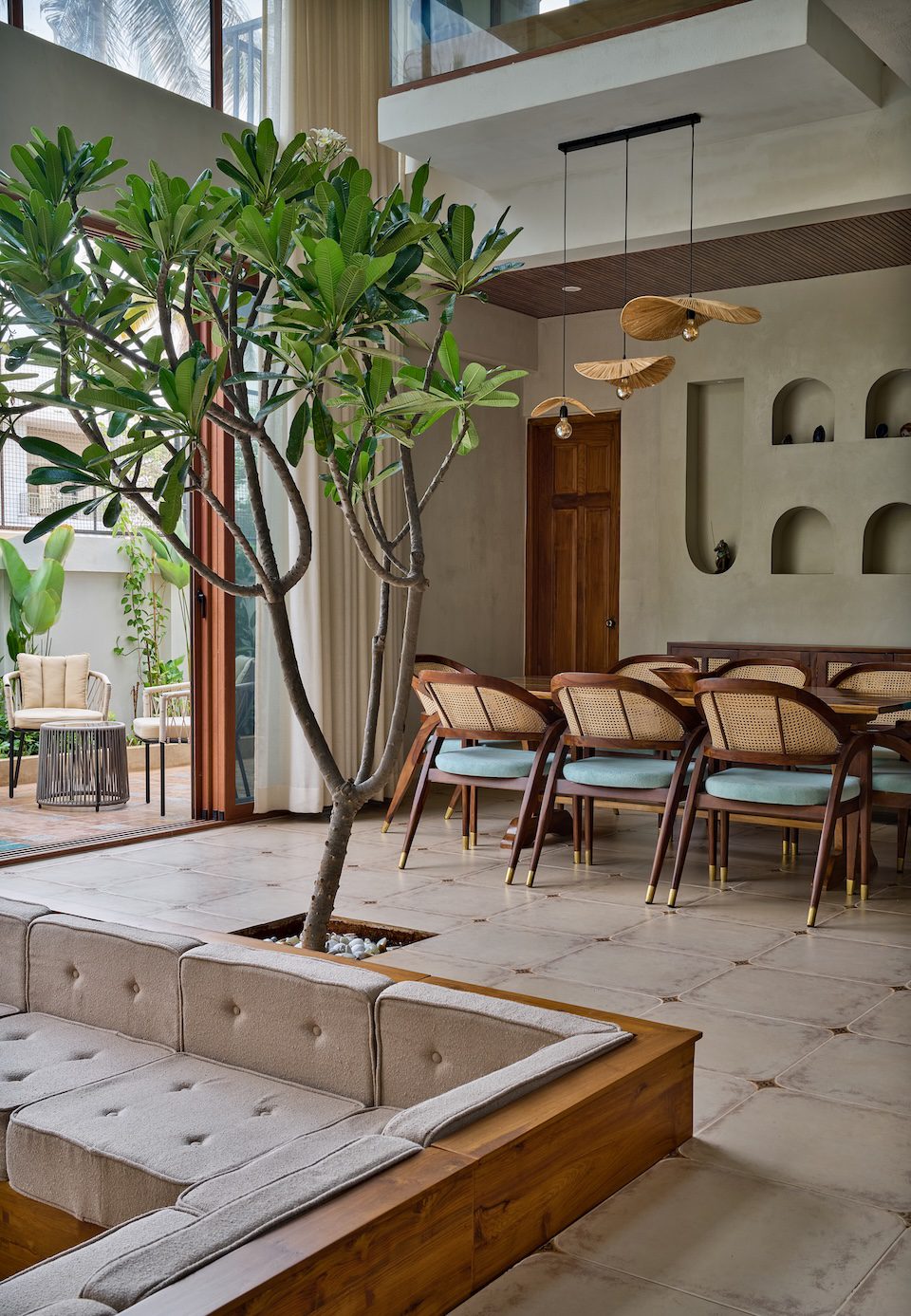
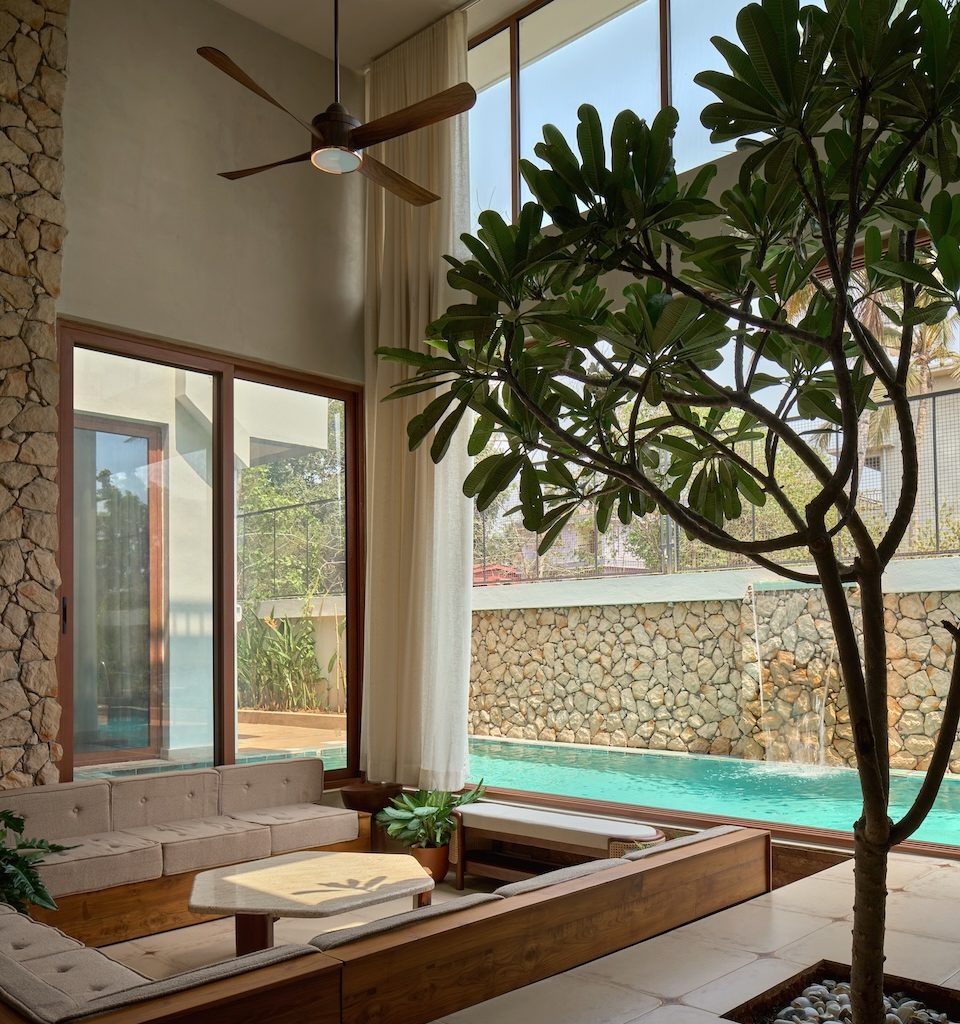
“The villa is conceived to maximise natural light, with expansive windows and generous ceiling heights allowing daylight to penetrate deep into the interiors. Spatial planning was guided by a desire to create continuous visual and physical engagement with the landscape. A water body extends into the layout itself, while a mature tree rises from within the home—not as ornamental gestures, but as integral spatial elements, adds Natasha Kumar, principal architect, Studio Tilt.
The spatial configuration
The villa adopts an open layout organised around a clear spatial hierarchy. The central spine is dedicated to common areas—living, dining, and kitchen—forming the social heart of the home. From here, the plan extends outward to the more private zones, ensuring both connection and separation within the same framework.
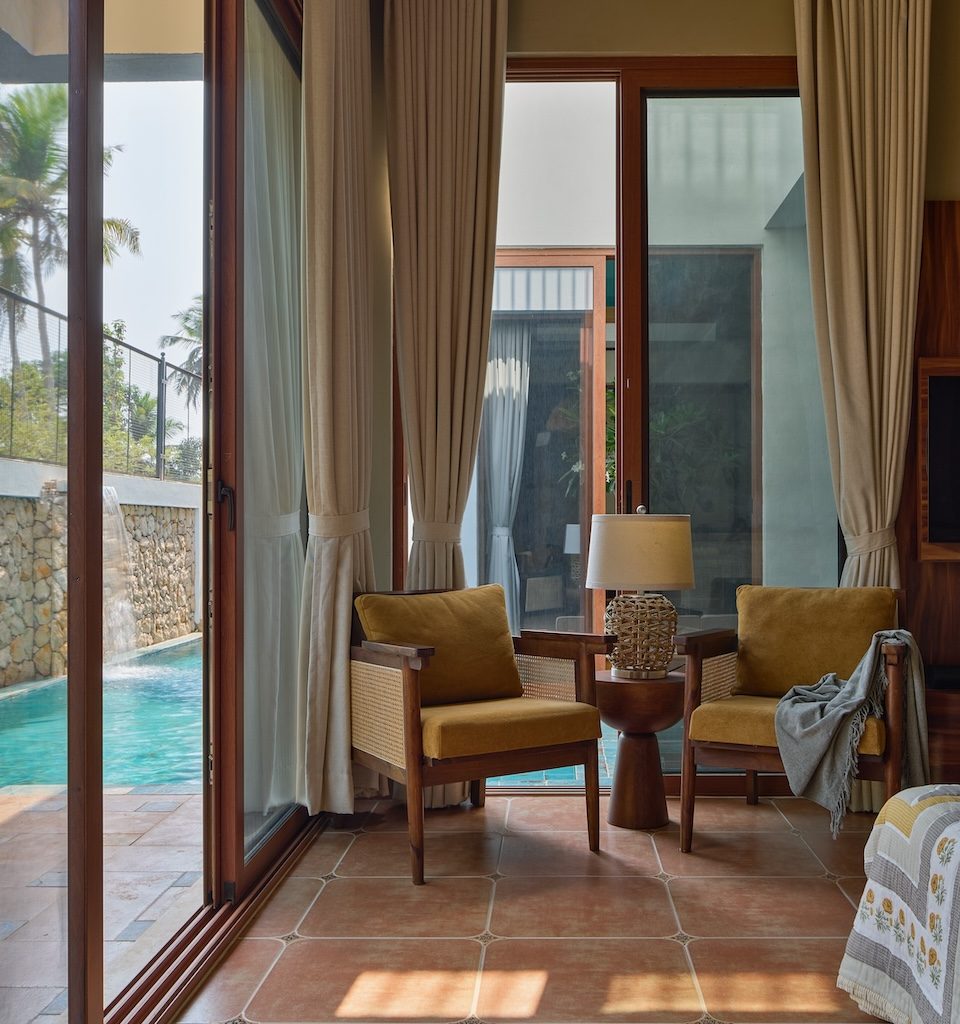
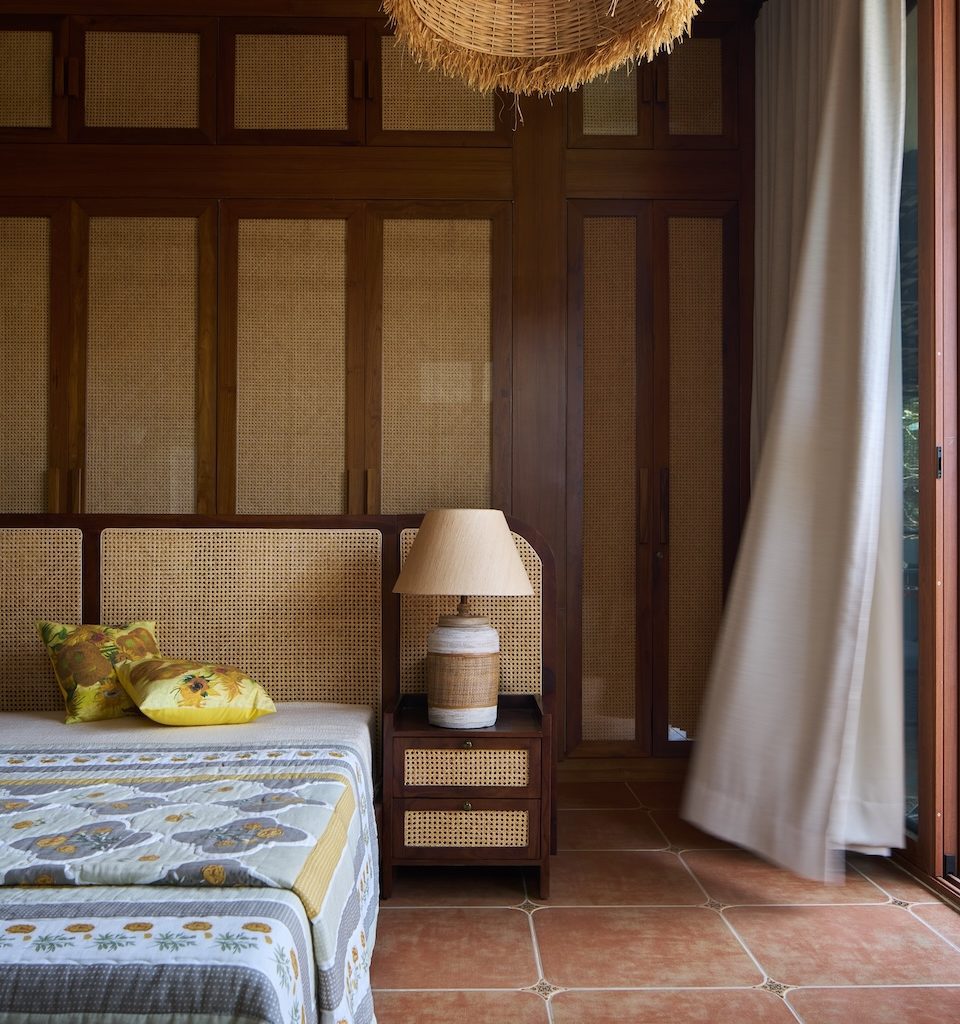
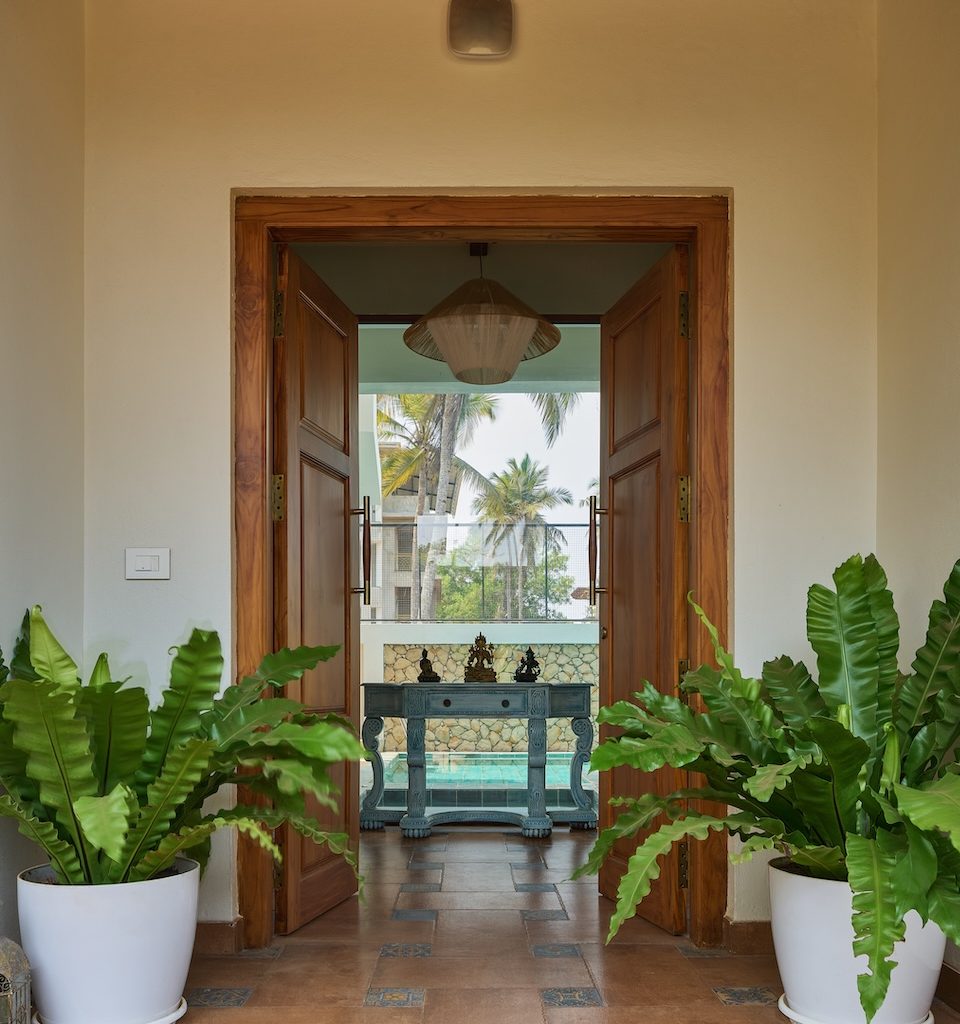
The entry sequence is carefully choreographed, with the pool acting as a striking visual anchor upon arrival. This central body of water extends into the layout, subtly dividing yet visually linking different functions. On one side, the double-height living and dining spaces unfold beneath generous volumes, while on the other, the master suite enjoys a more intimate positioning, separated yet never isolated. The open kitchen, anchored by a breakfast table adjoining the dining area, reinforces the studio’s belief in connected living.
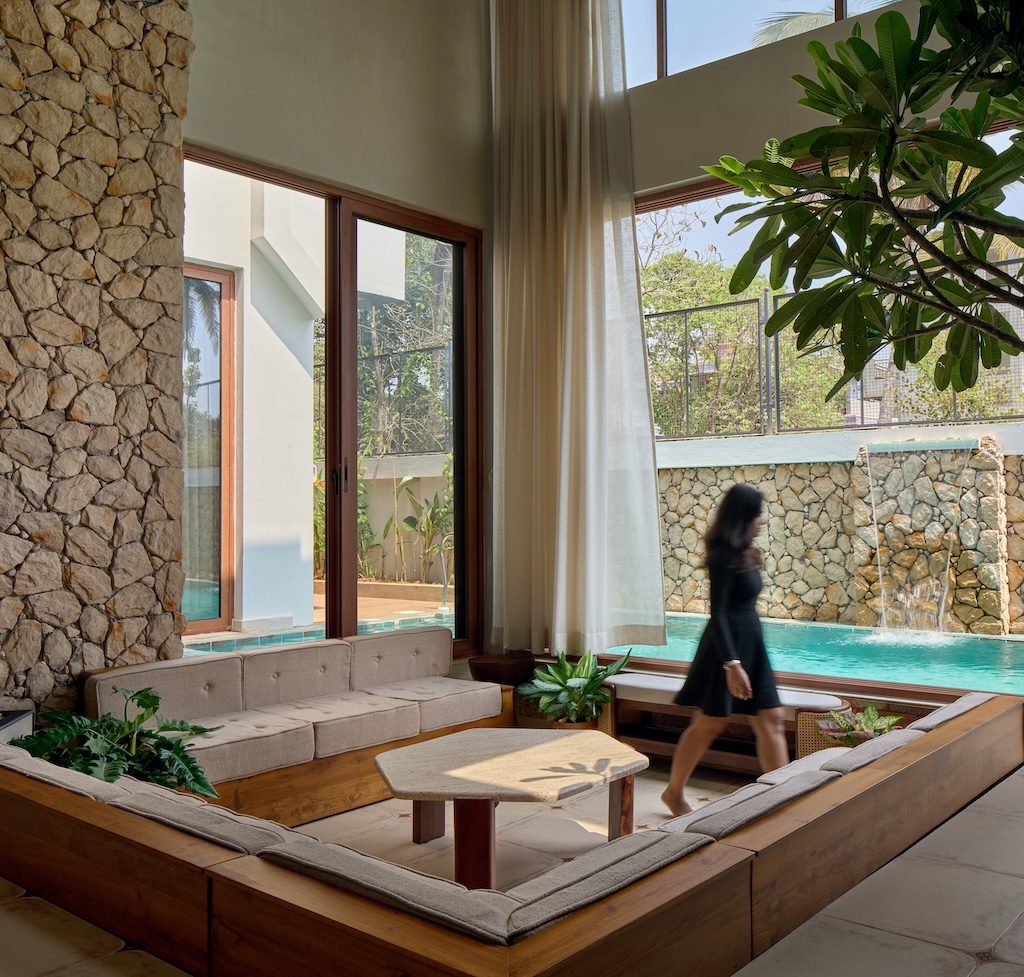
At the rear, the pool and adjoining jacuzzi extend into the plan, forming a striking architectural gesture. Rather than remaining peripheral, the water body penetrates the layout, separating the living areas from the master suite while maintaining visual continuity. With windows aligned across both zones, the relationship between spaces remains fluid and uninterrupted.
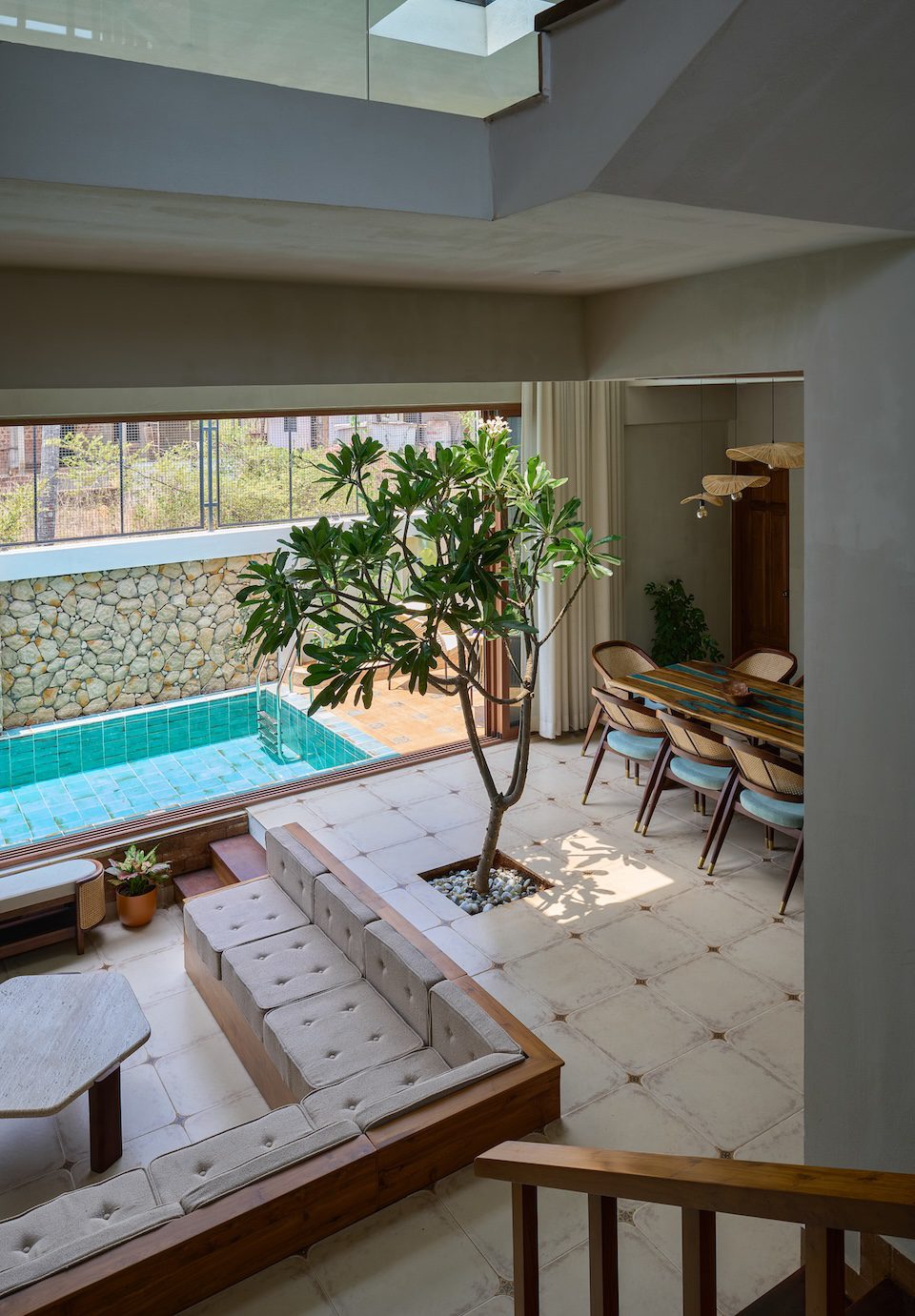
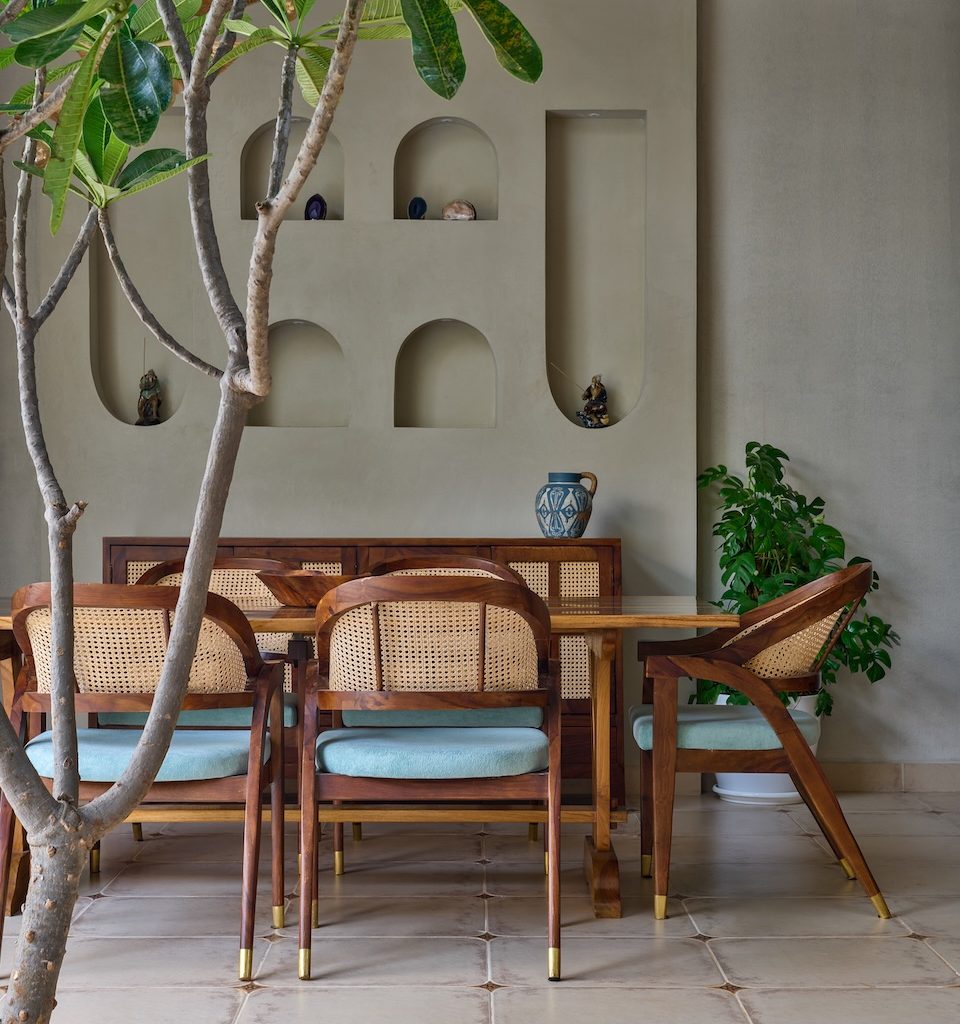
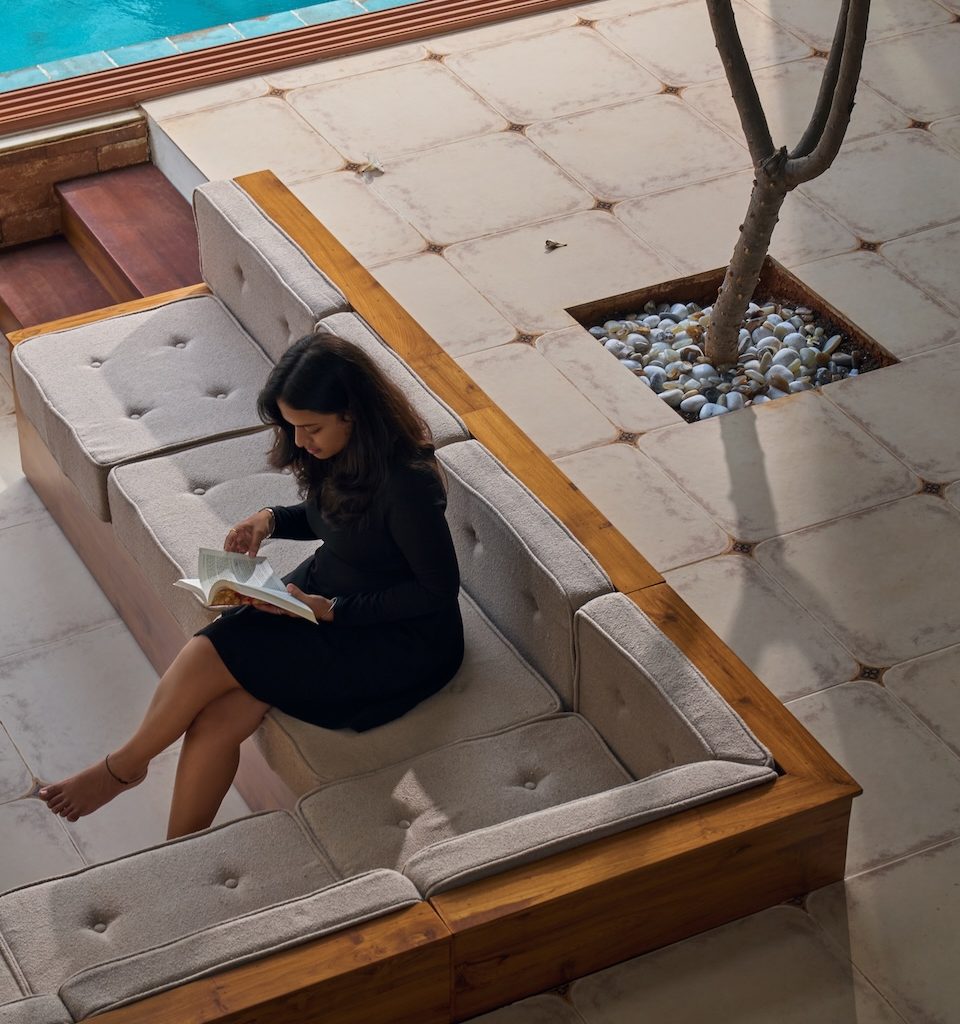
A Frangipani tree rises between the living and dining areas beneath a skylight, acting as a living spatial marker that anchors the interior to its tropical context. Natural light filters through the double-height volume, heightening the sense of vertical generosity. Subtle Balinese references—from overhanging eaves to the integration of water and inset living volumes—inform the architectural language without becoming literal.
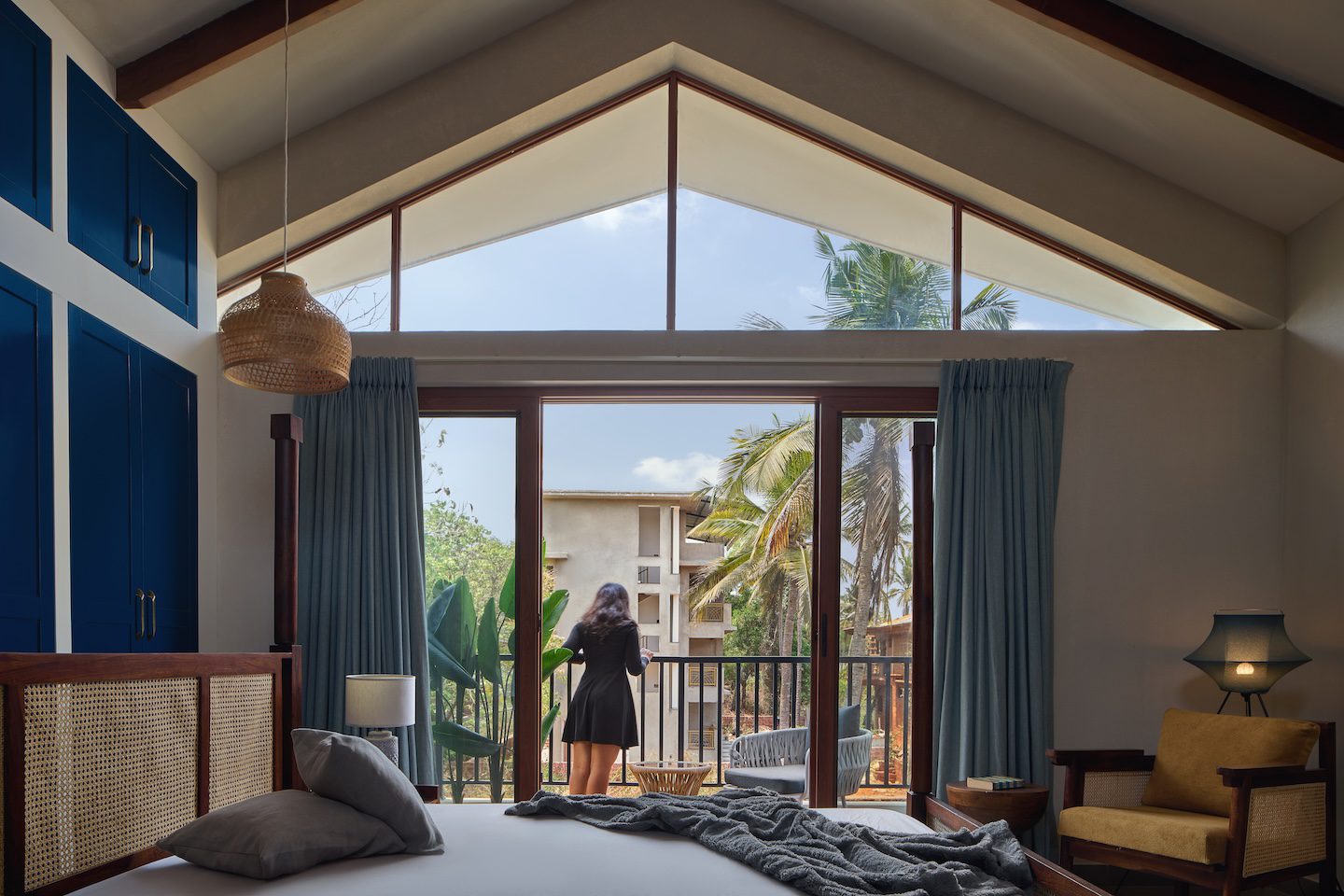
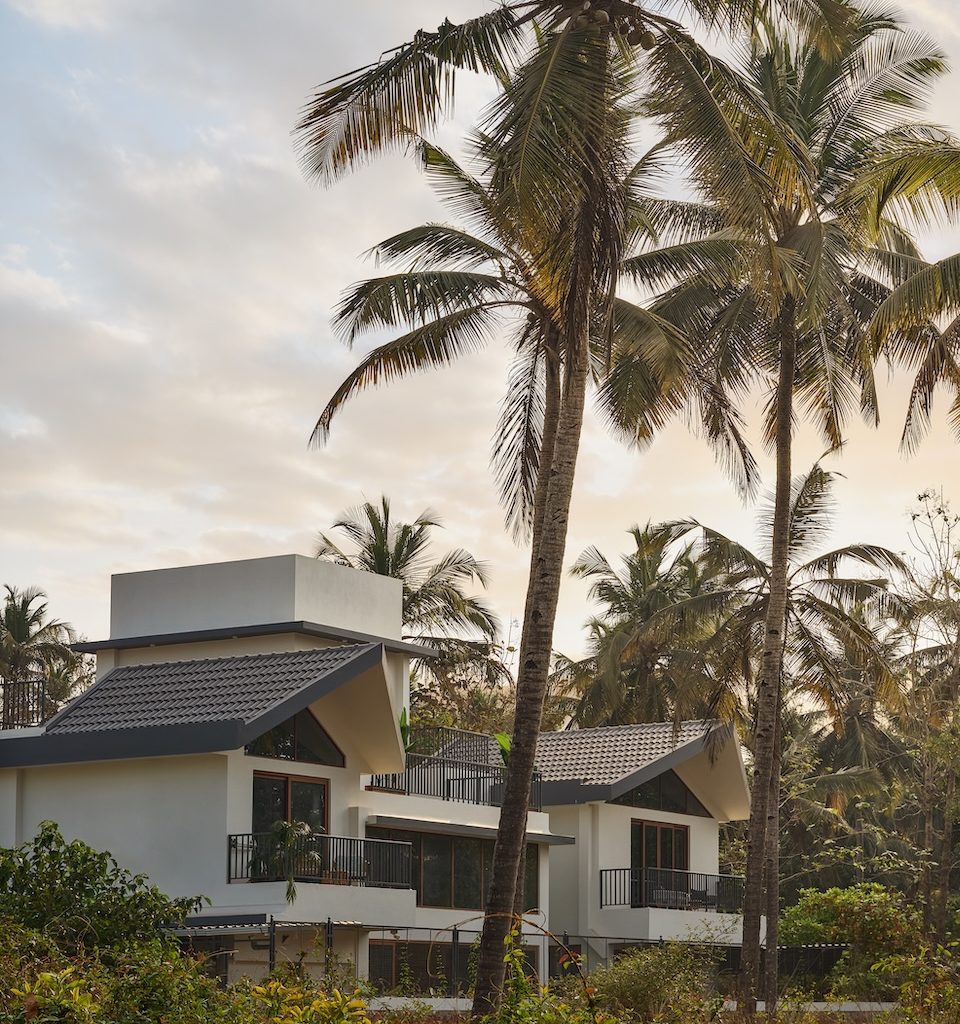
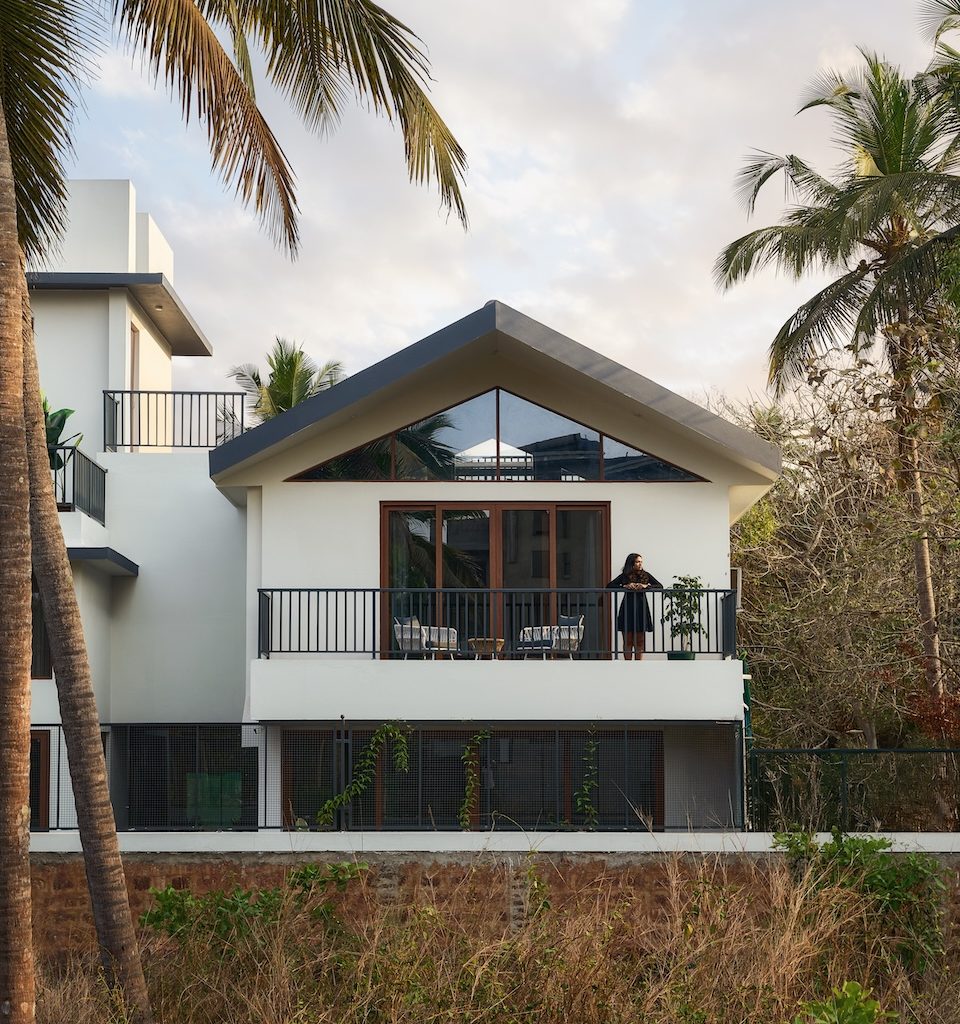
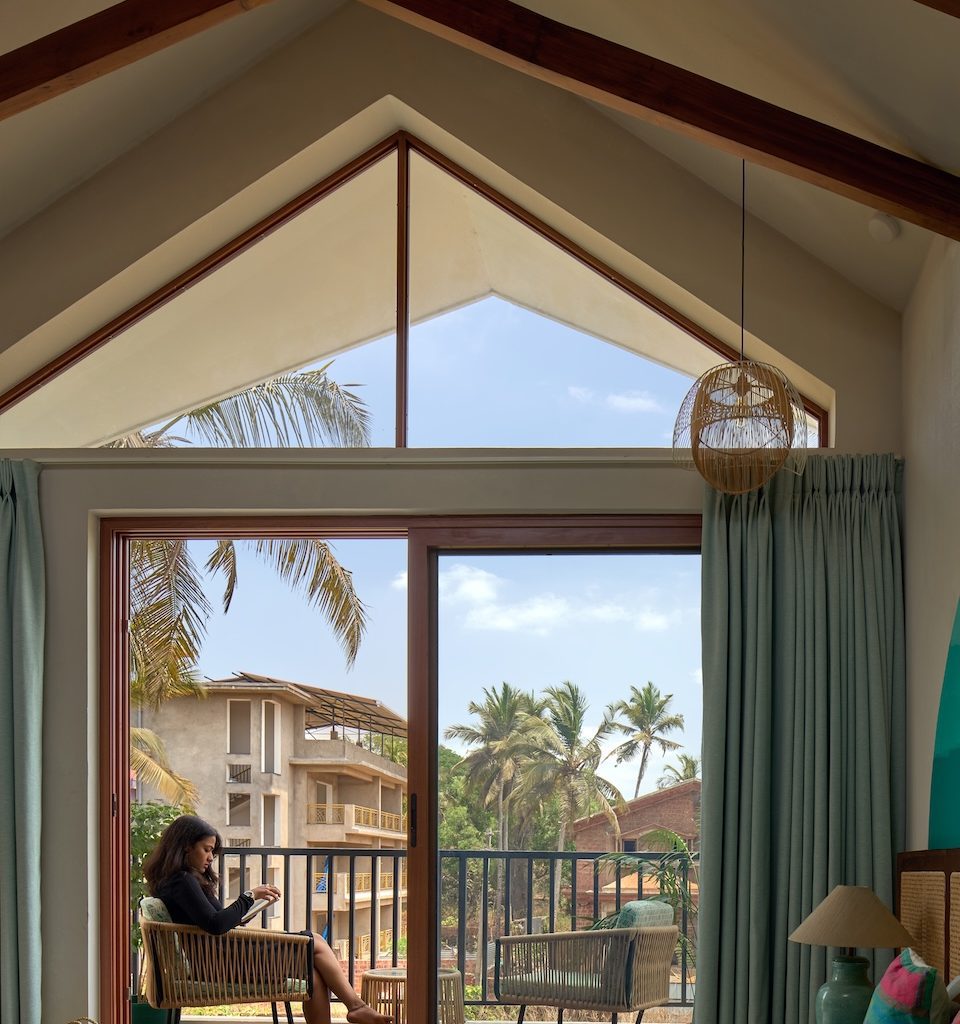
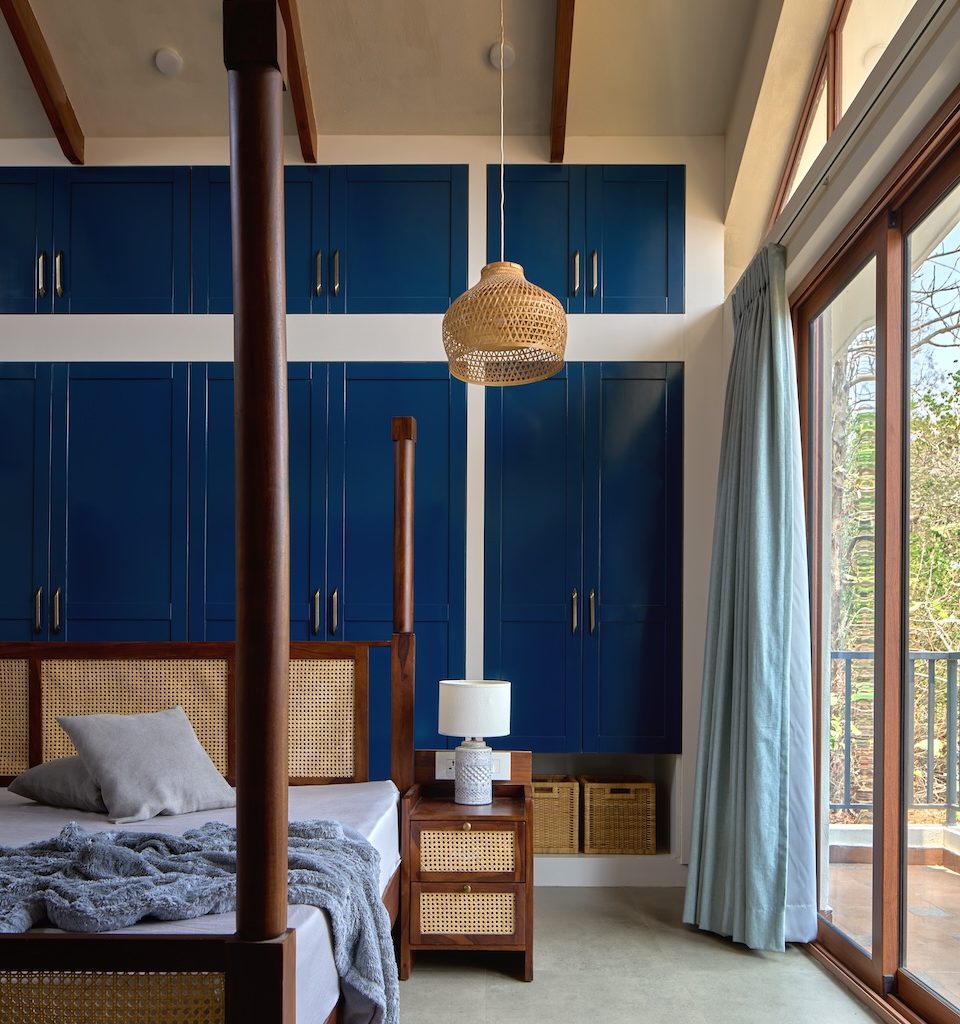
The upper level unfolds beneath dramatic triangular sloped eaves. A family lounge anchors the floor, with the children’s suites positioned at opposite ends to enhance privacy. Exposed rafters and triangular openings draw daylight deep into the interiors while articulating the architectural form.
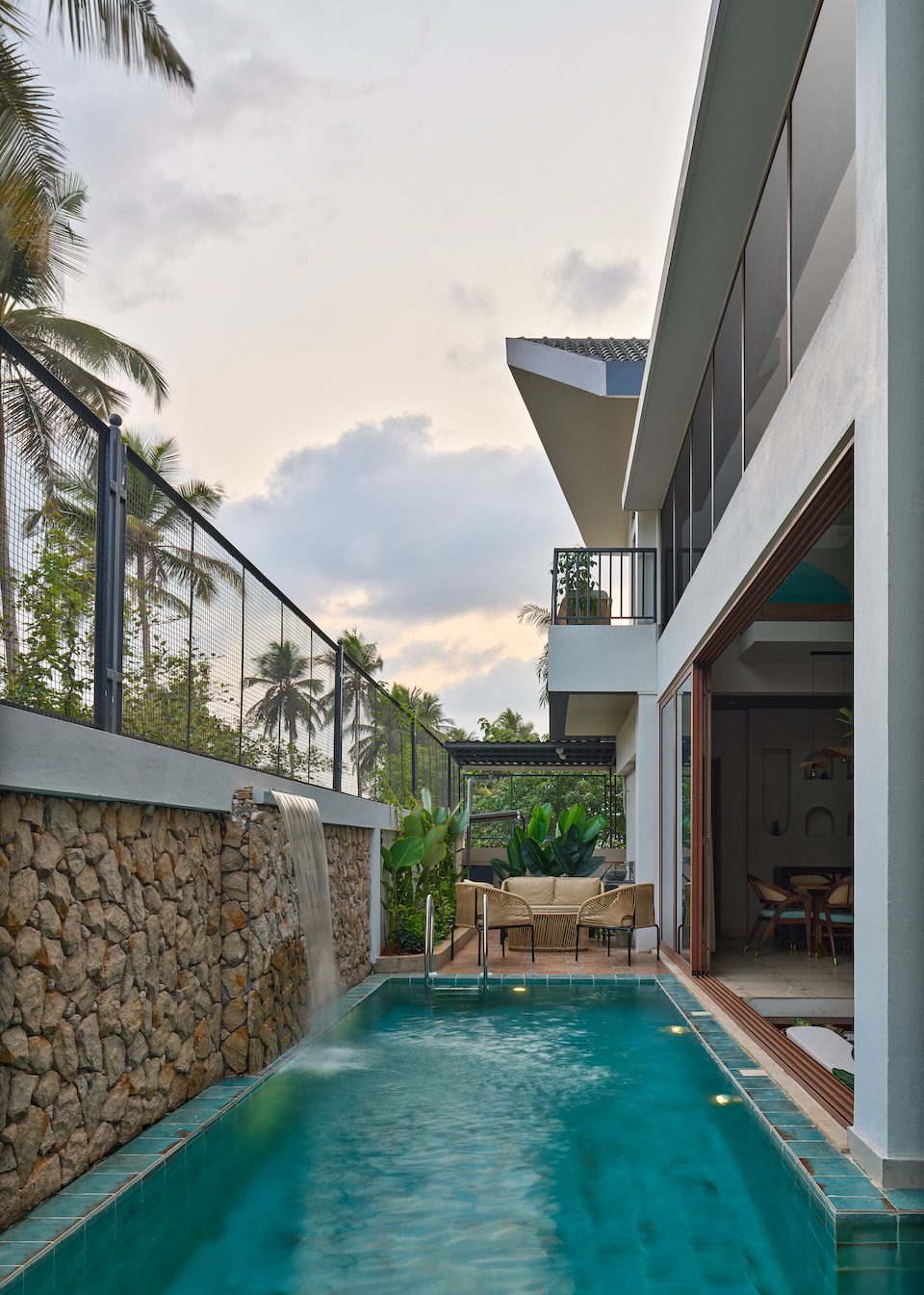
The villa’s north–south orientation ensures consistent, diffused light throughout the day, forming the foundation of its climate-responsive strategy. This passive planning approach reduces heat gain while maximising natural illumination, embedding sustainability directly into the spatial logic of the home.
The colour and material palette
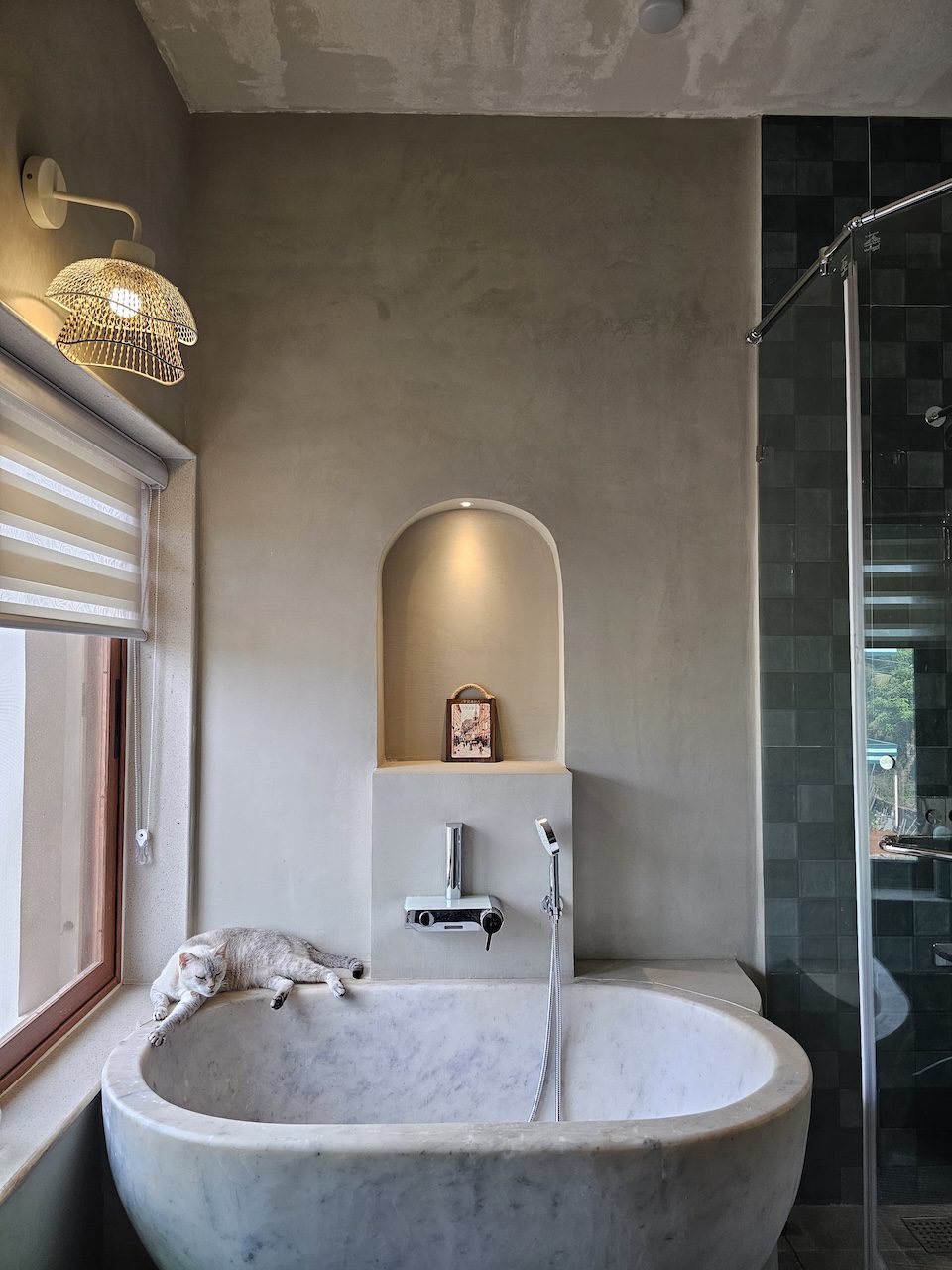
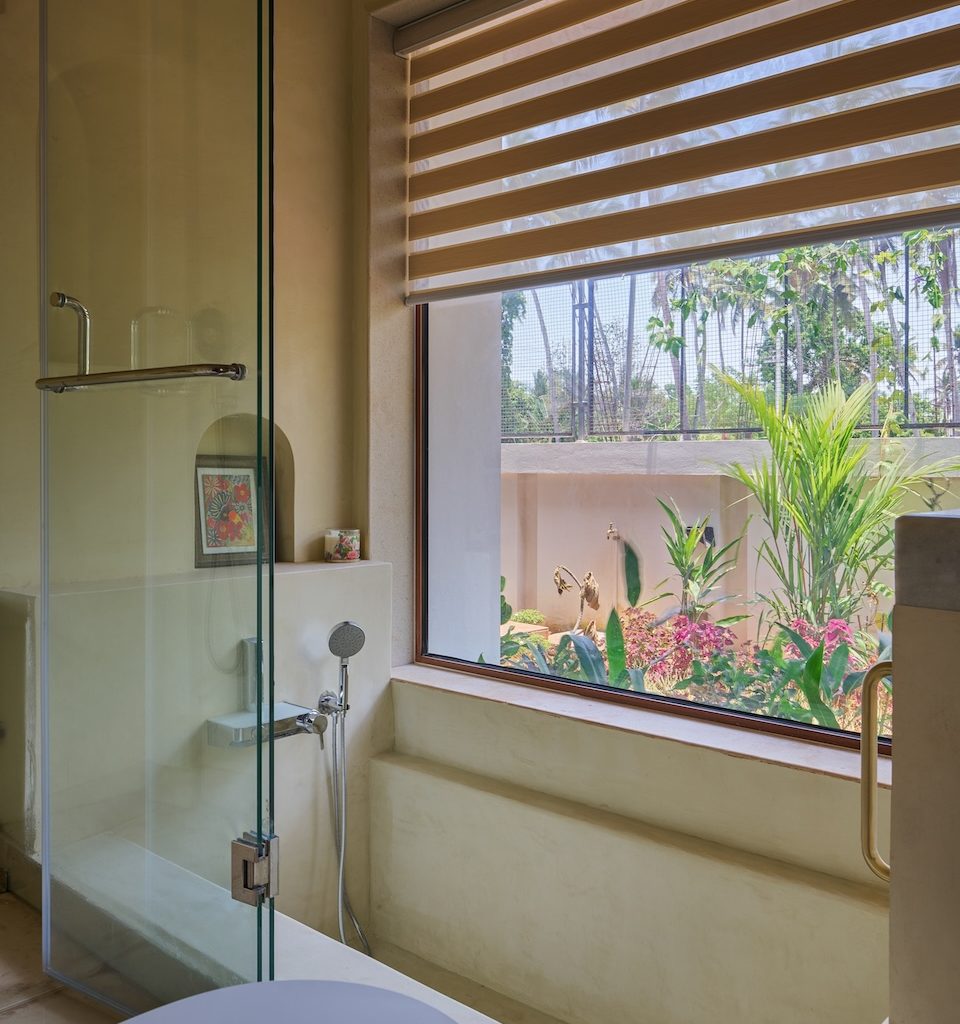
To allow the architecture to take centre stage, the material palette remains measured. Beige stone cladding flows from the living spaces and extends onto the pool backdrop, reinforcing continuity between built form and landscape. Neutral tones dominate the interiors, punctuated by restrained accents of green and blue drawn from the coastal surroundings.
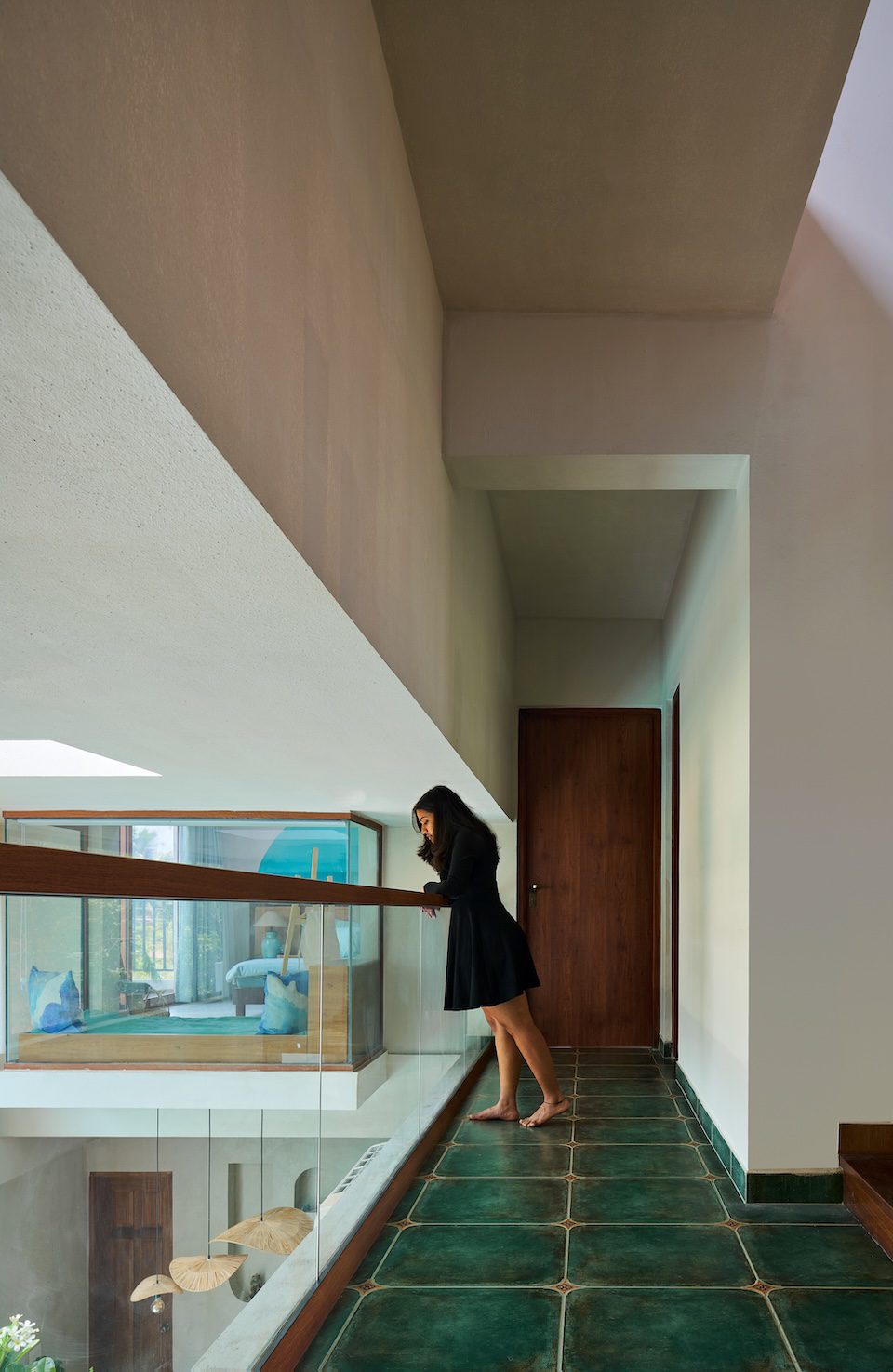
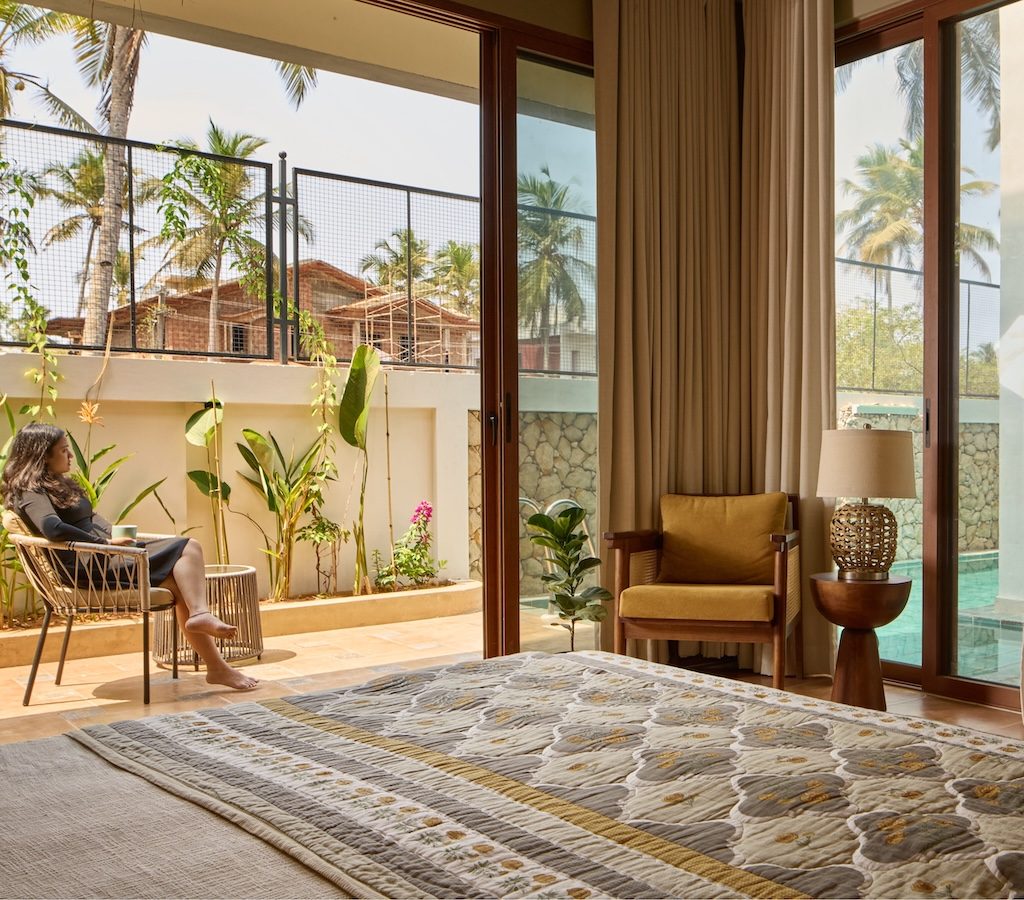
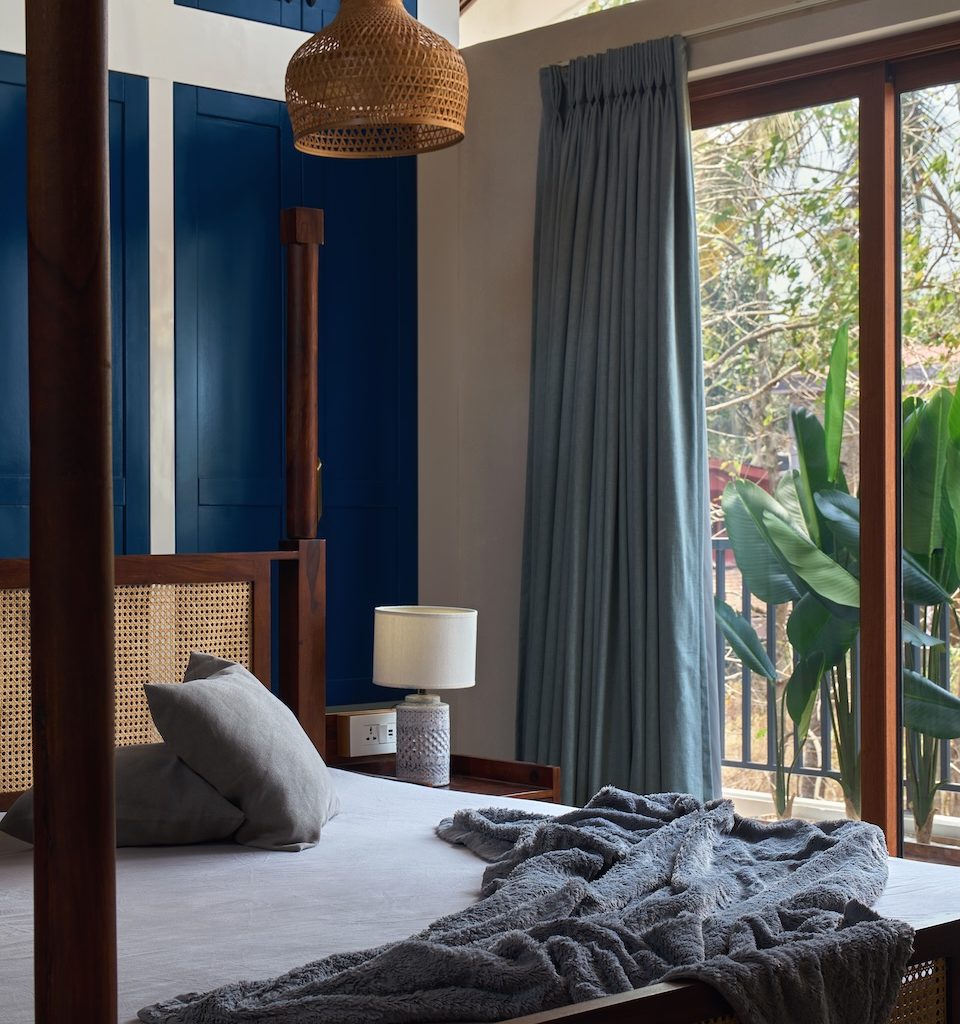
The master suite adopts a warm, earthy palette, punctuated with subtle mustard accents. Wood and rattan textures rest against terracotta flooring, with uninterrupted views towards the water beyond. The son’s room combines natural wood and rattan with a blue-grey palette, while the daughter’s suite is rendered in aqua tones beneath intersecting rafters.
The highlight
“For us personally, being close to nature brings a lot of joy. The most thoughtful spaces are those that facilitate human interaction and engagement with nature. The conversation pit for a living space is one of the first ideas that came onto the drawing board bearing this thought in mind. With a water body jutting into the home separating the common and private areas, this space was also perhaps the first to be visualised in our minds,” share the architects.
Fact File
Project: A Slice of Ubud
Location: Varca, Goa
Area: 3,000 sq ft
Principal architects: Abhijit Sawant and Natasha Kumar
Design team: Shweta Nair, Mahek Gupta and Karina Dang
Add a Comment