
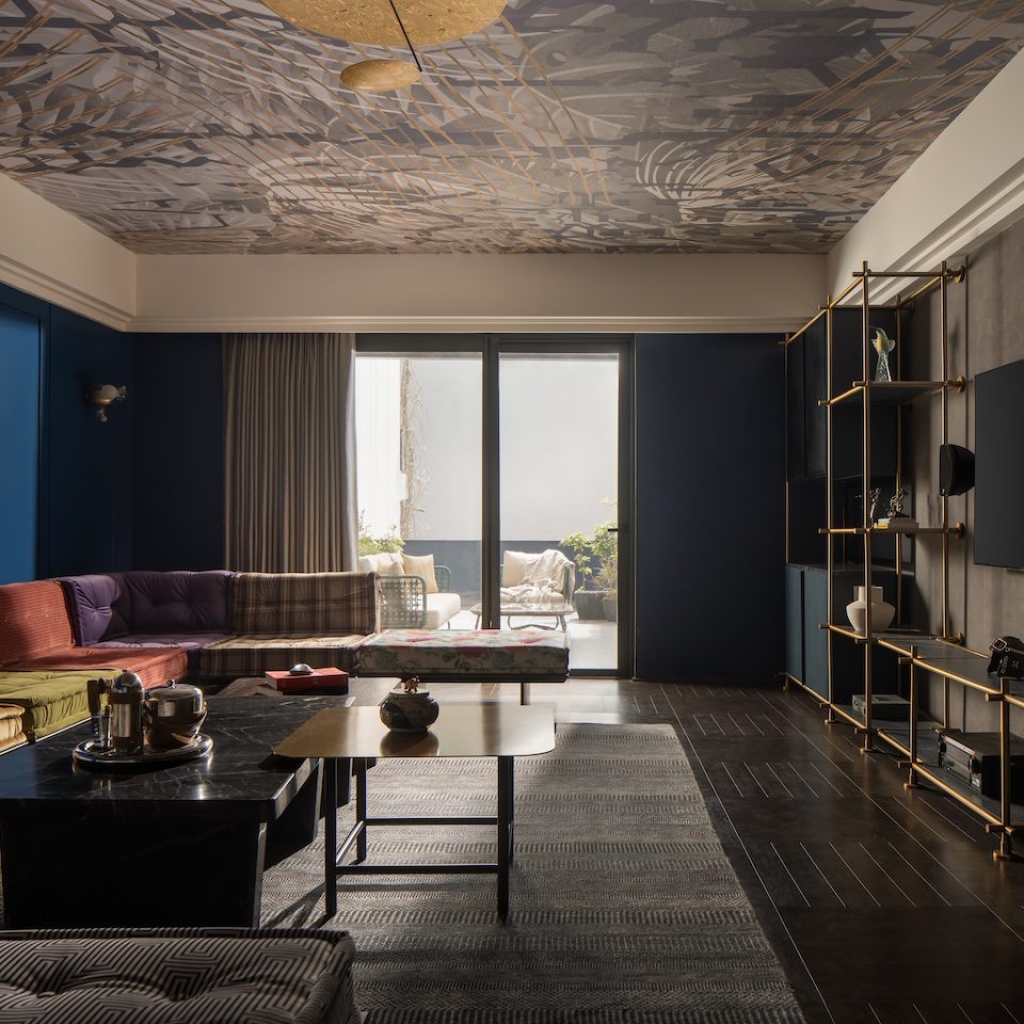
Designed by Design Dual in New Delhi, this residence offers a restrained take on contemporary luxury, defined by material depth, fine detailing, and a clear separation between social and private spaces.
Curated by: Deepa Nair
Photographs: Ekansh Goel; courtesy Design Dual
The brief
Set on a 9,300-square-foot plot in Punjabi Bagh, New Delhi, this home began with a brief that sought to redefine luxury through restraint. The family sought a clear spatial hierarchy, with the ground floor dedicated to social living and gatherings, and the upper level reserved for private family use and entertainment. Ease of movement, abundant natural light, and a composed visual atmosphere were key requirements. Aesthetically, the brief leaned toward a contemporary interpretation of luxury, shaped by material richness rather than ornamentation. The clients expressed a preference for minimalism elevated through texture, sculptural forms, and finely crafted details.
The design intent
The design intent was to shape a home where minimalism is elevated through material depth, sculptural form, and a restrained sense of luxury. Responding closely to the brief, the design team envisioned the residence as a sequence of calm, cohesive volumes, where proportion, texture, and detailing define the spatial character rather than overt ornamentation.
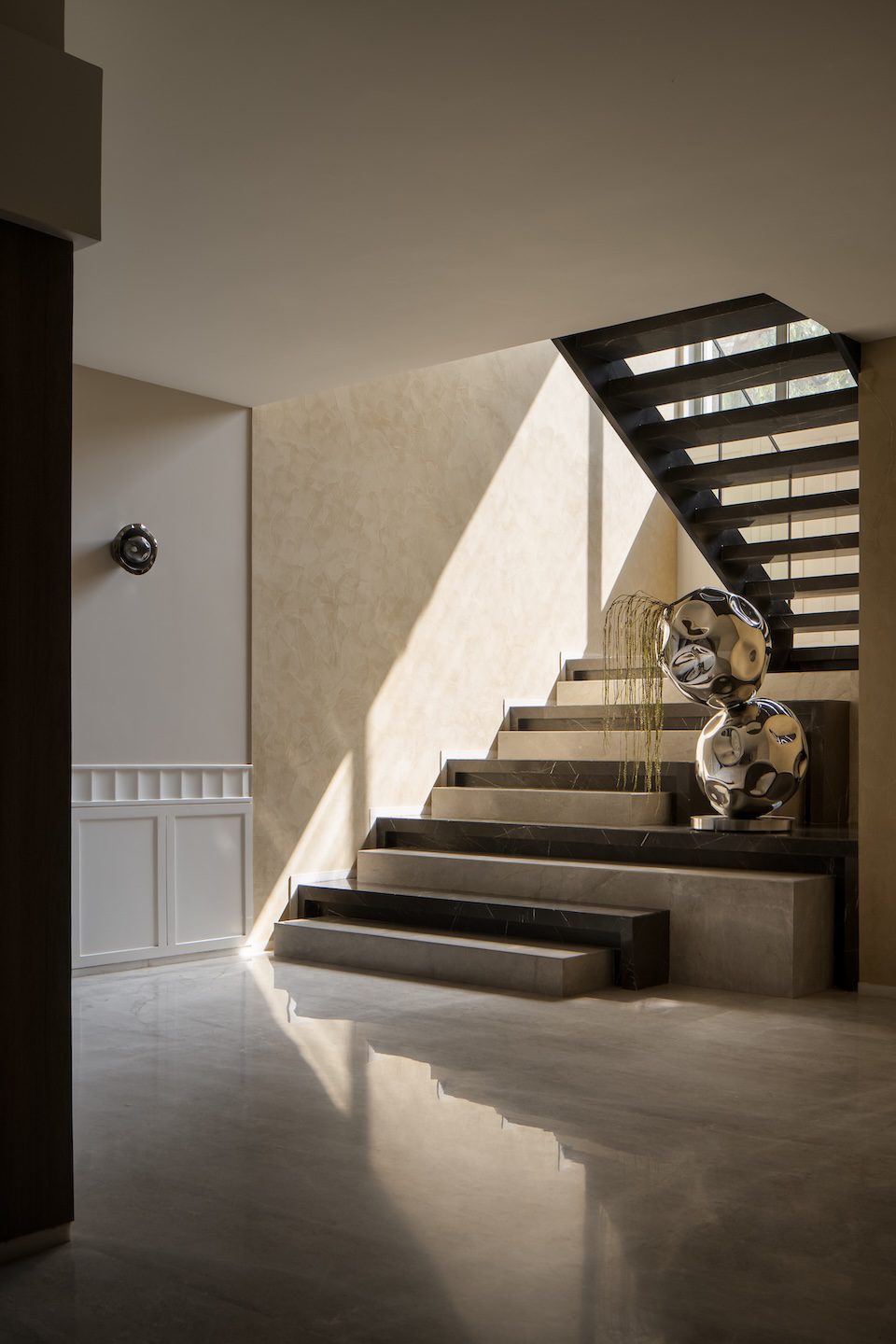
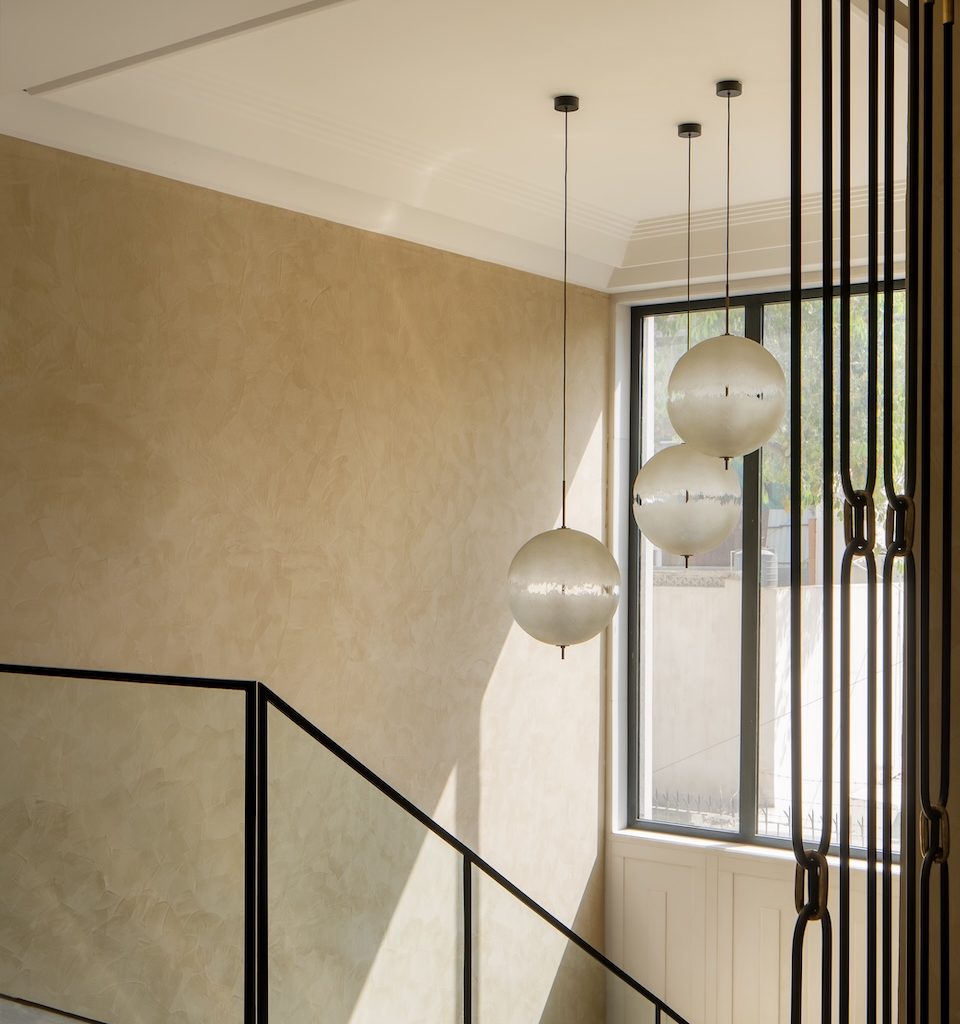
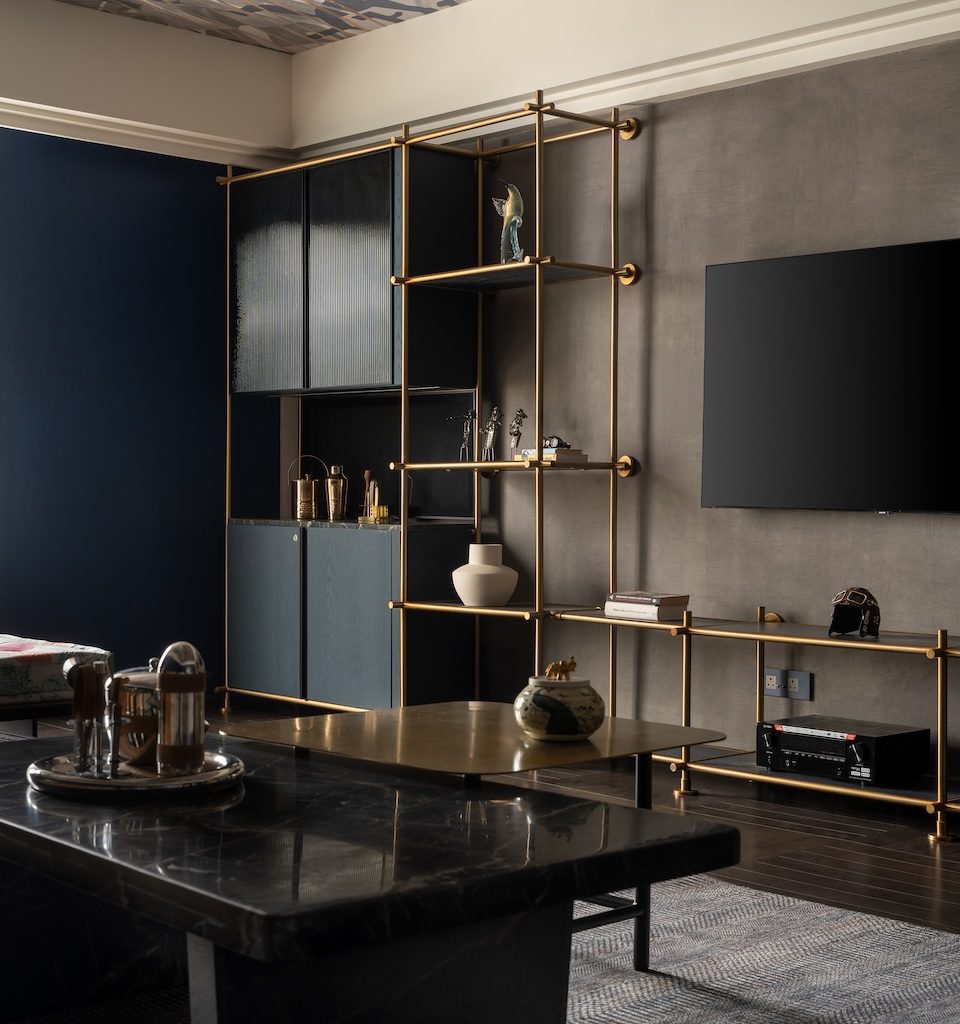
A controlled palette of whites, greys, and warm neutrals establishes a quiet backdrop, allowing carefully curated elements to come forward with intention. Brushed brass accents, sculptural steel artworks, and custom-designed lighting are introduced as measured highlights, adding richness without disrupting the visual balance. At the centre of the home, the staircase emerges as a sculptural anchor—visually grounding the interiors while retaining a sense of openness and fluidity.
The architecture
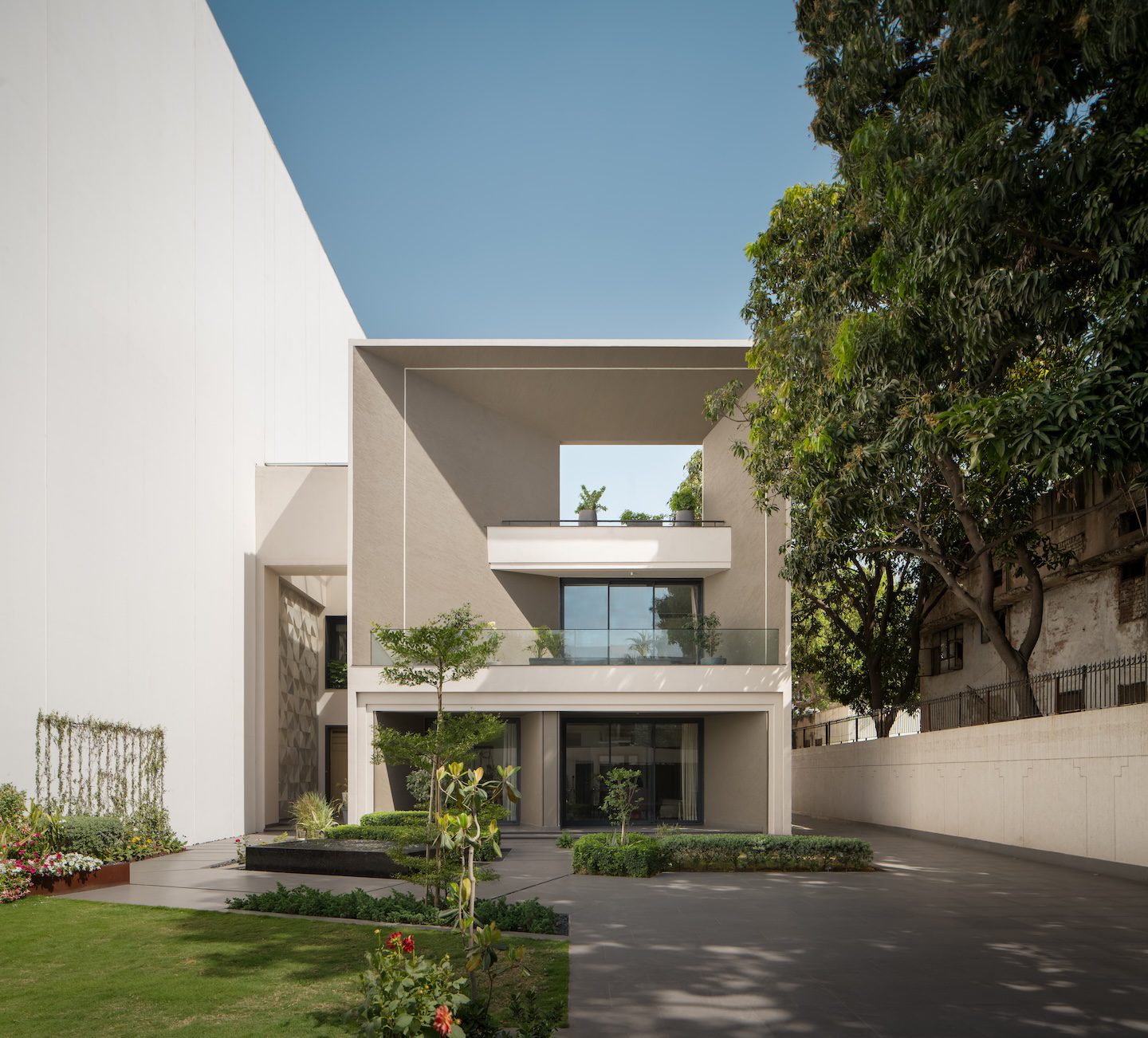
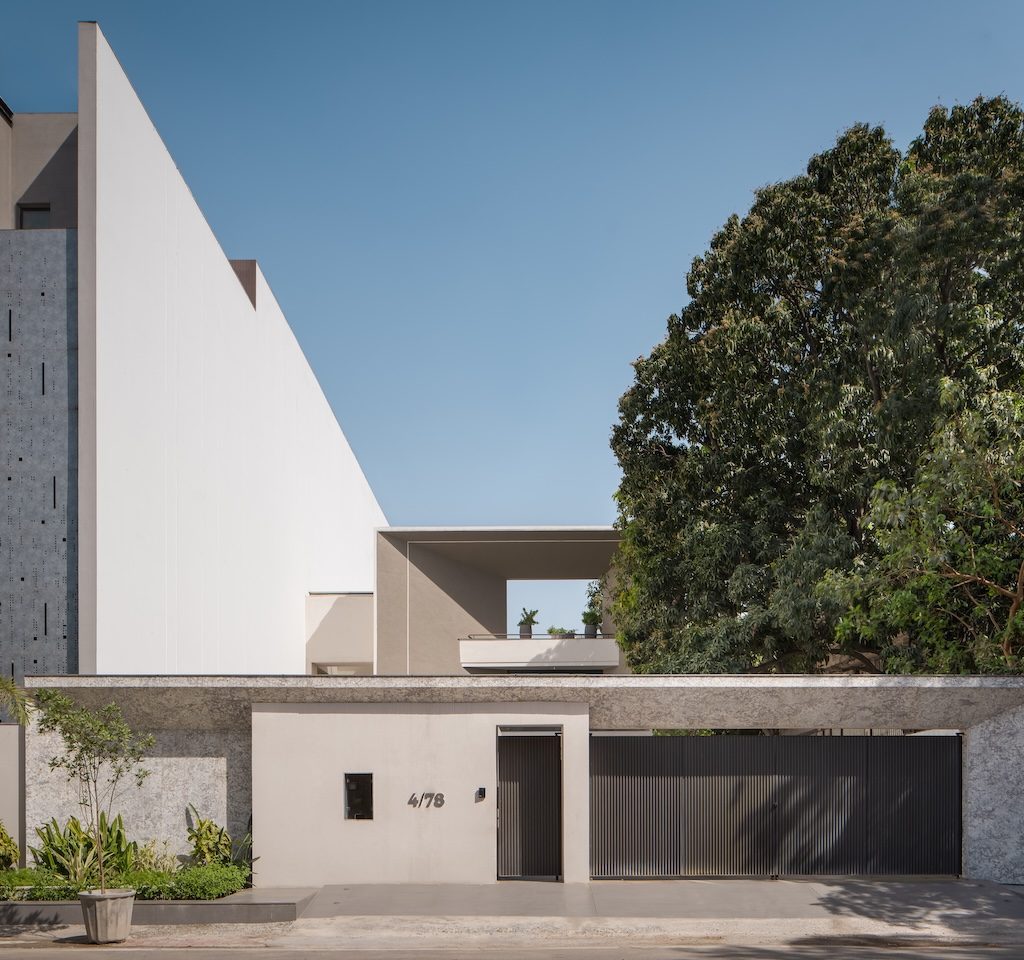
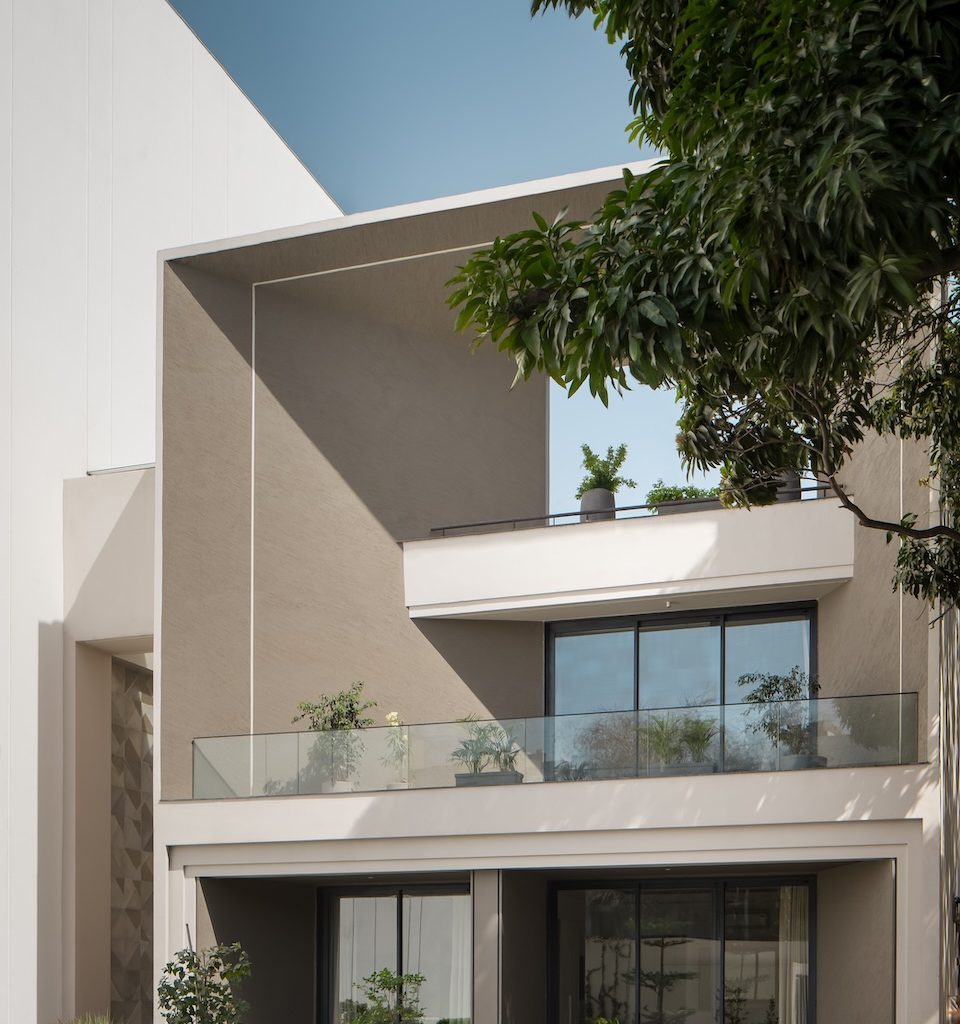
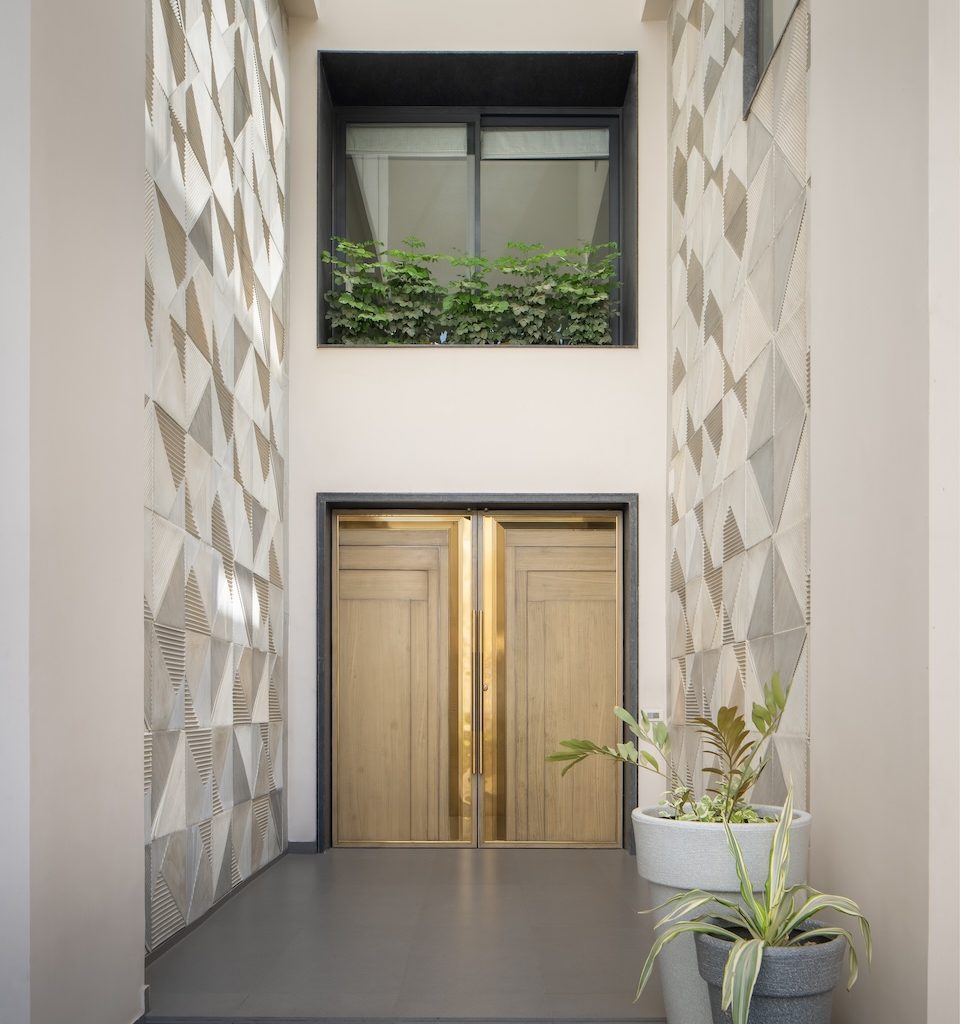
Set within the upscale neighbourhood of Punjabi Bagh, the home is surrounded by an urban fabric of large residences and builder floors. Its most immediate contextual challenge was the proximity of a four-storey builder condominium, which disrupted the scale of the streetscape. In response, the architecture was shaped to assert a distinct presence while remaining measured. A bold double-height exterior wall, textured grey surfaces, and offset geometric portals give the residence a strong visual identity, allowing it to hold its ground within the dense surroundings.
Internally, the architectural intervention focused on re-establishing spatial clarity between public and private zones. The house was reorganised across two levels around a newly introduced monumental staircase, conceived as the sculptural heart of the home. This required careful structural reworking to accommodate the mild steel second flight and a large glazed backdrop, which together create a controlled interplay of light and shadow through the interior.
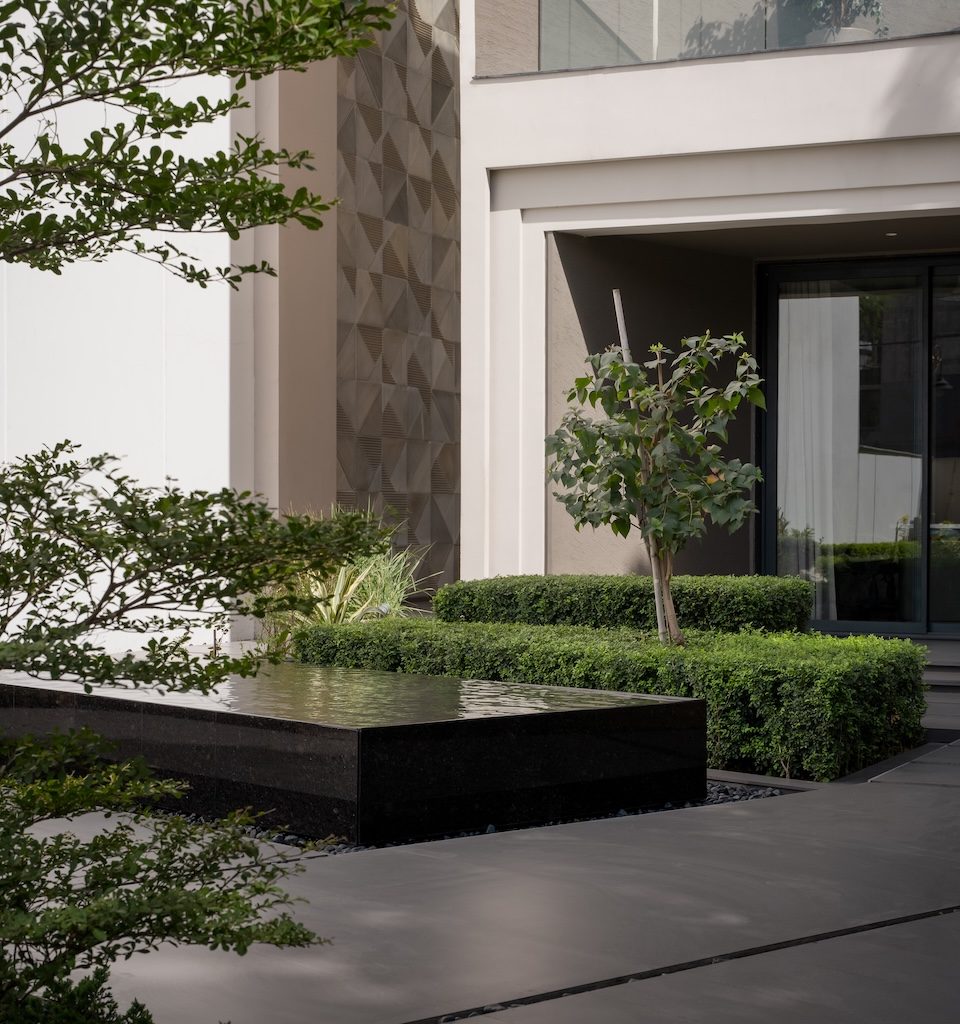
The arrival sequence and landscape were also redefined to soften the transition from street to home. A redesigned driveway, anchored by a central water body, sets a composed tone at entry. Selective openings and internal partitions were recalibrated to maintain visual continuity across spaces, ensuring that movement through the home feels fluid rather than segmented.
The spatial configuration
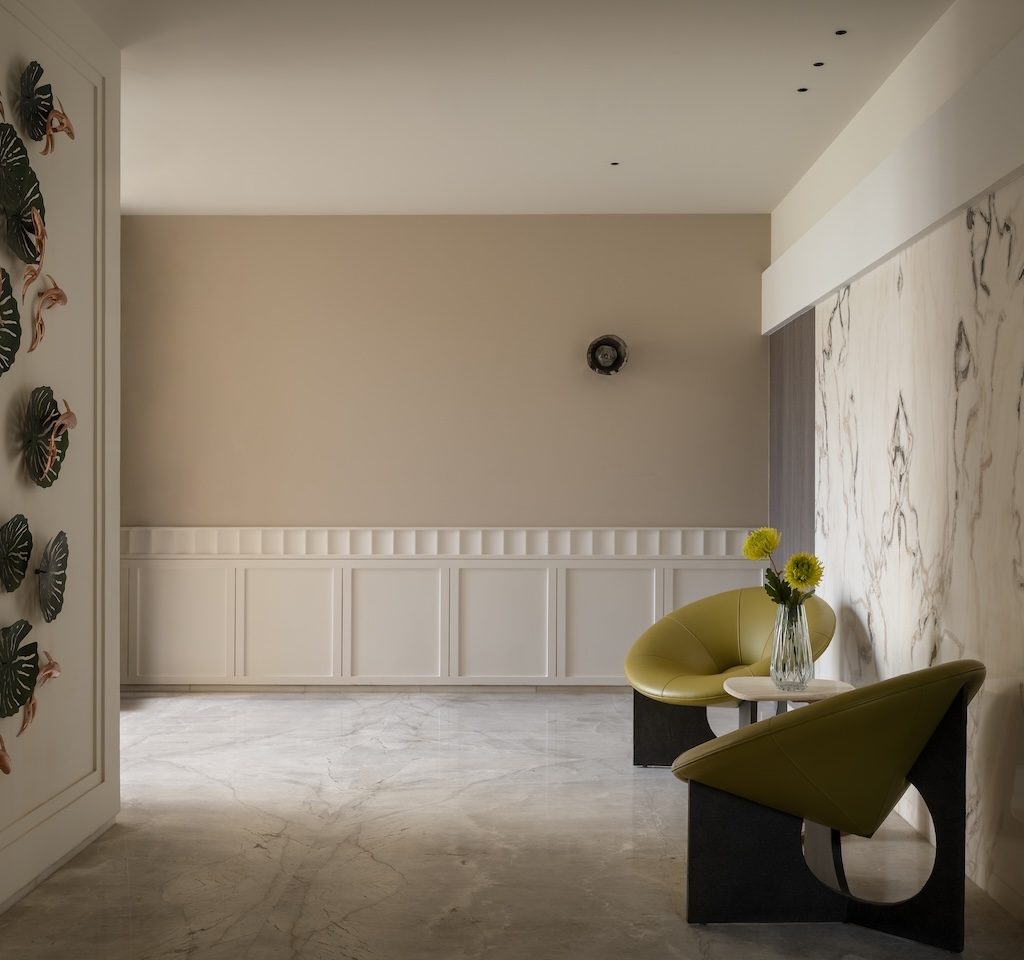
The home unfolds through a carefully sequenced layout that prioritises clarity and ease of movement. Arrival begins at the landscaped driveway, where a central water body establishes a composed threshold before leading into the entrance. From here, the foyer opens into the home with a statement seating.
The ground floor is conceived as the social heart of the residence. Living, dining, and gathering areas are planned as interconnected zones, allowing spaces to flow into one another while remaining visually legible. Anchoring this level is the monumental staircase, positioned centrally and treated as a sculptural element. The upper floor is reserved for private family use. Bedrooms, the entertainment lounge, and personalised spaces branch off from a central corridor, ensuring privacy without isolation.
The design and material details
Arrival is shaped as a measured sequence. A landscaped driveway edged with soft planting leads inward, anchored by a central water body that establishes a composed, unhurried tone. The exterior facade is articulated in warm grey concrete decorative tiles laid in diagonal textures, lending surface depth and subtle movement. At the entry, a double-height wall forms the home’s first architectural gesture, setting scale and presence before one steps inside.
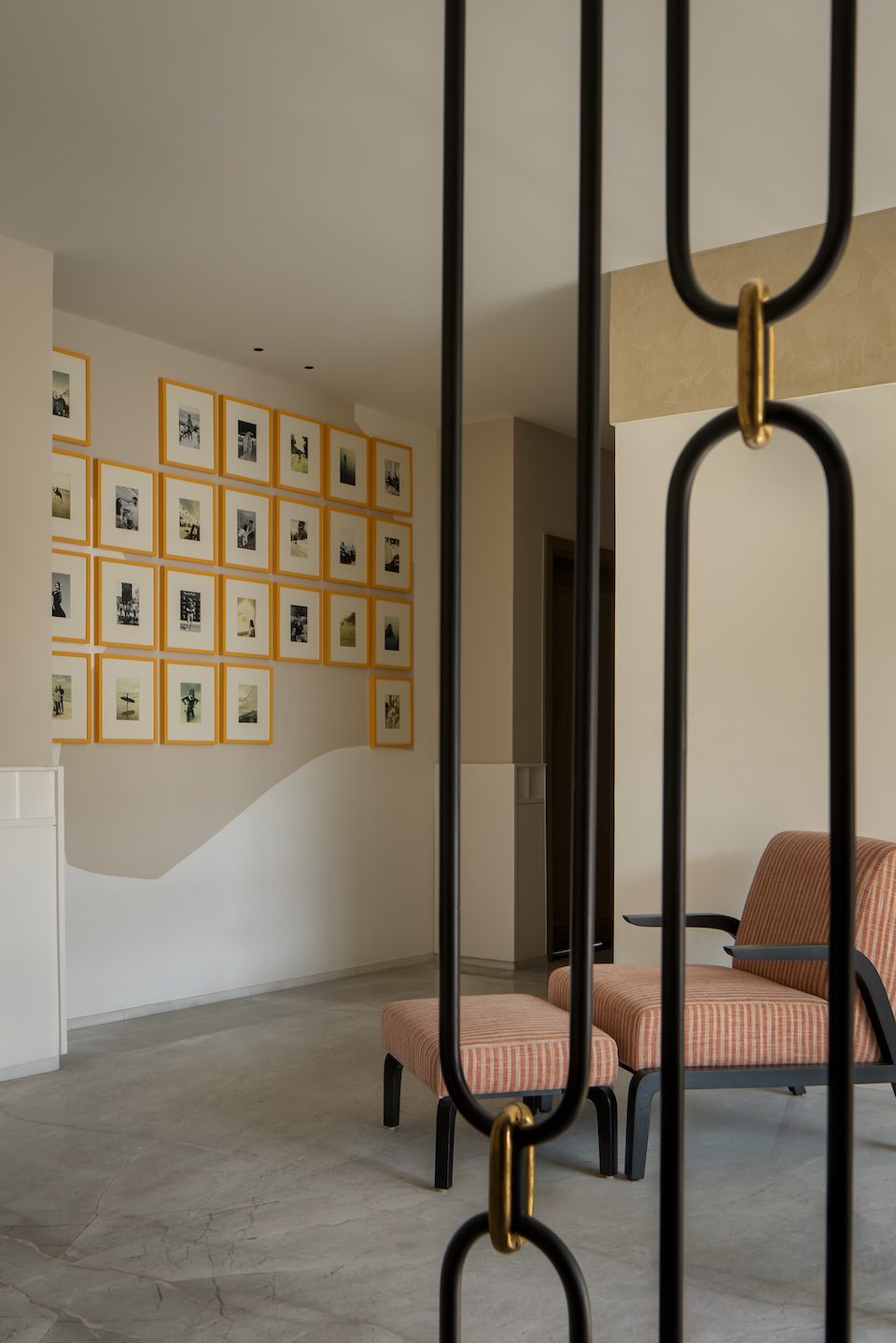
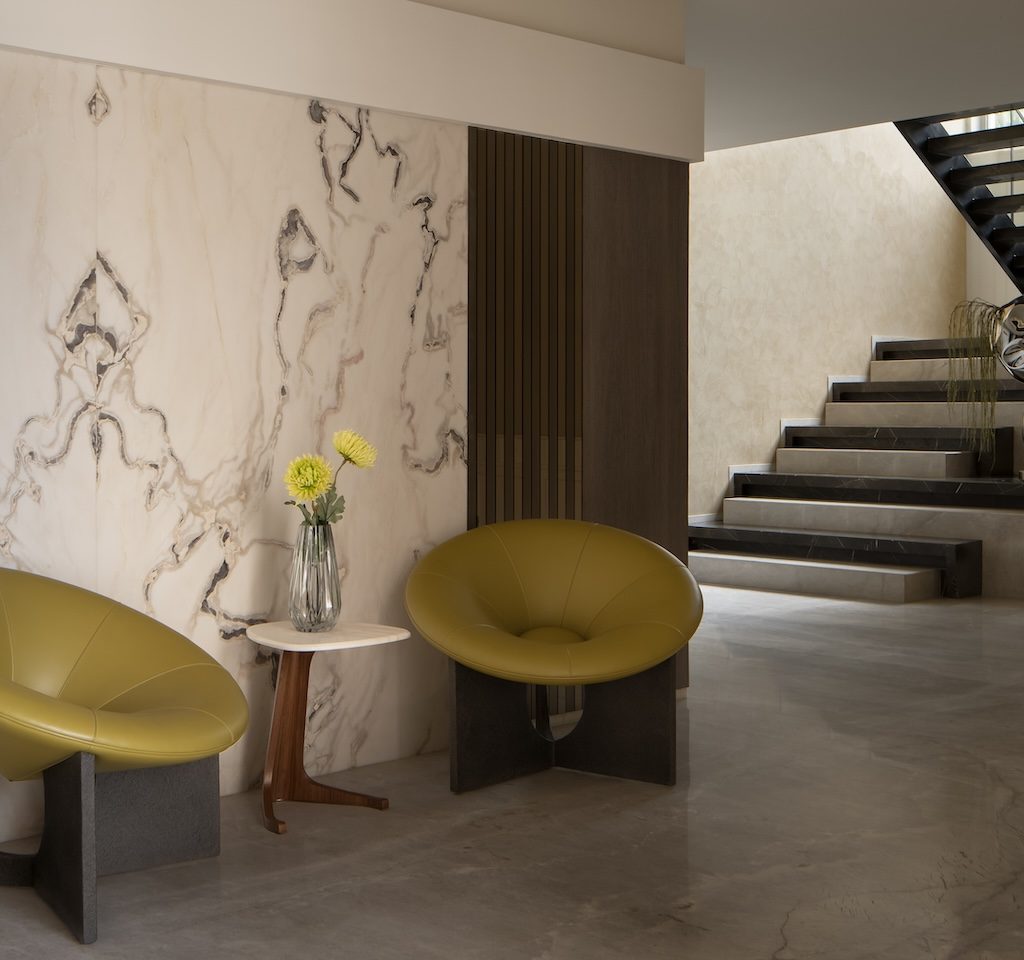
The foyer continues this restraint. Beige-painted walls, white ceilings, and a grey-and-white marble floor establish a consistent visual base that carries through the home. Two statement chairs introduce colour and form, functioning as sculptural accents rather than conventional seating. The space is intentionally minimal, acting as a gentle threshold between the outdoors and the home’s refined interior language.
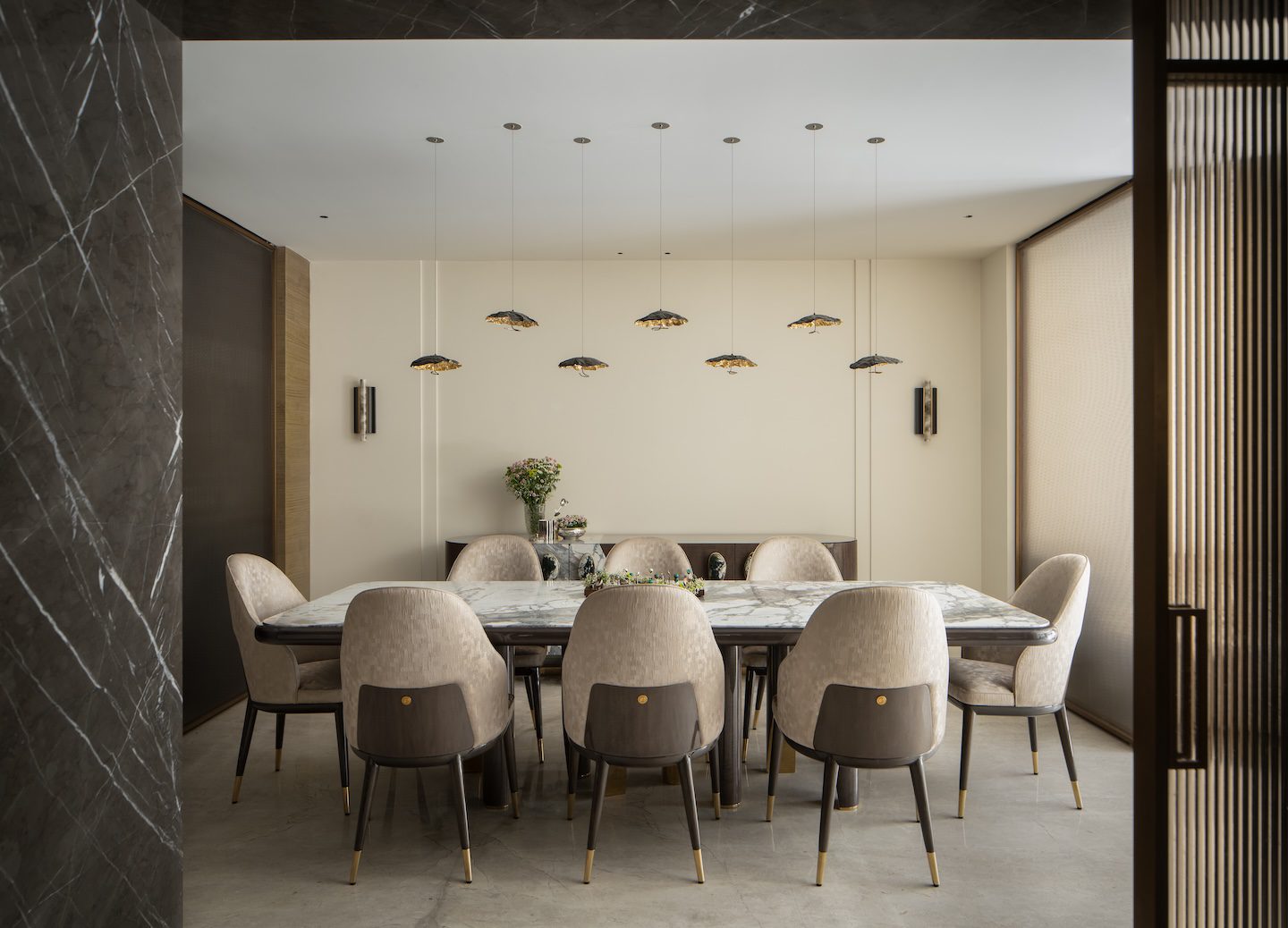
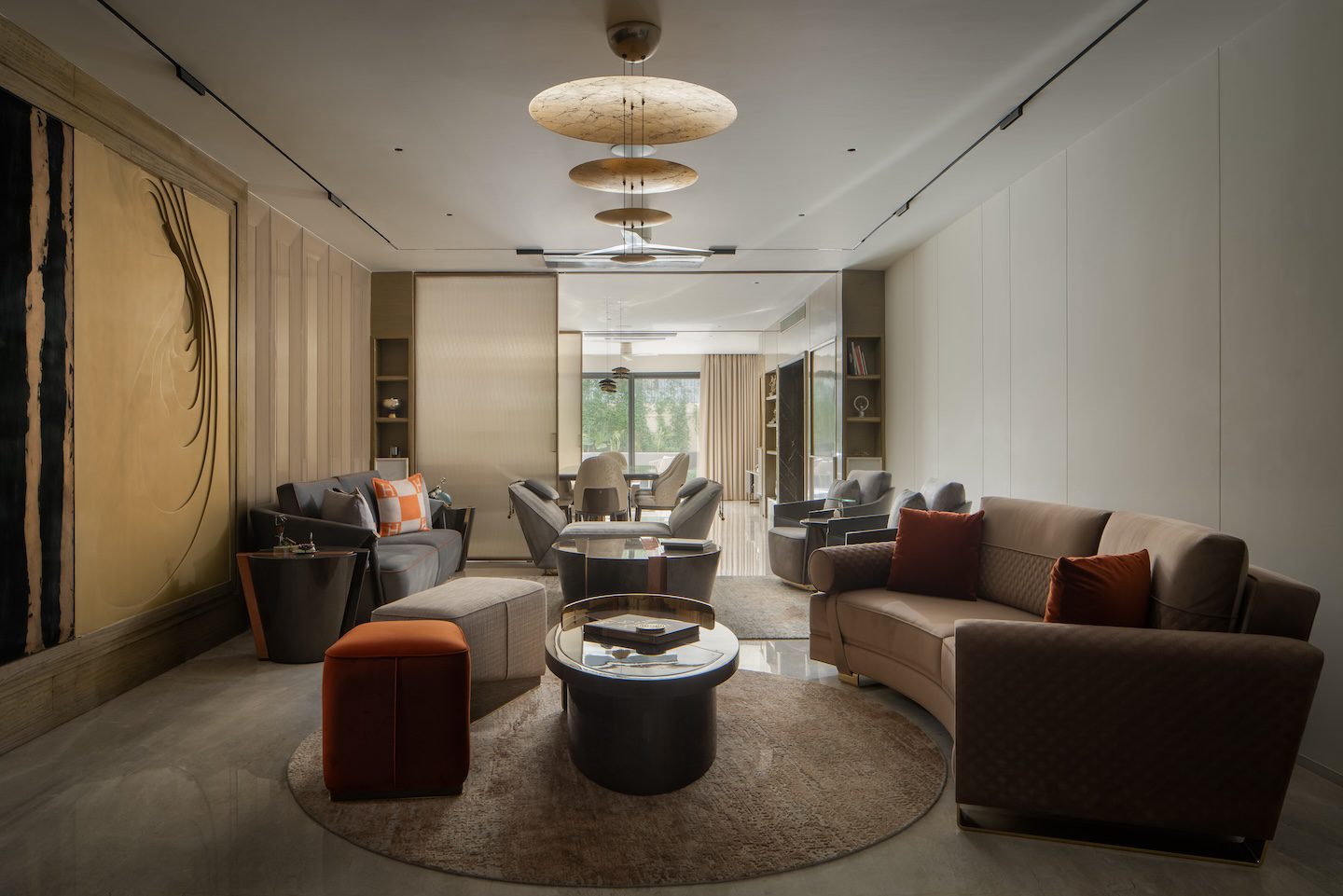
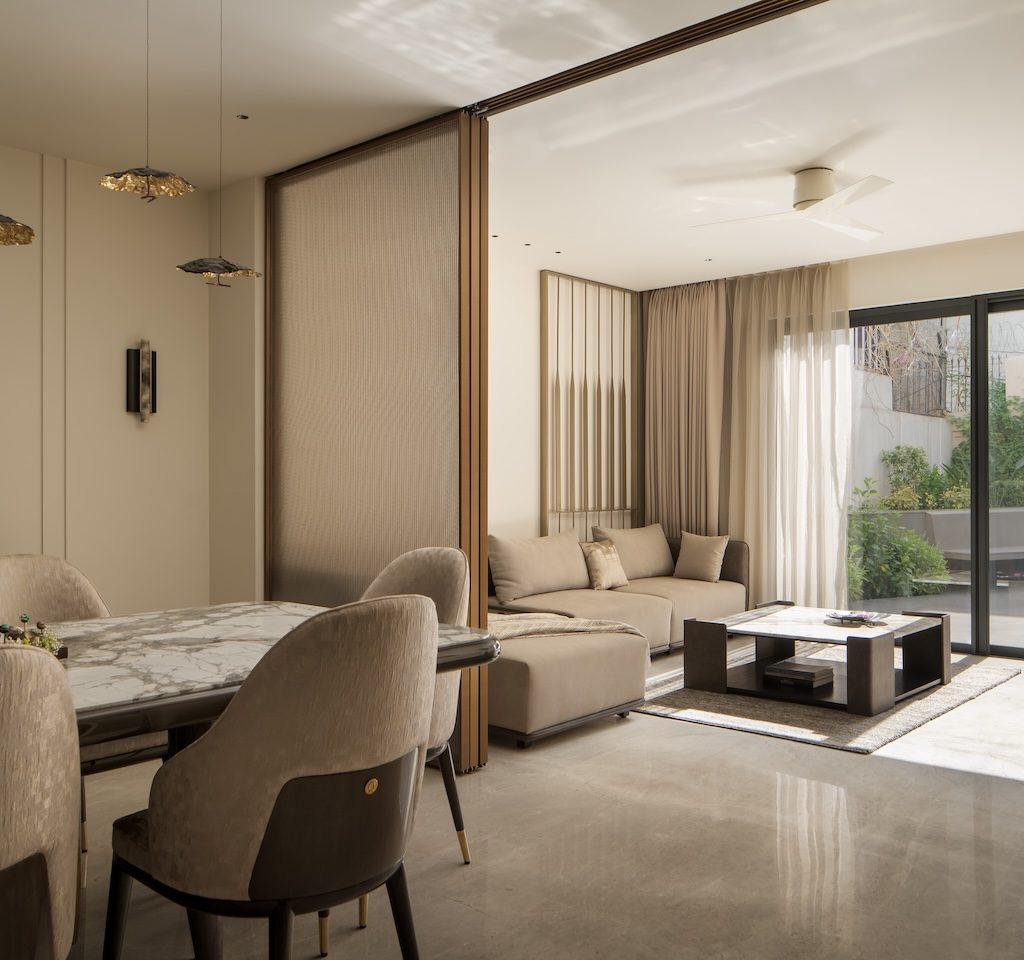
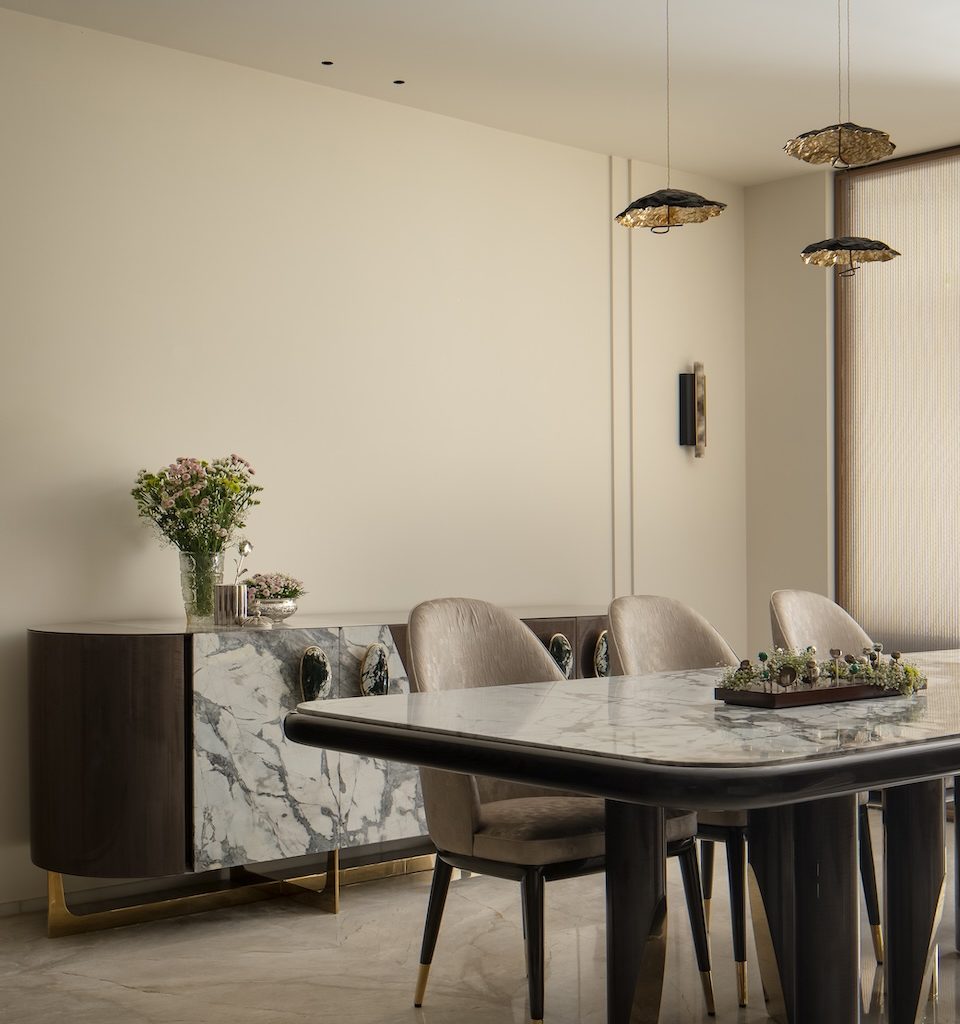
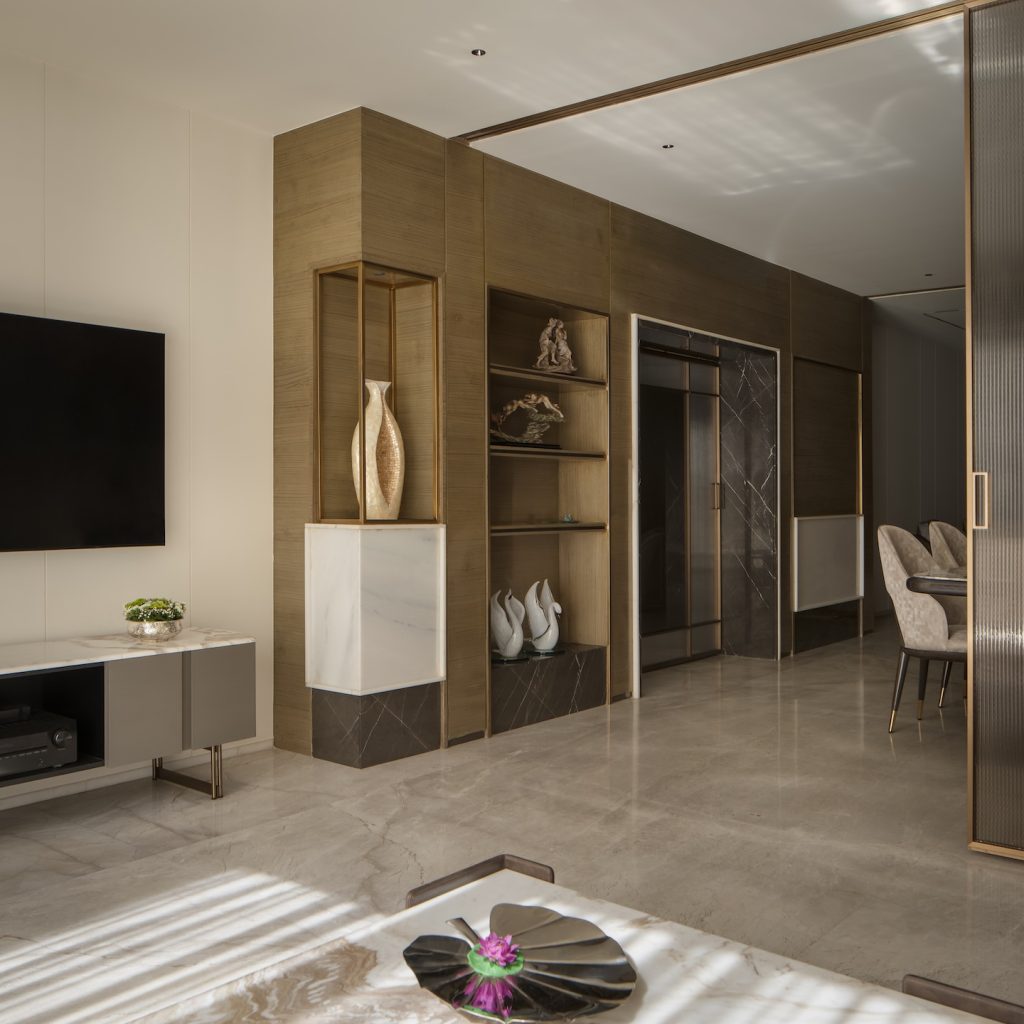
The ground floor unfolds as a series of interconnected living and dining spaces, unified by a restrained palette and consistent material treatment. Flat white ceilings and beige walls provide a calm backdrop, complemented by custom white PU wainscotting and grey-and-white marble flooring that extends across the level, enhancing visual continuity and spatial length.
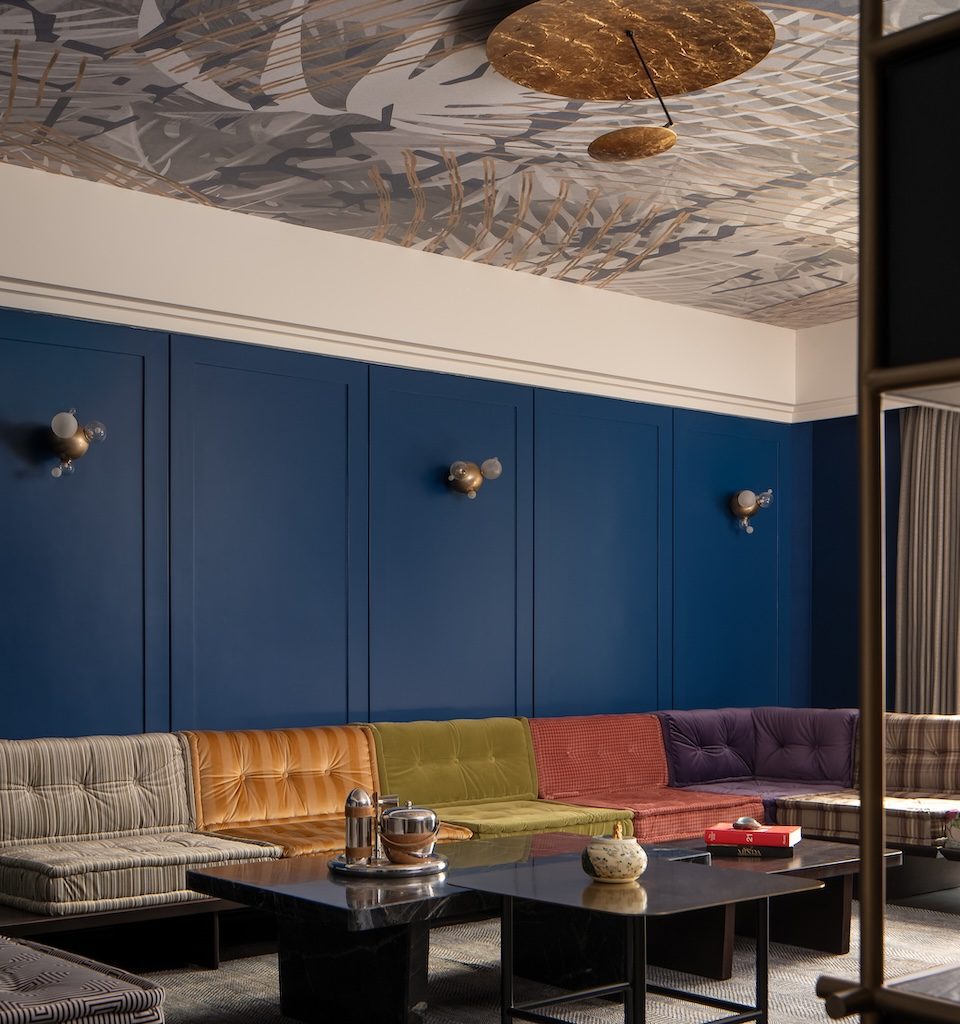
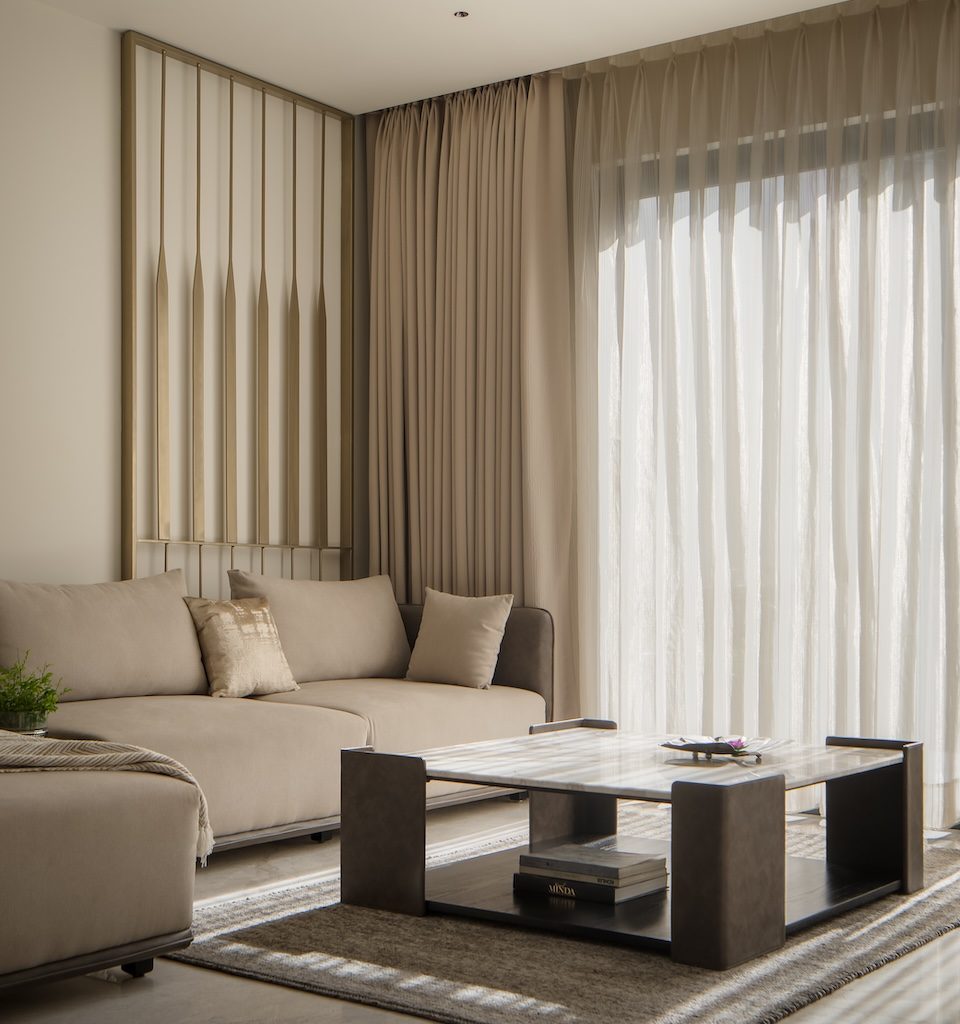
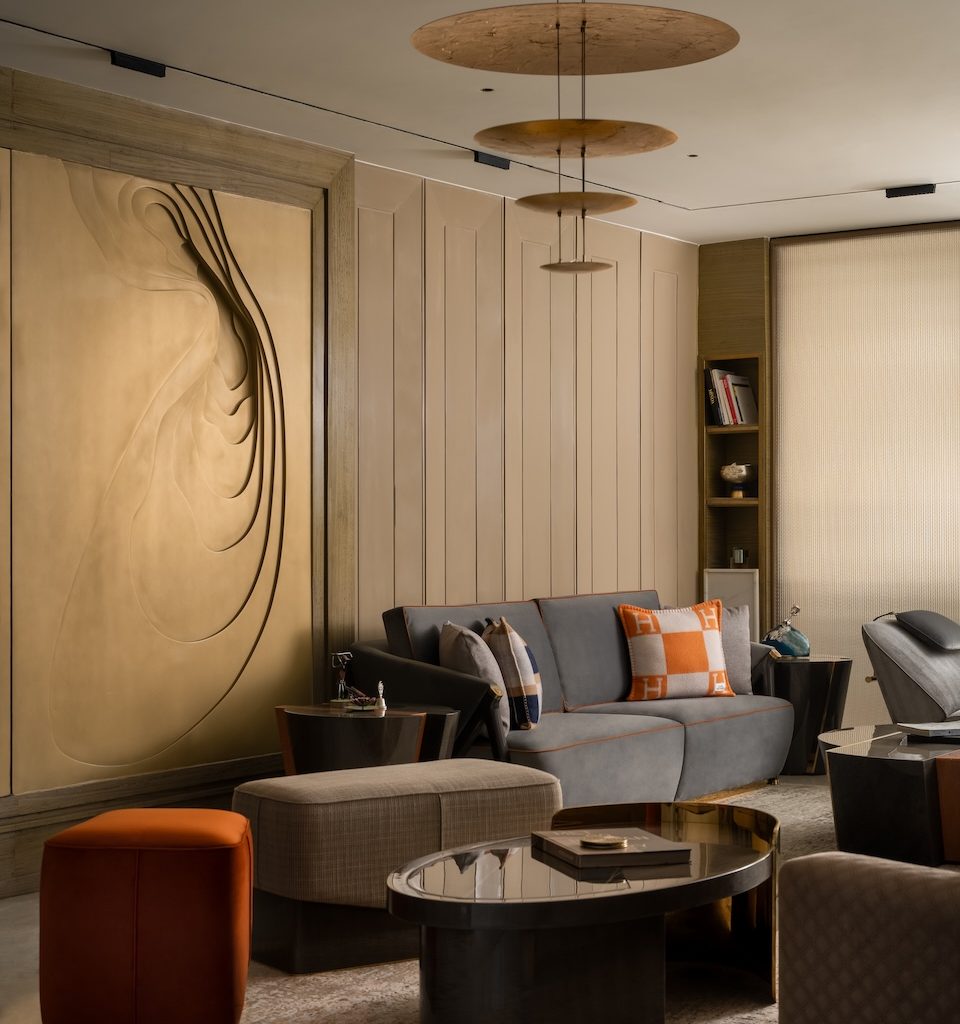
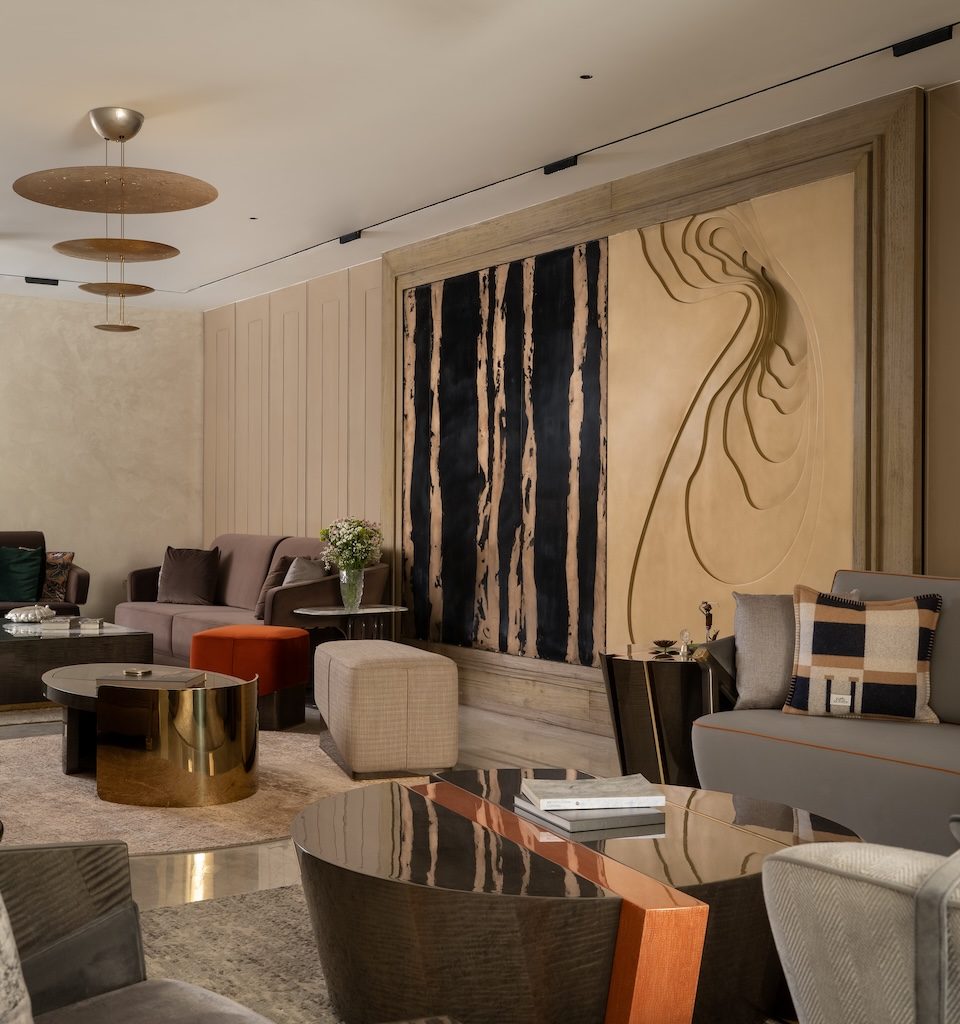
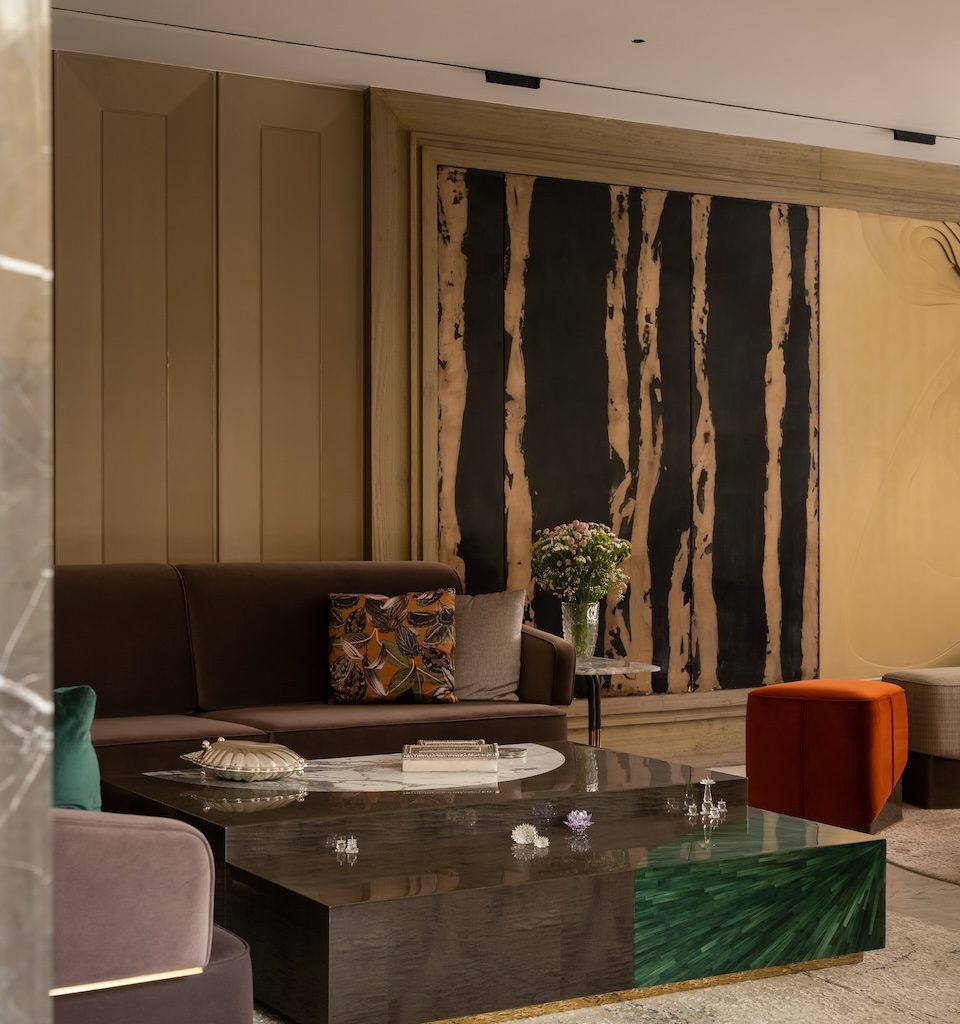
Furniture is sculptural yet understated—clean-lined sofas, contemporary coffee tables, and accent pieces detailed with brushed brass. Stainless-steel sculptural artworks introduce moments of reflection and movement, offering contrast to the otherwise composed envelope. Accessories are kept deliberately minimal, allowing attention to rest on form, proportion, and material rather than ornament. Lighting, designed by Nitush Aroosh and Innovative Lighting Design, is used selectively to articulate transitions, highlight key architectural moments, and emphasise sculptural elements across the space.
The staircase forms the architectural heart of the home, conceived as both a spatial connector and a defining visual element. The first flight remains solid and grounding, establishing a sense of weight and permanence. In contrast, the second flight, crafted in mild steel, introduces a deliberate lightness, allowing the structure to feel suspended rather than imposing. The entire composition is framed by olive-green polished textured walls, which lend depth and intensity to the backdrop without overwhelming the space. Behind the staircase, a wall of expansive glazing draws daylight deep into the interior, allowing light and shadow to shift across surfaces as the day progresses.
The family lounge is where the home’s design language shifts toward a more personal register. A custom-designed ceiling wallpaper by Arjun Sara introduces colour and movement overhead, adding a graphic layer that animates the space without overwhelming it. Below, a curated photo wall, marked by a warm orange accent, anchors the room emotionally, turning it into a space shaped by memory and everyday life. Furniture here is contemporary and comfortable, layered with soft furnishings in neutral tones to maintain visual balance. Accessories are kept intentionally restrained, allowing the bespoke ceiling treatment and the artwork wall to lead the narrative.
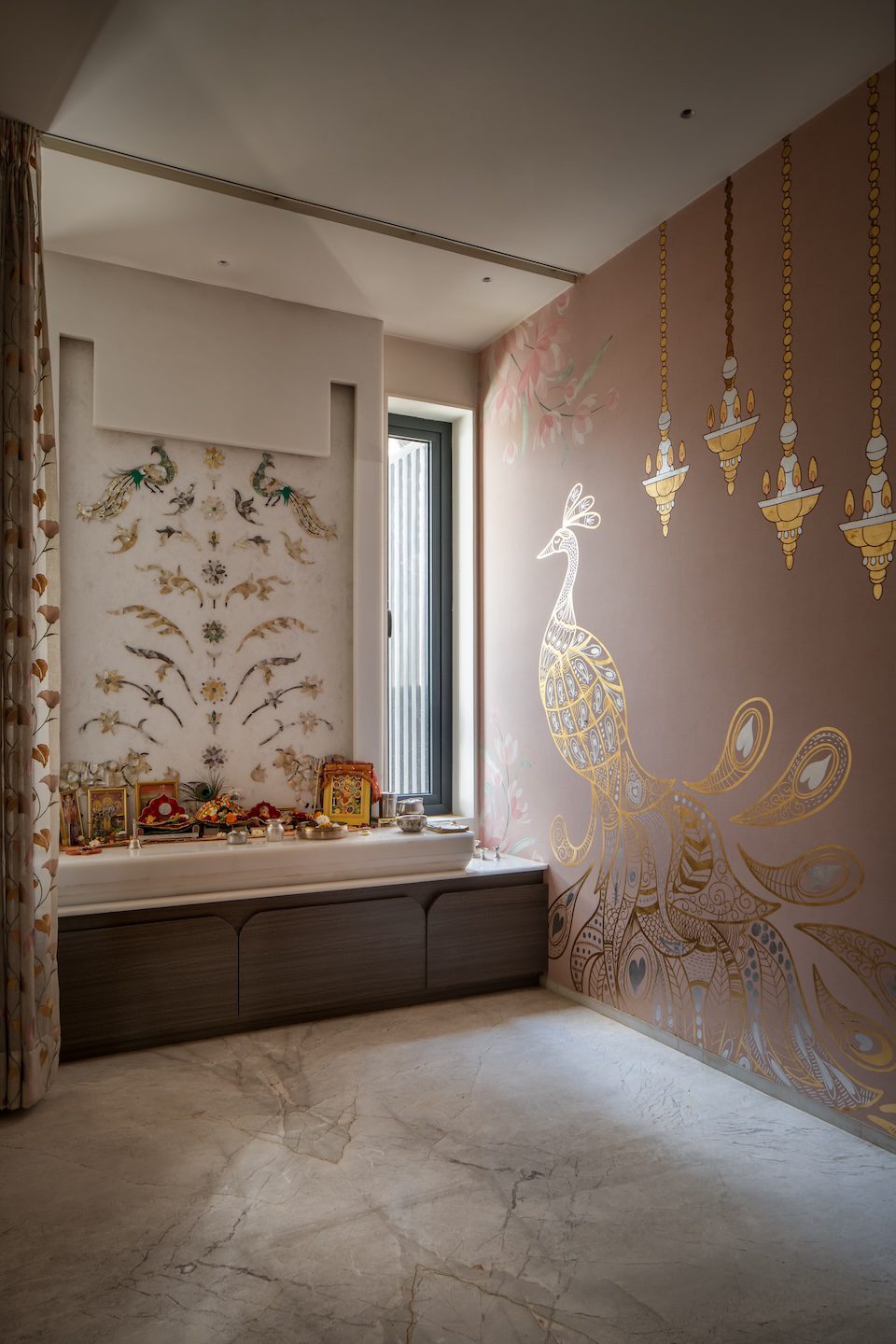
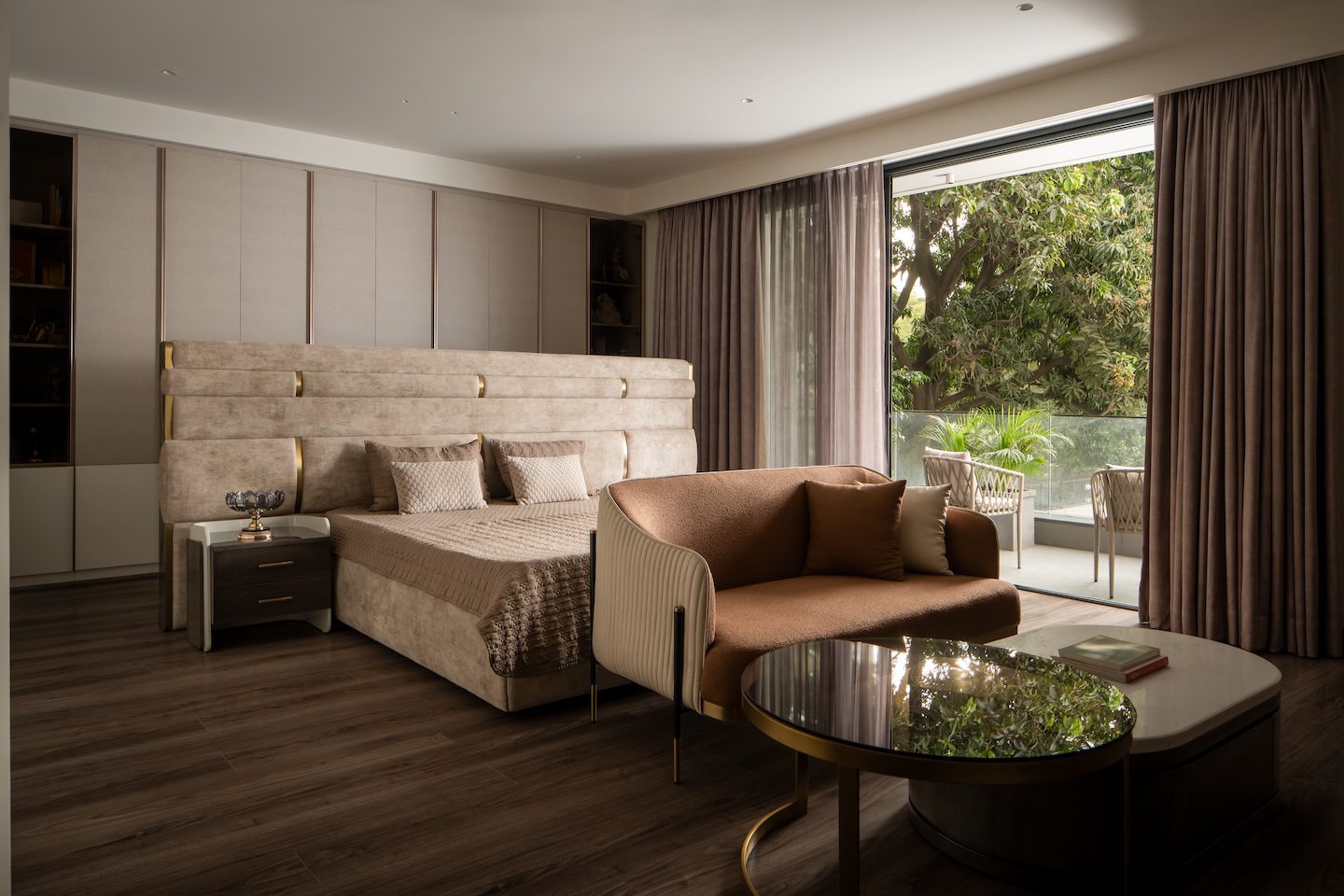
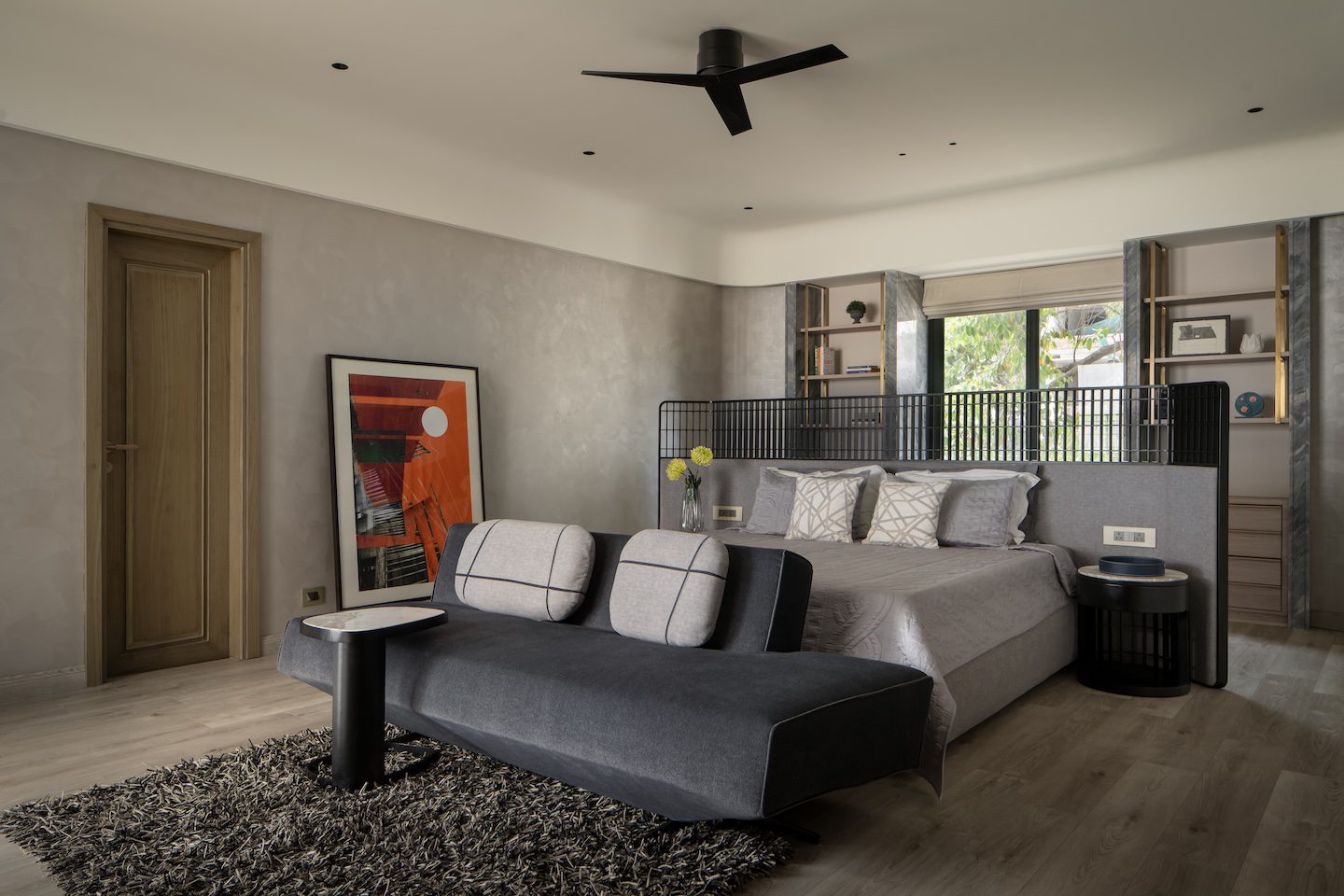
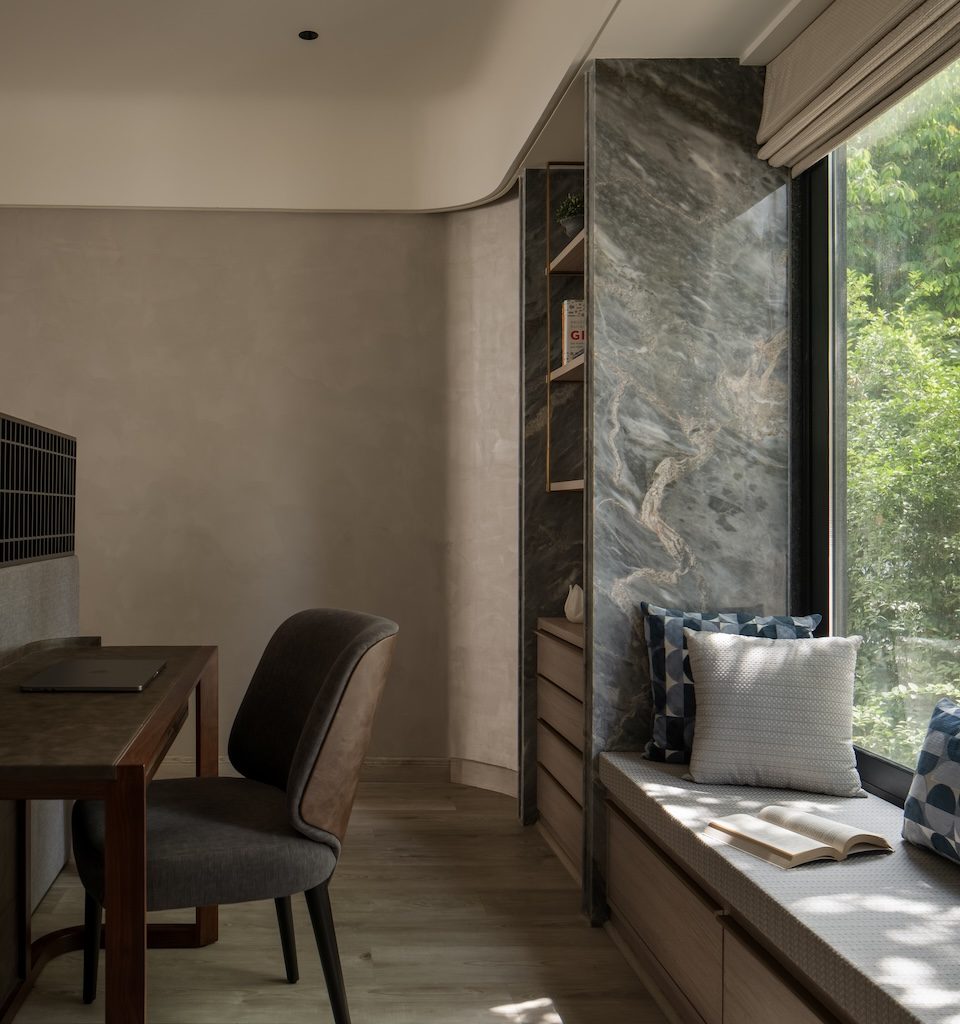
Each bedroom carries forward the home’s core material language, shaped by soft neutrals, structured detailing, and a careful attention to scale. White ceilings and beige walls form a composed backdrop, allowing light to define the spaces through the day. Custom wardrobes and clean-lined built-ins are integrated seamlessly into the architecture, reinforcing a sense of order rather than standing apart as furniture additions. Bedding and drapery introduce texture through fabric rather than colour, maintaining the tactile depth established across the home. Artworks and accessories are used sparingly, ensuring that proportion, surface, and light remain the primary visual anchors.
Fact File
Project: Jajodia Residence
Location: Punjabi Bagh, New Delhi
Area: 9,300 sq ft (built-up)
Principal architects: Arjun Sara and Wamika Bansal
Add a Comment