
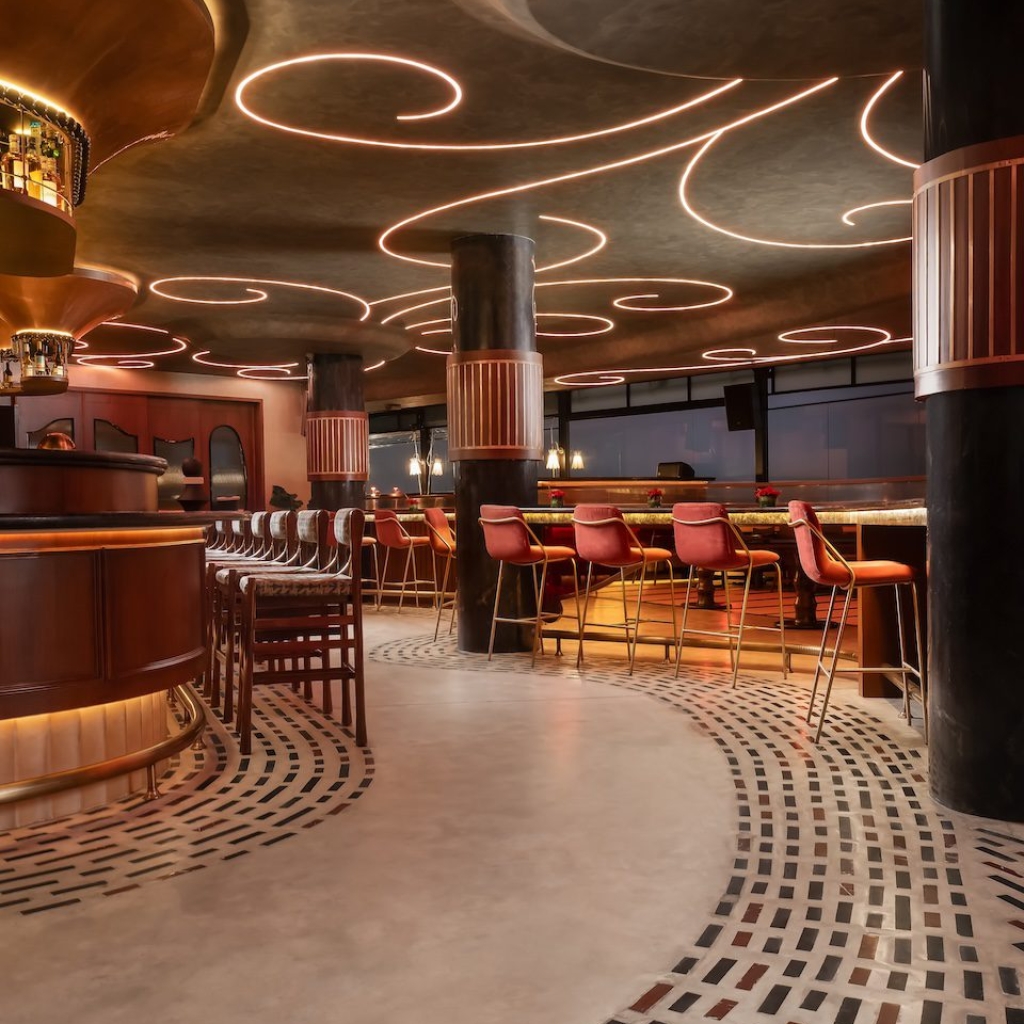
Designed by Maze Concept Design Studio in Bengaluru, Kai is a high-end fine-dining restaurant that reinterprets the grandeur of Indian palaces through a bold, contemporary design lens.
Curated by: Deepa Nair
Photographs: Arjun Krishna; courtesy Maze Concept Design Studio
The brief
The concept for Kai, a high-end fine-dining restaurant, was presented to Maze Concept Design Studio with a clearly articulated brief. The client envisioned a space that could match global benchmarks of hospitality while remaining inclusive and welcoming to patrons across age groups.
The design intent
The design intent was to create a space that evokes a sense of grandeur for every guest who walks in. Drawing inspiration from the detailing and spatial richness of Indian palaces, the studio sought to reinterpret these references through a contemporary lens that would resonate with a younger audience. Rather than adopting a literal or ornate approach, the design translates traditional motifs and craftsmanship in an unconventional yet rooted manner, allowing the essence of the inspiration to remain intact.
Fluidity was key to the spatial experience, with the layout designed to move seamlessly while accommodating varying scales of dining and social interaction. At the same time, the restaurant embraces a layered sense of opulence, achieved through warmth, material depth, and refined detailing.
The civil interventions
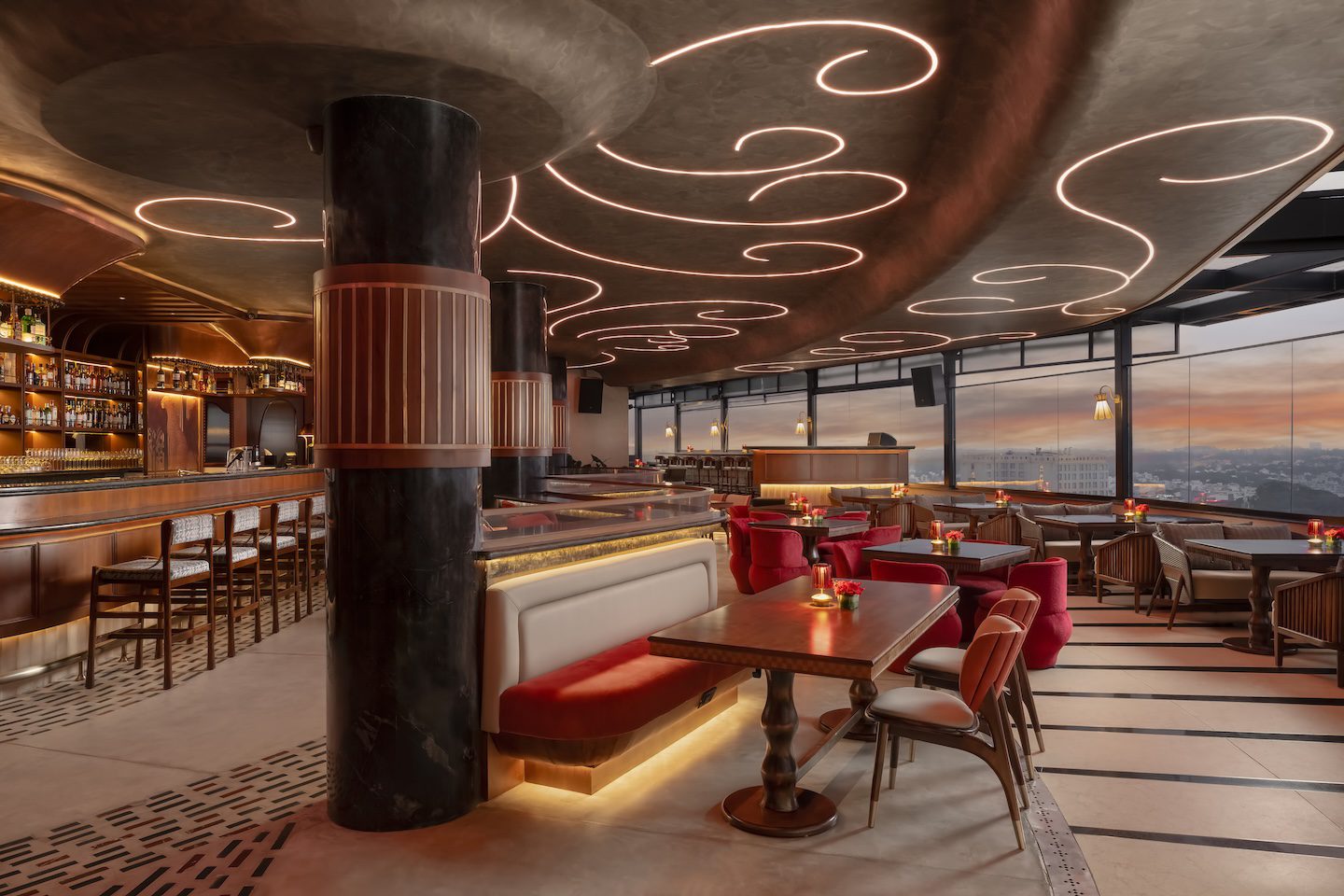
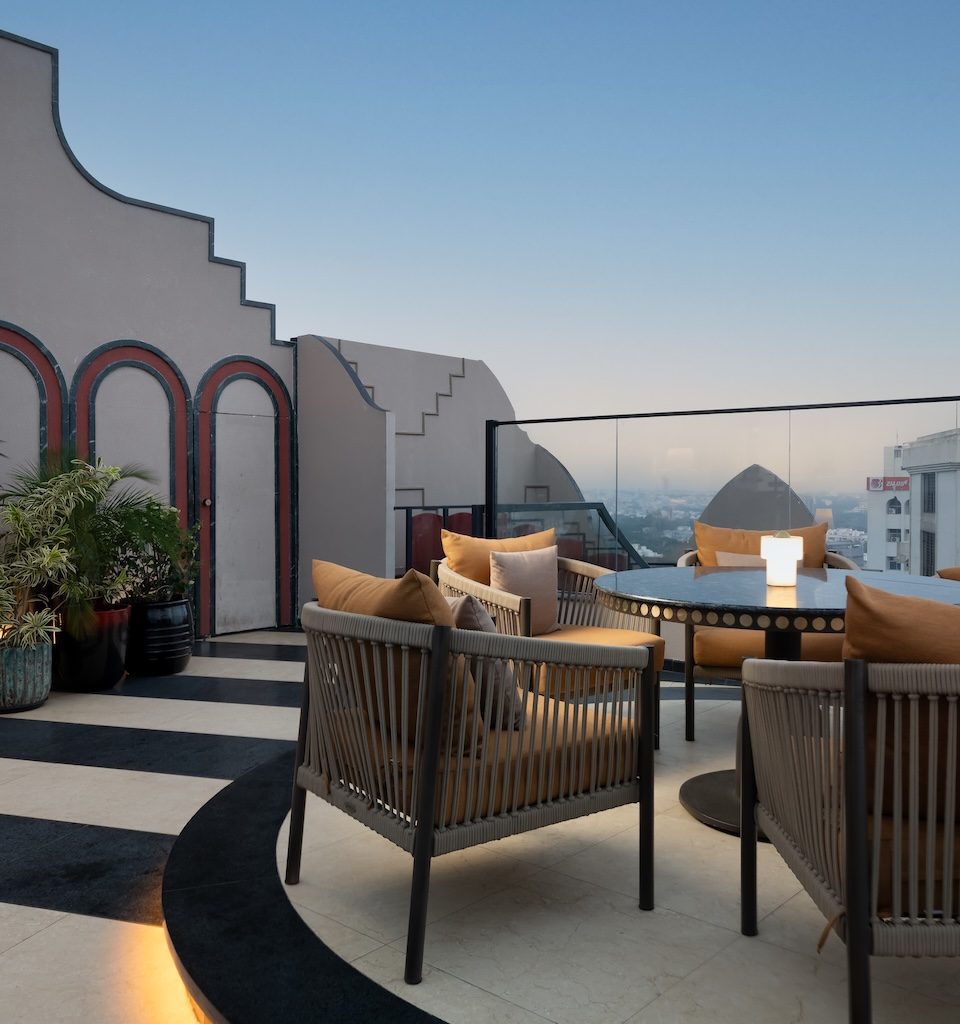
Located in Bengaluru’s CBD, the site for the restaurant occupied the 13th floor of an existing office building, with expansive views of the city’s dense green canopy. The site followed a partially covered, curved layout and bore the remnants of its former commercial use. To begin afresh, the existing structure was fully dismantled and reduced to a bare shell, allowing the design to be reimagined without constraint.
Civil interventions focused on introducing variation and spatial depth within the floor plate. Multiple levels were created to break visual monotony and establish a more dynamic dining experience. New washrooms were added, while an old office zone was repurposed and transformed into a fully functional kitchen. A spiral staircase was introduced to connect the main dining floor to the terrace above, expanding the restaurant’s usable area. Additionally, a dedicated structural framework was designed to accommodate two retractable roofs, enabling flexibility in how the space responds to weather and time of day.
The spatial configurations
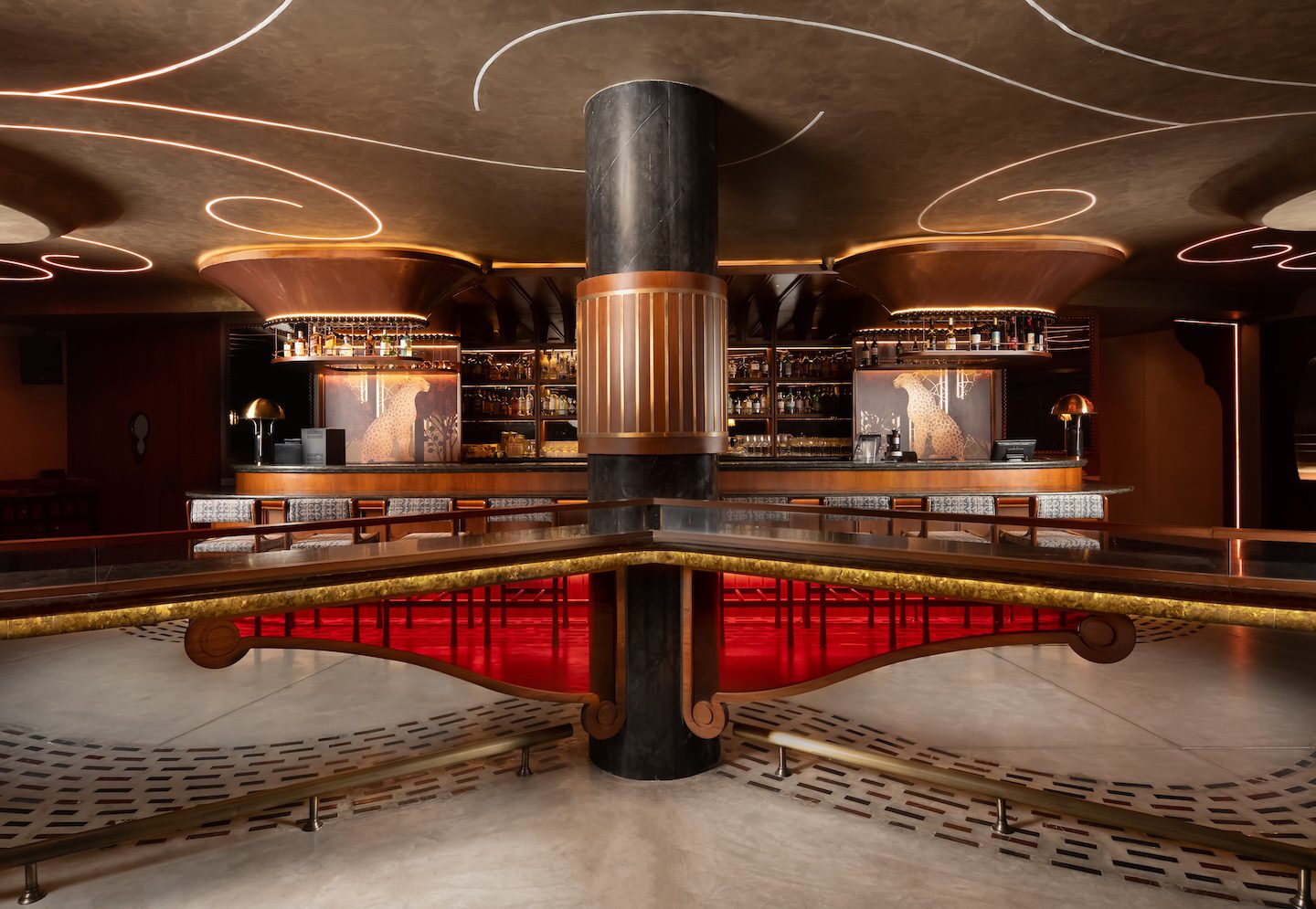
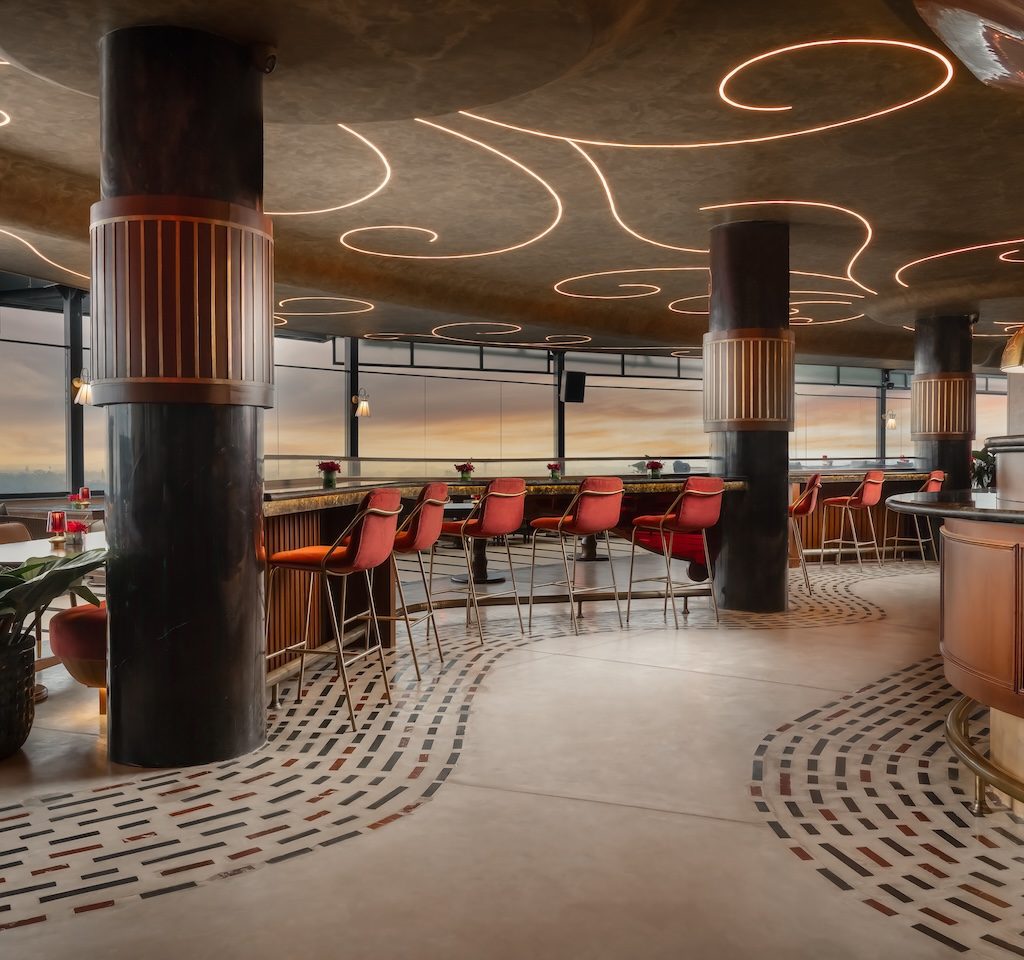
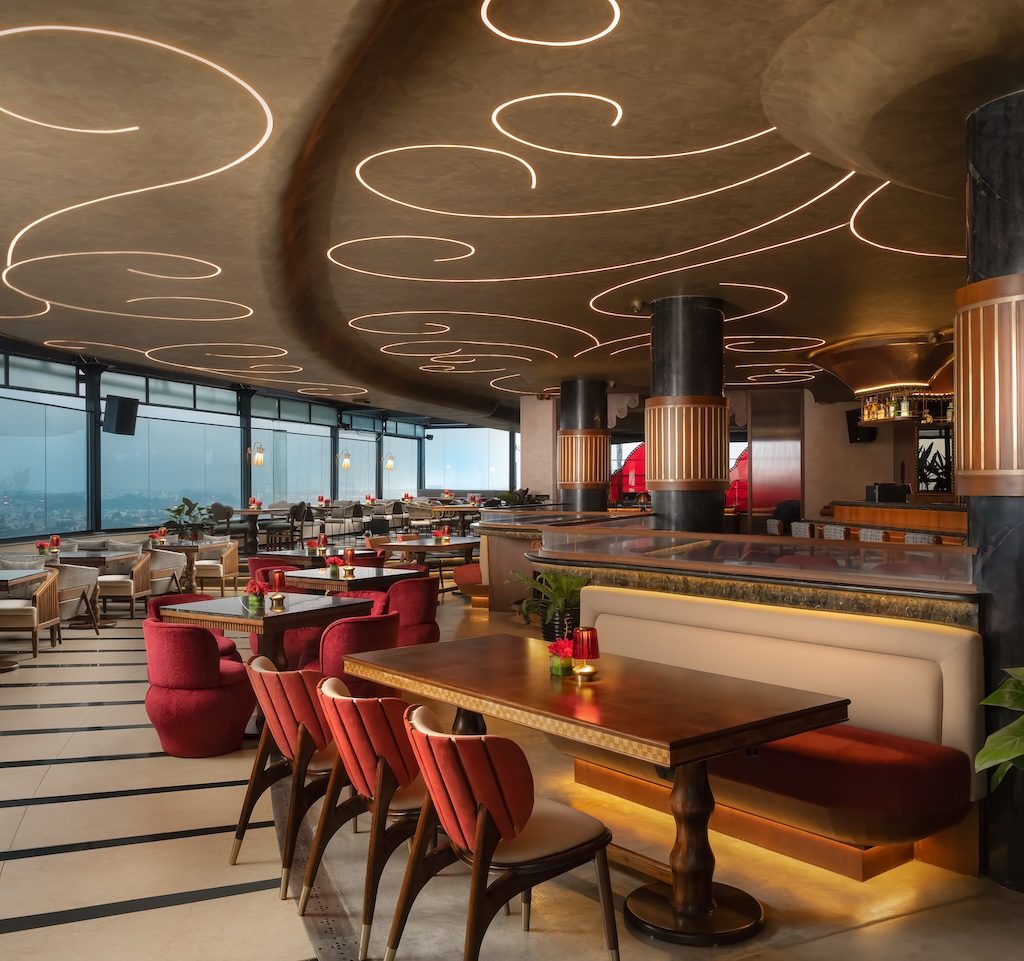
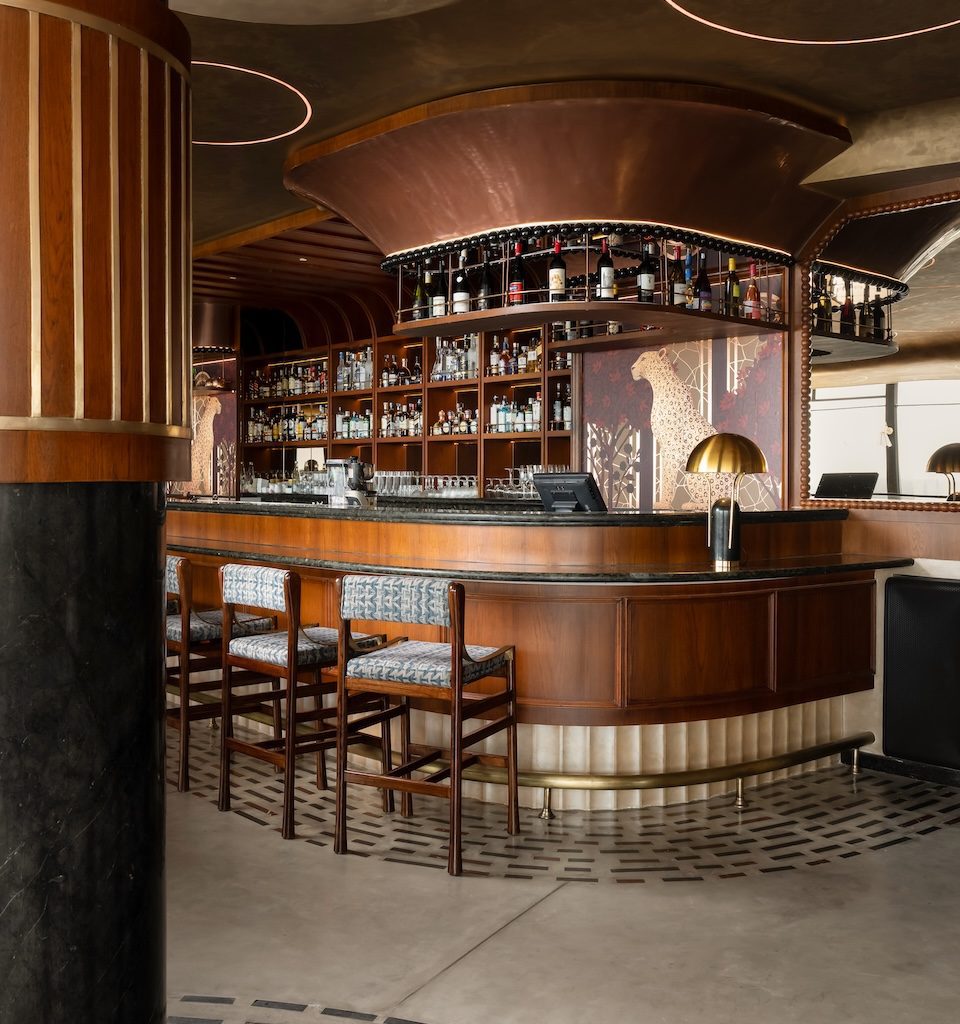
As the site offered sweeping views, the layout was planned to ensure that every guest could engage with this visual asset. Seating was organised in a mix of formats that remain flexible, allowing the restaurant to adapt easily to groups of varying sizes and dining preferences. At the centre of the plan sits the bar, conceived as both a spatial anchor and a social focal point. Positioned directly opposite the bar is a large community table, oriented to frame the view beyond and encourage shared dining experiences. The outer edges of the floor plate are defined by booth seating, offering a more intimate dining option while maintaining visual continuity across the space.
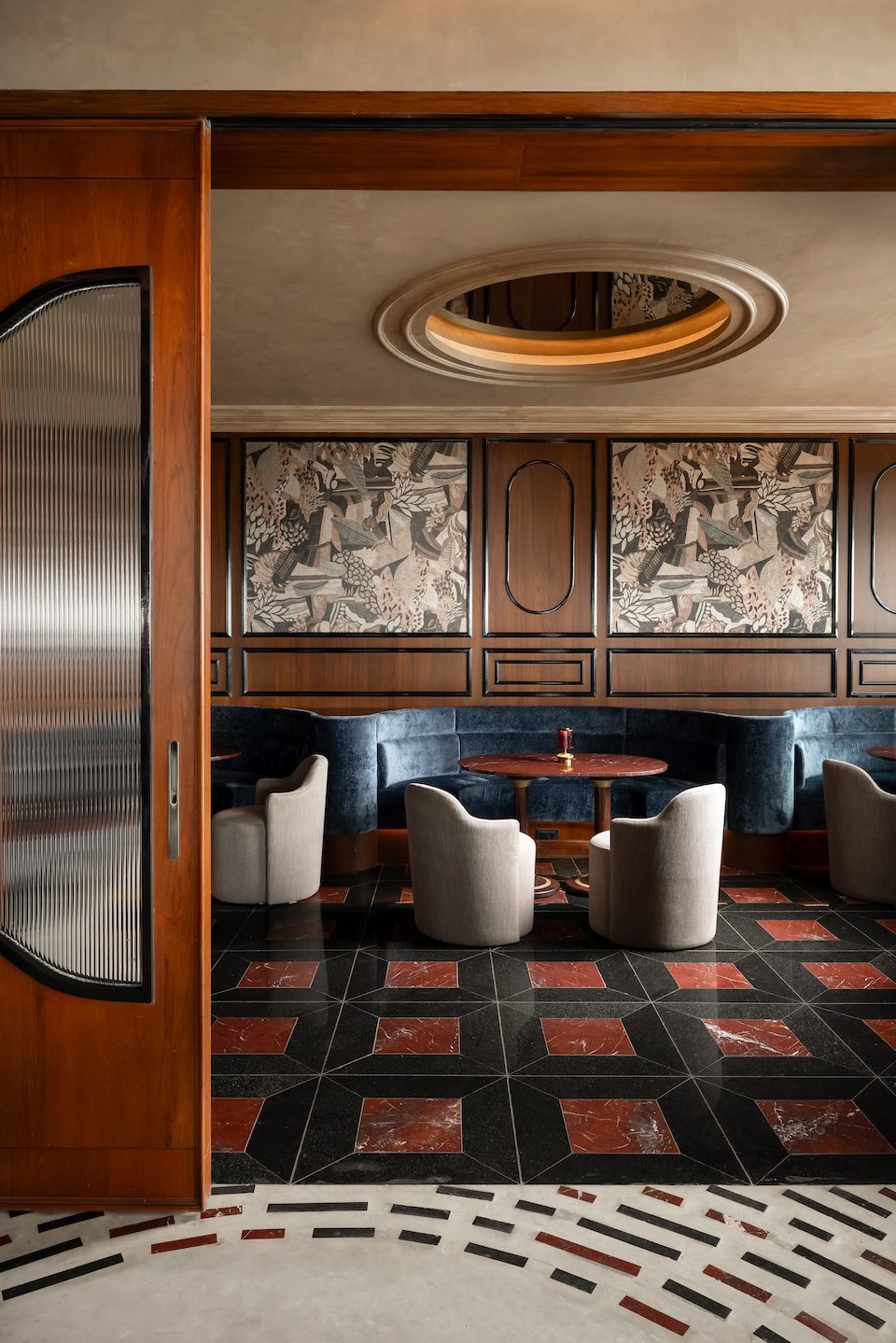
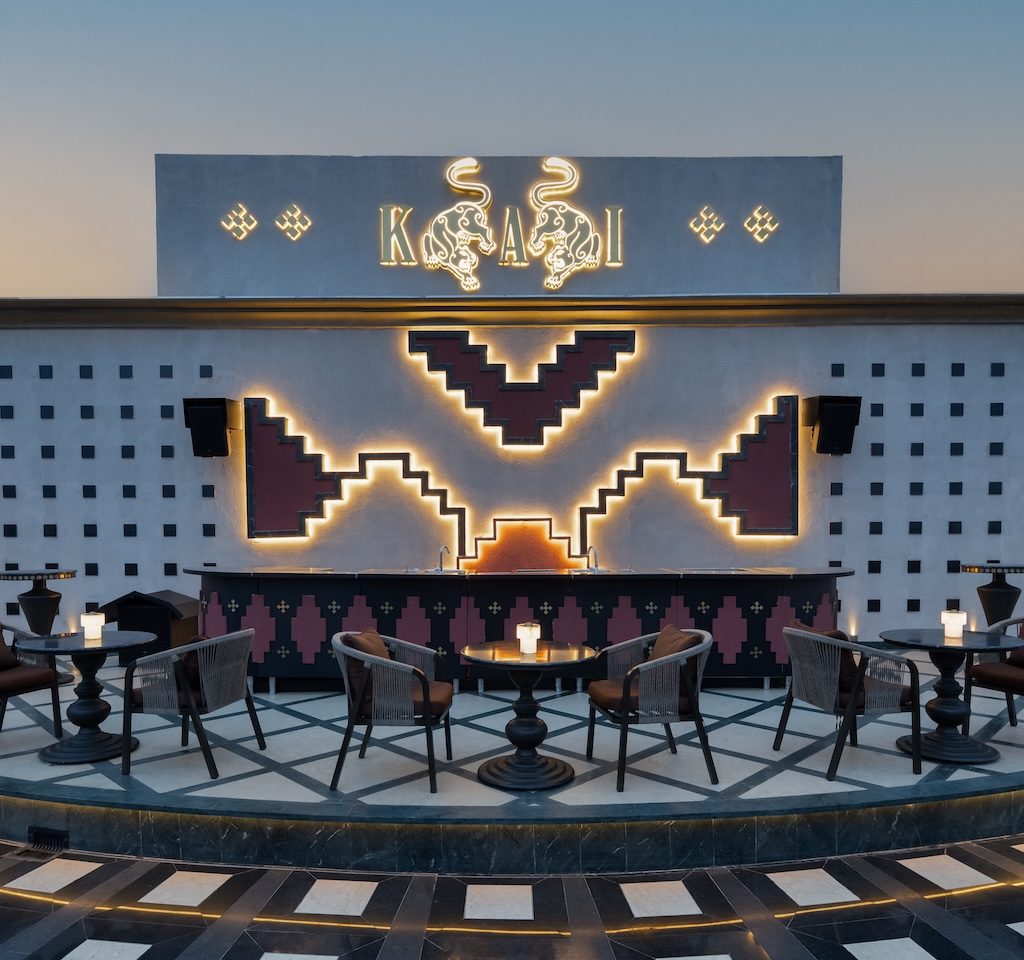
A helical staircase links the main dining level to the terrace above, extending the restaurant’s spatial narrative outdoors. The terrace is designed as a predominantly open-air setting, furnished with loose outdoor seating and a movable bar. This level is primarily activated for events, post-sunset dining, and brunch services.
The material and colour palette
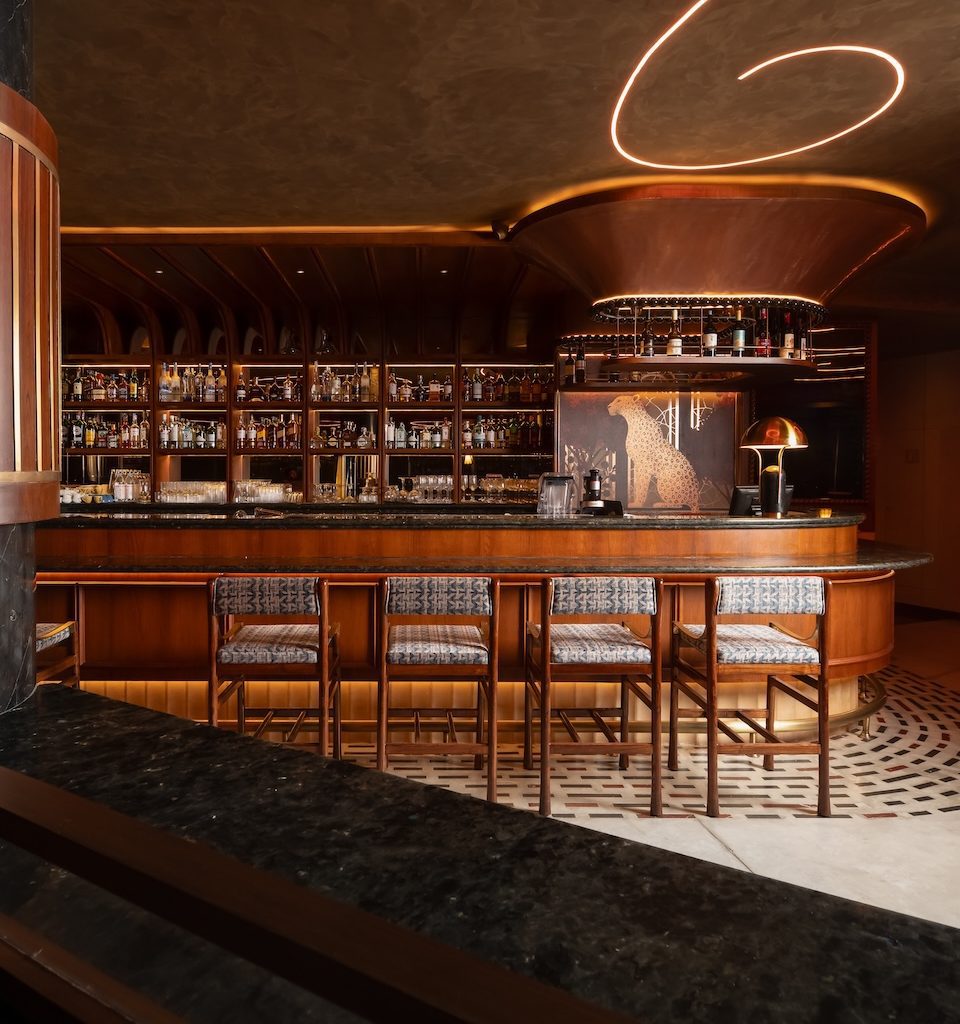
A rich spectrum of premium materials and finishes defines the restaurant’s opulent character. Red Jasper marble sets the tone in the lobby, paired with an imported patterned red wallpaper that establishes an immediate sense of drama. At the bar, liquid metal in a copper finish (a textured paint infused with real copper particles), introduces depth and lustre, reinforcing the bar’s role as a visual and social anchor.

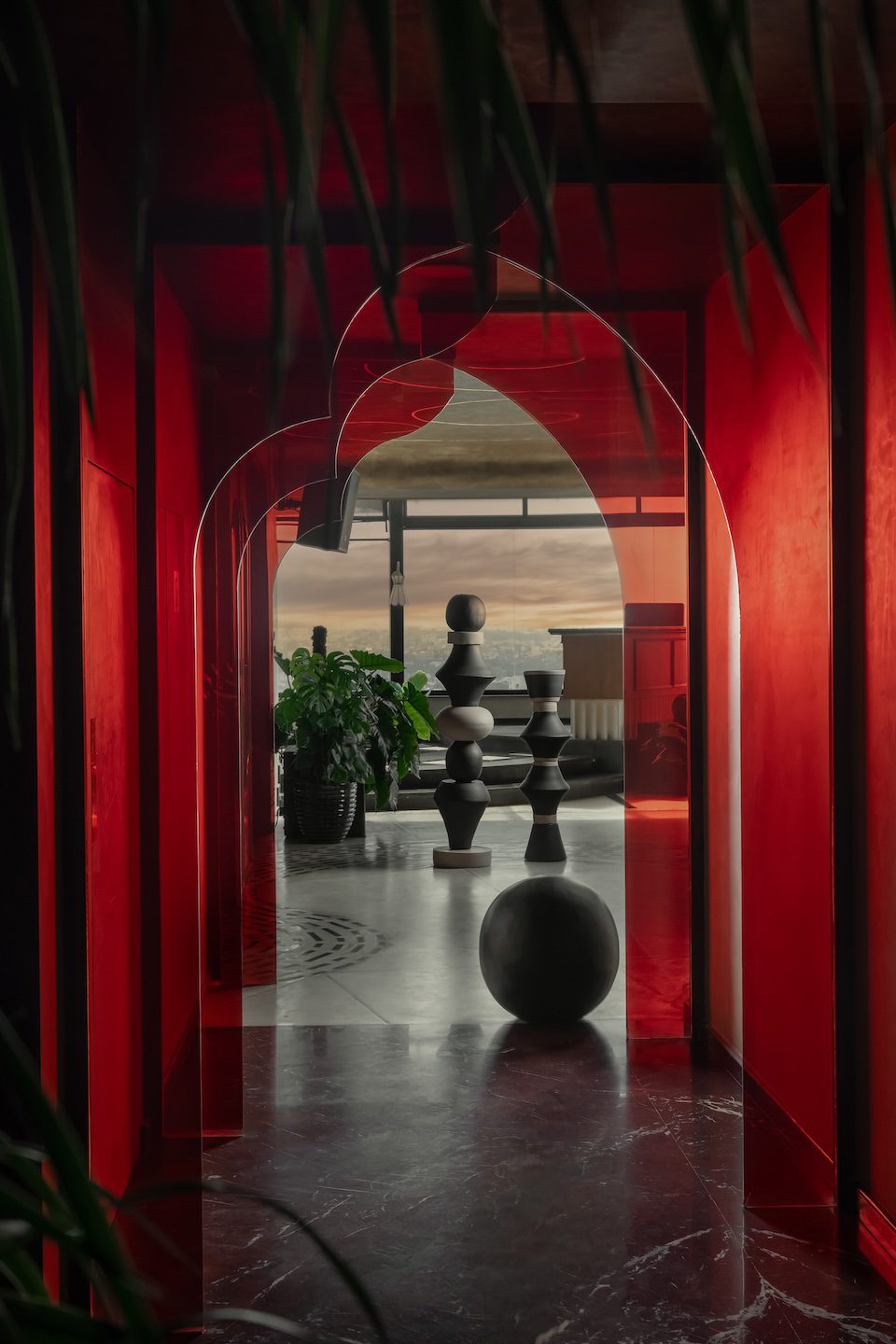
Flanking the bar are custom-designed wallpapers derived from the brand’s visual language. Rendered in metallic copper, the pattern highlights the contours of the leopard motif, adding a layer of graphic intensity to the space. Deep red tinted glass appears repeatedly across the restaurant, shaping arched thresholds between the lobby and dining area, marking zones near the staircase and washroom access, and forming the curved balustrade of the helical staircase.
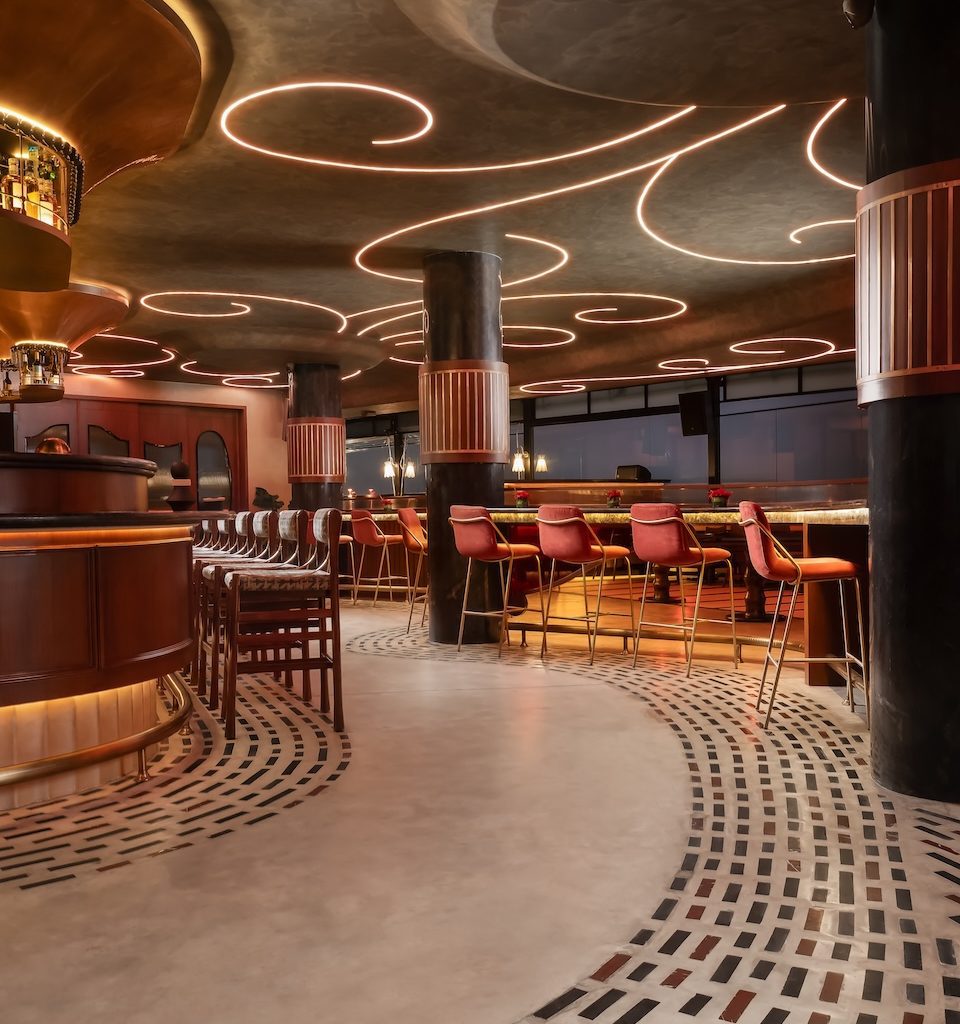
The flooring is deliberately complex and highly detailed. A radial pattern combining Nexion tiles, granite, and solid brass spacers defines key areas, while a grey IPS floor inlaid with red marble and black granite creates a fluid pattern around the bar. In the private dining room, geometric flooring compositions bring together granite, marble, and vitrified tiles to distinguish the space while maintaining continuity.
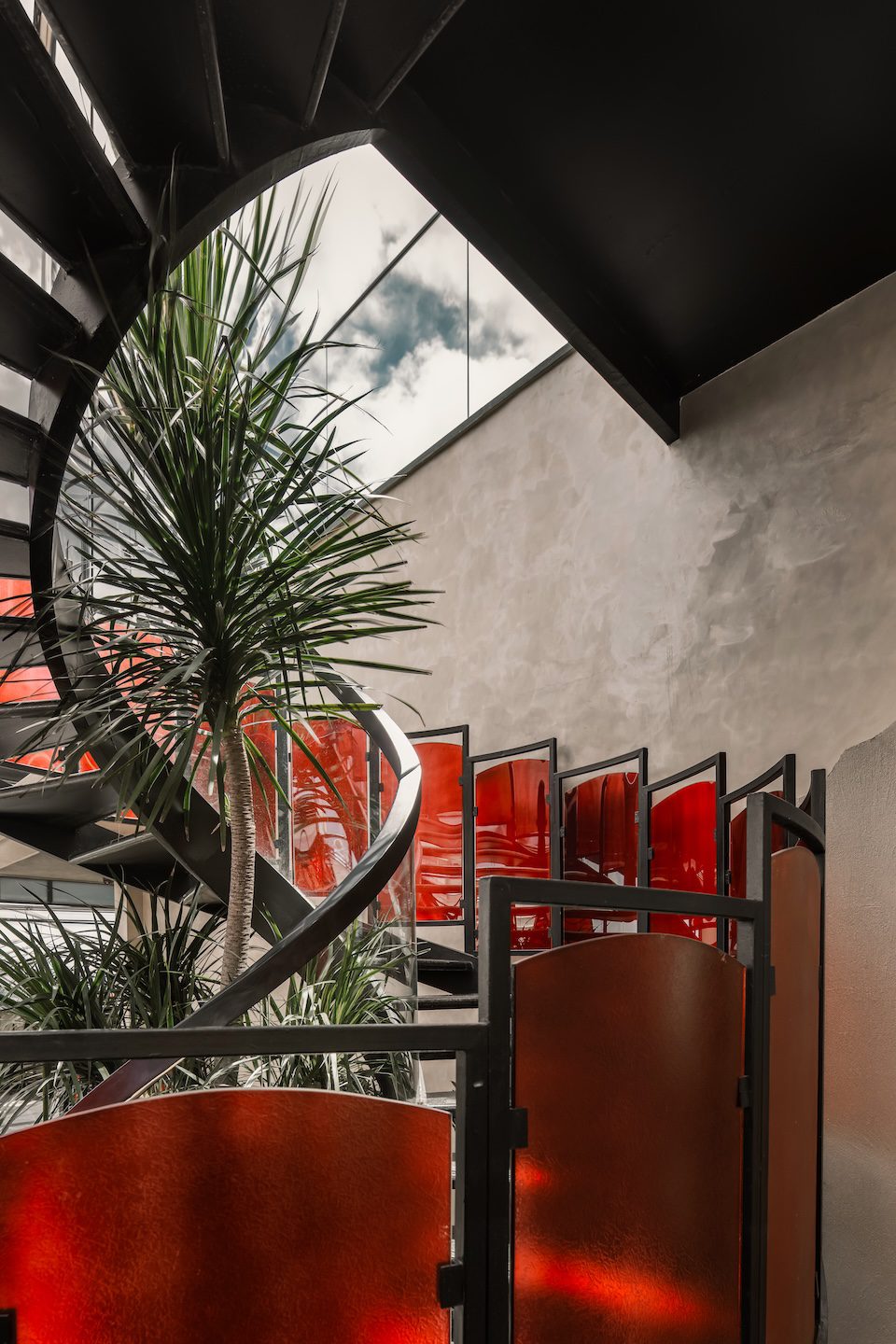
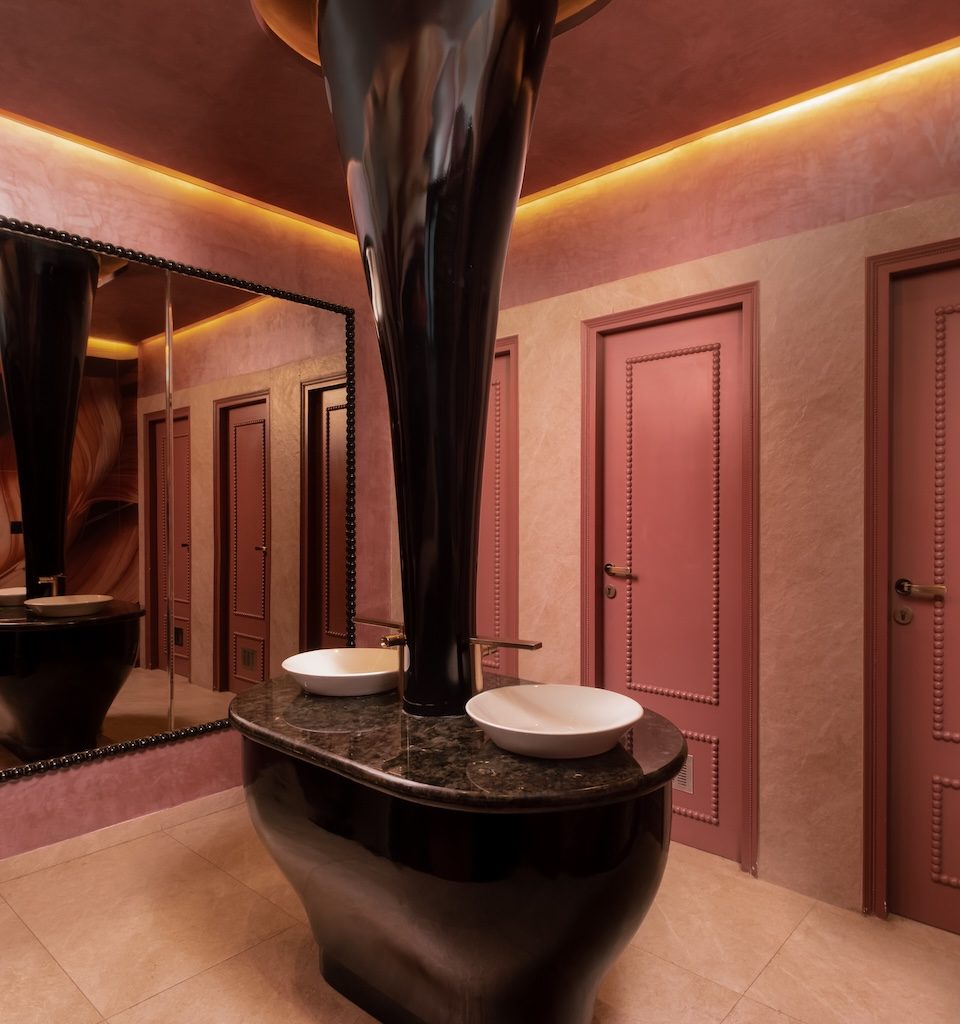
The women’s washroom departs from conventional layouts—featuring a central island with wash basins placed atop it, set against a floor-to-ceiling mirror that amplifies scale and drama. The ceiling in the main dining ceiling draws inspiration from the peacock, realised through programmable pixel LED lights. Each LED can be individually controlled, allowing the lighting to shift seamlessly between high-energy evenings, intimate dinners, and daytime brunch settings.
The highlights
Kai draws from the grandeur of Indian palaces, reinterpreted through a bold contemporary lens. Above the central bar, a ceiling inspired by the form of a peacock’s feather emerges as a defining design gesture, anchoring the space visually and experientially. Deep maroons and reds form the foundation of the palette, layered with copper and bronze accents, while walnut wood introduces warmth and balance.
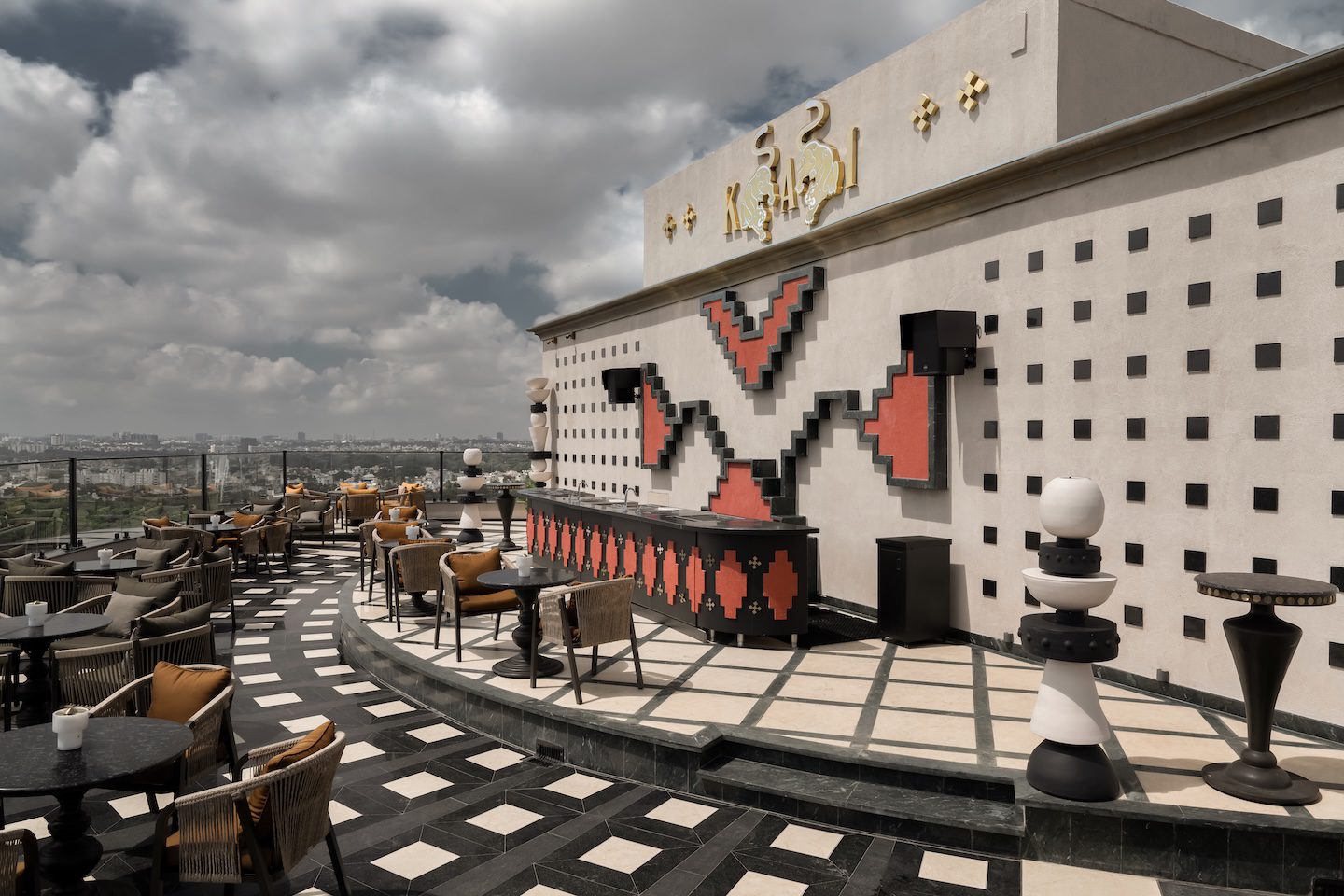
Throughout the restaurant, subtle motifs, custom-designed wallpapers, and finely resolved detailing bring coherence to the spatial narrative. Together with the expansive city views, these elements shape a dining experience that feels immersive and expressive, rooted in cultural reference yet unmistakably contemporary.
The challenges
“The main challenge that we faced in the project was that the space was on the 13th floor of an already existing office space. This made it difficult for us to shift materials to the terrace as there was no dedicated service lift. We had to work backwards on the materials and had to get them processed at factories in a way where they would fit in the lift,” says Koushik BR, principal architect, Maze Concept Design Studio. “Another challenge was to coordinate with many artists and vendors as the project required of a lot of customisations… from the one who supplied the wallpaper to the CNC, it was a complete team effort,” he adds.
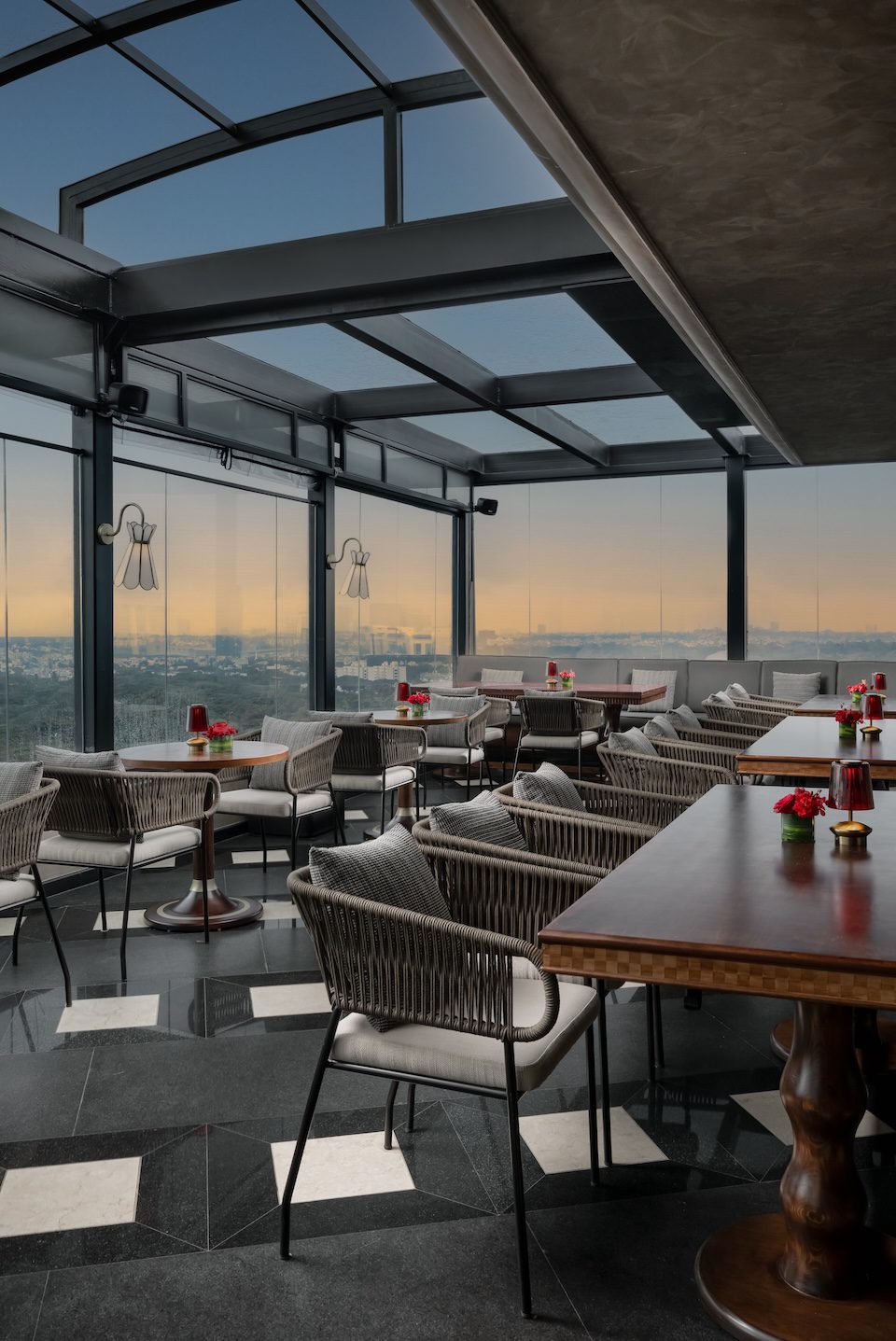
“We used Pixel LED lights for the first time in any project of ours. And the technicality involved in programming and calculating the load for the light was quite complex, even a small shift in voltage would make the light flicker or cause random LED’s to light up in different colours. So, we had to use a lot of devices in the backend system to ensure the voltage is completely stable,” explains Priyanka MC, principal architect, Maze Concept Design Studio.
Fact File
Project: Kai
Location: Ashok Nagar, Bengaluru
Area: 7,500 sq ft
Principal architects: Koushik BR and Priyanka MC
Design team: Nithya Niranjan
Contractor: Kartik Raja (Maze Concept Build Pvt Ltd)
Vendors: Oorjaa, Vynet Automation, Adithya Lamps, Mantry Stonex and Tongue & Groove


Add a Comment