
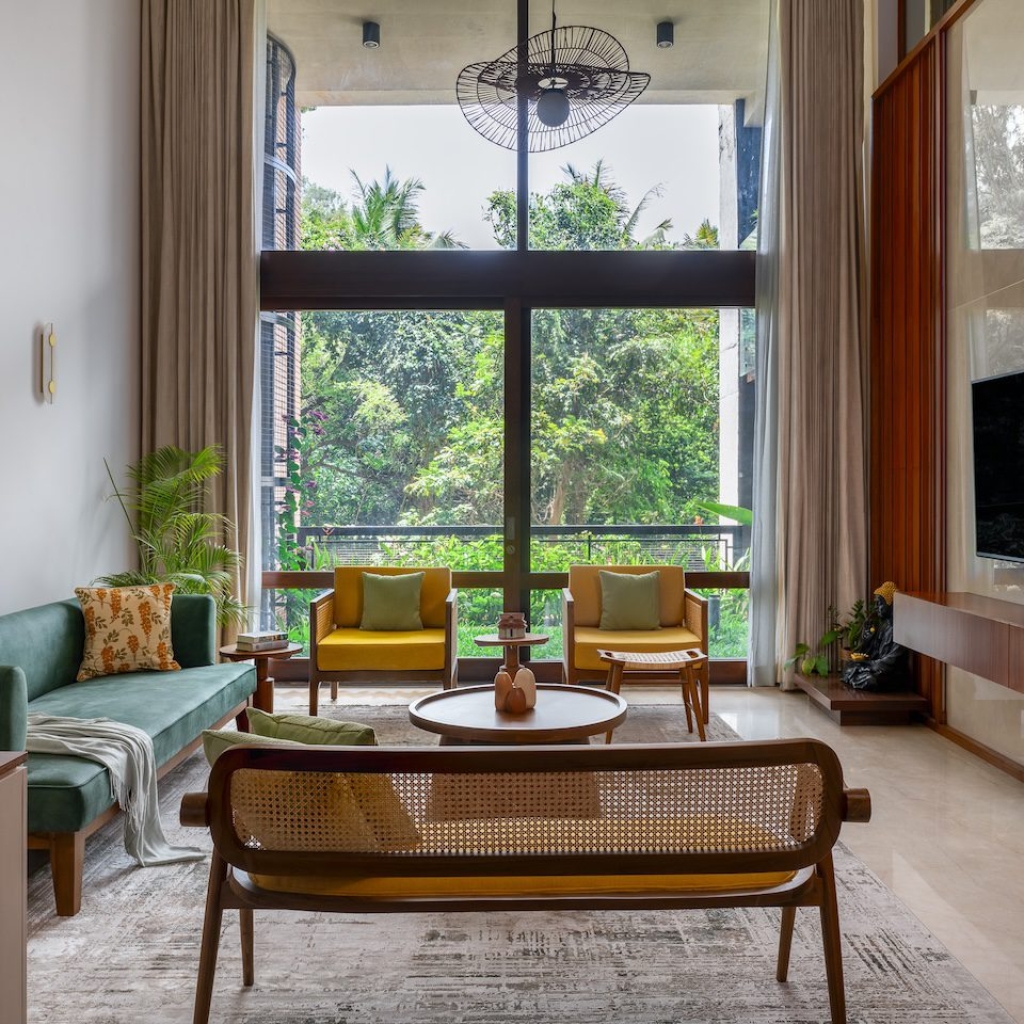
In Bengaluru, Vasudha by From Around Here unfolds as a luminous family home that balances Kerala-rooted cultural memory with a calm, contemporary spatial language.
Curated by: Rupali Sebastian
Photographs: Parth Swaminath I PHX India; courtesy From Around Here
The project
Vasudha is a 5,000 sq ft apartment designed for a couple with two children, originally from Kerala and now settled in Bengaluru. Conceived by From Around Here, the home reflects a nuanced balance between rooted identity and cosmopolitan living. Rather than leaning on overt cultural markers, the design allows memory, material and light to quietly shape the interiors, resulting in a home that feels warm, open and deeply personal.
The site
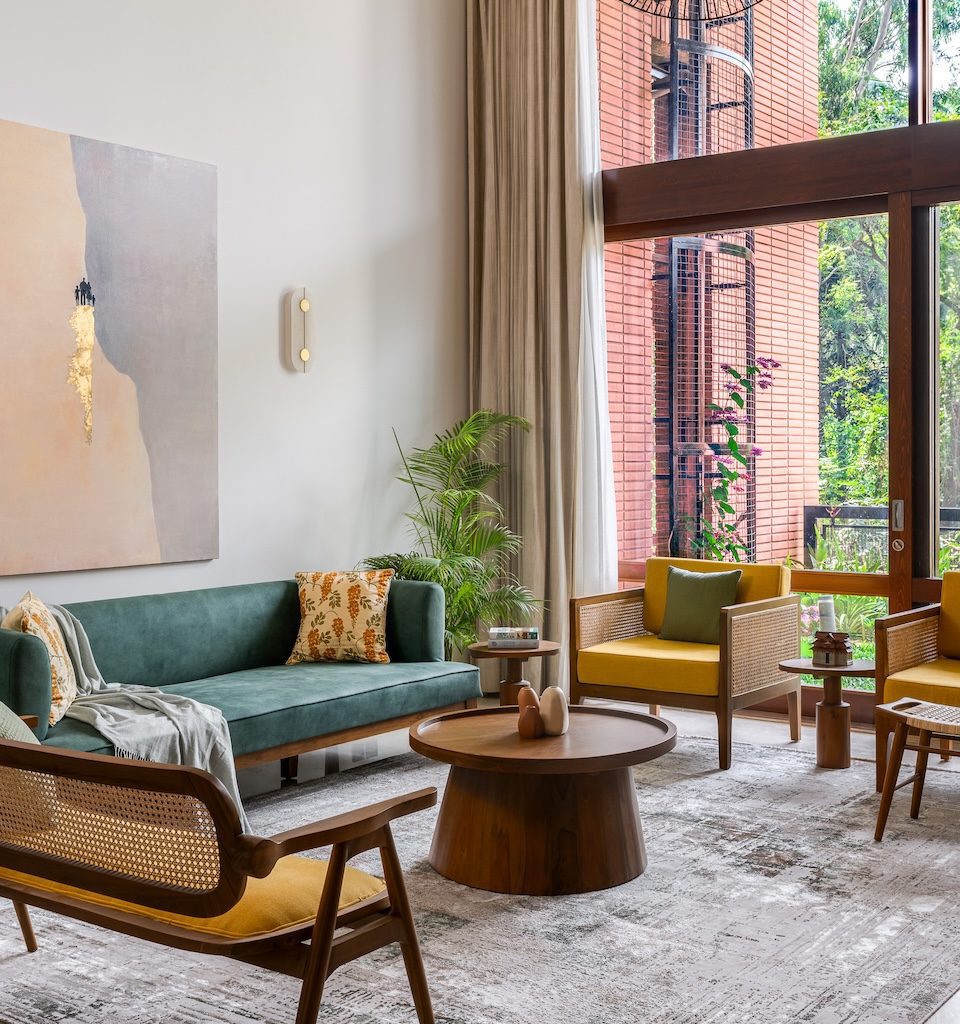
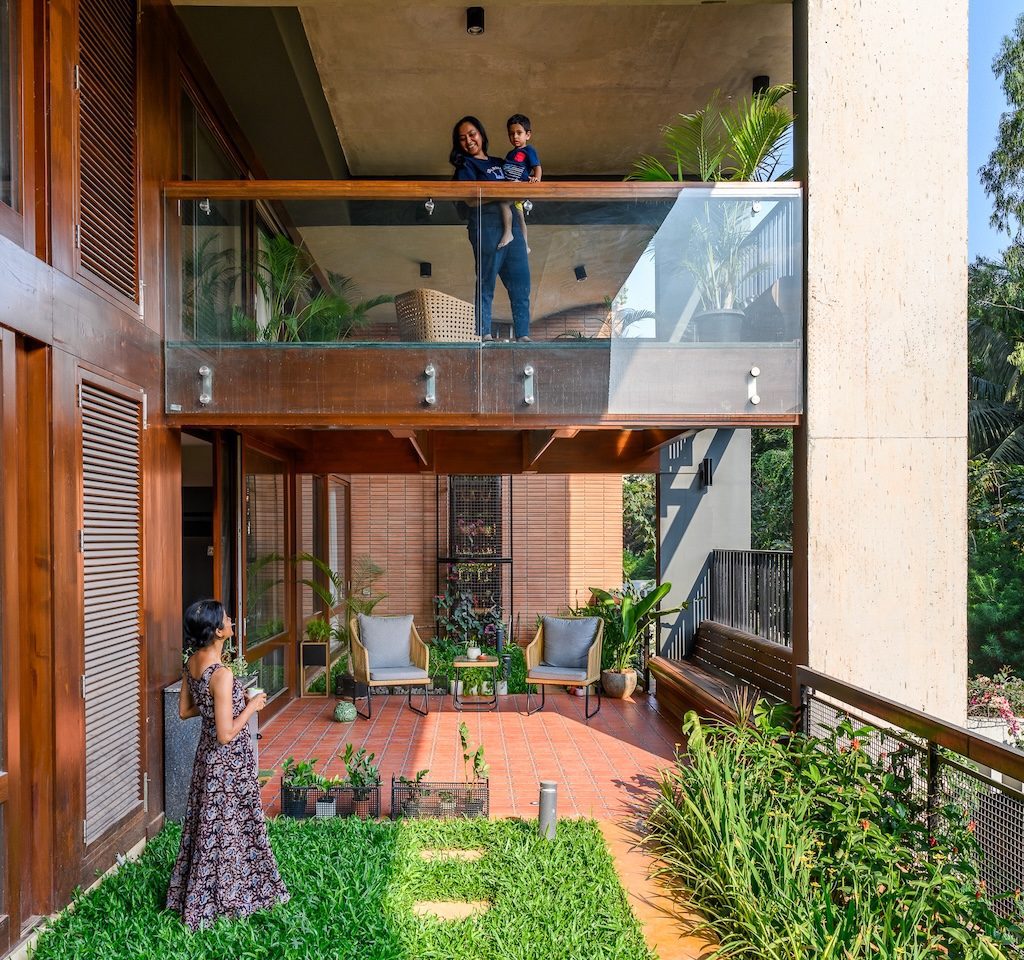
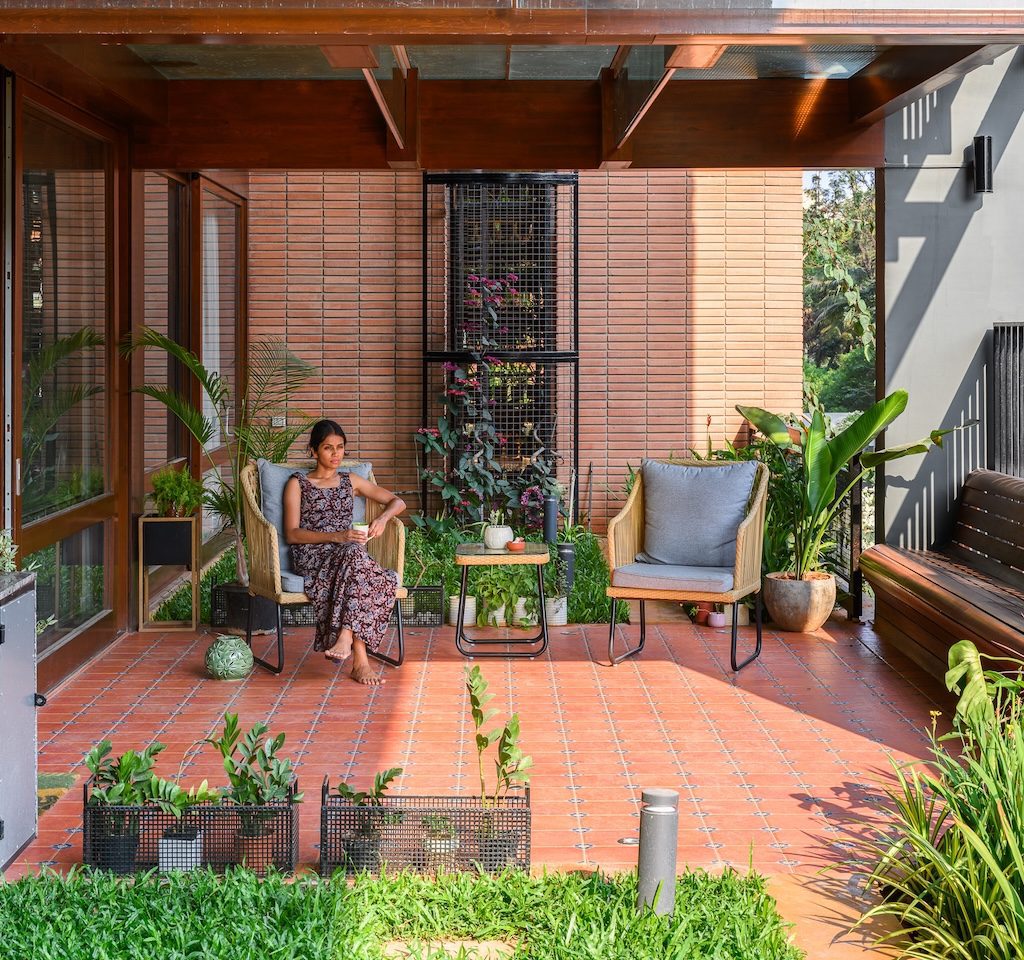
The apartment shell was received with abundant natural light, generous volume and excellent cross-ventilation—qualities more commonly associated with an independent home than a typical urban apartment. This inherent openness became the project’s greatest strength, allowing the design to focus on enhancement rather than correction. The spatial generosity set the tone for an interior that celebrates light, continuity and ease of movement.
The brief
The clients sought a home that felt contemporary yet intimate, one that could host with ease while remaining personal in spirit. Cultural references to their Kerala roots were to be present, but never dominant. As a senior marketing professional who entertains frequently, the client wanted spaces that transitioned seamlessly between formal gatherings and everyday family life. Elegance was to emerge through restraint, not display.
The design intent
The design approach was guided by clarity and intuition. From Around Here chose to let the apartment’s light and volume remain the protagonists, layering in details that carried meaning without visual weight. Each intervention was calibrated to balance modern sensibility with cultural resonance, allowing everyday rituals to be acknowledged through material, texture and form rather than overt symbolism. The result is an interior language that feels calm, grounded and quietly expressive.
The civil intervention
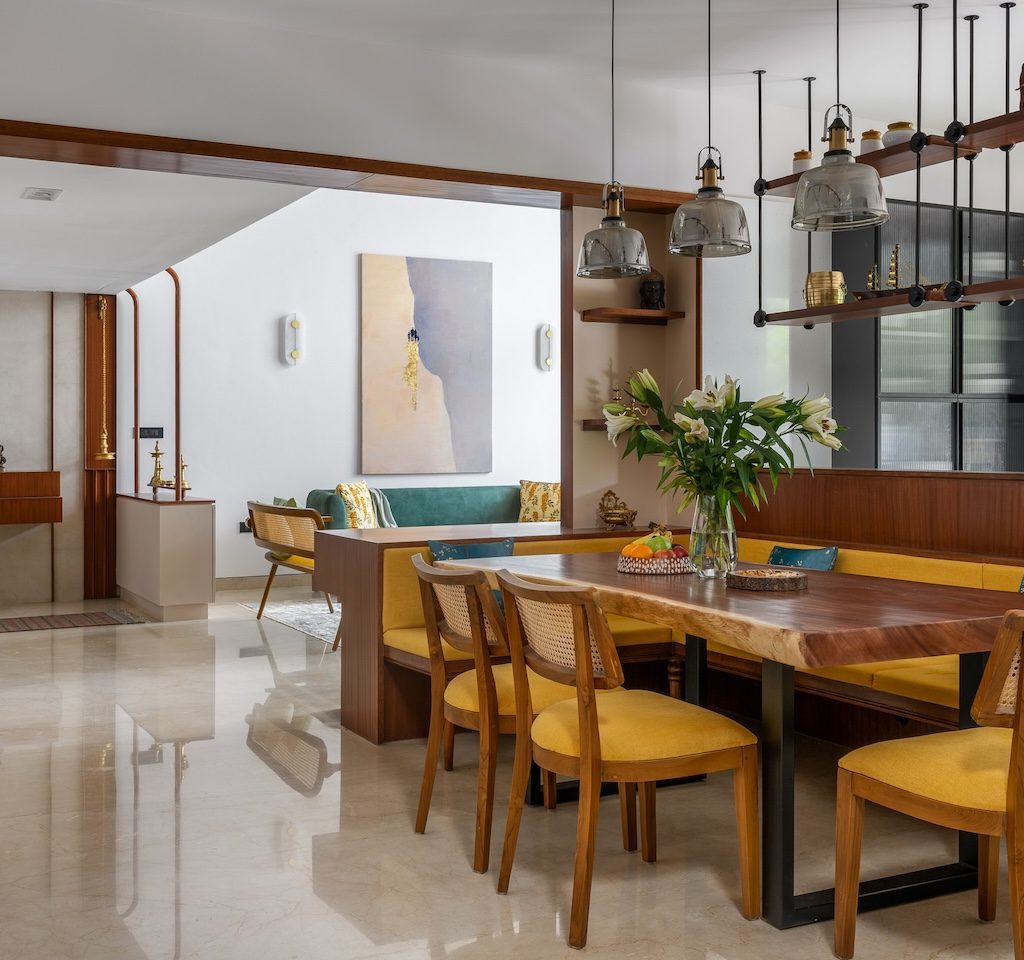
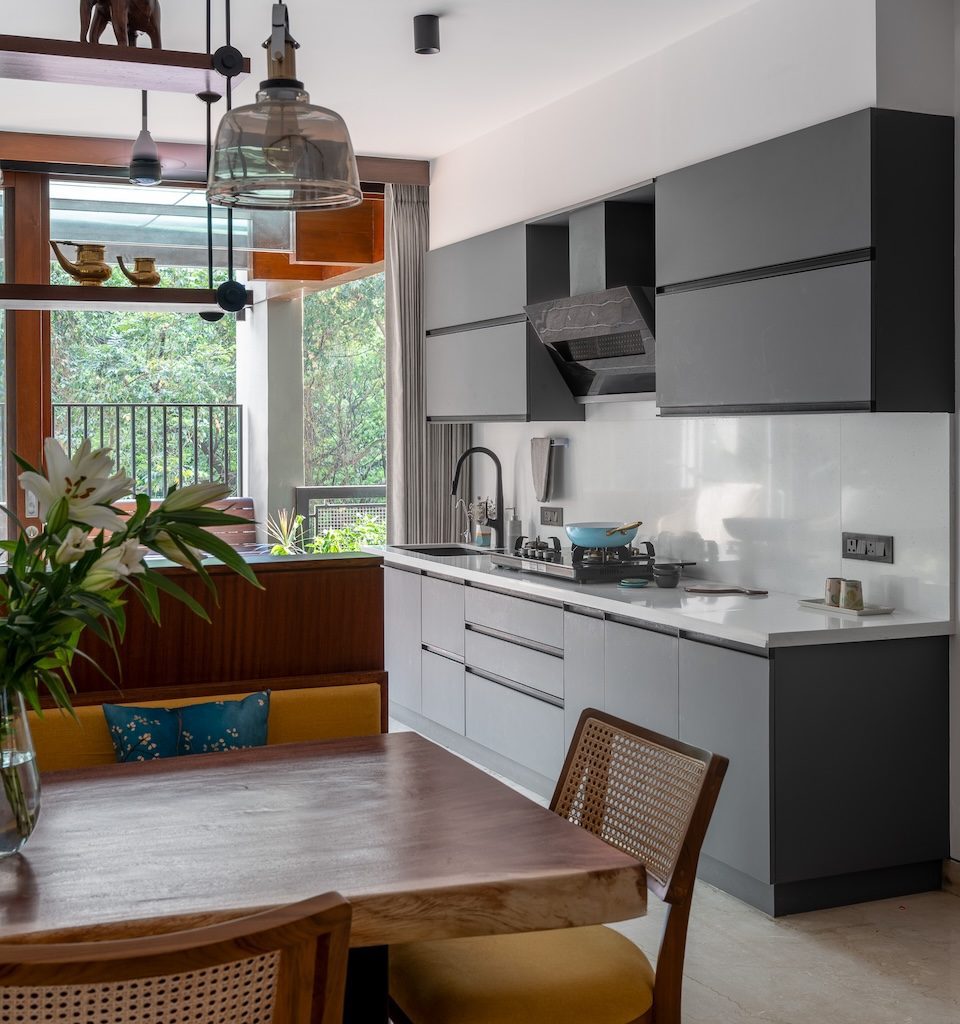
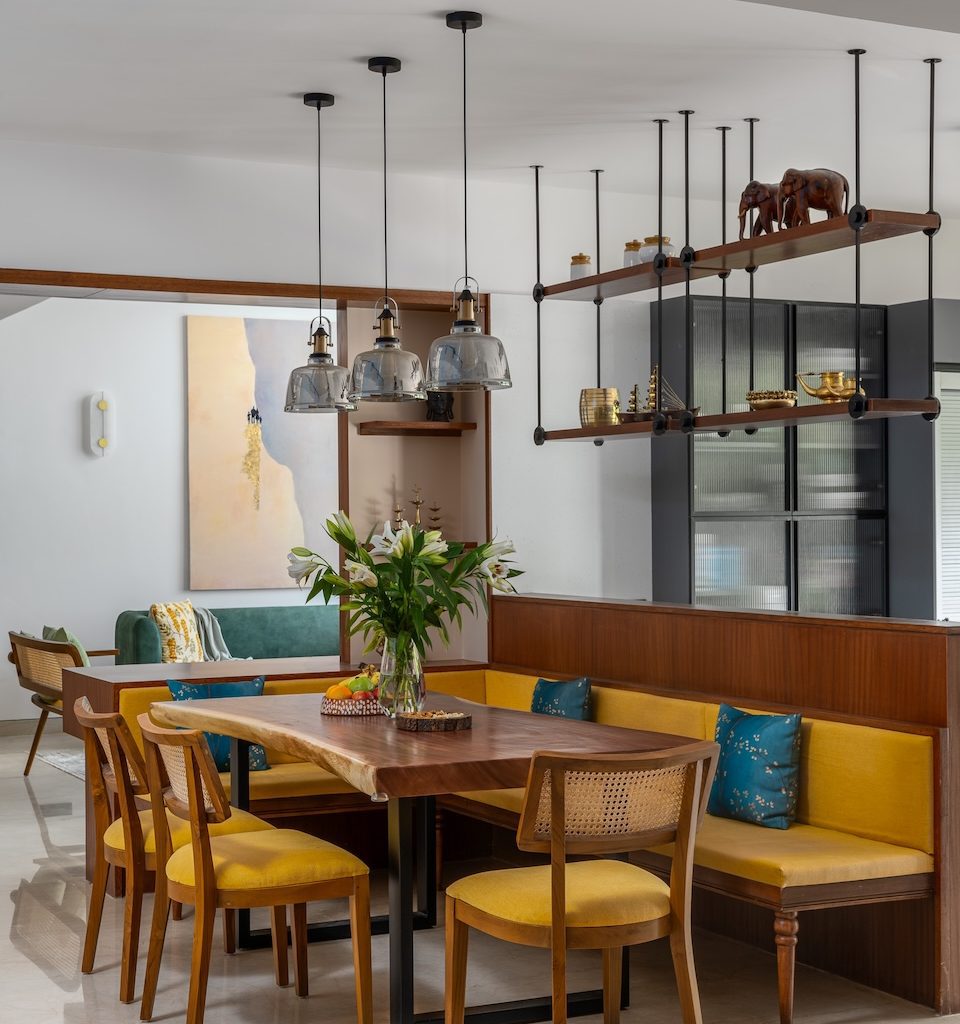
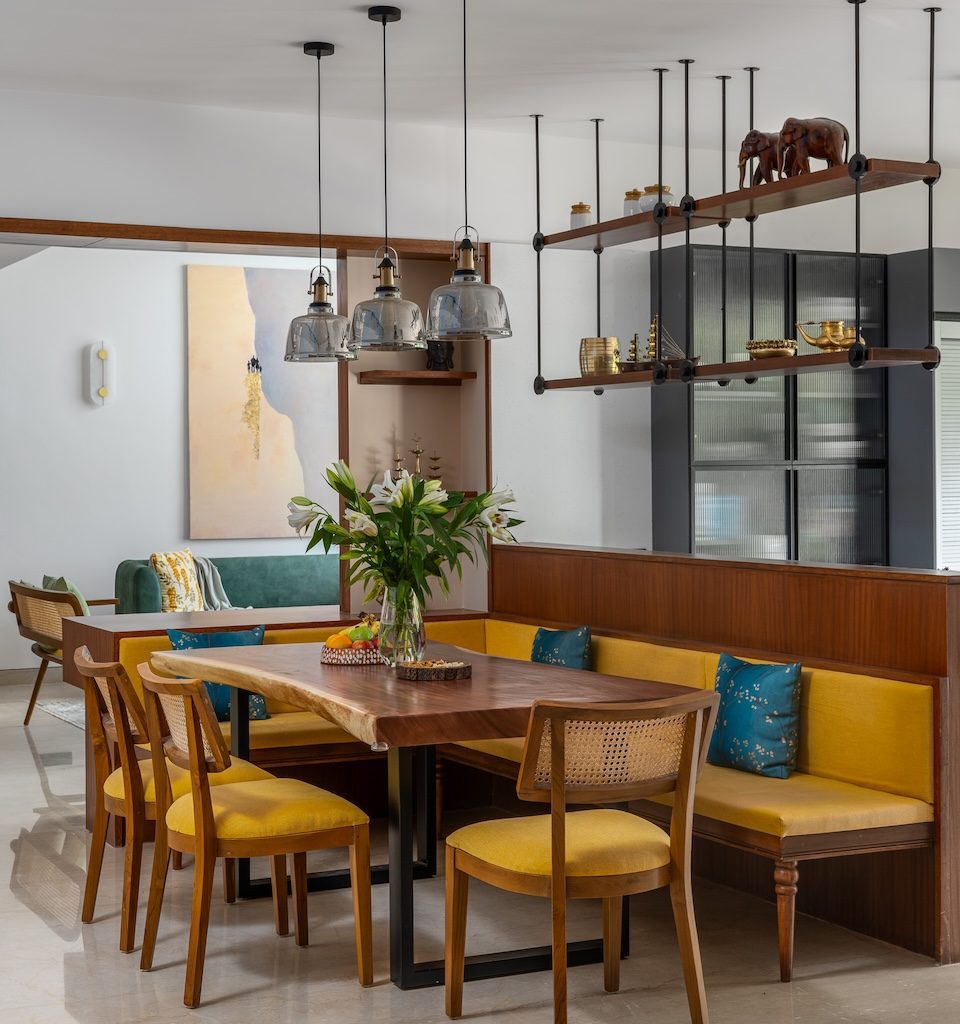
Civil changes were deliberately minimal, respecting the strength of the original shell. Interventions focused on selective wall finishes, built-in storage and custom partitions that defined zones without interrupting openness. Notable insertions include the suspended metal shelving that mediates between the kitchen and dining area, and the glass partition enclosing the first-floor lounge, which preserves visual continuity while offering acoustic separation. More substantial civil work was concentrated in the bathrooms, where re-tiling and the expansion of the master bath allowed for the inclusion of a bathtub.
The spatial flow
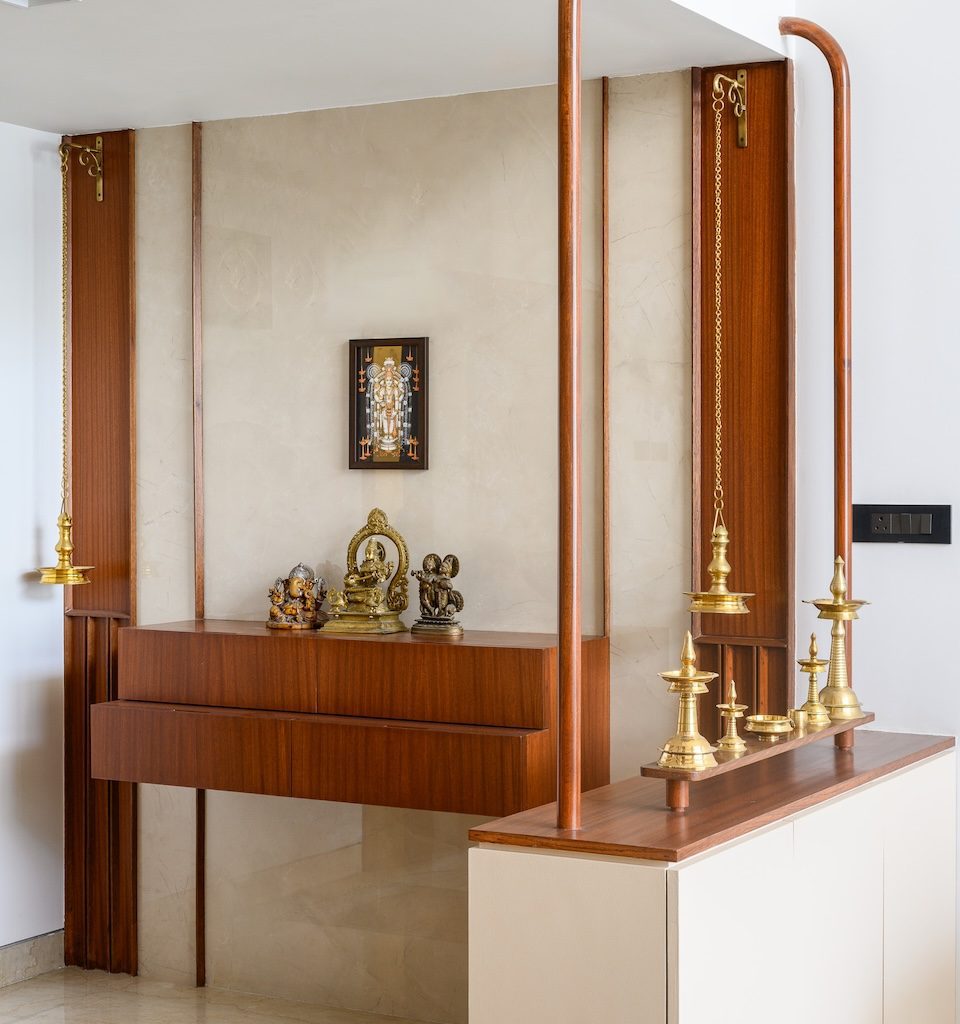
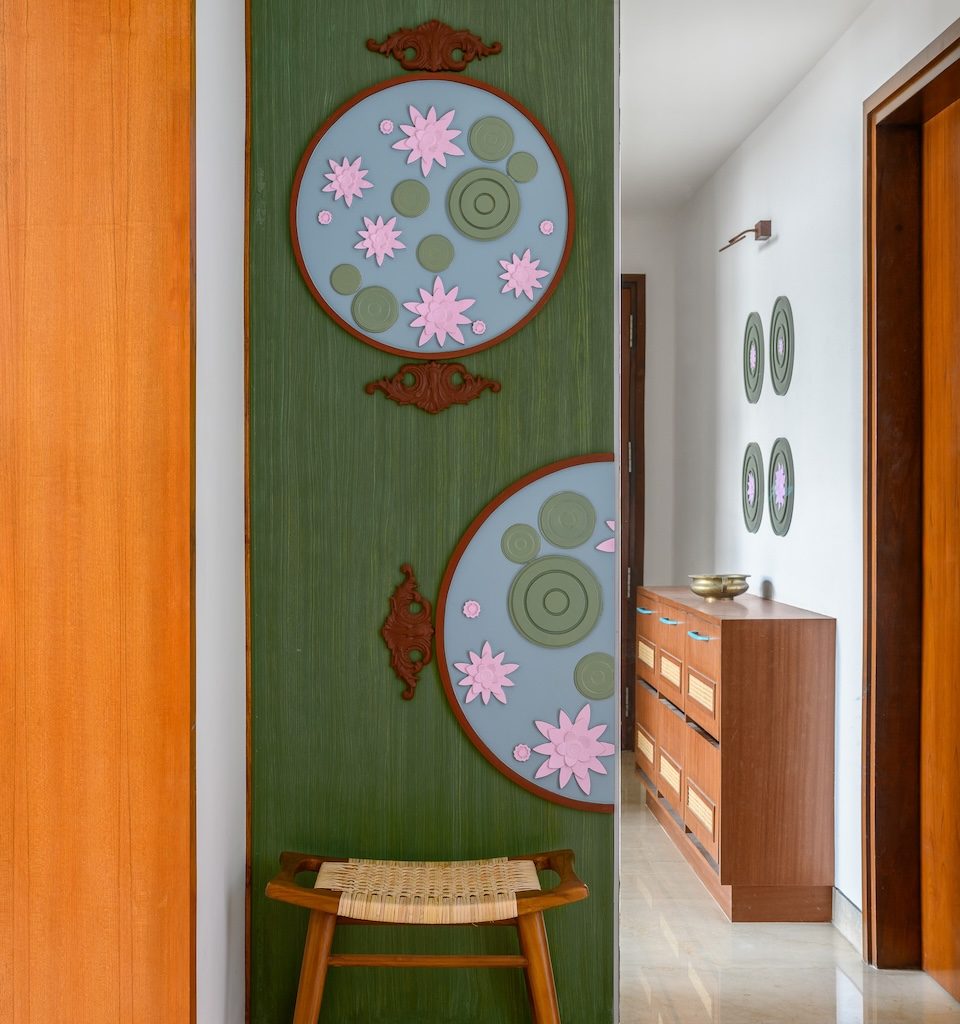
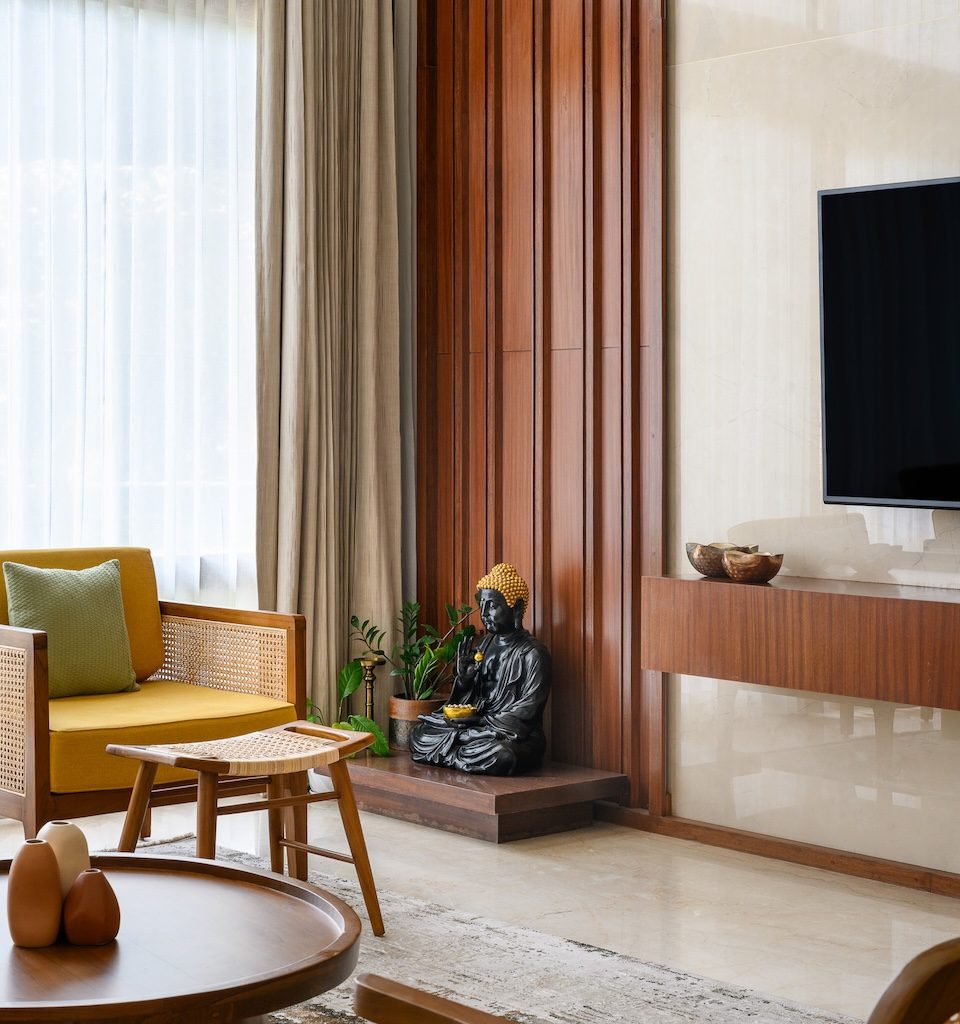
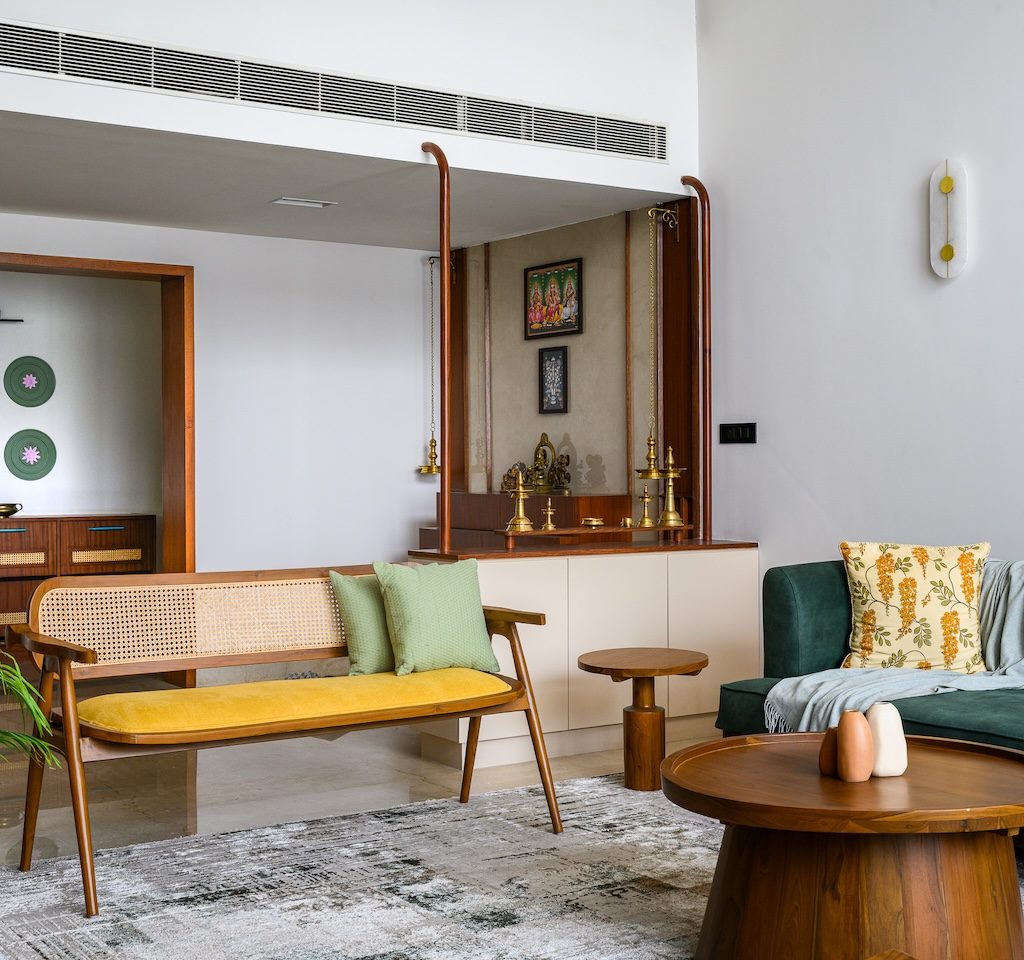
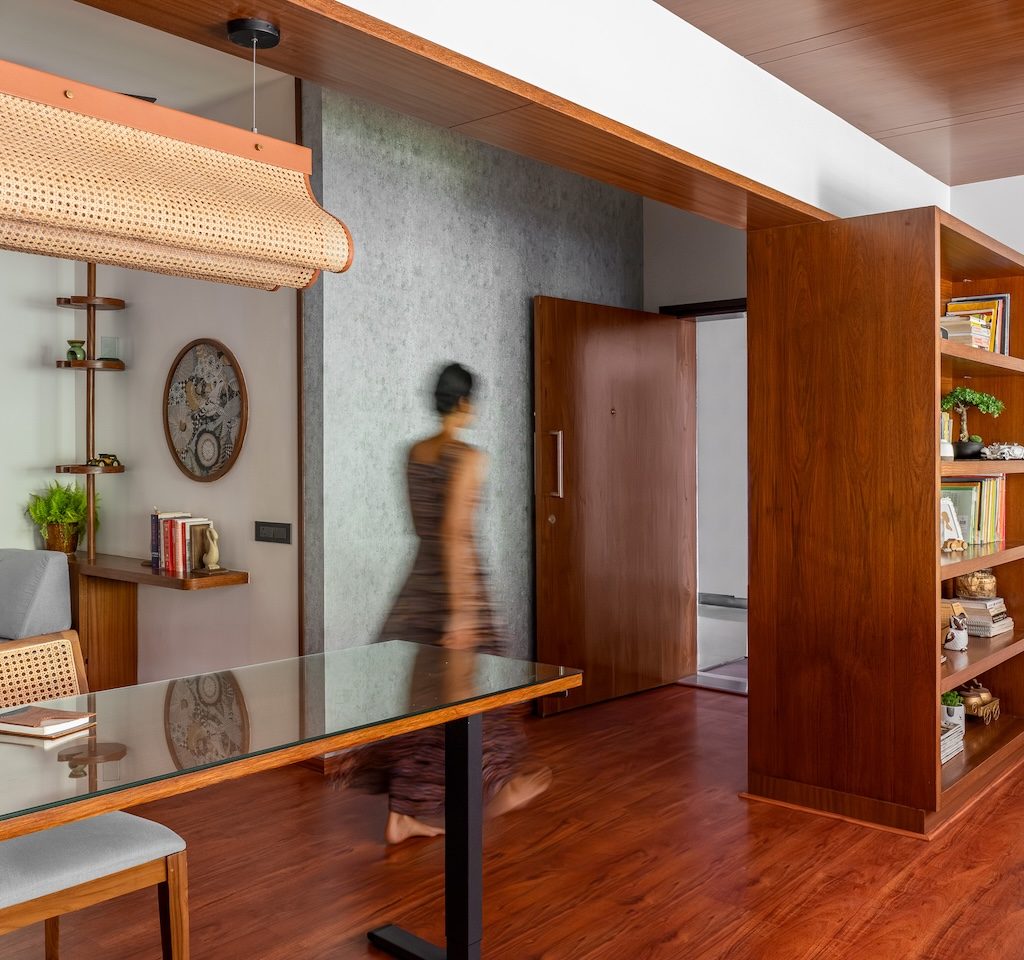
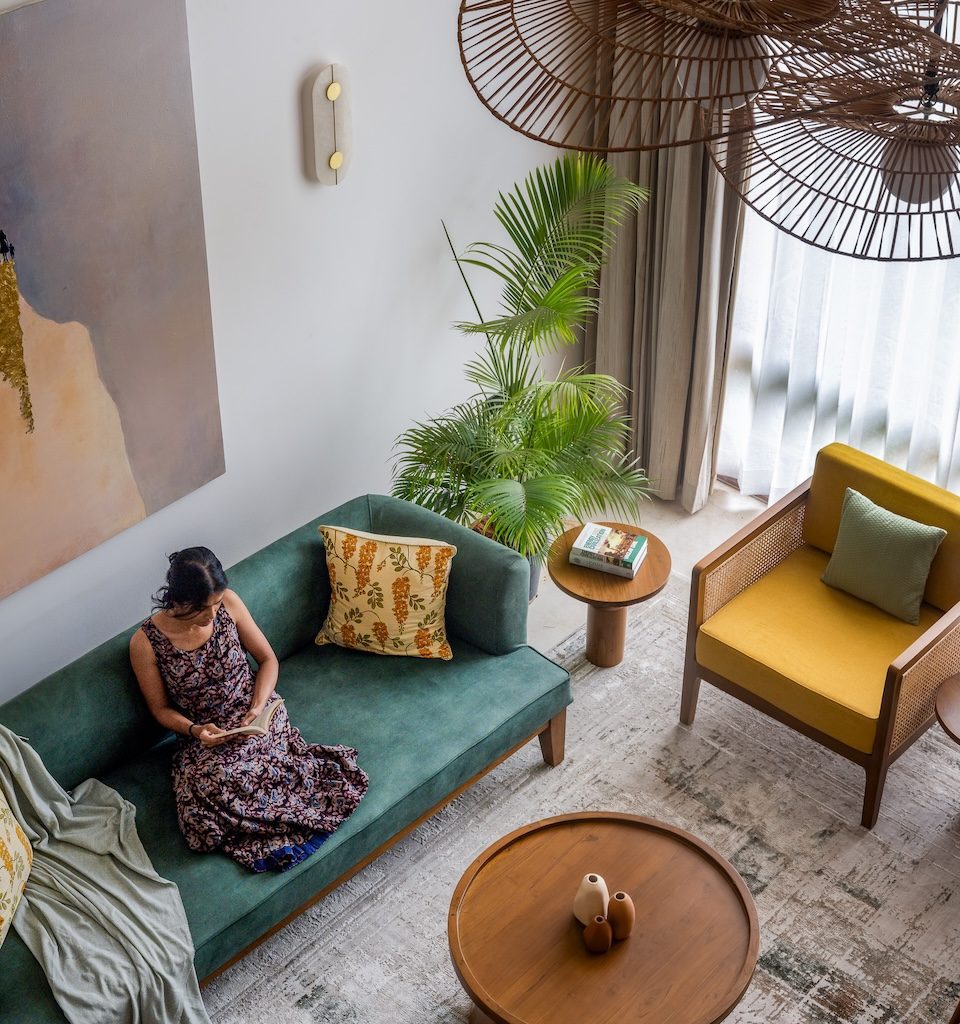
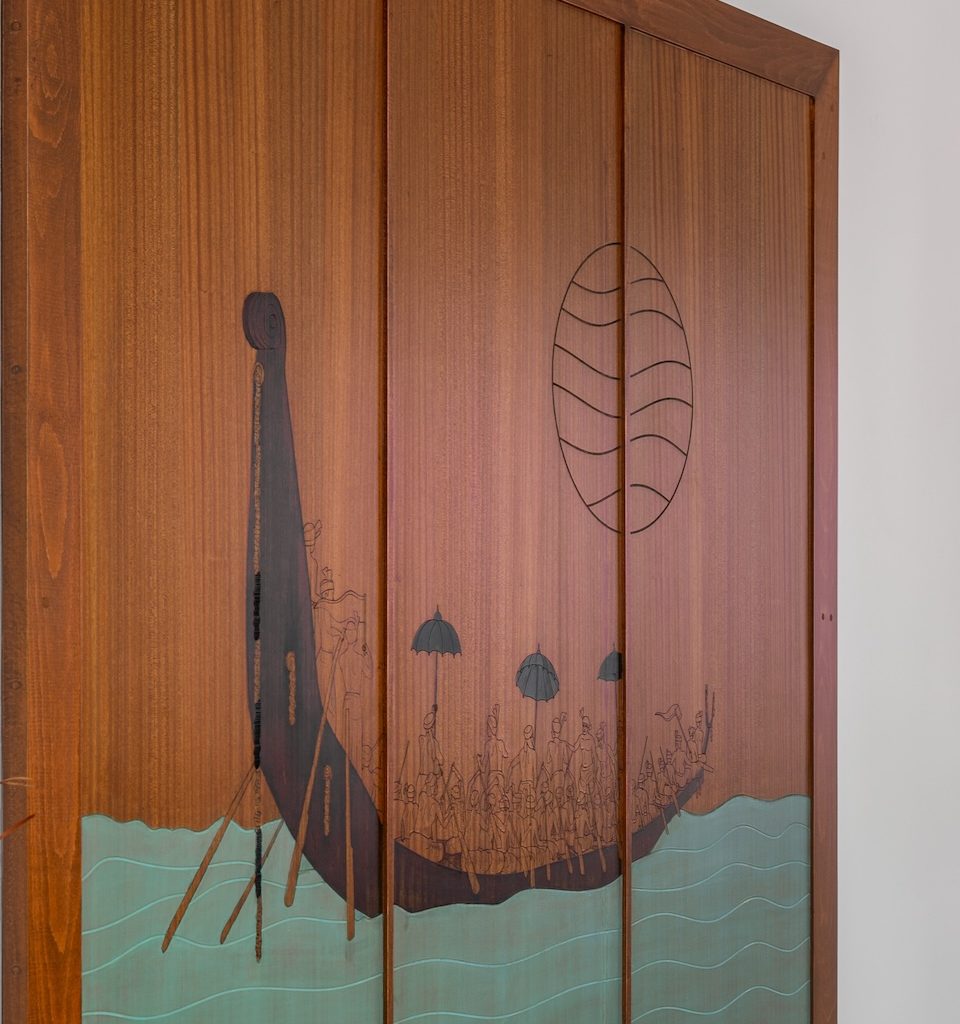
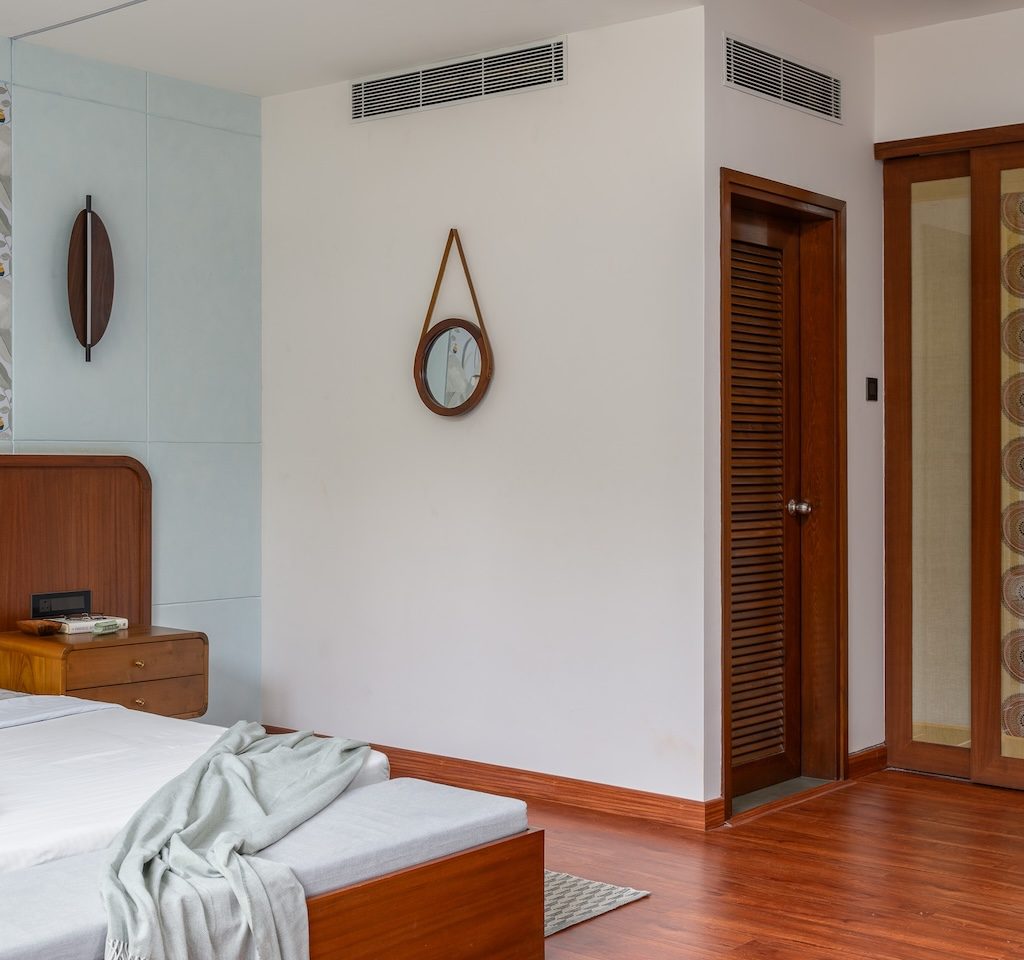
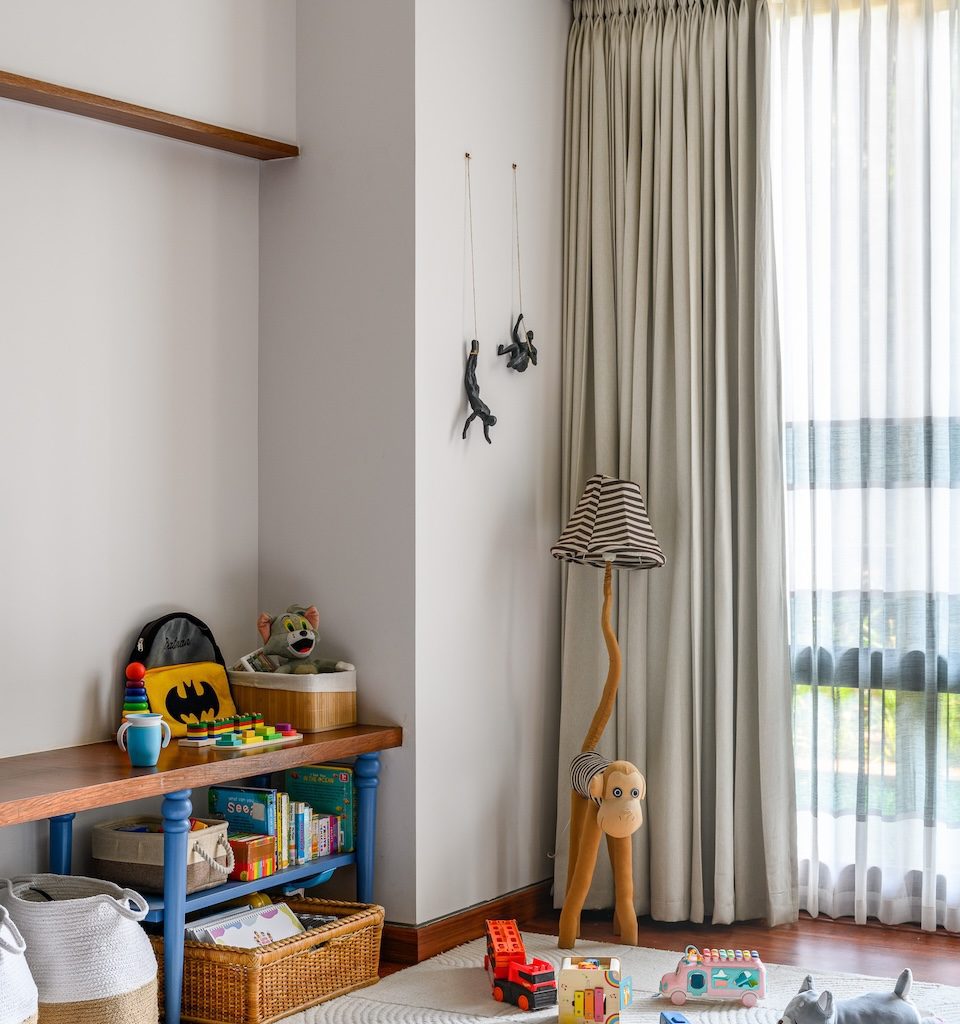
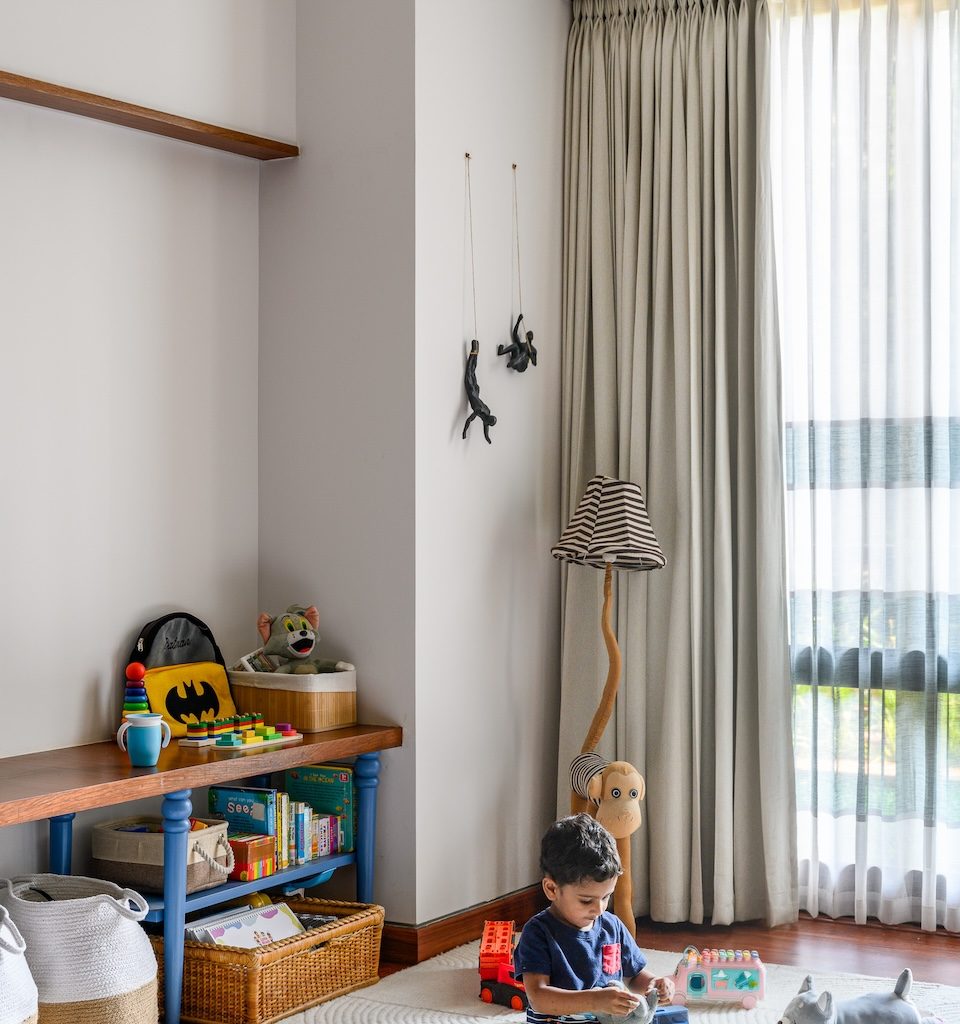
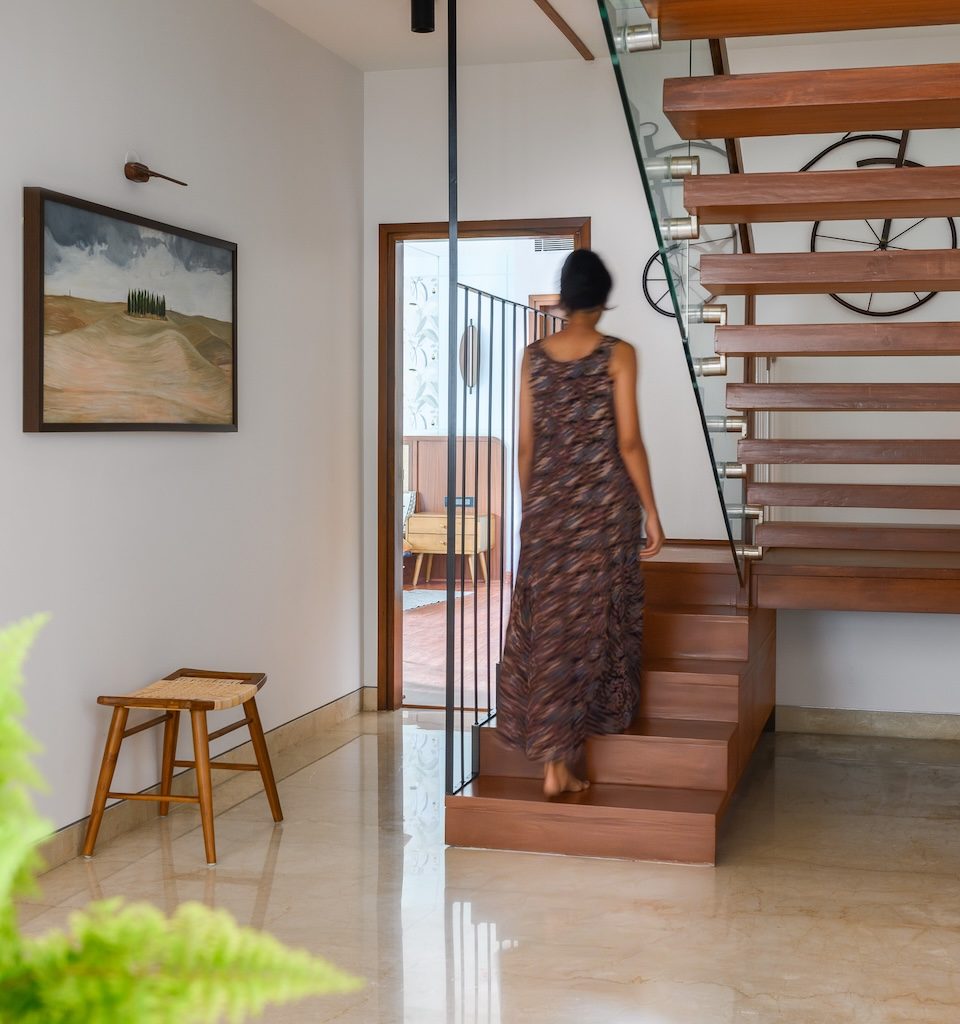
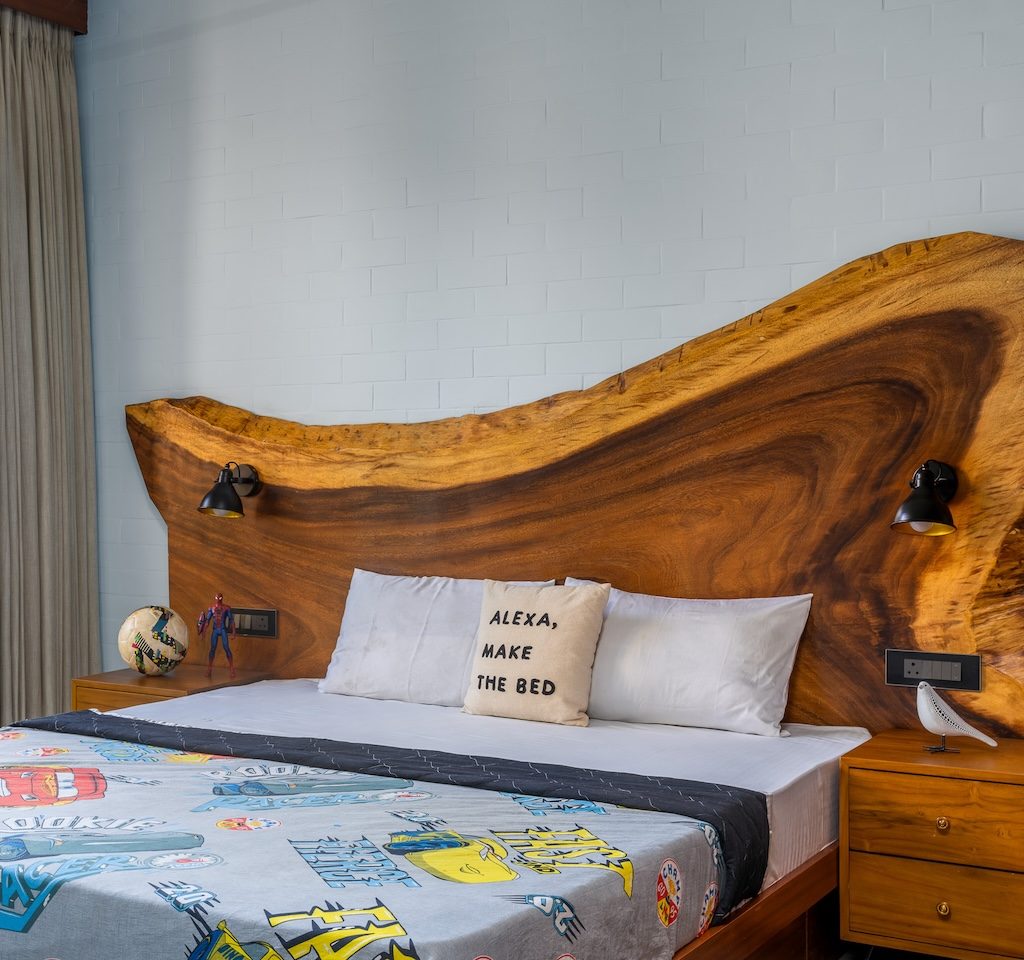
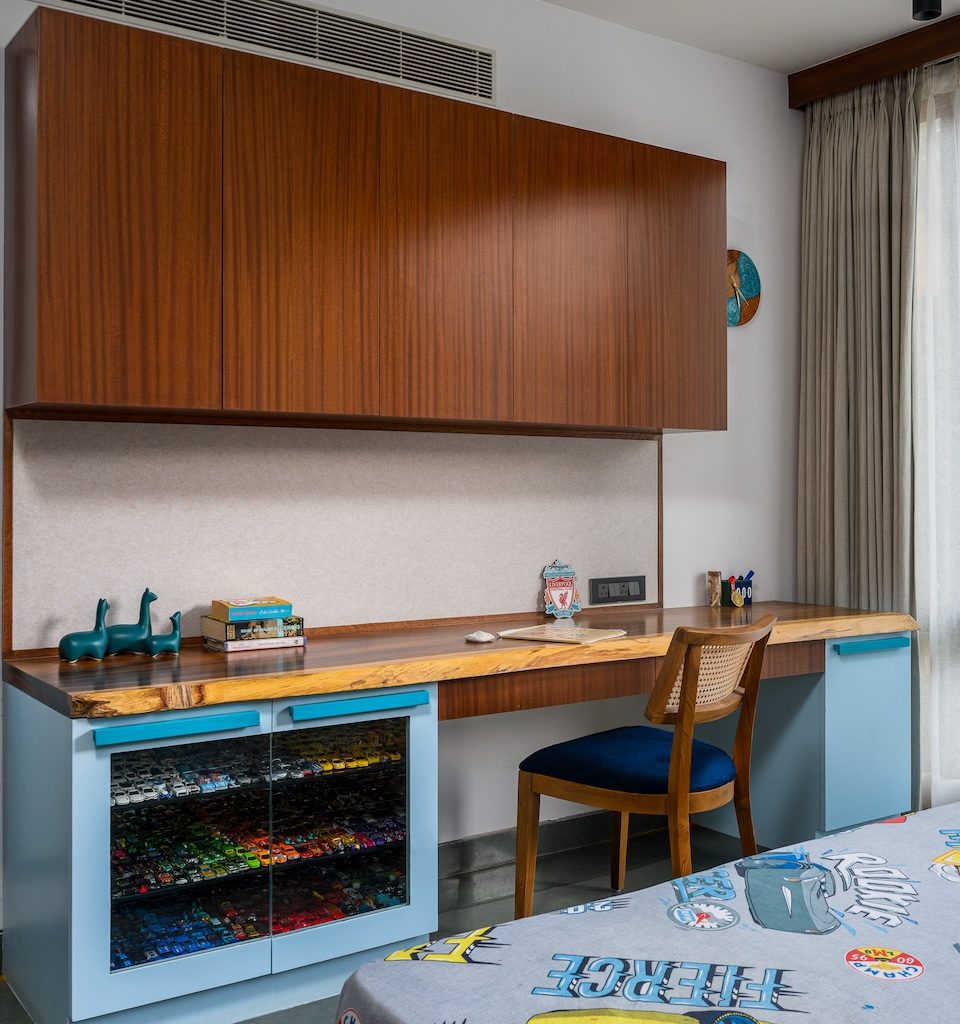
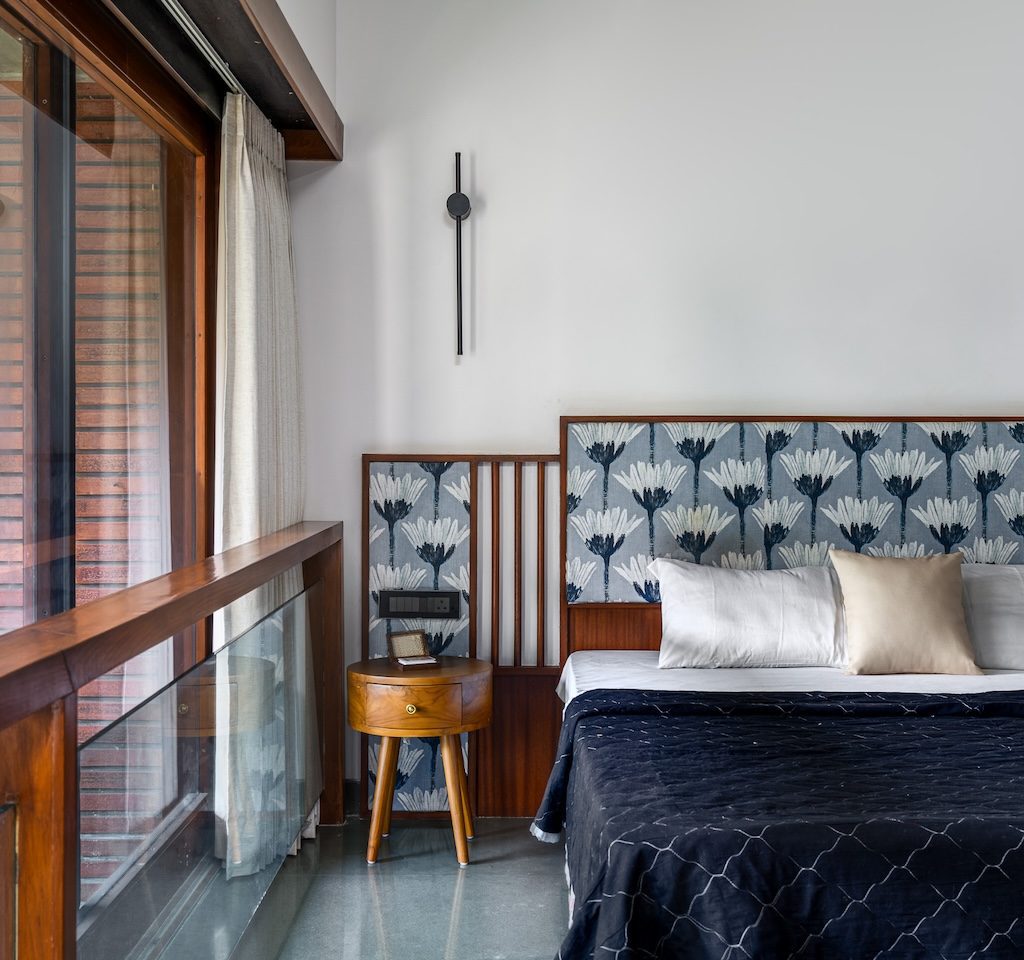
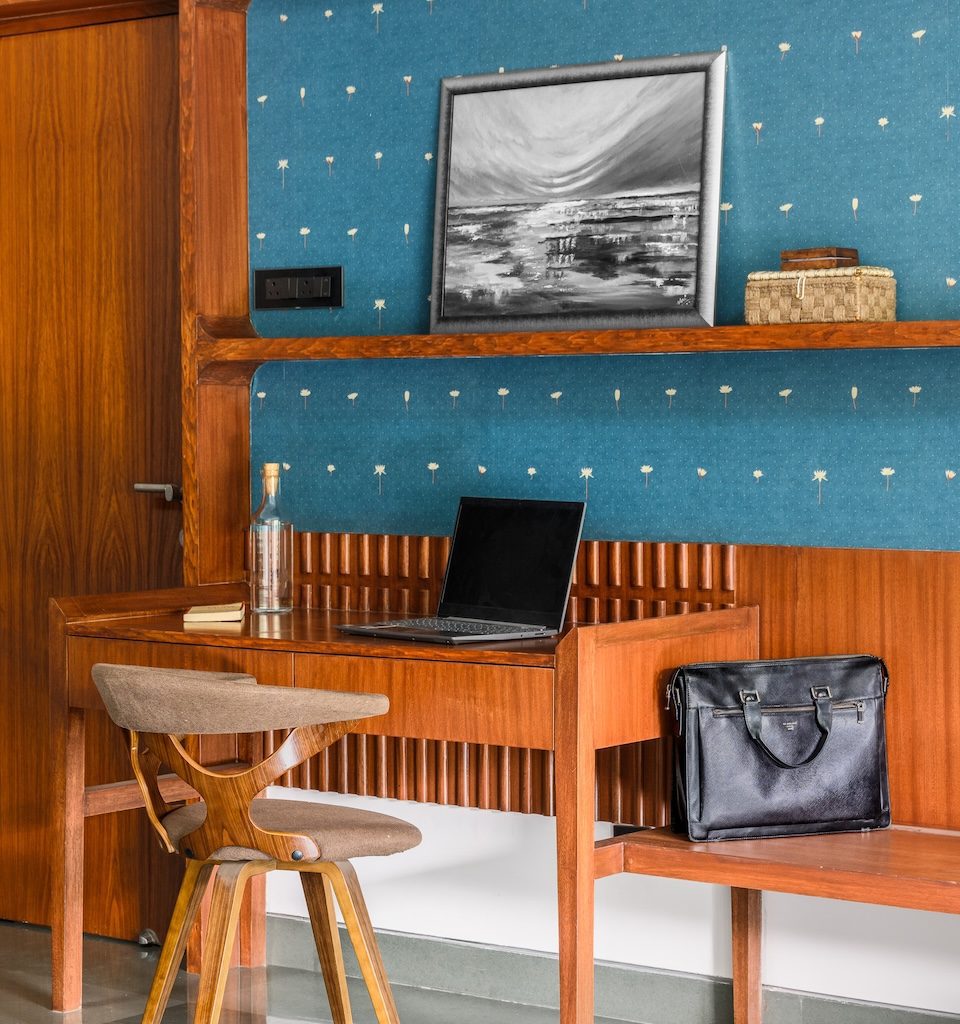
The home unfolds as a sequence of connected yet distinct spaces. The entry sets the tone with a linear mirror and a stained veneer panel detailed with urli-inspired motifs, offering a quiet nod to tradition. From here, the living area—anchored by a textured stone and wood double-height wall—flows into the dining and kitchen as a continuous social zone. A prayer corner forms a moment of pause within this openness, articulated through stone, wood and brass. Bedrooms extend the same material warmth, with playful detailing in the children’s rooms and a more layered cultural narrative in the master suite. Above, the first-floor lounge overlooks the living area, maintaining visual connection while functioning as an intimate retreat. The home office, defined by lotus-leaf-inspired shelving and an ergonomic desk, is designed to double as a formal meeting space, aided by an independent exit.
The material palette
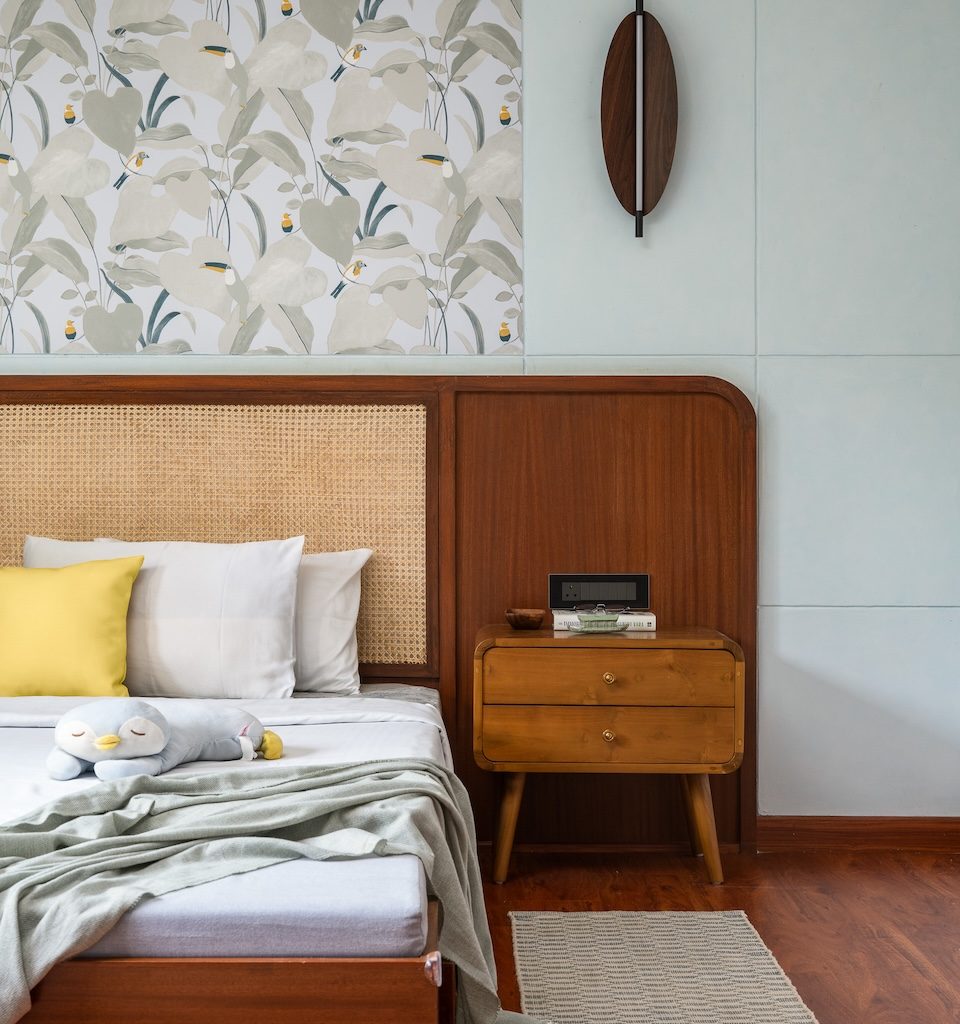
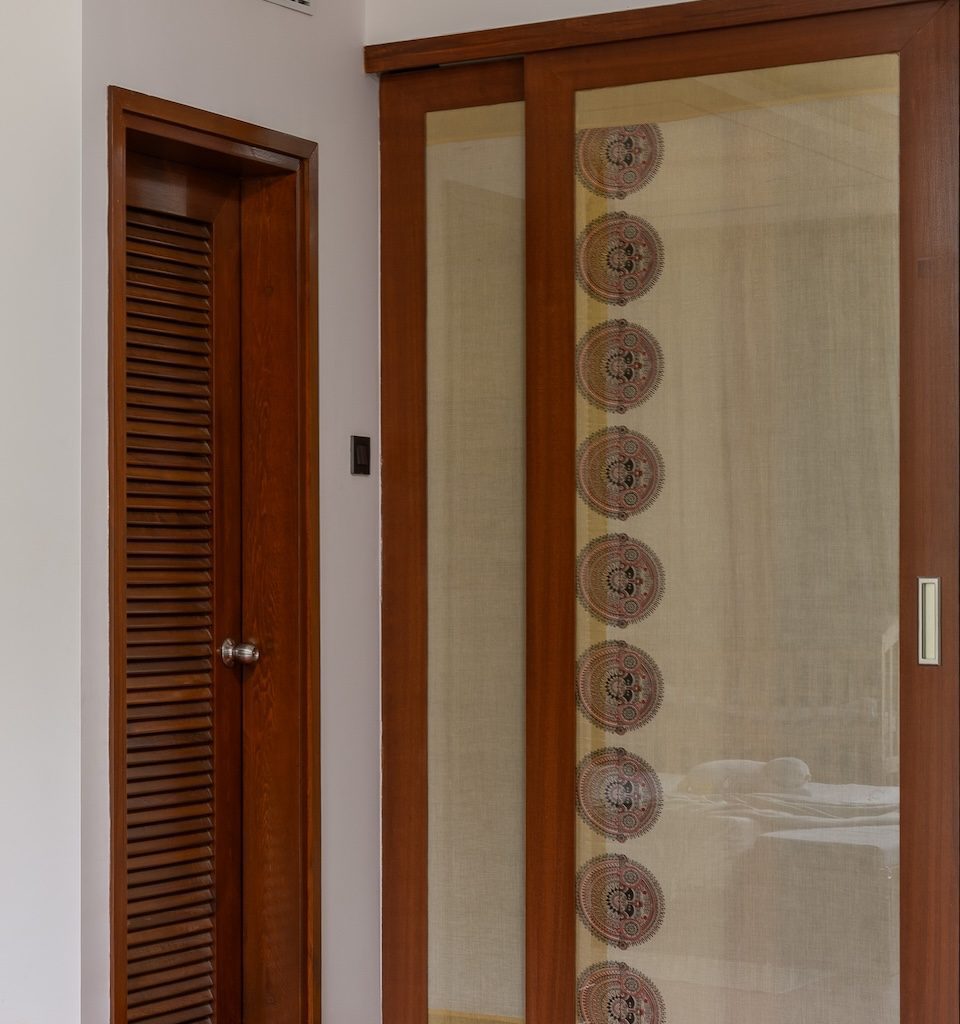
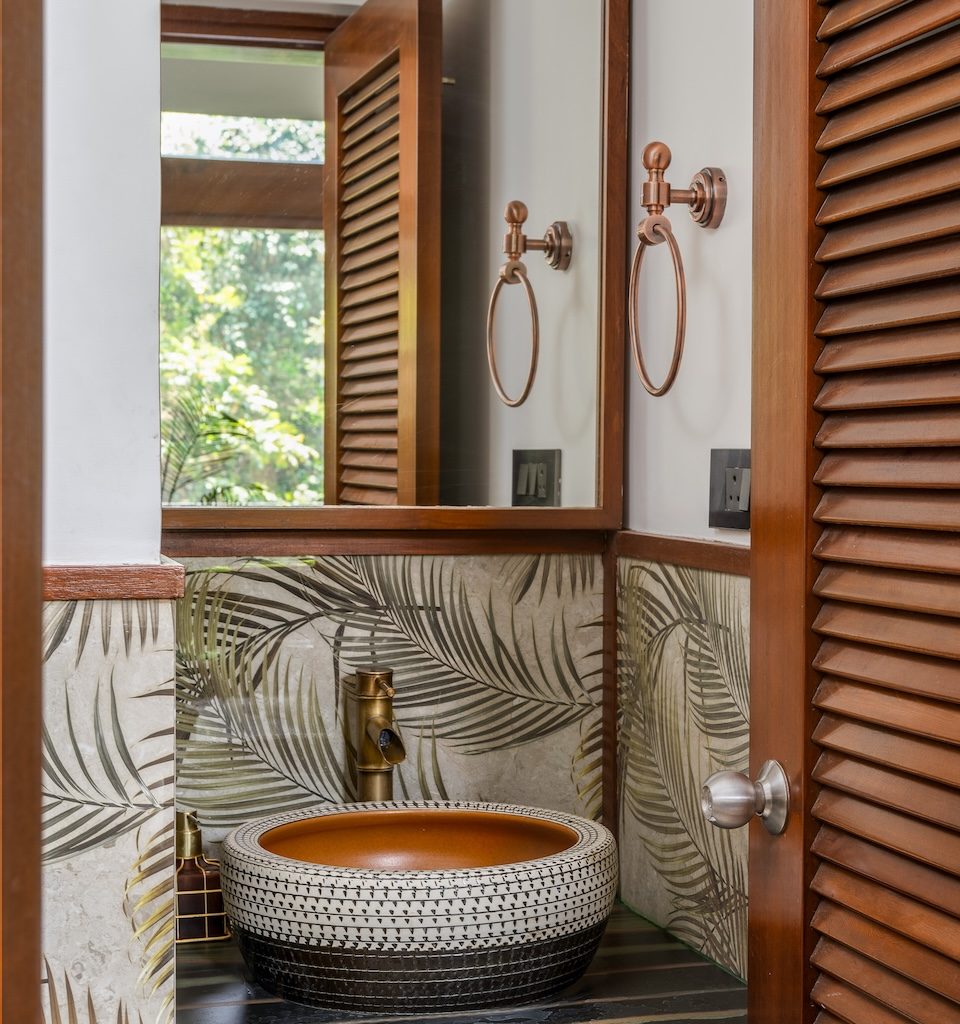
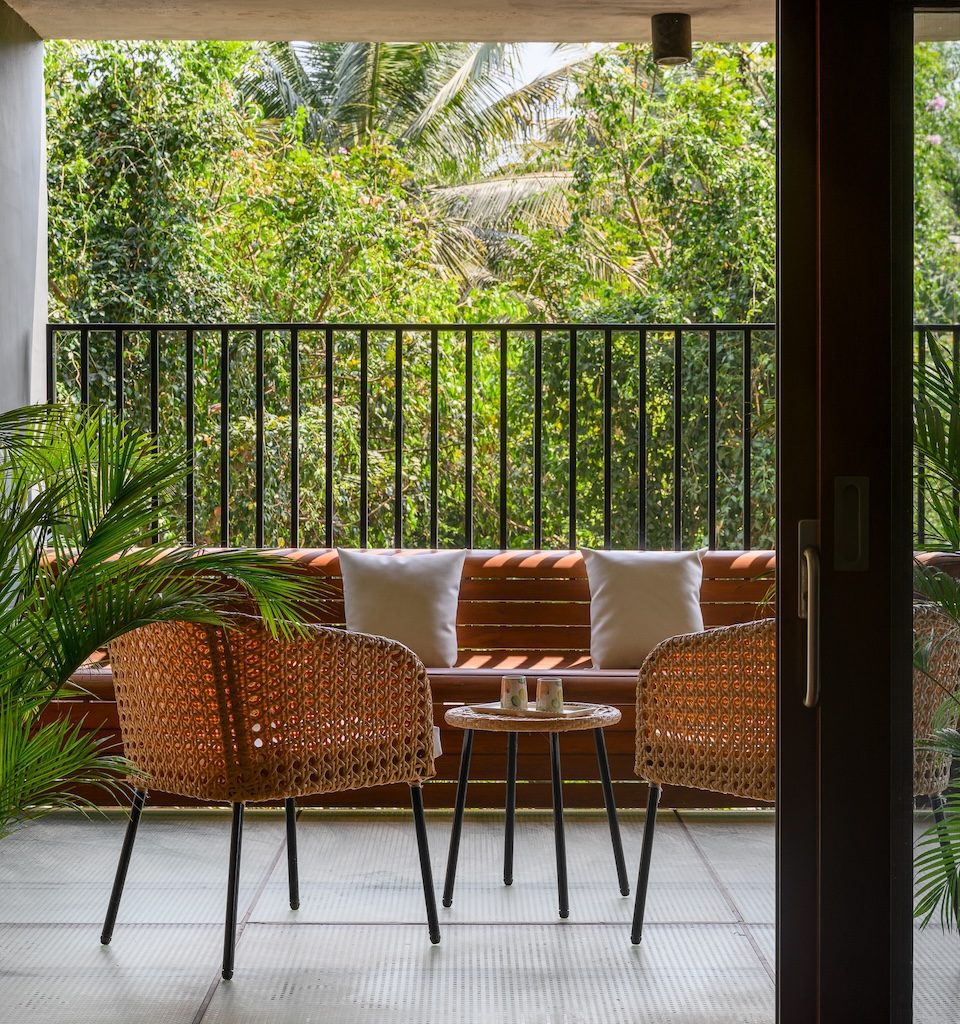
A cohesive palette of solid teak wood, natural stone, stained veneers, brass accents, cane and textured fabrics runs through the home, lending continuity across spaces. The colour language remains earthy and restrained, allowing material texture to take precedence. Subtle details—such as grooves inspired by Kerala’s boat races or the framed Kasavu saree integrated into cabinetry—add layers of storytelling within an otherwise minimal framework. These gestures enrich the interiors without overwhelming their contemporary clarity.
The challenges
The primary challenge lay in maintaining balance. The design needed to honour the apartment’s generous light and volume while introducing cultural references with restraint. Ensuring that these details enhanced the modern sensibility rather than competing with it required constant calibration and editorial discipline in every design decision.
The highlights
The grooved Onam panel beside the dining area emerges as a defining feature. Conceived as a sculptural wooden backdrop, it transforms a functional niche into a warm seating alcove. Inspired by the rhythm and energy of Kerala’s boat races, the panel anchors the dining space both visually and emotionally, embodying the project’s larger ethos of contemporary elegance grounded in memory.
The takeaway
Vasudha is ultimately a study in balance—between tradition and modernity, openness and intimacy, function and feeling. It demonstrates the value of working sensitively with an existing space, enhancing what is already present rather than overwriting it, and grounding design decisions in personal context rather than trend.
Fact file
Project: Vasudha
Design firm: From Around Here
Firm location: Manipal, Karnataka
Area: 5,000 sq ft
Location: Bengaluru, Karnataka
Principal architects: Ar. Shreya Daffney, Ar. Saran Babu
Design team: Ar. Hita Bhat, Ar. Shreya Daffney
Add a Comment